Middle East Digestive Health Products Market Summary
The Middle East digestive health products market size was valued at USD 1.98 billion in 2025 and projected to reach USD 3.33 billion by 2033, growing at a CAGR of 6.7% from 2026 to 2033. The Middle East digestive health products market growth has been significantly influenced by rising consumer awareness regarding the connection between digestive health and overall wellness.
Key Market Trends & Insights
- The UAE held the largest share of the Middle East digestive health products market in 2025, accounting for 35.8%.
- The Saudi Arabia digestive health products market is experiencing significant growth, projecting a CAGR of 7.5%.
- By product, the digestive health dairy products market held the largest share of 74.6% in 2025.
- By product, the digestive health supplements market is experiencing significant growth, projecting a CAGR of 7.7%.
- By ingredient, the probiotics digestive health products market held the largest share of 87.4% in 2025.
- By ingredient, the food enzymes digestive health products market is experiencing significant growth, projecting a CAGR of 7.9%.
Market Size & Forecast
- 2025 Market Size: USD 1.98 Billion
- 2033 Projected Market Size: USD 3.33 Billion
- CAGR (2026-2033): 6.7%
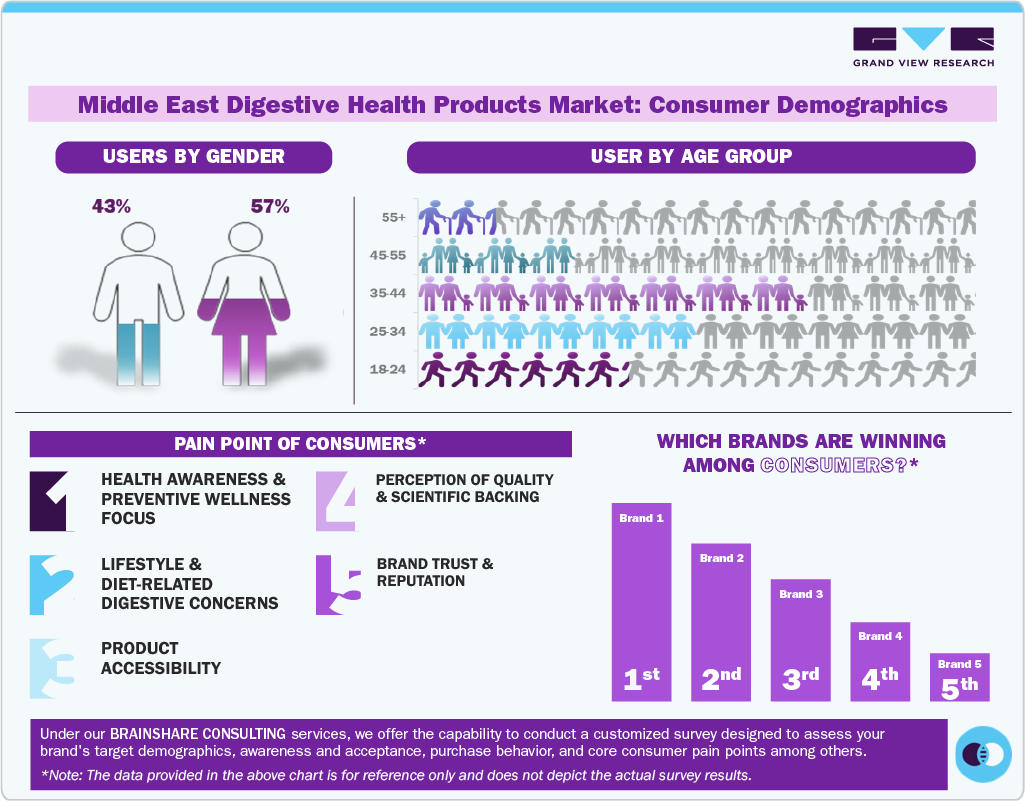
Rising health awareness across the Middle East, particularly in major urban centers such as Dubai, Abu Dhabi, and Riyadh, is driving increased adoption of digestive health products. Consumers are increasingly incorporating probiotics, prebiotics, and digestive supplements into their daily routines to support gut health and strengthen immunity. This trend is further supported by educational initiatives from industry players and healthcare professionals that encourage a shift from reactive treatment to preventive healthcare. According to the data published in October 2024, in a survey of 1,306 participants aged 18 and older in Saudi Arabia, approximately 37% of respondents demonstrated a strong understanding of probiotics and prebiotics.
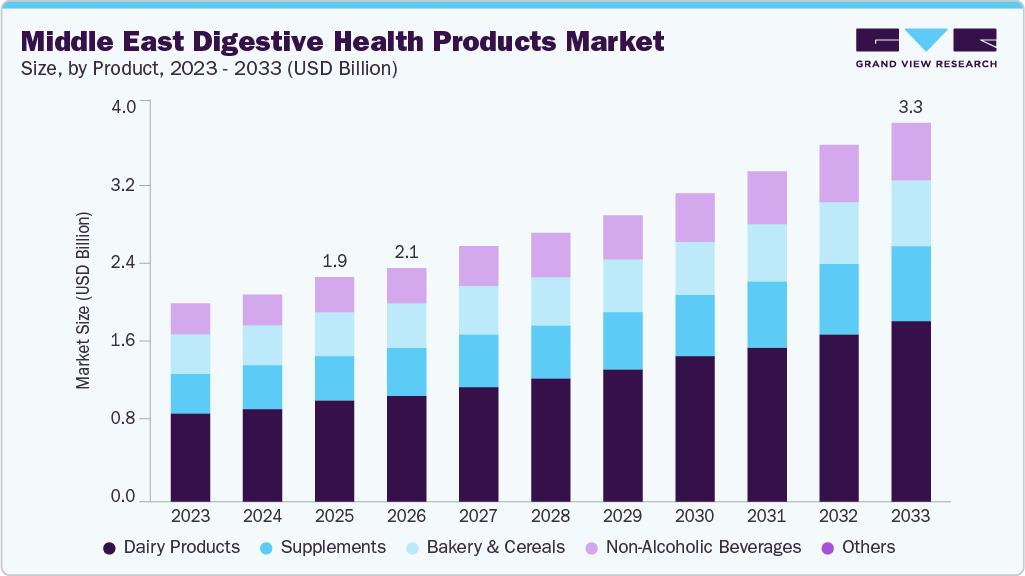
In the Middle East digestive health products industry, the shift toward sedentary lifestyles and higher consumption of processed foods has contributed to a rising prevalence of gastrointestinal issues such as indigestion, bloating, and Irritable Bowel Syndrome. As a result, demand for functional digestive health products has accelerated, with targeted solutions for these lifestyle-related conditions gaining strong consumer traction.
The lifestyle-related digestive disorders are becoming more common in the UAE and Saudi Arabia in particular, spurring demand for both traditional supplements and novel formulations tailored for daily use. For instance, in August 2025, Activia launched a new “Proactive” yogurt line featuring low-fat, probiotic-rich products with added prebiotic fiber and protein, aimed at supporting gut health and wellness trends. The launch is part of a broader brand refresh, including simpler ingredients and 25% less sugar, targeting growing consumer interest, especially among younger audiences, in functional, health-focused foods.
The expansion of modern retail infrastructure and digital commerce platforms has significantly enhanced product accessibility, further driving demand. Pharmacies, health-focused supermarkets, and wellness stores across key GCC cities are increasingly dedicating shelf space to probiotics, enzyme formulations, and fiber-based supplements, thereby supporting wider consumer adoption.
Simultaneously, online marketplaces such as Amazon UAE, Noon, and other regional e-commerce platforms have broadened product availability beyond urban centers, enabling wider penetration even into semi-urban and remote areas. In October 2025, Amazon launched its ultra-fast “Amazon Now” service in the UAE, enabling delivery of everyday essentials in as little as 15 minutes using local micro-fulfillment centers. The move strengthens Amazon’s push into quick commerce, offering Prime benefits and expanding to thousands of products with 2-hour delivery options to meet rising demand for speed and convenience.
In the Middle East digestive health products market, cultural and regulatory preferences for natural, clean-label, and halal-certified products play a significant role in shaping consumer demand. In response, manufacturers and brand owners are increasingly developing formulations with halal-compliant ingredients and plant-based prebiotics and probiotics to align with regional dietary norms. This strategic alignment has created new growth opportunities for products that bridge traditional wellness practices and modern health trends, including inulin-fortified functional foods and probiotic supplements positioned as natural digestive aids.
Consumer Insights for Middle East Digestive Health Products Market
Product Insights
The digestive health dairy products market accounted for the largest share of 74.6% of the revenue in 2025 due to consumer preference for functional dairy formats that deliver probiotic and gut-friendly benefits within familiar food categories. Functional yogurts, kefir, and fortified dairy beverages have been widely accepted because they integrate digestive wellness directly into daily eating habits, reducing the perception of “supplementation” and enhancing habitual consumption. In the Middle East digestive health products market, established brands such as Danone Activia and similar probiotic yogurt offerings have supported category expansion by raising awareness around microbiome health and incorporating beneficial live cultures into traditional dairy products. This approach has encouraged repeat purchasing behavior, particularly among consumers in urban markets across the region.
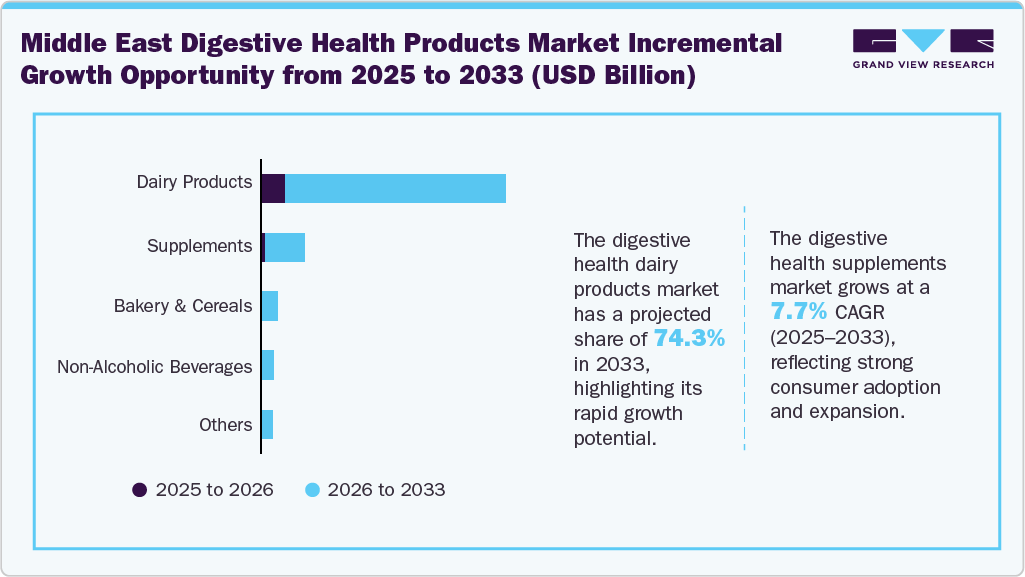
The digestive health supplements industry is projected to grow at the fastest CAGR of 7.7% from 2026 to 2033, driven by increasing consumer preference for targeted, convenient, and scientifically backed formulations such as probiotics, prebiotics, digestive enzymes, and other gut-supporting nutraceuticals. In the Middle East, shifting dietary patterns and increasingly sedentary lifestyles have led to a broader range of digestive health concerns among consumers. This has driven the adoption of daily supplement regimens, which are viewed as more targeted and potent compared to general food-based solutions. The growth of distribution channels, particularly over-the-counter pharmacy networks and e-commerce platforms, has further accelerated the supplement segment, reflecting strong consumer demand for accessible, lab-certified gut health products.
Ingredient Insights
The probiotics segment dominated the digestive health products market, accounting for 87.4% of the market share in 2025, driven by broad scientific support and widespread consumer acceptance of probiotics’ role in digestive and overall wellness. Probiotic bacteria such as Lactobacillus and Bifidobacterium strains have been studied extensively for their ability to help balance the gut microbiota and mitigate common gastrointestinal issues, such as bloating, diarrhea, and irritable bowel syndrome, boosting consumer confidence and product adoption globally.
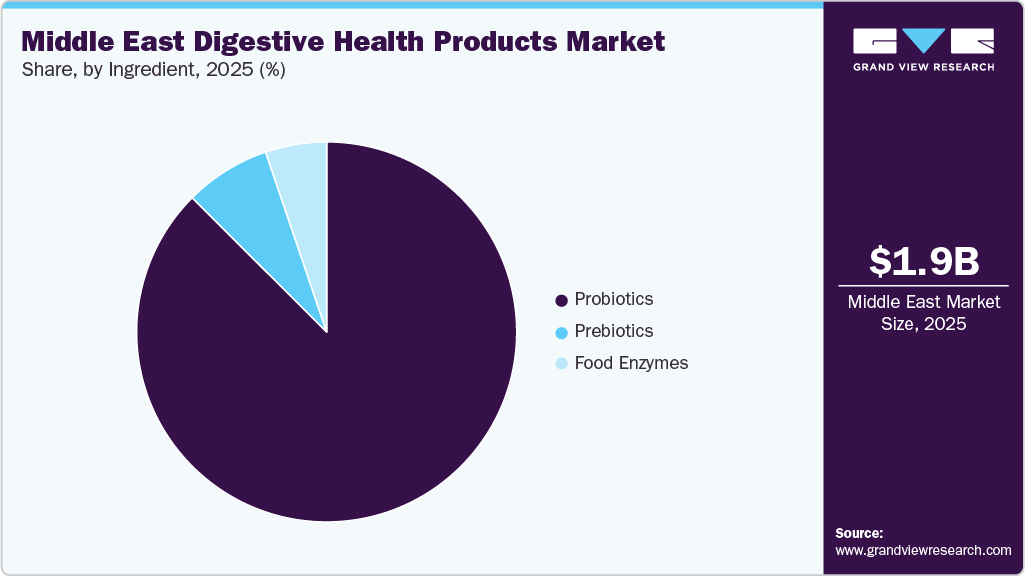
In the Middle East digestive health products market, a strong scientific foundation has encouraged manufacturers to incorporate probiotics across a wide range of food products and supplements, including functional dairy, beverages, and capsule formats. Probiotics are increasingly recognized as key growth drivers due to their dual benefits in supporting digestive health and immunity, aligning closely with the region’s growing emphasis on preventive wellness.
The food enzymes segment is anticipated to grow at a CAGR of 7.9% from 2026 to 2033 due to the demand from the food and beverage industry for multifunctional ingredients that can improve product quality while delivering health benefits. Food enzymes are used not only for digestive support but also to enhance flavor, texture, and shelf-life in processed foods, broadening their utility across bakery, dairy, and beverage applications. At Gulfood 2024, beverage innovation in the Middle East was fueled by functional ingredients, novel flavors, and advanced agri-food technologies, as consumers placed greater emphasis on health, wellness, and sustainability. Companies showcased solutions centered on improved shelf stability and convenience, highlighting rising demand for durable, high-quality, and ready-to-consume beverage products.
Growing consumer preference for natural, nutritious products free from synthetic additives has made enzymes an increasingly attractive solution in the Middle East digestive health products market. Manufacturers are leveraging enzymes to balance processing efficiency with clean-label claims, meeting consumer demand while ensuring product effectiveness.
Country Insights
The UAE digestive health products market accounted for a share of 35.8% of the revenues in 2025. The UAE digestive health products market has been driven by high per-capita health spending and strong consumer willingness to pay for premium functional foods and supplements. Urban consumers and a large expatriate population have been targeted with probiotic-fortified dairy, ready-to-drink functional beverages, and premium capsule formulations, and these product formats have been rapidly distributed through advanced retail chains, pharmacy networks, and omnichannel e-commerce platforms. As a result, market penetration and repeat purchase rates have been supported by both retail availability and premium positioning. In April 2025, Shake Your Plants (SYP), a UAE-based functional beverage brand, aims to address dehydration and nutrient gaps with plant‑based sachet drinks and is actively expanding in the UAE and beyond. The company launched its first product, Kombucha+, in 2024.
Saudi Arabia Digestive Health Products Market Trends
The Saudi Arabia digestive health products market is anticipated to grow at the fastest CAGR of 7.5% during the forecast period. Saudi Arabia's digestive health products market growth has been driven by a large population scale, coupled with rising healthcare investment and retail modernization. The growing middle class, increased incidence of lifestyle-related digestive complaints, and national health strategies (including preventive care targets under Vision 2030 initiatives) has prompted stronger demand for both functional foods (probiotic dairy and fortified foods) and targeted supplements (probiotics, enzymes). This demand has been supported by significant expansion in pharmacy chains, supermarket modern trade, and growing e-commerce penetration.
Key Middle East Digestive Health Products Company Insights
The Middle East digestive health products industry is characterized as emerging but increasingly competitive, with a mix of global multinationals, regional players, and localized distributors driving market activity. Multinational consumer health and nutrition companies have leveraged well-established product portfolios, particularly in probiotics and functional foods, to capture premium segments, while regional pharmaceutical and nutraceutical producers have focused on localized formulations and halal-compliant product strategies to better penetrate culturally sensitive consumer bases.
Market leadership has been exhibited by prominent global brand owners with strong portfolios spanning probiotics, prebiotics, and digestive enzyme products. Notable multinationals include Nestlé Health Science, Bayer AG, Amway, Danone, and Abbott, which have been recognized for their widespread distribution reach and brand equity across Middle Eastern markets. These companies have pursued portfolio expansion, consumer education initiatives, and partnerships with pharmacies and e-commerce platforms to bolster shelf presence and brand loyalty.
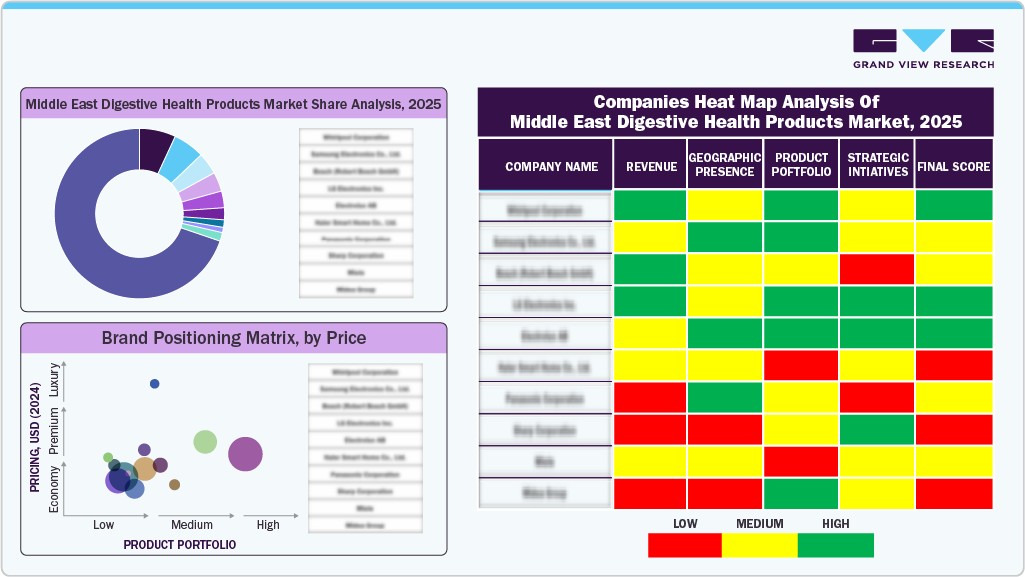
Key Middle East Digestive Health Products Companies:
- Bayer AG
- Nestle SA
- Danone
- Sanofi
- Abbott
- Amway
- Procter & Gamble Health
- Yakult Honsha Co., Ltd.
- Jamjoom Pharma
- Julphar
Recent Developments
-
In January 2025, Global Edge introduced the Theronomic TRIBIOTIC Gut Shield in the Middle East at the Arab Health exhibition in Dubai, positioning it as a comprehensive digestive health supplement that combines prebiotics, probiotics, and postbiotics to support a balanced microbiome.
-
In December 2024, BioGaia launched BioGaia Gastrus PURE ACTION, a FODMAP-friendly probiotic targeted at sensitive digestive systems and positioned for consumers dealing with discomfort associated with dietary FODMAP intolerance.
Middle East Digestive Health Products Market Report Scope
|
Report Attribute
|
Details
|
|
Market value size in 2026
|
USD 2.11 billion
|
|
Revenue forecast in 2033
|
USD 3.33 billion
|
|
Growth rate
|
CAGR of 6.7% from 2026 to 2033
|
|
Actual data
|
2021 - 2025
|
|
Forecast period
|
2026 - 2033
|
|
Quantitative units
|
Revenue in USD Billion, and CAGR from 2026 to 2033
|
|
Report coverage
|
Revenue forecast, company ranking, competitive landscape, growth factors, and trends
|
|
Segments covered
|
Product, ingredient, country
|
|
Country scope
|
Saudi Arabia; UAE; Qatar
|
|
Key companies profiled
|
Bayer AG; Nestle SA; Danone; Sanofi; Abbott; Amway; Procter & Gamble Health; Yakult Honsha Co., Ltd.; Jamjoom Pharma; Julphar
|
|
Customization scope
|
Free report customization (equivalent up to 8 analysts’ working days) with purchase. Addition or alteration to country & segment scope.
|
|
Pricing and purchase options
|
Avail customized purchase options to meet your exact research needs. Explore purchase options
|
Middle East Digestive Health Products Market Report Segmentation
This report forecasts revenue growth at the country level and provides an analysis of the latest industry trends and opportunities in each of the sub-segments from 2021 to 2033. For the purpose of this study, Grand View Research has segmented the Middle East digestive health products market report on the basis of product, ingredient, and country.
-
Product Outlook (Revenue, USD Billion, 2021 - 2033)
-
Dairy Products
-
Bakery & Cereals
-
Non-Alcoholic Beverages
-
Supplements
-
Others
-
Ingredient Outlook (Revenue, USD Billion, 2021 - 2033)
-
Prebiotics
-
Probiotics
-
Food Enzymes
-
Animal-Based
-
Plant-Based
-
Microbial-Based
-
Country Outlook (Revenue, USD Billion, 2021 - 2033)
Frequently Asked Questions About This Report
b. Growth in the Middle East digestive health products market is being primarily driven by rising consumer awareness regarding the connection between digestive health and overall wellness.
b. The Middle East digestive health products market size was estimated at USD 1.98 billion in 2025 and is expected to reach USD 2.11 billion in 2026.
b. The Middle East digestive health products market is expected to witness 6.7% revenue growth from 2026 to 2033 to reach USD 3.33 billion by 2033.
b. The probiotics ingredient segment accounted for the largest share of 87.4% of the revenue in 2025 due to broad scientific support and widespread consumer acceptance of probiotics’ role in digestive and overall wellness.
b. The key market players in the Middle East digestive health products market include Bayer AG; Nestle SA; Danone; Sanofi; Abbott; Amway; Procter & Gamble Health; Yakult Honsha Co., Ltd.; Jamjoom Pharma; Julphar

 Download Sample Report
















