
- Home
- »
- Advanced Interior Materials
- »
-
Middle East Tires Market Size & Share, Industry Report 2033GVR Report cover
![Middle East Tires Market Size, Share & Trends Report]()
Middle East Tires Market (2025 - 2033) Size, Share & Trends Analysis Report By Distribution Channel (OEM, Aftermarket), By Vehicle Type (Two-wheelers, Passenger Cars, Light Commercial Vehicle, Heavy Commercial Vehicle, Aircraft Tires), By Country, And Segment Forecasts
- Report ID: GVR-4-68040-754-4
- Number of Report Pages: 107
- Format: PDF
- Historical Range: 2021 - 2023
- Forecast Period: 2025 - 2033
- Industry: Advanced Materials
- Report Summary
- Table of Contents
- Segmentation
- Methodology
- Download FREE Sample
-
 Download Sample Report
Middle East Tires Market Summary
The Middle East tires market size was estimated at USD 4.12 billion in 2024 and is expected to reach USD 5.29 billion by 2033, growing at a CAGR of 2.8% from 2025 to 2033. The demand for tires in the Middle East is increasing due to the rising number of vehicles, including passenger cars, commercial fleets, and heavy-duty trucks.
Key Market Trends & Insights
- Saudi Arabia dominated the Middle East tires market with the largest revenue share of 17.1% in 2024.
- By distribution channel, the aftermarket segment is expected to grow at the fastest CAGR of 3.0% over the forecast period.
- By vehicle type, the passenger cars segment is expected to grow at the fastest CAGR of 3.1% over the forecast period.
Market Size & Forecast
- 2024 Market Size: USD 4.12 Billion
- 2033 Projected Market Size: USD 5.29 Billion
- CAGR (2025-2033): 2.8%
- Saudi Arabia: Largest market in 2024
- Egypt: Fastest growing market
Rapid urbanization, coupled with expanding road networks, is fueling the need for regular tire replacements. Harsh climatic conditions, including extreme heat and rough terrain, accelerated tire wear, further boosting replacement demand. The growing adoption of electric and hybrid vehicles in Gulf countries is also creating new avenues for specialized tires. One of the key drivers of the industry is the surge in construction, oil & gas, and logistics industries, which require heavy-duty and commercial vehicle tires. Rising e-commerce activity is further boosting demand for delivery fleets, thereby driving tire consumption. Rapid growth in road transportation and cross-border trade also increases tire usage across freight carriers. Consumer preference for technologically advanced tires with enhanced safety, fuel efficiency, and durability is another critical driver. Seasonal demand, particularly for off-road and all-terrain tires in desert regions, adds to the market dynamics.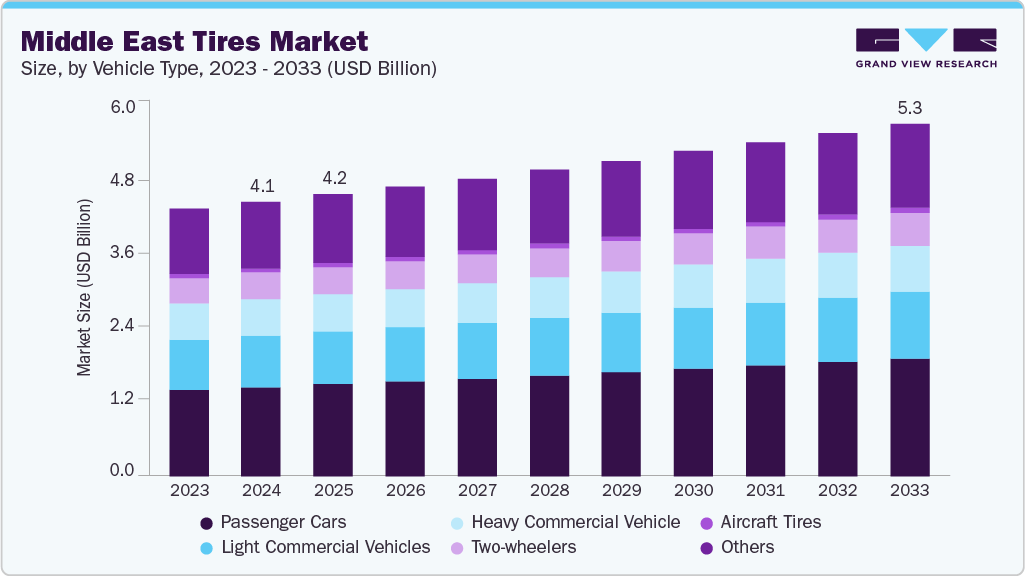
Governments in the Middle East are playing an active role in shaping the tire market by implementing strict safety regulations and quality standards. Saudi Arabia’s SASO (Saudi Standards, Metrology and Quality Organization) has mandated tire labeling for efficiency and performance, creating transparency for consumers. The UAE is promoting sustainable tire disposal and recycling initiatives to reduce environmental hazards. Several governments are also investing in smart road infrastructure, encouraging the adoption of tires with advanced features. Trade policies are being revised to reduce counterfeit tire imports, thereby strengthening the position of genuine manufacturers.
Market Concentration & Characteristics
The industry is moderately concentrated, with global giants such as Bridgestone, Michelin, Continental, and Goodyear holding significant shares alongside strong regional players like Al Dobowi and ZAFCO. Competition is intensifying due to a mix of established brands, regional distributors, and local retreaders. While international companies dominate the premium and performance segments, domestic and regional firms cater to budget and mid-range tires. The market also sees strong influence from dealership networks, wholesalers, and e-commerce platforms. Consolidation trends are emerging, with partnerships and distribution agreements strengthening market positions. However, fragmentation in the aftermarket remains high, especially with small players in the retreading and budget tire space.
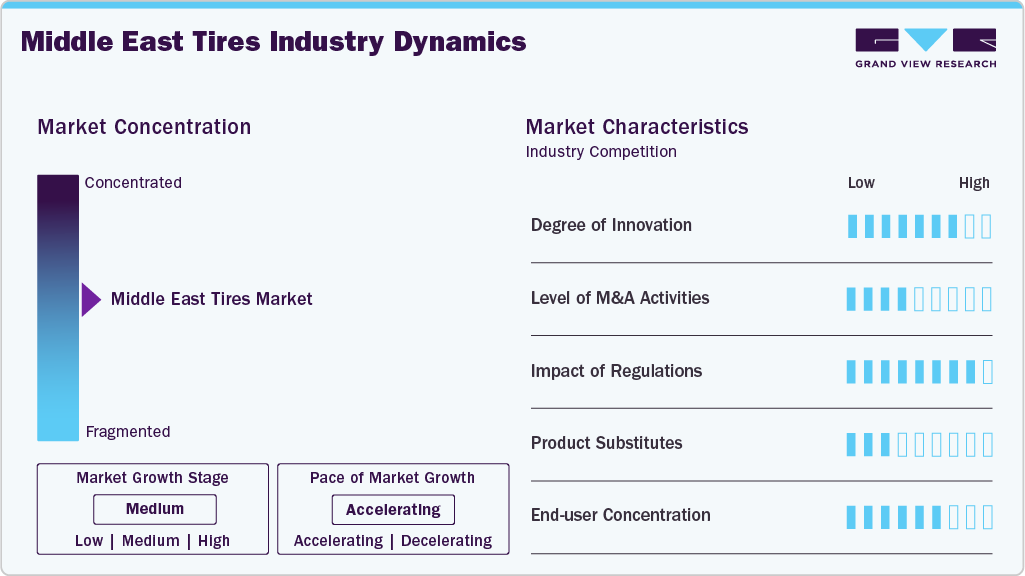
The threat of substitutes in the industry is relatively low, as no direct alternatives to tires exist for vehicles. However, tire retreading services act as partial substitutes by extending the life of worn-out tires, particularly for commercial fleets. This trend reduces new tire purchases but supports sustainability goals. Advances in tire durability and self-sealing technologies may also slightly lower replacement frequency in the long run. Despite this, the need for safety, performance, and regulatory compliance ensures continuous demand for new tires. Counterfeit tires remain a concern, but stricter government policies are reducing their impact. Overall, substitutes exert minimal influence on overall market growth.
Vehicle Type Insights
The passenger cars segment held the highest revenue share of 32.6% in 2024, supported by strong urbanization trends, rising disposable incomes, and consumer preference for private mobility. The market is also driven by the popularity of premium and luxury cars in countries such as the UAE, along with the steady demand for compact and mid-sized vehicles across other nations. Seasonal demand variations, such as during travel peaks and holiday seasons, further enhance the replacement tire market for passenger vehicles.
The light commercial vehicles segment is expected to grow at a CAGR of 2.9% over the forecast period in the Middle East as logistics, e-commerce, and urban delivery services expand rapidly. Rising infrastructure development projects and small business activities are also driving demand for LCVs, boosting tire consumption in this category. Additionally, the adoption of fleet management solutions and rising cross-border trade within the Gulf Cooperation Council (GCC) countries are further supporting tire demand for this segment.
Distribution Channel Insights
The aftermarket segment held the highest revenue share of 71.6% in 2024, primarily due to the large existing vehicle parc and the harsh climatic conditions that lead to faster tire wear and replacement cycles. Consumers in the region often prefer frequent tire changes to ensure safety, particularly given extreme heat and road conditions. The presence of well-established distribution networks, retail outlets, and e-commerce platforms further fuels the aftermarket segment’s dominance across the region.
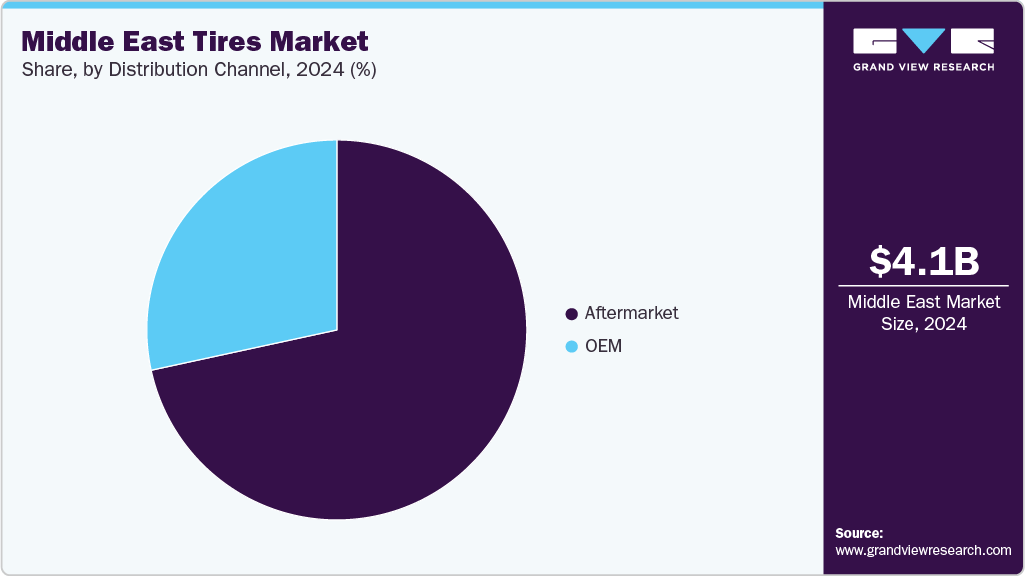
The OEM segment is expected to grow at a CAGR of 2.5% over the forecast period, as regional automotive manufacturing and assembly activities expand, particularly in countries like Saudi Arabia and the UAE that are promoting local vehicle production. Growing partnerships between global automakers and local firms, along with rising investments in infrastructure and mobility projects, are driving higher demand for OEM tires. Additionally, new model launches, electric vehicle initiatives, and government incentives for local manufacturing are further supporting OEM tire sales in the region.
Country Insights
The Middle East tires market is witnessing robust growth due to high vehicle ownership rates, expanding logistics, and rapid infrastructure development. GCC countries dominate the demand, supported by premium car ownership and commercial fleet expansion. Harsh weather conditions drive frequent replacement cycles, boosting aftermarket sales. Regional distribution hubs in the UAE and Saudi Arabia strengthen imports from Asia, Europe, and North America. Tire recycling and sustainability are emerging themes across several countries.
Saudi Arabia Tires Market Trends
Saudi Arabia dominated the Middle East tires market with a revenue share of 17.1% in 2024, due to its large vehicle population, government-backed infrastructure projects, and expansion of logistics fleets. The country’s push toward EV adoption is creating new opportunities for advanced tire solutions. Regulations by SASO ensure premium-quality imports, enhancing demand for branded tires. The construction boom and cross-border trade are also fueling tire sales, especially for commercial vehicles and trucks.
UAE Tires Market Trends
The UAE tires market is driven by luxury vehicle ownership, a thriving tourism sector, and a well-established logistics network. Dubai and Abu Dhabi serve as major hubs for international tire brands, with extensive dealership and distribution networks. The rise of e-commerce platforms for tire sales enhances accessibility for consumers. Government sustainability programs, including tire recycling, are shaping market growth. Premium and high-performance tires dominate demand due to consumer preferences.
Egypt Tires Market Trends
Egypt’s tires market is expanding steadily, supported by a growing middle class and rising demand for passenger cars. Government infrastructure investments, including new highways and urban development projects, are increasing demand for commercial vehicle tires. Local manufacturing presence supports domestic needs, while imports from Asia and Europe meet premium demand. The replacement tire market is particularly strong due to aging vehicles.
Qatar Tires Market Trends
Qatar’s tires market is shaped by its high-income population, preference for luxury vehicles, and large-scale infrastructure development projects under its national vision program. The country’s high GDP per capita drives strong demand for premium tires, especially for luxury sedans, SUVs, and sports cars. Ongoing construction and logistics expansion also fuel the need for commercial and heavy-duty vehicle tires. The government’s initiatives to promote sustainable mobility and EV adoption are gradually creating opportunities for specialized tire segments. Harsh desert terrain and hot climatic conditions result in frequent replacements, supporting aftermarket sales.
Kuwait Tires Market Trends
Kuwait’s tires market benefits from its affluent consumer base, strong purchasing power, and cultural inclination toward high-performance and luxury vehicles. SUVs and premium cars dominate the automotive sector, driving consistent demand for branded and performance-oriented tires. The logistics and oil & gas industries contribute significantly, requiring durable heavy-duty and commercial vehicle tires for fleet operations. Extreme climatic conditions accelerate tire wear, creating frequent replacement cycles and boosting aftermarket growth. Government-enforced quality regulations and strict import standards ensure the presence of genuine, high-quality products in the market. Local distributors and regional players maintain a wide network for both premium and budget tire offerings.
Key Middle East Tires Companies Insights
Key players operating in the Middle East tires market are undertaking various initiatives to strengthen their presence and increase the reach of their products and services. Strategies such as expansion activities and partnerships are key in propelling the market growth.
-
Bridgestone is one of the leading tire suppliers in the Middle East, offering a wide range of passenger car, truck, bus, and off-the-road tires tailored for the region’s extreme climatic and road conditions. The company has built strong distribution and service networks through authorized dealers and its Fit & Fix outlets, particularly in GCC countries. Bridgestone’s focus on durability, safety, and premium positioning makes it a preferred brand for both fleet operators and individual consumers.
-
Continental has a strong footprint in the Middle East, particularly in premium passenger car and SUV segments, which dominate consumer demand in countries like the UAE and Saudi Arabia. Known for its advanced tire technology and safety-oriented innovations, Continental caters to the luxury car market and high-performance tire segment. The company also supports sustainability initiatives and has enhanced its regional presence through partnerships with local distributors.
The Goodyear Tire & Rubber Company and Hankook Tire & Technology Co., Ltd. are some of the emerging market participants in the tires market.
-
Goodyear is well established in the Middle East, supplying tires across passenger vehicles, commercial fleets, and heavy-duty applications. The company emphasizes innovation with smart tire solutions, including digital monitoring systems for fleet management, which are highly relevant in Saudi Arabia and the UAE logistics markets. Goodyear’s strong brand reputation, combined with expanding retail and service partnerships, strengthens its aftermarket presence in the region.
-
Hankook has grown rapidly in the Middle East tire market by offering a balance of affordability and performance, making it popular in both mid-range and premium consumer segments. The company supplies tires for passenger cars, SUVs, and light commercial vehicles, with products designed for durability in hot desert climates. Hankook’s partnerships with regional distributors and dealers enhance its accessibility, and the brand continues to strengthen its position among both retail and fleet buyers.
Key Middle East Tires Companies:
- Bridgestone Corporation
- Michelin Group
- The Goodyear Tire & Rubber Company
- Continental AG
- Pirelli & C. S.p.A.
- Yokohama Rubber Co., Ltd.
- Hankook Tire & Technology Co., Ltd.
- Kumho Tire Co., Inc.
- Sumitomo Rubber Industries, Ltd.
- Toyo Tire Corporation
Recent Developments
-
In October 2024, Bridgestone & Al Jawaden Group formed a partnership to enhance mobility solutions in Iraq, combining Bridgestone tyre technology & services with Al Jawaden’s market presence.
-
In February 2025, Goodyear launched a Tire Pressure Monitoring System (TPMS) technology in Saudi Arabia for fleets to monitor real-time tyre health (pressure, temperature, etc.), aiming at better safety, cost efficiency & sustainability.
Middle East Tires Market Report Scope
Report Attribute
Details
Market size value in 2025
USD 4.23 billion
Revenue forecast in 2033
USD 5.29 billion
Growth rate
CAGR of 2.8% from 2025 to 2033
Base year for estimation
2024
Actual estimates/Historical data
2021 - 2023
Forecast period
2025 - 2033
Quantitative units
Revenue in USD million/billion and CAGR from 2025 to 2033
Report coverage
Revenue forecast, company ranking, competitive landscape, growth factors, and trends
Segments covered
Distribution channel, vehicle type, country
Regional scope
Middle East
Country scope
Saudi Arabia; UAE; Egypt; Qatar; Kuwait
Key companies profiled
Bridgestone Corporation; Michelin Group; The Goodyear Tire & Rubber Company; Continental AG; Pirelli & C. S.p.A.; Yokohama Rubber Co., Ltd.; Hankook Tire & Technology Co., Ltd.; Kumho Tire Co., Inc.; Sumitomo Rubber Industries, Ltd.; Toyo Tire Corporation
Customization scope
Free report customization (equivalent up to 8 analysts working days) with purchase. Addition or alteration to country, regional & segment scope.
Pricing and purchase options
Avail customized purchase options to meet your exact research needs. Explore purchase options
Middle East Tires Market Report Segmentation
This report forecasts revenue growth at the regional & country levels and provides an analysis of the industry trends in each of the sub-segments from 2021 to 2033. For this study, Grand View Research has segmented the Middle East tires market report on the basis of vehicle type, distribution channel, and country:
-
Distribution Channel Outlook (Revenue, USD Billion, 2021 - 2033)
-
OEM
-
Aftermarket
-
-
Vehicle Type Outlook (Revenue, USD Billion, 2021 - 2033)
-
Two-wheelers
-
Passenger cars
-
Light Commercial Vehicles
-
Heavy Commercial Vehicle
-
Aircraft Tires
-
Others
-
-
Regional Outlook (Revenue, USD Billion, 2021 - 2033)
-
Middle East & Africa
-
Saudi Arabia
-
UAE
-
Egypt
-
Qatar
-
Kuwait
-
-
Frequently Asked Questions About This Report
b. The Middle East tires market size was estimated at USD 4.12 billion in 2024 and is expected to reach USD 4.23 billion in 2025.
b. The Middle East tires market is expected to grow at a compound annual growth rate of 2.8% from 2025 to 2033 to reach USD 5.29 billion by 2033.
b. The passenger cars segment held the highest revenue market share of 32.6% in 2024, supported by strong urbanization trends, rising disposable incomes, and consumer preference for private mobility.
b. Some of the key players operating in the tires market include Bridgestone Corporation, Michelin Group, The Goodyear Tire & Rubber Company, Continental AG, Pirelli & C. S.p.A., Yokohama Rubber Co., Ltd., Hankook Tire & Technology Co., Ltd., Kumho Tire Co., Inc., Sumitomo Rubber Industries, Ltd., and Toyo Tire Corporation.
b. The key factors driving the Middle East tires market are the rapid vehicle ownership growth, harsh climatic conditions driving frequent replacements, and expanding logistics, construction, and premium car segments.


Share this report with your colleague or friend.
Need a Tailored Report?
Customize this report to your needs — add regions, segments, or data points, with 20% free customization.


ISO 9001:2015 & 27001:2022 Certified
We are GDPR and CCPA compliant! Your transaction & personal information is safe and secure. For more details, please read our privacy policy.
Trusted market insights - try a free sample
See how our reports are structured and why industry leaders rely on Grand View Research. Get a free sample or ask us to tailor this report to your needs.













