
- Home
- »
- Plastics, Polymers & Resins
- »
-
Monomaterial Packaging Market Size Report, 2026-2033GVR Report cover
![Monomaterial Packaging Market (2026 - 2033)Report]()
Monomaterial Packaging Market (2026 - 2033)
Size, Share & Trends Analysis Report By Type (Polyethylene (PE), Polypropylene (PP), Polyethylene Terephthalate (PET), Polylactic Acid (PLA), Polyvinyl Chloride (PVC)), By End Use, By Region, And Segment Forecasts
Market Size, 2025
$4.4BMarket Estimate, 2026
$4.7BMarket Forecast, 2033
$9.0BCAGR, 2026–2033
9.7%Monomaterial Packaging Market Summary
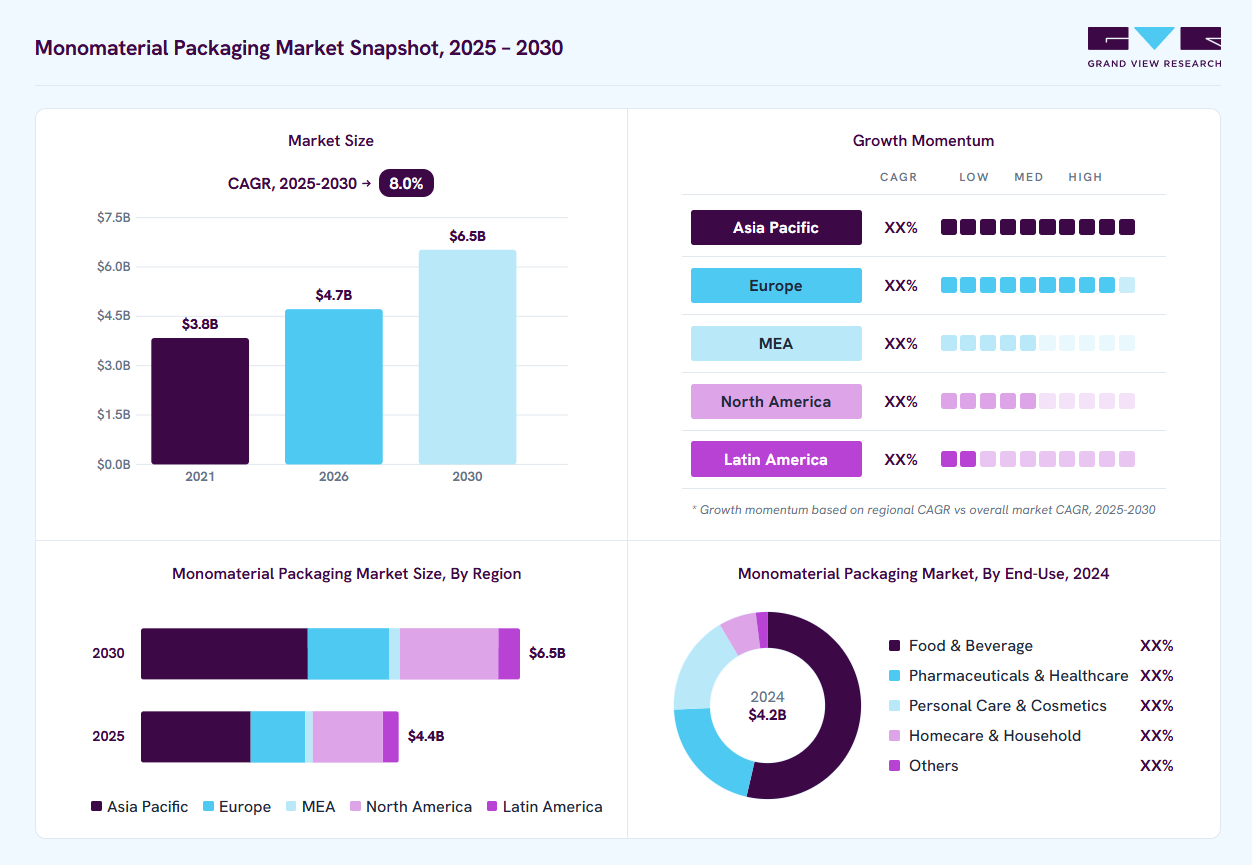
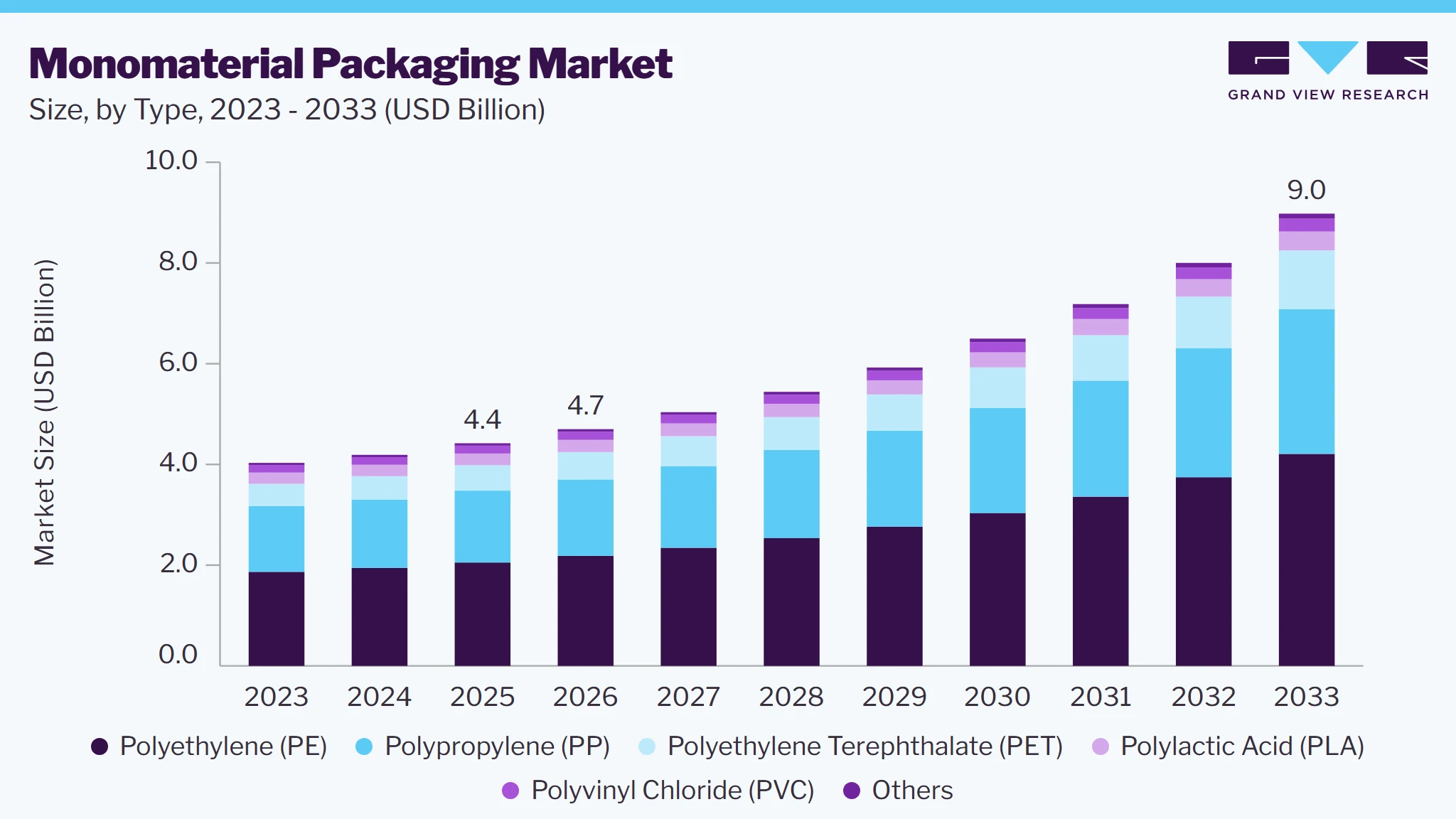
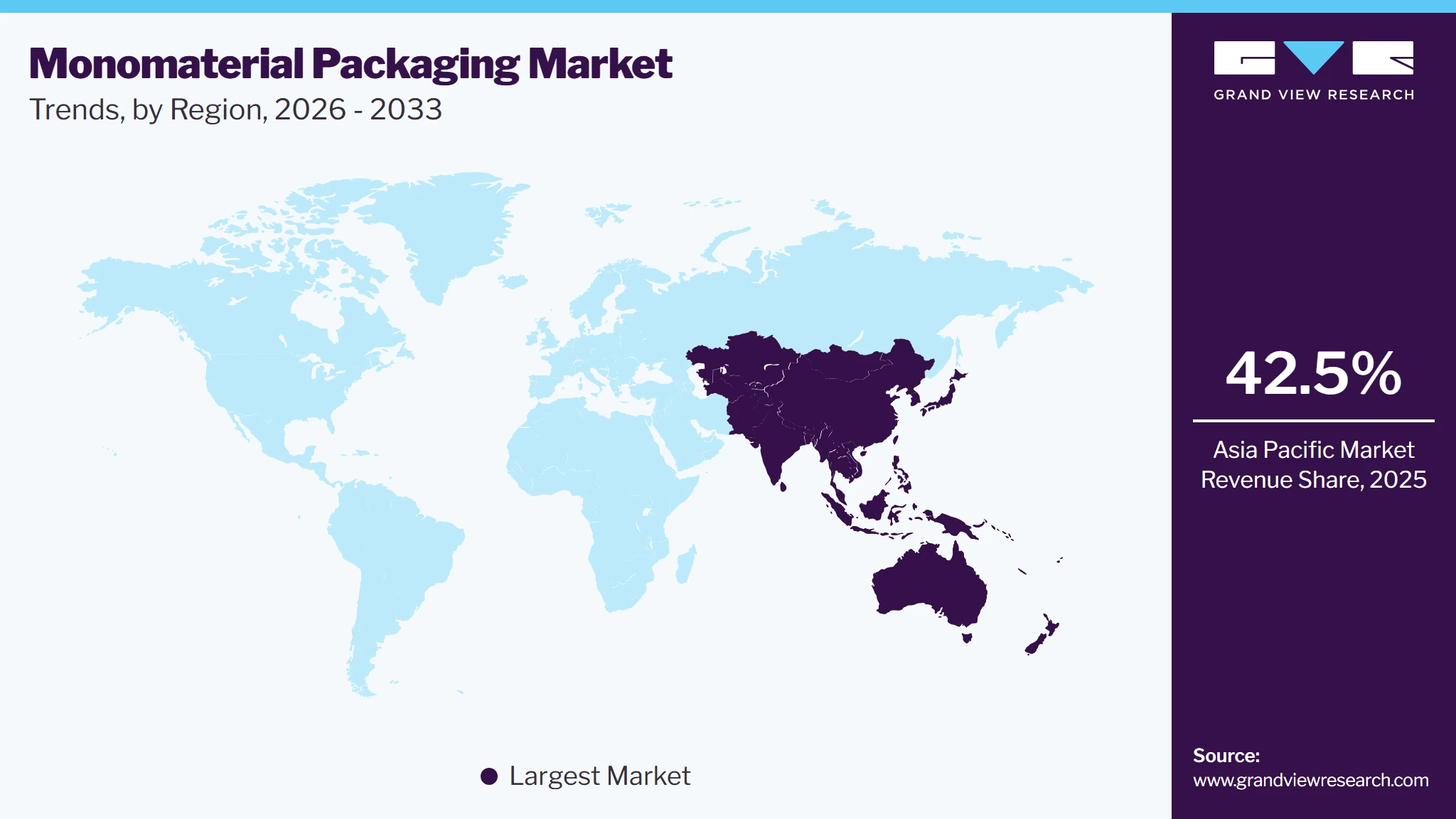
The global monomaterial packaging market size was valued at USD 4.4 billion in 2025 and is projected to grow from USD 4.7 billion in 2026 to USD 9.0 billion by 2033, at a CAGR of 9.7% from 2026 to 2033. Asia Pacific dominated the market, accounting for a revenue share of 42.5% in 2025. The monomaterial packaging sector is projected to expand as sustainability issues, regulatory demands, and technological innovations promote its acceptance.
Key Market Trends & Insights
- By type: Polyethylene (PE) segment held the largest market share of 46.4% in 2025.
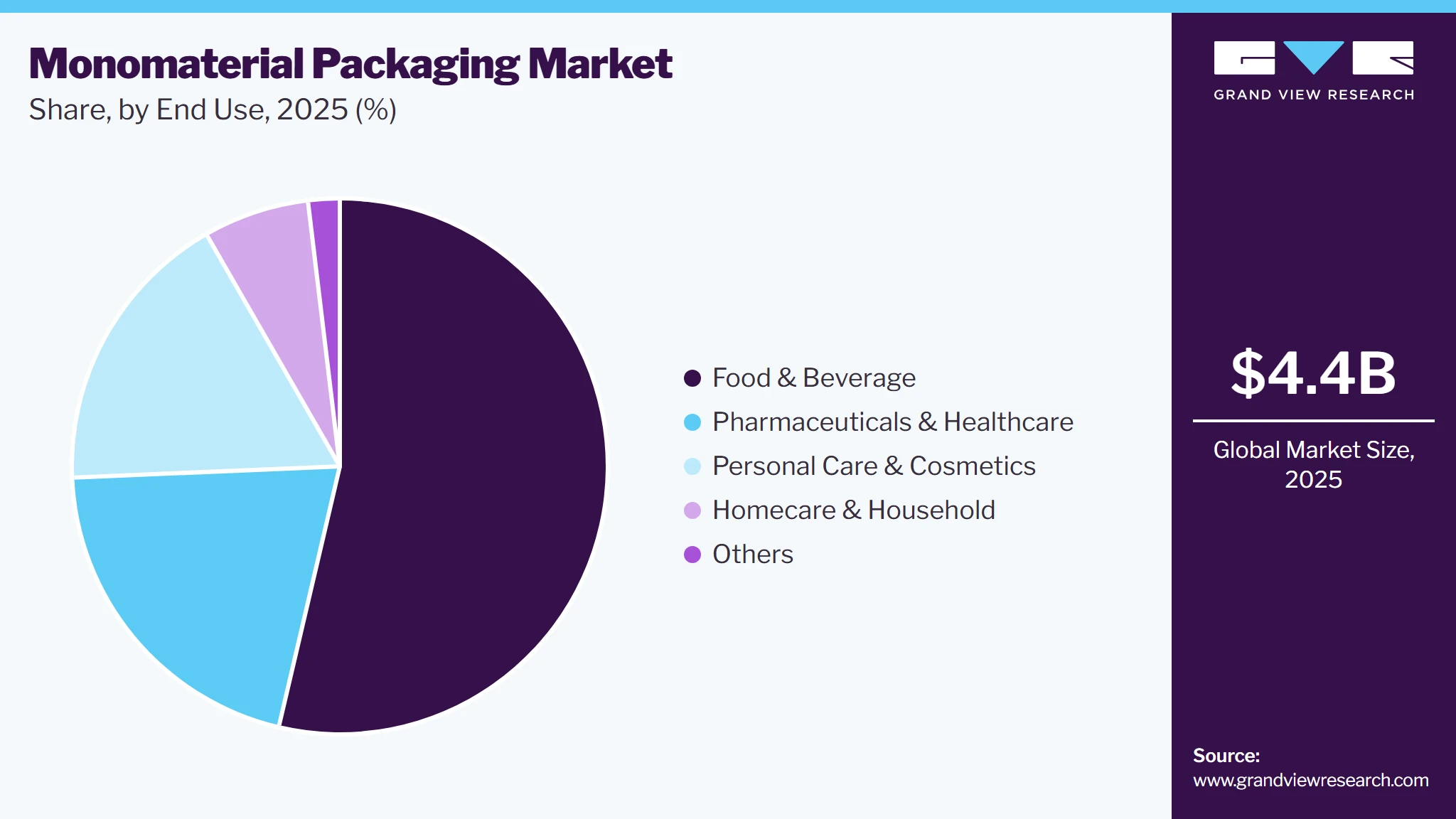
- By end use: Food & beverage segment held the largest market share of 53.7% in 2025.
Regional Highlights
- Largest regional market: Asia Pacific (42.5% revenue share, 2025)
- By country: China held the largest market share in 2025.
Market Size & Forecast
- Market size in 2025: USD 4.4 Billion
- Estimated market size in 2026: USD 4.7 Billion
- Projected market size by 2033: USD 9.0 Billion
- CAGR (2026-2033): 9.7%
Three ways to get this report
Buy it, customize it, or ask a question.Get the Full Report
What the study covers
- FormatsPDF · Excel · Dashboard
- Timeline2026–2033 annual, 2025 base
- Coverage20+ countries, 5 regions
- Companies10+ key players profiled
Customize the Report
20% free customization
- IncludeCountries, segments, points
- TailorTo your product definition
- ExtendDeeper competitor detail
- OrA fully bespoke study
- Turnaround5–10 working days
Ask an Analyst
A direct answer, usually in 1 working day
- AccessReport author, directly
- Reply timeWithin 1 working day
- No sales callDirect answer only
- FormatEmail reply
- CostFree, no cost
Rising consumer interest in recyclable packaging, coupled with more stringent Extended Producer Responsibility (EPR) regulations and restrictions on single-use plastics, is likely to encourage brands to pursue sustainable options.The growing popularity of e-commerce is anticipated to boost the demand for adaptable, recyclable packaging options. Furthermore, prominent brands and retailers, including Unilever, Nestlé, and P&G, are likely to keep investing in monomaterial packaging to fulfill their sustainability goals. Savings from optimized recycling methods and increased sourcing of local materials are also projected to promote adoption. As advancements in coating and processing technology progress, monomaterial packaging is expected to be instrumental in influencing the future of circular economy initiatives and environmentally friendly packaging.
Governments around the globe are implementing more stringent regulations on packaging waste and recyclability, including the EU’s Packaging and Packaging Waste Regulation (PPWR) and the U.S. Plastics Pact, prompting businesses to embrace monomaterial solutions. The increasing emphasis on a circular economy and the urgency to minimize plastic waste in landfills will further hasten this shift.
Advancements in mechanical and chemical recycling methods, which will improve the effectiveness of reprocessing mono-material plastics, are anticipated to benefit the market. Furthermore, reductions in the costs of recyclable resins and a rise in investments in closed-loop recycling systems are predicted to establish mono-material packaging as a sustainable long-term option across various sectors.
Market Dynamics
The monomaterial packaging market is witnessing steady growth, driven by increasing sustainability regulations, rising demand for recyclable packaging, and strong commitments from brand owners to support circular economy initiatives. Advances in material science and barrier technologies are improving the performance of monomaterial solutions across food, beverage, personal care, and healthcare applications. While challenges related to barrier performance, processing compatibility, and development costs remain, ongoing innovation, expanding recycling infrastructure, and growing investments in sustainable packaging are expected to support long-term market growth.
The growing demand for recyclable packaging and the global transition toward a circular economy are the primary drivers of the monomaterial packaging market. Governments across major economies are implementing stricter packaging waste regulations, extended producer responsibility (EPR) schemes, and recycled content targets, encouraging manufacturers to replace difficult-to-recycle multi-material structures with monomaterial alternatives. At the same time, consumer goods companies are strengthening their sustainability commitments by redesigning packaging portfolios to improve recyclability and reduce environmental impact, significantly accelerating the adoption of monomaterial packaging.
Continuous advancements in polymer technologies, barrier coatings, and packaging design are enabling monomaterial solutions to achieve performance levels suitable for food, beverage, personal care, and healthcare applications while maintaining compatibility with existing recycling systems. Packaging manufacturers are also collaborating with brand owners and recycling organizations to develop high-performance recyclable packaging that supports closed-loop material recovery. As sustainability becomes a core business priority across industries, the demand for monomaterial packaging is expected to increase steadily over the forecast period.
A significant restraint for the monomaterial packaging market is the difficulty of achieving the high barrier performance offered by conventional multi-material packaging. Many applications, particularly in food, pharmaceuticals, and sensitive consumer goods, require strong protection against moisture, oxygen, light, and contaminants to maintain product quality and shelf life. Although material innovations and advanced coatings have improved the functionality of monomaterial packaging, matching the performance of multi-layer structures remains challenging in certain high-barrier applications. This can limit adoption, increase development costs, and require additional investments in material engineering and packaging design.
Advancements in high-performance recyclable packaging technologies present a major opportunity for the monomaterial packaging market. Continuous innovations in polymer formulations, functional barrier coatings, and processing technologies are enabling monomaterial packaging to meet the performance requirements of demanding applications while remaining compatible with existing recycling systems. Growing investments by packaging manufacturers, material suppliers, and brand owners in developing next-generation recyclable solutions are expanding the use of monomaterial packaging across food, beverage, healthcare, personal care, and e-commerce sectors. These technological developments are expected to accelerate market adoption and create significant long-term growth opportunities.
Analyst Perspective
The monomaterial packaging market is expected to grow steadily, driven by increasing demand for recyclable packaging, stringent sustainability regulations, and stronger circular economy initiatives. Growing adoption across food & beverage, pharmaceuticals, personal care, and household products, along with advancements in polymer technologies and high-barrier recyclable materials, is supporting market expansion. Companies investing in sustainable packaging innovation and strategic collaborations are expected to strengthen their competitive position over the forecast period.
Type Insights
Based on type, the polyethylene (PE) segment led the market with the largest revenue share of 46.4% in 2025 and is projected to grow at CAGR of 8.1% during the forecast period. The market for polyethylene (PE)-based monomaterial packaging is anticipated to expand as the demand for sustainable and recyclable packaging solutions rises in sectors like food and beverage, pharmaceuticals, and personal care. More stringent EPR regulations and government initiatives aimed at reducing plastic waste are encouraging manufacturers to embrace PE-based monomaterial designs, which are more straightforward to recycle than multi-material options.
Moreover, the market for packaging made from polyethylene terephthalate (PET) nanomaterials is projected to expand due to the rising need for recyclable and high-performance packaging options in sectors like food & beverage, pharmaceuticals, and personal care. The growth of the beverage sector, particularly in bottled water and soft drinks, is anticipated to boost the demand for entirely recyclable PET bottles and containers. Furthermore, increasing investments in chemical recycling technology will improve the circularity of PET, making it possible to produce food-grade recycled PET (rPET). Heightened consumer awareness regarding sustainable packaging, along with brand efforts to reduce plastic waste, is additionally driving the trend toward adoption.
End-use Insights
Based on end use, the food & beverage segment led the market with the largest revenue share of 53.7% in 2025 and is projected to grow at a significant CAGR during the forecast period. The demand for sustainable, recyclable, and food-safe packaging solutions is anticipated to drive growth in the monomaterial packaging sector within the food and beverage industry. Tighter government regulations, such as Extended Producer Responsibility (EPR) policies and mandates for reducing packaging waste, are encouraging food brands to implement monomaterial designs that facilitate recycling and support circular economy objectives. Advancements in barrier coatings and high-performance monomaterial films, especially those made from polyethylene (PE), polypropylene (PP), and polyethylene terephthalate (PET), are enhancing the moisture, oxygen, and light barrier capabilities needed to preserve food freshness and lengthen shelf life.
The market for monomaterial packaging within the personal care and cosmetics sector is anticipated to expand due to the rising need for sustainable and recyclable packaging options. Stricter regulations imposed by governments aimed at reducing plastic waste and Extended Producer Responsibility (EPR) initiatives are encouraging beauty brands to transition to mono-material packaging that simplifies recycling. As consumers grow more environmentally conscious, there is an increased demand for refillable, recyclable, and biodegradable packaging in skincare, haircare, and cosmetic goods.
The increasing popularity of refillable beauty items and simple packaging designs is promoting the use of monomaterial solutions, as they contribute to reducing waste and supporting circular economy efforts. Additionally, improvements in chemical and mechanical recycling technologies will enhance the recyclability of mono-material personal care packaging, ensuring adherence to changing environmental regulations and consumer demands.
Region Insights
North America is anticipated to grow at a significant CAGR of 8.7% over the forecast period. The monomaterial packaging sector in North America is anticipated to expand due to strict sustainability regulations, a growing consumer preference for recyclable packaging, and innovations in material science. Initiatives like the U.S. Plastics Pact, Canada’s Zero Plastic Waste Initiative, and Extended Producer Responsibility (EPR) programs are motivating brands to shift towards entirely recyclable monomaterial packaging. Increasing awareness of plastic pollution and efforts to promote a circular economy are contributing to the demand for monomaterial solutions made from polyethylene (PE), polypropylene (PP), and polyethylene terephthalate (PET) across industries such as food and beverage, personal care, and pharmaceuticals.
U.S. Monomaterial Packaging Market Trends
The monomaterial packaging market in U.S. growth is majorly driven by the rising sustainability regulations, an increase in consumer preference for recyclable packaging, and improvements in recycling technologies. Government efforts like the U.S. Plastics Pact and state-level Extended Producer Responsibility (EPR) laws are prompting brands to move toward completely recyclable monomaterial packaging. Major corporations such as PepsiCo, Coca-Cola, Unilever, and Procter & Gamble are putting money into innovations in monomaterial packaging, including high-barrier films, recyclable pouches, and monomaterial PET bottles, to improve recyclability and lessen plastic waste.
Asia Pacific Monomaterial Packaging Market Trends
Asia Pacific dominated the monomaterial packaging market with the largest revenue share of 42.5% in 2025. The market for monomaterial packaging in the Asia-Pacific area is anticipated to expand because of heightened government regulations aimed at reducing plastic waste, growing environmental consciousness, and swift urban development. Nations such as China, Japan, India, and South Korea are implementing Extended Producer Responsibility (EPR) policies as well as bans on single-use plastics, compelling manufacturers to adopt recyclable and sustainable packaging alternatives.
The monomaterial packaging market in China held the largest share in the Asia Pacific region in 2025. The china monomaterial packaging market is experiencing robust growth largely driven by stringent government regulations regarding plastic waste, escalating sustainability objectives, and a growing consumer preference for environmentally friendly packaging. The Chinese government's policies on plastic waste management, which include prohibitions on non-recyclable plastic packaging and the encouragement of Extended Producer Responsibility (EPR) initiatives, are facilitating the uptake of monomaterial packaging options.
Europe Monomaterial Packaging Market
The market for monomaterial packaging in Europe is projected to expand significantly due to rigorous sustainability regulations, ambitious goals for a circular economy, and a rising consumer preference for recyclable packaging. Furthermore, the implementation of plastic taxes and deposit return schemes (DRS) is prompting businesses to move away from multi-material and non-recyclable packaging. As consumers in Europe increasingly emphasize eco-friendly packaging, the demand for monomaterial solutions in both flexible and rigid packaging formats is anticipated to grow swiftly in the region.
The Monomaterial Packaging Market in Central & South America is primarily driven by stricter environmental regulations, heightened consumer awareness regarding sustainability, and the growth of the food and beverage as well as personal care industries. The surge in food delivery, e-commerce, and retail sectors is driving the demand for lightweight and flexible packaging that is both economical and easier to recycle. Furthermore, innovations in high barrier monomaterial films and coatings are improving the shelf life and resilience of packaged products, positioning them as a feasible substitute for conventional multi-material structures. The increasing investment in mechanical and chemical recycling facilities, especially in countries such as Brazil and Mexico, is anticipated to bolster the acceptance of monomaterial packaging.
Key Monomaterial Packaging Company Insights
The competitive environment of the market is characterized by the presence of established players and emerging innovators focusing on advanced packaging technologies. Strategic collaborations, mergers, and acquisitions are common, as companies aim to strengthen their portfolios and expand their global footprint. The increasing emphasis on sustainable packaging solutions is driving heightened competition and innovation in this rapidly evolving market.
-
In January 2025, SGT Group, a prominent producer of PET preforms and food-grade rPET located in Rezé, Loire-Atlantique, announced a major achievement in its expansion: the purchase of Axium Packaging, an important participant in the plastic packaging sector. This strategic acquisition enhances SGT’s standing in the European market and paves the way for new opportunities in growth and innovation.
-
In January 2024, Mars China launched a Snickers bar that includes dark chocolate cereal and comes in mono-material flexible packaging. This innovative product provides a low-sugar and low-glycemic index (GI) alternative, along with individually wrapped portions created from a mono PP material, following the 'Designed For Recycling' principle for easy recycling in appropriate channels. Flexible packaging, celebrated for its lightweight nature, versatility, and resistance to moisture and humidity, is extensively utilized in the food sector for items like instant noodles, biscuits, and snack packaging supplies.
Key Monomaterial Packaging Companies:
The following key companies have been profiled for this study on the monomaterial packaging market.
-
Amcor Plc
-
Berry Global Group
-
Mondi Group
-
Sealed Air Corporation
-
Sonoco Products Company
-
Constantia Flexibles
-
ProAmpac
-
Borouge
-
Smurfit Kappa Group
-
TOPPAN Inc.
Competitive Benchmarking
Category
Operating Strategies
Competitive Edge
Weakness
Established Players (Amcor Plc, Berry Global Group, Mondi Group, Sealed Air Corporation, Sonoco Products Company, Constantia Flexibles, Smurfit Kappa Group, and TOPPAN Inc.)
- Invest in advanced mono-PE and mono-PP packaging technologies while expanding recyclable product portfolios to comply with evolving sustainability regulations and brand owner requirements.
- Strengthen global manufacturing capabilities and strategic partnerships with resin suppliers, converters, and consumer goods companies to accelerate innovation and market penetration.
- Extensive global production networks, strong financial resources, and diversified packaging portfolios enable large-scale commercialization and consistent supply across multiple end-use industries.
- Well-established R&D capabilities and long-term customer relationships support the development of high-performance monomaterial packaging with enhanced barrier properties and recyclability.
- Large operational structures and legacy manufacturing assets can reduce flexibility in adapting quickly to emerging material technologies and regional market shifts.
- High capital expenditure requirements for converting conventional multilayer packaging lines to monomaterial solutions may affect short-term profitability.
Emerging Players (ProAmpac and Borouge)
- Focus on developing specialized recyclable monomaterial packaging solutions through targeted innovation and investments in sustainable material technologies.
- Expand market presence by collaborating with brand owners, polymer producers, and regional converters while strengthening niche application offerings.
- Greater organizational agility enables faster commercialization of innovative monomaterial packaging solutions tailored to changing customer and regulatory requirements.
- Specialized expertise in sustainable materials and focused product development allows differentiation in high-growth packaging applications.
- Comparatively smaller manufacturing scale and limited geographic presence can restrict global customer reach and production capacity.
- Lower financial resources and narrower product portfolios may limit the ability to compete with established multinational packaging companies on large-volume contracts.
Global Monomaterial Packaging Market Report Scope
Report Attribute
Details
Market size in 2025
USD 4.4 billion
Estimated market size in 2026
USD 4.7 billion
Projected market size by 2033
USD 9.0 billion
Growth rate
CAGR of 9.7% from 2026 to 2033
Base year for estimation
2025
Historical data
2021 - 2024
Forecast period
2026 - 2033
Quantitative units
Revenue in USD million/billion and CAGR from 2026 to 2033
Report coverage
Revenue forecast, company ranking, competitive landscape, growth factors, and trends
Segments covered
Type, end use, region
Regional scope
North America; Europe; Asia Pacific; Latin America; MEA
Country scope
U.S.; Canada; Mexico; Germany; UK; France; Italy; Spain; China; Japan; India; South Korea; Australia; Brazil; Argentina; Saudi Arabia; South Africa; UAE
Key companies profiled
Amcor Plc; Berry Global Group; Mondi Group; Sealed Air Corporation; Sonoco Products Company; Constantia Flexibles; ProAmpac; Borouge; Smurfit Kappa Group; TOPPAN Inc.
Customization scope
Free report customization (equivalent up to 8 analysts' working days) with purchase. Addition or alteration to country, regional & segment scope.
Pricing and purchase options
Avail customized purchase options to meet your exact research needs. Explore purchase options
Global Monomaterial Packaging Market Report Segmentation
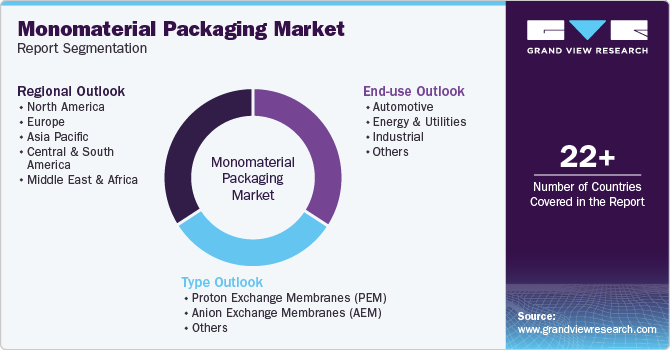
This report forecasts revenue growth at a global level and provides an analysis of the latest industry trends in each of the sub-segments from 2021 to 2033. For this study, Grand View Research has segmented the global monomaterial packaging market report based on type, end-use, and region:
-
Type Outlook (Revenue, USD Million, 2021 - 2033)
-
Proton Exchange Membranes (PEM)
-
Anion Exchange Membranes (AEM)
-
Others
-
-
End-use Outlook (Revenue, USD Million, 2021 - 2033)
-
Automotive
-
Energy & Utilities
-
Industrial
-
Others
-
-
Region Outlook (Revenue, USD Million, 2021 - 2033)
-
North America
-
U.S.
-
Canada
-
Mexico
-
-
Europe
-
Germany
-
France
-
UK
-
Italy
-
Spain
-
-
Asia Pacific
-
China
-
India
-
Japan
-
South Korea
-
Australia
-
-
Central & South America
-
Brazil
-
Argentina
-
-
Middle East & Africa
-
South Africa
-
Saudi Arabia
-
UAE
-
-
Research Methodology
The monomaterial packaging market figures in this report are based on a proven research process that combines executive interviews with secondary research from proprietary databases, company filings, and recognized regulatory and institutional sources. Market size is built through value-chain sizing - reconciling supply-side and demand-side estimates - and triangulated with bottom-up and top-down approaches. Every estimate passes multiple levels of expert validation before publication, with each monomaterial packaging segment quantified using the revenue-capture definitions in the table below.
Segment Definition
Segment - Type
Revenue capture definition
Polyethylene (PE)
Revenue generated from the sale of monomaterial packaging manufactured entirely from polyethylene (PE), including HDPE and LDPE grades. This segment includes recyclable films, pouches, bags, and rigid containers used across food, beverage, personal care, homecare, and industrial packaging applications.
Polypropylene (PP)
Revenue generated from the sale of monomaterial packaging produced entirely from polypropylene (PP). This segment includes flexible and rigid packaging formats such as pouches, trays, tubs, caps, and closures designed to deliver high heat resistance, durability, and improved recyclability.
Polyethylene Terephthalate (PET)
Revenue generated from the sale of monomaterial packaging made solely from polyethylene terephthalate (PET). This segment includes bottles, thermoformed trays, containers, and films used primarily in beverage, food, pharmaceutical, and personal care packaging applications where clarity and strength are essential.
Polylactic Acid (PLA)
Revenue generated from the sale of monomaterial packaging manufactured from polylactic acid (PLA), a bio-based and industrially compostable polymer. This segment includes compostable films, pouches, containers, and foodservice packaging designed to support sustainable packaging initiatives and reduce dependence on fossil-based plastics.
Polyvinyl Chloride (PVC)
Revenue generated from the sale of monomaterial packaging produced entirely from polyvinyl chloride (PVC). This segment includes shrink films, blister packaging, and specialty containers used in healthcare, consumer goods, and industrial applications requiring transparency, durability, and chemical resistance.
Others
Revenue generated from the sale of monomaterial packaging made from other single-polymer materials such as polystyrene (PS), polyamide (PA), or emerging recyclable polymers. This segment includes niche and specialty packaging solutions developed for specific end-use and performance requirements.
Segment - End Use
Revenue capture definition
Food & Beverage
Revenue generated from the sale of monomaterial packaging used for food and beverage products, including snacks, dairy, frozen foods, beverages, ready-to-eat meals, and confectionery. This segment includes flexible and rigid packaging designed to improve recyclability while maintaining product protection and shelf life.
Pharmaceuticals & Healthcare
Revenue generated from the sale of monomaterial packaging used in pharmaceutical and healthcare applications. This segment includes packaging for medicines, medical devices, diagnostic products, and healthcare consumables that require regulatory compliance, product safety, and enhanced material performance.
Personal Care & Cosmetics
Revenue generated from the sale of monomaterial packaging used for personal care and cosmetic products, including skincare, haircare, oral care, and beauty products. This segment includes bottles, tubes, pouches, jars, and refill packaging designed to improve recyclability and support brand sustainability goals.
Homecare & Household
Revenue generated from the sale of monomaterial packaging used for homecare and household products such as detergents, surface cleaners, disinfectants, and air care products. This segment includes bottles, refill pouches, and containers designed to improve circularity while ensuring product compatibility and durability.
Others
Revenue generated from the sale of monomaterial packaging used in other end-use industries, including industrial chemicals, agriculture, pet care, automotive, and e-commerce packaging applications where recyclable single-material solutions are increasingly adopted.
Estimation Model
Layer Name
Key Question
Description
Packaging Demand Base Layer
What forms the demand base?
Identify global consumption volumes of packaged products across major end-use industries, including food & beverage, pharmaceuticals, healthcare, personal care, homecare, industrial goods, and e-commerce. This layer establishes the total addressable demand for monomaterial packaging by analyzing packaging consumption, sustainability adoption, and regulatory influence across regions.
Monomaterial Packaging Penetration Layer
Where is monomaterial packaging utilized?
Estimate the penetration of monomaterial packaging compared with conventional multi-material packaging across different packaging formats and end-use industries. Assess adoption rates based on recyclability requirements, corporate sustainability commitments, regulatory compliance, material innovations, and regional recycling infrastructure.
Material & Packaging Consumption Layer
How much monomaterial packaging is consumed?
Analyze consumption volumes by polymer type (PE, PP, PET, PLA, PVC, and others), packaging formats, and end-use industries. Evaluate demand based on packaging production volumes, material substitution trends, product performance requirements, and regional manufacturing capacities to estimate overall market volume.
Revenue Layer
How is market revenue generated?
Market revenue is quantified through the production and sale of monomaterial packaging materials and finished packaging solutions supplied to brand owners, converters, and packaging manufacturers. Revenue is generated from flexible and rigid packaging used across food & beverage, pharmaceuticals, personal care, homecare, and other industrial applications, supported by increasing investments in recyclable packaging technologies, sustainability initiatives, and circular economy adoption.
Delivered Customizations
This report has been delivered with the following In-depth customizations
Client Request
Customization Delivered
Value Adds
Regional Segmentation Analysis
Delivered a detailed regional assessment of the Monomaterial Packaging Market across North America, Europe, Asia Pacific, Central & South America, and Middle East & Africa, covering market size, growth trends, regulatory developments, recycling infrastructure, sustainability initiatives, and country-level demand patterns.
Enabled identification of high-growth regions, investment hotspots, regulatory influences, and regional demand variations to support market expansion and strategic planning.
Cross-Segmentation Analysis
Provided cross-segmentation analysis by combining Type (Polyethylene (PE), Polypropylene (PP), Polyethylene Terephthalate (PET), Polylactic Acid (PLA), Polyvinyl Chloride (PVC), Others) and End Use (Food & Beverage, Pharmaceuticals & Healthcare, Personal Care & Cosmetics, Homecare & Household, Others) to identify high-growth application areas, material adoption trends, and evolving customer preferences.
Helped identify the most attractive material-end use combinations, enabling focused product development, portfolio optimization, and targeted business expansion strategies.
Competitive Benchmarking
Benchmarked key market participants based on monomaterial portfolio, material innovation across PE, PP, PET, PLA, and PVC solutions, sustainability initiatives, production capabilities, geographic presence, strategic partnerships, and recent product developments.
Provided actionable insights into competitor positioning, innovation capabilities, and strategic differentiation to strengthen competitive planning and market positioning.
Frequently Asked Questions About This Report
The global monomaterial packaging market size was valued at USD 4.4 billion in 2025 and is estimated at USD 4.7 billion for 2026.
The global monomaterial packaging market is expected to grow at a CAGR of 9.7% from 2026 to 2033, reaching USD 9.0 billion by 2033.
Asia Pacific dominated the monomaterial packaging market with a 42.5% revenue share in 2025.
The key players in the monomaterial packaging market include Amcor Plc; Berry Global Group; Mondi Group; Sealed Air Corporation; Sonoco Products Company; Constantia Flexibles; ProAmpac; Borouge; Smurfit Kappa Group; and TOPPAN Inc.
Asia Pacific is the fastest-growing region in the monomaterial packaging market with a CAGR of 10.4% over the forecast period.
The polyethylene terephthalate (PET) is the fastest-growing type segment in the monomaterial packaging market with a CAGR of 11.5% over the forecast period.
The polyethylene (PE) segment led the monomaterial packaging market with a 46.4% revenue share in 2025.
The food & beverage segment led the monomaterial packaging market with a 53.7% revenue share in 2025.
Key factors driving the monomaterial packaging market include rising demand for recyclable packaging, stringent sustainability regulations, circular economy initiatives, and advancements in polymer technologies.
About the Author(s)
Plastics, Polymers & Resins Research Team
Bulk Chemicals · Plastics, Polymers & ResinsThis report was authored by the plastics, polymers & resins research team at Grand View Research - comprising two research analysts, one senior research analyst, and one industry expert - with specialized expertise in the plastics, polymers & resins segment of the bulk chemicals industry. All findings are based on proprietary bulk chemicals databases, executive interviews, and regulatory analysis, subject to internal peer review prior to publication.
Last Updated:
Speak to Analyst


Customize this report to your needs - add regions, segments, or data points, with 20% free customization.
Or view our licence options:


ISO 9001:2015 & 27001:2022 Certified
We are GDPR and CCPA compliant! Your transaction & personal information is safe and secure. For more details, please read our privacy policy.


