
- Home
- »
- Consumer F&B
- »
-
Organic Snacks Market Size And Share Report, 2026-2033GVR Report cover

Organic Snacks Market (2026 - 2033)
Size, Share & Trends Analysis Report By Product (Grain Snacks, Nut-Based Snacks), By Distribution Channel (Supermarkets & Hypermarkets, Convenience Stores, Specialty Food Stores, Online Retailers), By Region, and Segment Forecasts
Market Size, 2025
$15.1BMarket Estimate, 2026
$17.1BMarket Forecast, 2033
$34.6BCAGR, 2026–2033
10.6%Organic Snacks Market Summary
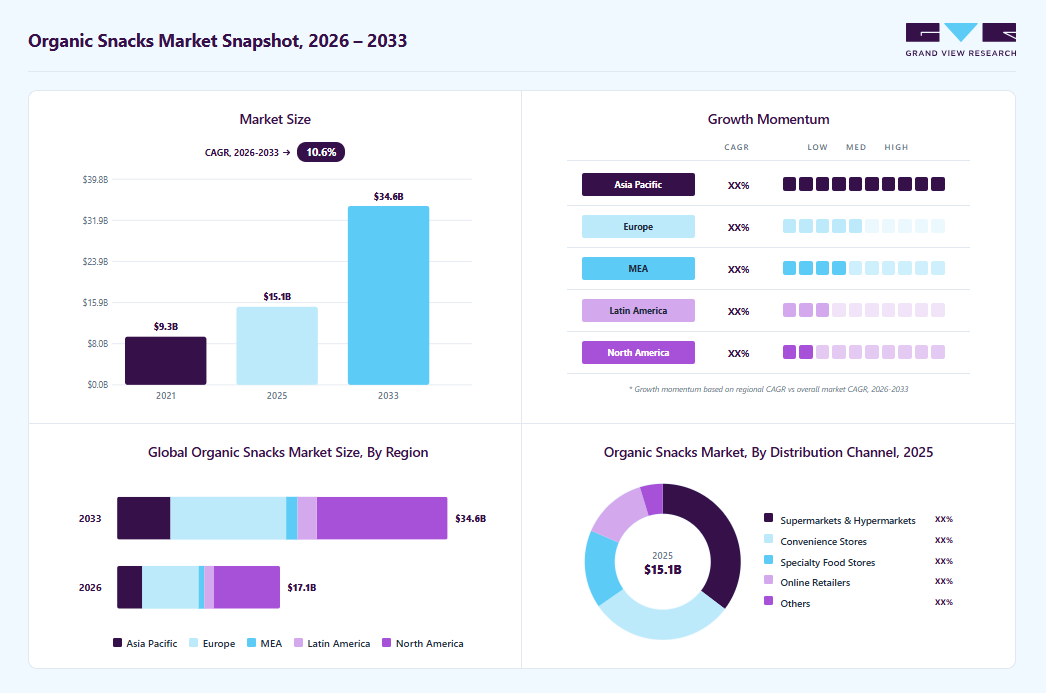
The global organic snacks market size was valued at USD 15.1 billion in 2025 and is projected to grow from USD 17.1 billion in 2026 to USD 34.6 billion by 2033, at a CAGR of 10.6% from 2026 to 2033. The North America led the global market with a share of 40.7% in 2025. Rising health consciousness among consumers has been boosting the consumption of organic foods across the globe.
 Source: Grand View Research, IR Documents, Primary Interviews, Paid DatabasesTo learn more about this report,
 Download Free Sample Report
 Key Market Trends & Insights
- By product: Snack bars segment led the market and accounted for a share of 19.7% in 2025.
- By product: Organic bakery snacks segment is expected to grow at a CAGR of 11.2% from 2026 to 2033.
- By distribution channel: Supermarkets & hypermarkets segment held the largest share of 35.3% in 2025.
Regional Highlights
- Largest regional market: North America (40.7% revenue share, 2025)
- Fastest-growing regional market: Asia Pacific (highest CAGR, 2026-2033)
- By country: The U.S. organic snacks industry held the largest revenue share of 82.0% in 2025.
Market Size & Forecast
- Market size in 2025: USD 15.1 Billion
- Estimated market size in 2026: USD 17.1 Billion
- Projected market size by 2033: USD 34.6 Billion
- CAGR (2026-2033): 10.6%
Three ways to get this report
Buy it, customize it, or ask a question.Ask an Analyst
Analyst response in 1 business day
- AccessReport author, directly
- Reply timeWithin 1 working day
- No sales callDirect answer only
- FormatEmail reply
- CostFree, no cost
Get the Full Report
What the study covers
- FormatsPDF · Excel · Dashboard
- Timeline2026–2033 annual, 2025 base
- Coverage20+ countries, 5 regions
- Companies10+ key players profiled
Customize the Report
20% free customization
- IncludeCountries, segments, points
- TailorTo your product definition
- ExtendDeeper competitor detail
- OrA fully bespoke study
- Turnaround5–10 working days
Furthermore, the buyers have been opting for such natural foods in order to avoid the harmful impact of the synthetic fertilizers used in conventional nutritional products. Over the past few years, the presence of natural, healthy ingredients in small portions of food has played a key role in promoting the importance of snacking among millennials and kids. Increased spending on organic farming in several developed nations, such as the U.S., Canada, and Australia, is one of the major factors driving the market. These products are produced organically using organic-certified raw materials that are free of genetically modified organisms (GMOs) and artificial additives. These foods contain several healthy and nutritious ingredients, including vitamins, minerals, and proteins. To learn more about this report, Download Free Sample Report
 A primary factor behind this growth is the increased health awareness among consumers, who increasingly seek snacks that align with broader wellness goals such as improved nutrient intake, weight management, and reduced risk of chronic diseases. Organic snacks, often made from fruits, vegetables, whole grains, nuts, and seeds, are perceived as containing higher levels of protein, vitamins, minerals, antioxidants, and fiber than conventional alternatives, which can contribute to cardiovascular health and better metabolic function.
Shifts in consumer behavior and lifestyle dynamics have significantly influenced the organic snacks industry. Busy routines and the growing tendency to replace traditional meals with snacks have increased the importance of nutritional value in on-the-go consumption. As a result, consumers in the organic snacks market are not only prioritizing convenience but also seeking functional benefits, such as higher protein content, lower sugar levels, and clean, recognizable ingredients, attributes that organic snacks are well-positioned to deliver.
 To learn more about this report, Download Free Sample Report
 Innovation in form, function, and flavor emerges as a critical driver shaping the future of the market. On the form dimension, new snack formats such as crispy protein balls, superfood bites, fruit-flavored protein chews, and protein-enriched baked goods demonstrate how product developers are expanding beyond traditional bars to meet evolving taste and convenience demands. In March 2026, Once Upon a Farm launched five new organic, protein-focused product lines, including meat & bone broth baby pouches, legume blends, protein smoothies, and snack bars, to support kids from infancy to school age. The expansion emphasizes clean ingredients, at least 4g of protein per serving, and convenient formats tailored to different growth stages and nutritional needs.
Moreover, functional innovation remains at the forefront, with consumer interest strongest for protein, probiotics, omega-3s, and other health-enhancing ingredients, while flavor innovation, particularly bold, exotic, and fusion profiles, plays a key role in enhancing snack appeal. Consumers consistently rank flavor as one of the most important purchase drivers, even for health-oriented snacks.
Manufacturers are investing heavily in developing novel formulations, flavors, and formats that appeal to evolving palate preferences while reinforcing health credentials. This includes the rise of plant-based and vegan organic snacks, the incorporation of functional ingredients such as probiotics, adaptogens, and ancient grains, and innovative packaging solutions that enhance convenience and sustainability. Product innovations span a range of categories, from organic air-fried chips and gluten-free bars to fruit-based and nutrient-fortified snacks that meet the demand for premium taste experiences alongside health benefits.
For instance, in November 2025, Cerealto acquired a controlling stake in Colorado-based Fresca Foods, a U.S. co-manufacturer of natural and organic snacks, to establish a strong manufacturing presence in North America and rapidly enter the fast-growing U.S. natural and organic snacking market. The alliance combines Cerealto’s scale in co-manufacturing and private label with Fresca’s innovation and premium product expertise, giving Cerealto access to a broad U.S. customer base.
Consumer Insights for the Organic Snacks Market
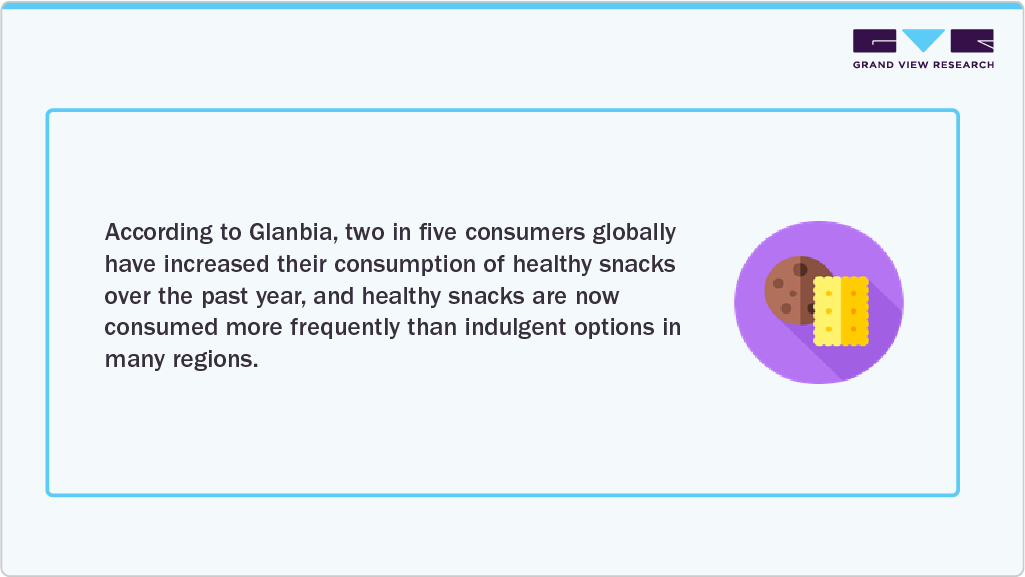
A majority of consumers report eating at least one healthy snack per day, highlighting the expanding role of these products in daily dietary patterns. Healthy snacks are especially associated with attributes such as naturalness, high protein, high fiber, and reduced sugar, reflecting a broader demand for products that offer both clean ingredients and functional benefits.
Consumers are also showing a stronger preference for ingredient transparency and recognizable sourcing, often checking labels before purchase. There is a noticeable shift toward snacks that align with specific lifestyles such as plant-based, gluten-free, or allergen-friendly diets. Convenience remains a key factor, with demand rising for portable, ready-to-eat formats that fit busy routines. Besides, ethical considerations like sustainability and responsible sourcing are increasingly influencing purchasing decisions.
 To learn more about this report, Download Free Sample Report
 Product Insights
Snack bars accounted for a revenue share of 19.7% in 2025. Consumption of organic snack bars is rising as consumers increasingly seek clean-label, convenient, and health-oriented snacking options that align with modern lifestyles. According to the data published in March 2024, a survey conducted among 1,257 U.S. shoppers, approximately 81% consumers claimed it was essential for them to purchase clean-label food products. In addition, growing awareness of the long-term health impacts of artificial additives, refined sugars, and preservatives has accelerated preference for snack bars made with organic grains, nuts, seeds, and natural sweeteners. In parallel, busier work routines and on-the-go eating habits are driving demand for portable, portion-controlled nutrition, particularly among urban professionals, fitness-oriented consumers, and parents purchasing for children.
 To learn more about this report, Download Free Sample Report
 Organic bakery snacks are expected to grow at a CAGR of 11.2% from 2026 to 2033. Consumption of organic bakery snacks is rising as consumers increasingly prioritize clean-label, minimally processed foods made with natural ingredients and free from synthetic additives, preservatives, and GMOs. Growing awareness around the health impacts of refined sugars, artificial flavors, and trans fats has encouraged shoppers to shift toward organic cookies, biscuits, breads, and snack bars perceived as safer and nutritionally superior. In May 2025, Clearspring launched its first range of organic sweet oat biscuits in three flavors (miso maple, matcha, and date), made with wholegrain oats and inspired by international/Japanese tastes. The biscuits are plant-based, high in fiber, refined sugar-free, and designed as convenient, grab-and-go healthy snack options. Besides, rising concerns about sustainability, pesticide residues, and ethical sourcing are reinforcing demand, particularly among urban consumers and families with children.
Distribution Channel Insights
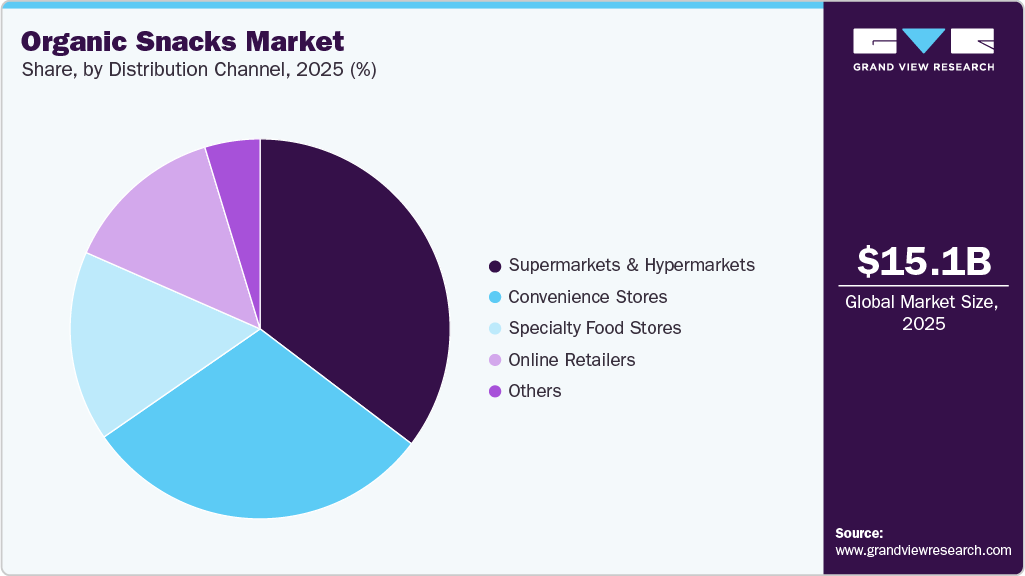
Sales of organic snacks through the supermarkets & hypermarkets accounted for a share of 35.3% in 2025. Sales of organic snacks through supermarkets and hypermarkets are rising as consumers increasingly seek convenient access to healthier, clean-label food options during routine grocery shopping. Large-format retail stores offer wide product assortments, competitive pricing, and frequent promotional discounts, making organic snacks more affordable and visible to a broader consumer base than specialty stores. In addition, supermarkets and hypermarkets benefit from strong consumer trust, clear in-store labeling, and dedicated organic sections, which reduce perceived risk around product authenticity and quality.
 To learn more about this report, Download Free Sample Report
 Sales of organic snacks through the online retail channel are expected to grow at a CAGR of 12.2% from 2026 to 2033. E-commerce platforms allow shoppers to easily compare ingredients, certifications, and nutritional claims, which is particularly important for organic snack buyers who are label-conscious and quality-driven. The expansion of direct-to-consumer (DTC) brands, subscription models, and personalized recommendations has further strengthened online adoption, especially among urban millennials and Gen Z consumers. Furthermore, improved cold-chain logistics, faster last-mile delivery, and the growing influence of digital marketing and social media health communities have made online channels a preferred channel for discovering and purchasing organic snacks that may be limited in traditional retail stores.
Regional Insights
The North American organic snacks market accounted for a share of 40.7% in 2025. Consumers across the U.S. and Canada are actively reducing intake of artificial preservatives, synthetic colors, and genetically modified ingredients, driving preference for USDA-certified and non-GMO organic snack options. This shift is reinforced by rising demand for plant-based, gluten-free, and low-sugar snacks, particularly among millennials and Gen Z, who view snacking as a functional part of daily nutrition rather than indulgence. Additionally, the expansion of organic private labels in mass retail, improved affordability, and wider availability through e-commerce and direct-to-consumer channels are accelerating market adoption.
 To learn more about this report, Download Free Sample Report
 U.S. Organic Snacks Market Trends
The organic snacks industry in the U.S. led the North American market and held the largest revenue share of 82.0% in 2025. American consumers are actively reducing intake of artificial additives, preservatives, and refined sugars, driving demand for snacks made with organic, non-GMO, and minimally processed ingredients. This shift is further reinforced by rising concerns around obesity, diabetes, and digestive health, particularly among millennials and Gen Z, who prioritize nutrition even in convenience foods.
Europe Organic Snacks Market Trends
The organic snacks industry in Europe accounted for a share of 34.7% in 2025. The market is rising steadily, driven by growing consumer awareness around health, clean-label ingredients, and sustainable food choices. Across Europe, consumers are increasingly avoiding artificial additives, preservatives, and high-sugar products, leading to stronger demand for organic, minimally processed snack options. The market is also benefiting from rising flexitarian and plant-based diets, particularly in countries such as Germany, France, and the Nordics, where organic certification and eco-labeling strongly influence purchase decisions.
The UK organic snacks industry led the European market and held the largest revenue share of 21.2% in 2025. The UK market is driven by strong consumer concern around ultra-processed foods and clean eating, especially among younger consumers. Growing trust in certified organic labels and supermarket expansion of organic ranges is increasing accessibility. Sustainability awareness, including ethical sourcing and eco-friendly packaging, further boosts demand. Even with cost pressures, consumers continue to prioritize quality and health in food choices.
The organic snacks market in Germany is expected to grow at a CAGR of 10.9% during the forecast period. The growth is fueled by strict organic regulations and high consumer trust in certification systems, making organic snacks more credible. Environmental consciousness plays a major role, with buyers preferring sustainable and low-impact products. A mature organic food culture and widespread availability in retail channels support consistent demand. Consumers also actively seek clean-label and non-GMO snack options.
Asia Pacific Organic Snacks Market Trends
The organic snacks industry in the Asia Pacific is expected to register the fastest CAGR of 11.5% from 2026 to 2033. The regional market is rising steadily, driven by growing health consciousness, rapid urbanization, and rising disposable incomes across countries such as China, India, Japan, and Australia. Consumers, particularly millennials and Gen Z, are increasingly seeking clean-label, minimally processed snacks free from artificial additives, GMOs, and excessive sugar, aligning with broader wellness and preventive health trends. The expansion of modern retail formats and e-commerce platforms has improved product accessibility, while government-led initiatives promoting organic farming and food safety standards have strengthened consumer trust.
The China organic snacks industry led the Asia Pacific market and held the largest revenue share of 26.6% in 2025. China has witnessed an emphasis on the modernization of the food supply chain and agricultural transparency. Strict state-level food safety frameworks and evolving consumer protection regulations govern the country. According to the data published in November 2025, China introduced stricter organic certification rules (effective Jan 2026) with tighter standards and post-certification monitoring to improve trust and compliance in the food sector. Consequently, efforts to boost consumer trust, along with the focus on premium organic options such as dried fruits, nuts, seeds, and organic dairy snacks, are expected to boost the regional market.
Central & South America Organic Snacks Market Trends
The organic snacks industry in Central & South America is expected to grow at a CAGR of 10.3% during the forecast period. Growth in this region is supported by expanding organic agriculture and local sourcing, improving product availability. Rising health awareness and a shift toward natural, plant-based diets are key drivers of demand. The growing middle class is increasingly willing to try healthier snack alternatives. Retail expansion and export-oriented organic production further enhance market development.
Middle East & Africa Organic Snacks Market Trends
The organic snacks industry in the Middle East & Africa is expected to grow at a CAGR of 10.5% during the forecast period. This region is driven by urbanization and rising health consciousness, particularly among younger, affluent consumers. The expansion of modern retail and the availability of premium products are improving access to organic snacks. Rising disposable incomes and lifestyle shifts toward wellness are encouraging adoption. Additionally, imported organic products and emerging local production are shaping the market’s growth trajectory.
Key Organic Snacks Company Insights
The market is characterized by the presence of both established players and a growing number of new entrants. Major companies are increasingly focusing on the expanding demand within the organic snacks industry, while diversifying their product portfolios to maintain and strengthen their market share.
Competition in the organic snacks market is intensifying as brands invest in product innovation, introducing new flavors, functional ingredients, and convenient formats to meet evolving consumer preferences. At the same time, smaller and emerging companies are gaining traction by emphasizing authenticity, transparency, and niche positioning. Private label brands are also expanding their footprint in the organic snacks industry by offering cost-effective organic alternatives through retail channels.
As a result, market share in the organic snacks industry continues to shift, driven by ongoing innovation, strong branding strategies, and the expansion of distribution networks.
 To learn more about this report, Download Free Sample Report
 Key Organic Snacks Companies:
The following key companies have been profiled for this study on the organic snacks market.
- Danone
- Hain Celestial Group
- General Mills Inc.
- Made in Nature
- Frito-Lay, Inc.
- Conagra Brands, Inc.
- Simply Natural LLC
- NAVITAS ORGANICS
- Hormel Foods Corporation
- Kadac Pty Ltd.
Recent Developments
-
In May 2025, Clearspring launched its first range of organic sweet oat biscuits in three flavors (miso maple, matcha, and date), made with wholegrain oats and inspired by international/Japanese tastes. The biscuits are plant-based, high in fiber, refined sugar-free, and designed as convenient, grab-and-go healthy snack options.
-
In March 2025, Hain Celestial expanded its collaboration with Walmart and Feeding America’s 2025 “Fight Hunger. Spark Change.” campaign by donating 10 cents to Feeding America for every specially marked bag of select Garden Veggie Snacks sold at participating Walmart stores from March 1-31, with a guaranteed minimum donation of USD 100,000 and a potential total of up to USD 250,000, helping provide at least the monetary equivalent of one meal per bag to people facing food insecurity across the U.S.
Organic Snacks Market Report Scope
Report Attribute
Details
Market size in 2025
USD 15.1 billion
Estimated Market size in 2026
USD 17.1 billion
Projected Market size by 2033
USD 34.6 billion
Growth rate
CAGR of 10.6% from 2026 to 2033
Base year for estimation
2025
Historical data
2021 - 2025
Forecast period
2026 - 2033
Quantitative units
Revenue in USD million/billion and CAGR from 2026 to 2033
Report coverage
Revenue forecast, company ranking, competitive landscape, growth factors, and trends
Segments covered
Product, distribution channel, region
Regional scope
North America; Europe; Asia Pacific; Central & South America; Middle East & Africa
Country scope
U.S.; Canada; Mexico; UK; Germany; France; Italy; Spain; China; India; Japan; South Korea; Australia & New Zealand; Brazil; South Africa
Key companies profiled
Danone; Hain Celestial Group; General Mills Inc.; Made in Nature; Conagra Brands, Inc.; Frito-Lay, Inc.; Simply Natural LLC; NAVITAS ORGANICS; Hormel Foods Corporation; Kadac Pty Ltd
Customization scope
Free report customization (equivalent up to 8 analysts working days) with purchase. Addition or alteration to country, regional & segment scope. Pricing and purchase options
Avail customized purchase options to meet your exact research needs. Explore purchase options Global Organic Snacks Market Report Segmentation
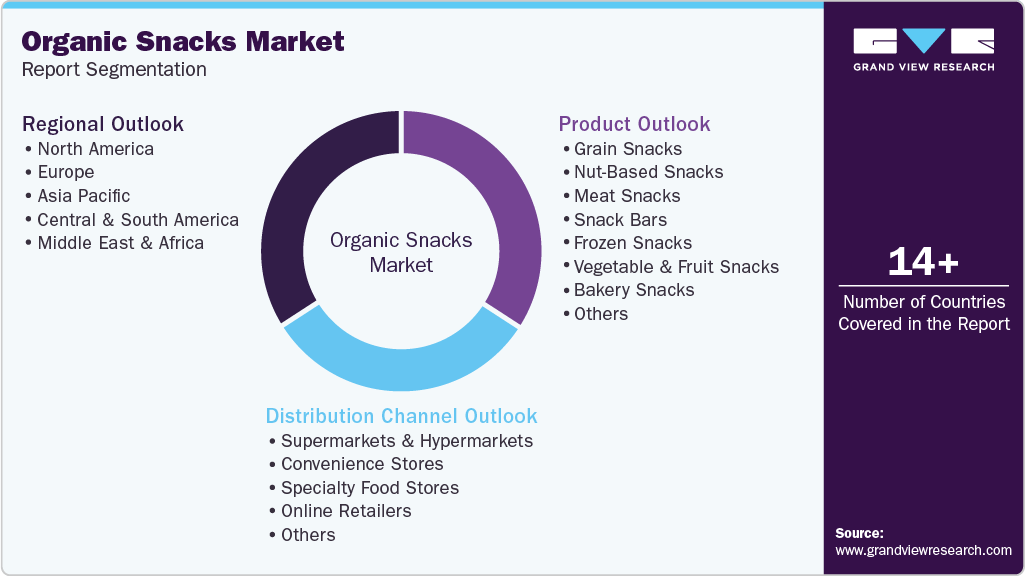
This report forecasts revenue growth at global, regional & country levels and provides an analysis on the latest trends and opportunities in each of the sub-segments from 2021 to 2033. For the purpose of this study, Grand View Research has segmented the global organic snacks market report on the basis of product, distribution channel, and region.
 To learn more about this report, Download Free Sample Report
 -
Product Outlook (Revenue, USD Million, 2021 - 2033)
-
Grain Snacks
-
Nut-Based Snacks
-
Meat Snacks
-
Snack Bars
-
Frozen Snacks
-
Vegetable & Fruit Snacks
-
Bakery Snacks
-
Others
-
-
Distribution Channel Outlook (Revenue, USD Million, 2021 - 2033)
-
Supermarkets & Hypermarkets
-
Convenience Stores
-
Specialty Food Stores
-
Online Retailers
-
Others
-
-
Regional Outlook (Revenue, USD Million, 2021 - 2033)
-
North America
-
U.S.
-
Canada
-
Mexico
-
-
Europe
-
UK
-
Germany
-
France
-
Italy
-
Spain
-
-
Asia Pacific
-
China
-
India
-
Japan
-
Australia & New Zealand
-
South Korea
-
-
Central & South America
-
Brazil
-
-
Middle East & Africa (MEA)
-
South Africa
-
-
Frequently Asked Questions About This Report
Snack bars segment accounted for a revenue share of 19.7% in 2025.
Some key players operating in the organic snacks market include: Danone, Hain Celestial Group, General Mills Inc., Made in Nature, Frito-Lay, Inc., Conagra Brands, Inc., Simply Natural LLC, NAVITAS ORGANICS, Hormel Foods Corporation, and Kadac Pty Ltd.
The global organic snacks market size was valued at USD 15.1 billion in 2025 and is expected to reach USD 17.1 billion in 2026.
The global organic snacks market is expected to grow at a compound annual growth rate of 10.6% from 2026 to 2033 to reach USD 34.6 billion by 2033.
Organic snack bars dominated the market with a share of 19.7% in 2025. Consumption of organic snack bars is rising as consumers increasingly seek clean-label, convenient, and health-oriented snacking options that align with modern lifestyles.
The North American dominated the global market with the largest share of 40.7% in 2025.
Sales of organic snacks through supermarkets & hypermarkets accounted for a share of 35.3% in 2025.
Key factors include the rising health consciousness among consumers, which has been boosting the consumption of organic snacks across the globe. Consumers have been opting for these natural foods in order to avoid the harmful impact of the synthetic fertilizers used in conventional food products.
About the Author(s)
Consumer F&B Research Team
Consumer Goods · Consumer F&BThis report was authored by the consumer f&b research team at Grand View Research - comprising two research analysts, one senior research analyst, and one industry expert - with specialized expertise in the consumer f&b segment of the consumer goods industry. All findings are based on proprietary consumer goods databases, executive interviews, and regulatory analysis, subject to internal peer review prior to publication.
Last Updated:
Speak to Analyst

Customize this report to your needs - add regions, segments, or data points, with 20% free customization.
Or view our licence options:


ISO 9001:2015 & 27001:2022 Certified
We are GDPR and CCPA compliant! Your transaction & personal information is safe and secure. For more details, please read our privacy policy.


