
- Home
- »
- Medical Devices
- »
-
Peripheral Vascular Imaging Contrast Media Market Report 2033GVR Report cover
![Peripheral Vascular Imaging Contrast Media Market Size, Share & Trends Report]()
Peripheral Vascular Imaging Contrast Media Market (2025 - 2033) Size, Share & Trends Analysis Report By Modality (CT/ X-ray, Ultrasound), By Product (Iodinated Contrast Media, Microbubble), By End-use, By Region, And Segment Forecasts
- Report ID: GVR-4-68040-808-8
- Number of Report Pages: 120
- Format: PDF
- Historical Range: 2021 - 2024
- Forecast Period: 2025 - 2033
- Industry: Healthcare
- Report Summary
- Table of Contents
- Segmentation
- Methodology
- Download FREE Sample
-
 Download Sample Report
Peripheral Vascular Imaging Contrast Media Market Summary
The global peripheral vascular imaging contrast media market size was estimated at USD 499.77 million in 2024 and is projected to reach USD 768.82 million by 2033, growing at a CAGR of 4.95% from 2025 to 2033. The market growth is attributed to the rising global prevalence of cardiovascular diseases (CVDs), peripheral artery disease (PAD), and diabetes-related vascular complications, which are increasing the demand for accurate diagnostic imaging.
Key Market Trends & Insights
- North America dominated the peripheral vascular imaging contrast media market with the largest revenue share in 2024.
- The peripheral vascular imaging contrast media market in the U.S. accounted for the largest market revenue share in North America in 2024.
- Based on modality, the CT/ X-ray segment led the market with the largest revenue share in 2024.
- Based on product, the iodinated contrast media segment led the market with the largest revenue share in 2024.
- Based on end use, the hospitals segment led the market with the largest revenue share in 2024.
Market Size & Forecast
- 2024 Market Size: USD 499.77 Million
- 2033 Projected Market Size: USD 768.82 Million
- CAGR (2025-2033): 4.95%
- North America: Largest market in 2024
- Asia Pacific: Fastest growing market
The growing adoption of minimally invasive diagnostic procedures, such as CT angiography, MR angiography, and digital subtraction angiography, enhances the need for advanced contrast agents providing high vascular visibility and improved safety profiles. Technological advancements, including low-osmolar and iso-osmolar iodinated contrast media, as well as gadolinium-based agents with reduced nephrotoxicity risks, enhance diagnostic precision and expand clinical applications. In addition, increasing healthcare expenditure, expanding diagnostic imaging infrastructure in emerging economies, and supportive government screening programs for early detection of vascular disorders are accelerating market growth.The rising prevalence of the aging population across various countries is expected to drive market growth. The older population is at higher risk of developing peripheral vascular or peripheral artery disease. According to data published by the Population Reference Bureau in January 2024, the number of individuals in America aged 65 and older is anticipated to rise by 47% from 58 million in 2022 to 82 million by 2050. The 65-and-older age group’s share of the overall population is estimated to increase from 17% to 23%. Aging is considered to be the most significant risk factor for vascular and chronic diseases. The rising geriatric population is expected to increase susceptibility toward chronic conditions such as cardiovascular disorders and other lifestyle disorders, which increases the risk of developing peripheral artery disease.
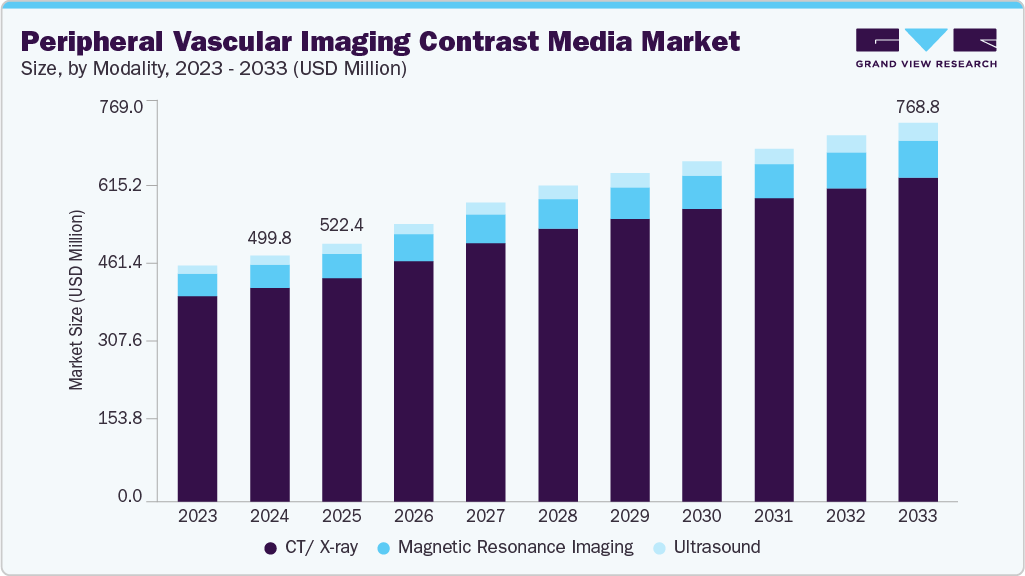
The rising adoption of imaging techniques such as computed tomography (CT), ultrasound, and magnetic resonance imaging (MRI) for diagnosing and treating conditions like peripheral artery disease (PAD) is projected to drive market growth. Several studies are currently being conducted to evaluate these imaging modalities in the context of PAD diagnosis and detection. For instance, an article published by BIBA Medical in May 2024 highlights research at the University of Twente and Rijnstate Hospital in the Netherlands investigating ultrafast contrast-enhanced ultrasound for blood flow quantification in PAD patients after endovascular treatment. Initial findings suggest that this innovative technique may offer a promising imaging alternative. The increasing number of research activities focusing on evaluating new imaging modalities for diagnosing and treating PAD is anticipated to boost market growth.
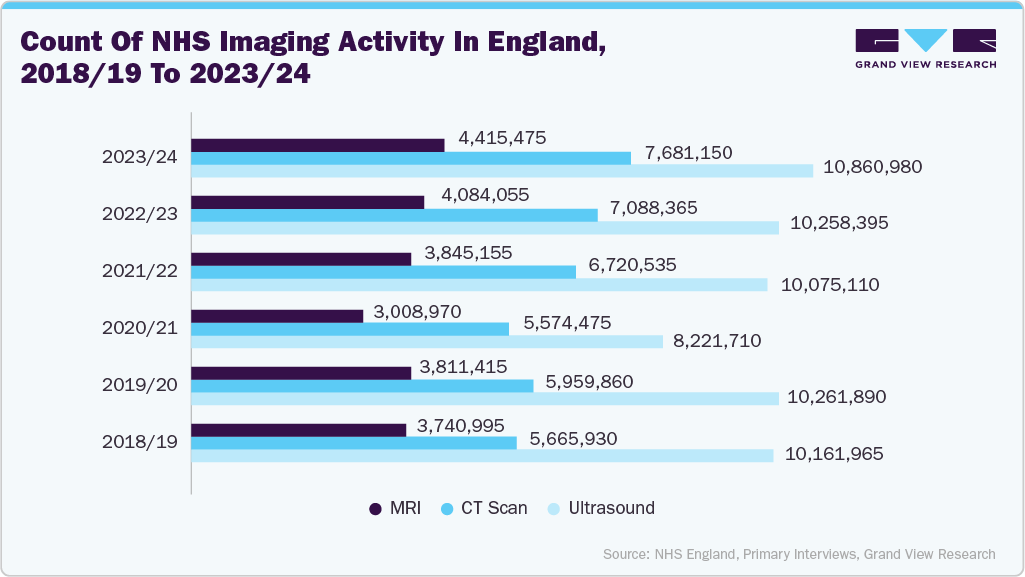
Furthermore, the demand for medical imaging has consistently increased over recent years, driven by technological advancements, an aging population, growing awareness about preventive healthcare, and the rising prevalence of chronic conditions and vascular diseases. A study published by the National Library of Medicine in October 2023 reports that nearly 40 million MRI scans are conducted annually in the U.S. In addition, European countries such as England are also widely adopting these modalities.
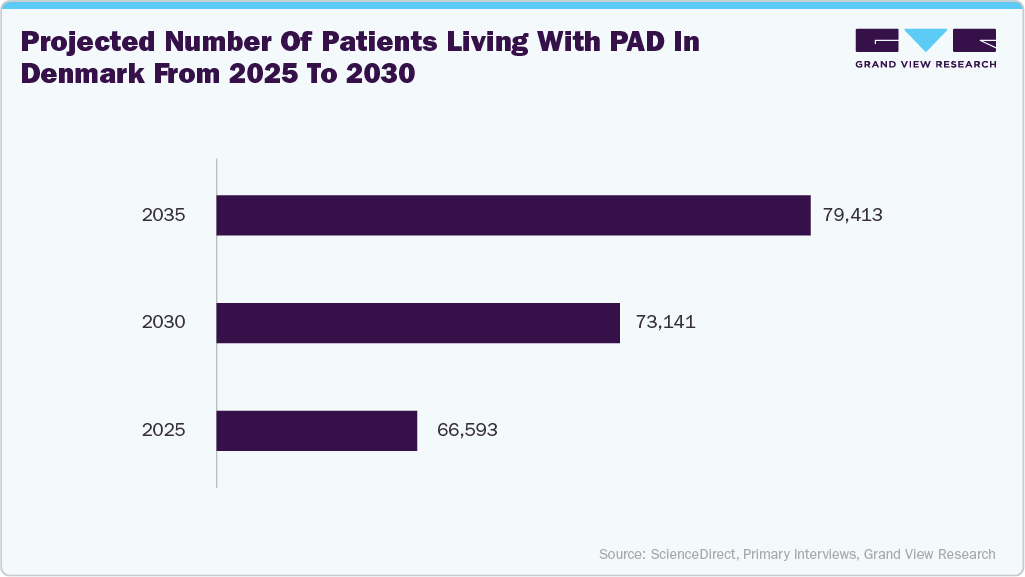
The growing burden of peripheral artery disease is expected to drive market growth over the forecast period. Peripheral vascular angiography is conducted to diagnose peripheral artery disease. According to an article published by the Trustees of the University of Pennsylvania in June 2024, an estimated 21 million Americans already live with peripheral artery disease (PAD), and this number is anticipated to grow to 24 million by 2030. Moreover, several studies have also reported an increase in the incidence of PAD across various countries in the coming years. For instance, the study published by ScienceDirect in November 2023 estimated that the prevalence of PAD will increase till 2030 in Denmark. Thus, the rising burden of peripheral artery disease is anticipated to boost market growth in the coming years.
Increasing regulatory approvals and the launch of new contrast agents in developed countries are significantly driving market growth. Regulatory bodies such as the FDA (U.S.), EMA (Europe), and other national agencies play a crucial role in approving new contrast agents that enhance the precision and safety of diagnostic imaging procedures. As these agencies streamline approval processes and provide faster pathways for promising contrast media, the market sees a more rapid introduction of advanced products. These new agents often come with improved formulations, reducing side effects, enhancing safety profiles, and offering better imaging capabilities, which in turn drives the adoption of PVA procedures across hospitals, diagnostic centers, and other healthcare settings.
Market Concentration & Characteristics
The degree of innovation in the peripheral vascular imaging contrast media industry is high, driven by continuous advancements in safety, precision, and application versatility. Recent innovations focus on developing next-generation contrast agents with enhanced biocompatibility, reduced nephrotoxicity, and improved vascular clarity to support the accurate diagnosis of peripheral artery disease (PAD) and other vascular disorders. Companies are investing in low-osmolar and iso-osmolar iodinated agents and macrocyclic gadolinium-based contrast media (GBCM), which offer superior stability and lower risk of tissue deposition. Research is also advancing towards targeted contrast agents for molecular imaging, allowing visualization at the cellular and plaque composition level and improving early disease detection. In addition, AI-integrated imaging protocols and dual-energy CT techniques are paired with innovative contrast agents to improve diagnostic workflows.
Regulations have a significant impact on the peripheral vascular imaging contrast media industry, shaping product development, safety standards, and market access. Regulatory agencies such as the U.S. FDA, EMA in Europe, and PMDA in Japan enforce stringent approval processes to ensure contrast agents demonstrate clinical efficacy, safety, and minimal risk of adverse reactions such as nephrogenic systemic fibrosis (NSF) or contrast-induced nephropathy (CIN). Compliance with guidelines on pharmacovigilance, manufacturing quality (GMP), and post-market surveillance increases development costs and lengthens time-to-market but ultimately enhances product reliability and patient safety. In addition, evolving regulatory focus on reducing heavy metal exposure and chemical toxicity pushes manufacturers toward safer formulations, such as macrocyclic gadolinium and low-osmolar iodinated agents. While these regulations ensure high standards of care, they also create barriers for new entrants, favoring established companies with strong compliance capabilities and strong clinical trial infrastructure.
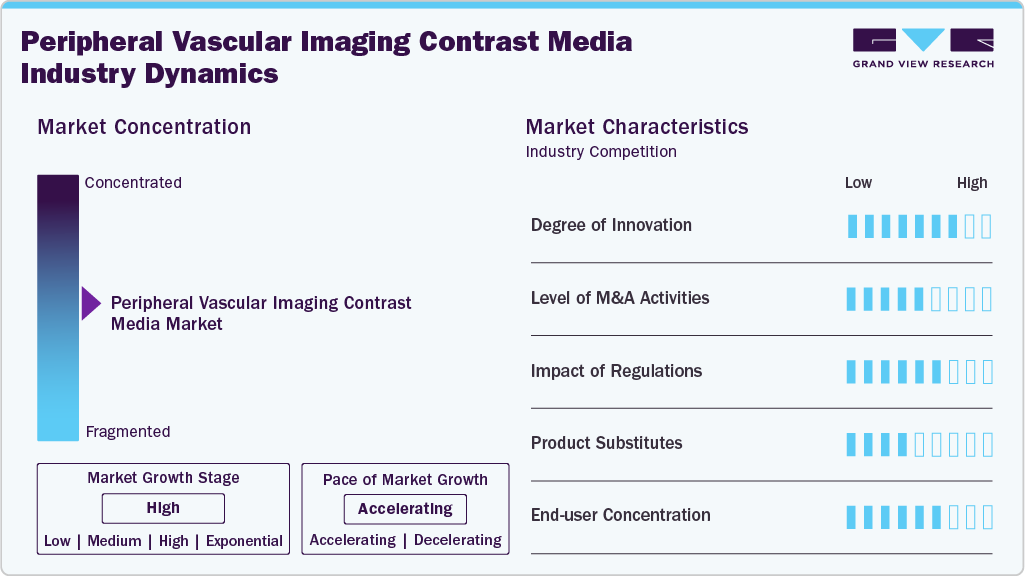
Mergers and acquisitions activity in the peripheral vascular imaging contrast media industry is moderate, primarily driven by strategic consolidation among leading contrast media manufacturers and imaging solution providers seeking to expand product portfolios and geographic reach. Major players are acquiring specialized imaging technology firms, contract manufacturing organizations (CMOs), and innovators of contrast agents to strengthen their competitive positioning and accelerate R&D capabilities. In addition, partnerships and acquisitions are increasingly focused on integrating AI-based imaging platforms, microbubble contrast agents, and precision diagnostic technologies to enhance workflow efficiency and clinical outcomes. While high regulatory and capital barriers limit large-scale consolidation, strategic collaborations and selective acquisitions continue to shape the competitive landscape by promoting innovation and expanding access to contrast-enhanced vascular imaging solutions globally.
End user concentration in the peripheral vascular imaging contrast media industry is relatively high, with demand largely dominated by hospitals, diagnostic imaging centers, and specialty cardiovascular clinics. Large multispecialty hospitals account for a major share due to their high patient volumes, advanced imaging infrastructure, and ability to perform complex vascular procedures using CT, MRI, and angiography. Diagnostic imaging centers are emerging as a fast-growing end-user segment, driven by the rising adoption of non-invasive vascular imaging and outpatient diagnostics. Meanwhile, specialty cardiovascular and interventional radiology centers contribute significantly due to the increasing prevalence of peripheral artery disease (PAD) and related vascular disorders. The concentration among institutional end users gives established suppliers stronger pricing power and long-term procurement contracts, while posing entry barriers for new manufacturers aiming to penetrate this competitive, clinically demanding market.
Modality Insights
Based on modality, CT/ X-ray held the largest share in 2024 due to its widespread adoption, high diagnostic accuracy, and ability to provide rapid, non-invasive visualization of peripheral vasculature. Computed tomography (CT) angiography and conventional X-ray angiography are preferred in clinical settings for detecting peripheral artery disease (PAD), aneurysms, and vascular malformations because they offer detailed anatomical imaging and facilitate precise treatment planning. The segment’s dominance is further supported by the increasing number of interventional procedures performed in hospitals and imaging centers, where contrast media are essential for enhancing vessel visibility.
Ultrasound is expected to witness the fastest CAGR over the forecast period due to its non-invasive nature, portability, and cost-effectiveness compared to CT and X-ray imaging. Ultrasound-based peripheral vascular imaging, including Doppler and color Doppler techniques, allows real-time assessment of blood flow, vessel patency, and hemodynamics without exposure to ionizing radiation, making it especially suitable for repeated monitoring and high-risk patient populations. Growing adoption in outpatient settings, point-of-care diagnostics, and emerging markets, along with advancements in high-resolution probes and contrast-enhanced ultrasound (CEUS) agents, are further driving the segment’s rapid growth.
Product Insights
Based on product, the iodinated contrast media segment held the largest share in 2024 due to its widespread use in CT and X-ray imaging, which remain the most commonly performed peripheral vascular imaging procedures globally. Iodinated agents offer high radiopacity, allowing for clear visualization of vascular structures, blockages, and aneurysms, which is crucial for accurate diagnosis and interventional planning. Their established safety profile, availability in various formulations (ionic and non-ionic), and compatibility with a broad range of imaging systems contribute to their dominant market presence.
Microbubble is expected to witness the fastest CAGR over the forecast period due to the growing adoption of ultrasound-based peripheral vascular imaging. Microbubble contrast agents enhance the echogenicity of blood, allowing real-time, high-resolution visualization of vascular structures, blood flow, and tissue perfusion without ionizing radiation. Their safety profile, non-invasiveness, and compatibility with portable and point-of-care ultrasound devices make them increasingly preferred, especially for patients with renal impairments who are at risk from iodinated or gadolinium-based agents. Ongoing technological advancements, expanding clinical applications, and increasing awareness among clinicians about the benefits of ultrasound contrast are further driving the rapid growth of the microbubble segment.
End-use Insights
Based on end use, hospitals held the largest share in 2024 and is expected to witness the fastest growth over the forecast period due to the high volume of peripheral vascular imaging procedures conducted in these settings. Hospitals offer comprehensive imaging infrastructure, including CT, MRI, X-ray, and ultrasound facilities, along with specialized staff capable of handling complex cases. The increasing prevalence of cardiovascular diseases, peripheral artery disease, and other vascular conditions drives routine and advanced imaging requirements in hospitals. In addition, hospitals often adopt advanced contrast media and imaging technologies first, supported by higher budgets, favorable reimbursement policies, and strong collaborations with contrast media manufacturers, further accelerating the segment’s growth during the forecast period.
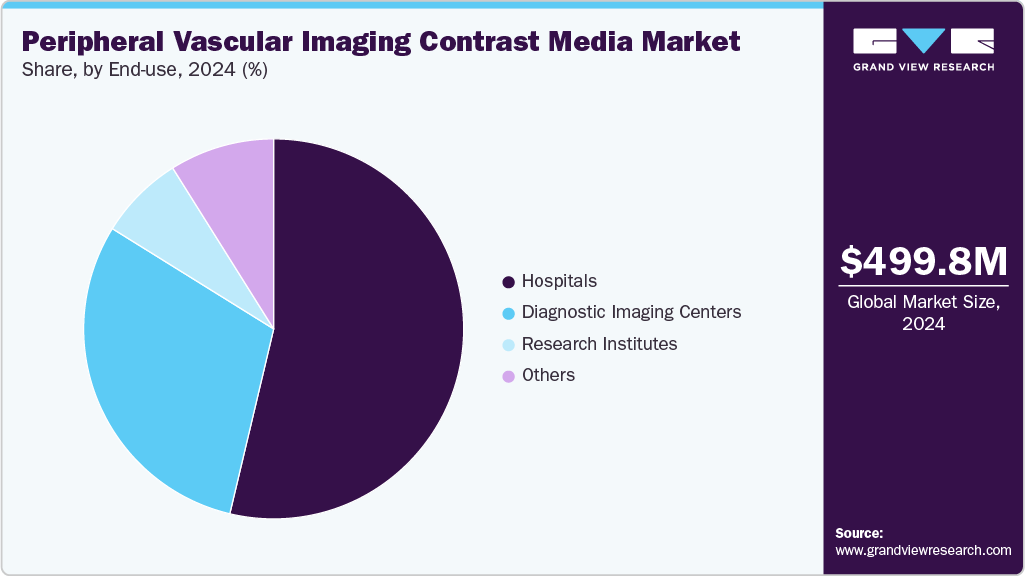
The diagnostic imaging centers segment is expected to grow significantly due to their increasing role in providing accessible, outpatient imaging services for peripheral vascular conditions. These centers offer convenient, cost-effective alternatives to hospital-based imaging, enabling patients to undergo CT, MRI, X-ray, and ultrasound procedures without extended hospital visits. Rising awareness of early detection, preventive healthcare, and growing patient preference for outpatient services fuel demand. In addition, diagnostic imaging centers are increasingly equipped with advanced imaging technologies and high-quality contrast media, allowing them to efficiently handle a wide range of vascular imaging procedures, thereby driving strong growth in the segment.
Regional Insights
The North America peripheral vascular imaging contrast media market is driven by the rising prevalence of peripheral artery disease (PAD) and other vascular disorders, increasing adoption of minimally invasive diagnostic procedures, and the growing geriatric population prone to cardiovascular conditions. Advancements in imaging technologies, such as CT and MRI angiography, and the introduction of safer, low-osmolar, and gadolinium-based contrast agents are enhancing diagnostic accuracy and patient outcomes. Moreover, favorable reimbursement policies, expanding healthcare infrastructure, and strong R&D investment by key players to develop targeted and biocompatible contrast formulations further contribute to regional market growth.
U.S. Peripheral Vascular Imaging Contrast Media Market Trends
The peripheral vascular imaging contrast media market in the U.S. is a significant driver due to the rising prevalence of peripheral vascular diseases (PVDs). There is an increased need for advanced diagnostic and therapeutic tools to manage these conditions effectively. According to the Heart Disease and Stroke Statistics by the American Heart Association 2023, the prevalence of Peripheral Artery Disease (PAD) is estimated to be 7 to 12 million affected individuals in the U.S.
Europe Peripheral Vascular Imaging Contrast Media Market Trends
The peripheral vascular imaging contrast media market in Europe is driven by the rising prevalence of cardiovascular diseases in Europe, which significantly increases demand. CVDs, including peripheral artery disease and atherosclerosis, require accurate diagnostic imaging for early detection and effective treatment planning. As the number of CVD patients increases, the demand for angiography procedures also rises. This creates an expanding market for contrast media, which is crucial for enhancing image clarity and supporting precise diagnosis and intervention during vascular imaging procedures. Thus, the growing CVD burden supports market growth. As per WHO data published in May 2024, CVDs are the leading cause of death and disability in Europe and are responsible for around 10,000 deaths per day in the WHO European Region.
The UK peripheral vascular imaging contrast media marketis witnessing key trends, including a growing shift toward low-toxicity and low-osmolar contrast agents, which aim to enhance patient safety and reduce nephrotoxicity risks. The rising burden of cardiovascular and peripheral artery diseases, particularly among the aging population, is driving the adoption of advanced imaging techniques like CT and MR angiography. Moreover, hospitals are increasingly focusing on cost-efficient, high-quality diagnostic imaging aligned with NHS sustainability and digital health initiatives.
Asia Pacific Peripheral Vascular Imaging Contrast Media Market Trends
The peripheral vascular imaging contrast media market in the Asia Pacific is experiencing the fastest CAGR from 2025 to 2033. In the Asia Pacific region, market trends reflect rapid growth in diagnostic imaging capacity, a rising cardiovascular disease burden, and investments in healthcare infrastructure. There’s an increasing uptake of CT-angiography and MR-angiography in emerging economies like India and China, driven by growing awareness of peripheral artery disease and diabetes-related vascular complications. Simultaneously, governments are gradually enhancing regulatory frameworks and reimbursement support for imaging procedures, which improves access. Technological innovation is driving the increased use of low-toxic iodinated and gadolinium-based agents, more automated injectors, and tighter integration with AI-assisted imaging systems to enhance safety, workflow, and diagnostic accuracy.
Japan peripheral vascular imaging contrast media marketis characterized by trends driven by the country’s rapidly aging population and evolving cardiovascular disease management policies. The growing prevalence of peripheral artery disease, diabetes, and hypertension among older adults is fueling demand for advanced diagnostic imaging modalities such as CT and MR angiography. The 2023 revision of Japan’s National Plan for Promotion of Measures Against Cardiovascular Disease (CVD) emphasizes early detection, preventive screening, and improved cardiovascular care, thereby boosting the utilization of contrast-enhanced imaging. In addition, there is an increasing shift toward safer, low-osmolar iodinated and gadolinium-based contrast agents to reduce adverse effects in elderly patients.
Latin America Peripheral Vascular Imaging Contrast Media Market Trends
The peripheral vascular imaging contrast media market in Latin America is experiencing significant growth, driven by several key factors. The rising prevalence of chronic and cardiovascular diseases, along with the gradual modernization of healthcare systems, is a concern. Demand for CT and MRI angiography is growing as countries expand diagnostic imaging capacity in urban and semi-urban centers. There’s an increasing shift toward safer, non-ionic iodinated agents and gadolinium-based media to reduce the risk of nephrotoxicity in populations at risk. At the same time, regulatory modernization, gradual expansion of reimbursement coverage, and investments in outpatient imaging centers are enabling broader access to contrast-enhanced vascular diagnostics.
Middle East Africa Peripheral Vascular Imaging Contrast Media Market Trends
The peripheral vascular imaging contrast media market in the Middle East and Africa is experiencing significant growth, driven by a divide between the advanced healthcare systems of the Gulf Cooperation Council (GCC) and less-resourced areas in Africa. In GCC countries, such as Saudi Arabia and the UAE, large-scale investments under initiatives like Vision 2030 are driving the adoption of high-end imaging infrastructure, including CT/MR angiography, advanced power injectors, and premium contrast agents. Meanwhile, in Africa, growth is constrained by limited infrastructure, a shortage of trained specialists, and variability in reimbursement. Still, there is a gradual expansion of outpatient diagnostic centres and a rising awareness of cardiovascular disease.
Key Peripheral Vascular Imaging Contrast Media Company Insights
The market is extremely fragmented, with both major and local market competitors. As current market players intensify their efforts to capture the market majority, fierce competition is anticipated, with the degree of competitiveness likely to rise even higher. Many market participants are engaging in various strategic activities, such as product launches, mergers and acquisitions, and geographic growth, in an effort to gain a competitive edge over rivals. Thus, with various strategies adopted by the market players, it is predicted to increase during the forecast period.
Key Peripheral Vascular Imaging Contrast Media Companies:
The following are the leading companies in the peripheral vascular imaging contrast media market. These companies collectively hold the largest market share and dictate industry trends.
- Bayer
- GE HealthCare
- Fresenius Kabi USA, LLC (Fresenius SE & Co. KGaA) USA, LLC (Fresenius SE & Co. KGaA)
- Bracco
- Guerbet
- Lantheus Holdings, Inc.
Recent Developments
-
In July 2024, Bracco and Verasonics, Inc. announced a strategic partnership aimed at enhancing research in medical imaging. This collaboration will merge Verasonics' Vantage NXT Research Ultrasound Systems with Bracco's contrast agents to investigate enhanced imaging performance across a range of research applications. The agreement also entails joint marketing initiatives, including online content and webinars, to present the outcomes of their research efforts.
In March 2024, "Samsung Medison, led by CEO Mr. Yongkwan Kim, and Bracco Imaging, under the leadership of CEO Dr. Fulvio Renoldi Bracco, endorsed a Memorandum of Understanding (MoU) to explore new frontiers in diagnostic ultrasound devices and contrast agents. This agreement was announced during the European Congress of Radiology 2024 (ECR 2024), held in Vienna, Austria, from February 28 to March 3. The MoU aims to foster synergy in research and development, as well as market exploration, by leveraging the advanced techniques and marketing strengths of Samsung Medison, a renowned manufacturer of innovative, premium ultrasound diagnostic equipment, alongside Bracco Imaging, a global leader in delivering comprehensive, end-to-end products and solutions across precision diagnostic imaging modalities.
-
In April 2024, The Bracco Group announced that it will launch its direct autonomous presence in the Japanese market starting in April 2024. The newly formed Bracco Japan will gradually replace Bracco Eisai, the joint venture established in 1990 and subsequently renewed twice.
Peripheral Vascular Imaging Contrast Media Market Report Scope
Report Attribute
Details
Market size value in 2025
USD 522.43 million
Revenue forecast in 2033
USD 768.82 million
Growth rate
CAGR of 4.95% from 2025 to 2033
Actual data
2021 - 2024
Forecast period
2025 - 2033
Quantitative units
Revenue in USD million/billion, and CAGR from 2025 to 2033
Report coverage
Revenue forecast, company ranking, competitive landscape, growth factors, and trends
Segments covered
Modality, product, end-use, region
Regional scope
North America; Europe; Asia Pacific; Latin America; MEA
Country scope
U.S.; Canada; UK; Germany; France; Italy; Spain; Denmark; Sweden; Norway; Japan; China; India; Australia; Thailand; South Korea; Brazil; Mexico; Argentina; South Africa; Saudi Arabia; Kuwait; UAE
Key companies profiled
Bayer; GE HealthCare; Fresenius Kabi USA, LLC (Fresenius SE & Co. KGaA); Bracco; Guerbet; Lantheus Holdings, Inc.
Customization scope
Free report customization (equivalent up to 8 analysts working days) with purchase. Addition or alteration to country, regional & segment scope.
Pricing and purchase options
Avail customized purchase options to meet your exact research needs. Explore purchase options
Global Peripheral Vascular Imaging Contrast Media Market Report Segmentation
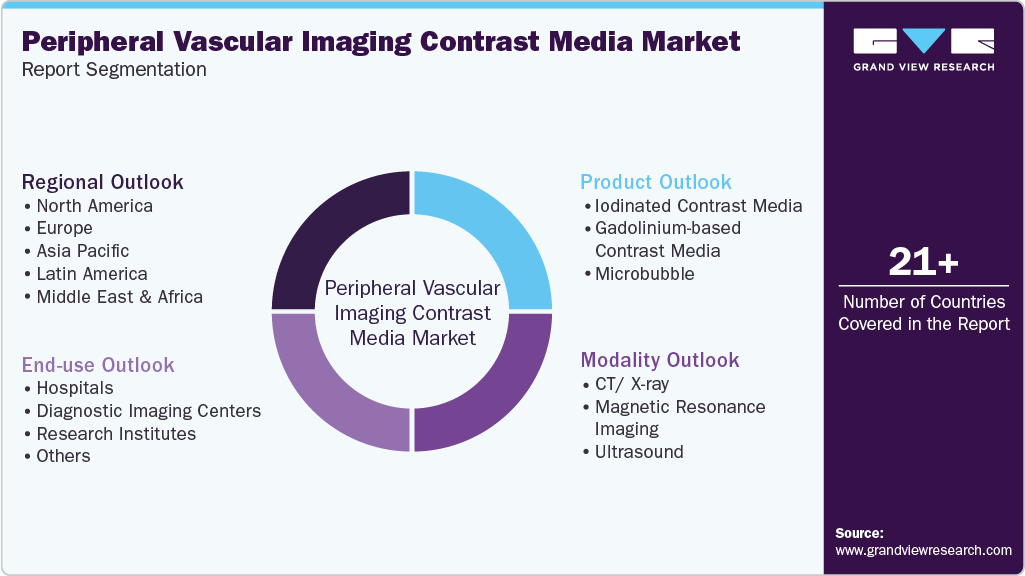
This report forecasts revenue growth at global, regional, and country levels and provides an analysis of the latest industry trends in each of the sub-segments from 2021 to 2033. For this study, Grand View Research has segmented the global peripheral vascular imaging contrast media market report based on modality, product, end-use, and region:
-
Modality Outlook (Revenue USD Million, 2021 - 2033)
-
CT/ X-ray
-
Magnetic Resonance Imaging
-
Ultrasound
-
-
Product Outlook (Revenue USD Million, 2021 - 2033)
-
Iodinated Contrast Media
-
Gadolinium-based Contrast Media
-
Microbubble
-
-
End-use Outlook (Revenue USD Million, 2021 - 2033)
-
Hospitals
-
Diagnostic Imaging Centers
-
Research Institutes
-
Others
-
-
Regional Outlook (Revenue, USD Million, 2021 - 2033)
-
North America
-
U.S.
-
Canada
-
Mexico
-
-
Europe
-
UK
-
Germany
-
France
-
Italy
-
Spain
-
Denmark
-
Sweden
-
Norway
-
-
Asia Pacific
-
Japan
-
China
-
India
-
Australia
-
Thailand
-
South Korea
-
-
Latin America
-
Brazil
-
Argentina
-
-
Middle East & Africa
-
South Africa
-
Saudi Arabia
-
UAE
-
Kuwait
-
-
Frequently Asked Questions About This Report
b. The global peripheral vascular imaging contrast media market size was estimated at USD 499.77 million in 2024 and is expected to reach USD 522.43 million in 2025.
b. The global peripheral vascular imaging contrast media market is expected to grow at a compound annual growth rate of 4.95% from 2025 to 2033 to reach USD 768.82 million by 2033.
b. CT/ X-ray dominated the peripheral vascular imaging contrast media market with a share of 86.82% in 2024. This is attributable to its widespread adoption, high diagnostic accuracy, and ability to provide rapid, non-invasive visualization of peripheral vasculature.
b. Some key players operating in the peripheral vascular imaging contrast media market include Bayer; GE HealthCare; Fresenius Kabi USA, LLC (Fresenius SE & Co. KGaA); Bracco; Guerbet; and Lantheus Holdings, Inc.
b. Key factors that are driving the market growth include the rising global prevalence of cardiovascular diseases (CVDs), peripheral artery disease (PAD), and diabetes-related vascular complications, which are increasing the demand for accurate diagnostic imaging.


Share this report with your colleague or friend.
Need a Tailored Report?
Customize this report to your needs — add regions, segments, or data points, with 20% free customization.


ISO 9001:2015 & 27001:2022 Certified
We are GDPR and CCPA compliant! Your transaction & personal information is safe and secure. For more details, please read our privacy policy.
Trusted market insights - try a free sample
See how our reports are structured and why industry leaders rely on Grand View Research. Get a free sample or ask us to tailor this report to your needs.













