
- Home
- »
- Plastics, Polymers & Resins
- »
-
pH Sensitive Polymer Hydrogels Market Report, 2026-2033GVR Report cover
![pH Sensitive Polymer Hydrogels Market (2026 - 2033)Report]()
pH Sensitive Polymer Hydrogels Market (2026 - 2033)
Size, Share & Trends Analysis Report By Polymer Type (Polyacrylic Acid & Polyacrylates, Natural Polymer-Based, Polyvinyl Alcohol (PVA), Polyacrylamide, Polyethylene Glycol (PEG)-Based), By Application, By Region, And Segment Forecasts
Market Size, 2025
$436.3MMarket Estimate, 2026
$473.6MMarket Forecast, 2033
$845.6MCAGR, 2026–2033
8.6%pH Sensitive Polymer Hydrogels Market Summary
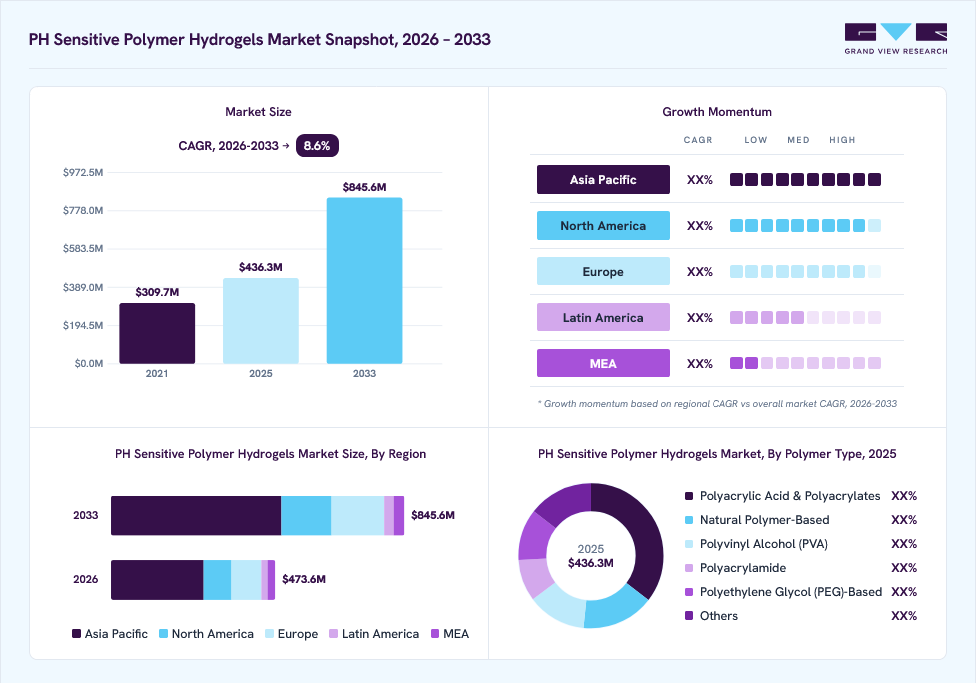
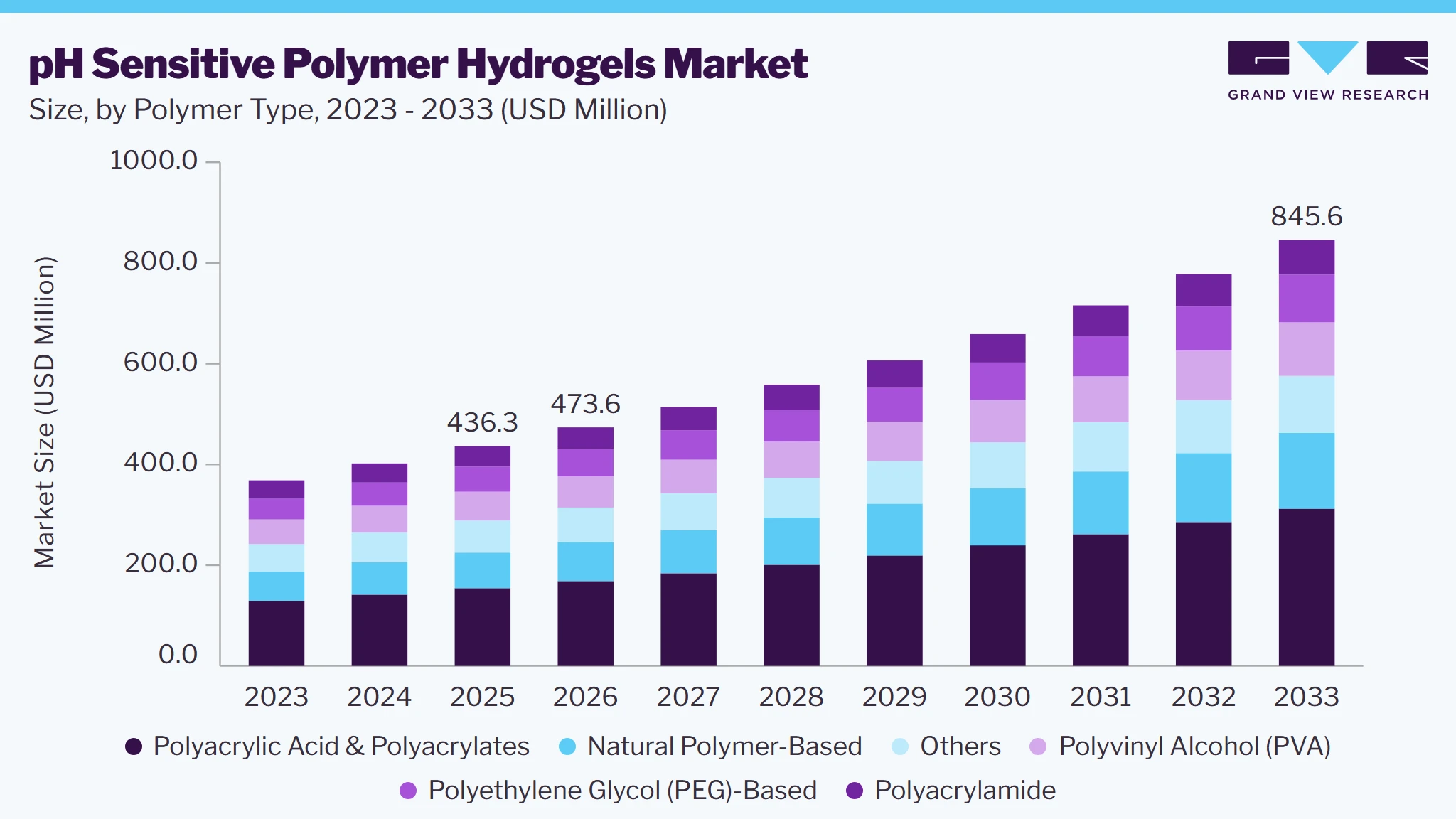
The global pH sensitive polymer hydrogels market size was valued at USD 436.3 million in 2025 and is projected to grow from USD 473.6 million in 2026 to USD 845.6 million by 2033, at a CAGR of 8.6% from 2026 to 2033. Asia Pacific dominated the market, accounting for the largest revenue share of 56.1% in 2025. The market is driven by growing demand for responsive hydrogel solutions across drug delivery, agriculture, wound care, tissue engineering, contact lenses, and other applications.
Key Market Trends & Insights
- By polymer type: Polyacrylic acid & polyacrylates segment held the largest share of 35.4% in 2025.
- By application: Drug delivery segment held largest revenue share of 39.3% 2025.
Regional Highlights
- Largest regional market: Asia Pacific (56.1% revenue share, 2025)
- By country: China held the largest market share in 2025
Market Size & Forecast
- Market size in 2025: USD 436.3 Million
- Estimated market size in 2026: USD 473.6 Million
- Projected market size by 2033: USD 845.6 Million
- CAGR (2026-2033): 8.6%
pH-sensitive polymer hydrogels offer controlled swelling, targeted release, water retention, biocompatibility, and tunable responsiveness, supporting efficient therapeutic and agricultural applications. Advancements in stimuli-responsive polymers, crosslinking technologies, and bio-based formulations are improving performance, while increasing focus on targeted healthcare, sustainable agriculture, and advanced biomaterials accelerates adoption.A distinct trend in the pH-sensitive polymer hydrogels market is the shift toward multifunctional hydrogels that combine pH responsiveness with additional properties such as antimicrobial activity, self-healing, mucoadhesion, and enhanced mechanical strength. Manufacturers are increasingly designing multifunctional hydrogel systems to address application-specific performance requirements, particularly in drug delivery, wound care, tissue engineering, and other biomedical applications.
Growing demand for targeted, responsive, and biocompatible materials is a major driver for the pH-sensitive polymer hydrogels market. These materials enable controlled drug release, moisture retention, tissue regeneration, and environment-responsive performance, supporting applications across healthcare and agriculture. Increasing investments in advanced drug delivery systems, wound management, regenerative medicine, smart contact lenses, and sustainable agricultural technologies are further accelerating market development by improving therapeutic precision, treatment outcomes, and resource efficiency.
Expanding adoption of smart biomaterials and stimuli-responsive technologies presents a significant opportunity for the pH-sensitive polymer hydrogels market. Increasing focus on targeted therapy, personalized healthcare, advanced wound treatment, tissue regeneration, and efficient agricultural inputs is creating opportunities for application-specific hydrogel formulations. Manufacturers are developing systems with tunable swelling, degradation, drug-release, and biocompatibility characteristics, supporting broader adoption across drug delivery, wound care, tissue engineering, contact lenses, agriculture, and emerging applications.
Market Dynamics
Pharmaceutical companies are emerging as a key driver for the pH-sensitive polymer hydrogels market, supported by growing demand for targeted and controlled drug delivery systems. The increasing development of oral formulations that protect therapeutics from gastric degradation and release them in specific gastrointestinal regions is raising demand for pH-responsive hydrogel platforms. Their ability to respond to GI pH variations enables site-specific release, supporting improved drug stability, bioavailability, and therapeutic efficiency.
Increasing investment by pharmaceutical companies in precision therapies is further accelerating the adoption of pH-sensitive polymer hydrogels. Growing requirements for localized drug delivery are encouraging the development of formulations that respond to acidic tumor microenvironments and release therapeutics at targeted sites. Their tunable swelling and release characteristics create opportunities for cancer therapies, oral drug delivery, and other site-specific treatments by improving drug accumulation while potentially reducing systemic exposure and associated side effects.
Mechanical weakness is emerging as a key restraint for the pH-sensitive polymer hydrogels market, driven by the fragile structural integrity and low mechanical strength of conventional bulk-polymerized hydrogel networks. Their high water content and soft structure can reduce resistance to deformation, fracture, and repeated mechanical loading, limiting suitability in applications requiring structural stability. These limitations may constrain broader adoption despite the benefits of pH-responsive swelling and controlled drug-release capabilities.
Targeted drug delivery presents a significant opportunity for the pH-sensitive polymer hydrogels market, supported by growing demand for localized treatment of inflammatory bowel disease and other gastrointestinal disorders. These hydrogels can respond to variations in gastrointestinal pH and enable controlled drug release at specific intestinal sites. Their ability to improve drug accumulation while limiting premature release and systemic exposure is creating opportunities for safer, more effective, and patient-focused therapies.
Market Concentration & Characteristics
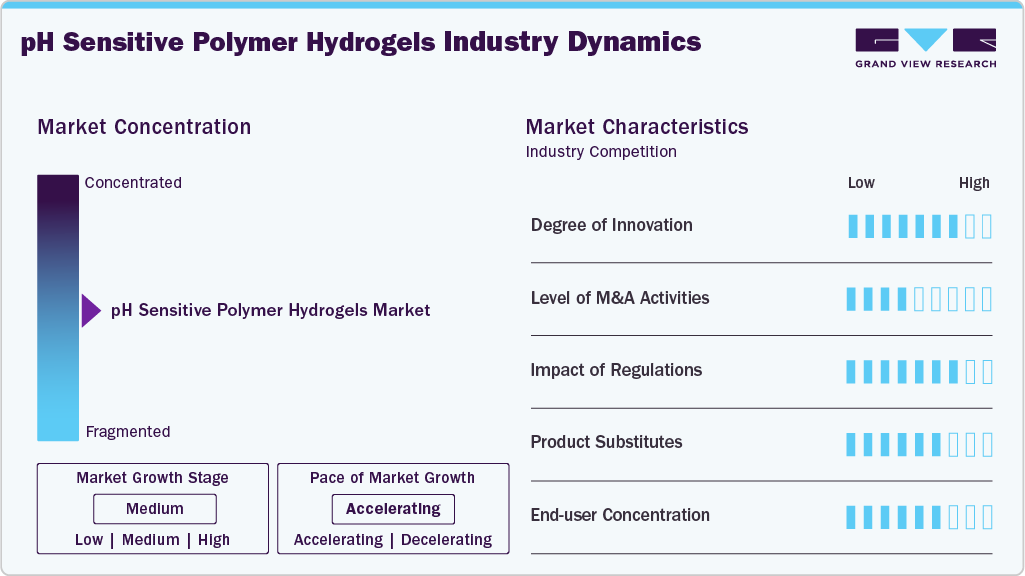
The market growth stage is medium, and growth is accelerating. The market exhibits fragmentation, with key players dominating the industry landscape. Major companies such as CD BioGlyco, Polymer Source, Creative BioMart, Lubrizol, Evonik Industries, BASF, Dow Chemical, Ashland, Sigma-Aldrich, Thermo Fisher Scientific, and others play a significant role in shaping the market dynamics. These leading players often drive innovation in the market by introducing new products, technologies, and materials to meet the industry's evolving demands.
The degree of innovation in the pH-sensitive polymer hydrogels market is moderate to high, driven by advances in polymer architecture, crosslinking techniques, nanocomposite systems, and stimuli-responsive formulations. Manufacturers are developing hydrogel systems with improved swelling control, biocompatibility, drug loading, and pH-triggered release. Recent research highlights tunable polymer networks and hybrid hydrogel platforms as promising approaches for site-specific delivery and tissue engineering, supporting applications across pharmaceutical and biomedical markets.
Product differentiation and performance-enhancement initiatives are shaping competitive positioning, with manufacturers focusing on optimized crosslinking density, responsive polymer groups, swelling behavior, and application-specific formulations. Advanced systems increasingly combine pH sensitivity with injectable, biodegradable, or nanostructured characteristics, enabling controlled responses within gastrointestinal and pathological environments. These developments improve targeted drug release, therapeutic precision, and material functionality while expanding product diversity and supporting adoption across drug delivery, wound care, tissue engineering, and other biomedical applications.
Analyst Perspective
The pH-sensitive polymer hydrogels market is expected to shift from research to commercial focus over the next 5-10 years. Growth is driven by targeted drug delivery, wound care, tissue engineering, agriculture, and responsive contact lenses, supported by advances in polyacrylic acid, PVA, PEG-based, natural, and hybrid hydrogels. Regulatory standards and sustainability trends will influence formulation, manufacturing, and adoption of bio-based, biodegradable polymers. Companies will compete through proprietary formulations, IP, expertise, distribution, and partnerships. Challenges include raw-material volatility, validation, commercialization delays, supply issues, and alternative systems. Long-term value will center on customized multifunctional hydrogels for therapeutic, agricultural, and biomedical applications.
Polymer Type Insights
The polyacrylic acid & polyacrylates dominated the market, accounting for 35.4% market share in 2025. The segment growth is driven by increasing adoption of polyacrylic acid and polyacrylate systems across drug delivery, wound care, tissue engineering, contact lenses, and agricultural applications, supported by pH responsiveness, high water absorption, mucoadhesion, and tunable swelling behavior. Advances in crosslinking, copolymerization, and polymer network design are improving controlled release, biocompatibility, mechanical strength, and swelling performance. These developments are expanding PAA and polyacrylate suitability across demanding pH-sensitive hydrogel applications.
The natural polymer-based segment is expected to expand at a 9.9% CAGR in the pH-sensitive polymer hydrogels market over the forecast period, driven by the inherent biocompatibility, biodegradability, and low toxicity of materials such as chitosan, alginate, and gelatin. Their functional groups also provide natural pH responsiveness, supporting controlled and site-specific drug release. Rising demand for safer biomaterials in pharmaceutical and biomedical applications is therefore a key driver for segment growth. Natural polymers such as chitosan, alginate, gelatin, collagen, and hyaluronic acid enable controlled swelling and therapeutic release. Advances in crosslinking, polymer modification, and hybrid hydrogel design are enhancing mechanical strength, responsiveness, and functional performance across demanding biomedical applications.
Application Insights
The drug delivery segment led the market by application, accounting for revenue share of 39.3% in 2025, driven by increasing adoption of pH-sensitive polymer hydrogels for controlled, targeted, and site-specific therapeutic delivery. These materials respond to physiological pH variations through swelling, deswelling, or structural changes, enabling regulated drug release and improved treatment efficiency. Growing demand for precision medicine, oral and colon-targeted delivery, and reduced systemic side effects is further supporting adoption, while advances in polymer design and crosslinking are expanding application potential.
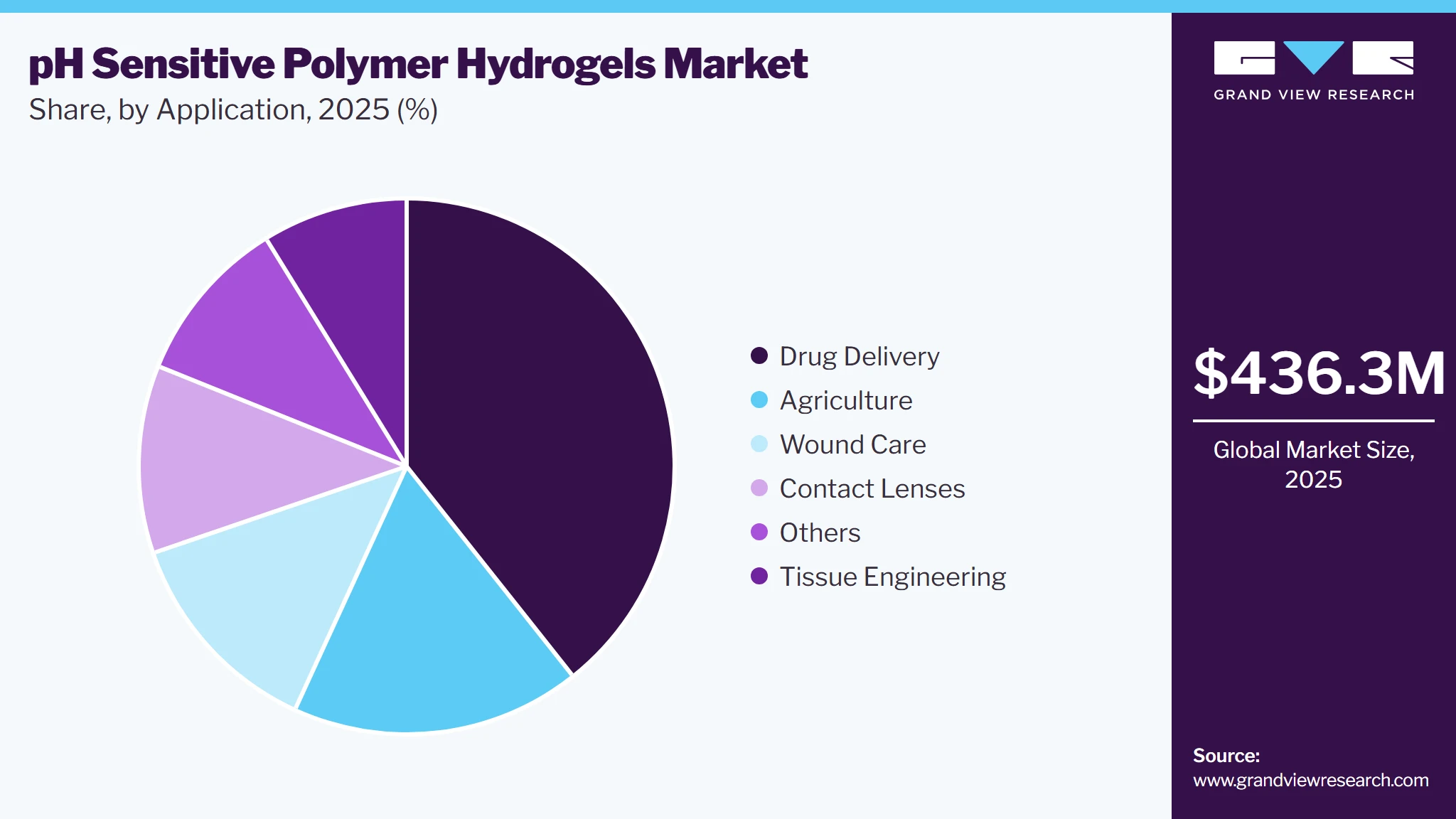
The agriculture segment is expected to grow at the fastest CAGR of 9.7% from 2026 to 2033, driven by increasing adoption of pH-sensitive polymer hydrogels for soil conditioning, water retention, controlled fertilizer release, and crop protection. These materials respond to soil pH and moisture conditions, supporting efficient water management and controlled delivery of nutrients and agrochemicals. Growing water scarcity, climate variability, and demand for sustainable farming are further supporting adoption, while advances in stimuli-responsive polymer networks and biodegradable formulations are expanding application potential across modern agricultural systems.
Regional Insights
The Asia Pacific pH-sensitive polymer hydrogels industry held the largest revenue share of 56.1% in 2025. The region is expected to grow at the fastest CAGR of 9.1% over the forecast period. Rapid healthcare development, expanding pharmaceutical manufacturing, and growing demand for advanced biomaterials are supporting the growth of the pH-sensitive polymer hydrogels market across Asia Pacific. Increasing investments in China, India, Japan, South Korea, and Southeast Asia are driving adoption across drug delivery, wound care, tissue engineering, contact lenses, and agriculture. Rising focus on targeted therapies, sustainable resource use, and advanced polymer technologies is further accelerating regional demand for pH-responsive hydrogel systems.

pH-sensitive polymer hydrogels market in India is expanding steadily, supported by growing pharmaceutical research, healthcare innovation, and demand for advanced biomaterials. Increasing research and development across drug delivery, wound care, tissue engineering, and agriculture is encouraging the adoption of responsive hydrogel systems. Recent Indian studies demonstrate pH-responsive hydrogels for targeted drug release and tissue engineering, while rising focus on controlled therapies, biocompatibility, and sustainable agricultural practices is further supporting market development.
North America pH-Sensitive Polymer Hydrogels Market Trends
North America is a key growth region for the pH-sensitive polymer hydrogels market, supported by advanced pharmaceutical research, strong healthcare infrastructure, and growing demand for responsive biomaterials. Increasing adoption across drug delivery, wound care, tissue engineering, contact lenses, and agricultural applications is strengthening regional demand. Rising investments in targeted therapies, regenerative medicine, and controlled-release technologies are further supporting market development, while innovations in polymer chemistry and hydrogel engineering are expanding application opportunities.
U.S. pH-Sensitive Polymer Hydrogels Market Trends
The U.S. represents a major contributor to regional growth, supported by extensive pharmaceutical R&D, advanced biotechnology capabilities, and increasing development of smart biomaterials. Growing use of pH-sensitive hydrogels in targeted drug delivery, wound management, tissue engineering, and controlled-release systems is accelerating demand. Strong academic-industry collaboration and investment in advanced healthcare technologies are encouraging adoption, while innovations in stimuli-responsive polymers and multifunctional hydrogel networks are expanding applications.
Europe pH-Sensitive Polymer Hydrogels Market Trends
pH-sensitive polymer hydrogels market in Europe is expanding due to increasing adoption across drug delivery, wound care, tissue engineering, contact lenses, and agricultural applications. Strong pharmaceutical R&D, advanced healthcare infrastructure, and growing demand for responsive biomaterials are supporting regional demand. Increasing investments in targeted therapies, regenerative medicine, and controlled-release technologies are further strengthening market development, particularly across Germany, France, the UK, Italy, and Spain, while innovations in smart hydrogel systems are expanding application potential.
Central & South America pH-Sensitive Polymer Hydrogels Market Trends
pH-sensitive polymer hydrogels market Central & South America is expanding due to growing healthcare investment, pharmaceutical development, and demand for advanced biomaterials. Increasing adoption across drug delivery, wound care, tissue engineering, contact lenses, and agriculture is supporting regional demand. Brazil, Argentina, and other emerging markets are gaining relevance, while expanding healthcare infrastructure, rising demand for controlled-release therapies, and increasing research in responsive hydrogel technologies are further supporting market development.
Middle East and Africa pH-Sensitive Polymer Hydrogels Market Trends
The Middle East and Africa’s pH-sensitive polymer hydrogels market is expanding due to increasing healthcare investment, pharmaceutical development, and demand for advanced biomaterials. Growing adoption across drug delivery, wound care, tissue engineering, contact lenses, and agriculture is supporting regional demand. Saudi Arabia, the UAE, and South Africa are emerging as key markets, while rising healthcare expenditure, water scarcity, and demand for controlled-release and moisture-retention solutions are further supporting adoption of responsive hydrogel technologies.
Key pH Sensitive Polymer Hydrogels Company Insights
Some of the key players operating in the market include Evonik Industries and BASF.
-
Evonik Industries participates in the pH-sensitive polymer hydrogels market through its EUDRAGIT portfolio of functional methacrylate polymers, which provides pH-dependent solubility and controlled-release capabilities for drug delivery applications. The company offers polymers designed for targeted release across different gastrointestinal pH conditions, supporting applications in enteric, delayed, sustained, and colon-targeted delivery. Its established polymer technology, formulation expertise, and global pharmaceutical presence strengthen its position in pH-responsive hydrogel systems and advanced drug-delivery applications.
-
BASF participates in the pH-sensitive polymer hydrogels market through its Kollicoat portfolio of functional pharmaceutical polymers, including pH-triggered polymers designed for enteric and modified-release applications. The company emphasizes controlled dissolution, sustained release, moisture protection, and formulation flexibility across oral and topical dosage forms. Its polymer technologies can respond to acidic, neutral, and alkaline environments, supporting pH-dependent drug delivery and expanding opportunities for responsive hydrogel and advanced pharmaceutical formulations.
CD BioGlyco and Polymer Source are some of the emerging participants in the pH-sensitive polymer hydrogels market.
-
CD BioGlyco participates in the pH-sensitive polymer hydrogels market through its portfolio of customized pH-responsive hydrogels, including high-sensitivity smart hydrogels, alginate/chitosan systems, acrylic acid-grafted chitosan hydrogels, and composite hydrogel networks. The company emphasizes pH-triggered swelling, responsive volume changes, controlled release, and tunable polymer structures. Its custom-synthesis capabilities support applications across drug delivery, smart agricultural inputs, adsorption, wastewater treatment, sensing, and other advanced responsive-material applications.
-
Polymer Source participates in the pH-sensitive polymer hydrogels market through its specialty polymer portfolio, supporting the development of responsive hydrogel networks based on acrylic acid, methacrylic acid, and other functional polymers. The company emphasizes customized polymer architectures, controlled molecular characteristics, and research-grade materials for advanced applications. Its specialty polymer capabilities support pH-responsive swelling, tunable network behavior, and controlled release, contributing to applications across drug delivery, tissue engineering, biosensing, and other emerging hydrogel technologies.
Key pH-Sensitive Polymer Hydrogels Companies
The following key companies have been profiled for this study on the pH-sensitive polymer hydrogels market.
-
CD BioGlyco
-
Polymer Source
-
Creative BioMart
-
Lubrizol
-
Evonik Industries
-
BASF
-
Dow Chemical
-
Ashland
-
Sigma-Aldrich
-
Thermo Fisher Scientific
Competitive Benchmarking
Operating Strategies
Competitive Edge
Weakness
Mature Players: Lubrizol, Evonik Industries, BASF, Dow Chemical, Ashland, Sigma-Aldrich, Thermo Fisher Scientific
- Strong focus on developing specialty polymers, pharmaceutical excipients, acrylic polymers, cellulose derivatives, functional polymers, and research materials supporting pH-responsive hydrogel formulations across drug delivery, wound care, tissue engineering, contact lenses, and other applications.
- Continuous investment in polymer chemistry, pH-responsive behavior, controlled release, swelling characteristics, biocompatibility, molecular-weight control, and crosslinking technologies to improve hydrogel performance.
- Expansion through established global distribution networks, pharmaceutical and biotechnology relationships, technical support capabilities, research collaborations, and broad specialty-material portfolios.
- Established brands, global distribution capabilities, technical expertise, manufacturing infrastructure, and extensive pharmaceutical-material experience provide strong positioning in responsive polymer technologies.
- Strong product differentiation through pH-dependent swelling, controlled drug release, mucoadhesion, biocompatibility, formulation flexibility, and tunable polymer characteristics.
- Broad application coverage across oral drug delivery, topical formulations, biomedical research, tissue engineering, and advanced pharmaceutical formulations strengthens market reach.
- Significant investment in polymer development, pharmaceutical-grade manufacturing, quality control, regulatory compliance, testing, and technical validation can increase product-development and commercialization costs.
- Maintaining consistent pH responsiveness, swelling behavior, molecular characteristics, release profiles, mechanical properties, and biocompatibility across different formulations requires stringent manufacturing and formulation controls.
- Dependence on pharmaceutical R&D pipelines, regulatory approvals, customer qualification, and formulation adoption can result in lengthy development and commercialization processes.
Emerging Players: Basilisk Self-Healing Concrete, Supershield, Richlam Development Group, Pioneer Fibre, Drykos, Bronco Buildwell.
- Focus on specialized pH-responsive polymers, customized hydrogel systems, research-grade materials, functional polymer architectures, and custom synthesis solutions designed for drug delivery, tissue engineering, biosensing, agriculture, and other emerging applications.
- Increasing emphasis on application-specific hydrogel formulations, acrylic-acid-based polymers, natural polymer systems, composite hydrogels, and customized polymer networks to address specific responsiveness and performance requirements.
- Expansion through custom synthesis, research partnerships, laboratory-scale development, technical consultation, and targeted solutions for emerging hydrogel applications.
- Specialized technologies and flexible product development enable emerging suppliers to target niche requirements involving pH responsiveness, swelling behavior, polymer composition, molecular characteristics, controlled release, and hydrogel functionality.
- Custom polymer synthesis and research-oriented capabilities provide differentiation from standardized polymer suppliers and support development of application-specific responsive hydrogel systems.
- Smaller organizational structures can support faster customization, direct technical assistance, and adaptation to specialized research requirements and emerging hydrogel architectures.
- Comparatively narrower product portfolios, manufacturing capacity, geographic reach, brand recognition, regulatory infrastructure, and commercial scale can limit competitiveness against established specialty-chemical and pharmaceutical-material companies.
- Dependence on research projects, custom orders, and early-stage technology adoption can increase sensitivity to R&D budgets, customer education, validation requirements, and commercialization timelines.
- Demonstrating consistent pH responsiveness, mechanical stability, biocompatibility, swelling behavior, degradation characteristics, and reproducibility across different hydrogel formulations can require substantial testing and validation resources.
Recent Developments
-
In August 2026, BITS Pilani, K.K. Birla Goa Campus: researchers developed a pharmaceutical-polymer-based hydrogel using starch, maltodextrin, and sodium alginate for extrusion-based 3D bioprinting, demonstrating more than 70% cell viability and suitability for skin tissue engineering. The team also incorporated glimepiride to produce customized 3D-printed chewable tablets with sustained drug release. The development strengthens the convergence of functional hydrogels, 3D bioprinting, tissue engineering, and personalized drug delivery, creating potential for advanced biomedical applications.
-
In March 2026, Evonik expanded its strategic distribution partnership with IMCD for VISIOMER Specialty Methacrylates into the U.S., building on established collaborations in Brazil and Canada. The initiative strengthens Evonik’s regional reach and provides broader access to specialty methacrylate building blocks, supporting functional polymer synthesis, responsive-material development, coatings, construction, composites, and other applications through IMCD’s established distribution network and technical support capabilities.
pH-Sensitive Polymer Hydrogels Market Report Scope
Report Attribute
Details
Market size in 2025
USD 436.3 million
Estimated market size in 2026
USD 473.6 million
Projected market size by 2033
USD 845.6 million
Growth rate
CAGR of 8.6% from 2026 to 2033
Historical data
2021 - 2025
Forecast period
2026 - 2033
Quantitative units
Revenue in USD million, volume in kilotons, and CAGR from 2026 to 2033
Report coverage
Revenue & volume forecast, competitive landscape, growth factors, and trends
Segments covered
Polymer type, application, region
Regional scope
North America; Europe; Asia Pacific; Central & South America; Middle East & Africa
Country scope
U.S.; Canada; Mexico; Europe; Germany; UK; France; Italy; Spain; China; India; Japan; South Korea; Australia; Brazil; Argentina; Saudi Arabia; UAE; South Africa
Key companies profiled
CD BioGlyco; Polymer Source; Creative BioMart; Lubrizol; Evonik Industries; BASF; Dow Chemical; Ashland; Sigma-Aldrich; Thermo Fisher Scientific
Customization scope
Free report customization (equivalent to up to 8 analyst working days) with purchase. Addition or alteration to country, regional & segment scope
Pricing and purchase options
Avail customized purchase options to meet your exact research needs. Explore purchase options
Global pH Sensitive Polymer Hydrogels Market Report Segmentation
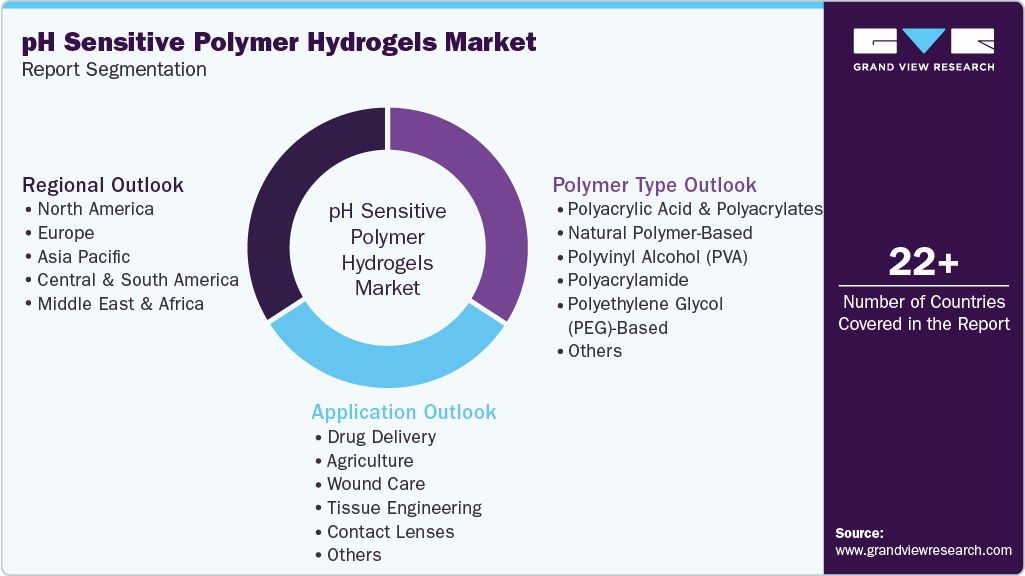
This report forecasts revenue growth at the global, regional, and country levels and provides an analysis of the latest industry trends across sub-segments from 2021 to 2033. For this study, Grand View Research has segmented the global pH sensitive polymer hydrogels market report based on polymer type, application, and region:
-
Polymer Type Outlook (Volume, Kilotons; Revenue, USD Million, 2021 - 2033)
-
Polyacrylic Acid & Polyacrylates
-
Natural Polymer-Based
-
Polyvinyl Alcohol (PVA)
-
Polyacrylamide
-
Polyethylene Glycol (PEG)-Based
-
Others
-
-
Application Outlook (Volume, Kilotons; Revenue, USD Million, 2021 - 2033)
-
Drug Delivery
-
Agriculture
-
Wound Care
-
Tissue Engineering
-
Contact Lenses
-
Others
-
-
Regional Outlook (Volume, Kilotons; Revenue, USD Million, 2021 - 2033)
-
North America
-
U.S.
-
Canada
-
Mexico
-
-
Europe
-
Germany
-
UK
-
France
-
Italy
-
Spain
-
-
Asia Pacific
-
China
-
India
-
Japan
-
South Korea
-
Australia
-
-
Central & South America
-
Brazil
-
Argentina
-
-
Middle East & Africa
-
Saudi Arabia
-
UAE
-
South Africa
-
-
Research Methodology
The pH-sensitive polymer hydrogels market figures in this report are based on a proven research process that combines executive interviews with secondary research from proprietary databases, company filings, and recognized regulatory and institutional sources. Market size is built through value-chain sizing-reconciling supply-side and demand-side estimates-and triangulated with bottom-up and top-down approaches. Every estimate passes multiple levels of expert validation before publication, with eachpH-sensitive polymer hydrogels segment quantified using the revenue-capture definitions in the table below.
Segment Definition
Segment - Polymer Type
Revenue capture definition
Polyacrylic Acid & Polyacrylates
Revenue is captured through polyacrylic acid and polyacrylate-based pH-sensitive polymer hydrogels used in applications requiring pH responsiveness, high swelling capacity, water absorption, mucoadhesion, and controlled release across drug delivery, wound care, tissue engineering, agriculture, and other biomedical applications.
Natural Polymer-Based
Revenue is generated through natural polymer-based pH-sensitive hydrogels using materials such as chitosan, alginate, gelatin, collagen, and hyaluronic acid, supporting applications requiring biocompatibility, biodegradability, moisture retention, controlled release, and tissue compatibility across drug delivery, wound care, tissue engineering, and agricultural applications.
Polyvinyl Alcohol (PVA)
Revenue is captured through PVA-based pH-sensitive polymer hydrogels used in applications requiring high water retention, biocompatibility, mechanical flexibility, elasticity, and tunable swelling across drug delivery, wound care, tissue engineering, agriculture, and other biomedical applications. PVA is also combined with PAA to create pH-responsive systems for controlled and colon-targeted drug delivery.
Polyacrylamide
Revenue is generated through polyacrylamide-based pH-sensitive hydrogels used in applications requiring high hydrophilicity, swelling capacity, mechanical strength, and tunable network characteristics across drug delivery, tissue engineering, agriculture, biosensing, and other specialized applications. Polyacrylamide can also be incorporated with PVA and PAA to improve hydrogel stability and mechanical performance.
Polyethylene Glycol (PEG)-Based
Revenue is captured through PEG-based pH-sensitive polymer hydrogels used in applications requiring biocompatibility, hydrophilicity, controlled degradation, mechanical integrity, and tunable crosslinking across drug delivery, tissue engineering, wound care, and other biomedical applications. Functionalized PEG can be combined with acrylic acid and other responsive polymers to develop pH-sensitive hydrogel networks.
Others
Revenue comes from other pH-sensitive polymer hydrogel systems, including responsive copolymers, composite networks, polysaccharide-based systems, and multi-network formulations used in applications requiring controlled swelling, pH-triggered release, mechanical stability, biocompatibility, and specialized responsiveness across pharmaceutical, agricultural, biomedical, and research applications.
Segment - Application
Revenue capture definition
Drug Delivery
Revenue is generated through pH-sensitive polymer hydrogels used for controlled, targeted, and site-specific drug delivery requiring pH-triggered swelling, protection of therapeutic agents, regulated release, and improved treatment efficiency across oral, colon-targeted, topical, and other pharmaceutical delivery systems. PAA-PVA hydrogels, for example, can alter swelling and drug release according to gastrointestinal pH conditions.
Agriculture
Revenue is captured through pH-sensitive polymer hydrogels used for soil conditioning, water retention, moisture conservation, controlled fertilizer release, seed coating, and crop-support applications requiring responsive swelling and efficient resource utilization. PVA-based systems are being developed for water retention and controlled nutrient release, while PAA-containing networks can regulate water uptake and ion permeability.
Wound Care
Revenue is generated through pH-sensitive polymer hydrogels used in wound dressings and advanced wound-management systems requiring moisture retention, biocompatibility, swelling, controlled therapeutic release, and favorable interaction with damaged tissue. PVA, alginate, hyaluronic acid, collagen, gelatin, and chitosan hydrogel systems support wound healing and can be modified to provide responsive and antimicrobial functionality.
Tissue Engineering
Revenue is captured through pH-sensitive polymer hydrogels used as three-dimensional scaffolds and cell-support matrices requiring biocompatibility, water retention, mechanical integrity, tunable degradation, and tissue-like environments. PEG, PVA, natural polymers, and responsive composite networks support cell encapsulation, tissue regeneration, cartilage replacement, and other regenerative medicine applications.
Contact Lenses
Revenue is generated through pH-sensitive polymer hydrogels used in contact lenses and ocular delivery systems requiring high water content, optical functionality, oxygen permeability, biocompatibility, and controlled interaction with ocular fluids. Hydrogel materials based on PHEMA and silicone-containing formulations provide established platforms, while responsive polymer modifications can support advanced ocular drug-delivery applications.
Others
Revenue comes from pH-sensitive polymer hydrogels used across biosensors, environmental treatment, agricultural technologies, biomedical detection, smart materials, and other specialty applications requiring controlled swelling, stimulus responsiveness, water retention, mechanical stability, or controlled release. Emerging multifunctional networks combining PVA, PAA, PEG, polyacrylamide, and other polymers are expanding the application scope of responsive hydrogel technologies.
Estimation Model
Layer Name
Key Question
Description
Top-Down pH-Sensitive Polymer Hydrogels Demand Assessment Layer
What defines overall market demand?
This layer establishes global demand for pH-sensitive polymer hydrogels across polyacrylic acid & polyacrylates, natural polymer-based, polyvinyl alcohol (PVA), polyacrylamide, polyethylene glycol (PEG)-based, and other polymer systems used in drug delivery, agriculture, wound care, tissue engineering, contact lenses, and other applications.
Application Demand Validation Layer
Where is demand concentrated?
This layer maps demand across drug delivery, agriculture, wound care, tissue engineering, contact lenses, and other applications based on requirements for pH responsiveness, controlled release, swelling capacity, water retention, biocompatibility, biodegradability, mechanical strength, tissue compatibility, moisture management, and targeted therapeutic performance.
Consumption-to-Revenue Conversion Layer
How is demand monetized?
This layer converts polymer and hydrogel consumption into revenue using polymer type, molecular characteristics, formulation, crosslinking method, pH responsiveness, swelling ratio, degradation behavior, drug-loading capacity, application requirements, production costs, regional pricing, distribution margins, formulation volumes, research demand, replacement cycles, and purchasing patterns across pharmaceutical manufacturers, biotechnology companies, medical-device manufacturers, agricultural suppliers, research institutions, and end users.
Regional Demand Verification Layer
Where is demand validated?
This layer validates demand across North America, Europe, Asia Pacific, Central & South America, and Middle East & Africa using pharmaceutical and biotechnology development, healthcare expenditure, drug-delivery research, wound-care demand, tissue-engineering activity, agricultural development, contact-lens adoption, biomaterials R&D, regulatory frameworks, manufacturing capacity, and adoption of advanced stimuli-responsive hydrogel technologies.
Delivered Customizations
This report has been delivered with the following In-depth customizations
Client Request
Customization Delivered
Value Adds
Regional segmentation
Market analysis segmented across North America, Europe, Asia Pacific, Latin America, and Middle East & Africa, with country-level assessment of major markets and adoption trends.
Identifies regional growth hotspots, market maturity, investment patterns, and geographic expansion opportunities.
Competitive benchmarking
Benchmarked key participants, including CD BioGlyco, Polymer Source, Creative BioMart, Lubrizol, Evonik Industries, BASF, Dow Chemical, Ashland, Sigma-Aldrich, and Thermo Fisher Scientific, based on product portfolios, polymer technologies, hydrogel capabilities, application coverage, geographic presence, and strategic positioning.
Provides a structured view of competitive positioning and helps identify capability gaps, differentiation areas, and potential strategic priorities.
Opportunity assessment
Assessed opportunities across targeted drug delivery, advanced wound care, regenerative medicine, tissue engineering, smart contact lenses, agricultural applications, and emerging stimuli-responsive biomaterials, with emphasis on controlled release, biocompatibility, swelling behavior, and tunable responsiveness.
Identifies attractive application niches, emerging technology areas, commercialization potential, and future growth avenues. Recent research continues to expand pH-responsive hydrogels into drug delivery, wound healing, tissue engineering, and hybrid biomaterial platforms.
About the Author(s)
Plastics, Polymers & Resins Research Team
Bulk Chemicals · Plastics, Polymers & ResinsThis report was authored by the plastics, polymers & resins research team at Grand View Research - comprising two research analysts, one senior research analyst, and one industry expert - with specialized expertise in the plastics, polymers & resins segment of the bulk chemicals industry. All findings are based on proprietary bulk chemicals databases, executive interviews, and regulatory analysis, subject to internal peer review prior to publication.
Last Updated:
Speak to Analyst


Customize this report to your needs — add regions, segments, or data points, with 20% free customization.
Or view our licence options:


ISO 9001:2015 & 27001:2022 Certified
We are GDPR and CCPA compliant! Your transaction & personal information is safe and secure. For more details, please read our privacy policy.


