
- Home
- »
- Organic Chemicals
- »
-
Piperazine Market Size, Share & Trends Report, 2026-2033GVR Report cover
![Piperazine Market (2026 - 2033)Report]()
Piperazine Market (2026 - 2033)
Size, Share & Trend Analysis Report, By Source (Natural, Synthetic), By End-use (Pharmaceutical, Agrochemicals, Personal Care & Cosmetics), By Region (North America, Europe, APAC), And Segment Forecasts
Market Size, 2025
$3.3BMarket Estimate, 2026
$3.6BMarket Forecast, 2033
$4.6BCAGR, 2026–2033
4.2%Piperazine Market Summary
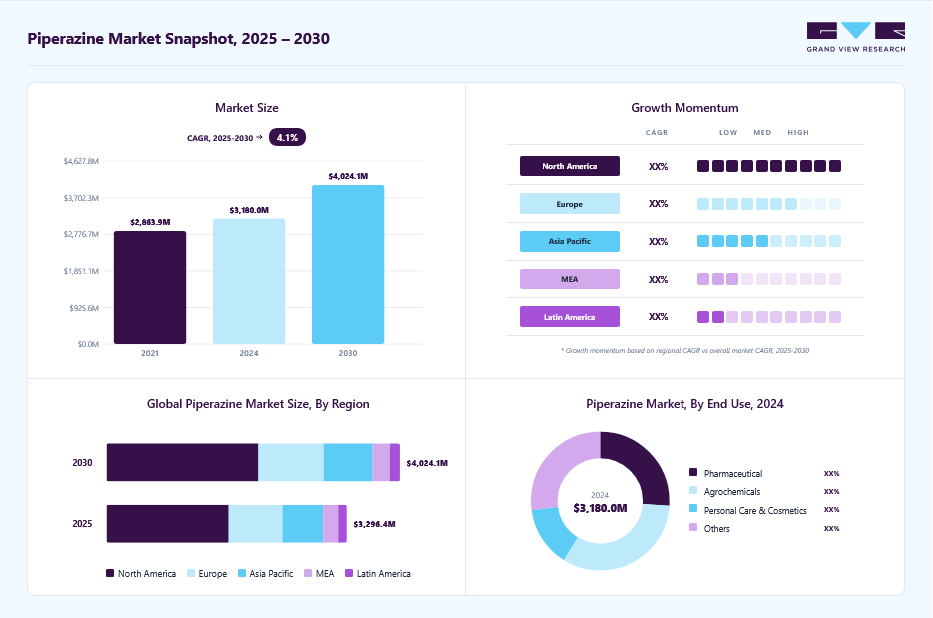
The global piperazine market size was valued at USD 3.3 billion in 2025 and is projected to grow from USD 3.6 billion in 2026 to USD 4.6 billion by 2033, at a CAGR of 4.2% from 2026 to 2033. North America dominated the market, accounting for a revenue share of 50.7% in 2025. Piperazine demand is growing due to its wide use in pharmaceuticals (antiparasitic drugs, etc.), agrochemicals (herbicides, pesticides), and various chemical processes.
Key Market Trends & Insights
- By source: Synthetic dominated the source segment at a revenue share of 58.3% in 2025.
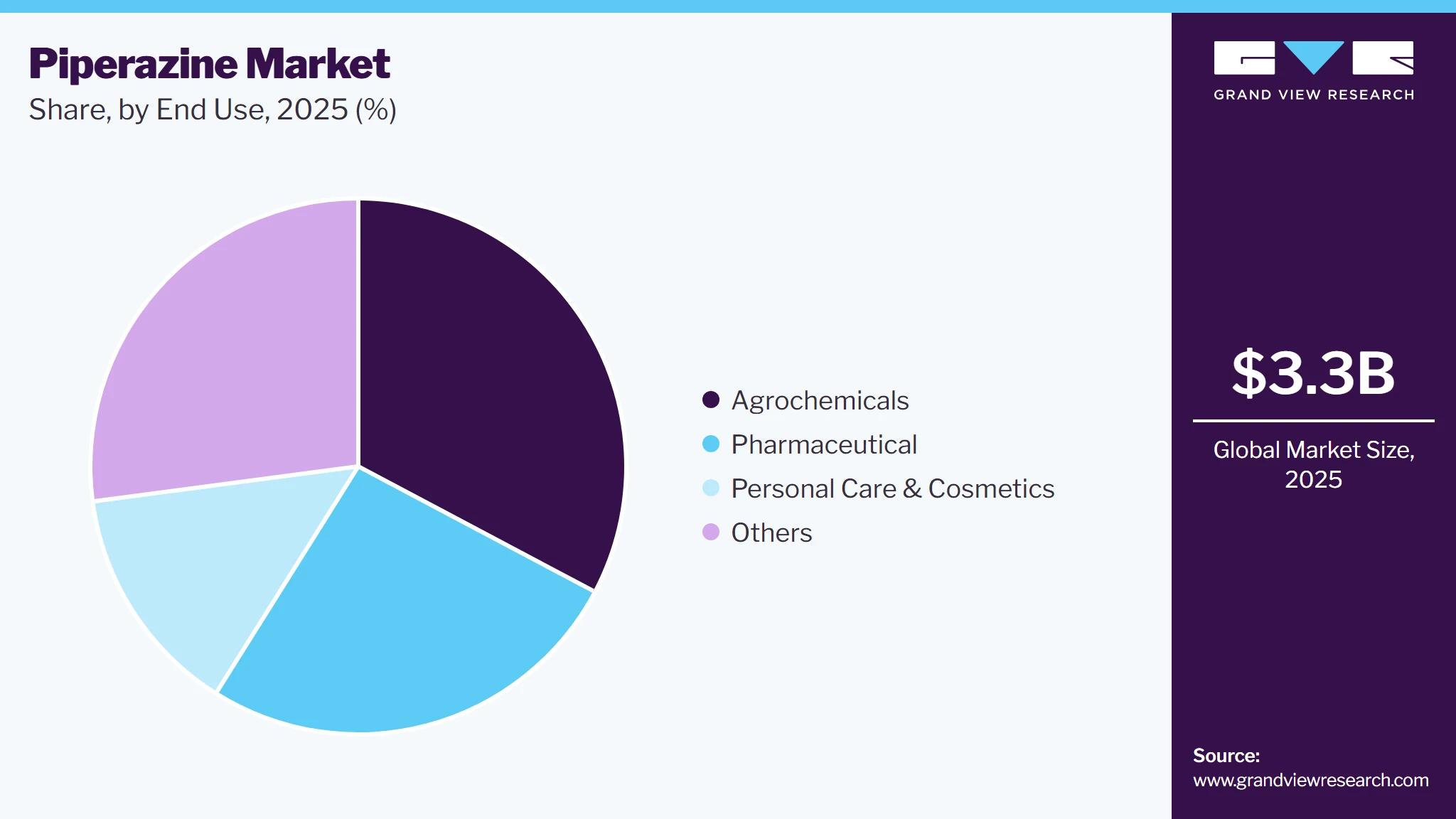
- By end use: Agrochemicals segment accounted for the largest revenue share of 32.7% in 2025.
Regional Highlights
- By country: The U.S. held the largest market share in 2025.
- Largest regional market: North America (50.7% revenue share, 2025)
Market Size & Forecast
- Market size in 2025: USD 3.3 Billion
- Estimated market size in 2026: USD 3.6 Billion
- Projected market size by 2033: USD 4.6 Billion
- CAGR (2026-2033): 4.2%
Three ways to get this report
Buy it, customize it, or ask a question.Ask an Analyst
A direct answer, usually in 1 working day
- AccessReport author, directly
- Reply timeWithin 1 working day
- No sales callDirect answer only
- FormatEmail reply
- CostFree, no cost
Get the Full Report
What the study covers
- FormatsPDF · Excel · Dashboard
- Timeline2026–2033 annual, 2025 base
- Coverage20+ countries, 5 regions
- Companies10+ key players profiled
Customize the Report
20% free customization
- IncludeCountries, segments, points
- TailorTo your product definition
- ExtendDeeper competitor detail
- OrA fully bespoke study
- Turnaround5–10 working days
Piperazine is a frontline soldier in the fight against parasitic infections. It's particularly effective against roundworms and hookworms, both in humans and animals. This makes it a crucial ingredient in medications for both people and livestock, contributing to its demand in both human and veterinary medicine.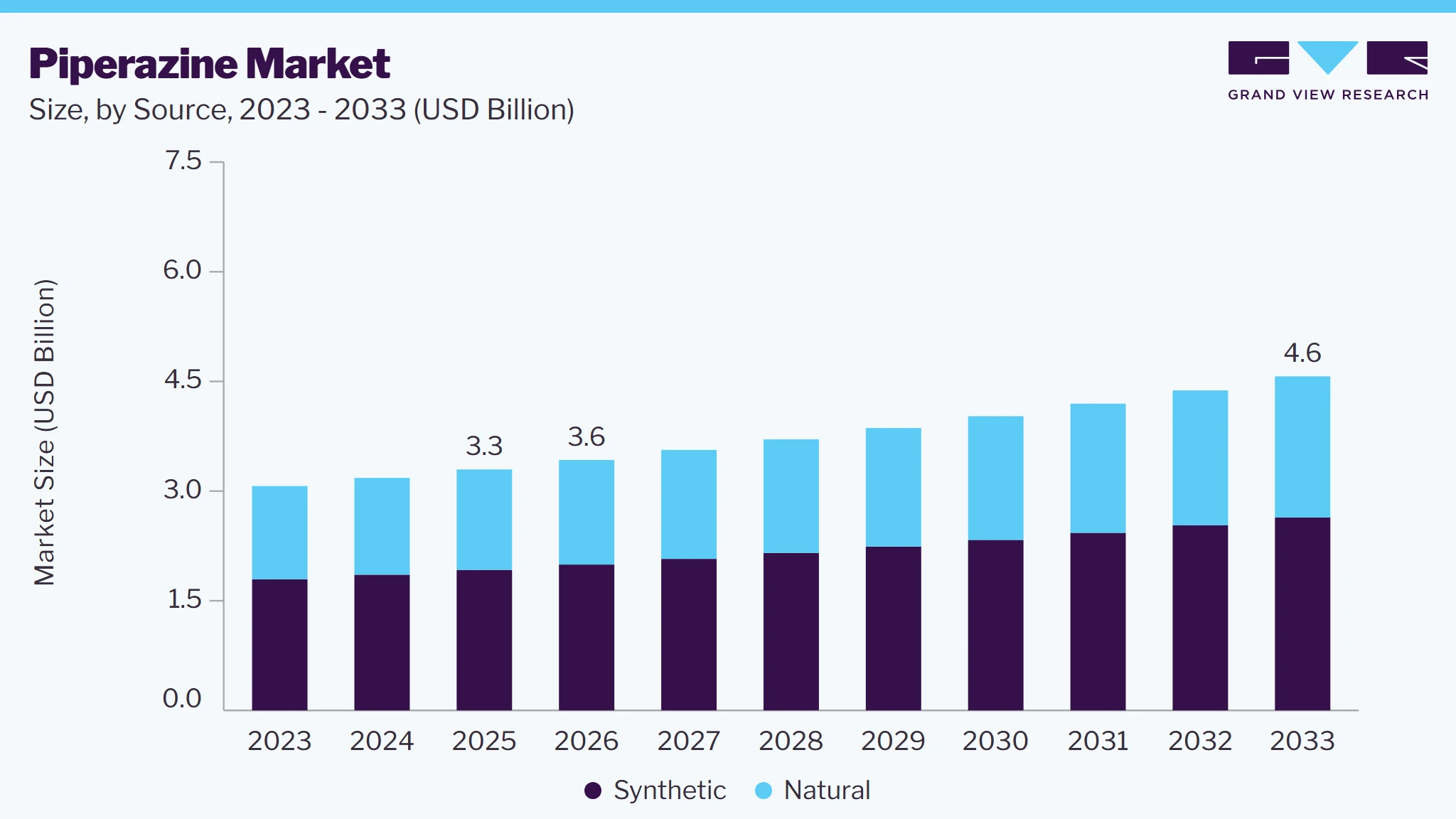
Piperazine is also being explored in the development of more sustainable agricultural practices. Research is looking into its potential in bio-based pesticides and other environmentally friendly crop protection methods, which could further increase its demand in the long run.
Market Dynamics
The piperazine market is witnessing steady growth due to increasing demand from pharmaceutical, water treatment, agrochemical, and specialty chemical industries. Piperazine is a versatile heterocyclic compound widely used as an intermediate in the manufacture of pharmaceuticals, epoxy curing agents, corrosion inhibitors, polyurethane catalysts, and industrial chemicals. Growing healthcare expenditure, rising production of pharmaceutical formulations, and expanding wastewater treatment infrastructure are contributing significantly to market expansion. Increasing industrialization, stringent environmental regulations, and the growing need for high-performance specialty chemicals are creating favorable conditions for market growth. Continuous advancements in chemical processing technologies and the development of high purity piperazine grades are further supporting broader adoption across various end-use sectors.
The piperazine market is experiencing steady growth driven by its expanding use in pharmaceutical manufacturing, water treatment chemicals, and industrial applications. Piperazine is an important intermediate used in the production of anti-parasitic drugs, antihistamines, antidepressants, and various specialty pharmaceutical formulations. Rising healthcare expenditure, increasing prevalence of parasitic infections, and growing pharmaceutical production are supporting market demand.
Piperazine derivatives are widely used in water treatment processes to control corrosion, remove contaminants, and improve operational efficiency in industrial systems. Increasing urbanization, expanding wastewater treatment infrastructure, and stringent environmental regulations are further contributing to market growth. As demand for high-performance chemicals continues to rise across multiple industries, the piperazine market is expected to witness sustained expansion.
One of the major challenges facing the piperazine market is the stringent regulatory framework governing the production, handling, and use of chemical intermediates. Manufacturers must comply with strict environmental, health, and safety regulations, which can increase operational costs and extend product approval timelines.
Fluctuations in the prices of key raw materials and feedstocks can impact production costs and profit margins. The availability of alternative chemical intermediates and substitutes in certain applications may also limit market growth. These factors can create challenges for market participants, particularly in highly competitive and price-sensitive end-use industries.
The growing demand for specialty chemicals and advanced industrial materials presents significant opportunities for the piperazine market. Piperazine and its derivatives are increasingly being utilized in the production of epoxy curing agents, polyurethane catalysts, corrosion inhibitors, agrochemicals, and high-performance polymers.
Increasing investments in industrial infrastructure, electronics manufacturing, and sustainable chemical development are creating new avenues for market expansion. Advancements in high purity piperazine grades and innovative derivative formulations are enabling broader adoption across specialized applications. Companies focusing on product innovation, process efficiency, and environmentally responsible manufacturing are expected to capitalize on emerging growth opportunities in the global piperazine market.
Analyst Perspective
The global piperazine market is positioned for stable growth, supported by its critical role as a chemical intermediate in pharmaceuticals, agrochemicals, water treatment chemicals, and specialty industrial applications. Increasing demand for pharmaceutical formulations, expanding agricultural chemical production, and rising investments in water treatment infrastructure are expected to remain the primary growth drivers. Market participants are focusing on improving production efficiency, developing high-purity grades, and expanding derivative portfolios to address evolving customer requirements and regulatory standards. While raw material price volatility and stringent environmental regulations may pose challenges, growing adoption of specialty chemicals, advancements in chemical synthesis technologies, and increasing demand from emerging economies are expected to create long-term opportunities.
Source Insights
Based on source, synthetic dominated the source segment at a revenue share of 58.3% in 2025 and is expected to continue to dominate the industry over the forecast period. This is attributable to its crucial role in manufacturing various pharmaceuticals, including antiparasitic drugs and some antipsychotics. Its use as a key intermediate in producing agrochemicals like herbicides and pesticides also fuels market growth, driven by increasing agricultural needs.
Furthermore, synthetic piperazine's applications extend to diverse chemical industries, where it's used in making polymers, resins, and other materials. This versatility across multiple sectors, coupled with increasing health concerns and agricultural demands, is driving the expansion of the synthetic piperazine industry.
The demand for natural piperazine is growing due to a rising consumer preference for bio-based and sustainable products. As consumers become more conscious of the environmental impact of their choices, they are increasingly seeking out products made from natural sources. This trend is particularly evident in industries like pharmaceuticals, food, and personal care, where natural ingredients are often perceived as safer and healthier. Natural piperazine, derived from sources like black pepper and certain plants, aligns with this preference for natural alternatives, driving its demand in these sectors.
End-use Insights
Based on end use, the agrochemicals segment accounted for the largest revenue share of 32.7% in 2025. This is attributable to its crucial role in producing herbicides, pesticides, and fungicides. With a growing global population and the ever-increasing need for food security, these agrochemicals are essential for protecting crops from pests, diseases, and weeds. Piperazine serves as a key building block in the synthesis of these vital crop protection solutions, making it an indispensable component for the agricultural industry. As agricultural practices intensify and the demand for efficient and effective crop protection grows, so does the demand for piperazine to support the production of these necessary agrochemicals.
Piperazine serves as a key building block in the production of antiparasitic medications, crucial for treating infections caused by various worms. It's also a precursor in the synthesis of certain antipsychotics used to manage mental health conditions, as well as some antihistamines for allergy relief. The increasing prevalence of parasitic infections, coupled with the growing need for effective treatments for mental health disorders and allergies, fuels the demand for these medications.
Some piperazine derivatives are used in certain cosmetic formulations, often as buffering agents or to adjust pH levels. As the personal care industry continues to innovate and explore new formulations, the demand for specialized ingredients like these derivatives can grow. In addition, increasing consumer interest in products with specific functional properties, such as those with pH-balancing or skin-conditioning effects, can indirectly influence the demand for piperazine-related compounds used in their creation.
Regional Insights
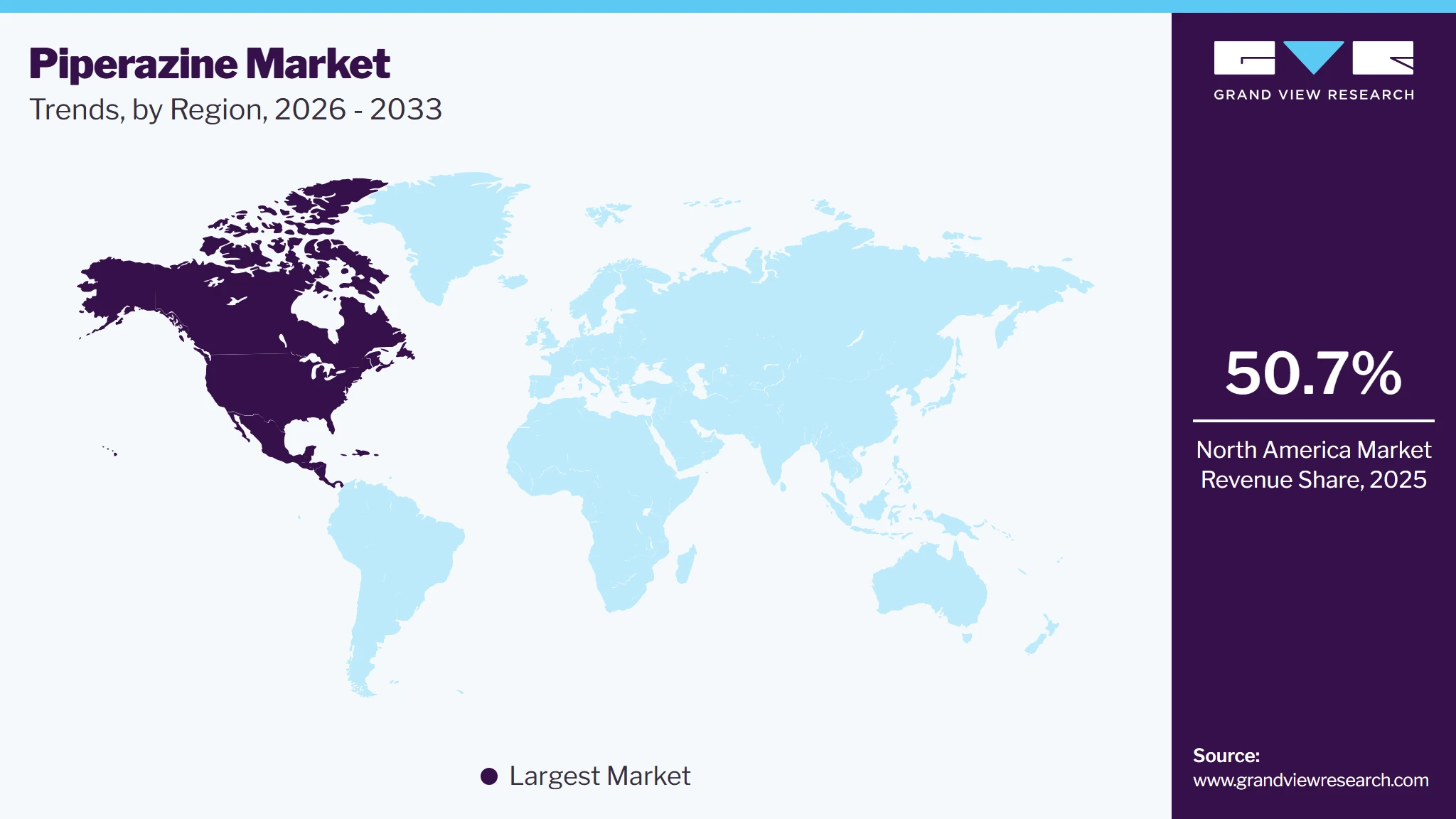
North America accounted for 50.7% of the piperazine market revenue in 2025, making it the largest regional market. The region's well-established pharmaceutical sector relies heavily on piperazine for the synthesis of various medications, including antiparasitic drugs, contributing significantly to its consumption. Simultaneously, the robust agricultural sector in North America depends on piperazine-derived agrochemicals like herbicides and pesticides to protect crops and ensure food security, further fueling its demand
U.S. Piperazine Market Trends
U.S. held the highest market revenue share in North America in 2025, due to the expanding chemical industry which utilizes piperazine in diverse applications, such as the production of polymers and resins, adding another layer to its growing market. Increasing health awareness and rising disposable incomes have led to a surge in demand for personal care products, some of which incorporate piperazine, further contributing to its market growth
Europe Piperazine Market Trends
The piperazine market in Europe is expected to grow at the fastest CAGR during the forecast period. The region is expected to grow due to stringent regulations on agrochemical use in Europe may influence the type of piperazine-containing products used. The focus on sustainable agriculture might also drive demand for bio-based piperazine or piperazine-derived products used in organic farming.
The Germany piperazine market is anticipated to grow at a significant CAGR during the forecast period, on account of increasing consumer awareness of health and wellness in Germany, coupled with a growing demand for personal care products, which may also contribute to the rising demand for piperazine in this sector, though likely to a lesser extent than pharmaceuticals or agriculture. In essence, the strong presence of key industries like pharmaceuticals, agriculture, and chemicals, alongside evolving consumer preferences, are driving the market growth in Germany.
Asia Pacific Piperazine Market Trends
Asia Pacific dominated the piperazine market with the largest revenue share of 50.67% in 2024, owing to rapidly developing economies in the Asia Pacific region driving increased demand for both pharmaceuticals and agrochemicals. The region's large population and diverse agricultural practices create a significant market for piperazine.
Latin America Piperazine Market Trends
The piperazine market in Latin American is expected to witness positive growth as they have a higher prevalence of parasitic diseases, which can lead to increased demand for piperazine-based antiparasitic medications. Agricultural needs are also significant, although access to and affordability of agrochemicals might be a limiting factor in some areas.
Middle East & Africa Piperazine Market Trends
The piperazine market in the Middle East & Africa is primarily driven by health needs, particularly for antiparasitic treatments, and is expected to grow alongside agricultural development and expanding healthcare infrastructure.
Key Piperazine Company Insights
Some of the key players operating in the market include BASF SE and Arkema Group
-
BASF SE is a globally recognized German chemical company and the largest chemical producer in the world. The company operates through six primary business segments: industrial solutions, chemicals, materials, surface technologies, agricultural solutions, and nutrition and care. Its diverse portfolio encompasses various chemical products, such as performance, plastics, and functional solutions. One of the company’s key areas of expertise is the production of carotenoids, including beta-carotene and related products, which are utilized in the food and beverages, pharmaceuticals, and animal feed industries.
-
Dow is a leading materials science company offering a wide range of products and solutions to various industries. Operating through its subsidiary, The Dow Chemical Company, Dow focuses on plastics, performance materials, coatings, silicones, and industrial intermediates. These products find applications in packaging, infrastructure, mobility, and consumer care, serving diverse sectors like home and personal care, durable goods, adhesives and sealants, and food packaging. With a global presence across continents, Dow is committed to innovation and sustainability, aiming to deliver solutions that address global challenges while creating value for its stakeholders.
Key Piperazine Companies:
The following key companies have been profiled for this study on the piperazine market.
-
BASF SE
-
Dow
-
Evonik Industries
-
Solvay S.A.
-
Solvay S.A.
-
Albemarle Corporation
-
Shell
-
Huntsman Corporation
Competitive Benchmarking
Category
Operating Strategies
Competitive Edge
Weakness
Established Players (Evonik Industries, Solvay S.A., Dow, ExxonMobil Corporation, BASF SE, Shell, Huntsman Corporation)
- Expand production capacity for pharmaceutical-grade, industrial-grade, and high-purity piperazine products.
- Invest in advanced chemical synthesis technologies and process optimization to improve efficiency and product quality.
- Strengthen feedstock integration and global supply chain capabilities.
- Focus on long-term supply agreements with pharmaceutical, agrochemical, water treatment, and specialty chemical manufacturers.
- Develop sustainable and regulatory-compliant product portfolios to meet evolving industry requirements.
- Large-scale manufacturing capabilities and extensive global distribution networks.
- Strong technical expertise in specialty chemicals and intermediates.
- Integrated supply chains and secure access to raw materials.
- Established relationships with major industrial and pharmaceutical customers worldwide.
- Significant R&D resources supporting innovation and product development.
- Exposure to fluctuations in petrochemical feedstock and energy prices.
- High capital expenditure requirements for facility expansion and modernization.
- Stringent environmental, health, and safety compliance obligations.
- Dependence on cyclical industrial and chemical markets.
- Competitive pressure from regional and specialty chemical producers.
Emerging & Specialized Players (NutriScience Innovations LLC, Hefei TNJ Chemical Industry Co., Ltd., Guangzhou FONCIU Cosmetics Limited, Shaanxi Qinland Bio-Tech Co., Ltd., Wellgreen Technology Co., Ltd., Greentech Biochemicals Co., Limited, MakingCosmetics Inc., Keratin Express, Scherdiva)
- Focus on specialty and high purity piperazine derivatives for niche applications.
- Target high-growth segments such as pharmaceuticals, water treatment, agrochemicals, and advanced materials.
- Provide customized formulations and application-specific technical support.
- Expand market presence through partnerships, contract manufacturing, and regional distribution networks.
- Differentiate through innovation, flexibility, and rapid product development.
- Greater agility in addressing specialized customer requirements.
- Faster product customization and commercialization cycles.
- Strong focus on niche applications and value-added products.
- Ability to adapt quickly to emerging regulatory and sustainability trends.
- Close customer engagement and tailored technical solutions.
- Smaller production capacity relative to multinational chemical companies.
- Limited geographic reach and distribution infrastructure.
- Lower purchasing power for raw materials and feedstocks.
- Higher sensitivity to market price fluctuations and competitive pressures.
- Resource constraints may limit large-scale expansion and R&D investments.
Recent Developments
-
In January 2023, BASF SE acquired Pharmacn Laboratories, a Chinese manufacturer of piperazine and other pharmaceutical intermediates, for USD 30 million. The acquisition helped BASF to expand its presence in the Chinese market and increase its product portfolio in the piperazine segment.
Piperazine Market Report Scope
Report Attribute
Details
Market size in 2025
USD 3.3 Billion
Estimated market size in 2026
USD 3.6 Billion
Projected market size by 2033
USD 4.6 Billion
Growth rate
CAGR of 4.2% from 2026 to 2033
Base year for estimation
2025
Historical data
2021 - 2024
Forecast period
2026 - 2033
Quantitative units
Revenue in USD million/billion, volume in kilotons and CAGR from 2026 to 2033
Report coverage
Revenue forecast, company ranking, competitive landscape, growth factors, and trends
Segments covered
Source, end use, region
Regional scope
North America; Europe; Asia Pacific; Latin America; MEA
Country scope
U.S.; Canada; Mexico; Germany; UK; France; China; India; Japan; Brazil; Argentina; Saudi Arabia; South Africa.
Key companies profiled
Evonik Industries; Solvay S.A.; Dow; ExxonMobil Corporation; BASF SE; Albemarle Corporation; Shell; Huntsman Corporation
Customization scope
Free report customization (equivalent up to 8 analysts' working days) with purchase. Addition or alteration to country, regional & segment scope.
Pricing and purchase options
Avail customized purchase options to meet your exact research needs. Explore purchase options
Global Piperazine Market Report Segmentation
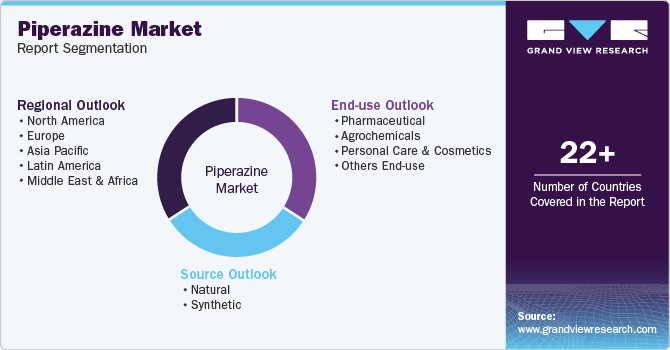
This report forecasts revenue and volume growth at global, regional, and country levels and provides an analysis of the latest industry trends in each of the sub-segments from 2021 to 2033. For this study, Grand View Research has segmented the global piperazine market report based on the source, end-use, and region.
-
Source Outlook (Volume, Kilotons; Revenue, USD Million, 2021 - 2033)
-
Natural
-
Synthetic
-
-
End-use Outlook (Volume, Kilotons; Revenue, USD Million, 2021 - 2033)
-
Pharmaceutical
-
Agrochemicals
-
Personal Care & Cosmetics
-
Others End-use
-
-
Region Outlook (Volume, Kilotons; Revenue, USD Million, 2021 - 2033)
-
North America
-
U.S.
-
Canada
-
Mexico
-
-
Europe
-
Germany
-
UK
-
France
-
-
Asia Pacific
-
China
-
India
-
Japan
-
-
Latin America
-
Brazil
-
Argentina
-
-
Middle East & Africa
-
Saudi Arabia
-
South Africa
-
-
Research Methodology
The piperazine market figures in this report are based on a proven research process that combines executive interviews with secondary research from proprietary databases, company filings, and recognized regulatory and institutional sources. Market size is built through value-chain sizing - reconciling supply-side and demand-side estimates - and triangulated with bottom-up and top-down approaches. Every estimate passes multiple levels of expert validation before publication, with each piperazine segment quantified using the revenue-capture definitions in the table below.
Segment Definition
Segment - Source
Revenue capture definition
Natural
Includes market revenues associated with piperazine produced from bio-based or renewable feedstocks. Demand is primarily supported by sustainability initiatives, green chemistry developments, and applications requiring environmentally friendly chemical inputs.
Synthetic
Covers revenues derived from chemically synthesized piperazine manufactured using conventional petrochemical feedstocks. Its widespread availability, cost-effectiveness, and suitability for large-scale industrial production make it the dominant source category.
Segment - End Use
Revenue capture definition
Pharmaceutical
Represents sales linked to the use of piperazine as an active ingredient and intermediate in the production of anti-parasitic medications, antihistamines, central nervous system drugs, and other therapeutic formulations.
Agrochemicals
Encompasses the value generated through incorporation of piperazine and its derivatives in crop protection products such as herbicides, fungicides, pesticides, and other agricultural chemical formulations.
Personal Care & Cosmetics
Accounts for revenues associated with piperazine-based ingredients and intermediates utilized in cosmetic formulations, skincare products, haircare solutions, and specialty personal care applications.
Other End Use
Includes demand arising from water treatment chemicals, corrosion inhibitors, epoxy curing agents, polyurethane catalysts, specialty chemicals, polymers, coatings, and various industrial processing applications.
Estimation Model
Layer Name
Key Question
Description
Piperazine Production Layer
What forms is the supply base?
Identify global piperazine production capacity based on the availability of petrochemical feedstocks, chemical synthesis infrastructure, manufacturing technologies, production facilities, purity grades, and regional supply capabilities. This layer establishes the foundational supply network supporting pharmaceutical, agrochemical, water treatment, personal care, and specialty chemical applications worldwide.
Application Adoption Layer
Where is piperazine utilized?
Estimate the proportion of piperazine consumed across pharmaceuticals, agrochemicals, personal care products, water treatment chemicals, epoxy curing agents, polyurethane catalysts, corrosion inhibitors, and other specialty chemical applications based on industry demand, regulatory requirements, technological advancements, and regional consumption trends.
Consumption Intensity Layer
How much is the piperazine used?
Analyze application-specific consumption rates, pharmaceutical production volumes, agrochemical manufacturing activities, water treatment requirements, industrial chemical processing, and end-use industry adoption patterns to determine annual piperazine demand across key sectors and geographic regions.
Revenue Layer
How is market revenue generated?
Market revenue is generated through the sale of pharmaceutical-grade, industrial-grade, high-purity, and specialty piperazine products supplied to pharmaceutical manufacturers, agrochemical producers, water treatment companies, personal care formulators, and specialty chemical manufacturers across global markets.
Delivered Customizations
This report has been delivered with the following In-depth customizations
Client Request
Customization Delivered
Value Adds
Cross-Segmentation Analysis
Detailed cross-segmentation assessment evaluating the relationship between piperazine grades, end-use industries, and consumption patterns. Analysis identifies usage intensity, purity requirements, performance specifications, regulatory considerations, and value contribution across intersecting segments such as pharmaceutical-grade piperazine in healthcare applications, industrial-grade piperazine in water treatment and chemical processing, and specialty grades in agrochemicals and advanced materials.
Supports product portfolio optimization and market prioritization by identifying the most attractive grade–application combinations, enabling improved resource allocation, customer targeting, product development strategies, and long-term growth planning across the piperazine value chain.
Competitive Benchmarking
Comparative evaluation of leading piperazine manufacturers based on production capacity, product portfolio breadth, feedstock integration, manufacturing technologies, geographic footprint, distribution networks, sustainability initiatives, end-use specialization, customer relationships, and strategic developments across major regional markets.
Assists competitive intelligence, supplier evaluation, and partnership assessment by providing deeper visibility into market positioning, operational strengths, technological capabilities, differentiation strategies, cost competitiveness, and areas of sustainable competitive advantage.
Opportunity Assessment
Comprehensive assessment of emerging opportunities associated with pharmaceutical intermediates, water treatment chemicals, specialty agrochemicals, epoxy curing agents, polyurethane catalysts, corrosion inhibitors, and high-performance polymer applications. Analysis also evaluates the impact of evolving environmental regulations, healthcare investments, industrialization trends, and technological advancements on future demand.
Helps identify high-growth investment areas, emerging application segments, innovation priorities, and expansion opportunities, supporting revenue growth, market diversification, and long-term strategic positioning across the piperazine value chain.
Frequently Asked Questions About This Report
The synthetic source segment dominated the global piperazine market in 2025, accounting for 58.3% of total market revenue. Its leadership is attributed to well-established chemical synthesis processes, consistent product quality, large-scale commercial availability, and cost-efficient production. Synthetic piperazine remains the preferred choice across pharmaceutical, agrochemical, water treatment, and specialty chemical applications due to its reliable purity standards and widespread industrial adoption.
Some key players operating in the polyurethane market include BASF SE, Evonik Industries, Solvay S.A., Dow, ExxonMobil Corporation, Albemarle Corporation, Shell, and Huntsman Corporation
The pharmaceutical segment is anticipated to be the fastest-growing end-use category, registering a CAGR of 4.7% during the forecast period. Growth is supported by rising pharmaceutical production, increasing healthcare expenditure, growing demand for active pharmaceutical ingredient (API) intermediates, and the expanding use of piperazine derivatives in therapeutic drug development. Continuous innovation in pharmaceutical manufacturing is expected to further accelerate segment growth.
The global piperazine market size was estimated at USD 3.3 million in 2025 and is expected to reach USD 3.6 million in 2026.
The global piperazine market is expected to grow at a compound annual growth rate of 4.2% from 2026 to 2033 to reach USD 4.6 million in 2033.
North America dominated the piperazine market with a share of 50.7% in 2025. This is attributable to growing chemical industry and increasing health awareness further contribute to the demand.
Piperazine demand is growing due to its wide use in pharmaceuticals (antiparasitic drugs, etc.), agrochemicals (herbicides, pesticides), and various chemical processes.
About the Author(s)
Organic Chemicals Research Team
Bulk Chemicals · Organic ChemicalsThis report was authored by the organic chemicals research team at Grand View Research - comprising two research analysts, one senior research analyst, and one industry expert - with specialized expertise in the organic chemicals segment of the bulk chemicals industry. All findings are based on proprietary bulk chemicals databases, executive interviews, and regulatory analysis, subject to internal peer review prior to publication.
Last Updated:
Speak to Analyst


Customize this report to your needs - add regions, segments, or data points, with 20% free customization.
Or view our licence options:


ISO 9001:2015 & 27001:2022 Certified
We are GDPR and CCPA compliant! Your transaction & personal information is safe and secure. For more details, please read our privacy policy.


