
- Home
- »
- Medical Devices
- »
-
Polycaprolactone Filler Market Size Report, 2026-2033GVR Report cover

Polycaprolactone Filler Market (2026 - 2033) Size, Share & Trends Analysis Report By Product (Microsphere Fillers, Liquid PCL Formulations, Hybrid Fillers), By Application (Facial Volume Restoration, Wrinkle & Fold Correction), By End Use, By Region, And Segment Forecasts
Market Size, 2025
$57.3MMarket Estimate, 2026
$62.5MMarket Forecast, 2033
$115.5MCAGR, 2026–2033
9.2%Polycaprolactone Filler Market Summary
The global polycaprolactone filler market size was valued at USD 57.3 million in 2025 and is projected to grow from USD 62.5 million in 2026 to USD 115.5 million by 2033, at a CAGR of 9.2% from 2026 to 2033. Asia Pacific dominated the global market with the largest revenue share of 36.3% in 2025. The market is witnessing steady expansion due to the rising demand for long-lasting, minimally invasive aesthetic procedures.
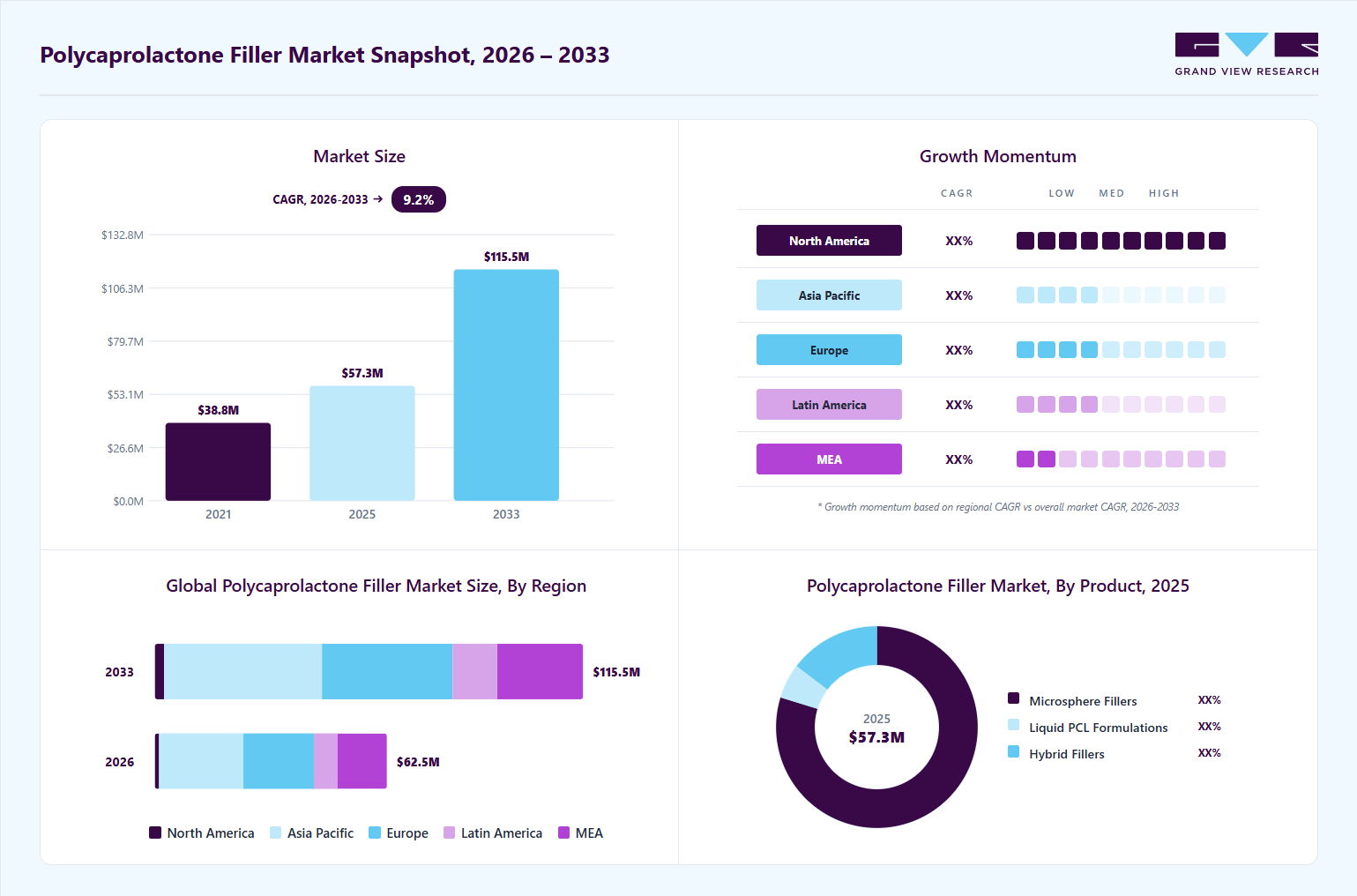 Source: Grand View Research, IR Documents, Primary Interviews, Paid DatabasesTo learn more about this report,
 Download Free Sample Report
 Key Market Trends & Insights
- The PCL filler industry in China accounted for the largest market revenue share in the Asia Pacific 2025.
- By product, the microsphere fillers segment led the market with the largest revenue share of 82.29% in 2025.
- By application, the facial volume restoration segment accounted for the largest market revenue share in 2025.
- By end use, the aesthetic clinics & medical spas segment accounted for the largest market revenue share in 2025.
Market Size & Forecast
- 2025 Market Size: USD 57.3 Million
- 2026 Market Size: USD 62.5 Million
- 2033 Projected Market Size: USD 115.5 Million
- CAGR (2026-2033): 9.2%
- Asia Pacific: Largest market share in 2025
- North America: Fastest growing market
Three ways to get this report
Buy it, customize it, or ask a question.Ask an Analyst
A direct answer, usually in 1 working day
- AccessReport author, directly
- Reply timeWithin 1 working day
- No sales callDirect answer only
- FormatEmail reply
- CostFree, no cost
Get the Full Report
What the study covers
- FormatsPDF · Excel · Dashboard
- Timeline2026–2033 annual, 2025 base
- Coverage20+ countries, 5 regions
- Companies10+ key players profiled
Customize the Report
20% free customization
- IncludeCountries, segments, points
- TailorTo your product definition
- ExtendDeeper competitor detail
- OrA fully bespoke study
- Turnaround5–10 working days
Polycaprolactone (PCL) is widely used as a biostimulatory filler, meaning it not only restores immediate volume but also stimulates natural collagen production over time. This dual mechanism is driving strong adoption in facial rejuvenation treatments, especially among patients seeking longer-lasting alternatives to hyaluronic acid fillers. To learn more about this report, Download Free Sample Report
 Clinical evidence also supports its durability and efficacy, with studies showing sustained improvement in wrinkle severity and aesthetic outcomes for up to 24 months post-treatment. The clinical study titled “Polycaprolactone for the Correction of Nasolabial Folds”, evaluated the long-term safety and efficacy of polycaprolactone (PCL)-based dermal fillers (Ellansé-S and Ellansé-M) for facial wrinkle and fold correction.
One of the major growth drivers of the PCL filler industry is the increasing preference for non-surgical facial volume restoration procedures. Aging populations, particularly in developed and emerging economies, are actively opting for injectable solutions instead of surgical facelifts due to lower risk and shorter recovery time. PCL-based fillers are gaining traction in applications such as facial volume restoration and wrinkle & fold correction, as they provide both immediate correction and long-term skin thickening through collagen stimulation. Another key driver is the rising innovation in liquid PCL formulations and hybrid fillers, which are improving injection ease and expanding treatment versatility. Liquid PCL products are increasingly used in delicate areas, such as periorbital rejuvenation and skin quality improvement, where controlled, even distribution is critical.
The PCL filler industry is also benefiting from ongoing clinical research and product development. Comparative studies between PCL and other biostimulators, such as PLLA, show that PCL provides comparable or faster visible improvements in wrinkle reduction, with high patient satisfaction. These findings are encouraging broader physician adoption, especially for procedures like non-surgical rhinoplasty and periorbital rejuvenation, where precision and predictable outcomes are important. In addition, ongoing research is focused on improving safety profiles, injection techniques, and formulation stability, which further strengthens market confidence.
One of the major developments in this industry is the Injectable Polycaprolactone Microsphere Facial Filler, which fills a regulatory gap in China’s Class III regenerative medical devices. It generated over 50% sales growth in 2023, reflecting strong market acceptance and the rising consumer demand for regenerative injectables. Sihuan Pharmaceutical has positioned its PCL filler as part of its “medical aesthetics + innovative pharmaceuticals” strategy, reinforcing the growing synergy between biotechnology and aesthetic medicine.
In parallel, Samyang Holdings Biopharmaceuticals Division developed Lafullen, a next-generation PCL filler clinically validated for safety and efficacy. A 24-month study, published in Dermatologic Therapy, demonstrated Lafullen’s long-lasting volumizing effects and stable performance with minimal irritation. The research on 59 participants confirmed measurable improvements in nasolabial folds using WSRS, GAIS, and 3D volumetric analysis. Lafullen, approved in 2021 by South Korea’s Ministry of Food and Drug Safety, leverages Samyang’s proprietary polymer technology for enhanced tolerability. Extended follow-ups confirmed efficacy beyond two years, setting a new benchmark in long-duration fillers. Such sustained outcomes are increasingly preferred in both Asian and Western markets as patients and practitioners seek minimally invasive solutions with fewer retreatments and natural results.
Market Dynamics
The increasing global demand for minimally invasive aesthetic procedures is a major factor driving the market growth. Consumers are increasingly preferring non-surgical cosmetic treatments that offer effective, long-lasting results with minimal downtime, reduced procedural risks, and faster recovery times compared to traditional surgical interventions. PCL-based dermal fillers are gaining strong traction for applications such as facial volume restoration, wrinkle and fold correction, skin rejuvenation, periorbital enhancement, and non-surgical rhinoplasty, thanks to their ability to stimulate natural collagen production while delivering durable aesthetic outcomes. In addition, growing beauty consciousness, rising aging population, increasing disposable income, and the influence of social media and celebrity-driven beauty trends are encouraging more individuals to opt for advanced aesthetic treatments. The longer-lasting effects of PCL filler compared to conventional hyaluronic acid fillers further enhance patient preference and treatment value, supporting the continued expansion of the global market in the aesthetic medicine industry.
The risk of treatment-related complications and the requirement for highly skilled practitioners are significant restraints affecting the market growth in aesthetic applications. PCL-based fillers are advanced collagen-stimulating products that require precise injection techniques and in-depth anatomical knowledge to achieve safe and effective outcomes. Improper administration can lead to complications such as swelling, nodules, asymmetry, vascular occlusion, infection, and uneven filler distribution, which may negatively impact patient satisfaction and confidence in aesthetic procedures. In sensitive treatment areas such as the periorbital region and non-surgical rhinoplasty, the risk of adverse events is comparatively higher, increasing the need for experienced medical professionals.
Market Characteristics & Concentration
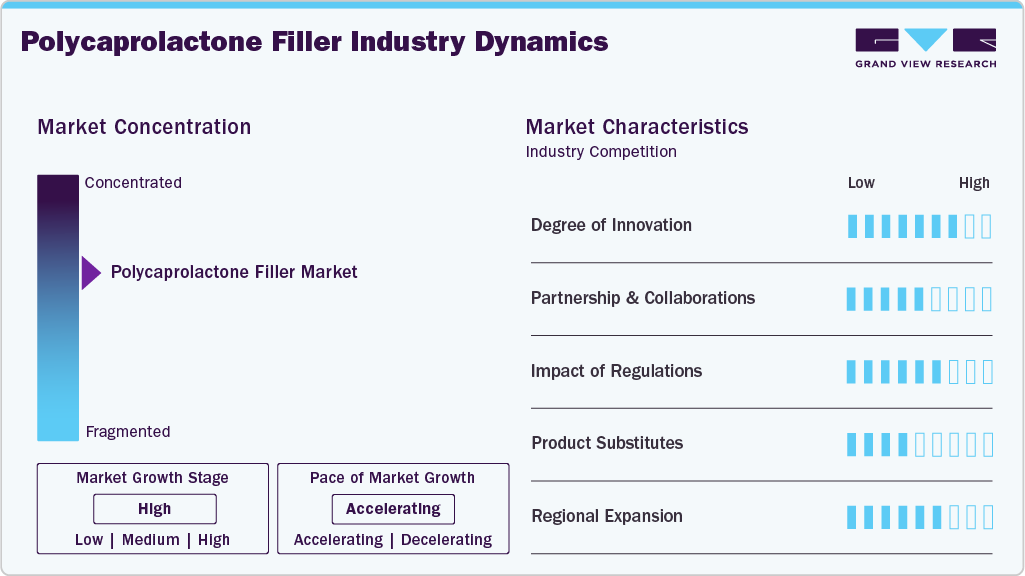
The PCL filler industry is moderately consolidated, with major companies such as Sinclair Pharma, Samyang Holdings, ACMEDI KOREA Co., and DEXLEVO Inc holding notable market shares. These companies focus on the development and commercialization of PCL-based fillers and collagen biostimulator products used in facial volume restoration, wrinkle correction, skin rejuvenation, periorbital enhancement, and non-surgical rhinoplasty procedures. Their product portfolio includes long-lasting, biodegradable, collagen-stimulating PCL fillers designed to deliver natural-looking aesthetic outcomes, improved skin elasticity, enhanced facial contouring, and prolonged treatment durability in minimally invasive cosmetic procedures.
The PCL filler industry is witnessing a high degree of innovation driven by the rising demand for long-lasting, minimally invasive, and collagen-stimulating aesthetic treatments for wrinkle correction, facial volume restoration, skin tightening, and overall facial rejuvenation. For instance, in March 2026, South Korean biotechnology company DEXLEVO announced growing international demand for its liquid polycaprolactone (PCL) technology and skin quality-focused aesthetic treatments amid rising global interest in anti-sagging and collagen-stimulating procedures. The company highlighted increasing adoption of its liquid PCL product, GOURI, among international patients seeking advanced facial rejuvenation, wrinkle correction, and skin texture improvement treatments in South Korea’s rapidly expanding medical aesthetics sector. The development reflects the growing innovation and global commercialization of PCL-based biostimulator technologies for long-lasting regenerative aesthetic applications.
 To learn more about this report, Download Free Sample Report
 The PCL filler industry is witnessing a notable increase in partnerships and collaborations as aesthetic medicine companies, biotechnology firms, dermatology clinics, and regenerative medicine research organizations work together to expand advanced collagen-stimulating and long-lasting injectable treatment solutions. Strategic collaborations are increasingly focused on developing next-generation PCL-based dermal fillers and biostimulators for applications such as wrinkle correction, facial volume restoration, skin tightening, and facial rejuvenation. Companies are also partnering to strengthen global distribution networks, expand physician training programs, accelerate regulatory approvals, and improve the commercialization of minimally invasive regenerative aesthetic treatments across emerging and developed markets.
The PCL filler industry operates within a highly regulated framework governed by agencies such as the U.S. Food and Drug Administration (FDA), European Commission Medical Device Regulation (EU MDR), and other international healthcare regulatory authorities that focus on product safety, biocompatibility, biodegradability, sterility, injectable material quality, and long-term patient safety standards for aesthetic applications. Regulatory oversight has increased significantly as the use of PCL-based dermal fillers, collagen stimulators, and regenerative aesthetic injectables for wrinkle correction, facial volume restoration, skin rejuvenation, and anti-aging treatments has grown. Regulatory authorities are placing stronger emphasis on clinical validation, adverse event monitoring, manufacturing quality compliance, labeling transparency, and post-market surveillance to ensure safe and effective use of long-lasting biostimulatory injectable products in cosmetic and dermatology procedures.
The PCL filler industry faces growing competition from alternative aesthetic treatment solutions such as hyaluronic acid dermal fillers, calcium hydroxylapatite (CaHA)-based fillers, poly-L-lactic acid (PLLA) biostimulators, autologous fat grafting procedures, botulinum toxin injections, and energy-based skin rejuvenation technologies, including radiofrequency and laser treatments. These substitute treatments are increasingly being adopted across cosmetic dermatology and aesthetic medicine markets to address facial aging concerns, wrinkle correction, skin tightening, and facial volume restoration through both minimally invasive and non-invasive approaches.
The PCL filler industry is witnessing significant regional expansion as aesthetic medicine companies, biomaterial manufacturers, and cosmetic dermatology providers strengthen their presence across emerging markets in Asia-Pacific, Latin America, the Middle East, and Europe to meet the growing demand for minimally invasive facial rejuvenation and collagen-stimulating aesthetic treatments. Rising consumer spending on cosmetic procedures, increasing awareness regarding anti-aging treatments, expanding medical aesthetics infrastructure, and growing acceptance of non-surgical facial enhancement procedures are encouraging companies to establish strategic distribution partnerships, physician training programs, and regional commercialization networks in high-growth markets.
Product Insights
The microsphere fillers segment led the market with the largest revenue share of 82.29% in 2025, owing to the increasing demand for long-lasting collagen-stimulating dermal fillers in facial rejuvenation and anti-aging procedures. PCL microsphere fillers are widely used for wrinkle correction, facial volume restoration, jawline contouring, and skin tightening due to their ability to provide both immediate volumizing effects and gradual collagen regeneration over an extended duration. Compared to conventional hyaluronic acid fillers, PCL microsphere-based products offer longer-lasting aesthetic outcomes, improved tissue integration, and enhanced skin quality improvement, which has significantly increased their adoption among aesthetic practitioners and patients seeking minimally invasive cosmetic procedures.
Recent clinical developments continue to strengthen the commercial adoption of PCL microsphere fillers. For instance, a study published in April 2025 in the Aesthetic Surgery Journal demonstrated that PCL microspheres significantly enhanced collagen production in subcutaneous adipose tissue, supporting their effectiveness in long-term facial rejuvenation and soft tissue restoration applications.
The hybrid fillers segment is expected to witness at the fastest CAGR of 11.3% over the forecast period. The growth is driven by the increasing adoption of hybrid fillers that combine collagen-stimulating PCL technology with advanced carrier gels and regenerative aesthetic formulation systems to provide both immediate volumizing effects and long-term tissue remodeling benefits. Unlike traditional PCL fillers that are mainly used for structural volume restoration and deep wrinkle correction, hybrid PCL fillers are designed to deliver multiple aesthetic benefits simultaneously, including collagen stimulation, skin tightening, hydration, lifting, and overall facial rejuvenation. Their liquid or advanced hybrid formulations provide smoother tissue distribution and more natural-looking results, making them highly attractive to patients seeking subtle anti-aging enhancements with minimal downtime.
In addition, hybrid PCL filler stimulates gradual collagen regeneration while also improving skin texture and elasticity, which supports longer-lasting and regenerative aesthetic results compared to conventional fillers.
Application Insights
The facial volume restoration segment accounted for the largest market share in 2025, as consumers increasingly prefer long-lasting, natural-looking solutions for age-related volume loss in areas such as the cheeks, temples, jawline, and mid-face. PCL-based fillers are widely used because they offer dual benefits: immediate volume correction via the gel carrier and long-term restoration via collagen stimulation triggered by PCL microspheres. This makes them more effective than conventional fillers for patients seeking durable facial contour improvement with fewer repeat treatments. Recent clinical evidence further supports the strong performance of PCL filler in facial volume restoration.
According to the May 2025 clinical study published in the Journal of Craniofacial Surgery demonstrated that PCL-based fillers significantly improved lateral facial volume and provided visible lifting effects in patients treated for age-related volume loss, confirming both structural and regenerative benefits of PCL technology.
The wrinkle & fold correction segment is expected to witness at the fastest CAGR over the forecast period. Consumers are increasingly adopting PCL-based fillers for wrinkle and fold correction because they not only provide immediate correction of wrinkles through volumizing support but also stimulate long-term collagen production, which helps improve skin firmness and reduces the recurrence of folds over time.
Compared to temporary fillers, PCL-based treatments are preferred for their extended durability, gradual tissue-regenerative effects, and ability to improve overall skin quality, making them highly suitable for patients seeking sustained anti-aging results with fewer maintenance sessions.
End Use Insights
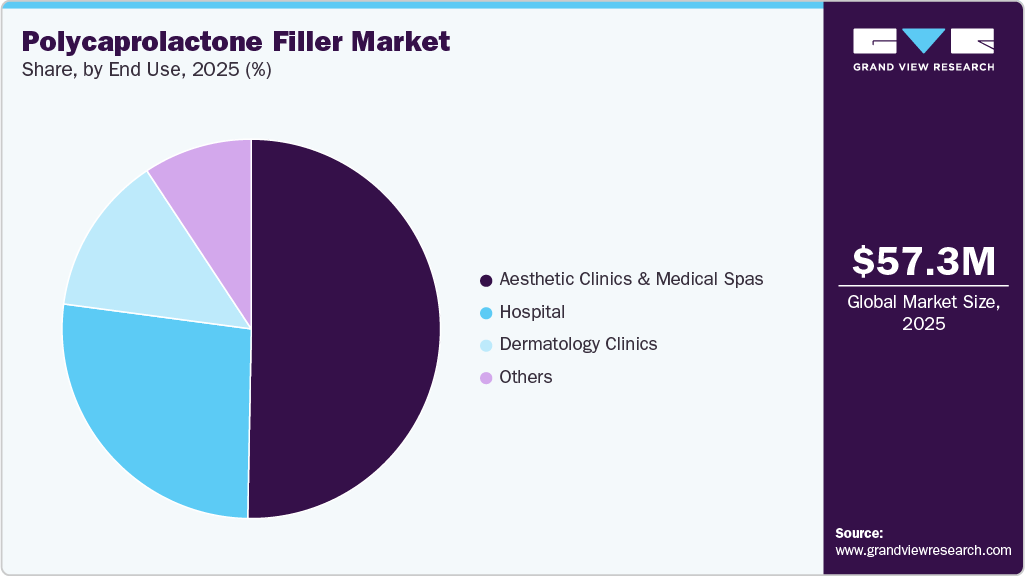
The aesthetic clinics & medical spas segment accounted for the largest market revenue share in 2025 and is expected to witness at the fastest CAGR over the forecast period. Aesthetic clinics and medical spas are increasingly using PCL-based fillers for procedures such as facial volume restoration, wrinkle correction, skin tightening, jawline contouring, and overall facial rejuvenation, thanks to their ability to deliver both immediate volumizing effects and long-term collagen stimulation. The growth is further supported by expanding medical spa chains, increasing physician specialization in injectable aesthetics, and rising consumer spending on premium cosmetic treatments.
In addition, social media influence, beauty-conscious younger populations, and the growing demand for preventive aesthetic procedures are encouraging aesthetic clinics to adopt advanced biostimulatory filler technologies that simultaneously improve skin quality and facial structure. Recent industry developments continue to strengthen this trend.
 To learn more about this report, Download Free Sample Report
 The hospital segmentis anticipated to grow at a significant CAGR over the forecast period. Hospitals are increasingly incorporating PCL-based fillers into their aesthetic treatment portfolios due to the growing demand for clinically supervised anti-aging procedures such as facial volume restoration, wrinkle correction, skin tightening, and collagen stimulation therapies.
The segment is further supported by the growing presence of specialized dermatology and plastic surgery departments within multi-specialty hospitals, the rising patient preference for medically supervised cosmetic procedures, and the increasing focus on treatment safety and advanced injectable technologies.
Regional Insights
The polycaprolactone filler market in North America is anticipated to grow at the fastest CAGR during the forecast period. The growth is driven by the strong presence of advanced aesthetic medicine infrastructure, rising demand for minimally invasive cosmetic procedures, and increasing consumer preference for long-lasting collagen-stimulating dermal fillers. The region is witnessing growing adoption of PCL-based injectable products for applications such as facial volume restoration, wrinkle correction, skin tightening, and facial rejuvenation, particularly among the aging population seeking non-surgical anti-aging treatments. In addition, high awareness regarding regenerative aesthetics, strong spending on cosmetic procedures, and increasing acceptance of biostimulatory fillers among dermatologists and plastic surgeons are supporting market growth across the countries.
U.S. Polycaprolactone Filler Market Trends
The PCL filler market in the U.S. is experiencing steady growth, driven by high consumer spending on cosmetic procedures, strong physician expertise in advanced injectable treatments, and rapid adoption of innovative aesthetic technologies. The growing popularity of preventive anti-aging procedures among younger demographics, combined with a preference for natural-looking, longer-lasting cosmetic outcomes, is accelerating the use of PCL-based collagen stimulators in the country. In addition, the expansion of premium aesthetic clinic networks, strong presence of aesthetic device and injectable manufacturers, and rising influence of social media-driven beauty trends are contributing to the continued growth of the U.S. polycaprolactone market.
Asia Pacific Polycaprolactone Filler Market Trends
Asia Pacific dominated the global polycaprolactone filler market with the largest revenue share of 36.3% in 2025. The demand is fueled by the rapidly expanding medical aesthetics industry, rising disposable income, and increasing demand for minimally invasive cosmetic procedures across countries. Growing consumer awareness of anti-aging treatments, facial rejuvenation, and collagen-stimulating dermal fillers is significantly driving the adoption of PCL-based aesthetic injectables for applications such as wrinkle correction, facial volume restoration, skin tightening, and contour enhancement. In addition, the rising influence of beauty standards, social media trends, and preventive aesthetic treatments among younger populations is accelerating demand for advanced regenerative filler technologies in the region.
 To learn more about this report, Download Free Sample Report
 The polycaprolactone filler market in Japan accounted for the largest market revenue share in the Asia Pacific in 2025, due to country’s rapidly aging population and strong consumer preference for natural-looking facial rejuvenation procedures. Japan has one of the world’s largest elderly populations, which is significantly driving demand for aesthetic treatments focused on wrinkle correction, facial volume restoration, skin tightening, and collagen stimulation. Consumers in the country increasingly prefer non-surgical cosmetic procedures with subtle, long-lasting outcomes, supporting the adoption of PCL-based biostimulatory fillers in dermatology clinics and aesthetic medicine centers. The market is further supported by Japan’s advanced healthcare infrastructure, high physician expertise in aesthetic injectables, and growing awareness regarding regenerative aesthetic technologies. Furthermore, expanding availability of premium cosmetic dermatology services and increasing consumer spending on personal wellness and appearance enhancement continue to support the growth of the polycaprolactone market in Japan.
The India PCL filler market is expected to register at the fastest CAGR over the forecast period. The growth is driven by the rapidly expanding medical aesthetics industry, rising disposable income, and increasing consumer awareness regarding minimally invasive cosmetic procedures. The market is further supported by the expansion of dermatology clinics, medical spas, and cosmetic surgery centers offering premium injectable procedures with minimal downtime and natural-looking outcomes. India is also witnessing an increase in the adoption of biostimulatory fillers and regenerative aesthetic technologies, driven by rising patient preference for longer-lasting alternatives to conventional dermal fillers.
Europe Polycaprolactone Filler Market Trends
The PCL Filler market in Europe held a significant share in Europe in 2025. The growth is attributed to the rising demand for minimally invasive aesthetic procedures, the increasing aging population, and rising consumer preference for long-lasting collagen-stimulating dermal fillers across the region. Countries such as Germany, France, Italy, Spain, and the United Kingdom are witnessing strong adoption of PCL-based fillers for applications including facial volume restoration, wrinkle correction, facial contouring, and skin rejuvenation. The region benefits from a well-established cosmetic dermatology industry, greater awareness of regenerative aesthetic treatments, and increased acceptance of biostimulatory injectables among aesthetic practitioners and patients seeking natural-looking anti-aging outcomes.
The UK PCL filler marketis steadily growing, supported by the increasing demand for minimally invasive cosmetic procedures and rising awareness regarding regenerative aesthetic treatments. The country is witnessing strong adoption of facial rejuvenation procedures such as wrinkle correction, facial contouring, skin tightening, and facial volume restoration, particularly among aging consumers seeking non-surgical anti-aging solutions with natural-looking outcomes. In addition, the increasing popularity of preventive aesthetics among younger populations and the growing acceptance of biostimulatory fillers among aesthetic practitioners are contributing to the rising demand for PCL-based injectable products across the UK
The PCL filler market in Germany is expected to grow at a significant CAGR during the forecast period. The growth is mainly attributed to the increasing demand for minimally invasive facial rejuvenation procedures, the rising aging population, and the growing consumer preference for long-lasting collagen-stimulating dermal fillers. Germany has a well-established aesthetic medicine and cosmetic dermatology industry, with increasing adoption of advanced injectable treatments for wrinkle correction, facial contouring, skin tightening, and facial volume restoration. The growing preference for regenerative aesthetic procedures that deliver natural-looking, durable outcomes is significantly driving the adoption of PCL-based fillers among both aesthetic practitioners and patients in the country.
Latin America Polycaprolactone Filler Market Trends
The PCL filler market in Latin is anticipated to grow at a substantial CAGR during the forecast period, due to the increasing awareness regarding regenerative cosmetic treatments and growing consumer preference for long-lasting collagen-stimulating dermal fillers. Expanding urban populations, rising disposable incomes, and the growing influence of social media-driven beauty trends are driving greater adoption of facial rejuvenation procedures such as wrinkle correction, facial contouring, skin tightening, and facial volume restoration across developing aesthetic markets. In addition, the growing availability of dermatology clinics, medical spas, and aesthetic treatment centers is improving access to advanced injectable cosmetic procedures in the region.
The Brazil PCL filler market is growing steadily. The market is fueled by high consumer beauty consciousness, strong physician expertise in injectable cosmetic procedures, and the expanding availability of advanced facial rejuvenation treatments in major urban centers. In addition, the growing influence of social media trends, increasing acceptance of preventive anti-aging procedures, and rising demand for natural-looking aesthetic outcomes are accelerating the adoption of PCL-based collagen stimulators in Brazil. Furthermore, the ongoing expansion of aesthetic medicine training programs and increasing commercialization efforts by international aesthetic manufacturers are contributing to the steady growth of the PCL filler industry in the country.
Middle East & Africa Polycaprolactone Filler Market Trends
The PCL filler market in the Middle East and Africa (MEA) is growing steadily. The growth is attributed to the rising awareness regarding anti-aging treatments, increasing demand for minimally invasive cosmetic procedures, and expanding adoption of regenerative aesthetic technologies across the region. Countries are witnessing growing consumer interest in facial rejuvenation procedures, including wrinkle correction, facial contouring, skin tightening, and facial volume restoration using long-lasting collagen-stimulating dermal fillers. Rising disposable incomes, increasing beauty consciousness, and strong demand for premium aesthetic treatments among both local consumers and medical tourists are supporting the adoption of PCL-based injectable products in the region.
The Polycaprolactone filler market in Saudi Arabia is experiencing notable growth, driven by the increasing acceptance of regenerative aesthetic treatments among both male and female consumers seeking natural-looking, minimally invasive cosmetic enhancement procedures. The growing influence of social media, beauty-conscious lifestyles, and international aesthetic trends is further accelerating demand for advanced injectable treatments with longer-lasting outcomes. Furthermore, the expansion of premium aesthetic clinics in major cities such as Riyadh and Jeddah, the increasing expertise of physicians in facial injectables, and rising medical tourism are supporting the commercialization and clinical adoption of innovative PCL-based dermal filler technologies in the Saudi Arabian market.
Key Polycaprolactone Filler Company Insights
-
The PCL filler industry for aesthetic treatments is highly competitive, with key players focusing on strengthening their market position through product innovation, strategic partnerships, and expansion across global medical aesthetics markets.
-
Companies are increasingly investing in advanced PCL-based dermal filler technologies and collagen biostimulator formulations to deliver longer-lasting aesthetic outcomes, improved biocompatibility, enhanced skin rejuvenation, and natural-looking facial enhancement.
Key Polycaprolactone Filler Companies:
The following key companies have been profiled for this study on the PCL filler market.
-
Sinclair Pharma
-
Samyang Holdings
-
DEXLEVO Inc.
-
Jinan Grandwill Medical Technology Co., Ltd
-
HIXMED CO., LTD
-
DERMAKOR
-
ZK MediGroup
-
ACMEDI KOREA Co.
Competitive Benchmarking
Operating Strategies
Competitive Edge
Weaknesses
Mature Player: Sinclair Pharma
- Focus on expanding advanced PCL-based dermal filler and collagen biostimulator portfolios for facial volume restoration, wrinkle correction, skin rejuvenation, and non-surgical facial contouring procedures.
- Emphasize strategic collaborations with dermatology clinics, aesthetic hospitals, plastic surgeons, and medical spa chains to strengthen global market presence and product accessibility.
- Strong brand recognition, established global distribution networks, and broad presence across developed aesthetic medicine markets.
- Advanced R&D capabilities and proprietary collagen-stimulating technologies support long-lasting product performance and innovation leadership.
- High product development, regulatory compliance, and commercialization costs associated with medical aesthetic injectables.
- Increasing competition from hyaluronic acid fillers, calcium hydroxylapatite fillers, and other collagen biostimulator technologies creates pricing pressure.
Emerging Player: Jinan Grandwill Medical Technology Co., Ltd
- Focus on niche and cost-competitive PCL aesthetic products targeting emerging medical aesthetics markets and mid-tier aesthetic clinics.
- Prioritize innovation in minimally invasive skin rejuvenation and collagen biostimulation treatments with enhanced safety and treatment longevity.
- Faster product innovation cycles and flexible commercialization strategies enable quicker response to changing aesthetic trends and patient preferences.
- Competitive pricing strategies help increase adoption in price-sensitive markets and among smaller aesthetic clinics.
- Limited financial resources, lower brand awareness, and smaller distribution networks compared to established global aesthetic companies.
- Challenges related to regulatory approvals, limited long-term clinical data, and lower physician familiarity may slow product adoption.
Recent Development
-
In May 2026, Samyang Biopharm announced the official launch of Lafullen, its proprietary polymer-based dermal filler, in Thailand as part of its expansion into the country’s rapidly growing medical aesthetics market. The company hosted a launch event in Bangkok to introduce the product to local aesthetic practitioners and strengthen regional commercialization activities for facial rejuvenation and volume restoration treatments.
Polycaprolactone Filler Market Report Scope
Report Attribute
Details
Market size value in 2025
USD 57.3 million
Market size value in 2026
USD 62.5 million
Revenue forecast in 2033
USD 115.5 million
Growth rate
CAGR of 9.2% from 2026 to 2033
Base year for estimation
2025
Historical data
2021 - 2024
Forecast period
2026 - 2033
Quantitative units
Revenue in USD million/billion, and CAGR from 2026 to 2033
Report coverage
Revenue forecast, company ranking, competitive landscape, growth factors, and trends
Segments covered
Product, application, end use,region
Regional scope
North America; Europe; Asia Pacific; Latin America; Middle East & Africa (MEA)
Country scope
U.S.; Canada; Mexoico; UK; Germany; France; Italy; Spain; Denmark; Sweden; Norway: Japan; China India; Australia; Thailand; South Korea; Brazil; Argentina; South Africa; Saudi Arabia; UAE; Kuwait
Key companies profiled
Sinclair Pharma; Samyang Holdings; DEXLEVO Inc.; Jinan Grandwill Medical Technology Co., Ltd; HIXMED CO.,LTD; DERMAKOR; ZK MediGroup; ACMEDI KOREA Co.
Customization scope
Free report customization (equivalent up to 8 analyst’s working days) with purchase. Addition or alteration to country, regional, and segment scope
Pricing and purchase options
Avail customized purchase options to meet your exact research needs. Explore purchase options
Global Polycaprolactone Filler Market Report Segmentation
This report forecasts revenue growth at regional and country levels and provides an analysis of the latest industry trends in each of the sub-segments from 2021 to 2033. For the purpose of this study, Grand View Research has segmented the global polycaprolactone filler market report based on product, application, end use, and region:
 To learn more about this report, Download Free Sample Report
 -
Product Outlook (Revenue, USD Million, 2021 - 2033)
-
Microsphere Fillers
-
Liquid PCL Formulations
-
Hybrid Fillers
-
-
Application Outlook (Revenue, USD Million, 2021 - 2033)
-
Facial Volume Restoration
-
Wrinkle & Fold Correction
-
Skin Quality Improvement & Biostimulation
-
Periorbital Rejuvenation
-
Non-Surgical Rhinoplasty
-
-
End Use Outlook (Revenue, USD Million, 2021 - 2033)
-
Aesthetic Clinics & Medical Spas
-
Dermatology Clinics
-
Hospital
-
Others
-
-
Country Outlook (Revenue, USD Million, 2021 - 2033)
-
North America
-
U.S.
-
Canada
-
Mexico
-
-
Europe
-
UK
-
Germany
-
France
-
Italy
-
Spain
-
Norway
-
Denmark
-
Sweden
-
-
Asia Pacific
-
China
-
Japan
-
South Korea
-
Thailand
-
Australia
-
India
-
-
Latin America
-
Brazil
-
Argentina
-
-
MEA
-
South Africa
-
Saudi Arabia
-
UAE
-
Kuwait
-
-
Delivered Customizations
This report has been delivered with the following In-depth customizations
Client Request
Customization Delivered
Value Adds
Consumer Behavior Analysis
Conducted a comprehensive consumer behavior analysis of the polycaprolactone (PCL) aesthetic treatment market, focusing on patient preferences, treatment adoption patterns, purchasing behavior, and awareness levels related to minimally invasive cosmetic procedures. The study evaluated key factors influencing demand for PCL-based dermal fillers, including preference for long-lasting aesthetic outcomes, collagen-stimulating properties, reduced treatment frequency, natural-looking results, and growing acceptance of non-surgical facial rejuvenation procedures. Additionally, the analysis assessed the influence of social media trends, celebrity-driven beauty standards, rising disposable income, and increasing male aesthetic participation on treatment demand across developed and emerging markets.
This analysis enables stakeholders to understand evolving patient expectations, treatment decision-making behavior, and key demand drivers influencing the adoption of PCL-based aesthetic products. It supports identification of high-growth consumer demographics, emerging beauty trends, and regional treatment preferences, helping companies optimize marketing strategies, product positioning, and patient engagement initiatives within the medical aesthetics industry.
Average Selling Price (ASP) Analysis
Conducted a detailed average selling price (ASP) analysis of PCL-based dermal fillers and collagen biostimulator products across major countries and regions. The study evaluated pricing variations based on product type, treatment indication, brand positioning, practitioner expertise, clinic type, procedure complexity, and treatment longevity. The analysis also assessed the impact of premium aesthetic clinics, increasing demand for long-lasting fillers, import regulations, reimbursement limitations, and competitive product offerings on pricing trends within the global PCL aesthetic treatment market.
This analysis enables stakeholders to evaluate regional pricing trends, competitive positioning, and profitability opportunities within the PCL aesthetics market. It supports strategic pricing decisions, market-entry planning, and identification of premium and value-based treatment segments across developed and emerging medical aesthetics markets.
Number of Practitioner/Provider Assessment by Country
Conducted a detailed assessment of the estimated number of aesthetic professionals and healthcare providers administering PCL-based injectable aesthetic products across key countries. The analysis included dermatologists, plastic surgeons, cosmetic physicians, aesthetic nurses, and certified injectors involved in minimally invasive cosmetic procedures such as facial volumization, wrinkle correction, skin rejuvenation, and collagen biostimulation treatments. The study further evaluated practitioner density, training infrastructure, clinic expansion trends, regulatory certification requirements, and growing adoption of aesthetic injectable procedures across major global markets.
This analysis enables stakeholders to understand provider availability, treatment accessibility, and practitioner adoption trends across the global PCL aesthetic treatment market. It helps identify high-potential countries with expanding injector networks, supports regional expansion planning, and provides insights into the competitive landscape and future demand for PCL-based injectable aesthetic solutions.
Frequently Asked Questions About This Report
Key factors that are driving the market growth include the rising demand for long-lasting, minimally invasive aesthetic procedures.
The global polycaprolactone filler market size was estimated at USD 57.3 million in 2025 and is expected to reach USD 62.5 million in 2026.
The global polycaprolactone filler market is expected to grow at a compound annual growth rate of 9.2% from 2026 to 2033 to reach USD 115.5 million by 2033.
Asia-Pacific dominated the PCL filler market with a share of 36.3% in 2025. This is attributable to the rapidly expanding medical aesthetics industry, rising disposable income, and increasing demand for minimally invasive cosmetic procedures across countries.
Some key players operating in the polycaprolactone (PCL) filler market include Sinclair Pharma, Samyang Holdings, DEXLEVO, Inc., Jinan Grandwill Medical Technology Co., Ltd., HIXMED CO., Ltd., DERMAKOR, ZK MediGroup, and ACMEDI KOREA Co.
About the Author(s)
Medical Devices Research Team
Healthcare · Medical DevicesThis report was authored by the medical devices research team at Grand View Research - comprising two research analysts, one senior research analyst, and one industry expert - with specialized expertise in the medical devices segment of the healthcare industry. All findings are based on proprietary healthcare databases, executive interviews, and regulatory analysis, subject to internal peer review prior to publication.
Last Updated:
Speak to Analyst

Customize this report to your needs - add regions, segments, or data points, with 20% free customization.
Or view our licence options:


ISO 9001:2015 & 27001:2022 Certified
We are GDPR and CCPA compliant! Your transaction & personal information is safe and secure. For more details, please read our privacy policy.


