
- Home
- »
- Healthcare IT
- »
-
Precision Medicine Software Market, Industry Report, 2033GVR Report cover

Precision Medicine Software Market (2025 - 2033) Size, Share & Trends Analysis Report By Component (Software & Services), By Deployment (Cloud-Based, On Premise), By Application, By Technology, By Therapeutic Area, By End Use, By Region, And Segment Forecasts
Market Size, 2024
$2.1BMarket Estimate, 2026
$2.3BMarket Forecast, 2033
$5.7BCAGR, 2025–2033
11.8%Precision Medicine Software Market Summary
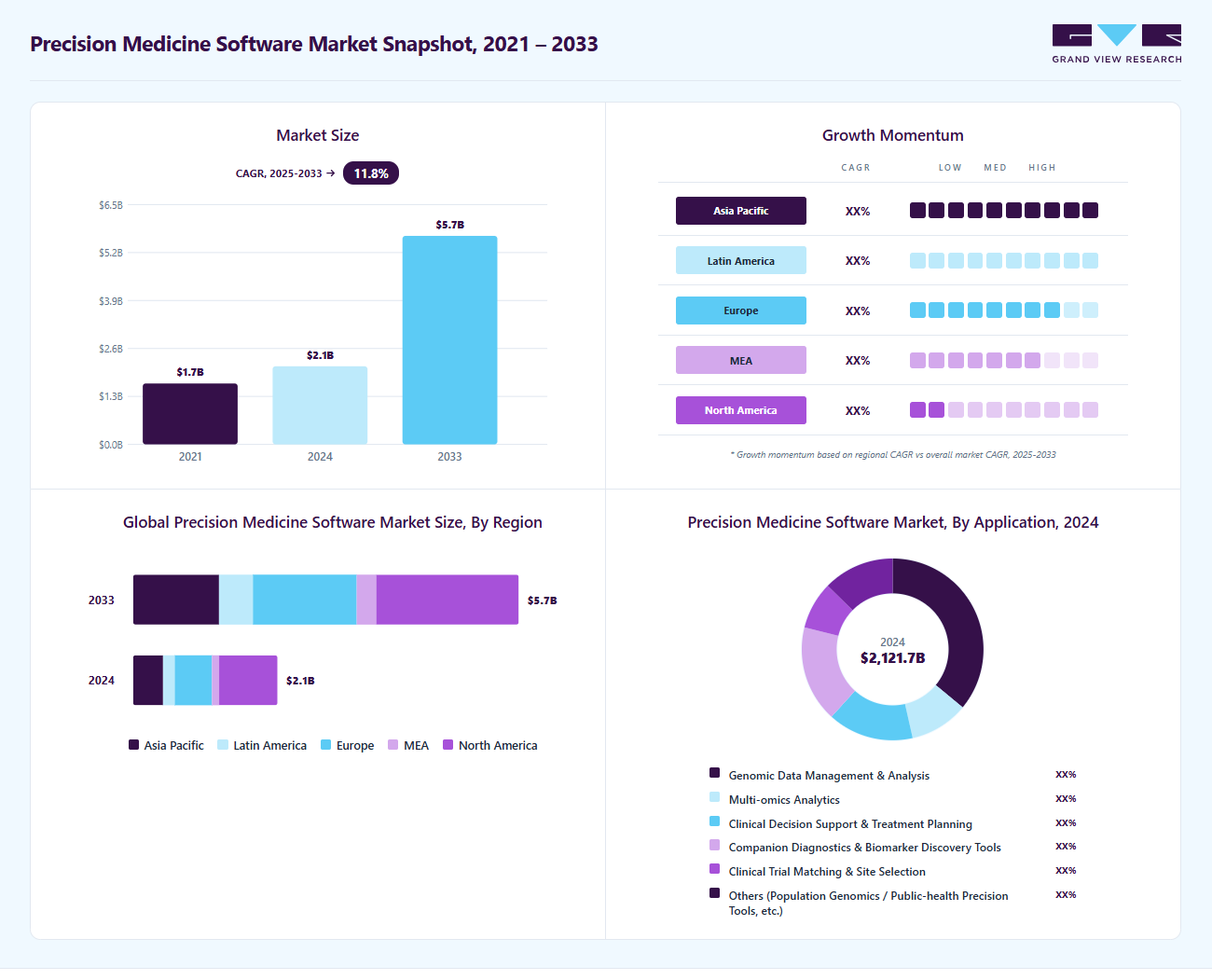
The global precision medicine software market size was valued at USD 2.12 billion in 2024 and is projected to reach USD 5.66 billion by 2033, growing at a CAGR of 11.8% from 2025 to 2033. This growth is attributed to declining cost of genome sequencing, rise of targeted and personalized therapies, the increase of decentralized trials, and real-world evidence.
 Source: Grand View Research, IR Documents, Primary Interviews, Paid DatabasesTo learn more about this report,
 Download Free Sample Report
 Key Market Trends & Insights
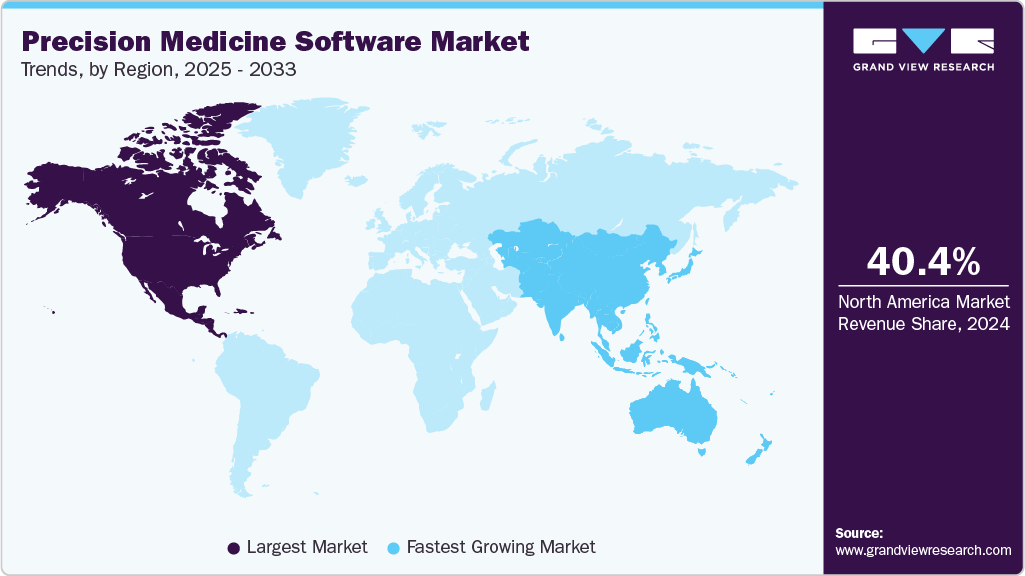
- North America dominated the market for precision medicine software with a share of 40.42% in 2024.
- The precision medicine software industry in the U.S. is growing rapidly.
- Based on component, the software segment held the largest market share of 77.90% in 2024.
- In terms of the deployment mode, the cloud-based segment held the largest revenue share of 70.70% in 2024.
- Based on application, genomic data management & analysis held the dominant market share in 2024.
Market Size & Forecast
- 2024 Market Size: USD 2.12 Billion
- 2033 Projected Market Size: USD 5.66 Billion
- CAGR (2025-2033): 11.8%
- North America: Largest market in 2024
- Asia Pacific: Fastest growing market
Three ways to get this report
Buy it, customize it, or ask a question.Ask an Analyst
Analyst response in 1 business day
- AccessReport author, directly
- Reply timeWithin 1 working day
- No sales callDirect answer only
- FormatEmail reply
- CostFree, no cost
Get the Full Report
What the study covers
- FormatsPDF · Excel · Dashboard
- Timeline2025–2033 annual, 2024 base
- Coverage20+ countries, 5 regions
- Companies10+ key players profiled
Customize the Report
20% free customization
- IncludeCountries, segments, points
- TailorTo your product definition
- ExtendDeeper competitor detail
- OrA fully bespoke study
- Turnaround5–10 working days
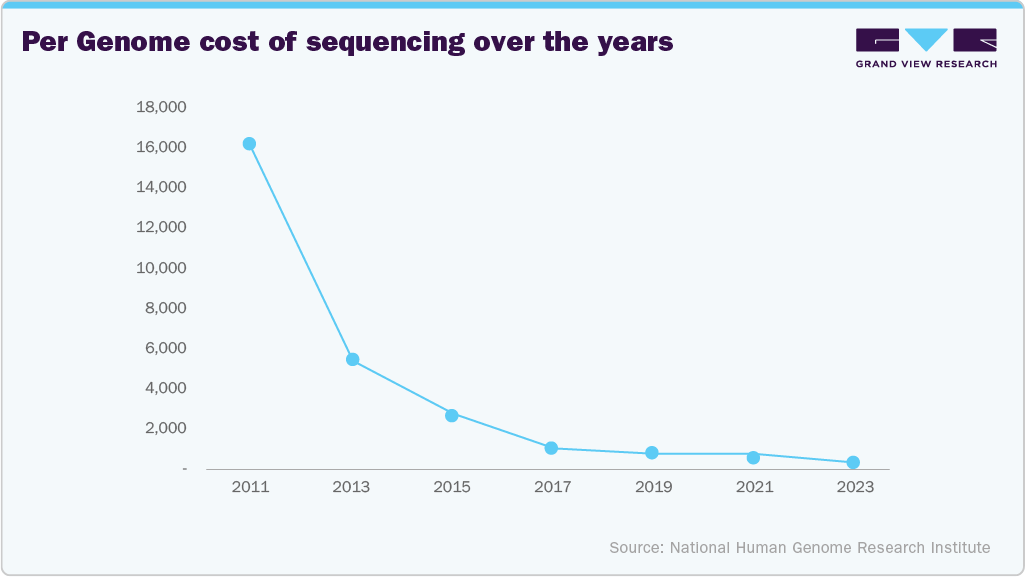
Moreover, government and institutional initiatives supporting genomics and precision medicine, and demand for personalized healthcare, have fueled the industry outlook. The declining cost of genome sequencing has transformed it from a high-cost, research-only tool into a routine part of clinical practice, making it a key driver of the precision medicine software industry. What once cost nearly USD 100 million per genome in the early 2000s can now be performed for under USD 500, enabling widespread adoption by hospitals, diagnostic labs, pharmaceutical companies, and even consumer health firms.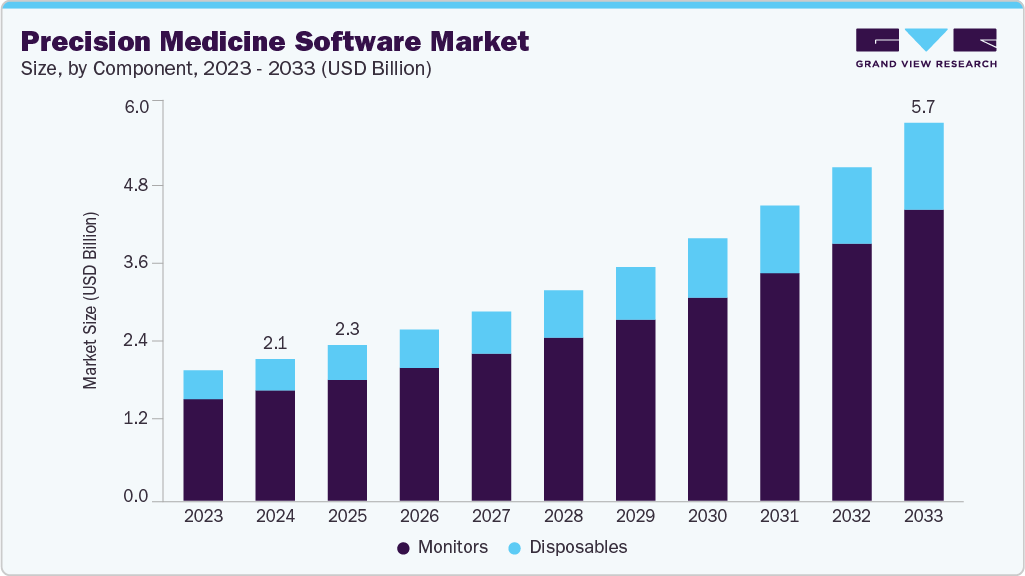 To learn more about this report, Download Free Sample Report
 This affordability has led to a surge in large-scale genomic testing, generating massive datasets that require advanced software for storage, integration, and interpretation. Precision medicine software plays a central role in converting this raw sequencing data into actionable clinical insights for diagnosis, therapy selection, and patient stratification, driving demand as sequencing becomes standard in oncology, rare disease treatment, and preventive healthcare.
 To learn more about this report, Download Free Sample Report
 Governments, research institutions, and healthcare organizations increasingly invest in large-scale genomics and precision medicine initiatives to advance personalized healthcare. These programs focus on generating, integrating, and analyzing diverse health datasets, creating demand for sophisticated precision medicine software platforms. For instance,
-
In July 2025, LIH and NCCK launched the International Health Data Space Initiative (IHDSI), with partners NAVER Cloud, Okestro, and Cipherome, to create a secure, privacy-preserving platform for cross-border health data sharing. The initiative aims to accelerate AI-driven precision medicine and cancer research through federated data access.
-
In June 2024, UC Davis Health received a USD 5.6 million grant from the NIH’s Coast-to-Coast Consortium to enhance participation and data collection for the All of Us Research Program. This initiative aims to advance precision medicine by integrating diverse health data to improve disease prevention and treatment strategies.
Such initiatives expand access to high-quality health data and accelerate the adoption of precision medicine software, strengthening its role in transforming research and clinical decision-making.
Integration of AI in Precision medicine software
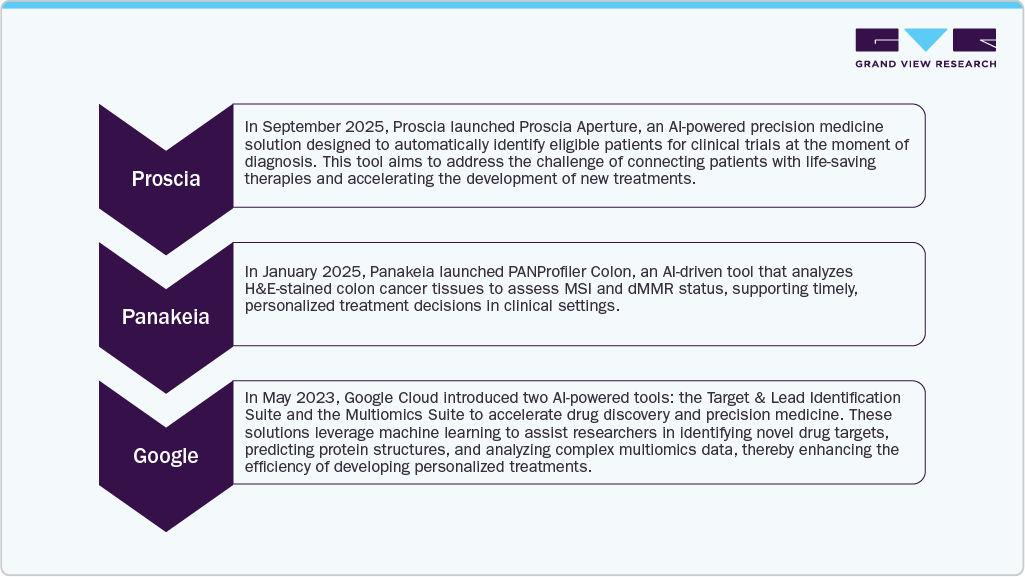
Artificial intelligence has transformed precision medicine software, changing how patient data is collected, analyzed, and interpreted to support personalized care. AI algorithms such as machine learning, language processing, and deep learning have helped identify disease-associated biomarkers, predict therapy response, stratify patient populations, and recommend optimized treatment plans by integrating genomic, clinical, imaging, and real-world data. AI has enhanced drug discovery, companion diagnostics development, and clinical trial design, making precision medicine software more efficient and actionable. Several leading players in the market are now offering AI-based precision medicine solutions, driving innovation and adoption across healthcare and research settings.
 To learn more about this report, Download Free Sample Report
 Market Concentration & Characteristics
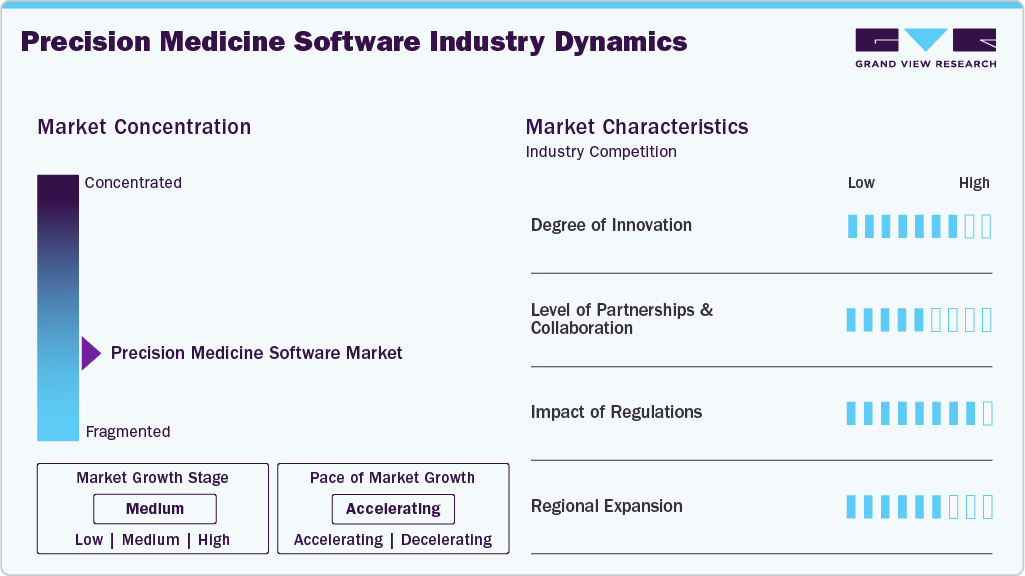
The chart below illustrates the relationship among market concentration, industry characteristics, and industry participants. It depicts the level of industry concentration, ranging from low to high. The chart also sheds light on various industry characteristics, including industry competition, impact of regulations, level of partnerships & collaborations activities, degree of innovation, and regional expansion. For instance, the market for precision medicine software is slightly fragmented, with many products and service providers entering the market. The degree of innovation, the level of partnerships & collaboration activities, and the impact of regulations on the industry are high. However, the regional expansion observes moderate growth.
The high degree of innovation is driven by the need to deliver personalized, data-driven care and improve clinical decision-making. Market players are launching AI-enabled platforms that automate genomic and multi-modal data analysis, predict patient responses, and support treatment selection, helping healthcare providers and researchers enhance accuracy, efficiency, and patient outcomes.
 To learn more about this report, Download Free Sample Report
 The level of partnerships and collaborations is moderate, focusing on advancing personalized care and enabling data-driven clinical insights. For instance, in April 2025, Illumina, Inc. and Tempus AI, Inc., announced a strategic collaboration to advance the clinical adoption of next-generation sequencing (NGS) tests. The partnership will integrate Illumina’s AI technologies with Tempus’s multimodal data platform to develop genomic algorithms, generate novel clinical evidence, and accelerate the use of molecular testing in patient care.
“By expanding our collaboration with Illumina, we are combining our strengths in technology and data analytics with their strengths in developing new sequencing technologies to drive forward innovation and advance precision medicine,"
-Terron Bruner, chief commercial officer of Tempus.”
Regulations have had a high impact on the market to ensure safety, efficacy, and compliance, which in turn builds trust among healthcare providers, payers, and patients. Approvals such as FDA clearance, CE marking, and other regional certifications validate software performance, accelerate adoption, and open access to global markets.
The precision medicine software market is expanding globally, driven by the growing need to deliver personalized, data-driven care and improve clinical decision-making. Growth is supported by adopting AI-powered analytics, genomic and multi-modal data integration, predictive modeling for patient stratification, and increasing investments in healthcare IT and cloud-based infrastructure.
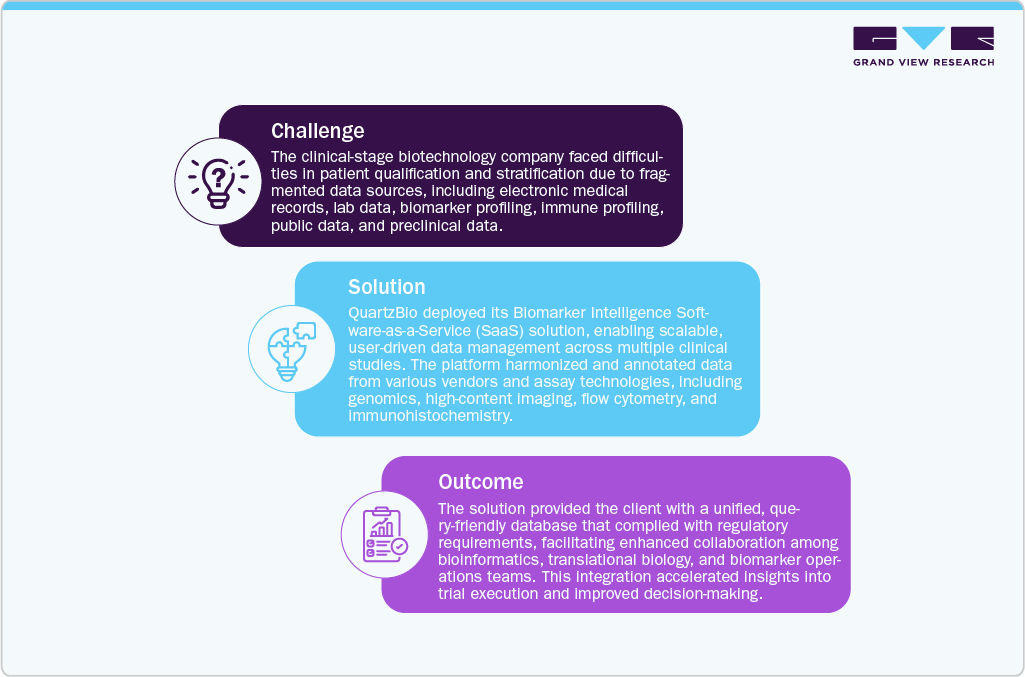
Case Study: Unifying Biomarker and Clinical Data for Precision Oncology
 To learn more about this report, Download Free Sample Report
 Component Insights
Based on component, the software segment held the largest market share of 77.90% in 2024, driven by rising adoption of AI and machine learning algorithms, integration of multi-omics and clinical data, development of predictive analytics and clinical decision support tools, and increasing demand for cloud-based and interoperable software platforms in precision medicine.
In addition, the services segment is expected to register the fastest CAGR over the forecast period. The growth outlook is attributed to an increasing demand for implementation support, data integration, consulting, training, and maintenance services. The trend is poised to optimize the deployment and utilization of precision medicine software solutions.
Application Insights
In terms of application, the genomic data management & analysis segment held the largest revenue share of 36.01% in 2024, fueled by the growing need to store, process, and interpret large volumes of genomic and multi-omics data. For instance, a study published in the National Library of Medicine exhorted the need for around 2 and 40 exabytes of storage capacity for human genomes by 2025. The growth of the segment is also supported by integration with clinical and real-world datasets, and adoption of AI-powered analytics for patient stratification, biomarker discovery, and personalized treatment planning.
Companion diagnostics & biomarker discovery tools are expected to register the fastest CAGR over the forecast period. Growth of this segment is driven by its critical role in enabling targeted therapies, identifying predictive biomarkers, supporting patient stratification, and guiding personalized treatment decisions.
Technology Insights
On the basis of technology, the AI / machine learning models & generative AI segment held the largest revenue share of 36.67% in 2024, spurred by their ability to analyze complex genomic and clinical datasets, predict therapy responses, identify disease-associated biomarkers, and support personalized treatment planning in precision medicine applications. Several leading market players, such as Tempus AI, Inc., Proscia, and Lunit, are actively offering AI-powered precision medicine solutions, further driving the growth of this segment.
The interoperability / FHIR / HL7 integration segment is expected to register the fastest CAGR over the projected period, driven by the growing need to ensure seamless data exchange across genomic platforms, EHRs, laboratories, and clinical systems. These standards enable more efficient integration of multi-source patient data, enhance collaboration between stakeholders, and support regulatory compliance, ultimately accelerating the adoption of precision medicine solutions.
Deployment Mode Insights
With respect to deployment mode, the cloud-based segment held the largest revenue share in 2024 and is expected to grow at the fastest CAGR during the forecast period. This growth is attributed to its scalability, enabling seamless handling of growing genomic and clinical datasets. It offers remote accessibility for clinicians and researchers, cost efficiency compared to on-premises systems, and rapid deployment of AI-powered analytics and software updates. In addition, cloud platforms provide robust data security and regulatory compliance, facilitate multi-institutional collaboration, support interoperability with EHRs and research databases, and enable real-time predictive analytics for personalized care.
The on-premise segment is expected to grow steadily over the forecast period, powered by supported by organizations prioritizing full control over sensitive genomic and clinical data, compliance with internal IT policies, and integration with existing legacy healthcare infrastructure.
Therapeutic Area Insights
Based on therapeutic area, oncology held the dominant market share in 2024, driven by the increasing adoption of genomic profiling, biomarker-driven targeted therapies, and AI-powered analytics for personalized cancer treatment and the rising incidence of various cancers. To illustrate, according to the National Cancer Institute, in 2025, an estimated 2,041,910 new cancer cases will be diagnosed in the U.S, with approximately 618,120 deaths expected from the disease.
The rare & genetic disorders segment is expected to grow at the fastest CAGR, driven by increasing prevalence of rare diseases, rising demand for genetic testing, advancements in genomic sequencing technologies, and the growing adoption of precision medicine solutions for early diagnosis, personalized treatment, and patient-specific therapeutic strategies.
End Use Insights
With regards to end use, hospitals held the dominant market share in 2024, as hospitals and health systems increasingly adopt precision medicine software to enhance clinical decision-making, integrate genomic insights, and deliver personalized care. For instance, in July 2023, Children's Hospital Colorado established the Precision Medicine Institute to integrate whole-genome sequencing into everyday pediatric care, leveraging Illumina genomic tools and a dynamic data system linked to electronic health records to improve diagnoses, personalize treatments, and educate clinicians on genomics.
 To learn more about this report, Download Free Sample Report
 The diagnostic laboratories & genomic service providers segment is expected to witness significant growth over the forecast period. The outlook is attributed to rising demand for advanced genomic testing, expansion of next-generation sequencing (NGS) services, increasing outsourcing of biomarker discovery and companion diagnostics, and the growing role of specialized labs in integrating multi-omics data for precision medicine applications.
Regional Insights
The North America precision medicine software industry dominated 2024 with the largest market share of 40.42%, driven by strong investment in genomics, widespread adoption of AI and advanced analytics, robust healthcare IT infrastructure, and supportive regulatory frameworks. For instance, in March 2025, Canada launched the Canadian Precision Health Initiative (CPHI) with a projected USD 143.69 million (C$200 million) investment to build the largest-ever collection of human genomic data and advance AI-driven precision medicine, personalized healthcare, and economic growth in health innovation.
 To learn more about this report, Download Free Sample Report
 U.S. Precision Medicine Software Market Trends
The precision medicine software industry in the U.S. is growing rapidly, driven by advanced healthcare infrastructure, strong adoption of genomics and AI in clinical workflows, and robust government and institutional support for personalized care initiatives. To illustrate, in June 2022, the University of Maryland Medicine launched the statewide “My Healthy Maryland” Precision Medicine Research initiative to enroll 250,000 diverse residents over ten years, collecting genomic and health data to advance discovery and personalized healthcare, with a strong focus on underserved populations.
Europe Precision Medicine Software Market Trends
The Europe precision medicine software industry is witnessing significant growth attributed to increasing public and private investment in genomics and bioinformatics, and the push toward personalized healthcare through AI/ML-powered analytics. For instance, in October 2024, Aiforia Technologies joined the EU-funded Thera4Care project to advance precision medicine by developing AI solutions for clinical decision support and predictive modeling, aiming to revolutionize precision oncology and personalized patient care in Europe. However, challenges such as stringent data privacy regulations (GDPR), high costs of implementation, and variability in reimbursement across member states remain prevalent.
The precision medicine software industry in the UK is propelled by rising government initiatives, growing adoption of AI and data-driven analytics, and increasing focus on personalized care in oncology and rare diseases. For instance, in May 2023, Innovate UK launched the "Advancing Precision Medicine: Round 2" competition, offering up to approximately USD 13.4 million (£10 million) to support industry-led collaborative R&D projects that develop innovative digital and data-driven tools for accurate diagnosis, patient stratification, and personalized treatment approaches, addressing unmet clinical needs and NHS priorities.
The Germany precision medicine software industry is driven by strong adoption of genomic and AI-based analytics, supportive government initiatives for personalized healthcare, and increasing focus on oncology and rare disease diagnostics. Public-private partnerships and the development of interoperable data platforms enable integration of clinical, genomic, and real-world data, helping healthcare providers make more informed, patient-specific treatment decisions.
Asia Pacific Precision Medicine Software Market Trends
The Asia-Pacific precision medicine software industry is expanding rapidly, due to rising healthcare investment, growing adoption of AI and genomics in clinical practice, and supportive government initiatives in countries such as China, Japan, South Korea, and India. For instance, in July 2025, India launched its National Biobank under the Phenome India Project at CSIR-IGIB, aimed at collecting genomic, lifestyle, and clinical data from 10,000 diverse participants to drive precision medicine by enabling personalized treatments and improving early disease diagnosis and targeted therapies.
The precision medicine software industry in Japan is growing steadily, driven by strong healthcare infrastructure, increasing adoption of AI in genomics, and government support for personalized medicine initiatives. In addition, rising demand for oncology and rare disease diagnostics, integration of clinical and genomic data, and collaborations between healthcare providers, biopharma, and technology companies further contribute to the market growth. For instance, in April 2024, NTT Life Science Corporation launched the Japan Precision Medicine Platform (JPP) in collaboration with BC Platforms and others, enabling secure, efficient sharing and analysis of Japanese healthcare data to advance personalized therapies and next-generation medicine research.
The China precision medicine software industry is driven by significant government investment in genomics and digital health, increasing adoption of AI and big data analytics in clinical practice, and increasing focus on personalized care for oncology and rare diseases. Furthermore, the development of integrated data platforms, collaborations among healthcare providers, biopharma companies, and technology vendors, along with supportive regulatory initiatives, helps facilitate the deployment of precision medicine software across hospitals and research centers.
Latin America Precision Medicine Software Market Trends
The Latin America precision medicine software industry is driven by the adoption of genomic and multi-omics technologies, AI-powered analytics, and the expansion of healthcare IT infrastructure. Government initiatives, public-private collaborations, and regulatory support are further accelerating personalized care in oncology, rare diseases, and cardiovascular conditions. For instance, in August 2025, Synapse Global Theranostics launched as a joint venture to bridge the precision medicine gap in Latin America by establishing a network of advanced theranostics centers. These centers will enable access to next-generation diagnostics and targeted therapies, with an initial focus on cardiovascular disease.
Middle East & Africa Precision Medicine Software Market Trends
The precision medicine software industry in the Middle East and Africa is driven by the increasing adoption of genomic sequencing and AI-powered analytics, rising government investment in precision health initiatives, and growing focus on population-specific health programs to address regional disease burdens. For instance, in August 2025, Kuwait’s Dasman Diabetes Institute unveiled a comprehensive strategy for treating diabetes through the Kuwait National Genome Project, integrating genetic data with lifestyle and environmental factors to better understand and prevent complex diseases like type 2 diabetes in the region.
Key Precision Medicine Software Company Insights
Key players in the market are adopting innovative strategies, offering AI-powered analytics, multi-omics data integration, predictive modeling, and clinical decision support platforms to enhance personalized care and treatment outcomes.
Key Precision Medicine Software Companies:
The following are the leading companies in the precision medicine software market. These companies collectively hold the largest market share and dictate industry trends.
- OSP
- Genomind
- IQVIA
- Genedata AG
- SOPHiA GENETICS
- Tempus AI, Inc.
- Owkin, Inc
- Syapse (acquired by N-Power in January 2025)
- Inspirata, Inc.
- Precision Medicine Group, LLC.
- Siemens
- GenomOncology LLC
- Qserve
- Foundation Medicine, Inc.
- PierianDx
Recent Developments
-
In February 2025, GenomOncology partnered with Pillar Biosciences to advance rapid precision oncology solutions. This collaboration integrates GenomOncology’s clinical decision support platform with Pillar’s targeted Next Generation Sequencing (NGS) panels, enabling healthcare providers to deliver personalized cancer treatment guidance through streamlined workflows.
“Partnering with Pillar Biosciences will allow us to enhance our offering and provide clinicians with an integrated, data-driven sample to answer approach to precision cancer management. This collaboration enables us to provide more comprehensive, actionable insights for cancer care, empowering healthcare providers to make better, more informed decisions.”
Garreth Hippe, Chief Commercial Officer of GenomOncology
-
In January 2023, QuartzBio, a division of Precision for Medicine, acquired SolveBio to expand its SaaS data management solutions, integrating SolveBio’s genomic and clinical data analytics platform to provide a unified, scalable system supporting clinical sample inventory and biomarker data management for pharmaceutical and biotech clients.
“We are excited to have SolveBio joining forces with QuartzBio. As our industry continues to innovate, it is imperative that we continue to advance our portfolio of enterprise solutions to enable scale and connectivity in support of our ultimate goal -delivering therapies to patients. Integrating SolveBio’s technology with QuartzBio’s existing portfolio helps us accomplish that.
-Scott Marshall, Ph.D., General Manager of QuartzBio.
Precision Medicine Software Market Report Scope
Report Attribute
Details
Market size value in 2025
USD 2.33 billion
Revenue forecast in 2033
USD 5.66 billion
Growth rate
CAGR of 11.8% from 2025 to 2033
Actual data
2021 - 2024
Forecast period
2025 - 2033
Quantitative units
Market Value in USD million/billion, and CAGR from 2025 to 2033
Report coverage
Revenue forecast, company ranking, competitive landscape, growth factors, and trends
Segments covered
Component, deployment mode, application, technology, therapeutic area, end use, region
Regional scope
North America; Europe; Asia Pacific; Latin America; MEA
Country scope
U.S.; Canada; Mexico; Germany; UK; France; Italy; Spain; Norway; Denmark; Sweden; China; Japan; India; South Korea; Australia; Thailand; Brazil; Argentina; Saudi Arabia; South Africa; UAE; Kuwait
OSP; Genomind; IQVIA; Genedata AG; SOPHiA GENETICS; Tempus AI, Inc.; Owkin, Inc.; Syapse (acquired by N-Power in January 2025); Inspirata, Inc.; Precision Medicine Group, LLC.; Siemens; GenomOncology LLC; Qserve; Foundation Medicine Inc.; PierianDx.
Customization scope
Free report customization (equivalent up to 8 analysts working days) with purchase. Addition or alteration to country, regional & segment scope.
Pricing and purchase options
Avail customized purchase options to meet your exact research needs. Explore purchase options
Global Precision Medicine Software Market Report Segmentation
This report forecasts revenue growth at global, regional, and country levels and provides an analysis of the latest industry trends in each of the sub-segments from 2021 to 2033. For this study, Grand View Research has segmented the global precision medicine software market report based on component, deployment mode, application, technology, therapeutic area, end use and region.
-
Component Outlook (Revenue, USD Million, 2021 - 2033)
-
Software
-
Services
-
Implementation & integration
-
Clinical interpretation & reporting services
-
Validation & regulatory support
-
Data curation / annotation services
-
Others
-
-
-
Deployment Mode Outlook (Revenue, USD Million, 2021 - 2033)
-
Cloud-based
-
On-premise
-
-
Application Outlook (Revenue, USD Million, 2021 - 2033)
-
Genomic Data Management & Analysis
-
Multi-omics Analytics
-
Clinical Decision Support & Treatment Planning
-
Companion Diagnostics & Biomarker Discovery Tools
-
Clinical Trial Matching & Site Selection
-
Others (Population Genomics / Public-health Precision Tools)
-
-
Technology Outlook (Revenue, USD Million, 2021 - 2033)
-
AI / Machine Learning models & Generative AI
-
Rule-based engines (clinical guidelines, pathways)
-
Cloud & Containerized Pipelines (Kubernetes/Docker)
-
High-performance compute / HPC for genomics
-
Interoperability / FHIR / HL7 integration
-
Others (Data lakes & MDM (multi-modal data stores))
-
-
Therapeutic Area Outlook (Revenue, USD Million, 2021 - 2033)
-
Oncology
-
Cardiology
-
Neurology / CNS
-
Rare & Genetic Disorders
-
Infectious Diseases (pathogen genomics)
-
Immunology / Autoimmune
-
Others (dermatology, endocrinology)
-
-
End Use Outlook (Revenue, USD Million, 2021 - 2033)
-
Hospitals
-
Pharmaceutical & Biotech companies
-
Diagnostic Laboratories & Genomic Service Providers
-
Contract Research Organizations (CROs)
-
Others (Research Institutes & Academic Centers)
-
-
Regional Outlook (Revenue, USD Million, 2021 - 2033)
-
North America
-
U.S.
-
Canada
-
Mexico
-
-
Europe
-
UK
-
Germany
-
France
-
Italy
-
Spain
-
Denmark
-
Sweden
-
Norway
-
-
Asia Pacific
-
China
-
Japan
-
India
-
South Korea
-
Australia
-
Thailand
-
-
Latin America
-
Brazil
-
Argentina
-
-
Middle East and Africa (MEA)
-
South Africa
-
Saudi Arabia
-
UAE
-
Kuwait
-
-
About the Author(s)
Healthcare IT Research Team
Healthcare · Healthcare ITThis report was authored by the healthcare it research team at Grand View Research - comprising two research analysts, one senior research analyst, and one industry expert - with specialized expertise in the healthcare it segment of the healthcare industry. All findings are based on proprietary healthcare databases, executive interviews, and regulatory analysis, subject to internal peer review prior to publication.
Last Updated:
Speak to Analyst

Customize this report to your needs - add regions, segments, or data points, with 20% free customization.
Or view our licence options:


ISO 9001:2015 & 27001:2022 Certified
We are GDPR and CCPA compliant! Your transaction & personal information is safe and secure. For more details, please read our privacy policy.


