
- Home
- »
- Biotechnology
- »
-
Single-cell Proteomics Market Size, Share Report 2026-2033GVR Report cover
![Single-cell Proteomics Market (2026 - 2033)Report]()
Single-cell Proteomics Market (2026 - 2033)
Size, Share & Trends Analysis Report By Product & Services (Instruments, Consumables & Reagents), By Technology (Mass Spectrometry-based Proteomics), By Workflow (Cell Isolation & Preparation), By Application, By End Use, By Region, And Segment Forecasts
Market Size, 2025
$707.1MMarket Estimate, 2026
$807.7MMarket Forecast, 2033
$2,017.8MCAGR, 2026–2033
14.0%Single-cell Proteomics Market Summary
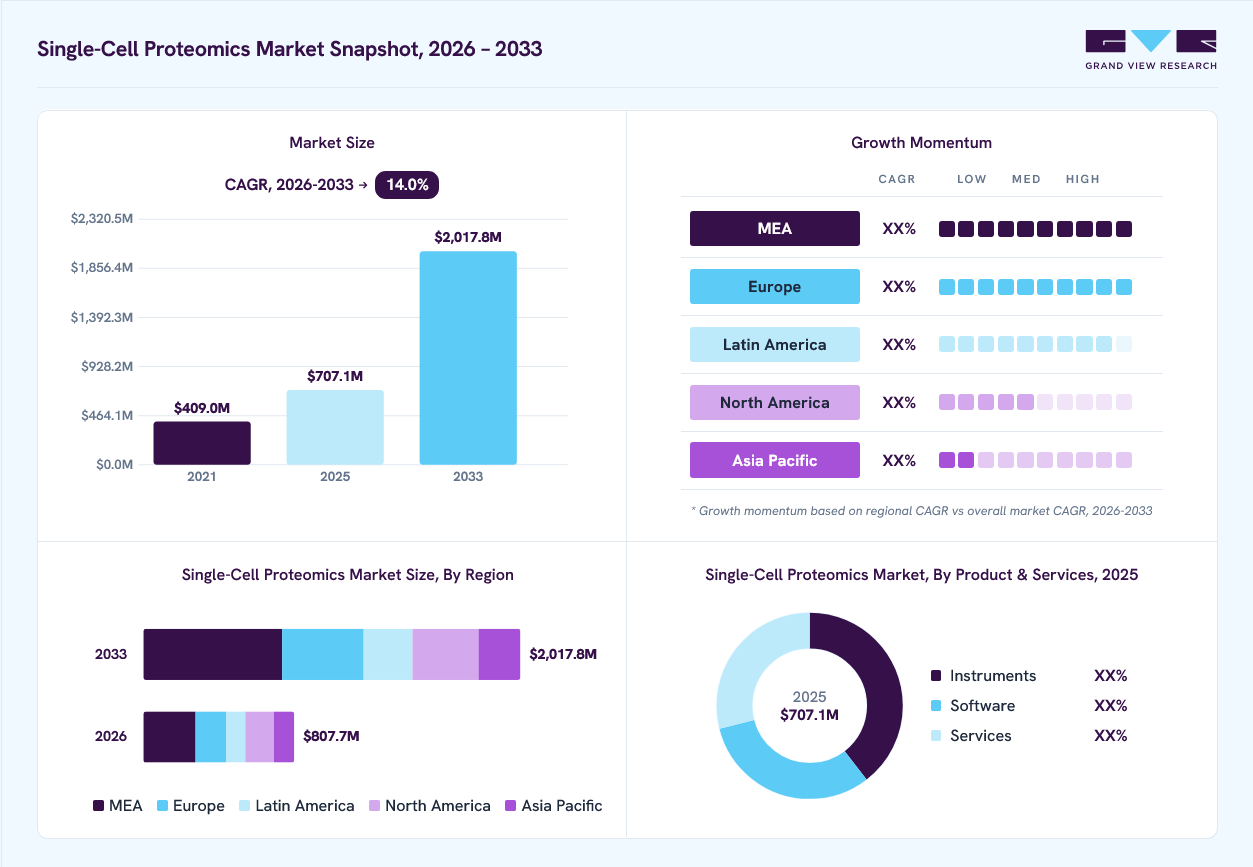
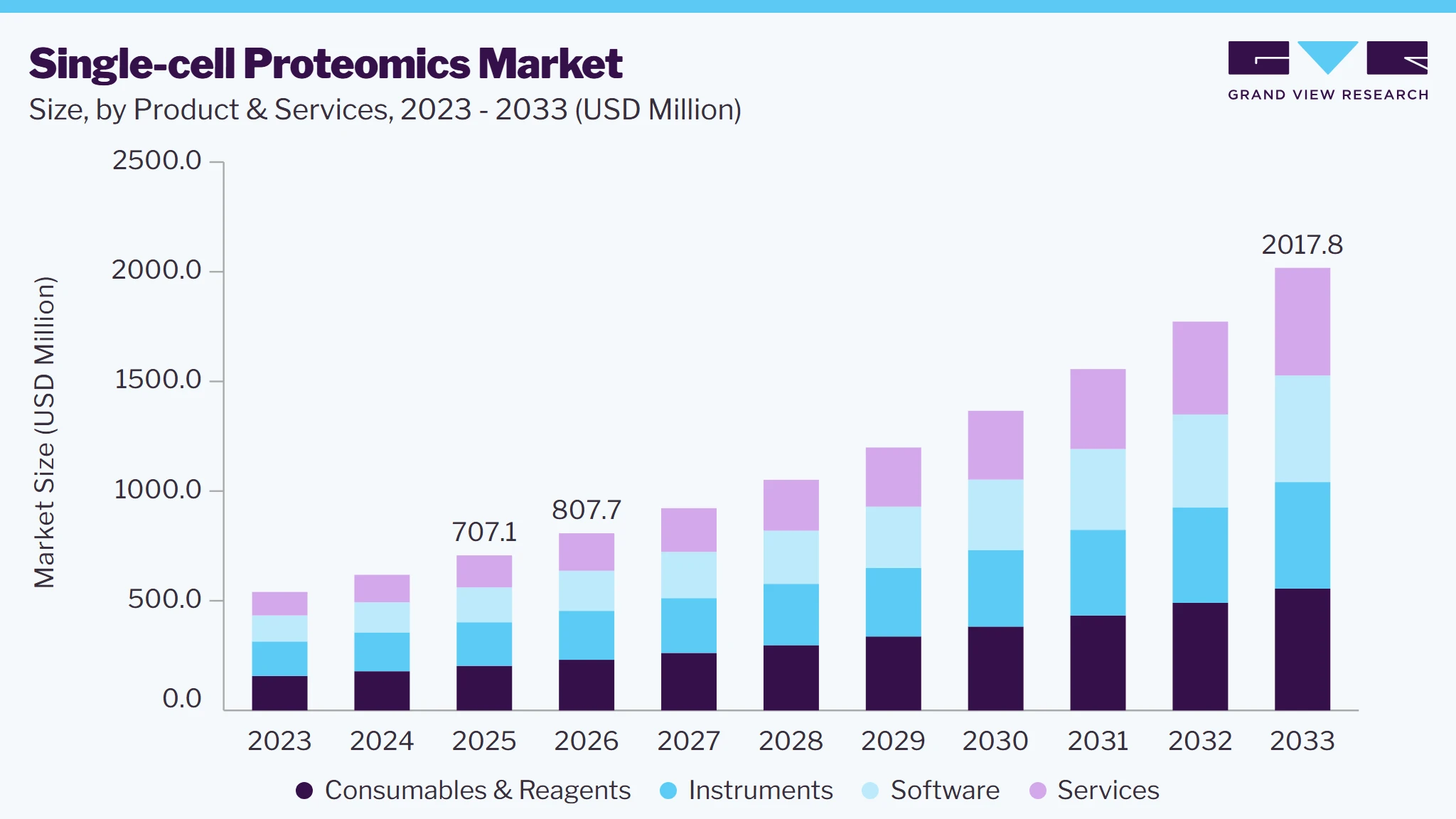
The global single-cell proteomics market size was valued at USD 707.1 million in 2025 and is projected to grow from USD 807.7 million in 2026 to USD 2,017.8 million by 2033, at a CAGR of 14.0% from 2026 to 2033. North America dominated the market, accounting for a revenue share of 46.4% in 2025. Market growth is driven by increasing adoption of single-cell analysis in precision medicine, drug discovery, and disease research, along with advancements in mass spectrometry, multiplexed proteomic technologies, and high-throughput single-cell analysis platforms.
Key Market Trends & Insights
- By product & services: Consumables & reagents segment held the highest market share of 28.7% in 2025.
- By technology: Mass spectrometry-based proteomics segment held the highest market share of 21.2% in 2025.
- By Workflow: Cell isolation & preparation segment held the highest market revenue share of 20.7% in 2025.
- By application: Drug discovery segment held the highest market share of 42.3% in 2025.
- By end use: Pharmaceutical & biotechnology companies segment held the highest market share of 26.2% in 2025.
Regional Highlights
- Largest regional market: North America (46.4% revenue share, 2025)
- Fastest-growing regional market: Asia Pacific (highest CAGR, 2026-2033)
- By country: The U.S. held the largest market share in 2025
Market Size & Forecast
- Market Size in 2025: USD 707.1 Million
- Estimated market size in 2026: USD 807.7 Million
- 2033 Projected Market Size: USD 2,017.8 Million
- CAGR (2026-2033): 14.0%
Market Dynamics
The single-cell proteomics market is witnessing strong growth, driven by rising demand for high-resolution cellular analysis, advances in mass spectrometry and other proteomic technologies, and expanding applications in drug discovery, biomarker identification, and disease research. Rising integration of single-cell proteomics with multi-omics approaches, spatial biology, and artificial intelligence is further enhancing data interpretation and expanding applications across research and clinical settings. Increasing investments in advanced proteomics platforms and the development of high-throughput analytical workflows are also expected to improve sensitivity, scalability, and reproducibility, thereby creating new opportunities for market growth.
The growing adoption of precision medicine is driving demand for single-cell proteomics by enabling researchers to characterize protein expression and cellular heterogeneity at the individual-cell level. This capability supports more precise disease profiling, biomarker discovery, patient stratification, and therapeutic target identification, particularly in oncology and other complex diseases where cellular variations can influence disease progression and treatment response.
According to an article published in Nature in February 2025, advancements in mass spectrometry-based proteomics have substantially improved sensitivity, enabling single-cell and spatial proteomic profiling and providing deeper insights into cellular heterogeneity. These developments are expected to support the expanding use of single-cell proteomics in precision medicine, biomarker discovery, and clinical research.
Single-cell proteomics generates complex datasets containing protein-level measurements from individual cells, often characterized by low signal intensity, high levels of missing values, data sparsity, and substantial biological and technical variability. These characteristics make peptide identification, protein quantification, normalization, and downstream interpretation more challenging than in conventional bulk proteomics. The lack of standardized computational workflows and specialized analytical tools can further complicate data interpretation.
According to an article published in Springer Nature in August 2025, single-cell proteomics datasets contain information on thousands of peptides and proteins across hundreds to thousands of cells, creating considerable computational challenges. The study also highlighted the need to address missing values and batch effects while distinguishing technical variability from biological variation, both of which may increase analytical complexity and limit the broader adoption of single-cell proteomics workflows.
The integration of single-cell proteomics with other omics approaches, including transcriptomics, genomics, and epigenomics, presents a significant opportunity to obtain a comprehensive view of cellular states and biological mechanisms. Combining protein-level information with gene expression and regulatory data enables researchers to better characterize cellular heterogeneity, identify biomarkers and therapeutic targets, and understand disease mechanisms. This integration is expected to expand the application of single-cell proteomics across precision medicine, drug discovery, and advanced disease research.
According to an article published in Nature Methods in July 2025, researchers benchmarked 40 single-cell multi-modal integration algorithms involving DNA, RNA, protein, and spatial omics datasets. The study evaluated the accuracy and robustness of these approaches, supporting the development of more effective computational methods for integrating proteomic and other molecular data at single-cell resolution. Such advancements are expected to facilitate broader adoption of multi-omics workflows and create new opportunities for the single-cell proteomics market.
Market Concentration & Characteristics
The single-cell proteomics industry is characterized by a high degree of innovation, driven by improvements in mass spectrometry sensitivity, throughput, automation, and computational analysis. Companies are developing platforms capable of identifying more proteins from extremely small sample sizes, improving the depth and scalability of single-cell workflows. For instance, in June 2025, Bruker launched its timsUltra AIP system, which demonstrated the ability to identify more than 5,000 proteins from a sample amount equivalent to a single HeLa cell, highlighting advances in sensitivity and throughput for single-cell proteomics.
“The new timsUltra AIP delivers a 3-fold sensitivity gain for peptide fragment ions in single-cell proteomics, which bolsters peptide sequence identifications and enables proteomic analysis at a new level of sensitivity, e.g., even for small red blood cell precursors.”
- Nikolai Slavov, Professor of Bioengineering, Director of the Single-Cell Proteomics Center at Northeastern University, and Founding Director of the Parallel Square Technology Institute
The single-cell proteomics industry is witnessing moderate M&A activity, primarily focused on expanding proteomics capabilities and strengthening integrated single-cell and multi-omics platforms. For instance, in June 2026, 10x Genomics acquired Proteintech Genomics to expand its high-plex proteomics capabilities for single-cell and spatial applications. The acquisition is expected to strengthen 10x Genomics’ portfolio by enabling integrated analysis of protein and transcriptomic data, supporting deeper characterization of cellular states and advancing multi-omic research applications.
“Biology is bigger than transcriptomics alone. Bringing scalable protein measurements into single cell and spatial biology is an important step toward richer, more predictive views of cellular state — and ultimately, virtual cell models that better reflect the complexity of living systems.”
- Ci Chu, Senior Vice President, AI-Enabled Discovery, Xaira Therapeutics
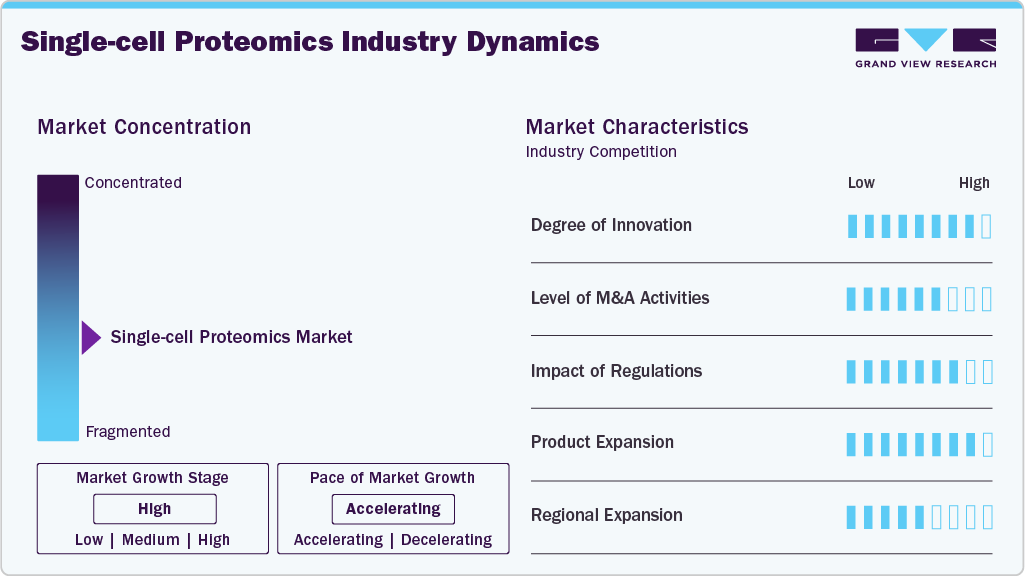
The single-cell proteomics industry is influenced by data quality, laboratory standards, and clinical research requirements, particularly as technologies transition from exploratory research toward biomarker discovery and translational applications. Requirements for reproducible sample preparation, analytical validation, data integrity, and standardized workflows can increase development and implementation requirements for proteomics platforms.
The single-cell proteomics industry is experiencing rapid product expansion, with manufacturers introducing instruments, assays, software, and automated workflows to improve sensitivity, throughput, and proteome coverage. For instance, in February 2025, Bruker introduced advances to its timsTOF Ultra platform that improved protein-group identification in single-cell proteomics by 15%-20% and peptide identification by 20%-25%, demonstrating continued enhancement of single-cell analytical performance.
The single-cell proteomics industry is witnessing moderate to high regional expansion, supported by increasing adoption of advanced proteomics technologies across research institutions, biotechnology companies, and pharmaceutical organizations. Expansion is further supported by growing investments in proteomics infrastructure, increasing availability of specialized research services, and rising collaborations between technology providers and academic or biopharmaceutical organizations across across emerging markets.
Analyst Perspective
The single-cell proteomics market is expected to grow strongly, driven by the increasing adoption of high-resolution protein analysis in cancer research, immunology, drug discovery, and precision medicine. Growing demand for detailed characterization of cellular heterogeneity is accelerating the use of advanced mass spectrometry, antibody-based, and multiplexed proteomics technologies. Technological advancements in single-cell workflows, coupled with rising investments in multi-omics research and biomarker discovery, are expected to support long-term market expansion. Market participants are focusing on improving sensitivity, throughput, automation, and workflow integration to address the evolving requirements of single-cell research.
Product & Services Insights
The consumables & reagents segment accounted for the largest revenue share of 28.7% in 2025, driven by recurring demand for antibodies, labeling reagents, sample preparation kits, enzymes, and other consumables required for single-cell proteomics workflows. Increasing adoption of high-throughput protein profiling and advanced proteomic assays further supported segment growth. For instance, in April 2025, Standard BioTools announced new proteomics offerings, including Single SOMAmer Reagents and the SomaScan Select 3.7K Assay, designed to enable sensitive protein measurement and high-plex profiling for translational and clinical research.
The services segment is expected to register the fastest CAGR over the forecast period, driven by increasing outsourcing of complex single-cell proteomics workflows to specialized service providers, reducing the need for costly instrumentation, technical expertise, and in-house bioinformatics capabilities. Growing demand for customized protein profiling, data analysis, and integrated multi-omics studies is further supporting the adoption of these services.
Technology Insights
The mass spectrometry-based proteomics segment dominated the market with a 21.2% share in 2025, driven by high sensitivity, broad proteome coverage, and improved analysis of low-input samples. According to an article published by Oxford University Press in February 2025, technological advances in mass spectrometry-based single-cell proteomics have enabled the quantification of thousands of proteins from minute samples, with improvements in sensitivity, throughput, resolution, measurement depth, accuracy, and stability.
The sequencing-based proteomics segment is expected to register a significant CAGR over the forecast period, driven by its potential to enable highly sensitive, scalable protein analysis while leveraging established sequencing workflows. Increasing research focus on single-cell protein quantification, improved molecular barcoding approaches, and the ability to analyze large numbers of proteins with high throughput are expected to support segment expansion.
Workflow Insights
The cell isolation & preparation segment dominated the market with a 20.7% share in 2025, driven by the critical role of efficient cell enrichment, isolation, and lysis in obtaining high-quality samples for downstream proteomic analysis. Growing demand for intact single-cell samples and improved microfluidic, sorting, and low-input preparation techniques are enhancing workflow reproducibility and supporting broader adoption across single-cell research applications.
The data analysis & interpretation segment is expected to register the fastest CAGR over the forecast period, driven by the increasing complexity and volume of single-cell proteomics datasets requiring advanced computational tools for protein identification, quantification, and biological interpretation. Growing integration of artificial intelligence, machine learning, and automated bioinformatics workflows is further improving data processing efficiency and enabling deeper characterization of cellular heterogeneity.
Application Insights
The drug discovery segment dominated the market with a 42.3% share in 2025, driven by the growing use of single-cell proteomics to characterize disease-associated protein changes, identify therapeutic targets, and evaluate drug responses at cellular resolution. Increasing emphasis on precision therapeutics and understanding cellular heterogeneity is further supporting adoption across target validation and preclinical research.
The clinical diagnostics segment is expected to register the fastest CAGR over the forecast period, driven by increasing demand for high-resolution biomarker identification and personalized disease profiling. According to an article published by NIH in June 2025, researchers demonstrated the use of high-sensitivity plasma proteomics to identify disease-specific protein signatures and blood-based biomarkers for neurodegenerative diseases, highlighting the potential of advanced proteomic technologies for minimally invasive clinical diagnosis.
End Use Insights
The pharmaceutical & biotechnology companies segment dominated the market with a share of 26.2% in 2025, driven by increasing application of single-cell proteomics in target identification, biomarker discovery, drug response profiling, and translational research. Growing investment in precision medicine and biologics development is further encouraging these companies to adopt high-resolution proteomic approaches to understand cellular heterogeneity and accelerate therapeutic development.
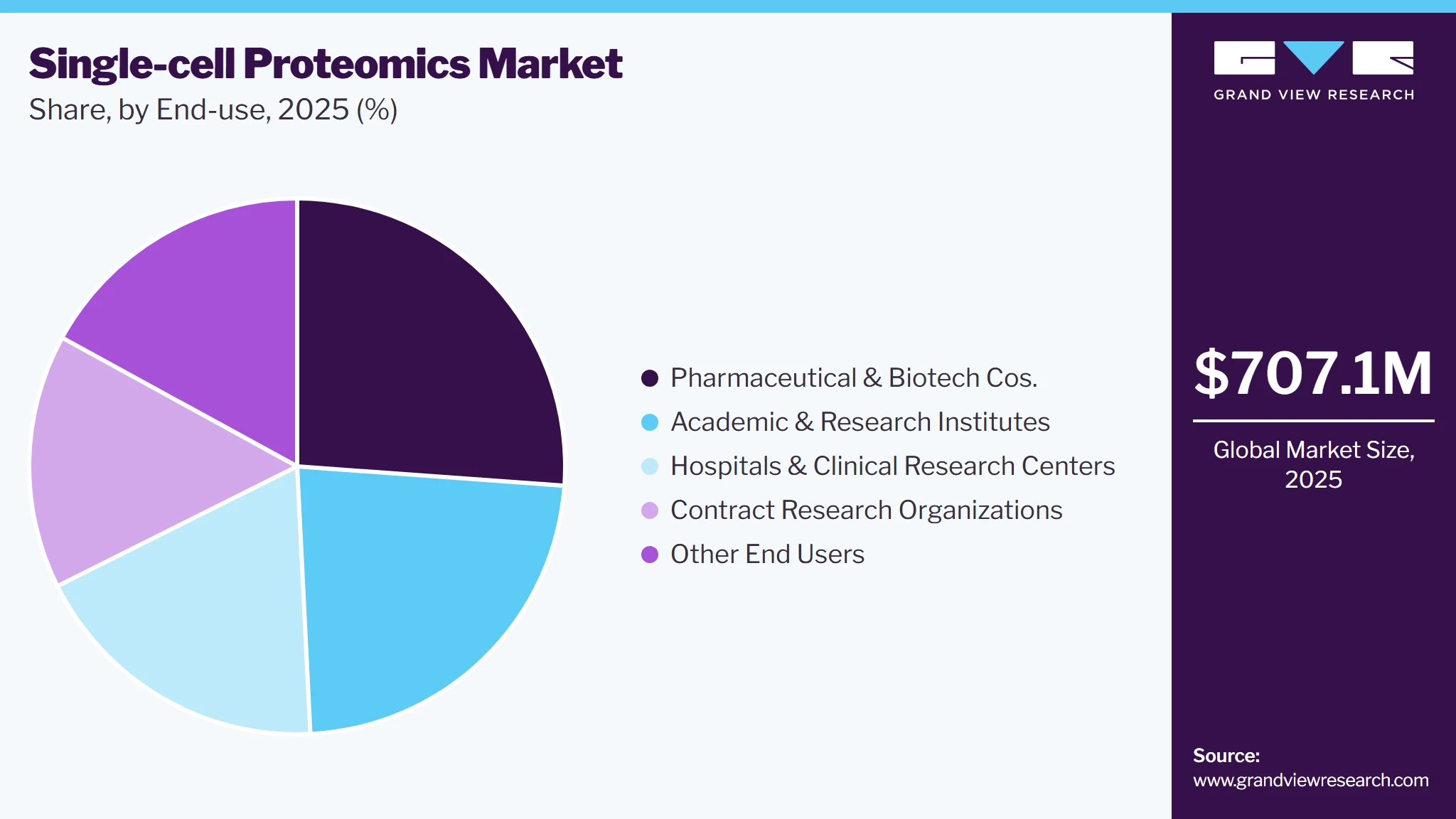
The contract research organizations segment is projected to witness the fastest CAGR, driven by increasing outsourcing of specialized single-cell proteomics studies to access advanced analytical capabilities, specialized expertise, and scalable research infrastructure. Growing demand from pharmaceutical and biotechnology companies for cost-efficient biomarker discovery, target validation, and preclinical research is further supporting the adoption of CRO-based services.
Regional Insights
North America dominated the single-cell proteomics industry, accounting for the largest revenue share of 46.4% in 2025, supported by a strong research ecosystem, advanced mass spectrometry infrastructure, and increasing development of scalable single-cell workflows. For instance, in March 2026, researchers at the University of British Columbia developed the SPIN workflow, combining machine-learning-guided cell dispensing with nanowell technology to improve protein recovery, throughput, and reproducibility in single-cell proteomics.

U.S. Single-cell Proteomics Market Trends
Single-cell Proteomics industry in the U.S. is expected to grow over the forecast period, supported by strong academic and biopharmaceutical research activity and early adoption of next-generation proteomics platforms. For instance, in February 2026, Nautilus Biotechnology unveiled its Voyager platform at US HUPO 2026, designed to analyze up to 10 billion intact proteins and proteoforms using machine-learning-powered analysis, supporting advanced proteome characterization.
"We’re excited to bring our vision of democratizing access to proteomics to fruition and share the Voyager Platform first with researchers seeking deeper insight into protein biology.”
- Parag Mallick, Ph.D., Co-Founder and Chief Scientist of Nautilus
Europe Single-cell Proteomics Market Trends
The single-cell proteomics market in Europe is expected to grow significantly, driven by established proteomics research infrastructure, increasing adoption of advanced mass spectrometry technologies, and expanding applications in biomedical and translational research. Rising investments in precision medicine, academic research, and high-sensitivity analytical platforms are further supporting the development and adoption of single-cell proteomics solutions across the region.
The UK single-cell proteomics market is supported by growing applications of single-cell proteomics in cancer and translational research. According to an article published by NIH, in June 2026, researchers at Newcastle University reported the use of single-cell proteomics to characterize cell-state heterogeneity in skin tumors, demonstrating its potential for improving tumor profiling and biological research.
The single-cell proteomics market in Germany is anticipated to grow significantly over the forecast period, supported by its strong mass spectrometry research base, expanding computational proteomics capabilities, and increasing focus on machine learning-driven data analysis. For instance, in April 2026, the Technical University of Munich introduced an advanced bioinformatics practical program focused on single-cell proteomics, covering peptide identification, machine learning, quality control, and cross-omics analysis, strengthening Germany’s capabilities in computational single-cell proteomics.
Asia Pacific Single-cell Proteomics Market Trends
Asia Pacific is expected to grow at the fastest CAGR of 15.7% during the forecast period, driven by expanding life sciences research, increasing adoption of advanced analytical technologies, and growing interest in single-cell and spatial multi-omics. The region's growing research capabilities and investments in high-throughput proteomic technologies are expected to support wider adoption across academic and pharmaceutical applications.
China single-cell proteomics market is supported by expanding proteomics research and increasing use of advanced analytical technologies in biomedical research. Growing investments in single-cell analysis, mass spectrometry, and multi-omics research are expected to strengthen the country's capabilities in high-resolution cellular characterization.
The single-cell proteomics market in Japan is expected to grow steadily, supported by its advanced analytical instrumentation industry, established biomedical research infrastructure, and increasing adoption of high-resolution cellular analysis technologies. According to an article published by the NIH, in July 2026, researchers in Japan developed an ultra-sensitive single-cell proteomics method that combines gel electrophoresis and 3D single-molecule imaging, enabling quantitative protein profiling and improved characterization of cellular state.
Latin America Single-cell Proteomics Market Trends
The Latin America single-cell proteomics market is expected to grow gradually, supported by expanding life sciences research capabilities, increasing adoption of advanced analytical technologies, and growing investments in proteomics and multi-omics research. Rising applications of high-resolution cellular analysis in disease research, biomarker discovery, and drug development are expected to further support regional market growth.
MEA Single-cell Proteomics Market Trends
The single-cell proteomics market in Japan is expected to grow gradually as research institutions expand their advanced genomics, proteomics, and precision medicine capabilities. Increasing investments in biomedical research infrastructure and adoption of advanced analytical platforms are expected to create opportunities for single-cell proteomics, particularly in translational and disease research.
Key Single-cell Proteomics Company Insights
The single-cell proteomics market comprises established life science and analytical instrumentation companies, as well as specialized providers of single-cell analysis technologies. Prominent players include Thermo Fisher Scientific Inc., Bruker, Danaher Corporation (SCIEX), Standard BioTools, BD, Agilent Technologies, Inc., Waters Corporation, 10x Genomics, Seer, Inc., Evosep Biosystems, Cellenion, Cytek Biosciences, and Quantum-Si Incorporated. These companies are pursuing product development, technological advancements, strategic collaborations, and expanded single-cell analysis capabilities to strengthen their market positions.
Key Single-cell Proteomics Companies
The following key companies have been profiled for this study on the single-cell proteomics market
-
Thermo Fisher Scientific Inc.
-
Bruker
-
Danaher Corporation (SCIEX)
-
Standard BioTools
-
BD
-
Agilent Technologies, Inc.
-
Waters Corporation
-
10x Genomics
-
Seer, Inc.
-
Evosep Biosystems
-
Cellenion
-
Cytek Biosciences
-
Quantum-Si Incorporated
Competitive Benchmarking
Category
Operating Strategies
Competitive Edge
Weakness
Established Players (Thermo Fisher Scientific, Bruker, Danaher Corporation (SCIEX), Standard BioTools, BD, Agilent Technologies, Inc., Waters Corporation, etc.)
Focus on developing integrated single-cell proteomics workflows combining mass spectrometry, mass cytometry, imaging, and advanced data analysis technologies.
Advanced analytical technologies, large installed bases, and strong R&D capabilities supporting complex single-cell and multi-omics workflows.
High instrument costs and complex workflows can limit adoption among smaller laboratories and research institutions.
Emerging Players (10x Genomics, Seer, Inc., Evosep Biosystems, Cellenion, Cytek Biosciences, Quantum-Si Incorporated)
Focus on specialized single-cell and proteomics platforms, including high-throughput sample preparation, protein analysis, and single-cell sequencing technologies.
Strong technological differentiation and specialized expertise in single-cell analysis, proteomics, and multi-omics workflows.
Smaller scale, limited financial resources, and narrower customer bases compared with major life science companies.
Recent Developments:
-
In September 2026, Bruker hosted the European Symposium on Single Cell Proteomics in Vienna, Austria, showcasing advanced mass spectrometry technologies and workflows for high-sensitivity single-cell proteomics research.
-
In April 2026, Thermo Fisher Scientific and Monash University expanded proteomics capabilities through the installation of the Orbitrap Astral Zoom Mass Spectrometer, advancing high-sensitivity, low-input workflows, including single-cell proteomics, and supporting deeper protein characterization for biomedical research.
"Mass spectrometry is currently in a ‘golden age’, with rapid advances in sensitivity, speed and data quality transforming what is possible in proteomics and related fields."
- Platform Director Professor Ralf Schittenhelm
Single-cell Proteomics Market Report Scope Table
Report Attribute
Details
Market size in 2025
USD 707.1 million
Estimated market size in 2026
USD 807.7 million
Projected market size by 2033
USD 2,017.8 million
Growth rate
CAGR of 14.0% from 2026 to 2033
Historical data
2021 - 2025
Forecast period
2026 - 2033
Quantitative units
Revenue in USD million, and CAGR from 2026 to 2033
Report coverage
Revenue forecast, company ranking, competitive landscape, growth factors, and trends
Segments covered
Product & services, technology, workflow, application, end use, and region
Regional scope
North America; Europe; Asia Pacific; Latin America; MEA
Country scope
U.S.; Canada; Mexico; UK; Germany; France; Italy; Spain; Norway; Denmark; Sweden; China; Japan; India; South Korea; Australia; Thailand; Brazil; Argentina; Saudi Arabia; South Africa; UAE; Kuwait
Key companies profiled
Thermo Fisher Scientific Inc.; Bruker; Danaher Corporation (SCIEX); Standard BioTools; BD; Agilent Technologies, Inc.; Waters Corporation; 10x Genomics; Seer, Inc.; Evosep Biosystems; Cellenion; Cytek Biosciences; Quantum-Si Incorporated
Customization scope
Free report customization (equivalent up to 8 analysts' working days) with purchase. Addition or alteration to country, regional & segment scope.
Pricing and purchase options
Avail customized purchase options to meet your exact research needs. Explore purchase options
Global Single-cell Proteomics Market Report Segmentation
This report forecasts revenue growth and provides an analysis on the latest trends in each of the sub-segments from 2021 to 2033. For this report, Grand View Research has segmented the global single-cell proteomics market report on the basis of product & services, technology, workflow, application, end use, and region.
-
Product & Services Outlook (Revenue, USD Million, 2021 - 2033)
-
Instruments
-
Consumables & Reagents
-
Software
-
Services
-
-
Technology Outlook (Revenue, USD Million, 2021 - 2033)
-
Mass Spectrometry-based Proteomics
-
Mass Cytometry-based Proteomics
-
Antibody-based Proteomics
-
Imaging-based Proteomics
-
Sequencing-based Proteomics
-
Other Technologies
-
-
Workflow Outlook (Revenue, USD Million, 2021 - 2033)
-
Cell Isolation & Preparation
-
Protein Labeling & Barcoding
-
Protein Detection & Quantification
-
Data Acquisition
-
Data Analysis & Interpretation
-
-
Application Outlook (Revenue, USD Million, 2021 - 2033)
-
Clinical Diagnostics
-
Drug Discovery
-
Others
-
-
End Use Outlook (Revenue, USD Million, 2021 - 2033)
-
Pharmaceutical & Biotechnology Companies
-
Academic & Research Institutes
-
Hospitals & Clinical Research Centers
-
Contract Research Organizations
-
Other End Users
-
-
Regional Outlook (Revenue, USD Million, 2021 - 2033)
-
North America
-
U.S.
-
Canada
-
Mexico
-
-
Europe
-
UK
-
Germany
-
France
-
Italy
-
Spain
-
Denmark
-
Sweden
-
Norway
-
-
Asia Pacific
-
Japan
-
China
-
India
-
Australia
-
Thailand
-
South Korea
-
-
Latin America
-
Brazil
-
Argentina
-
-
Middle East and Africa (MEA)
-
South Africa
-
Saudi Arabia
-
UAE
-
Kuwait
-
-
Research Methodology
The single-cell proteomics market figures in this report are based on a proven research process that combines executive interviews with secondary research from proprietary databases, company filings, and recognized regulatory and institutional sources. Market size is built through value-chain sizing-reconciling supply-side and demand-side estimates—and triangulated with bottom-up and top-down approaches. Every estimate passes multiple levels of expert validation before publication, with each single-cell proteomics segment quantified using the revenue-capture definitions in the table below.
Segment Definition
Segment - Product & Services
Revenue Capture Definition
Instruments
Revenue generated from analytical and laboratory instruments used to isolate, process, detect, quantify, and characterize proteins at the single-cell level. These systems support high-throughput single-cell proteomic workflows across research, drug discovery, and clinical applications.
Consumables & Reagents
This segment captures income from reagents and consumable products required for single-cell protein analysis, including antibodies, labeling reagents, buffers, assay components, sample-processing materials, and other single-use products used throughout sample preparation and protein detection workflows.
Software
Market value in this category stems from software platforms used to process, visualize, integrate, and interpret single-cell proteomics datasets. These solutions support data management, statistical analysis, protein quantification, clustering, spatial analysis, and biological interpretation.
Services
Revenue originates from outsourced single-cell proteomics services, including sample processing, protein profiling, analytical testing, data analysis, bioinformatics, and customized experimental workflows provided to research, pharmaceutical, biotechnology, and clinical users.
Segment - Technology
Revenue Capture Definition
Mass Spectrometry-based Proteomics
Revenue generated from single-cell proteomics technologies that employ mass spectrometry to identify and quantify proteins from individual cells with high molecular sensitivity and resolution. These approaches support deep proteome profiling, biomarker discovery, and characterization of cellular heterogeneity.
Mass Cytometry-based Proteomics
This segment reflects income from mass cytometry technologies that use metal-tagged antibodies and mass spectrometric detection to measure multiple proteins simultaneously at the single-cell level. The approach is particularly valuable for immune profiling, cellular phenotyping, and functional studies.
Antibody-based Proteomics
Market value arises from technologies that rely on antibodies or affinity-based probes to detect and quantify specific proteins within individual cells. These approaches enable targeted protein profiling and multiplexed analysis across heterogeneous cell populations.
Imaging-based Proteomics
This category captures revenue from spatially resolved technologies that visualize multiple proteins within individual cells while preserving cellular and tissue context. Applications include cellular phenotyping, tissue characterization, biomarker discovery, and investigation of cell-cell interactions.
Sequencing-based Proteomics
Revenue stems from approaches that combine protein detection with sequencing-based molecular barcoding to identify and quantify proteins at single-cell resolution. These technologies facilitate highly multiplexed protein profiling and integration with genomic or transcriptomic information.
Other Technologies
Includes income from emerging and specialized single-cell proteomics technologies that do not fall within the primary mass spectrometry, mass cytometry, antibody-based, imaging-based, or sequencing-based approaches.
Segment - Workflow
Revenue Capture Definition
Cell Isolation & Preparation
Revenue generated from products, systems, and services used to isolate individual cells and prepare them for downstream protein analysis. These workflows support cell enrichment, separation, lysis, and other preprocessing steps while maintaining sample integrity for single-cell analysis.
Protein Labeling & Barcoding
This segment captures income from reagents and technologies used to label proteins or attach molecular barcodes to individual cells. Such approaches enable multiplexed identification and tracking of protein signals during subsequent analytical workflows.
Protein Detection & Quantification
Market value in this category stems from technologies and solutions used to detect and quantify proteins within individual cells. These workflows generate quantitative protein profiles that enable characterization of cellular states and heterogeneity.
Data Acquisition
Revenue originates from systems and solutions used to collect raw single-cell proteomics measurements generated during analytical runs. The segment covers data capture and signal acquisition required to generate high-dimensional protein datasets for downstream processing.
Data Analysis & Interpretation
This segment reflects income from computational tools and services used to process, visualize, analyze, and interpret single-cell proteomic datasets. These workflows support protein identification, statistical analysis, cellular classification, biomarker discovery, and biological interpretation.
Segment - Application
Revenue Capture Definition
Clinical Diagnostics
Revenue generated from single-cell proteomics applications used to characterize disease-associated protein signatures, identify biomarkers, stratify patients, and support emerging precision diagnostic approaches.
Drug Discovery
This segment captures income from single-cell proteomics applications supporting target identification, mechanism-of-action studies, biomarker discovery, drug response assessment, and characterization of cellular heterogeneity during therapeutic development.
Others
Includes revenue from applications outside clinical diagnostics and drug discovery, such as basic cell biology, immunology, developmental biology, disease modeling, and other specialized research activities.
Segment - End Use
Revenue Capture Definition
Pharmaceutical & Biotechnology Companies
Revenue generated from single-cell proteomics solutions adopted by pharmaceutical and biotechnology companies for drug discovery, target validation, biomarker development, therapeutic response assessment, and translational research.
Academic & Research Institutes
This segment represents income from universities, research institutions, and government laboratories using single-cell proteomics for fundamental and translational studies involving cellular heterogeneity, disease biology, immunology, and molecular mechanisms.
Hospitals & Clinical Research Centers
Market value stems from the use of single-cell proteomics technologies in hospitals and clinical research facilities for biomarker investigation, disease characterization, patient stratification, and emerging clinical research applications.
Contract Research Organizations
Revenue originates from CROs providing outsourced single-cell proteomics testing, experimental studies, sample analysis, bioinformatics, and related research services to pharmaceutical, biotechnology, and academic customers.
Other End Users
Includes revenue from government agencies, diagnostic organizations, specialized research facilities, and other institutional users applying single-cell proteomics technologies for specialized scientific and translational activities.
Delivered Customizations
This report has been delivered with the following In-depth customizations
Client Request
Customization Delivered
Value Adds
Single-cell Proteomics Technology Performance & Adoption Assessment
Detailed assessment of single-cell proteomics platforms based on sensitivity, throughput, multiplexing capabilities, automation, sample requirements, reproducibility, and data quality. Evaluation of technology maturity and adoption across research and clinical workflows.
Enables clients to benchmark technology performance, identify adoption barriers, assess platform differentiation, and prioritize technology investments and product development opportunities.
Single-cell Proteomics & Multi-omics Integration Assessment
Analysis of the integration of single-cell proteomics with single-cell genomics, transcriptomics, metabolomics, and spatial analysis workflows. Assessment of emerging multi-omics applications, data integration requirements, computational capabilities, and adoption across drug discovery, precision medicine, and translational research.
Helps clients identify emerging technology convergence opportunities, evaluate future demand for integrated platforms, guide R&D priorities, and position products within the expanding multi-omics ecosystem.
Clinical Translation & Biomarker Opportunity Assessment
Evaluation of the transition of single-cell proteomics from research applications toward clinical and translational use, including biomarker discovery, disease profiling, patient stratification, therapeutic response monitoring, and precision medicine. Assessment of validation requirements, clinical adoption barriers, and commercialization potential.
Supports identification of high-potential clinical opportunities, prioritization of biomarker programs, assessment of commercialization readiness, and development of strategies to accelerate adoption in clinical research.
Frequently Asked Questions About This Report
The global single-cell proteomics market size was valued at USD 707.1 million in 2025 and is estimated at USD 807.7 million for 2026.
The global single-cell proteomics market is expected to grow at a CAGR of 14.0% from 2026 to 2033, reaching USD 2,017.8 million by 2033.
North America dominated with a 46.4% revenue share in 2025.
Market growth is driven by increasing adoption of single-cell analysis in precision medicine, drug discovery, and disease research, along with advancements in mass spectrometry, multiplexed proteomic technologies, and high-throughput single-cell analysis platforms.
Key players include Thermo Fisher Scientific Inc., Bruker, Danaher Corporation (SCIEX), Standard BioTools, BD, Agilent Technologies, Inc., Waters Corporation, 10x Genomics, Seer, Inc., Evosep Biosystems, Cellenion, Cytek Biosciences, and Quantum-Si Incorporated
Asia Pacific is the fastest-growing region over the forecast period.
The consumables & reagents segment led with a 28.7% revenue share in 2025.
Mass spectrometry-based proteomics segment held the highest market share of 21.2% in 2025, driven by high sensitivity, broad proteome coverage, and improved analysis of low-input samples.
The cell isolation & preparation segment led with a 20.7% revenue share in 2025 while data analysis & interpretation segment is expected to be the fastest-growing market.
About the Author(s)
Biotechnology Research Team
Healthcare · BiotechnologyThis report was authored by the biotechnology research team at Grand View Research - comprising two research analysts, one senior research analyst, and one industry expert - with specialized expertise in the biotechnology segment of the healthcare industry. All findings are based on proprietary healthcare databases, executive interviews, and regulatory analysis, subject to internal peer review prior to publication.
Last Updated:
Speak to Analyst


Customize this report to your needs — add regions, segments, or data points, with 20% free customization.
Or view our licence options:


ISO 9001:2015 & 27001:2022 Certified
We are GDPR and CCPA compliant! Your transaction & personal information is safe and secure. For more details, please read our privacy policy.


