
- Home
- »
- Medical Devices
- »
-
Skin Substitutes Market Size And Share Report, 2026-2033GVR Report cover

Skin Substitutes Market (2026 - 2033)
Size, Share & Trends Analysis Report By Product (Biological Skin Substitute, Synthetic Skin Substitute), By Application (Acute Wounds, Chronic Wounds), By End Use(Hospitals, Outpatient Facilities), By Region, And Segment Forecasts
Market Size, 2025
$1.9BMarket Estimate, 2026
$2.3BMarket Forecast, 2033
$4.9BCAGR, 2026–2033
11.7%Skin Substitutes Market Summary
The global skin substitutes market size was valued at USD 1.9 billion in 2025 and is projected to grow from USD 2.3 billion in 2026 to USD 4.9 billion by 2033, at a CAGR of 11.7% from 2026 to 2033. North America dominated the skin substitutes market with the largest revenue share of 41.3% in 2025. The growth of the global skin substitutes market is driven by the rising prevalence of chronic wounds, diabetic foot ulcers, burns, and pressure ulcers worldwide.
 Source: Grand View Research, IR Documents, Primary Interviews, Paid DatabasesTo learn more about this report,
 Download Free Sample Report
 Key Market Trends & Insights
- By product: Biological skin substitute segment led the market with the largest revenue share of 72.3% in 2025.
- By application: Acute wounds segment led the market with the largest revenue share of 55.7% in 2025.
- By end use: Hospitals segment led the market with the largest revenue share of 54.9% in 2025.
Regional Highlights
- Largest regional market: North America (41.3% revenue share, 2025)
- Fastest growing market: Asia Pacific (Fastest CAGR, 2026 – 2033)
- By country: The U.S. held the largest market share in 2025
Market Size & Forecast
- Market size in 2025: USD 1.9 Billion
- Estimated market size in 2026: USD 2.3 Billion
- Projected Market size by 2033: USD 4.9 Billion
- CAGR(2026-2033): 11.7%
Three ways to get this report
Buy it, customize it, or ask a question.Ask an Analyst
A direct answer, usually in 1 working day
- AccessReport author, directly
- Reply timeWithin 1 working day
- No sales callDirect answer only
- FormatEmail reply
- CostFree, no cost
Get the Full Report
What the study covers
- FormatsPDF · Excel · Dashboard
- Timeline2026–2033 annual, 2025 base
- Coverage20+ countries, 5 regions
- Companies10+ key players profiled
Customize the Report
20% free customization
- IncludeCountries, segments, points
- TailorTo your product definition
- ExtendDeeper competitor detail
- OrA fully bespoke study
- Turnaround5–10 working days
Increasing adoption of advanced wound care solutions, growing geriatric populations, and rising healthcare expenditure are driving demand for regenerative therapies.The rising prevalence of diabetes and its associated complications, particularly diabetic foot ulcers (DFUs), is a major driver for the growth of the skin substitutes market. Diabetes impairs wound healing due to reduced blood circulation, neuropathy, and increased risk of infections, leading to a higher demand for advanced wound care solutions. The increasing number of diabetic patients across U.S. states and globally is expanding the patient pool requiring regenerative therapies, including biological and synthetic skin substitutes, to accelerate tissue repair and reduce amputation risks.
 To learn more about this report, Download Free Sample Report
 For instance, according to the American Diabetes Association (ADA) (updated 2026, based on 2023 estimates), millions of adults in the U.S. are living with diagnosed diabetes, with states such as California, Texas, Florida, and New York reporting the highest number of affected individuals.
American Diabetes Association (ADA) State Fact Sheets and the CDC U.S. Diabetes Surveillance System
State
Adult Diagnosed Diabetes (%)
Approx. Adult Diagnosed Cases
Alabama
13.2%
~612,000
Alaska
9.0%
~53,000
Arizona
10.2%
~680,000
Arkansas
13.8%
~360,000
California
11.5%
~4.0 million
Colorado
7.8%
~420,000
Florida
9.8%
~2.2 million
Georgia
11.6%
~1.1 million
Illinois
11.4%
~1.2 million
Indiana
12.7%
~760,000
Kentucky
14.3%
~570,000
Louisiana
13.9%
~550,000
Michigan
11.8%
~1.0 million
Mississippi
13.2%
~370,000
New Jersey
9.2%
~800,000
New York
10.8%
~1.9 million
North Carolina
11.5%
~1.2 million
Ohio
11.3%
~1.2 million
Pennsylvania
11.6%
~1.3 million
South Carolina
11.7%
~650,000
Tennessee
12.7%
~820,000
Texas
12.9%
~3.1 million
Utah
8.8%
~240,000
Virginia
11.4%
~900,000
Washington
9.0%
~650,000
West Virginia
15.6%
~260,000
Source :American Diabetes Association - Statistics by State; CDC U.S. Diabetes Surveillance System (updated 2026, based on 2023 estimates)
Centers for Medicare & Medicaid Services (CMS) 2026 Reimbursement Reform Impact on Skin Substitute Adoption and Market Dynamics
The implementation of CMS’s revised skin substitute reimbursement framework in 2026 is expected to significantly influence the U.S. skin substitutes market by reshaping pricing structures, product selection, and reimbursement accessibility. CMS introduced a standardized payment methodology, establishing a fixed reimbursement rate of approximately USD 127.14 per square centimeter for most cellular and tissue-based products (CTPs), while maintaining ASP-based reimbursement for licensed biological products. The policy emphasizes evidence-based product coverage, favoring skin substitutes with strong clinical validation and potentially impacting manufacturers with limited clinical data.
CMS categorized skin substitute products based on clinical evidence, with 18 products placed in Group 1 (Covered List). These products demonstrated strong clinical data supporting their effectiveness and will receive Medicare coverage under the updated reimbursement framework.
Covered Skin Substitute Products (Group 1)
HCPCS Code
Product Name
Company
Q4101
Apligraf
Organogenesis
Q4186
Epifix
MIMEDX Group
Q4106
Dermagraft
Organogenesis
Q4133
Grafix Prime
Smith & Nephew
A2019
Kerecis Omega3 MariGen Shield
Kerecis
Q4105
Integra / Omniograft
Integra LifeSciences
Q4102
Oasis Wound Matrix
Smith & Nephew
Q4121
Theraskin
LifeNet Health
Q4187
Epicord
MIMEDX Group
Q4110
Primatrix
Integra LifeSciences
Q4107
Graftjacket
Stryker
Q4122
DermACELL
Stryker / LifeNet
Q4128
FlexHD / Allopatch HD
MTF Biologics
Q4151
Amnioband / Guardian
MTF Biologics
Q4158
Kerecis Omega3
Kerecis
Q4159
Affinity
Organogenesis
Q4160
NuShield
Organogenesis
Q4203
Derma-Gide
Geistlich / Stimlab
Source:Human Medical Billing.
 To learn more about this report, Download Free Sample Report
 Medicare coverage for skin substitutes depends on meeting specific clinical requirements, including the presence of eligible chronic wounds such as diabetic foot ulcers or venous leg ulcers, documentation of medical necessity, failure of standard wound care therapies, and the use of products supported by sufficient clinical evidence. The updated CMS framework emphasizes evidence-based reimbursement and prioritizes coverage for skin substitutes demonstrating proven clinical effectiveness.
Market Dynamics
The rising number of patients with chronic wounds, including diabetic foot ulcers, venous leg ulcers, pressure ulcers, and non-healing surgical wounds, is a major driver of the skin substitutes market. The growing prevalence of diabetes, obesity, and an aging population has increased the demand for advanced wound care products that accelerate healing and reduce complications. Skin substitutes help promote tissue regeneration, lower the risk of infection, and improve clinical outcomes, leading to their increasing adoption in hospitals, wound care centers, and specialty clinics.
The high cost of skin substitute products remains a key challenge for market growth. Bioengineered and regenerative skin substitutes require advanced manufacturing processes, specialized materials, and strict regulatory compliance, resulting in higher prices than conventional wound dressings. Limited reimbursement in some countries and budget constraints among healthcare providers may reduce product adoption, particularly in developing regions where affordability remains a significant concern.
The expansion of manufacturing and distribution facilities is creating significant growth opportunities for the skin substitutes market. Companies are investing in new production plants, expanding existing manufacturing capacities, and strengthening regional distribution networks to meet the rising global demand for advanced wound care products. These investments help improve product availability, reduce supply chain disruptions, and shorten delivery times for healthcare providers. Expansion into emerging markets across Asia-Pacific, Latin America, and the Middle East is also increasing patient access to innovative skin substitutes. As manufacturers scale production and improve distribution efficiency, they are expected to strengthen market penetration, support product adoption, and drive long-term revenue growth.
Market Concentration & Characteristics
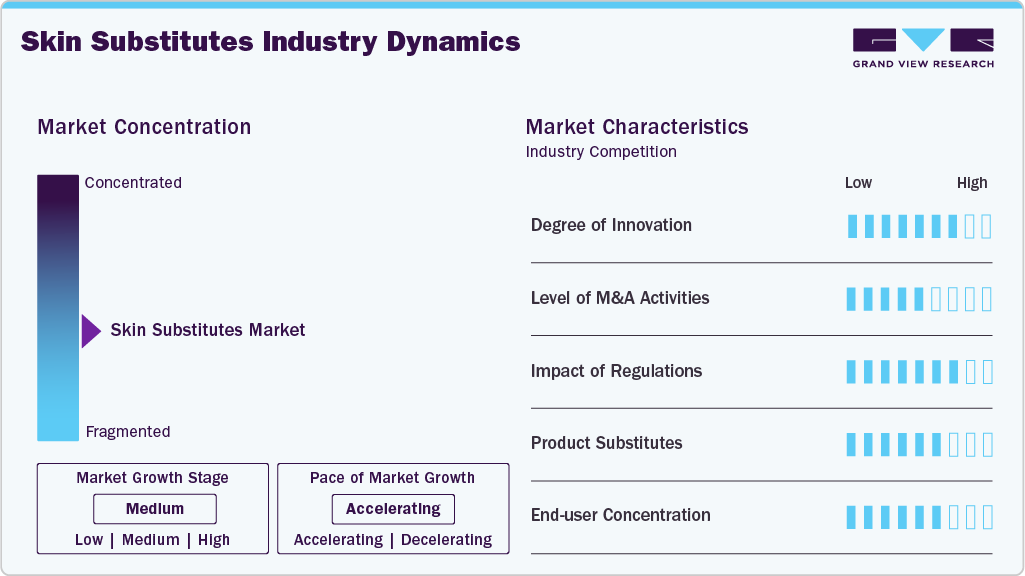
The skin substitutes market is experiencing steady growth due to the rising prevalence of chronic wounds, burn injuries, diabetic foot ulcers, venous leg ulcers, and pressure ulcers, coupled with the increasing demand for advanced wound care solutions. Skin substitutes provide temporary or permanent coverage that promotes tissue regeneration, accelerates wound healing, reduces infection risk, and minimizes scarring compared with conventional wound dressings. The market is further supported by continuous advancements in bioengineered skin, acellular dermal matrices, synthetic skin substitutes, stem cell-based therapies, and regenerative medicine technologies, which improve clinical outcomes and reduce healing time. In addition, the growing aging population, increasing incidence of diabetes and obesity, rising adoption of minimally invasive wound management, expansion of specialized wound care centers and burn units, and ongoing investments in tissue engineering and biomaterials are driving market growth.
 To learn more about this report, Download Free Sample Report
 The skin substitutes market is characterized by a high degree of innovation, driven by continuous advancements in tissue engineering, regenerative medicine, biomaterials, and biofabrication technologies. Manufacturers are developing next-generation biological and synthetic skin substitutes with improved biocompatibility, enhanced tissue regeneration, faster wound healing, and reduced infection risk. Innovations such as acellular dermal matrices, bioengineered skin, stem cell-based therapies, and 3D bioprinting are improving clinical outcomes while expanding the range of applications for chronic wounds, burns, and reconstructive procedures.
The skin substitutes market has witnessed moderate to high merger and acquisition activity, as leading wound care and regenerative medicine companies continue expanding their product portfolios and geographic presence. Companies are acquiring tissue engineering firms, biologics manufacturers, and advanced wound care businesses to strengthen their offerings in biological skin substitutes, regenerative therapies, and wound management solutions. These strategic acquisitions help manufacturers broaden their product portfolios, enhance innovation capabilities, and expand access to new markets. For instance, in April 2026, Made Scientific partnered with Regenicin to advance NovaDerm, an autologous cultured skin substitute, toward FDA approval for treating severe burns and chronic wounds. Made Scientific will provide GMP clinical manufacturing support to enable Regenicin’s IND submission and upcoming clinical trials for the regenerative skin therapy.
Skin substitute products are regulated as medical devices, biologics, or human tissue-based products, making regulatory compliance an important factor influencing product development and commercialization. Manufacturers must comply with stringent requirements related to product safety, quality, sterility, manufacturing processes, clinical evidence, and post-market surveillance. In major markets such as the U.S. and Europe, obtaining regulatory approvals from agencies such as the FDA and compliance with the European Medical Device Regulation (MDR 2017/745) are essential before commercialization. While these requirements increase development costs and approval timelines, they help ensure product safety, quality, and clinical effectiveness.
The skin substitutes market faces moderate competition from conventional wound care products, including wound dressings, hydrocolloids, foam dressings, alginate dressings, collagen dressings, and skin grafting procedures. These alternatives are commonly used for routine wound management because they are generally more affordable and widely available. However, for complex chronic wounds, severe burns, and difficult-to-heal ulcers, skin substitutes remain the preferred treatment option due to their ability to promote tissue regeneration, accelerate healing, and improve long-term clinical outcomes.
Demand for skin substitutes is highly concentrated among hospitals, specialized wound care centers, burn centers, ambulatory surgical centers, and specialty clinics. Hospitals and dedicated wound care centers account for the largest share of product utilization due to the high volume of patients requiring treatment for chronic wounds, burns, traumatic injuries, and complex surgical wounds. Growing adoption of advanced wound care protocols and multidisciplinary wound management programs continues to increase the use of biological and synthetic skin substitutes, making these healthcare facilities key contributors to overall market growth.
Analyst Perspective
The skin substitutes market is expected to witness steady growth, driven by the rising prevalence of chronic wounds, burn injuries, diabetic foot ulcers, venous leg ulcers, and pressure ulcers, along with the increasing demand for advanced wound care products. Continuous advancements in tissue engineering, regenerative medicine, bioengineered skin substitutes, acellular dermal matrices, and synthetic biomaterials are improving healing outcomes and supporting wider clinical adoption. The expansion of wound care centers, increasing healthcare expenditure, favorable reimbursement policies in developed countries, and growing awareness of effective wound management are further supporting market growth. From an analyst's perspective, companies that focus on product innovation, clinical validation, regulatory compliance, manufacturing expansion, and strong distribution networks will be better positioned to strengthen their market presence and capitalize on growing opportunities across both developed and emerging markets.
Product Insights
The biological skin substitute segment dominated the skin substitutes market, accounting for 72.3% of the market in 2025. This dominance is supported by the widespread use of biologically derived products in the treatment of chronic wounds, diabetic foot ulcers, venous leg ulcers, pressure ulcers, burns, and surgical wounds. These substitutes closely mimic natural skin, promote cell growth and tissue regeneration, support faster wound healing, and reduce the risk of infection. Strong clinical evidence, favorable reimbursement in developed markets, and increasing physician preference for biologic wound care products have further strengthened the segment's leading market position. According to the study published in August 2025.
Study Highlights: Biological Skin Substitutes in Pressure Ulcers (2025)
-
A 2025 randomized controlled trial compared high-purity Type I collagen (HPTC) and dehydrated human amnion/chorion membrane (dHACM) in 80 patients with Stage III-IV pressure ulcers.
-
HPTC achieved higher complete wound closure (75%) compared with dHACM (62.5%) after seven weeks.
-
The findings supported collagen-based biological skin substitutes as a promising option for improving healing outcomes in complex pressure ulcers.
The synthetic skin substitute segment in the skin substitutes market is expected to grow at the fastest rate during the forecast period due to the increasing demand for cost-effective, durable, and readily available wound care solutions. Synthetic skin substitutes offer a longer shelf life, consistent product quality, lower risk of disease transmission, and easier storage compared to biological products. Continuous advancements in biomaterials and polymer technologies are improving their performance, making them suitable for burn care, trauma management, and chronic wound treatment, particularly in healthcare facilities seeking scalable and standardized wound care solutions.
Application Insights
The acute wounds segment dominated the skin substitutes market, accounting for 55.7% of the market in 2025. This dominance is supported by the high volume of burn injuries, traumatic wounds, surgical wounds, and other acute skin injuries requiring immediate wound closure and tissue regeneration. Skin substitutes are widely used in burn centers and hospitals to accelerate healing, reduce infection risk, minimize scarring, and improve patient recovery. Increasing numbers of trauma cases, surgical procedures, and advancements in burn care have further strengthened the adoption of skin substitutes for acute wound management.
The chronic wounds segment in the skin substitutes market is expected to grow at the fastest rate during the forecast period due to the rising prevalence of diabetic foot ulcers, venous leg ulcers, and pressure ulcers associated with the growing aging population and increasing incidence of diabetes and obesity. In October 2025, according to the Mölnlycke Health Care.
Venous Leg Ulcers: Key Clinical Insights and Disease Burden
-
VLUs affect approximately 1% of the general population and around 4% of people aged above 65 years in Australia.
-
Around 56% of VLUs recur within 3 months after wound closure, highlighting the need for long-term management and preventive care.
-
Venous leg ulcers are primarily caused by chronic venous insufficiency, where impaired blood flow and increased venous pressure delay wound healing.
-
The growing burden of VLUs is linked to ageing populations, obesity, chronic illnesses, and lifestyle-related risk factors.
End Use Insights
The hospitals segment dominated the skin substitutes market, accounting for 54.9% in 2025. This dominance is driven by the high volume of patients requiring treatment for burns, traumatic injuries, chronic wounds, diabetic foot ulcers, and complex surgical wounds. Hospitals are expanding specialized wound care units, burn centers, and multidisciplinary wound management programs to improve patient outcomes and provide advanced treatment options. In addition, increasing investments in healthcare infrastructure, expansion of hospital networks, and greater adoption of advanced wound care protocols are supporting the wider use of biological and synthetic skin substitutes across hospital settings. For instance, in October 2025, KK Women's and Children's Hospital (KKH) launched Singapore’s first dedicated paediatric Burn Centre to provide faster and more integrated burn care for children. The facility enhanced treatment capacity, improved infection control measures, and streamlined care processes to support better recovery outcomes.
-
KKH treated up to 400 new paediatric burn injury cases annually, with case numbers remaining stable over the past five years.
-
Infants and toddlers aged two years and below were the most vulnerable group, accounting for 50% of burn cases.
-
Children aged 5-10 years represented around 17% of cases, making them another high-risk group.
-
In 2024, the leading cause of childhood burns was scald injuries (71%) from hot water, soups, and beverages.
-
Contact burns accounted for 19% of cases, commonly caused by irons, hair curlers, pot covers, and oven doors.
-
Friction burns contributed 5% of injuries, mainly associated with treadmills and road traffic accidents.
 To learn more about this report, Download Free Sample Report
 The research and manufacturing segment of the skin substitutes market is expected to grow at the fastest rate during the forecast period. Growth is driven by increasing investments in tissue engineering, regenerative medicine, and biomaterials research, along with collaborations between manufacturers, research institutions, and healthcare organizations to develop advanced skin substitute technologies. Companies are expanding manufacturing facilities, increasing production capacity, and investing in clinical research to improve product effectiveness and scalability. Strategic partnerships, technology collaborations, and funding initiatives are further supporting innovation and accelerating the commercialization of next-generation biological and synthetic skin substitutes.
Regional Insights
The North America skin substitutes market held the largest revenue share in 2025 due to the region's well-established advanced wound care infrastructure, high adoption of regenerative medicine products, and strong reimbursement support for chronic wound treatment. The presence of leading manufacturers, specialized wound care centers, and burn treatment facilities continues to support product adoption. Increasing clinical use of biological and synthetic skin substitutes for diabetic foot ulcers, burns, and complex surgical wounds is further strengthening market growth.
 To learn more about this report, Download Free Sample Report
 U.S. Skin Substitutes Market Trends
The U.S. skin substitutes market is witnessing significant growth due to the increasing availability of specialized wound care programs, strong adoption of advanced biologic therapies, and expanding outpatient wound management services. Hospitals and wound care centers are incorporating skin substitutes into treatment protocols to improve healing outcomes and reduce hospital stays. For instance, in September 2025, Smith+Nephew launched the CENTRIO Platelet-Rich-Plasma (PRP) System in the U.S. to expand its Advanced Wound Bioactives portfolio. The autologous PRP-based therapy was designed to support healing of chronic wounds, including diabetic foot ulcers, venous leg ulcers, and pressure ulcers, through point-of-care application in hospital and physician office settings.
Europe Skin Substitutes Market Trends
The Europe skin substitutes market is experiencing steady growth due to increasing investments in advanced wound care, strong healthcare systems, and growing adoption of regenerative medicine across Germany, France, Italy, Spain, and the UK. The region benefits from well-established clinical guidelines for chronic wound management, increasing use of bioengineered skin products, and collaboration between healthcare providers and research institutions. Growing awareness of evidence-based wound care is also supporting market expansion.
The UK skin substitutes market is witnessing steady growth due to the increasing focus on reducing the burden of chronic wounds within the National Health Service (NHS). Hospitals and community healthcare providers are adopting advanced wound care products to improve healing rates, reduce treatment costs, and shorten recovery times. Ongoing investments in wound care services and the growing use of multidisciplinary wound management programs are further supporting market growth.
Asia Pacific Skin Substitutes Market Trends
The Asia Pacific skin substitutes market is expected to witness the fastest growth during the forecast period. Growth is supported by improving healthcare infrastructure, expanding access to advanced wound care, and increasing investments in burn care and specialty hospitals. Rising healthcare expenditure, growing awareness among healthcare professionals, and expansion of private healthcare providers are improving access to biological and synthetic skin substitutes. Local manufacturing activities and increasing regulatory approvals are also supporting regional market growth.
The China skin substitutes market is witnessing strong growth due to rapid expansion of the biotechnology and regenerative medicine industries, increasing domestic manufacturing capabilities, and government initiatives supporting healthcare modernization. Hospitals are adopting advanced wound care products to improve treatment outcomes, while local manufacturers are expanding production and developing cost-effective skin substitute technologies, improving product accessibility across the country.
Latin America Skin Substitutes Market Trends
The Latin America skin substitutes market is expected to witness strong growth due to improving access to advanced wound care services and increasing investments in public and private healthcare facilities. Countries such as Brazil and Argentina are expanding specialized wound care clinics and burn treatment centers, supporting greater adoption of skin substitutes. Rising awareness among healthcare professionals and improving availability of advanced wound care products are further contributing to market growth.
MEA Skin Substitutes Market Trends
The Middle East & Africa skin substitutes market is witnessing steady growth due to ongoing investments in healthcare infrastructure and the expansion of specialized burn care and wound management services. Countries including Saudi Arabia, the UAE, and South Africa are strengthening hospital capabilities and increasing access to advanced wound care technologies. The growing presence of international manufacturers and distributors, along with efforts to improve treatment standards for chronic wounds and burn injuries, is expected to support continued market expansion across the region.
Key Skin Substitutes Company Insights
Some of the key companies in the skin substitutes market include Organogenesis, Inc., PolyNovo Limited, Integra LifeSciences Corporation, Smith+Nephew, Tissue Regenix, RenovoDerm (ParaGen Technologies), MIMEDX Group, Inc., PolyMedics Innovations GmbH, GUNZE LIMITED, and Zimmer Biomet. Organizations are focusing on increasing customer base to gain a competitive edge in the industry. Therefore, key players are taking several strategic initiatives, such as product launch, and partnerships with other major companies.
 To learn more about this report, Download Free Sample Report
 Key Skin Substitutes Companies
The following key companies have been profiled for this study on the skin substitutes market:
-
Organogenesis, Inc.
-
PolyNovo Limited
-
Integra LifeSciences Corporation
-
Smith+Nephew
-
Tissue Regenix
-
RenovoDerm (ParaGen Technologies)
-
MIMEDX Group, Inc.
-
Essity Health & Medical. (Essity Aktiebolag (publ))
-
Stryker
-
Vericel Corporation
-
BioTissue (BioStem Technologies)
-
PolyMedics Innovations GmbH
-
GUNZE LIMITED
-
Zimmer Biomet
Competitive Benchmarking
Category
Operating
Strategies
Competitive Edge
Weakness
Established Players (Organogenesis, Inc., Integra LifeSciences Corporation, Smith+Nephew)
- Focus on developing advanced biological and synthetic skin substitutes, expanding regenerative medicine portfolios, and strengthening clinical evidence through research and clinical studies.
- Expand global presence through strategic partnerships with hospitals, wound care centers, distributors, and healthcare providers.
- Strong global brand recognition, extensive R&D capabilities, broad advanced wound care portfolios, established distribution networks, and strong regulatory expertise.
- Comprehensive clinical data, manufacturing scale, and global commercial presence enable these companies to maintain leadership in the skin substitutes market.
- High product development and manufacturing costs, lengthy regulatory approval processes, and premium product pricing may limit adoption in cost-sensitive markets.
- Increasing competition from emerging regenerative medicine companies.
Emerging Players (ParaGen Technologies), Vericel Corporation, BioTissue (BioStem Technologies))
- Focus on developing innovative bioengineered, synthetic, and tissue-engineered skin substitutes with improved healing performance.
- Expand manufacturing capabilities, obtain international regulatory approvals, and strengthen regional distribution partnerships.
- Innovative technologies, specialized product portfolios, faster product development, and strong expertise in regenerative medicine enable these companies to address unmet clinical needs.
- Competitive offerings and expansion into emerging markets support increasing market presence.
- Lower global brand recognition, comparatively smaller sales and distribution networks, limited manufacturing scale, and lower marketing resources than established competitors.
- Dependence on regional partnerships and regulatory approvals may slow international expansion and market penetration.
Recent Developments
- In July 2026, INTENT Biologics received FDA Breakthrough Therapy designation for PEP Biologic for the treatment of diabetic foot ulcers (DFUs) under IND 019567. The designation supported accelerated development and regulatory review of its platelet-derived exosome-based biologic therapy for advanced wound care applications.
“Breakthrough Therapy designation is a transformational milestone for INTENT Biologics and for the field of advanced wound care,” said Suneet Varma, Chief Executive Officer of INTENT Biologics. “Patients suffering from diabetic foot ulcers continue to face high rates of non-healing, infection, hospitalization and amputation despite the current standard of care. FDA’s decision recognizes the potential of PEP Biologic to meaningfully improve outcomes for these patients and provides an expedited regulatory path as we advance into pivotal clinical development.”
- In November 2025, CMS announced a new skin substitute payment methodology in the CY 2026 Medicare Physician Fee Schedule Final Rule. The updated model set a volume-weighted average payment rate of approximately USD127.28 per square centimeter for most skin substitute products used in Medicare Part B wound care procedures, while licensed biological products continued under the ASP payment methodology.
- In November 2025, Integra LifeSciences supported CMS’s 2026 Medicare reimbursement updates, which included its skin substitute portfolio such as Integra, PriMatrix, Cytal, and AmnioExcel. The policy advancement is expected to improve Medicare beneficiary access to Integra’s dermal regenerative templates and tissue-based wound care technologies.
Skin Substitutes Market Report Scope
Report Attribute
Details
Market size in 2025
USD 1.9 billion
Estimated market size in 2026
USD 2.3 billion
Projected market size by 2033
USD 4.9 billion
Growth rate
CAGR of 11.7% from 2026 to 2033
Base year for estimation
2025
Actual estimates/Historical data
2021 - 2024
Forecast period
2026 - 2033
Quantitative units
Revenue in USD million/billion and CAGR from 2026 to 2033
Report coverage
Revenue forecast, company ranking, competitive landscape, growth factors, and trends
Segments covered
Product, application, end use, and region
Regional scope
North America; Europe; Asia Pacific; Latin America; Middle East & Africa
Country scope
U.S.; Canada; Mexico; UK; Germany; France; Italy; Spain; Denmark; Sweden; Norway; Japan; China; India; Thailand; Australia; South Korea; Brazil; Argentina; South Africa; Saudi Arabia; UAE; Kuwait
Key companies profiled
Organogenesis, Inc.; PolyNovo Limited; Integra LifeSciences Corporation; Smith+Nephew; Tissue Regenix; RenovoDerm (ParaGen Technologies); MIMEDX Group, Inc.; Essity Health & Medical. (Essity Aktiebolag (publ)); Stryker; Vericel Corporation; BioTissue (BioStem Technologies); PolyMedics Innovations GmbH; GUNZE LIMITED; Zimmer Biomet
Customization scope
Free report customization (equivalent up to 8 analyst’s working days) with purchase. Addition or alteration to country, regional & segment scope
Pricing and purchase options
Avail customized purchase options to meet your exact research needs. Explore purchase options
Global Skin Substitutes Market Report Segmentation
This report forecasts revenue growth at global, regional & country levels and provides an analysis of the latest industry trends in each of the sub-segments from 2021 to 2033. For this study, Grand View Research has segmented the global skin substitutes market report based on product, application, end use, and region:
 To learn more about this report, Download Free Sample Report
 -
Product Outlook (Revenue, USD Million, 2021 - 2033)
-
Biological Skin Substitute
-
Human Donor Tissue-derived Products
-
Acellular Animal-derived Products
-
-
Synthetic Skin Substitute
-
-
Application Outlook (Revenue, USD Million, 2021 - 2033)
-
Acute Wounds
-
Chronic Wounds
-
-
End Use Outlook (Revenue, USD Million, 2021 - 2033)
-
Hospitals
-
Outpatient Facilities
-
Research and Manufacturing
-
-
Regional Outlook (Revenue, USD Million, 2021-2033)
-
North America
-
U.S.
-
Canada
-
Mexico
-
-
Europe
-
UK
-
Germany
-
France
-
Italy
-
Spain
-
Denmark
-
Sweden
-
Norway
-
-
Asia Pacific
-
Japan
-
China
-
India
-
Thailand
-
Australia
-
South Korea
-
-
Latin America
-
Brazil
-
Argentina
-
-
Middle East & Africa
-
South Africa
-
Saudi Arabia
-
UAE
-
Kuwait
-
-
Research Methodology
The skin substitutes market figures in this report are based on a proven research process that combines executive interviews with secondary research from proprietary databases, company filings, and recognized regulatory and institutional sources. Market size is built through value-chain sizing—reconciling supply-side and demand-side estimates—and triangulated with bottom-up and top-down approaches. Every estimate passes multiple levels of expert validation before publication, with each skin substitutes segment quantified using the revenue-capture definitions in the table below.
Segment Definition
Segment - Product
Revenue capture definition
Biological Skin Substitute
Revenue is generated from products derived from human, animal, or bioengineered tissues that support wound healing by promoting cell growth, tissue regeneration, and vascularization. These products are widely used in the treatment of chronic wounds, burns, diabetic foot ulcers, venous leg ulcers, and complex surgical wounds.
Synthetic Skin Substitute
Revenue is generated from products made using synthetic polymers and engineered biomaterials designed to provide temporary or permanent wound coverage. These substitutes protect the wound, maintain a moist healing environment, reduce infection risk, and support tissue regeneration in the management of burns, trauma, and chronic wounds.
The skin substitutes market figures in this report are based on a proven research process that combines executive interviews with secondary research from proprietary databases, company filings, and recognized regulatory and institutional sources. Market size is built through value-chain sizing—reconciling supply-side and demand-side estimates—and triangulated with bottom-up and top-down approaches. Every estimate passes multiple levels of expert validation before publication, with each skin substitutes segment quantified using the revenue-capture definitions in the table below.
Estimation Model
Bottom-Up Estimation
Top-Down Approach
Supply-Side Analysis
The market is estimated by analyzing the annual volume of patients treated for chronic wounds, diabetic foot ulcers, venous leg ulcers, pressure ulcers, burns, traumatic wounds, and surgical wounds across hospitals, wound care centers, burn centers, ambulatory surgical centers, and specialty clinics at the country, regional, and global levels. The assessment incorporates the utilization of biological and synthetic skin substitutes and healthcare provider adoption patterns to derive the overall market value.
The market estimation begins with an assessment of the global advanced wound care and regenerative medicine market, followed by evaluating the share contributed by skin substitutes through secondary research and expert validation. The analysis considers key market indicators such as the prevalence of chronic wounds and burns, the incidence of diabetes and obesity, the aging population, healthcare expenditure, and the adoption of advanced wound care technologies across major healthcare markets.
The analysis considers manufacturing capacity, annual product shipments, product portfolio diversification (biological and synthetic skin substitutes), manufacturing facilities, average selling prices, and regional distribution networks. In addition, factors such as strategic collaborations with hospitals and wound care centers, product launches, clinical evidence, and production expansion are evaluated.
Delivered Customizations
This report has been delivered with the following In-depth customizations
Client Request
Customization Delivered
Value Adds
Skin Substitutes Product Portfolio & Clinical Application Analysis
Conducted a comprehensive assessment of the skin substitutes product portfolio, including biological and synthetic skin substitutes. Evaluated product adoption across key clinical applications such as diabetic foot ulcers, venous leg ulcers, pressure ulcers, burns, traumatic wounds, and surgical wounds. The analysis also assessed product utilization across hospitals, burn centers, wound care clinics, and ambulatory surgical centers while identifying trends in biologic versus synthetic product preference, treatment protocols, and procedure-specific product selection.
Helps stakeholders identify high-growth product segments, understand application-wise demand, evaluate treatment trends, and optimize product portfolios based on evolving clinical requirements and wound management practices.
End-user Adoption & Procurement Landscape Analysis
Analyzed the adoption of skin substitutes across hospitals, specialty wound care centers, burn centers, ambulatory surgical centers, and specialty clinics. Assessed procurement practices, purchasing criteria, reimbursement influence, supplier selection, inventory management, and product preference for biological versus synthetic skin substitutes. The study also evaluated regional demand patterns and the impact of healthcare infrastructure, chronic wound prevalence, and advanced wound care programs on product adoption.
Enables manufacturers to strengthen commercial strategies, identify high-demand end-user segments, optimize distribution networks, improve procurement planning, and expand market penetration across developed and emerging markets.
Product Positioning & Manufacturer Competitiveness Assessment
Evaluated leading skin substitute manufacturers based on product portfolio breadth, biological and synthetic technologies, regenerative medicine capabilities, manufacturing capacity, geographic presence, pricing strategies, regulatory approvals, clinical evidence, and distribution strength. The assessment also analyzed recent product launches, manufacturing expansion, innovation in tissue engineering, strategic collaborations, and competitive differentiation across the global skin substitutes market.
Supports competitive benchmarking, identifies product development opportunities, strengthens product positioning, improves commercialization strategies, and helps companies expand their presence through innovation, manufacturing scale, regulatory excellence, and entry into high-growth wound care markets.
Frequently Asked Questions About This Report
The global skin substitute market size was valued at USD 1.9 billion in 2025 and is estimated at USD 2.3 billion for 2026.
The global skin substitute market is expected to grow at a CAGR of 11.7% from 2026 to 2033, reaching USD 4.9 billion.
Key factors include the rising prevalence of chronic wounds, diabetic foot ulcers, burns, and pressure ulcers worldwide. Increasing adoption of advanced wound care solutions, growing geriatric populations, and rising healthcare expenditure are driving demand for regenerative therapies.
North America dominated with a 41.3% revenue share in 2025.
Asia Pacific is the fastest-growing region over the forecast period.
The biological skin substitute segment held the largest share of 72.3% in 2025, while synthetic skin substitute is the fastest-growing segment over the forecast period.
The acute wounds held the largest share of 55.7% in 2025 while chronic wounds is the fastest-growing segment over the forecast period.
The hospitals held the largest share of 54.9% in 2025, while research and manufacturing is the fastest-growing segment over the forecast period.
Key players include Organogenesis, Inc., PolyNovo Limited, Integra LifeSciences Corporation, Smith+Nephew, Tissue Regenix, RenovoDerm (ParaGen Technologies), MIMEDX Group, Inc., Essity Health & Medical. (Essity Aktiebolag (publ)), Stryker, Vericel Corporation, BioTissue, PolyMedics Innovations GmbH, GUNZE LIMITED, and Zimmer Biomet.
About the Author(s)
Medical Devices Research Team
Healthcare · Medical DevicesThis report was authored by the medical devices research team at Grand View Research - comprising two research analysts, one senior research analyst, and one industry expert - with specialized expertise in the medical devices segment of the healthcare industry. All findings are based on proprietary healthcare databases, executive interviews, and regulatory analysis, subject to internal peer review prior to publication.
Last Updated:
Speak to Analyst

Customize this report to your needs - add regions, segments, or data points, with 20% free customization.
Or view our licence options:


ISO 9001:2015 & 27001:2022 Certified
We are GDPR and CCPA compliant! Your transaction & personal information is safe and secure. For more details, please read our privacy policy.


