
- Home
- »
- Nutraceuticals & Functional Foods
- »
-
South Africa Dietary Supplements Market Size Report, 2030GVR Report cover

South Africa Dietary Supplements Market (2025 - 2030) Size, Share & Trends Analysis Report By Ingredients (Vitamins, Botanicals, Minerals), By Form, By Type, By Application, By End-use, By Distribution Channel, And Segment Forecasts
Market Size & Trends
The South Africa dietary supplements market size was estimated at USD 1.06 billion in 2024 and is projected to grow at a CAGR of 9.9% from 2025 to 2030. Market growth in the country is propelled by increasing consumer health awareness and a proactive approach to preventive healthcare. Consumers are becoming more conscious of the vital role nutrition plays in maintaining immune health and overall well-being, shifting from reactive treatment to proactive disease prevention. This is particularly relevant given the prevalence of chronic health issues like obesity, cardiovascular diseases, and diabetes. The market is also significantly influenced by an aging population, which drives demand for supplements that support age-related conditions such as osteoporosis, arthritis, and heart disease. This demographic shift underscores the market's trajectory towards solutions for long-term health maintenance.
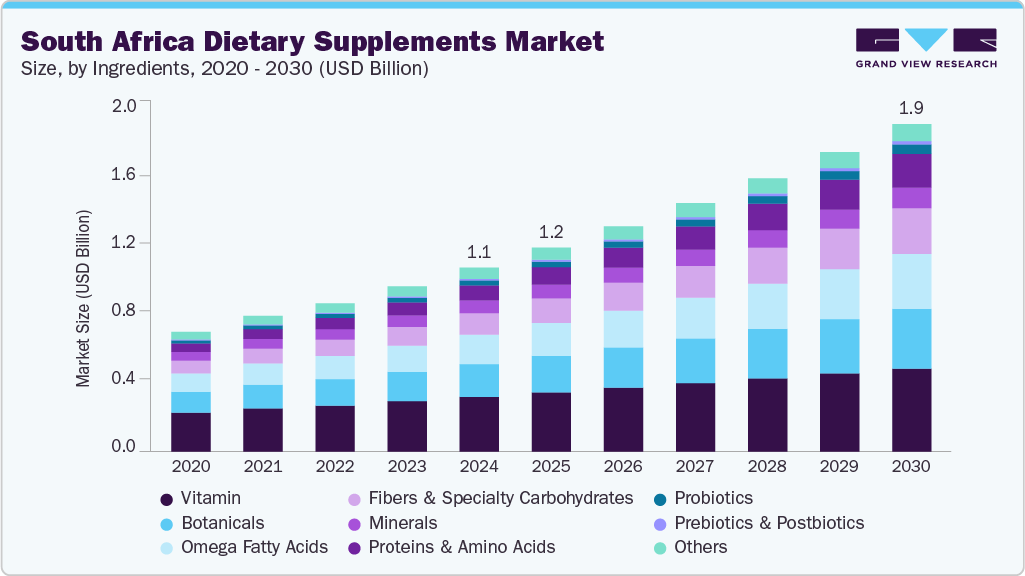 Source: Grand View Research, IR Documents, Primary Interviews, Paid DatabasesTo learn more about this report,
 Download Free Sample Report
 The notable rise in disposable income and a growing middle class in the country have empowered more consumers to invest in health and wellness products, including dietary supplements. According to an article published by CNBC Africa in February 2025, South Africa witnessed a significant leap in average take-home pay, with an 11.9% increase from December 2023 to December 2024, resulting in stronger purchasing power and more disposable income for consumers. This economic buoyancy allows consumers to prioritize health, fostering market expansion and the introduction of diverse, often premium, product offerings. Furthermore, a strong preference for natural, organic, and plant-based supplements aligns with global clean-label trends, influencing manufacturing innovation towards sustainable and chemical-free formulations.
According to an article published by SFI Health in December 2024, prenatal supplements containing essential micronutrients like iron, folic acid, and vitamin D are crucial for maternal and infant health, ideally taken before and during pregnancy. In accordance with such demographic needs, manufacturers are continually introducing new formulations and delivery systems, alongside tailored supplements designed to meet individual health needs, which effectively boosts consumer interest and engagement.
According to an article published by Freyr in July 2024, South Africa's dietary supplements fall under the Medicines and Related Substances Act, classified as Complementary Medicines (Category D). This mandates SAHPRA registration, adherence to GMP, and strict labeling requirements, with Legal Representatives (LRs) crucial for compliance and navigating import regulations. The regulatory landscape, including the classification of dietary supplements under the Medicines and Related Substances Act, further ensures quality and safety, building consumer confidence and aiding market growth.
Consumer Insights
There has been a notable surge in demand for immunity-boosting supplements in South Africa in recent years, alongside a growing interest in functional products that address non-communicable diseases like diabetes and hypertension. According to an article published by Wits Journal of Clinical Medicine in July 2024, South Africa faces a significant, yet underreported, burden of Chronic Kidney Disease (CKD), with estimates ranging from 6.4% to 17.3%. Despite this, access to kidney replacement therapy is severely restricted, particularly for the 85% of the population reliant on the resource-poor public healthcare sector, due to profound wealth disparities, driving demand for economical dietary supplements that support kidney health and address nutrient deficiencies as preventive or supportive measures.
Consumer preferences in South Africa are evolving beyond generic multivitamins towards specialized and targeted formulations. There is a discernible demand for supplements designed for specific health concerns, such as collagen for skin health or omega-3 for cardiovascular support. Convenience in product format also plays a significant role, with palatable options like gummies, effervescent tablets, and powders gaining traction, particularly among younger demographics. Culturally, an increasing trust in local herbal ingredients such as rooibos and moringa further shapes consumer choices, highlighting a blend of modern wellness trends with traditional remedies.
 To learn more about this report, Download Free Sample Report
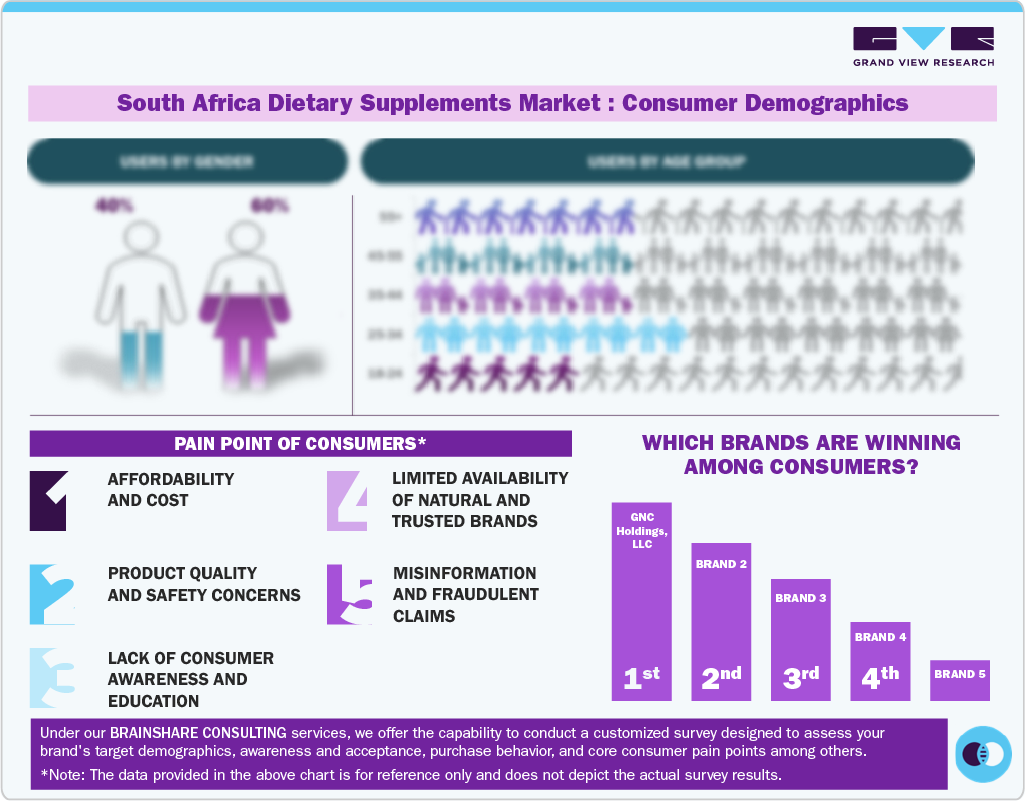
 Demographically, women continue to be the predominant consumers, especially for beauty, immunity, and pregnancy-related supplements. While men gradually increase their engagement, particularly in sports nutrition, their adoption rate remains lower. Income disparities significantly influence purchasing patterns; affluent and middle-income groups often opt for premium international brands, whereas lower-income segments prioritize essential, affordable supplements, often sourced through public health channels.
Ingredients Insights
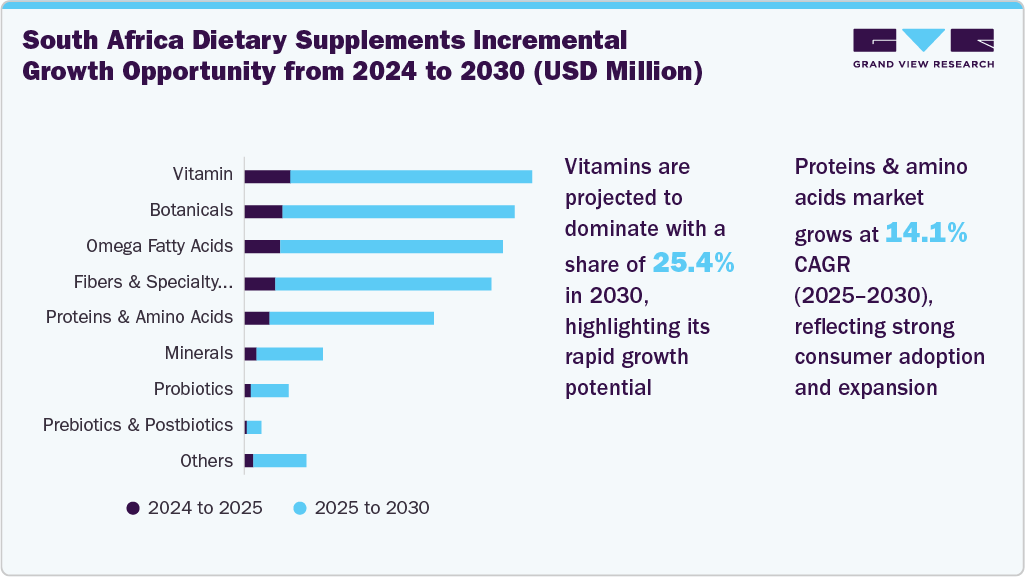
The vitamin segment dominated the South Africa dietary supplements market in 2024 due to widespread micronutrient deficiencies across all income groups, including Vitamin D, Iron, and Vitamin A. They are extensively used for preventive health, immune support, energy, and overall wellness. Endorsed by healthcare professionals and public campaigns, particularly for children, seniors, and pregnant women, vitamins benefit from high affordability and broad availability through both OTC and prescription channels.
 To learn more about this report, Download Free Sample Report
 The proteins & amino acids-based dietary supplements are expected to experience the fastest CAGR over the forecast period, driven by a surging gym culture, sports participation, and fitness trends among Gen Z and Millennials. Urban middle-class men and women increasingly seek these products for muscle growth, recovery, and weight management. Protein & amino acid-based supplements provide crucial nutritional support for undernourished or recovering individuals.
Form Insights
The tablets segment held the largest revenue share of 31.3% in 2024. Older consumers and healthcare professionals particularly prefer tablets. Tablets offer practical advantages, including ease of storage, longer shelf life, and seamless integration into existing medical routines. Their widespread use within both public and private healthcare systems further solidifies their position as a trusted and accessible delivery method for supplements.
Powders are anticipated to experience the fastest CAGR of 11.6% over the forecast period, especially within sports nutrition and energy categories, popular for protein shakes and electrolyte mixes. Younger, active consumers prefer them for their ease of mixing into beverages.
Type Insights
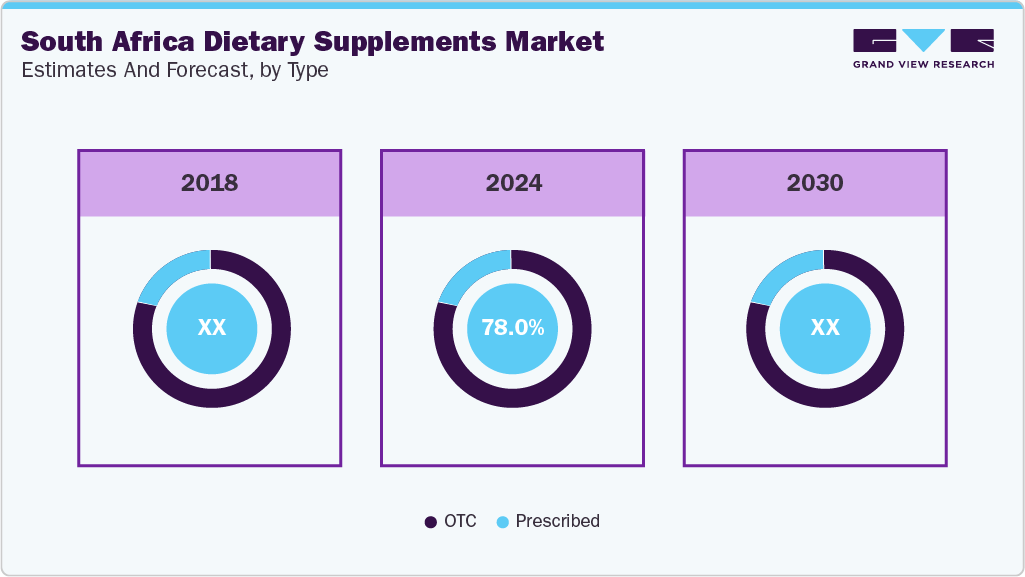
The OTC segment led the market with a revenue share of 78.0% in 2024. These products offer convenient accessibility without requiring a doctor's consultation, appealing particularly to younger adults and busy professionals. The strong presence of major pharmacy chains, like Clicks and Dis-Chem, ensures widespread availability. General wellness products, such as multivitamins and probiotics, benefit significantly from marketing campaigns and influencer endorsements, boosting their popularity in the industry.
 To learn more about this report, Download Free Sample Report
 Prescribed supplements are expected to experience the fastest CAGR from 2025 to 2030 due to strong reliance on recommendations from doctors and nurses, particularly in rural or older populations. Prescriptions are commonly issued for conditions such as pregnancy, anemia, chronic diseases, and post-surgical recovery. This medical endorsement builds significant consumer trust, especially among those with limited supplement knowledge. Furthermore, the integration of supplements into state-funded healthcare programs ensures wider access and consistent usage.
Application Insights
The immunity segment led the application of dietary supplements in 2024. Supplements like Vitamin C, Zinc, elderberry, and echinacea have seen widespread adoption across all age groups. Ongoing concerns about flu, respiratory infections, and seasonal illnesses continue to drive this trend. These immune-boosting ingredients are frequently incorporated into multivitamin packs and specialized immune blends, reinforcing their central role in consumer health strategies.
The prenatal health segment is anticipated to grow at the fastest CAGR during the forecast period. Essential prenatal vitamins, including iron, folic acid, and calcium, are routinely prescribed in comprehensive maternity care packages. Growing awareness around maternal nutrition and early child development has significantly contributed to this demand.
End Use Insights
Adults held the largest revenue share in the South Africa dietary supplements market in 2024. Adults aged 25-55 are key consumers, addressing chronic health conditions, fitness goals, beauty concerns, and stress management through personalized supplement use. Millennials and Gen Z drive trends in beauty, sleep, and energy products, while men focus on fitness, performance, and heart health. Simultaneously, pregnant and non-pregnant women utilize supplements for reproductive health, hormone balance, and general wellness, and older adults (Boomers and Gen X) prioritize bone, joint, and chronic disease prevention.
Infant use of dietary supplements is anticipated to experience the fastest growth from 2025 to 2030, fueled by high rates of childhood malnutrition in lower-income communities. Healthcare workers frequently prescribe essential supplements like Vitamin A, iron, and multivitamin drops to address these deficiencies.
Distribution Channel Insights
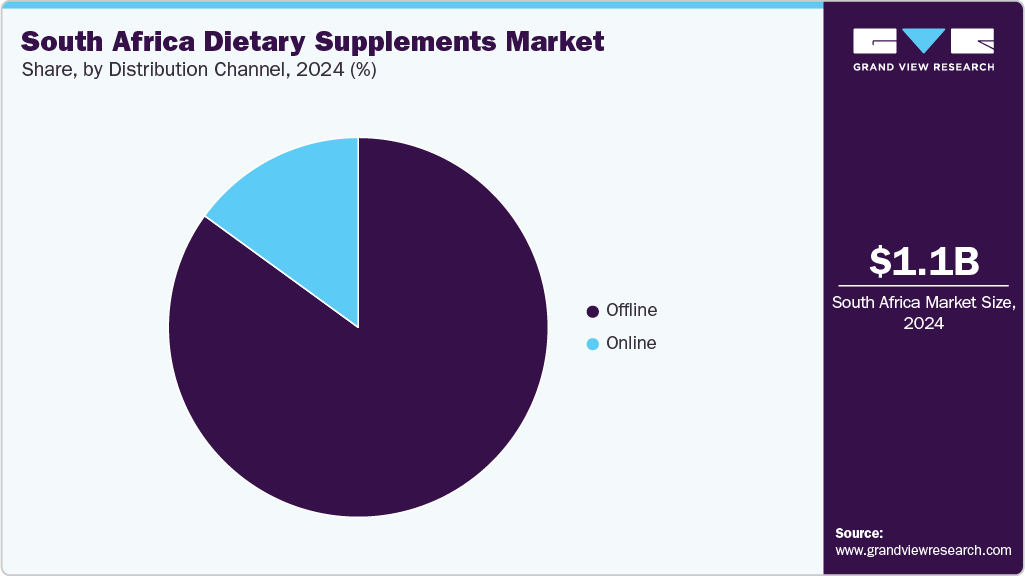
Offline distribution channels dominated this market in 2024. Pharmacies like Clicks and Dis-Chem remain highly trusted sources for professional advice. Supermarkets provide accessible and affordable mainstream products for daily health needs. Additionally, practitioners and specialty stores cater to premium, targeted formulations.
 To learn more about this report, Download Free Sample Report
 The online segment is projected to experience the fastest CAGR of 11.0% in 2024, fueled by increasing internet penetration and mobile device usage, particularly in urban areas. The growth of platforms like Takealot, Amazon, Dis-Chem online, and direct brand websites offers consumers advantages such as price comparison, convenience, and a wider product variety. Influencer-driven sales and subscription models further appeal to younger, digitally-native audiences.
Key South Africa Dietary Supplements Company Insights
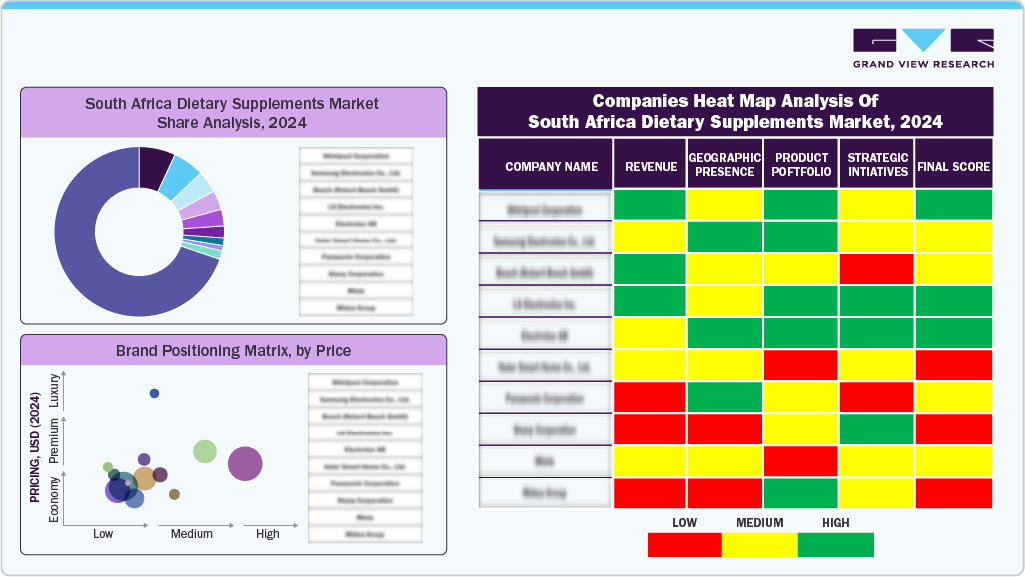
Some of the key companies operating in the market include Amway Corp.; Herbalife International, Inc.; Abbott; Bayer AG; Centrum (Haleon South Africa (Pty) Ltd.); and others.
 To learn more about this report, Download Free Sample Report
 -
Herbalife International, Inc. offers a direct-selling MLM model with approximately 670,000 global independent distributors. Known for weight management, sports nutrition, and energy supplements like protein shakes and herbal teas, the brand reaches consumers through local distributors and wellness coaches, despite facing typical MLM criticisms.
-
Centrum, managed by Haleon South Africa, is a multivitamin brand tailored for local needs, available across pharmacies, supermarkets, and online. The company’s science-backed formulations, including Centrum Adult, Select 50+, and Immune Support, emphasize energy, immunity, and bone health, appealing to consumers through high quality and targeted nutrient balancing.
Key South Africa Dietary Supplements Companies:
- Amway Corp.
- Herbalife International, Inc.
- Abbott
- Bayer AG
- Centrum (Haleon South Africa (Pty) Ltd.)
- Pfizer Inc.
- GNC Holdings Inc.
- Nestlé Health Science
- Nature's Sunshine Products, Inc.
- NOW Foods
Three ways to get this report
Buy it, customize it, or ask a question.Ask an Analyst
Analyst response in 1 business day
- AccessReport author, directly
- Reply timeWithin 1 working day
- No sales callDirect answer only
- FormatEmail reply
- CostFree, no cost
Get the Full Report
What the study covers
- FormatsPDF · Excel · Dashboard
- Timeline2025–2030 annual, 2024 base
- Coverage20+ countries, 5 regions
- Companies10+ key players profiled
Customize the Report
20% free customization
- IncludeCountries, segments, points
- TailorTo your product definition
- ExtendDeeper competitor detail
- OrA fully bespoke study
- Turnaround5–10 working days
Recent Developments
-
In July 2024, Angelo HZS launched its South Africa Branch in Johannesburg, accompanied by the Anti-Aging Eco 2.0 Global Tour.
-
In June 2024, Nestlé Health Science launched glp-1nutrition.com, a global online platform. The company aims to provide comprehensive nutritional support, including expert insights and tailored product bundles, for individuals on weight management journeys, specifically those using GLP-1 medications.
-
In December 2023, Afriplex announced an upgrade to its South Africa plant, aiming to build Africa's first SAHPRA-compliant gummy production facility.
South Africa Dietary Supplements Market Report Scope
Report Attribute
Details
Revenue forecast in 2030
USD 1.88 billion
Growth rate
CAGR of 9.9% from 2025 to 2030
Base year for estimation
2024
Historical data
2018 - 2023
Forecast period
2025 - 2030
Quantitative units
Revenue in USD million/billion and CAGR from 2025 to 2030
Report coverage
Revenue forecast, company ranking, competitive landscape, growth factors, and trends
Segments covered
Ingredients, form, type, application, end use, distribution channel
Country scope
South Africa
Key companies profiled
Amway Corp.; Herbalife International, Inc.; Abbott; Bayer AG; Centrum (Haleon South Africa (Pty) Ltd.); Pfizer Inc.; GNC Holdings Inc.; Nestlé Health Science; Nature's Sunshine Products, Inc.; NOW Foods
Customization scope
Free report customization (equivalent up to 8 analysts working days) with purchase. Addition or alteration to country, regional & segment scope.
Pricing and purchase options
Avail customized purchase options to meet your exact research needs. Explore purchase options
South Africa Dietary Supplements Market Report Segmentation
This report forecasts revenue growth at the country level and provides an analysis of the latest industry trends in each of the sub-segments from 2018 to 2030. For this study, Grand View Research has segmented the South Africa dietary supplements market report based on ingredients, form, type, application, end use, and distribution channel:
-
Ingredients Outlook (Revenue, USD Million, 2018 - 2030)
-
Vitamin
-
Multivitamin
-
Vitamin A
-
Vitamin B
-
Vitamin C
-
Vitamin D
-
Vitamin K
-
Vitamin E
-
-
Botanicals
-
Minerals
-
Calcium
-
Potassium
-
Magnesium
-
Iron
-
Zinc
-
Others (Selenium, Chromium, Copper)
-
-
Proteins & Amino Acids
-
Collagen
-
Others
-
-
Fibers & Specialty Carbohydrates
-
Omega Fatty Acids
-
Probiotics
-
Prebiotics & Postbiotics
-
Others
-
-
Form Outlook (Revenue, USD Million, 2018 - 2030)
-
Tablets
-
Capsules
-
Soft Gels
-
Powders
-
Gummies
-
Liquid
-
Others
-
-
Type Outlook (Revenue, USD Million, 2018 - 2030)
-
OTC
-
Prescribed
-
-
Application Outlook (Revenue, USD Million, 2018 - 2030)
-
Bone & Joint Health
-
Gastrointestinal Health
-
Immunity
-
Cardiac Health
-
Diabetes
-
Anti-cancer
-
Lungs Detox/Cleanse
-
Skin/ Hair/ Nails
-
Sexual Health
-
Brain/Mental Health
-
Insomnia
-
Menopause
-
Anti-aging
-
Prenatal Health
-
Others
-
-
End Use Outlook (Revenue, USD Million, 2018 - 2030)
-
Adults
-
Millennials
-
Male
-
Female
-
Pregnant Women
-
Non-pregnant Women
-
-
-
Gen X
-
Male
-
Female
-
Pregnant Women
-
Non-pregnant Women
-
-
-
Gen Z
-
Male
-
Female
-
Pregnant Women
-
Non-pregnant Women
-
-
-
Boomers
-
Male
-
Female
-
-
-
Geriatric
-
Children
-
Infants
-
-
Distribution Channel Outlook (Revenue, USD Million, 2018 - 2030)
-
Offline
-
Hypermarkets/Supermarkets
-
Pharmacies
-
Specialty Stores
-
Practitioner
-
Others (Direct to Consumer, MLM)
-
-
Online
-
Amazon
-
Other Online Retail Stores
-
-
About the Author(s)
Nutraceuticals & Functional Foods Research Team
Consumer Goods · Nutraceuticals & Functional FoodsThis report was authored by the nutraceuticals & functional foods research team at Grand View Research - comprising two research analysts, one senior research analyst, and one industry expert - with specialized expertise in the nutraceuticals & functional foods segment of the consumer goods industry. All findings are based on proprietary consumer goods databases, executive interviews, and regulatory analysis, subject to internal peer review prior to publication.
Last Updated:
Speak to Analyst -

Customize this report to your needs - add regions, segments, or data points, with 20% free customization.
Or view our licence options:


ISO 9001:2015 & 27001:2022 Certified
We are GDPR and CCPA compliant! Your transaction & personal information is safe and secure. For more details, please read our privacy policy.


