
- Home
- »
- Advanced Interior Materials
- »
-
Steel Grinding Balls Market Size And Share Report, 2033GVR Report cover

Steel Grinding Balls Market (2026 - 2033)
Size, Share & Trends Analysis Report, By Material Type (Carbon Steel, Alloy Steel, High-Chromium Steel, Stainless Steel), By End Use (Mining, Cement, Thermal Power), By Region (North America, Europe), And Segment Forecasts
Market Size, 2025
$5.1BMarket Estimate, 2026
$5.5BMarket Forecast, 2033
$8.1BCAGR, 2026–2033
5.7%Steel Grinding Balls Market Summary
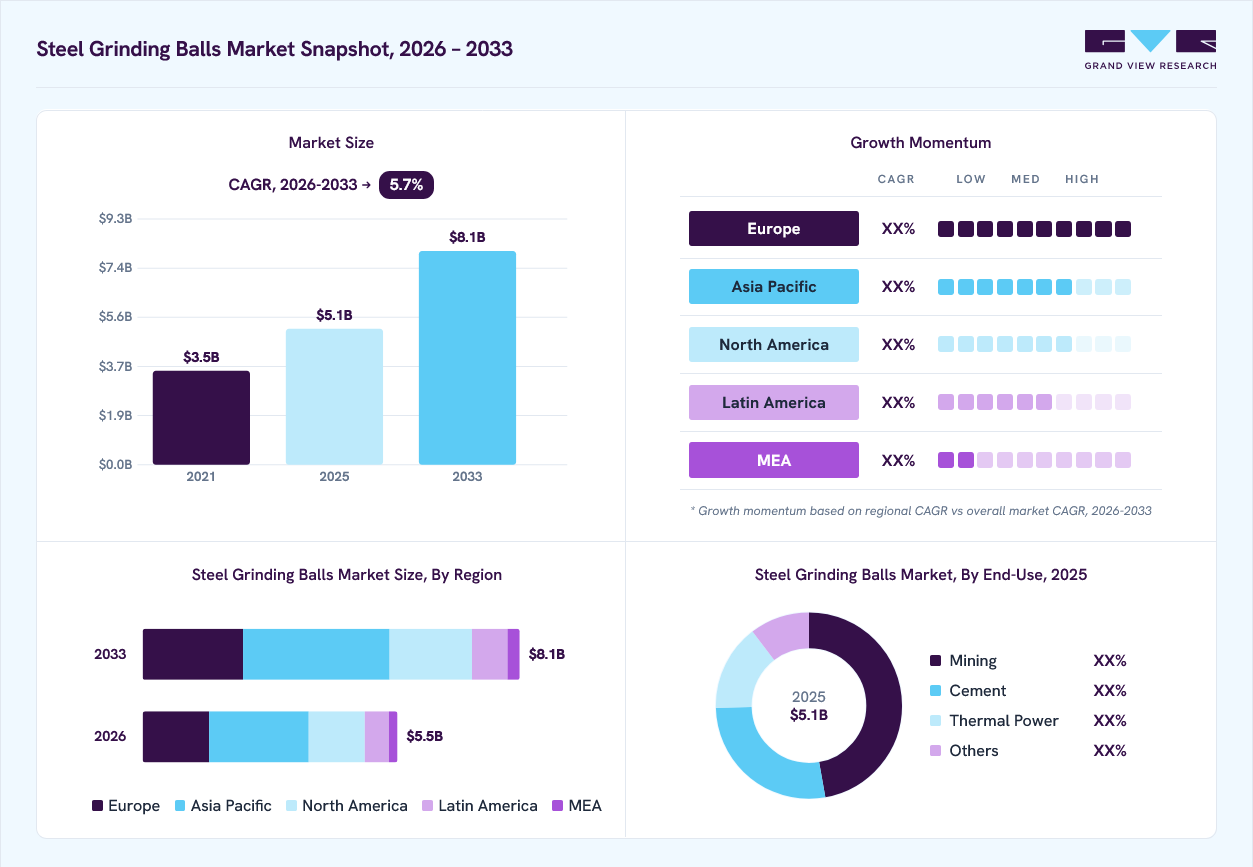
The global steel grinding balls market size was valued at USD 5.1 billion in 2025 and is projected to grow from USD 5.5 billion in 2026 to USD 8.1 billion by 2033, at a CAGR of 5.7% from 2026 to 2033. Asia Pacific dominated the market, accounting for a revenue share of 39.1% in 2025. Growth is driven by the increasing demand from the mining, cement, and power generation industries, where grinding media play a critical role in ore processing and material size reduction.
 Source: Grand View Research, IR Documents, Primary Interviews, Paid DatabasesTo learn more about this report,
 Download Free Sample Report
Key Market Trends & Insights
- By material type: Carbon steel segment led the market with the largest revenue share of 74.9% in 2025.
- By end use: Mining segment led the market with the largest revenue share of 47.1% in 2025.
Regional Highlights
- Largest regional market: Asia Pacific (39.1% revenue share, 2025)
- By country: China held the largest market share in 2025.
Market Size & Forecast
- Market size in 2025: USD 5.1 Billion
- Estimated market size in 2026: USD 5.5 Billion
- Projected market size by 2033: USD 8.1 Billion
- CAGR (2026-2033): 5.7%
Three ways to get this report
Buy it, customize it, or ask a question.Ask an Analyst
Analyst response in 1 business day
- AccessReport author, directly
- Reply timeWithin 1 working day
- No sales callDirect answer only
- FormatEmail reply
- CostFree, no cost
Get the Full Report
What the study covers
- FormatsPDF · Excel · Dashboard
- Timeline2026–2033 annual, 2025 base
- Coverage20+ countries, 5 regions
- Companies10+ key players profiled
Customize the Report
20% free customization
- IncludeCountries, segments, points
- TailorTo your product definition
- ExtendDeeper competitor detail
- OrA fully bespoke study
- Turnaround5–10 working days
The expansion of global mineral exploration activities, coupled with the rising demand for iron ore, gold, copper, and other base metals, has significantly boosted the consumption of grinding balls. The steel grinding balls market is increasingly aligning with global sustainability goals, as manufacturers focus on reducing carbon footprints and improving material efficiency. The adoption of recycled steel scrap for grinding ball production has become a key trend, minimizing dependence on virgin raw materials and lowering overall CO₂ emissions. Leading producers are investing in energy-efficient furnaces and closed-loop water systems to reduce resource consumption during forging and heat-treatment processes. Moreover, the industry is witnessing a gradual shift toward longer-lasting, wear-resistant alloys, which reduce waste generation and the frequency of replacement, ultimately enhancing the environmental performance of grinding operations in mining and cement applications.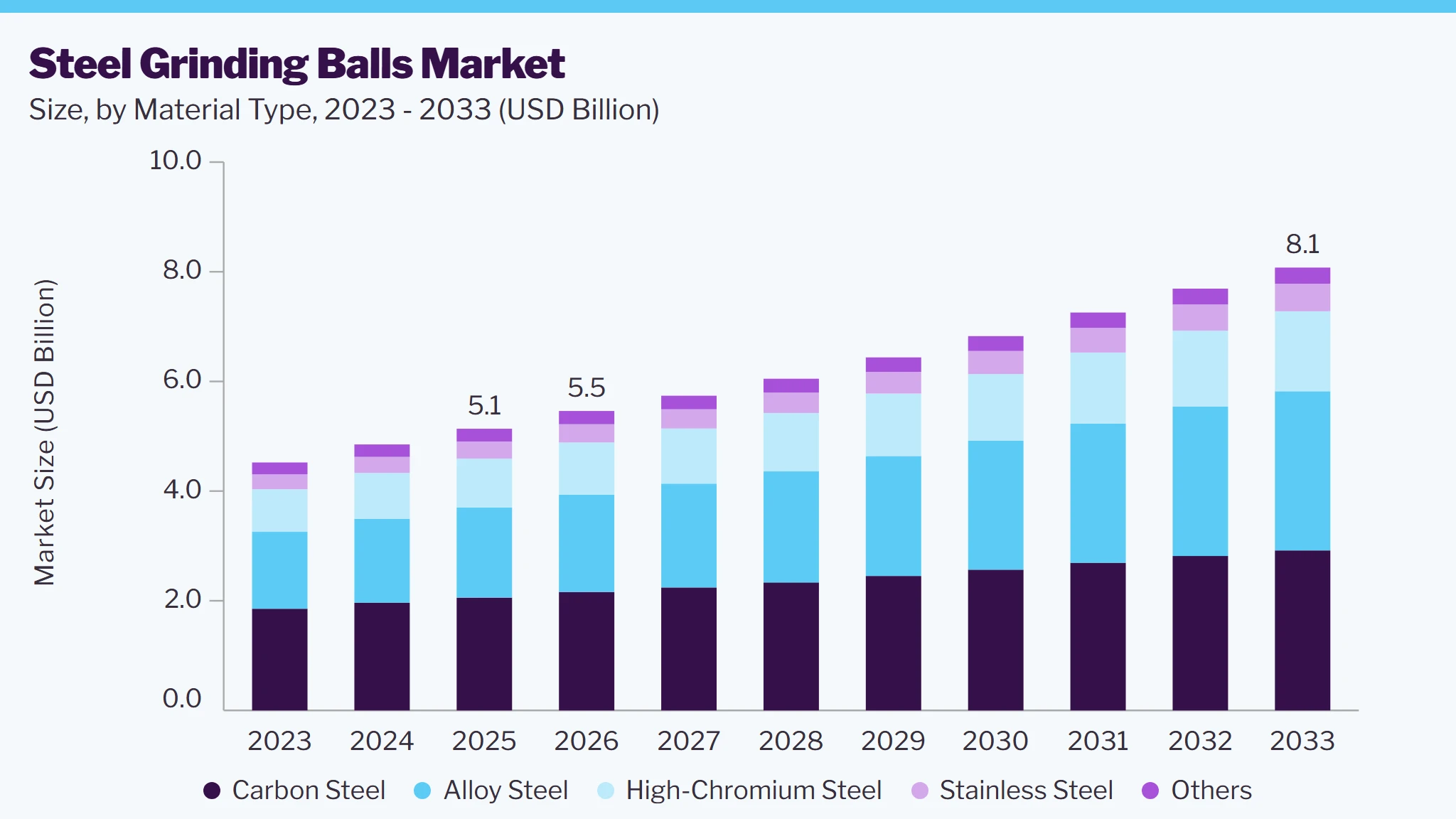 To learn more about this report, Download Free Sample Report
Technological advancements are transforming the steel grinding balls market, emphasizing performance optimization and operational efficiency. Innovations in precision forging, controlled heat treatment, and surface hardening techniques have significantly improved hardness, uniformity, impact resistance, and overall material lifespan. The integration of automated inspection systems, AI-driven quality control, and computer-aided design (CAD) tools ensures consistent ball geometry and enhanced process control. Additionally, manufacturers are utilizing advanced metallurgical modeling and real-time monitoring systems to optimize production parameters, minimize defects, and improve energy efficiency. These advancements collectively enable end users to achieve finer grinding performance, reduced energy consumption, and lower operating costs.
Market Dynamics
The steel grinding balls market is primarily driven by the steady expansion of global mining activities, particularly for copper, iron ore, gold, lithium, and other critical minerals required for infrastructure development and the energy transition. As mining companies process larger volumes of ore and increasingly exploit lower grade deposits, the demand for efficient comminution equipment and durable grinding media continues to rise. Steel grinding balls are essential consumables in ball mills and SAG mills, where they are continuously replaced due to wear, creating a stable and recurring demand. Ongoing investments in new mining projects, mineral beneficiation facilities, and capacity expansions across Asia Pacific, Latin America, and Africa are further supporting market growth.
The steel grinding balls market is challenged by volatility in the prices of steel scrap, alloying elements, and energy, which increases manufacturing costs and affects product pricing. In addition, intense competition and pressure to reduce operating expenses encourage mining companies to optimize grinding media consumption, limiting revenue growth for manufacturers.
The steel grinding balls market is challenged by volatility in the prices of steel scrap, alloying elements, and energy, which increases manufacturing costs and affects product pricing. In addition, intense competition and pressure to reduce operating expenses encourage mining companies to optimize grinding media consumption, limiting revenue growth for manufacturers.
The increasing focus on critical minerals such as lithium, copper, nickel, and rare earth elements is creating significant opportunities for the steel grinding balls market. As mining companies expand operations to meet rising demand from electric vehicles, renewable energy, and advanced manufacturing industries, the need for durable, high hardness grinding media that improves milling efficiency and extends equipment life is expected to grow steadily.
Analyst Perspective
The steel grinding balls market is expected to experience steady long term growth, driven primarily by expanding mining activities and the increasing need for efficient mineral processing across copper, iron ore, gold, lithium, and other critical mineral operations. As mining companies process lower grade ores and invest in higher throughput comminution systems, demand for durable grinding media with superior wear resistance and longer service life continues to rise. The market is further supported by growing investments in cement production, mineral beneficiation facilities, and industrial modernization, where high performance grinding balls help improve milling efficiency, reduce downtime, and lower operating costs.
Material Type Insights
Carbon steel segment led the market with the largest revenue share of 74.9% in 2025. The material type segmentation of the steel grinding balls market is led by carbon steel, which holds the dominant share due to its cost-effectiveness, widespread availability, and suitability for large-volume grinding applications. Carbon steel grinding balls are extensively used across cement plants, thermal power stations, and certain mineral processing operations where moderate hardness and abrasion resistance are sufficient. Their lower production cost compared to alloyed and high-chromium variants makes them the preferred choice in cost-sensitive markets and developing economies, where procurement budgets and operational costs play a decisive role. Additionally, the more straightforward manufacturing process and consistent performance in standard milling environments continue to strengthen the demand for carbon steel balls.
In contrast, other material types, such as alloy steel, high-chromium steel, stainless steel, and specialty blends, serve more performance-driven or niche applications. Alloy steel balls are increasingly adopted in mining due to superior wear resistance, while high-chromium variants cater to industries requiring better hardness and reduced wear rates. Stainless steel and specialty materials are primarily used in applications involving chemicals, pharmaceuticals, and food-grade products, where corrosion resistance is crucial. However, despite the rising demand for performance-oriented materials, carbon steel remains the market leader because it provides the best balance between durability, availability, and affordability, ensuring its continued dominance over the forecast period.
End Use Insights
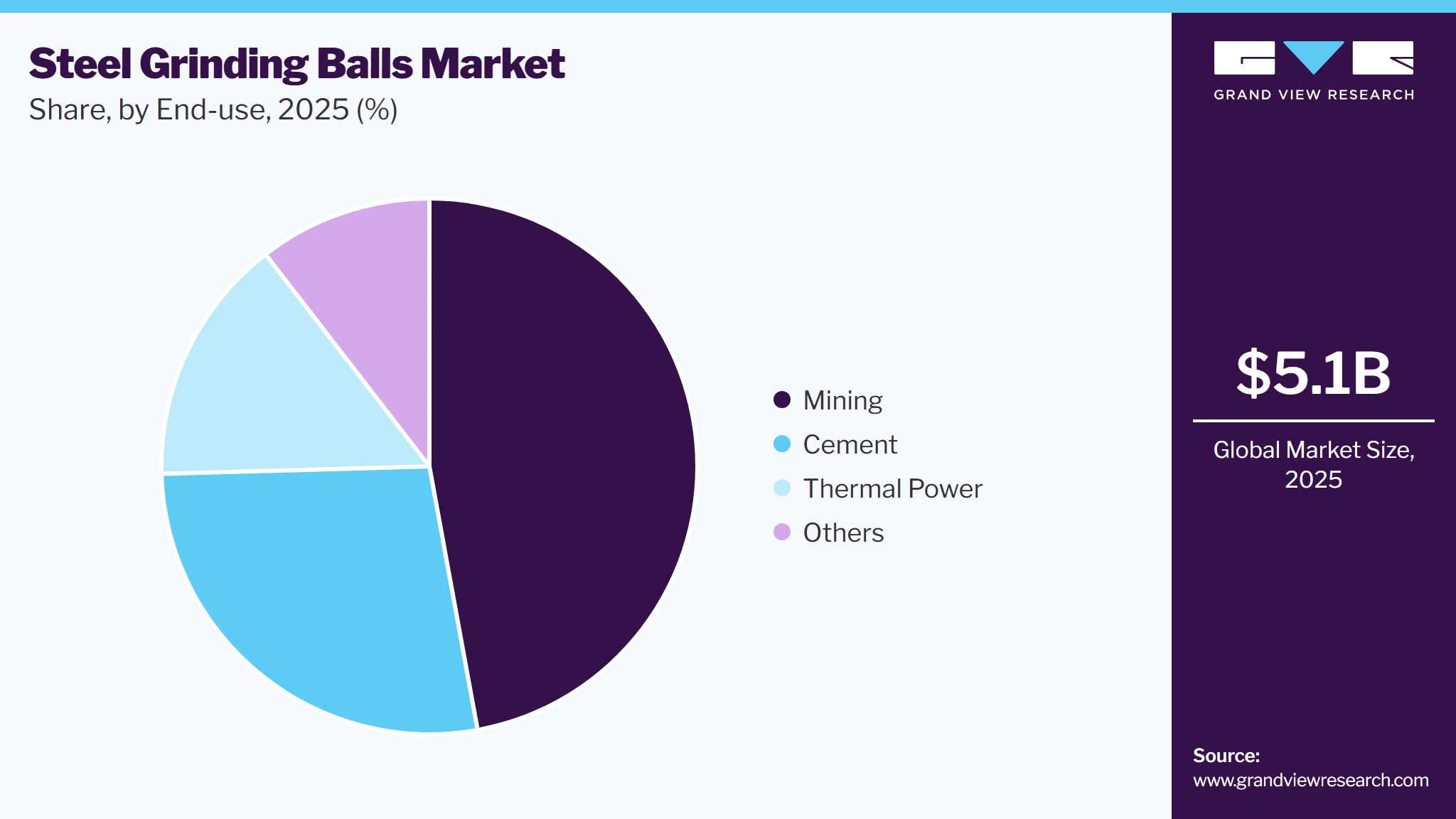
Based on end use, mining segment led the market with the largest revenue share of 47.1% in 2025. The end-use segmentation of the steel grinding balls market is clearly dominated by the mining industry, which accounts for the largest share of global demand. Mining operations, including those for gold, copper, iron ore, and base metals, require continuous, large-scale grinding of extracted ores, making grinding media critical consumable. The high-impact milling environment in mining operations necessitates frequent replenishment of grinding balls, resulting in significantly higher consumption volumes compared to other industries. This steady operational requirement, combined with the expansion of new mining projects across Africa, Latin America, and the Asia-Pacific region, solidifies mining as the primary growth driver for the steel grinding balls market.
 To learn more about this report, Download Free Sample Report
Other end-use segments, such as cement, thermal power, and various industrial applications, collectively represent a smaller share due to lower grinding intensity and slower replacement cycles. Cement plants use grinding balls for clinker and limestone processing, while thermal power stations utilize them for coal pulverization; however, both sectors are more cost-driven and exhibit moderate demand growth. In contrast, mining’s reliance on continuous ore processing, coupled with rising global metal consumption and increased investment in mineral extraction, ensures its long-term dominance in the steel grinding balls market.
Furthermore, the dominance of mining as an end-use segment is reinforced by the industry's ongoing shift toward deeper ore bodies and lower-grade deposits, which require more intensive grinding to achieve the desired mineral liberation. As ore hardness increases and processing plants adopt larger and more energy-efficient mills, the consumption of high-performance grinding media rises proportionally. This operational trend directly elevates the demand for steel grinding balls, especially alloy and forged variants, further widening the gap between mining and other end-use sectors. With global metal demand expected to grow steadily due to energy transition technologies, electric vehicles, construction, and infrastructure development, the mining sector is expected to continue underpinning the long-term growth trajectory of the steel grinding balls market.
Regional Insights
North America dominated the steel grinding balls market with a revenue share of over 50.0% in 2024. The steel grinding balls market in North America is experiencing stable growth supported by steady mining output and rising demand from the cement and energy sectors. In 2025, increased investment in copper, lithium, and gold mining projects across Canada and Mexico has sustained the consumption of grinding media in mineral processing plants. The region is also witnessing greater adoption of high-chrome forged balls due to stricter energy-efficiency standards and longer replacement cycles. Producers are focusing on recycling initiatives and local manufacturing to reduce their dependence on imports, as transportation costs and carbon regulations tighten under regional sustainability policies.
U.S. Steel Grinding Balls Market Trends
In the U.S., demand for steel grinding balls is being driven by ongoing expansions in base metal and construction materials processing. The country experienced a revival in domestic mining activities during 2024-2025, particularly in copper and iron ore production, which was supported by the Inflation Reduction Act and infrastructure stimulus. Cement producers are also modernizing grinding operations with more durable, wear-resistant media to lower operating costs. However, the U.S. market faces challenges from import restrictions and anti-dumping measures imposed on certain Asian suppliers, prompting domestic players to invest in local forging capacity and recycled steel-based production lines.
Asia Pacific Steel Grinding Balls Market Trends
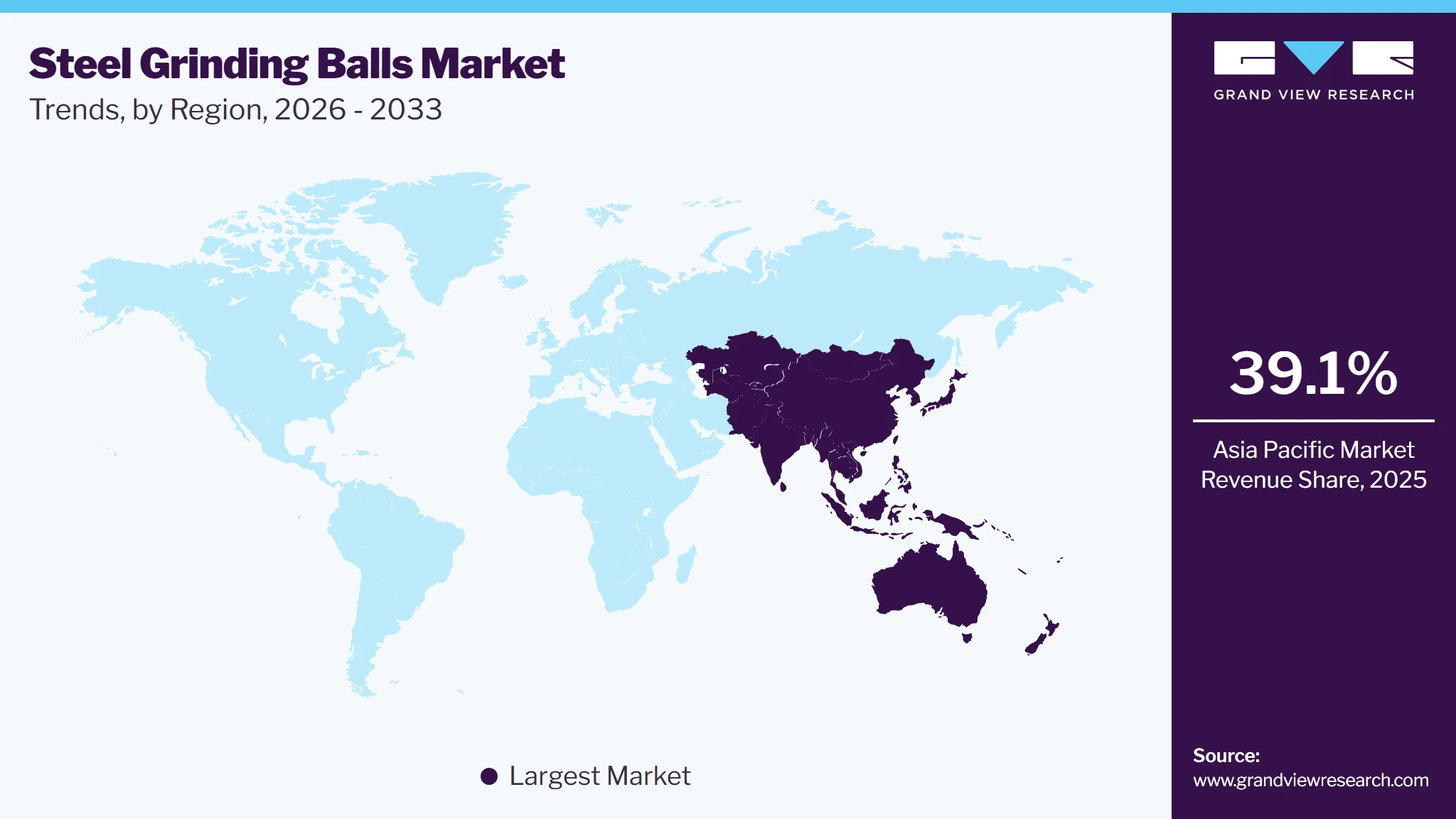
Asia Pacific dominated the steel grinding balls market with the largest revenue share of 39.1% in 2025. Asia Pacific remains the largest and fastest-growing regional market for steel grinding balls, supported by significant consumption in China, India, and Indonesia. In January 2025, China’s Ministry of Industry reported an uptick in steel demand from the mining and cement industries, reflecting higher domestic infrastructure spending. India’s strong cement output and mining exploration in Odisha and Chhattisgarh continue to drive regional demand. The availability of low-cost labor and raw materials has made the Asia Pacific a global manufacturing hub for forged and cast grinding media. However, rising environmental regulations in China are encouraging a shift toward cleaner and more energy-efficient production technologies.
 To learn more about this report, Download Free Sample Report
The steel grinding balls market in the China held the largest share in the Asia Pacific region in 2025.
Europe Steel Grinding Balls Market Trends
The European market for steel grinding balls is characterized by moderate demand and a substantial shift toward sustainable and low-carbon production. In 2025, European producers continued to invest in electric arc furnace (EAF) technology and recycling-based manufacturing to comply with EU Green Deal targets. Demand remains concentrated in cement, aggregates, and metal mining operations in Eastern and Southern Europe. However, high energy prices and stricter environmental compliance costs are putting pressure on margins. Regional manufacturers are focusing on premium high-alloy grinding media with longer wear life to maintain competitiveness against imports from Asia and Turkey.
Key Steel Grinding Balls Company Insights
Some of the key players operating in the market include AIA Engineering Ltd., Magotteaux S.A., Molycop, and others.
-
AIA Engineering Ltd., established in 1979 and headquartered in Ahmedabad, is engaged in the design, development, and manufacture of grinding media and wear-resistant components for cement, mining, and thermal power industries. The company produces forged and high chrome grinding balls used in milling and comminution applications. AIA Engineering focuses on process optimization and material efficiency through continuous research and development, as well as the adaptation of new technologies.
-
Magotteaux S.A., founded in 1918 and headquartered in Liège, specializes in grinding media and wear parts for the mining, cement, and aggregates industries. The company manufactures cast and forged steel grinding balls with varied alloy compositions designed for different milling environments. Magotteaux integrates metallurgical research and process control systems to improve durability and operational efficiency across its material range.
-
Molycop, with origins tracing back to 1918, operates as a global supplier of grinding media and related materials for the mining and processing sectors. The company manufactures forged steel grinding balls and rods used in the mineral processing and cement production industries. Molycop emphasizes consistent quality standards and production efficiency, supported by localized manufacturing and supply chain capabilities across multiple regions.
Key Steel Grinding Balls Companies
The following key companies have been profiled for this study on the steel grinding balls market.
-
AIA Engineering Ltd.
-
Alpha Grinding Media
-
Donhad Pty Ltd.
-
Energosteel Company
-
Magotteaux S.A.
-
Molycop
-
Ningguo Zhicheng Machine Manufacturing Co., Ltd.
-
Shandong Huamin Steel Ball Joint-Stock Co., Ltd.
-
The Steel Ball Company Ltd.
-
TOYO Grinding Ball Co., Ltd.
Competitive Benchmarking
Category
Operating Strategies
Competitive Edge
Weakness
Established Players (e.g. AIA Engineering Ltd., Donhad Pty Ltd)
- Mature participants in the steel grinding balls market primarily focus on large scale production of forged and cast grinding media supported by vertically integrated steelmaking and advanced heat treatment operations.
- Their strategies emphasize manufacturing high performance grinding balls with superior hardness, impact resistance, and wear life for mining, cement, thermal power, and mineral processing industries.
- Established players possess significant competitive advantages through advanced metallurgical expertise, integrated manufacturing facilities, and proprietary alloy formulations that enhance grinding ball performance.
- Their ability to consistently produce grinding media with controlled hardness, toughness, and wear resistance enables them to meet the demanding requirements of mining and cement operations while minimizing ball consumption and improving mill productivity.
- Despite their strong market positions, mature players face challenges related to fluctuations in steel scrap, alloy, and energy prices, which directly influence manufacturing costs and profitability.
- Producing premium grinding balls requires substantial investments in forging equipment, casting facilities, heat treatment systems, and quality control technologies.
Emerging & Regional Players (e.g., Alpha Grinding Media, Energosteel Company)
- Emerging participants in the steel grinding balls market generally focus on regional manufacturing, specialized alloy development, and customized grinding media solutions for mining and industrial customers.
- Rather than competing directly with established producers on production scale, these companies emphasize operational flexibility, shorter delivery times, and customer-specific product development.
- Emerging companies benefit from operational agility and the ability to establish manufacturing facilities using modern production technologies without extensive legacy infrastructure.
- Their streamlined operations enable faster product customization, quicker response to customer requirements, and improved production flexibility for different grinding applications.
- Emerging participants face significant challenges related to limited production capacity, restricted financial resources, and lower economies of scale compared with established global manufacturers.
- Smaller producers may encounter higher unit production costs, greater exposure to raw material price volatility, and limited bargaining power with steel and alloy suppliers.
Recent Developments
-
AIA Engineering Ltd., in April 2025, announced the commissioning of an additional production line at its Gujarat facility to enhance the output of high chrome grinding media used in mining and cement applications. The expansion is designed to meet the increasing demand from export markets and to improve supply chain efficiency. The company stated that the new unit will operate with energy-efficient equipment and focus on process consistency.
-
Magotteaux S.A., in January 2025, entered into a long-term supply agreement with Codelco to provide grinding balls produced from recycled steel at the El Teniente Division in Chile. The collaboration aims to support Codelco’s sustainability objectives and enhance lifecycle efficiency in copper processing operations. The agreement also includes provisions for technical services related to material performance monitoring.
-
Molycop, in February 2025, announced the modernization of its grinding ball plant in Lima, Peru, with upgraded heat-treatment systems and automated inspection technology. The project is designed to improve production reliability and align with regional demand growth from the mining sector. The company noted that the upgrades are part of a broader operational improvement plan implemented across its Latin American facilities.
Steel Grinding Balls Market Report Scope
Report Attribute
Details
Market definition
The market size is determined by assessing the total volume of grinding balls consumed across industries such as mining, cement, and power generation, and evaluating their value based on prevailing average prices in a given year.
Market size in 2025
USD 5.1 billion
Estimated market size in 2026
USD 5.5 billion
Projected market size by 2033
USD 8.1 billion
Growth rate
CAGR of 5.7% from 2026 to 2033
Base year for estimation
2025
Historical data
2021 - 2024
Forecast period
2026 - 2033
Quantitative units
Revenue in USD million, volume in kilotons, and CAGR from 2026 to 2033
Report coverage
Revenue forecast, volume forecast, company ranking, competitive landscape, growth factors, and trends
Segments covered
Material type, end use, region.
Regional scope
North America; Europe; Asia Pacific; Latin America; Middle East & Africa
Country scope
U.S.; Canada; Mexico; Germany; France; Russia; China; India; Japan; South Korea; Brazil; South Africa
Key companies profiled
AIA Engineering Ltd.; Alpha Grinding Media; Donhad Pty Ltd.; Energosteel Company; Magotteaux S.A.; Molycop; Ningguo Zhicheng Machine Manufacturing Co., Ltd.; Shandong Huamin Steel Ball Joint-Stock Co., Ltd.; The Steel Ball Company Ltd.; TOYO Grinding Ball Co., Ltd.
Customization scope
Free report customization (equivalent up to 8 analysts' working days) with purchase. Addition or alteration to country, regional & segment scope.
Pricing and purchase options
Avail customized purchase options to meet your exact research needs. Explore purchase options
Global Steel Grinding Balls Market Report Segmentation
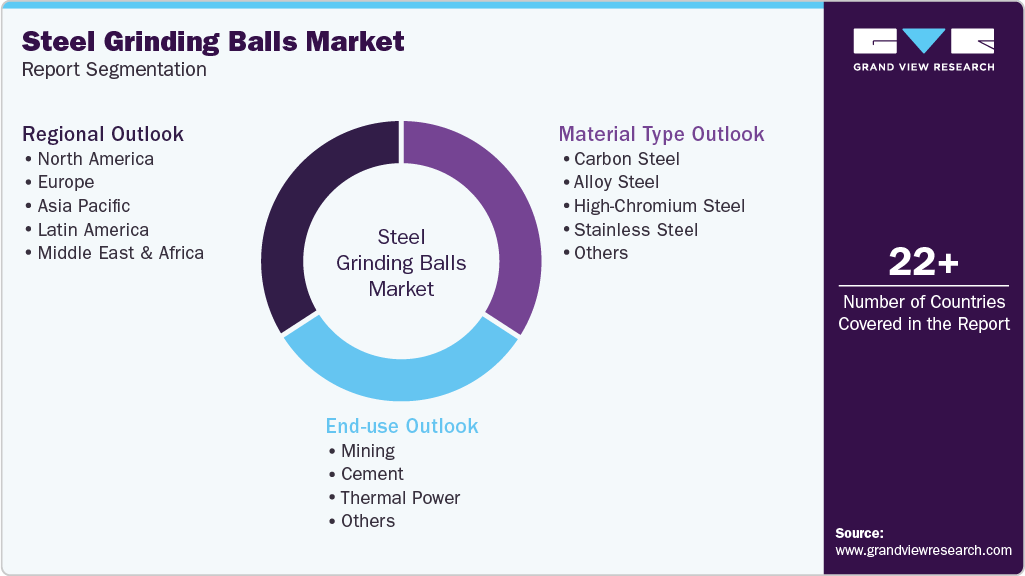
This report forecasts global, country, and regional revenue growth and analyzes the latest trends in each sub-segment from 2021 to 2033. For this study, Grand View Research has segmented the global steel grinding balls market report by material type, end use, and region.
 To learn more about this report, Download Free Sample Report
-
Material Type Outlook (Revenue, USD Million; 2021 - 2033)
-
Carbon Steel
-
Alloy Steel
-
High-Chromium Steel
-
Stainless Steel
-
Others
-
-
End Use Outlook (Revenue, USD Million; 2021 - 2033)
-
Mining
-
Cement
-
Thermal Power
-
Others
-
-
Regional Outlook (Revenue, USD Million; 2021 - 2033)
-
North America
-
U.S.
-
Canada
-
Mexico
-
-
Europe
-
Germany
-
UK
-
France
-
Russia
-
-
Asia Pacific
-
China
-
India
-
Japan
-
Australia
-
-
Latin America
-
Brazil
-
-
Middle East & Africa
-
South Africa
-
Iran
-
-
Research Methodology
The Steel Grinding Balls market figures in this report are based on a proven research process that combines executive interviews with secondary research from proprietary databases, company filings, and recognized regulatory and institutional sources. Market size is built through value-chain sizing - reconciling supply-side and demand-side estimates - and triangulated with bottom-up and top-down approaches. Every estimate passes multiple levels of expert validation before publication, with each Steel Grinding Balls segment quantified using the revenue-capture definitions in the table below.
Segment Definition
End Use
Revenue Capture Definition
Mining
The mining segment captures revenue generated from steel grinding balls used in the comminution of metallic and non-metallic ores in SAG mills, ball mills, and rod mills. These grinding media are essential for crushing and grinding minerals such as gold, copper, iron ore, nickel, and other base metals to improve mineral recovery and processing efficiency.
Cement
The cement segment represents revenue generated from steel grinding balls used in cement manufacturing for grinding clinker, limestone, gypsum, and supplementary cementitious materials. Steel grinding balls enhance grinding efficiency, reduce energy consumption, and improve cement quality through consistent particle size reduction.
Thermal Power
The thermal power segment includes revenue generated from steel grinding balls used in coal pulverization systems within coal-fired power plants. These grinding balls are employed in ball mills to produce fine coal powder for efficient combustion and improved boiler performance.
Others
The others segment captures revenue generated from steel grinding balls used in industries such as chemical processing, lime production, ceramics, industrial minerals, paints and pigments, and waste recycling.
Material Type
Revenue Capture Definition
Carbon Steel
The carbon steel segment captures revenue generated from grinding balls manufactured using carbon steel, widely used in mining, cement, and thermal power applications.
Alloy Steel
The alloy steel segment represents revenue generated from grinding balls manufactured using alloy steels containing elements such as chromium, manganese, molybdenum, or nickel to enhance hardness, wear resistance, and toughness.
High-Chromium Steel
The high-chromium steel segment includes revenue generated from grinding balls produced with high chromium content, providing exceptional abrasion resistance, hardness, and corrosion resistance.
Stainless Steel
The stainless steel segment captures revenue generated from grinding balls manufactured using stainless steel for applications requiring superior corrosion resistance and contamination-free grinding.
Others
The others segment represents revenue generated from grinding balls manufactured using specialty materials such as forged steel variants, cast iron, ceramic composites, and other customized alloys designed for specific milling requirements.
Estimation Model
Layer Name
Key Question
Description
Mining & Industrial Demand Base Layer
What forms the demand base?
Identify global demand from mining and industrial sectors requiring comminution processes, including metal mining, cement production, thermal power generation, and mineral processing. Assess ore production, cement output, and industrial grinding capacity to establish the total addressable demand for steel grinding balls.
Grinding Ball Application Penetration Layer
Where are steel grinding balls utilized?
Estimate the penetration of steel grinding balls across key applications including ball mills, SAG mills, and other grinding equipment used in mining, cement plants, thermal power stations, and industrial mineral processing. Analyze the adoption of carbon steel, alloy steel, high-chromium steel, stainless steel, and other grinding ball materials across different end-use industries and regions.
Grinding Media Consumption Intensity Layer
How much steel grinding media is consumed?
Analyze steel grinding ball consumption intensity based on ore throughput, mill operating hours, grinding efficiency, abrasion rates, and replacement frequency. Evaluate grinding media usage according to ore hardness, mill type, processing capacity, and operational conditions. Consumption intensity varies with mineral characteristics, plant utilization, wear rates, and maintenance practices.
Revenue Layer
How is market revenue generated?
Market revenue is quantified through the sale of steel grinding balls made from carbon steel, alloy steel, high-chromium steel, stainless steel, and other specialty materials. Revenue generation is driven by demand from mining, cement, thermal power, and industrial mineral processing sectors for both new installations and replacement consumption. Market value is influenced by steel raw material prices, grinding media performance, replacement cycles, mining activity, and regional industrial production.
Delivered Customizations
This report has been delivered with the following In-depth customizations
Client Request
Customization Delivered
Value Adds
Regional Segmentation
Detailed regional analysis of the steel grinding balls market across North America, Europe, Asia Pacific, Latin America, and Middle East & Africa. Included evaluation of mining activities, cement production, thermal power generation, mineral processing capacity, grinding media consumption, and regional steel manufacturing capabilities.
Identified major demand centers, production hubs, and emerging markets. Enabled strategic expansion planning based on mining investments, cement production growth, and industrial development. Supported regional demand forecasting and supply chain optimization.
Cross Segmentation
Comprehensive cross segmentation analysis by material type, end use, and region, including carbon steel, alloy steel, high chromium steel, stainless steel, and other materials across mining, cement, thermal power, and other industrial applications. Evaluated regional consumption patterns, wear performance requirements, milling efficiency, replacement cycles, and demand outlook across various grinding operations.
Enabled identification of the most attractive material and end use combinations. Supported product portfolio optimization, customer targeting, technology selection, and investment prioritization strategies.
Opportunity Assessment
Identification of high growth opportunities across metal mining, gold and copper processing, iron ore beneficiation, cement manufacturing, thermal power plants, mineral processing modernization, and high performance grinding media development.
Enabled prioritization of high return investment opportunities and emerging regional markets. Supported long term manufacturing capacity expansion, product innovation, technology development, and strategic business planning aligned with increasing global demand for efficient comminution solutions.
Frequently Asked Questions About This Report
Asia Pacific dominated the market with revenue share of 39.1% in 2025.
China dominated the Asia Pacific market with revenue share in 2025.
Carbon steel accounted for largest revenue share of 74.9% in 2025.
Based on end use, mining segment accounted for a market revenue share of 47.1% in 2025.
The key players operating in the steel grinding balls market are AIA Engineering Ltd.; Alpha Grinding Media; Donhad Pty Ltd.; Energosteel Company; Magotteaux S.A.; Molycop; Ningguo Zhicheng Machine Manufacturing Co., Ltd.; Shandong Huamin Steel Ball Joint-Stock Co., Ltd.; The Steel Ball Company Ltd.; TOYO Grinding Ball Co., Ltd.
The steel grinding balls market size was estimated at USD 5.1 billion in 2025 and is expected to reach USD 5.5 billion in 2026.
The steel grinding balls market is expected to grow at a compound annual growth rate of 5.7% from 2026 to 2033 to reach USD 8.1 billion by 2033.
The global steel grinding balls market is driven by rising demand from the mining, cement, and power generation industries. Increasing mineral processing activities and infrastructure development are supporting steady consumption across key regions.
About the Author(s)
Advanced Interior Materials Research Team
Advanced Materials · Advanced Interior MaterialsThis report was authored by the advanced interior materials research team at Grand View Research - comprising two research analysts, one senior research analyst, and one industry expert - with specialized expertise in the advanced interior materials segment of the advanced materials industry. All findings are based on proprietary advanced materials databases, executive interviews, and regulatory analysis, subject to internal peer review prior to publication.
Last Updated:
Speak to Analyst

Customize this report to your needs - add regions, segments, or data points, with 20% free customization.
Or view our licence options:


ISO 9001:2015 & 27001:2022 Certified
We are GDPR and CCPA compliant! Your transaction & personal information is safe and secure. For more details, please read our privacy policy.


