
- Home
- »
- Medical Devices
- »
-
UK Nutrition and Wellness Market Size Report, 2026-2033GVR Report cover

UK Nutrition and Wellness Market (2026 - 2033)
Size, Share & Trends Analysis Report By Type (Nutrition Products, Preventive & Lifestyle Wellness, Mental & Behavioral Wellness), Consumer Behavior And Competitive Analysis, And Segment Forecasts
Market Size, 2025
$15.9BMarket Estimate, 2026
$17.3BMarket Forecast, 2033
$34.1BCAGR, 2026–2033
10.2%UK Nutrition and Wellness Market Summary
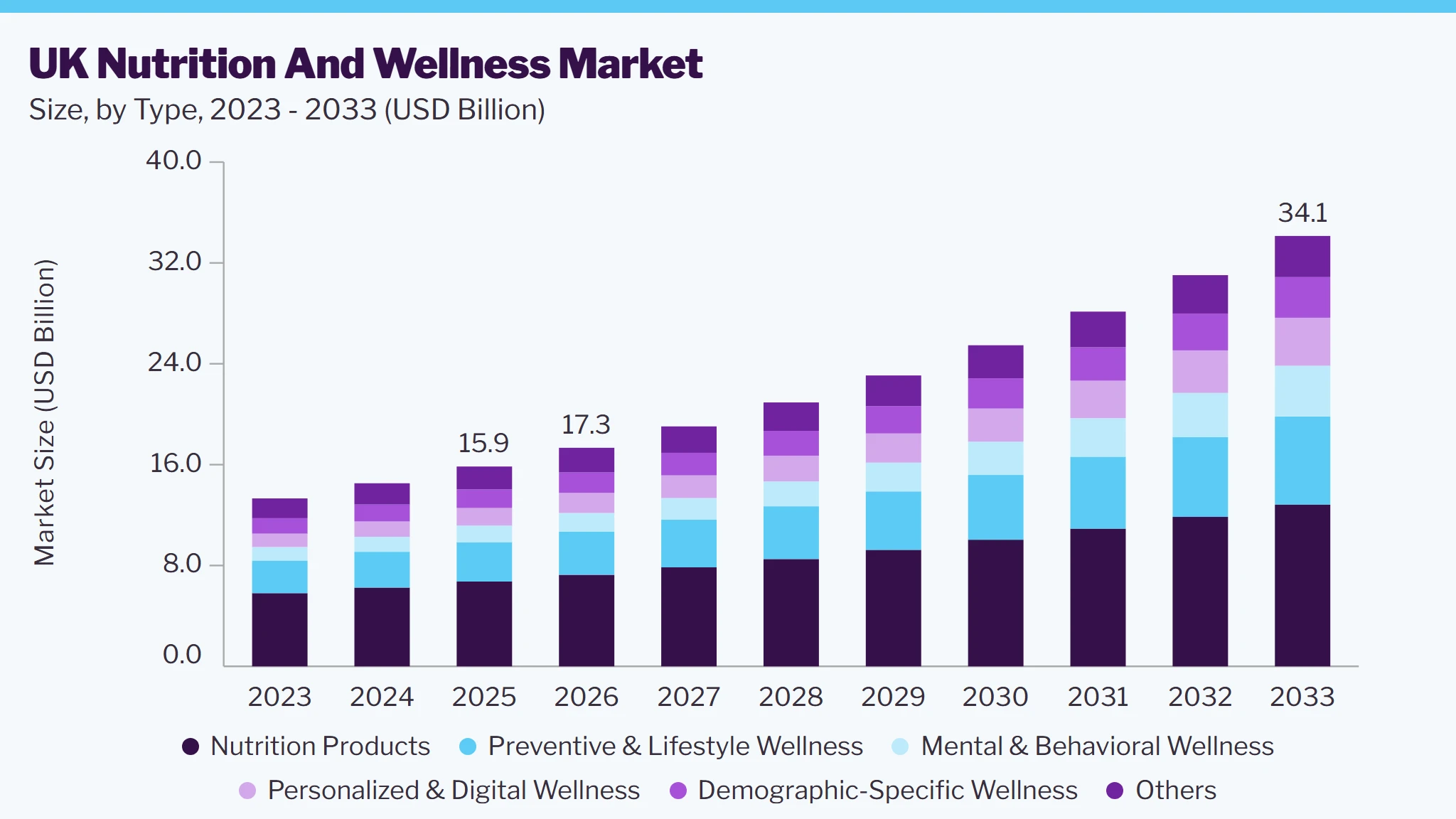
The UK nutrition and wellness market size was valued at USD 15.9 billion in 2025 and is projected to grow USD 17.3 billion in 2026 to USD 34.1 billion by 2033, at a CAGR of 10.2% from 2026 to 2033. This growth is driven by the growing emphasis on preventive healthcare, weight management, healthy ageing, and improved dietary habits. Increasing consumer demand for functional foods, dietary supplements, protein-rich products, and personalized nutrition is encouraging manufacturers to diversify their portfolios and develop solutions targeting specific health and lifestyle needs.
Key Market Trends & Insights
- By type: Nutrition products segment dominated the market with a revenue share of 42.5% in 2025.
Market Size & Forecast
- Market size in 2025: USD 15.9 Billion
- Estimated market size in 2026: USD 17.3 Billion
- Projected market size by 2033: USD 34.1 Billion
- CAGR (2026-2033): 10.2%
Prism AI by Grand View Research Free to tryAsk a question about the UK nutrition and wellness marketTry asking✓Every figure cited from GVR research Prefer the report? Download free sample →Meanwhile, e-commerce expansion and digital wellness engagement are improving product accessibility and consumer awareness. Going forward, market opportunities are likely to favor brands that combine evidence-based nutritional benefits, transparent product labelling, convenience, and targeted formulations, while maintaining affordability amid ongoing pressure on household spending.
 Source: Grand View Research, IR Documents, Primary Interviews, Paid DatabasesTo learn more about this report,
 Download Free Sample Report
Market Dynamics
The section below outlines the key factors driving the UK nutrition and wellness market, including growing consumer awareness of preventive healthcare and healthy ageing, rising demand for dietary supplements, functional foods and beverages, and increasing focus on immunity, gut health, weight management, and overall well-being. It examines the growing adoption of personalized nutrition, plant-based and fortified products, sports nutrition, and convenient health-focused foods, alongside the influence of e-commerce, digital wellness platforms, and product innovation in shaping consumer preferences.
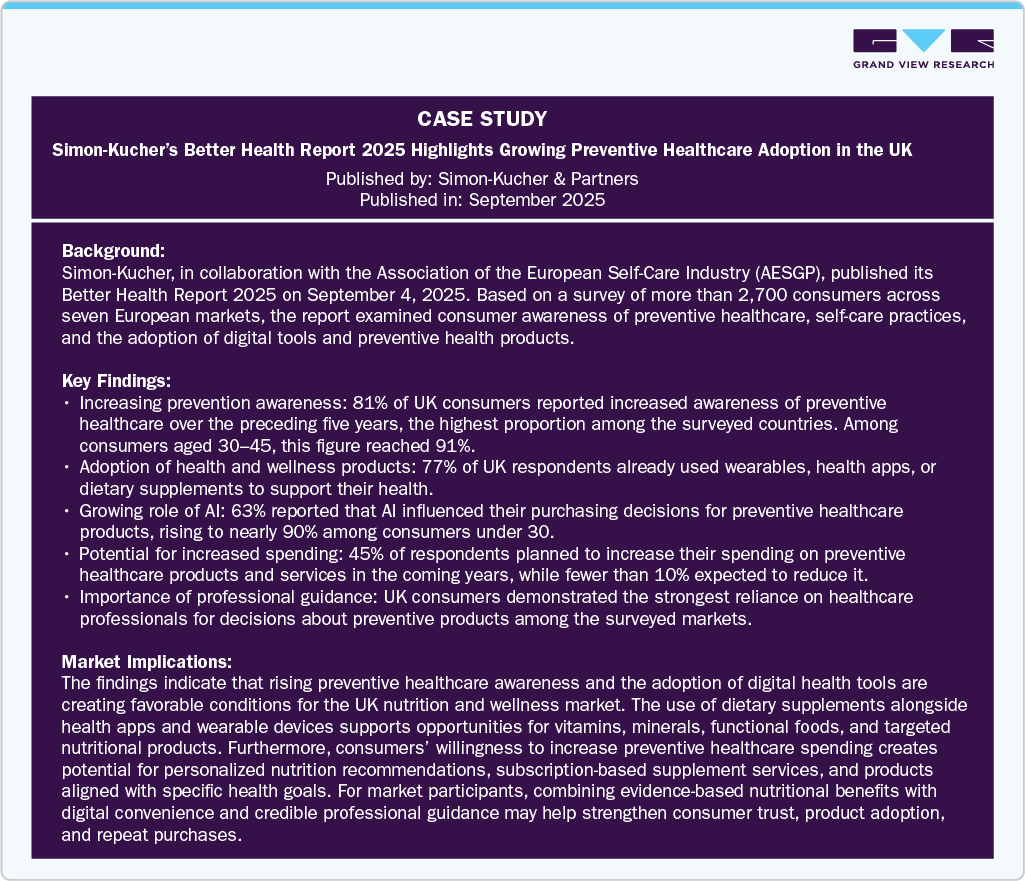
Increasing awareness of preventive healthcare is encouraging UK consumers to take a more proactive approach to nutrition, fitness, and long-term health management. Consumers are increasingly using health-tracking apps, wearable devices, online wellness platforms, and personalized health assessments to monitor physical activity, sleep, dietary habits, and other health indicators. This shift is supporting demand for vitamins and dietary supplements, functional foods, sports nutrition, and products targeting specific wellness goals. The UK Government’s digital health’s July 2025 strategy and plans to expand the NHS App’s preventive health capabilities includes personalized health support and integration with wearable devices which further reflect the growing role of digital tools in everyday health management.
In addition, the Financial Times reported in October 2026 that UK wellness retailer Healf had surpassed USD 112.34 million in annualized sales by offering curated wellness products, health-tracking devices, personalized blood-testing memberships, and expert advice, illustrating the commercial potential of combining digital engagement with nutrition and wellness products. These developments are creating opportunities for brands to offer personalized product recommendations, subscription-based supplement delivery, and targeted nutritional solutions that encourage ongoing consumer engagement and repeat purchases.
 To learn more about this report, Download Free Sample Report
UK nutrition and wellness market faces constraints from consumers’ limited willingness to pay premium prices for specialized nutrition products and uncertainty about whether these products deliver their advertised benefits. Dietary supplements, functional foods and beverages, personalized nutrition plans, and wellness services may involve recurring expenses, making affordability a concern for price-sensitive consumers. According to the Food Foundation’s June 2026 Broken Plate report, households with children in the lowest-income fifth would need to spend 85% of their disposable income to afford a government-recommended healthy diet, compared with 70% in 2024. Healthier food was also reported to be nearly twice as expensive per calories as less healthy food. This price disparity restricts demand for premium healthy foods, functional beverages, and specialized nutrition products, while encouraging consumers to seek lower-cost alternatives.
At the same time, exaggerated or insufficiently substantiated health claims can make it difficult for consumers to distinguish evidence-based products from those with limited demonstrated benefits. For instance, in June 2025, the UK Advertising Standards Authority upheld a ruling against SaffPro over unauthorised health claims in supplement advertising, while in July 2025, it upheld a ruling concerning prohibited disease-treatment claims and unauthorised health claims in advertising by TRIP Drink Ltd. These cases highlight the importance of credible product claims in building consumer confidence.
The market presents opportunities for plant-based nutrition products, clean-label formulations, and sustainably sourced ingredients as consumers seek products aligned with dietary preferences and environmental considerations. Manufacturers can expand their portfolios with plant-based protein powders, dairy-free nutritional drinks, vegan supplements, and products formulated with natural ingredients. There is also scoped to develop convenient, nutrient-dense products for consumers following flexitarian, vegetarian, and vegan diets, alongside offerings that address protein intake, digestive health, and general nutritional balance. Companies that combine appealing taste, clear nutritional benefits, sustainable sourcing, and competitive pricing differentiate their products and expand their reach across supermarkets, specialist health retailers, and online channels.
Manufacturers face challenges in promoting the benefits of nutrition and wellness products because U.K. regulations restrict the health and nutrition claims that can be used in product labels and advertisements. Under the U.K. framework, businesses must ensure that health claims are authorized and supported by appropriate evidence, while foods and supplements cannot be marketed as treating, preventing, or curing diseases. These requirements can limit promotional flexibility, increase compliance costs, and make it more difficult for brands to differentiate products based on benefits such as immunity, gut health, weight management, and cognitive wellness.
Market Concentration & Characteristics
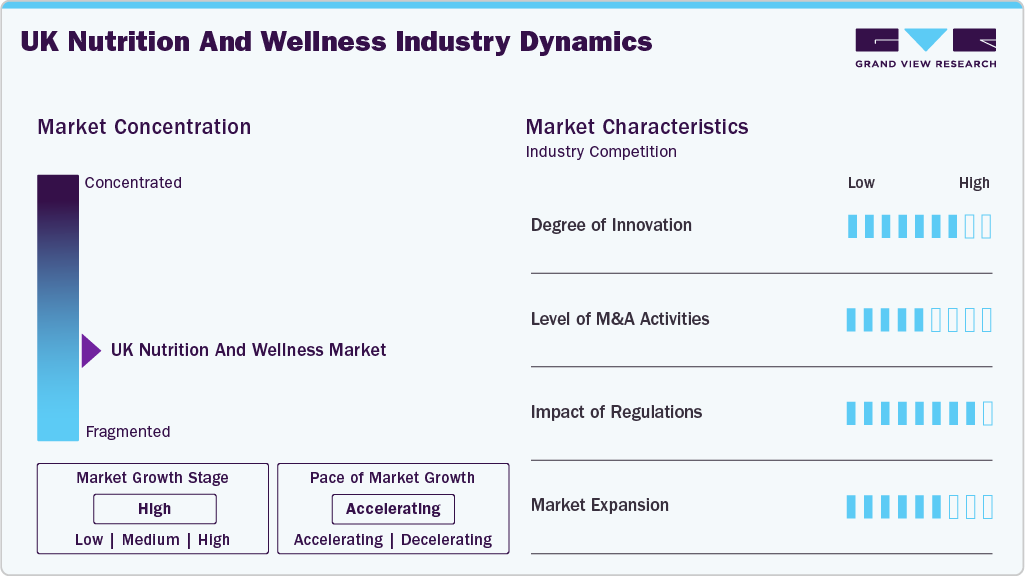
The chart below represents the relationship between industry concentration, industry characteristics, and industry participants. The x-axis shows the level of industry concentration, ranging from low to high. The industry is fragmented, with many suppliers/ service providers entering the market. There is a high degree of innovation, moderate level of merger & acquisitions activities, high impact of regulations, and moderate high expansion of industry.
In February 2025, the U.K.’s Diet and Health Open Innovation Research Club (OIRC) highlighted funding and collaboration opportunities for researchers and food businesses to develop nutrition-focused innovations. The initiative connects food and drink businesses with academic researchers to develop healthier and more sustainable products, with research priorities spanning biofortification, functional foods and beverages, food components and human physiology, and nutrition across different life stages. In addition, it supports partnerships between academia and industry to translate scientific research into healthier food and beverage products.
 To learn more about this report, Download Free Sample Report
The market players are leveraging strategies such as collaborations, partnerships, and acquisitions, to promote the reach of their offerings and increase their offering capabilities. In March 2026, U.S.-based Herbalife announced an agreement to acquire assets of U.K.-based Bioniq for USD 55 million, with an additional USD 95 million in potential performance-linked payments. The deal highlights growing strategic interest in science-based, data-driven nutrition businesses and demonstrates how acquisitions can help smaller, specialized companies access broader international markets.
“The future of health and wellness is becoming more personalized and informed by data. By combining Bioniq’s personalized supplement technology with Pro2col and the power of our global distributor network, we are expanding our ability to deliver personalized wellness at a global scale.”
- Stephan Gratziani, Herbalife CEO.
Regulations significantly influence the market by driving product formulation, labelling, advertising, and market entry requirements. Manufacturers of dietary supplements, fortified foods, functional beverages, and sports nutrition products must ensure that their products comply with applicable food safety and nutrition labelling requirements, while health-related claims must be scientifically substantiated and authorised where required. For instance, Regulation (EC) No. 1924/2006 on nutrition and health claims made on foods, retained in Great Britain with amendments, restricts companies from using unauthorised health claims and prohibits claims suggesting that foods can treat, prevent, or cure diseases.
In October 2026, Tom Parker Creamery expanded its value-added dairy portfolio with the launch of Golden Milk, a 500 ml ready-to-drink beverage made with free-range British whole milk, turmeric, cinnamon, honey, and black pepper. Scheduled for distribution through Waitrose and Ocado from October 2026, the product draws inspiration from traditional Indian haldi doodh and targets consumers seeking convenient beverages containing recognizable ingredients associated with wellness. The launch illustrates how manufacturers are expanding the U.K. nutrition and wellness market by incorporating botanical ingredients into everyday food and beverage categories, creating differentiated functional dairy products and additional consumption occasions beyond conventional breakfast use.
Type Insights
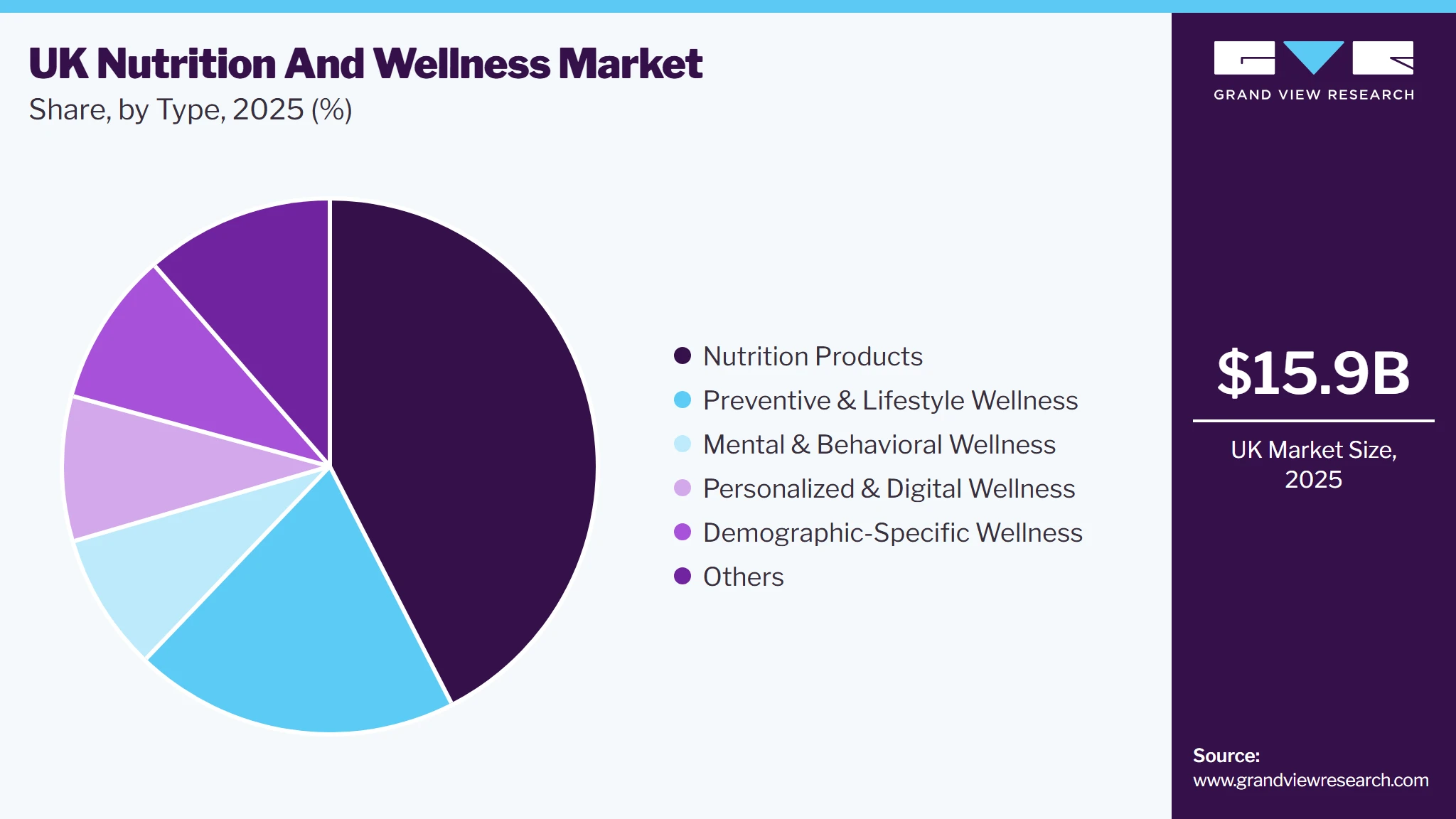
Based on type, the nutrition products segment dominated the market with a revenue share of 42.5% in 2025. This is due to the increasing consumer awareness of preventive healthcare, rising demand for protein- and fibre-rich products, growing interest in sports nutrition, and the expansion of functional foods and fortified beverages. Consumers are increasingly incorporating dietary supplements, protein powders, nutrition bars, fortified dairy products, and functional drinks into their daily routines to support general wellbeing, digestive health, energy, and physical performance. For instance, in September 2026, Waitrose introduced dedicated wellbeing bays across 52 stores and online, featuring more than 40 wellness products covering collagen, creatine, hydration, protein, and gut health, reflecting the growing retail focus on targeted nutrition.
 To learn more about this report, Download Free Sample Report
The mental & behavioral wellness segment is expected to grow at the fastest CAGR during the forecast period due to the rising prevalence of anxiety, depression, work-related stress, and growing awareness of the importance of psychological well-being. According to NHS England’s 2023/24 Adult Psychiatric Morbidity Survey, 20.2% of adults in England experienced a common mental health condition, strengthening the need for counselling, psychotherapy, stress management, and mindfulness-based services. Workplace-related mental health concerns are also encouraging employers to invest in employee assistance programmes and digital wellness solutions. For instance, in March 2025, the NHS Accelerated Access Collaborative awarded more than USD 1.90 million to nine digital innovations supporting workplace mental health, including AI-based coaching and virtual reality interventions.
Key UK Nutrition and Wellness Company Insight
The UK nutrition and wellness market is highly fragmented, with competition from established retailers, supplement manufacturers, sports nutrition brands, and digital wellness platforms. Key players include Holland & Barrett, Boots UK, Myprotein, Vitabiotics, Nestlé Health Science, Herbalife UK, Danone UK & Ireland, Bulk, Optimum Nutrition, Protein Works, Revive Active UK, and Naturecan. Digital and wellness companies such as Numan, Manual, Healthily, MyFitnessPal, Medichecks, Thriva, Oviva, ZOE, Second Nature, and Nutracheck are strengthening competition through personalized nutrition, digital consultations, health testing, and weight management solutions.
Key UK Nutrition and Wellness Companies
-
Company Profiles: Suppliers
-
Holland & Barrett
-
Boots UK
-
Myprotein
-
Vitabiotics
-
Nestlé Health Science
-
Herbalife UK
-
Danone UK & Ireland
-
Bulk
-
Optimum Nutrition
-
Protein Works
-
Revive Active UK
-
Naturecan
-
-
Company Profiles: Digital & Wellness Companies
-
Numan (Vir Health Limited)
-
Manual
-
Healthily Ltd.
-
Myfitnesspal
-
Medichecks
-
Thriva Ltd
-
Oviva
-
ZOE
-
Second Nature
-
Nutracheck
-
Competitive Benchmarking
Category
Operating Strategies
Competitive Edge
Weakness
Established Players (e.g., Holland & Barrett, Boots UK, Numan (Vir Health Limited)
- Invest in product innovation, portfolio diversification, research and development, brand building, and expansion across retail, e-commerce, and direct-to-consumer channels. Established players focus on functional nutrition, dietary supplements, sports nutrition, convenient meal replacements, and personalized wellness offerings. They also leverage strategic partnerships, acquisitions, digital marketing, and established distribution networks to strengthen market penetration.
- Strong brand recognition, broad product portfolios, established retail and online distribution, economies of scale, supplier relationships, and greater financial resources for product development and marketing. Their established customer bases and distribution capabilities support cross-selling and expansion into adjacent nutrition and wellness categories.
- Complex product portfolios and supply chains, higher operating costs, exposure to ingredient price volatility, and the need to comply with product safety, labelling, and health-claim requirements. Large companies may also face challenges in differentiating products in crowded categories and responding quickly to changing consumer preferences.
Emerging Players (e.g., Protein Works, Oviva, ZOE, Second Nature)
- Focus on niche consumer needs, differentiated formulations, personalized nutrition, clean-label positioning, plant-based products, digital wellness solutions, and targeted marketing. Emerging players often use e-commerce, subscription models, social media, influencer partnerships, and direct-to-consumer channels to build customer relationships. They may also target specific categories such as gut health, women's wellness, healthy aging, mental well-being, and functional beverages.
- Greater operational flexibility, faster product development, focused positioning, closer engagement with niche consumer groups, and the ability to respond rapidly to emerging wellness trends. Digital-first business models can support targeted customer acquisition, personalized offerings, and recurring revenue without requiring extensive physical retail infrastructure.
- Limited brand awareness, smaller marketing budgets, restricted access to capital, and lower purchasing power for ingredients and manufacturing. Emerging companies may face challenges in securing retail distribution, demonstrating product credibility, achieving profitability, and meeting regulatory requirements for product safety, labelling, and advertising claims.
UK Nutrition and Wellness Market Report Scope
Report Attribute
Details
Market size in 2025
USD 15.9 billion
Estimated market size in 2026
USD 17.3 billion
Projected market size by 2033
USD 15.9 billion
Growth Rate
CAGR of 10.2% from 2026 to 2033
Actual data
2021 - 2025
Forecast data
2026 - 2033
Quantitative units
Revenue in USD Million/Billion and CAGR from 2026 to 2033
Report coverage
Revenue forecast, company ranking, competitive landscape, growth factors, and trends
Segments covered
Type
Country scope
UK
Key companies profiled (Suppliers)
Holland & Barrett, Boots UK, Myprotein, Vitabiotics, Nestlé Health Science, Herbalife UK, Danone UK, Ireland, Bulk, Optimum Nutrition, Protein Works, Revive Active UK, Naturecan
Key companies profiled (Digital & Wellness Companies)
Numan (Vir Health Limited), Manual, Healthily Ltd., Myfitnesspal, Medichecks, Thriva Ltd., Oviva, ZOE, Second Nature, Nutracheck
Customization scope
Free report customization (equivalent up to 8 analysts working days) with purchase. Addition or alteration to country, regional & segment scope.
Pricing and purchase options
Avail customized purchase options to meet your exact research needs. Explore purchase options
UK Nutrition and Wellness Market Report Segmentation
This report forecasts revenue growth, country level and provides an analysis of the latest industry trends in each of the sub-segments from 2021 to 2033 For this study, Grand View Research has segmented the UK nutrition and wellness market report based on type.
-
Type Outlook (Revenue, USD Million, 2021 - 2033)
-
Nutrition Products
-
Dietary Supplements
-
Functional Food & Beverages
-
Sports Nutrition
-
Weight Management Nutrition
-
-
Preventive & Lifestyle Wellness
-
Preventive Wellness Programs
-
Lifestyle Management Services
-
Corporate Wellness Programs
-
Fitness & Active Wellness Services
-
-
Mental & Behavioral Wellness
-
Stress Management Programs
-
Sleep Wellness Solutions
-
Mindfulness & Emotional Wellness
-
-
Personalized & Digital Wellness
-
Personalized Nutrition Programs
-
Digital Wellness Platforms
-
AI-Based Wellness Tracking
-
Virtual Wellness Coaching
-
-
Demographic-Specific Wellness
-
Women’s Wellness
-
Men’s Wellness
-
Pediatric Wellness
-
Senior & Healthy Aging Wellness
-
-
Others
-
Organic & Natural Wellness
-
Herbal & Botanical Wellness
-
Beauty & Nutricosmetics
-
Gut Health & Digestive Wellness
-
-
Research Methodology
The UK nutrition and wellness market figures in this report are based on a proven research process that combines executive interviews with secondary research from proprietary databases, company filings, and recognized regulatory and institutional sources. Market size is built through value-chain sizing-reconciling supply-side and demand-side estimates-and triangulated with bottom-up and top-down approaches. Every estimate passes multiple levels of expert validation before publication, with each UK nutrition and wellness segment quantified using the revenue-capture definitions in the table below.
Segment Definition
Main Segment
Sub-segment
Revenue capture definition
Nutrition Products
Dietary Supplements
Includes vitamins, minerals, probiotics, omega-3 fatty acids, and other supplements consumed to support nutrient intake and specific health needs.
Functional Food & Beverages
Comprises foods and drinks formulated with added or naturally occurring ingredients intended to provide benefits beyond basic nutrition, such as fortified foods and probiotic beverages.
Sports Nutrition
Includes protein powders, sports drinks, energy gels, amino acid supplements, and recovery products designed to support exercise performance, muscle development, and recovery.
Weight Management Nutrition
Covers meal replacements, calorie-controlled foods, weight management shakes, and nutritional products intended to support weight control goals.
Preventive & Lifestyle Wellness
Preventive Wellness Programs
Includes health education, preventive health assessments, and wellness initiatives designed to encourage healthy behaviors and reduce modifiable health risks.
Lifestyle Management Services
Comprises nutrition counselling, healthy eating guidance, habit coaching, and lifestyle modification services supporting long-term well-being.
Corporate Wellness Programs
Includes employer-sponsored wellness initiatives such as health assessments, nutrition education, stress reduction, and workplace health promotion.
Fitness & Active Wellness Services
Covers gyms, personal training, group exercise, yoga, Pilates, and other physical activity services supporting fitness and general health.
Mental & Behavioral Wellness
Stress Management Programs
Includes stress-reduction workshops, relaxation techniques, resilience training, and behavioural interventions designed to help individuals manage everyday stress.
Sleep Wellness Solutions
Comprises sleep coaching, sleep-tracking tools, relaxation programmes, and non-clinical solutions intended to improve sleep habits and quality.
Mindfulness & Emotional Wellness
Includes mindfulness meditation, emotional resilience training, guided relaxation, and wellness services that support emotional balance and self-awareness.
Personalized & Digital Wellness
Personalized Nutrition Programs
Includes tailored dietary plans and nutritional recommendations based on individual goals, dietary preferences, lifestyle, and available health data.
Digital Wellness Platforms
Covers mobile applications and online platforms providing nutrition guidance, fitness resources, wellness education, and health habit monitoring.
AI-Based Wellness Tracking
Includes AI-enabled tools that analyse user-entered information or connected-device data to track habits, identify patterns, and provide personalized wellness insights.
Virtual Wellness Coaching
Comprises remote consultations and coaching delivered through video calls, apps, or online platforms for nutrition, fitness, and lifestyle management.
Demographic-Specific Wellness
Women’s Wellness
Includes nutrition and wellness products addressing women’s needs across menstruation, fertility, pregnancy, postpartum, menopause, and healthy aging.
Men’s Wellness
Covers products and services focused on men’s nutrition, fitness, healthy aging, and general well-being, including targeted support for specific life-stage needs.
Pediatric Wellness
Includes age-appropriate nutritional products, child-focused nutrition guidance, and wellness programmes supporting children's growth, development, and healthy habits.
Senior & Healthy Aging Wellness
Comprises nutritional supplements, mobility and fitness programmes, and wellness solutions supporting healthy aging, strength, bone health, and independence.
Others
Organic & Natural Wellness
Includes organic foods, naturally positioned wellness products, and products marketed around natural ingredients or production methods, subject to applicable certification and labelling requirements.
Herbal & Botanical Wellness
Covers herbal supplements, botanical extracts, and plant-derived wellness products intended to support general health and specific wellness goals.
Beauty & Nutricosmetics
Includes ingestible products such as collagen supplements, beauty-focused vitamins, and other formulations marketed to support skin, hair, and nail health.
Gut Health & Digestive Wellness
Comprises probiotics, prebiotics, digestive enzymes, fibre supplements, and functional foods designed to support digestion and gut health.
Estimation Model
Section
Key Summary
1.1 Research Approach
A hybrid research approach combining secondary and primary research is used to assess the U.K. nutrition and wellness market. The assessment considers revenues from nutrition products, preventive and lifestyle wellness, mental and behavioral wellness, personalized and digital wellness, demographic-specific wellness, and other wellness categories. Secondary sources include company annual reports, government statistics, industry publications, regulatory databases, retail and e-commerce data, and product launches. Insights from manufacturers, retailers, wellness service providers, digital platforms, distributors, and industry experts are used to validate market estimates, pricing assumptions, and segment-level revenue contributions.
1.2 Market Estimation Framework
Market size is estimated using three complementary approaches: (1) product and service consumption model, (2) revenue and average-spending model, and (3) key company and provider revenue validation model. These approaches are triangulated to estimate the overall U.K. nutrition and wellness market and develop forecasts based on product sales, consumer expenditure, service utilization, subscription revenues, and category-level growth.
1.2.1 Demand Model
Estimates market demand based on population characteristics, health and wellness awareness, dietary supplement consumption, demand for functional foods and beverages, sports nutrition adoption, weight management needs, preventive health practices, mental well-being requirements, and digital wellness adoption. Additional indicators include disposable income, dietary preferences, physical activity participation, workplace wellness initiatives, personalized nutrition demand, healthy aging, and condition-specific wellness needs.
1.2.2 Revenue Model
Market value is calculated using product sales volumes and average selling prices for nutrition products, alongside consumer spending, service utilization, and average revenue per user for wellness services. The model incorporates retail and e-commerce sales, supplements, functional foods and beverages, sports nutrition, fitness memberships, wellness programmes, counselling, corporate wellness contracts, digital subscriptions, and personalized wellness services. Differences in pricing, purchase frequency, subscription duration, and distribution channels are considered, while overlapping revenues are allocated consistently to minimize double counting.
1.2.3 Vendor Model
Market estimates are validated using revenues, product portfolios, distribution networks, geographical presence, subscriber bases, partnerships, acquisitions, and expansion strategies of leading nutrition and wellness companies operating in the U.K. The assessment covers supplement manufacturers, functional food and beverage brands, sports nutrition companies, fitness operators, wellness service providers, digital platforms, and corporate wellness providers. Where U.K.-specific financial data are unavailable, estimates use product pricing, sales indicators, customer volumes, distribution presence, and comparable-provider benchmarks.
1.3 Forecast Development
Forecasts are developed by assessing changes in consumer spending, nutrition awareness, product innovation, and adoption of preventive and personalized wellness solutions. Key variables include demand for supplements and functional foods, protein-rich nutrition, weight management, digestive health, mental wellness, corporate wellness programmes, digital platforms, AI-enabled tracking, virtual coaching, and demographic-specific products. Regulatory requirements, competitive activity, e-commerce penetration, household purchasing power, and subscription-based business models are also considered.
1.4 Segmentation Method
Segmentation is based on revenue contribution, consumer expenditure, product sales, service utilization, average selling prices, purchase frequency, user penetration, and provider revenues. The market is classified into Nutrition Products; Preventive & Lifestyle Wellness; Mental & Behavioral Wellness; Personalized & Digital Wellness; Demographic-Specific Wellness; and Others. Sub-segment estimates use category-specific indicators such as supplement sales, fitness memberships, programme participation, digital subscriptions, personalized nutrition adoption, and spending on population-specific wellness. Consistent classification rules are applied to avoid double counting.
1.5 Scope & Assumptions
The market is measured in USD based on revenues generated from nutrition products and wellness products and services in the U.K. It includes dietary supplements, functional foods and beverages, sports nutrition, weight management nutrition, preventive and lifestyle programmes, mental wellness, personalized and digital wellness, demographic-specific wellness, organic and natural products, herbal and botanical wellness, beauty and nutricosmetics, and gut health products. Estimates incorporate sales volumes, average selling prices, consumer expenditure, service revenues, subscriptions, customer bases, and distribution channels. Only revenue attributable to the defined market and U.K. geography is included where identifiable. Unrelated healthcare services, prescription medicines, and general food expenditure without a defined nutrition or wellness positioning are excluded unless explicitly covered by the market scope.
Delivered Customizations
This report has been delivered with the following In-depth customizations
CLIENT REQUEST
CUSTOMIZATION DELIVERED
VALUE ADDS
Product × Consumer Demographic Opportunity Matrix
Mapping of nutrition and wellness categories against age groups, gender, income levels, and consumer needs-for example, protein nutrition × fitness enthusiasts, menopause supplements × women, and healthy aging products × older adults.
Helps clients identify high-potential markets, assess competitive saturation, and prioritize geographic expansion or acquisition opportunities.
Ingredient & Functional Benefit Opportunity Mapping
Mapping of ingredients such as protein, probiotics, collagen, vitamins, minerals, and botanical extracts against functional benefits such as gut health, immunity, beauty, sleep, and healthy aging.
Helps clients identify ingredient-level opportunities, emerging consumer preferences, and potential areas for product differentiation.
Pricing & Consumer Spending Analysis
Comparison of product prices, service fees, subscription costs, and spending patterns across premium, mid-priced, and budget offerings in relevant nutrition and wellness categories.
Helps clients develop pricing strategies, assess affordability, position offerings competitively, and identify opportunities across consumer spending tiers.
Consumer Trend & Demand Analysis
Assessment of trends such as preventive health, gut health, plant-based nutrition, weight management, mental well-being, sleep support, and healthy aging using available consumer and industry evidence.
Supports product innovation, demand forecasting, consumer targeting, and alignment of portfolios with changing wellness priorities.
Market Entry & Expansion Strategy
Assessment of target segments, product positioning, pricing, distribution partnerships, competitive intensity, regulatory considerations, and potential routes to market for new entrants or expanding brands.
Provides a structured basis for market-entry planning, investment prioritization, partner selection, and expansion decisions.
About the Author(s)
Medical Devices Research Team
Healthcare · Medical DevicesThis report was authored by the medical devices research team at Grand View Research - comprising two research analysts, one senior research analyst, and one industry expert - with specialized expertise in the medical devices segment of the healthcare industry. All findings are based on proprietary healthcare databases, executive interviews, and regulatory analysis, subject to internal peer review prior to publication.
Last Updated:
Speak to Analyst

Customize this report to your needs - add regions, segments, or data points, with 20% free customization.
Or view our licence options:


ISO 9001:2015 & 27001:2022 Certified
We are GDPR and CCPA compliant! Your transaction & personal information is safe and secure. For more details, please read our privacy policy.


