
- Home
- »
- Clothing, Footwear & Accessories
- »
-
U.S. Baby Products Market Size, Industry Report, 2033GVR Report cover

U.S. Baby Products Market (2026 - 2033) Size, Share & Trends Analysis Report By Product (Baby Cosmetics & Toiletries, Baby Food, Baby Safety & Convenience, Baby Toys & Play Equipment, Baby Clothing, Baby Nursery & Furniture), By Type, By Distribution Channel, And Segment Forecasts
Market Size, 2025 (US$B)$58.50Forecast, 2033 (US$B)$81.55CAGR, 2026 - 20334.3%U.S. Baby Products Market Summary
The U.S. baby products market size was estimated at USD 58.50 billion in 2025 and is projected to reach USD 81.55 billion by 2033, growing at a CAGR of 4.3% from 2026 to 2033. The market is experiencing steady growth as parents increasingly prioritize high-quality, safe, and convenient infant care products.
Key Market Trends & Insights
- By product, the baby cosmetics & toiletries segment held a market share of 27.1% in 2025.
- By type, the mass baby products segment captured a revenue share of 75.4% in 2025.
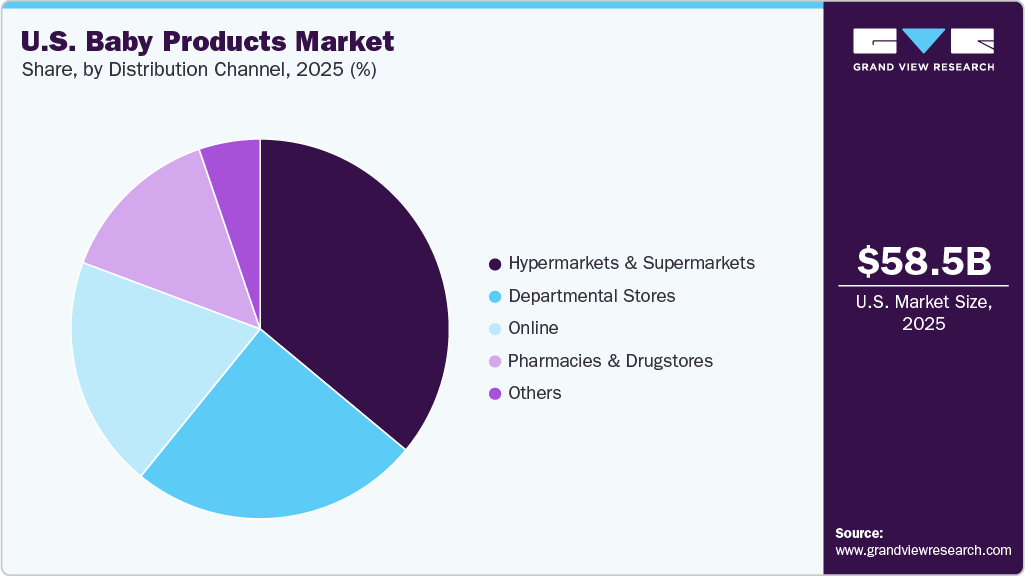
- By distribution channel, the supermarkets and hypermarkets held a market share of 36% in 2025.
Market Size & Forecast
- 2025 Market Size: USD 58.50 Billion
- 2033 Projected Market Size: USD 81.55 Billion
- CAGR (2026-2033): 4.3%
Three ways to get this report
Buy it, customize it, or ask a question.Ask an Analyst
Analyst response in 1 business day
- AccessReport author, directly
- Reply timeWithin 1 working day
- No sales callDirect answer only
- FormatEmail reply
- CostFree, no cost
Get the Full Report
What the study covers
- FormatsPDF · Excel · Dashboard
- Timeline2026–2033 annual, 2025 base
- Coverage20+ countries, 5 regions
- Companies10+ key players profiled
Customize the Report
20% free customization
- IncludeCountries, segments, points
- TailorTo your product definition
- ExtendDeeper competitor detail
- OrA fully bespoke study
- Turnaround5–10 working days
Rising awareness regarding baby health, hygiene, and nutrition, along with the growing influence of digital parenting platforms, is significantly shaping consumer purchasing behavior. Core product categories such as baby cosmetics & toiletries, the U.S. baby food market, and feeding & nursing products continue to drive demand due to their essential and recurring nature. In contrast, the shift toward organic, chemical-free, and “clean-label” products reflects evolving consumer preferences.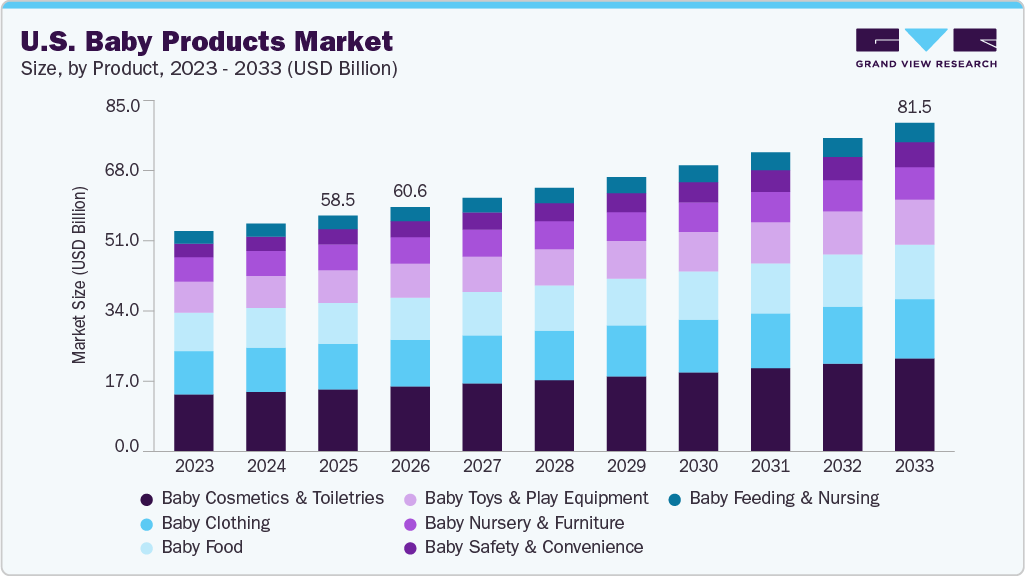 Source: Grand View Research, IR Documents, Primary Interviews, Paid DatabasesTo learn more about this report,
 Download Free Sample Report
Additionally, the U.S. baby products industry is witnessing a strong trend toward premiumization, supported by rising disposable incomes, delayed parenthood, and higher per-child spending. Parents are increasingly investing in premium offerings, such as organic baby food, smart baby monitors, and multifunctional baby gear, to enhance safety and convenience. In terms of distribution, online channels are emerging as the fastest-growing segment due to convenience, broader product availability, and subscription-based purchasing. In contrast, offline channels such as supermarkets and specialty stores continue to hold a significant share.
Consumer Insights
The U.S. baby products market is underpinned by a large and consistent consumer base, supported by approximately 3.6 million births annually and a high proportion of family households with children. The market benefits from strong purchasing power, particularly among parents aged 35-44, who typically have higher disposable incomes and established spending capacity. Structural trends such as dual-income households and delayed parenthood are further concentrating expenditure among financially stable consumers, resulting in higher per-child spending. As a result, the U.S. represents a high-value consumption market, where parents are willing to invest significantly in products that ensure infant health, safety, and overall well-being.
Consumer preferences in the U.S. baby products industry are primarily driven by a hierarchy of priorities, with nutrition and product safety at the forefront, followed by hygiene and developmental benefits. Categories such as baby food and infant formula attract the highest scrutiny due to their direct impact on infant health. At the same time, hygiene products like diapers and wipes benefit from strong brand loyalty driven by performance and skin safety. Safety considerations also heavily influence purchasing decisions for baby gear, including strollers and car seats, where regulatory compliance and product reliability are critical.
At the same time, the market is witnessing a clear bifurcation between premium and value segments. While price-sensitive consumers are increasingly opting for private-label and cost-effective alternatives, higher-income groups are gravitating toward premium, organic, and clean-label products. This dual behavior reflects a balanced approach, where parents prioritize quality and safety for essential items while seeking value in less critical categories, supported by growing reliance on digital platforms, peer reviews, and omnichannel purchasing behaviors.
 To learn more about this report, Download Free Sample Report
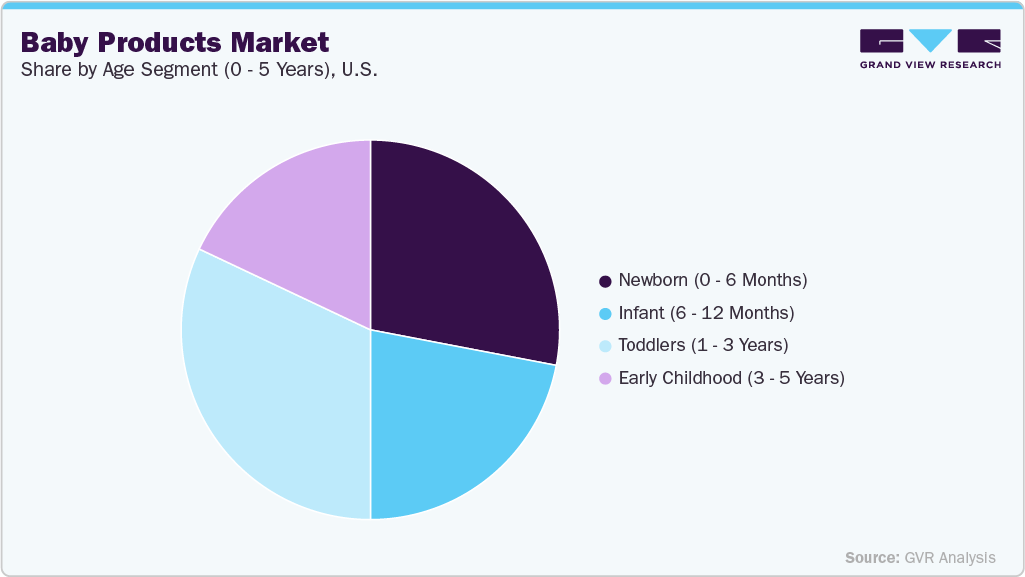
This distribution reflects how demand evolves from high initial setup costs (newborn) to recurring consumption (infant) and finally to multi-category expansion (toddlers and early childhood). However, demographic pressure is emerging as a constraint; U.S. fertility rates have declined to 53.1 births per 1,000 women in 2025, and the share of young children in the population is falling, indicating a shrinking base of future consumers. Despite this, the market is sustained by higher per-child spending, delayed parenthood, and premium product adoption, particularly in the toddler and infant segments, where parents make long-term investments in nutrition, safety, and development.
Company/Brand Share Analysis
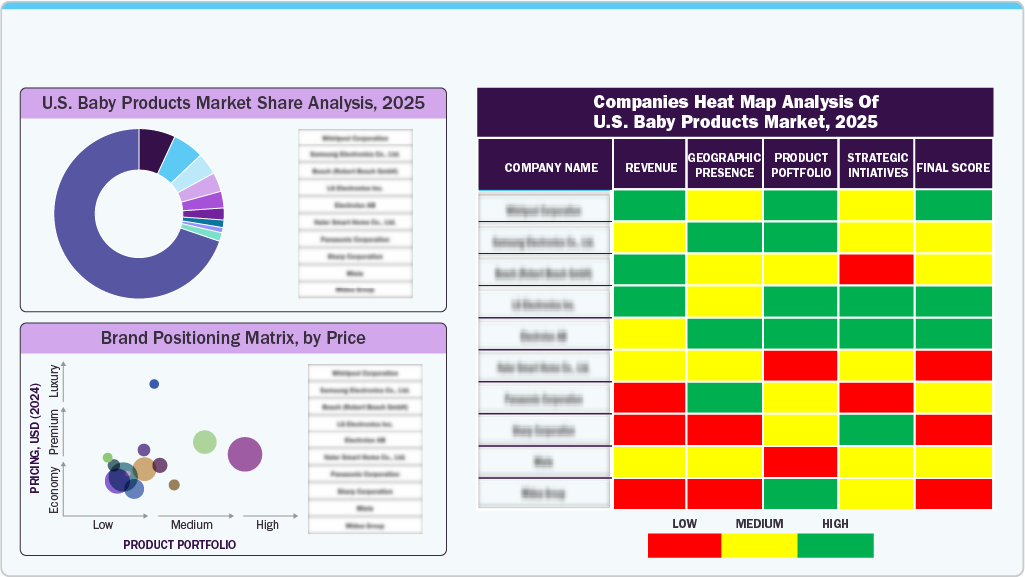
The competitive landscape of the U.S. baby care products market is characterized by high consolidation among leading multinational corporations, alongside a steadily expanding base of niche and challenger brands. Established players such as Procter & Gamble, Kimberly-Clark, Johnson & Johnson, Unilever, and Nestlé dominate the market, leveraging strong brand equity, extensive distribution networks, and significant economies of scale. Their longstanding presence and consumer trust, particularly critical in infant care, create substantial entry barriers, especially across high-volume categories such as diapers, wipes, and baby toiletries.
 To learn more about this report, Download Free Sample Report
However, the market has become increasingly competitive with the emergence of premium, clean-label, and digitally native brands, including The Honest Company and Babyganics. These players are gaining traction by focusing on ingredient transparency, sustainability, and targeted value propositions such as hypoallergenic and plant-based formulations. This shift reflects evolving consumer preferences for safer, more environmentally conscious products, enabling smaller brands to carve out meaningful positions in high-growth niches.
Product Insights
The U.S. baby products industry is driven by strong demand across essential categories, with baby cosmetics & toiletries and baby food accounting for the largest share of 27.1% in 2025. Baby cosmetics & toiletries continue to lead, supported by sustained demand for diapers, wipes, and skincare products, alongside increasing consumer preference for organic, hypoallergenic, and chemical-free formulations. Similarly, the baby food segment remains a key contributor, driven by rising awareness of infant nutrition and growing demand for clean-label, fortified, and convenient ready-to-consume products. Baby clothing also holds a stable share in the market, supported by recurring purchase patterns and consumers' focus on comfort, quality, and skin-friendly fabrics.
The baby safety & convenience segment is expected to register a CAGR of 6.4% from 2026 to 2033. Baby safety & convenience products, such as strollers and car seats, are gaining traction due to heightened safety awareness, while baby toys & play equipment are benefiting from increased focus on early childhood development. The nursery & furniture segment is supported by rising investments in organized, aesthetically pleasing living spaces. Meanwhile, baby feeding & nursing is expected to grow notably over the forecast period, driven by demand for convenience-oriented products such as bottles, breast pumps, and feeding accessories. Overall, innovation, premiumization, and an increasing emphasis on safety and sustainability are key factors shaping product demand in the U.S. market for baby products.
Type Insights
The mass products accounted for a 75.4% share of the U.S. baby products market in 2025. The segment growth is primarily driven by affordability, broad accessibility, and high-volume consumption of essential items such as diapers, wipes, and basic baby care products. This segment caters strongly to price-sensitive consumers and benefits from extensive distribution across supermarkets, pharmacies, and leading e-commerce platforms such as Amazon and Walmart. The growing prevalence of dual-income households has further reinforced demand, as time-constrained parents increasingly rely on trusted, readily available brands that support convenient, one-stop purchasing. Additionally, subscription-based models for frequently used products, such as formula and disposable diapers, are boosting repeat purchases and customer retention. The expansion of private-label offerings has also strengthened the mass segment, enabling retailers to offer cost-effective alternatives while maintaining quality standards. For instance, Walmart Inc. has expanded its baby care portfolio under its Parent’s Choice brand, reinforcing its position in the value-driven category and highlighting the growing influence of private labels in improving affordability and market penetration.
The demand for premium baby care products is anticipated to grow at a CAGR of 5.5% from 2026 to 2033. The premium segment is characterized by high-quality, value-added offerings such as organic baby food, eco-friendly diapers, designer apparel, and technologically advanced baby care solutions. This segment is driven by increasing parental willingness to invest in products that offer superior safety, comfort, and alignment with lifestyle values, particularly among higher-income, health-conscious consumers. Companies in this space emphasize clean-label formulations, sustainable sourcing, and product innovation, often leveraging direct-to-consumer channels and niche retail formats to build strong brand loyalty. The premium category has increasingly evolved into a lifestyle-driven segment, where product differentiation extends beyond functionality to include brand identity and ethical positioning. For example, luxury baby brand Coterie has gained traction with its plant-based diapers and wipes, supported by strong investor interest and high valuation potential. Furthermore, established players such as Procter & Gamble and Kimberly-Clark are actively expanding their premium product lines through innovations, such as advanced, skin-sensitive diaper solutions, reflecting a broader industry shift toward premiumization and higher-value product offerings.
Distribution Channel Insights
The demand for baby care products in the U.S. through hypermarkets and supermarkets accounted for the market share of 36% in 2025. Hypermarkets and supermarkets account for a significant share of the market, driven by their extensive product assortments, competitive pricing, and convenience of one-stop shopping for essential baby products such as diapers, baby food, and toiletries. Departmental stores contribute notably, particularly in baby apparel, nursery products, and gifting categories, supported by curated product offerings and strong brand visibility. Meanwhile, pharmacies & drugstores play a critical role in the distribution of healthcare-related baby products, including infant formulas, skincare, and over-the-counter essentials, benefiting from high consumer trust and accessibility.
 To learn more about this report, Download Free Sample Report
The online sales are anticipated to grow at a CAGR of 6.1% from 2026 to 2033. The online segment is expected to witness the fastest growth over the forecast period, driven by increasing digital adoption, convenience, and wider product availability across e-commerce platforms and direct-to-consumer channels. Features such as subscription-based purchasing, customer reviews, and home delivery continue to enhance consumer preference for online shopping, particularly among millennial and Gen Z parents. Additionally, the “others” segment, including discount retailers, institutional sales, and resale platforms, is gaining traction by offering affordability and flexible purchasing options. Overall, the market is increasingly shifting toward an omnichannel distribution model, integrating both online and offline channels to enhance customer engagement and streamline the purchasing experience.
Key U.S. Baby Products Companies:
- Procter & Gamble
- Kimberly-Clark
- Johnson & Johnson (Kenvue)
- Abbott Laboratories
- Reckitt (Mead Johnson Nutrition)
- Nestlé USA (Gerber)
- Beech-Nut Nutrition Company
- Danone North America (Happy Family Organics)
- Campbell Soup Company (Plum Organics)
- Once Upon a Farm
- Dorel Juvenile Group (Dorel Industries)
- Evenflo Company (Goodbaby Group US operations)
- Newell Brands (Graco)
- Summer Infant
- TOMY International (The First Years)
- Mattel (Fisher-Price)
- Hasbro (Playskool)
- Carter’s Inc.
- Gap Inc.
- Delta Children
Recent Developments
-
In January 2026, Target Corporation undertook a significant revamp of its baby products segment by introducing nearly 2,000 new items and expanding collaborations with premium brands such as UPPAbaby, Bugaboo, and Stokke. The initiative also included the rollout of dedicated “Baby Boutiques” and personalized concierge services to enhance the in-store and omnichannel shopping experience for parents. This strategic move reflects the company’s focus on premiumization, product diversification, and strengthening customer engagement within the U.S. baby products market.
-
In February 2026, Danone expanded the recall of its infant formula brands, including Aptamil and Cow & Gate, due to contamination concerns. The development led to enhanced coordination with regulatory authorities and strengthened collaboration across supply chains and retail distribution networks. This initiative reflects the company’s focus on ensuring product safety, maintaining quality standards, and reinforcing consumer trust within the baby nutrition segment.
-
In October 2025, Mammoth Brands acquired Coterie, a premium direct-to-consumer diaper brand recognized for its high-quality and sustainable baby care products. This acquisition is strategically aimed at strengthening Mammoth Brands’ footprint in the premium baby care segment while enhancing its portfolio of digitally native brands. The move reflects a broader industry trend toward premiumization and increased investment in direct-to-consumer capabilities within the global baby products market.
U.S. Baby Product Market Report Scope
Report Attribute
Details
Market size value in 2026
USD 60.62 billion
Revenue forecast in 2033
USD 81.55 billion
Growth rate
CAGR of 4.3% from 2026 to 2033
Base year for estimation
2025
Historical data
2021 - 2025
Forecast period
2026 - 2033
Quantitative units
Revenue in USD billion and CAGR from 2026 to 2033
Report coverage
Revenue forecast, company ranking, competitive landscape, growth factors, and trends
Segments covered
Product, type, distribution channel
Country scope
U.S.
Key companies profiled
Procter & Gamble; Kimberly-Clark; Johnson & Johnson (Kenvue); Abbott Laboratories; Reckitt (Mead Johnson Nutrition); Nestlé USA (Gerber); Beech-Nut Nutrition Company; Danone North America (Happy Family Organics); Campbell Soup Company (Plum Organics); Once Upon a Farm; Dorel Juvenile Group (Dorel Industries); Evenglo Company (Goodbaby Group US operations); Newell Brands (Graco); Summer Infant; TOMY International (The First Years); Mattel (Fisher-Price); Hasbro (Playskool); Carter’s Inc.; Gap Inc.; Delta Children
Customization scope
Free report customization (equivalent up to 8 analysts working days) with purchase. Addition or alteration to country, regional & segment scope.
Pricing and purchase options
Avail customized purchase options to meet your exact research needs. Explore purchase options
U.S. Baby Products Market Report Segmentation
This report forecasts revenue growth at the country level and provides an analysis of the latest trends and opportunities in each of the sub-segments from 2021 to 2033. In this study, Grand View Research has segmented the U.S. baby products market report based on product, type, and distribution channel.
-
Product Outlook (Revenue, USD Billion; 2021 - 2033)
-
Baby Cosmetics & Toiletries
-
Baby Skin Care Products
-
Baby Bath Product
-
Baby Hair Care Products
-
Baby Diapers & Wipes
-
Others
-
-
Baby Food
-
Baby Milk Products
-
Frozen Baby Food
-
Baby Juice
-
Baby Food Snacks
-
Baby Food Cereals
-
Others
-
-
Baby Safety & Convenience
-
Baby Strollers
-
Baby Car Seats
-
Baby Monitors
-
Baby Proofing Products
-
Others
-
-
Baby Toys & Play Equipment
-
Rattles & Teethers
-
Stuffed Animals & Plush Toys
-
Baby Walkers
-
Others
-
-
Baby Clothing
-
Bodysuits
-
Tops
-
Bottoms
-
Others
-
-
Baby Nursery & Furniture
-
Cribs & Coats
-
Bassinets
-
High Chairs
-
Others
-
-
Baby Feeding & Nursing
-
Bottles & Nipples
-
Breast Pumps
-
Bottle Warmers & Sterilizers
-
Others
-
-
-
Type Outlook (Revenue, USD Billion, 2021 - 2033)
-
Mass
-
Premium
-
-
Distribution Channel Outlook (Revenue, USD Billion, 2021 - 2033)
-
Hypermarkets & Supermarkets
-
Departmental Stores
-
Pharmacies & Drugstores
-
Online
-
Others
-
Frequently Asked Questions About This Report
The U.S. baby products market was estimated at USD 58.50 billion in 2025 and is expected to reach USD 60.62 billion in 2026.
The U.S. baby products market is expected to grow at a compound annual growth rate of 4.3% from 2026 to 2033, reaching USD 81.55 billion by 2033.
The U.S. baby products market is driven by strong demand across essential categories, with baby cosmetics & toiletries and baby food accounting for the largest share of 27.1% in 2025.
Some of the key players operating in the U.S. baby products include Procter & Gamble; Kimberly-Clark; Johnson & Johnson; Abbott Laboratories; Reckitt; Nestlé USA; Beech-Nut Nutrition Company; Danone North America; Campbell Soup Company; Once Upon a Farm; Dorel Industries; Goodbaby International; Newell Brands; Summer Infant; TOMY International; Mattel; Hasbro; Carter’s Inc.; Gap Inc.; and Delta Children.
The U.S. baby products market's growth is majorly driven by an increasingly prioritize high-quality, safety, and convenient products for infant care. Rising awareness regarding baby health, hygiene, and nutrition, along with the growing influence of digital parenting platforms, is significantly shaping consumer purchasing behavior.
About the Author(s)
Clothing, Footwear & Accessories Research Team
Consumer Goods · Clothing, Footwear & AccessoriesThis report was authored by the clothing, footwear & accessories research team at Grand View Research - comprising two research analysts, one senior research analyst, and one industry expert - with specialized expertise in the clothing, footwear & accessories segment of the consumer goods industry. All findings are based on proprietary consumer goods databases, executive interviews, and regulatory analysis, subject to internal peer review prior to publication.
Last Updated:
Speak to Analyst

Customize this report to your needs - add regions, segments, or data points, with 20% free customization.
Or view our licence options:


ISO 9001:2015 & 27001:2022 Certified
We are GDPR and CCPA compliant! Your transaction & personal information is safe and secure. For more details, please read our privacy policy.


