
- Home
- »
- Clothing, Footwear & Accessories
- »
-
U.S. Backpack Market Size & Share, Industry Report, 2033GVR Report cover

U.S. Backpack Market (2026 - 2033) Size, Share & Trends Analysis Report By Product (Lifestyle, Technical, Outdoor, Travel, Sports), By Distribution Channel (Specialty Stores, E-commerce Marketplaces), By Material Type, And Segment Forecasts
U.S. Backpack Market Summary
The U.S. backpack market size was estimated at USD 5.88 billion in 2025 and is projected to reach USD 10.13 billion by 2033, growing at a CAGR of 7.2% from 2026 to 2033, supported by strong everyday demand and evolving consumer preferences. The market represents a mature yet steadily evolving segment within the broader bags and luggage industry, characterized by strong demand fundamentals across education, professional, travel, and outdoor use cases.
Key Market Trends & Insights
- By product, lifestyle backpack held the largest market share of 29.7% in 2025.
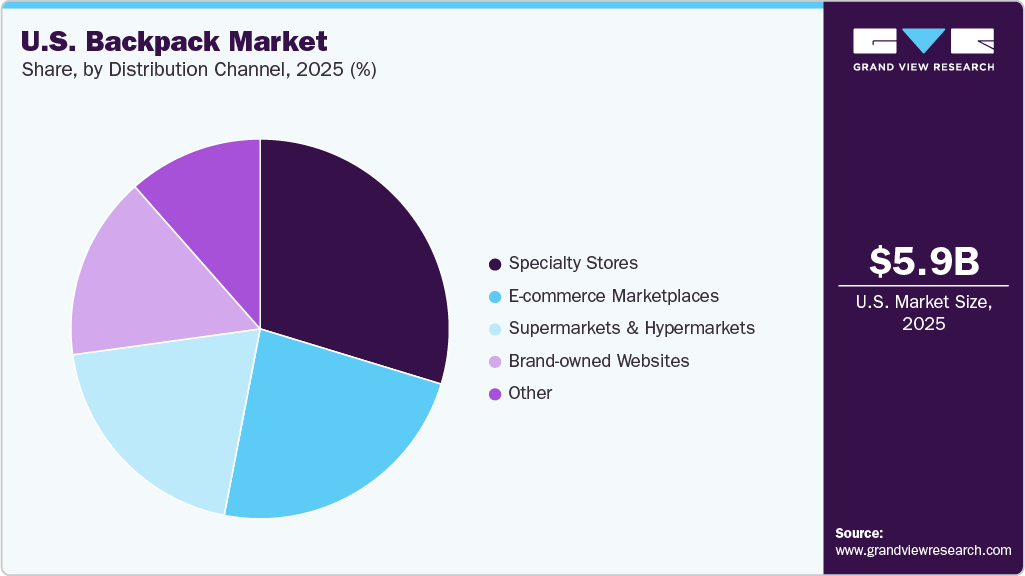
- By distribution channel, the specialty stores held the largest market share of 29.7% in 2025.
- By material, polyester holds the largest volume share 47.5% due to its cost efficiency, durability, and recyclability.
Market Size & Forecast
- 2025 Market Size: USD 5.88 Billion
- 2033 Projected Market Size: USD 10.13 Billion
- CAGR (2026-2033): 7.2%
Three ways to get this report
Buy it, customize it, or ask a question.Ask an Analyst
A direct answer, usually in 1 working day
- AccessReport author, directly
- Reply timeWithin 1 working day
- No sales callDirect answer only
- FormatEmail reply
- CostFree, no cost
Get the Full Report
What the study covers
- FormatsPDF · Excel · Dashboard
- Timeline2026–2033 annual, 2025 base
- Coverage20+ countries, 5 regions
- Companies10+ key players profiled
Customize the Report
20% free customization
- IncludeCountries, segments, points
- TailorTo your product definition
- ExtendDeeper competitor detail
- OrA fully bespoke study
- Turnaround5–10 working days
Growth is underpinned by structural drivers such as high student enrollment, widespread laptop penetration, and the normalization of hybrid work models, which continue to position backpacks as an essential, everyday utility product. The market is increasingly shifting toward higher-value, feature-rich offerings, with consumers prioritizing durability, ergonomic design, and device protection, particularly within the laptop and business segments. At the same time, travel recovery and rising participation in outdoor activities are accelerating demand for multifunctional and performance-oriented backpacks, as evidenced by product innovations such as modular travel systems introduced by brands like Peak Design and technical outdoor packs from VF Corporation.Competitive intensity remains high, with both global brands and niche players focusing on differentiation through design, sustainability, and direct-to-consumer engagement. In addition, the rapid expansion of e-commerce platforms, led by players such as Amazon, is reshaping distribution dynamics by enhancing accessibility, assortment, and price transparency. Overall, the market is transitioning toward a more innovation-led and consumer-centric model, where versatility, sustainability, and brand positioning are expected to be key determinants of long-term growth.
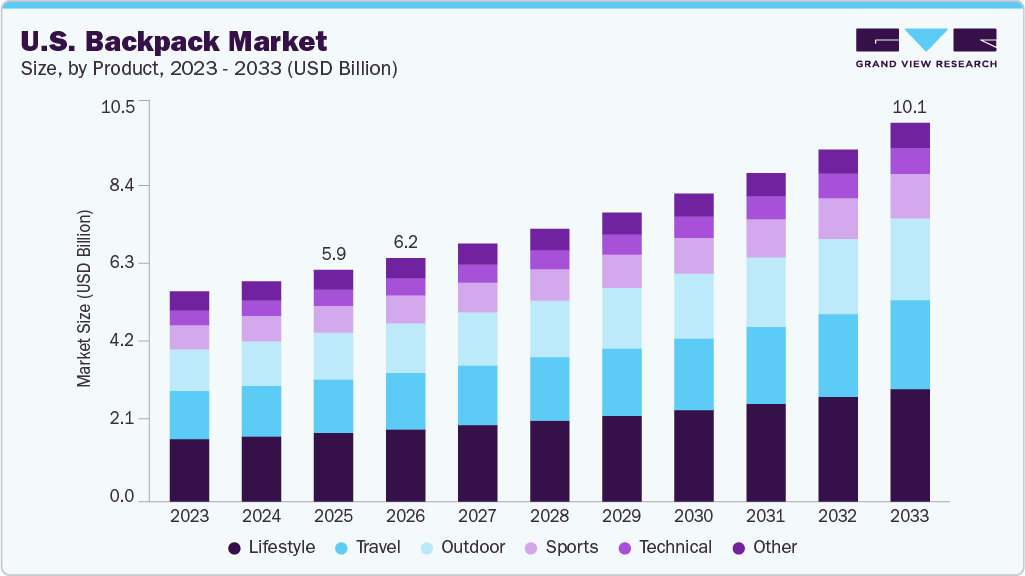 Source: Grand View Research, IR Documents, Primary Interviews, Paid DatabasesTo learn more about this report,
 Download Free Sample Report
 The market is strongly shaped by everyday mobility patterns, where backpacks are not occasional purchases but essential, high-frequency-use products across school, work, travel, and fitness. This consistent usage creates a stable demand base, while evolving consumer preferences are driving incremental growth across segments.
The lifestyle backpack segment remains the largest, primarily because of its deep penetration in the U.S. population. With over a million K-12 students and a large college-going population, combined with a highly mobile workforce, backpacks are used daily for commuting, education, and casual purposes. This segment is volume-driven, supported by affordable polyester products, frequent replacement cycles, and the strong influence of fashion trends. However, its growth is relatively moderate because it is already a mature and saturated segment, limiting its CAGR despite its dominant position.
In contrast, the travel and outdoor segments are growing more rapidly, benefiting from strong shifts in U.S. consumer behavior toward experience-driven spending. Recent travel trends show Americans prioritizing short trips, weekend getaways, and outdoor recreation, which directly increases demand for durable, lightweight, and cabin-friendly backpacks. Outdoor participation, including hiking and camping, continues to rise, supported by government and industry data, making this segment a key growth driver with higher average selling prices.
The technical segment, including laptop backpack products, is expanding steadily due to hybrid work models and high laptop penetration in the U.S. However, its share remains relatively small because consumers increasingly prefer multi-functional backpacks that combine laptop compartments with lifestyle or travel features, rather than purchasing purely specialized technical bags. This reflects a clear U.S. preference for versatility and value-for-money, which limits the segment’s overall share despite favorable demand drivers.
Rising health awareness, gym memberships, and participation in recreational sports support the sports segment. Meanwhile, the other segment, which includes fashion and eco-friendly backpack categories, is emerging as the fastest-growing segment. Sustainability is becoming a key purchasing factor, with U.S. consumers showing increasing interest in recycled materials, vegan leather, and environmentally responsible products. Brands are responding by launching eco-friendly backpack lines, aligning with broader environmental awareness and regulatory pressures.
From a consumption and distribution perspective, the U.S. market shows a strong blend of traditional and digital behavior. While specialty stores continue to lead in share, consumers are rapidly shifting toward e-commerce platforms and brand-owned websites, with direct-to-consumer channels growing the fastest. This trend is driven by convenience, wider product availability, and increasing preference for personalized and brand-driven shopping experiences.
Brand Market Share Insights
The market is highly competitive, shaped by a mix of global brands and specialized players that continuously adapt to changing consumer lifestyles. Companies such as Nike, Adidas, Samsonite, VF Corporation, and Osprey Packs play a major role in shaping demand across the market, offering products that fit into everyday routines, from school and office use to travel and outdoor adventures. Brands like The North Face and Osprey are benefiting from the growing interest in outdoor activities, introducing performance-driven products such as hydration backpacks and trekking-focused designs. At the same time, lifestyle-focused players like Nike and Adidas continue to dominate high-volume sales with stylish, affordable options that appeal to students and young professionals.
There is also a clear shift in how consumers prefer to shop. While physical stores remain important, many brands are strengthening their own websites and digital platforms to connect directly with customers. This direct approach allows them to offer more personalized experiences and build stronger brand relationships. Another noticeable trend is the rising demand for eco-friendly backpacks, as U.S. consumers, especially younger buyers, are becoming more conscious about sustainability. Brands are responding by using recycled materials and promoting environmentally responsible products. Alongside this, innovations like laptop backpacks with smart features, ergonomic designs, and lightweight materials are becoming increasingly popular, reflecting the need for convenience and functionality in daily life. Product innovation, such as anti-theft features, USB charging ports, and lightweight materials, is enhancing the value proposition of modern backpacks.
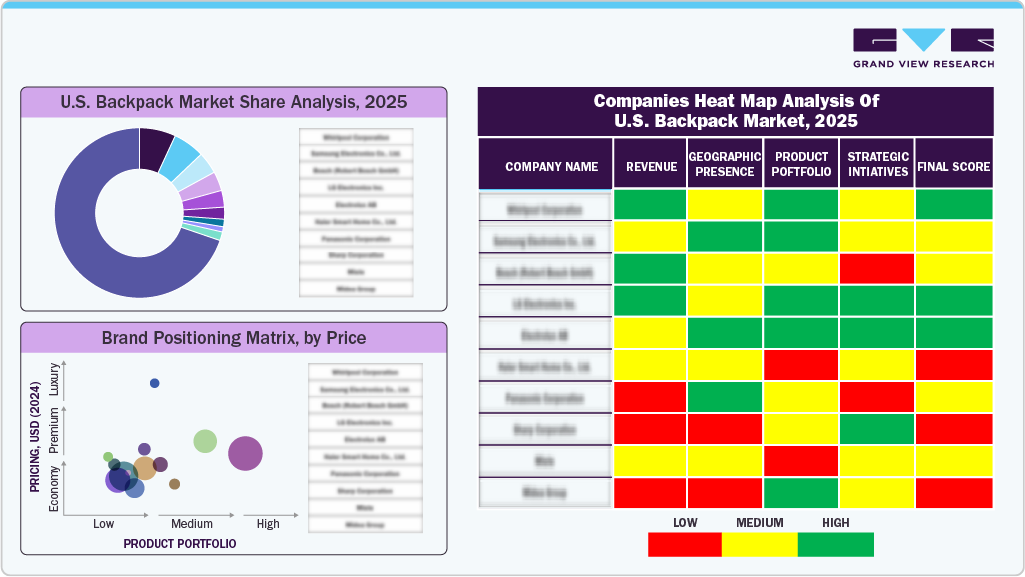 To learn more about this report, Download Free Sample Report
 Consumer Insights
In the U.S. market, demand is largely shaped by how different age groups live, work, and move through their daily routines. Younger consumers, especially, form the core of the market, driving strong volumes in the lifestyle backpack segment. For them, a backpack is an everyday essential, used for school, college, and commuting, so they tend to look for options that are affordable, lightweight, and easy to carry. At the same time, this group is becoming more conscious of what they buy, which is why eco-friendly backpack options made from recycled or sustainable materials are gaining attention. Their purchasing decisions are highly influenced by design, price, and convenience, making them key contributors to the overall market size.
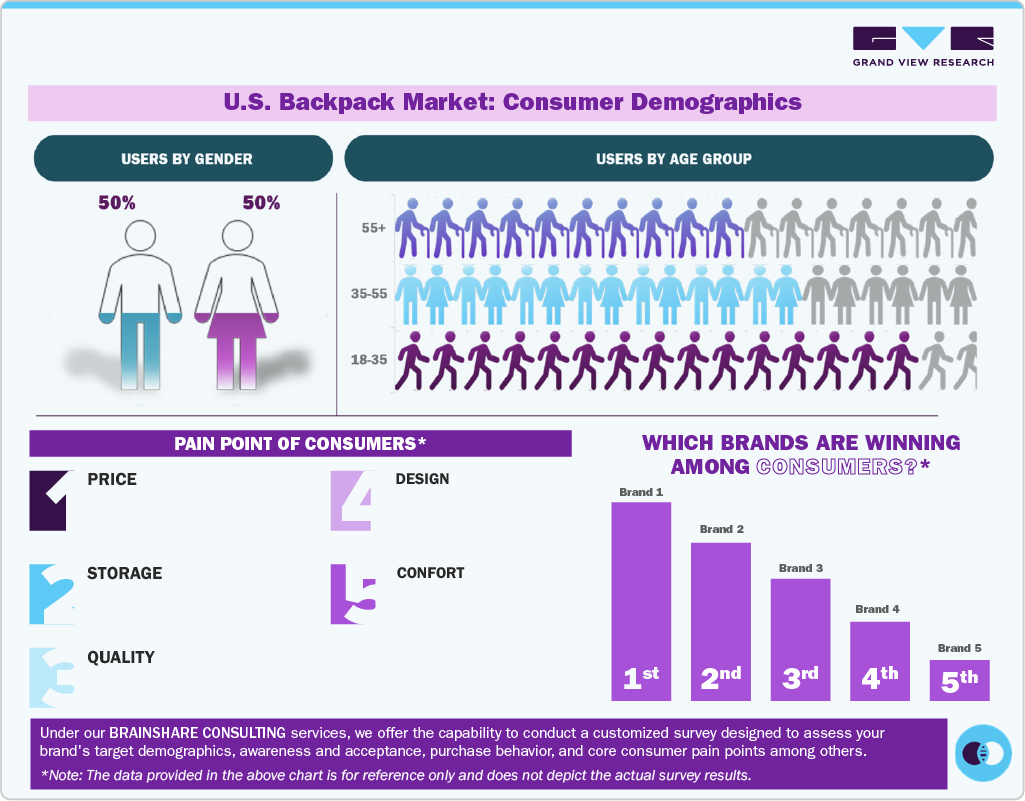 To learn more about this report, Download Free Sample Report
 Working professionals approach backpacks a bit differently. Their focus is more on functionality and durability, with rising demand for laptop backpacks that offer protection, organization, and added features like USB charging or anti-theft designs. This reflects how work and mobility are blending in everyday life. For consumers above 45, backpacks are less about daily use and more about travel and outdoor activities, aligning with increased leisure travel.
Product Insights
Lifestyle backpacks accounted for 29.7% of the U.S. market in 2025, reflecting their strong positioning as an everyday essential across student and working populations. Growth in this segment is being driven by the increasing convergence of functionality and fashion, with consumers prioritizing products that seamlessly integrate into daily routines while aligning with personal style preferences. The rising adoption of laptops and portable devices has further accelerated demand for structured, multi-compartment backpacks designed for urban mobility. In parallel, brands are increasingly leveraging design innovation and brand collaborations to enhance appeal, evidenced by product lines from Nike, Inc. and Adidas AG, which combine athletic aesthetics with lifestyle utility. In addition, the continued expansion of direct-to-consumer channels and digital-first brands is enabling targeted engagement with younger demographics, further strengthening volume growth in this segment. The segment’s resilience is also supported by its high replacement cycle and consistent demand across both academic and professional use cases.
The outdoor backpack segment is projected to grow at a CAGR of 8.1% during the forecast period, driven by sustained momentum in outdoor recreation and experience-led consumption. Increasing participation in activities such as hiking, trekking, and camping is translating into higher demand for performance-oriented backpacks that offer durability, ergonomic support, and weather resistance. This trend is reinforced by the growing consumer shift toward health and wellness, as well as increased interest in short-duration travel and nature-based experiences. Leading outdoor brands such as Osprey Packs, Inc. and The North Face continue to introduce technical innovations, including lightweight materials, advanced load distribution systems, and hydration compatibility, to meet evolving consumer expectations. Furthermore, the expansion of specialty retail and e-commerce platforms is improving product accessibility and awareness, while premiumization trends are driving higher average selling prices.
Material Type Insights
Polyester backpacks accounted for 47.5% of the U.S. market in 2025, underscoring their structural dominance across both entry-level and mid-tier segments. This leadership is primarily driven by polyester’s favorable cost-to-performance ratio, enabling manufacturers to deliver durable, lightweight, and aesthetically versatile products at scale. The material’s adaptability to a wide range of designs, colors, and finishes supports rapid product innovation and seasonal refresh cycles, which are critical in addressing evolving consumer preferences. In addition, polyester’s resistance to moisture, abrasion, and fading enhances its suitability for high-frequency, daily-use applications such as school, commuting, and casual travel.
From a competitive standpoint, leading brands such as VF Corporation (through Jansport) and Samsonite International S.A. continue to leverage polyester-based constructions across core product lines to maintain price competitiveness while ensuring product reliability. Furthermore, advancements in recycled polyester (rPET) are enabling brands to align with sustainability expectations without significantly increasing production costs. This dual advantage, cost efficiency combined with evolving sustainability credentials, continues to reinforce polyester’s leadership within the material mix.
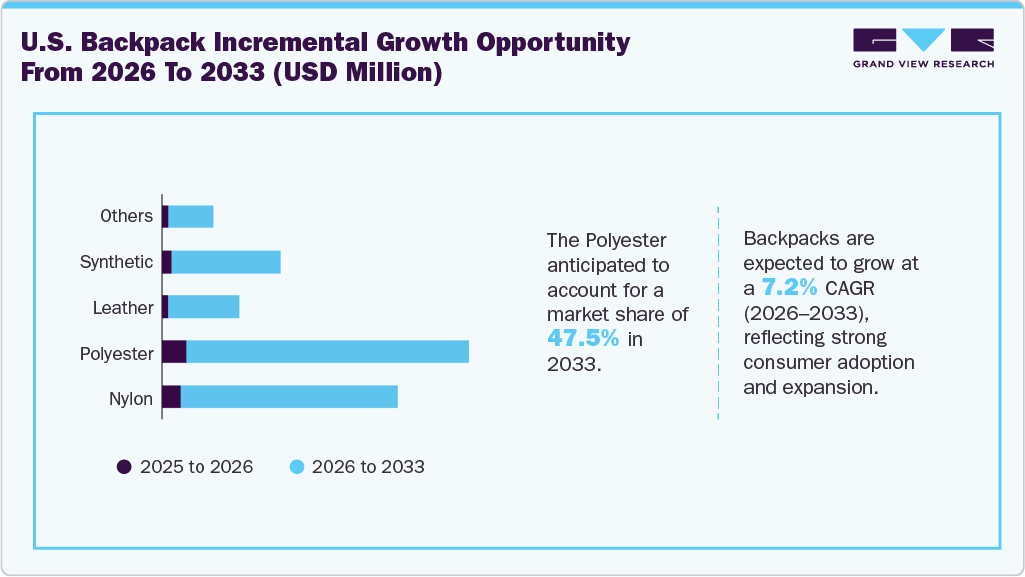 To learn more about this report, Download Free Sample Report
 The demand for synthetic backpacks is projected to grow at a CAGR of 7.7% during the 2026-2033 forecast period, reflecting the broader industry shift toward engineered materials that deliver enhanced performance and scalability. Growth in this segment is being driven by continuous innovation in material science, including the development of high-tenacity nylon, coated fabrics, and blended synthetics that offer superior strength-to-weight ratios and improved weather resistance. These advancements are enabling manufacturers to cater to both functional and premium use cases, spanning urban mobility, travel, and outdoor applications.
In parallel, synthetic materials are increasingly being adopted in technical and performance-oriented backpacks, where durability and weight optimization are critical. For instance, brands such as Osprey Packs, Inc. and Thule Group AB incorporate advanced synthetic fabrics in their hiking and travel packs to enhance load management and long-term durability. In addition, the growing integration of recycled and bio-based synthetics is expanding the addressable consumer base by appealing to environmentally conscious buyers. As a result, the segment is evolving beyond cost-driven demand toward a more innovation-led growth trajectory, positioning synthetic backpacks as a key enabler of both volume expansion and product differentiation.
Distribution Channel Insights
Sales of backpacks through specialty stores in the United States accounted for approximately 29.7% of total market share in 2025, reflecting the channel’s continued strength in high-consideration and premium purchase categories. This performance is driven by the importance of in-person product evaluation, particularly for technical, travel, and performance backpacks, where factors such as fit, ergonomics, and load-bearing comfort are critical. U.S. consumers demonstrate a strong preference for experiential retail in these categories, favoring stores that offer product trials, expert guidance, and curated assortments.
Retailers such as REI Co-op and Dick’s Sporting Goods play a pivotal role in this ecosystem by combining knowledgeable staff with immersive retail environments, enabling informed purchasing decisions. In addition, brand-owned stores from companies like VF Corporation further strengthen consumer engagement through exclusive product offerings and brand storytelling. The continued relevance of specialty retail in the U.S. is also supported by its ability to capture demand for premium and technical backpacks, where consumers are less price-sensitive and more focused on performance and durability.
 To learn more about this report, Download Free Sample Report
 Sales of backpacks through brand-owned websites in the United States are projected to grow at a CAGR of 8.2% during the forecast period, driven by the country’s highly developed digital retail infrastructure and evolving consumer purchasing behaviors. The U.S. market is characterized by high internet penetration and strong consumer trust in online platforms, which has accelerated the shift toward digital-first purchasing across both mass and premium segments.
Platforms such as Amazon and Walmart Inc. are central to this growth, offering extensive product assortments, competitive pricing, and fast, reliable delivery services. In addition, the increasing adoption of direct-to-consumer (DTC) strategies by brands is driving online-exclusive product launches and targeted marketing campaigns. For example, promotional events such as Amazon Prime Day consistently generate significant spikes in backpack sales volumes across categories. The integration of advanced recommendation algorithms, user-generated reviews, and seamless return policies further enhances the online shopping experience, reducing purchase friction. Collectively, these factors position e-commerce marketplaces as a key growth engine within the U.S. market.
Key U.S. Backpack Companies:
- VF Corporation
- Amer Sports Inc.
- Samsonite International S.A
- Adidas AG
- Nike Inc.
- Helen of Troy Limited
- Safari Industries Limited
- Columbia Sportswear Company
- Fenix Outdoor International AG
- Puma SE
Recent Developments
-
In March 2026, Peak Design introduced a new modular “Travel Backpack 2-in-1” system, combining a 34L main pack with a detachable 16L daypack to create a flexible 40L carry-on solution. The product integrates weatherproof materials, laptop compartments, anti-theft features, and smart storage design, reflecting the growing demand for multifunctional and tech-enabled backpacks in the U.S. market. The use of recycled and carbon-neutral materials also highlights the increasing importance of eco-friendly backpack innovation, particularly among premium and travel-focused consumers.
-
In 2026, major outdoor brands such as The North Face introduced new multi-purpose backpack designs, including hybrid packs that combine storage with cooling and utility features. These innovations reflect a growing trend toward versatile and experience-driven products, where consumers prefer all-in-one backpacks for travel, outdoor, and leisure use. This trend is particularly strong in the U.S., where participation in outdoor activities continues to rise.
-
In April 2026, STATE Bags partnered with LoveShackFancy to launch a new collaborative backpack collection targeting families and younger consumers. The collection includes customizable backpacks, travel accessories, and lifestyle-oriented designs, emphasizing personalization and fashion appeal. This development highlights how brand collaborations are driving demand in the lifestyle segment, particularly among Gen Z and millennial consumers in the U.S. market
U.S. Backpack Market Report Scope
Report Attribute
Details
Market size value in 2026
USD 6.22 billion
Revenue forecast in 2033
USD 10.13 billion
Growth rate
CAGR of 7.2% from 2026 to 2033
Historical data
2021 - 2025
Forecast period
2026 - 2033
Quantitative units
Revenue in USD million/billion and CAGR from 2026 to 2033
Report coverage
Revenue forecast, company ranking, competitive landscape, growth factors, and trends
Segments covered
Product, material type, distribution channel
Country scope
U.S.
Key companies profiled
VF Corporation; Amer Sports Inc; Samsonite International; Adidas AG; Nike Inc; Helen of Troy Limited; Safari Industries Limited; Columbia Sportswear Company; Fenix Outdoor International AG; Puma SE
Customization scope
Free report customization (equivalent up to 8 analysts working days) with purchase. Addition or alteration to country, regional & segment scope.
Pricing and purchase options
Avail customized purchase options to meet your exact research needs. Explore purchase options
U.S. Backpack Market Report Segmentation
This report forecasts revenue growth at country levels and provides an analysis of the latest trends and opportunities in each of the sub-segments from 2021 to 2033. For this study, Grand View Research has segmented the U.S. backpack market on the basis of product, material type, and distribution channel.
-
Product Outlook (Revenue, USD Million, 2021 - 2033)
-
Lifestyle
-
Technical
-
Outdoor
-
Travel
-
Sports
-
Other
-
-
Material Type Outlook (Revenue, USD Million, 2021 - 2033)
-
Nylon
-
Polyester
-
Leather
-
Synthetic
-
Others
-
-
Distribution Channel Outlook (Revenue, USD Million, 2021 - 2033)
-
Supermarkets & Hypermarkets
-
Specialty Stores
-
E-commerce Marketplaces
-
Brand - owned Websites
-
Others
-
Frequently Asked Questions About This Report
The U.S. backpack market was estimated at USD 5.88 billion in 2025 and is expected to reach USD 6.22 billion in 2026.
Key factors that are driving the U.S. backpack market growth include rising demand for travel and outdoor activities, increasing adoption of functional and lifestyle backpacks, growth in e-commerce distribution, and continuous product innovation in terms of design, durability, and smart features.
The U.S. backpack market is expected to grow at a compound annual growth rate of 7.2% from 2026 to 2033 to reach USD 10.13 billion by 2033.
The lifestyle backpack holds the largest market share of 29.70% in the U.S. backpack market due to its versatility, everyday usability, and strong alignment with fashion and urban lifestyle trends across a broad consumer base.
Key players in the U.S. backpack market are VF Corporation, Amer Sports Inc., Samsonite International S.A, Adidas AG, Nike Inc., Helen of Troy Limited, Safari Industries Limited, Columbia Sportswear Company, Fenix Outdoor International AG, and Puma SE.
About the Author(s)
Clothing, Footwear & Accessories Research Team
Consumer Goods · Clothing, Footwear & AccessoriesThis report was authored by the clothing, footwear & accessories research team at Grand View Research - comprising two research analysts, one senior research analyst, and one industry expert - with specialized expertise in the clothing, footwear & accessories segment of the consumer goods industry. All findings are based on proprietary consumer goods databases, executive interviews, and regulatory analysis, subject to internal peer review prior to publication.
Last Updated:
Speak to Analyst

Customize this report to your needs - add regions, segments, or data points, with 20% free customization.
Or view our licence options:


ISO 9001:2015 & 27001:2022 Certified
We are GDPR and CCPA compliant! Your transaction & personal information is safe and secure. For more details, please read our privacy policy.


