
- Home
- »
- Medical Devices
- »
-
U.S. Interventional Oncology Procedures Market Report 2033GVR Report cover
![U.S. Interventional Oncology Procedures Market (2026 - 2033)Report]()
U.S. Interventional Oncology Procedures Market (2026 - 2033)
Size, Share & Trends Analysis Report By Technique (Ablation Therapies, Embolization Therapies), By Procedures (Tumor Ablation, Palliative Care), By Cancer Type (Liver Cancer, Lung Cancer), By End-use, And Segment Forecasts
Market Size, 2025
$10.8BMarket Estimate, 2026
$12.0BMarket Forecast, 2033
$23.4BCAGR, 2026–2033
9.9%U.S. Interventional Oncology Procedures Market Summary
The U.S. interventional oncology procedures market size was valued at USD 10.8 billion in 2025 and is projected to grow from USD 12.0 billion in 2026 to USD 23.4 billion by 2033, at a CAGR of 9.9% from 2026 to 2033. This growth can be attributed to the increasing prevalence of cancer, rising technological advancements in minimally invasive procedures, growing geriatric population, increasing focus on early cancer detection, and growing public and private investments in the field of interventional oncology.
Key Market Trends & Insights
- By technique: Embolization therapies segment held the largest market share of 48.0% in 2025.
- By procedure: Vascular interventions segment held the market with the largest revenue share of 49.6% in 2025.
- By cancer type: Liver cancer segment dominated the market with the largest revenue share of 29.7% in 2025.
- By end-use: Hospitals segment held the largest market share of 42.9% in 2025.
Market Size & Forecast
- Market size in 2025: USD 10.8 Billion
- Estimated market size in 2026: USD 12.0 Billion
- Projected market size by 2033: USD 23.4 Billion
- CAGR (2026-2033): 9.9%
There is a significant rise in the number of cancer cases globally, which drives the need for advanced solutions to facilitate better cancer care. The growing advancements of minimally invasive techniques in interventional oncology are reshaping cancer treatment by enabling more precise and targeted therapies. Advanced ablation systems are playing a crucial role in this shift, as they allow for more effective tumor destruction with minimal impact on surrounding tissues. The ability to deliver controlled, repeatable thermal energy to tumors, particularly in bone and soft tissues, has enhanced the reliability of interventional oncology procedures. For instance, in September 2022, Stryker's OptaBlate bone tumor ablation system received FDA clearance. This interventional oncology technology features patented micro-infusion technology, enabling quicker, more consistent ablations and the simultaneous treatment of two vertebral body levels. OptaBlate offers a reliable solution for patients with painful metastatic tumors. These technological improvements reduce patient recovery time and offer an alternative to systemic treatments, which often have significant side effects. As a result, interventional oncology is becoming an increasingly preferred option for patients with metastatic cancers, improving both pain management and overall outcomes.
The adoption of microwave ablation, cryoablation, irreversible electroporation (IRE), and radioembolization has expanded significantly in recent years due to their ability to treat tumors with shorter hospital stays and fewer complications than conventional surgery. In particular, microwave ablation systems are gaining preference because they provide faster heating, larger ablation zones, and improved efficacy in highly vascular tumors. In July 2024, IceCure Medical announced that the U.S. FDA granted regulatory clearance for its next-generation XSense cryoablation system with CryoProbes. The minimally invasive technology is intended to destroy tumors through controlled freezing and offers an alternative to surgical tumor removal, highlighting continued advancements in cryoablation technologies within interventional oncology. These advancements are helping clinicians perform outpatient or same-day procedures, thereby improving patient convenience and reducing healthcare costs.
Moreover, the growing geriatric population is further driving the growth of the U.S. interventional oncology procedures industry, primarily due to the higher incidence of cancer among older adults. As age increases, prolonged exposure to carcinogens, the accumulation of genetic mutations, and declining immune function significantly elevate the risk of cancer development, leading to greater demand for minimally invasive cancer treatments. For instance, the U.S. population aged 65 years and older reached approximately 59.8 million in 2023, expanding the pool of patients eligible for interventional oncology procedures. Similarly, in March 2024, the U.S. Centers for Disease Control and Prevention (CDC) emphasized the importance of routine cancer screening programs through its national awareness initiatives focused on breast, colorectal, cervical, and lung cancers. The organization highlighted that regular screening and early diagnosis improve treatment effectiveness and survival outcomes, further supporting the growing clinical adoption of targeted and minimally invasive oncology therapies. Increasing public awareness regarding cancer symptoms and preventive healthcare is therefore expected to contribute to higher procedural volumes in the interventional oncology market over the forecast period.
Increasing public and private investments in interventional oncology will further accelerating the market growth by expanding research, innovation, and infrastructure. For instance, in December 2024, the Society of Interventional Radiology (SIR) Foundation awarded USD 1.5 million in grants to four research projects, two of which focus on interventional oncology. One study will develop a novel model of hepatocellular carcinoma (HCC), and the other will use genetic subtyping to guide precision interventions for HCC.
Market Dynamics
The U.S. interventional oncology procedures industry is witnessing strong growth driven by the increasing adoption of minimally invasive, image-guided cancer treatment procedures across hospitals, academic medical centers, ambulatory surgical centers, and specialty cancer institutes. The market encompasses a broad range of interventional oncology procedures performed for the diagnosis, treatment, and palliative management of primary and metastatic cancers, including tumor ablation procedures (radiofrequency ablation, microwave ablation, cryoablation, and irreversible electroporation), transarterial embolization procedures (transarterial chemoembolization [TACE], transarterial radioembolization [TARE]/Y-90 radioembolization, and bland embolization [TAE]), image-guided tumor biopsies, vertebral augmentation procedures, and other catheter-based oncologic interventions. These procedures are performed using advanced imaging modalities such as computed tomography (CT), magnetic resonance imaging (MRI), ultrasound, fluoroscopy, and cone-beam CT to precisely target tumors while minimizing damage to surrounding healthy tissues.
The rising prevalence of cancer is a primary driver of growth in the U.S. interventional oncology industry. As cancer incidence increases, there is a growing demand for minimally invasive treatment options that offer better patient outcomes with reduced recovery time. Similarly, as per the U.S. National Center for Health Statistics, an estimated 1,958,310 new cancer cases and 609,820 cancer-related deaths were reported in the U.S. in 2023. Imaging technologies such as MRI, CT, PET-CT, and mammography are indispensable across the oncology care pathway, from screening and diagnosis to staging, surgical planning, and post-treatment monitoring. Surgeons increasingly rely on preoperative MRI and CT scans to accurately visualize tumor location, size, and margins, thereby enhancing surgical precision and improving clinical outcomes. The growing burden of solid tumors, including liver, lung, kidney, and bone cancers, has increased the need for targeted, image-guided interventions such as ablation and embolization. As traditional treatments such as chemotherapy and surgery face limitations in late-stage and inoperable cancers, interventional oncology is emerging as a crucial alternative. In addition, lifestyle-related risk factors such as smoking, obesity, and dietary habits are contributing to the rising cancer burden worldwide. The increasing prevalence of these risk factors, coupled with improved cancer screening programs, is leading to earlier diagnoses, further driving the adoption of interventional oncology techniques as part of modern oncologic care.
The high cost associated with interventional oncology significantly restrains the market growth by limiting patient accessibility and healthcare provider adoption. Interventional oncology procedures, including radiofrequency ablation (RFA), microwave ablation (MWA), transarterial chemoembolization (TACE), and transarterial radioembolization (TARE), require advanced equipment, specialized training, and expensive consumables such as microspheres, catheters, and ablation probes. These cost-intensive components create a financial burden on hospitals and outpatient facilities, making it difficult for institutions with smaller budgets to justify the investment. In several developing economies, healthcare budgets prioritize essential treatments such as chemotherapy and radiation therapy over interventional oncology, further slowing adoption. In addition, private healthcare providers in regions with limited reimbursement frameworks often struggle to adopt these technologies. As a result, despite clinical advantages such as minimal invasiveness and shorter recovery times, the high upfront and operational costs hinder the widespread implementation of these technologies, thereby restraining market growth.
Market Characteristics & Concentration
The U.S. interventional oncology procedures industry is moderately consolidated, with leading healthcare providers and cancer centers, supported by major medical device manufacturers such as Medtronic, Boston Scientific Corporation, Johnson & Johnson MedTech, Cook Medical, AngioDynamics Inc., Stryker Corporation, and Terumo Corporation, holding significant positions across tumor ablation, embolization, image-guided biopsy, and other minimally invasive cancer intervention procedures. These companies provide comprehensive portfolios comprising microwave ablation, radiofrequency ablation, cryoablation, irreversible electroporation (IRE), transarterial chemoembolization (TACE), transarterial radioembolization (TARE/Y-90), bland embolization (TAE), biopsy systems, navigation technologies, vascular access devices, embolic agents, and image-guided intervention platforms. Their technologies enable precise, minimally invasive treatment of primary and metastatic tumors affecting the liver, lung, kidney, bone, prostate, and other organs while supporting improved procedural accuracy, reduced complications, shorter hospital stays, faster patient recovery, and enhanced multidisciplinary cancer care across hospitals, academic medical centers, and specialized oncology institutes.
The U.S. interventional oncology procedures industry is characterized by a high degree of innovation, driven by continuous advancements in image-guided intervention technologies, precision navigation systems, next-generation tumor ablation platforms, embolic materials, robotics, artificial intelligence (AI), and software-assisted procedural planning. Healthcare providers are increasingly adopting advanced interventional oncology technologies that improve targeting accuracy, optimize treatment planning, and enable real-time tumor visualization during minimally invasive procedures. Innovations such as AI-assisted image analysis, cone-beam CT (CBCT) guidance, image fusion, electromagnetic navigation, robotic-assisted needle placement, and non-thermal ablation technologies are enhancing procedural precision while reducing damage to surrounding healthy tissues. For instance, in May 2026, HistoSonics received FDA 510(k) clearance for its Planning Tool, an advanced radiological image-processing software designed for histotripsy ablation therapy planning and evaluation. The software enables clinicians to improve treatment planning and procedural assessment for non-invasive, focused ultrasound-based tumor ablation, representing a significant advancement in precision image-guided interventional oncology and supporting the evolution of next-generation liver tumor treatment technologies.
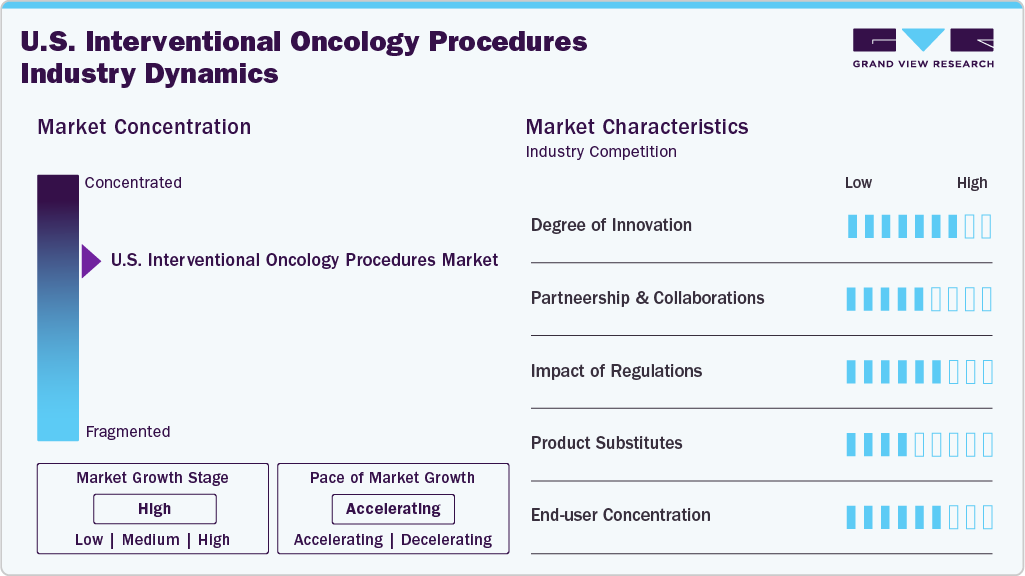
The U.S. interventional oncology procedures industry is witnessing a significant increase in strategic partnerships and collaborations as medical device manufacturers, healthcare providers, cancer centers, imaging technology companies, academic research institutions, and pharmaceutical organizations work together to accelerate innovation and expand access to minimally invasive cancer therapies. These collaborations are focused on developing next-generation tumor ablation technologies, advancing image-guided intervention platforms, integrating artificial intelligence (AI) and navigation software into procedural workflows, generating clinical evidence through multicenter studies, and improving physician training and procedural standardization. For instance, in September 2025, Cook Medical and Siemens Healthineers announced a strategic partnership to develop a radiation-free, image-guided interventional MRI (iMRI) suite, combining real-time MRI imaging with advanced MR-conditional devices to enhance precision in minimally invasive procedures.
The U.S. interventional oncology procedures industry operates within a rigorous regulatory framework primarily governed by the U.S. Food and Drug Administration (FDA), which oversees the safety, effectiveness, quality, and clinical performance of interventional oncology devices used in minimally invasive cancer procedures. Medical devices such as tumor ablation systems, embolization products, biopsy devices, navigation platforms, and image-guided intervention technologies are subject to FDA premarket review, quality system regulations, post-market surveillance, and adverse event reporting requirements. For instance, in December 2024, AngioDynamics received FDA 510(k) clearance for its NanoKnife System to ablate prostate tissue. This non-thermal, radiation-free technology offers a minimally invasive treatment option for prostate cancer patients.
The U.S. interventional oncology procedures industry faces competition from several conventional cancer treatment modalities and alternative therapeutic approaches, which may limit the adoption of minimally invasive, image-guided procedures, particularly for patients with resectable tumors or cancers requiring systemic treatment. Conventional treatment options, including open surgical resection, laparoscopic surgery, systemic chemotherapy, immunotherapy, targeted therapy, external beam radiation therapy (EBRT), stereotactic body radiation therapy (SBRT), and hormone therapy, continue to represent the standard of care for many cancer indications. These therapies are supported by extensive clinical evidence, established treatment guidelines, widespread physician familiarity, and broad reimbursement coverage, making them preferred treatment options for many patients depending on tumor type, disease stage, and overall clinical condition.
The U.S. interventional oncology procedures industry is experiencing significant regional expansion as healthcare systems, academic medical centers, community hospitals, and specialty cancer institutes continue to strengthen their interventional oncology capabilities across the country. Medical device manufacturers and healthcare providers are expanding access to minimally invasive, image-guided cancer treatments by increasing the availability of advanced tumor ablation systems, embolization technologies, and image-guided intervention platforms beyond large tertiary hospitals into regional cancer centers and community-based healthcare facilities.
Analyst Perspective
The U.S. interventional oncology procedures industry has emerged as one of the fastest-growing segments within the broader oncology and minimally invasive intervention landscape, driven by the rising incidence of cancer, increasing preference for minimally invasive treatment approaches, expanding clinical indications for image-guided therapies, and continuous advancements in interventional oncology technologies. Interventional oncology is rapidly evolving from conventional image-guided procedures toward precision-based, multidisciplinary cancer care through the integration of advanced imaging modalities, navigation systems, artificial intelligence, robotics, and next-generation tumor ablation and embolization technologies.
Technique Insights
The embolization therapies segment led the market with the largest revenue share of 48.0% in 2025. Embolization therapies play a crucial role in interventional oncology, offering minimally invasive treatment options for various tumors. These therapies involve the selective obstruction of blood vessels supplying tumors, leading to ischemia and tumor necrosis. According to an article published by the American Chemical Society in January 2024, embolization therapy using biomaterials has significantly advanced liver cancer treatment, improving therapeutic strategies and patient survival rates. Various embolic agents, including liquid, foam, and particulate forms, are used, with microparticles such as microspheres among the most effective. Researchers are increasingly focusing on next-generation microspheres capable of sustained drug release, enhanced vascular occlusion, and integration with immunomodulatory agents to improve treatment precision and long-term tumor control. These factors are collectively driving the growth of the embolization therapies segment.
The image-guided procedures segment is expected to grow at the fastest CAGR of 12.3% over the forecast period. Image-guided procedures play a crucial role in interventional oncology by enabling precise targeting of tumors while minimizing damage to surrounding healthy tissues. Techniques such as CT, MRI, and ultrasound guidance assist in the accurate placement of therapeutic instruments for treatments like radiofrequency ablation, microwave ablation, and transarterial chemoembolization. These methods enhance procedural safety, improve patient outcomes, and allow for minimally invasive interventions that reduce recovery time. The ongoing technological advancements further drive the growth of the segment. For instance, in November 2024, The University of Texas MD Anderson Cancer Center launched the Image-Guided Cancer Therapy (IGCT) Research Program, an initiative aimed at revolutionizing cancer treatment through advanced imaging technologies. This program is designed to enhance near-real-time visualization, tracking, and monitoring of tumors and surrounding healthy tissue, enabling more precise, less invasive, and cost-effective treatments.
Procedure Insights
The vascular interventions segment accounted for the largest market revenue share of 49.6% in 2025. The growth of the segment is attributed to the widespread use in minimally invasive cancer treatments such as transarterial chemoembolization (TACE), transarterial radioembolization (TARE), and bland embolization (TAE) for liver and other solid tumors. The growing adoption of catheter-based therapies, supported by advancements in vascular access and embolization technologies, continues to strengthen the segment's growth. Reflecting this trend, in February 2025, Teleflex Incorporated announced a definitive agreement to acquire substantially all of the Vascular Intervention business of BIOTRONIK SE & Co. KG for approximately USD 874.3 million (€760 million), further expanding its portfolio of interventional vascular technologies relevant to image-guided oncology procedures. This move is expected to drive innovation, enhance procedural efficacy, and improve patient outcomes in minimally invasive oncology treatments.
The tumor ablation segment is expected to grow at the fastest CAGR over the forecast period, driven by the increasing preference for minimally invasive, image-guided cancer treatments. Tumor ablation plays a critical role in interventional oncology by providing effective treatment options for patients with localized tumors, particularly in the liver, lungs, kidneys, and bones, through energy-based techniques that precisely destroy cancerous tissue while preserving surrounding healthy tissue. Continuous technological advancements and regulatory approvals of next-generation ablation systems are further accelerating the adoption of these procedures. For instance, in March 2024, Medtronic plc received FDA 510(k) clearance for its OsteoCool 2.0 Bone Tumor Ablation System, designed to treat painful bone metastases and benign bone tumors such as osteoid osteoma. Such product approvals are expected to expand treatment options and support the continued growth of the tumor ablation segment during the forecast period.
Cancer Type Insights
The liver cancer segment accounted for the largest market revenue share of 29.7% in 2025. The growth of the segment is driven by the high prevalence of primary and metastatic liver tumors and the increasing adoption of minimally invasive image-guided therapies for their treatment across the U.S. In addition, strong clinical evidence supporting procedures such as transarterial chemoembolization (TACE), transarterial radioembolization (TARE/Y-90), bland embolization (TAE), and thermal ablation continues to accelerate the adoption of interventional oncology procedures for liver cancer. The liver's dual blood supply and suitability for catheter-based interventions make it the most established indication for interventional oncology, while the growing preference for organ-preserving treatments among patients ineligible for surgical resection or liver transplantation continues to support the segment's growth.
The prostate cancer segment is expected to grow at the fastest CAGR over the forecast period, driven by the increasing adoption of image-guided focal interventional oncology procedures for the treatment of localized and recurrent prostate cancer. Growing use of cryoablation, irreversible electroporation (IRE), microwave ablation, and high-intensity focused ultrasound (HIFU) in appropriately selected patients is expanding the role of minimally invasive therapies as alternatives to radical prostatectomy or radiation therapy. In addition, advancements in MRI- and ultrasound-guided targeting, increasing preference for organ-preserving treatments with reduced urinary and sexual side effects, and rising clinical evidence supporting focal ablation techniques are expected to further accelerate the growth of the prostate cancer segment during the forecast period.
End-use Insights
The hospitals segment accounted for the largest market revenue share of 42.9% in 2025. Hospitals serve as the cornerstone of cancer care, offering a comprehensive range of services, including early detection, image-guided interventions, targeted therapies, and post-treatment follow-up. Their well-equipped oncology departments, staffed by highly experienced oncologists, interventional radiologists, and specialized medical teams, ensure the seamless integration of innovative treatment modalities. The availability of state-of-the-art diagnostic imaging systems, robotic-assisted surgical tools, and precision medicine approaches further boosts segment growth.

The ambulatory surgical centers segmentis anticipated to grow at the fastest CAGR over the forecast period. The growth is attributed to the increasing shift toward outpatient, minimally invasive interventional oncology procedures that offer shorter recovery times, lower treatment costs, and reduced hospital stays. Advances in image-guided ablation technologies, improved anesthesia protocols, and streamlined procedural workflows have enabled selected tumor ablation and biopsy procedures to be safely performed in ASCs. Furthermore, the growing emphasis on cost-effective cancer care, increasing patient preference for outpatient treatment settings, and expanding availability of specialized interventional radiology services are expected to further accelerate the adoption of interventional oncology procedures in ambulatory surgical centers during the forecast period.
Key U.S. Interventional Oncology Procedures Company Insight
The U.S. interventional oncology procedures industry is highly competitive, characterized by the presence of leading medical device manufacturers, imaging technology providers, healthcare systems, and specialized cancer centers focused on expanding their procedural capabilities and strengthening their market position. Market participants are continuously investing in research and development to advance tumor ablation technologies, embolization products, image-guided navigation systems, and AI-enabled procedural planning platforms that improve precision, procedural efficiency, and clinical outcomes.
Key U.S. Interventional Oncology Procedures Companies:
-
Medtronic
-
Boston Scientific Corporation
-
Johnson & Johnson MedTech
-
Cook Medical
-
AngioDynamics Inc.
-
Stryker Corporation
-
Terumo Corporation
-
Siemens Healthineers AG
-
Baxter International Inc.
-
Becton, Dickinson and Company
-
B. Braun
-
GE Healthcare
Competitive Benchmarking
Category
Operating Strategies
Competitive Edge
Weakness
Established Players: Medtronic, Boston Scientific Corporation, Johnson & Johnson MedTech
- Focus on expanding comprehensive interventional oncology portfolios, including embolization, ablation, biopsy, and navigation technologies.
- Strengthen partnerships with major cancer centers, integrated delivery networks (IDNs), and academic hospitals to increase procedural adoption.
- Strong brand recognition, extensive sales and distribution networks, and long-standing relationships with interventional radiologists and oncology centers.
- Broad product portfolios covering multiple interventional oncology procedures enable integrated procedural solutions.
- High investment requirements for R&D, clinical trials, and regulatory compliance increase operational costs.
- Large organizations generally have longer product development and commercialization timelines.
Emerging Players: Cook Medical, Becton, Dickinson and Company, Baxter International
- Focus on innovative minimally invasive treatment technologies such as histotripsy, MRI-guided therapies, AI-assisted planning, and next-generation ablation systems.
- Collaborate with research institutions and leading cancer hospitals to generate clinical evidence and accelerate commercialization.
- Faster innovation cycles enable rapid introduction of novel therapeutic technologies.
- Differentiation through image-guided precision treatment, AI integration, robotics, and non-thermal or minimally invasive platforms.
- Limited commercial infrastructure and smaller sales networks restrict nationwide penetration.
- High dependence on additional clinical validation, reimbursement expansion, and physician adoption slows revenue growth.
Recent Development
-
In January 2026, Becton, Dickinson and Company announced that it received U.S. FDA 510(k) clearance for the EnCor EnCompass Breast Biopsy and Tissue Removal System, a next-generation multi-modality platform designed to support breast tissue sampling and removal across stereotactic, ultrasound, and MRI-guided procedures.
-
In September 2024, Stryker completed its acquisition of care.ai, a company specializing in AI-assisted virtual care workflows, smart room technology, and ambient intelligence solutions. This acquisition aims to enhance Stryker's healthcare IT offerings and wirelessly connected medical device portfolio, providing real-time, smart, and connected decision-making tools to improve patient care.
U.S. Interventional Oncology Procedures Market Report Scope
Report Attribute
Details
Market size value in 2025
USD 10.8 billion
Market size value in 2026
USD 12.0 billion
Revenue forecast in 2033
USD 23.4 billion
Growth rate
CAGR of 9.9% from 2026 to 2033
Base year for estimation
2025
Historical data
2021 - 2024
Forecast period
2026 - 2033
Quantitative units
Revenue in USD million, and CAGR from 2026 to 2033
Report coverage
Revenue forecast, company ranking, competitive landscape, growth factors, and trends
Segments covered
Technique, procedure, cancer type, end-use
Key companies profiled
Medtronic; Boston Scientific Corporation; Johnson & Johnson MedTech; Cook Medical; AngioDynamics Inc.; Stryker Corporation; Terumo Corporation; Siemens Healthineers AG; Baxter International Inc.; Becton, Dickinson and Company; B. Braun; GE Healthcare
Customization scope
Free report customization (equivalent up to 8 analyst’s working days) with purchase. Addition or alteration to country, regional, and segment scope
Pricing and purchase options
Avail customized purchase options to meet your exact research needs. Explore purchase options
U.S. Interventional Oncology Procedures Market Report Segmentation
This report forecasts revenue growth and provides an analysis of the latest industry trends in each of the sub-segments from 2021 to 2033. Forthis study, Grand View Research has segmented the U.S. interventional oncology procedures market report based on technique, procedure, cancer type, and end-use:
-
Technique Outlook (Revenue, USD Billion, 2021 - 2033)
-
Ablation Therapies
-
Embolization Therapies
-
Biopsy Techniques
-
Targeted Therapy Delivery Systems
-
Image-Guided Procedures
-
-
Procedures Outlook (Revenue, USD Billion, 2021 - 2033)
-
Tumor Ablation
-
Tumor Biopsy
-
Vascular Interventions
-
Palliative Care
-
-
Cancer Type Outlook (Revenue, USD Billion, 2021 - 2033)
-
Liver Cancer
-
Lung Cancer
-
Kidney
-
Prostate cancer
-
Others
-
-
End-use Outlook (Revenue, USD Billion, 2021 - 2033)
-
Hospitals
-
Ambulatory Surgical Centers
-
Others
-
Research Methodology
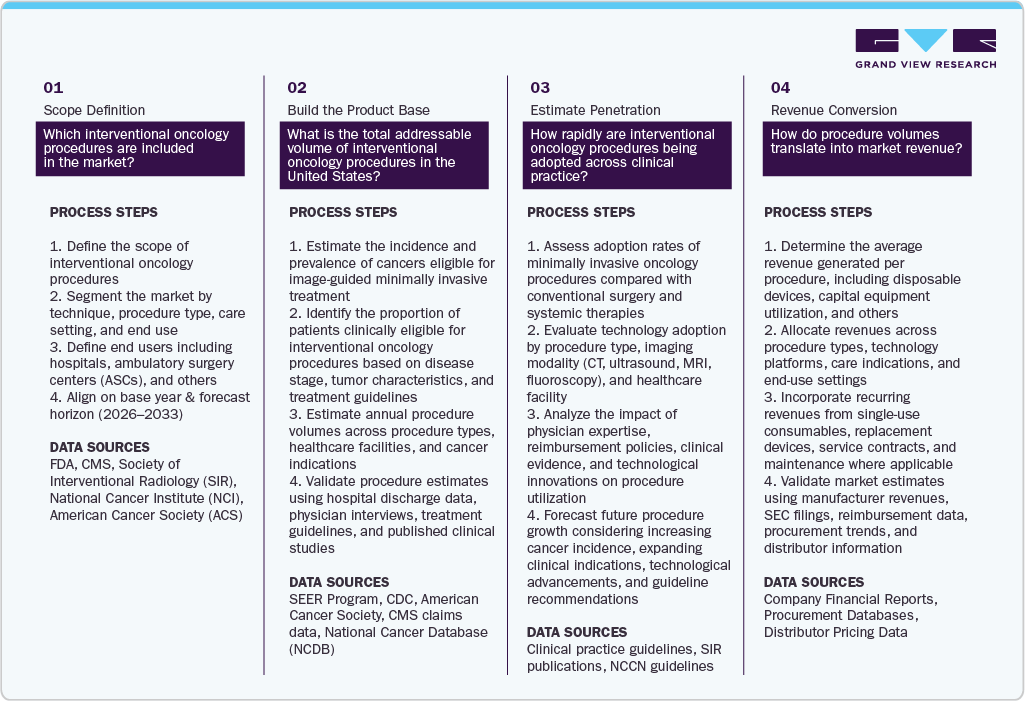
The U.S. interventional oncology procedures market figures in this report are based on a proven research process that combines executive interviews with secondary research from proprietary databases, company filings, and recognized regulatory and institutional sources. Market size is built through value-chain sizing-reconciling supply-side and demand-side estimates-and triangulated with bottom-up and top-down approaches. Every estimate passes multiple levels of expert validation before publication, with each U.S. interventional oncology proceduresegment quantified using the revenue-capture definitions in the table below.
Segment Definition
Segment - Technique
Revenue capture definition
Ablation Therapies
Revenue is generated through the execution of thermal and non-thermal tissue destruction techniques designed to eradicate solid tumors in situ. Facilities and device manufacturers capture value through high-margin single-use ablation probes/antennas, specialized energy generators, and facility billing fees for outpatient and inpatient image-guided surgical suites.
Embolization Therapies
Revenue flows from intra-arterial vascular occlusion procedures targeting tumor blood supplies. Market participants generate income through the commercialization and clinical administration of microcatheters, embolic microspheres, drug-eluting beads (DEBs), radioactive Yttrium-90 resin or glass spheres, and associated contrast/angiographic delivery kits.
Biopsy Techniques
Revenue is captured through diagnostic percutaneous and endovascular tissue-sampling procedures performed under real-time imaging guidance. Value is derived from high-volume, single-use coaxial biopsy needles, core biopsy guns, vacuum-assisted sampling kits, cytological fixatives, and reimbursement fees for professional technical components in interventional radiology (IR) suites.
Targeted Therapy Delivery Systems
Revenue is derived from specialized drug-delivery infrastructure engineered to administer high-concentration chemotherapeutic or biological agents directly into targeted tumor vasculature or organ structures. Manufacturers and healthcare providers earn income from specialized intra-arterial access systems, implantable ports, micro-infusion pumps, multi-lumen delivery catheters, and associated pharmaceutical formulation-delivery licenses.
Image-Guided Procedures
Revenue encompasses the technical and operational monetization of real-time intraoperative visualization platforms that enable precise needle placement and catheter navigation. Facilities capture substantial technical facility fees, professional billing components, and recurring software licensing fees for intraoperative navigation, 3D tumor mapping, and stereotactic tracking systems.
Segment - Procedure
Revenue capture definition
Tumor Ablation
Revenue is generated through clinical billing for minimally invasive tumor eradication procedures performed across primary and metastatic lesions. Facilities and practitioners earn revenue through procedure-specific CPT code reimbursements, inpatient Medicare severity diagnosis-related group (MS-DRG) allocations, and the direct pull-through purchase of single-use ablation antennas, grounding pads, and temperature monitoring sensors.
Tumor Biopsy
Revenue flows through routine and specialized diagnostic tissue extraction procedures performed to confirm malignancy, determine staging, and conduct biomarker/genomic profiling. Income is characterized by high procedural frequency, generating steady revenue through outpatient clinical facility fees, professional IR interpretation charges, and single-use biopsy hardware consumption.
Vascular Interventions
Revenue is captured through endovascular procedures aimed at restoring vessel patency, managing tumor-induced bleeding, or occluding tumor-feeding arteries. Market participants capture income through specialized guidewires, vascular sheaths, occlusion balloons, metallic stents, and bioresorbable embolic agents used during complex catheterizations.
Palliative Care
Revenue is derived from interventional procedures performed to alleviate disease symptoms, manage severe cancer-related pain, or restore organ function in advanced-stage cancer patients. Revenue streams include specialized drainage catheters, bone cement systems, and reimbursement for outpatient facility care.
Segment - Cancer Type
Revenue capture definition
Liver Cancer
Revenue is generated through targeted procedures for primary hepatocellular carcinoma (HCC) and liver metastases. This segment represents a dominant clinical income stream, capturing high-value revenue from complex chemoembolization (TACE), radioembolization, and microwave/thermal ablation procedures supported by established U.S. Medicare and commercial insurance coverage policies.
Lung Cancer
Revenue flows from percutaneous ablation and biopsy procedures targeting primary non-small cell lung cancer (NSCLC) and metastatic pulmonary nodules in non-surgical candidates. Income is driven by thermal/cryoablation probe consumption, CT/bronchoscopic navigation systems, and specialized pneumothorax management consumables.
Kidney
Revenue is captured through minimally invasive interventional interventions for localized renal cell carcinoma (RCC), predominantly using cryoablation and microwave ablation. Facilities monetize this segment through high-end multi-probe cryoablation consoles, argon/helium gas cylinders, temperature-sensing needles, and percutaneous access kits, which are favored for preserving nephron function.
Prostate cancer
Revenue is derived from emerging and established focal therapy procedures designed to target localized prostate lesions. Value is captured via high-precision ablation hardware, specialized rectal cooling catheters, and advanced multiparametric MRI-ultrasound fusion software platforms.
Others
Revenue encompasses interventional procedures executed across secondary or emerging anatomical sites, including primary and metastatic bone tumors, pancreatic malignancies, thyroid nodules, soft tissue sarcomas, and gynecological tumor vascular embolizations.
Segment - End Use
Revenue capture definition
Hospitals
Revenue is generated through inpatient and outpatient hospital interventional radiology (IR) departments, hybrid operating rooms, and comprehensive cancer centers. This segment captures high-volume procedural revenues through complex inpatient MS-DRG billing, high-value capital equipment acquisitions, and institutional group purchasing organization (GPO) contracts for high-volume consumables.
Ambulatory Surgical Centers
Revenue flows from outpatient minimally invasive procedures performed in lean, cost-efficient clinical settings. ASCs capture revenue via specialized Ambulatory Payment Classification (APC) codes and commercial insurer fee schedules, prioritizing low-overhead, rapid-turnaround single-use consumable kits to optimize per-procedure margins.
Others
Revenue is derived from alternative procedural settings, including office-based labs (OBLs), standalone interventional radiology practices, university-affiliated academic research facilities, and specialized outpatient oncology clinics operating under direct physician-led or private-practice reimbursement structures.
Estimation Model
Delivered Customizations
This report has been delivered with the following In-depth customizations
Client Request
Customization Delivered
Value Adds
Emerging Technology Analysis
Conducted a comprehensive assessment of emerging technologies shaping the U.S. interventional oncology procedures industry. The study evaluated advancements in image-guided interventions, artificial intelligence (AI)-assisted treatment planning, robotic-assisted needle navigation, fusion imaging, cone-beam CT, augmented reality (AR)-guided procedures, microwave ablation, irreversible electroporation (IRE), histotripsy, transarterial radioembolization (TARE), and next-generation embolization technologies. The analysis examined technology adoption across hospitals, academic medical centers, and ambulatory care settings, while assessing regulatory approvals, reimbursement developments, clinical evidence, physician adoption trends, strategic collaborations, and commercialization activities. In addition, the study evaluated the economic impact of these innovations by analyzing procedural efficiency, capital investment requirements, healthcare cost optimization, reimbursement potential, and their role in supporting value-based cancer care across the U.S. healthcare ecosystem.
Enables stakeholders to understand the technological evolution of the U.S. interventional oncology procedures industry and identify high-impact innovation opportunities. The study supports strategic investment decisions by benchmarking emerging technologies, evaluating commercialization readiness, identifying barriers to technology adoption, and assessing the economic impact on hospitals and healthcare systems. It also helps manufacturers prioritize R&D investments, strengthen competitive positioning, optimize product portfolios, and capitalize on next-generation image-guided oncology solutions that improve procedural efficiency, patient outcomes, and healthcare resource utilization.
Patient and Clinical Case Study Analysis
Conducted an in-depth assessment of patient outcomes and clinical case studies across major interventional oncology procedures in the U.S. The study analyzed real-world applications of thermal ablation, embolization procedures, image-guided tumor biopsies, vertebral augmentation, and minimally invasive palliative interventions across multiple cancer indications. It evaluated patient selection criteria, procedural success rates, treatment pathways, multidisciplinary care models, complication management, hospital length of stay, recovery timelines, quality-of-life improvements, and long-term clinical outcomes. Furthermore, the analysis examined healthcare resource utilization, reimbursement implications, cost-effectiveness, and the economic benefits associated with minimally invasive oncology procedures compared with conventional surgical approaches, highlighting their contribution to reducing hospitalization costs and improving overall healthcare efficiency.
Enables stakeholders to gain a comprehensive understanding of clinical effectiveness, patient outcomes, and procedural best practices within the U.S. interventional oncology landscape. The study supports evidence-based strategic decision-making by identifying successful treatment approaches, optimizing patient management pathways, demonstrating economic value through reduced hospital stays and lower treatment costs, and strengthening value propositions for healthcare providers, payers, and medical device manufacturers. It also assists organizations in developing clinically validated commercialization strategies supported by real-world evidence.
Porters Analysis
Conducted a detailed Porter's Five Forces assessment of the U.S. interventional oncology procedures industry to evaluate the competitive intensity and long-term attractiveness of the industry. The analysis assessed the bargaining power of medical device manufacturers, imaging technology providers, hospitals, group purchasing organizations (GPOs), and healthcare providers, as well as the influence of substitute treatment options, including surgery, systemic therapies, radiation oncology, and emerging cancer treatment modalities. The study further evaluated barriers to entry, regulatory and reimbursement complexities, technological differentiation, physician expertise requirements, capital investment needs, innovation intensity, and competitive rivalry among established market participants. Additionally, it examined macroeconomic factors, healthcare expenditure trends, reimbursement policies, and investment patterns influencing market competitiveness and commercial sustainability within the U.S. healthcare system.
Enables stakeholders to assess competitive pressures, market attractiveness, and strategic growth opportunities within the U.S. interventional oncology procedures industry. The study supports informed business planning by identifying competitive advantages, pricing and reimbursement challenges, partnership opportunities, procurement dynamics, and barriers to market entry. It also helps organizations evaluate investment risks, optimize commercialization strategies, anticipate competitive responses, and align long-term business decisions with evolving healthcare economics, value-based care initiatives, and changing oncology treatment preferences.
Frequently Asked Questions About This Report
The U.S. interventional oncology procedures market is expected to grow at a CAGR of 9.9% from 2026 to 2033 to reach USD 23.4 billion by 2033.
The embolization therapies segment held the highest market share of 48.0% in 2025, while the image-guided procedures segment is fastest-growing technique.
Some key players operating in the U.S. interventional oncology procedures market include Medtronic; Boston Scientific Corporation; Johnson & Johnson MedTech; Cook Medical; AngioDynamics Inc.; Stryker Corporation; Terumo Corporation; Siemens Healthineers AG; Baxter International Inc., Becton, Dickinson and Company; B. Braun; GE Healthcare
Key factors driving the market growth include the increasing prevalence of cancer, rising technological advancements in minimally invasive procedures, growing geriatric population, increasing focus on early cancer detection, and growing public and private investments in the field of interventional oncology. There is a significant rise in the number of cancer cases globally, which drives the need for advanced solutions to facilitate better cancer care.
The vascular interventions segment accounted for the largest market revenue share of 49.6% in 2025, while the tumor ablation segment is the fastest-growing procedure.
The liver cancer segment accounted for the largest market revenue share of 29.7% in 2025, while the prostate cancer is the fastest-growing segment.
The hospitals segment accounted for the largest market revenue share of 42.9% in 2025, while ambulatory surgical centers segment is fastest-growing segment.
The U.S. interventional oncology procedures market size was valued at USD 10.8 billion in 2025 and is expected to reach USD 12.0 billion in 2026.
About the Author(s)
Medical Devices Research Team
Healthcare · Medical DevicesThis report was authored by the medical devices research team at Grand View Research - comprising two research analysts, one senior research analyst, and one industry expert - with specialized expertise in the medical devices segment of the healthcare industry. All findings are based on proprietary healthcare databases, executive interviews, and regulatory analysis, subject to internal peer review prior to publication.
Last Updated:
Speak to Analyst


Customize this report to your needs — add regions, segments, or data points, with 20% free customization.
Or view our licence options:


ISO 9001:2015 & 27001:2022 Certified
We are GDPR and CCPA compliant! Your transaction & personal information is safe and secure. For more details, please read our privacy policy.


