
- Home
- »
- Medical Devices
- »
-
U.S. OTC Continuous Glucose Monitoring (CGM) Devices Market Report, 2033GVR Report cover

U.S. OTC Continuous Glucose Monitoring (CGM) Devices Market (2026 - 2033)
Size, Share & Trends Analysis Report By User (Non-Diabetic, Prediabetic, Diabetic), By Application (Lifestyle Wellness, Diabetes Monitoring), By Sales Channel, And Segment Forecasts
Market Size, 2025
$194.0MMarket Estimate, 2026
$207.2MMarket Forecast, 2033
$403.5MCAGR, 2026–2033
9.6%U.S. OTC Continuous Glucose Monitoring (CGM) Devices Market Summary
The U.S. OTC continuous glucose monitoring (CGM) devices market size was valued at USD 194.0 million in 2025 and is projected to grow from USD 207.2 million in 2026 to USD 403.5 million by 2033, at a CAGR of 9.6% from 2026 to 2033. The rising adoption of lifestyle wellness devices, including CGM to ease diabetes management, and easy access to wearable health tools, are fueling demand. In 2025, nearly 20% of Americans planned to use wearable devices to achieve their health goals, while Abbott reported that two out of three U.S. Lingo members began using an OTC CGM to make healthier decisions in real time.
Key Market Trends & Insights
- By user: Non-diabetic segment dominated the market and accounted for the largest revenue share of 41.6% in 2025.
- By application: Lifestyle wellness segment dominated the market with a revenue share of 62.0% in 2025.
- By sales channel: Company website segment dominated the market, accounting for the largest revenue share in 2025.
Market Size & Forecast
- Market Size in 2025: USD 194.0 Million
- Estimated Market Size in 2026: USD 207.2 Million
- Projected Market Size by 2033: USD 403.5 Million
- CAGR (2026-2033): 9.6%
Three ways to get this report
Buy it, customize it, or ask a question.Ask an Analyst
Analyst response in 1 business day
- AccessReport author, directly
- Reply timeWithin 1 working day
- No sales callDirect answer only
- FormatEmail reply
- CostFree, no cost
Get the Full Report
What the study covers
- FormatsPDF · Excel · Dashboard
- Timeline2026–2033 annual, 2025 base
- Coverage20+ countries, 5 regions
- Companies10+ key players profiled
Customize the Report
20% free customization
- IncludeCountries, segments, points
- TailorTo your product definition
- ExtendDeeper competitor detail
- OrA fully bespoke study
- Turnaround5–10 working days
In the coming 5 to 10 years, the adoption rate is expected to reach 50% among elderly Americans. The growing geriatric population and sedentary lifestyles contribute to the disease burden, imposing the development of advanced monitoring solutions such as CGM. Furthermore, expanding healthcare infrastructure and distribution of CGM devices through e-commerce without a prescription would ease accessibility. Technological advancements like sensor accuracy, app integration, and data sharing further support market growth across urban and semi-urban areas.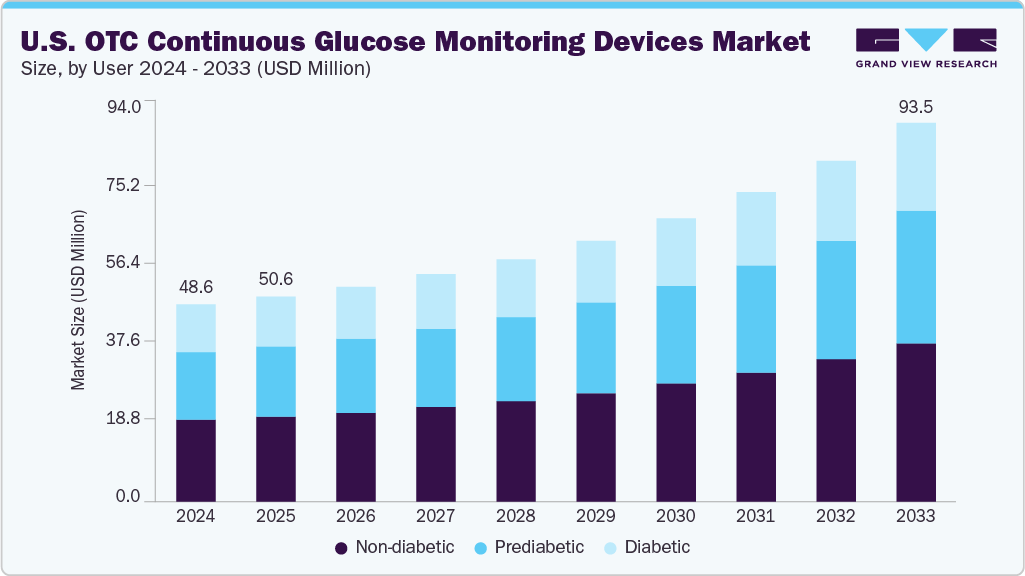 Source: Grand View Research, IR Documents, Primary Interviews, Paid DatabasesTo learn more about this report,
 Download Free Sample Report
 As of 2025, nearly 38 million American adults are diagnosed with diabetes, marking 11.5% of the total adult population in the U.S. Furthermore, around 97 million adults are prediabetic in the country. Obesity and a sedentary lifestyle are the major contributing factors to the prevalence of diabetes. Continued surge in type 2 diabetes cases and growing awareness of early diagnoses are likely to boost the demand for OTC CGM devices in the U.S.
Newly introduced OTC CGM devices are suggested to be used by type 2 diabetes that are not on insulin. As type 2 diabetes does not get the insurance for prescription CGM, OTC comes in as a help. OTC CGM sells at an affordable rate and without a prescription. Although the OTC CGMs are not covered by insurance, the HAS/FSA funds are generally accepted.
Avoiding type 2 diabetes requires healthy lifestyle modification, such as consistent physical activity, a low-fat and sugar diet, maintaining a healthy weight, and avoiding tobacco. Experts from the ADA and AACE also highlight the increasing role of Continuous Glucose Monitoring (CGM) devices in proactive diabetes management, especially in non-insulin users and prediabetic patients.
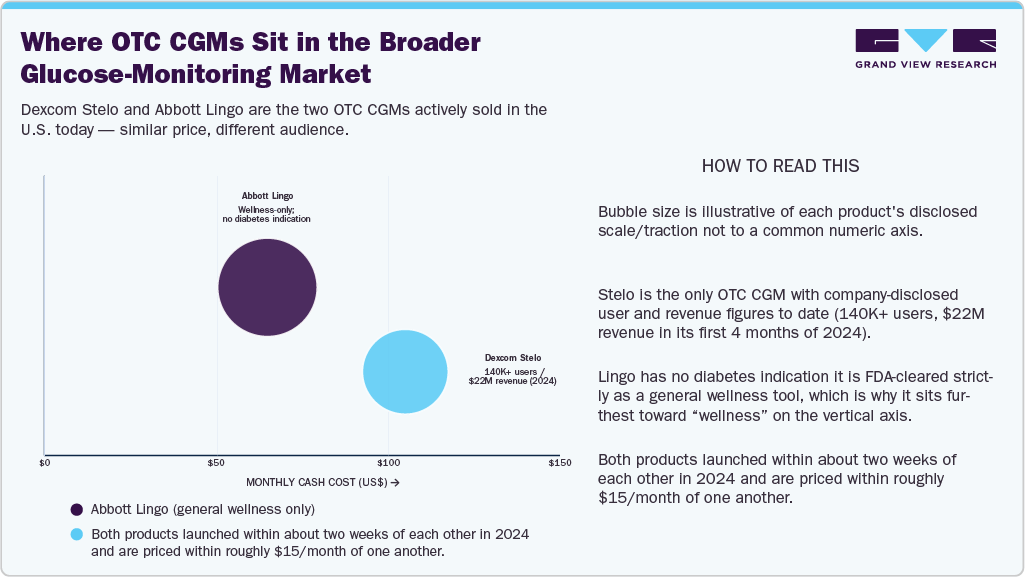
CGMs are transforming diabetes and metabolic health management by providing continuous glucose insights and reducing reliance on routine finger-stick testing. The U.S. OTC CGM landscape has expanded since the first FDA clearance in 2024, with Dexcom Stelo and Abbott’s Lingo and Libre Rio providing OTC options for different consumer and non-insulin-treated populations.
-
Dexcom Stelo - Stelo was the first FDA-cleared OTC CGM in the U.S., receiving clearance in March 2024 for adults aged 18 years and older who do not use insulin. In 2025, Dexcom expanded the platform with an AI-powered Smart Food Logging feature, allowing users to photograph meals and receive automatically generated nutritional information and glucose-related insights. In 2026, the FDA expanded Stelo's indication to children aged 2 years and older who do not use insulin, making it the first OTC CGM cleared for pediatric use. Dexcom also announced a redesigned Stelo app with AI-enabled pattern recognition, proactive coaching, and personalized insights.
-
Lingo by Abbott - Abbott's Lingo is an OTC glucose-monitoring system designed primarily for adults aged 18 years and older who are not using insulin and are interested in metabolic health and wellness. It is not intended to diagnose diabetes. In 2025, Abbott continued expanding its biowearables strategy, while its broader Libre ecosystem incorporated AI-enabled features such as Libre Assist, which provides personalized insights into how food choices may affect glucose levels.
-
Libre Rio by Abbott - Libre Rio was FDA-cleared in June 2024 as an OTC CGM for adults aged 18 years and older with Type 2 diabetes who do not use insulin and typically manage their condition through lifestyle modifications. The FDA continues to classify Libre Rio as an OTC integrated CGM for non-intensive glucose management.
Although the market has only two players, the unsaturated and untapped market space gives beneficial revenue opportunities for new entrants.
 To learn more about this report, Download Free Sample Report
 Dexcom Stelo vs. Abbott Lingo: Product Comparison
Feature
Dexcom Stelo
Abbott Lingo
Manufacturer
Dexcom
Abbott
OTC status
FDA-cleared OTC CGM
OTC consumer CGM
Primary positioning
Glucose management + metabolic health
Wellness + health optimization
Target users
Adults and, following the 2026 FDA expansion, eligible non-insulin users aged 2+
Adults interested in wellness and metabolic insights
Wear duration
15 days + 12-hour grace period
14 days
Connectivity
Bluetooth
Bluetooth
Water resistance
Up to 8 ft for 24 hours
Up to 3 ft for 30 minutes
Primary use cases
Non-insulin glucose management, lifestyle tracking, fitness
Lifestyle tracking, nutrition, exercise, health optimization
Hypoglycemia positioning
Not intended for people using insulin or those at risk of hypoglycemia
Primarily designed for general wellness rather than diabetes treatment
Nutrisense compatibility
Yes
Yes
Typical price
Around USD 89/month subscription
Around USD 83-89/month depending on plan
Key differentiation
Longer wear period and stronger diabetes/metabolic-health positioning
Stronger consumer wellness and behavior-change positioning
Market Dynamics
The industry in the U.S. is still in a nascent stage, giving wider room for innovation and expansion. The market players Dexcom and Abbott are targeting a broader application range, falling in preventive measures. Stelo by Dexcom and Lingo by Abbott promise blood glucose range monitoring for non-insulin users or prediabetics. These devices, after successful FDA approval, were made available on Amazon for easy marketing and avoiding healthcare gatekeepers, thus broadening the product’s image to a lifestyle wellness tool.
The growing awareness of metabolic health and preventive wellness is becoming an important driver of the U.S. OTC CGM market. Consumers without insulin-treated diabetes are interested in monitoring glucose patterns to better understand the impact of diet, exercise, sleep, and daily lifestyle choices on metabolic health. The availability of OTC CGM devices is lowering traditional barriers to access by allowing consumers to obtain glucose insights without a conventional prescription-based pathway. Growing interest in personalized health data, digital health applications, and proactive disease-risk management is further encouraging adoption among health-conscious consumers. In addition, manufacturers are increasingly positioning OTC CGMs as wellness and metabolic-health tools, expanding the potential consumer base beyond traditionally diagnosed diabetes populations.
The relatively high recurring cost of OTC CGM devices and replacement sensors can limit adoption among price-sensitive consumers in the U.S. Unlike traditional glucose meters, which generally involve relatively inexpensive test strips, CGMs require consumers to purchase sensors regularly to maintain continuous monitoring. Additional costs may arise from extended monitoring programs, premium app features, and subscription-based services offered by some manufacturers. Although OTC availability improves accessibility by eliminating certain prescription-related barriers, the cumulative cost of repeated sensor purchases can discourage long-term use, particularly among consumers who view CGM monitoring as a wellness expense rather than a medically necessary treatment. This cost barrier may also contribute to discontinuation after short-term experimentation and constrain penetration among lower-income and infrequent users.
Market Concentration & Characteristics
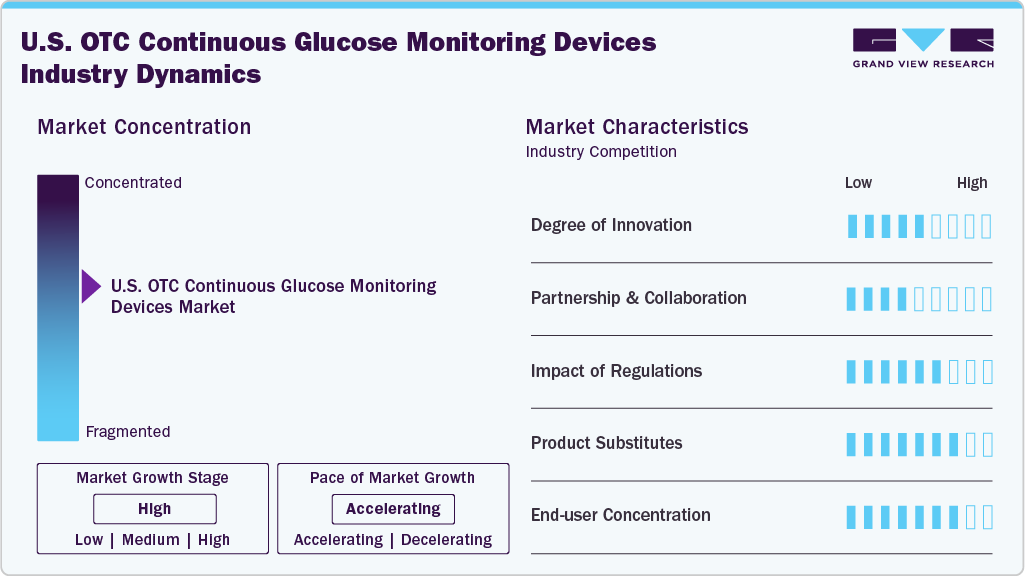
The industry is concentrated, with currently two players dominating market share through advanced technology and established distribution networks. The industry is characterized by rapid innovation, increasing demand for real-time glucose monitoring, and growing awareness of early diagnosis. New players and startups are projected to enter the field owing to the rising digital health adoption. The market has seen significant vertical expansion via e-commerce channels. High regulatory standards and pricing sensitivity also define the landscape, making innovation and affordability key to sustained growth and market penetration.
The industry has witnessed moderate but steadily increasing merger and acquisition (M&A) activity in recent years, driven by the growing demand for convenient, real-time glucose tracking solutions. Strategic acquisitions are primarily aimed at expanding product portfolios, integrating advanced sensor technologies, and gaining regulatory expertise to accelerate market entry. Larger medical device companies are acquiring innovative startups to access proprietary CGM technologies and strengthen distribution networks. Additionally, partnerships with digital health firms are common, enabling integration with mobile platforms and health apps. However, regulatory complexities and reimbursement challenges continue to influence the pace of M&A deals.
 To learn more about this report, Download Free Sample Report
 Regulations significantly impact the industry by ensuring safety, quality, and compliance. Under the FDA regulations, OTC CGM devices are classified as Class II medical devices under 21 CFR 862.1355, requiring FDA 510 (k) premarket notification approval for manufacturing and import. These regulations align U.S. standards with global practices, improving product reliability and user trust. However, they also pose challenges for smaller manufacturers due to complex documentation and extended approval timelines, potentially slowing market entry while encouraging innovation and adherence to international norms.
The key substitutes include prescription CGM devices that are widely adopted due to the favorable insurance scenario. Traditional self‑monitoring of blood glucose (SMBG) through finger-prick glucometers is another substitute for OTC CGM owing to its lower cost and easier accessibility. Flash glucose monitoring systems providing intermittent glucose readings without real-time alert also serve as alternatives. Adding to this, OTC at-home A1c test kits act as an alternative to OTC CGM.
The market is expanding beyond major metropolitan areas into Tier-2 and Tier-3 cities, driven by growing diabetes prevalence, rising awareness about metabolic health, easy availability, and rising disposable incomes. Urban regions remain the primary adopters due to better infrastructure and digital literacy. However, growth in the outskirts of the nation and semi-urban areas is increasing due to telemedicine, mobile health services, and e-commerce. Companies are adopting oligo-channel policy to reach a larger patient pool. Such approaches would reflect positive growth in the long run.
Analyst Perspective
The market represents an emerging segment of glucose monitoring, supported by increasing consumer interest in metabolic health, preventive monitoring, and convenient access to continuous glucose data without a prescription. The market includes OTC CGM sensors, digital monitoring platforms, and associated applications targeting non-diabetic, prediabetic, and non-insulin-treated diabetic consumers. Market growth is supported by increasing awareness of glucose management, expanding retail and direct-to-consumer distribution, product innovation, and the presence of established players such as Dexcom and Abbott. The availability of user-friendly CGM solutions is further broadening adoption beyond traditional diabetes management into lifestyle and wellness applications.
User Insights
The non-diabetic users segment dominated the market and accounted for the largest revenue share of 41.6% in 2025. Due to rising awareness about preventive care for diabetes and metabolic health, the adoption of OTC CGM is being observed in non-diabetic or fitness enthusiasts. For instance, by 2024, over 120 million Americans were active wellness tracker users, of which 66% accounted for adult Americans. Their wider adoption stems from ease of use, affordability, and accessibility across urban and emerging markets. Users benefit from continuous data, alerts, and insights into glucose trends without needing complex system integrations.
The prediabetic user segment is projected to experience the fastest growth in the market over the forecast period. The constant rise in the number of prediabetic populations in the U.S. is enhancing the adoption of diabetes monitoring devices, including OTC CGM. Their advanced features, such as real-time data collection and remote monitoring capabilities, appeal to patients seeking smarter and more fitting care. As technology becomes more affordable and users become more health-conscious, adoption is rising among tech-savvy consumers and healthcare providers. Regulatory approvals and increasing physician awareness will further drive market penetration and growth in this segment.
Application Insights
The lifestyle wellness segment dominated the market with a revenue share of 62.0% in 2025. OTC CGM like Dexcom Stelo is suggested to be used by non-insulin users and as a wellness tracker instead of a diabetes management device. The device fails to read blood glucose levels when out of range. An individual living with diabetes goes through out-of-range blood sugar hits often. In such instances, the failed alert on high or low blood glucose might cause inconvenience to the users, especially for diabetic patients who often face hyperglycemia. In addition, early onset and the need for continuous care are driving demand for real-time monitoring solutions, including OTC CGM for lifestyle wellness applications.
The diabetes monitoring segment is expected to register the fastest growth over the forecast period, driven by the rising prevalence of diabetes and prediabetes, increasing health awareness, and demand for convenient, needle-free glucose tracking. Advancements in sensor accuracy, wearable comfort, and smartphone integration are making CGM devices more appealing for daily monitoring without clinical supervision. Supportive regulatory approvals for OTC use, along with growing retail availability, are further accelerating adoption. Additionally, the trend toward preventive healthcare and self-management is boosting demand, positioning diabetes monitoring as the key growth driver in this segment.
Sales Channel Insights
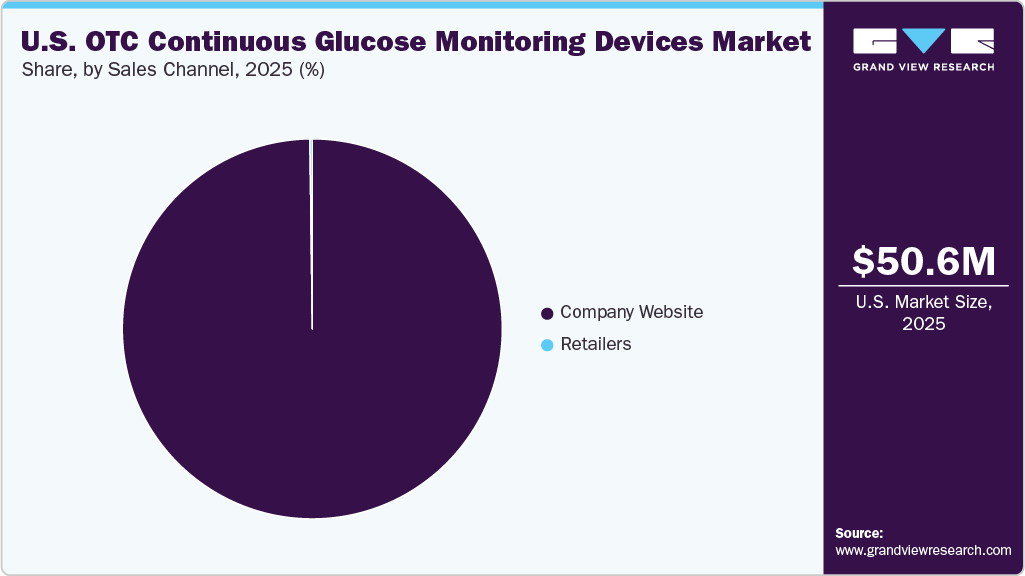
The company website segment dominated the market, accounting for the largest revenue share in 2025, supported by manufacturers' established direct-to-consumer platforms and broad digital reach. Leading companies, including Dexcom and Abbott, leverage their websites to facilitate direct purchasing of OTC CGM products, provide product education, and offer customer support and subscription services. Dexcom’s Stelo and Abbott’s Lingo are promoted through company-owned digital channels, enabling consumers to access detailed product information, pricing, usage guidance, and compatibility details before purchase. Growing consumer preference for online healthcare shopping and increasing awareness of OTC CGM benefits are further supporting direct company website sales.
 To learn more about this report, Download Free Sample Report
 The retailers segment is poised to achieve the fastest growth in the market due to various contributing factors. Majorly due to its convenient buying, it allows users, especially in remote and semi‑urban areas, to access a wide range of OTC CGM products without relying on company sites. Users could easily buy the OTC CGM along with other goods and avoid dealing with multiple packages. Moreover, inexpensive online pricing, frequent promotions, and bundled deals make OTC CGM devices more affordable. Add to this, e-commerce retailers such as Amazon offer features like ease of comparing specifications, reading peer reviews, and accessing customer support via digital platforms, which build user confidence, driving adoption across diverse demographic segments.
Key U.S. OTC Continuous Glucose Monitoring (CGM) Devices Company Insights
Key U.S. OTC continuous glucose monitoring (CGM) devices market players are Abbott and Dexcom, who have positioned themselves significantly in the U.S. OTC CGM market through innovation and competitive pricing. By focusing on the pricing side for users, user-friendliness by skipping the requirement for a prescription, and expanded access, they have significantly driven OTC CGM adoption.
Key U.S. OTC Continuous Glucose Monitoring Devices Companies
The following are the leading companies in the U.S. OTC continuous glucose monitoring devices market. These companies collectively hold the largest market share and dictate industry trends.
-
Abbott Laboratories
-
Dexcom Inc.
Competitive Benchmarking
Category
Operating Strategies
Competitive Edge
Weakness
Established Players (Dexcom, Abbott)
- Expand OTC and prescription CGM portfolios, strengthen direct-to-consumer and retail distribution, and increase adoption through physician, pharmacy, and digital-health partnerships.
- Strong global brands, extensive CGM experience, established distribution networks, large installed user bases, and continuous product innovation support strong market positioning.
- Premium pricing can limit adoption among price-sensitive consumers. Dependence on regulatory approvals, manufacturing capacity, and continued product innovation creates commercialization and competitive pressures.
Dexcom
- Focus on expanding OTC CGM adoption through Stelo, while strengthening digital integration, retail availability, and partnerships to reach non-insulin-treated users.
- Strong CGM specialization, established glucose-monitoring expertise, brand recognition, and advanced sensor technology provide a differentiated position in the OTC CGM market.
- Relatively higher product costs and strong dependence on the CGM segment may limit penetration in highly price-sensitive markets.
Abbott
- Expand FreeStyle Libre adoption through OTC and prescription offerings, broader retail availability, digital-health integration, and partnerships with healthcare providers and consumers.
- Broad global presence, large CGM user base, strong distribution infrastructure, and competitive product pricing support significant market penetration.
- Broad healthcare portfolio may create less category specialization than Dexcom, while regulatory requirements and competition in OTC CGM remain key challenges.
Recent Developments
-
In August 2026, Abbott and Google Health announced a multi-year partnership integrating glucose insights from Abbott’s Lingo OTC CGM with Google Health’s AI capabilities. The collaboration aims to deliver personalized metabolic-health guidance by combining glucose, activity, sleep, and wellness data while supporting large-scale research into everyday behaviors and metabolic health.
“The biggest challenge in healthcare isn't treating disease its helping people stay healthier longer. Abbott's leadership in biowearables and Google's expertise in AI and consumer technology create a powerful opportunity to make personalized insights available at unprecedented scale. Additionally, we are advancing metabolic health research through one of the largest real-world studies of its kind, generating new insights into the relationship between glucose and everyday behaviors. That research will help shape future AI-powered guidance and metabolic health innovation. Together, we can help people better understand their bodies and take action before health challenges become health conditions."
-Divisional Vice President of Abbott's Lingo Business
-
In February 2025, Abbott announced the availability of its Lingo OTC CGM device on Amazon. With the exclusive distribution deal, the company is targeting to expand the clientele in the nation and capture the untapped market.
-
In May 2025, Dexcom made its Stelo OTC CGM available via Amazon. The supply dealership with Amazon is expected to broaden Stelo’s (Dexcom) penetration into Type 2 diabetes, prediabetes, and lifestyle wellness.
U.S. OTC Continuous Glucose Monitoring (CGM) Devices Market Report Scope
Report Attribute
Details
Market size in 2025
USD 194.0 million
Estimated market size in 2026
USD 207.2 million
Projected market size by 2033
USD 403.5 million
Growth rate
CAGR of 9.6% from 2026 to 2033
Actual data
2021 - 2024
Forecast period
2026 - 2033
Quantitative units
Revenue in USD million and CAGR from 2026 to 2033
Report coverage
Revenue forecast, company ranking, competitive landscape, growth factors, and trends
Segments covered
User, application, sales channel
Country scope
U.S.
Key companies profiled
Abbott Laboratories; Dexcom Inc.
Customization scope
Free report customization (equivalent upto 8 analysts working days) with purchase. Addition or alteration to country, regional & segment scope.
Pricing and purchase options
Avail customized purchase options to meet your exact research needs. Explore purchase options
U.S. OTC Continuous Glucose Monitoring (CGM) Devices Market Report Segmentation
This report forecasts revenue growth at the country level and analyzes the latest industry trends and opportunities in each of the sub-segments from 2021 to 2033. For this study, Grand View Research has segmented the U.S. OTC continuous glucose monitoring (CGM) devices market report based on user, application, and sales channel.
-
User Outlook (Revenue, USD Million, 2021 - 2033)
-
Non-diabetic
-
Prediabetic
-
Diabetic
-
-
Application Outlook (Revenue, USD Million, 2021 - 2033)
-
Lifestyle Wellness
-
Diabetes Monitoring
-
-
Sales Channel Outlook (Revenue, USD Million, 2021 - 2033)
-
Company Website
-
Retailers
-
Research Methodology
The U.S. OTC continuous glucose monitoring (CGM) devices market figures in this report are based on a proven research process that combines executive interviews with secondary research from proprietary databases, company filings, and recognized regulatory and institutional sources. Market size is built through value-chain sizing - reconciling supply-side and demand-side estimates - and triangulated with bottom-up and top-down approaches. Every estimate passes multiple levels of expert validation before publication, with each U.S. OTC continuous glucose monitoring (CGM) devices segment quantified using the revenue-capture definitions in the table below.
Segment Definition
User
Revenue capture definition
Non-diabetic
Revenue captured from consumers without diabetes who purchase CGM devices, sensors, subscriptions, or related digital health services for wellness, fitness, metabolic health, nutrition, preventive monitoring, or performance optimization. Revenue includes direct device purchases, recurring subscriptions, sensor replacements, and complementary digital services marketed specifically toward general health and lifestyle management.
Prediabetic
Revenue is captured from individuals with prediabetes who purchase CGM devices, sensors, monitoring programs, subscriptions, or digital health services to track glucose patterns and support lifestyle modification. Revenue includes device and sensor sales, recurring monitoring subscriptions, coaching programs, and other consumer-paid services intended to improve metabolic health and delay diabetes progression.
Diabetic
Revenue captured from individuals diagnosed with diabetes who purchase CGM systems, sensors, transmitters, readers, subscriptions, and associated monitoring services. Revenue includes recurring sensor replacements, device purchases, digital platforms, and monitoring programs paid directly by consumers or through applicable reimbursement channels, reflecting diabetes-management demand across the addressable patient population.
Application
Revenue capture definition
Lifestyle Wellness
Revenue captured from consumers using glucose-monitoring solutions primarily for wellness, nutrition, fitness, metabolic optimization, weight management, and preventive health rather than diabetes treatment. Revenue includes CGM devices, sensors, subscriptions, coaching, analytics, and digital wellness programs purchased through direct-to-consumer or employer-supported channels.
Diabetes Monitoring
Revenue captured from products and services specifically used to monitor and manage blood glucose among individuals with diabetes. This includes CGM sensors, transmitters, readers, monitoring platforms, subscriptions, data analytics, and related services. Revenue may be generated through direct consumer purchases, healthcare providers, pharmacies, insurers, or other reimbursement and distribution channels.
Sales Channel
Revenue capture definition
Company Website
Revenue captured through direct-to-consumer sales conducted on a manufacturer's or healthcare company's own website. This includes CGM devices, sensors, subscriptions, accessories, and bundled monitoring services. The channel enables companies to retain a larger portion of transaction value while supporting recurring revenue through subscriptions, replenishment programs, and direct customer relationships.
Retailers
Revenue captured through third-party retail channels, including pharmacies, supermarkets, mass merchants, specialty stores, and online retailers. Revenue reflects sales of CGM devices, sensors, readers, accessories, and related products distributed through retail partners. Manufacturers typically recognize revenue through wholesale or channel sales, while retailers capture margins from subsequent consumer transactions.
Estimation Model
Step
Stage
Key Question
Process Steps
Data Sources
01
Scope Definition
What products, users, and revenues are included in the U.S. OTC CGM market?
- Define OTC CGM market scope based on FDA-cleared products intended for purchase without a prescription.
- Identify included product categories
- Define target user groups, including non-insulin-using individuals with Type 2 diabetes, prediabetes
- Establish geographic, temporal, and utilization scope
FDA, company product pages, company filings, clinical publications
02
Build the Product Base
How many U.S. consumers could realistically use an OTC CGM?
- Estimate the U.S. population within the age groups permitted by currently available OTC CGM indications.
- Quantify relevant populations with Type 2 diabetes, prediabetes, and non-diabetic consumers interested in glucose monitoring
- Adjust the addressable population based on product-specific contraindications, insulin use, hypoglycemia risk, age restrictions, and other FDA-approved indications.
- Estimate the serviceable addressable population
CDC National Diabetes Statistics Report, U.S. Census Bureau, FDA device clearances
03
Estimate Penetration
What proportion of eligible consumers will adopt OTC CGMs, and how frequently will they use them?
- Estimate OTC CGM penetration among the serviceable addressable population using historical CGM adoption
- Assess conversion from traditional glucose-monitoring methods and non-users toward OTC CGM
- Estimate consumer retention and replacement behavior based on different factors
- Forecast adoption considering product launches, increasing consumer awareness, expanding FDA indications
FDA clearance databases, CDC, company disclosures, product specifications, consumer surveys
04
Revenue Conversion
How many OTC CGM sensors will be purchased, and what revenue will they generate?
- Collect manufacturer-listed consumer prices/ASPs for OTC CGM sensors, subscriptions, bundles, and applicable starter kits.
- Calculate annual sensor consumption based on the wear period of each product and expected replacement frequency.
- Estimate revenue by multiplying annual sensor volume × realized ASP
- Cross-check with sales and import data
Manufacturer price pages, company financial statements, FDA product information
Delivered Customizations
This report has been delivered with the following In-depth customizations
Client Request
Customization Delivered
Value Adds
Competitive Analysis
Conducted a comprehensive competitive landscape assessment of the U.S. OTC continuous glucose monitoring (CGM) market, covering leading manufacturers, OTC CGM product portfolios, device features, sensor duration, mobile-app capabilities, pricing models, distribution channels, and target consumer groups. The analysis evaluates the competitive positioning of established diabetes-device companies and emerging digital-health players, with emphasis on direct-to-consumer commercialization, prescription-free access, consumer wellness positioning, glucose insights, app integration, and digital engagement. The assessment also tracks product launches and upgrades, regulatory clearances, strategic partnerships, retail and e-commerce expansion, pricing initiatives, subscription models, and ecosystem integration with smartphones and health platforms.
Enables stakeholders to understand the competitive intensity and evolving business models within the U.S. OTC CGM market. The analysis supports competitor benchmarking, product positioning, pricing strategy, channel expansion, partnership identification, and portfolio planning. It also helps companies identify opportunities to differentiate through consumer-friendly product design, lower-cost access, subscription offerings, digital health integration, and personalized glucose insights.
Market Dynamics Analysis
Conducted a detailed analysis of the drivers, restraints, opportunities, and challenges shaping the U.S. OTC CGM market. Key growth factors assessed include increasing consumer interest in metabolic health, growing awareness of glucose monitoring beyond diagnosed diabetes, demand for preventive and personalized health management, increasing obesity and prediabetes concerns, smartphone penetration, and the expansion of digital health and wearable ecosystems. The analysis evaluates restraints such as consumer affordability, recurring sensor costs, limited insurance coverage for OTC products, consumer education requirements, data interpretation concerns, device adherence, and competition from smartwatches and other wellness technologies. Opportunities assessed include expansion into weight management, fitness, nutrition, preventive health, employer wellness, and digital therapeutics, along with subscription-based services and integration with telehealth and health-management platforms.
Provides stakeholders with a clear understanding of the factors influencing demand, affordability, and market expansion. The assessment helps companies identify high-potential consumer segments, optimize pricing and subscription strategies, prioritize distribution channels, evaluate new application areas, and anticipate changes in consumer spending behavior.
PESTEL Analysis
Conducted a comprehensive PESTEL assessment of the U.S. OTC CGM market, evaluating political, economic, social, technological, environmental, and legal factors influencing market development. The political and regulatory assessment examines FDA oversight, OTC device classification and clearance pathways, federal healthcare policies, and the evolving regulatory environment for consumer-facing glucose-monitoring technologies. The economic analysis evaluates U.S. healthcare expenditure, inflation, disposable income, out-of-pocket healthcare spending, consumer affordability, pricing pressures, and the economic impact of recurring sensor purchases. The social assessment considers increasing health consciousness, preventive healthcare adoption, obesity and metabolic-health concerns, consumer interest in personalized health data, and demand for convenient at-home monitoring.
Enables stakeholders to understand how the U.S. regulatory, economic, consumer, technological, environmental, and legal environment may influence OTC CGM adoption and commercialization. The analysis supports market-entry planning, regulatory strategy, pricing decisions, risk assessment, product development, data-privacy planning, and long-term investment prioritization.
Frequently Asked Questions About This Report
Some key players operating in the U.S. OTC continuous glucose monitoring (CGM) devices market include Abbott Laboratories and Dexcom Inc.
Key factors driving the growth of the U.S. OTC continuous glucose monitoring (CGM) devices market include the rising adoption of lifestyle wellness devices, including CGM, to ease diabetes management, and the easy access to wearable health tools, which are fueling demand.
The lifestyle wellness application segment accounted for the largest revenue share in 2025.
The company website sales channel segment accounted for the largest revenue share in 2025.
The U.S. OTC continuous glucose monitoring (CGM) devices market size was valued at USD 194.0 million in 2025 and is estimated at USD 207.2 million for 2026.
The U.S. OTC continuous glucose monitoring (CGM) devices market is expected to grow at a CAGR of 9.6% from 2026 to 2033, reaching USD 403.5 million by 2033.
The non-diabetic users segment accounted for the largest revenue share in 2025, due to the rising awareness about preventive care for diabetes and metabolic health.
About the Author(s)
Medical Devices Research Team
Healthcare · Medical DevicesThis report was authored by the medical devices research team at Grand View Research - comprising two research analysts, one senior research analyst, and one industry expert - with specialized expertise in the medical devices segment of the healthcare industry. All findings are based on proprietary healthcare databases, executive interviews, and regulatory analysis, subject to internal peer review prior to publication.
Last Updated:
Speak to Analyst

Customize this report to your needs - add regions, segments, or data points, with 20% free customization.
Or view our licence options:


ISO 9001:2015 & 27001:2022 Certified
We are GDPR and CCPA compliant! Your transaction & personal information is safe and secure. For more details, please read our privacy policy.


