
- Home
- »
- Medical Devices
- »
-
U.S. Peripheral Liquid Embolic Agents Market Report, 2036GVR Report cover
![U.S. Peripheral Liquid Embolic Agents Market (2026 - 2036)Report]()
U.S. Peripheral Liquid Embolic Agents Market (2026 - 2036)
Size, Share & Trends Analysis Report By Product, By Application (Hypervascular Tumors, Type II Endoleaks), By End-use (Ambulatory Surgical Centers, Specialty Clinics/Vascular Centers), By Region, And Segment Forecasts
Market Size, 2025
$99.7MMarket Estimate, 2026
$110.3MMarket Forecast, 2036
$222.7MCAGR, 2026–2036
7.3%U.S. Peripheral Liquid Embolic Agents Market Summary
The U.S. peripheral liquid embolic agents market size was valued at USD 99.7 million in 2025 and is projected to grow from USD 110.3 million in 2026 to USD 222.7 million by 2036, at a CAGR of 7.3% from 2026 to 2036. The rising prevalence of peripheral artery disease (PAD) and other vascular disorders in the U.S. is increasing demand for vascular interventions.
Key Market Trends & Insights
- By product: The ethylene vinyl alcohol copolymer (EVOH) segment dominated the market in 2025.
- By application: The venous applications segment led the market with the largest revenue share of 47.5% in 2025.
- By end-use: The hospitals & interventional radiology (IR) suites segment led the market with the largest revenue share of 76.4% in 2025.
Market Size & Forecast
- Market size in 2025: USD 99.7 Million
- Estimated market size in 2026: USD 110.3 Million
- Projected market size by 2036: USD 222.7 Million
- CAGR (2026-2036): 7.3%
In addition, minimally invasive endovascular procedures are gaining adoption due to reduced surgical trauma, shorter hospital stays, and faster recovery. The growing availability of interventional radiology services and advanced catheter-based techniques is further supporting the use of liquid embolic agents in peripheral vascular procedures. The growing cancer burden in the U.S. is increasing the number of patients requiring peripheral vascular embolization for the management of hypervascular tumors, particularly in interventional oncology. Procedures such as transarterial embolization (TAE) and transarterial chemoembolization (TACE) selectively occlude tumor-feeding vessels, creating a demand for embolic technologies capable of controlled, targeted vessel occlusion.
Liquid embolic agents are particularly relevant because they can penetrate distal and complex vascular networks and form an occlusive cast within the targeted vessels. The increasing use of image-guided embolization for liver and other hypervascular tumors, together with advances in microcatheter delivery and embolic technology, is expanding the range of applications for peripheral liquid embolics. In the U.S., embolization therapies accounted for a substantial share of the interventional oncology procedures market, with liver cancer the largest cancer-type segment in 2025. According to the American Cancer Society, 42,240 new cases of primary liver and intrahepatic bile duct cancer were expected in the U.S. in 2025, with approximately 30,090 deaths, highlighting the substantial patient population requiring effective treatment options, including transarterial embolization.
Estimated New Cancer Cases in the U.S. by State and Cancer Type
State
Prostate
Urinary Bladder
Uterine Cervix
Uterine Corpus
Alabama
5,440
1,240
230
920
Arizona
5,380
2,090
270
1,450
California
29,600
7,220
1,490
7,480
Florida
26,920
8,070
1,160
5,720
Georgia
10,360
2,390
460
2,000
Texas
21,070
5,160
1,420
5,270
Source: American Cancer Society
In addition, the rising prevalence of varicose veins in the U.S. is supporting market growth by increasing demand for minimally invasive venous interventions. Varicose veins result from weakened or damaged venous valves, leading to venous reflux, impaired blood flow, and enlargement of superficial veins. The growing number of patients seeking treatment for symptoms such as pain, swelling, and discomfort is encouraging the adoption of minimally invasive endovascular therapies. Peripheral liquid embolic agents can be used in selected venous embolization procedures to achieve controlled vessel occlusion, contributing to their demand in the treatment of symptomatic venous disorders.
Varicose and spider veins tend to appear in people's 30s and 40s. It’s more common in women and among those who are on their feet a lot, including store clerks, nurses and doctors, restaurant workers, and manual laborers. Genetics plays a big role: if both parents have varicose veins, their children have roughly a 90% chance of having them too. - said Dr. Max Wohlauer, a University of Colorado School of Medicine associate professor of vascular surgery who treats patients at the UCHealth Cardiac and Vascular Center on the Anschutz Medical Campus.
According to the data published by Precision Medical Specialists in 2025, the following graph illustrates the prevalence of varicose veins among Americans aged 40-80 years.
Market Dynamics
The market is experiencing steady growth due to the increasing prevalence of peripheral vascular disorders, rising adoption of minimally invasive endovascular embolization procedures, and expanding use of embolization in interventional oncology. Peripheral liquid embolic agents are used to achieve controlled vessel occlusion in applications such as peripheral hemorrhage control, arteriovenous malformations, hypervascular tumor embolization, and other complex vascular interventions. The market is further supported by advances in angiographic imaging, microcatheter technology, and liquid embolic formulations that enable precise delivery and improved procedural control. In addition, the growing U.S. cancer burden, increasing incidence of vascular disorders, and continued shift toward minimally invasive interventions are expected to support market growth during the forecast period.
The increasing prevalence of peripheral artery disease (PAD) and other vascular disorders in the U.S. is expanding the patient population requiring peripheral vascular interventions. Conditions such as PAD, arteriovenous malformations, peripheral aneurysms, and other abnormal vascular conditions may require embolization to control blood flow, manage bleeding, or occlude abnormal vessels. The growing burden of diabetes, obesity, hypertension, and cardiovascular disease, particularly among the aging population, is further contributing to the prevalence of peripheral vascular disorders. As the number of patients requiring minimally invasive vascular interventions increases, demand for peripheral liquid embolic agents used for targeted vessel occlusion is expected to grow.
The high cost of liquid embolic agents and the overall expense of peripheral embolization procedures can limit market adoption in the U.S. These procedures often require specialized angiography systems, microcatheters, guidewires, imaging equipment, and trained interventional specialists, thereby increasing total treatment costs. The relatively high price of advanced liquid embolic products may also encourage hospitals and physicians to consider alternative embolic materials, such as coils or particles, when clinically appropriate. In addition, cost considerations can restrict the use of liquid embolic agents, particularly in procedures where lower-cost embolization options can provide comparable clinical outcomes.
The increasing use of catheter-based embolization for controlling traumatic and non-traumatic hemorrhage presents a significant opportunity for peripheral liquid embolic agents in the U.S. Interventional embolization can provide rapid and minimally invasive control of active bleeding in selected patients, particularly when conventional surgery may involve greater procedural risk. Improvements in emergency imaging, angiographic systems, microcatheter technology, and interventional radiology capabilities are enabling faster identification and treatment of bleeding vessels. The development of liquid embolic agents with predictable delivery, controlled deployment, and effective vessel occlusion could further expand their use in emergency hemorrhage management and strengthen market demand.
Market Concentration & Characteristics
The market is characterized by a high degree of innovation, driven by continuous improvements in embolic formulations, delivery control, radiopacity, catheter compatibility, and the ability to achieve predictable vessel occlusion. Manufacturers are developing liquid embolic agents with improved handling characteristics, controlled precipitation or polymerization, enhanced fluoroscopic visibility, and greater suitability for complex peripheral vascular anatomy. Recent product development and regulatory activity demonstrate continued innovation in liquid embolic technologies, including EVOH-based formulations and newer systems designed for specific peripheral embolization applications.
The market has witnessed moderate M&A activity, with companies seeking to strengthen their interventional vascular portfolios, expand geographic reach, and gain access to complementary embolization technologies. Strategic transactions and distribution expansions can help manufacturers broaden their product portfolios and establish stronger positions across peripheral vascular and interventional radiology markets. However, M&A activity remains more moderate than in highly consolidated medical device segments because the liquid embolic agent market is relatively specialized and product portfolios are often developed around specific clinical applications.
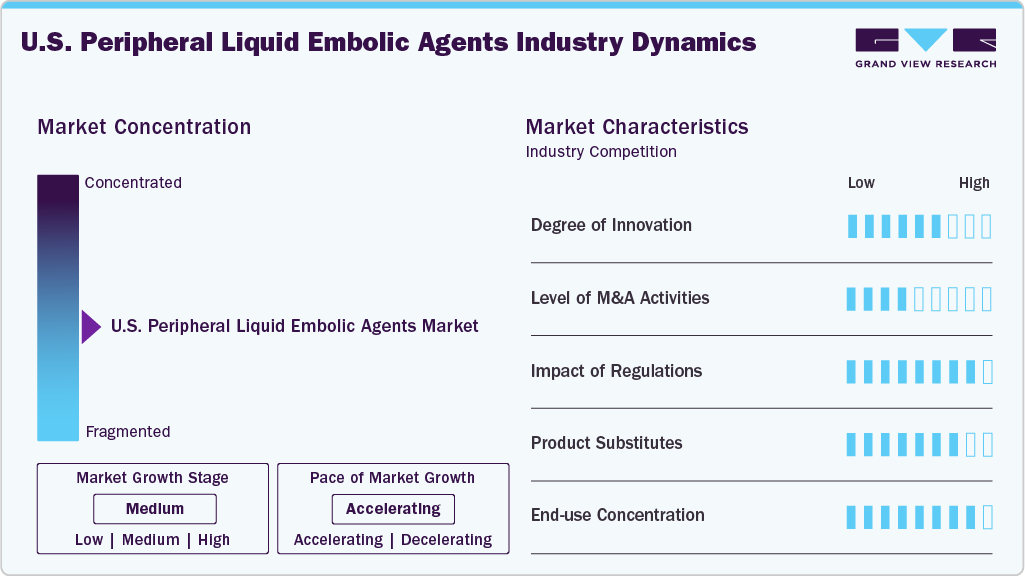
The market faces significant regulatory scrutiny, as manufacturers must demonstrate product safety, performance, manufacturing consistency, and clinical effectiveness before commercialization. FDA requirements can include extensive premarket review, clinical evidence, quality system compliance, labeling requirements, and post-market surveillance. For instance, the FDA approved the Lava Liquid Embolic System through the PMA pathway specifically for embolization of arterial hemorrhage in the peripheral vasculature. Such regulatory requirements increase development costs and time-to-market but create barriers to entry and support product quality and patient safety.
The market faces moderate to high competition from substitute embolization technologies, particularly embolization coils, vascular plugs, particles, and other solid or injectable embolic materials. The selection of an embolic modality depends on the target vessel, vascular anatomy, required degree of occlusion, bleeding source, and physician preference. Coils and vascular plugs can be particularly suitable for focal vessel occlusion, while liquid embolic agents offer advantages for treating complex vascular anatomy, diffuse vascular abnormalities, or vessels that are difficult to catheterize selectively. In addition, substitute products pose a meaningful competitive constraint, although liquid embolic agents retain differentiated applications in which controlled liquid delivery and penetration into complex vascular networks provide clinical advantages.
Demand for peripheral liquid embolic agents is highly concentrated among hospitals, academic medical centers, and specialized interventional radiology and vascular centers where endovascular embolization procedures are routinely performed. These facilities typically have access to fluoroscopy systems, specialized catheterization laboratories, trained interventional radiologists, and multidisciplinary vascular teams required for complex embolization procedures. Use is particularly concentrated in high-volume centers performing peripheral hemorrhage control, vascular malformation treatment, tumor embolization, and other complex endovascular interventions.
Analyst Perspective
The market is expected to witness steady growth, supported by the increasing adoption of minimally invasive endovascular procedures, rising prevalence of peripheral vascular disorders, and growing use of embolization for the management of vascular malformations, hemorrhage, tumors, aneurysms, and other complex peripheral vascular conditions. The market is also benefiting from advances in liquid embolic formulations, improved catheter-delivery systems, enhanced radiopacity and visualization, and greater physician familiarity with controlled embolization techniques.
Product Insights
The ethylene vinyl alcohol copolymer (EVOH) segment dominated the market in 2025 and is expected to grow at the fastest CAGR over the forecast period. The growth of the EVOH segment is supported by the ability of EVOH-based liquid embolic agents to achieve controlled, durable vascular occlusion in complex peripheral anatomy. Unlike solid embolic materials that primarily occlude the vessel at the point of deployment, liquid embolics can travel with blood flow and penetrate deeper into the target vascular bed, allowing treatment of distal vessels and irregular vascular spaces that may be difficult to access using coils or other solid embolics. In addition, the increasing physician familiarity with EVOH technology, combined with its ability to penetrate complex vascular networks, is expected to support continued adoption of EVOH-based liquid embolics in the U.S.
Application Insights
The venous applications segment dominated the market, accounting for 47.5% in 2025, and is expected to grow at the fastest CAGR during the forecast period. Increasing utilization of catheter-based venous embolization is driving demand for liquid embolic agents in varicocele, PCS, and selected varicose vein treatments. These conditions involve abnormal venous flow, reflux, or dilated veins that can be treated by selectively occluding the affected vessels and redirecting blood flow. Liquid embolic agents are particularly useful when the target comprises tortuous, irregular, or multiple venous channels, as the material can distribute throughout the target vascular space rather than relying exclusively on mechanical placement at a single point. The growing use of minimally invasive venous interventions and the increasing availability of liquid embolic technologies designed for peripheral applications are expected to support utilization in these indications.
The type II endoleak segment in the market is expected to grow significantly during the forecast period. The need to manage persistent Type II endoleaks following endovascular aneurysm repair (EVAR) is a key driver of peripheral liquid embolic agents. Type II endoleaks occur when blood continues to enter the aneurysm sac through collateral vessels after EVAR and may require intervention if the leakage is persistent and accompanied by aneurysm sac enlargement. Liquid embolics, particularly EVOH-based agents, can be delivered via feeding vessels and deposited within the endoleak cavity, thereby embolizing the endoleak nidus and associated inflow and outflow vessels. Their ability to penetrate complex vascular spaces makes them suitable for treating persistent or anatomically challenging endoleaks.
End-use Insights
The hospitals & interventional radiology (IR) suites segment dominated the market, accounting for 76.4% in 2025. The increasing number of hospitals in the U.S. is supporting growth in the hospitals and interventional radiology (IR) suites segment by expanding access to advanced vascular care and minimally invasive embolization procedures. The U.S. had approximately 6,100 hospitals in 2024, up from 6,093 in 2023, reflecting the continued expansion of healthcare infrastructure. The growing availability of hospitals with specialized IR departments, angiography suites, and vascular surgery units enables the treatment of aneurysms, arteriovenous malformations, hypervascular tumors, and other peripheral vascular conditions. The increasing adoption of image-guided procedures and advanced catheter-based technologies is further supporting the use of peripheral liquid embolic agents in hospital and interventional radiology (IR) suite settings.
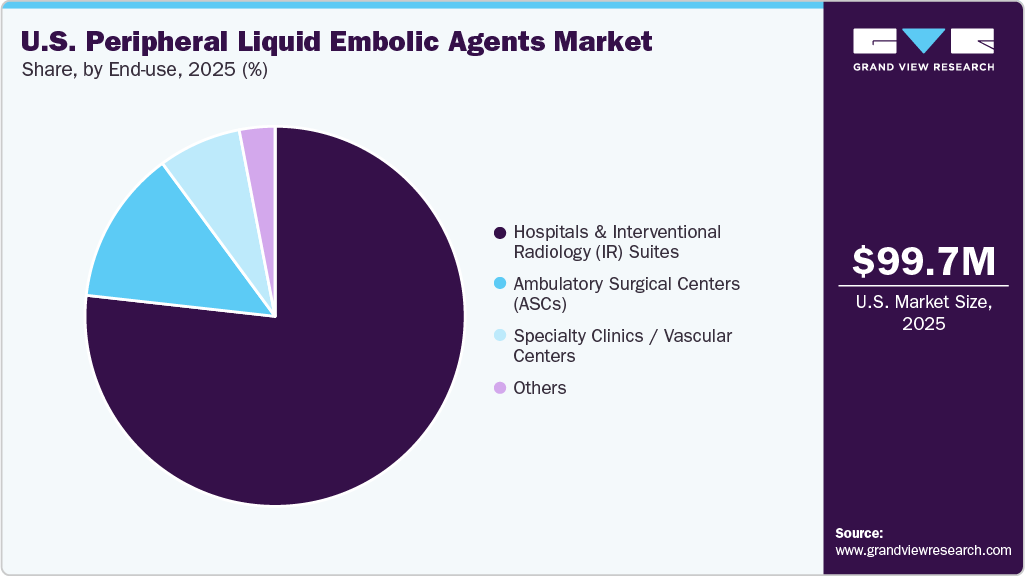
The Ambulatory Surgical Centers (ASCs) segment of the market is expected to grow at the fastest rate during the forecast period. The growing shift of selected peripheral vascular procedures to outpatient and ambulatory settings is creating opportunities for greater use of liquid embolic agents in ASCs. Advances in catheter technology, imaging systems, anesthesia, and procedural protocols have made selected peripheral interventions suitable for same-day or short-stay treatment in appropriately selected patients. This trend is particularly relevant to less complex venous embolization procedures, including selected varicocele and pelvic venous interventions, where prolonged hospitalization may not be required. As ASCs expand their vascular capabilities and invest in appropriate imaging and interventional infrastructure, they can increasingly serve as an alternative setting for selected peripheral embolization procedures, supporting the growth of liquid embolic agent utilization.
Key U.S. Peripheral Liquid Embolic Agents Company Insights
Some of the key companies in the market include Boston Scientific Corporation and Terumo Medical Corporation. Major players in the market are focusing on product innovation and development of advanced formulations with improved delivery control, penetration, visibility, and safety. FDA approvals and clinical trials are being pursued to broaden product indications and strengthen market presence.
Key U.S. Peripheral Liquid Embolic Agents Companies
-
Boston Scientific Corporation
-
Terumo Medical Corporation (MicroVention)
-
BlackSwan Vascular (Sirtex Medical)
-
Instylla, Inc.
Competitive Benchmarking
Category
Operating Strategies
Competitive Edge
Weakness
Established Players (Boston Scientific Corporation
Terumo Medical Corporation (MicroVention))
- Focus on developing and expanding advanced liquid embolic agent portfolios for peripheral vascular embolization, with emphasis on controlled delivery, improved radiopacity, biocompatibility, and compatibility with microcatheter-based procedures.
- Expand market presence through strategic partnerships with hospitals, interventional radiology centers, specialty physicians, distributors, and healthcare systems.
- Strong global brand recognition, extensive R&D capabilities, broad interventional product portfolios, established distribution and service networks, and strong regulatory expertise.
- Comprehensive physician training, clinical support, and integration with established catheter and embolization platforms enable these companies to maintain leadership in premium embolization solutions.
- High R&D and clinical development costs, stringent regulatory requirements, and premium product pricing may limit adoption among cost-sensitive healthcare providers.
- Long product development and approval cycles and increasing competition from specialized and lower-cost manufacturers also pose challenges.
Emerging Players (BlackSwan Vascular (Sirtex Medical),
Instylla, Inc.)
- Expanding distribution in emerging markets and developing innovative liquid embolic technologies for peripheral vascular applications.
- Emphasize continuous product improvements, controlled embolization, delivery-system compatibility, clinical validation, international certifications, and expansion through regional distributors and specialty interventional radiology networks.
- Competitive pricing, specialized product offerings, faster product development, and growing presence across Asia-Pacific, Latin America, and the Middle East.
- Ability to address demand for minimally invasive embolization among cost-sensitive healthcare providers while gradually strengthening international distribution, clinical adoption, and product capabilities.
- Comparatively lower global brand recognition, smaller direct sales and service networks, and limited penetration in North America and Western Europe.
- Dependence on regional distributors, relatively lower R&D budgets, limited clinical evidence compared with established competitors, and challenges in obtaining regulatory approvals across highly regulated markets may restrict broader expansion.
Recent Developments
-
In August 2026, Medtronic received U.S. FDA approval for the Onyx12 Liquid Embolic System (LES) for middle meningeal artery embolization as an adjunct to surgery for symptomatic subacute or chronic subdural hematoma. The approval marks the first U.S. indication for Onyx 12 LES, expanding the Onyx LES portfolio alongside Onyx 18 and Onyx 34. Its lower viscosity enables more distal penetration with comparable reflux, while its 1-minute shake time allows faster preparation than conventional tantalum-based liquid embolic systems requiring approximately 20 minutes.
-
In August 2025, Instylla received U.S. FDA premarket approval (PMA) for its Embrace Hydrogel Embolic System (HES) for embolization of hypervascular tumors in peripheral arteries ≤5 mm. The approval supports its use in tumor embolization procedures, particularly for hypervascular tumors in organs such as the liver, kidney, and bone. Embrace HES uses two low-viscosity aqueous liquid precursors that crosslink within blood vessels to form a soft polyethylene glycol (PEG) hydrogel, enabling deep penetration into the tumor vascular bed and controlled blood-flow occlusion.
U.S. Peripheral Liquid Embolic Agents Market Report Scope
Report Attribute
Details
Market size value in 2025
USD 99.7 million
Estimated market size in 2026
USD 110.3 million
Projected market size by 2036
USD 222.7 million
Growth rate
CAGR of 7.3% from 2026 to 2036
Actual estimates/Historical data
2021 - 2025
Forecast period
2026 - 2036
Quantitative units
Revenue in USD million and CAGR from 2026 to 2036
Report coverage
Revenue forecast, company ranking, competitive landscape, growth factors, and trends
Segments covered
Product, application, end-use, region
Country scope
U.S.
Key companies profiled
Boston Scientific Corporation; Terumo Medical Corporation (MicroVention); BlackSwan Vascular (Sirtex Medical); Instylla, Inc.
Customization scope
Free report customization (equivalent up to 8 analyst’s working days) with purchase. Addition or alteration to country, regional & segment scope
Pricing and purchase options
Avail customized purchase options to meet your exact research needs. Explore purchase options
U.S. Peripheral Liquid Embolic Agents Market Report Segmentation
This report forecasts revenue growth at the country level and provides an analysis of the latest industry trends in each of the sub-segments from 2021 to 2036. For this study, Grand View Research has segmented the U.S. peripheral liquid embolic agents market report based on product, application, and end-use:
-
Product Outlook (Revenue, USD Million, 2021 - 2036)
-
Ethylene Vinyl Alcohol Copolymer (EVOH)
-
Others
-
-
Application Outlook (Revenue, USD Million, 2021 - 2036)
-
Peripheral Vascular Hemorrhage
-
Hypervascular Tumors
-
Peripheral Vascular Malformations / AVMs
-
Aneurysms / Pseudoaneurysms
-
Type II Endoleaks
-
Portal Vein Embolization (PVE)
-
Venous Applications (varicocele, PCS, varicose veins)
-
Other Peripheral Embolization Applications
-
-
End-use Outlook (Revenue, USD Million, 2021 - 2036)
-
Hospitals & Interventional Radiology (IR) Suites
-
Ambulatory Surgical Centers (ASCs)
-
Specialty Clinics / Vascular Centers
-
Others
-
Research Methodology
The U.S. peripheral liquid embolic agents market figures in this report are based on a proven research process that combines executive interviews with secondary research from proprietary databases, company filings, and recognized regulatory and institutional sources. Market size is built through value-chain sizing-reconciling supply-side and demand-side estimates-and triangulated with bottom-up and top-down approaches. Every estimate passes multiple levels of expert validation before publication, with each U.S. peripheral liquid embolic agents segment quantified using the revenue-capture definitions in the table below.
Segment Definition
Segment - Product
Revenue capture definition
Ethylene Vinyl Alcohol Copolymer (EVOH)
Revenue generated from EVOH-based liquid embolic agents, consisting of ethylene vinyl alcohol copolymer dissolved in DMSO and typically containing radiopaque materials such as tantalum. These non-adhesive agents form a cohesive polymer cast within the target vessels and are used for controlled and permanent embolization of peripheral vascular lesions, including arteriovenous malformations, hypervascular tumors, bleeding, and Type II endoleaks.
Other Liquid Embolics
Revenue generated from other liquid embolic agents, including gelatin-based, hydrogel, conformable, and DMSO-polymer formulations that achieve vessel occlusion through mechanisms such as gel formation, polymer precipitation, or other in-situ material transformations. These products are used across peripheral vascular applications, including venous embolization, hemorrhage control, vascular malformations, tumors, and endoleaks, depending on the formulation and clinical indication
Estimation Model
No.
Approach
Description
01
Bottom-Up Estimation
The market is estimated by assessing the annual volume of peripheral liquid embolization procedures performed across U.S. hospitals, interventional radiology suites, specialty vascular centers, and ambulatory surgical centers. The analysis considers procedure volumes across key applications. Product utilization is further assessed by liquid embolic type, including EVOH and other liquid embolics such as gelatin, hydrogel, coformable, and DMSO-polymer formulations, along with procedure-specific average selling prices.
02
Top-Down Approach
The market estimation begins with an assessment of the broader U.S. embolization devices and peripheral vascular intervention market, followed by evaluation of the share attributable to peripheral liquid embolic agents. The analysis considers key indicators such as peripheral vascular disease prevalence, venous interventions, EVAR-related endoleak treatments, and the adoption of minimally invasive image-guided interventions. Product-level penetration and application-specific utilization rates are then applied to derive the addressable liquid embolic agents market.
03
Supply-Side Analysis
The supply-side analysis evaluates manufacturers based on product portfolio, FDA-approved indications, production capabilities, product availability, pricing, distribution networks, and geographic presence across the market. The assessment covers EVOH-based products and other liquid embolic technologies, while evaluating product launches, clinical trials, regulatory approvals, and manufacturing expansion. Manufacturer sales, product adoption, hospital procurement, distributor relationships, and application expansion are also considered to validate market estimates.
Customization Table
Client Request
Customization Delivered
Value Adds
Peripheral Liquid Embolic Agents Product Portfolio & Application Analysis
Conducted a comprehensive assessment of the peripheral liquid embolic agents product landscape, covering EVOH and other liquid embolic technologies such as gelatin, hydrogel, conformable, and DMSO-polymer formulations. Evaluated product adoption across venous applications, including varicocele, pelvic congestion syndrome, and varicose veins, as well as Type II endoleaks, peripheral hemorrhage, hypervascular tumors, and other complex peripheral vascular interventions.
Helps stakeholders identify high-growth product and application segments, understand technology-specific adoption, assess clinical use cases, and evaluate opportunities for portfolio expansion across peripheral vascular interventions.
End-User Adoption & Procurement Landscape Analysis
Analyzed adoption of peripheral liquid embolic agents across hospitals and interventional radiology suites, ambulatory surgical centers, specialty vascular centers, and other relevant healthcare settings. Assessed the influence of angiography infrastructure, physician expertise, procedure complexity, procurement practices, reimbursement considerations, and migration of selected embolization procedures toward outpatient settings.
Enables manufacturers to identify high-demand end-user segments, optimize distribution and procurement strategies, understand facility-level adoption patterns, and assess opportunities for expansion into outpatient and ambulatory settings.
Product Positioning & Manufacturer Competitiveness Assessment
Evaluated leading peripheral liquid embolic agent manufacturers based on product portfolio breadth, embolic material, viscosity and delivery characteristics, approved indications, regulatory status, clinical evidence, manufacturing capabilities, pricing, geographic presence, and distribution strength. The assessment also considered FDA approvals, clinical trials, product launches, technology development, strategic partnerships, and expansion into peripheral vascular applications.
Supports competitive benchmarking, identifies product differentiation opportunities, evaluates emerging technologies, strengthens go-to-market strategies, and helps companies identify gaps in current product portfolios and opportunities for regulatory and application expansion.
Frequently Asked Questions About This Report
Key factors include the rising prevalence of peripheral artery disease (PAD) and other vascular disorders in the U.S. is increasing demand for vascular interventions. In addition, minimally invasive endovascular procedures are gaining adoption due to reduced surgical trauma, shorter hospital stays, and faster recovery.
The venous applications held the largest share of 47.5% in 2025 and is the fastest-growing segment over the forecast period.
The hospitals & interventional radiology (IR) suites segment led the market with the largest revenue share of 76.4% in 2025.
Key players include Boston Scientific Corporation; Terumo Medical Corporation (MicroVention); BlackSwan Vascular (Sirtex Medical); Instylla, Inc.
The U.S. peripheral liquid embolic agents market size was valued at USD 99.7 million in 2025 and is estimated at USD 110.3 million for 2026.
The U.S. peripheral liquid embolic agents market is expected to grow at a CAGR of 7.3% from 2026 to 2036, reaching USD 222.7 million by 2036.
The ethylene vinyl alcohol copolymer (EVOH) segment dominated the market in 2025.
About the Author(s)
Medical Devices Research Team
Healthcare · Medical DevicesThis report was authored by the medical devices research team at Grand View Research - comprising two research analysts, one senior research analyst, and one industry expert - with specialized expertise in the medical devices segment of the healthcare industry. All findings are based on proprietary healthcare databases, executive interviews, and regulatory analysis, subject to internal peer review prior to publication.
Last Updated:
Speak to Analyst


Customize this report to your needs — add regions, segments, or data points, with 20% free customization.
Or view our licence options:


ISO 9001:2015 & 27001:2022 Certified
We are GDPR and CCPA compliant! Your transaction & personal information is safe and secure. For more details, please read our privacy policy.


