
- Home
- »
- Animal Health
- »
-
Veterinary Biologics Market Size & Share Report, 2026-2033GVR Report cover
![Veterinary Biologics Market (2026 - 2033)Report]()
Veterinary Biologics Market (2026 - 2033)
Size, Share & Trends Analysis Report By Animal (Production, Companion), By Route of Administration (Parenteral, Mucosal, Other Routes), By Sales Channel, By Product, By Region, And Segment Forecasts
Market Size, 2025
$16.4BMarket Estimate, 2026
$18.1BMarket Forecast, 2033
$38.7BCAGR, 2026–2033
11.4%Veterinary Biologics Market Summary
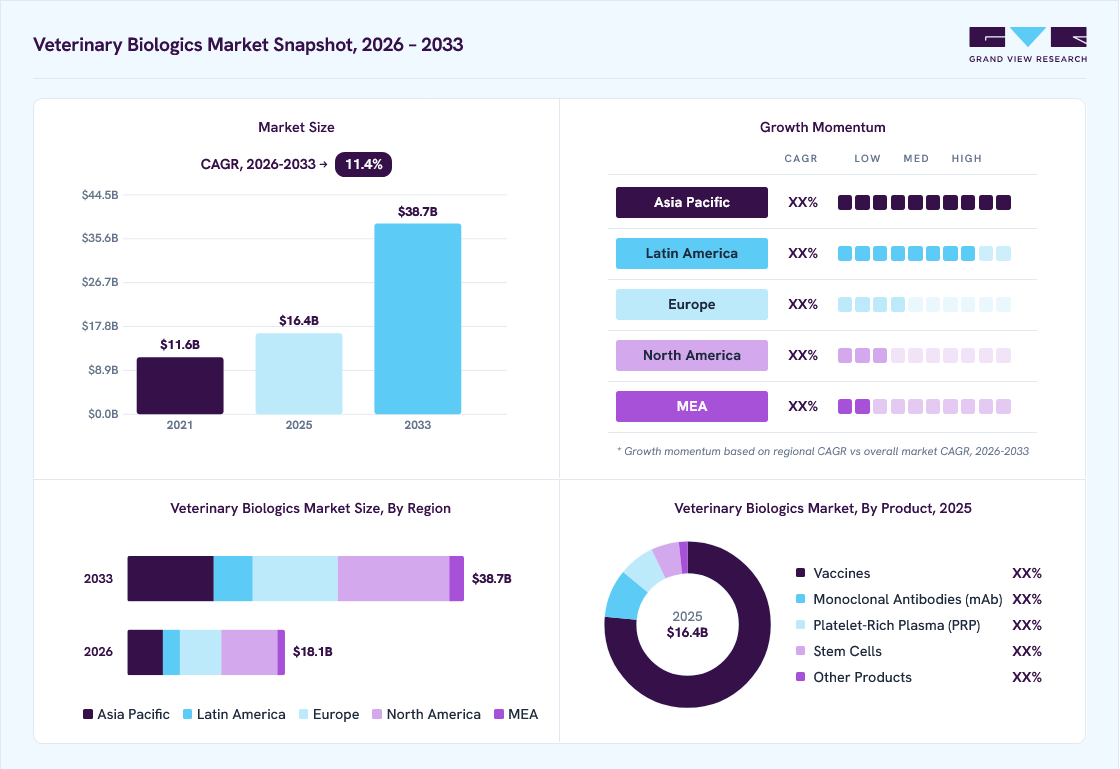
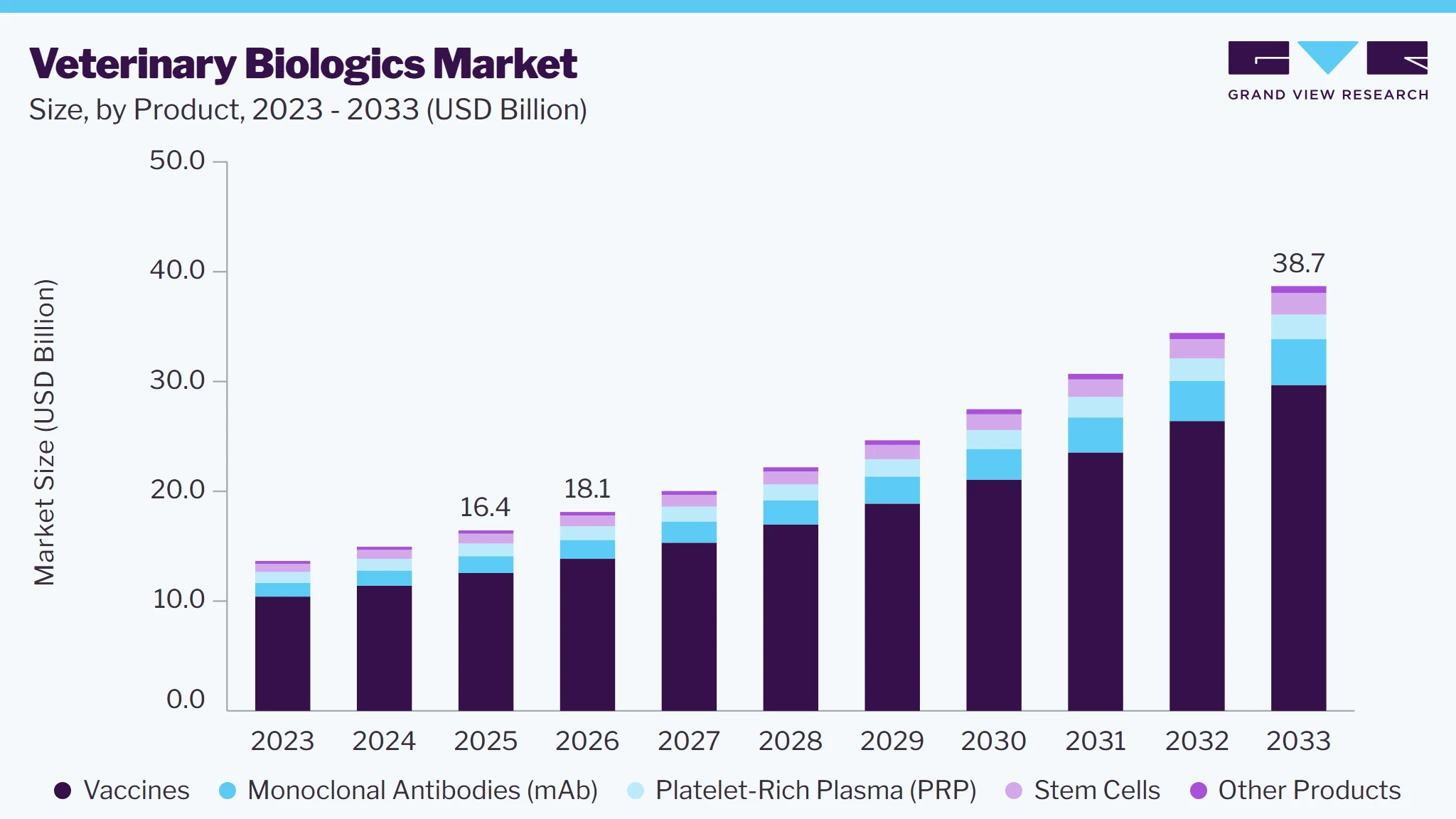
The global veterinary biologics market size was valued at USD 16.4 billion in 2025 and is projected to grow from USD 18.1 billion in 2026 to USD 38.7 billion by 2033, at a CAGR of 11.4% from 2026 to 2033. The market in North America dominated with a revenue share of 35.6% in 2025. The industry is primarily driven by rising adoption and spending on companion animal biologics, as well as expanding livestock disease prevention and control programs.
Key Market Trends & Insights
- By animal: Production animals segment held the largest market share of 68.0% in 2025.
- By product: Vaccines segment held the largest market share of 76.4% in 2025.
- By sales channel: Institutional sales segment held the largest market share of 51.5% in 2025.
- By route of administration: Parenteral segment held the largest market share of 82.3% in 2025.
Regional Highlights
- Largest regional market: North America (35.6% revenue share, 2025)
- Fastest-growing regional market: Asia Pacific (highest CAGR, 2026-2033)
- By country: The U.S. held the largest market share in 2025
Market Size & Forecast
- Market size in 2025: USD 16.4 Billion
- Estimated market size in 2026: USD 18.1 Billion
- Projected market size by 2033: USD 38.7 Billion
- CAGR (2026-2033): 11.4%
Market Dynamics
The market is shifting from conventional disease prevention toward a broader portfolio spanning vaccines, monoclonal antibodies, regenerative therapies, and other biologically derived treatments. Rising companion-animal healthcare spending and persistent infectious-disease risks across production animals are expanding demand across preventive and therapeutic applications. At the same time, advances in biologic platforms are widening the addressable opportunity, with RNA-based vaccination entering veterinary commercialization and monoclonal antibodies (mAb) gaining traction in chronic conditions such as allergic disease and osteoarthritis. Manufacturing capacity is consequently becoming a strategic differentiator, as recent investment in mAb production capacity signals the need to align supply infrastructure with accelerating biologics adoption.
One of the most crucial factors driving the market is advances in biologic development and manufacturing, as improvements in platform technologies are enabling the commercialization of more targeted vaccines and therapeutic biologics across species. The development of self-amplifying RNA technology in veterinary vaccination is expanding the range of biological platforms available to manufacturers, while advances in monoclonal antibody production are improving the ability to scale newer therapies for companion animals.
For instance, in April 2026, the European Medicines Agency (EMA) recommended authorization of the first EU veterinary vaccine containing self-amplifying RNA as an active substance, establishing a regulatory pathway for next-generation vaccine technologies. Furthermore, in August 2026, Elanco completed a USD 120 million manufacturing expansion that increased mAb production capacity more than fourfold (~ 25,000 sqft), indicating that manufacturing scale is becoming a critical component of commercialization. This combination of technology advancement and production capacity is accelerating product diversification and strengthening the competitive position of manufacturers with integrated R&D and manufacturing capabilities.
High biologic development and manufacturing costs are constraining the market because advanced platforms require specialized production infrastructure, stringent quality controls, and substantial investment across development and commercialization. Veterinary biologics manufacturers must also maintain approved facilities and demonstrate product purity, safety, potency, and efficacy before commercial distribution, increasing fixed costs and lengthening capital recovery periods. These requirements disproportionately affect emerging biotechnology companies, as lower production volumes across species and indications limit economies of scale and make early-stage investment more difficult to justify.
The cost burden is particularly pronounced for complex modalities such as monoclonal antibodies, where dedicated manufacturing capacity requires substantial capital expenditure. Elanco’s investment to expand its Kansas biologics facility demonstrates the scale of infrastructure required to support mAb production. Consequently, capital-intensive manufacturing favors established animal-health companies with existing facilities and diversified portfolios, while restricting participation by smaller developers and slowing broader commercialization of novel biologic platforms.
The integration of regenerative biologics into veterinary care presents a disruptive opportunity by expanding treatment options beyond conventional symptom management toward therapies designed to modulate inflammation, support tissue repair, and restore function. Advances in mesenchymal stem cell therapies, platelet-rich plasma, and tissue-derived biologics are creating opportunities across chronic inflammatory, orthopedic, and musculoskeletal conditions in companion and performance animals. For instance, in May 2026, Gallant advanced its canine osteoarthritis stem cell program through the FDA-CVM expanded conditional approval pathway, while clinical data showed improved mobility outcomes.
Furthermore, a March 2026 veterinary professional survey found that 94.5% of respondents expect regenerative medicine to become a standard treatment option for dogs and cats within the next decade, indicating growing clinical acceptance. The emergence of off-the-shelf cell therapies could further simplify administration, expand clinic-level adoption, and create new recurring treatment models, positioning regenerative biologics as a key source of product innovation and differentiation.
Market Concentration & Characteristics
The global industry exhibits moderate concentration, with multinational animal-health companies holding strong positions in advanced biologics such as monoclonal antibodies, while regional manufacturers remain active in vaccines and livestock health programs. Expanding manufacturing footprint and differentiated pipelines indicate advantages from scale, specialized production, and regulatory capabilities. At the same time, vaccine production is broadening across markets such as Vietnam and India, supporting a fragmented supplier base across production-animal applications and regional sectors.
Innovation intensity is high, supported by rapid progression across RNA vaccines, monoclonal antibodies, stem cells, and cell-based technologies. Concurrent advances in stem-cell therapies and canine iPSC research are widening the range of biologically derived approaches under development. This positions technology differentiation, platform development, and manufacturing readiness as major competitive factors.
M&A activity appears relatively limited within the supplied evidence base, with competitive expansion driven more strongly by internal product development, manufacturing investment, and capability building. At the same time, the emergence of specialized regenerative-medicine developers can create future partnership, licensing, or acquisition opportunities for larger animal-health companies seeking access to differentiated biologic platforms.
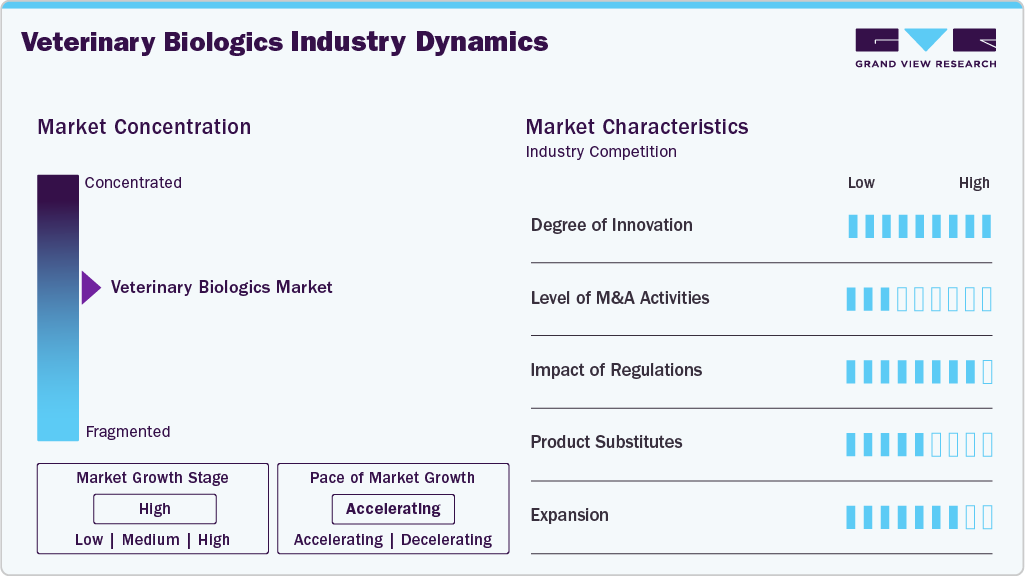
Regulatory requirements exert a high impact because veterinary biologics require extensive quality, safety, efficacy, and manufacturing oversight, while newer platforms introduce additional regulatory considerations. For instance, India expanded CCS-NIAH testing responsibilities from two vaccines to 42, increasing national testing capacity while strengthening quality assurance. These developments improve sector governance but can lengthen product development timelines and increase compliance requirements for manufacturers.
Product substitution presents a medium impact because biologics address clinical needs through differentiated mechanisms that may have limited direct alternatives, particularly in monoclonal antibodies and regenerative therapies. However, conventional pharmaceuticals, vaccines, supportive therapies, and other treatment modalities continue to compete across several animal health indications. Substitution pressure, therefore, varies materially by product category and disease area.
Expansion is a high-impact industry characteristic, supported by geographic manufacturing growth, rising vaccine capacity, and wider commercialization of advanced biologics. Vietnam increased veterinary vaccine production and exports, indicating growing regional manufacturing capabilities. In India, expanded centralized vaccine-testing capacity is intended to improve regulatory clearance and product availability. These developments indicate that geographic reach, production capacity, and regulatory infrastructure are becoming important drivers of sector expansion.
Analyst Perspective
The market is entering a phase where regulatory constraint, not demand growth, is the primary determinant of competitive position. Antimicrobial-use restrictions in Europe and tightening VFD oversight in North America are compressing the addressable base for conventional antibiotic premixes, forcing incumbents to reallocate R&D toward phytogenic, probiotic, and enzyme-based substitutes at the same pace regulators close the antibiotic pathway. This favors formulators already carrying regulatory-affairs infrastructure and functional-ingredient pipelines, Kemin Industries and Huvepharma among them, over diversified players still weighted toward legacy antimicrobial revenue. Companion animal categories are absorbing production-animal formulation expertise faster than incumbents are building dedicated companion-channel distribution, opening a wedge for functional-ingredient entrants such as Host Defense to establish direct-oral share before animal health majors complete the pivot.
R&D Landscape
R&D in veterinary biologics is shifting from adapted human-health tools toward purpose-built, species-specific platforms. Cell line engineering and high-throughput bioprocessing are compressing discovery timelines, letting manufacturers move faster from antigen identification to scalable production across companion animal, livestock, and equine indications. Manufacturing itself is becoming more flexible, with modular bioreactor suites and thermostable formulations easing both multi-species production and cold-chain-constrained distribution. Analytical characterization has matured alongside this, with potency and immunogenicity assays now central to regulatory approval and batch consistency.
The clearest commercial momentum, however, sits in targeted delivery: caninized and felinized monoclonal antibodies are displacing legacy small-molecule therapies in chronic pain and dermatology, backed by extended-release formats that improve compliance. Underpinning all of this is growing AI and digital integration, from predictive immunogenicity modeling to supply chain tracking, which is reducing attrition risk and protecting biologic integrity from manufacturing through administration.
Animal Insights
The production animals segment accounted for the largest share of 68.0% in 2025. The segment spans poultry, swine, bovine, ovine and caprine, and other production species. Growth is driven by the high economic impact of infectious diseases across intensive livestock production, increasing focus on herd and flock health, and expansion of organized vaccination programs. Greater vaccine availability, improved testing infrastructure, and strengthening of disease surveillance systems across emerging economies are improving preventive-care coverage. These factors are sustaining biologics demand where disease prevention directly supports animal productivity, food security, and trade continuity.
The companion animals segment is anticipated to grow at the fastest CAGR over the forecast period. The segment spans canine, feline, equine, and other companion species. Growth is driven by increasing spending on advanced veterinary care, rising incidence of chronic and age-related disorders, and broader adoption of targeted and regenerative therapies. Greater clinical interest in monoclonal antibodies, stem-cell therapies, allergen-specific immunotherapy, and other biologics is expanding treatment options for conditions requiring longer-term management. Increasing veterinary acceptance of biologic interventions is also accelerating movement toward more specialized and personalized treatment approaches, supporting faster segment expansion than production-animal applications.
Product Insights
The vaccines segment dominated the market in 2025 with a share of 76.4%. This segment spans attenuated live, inactivated, subunit, DNA and RNA, recombinant, autologous, and other vaccines. Segment growth is driven by the continuing need for preventive disease control across livestock and companion animals, particularly as disease outbreaks create economic, welfare, and trade-related consequences. Expansion of vaccine testing and manufacturing capacity is improving supply availability, while technological advances are broadening vaccine development toward newer platforms. The emergence of RNA-based veterinary vaccines is further expanding technological diversity and supporting sustained innovation within the segment.
The monoclonal antibodies (mAb) segment is anticipated to grow at the fastest CAGR over the forecast period. Growth is driven by increasing demand for targeted management of chronic conditions, particularly osteoarthritis and allergic diseases in companion animals. Compared with conventional therapies, mAbs can provide greater target specificity and longer treatment intervals, supporting treatment continuity and veterinary acceptance. Expanding research across additional disease targets is widening clinical applications, while improvements in biologic manufacturing are increasing production capacity. Together, these factors are moving mAbs from a highly specialized biologic category toward a broader component of routine companion-animal care.
Sales Channel Insights
The institutional sales segment accounted for the largest market share of 51.5% in 2025, driven by the clinical administration requirements of many veterinary biologics and the continued role of hospitals, veterinary clinics, livestock organizations, and government agencies in disease prevention. Institutional procurement is particularly important for vaccination campaigns, herd-health programs, and biologics requiring professional administration or controlled storage. Expansion of public veterinary-health infrastructure and centralized product testing is further supporting organized procurement, maintaining institutional sales as the primary channel for biologics across production and companion animals.
The e-commerce segment is expected to grow with the highest CAGR over the forecast period. Growth is driven by increasing digitalization of pet healthcare purchasing, rising companion-animal healthcare expenditure, and growing consumer preference for convenient product access. Expansion of online veterinary platforms is improving availability across geographically dispersed customer groups and supporting repeat purchasing behavior. The trend is particularly favorable for companion-animal biologic products and associated healthcare offerings that can be purchased digitally before administration through veterinary professionals. As pet owners become more engaged in ongoing preventive and chronic-care management, digital channels are gaining a larger role in product discovery and procurement.
Route of Administration Insights
The parenteral segment dominated the market with a share of over 82.3% in 2025. Growth is driven by the administration requirements of major veterinary biologic categories, particularly vaccines, monoclonal antibodies, stem-cell therapies, and platelet-rich plasma. Injectable delivery enables controlled dosing and supports administration within veterinary clinics, which is particularly relevant for biologics requiring professional handling or monitoring. As biologic portfolios become more sophisticated, continued development of clinic-administered therapies is sustaining the importance of parenteral routes across preventive, therapeutic, and regenerative applications.
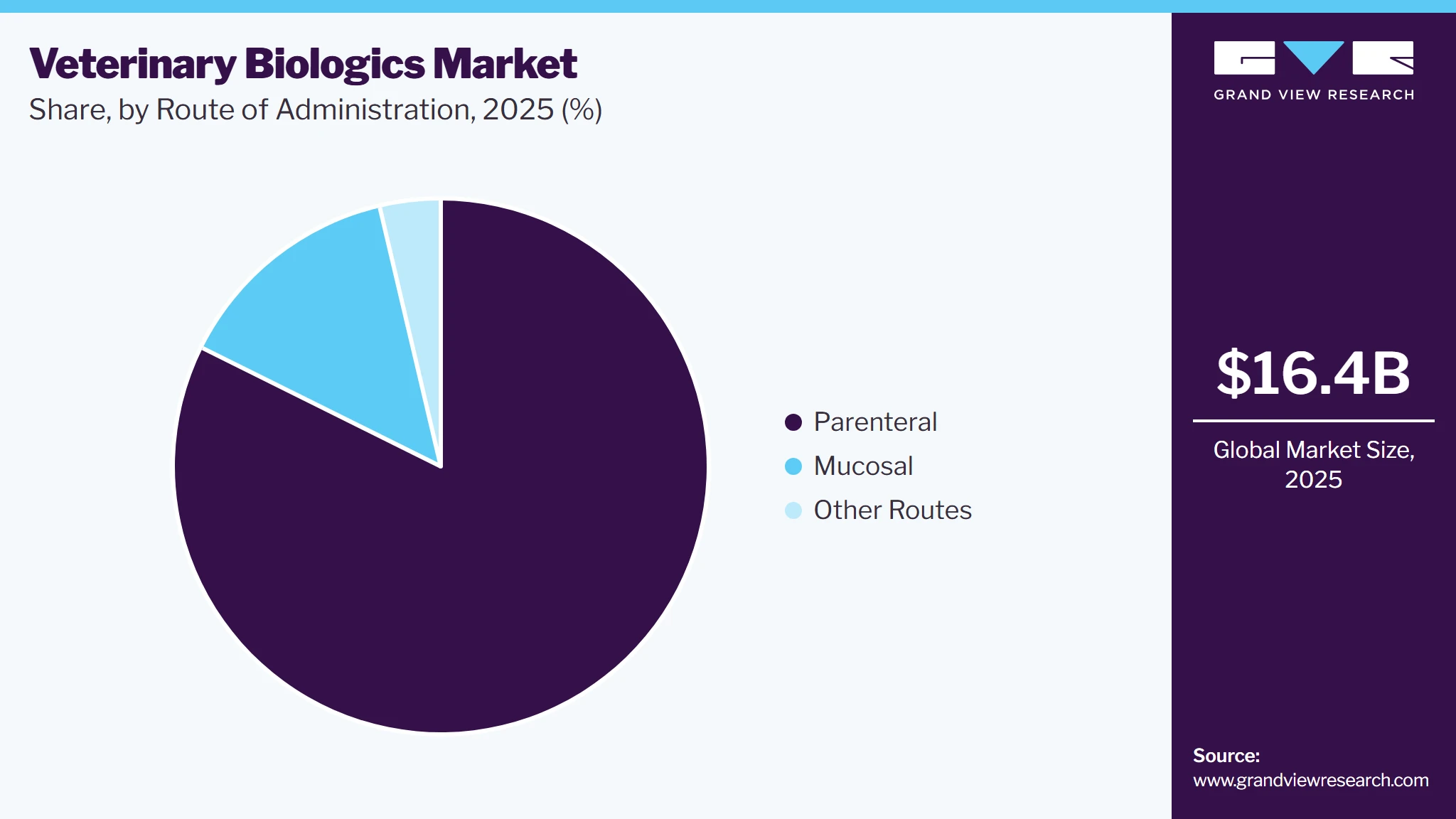
The mucosal segment is expected to grow with the highest CAGR over the forecast period, driven by increasing interest in non-injectable vaccination approaches that can simplify administration, improve practicality in mass animal-health programs, and support localized immune responses. This is particularly relevant for large-scale livestock vaccination, where reducing handling requirements can improve operational efficiency. Continued advances in vaccine platforms are creating opportunities to develop biologics suited to alternative delivery mechanisms. As product developers pursue greater administration convenience and broader field applicability, mucosal delivery is gaining strategic relevance within veterinary biologics.
Regional Insights
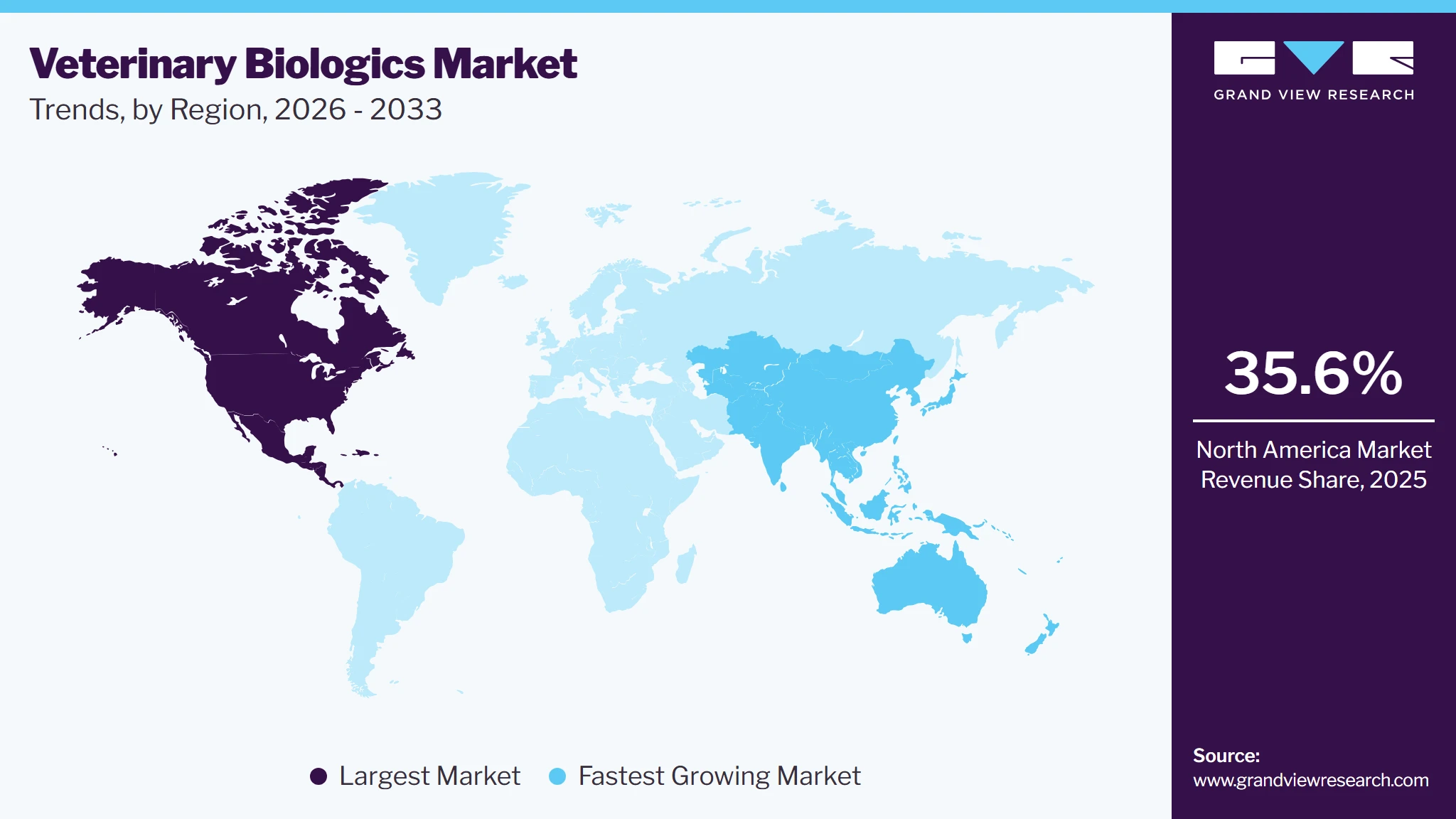
The North America veterinary biologics market held the largest revenue share of 35.6% in 2025,driven by high adoption of advanced veterinary biologics, established animal-health infrastructure, and strong investment in next-generation therapies. Growth is being supported by greater utilization of targeted biologics for chronic companion-animal conditions, alongside continued demand for preventive vaccination across production animals. Increasing veterinary interest in stem-cell therapies and regenerative medicine is broadening clinical applications, while expansion of specialized biologic manufacturing capacity is improving supply capabilities for complex products. Mature regulatory and veterinary care systems further facilitate faster integration of innovative biologic therapies into routine clinical practice.
U.S. Veterinary Biologics Market Trends
The veterinary biologics market in the U.S. held the largest share in North America in 2025, driven by advanced veterinary care infrastructure, high companion-animal healthcare expenditure, and strong progression of targeted and regenerative therapies. Increasing clinical interest in monoclonal antibodies is expanding treatment options for chronic dermatological and musculoskeletal conditions, while growing acceptance of stem-cell therapy is supporting broader adoption of regenerative medicine. Continued research activity across areas such as reproductive health and cell-based therapies is further strengthening the innovation pipeline. These trends are increasing treatment sophistication and supporting wider biologic utilization across veterinary practices.
The Mexico veterinary biologics market is estimated to grow at the fastest CAGR during the forecast period,driven by increasing emphasis on routine vaccination, rising companion-animal ownership, and broader participation in preventive veterinary care. Structured vaccination schedules for dogs, including recurring rabies and core-disease immunization, support consistent demand for biologic products. Greater awareness of preventive animal healthcare is also encouraging more regular veterinary visits and vaccination adherence. Expansion of veterinary retail and distribution infrastructure is improving product availability, while increasing engagement among pet owners is supporting wider uptake of preventive biologics across urban and semi-urban areas.
Europe Veterinary Biologics Market Trends
The veterinary biologics market in Europe is witnessing steady growth,driven by strong regulatory capabilities, high veterinary healthcare standards, and accelerating adoption of advanced biologic platforms. The region is progressing toward next-generation vaccination technologies, with self-amplifying RNA receiving regulatory support for veterinary use. At the same time, increasing availability of advanced therapies for osteoarthritis and other chronic conditions is broadening biologic applications in companion animals. Strong disease-control requirements across livestock, sustained vaccination programs, and established research capabilities are further supporting demand.
The UK veterinary biologics market held the largest regional share in 2025, fueled by strong veterinary research capabilities, active disease-prevention programs, and increasing uptake of advanced biologic therapies. Continued focus on livestock disease prevention is supporting demand for innovative vaccines, particularly for economically consequential infections. Regulatory progression for newer biologic treatments is also expanding therapeutic options in companion animals, including longer-acting approaches for chronic conditions. The combination of established veterinary infrastructure, research capacity, and regulatory support is facilitating faster translation of biologic innovations into clinical use and sustaining the UK’s leading position within the European region.
The veterinary biologics market in Sweden is expected to grow at the fastest rate over the forecast period. The growth is driven by strong preventive-health practices, advanced veterinary research, and increasing development of differentiated biologic solutions. Continued attention to infectious disease prevention, particularly in equine health, is supporting vaccine utilization and clinical awareness. Sweden’s participation in European animal-health initiatives is also strengthening coordinated approaches to disease control and antimicrobial stewardship. Increasing activity around programmable biologics and novel therapeutic platforms is broadening innovation opportunities.
Asia Pacific Veterinary Biologics Market Trends
The veterinary biologics market in Asia Pacific is expected to grow at the fastest CAGR over the forecast period, driven by the expanding veterinary healthcare infrastructure, increasing livestock vaccination coverage, and rising government investment in biologic testing and quality systems. Growing animal populations and production intensity are increasing the need for disease prevention, while improved domestic vaccine capabilities are strengthening product availability. Investments in centralized testing and regulatory capacity are supporting higher product throughput and quality assurance. At the same time, rising companion-animal healthcare needs and advances in cell-based research are broadening applications beyond conventional vaccines.
The China veterinary biologics market held the largest share in Asia Pacific in 2025,driven by a large livestock base and expanding domestic biologic development capabilities. Growth in veterinary research and clinical development is increasing the range of biologic applications, while broader investment in local pharmaceutical and biotechnology programs is strengthening innovation capacity. Expanding production capabilities can improve product availability and reduce supply constraints, particularly for preventive biologics. Increasing attention to advanced veterinary technologies is also supporting a gradual transition from conventional vaccines toward more specialized biologic solutions across animal-health applications.
The veterinary biologics market in India is estimated to grow at the fastest rate over the forecast period, driven by the expansion of veterinary testing infrastructure and the strengthening of national vaccination programs. Centralization of testing for a broader portfolio of veterinary vaccines is improving regulatory coordination and supporting faster quality assessment. Greater public-sector activity around rabies and livestock vaccination is increasing biologic utilization across large animal populations. Parallel advances in veterinary research and biotechnology are creating opportunities for next-generation therapies. These developments are improving access, strengthening quality systems, and supporting broader biologic adoption across the country.
Latin America Veterinary Biologics Market Trends
The veterinary biologics market in Latin America is driven by the region’s large livestock base. Disease prevention is gaining importance as livestock health directly affects productivity, food supply, and international trade. Greater research activity is also supporting the development of locally relevant vaccines for regional disease burdens. Increasing focus on animal welfare is further encouraging preventive healthcare practices. These factors are strengthening biologic utilization across livestock production while creating opportunities for regional manufacturing, vaccine innovation, and broader veterinary health coverage.
The Brazil veterinary biologics market held the largest share in Latin America in 2025,driven by its extensive livestock and poultry production base. Large-scale animal production creates sustained requirements for vaccines and other biologic interventions that protect herd productivity and reduce production losses. Domestic research activity is expanding the scope of veterinary vaccine development, including solutions targeting regionally relevant diseases. Increasing attention to animal welfare and livestock-health standards is also supporting preventive-care adoption.
Middle East & Africa Veterinary Biologics Market Trends
The veterinary biologics market in the Middle East & Africa is witnessing steady growth, driven by persistent livestock disease risks and greater efforts to strengthen regional disease-control capabilities. Foot-and-mouth disease remains an important driver of preventive vaccination activity, while new combination vaccines are improving protection against multiple livestock diseases. Greater cooperation across supply chains is improving access to veterinary vaccines in countries where local production remains limited. Growing emphasis on food security and livestock productivity is further increasing the priority given to animal disease prevention.
The South Africa veterinary biologics market held the largest share in the Middle East & Africa in 2025,driven by recurring exposure to economically important infectious diseases and expanding access to veterinary vaccine supply. Disease-control priorities are encouraging structured vaccination activity, particularly for livestock diseases that can affect domestic production and trade. Regional partnerships are also improving access to biologic products and strengthening distribution capabilities. Increasing development of local biologic and vaccine capabilities can further support supply security.
Key Veterinary Biologics Company Insights
The veterinary biologics market is highly competitive, with global leaders competing through broad vaccine portfolios, strong R&D capabilities, regulatory approvals, manufacturing scale, and extensive veterinary distribution networks. Competition is further intensified by specialized players targeting specific vaccine technologies, species, and regional markets. Market share remains distributed across leading companies rather than being dominated by a single participant, creating a fragmented competitive structure.
Key Veterinary Biologics Companies
The following key companies have been profiled for this study on the veterinary biologics market include.
-
Zoetis Inc.
-
Boehringer Ingelheim Animal Health
-
Merck & Co., Inc.
-
Elanco Animal Health Incorporated
-
Ceva Santé Animale
-
Virbac
-
Phibro Animal Health Corporation
-
HIPRA
-
Dechra
-
Vetoquinol
-
Biogénesis Bagó
-
Bimeda
-
Neogen Corporation
-
Indian Immunologicals Limited (IIL)
-
Hester Biosciences Limited
Competitive Benchmarking
Operating Strategies
Competitive Edge
Weaknesses
Established Global Leaders: Zoetis Inc.; Boehringer Ingelheim Animal Health; Merck & Co., Inc.; Elanco Animal Health Incorporated; Ceva Santé Animale; Virbac; Phibro Animal Health Corporation
- Pursue broad veterinary biologics portfolios across vaccines and, where applicable, newer biologic modalities such as monoclonal antibodies and regenerative therapies. Maintain extensive R&D, manufacturing, regulatory, and commercial infrastructure across production and companion animals. Expand biologics portfolios through new indications, species coverage, technology platforms, and geographic registrations, while maintaining direct relationships with veterinary clinics, hospitals, livestock producers, and institutional buyers.
- Global manufacturing scale, broad regulatory capabilities, established veterinary distribution networks, and extensive species coverage support commercialization across major markets. Zoetis, Boehringer Ingelheim, Merck, and Elanco have strong positions across veterinary vaccines and advanced biologic therapies, while Ceva, Virbac, and Phibro add depth in selected vaccine and animal-health applications. Large R&D organizations provide greater capacity to develop differentiated biologic platforms and obtain approvals across multiple geographies.
- Broad portfolios create greater product and organizational complexity and can reduce strategic concentration on individual emerging biologic modalities. Large multinational portfolios also face lengthy regulatory pathways and high development and manufacturing costs for advanced biologics. Companies with greater exposure to conventional vaccines may face portfolio-mix pressure as newer biologic platforms gain commercial adoption.
Emerging / Specialized and Technology-Focused Players - HIPRA; Dechra; Vetoquinol; Biogénesis Bagó; Bimeda; Neogen Corporation; Indian Immunologicals Limited (IIL); Hester Biosciences Limited
- Concentrate on selected biologic categories, species, geographic markets, or specialized veterinary applications rather than maintaining the same breadth as global leaders. HIPRA has a strong vaccine-focused strategy, particularly across livestock and companion animals, while Biogénesis Bagó and IIL have stronger positions in selected livestock vaccine markets. Dechra, Vetoquinol, and Bimeda maintain broader veterinary portfolios with more selective exposure to biologics, while Neogen combines animal health capabilities with diagnostics and specialty solutions.
- Focused technical and commercial expertise enables these companies to target specific disease areas, species, or regional markets with tailored biologic portfolios. Regional manufacturing and regulatory knowledge can support faster market access in selected countries. Specialized positioning can also allow companies to compete effectively in individual vaccine categories or emerging biologic applications without matching the full portfolio breadth of global leaders.
- Narrower geographic or product coverage limits access to the full veterinary biologics opportunity. Several companies have substantial businesses outside biologics, reducing their direct exposure to advanced biologic categories such as monoclonal antibodies, stem cells, and other regenerative therapies. Smaller R&D and manufacturing footprints can constrain simultaneous development, registration, and commercialization across multiple markets.
Recent Developments
-
In September 2026, Tiruchirappalli Corporation, Tamil Nadu, India, stepped up anti-rabies vaccination efforts for stray dogs as part of its rabies-control measures. The initiative reflects increased municipal focus on preventive animal vaccination to reduce rabies transmission and protect public health.
-
In April 2026, a novel three-in-one veterinary vaccine was launched in Kenya, providing combined protection against CCPP, Sheep & Goat Pox, and PPR in a single dose. This vaccine was developed by Jordan Bio-Industries Center (JOVAC) as part of an initiative led by the Global Alliance for Livestock Veterinary Medicines (GALVmed). It is expected to simplify vaccination and improve disease protection among sheep and goat producers.
-
In February 2026, Vietnam reported high veterinary vaccine production and imports in 2025, with substantial supplies for avian influenza, FMD, PRRS, rabies, and lumpy skin disease. The country also expanded veterinary vaccine exports, reaching 46+ countries and territories.
Veterinary Biologics Market Report Scope
Report Attribute
Details
Market size in 2025
USD 16.4 billion
Estimated market size in 2026
USD 18.1 billion
Projected Market Size by 2033
USD 38.7 billion
Growth rate
CAGR of 11.4% from 2026 to 2033
Actual Data
2021 - 2025
Forecast period
2026 - 2033
Quantitative units
Revenue in USD billion and CAGR from 2026 to 2033
Report coverage
Revenue forecast, company ranking, competitive landscape, growth factors, and trends
Segments covered
Animal, product, route of administration, sales channel, region
Regional scope
North America; Europe; Asia Pacific; Latin America; MEA
Country scope
U.S.; Canada; Mexico; UK; Germany; France; Italy; Spain; Denmark; Sweden; Norway; Japan; China; India; Thailand; South Korea; Australia; Brazil; Argentina; South Africa; UAE; Saudi Arabia; Kuwait; Qatar; Oman
Key companies profiled
Zoetis Inc.; Boehringer Ingelheim Animal Health; Merck & Co., Inc.; Elanco Animal Health Incorporated; Ceva Santé Animale; Virbac; Phibro Animal Health Corporation; HIPRA; Dechra; Vetoquinol; Biogénesis Bagó; Bimeda; Neogen Corporation; Indian Immunologicals Limited (IIL); Hester Biosciences Limited
Customization scope
Free report customization (equivalent up to 8 analysts working days) with purchase. Addition or alteration to country, regional & segment scope.
Pricing and purchase options
Avail customized purchase options to meet your exact research needs. Explore purchase options
Global Veterinary Biologics Market Report Segmentation
This report forecasts revenue growth at global, regional, and country levels and provides an analysis of the latest industry trends and opportunities in each of the sub-segments from 2021 to 2033. For this study, Grand View Research has segmented the global veterinary biologics market report based on animal, product, route of administration, sales channel, and region.
-
Animal Outlook (Revenue, USD Billion, 2021 - 2033)
-
Production Animals
-
Bovine
-
Swine
-
Poultry
-
Ovine & Caprine
-
Others
-
-
Companion Animals
-
Canine
-
Feline
-
Equine
-
Others
-
-
-
Product Outlook (Revenue, USD Billion, 2021 - 2033)
-
Vaccines
-
Attenuated Live Vaccines
-
Inactivated Vaccines
-
Subunit Vaccines
-
DNA & RNA Vaccines
-
Recombinant Vaccines
-
Autologous Vaccines
-
Other Vaccines
-
-
Monoclonal Antibodies (mAb)
-
Platelet-Rich Plasma (PRP)
-
Stem Cells
-
Other Products
-
-
Route of Administration Outlook (Revenue, USD Billion, 2021 - 2033)
-
Parenteral
-
Mucosal
-
Other Routes
-
-
Sales Channel Outlook (Revenue, USD Billion, 2021 - 2033)
-
Institutional Sales
-
Veterinary Pharmacies & Retail
-
E-commerce
-
Other Channels
-
-
Regional Outlook (Revenue, USD Billion, 2021 - 2033)
-
North America
-
U.S.
-
Canada
-
Mexico
-
-
Europe
-
UK
-
Germany
-
France
-
Italy
-
Spain
-
Denmark
-
Sweden
-
Norway
-
-
Asia Pacific
-
Japan
-
China
-
India
-
Australia
-
Thailand
-
South Korea
-
-
Latin America
-
Brazil
-
Argentina
-
-
Middle East & Africa
-
South Africa
-
UAE
-
Saudi Arabia
-
Kuwait
-
Qatar
-
Oman
-
-
Research Methodology
The veterinary biologics market figures in this report are based on a proven research process that combines executive interviews with secondary research from proprietary databases, company filings, and recognized regulatory and institutional sources. Market size is built through value-chain sizing-reconciling supply-side and demand-side estimates-and triangulated with bottom-up and top-down approaches. Every estimate passes multiple levels of expert validation before publication, with each veterinary biologics segment quantified using the revenue-capture definitions in the table below.
Segment Definition
Segment
Sub-segment
Veterinary Biologics Market
The market captures revenue generated from animal feed additives and medicated/health-focused animal supplements formulated to support, prevent, control, or manage animal health and physiological conditions across production animals and companion animals. It covers qualifying products containing pharmaceutical, functional, nutritional, microbial, botanical, or other active ingredients that are incorporated into feed or delivered orally through feed, drinking water/liquid, or direct oral administration, across defined feed and supplement formulations.
Production Animals
Production Animals
Production Animals
Bovine
Production Animals
Swine
Production Animals
Poultry
Production Animals
Ovine & Caprine
Production Animals
Others
Companion Animals
Companion Animals
Companion Animals
Canine
Companion Animals
Feline
Companion Animals
Equine
Companion Animals
Others - Companion Animals
Product
Vitamins & Minerals
Product
Probiotics & Prebiotics
Product
Antibiotics & Antimicrobials
Product
Amino Acids, Proteins & Peptides
Product
Feed Enzymes
Product
Phytogenics
Product
Other Products
Formulation
Medicated Feed - Feed Premixes
Formulation
Medicated Feed - Complete Feed
Formulation
Medicated Feed - Supplemental & Concentrate Feed
Formulation
Other Medicated Feed Products
Formulation
Medicated Supplements - Chewables & Soft Chews
Formulation
Medicated Supplements - Tablets & Capsules
Formulation
Medicated Supplements - Powders & Granules
Formulation
Medicated Supplements - Liquids
Formulation
Medicated Supplements - Others
Application
Infectious Diseases & Disease Control
Application
Parasitic Diseases & Control
Application
Gastrointestinal & Digestive Health
Application
Joint, Bone & Mobility Health
Application
Skin, Coat & Dermatological Health
Application
Behavioral, Neurological & Stress Management
Application
Immune Health & Disease Resistance
Application
Other Applications
Route of Administration
Feed
Route of Administration
Water / Liquid
Route of Administration
Direct Oral
Sales Channel
Direct & Institutional Sales
Sales Channel
Distributors & Wholesalers
Sales Channel
Veterinary & Specialty Retail
Sales Channel
E-commerce
Sales Channel
Other Channels
Delivered Customizations
This report has been delivered with the following In-depth customizations
Client Request
Customization Delivered
Value Adds
Market Intelligence & Stakeholder GTM Study: North America Medicated Feed Additives (Bovine, Swine, Poultry)
Detailed evaluation of integrated U.S. and Canadian cattle feedlots, swine and poultry integrators, veterinary feed directive-authorized distributors, and institutional buyers. Covers procurement behavior, antimicrobial-alternative adoption maturity, VFD compliance dependency, and unmet demand for phytogenic and probiotic formulations across large-scale and mid-tier commercial operations. Includes stakeholder prioritization scoring and a phased market-entry roadmap.
This supports market-entry sequencing, identifies priority integrator segments for early engagement, strengthens positioning against antibiotic-dependent incumbents, and enables development of a phased go-to-market strategy aligned with feedlot procurement cycles and regulatory compliance deadlines.
Regulatory & Trade-Flow Assessment: Medicated Feed Additive Import Corridors
In-depth assessment of feed-additive import tariff structures, veterinary drug residue thresholds, medicated versus non-medicated classification rules, and antimicrobial registration requirements across key destination markets. Includes country-level regulatory scoring, comparative approval-timeline analysis by product category (antibiotics, phytogenics, enzymes), and identification of regulatory bottlenecks affecting time-to-market for new entrants.
It helps organizations select the optimal product category and formulation format for market entry, anticipate regulatory approval timelines such as MARA or FDA review cycles, minimize compliance risk, and structure distributor partnerships that navigate antimicrobial restrictions more efficiently than direct market entry alone.
Competitive Benchmarking: Global Medicated Feed Additive Suppliers in Emerging Asia-Pacific Markets
Delivered detailed competitive profiling of established and emerging feed additive suppliers active or expanding into Asia-Pacific markets, covering species focus, product-category portfolio depth (antibiotics, phytogenics, probiotics, enzymes), regulatory filing capabilities, distribution partnerships, pricing positioning, and recent product launch or certification activity. Includes SWOT analysis, operating-strategy benchmarking, and identification of white-space opportunities by application and formulation tier.
This enables clients to identify competitive gaps in the Asia-Pacific feed additive landscape, evaluate distributor or integrator partnership opportunities, benchmark pricing and regulatory-filing positioning against incumbents, and formulate differentiated market-entry strategies supported by region-specific competitive intelligence.
About the Author(s)
Animal Health Research Team
Healthcare · Animal HealthThis report was authored by the animal health research team at Grand View Research - comprising two research analysts, one senior research analyst, and one industry expert - with specialized expertise in the animal health segment of the healthcare industry. All findings are based on proprietary healthcare databases, executive interviews, and regulatory analysis, subject to internal peer review prior to publication.
Last Updated:
Speak to Analyst


Customize this report to your needs — add regions, segments, or data points, with 20% free customization.
Or view our licence options:


ISO 9001:2015 & 27001:2022 Certified
We are GDPR and CCPA compliant! Your transaction & personal information is safe and secure. For more details, please read our privacy policy.


