
- Home
- »
- Animal Health
- »
-
Veterinary Regenerative Wound Care Market Report, 2033GVR Report cover

Veterinary Regenerative Wound Care Market (2026 - 2033)
Size, Share & Trends Analysis Report By Product (Blood-Derived Regenerative Products, Cell-Based Regenerative Products), By Animal, By Application, By Delivery Mode, By Distribution Channel, By End Use, By Region, And Segment Forecasts
Market Size, 2025
$182.4MMarket Estimate, 2026
$199.5MMarket Forecast, 2033
$486.8MCAGR, 2026–2033
13.6%Veterinary Regenerative Wound Care Market Summary
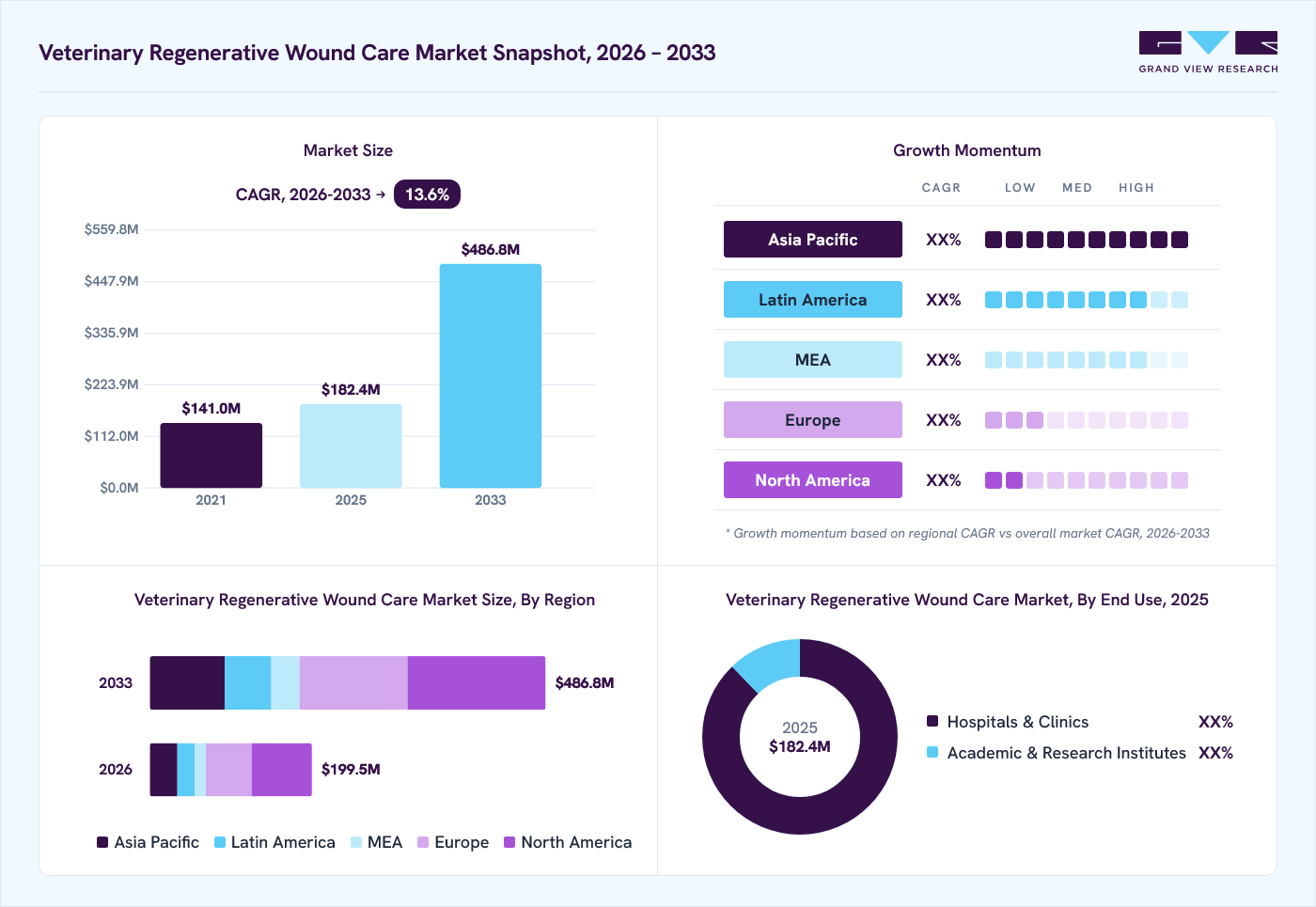
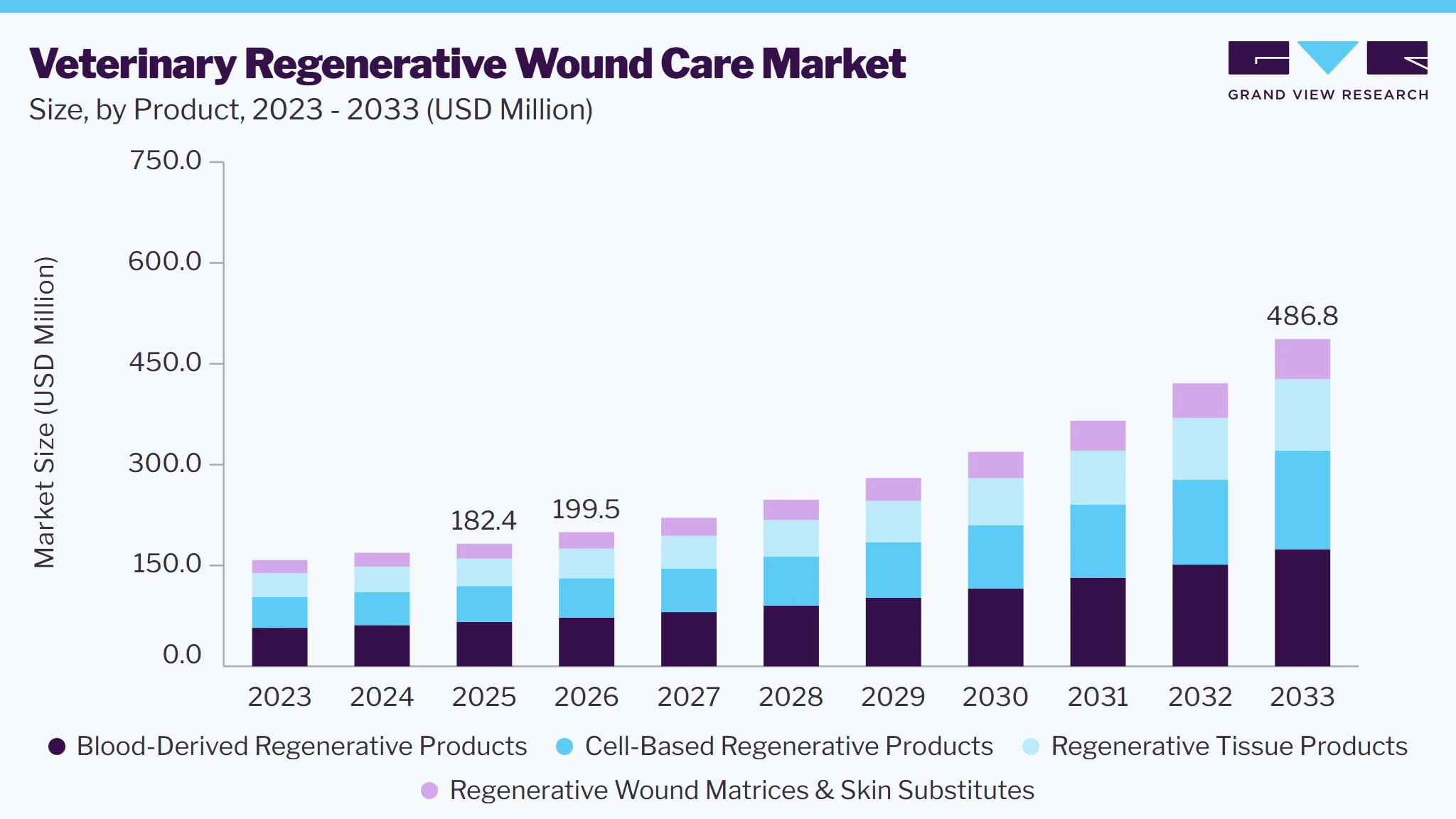
The global veterinary regenerative wound care market size was valued at USD 182.4 million in 2025 and is projected to grow from USD 199.5 million in 2026 to USD 486.8 million by 2033, at a CAGR of 13.6% from 2026 to 2033. The market in North America dominated with a revenue share of 37.3% in 2025. The market growth is driven by increasing R&D activities in veterinary regenerative medicine, rising prevalence of chronic and complex animal wounds, growing adoption of advanced biological wound-care products, expansion of specialty veterinary hospitals, and the adoption of regenerative therapies.
 Source: Grand View Research, IR Documents, Primary Interviews, Paid DatabasesTo learn more about this report,
 Download Free Sample Report
Key Market Trends & Insights
- By product: Blood-derived regenerative products segment held the largest market share of 36.3% in 2025.
- By animal: Canine segment held the largest market share of 44.8% in 2025.
- By application: Chronic and non-healing wounds segment held the largest market share of 32.4% in 2025.
- By delivery mode: Topical segment held the largest market share of 57.6% in 2025.
- By distribution channel: Direct sales segment held the largest market share of 46.1% in 2025.
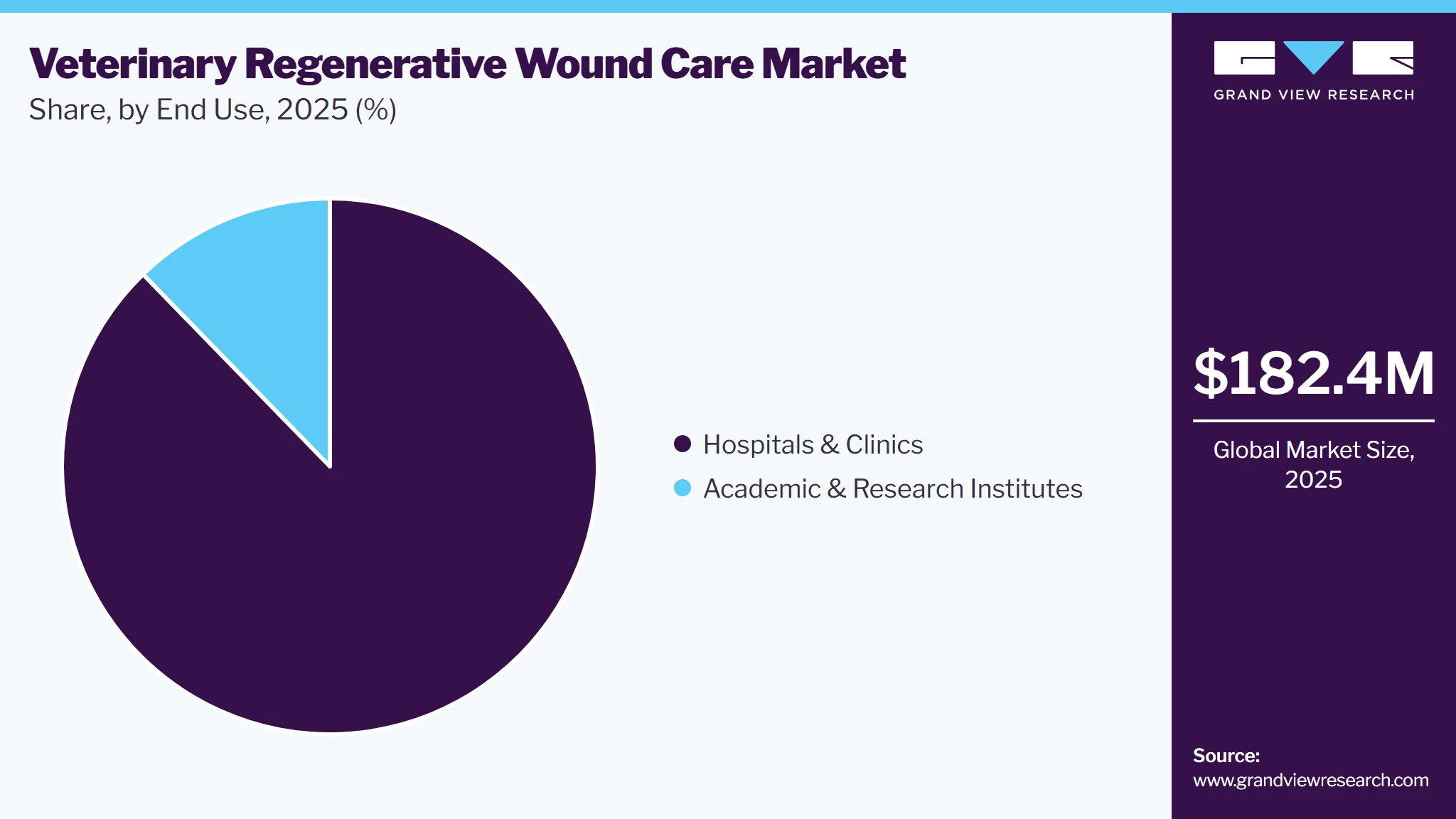
- By end use: Hospitals and clinics segment held the largest market share of 87.7% in 2025.
Regional Highlights
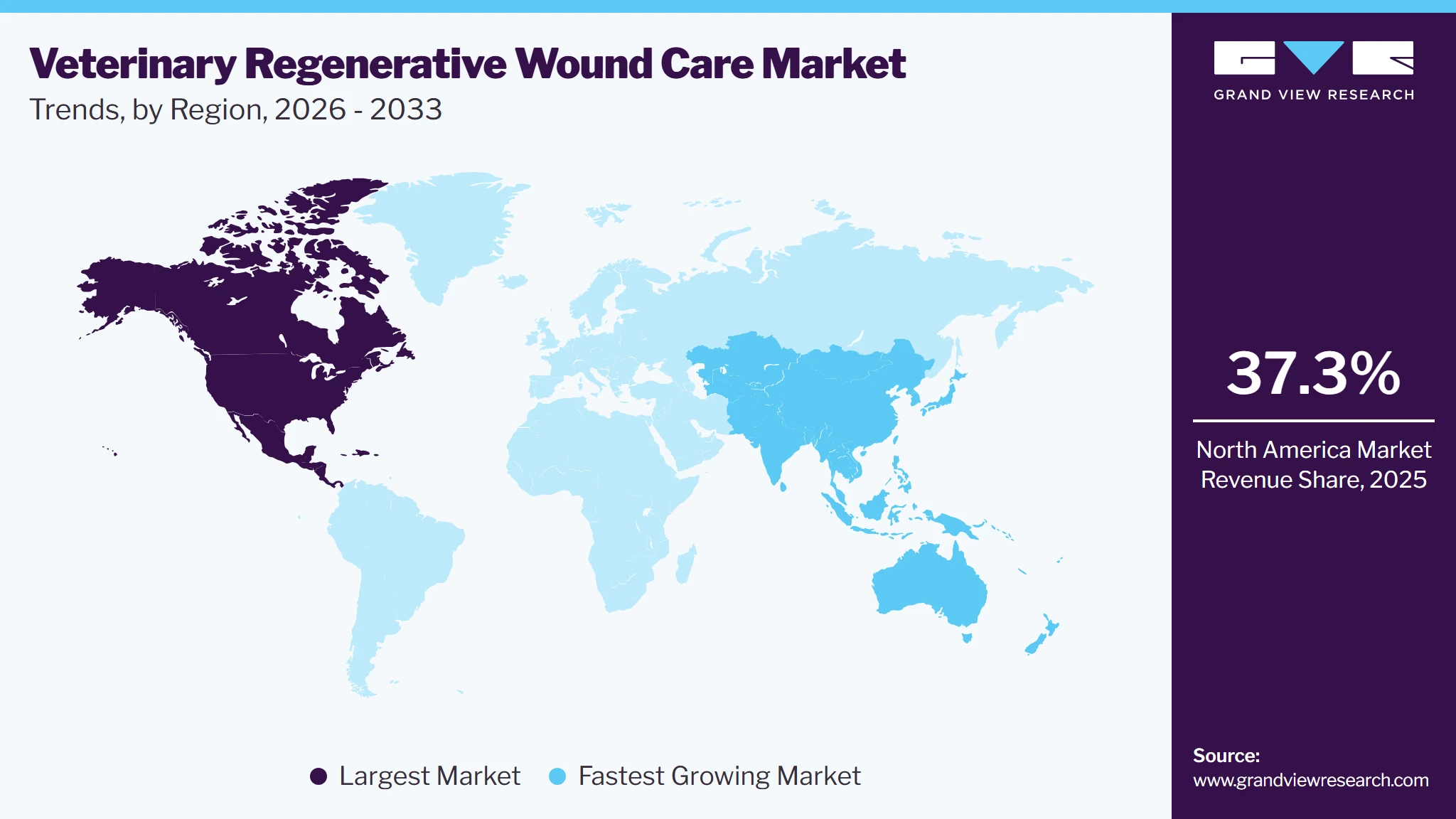
- Largest regional market: North America (37.3% revenue share, 2025)
- Fastest-growing regional market: Asia Pacific (highest CAGR, 2026-2033)
- By country: The U.S. held the largest market share in 2025.
Market Size & Forecast
- Market size in 2025: USD 182.4 Million
- Estimated market size in 2026: USD 199.5 Million
- Projected market size by 2033: USD 486.8 Million
- CAGR (2026-2033): 13.6%
Three ways to get this report
Buy it, customize it, or ask a question.Ask an Analyst
Analyst response in 1 business day
- AccessReport author, directly
- Reply timeWithin 1 working day
- No sales callDirect answer only
- FormatEmail reply
- CostFree, no cost
Get the Full Report
What the study covers
- FormatsPDF · Excel · Dashboard
- Timeline2026–2033 annual, 2025 base
- Coverage20+ countries, 5 regions
- Companies10+ key players profiled
Customize the Report
20% free customization
- IncludeCountries, segments, points
- TailorTo your product definition
- ExtendDeeper competitor detail
- OrA fully bespoke study
- Turnaround5–10 working days
 To learn more about this report, Download Free Sample Report
Market Dynamics
The veterinary regenerative wound care market growth is driven by increasing incidence of traumatic, surgical, chronic, and non-healing wounds in companion and equine animals, alongside rising veterinary expenditure and growing demand for advanced tissue-repair solutions. Besides this, the expansion of platelet-rich plasma (PRP), stem cell therapies, amniotic tissue products, and regenerative wound matrices is increasing treatment options for complex wounds. However, high therapy costs, limited reimbursement, inconsistent clinical protocols, specialized equipment requirements, and variability in treatment outcomes constrain adoption, particularly among smaller veterinary practices.
In addition, technological development is progressing through cell isolation systems, extracellular matrix scaffolds, acellular amniotic allografts, fish-skin matrices, collagen-based products, and secretome-derived formulations. Some of the innovations are focused on improving tissue regeneration, wound closure, product handling, storage stability, and application efficiency. Furthermore, combination therapies integrating biological matrices with cells, growth factors, or platelet concentrates are gaining research attention. In addition, greater clinical validation and standardized treatment protocols are expected to support broader utilization across veterinary hospitals and specialty clinics.
Growth in the veterinary regenerative wound care industry is attributed to increasing research and development activities that are expanding the clinical evidence base for regenerative wound care and creating new opportunities for product commercialization. For instance, in November 2025, SMSBiotech reported a canine case in which systemic Small Mobile Stem cell therapy was associated with rapid granulation, new tissue formation, and continued wound recovery, highlighting the potential of cell-based approaches for complex wounds in companion animals. The company also indicated ongoing development of regenerative therapies targeting hard-to-heal wounds, supporting broader investigation into systemic and minimally invasive treatment approaches.
Furthermore, research on stem cell therapies for companion animals is expanding. For instance, in August 2025, the AKC Canine Health Foundation reported that research activities in canine regenerative medicine are expanding across stem cell therapy, platelet-rich plasma, and other cellular approaches. The organization identified ongoing studies examining cell sources, treatment protocols, dosing, tissue regeneration, and methods for improving therapeutic outcomes. Such research activities are increasing scientific understanding of regenerative mechanisms and encouraging the development of products targeting traumatic, chronic, surgical, and soft tissue wounds. In addition, continued research may improve treatment standardization, broaden veterinary indications, and increase adoption of regenerative therapies across hospitals and specialty clinics, thereby contributing to market growth.
High treatment cost remains a major restraint for the veterinary regenerative wound care market, particularly for advanced cell-based therapies, tissue-derived products, and specialized regenerative wound matrices. These therapies may require specialized equipment, laboratory processing, trained veterinary personnel, and multiple treatment sessions, increasing overall treatment expenditure. Moreover, autologous therapies such as platelet-rich plasma and stem cell treatments can entail additional costs for blood or tissue collection, cell processing, storage, and administration. In addition, advanced allografts and biological wound matrices can also carry higher acquisition costs than conventional wound dressings, limiting their adoption in cost-sensitive veterinary practices.
Furthermore, veterinary insurance coverage for regenerative therapies remains limited in several markets, resulting in higher out-of-pocket costs for animal owners. Cost considerations can lead veterinarians and pet owners to select conventional wound management approaches, particularly for routine wounds with lower clinical severity. In addition, affordability constraints may be more pronounced in large-animal and equine care, where repeated treatment and transportation requirements can increase overall expenditure. These factors can limit penetration of advanced regenerative wound care products, especially among smaller clinics and price-sensitive animal owners.
The market is witnessing opportunities in the increasing development of cell-free regenerative therapies, biological scaffolds, and tissue-engineered wound products. The growing research activities are evaluating mesenchymal stem cell-derived secretomes, conditioned media, amniotic tissues, extracellular matrix materials, and scaffold-based approaches for complex wound management. These technologies can support tissue repair through paracrine signaling and structural support while potentially reducing some operational challenges associated with administering viable cells.
Furthermore, veterinary research institutions are investigating cellular therapies for chronic non-healing wounds, particularly in horses, creating opportunities for translational development and commercial product pipelines. For instance, the University of California, Davis, maintains dedicated research programs focused on chronic equine wounds and pre-conditioned stem cells for wound repair. In addition, the Indian Veterinary Research Institute has developed a mesenchymal stem cell-conditioned medium formulation for wound healing, indicating growing interest in cell-free regenerative approaches. FDA also identifies animal cells, tissues, platelet-rich plasma, and amnion within the veterinary regenerative medicine landscape and provides regulatory resources for developers. Thus, continued R&D may expand the range of commercially available wound matrices, secretome formulations, and tissue-derived products, creating opportunities for broader adoption in veterinary practice.
Veterinary Stem Cell Advancements and Their Impact on Regenerative Wound Care Market Development
Analytical Parameter
Insights for Veterinary Regenerative Wound Care Market
Market Implication
Technology advancement
Development of species-matched canine vitronectin substrates is improving the accessibility and scalability of canine induced pluripotent stem cell (iPSC) production. Such platforms can facilitate standardized cell development and future regenerative applications.
Supports the cell-based regenerative products segment by improving research efficiency and creating a pathway toward scalable, species-specific therapies.
Shift toward advanced cell therapies
Veterinary stem-cell research is progressing from conventional mesenchymal stem cells toward pluripotent and engineered cell platforms. iPSCs provide broader differentiation potential and applications across regenerative medicine, disease modeling, and drug development.
Expands the addressable opportunity for advanced regenerative therapies, although commercialization remains dependent on clinical validation and manufacturing consistency.
Wound-care application potential
Autologous adipose-derived stem/stromal cells have been investigated for full-thickness wounds, with their placement supporting preparation of wound sites for skin grafting and recovery of large tissue defects.
Directly supports demand for autologous stem-cell therapy within traumatic, chronic, surgical, and reconstructive wound applications.
Combination regenerative approaches
Earlier veterinary research evaluated adipose-derived stem/stromal cells alongside high-density platelet-rich plasma, with the combination positioned as a means of supporting cell adherence, proliferation, and wound repair.
Creates opportunity for combination therapies, particularly products integrating cell-based approaches with blood-derived regenerative products.
Clinical adoption potential
Veterinary stem-cell procedures have expanded from laboratory research into commercial clinical use. Earlier evidence described adipose-derived stem-cell treatment in horses and subsequent availability for dogs and cats, including in-office procedure kits.
Increasing availability of clinic-based processing and administration can reduce procedural complexity and support adoption among veterinary hospitals.
Evidence development
Controlled veterinary clinical trials continue to assess safety, efficacy, dosing, and administration protocols for stem-cell therapies. More recent companion-animal research includes a 2025 feline study of allogeneic uterine-derived mesenchymal stem cells, with 76% of cats classified as treatment successes at Day 90.
Expanding clinical evidence can improve veterinarian confidence and support the movement of regenerative therapies toward commercially standardized products.
Species-specific opportunity
Current research spans dogs, cats, and horses, with species-specific culture systems being explored for canine and feline iPSCs.
Indicates potential for species-specific product development, particularly for the canine segment and the faster-growing feline segment.
Commercialization landscape
While iPSC technology remains largely research-stage, commercially available stem-cell procedures and preparation systems already exist for veterinary use.
Indicates a two-tier market comprising commercially established MSC-based therapies and emerging next-generation iPSC platforms with longer commercialization timelines.
Key market constraint
iPSC cultivation remains technically challenging, while the use of xenogeneic culture components may create immune-response concerns. Species-matched substrates can address some of these issues and improve reproducibility.
Manufacturing complexity, quality consistency, and processing requirements may limit near-term commercialization of advanced cell-based wound-care therapies.
Overall outlook
Research progression, species-specific cell platforms, clinical studies, and combination approaches are broadening the potential application of regenerative medicine in companion animals.
The cell-based regenerative products segment has strong long-term potential, while near-term revenue is likely to remain concentrated in commercially available stem-cell and blood-derived therapies.
Market Concentration & Characteristics
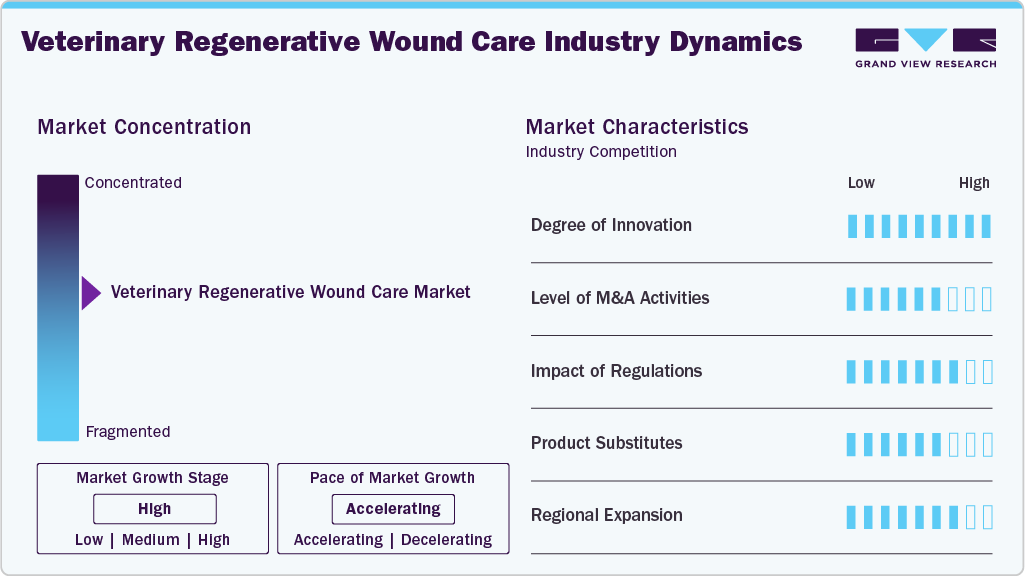
The veterinary regenerative wound care industry is characterized by increasing adoption of biologically derived therapies, specialized wound matrices, and cell-based treatments. Product development is concentrated among biotechnology companies, veterinary healthcare providers, and regenerative medicine specialists. The demand varies by species, wound complexity, and treatment setting, while clinical validation, treatment costs, regulatory requirements, and veterinarian expertise influence industry penetration.
The veterinary regenerative wound care market demonstrates a high degree of innovation through the development of stem-cell therapies, platelet-rich plasma systems, acellular amniotic grafts, fish-skin matrices, extracellular matrix scaffolds, and bioactive hydrogels. The companies are expanding their portfolios by pursuing products with improved handling, storage stability, tissue integration, and wound-closure capabilities. Innovation is also progressing toward cell-free and minimally invasive regenerative approaches.
 To learn more about this report, Download Free Sample Report
The market shows a moderate level of mergers and acquisitions as established animal health companies seek access to regenerative medicine technologies and specialized wound-care portfolios. Such initiatives can provide biotechnology developers with broader distribution networks, manufacturing capabilities, and regulatory resources. Strategic investments and partnerships are also supporting the commercialization of emerging cell-based therapies, tissue matrices, and advanced wound-care technologies.
Regulatory requirements significantly impact the veterinary regenerative wound care market, as products may fall under different frameworks depending on their composition, manufacturing process, intended use, and mechanism of action. Requirements related to safety, quality, manufacturing consistency, tissue sourcing, and product labeling can increase development timelines and costs. Regulatory clarity can facilitate commercialization and clinical adoption.
Conventional wound management products represent the primary substitutes for regenerative wound care therapies. For instance, gauze, foam dressings, hydrocolloids, alginates, antimicrobial dressings, topical medications, and surgical closure methods remain widely used because of lower costs and established clinical familiarity. PRP, stem-cell therapies, and regenerative matrices also compete with one another, particularly when multiple treatment options are available for similar wound indications.
Regional expansion is supported by increasing veterinary healthcare expenditure, growing companion animal ownership, the development of specialty veterinary hospitals, and rising interest in advanced wound management. North America maintains strong potential due to established regenerative medicine capabilities and veterinary infrastructure. Europe and Asia Pacific offer expansion opportunities through improving veterinary services, biotechnology development, and growing awareness of advanced tissue repair therapies.
Analyst Perspective
The veterinary regenerative wound care market is expanding steadily, driven by rising global demand for animal protein, growing pet humanization trends, and increasing focus on preventive animal healthcare. Livestock and poultry producers are prioritizing nutritional supplementation to enhance growth performance, immunity, and reproductive outcomes, while pet owners increasingly seek premium, vitamin-fortified products for companion animals. Growing outsourcing to CMOs/CDMOs, expanding adoption of fortified feeds, and rising regulatory emphasis on product quality and safety further strengthen market growth across developed, established, and emerging livestock and companion animal care sectors globally.
Product Insights
The blood-derived regenerative products segment dominated the veterinary regenerative wound care industry, accounting for the largest revenue share of 36.3% in 2025. This segment comprises platelet-rich plasma, autologous conditioned serum, interleukin-1 receptor antagonist protein, and autologous protein solution, with platelet-rich plasma (PRP) as a major component because it provides concentrated growth factors that support angiogenesis, collagen formation, cell proliferation, and tissue remodeling. This segment’s growth is due to its established clinical use, relatively accessible preparation procedures, and broad applicability across wound types. Besides this, veterinary applications include chronic wounds, cutaneous ulcers, burns, corneal injuries, and traumatic wounds, particularly in dogs and horses. In addition, autologous preparation reduces dependence on external biological materials and supports point-of-care use. In addition, growing familiarity among veterinarians with blood-derived therapies and the availability of commercial preparation systems are supporting utilization across hospitals and specialty practices.
The cell-based regenerative products are expected to grow at the fastest CAGR over the forecast period. This segment includes autologous stem cell therapy and stem cell processing & isolation systems. This segment’s growth is attributed to increasing research into mesenchymal stem cells, cell-derived extracellular vesicles, and other cellular approaches for tissue regeneration. These therapies are being investigated for chronic, difficult-to-heal wounds where conventional treatment may provide limited outcomes. Besides this, recent veterinary research has evaluated stem-cell-derived extracellular vesicles for chronic feline skin ulcers, with findings indicating potential effects on tissue regeneration, inflammation, and wound repair. The increasing development of standardized cell-processing platforms and the growing interest in personalized regenerative medicine are supporting the segment. Furthermore, expanding research collaborations and translational studies are creating opportunities for the commercialization of cell-based wound therapies.
Animal Insights
The canine segment dominated the veterinary regenerative wound care market, accounting for the largest revenue share of 44.8% in 2025, due to the large adoption of dogs, high volume of companion animal wound cases, and broad availability of advanced veterinary services for dogs. The demand for regenerative wound care. PRP, stem-cell therapies, biological matrices, and advanced topical products are accelerated by traumatic injuries, bite wounds, surgical complications, chronic ulcers, and soft tissue defects that are evaluated for canine wound management. In addition, the high concentration of specialty veterinary hospitals and referral centers treating dogs supports the availability and utilization of regenerative wound care products.
The feline segment is expected to grow at the fastest CAGR over the forecast period, as veterinary awareness of advanced wound management increases and research expands into species-specific regenerative therapies. Cats experience traumatic injuries, post-surgical complications, chronic skin ulcers, and ocular surface wounds that may require prolonged management. Some research activities have increased the use of advanced feline care treatments. For instance, in April 2026, Wharton’s jelly mesenchymal stem cell-derived extracellular vesicles were assessed for their potential to treat chronic feline skin ulcers, supporting greater scientific interest in regenerative approaches. Moreover, differences in feline wound-healing characteristics also encourage the development of treatment protocols tailored to cats. Furthermore, increasing veterinary expenditure on companion cats and improved access to specialty care are creating additional opportunities for the adoption of regenerative wound products.
Application Insights
The chronic and non-healing wounds segment dominated the veterinary regenerative wound care market, accounting for the largest revenue share of 32.4% in 2025, and is expected to grow at the fastest CAGR over the forecast period, because these wounds frequently require prolonged treatment and may respond inadequately to conventional wound management. Additionally, persistent inflammation, infection, tissue damage, dehiscence, and underlying disorders can delay healing and increase the frequency of treatment. In addition, regenerative approaches such as PRP, stem cell therapies, extracellular vesicle products, amniotic tissues, and advanced wound matrices are being investigated to stimulate tissue repair and restore normal healing. Similarly, high clinical need and ongoing product development are supporting rapid segment expansion.
The soft tissue defects and reconstructive applications are expected to grow at the second-fastest CAGR over the forecast period, as veterinary surgeons manage extensive tissue loss following trauma, tumor excision, surgical complications, and complex wounds. In addition, large defects often require biological scaffolds, tissue matrices, cellular therapies, or combination approaches to support granulation, epithelialization, and tissue remodeling. Regenerative tissue products can provide structural support while facilitating biological repair in challenging wound environments. In addition, the increasing availability of specialty surgical services and advanced reconstruction techniques is expanding treatment opportunities for companion animals and horses. Moreover, research into matrix-based and cell-assisted tissue regeneration is supporting the development of products tailored to complex soft tissue repair.
Delivery Mode Insights
The topical delivery dominated the veterinary regenerative wound care industry, accounting for the largest revenue share of 57.6% in 2025, as regenerative wound matrices, amniotic membranes, collagen products, fish-skin grafts, hydrogels, powders, and other biological materials can be applied directly to damaged tissue. Additionally, direct application provides localized exposure at the wound site and is suitable for traumatic, surgical, chronic, burn, and ocular surface injuries. The topical delivery mode also reduces systemic exposure and may simplify administration compared with procedures requiring blood collection or cellular processing.
The injectable delivery mode is expected to grow at the fastest CAGR over the forecast period, driven by the increasing use of PRP, stem-cell therapies, and other autologous biological products administered directly into or around damaged tissue. Injectable approaches enable targeted delivery of regenerative components and can be integrated with surgical or reconstructive procedures. PRP is particularly relevant because veterinary clinicians can prepare and administer autologous concentrates during clinical treatment. The segment is expanding due to advances in cell isolation, processing, and point-of-care systems that are supporting wider deployment of injectable regenerative therapies. Furthermore, ongoing studies evaluating cellular and blood-derived interventions for complex wounds are increasing clinical interest.
Distribution Channel Insights
The direct sales segment dominated the veterinary regenerative wound care market, accounting for the largest revenue share of 46.1% in 2025, because regenerative wound care products frequently require technical guidance, clinical training, appropriate product selection, and controlled handling. In addition, manufacturers can maintain direct relationships with veterinary hospitals, specialty clinics, and referral centers, particularly for higher-value biological products and tissue-based therapies. Direct channels also facilitate product education, procedure support, inventory coordination, and feedback from veterinary users. In addition, specialized regenerative products may require explanation of preparation, application, storage, and treatment protocols to support direct commercial engagement. Furthermore, hospitals purchasing products for repeated procedures often establish supplier relationships that encourage direct procurement. The concentration of advanced veterinary services, therefore, supports the dominance of direct sales.
The online / e-commerce channels segment is projected to grow at the fastest CAGR over the forecast period, as veterinary professionals gain greater access to specialized wound-care products through digital procurement platforms. E-commerce can simplify product discovery, comparison, ordering, and replenishment, particularly for standardized topical products, wound matrices, preparation consumables, and supportive regenerative-care products. In addition, increasing digitalization among veterinary practices is facilitating online purchasing and inventory management. In addition, smaller clinics located outside major veterinary centers can access specialized products without maintaining extensive local supplier relationships. However, adoption remains more limited for products requiring controlled biological handling, preparation, or clinical supervision.
End Use Insights
The hospitals and clinics segment dominated the veterinary regenerative wound care industry, accounting for the largest revenue share of 87.7% in 2025, because most veterinary regenerative wound care procedures require professional assessment, wound classification, product selection, and clinical administration. Veterinary hospitals manage substantial volumes of traumatic, surgical, chronic, burn, ocular, and reconstructive wounds and possess the equipment and trained personnel needed for advanced treatment. In addition, specialty and referral hospitals also provide access to regenerative procedures involving PRP preparation, stem-cell processing, tissue matrices, and complex wound reconstruction. Furthermore, increasing adoption of advanced wound-management technologies by veterinary practitioners is expanding utilization. Moreover, the concentration of companion animal healthcare expenditure within hospitals and clinics supports continued demand for regenerative products in routine and specialty practice settings.
 To learn more about this report, Download Free Sample Report
The academic and research institutes are projected to grow at the fastest CAGR over the forecast period, as these organizations conduct studies evaluating new regenerative technologies, treatment protocols, delivery systems, and wound-healing mechanisms. Veterinary universities and research centers provide infrastructure for preclinical research, controlled clinical trials, biomaterial development, and translational studies. Some of the recent investigations into stem-cell-derived extracellular vesicles for feline chronic ulcers demonstrate the role of academic research in expanding the evidence base for regenerative wound therapies. In addition, greater research activity is also supporting the evaluation of advanced topical formulations, biological matrices, and combination treatments. Increasing collaboration between universities, biotechnology companies, and veterinary hospitals is expected to accelerate development and future commercialization.
Regional Insights
The North America veterinary regenerative wound care market held the largest global revenue share of 37.3% in 2025,supported by advanced veterinary infrastructure, high companion animal healthcare expenditure, and established adoption of regenerative medicine. The U.S. was the leading contributor, with PRP, stem-cell therapies, amniotic products, and biological wound matrices gaining use in specialty veterinary settings. FDA has established a regulatory framework for animal cells, tissues, and cell- and tissue-based products, including stem cells, PRP, and amnion, supporting development and commercialization pathways. Canada is also advancing veterinary regenerative medicine through academic research and specialty clinical services. Furthermore, increasing pet insurance penetration and owner willingness to pursue advanced treatment options are supporting demand for complex wound management.
 To learn more about this report, Download Free Sample Report
U.S. Veterinary Regenerative Wound Care Market Trends
The U.S. veterinary regenerative wound care industry is mature because regenerative medicine has developed across specialty veterinary hospitals, private biotechnology companies, and academic centers. In addition, the demand is supported by commercially available PRP systems, stem-cell therapies, tissue matrices, and advanced wound products. The country is governed by an FDA framework addressing animal cells, tissues, and cell- and tissue-based products. The concentration of referral hospitals and higher expenditure on complex companion animal treatment support product adoption. Furthermore, growth is also shifting toward commercially standardized products, chronic wound applications, and tissue-engineered matrices rather than physician-prepared regenerative interventions alone.
The Canada veterinary regenerative wound care market is transformed by its strong equine sector and university-based veterinary research. These regenerative therapies are particularly relevant in horses because veterinary specialists manage substantial volumes of tendon, ligament, soft-tissue, and wound-related conditions. The country's academic veterinary centers provide infrastructure for clinical investigation and adoption of PRP and cellular therapies. Furthermore, the geographic dispersion of veterinary practices creates a different commercial environment than in the U.S., making distributor access important for specialty products.
Europe Veterinary Regenerative Wound Care Market Trends
The Europe veterinary regenerative wound care industry is influenced by its strong equine healthcare base, veterinary research institutions, and increasing clinical investigation of cell-based therapies. Horses and dogs are important users of regenerative medicine, particularly for complex tissue injuries. European regulatory frameworks have also created dedicated scientific considerations for veterinary stem-cell products, including requirements concerning extraneous agents and manufacturing quality. In addition, Germany and the UK provide relatively developed specialty-care environments, while other European markets are gradually expanding access to regenerative therapies. In addition, increasing research into allogeneic cells, biomaterials, and tissue-derived products is widening the therapeutic pipeline, creating opportunities beyond established PRP applications.
The veterinary regenerative wound care market in Germany is supported by a well-established specialty veterinary practice that can adopt complex wound-management technologies requiring trained clinicians. In addition, equine medicine is also an important application area for regenerative therapies. In addition, future expansion is likely to favor validated tissue-derived matrices, standardized cell products, and advanced reconstructive wound applications. Veterinary hospitals with surgical and referral capabilities are likely to remain the principal purchasers.
The UK veterinary regenerative wound care market is expected to grow significantly over the forecast period as the country benefits from a strong network of veterinary referral hospitals, veterinary teaching institutions, and specialist equine practices. Its growth profile is closely associated with clinical research and adoption of evidence-based regenerative procedures rather than broad retail distribution. In addition, complex wound reconstruction, chronic wounds, and equine soft-tissue injuries are relevant applications. Some veterinary universities also contribute to the clinical evaluation of emerging cellular and tissue-based technologies. In addition, product adoption is likely to be strongest where specialist surgeons can integrate regenerative products with advanced wound closure, grafting, and reconstructive procedures. Furthermore, cost sensitivity among general practices may keep more sophisticated therapies concentrated within referral settings.
Asia Pacific Veterinary Regenerative Wound Care Market Trends
The Asia Pacific veterinary regenerative wound care industry is expected to grow at the fastest CAGR over the forecast period. The regional growth is due to veterinary regenerative medicine transitions from predominantly research-oriented activity toward broader clinical utilization. Japan has a particularly strong scientific base, with research into canine induced pluripotent stem cells and recent advances in feline iPS and embryonic stem cells. India is developing capabilities in mesenchymal stem cell research and cell-free regenerative approaches through institutions such as the National Institute of Animal Biotechnology and the Regional Centre for Biotechnology. In addition, the growth of specialty veterinary infrastructure, rising companion animal expenditures, and the development of locally produced regenerative technologies provide further expansion potential.
The veterinary regenerative wound care market in China is accelerating, supported by expanding companion animal healthcare, growing veterinary specialty services, and increasing domestic research in stem cell and tissue engineering technologies. In addition, veterinary universities and biotechnology companies are investigating mesenchymal stem cells, PRP, extracellular vesicles, and biomaterial-based approaches for tissue repair.
The veterinary regenerative wound care market in Japan is drivenby significant advances in veterinary stem-cell science, including work involving canine blood-derived iPS cells and feline iPS and embryonic stem cells. In addition, growing research activities create opportunities for future wound-care applications involving cell-based therapies. However, commercialization and clinical standardization determines transition of these technologies from research institutions into routine veterinary practice.
The veterinary regenerative wound care market in India is characterized by a developing commercial base alongside substantial academic research activity. In addition, national research institutions are investigating mesenchymal stem cells, tissue repair mechanisms, and emerging cell-free regenerative approaches. The country offers potential for lower-cost regenerative products because of its expanding biotechnology and pharmaceutical manufacturing capabilities. In addition, urban veterinary hospitals are becoming better equipped to offer specialty procedures, creating initial demand for PRP, stem cell therapies, and biological wound products.
Latin America Veterinary Regenerative Wound Care Market Trends
The Latin America veterinary regenerative wound care industry is expected to grow during the forecast period, driven by the expansion of private veterinary services and the region's large animal-health base in an already mature regenerative product ecosystem. Additionally, regenerative medicine is incorporated into specialist treatment, particularly when conventional wound management leads to prolonged healing. In addition, local veterinary universities can support the development of PRP and cellular therapies, whereas domestic manufacturing could eventually reduce dependence on imported tissue products.
Brazil's veterinary regenerative wound care market is experiencing robust growth due to its large animal-health ecosystem, particularly companion animals, horses, and production animals. Veterinary universities and private clinics provide a base for clinical use of PRP and stem-cell approaches. The country's large equine population creates additional potential for regenerative technologies to target soft-tissue injuries and wound repair. In addition, domestic research capacity can support locally adapted therapies and potentially reduce dependence on imported products. Furthermore, future penetration will depend heavily on product pricing, regulatory pathways, and the ability of manufacturers to expand distribution beyond major urban centers.
Middle East & Africa Veterinary Regenerative Wound Care Market Trends
The growth in the Middle East and Africa veterinary regenerative wound care industry is expected to be concentrated in specialized veterinary segments rather than broad-based primary care. Saudi Arabia and other Gulf markets provide demand through high-value equine medicine, companion animal specialty care, and investment in advanced veterinary facilities. South Africa offers a distinct growth profile, supported by established capabilities in veterinary education, equine care, livestock medicine, and wildlife health. The region's key opportunity lies in introducing advanced wound matrices, PRP systems, and biological tissue products into tertiary veterinary centers. However, dependence on imported products, limited local manufacturing, and uneven access to specialist veterinary services can keep adoption concentrated in affluent urban and equine-care settings.
The South Africa veterinary regenerative wound care market is rapidly growing, driven by its veterinary sector, which combines companion animal care with substantial equine, livestock, wildlife, and conservation medicine. This diverse animal base enables applications of regenerative products across different wound types, particularly complex traumatic and soft-tissue injuries. Veterinary academic institutions also contribute to regenerative medicine research and clinical training. The market is likely to develop first through referral hospitals, equine practices, and wildlife-care facilities where advanced wound management is clinically justified. In addition, the limited availability of specialized products and higher costs associated with imported regenerative technologies are likely to restrict adoption in smaller practices.
The veterinary regenerative wound care market in Saudi Arabia is driven by high-value equine healthcare and investment in specialized veterinary infrastructure. The regenerative wound care has potential in horses involved in racing, breeding, and competition, where rapid tissue recovery and preservation of function have substantial economic value. In addition, companion animal specialty services are also expanding in major cities. The country's growth opportunity is therefore concentrated in premium veterinary centers rather than mass-market clinics. Furthermore, expansion of specialist veterinary facilities and investment in advanced animal healthcare can increase future adoption.
Key Veterinary Regenerative Wound Care Company Insights
The veterinary regenerative wound care market remains fragmented, with established animal-health companies competing alongside specialized regenerative medicine and biotechnology firms. Zoetis, Dechra, Integra LifeSciences, Kerecis, Arthrex, VetStem, AniCell, Vetrix, Vetherapy, and Animalia Biogenesis maintain differentiated portfolios spanning PRP, stem-cell therapies, amniotic products, biological matrices, and advanced wound-healing technologies. Established companies benefit from broader distribution and veterinary relationships, while specialized players compete through proprietary regenerative platforms.
Key Veterinary Regenerative Wound Care Companies
The following key companies have been profiled for this study of the veterinary regenerative wound care market.
-
Zoetis Services LLC
-
Animalia Biogenesis
-
FatStem Laboratories
-
Vetherapy
-
AniCell
-
Integra LifeSciences Corporation
-
Vetrix
-
VetStem, Inc.
-
Cell Therapy Sciences
-
Amniovet
-
Kerecis
-
Dechra
-
CelluHeal
-
Enovis (Companion Animal Health)
-
Arthrex, Inc.
-
Rebound PRP (Vetrius Animal Health)
-
Medrego
Competitive Benchmarking
Category
Operating Strategies
Competitive Edge
Weakness
Established Players (Zoetis Services LLC and others)
- Mature players are expanding veterinary regenerative wound-care portfolios through new product launches, strategic collaborations, acquisitions, and geographic distribution partnerships.
- Companies are increasing investment in PRP systems, stem-cell processing, amniotic tissue products, fish-skin matrices, collagen scaffolds, and advanced wound-healing technologies.
- Establishing direct relationships with specialty veterinary hospitals, providing clinician training, strengthening manufacturing capabilities, and expanding distributor networks are key strategies.
- In addition, companies are pursuing clinical validation and species-specific applications to support broader adoption and differentiate commercial portfolios.
- Mature players benefit from established veterinary distribution networks, broader product portfolios, recognized brands, manufacturing infrastructure, and established relationships with hospitals and veterinary professionals.
- Companies with regenerative medicine expertise can leverage proprietary biomaterials, cell-processing technologies, tissue-derived products, and clinical evidence to differentiate offerings.
- Access to research capabilities and regulatory expertise also supports product development and commercialization.
- Firms serving multiple animal species can address diverse wound indications and capture demand across companion animal, equine, and specialty veterinary markets, strengthening their competitive position.
- Mature players face competition from smaller biotechnology companies developing specialized regenerative technologies with targeted clinical applications.
- High product prices can restrict adoption among smaller veterinary practices and price-sensitive animal owners.
Emerging Players (VetStem, Inc. and other players)
- Emerging players are focusing on developing niche regenerative wound-care products, particularly acellular tissue matrices, stem-cell therapies, PRP systems, secretome-based products, and advanced scaffolds.
- Partnerships with veterinary hospitals, universities, and research organizations support clinical validation and product refinement.
- Companies are also targeting underserved wound indications, species-specific therapies, and specialty veterinary practices.
- Selective geographic expansion, direct engagement with veterinarians, and investment in scalable manufacturing are being used to establish distribution networks and build commercial presence.
- Emerging players differentiate through specialized regenerative technologies, focused product portfolios, and faster development of innovative wound-care solutions.
- Their smaller operating structures can support quicker product modifications and targeted collaborations with veterinary specialists.
- Access to proprietary biological materials, extracellular matrix technologies, stem-cell platforms, or novel delivery systems can provide technical differentiation.
- Focus on chronic wounds, complex soft tissue defects, and species-specific applications also enables these companies to address specialized clinical requirements that may receive less attention from diversified animal-health manufacturers.
- Emerging players face limitations associated with smaller commercial scale, restricted financial resources, limited manufacturing capacity, and narrower distribution networks.
- Many products require additional clinical validation to establish consistent safety and efficacy across animal species and wound types.
Recent Developments
-
In July 2026, Daewoong Pharmaceutical and CGBio launched Bearsome, a stem cell-conditioned medium-based veterinary wound dressing approved by Korea’s APQA. The product expands regenerative topical wound care for companion animals, broadens the commercial availability of bioactive wound dressings, and supports innovation in veterinary skin-barrier management.
-
In June 2026, epiq Animal Health and Vetirus Animal Health entered a U.S. distribution agreement for Rebound High Performance PRP. Expanded distribution improves access to autologous PRP therapy, supporting veterinarian adoption, increasing penetration of regenerative treatments, and intensifying competition among blood-derived veterinary wound-care products.
-
In December 2025, researchers at the American Animal Hospital Association evaluated a study demonstrating improved cultivation of canine induced pluripotent stem cells using species-matched vitronectin, expanding research potential for advanced regenerative therapies in companion animals.
Veterinary Regenerative Wound Care Market Report Scope
Report Attribute
Details
Market size in 2025
USD 182.4 million
Estimated market size in 2026
USD 199.5 million
Projected market size by 2033
USD 486.8 million
Growth rate
CAGR of 13.6% from 2026 to 2033
Actual data
2021 - 2025
Forecast period
2026 - 2033
Quantitative units
Revenue in USD million and CAGR from 2026 to 2033
Report coverage
Revenue forecast, company ranking, competitive landscape, growth factors, and trends
Segments covered
Product, animal, application, delivery mode, distribution channel, end use, and region
Regional scope
North America; Europe; Asia Pacific; Latin America; MEA
Country scope
U.S.; Canada; Mexico; UK; Germany; France; Italy; Spain; Denmark; Sweden; Norway; Japan; China; India; Thailand; South Korea; Australia; Brazil; Argentina; South Africa; UAE; Saudi Arabia; Kuwait; Qatar; Oman
Key companies profiled
Zoetis Services LLC; Animalia Biogenesis; FatStem Laboratories; Vetherapy; AniCell; Integra LifeSciences Corporation; Vetrix; VetStem, Inc.; Cell Therapy Sciences; AmnioVet; Kerecis; Dechra; CelluHeal; Enovis (Companion Animal Health); Arthrex, Inc.; Rebound PRP (Vetirus Animal Health); Medrego
Customization scope
Free report customization (equivalent up to 8 analysts working days) with purchase. Addition or alteration to country, regional & segment scope.
Pricing and purchase options
Avail customized purchase options to meet your exact research needs. Explore purchase options
Global Veterinary Regenerative Wound Care Market Report Segmentation
This report forecasts revenue growth at the global, regional, and country levels and provides an analysis of the latest industry trends in each of the sub-segments from 2021 to 2033. For this study, Grand View Research has segmented the global veterinary regenerative wound care market report based on product, animal, application, delivery mode, distribution channel, end use, and region:
-
Product Outlook (Revenue, USD Million, 2021 - 2033)
-
Blood-Derived Regenerative Products
-
Platelet-Rich Plasma
-
Autologous Conditioned Serum
-
Interleukin-1 Receptor Antagonist Protein
-
Autologous Protein Solution
-
-
Cell-Based Regenerative Products
-
Autologous Stem Cell Therapy
-
Stem Cell Processing & Isolation Systems
-
-
Regenerative Tissue Products
-
Regenerative Wound Matrices & Skin Substitutes
-
-
Animal Outlook (Revenue, USD Million, 2021 - 2033)
-
Canine
-
Feline
-
Equine
-
Others
-
-
Application Outlook (Revenue, USD Million, 2021 - 2033)
-
Traumatic Wounds
-
Surgical Wounds
-
Chronic & Non-Healing Wounds
-
Burns & Thermal Injuries
-
Corneal & Ocular Surface Wounds
-
Soft Tissue Defects & Reconstructive Applications
-
-
Delivery Mode Outlook (Revenue, USD Million, 2021 - 2033)
-
Injectable
-
Topical
-
-
Distribution Channel Outlook (Revenue, USD Million, 2021 - 2033)
-
Direct Sales
-
Veterinary Distributors
-
Online / E-commerce
-
-
End Use Outlook (Revenue, USD Million, 2021 - 2033)
-
Hospitals & Clinics
-
Academic & Research Institutes
-
-
Regional Outlook (Revenue, USD Million, 2021 - 2033)
-
North America
-
U.S.
-
Canada
-
Mexico
-
-
Europe
-
UK
-
Germany
-
France
-
Italy
-
Spain
-
Denmark
-
Sweden
-
Norway
-
-
Asia Pacific
-
Japan
-
China
-
India
-
Australia
-
Thailand
-
South Korea
-
-
Latin America
-
Brazil
-
Argentina
-
-
Middle East & Africa
-
South Africa
-
UAE
-
Saudi Arabia
-
Kuwait
-
Qatar
-
Oman
-
-
Research Methodology
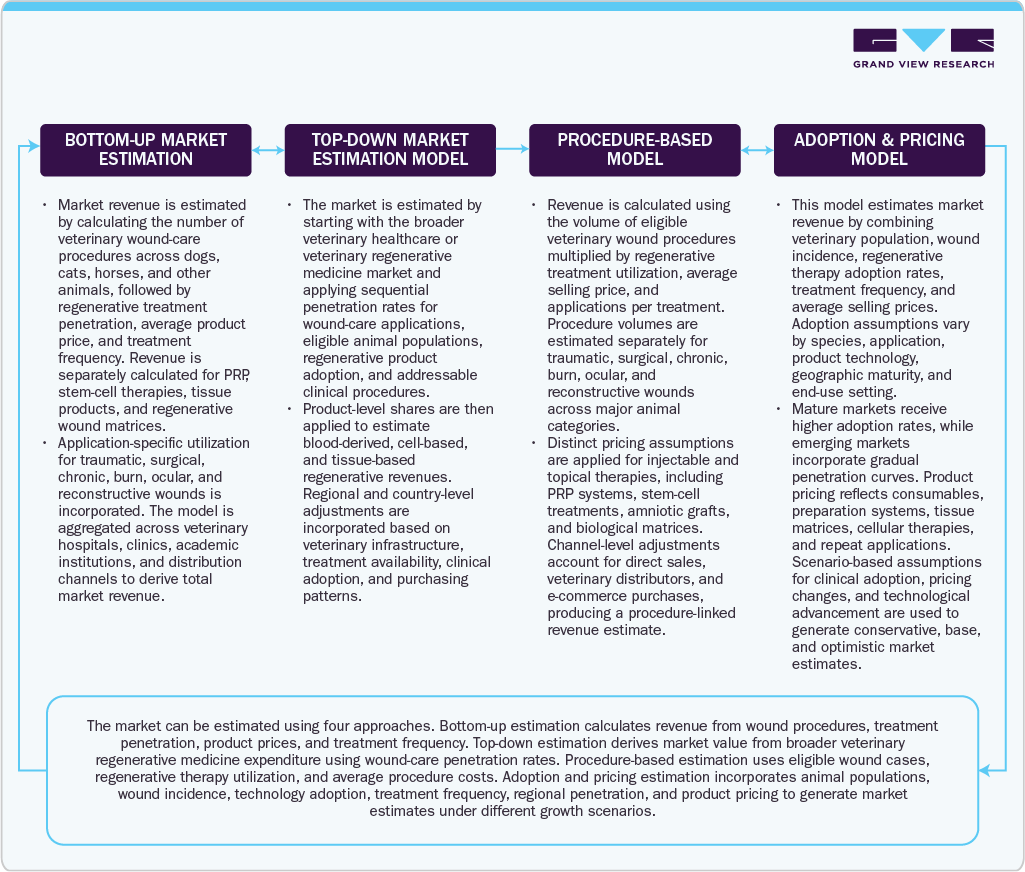
The veterinary regenerative wound care market figures in this report are based on a proven research process that combines executive interviews with secondary research from proprietary databases, company filings, and recognized regulatory and institutional sources. Market size is built through value-chain sizing-reconciling supply-side and demand-side estimates-and triangulated with bottom-up and top-down approaches. Every estimate passes multiple levels of expert validation before publication, with each veterinary regenerative wound care segment quantified using the revenue-capture definitions in the table below.
Segment Definition
Product
Revenue capture definition
Blood-Derived Regenerative Products
Revenue generated from sales of blood-derived regenerative products used for animal wound care, including platelet- and serum-based regenerative therapies that promote tissue repair and healing.
Platelet-Rich Plasma (PRP)
Revenue generated from sales of PRP preparation systems, kits, consumables, and platelet concentrates used in regenerative wound care.
Autologous Conditioned Serum (ACS)
Revenue generated from sales of autologous conditioned serum preparation systems and consumables used for regenerative wound healing.
Interleukin-1 Receptor Antagonist Protein (IRAP)
Revenue generated from sales of IRAP preparation systems and related products used for regenerative wound healing applications.
Autologous Protein Solution (APS)
Revenue generated from sales of APS systems and consumables used for regenerative wound repair and tissue regeneration.
Cell-Based Regenerative Products
Revenue generated from sales of commercially available cell-based regenerative therapies and processing systems used in animal wound care.
Autologous Stem Cell Therapy
Revenue generated from commercially available autologous stem cell therapies used to promote tissue regeneration and wound healing in animals.
Stem Cell Processing Systems
Revenue generated from stem cell isolation, processing, and preparation systems used for regenerative wound care procedures.
Regenerative Tissue Products
Revenue generated from sales of regenerative tissue-derived products used in animal wound care, including amniotic membranes, placental tissue products, biologic tissue grafts, fascia grafts, and regenerative tissue membranes that promote wound healing and soft tissue repair.
Regenerative Wound Matrices & Skin Substitutes
Revenue generated from sales of regenerative wound matrices and skin substitute products used in animal wound care, including fish skin matrices, collagen matrices, extracellular matrix (ECM) sheets, corneal regenerative matrices, collagen powders, and other bioactive scaffold-based products that support tissue regeneration.
Animal
Revenue capture definition
Canine
Revenue generated from regenerative wound care products used in dogs across traumatic, surgical, chronic, ocular, and reconstructive wound applications.
Feline
Revenue generated from regenerative wound care products used in cats for wound healing and tissue regeneration.
Equine
Revenue generated from regenerative wound care products used in horses for cutaneous, soft tissue, and ocular wound management.
Others
Revenue generated from regenerative wound care products used in rabbits, ferrets, guinea pigs, birds, reptiles, and other companion animal species.
Application
Revenue capture definition
Traumatic Wounds
Revenue generated from regenerative products used in the treatment of traumatic wounds, including bite wounds, lacerations, abrasions, and degloving injuries.
Surgical Wounds
Revenue generated from regenerative products used to support the healing of surgical wounds, wound dehiscence, skin grafts, and reconstructive procedures.
Chronic & Non-Healing Wounds
Revenue generated from regenerative products used to treat chronic ulcers, delayed-healing wounds, and other persistent soft tissue wounds.
Burns & Thermal Injuries
Revenue generated from regenerative products used in the management of thermal, chemical, and electrical burn wounds.
Corneal & Ocular Surface Wounds
Revenue generated from regenerative products used in the treatment of corneal ulcers, corneal perforations, conjunctival defects, and other ocular surface injuries.
Soft Tissue Defects & Reconstructive Applications
Revenue generated from regenerative products used for the reconstruction of large soft tissue defects following trauma, surgery, or tumor excision.
Delivery Mode
Revenue capture definition
Injectable
Revenue generated from injectable regenerative products administered locally to promote wound healing, including PRP, stem cell therapies, ACS, IRAP, and APS.
Topical
Revenue generated from regenerative products applied directly to the wound surface, including membranes, sheets, matrices, grafts, powders, and corneal discs.
Distribution Channel
Revenue capture definition
Direct Sales
Revenue generated from regenerative wound care products sold directly by manufacturers to veterinary hospitals, clinics, and specialty centers.
Veterinary Distributors
Revenue generated from regenerative wound care products sold through authorized veterinary distributors and wholesalers.
Online / E-commerce
Revenue generated from regenerative wound care products sold through manufacturer websites and veterinary e-commerce platforms.
End Use
Revenue capture definition
Hospitals & Clinics
Revenue generated from regenerative wound care products used in veterinary hospitals, specialty hospitals, referral centers, emergency hospitals, and companion animal clinics.
Academic & Research Institutes
Revenue generated from regenerative wound care products used by veterinary teaching hospitals, universities, and research institutes for clinical treatment and translational research.
Estimation Model
 To learn more about this report, Download Free Sample Report
Delivered Customizations
This report has been delivered with the following In-depth customizations
Client Request
Customization Delivered
Value Adds
Product-level market assessment
The study can be customized to provide separate revenue analysis for blood-derived regenerative products, cell-based regenerative products, regenerative tissue products, and regenerative wound matrices & skin substitutes, with further splits for PRP, stem-cell therapies, ACS, IRAP, APS, amniotic products, and biological scaffolds.
This enables clients to identify high-revenue and high-growth product categories, assess portfolio opportunities, compare technology adoption, and prioritize investments across established and emerging regenerative wound-care therapies.
Regional Market Assessment
Market analysis can be customized across North America, Europe, Asia Pacific, Latin America, and Middle East & Africa, with country-level assessment for the U.S., Canada, Germany, the UK, Japan, China, India, Brazil, South Africa, and Saudi Arabia.
This helps clients evaluate geographic growth potential, understand differences in veterinary infrastructure and regenerative medicine adoption, identify priority markets, and align expansion, distribution, regulatory, and investment strategies with regional market conditions.
Competitive Benchmarking
The analysis can be customized to profile key manufacturers and specialized regenerative medicine companies, including product portfolios, technology platforms, distribution strategies, recent product launches, partnerships, acquisitions, and positioning across veterinary wound-care applications.
This supports benchmarking competitors, identifying portfolio gaps, evaluating technological differentiation, and assessing potential partnership, acquisition, and market-entry opportunities within the veterinary regenerative wound-care ecosystem.
Frequently Asked Questions About This Report
The direct sales segment led with a 46.1% revenue share in 2025.
The global veterinary regenerative wound care market size was valued at USD 182.4 million in 2025 and is estimated at USD 199.5 million for 2026.
The global veterinary regenerative wound care market is expected to grow at a CAGR of 13.6% from 2026 to 2033, reaching USD 486.8 million by 2033.
On the basis of product, the blood-derived regenerative products segment led the market with the largest revenue share of 36.3% in 2025.
North America veterinary regenerative wound care market held the largest share of 37.3% of the global market in 2025.
The market is driven by increasing R&D activities in veterinary regenerative medicine, rising prevalence of chronic and complex animal wounds, growing adoption of advanced biological wound-care products, expansion of specialty veterinary hospitals and regenerative therapies.
Zoetis Services LLC, Animalia Biogenesis, FatStem Laboratories, Vetherapy, AniCell, Integra LifeSciences Corporation, Vetrix, VetStem, Inc., Cell Therapy Sciences, AmnioVet, Kerecis, Dechra, CelluHeal, Enovis (Companion Animal Health), Arthrex, Inc., Rebound PRP (Vetirus Animal Health), Medrego
Based on animal, the canine segment led the market with the largest revenue share of 44.8% in 2025.
Based on application, chronic & non-healing wounds segment led the market with the largest revenue share of 32.4% in 2025.
Asia Pacific is the fastest-growing region over the forecast period.
About the Author(s)
Animal Health Research Team
Healthcare · Animal HealthThis report was authored by the animal health research team at Grand View Research - comprising two research analysts, one senior research analyst, and one industry expert - with specialized expertise in the animal health segment of the healthcare industry. All findings are based on proprietary healthcare databases, executive interviews, and regulatory analysis, subject to internal peer review prior to publication.
Last Updated:
Speak to Analyst

Customize this report to your needs - add regions, segments, or data points, with 20% free customization.
Or view our licence options:


ISO 9001:2015 & 27001:2022 Certified
We are GDPR and CCPA compliant! Your transaction & personal information is safe and secure. For more details, please read our privacy policy.


