
- Home
- »
- Biotechnology
- »
-
Bioinformatics Services Market Size And Share Report, 2033GVR Report cover

Bioinformatics Services Market (2026 - 2033)
Size, Share & Trends Analysis Report By Type (NGS, Chemoinformatics, Microarray Data Analysis, Biological Data Curation), By Application (Proteomics, Metabolomics, Drug Discovery), By Sector, By Region, And Segment Forecasts
Market Size, 2025
$3.6BMarket Estimate, 2026
$4.1BMarket Forecast, 2033
$11.2BCAGR, 2026–2033
15.4%Bioinformatics Services Market Summary
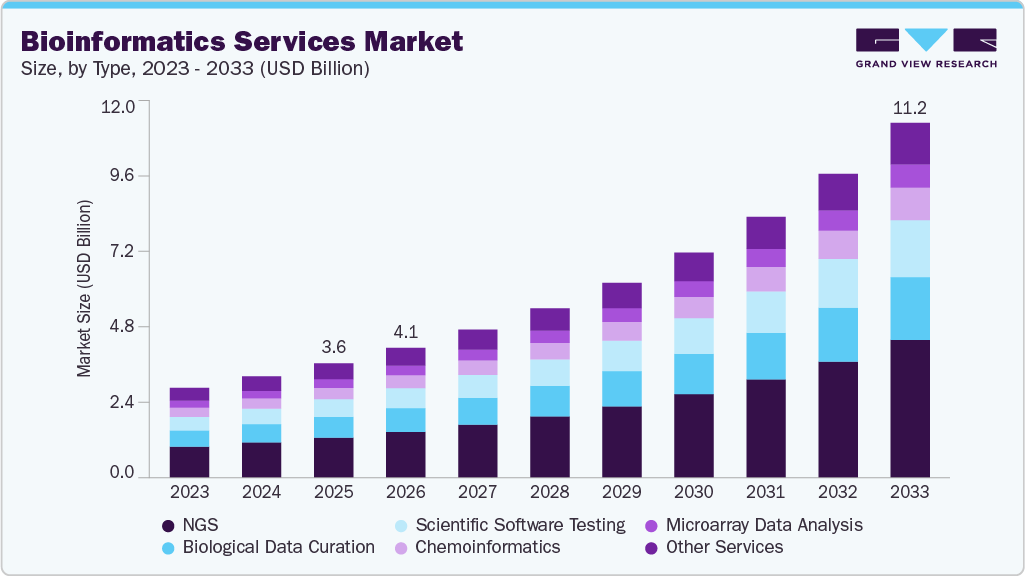
The global bioinformatics services market size was valued at USD 3.6 billion in 2025 and is projected to grow from USD 4.1 billion in 2026 to USD 11.2 billion by 2033, at a CAGR of 15.4% from 2026 to 2033. North America held the largest share of 45.8% of the global market in 2025. Market growth is being driven by the increasing adoption of next-generation sequencing (NGS), rising investments in genomics and proteomics research, and the growing demand for data analysis solutions in drug discovery and precision medicine.
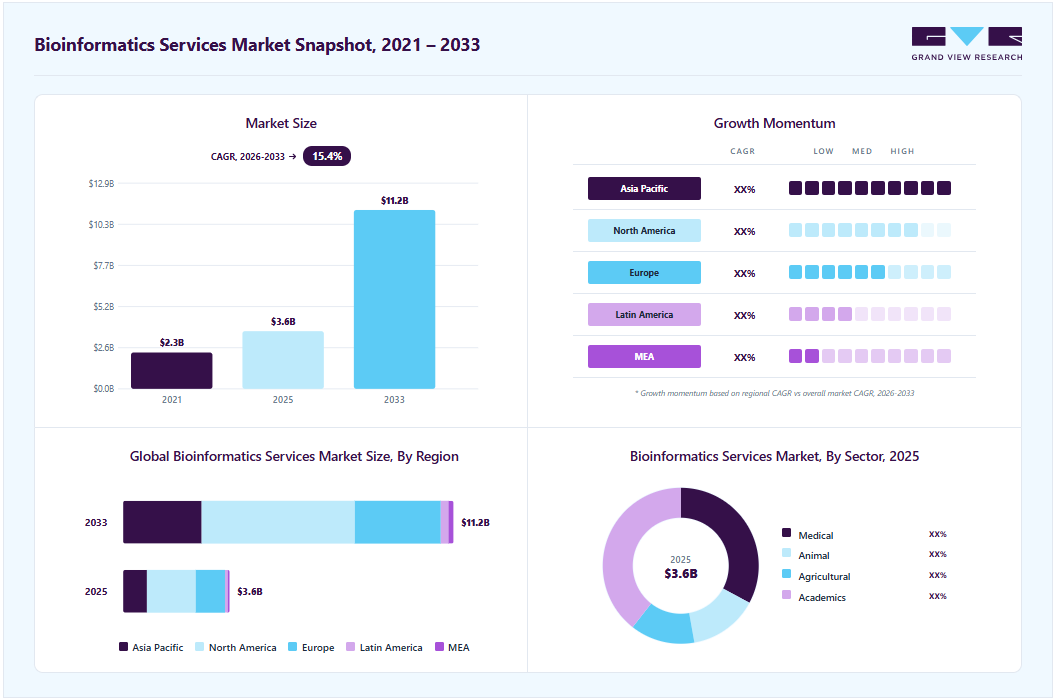 Source: Grand View Research, IR Documents, Primary Interviews, Paid DatabasesTo learn more about this report,
 Download Free Sample Report
 Key Market Trends & Insights
- By type: NGS segment led the market with the largest revenue share of 35.1% in 2025.
- By application: Drug discovery segment held the largest revenue share of 24.7% in 2025.
- By sector: Academics segment led the market with the largest revenue share of 39.6% in 2025.
Regional Highlights
- Largest regional market: North America (45.8% revenue share, 2025)
- Fastest-growing regional market: Asia Pacific (highest CAGR, 2026-2033)
- By country: The U.S. bioinformatics services market held the largest share in North America.
Market Size & Forecast
- Market size in 2025: USD 3.6 Billion
- Estimated market size in 2026: USD 4.1 Billion
- Projected market size by 2033: USD 11.2 Billion
- CAGR (2026-2033): 15.4%
GVR research-powered AIAsk Prism AI about the bioinformatics services marketGet cited answers from GVR research on market growth, segments, regulations and forecasts.Start with✓ Source-linked answers ✓ Market-specific context ✓ Traceable figuresExplore Prism AI ↗The surge in biologics and personalized therapeutics development, along with advancements in artificial intelligence and cloud-based bioinformatics platforms, is further accelerating market expansion.
 To learn more about this report, Download Free Sample Report
 Market Opportunity Analysis
The growing adoption of precision medicine and personalized healthcare presents significant growth opportunities for the global market. Increasing investments in genomics, proteomics, and multi-omics research, along with the rising use of artificial intelligence and cloud-based analytics platforms, are creating strong demand for advanced bioinformatics solutions.
Moreover, the expansion of drug discovery programs, biomarker identification, and companion diagnostics development is encouraging pharmaceutical and biotechnology companies to outsource bioinformatics services to achieve faster, more efficient data interpretation. Emerging economies are also expected to offer lucrative opportunities driven by improving healthcare infrastructure, rising research funding, and increasing awareness of genomic-based diagnostics and therapeutics.
Market Challenges Analysis
Managing and interpreting massive volumes of complex biological data remains a major challenge for the bioinformatics services industry. The rapid increase in genomic and clinical datasets generated by next-generation sequencing and other omics technologies has created challenges in data storage, integration, standardization, and analysis accuracy. In addition, the shortage of skilled bioinformatics professionals and computational biologists capable of handling advanced analytical workflows further limits market growth. Concerns regarding data privacy, cybersecurity, and regulatory compliance also add complexity to bioinformatics operations, particularly in clinical and healthcare applications involving sensitive patient information.
Market Dynamics
The increasing adoption of next-generation sequencing (NGS) technologies is a major driver of the global market, as NGS platforms generate vast volumes of complex genomic data that require advanced computational analysis and interpretation. The growing use of NGS in clinical diagnostics, precision medicine, oncology research, drug discovery, and infectious disease monitoring has significantly increased the demand for bioinformatics tools and outsourced analytical services. Pharmaceutical companies, biotechnology firms, and research institutes are increasingly relying on bioinformatics service providers for sequence alignment, variant analysis, gene expression profiling, and data management to accelerate research outcomes and improve decision-making. Moreover, declining sequencing costs and the expanding use of whole-genome, exome, and transcriptome sequencing are further driving the need for scalable, efficient bioinformatics solutions across the healthcare and life sciences sectors.
The high cost of advanced bioinformatics tools and data analysis platforms is a significant restraint on the bioinformatics services industry, particularly for small- and mid-sized research organizations and academic institutions with limited budgets. Implementing bioinformatics workflows often requires substantial investment in high-performance computing infrastructure, licensed software, cloud storage, data security systems, and skilled professionals to handle complex biological datasets. In addition, the continuous need for software upgrades, maintenance, and integration of advanced technologies such as artificial intelligence and machine learning further increases operational costs. These financial barriers can limit the adoption of bioinformatics services, especially in developing regions where access to advanced computational infrastructure and funding support remains limited.
Market Concentration & Characteristics
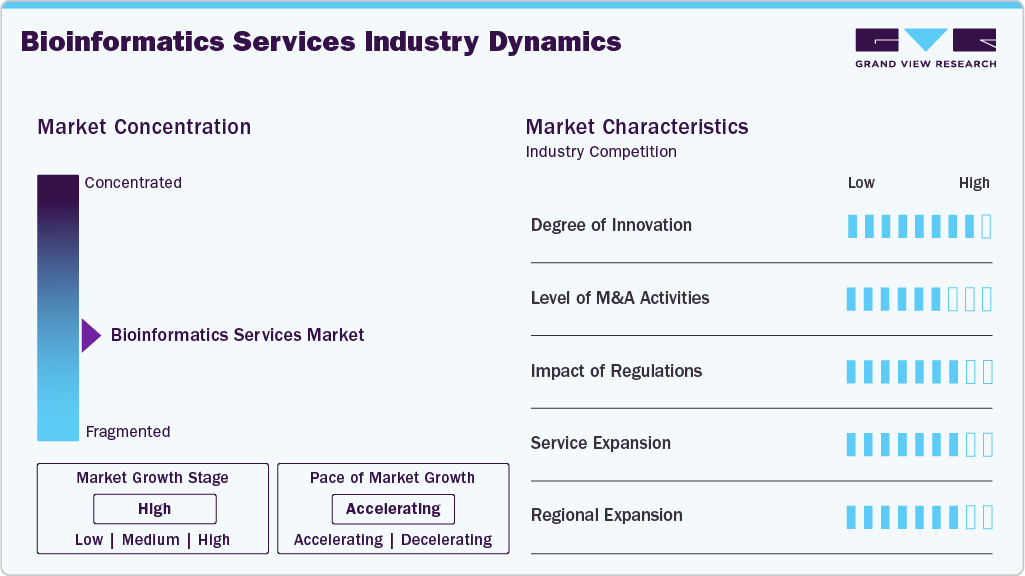
The bioinformatics services market is witnessing significant innovation driven by advances in artificial intelligence, machine learning, cloud computing, and next-generation sequencing technologies. Companies are increasingly developing automated data analysis platforms, multi-omics integration tools, and AI-based predictive analytics solutions to improve the speed and accuracy of biological data interpretation. Continuous innovation in computational biology and precision medicine applications is further enhancing the efficiency of research and clinical workflows. For instance,in July 2023, FOXO Technologies launched Bioinformatics Services to advance epigenetic data analysis, accelerating innovation in biology, biotechnology, and healthcare while addressing challenges in interpreting epigenetic data.
The bioinformatics service industry is experiencing moderate to high levels of mergers, acquisitions, and strategic collaborations as companies seek to strengthen their technological capabilities and expand their service portfolios. Large biotechnology and pharmaceutical firms are acquiring specialized bioinformatics companies to enhance genomic data analysis, drug discovery, and precision medicine capabilities. Partnerships between research organizations, software providers, and healthcare companies are also increasing to accelerate innovation and market presence. For instance, in April 2025, Illumina and Tempus AI partnered in the U.S. to accelerate precision medicine adoption through genomic AI, multimodal data integration, and enhanced molecular profiling insights across major diseases.
 To learn more about this report, Download Free Sample Report
 Regulations significantly shape the bioinformatics service market, particularly in data security, patient privacy, and compliance with genomic research standards. Stringent guidelines such as the General Data Protection Regulation (GDPR) in Europe and the Health Insurance Portability and Accountability Act (HIPAA) in the U.S. govern the storage and sharing of genetic data. Regulatory bodies like the FDA and EMA also play a key role in ensuring the accuracy and validity of bioinformatics-driven drug discovery and clinical applications. Compliance with these regulations adds complexity but is essential for market credibility and trust.
Companies in the bioinformatics services industry are continually expanding their offerings to meet the growing demand for genomics, proteomics, transcriptomics, and multi-omics analysis. Service providers are increasingly integrating cloud-based platforms, AI-powered analytics, and customized data interpretation solutions into their portfolios. The expansion of bioinformatics applications in drug discovery, clinical diagnostics, agriculture, and microbial research is further supporting product and service diversification.
Market players are actively expanding their presence in emerging regions such as Asia-Pacific, Latin America, and the Middle East, driven by increased investments in life sciences research and healthcare infrastructure. Growing government funding for genomics projects, rising adoption of precision medicine, and increasing biotechnology activities in countries such as China and India are encouraging companies to strengthen regional operations. Strategic collaborations with local research institutes and healthcare organizations are also supporting geographic expansion efforts.
Case Study: Moderna Using AI and Bioinformatics for Rapid mRNA Vaccine Development
Challenge
Traditional vaccine development requires years of genomic analysis, laboratory testing, and clinical validation. During the COVID-19 pandemic, Moderna needed to rapidly analyze viral genome data and develop an effective vaccine within a very short timeframe.
Solution Implemented
Moderna applied advanced bioinformatics services, artificial intelligence (AI), cloud computing, and machine learning to accelerate mRNA vaccine development. In collaboration with Amazon Web Services and IBM, the company used AI-enabled bioinformatics pipelines to analyze viral genome sequences, optimize mRNA structures, and automate computational modeling workflows before laboratory testing.
Product/Outcome Launched
Moderna successfully launched its mRNA-based COVID-19 vaccine and later expanded the same bioinformatics-driven platform into personalized cancer vaccines, RSV vaccines, influenza vaccines, and other therapeutic programs. The company reportedly completed vaccine sequence selection within only two days using machine-learning-supported infrastructure.
Real-World Impact
This case demonstrated how bioinformatics services can significantly reduce drug and vaccine development timelines, improve genomic data interpretation, and accelerate precision medicine innovation. It also highlighted the growing commercial importance of AI-integrated bioinformatics platforms in pharmaceutical research and healthcare.
Type Insights
The next-generation sequencing (NGS) segment led the market with the largest revenue share of 35.1% in 2025 and is expected to register at the fastest CAGR during the forecast period. The segment growth is primarily driven by the increasing adoption of high-throughput sequencing technologies in genomics, precision medicine, oncology research, and drug discovery. In addition, the rising volume of complex genomic data generated through NGS platforms has significantly increased the demand for advanced bioinformatics services for data analysis, interpretation, and storage.
The scientific software testing segment is expected to register at a significant CAGR during the forecast period. As bioinformatics tools are adopted by a broader range of users, including researchers with varying levels of computational expertise, their usability becomes a critical factor. Software testing aids ensure that bioinformatics applications are functionally robust, intuitive, and accessible to end users. This involves testing for user interface design, workflow integration, and overall user experience. As bioinformatics continues to expand into new fields and user bases, the emphasis on software quality and usability is driving the growth of scientific software testing services.
Application Insights
The drug discovery segment led the market with the largest revenue share of 24.7% in 2025. The increasing complexity of drug development, the rising demand for personalized medicine, and advancements in AI-driven data analysis. Pharmaceutical and biotech companies are leveraging bioinformatics to streamline target identification, lead optimization, and biomarker discovery, reducing time and costs associated with traditional methods. The integration of next-generation sequencing (NGS) and big data analytics enhances predictive modeling, accelerating the identification of potential drug candidates. Moreover, growing collaborations between bioinformatics firms and drug developers, along with regulatory support for data-driven drug discovery, are further fueling market growth.
The proteomics segment is expected to witness at the fastest CAGR over the forecast period. Biomarkers are essential for early disease detection, diagnosis, and personalized treatment strategies. Proteomics plays a crucial role in identifying and validating these biomarkers by analyzing protein expression patterns and modifications. The complexity of proteomics data necessitates the use of advanced bioinformatics tools to identify potential biomarkers and understand their biological significance. As the need for research focused on biomarkers escalates, the demand for bioinformatics services to support this essential component of precision medicine also increases.
Sector Insights
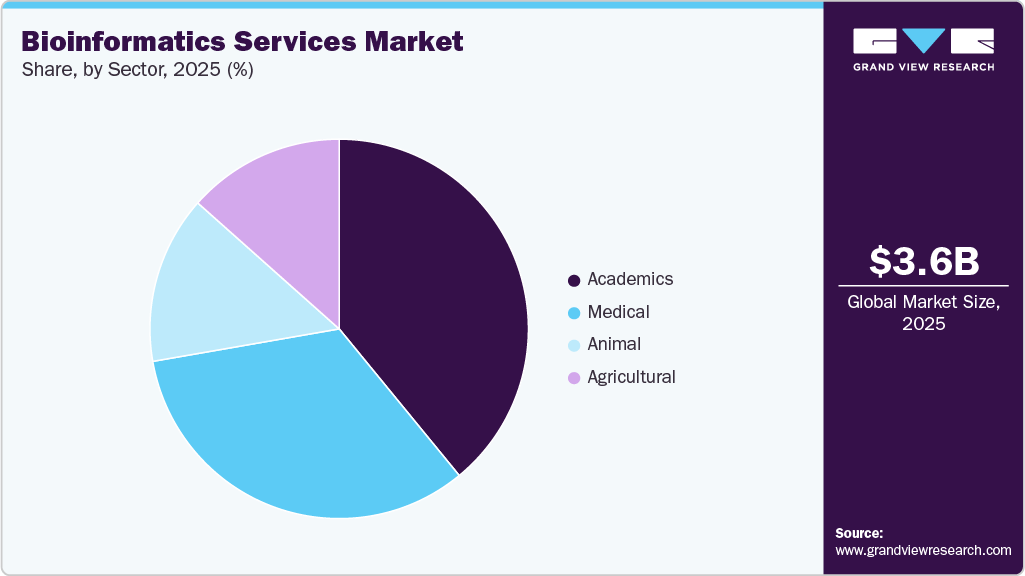
The academic segment led the market with the largest revenue share of 39.6% in 2025 and is expected to grow at the fastest CAGR throughout the forecast period. As bioinformatics has become an integral part of modern biological and medical research, there is a rising demand for educational programs that equip students and researchers with the necessary skills. Universities increasingly offer specialized bioinformatics courses, degrees, and certifications to meet this demand. To support these educational initiatives, academic institutions require access to bioinformatics services that provide the tools and resources needed for teaching and hands-on training. This includes access to databases, software, and computational infrastructure, driving the academic demand for bioinformatics services.
 To learn more about this report, Download Free Sample Report
 The animal sector is expected to witness at a significant CAGR over the forecast period. Conservation efforts and wildlife genomics are emerging areas where bioinformatics services are becoming increasingly important. Researchers use genomics to study endangered species, understand population genetics, and develop conservation strategies. Bioinformatics plays a key role in analyzing genetic diversity, identifying at-risk populations, and assessing the impact of environmental changes on species. As conservation genomics evolves more data-intensively, the need for bioinformatics services to manage and interpret large-scale genomic data is growing.
Regional Insights
North America dominated the global bioinformatics services market with the largest revenue share of 45.8% in 2025. Companies in the North America region are at the forefront of innovations in genomics, proteomics, and other technologies, driving the demand for bioinformatics services. The region’s well-established infrastructure for biotechnology and life sciences research supports a robust bioinformatics ecosystem, with ongoing investments in advanced research and development. The presence of major players in the industry, coupled with collaborations between academic institutions and private companies, is driving demand for the bioinformatics services in the North America region.
 To learn more about this report, Download Free Sample Report
 U.S. Bioinformatics Services Market Trends
The bioinformatics services industry in the U.S. accounted for the largest market revenue share in North America in 2025, due to rising investments in genomics research, increasing adoption of sequencing technologies, and strong demand for precision medicine and data-driven drug discovery. For instance, in May 2023, CD Genomics, one of the leading providers of genomics and bioinformatics solutions, introduced its long-read metagenomics sequencing service in the U.S.
Europe Bioinformatics Services Market Trends
The bioinformatics services industry in Europe is propelled by strong governmental funding, increasing collaborations between research institutions and biotech firms, and the rapid adoption of bioinformatics in clinical diagnostics. The rise in genomic studies, particularly in oncology and rare diseases, supports demand. Moreover, the implementation of AI and machine learning in bioinformatics tools enhances efficiency, further driving market growth.
The UK bioinformatics services market is expanding due to growing investments in genomics, AI-driven healthcare innovations, and government-backed initiatives such as Genomics England. The country's focus on precision medicine, supported by leading research institutions, is fueling demand for bioinformatics services. Moreover, increasing public-private partnerships and funding for AI integration in drug discovery boost market growth.
The bioinformatics services market in Germany is expected to grow at a significant CAGR during the forecast period. Germany is a key player in the European market, supported by strong biotechnology research, growing genomic research, and rising investments in precision medicine and digitalization of healthcare.
Asia Pacific Bioinformatics Services Market Trends
The bioinformatics services industry in the Asia Pacific is expected to witness at the fastest CAGR of 16.3% over the forecast period. Research in cancer genomics involves analyzing tumor-specific genetic mutations and identifying biomarkers that guide treatment decisions. Bioinformatics services are essential for managing and interpreting the large datasets generated in cancer genomics studies, including data from next-generation sequencing (NGS) and other high-throughput technologies. The increasing emphasis on personalized oncology and the development of precision cancer treatments are key factors contributing to the regional market expansion.
The China bioinformatics services market is expected to witness at a substantial CAGR over the forecast period, driven by expanding life science research activities, rapid development of healthcare infrastructure, and increasing focus on AI-based genomic analysis and personalized therapeutics.
The bioinformatics services market in Japan is driven by an aging population, which is increasing demand for personalized medicine and genomic research. The country’s focus on regenerative medicine, combined with advancements in AI-driven bioinformatics, supports market growth. Moreover, government initiatives promoting biotech innovation and collaborations between academia and industry fuel further expansion.
Middle East Bioinformatics Services Market Trends
The bioinformatics services industry in the Middle East is expanding due to the rising adoption of data-driven healthcare solutions, growing collaborations in life science research, and increasing demand for advanced disease analysis technologies.
The Kuwait bioinformatics services market is gaining momentum due to increased focus on healthcare modernization, rising adoption of genomic technologies, and growing investments in biomedical and clinical research.
Key Bioinformatics Services Company Insights
The bioinformatics services industry is highly competitive, with key players such as Agilent Technologies, Inc., BGI Group, Dotmatics, Illumina, Inc., QIAGEN, and Thermo Fisher Scientific Inc. focusing on technological advancements, AI-based analytics, cloud platforms, and strategic collaborations to strengthen their bioinformatics service capabilities and global market presence.
Key Bioinformatics Services Companies:
The following key companies have been profiled for this study on the bioinformatics services market.
- Agilent Technologies
- BGI Group
- Dotmatics
- Labvantage - Biomax GmbH
- CD Genomics
- Creative Biolabs
- DNAnexus Inc.
- DNASTAR
- Fios Genomics
- Illumina, Inc.
- PerkinElmer Inc.
- QIAGEN
- Thermo Fisher Scientific Inc.
Competitive Benchmarking
Operating Strategies
Competitive Edge
Weaknesses
Market Leaders:- Agilent Technologies, Inc.; Lonza
- Expansion of integrated genomics and sequencing service portfolios
- Strategic collaborations with research institutes and healthcare providers
- Investments in AI-driven bioinformatics and cloud-based analytics platforms
- Strong global distribution and brand recognition
- Advanced NGS technologies with broad product ecosystems
- High R&D investments and diversified life science offerings
- High operational and infrastructure costs
- Complex regulatory compliance across regions
- Dependence on premium pricing models in competitive markets
Emerging Player:- Fios Genomics
- Focus on niche bioinformatics and customized analytical services
- Adoption of cloud-native and AI-enabled data analysis platforms
- Flexible and specialized service offerings
- Faster innovation cycles and customized project execution
- Cost-effective bioinformatics and data management solutions
- Limited global commercial presence
- Lower financial and R&D capabilities compared to established leaders
- High dependency on collaborations and outsourced projects
Recent Developments
-
In April 2026, Illumina, Inc., launched DRAGEN v4.5 software to enhance genomic and multiomic analysis capabilities across oncology, rare disease, and germline research workflows using machine learning and pangenome advancements.
"BioInsight is all about making bioinformatics accessible, reliable, and scalable, whether you are a researcher seeking insights into rare disease or a pharma partner pursuing drug discovery from datasets."
-Rami Mehio, senior vice president and general manager of BioInsight at Illumina
-
In April 2025, Signios Biosciences in the United States launched an AI-driven bioinformatics and multiomics platform to strengthen precision medicine and drug discovery through integrated genomics, proteomics, transcriptomics, and advanced computational analysis capabilities.
“The challenge today is about how best to pull insights from biological information and organize it in a way that accelerates medical insights.”
-Felix Olale, MD, PhD, CEO and President of Signios Bio.
Bioinformatics Services Market Report Scope
Report Attribute
Details
Market size in 2025
USD 3.6 billion
Estimated Market size in 2026
USD 4.1 billion
Projected Market size by 2033
USD 11.2 billion
Growth rate
CAGR of 15.4% from 2026 to 2033
Base year for estimation
2025
Historical data
2021 - 2024
Forecast period
2026 - 2033
Quantitative units
Revenue in USD million/billion, and CAGR from 2026 to 2033
Report coverage
Revenue forecast, company ranking, competitive landscape, growth factors, and trends
Segments covered
Type, application, sector, region
Regional scope
North America; Europe; Asia Pacific; Latin America; MEA
Country scope
U.S.; Canada; Mexico; UK; Germany; France; Italy; Spain; Denmark; Sweden; Norway; India; China; Japan; Australia; South Korea; Thailand; Brazil; Argentina; Saudi Arabia; UAE; South Africa; Kuwait
Key companies profiled
Agilent Technologies; BGI Group; Dotmatics; Labvantage - Biomax GmbH; CD Genomics; Creative Biolabs; DNAnexus Inc.; DNASTAR; Fios Genomics; Illumina, Inc.; PerkinElmer Inc.; QIAGEN; Thermo Fisher Scientific Inc.
Customization scope
Free report customization (equivalent up to 8 analyst’s working days) with purchase. Addition or alteration to country,regional & segment scope.
Pricing and purchase options
Avail customized purchase options to meet your exact research needs. Explore purchase options
Global Bioinformatics Services Market Report Segmentation
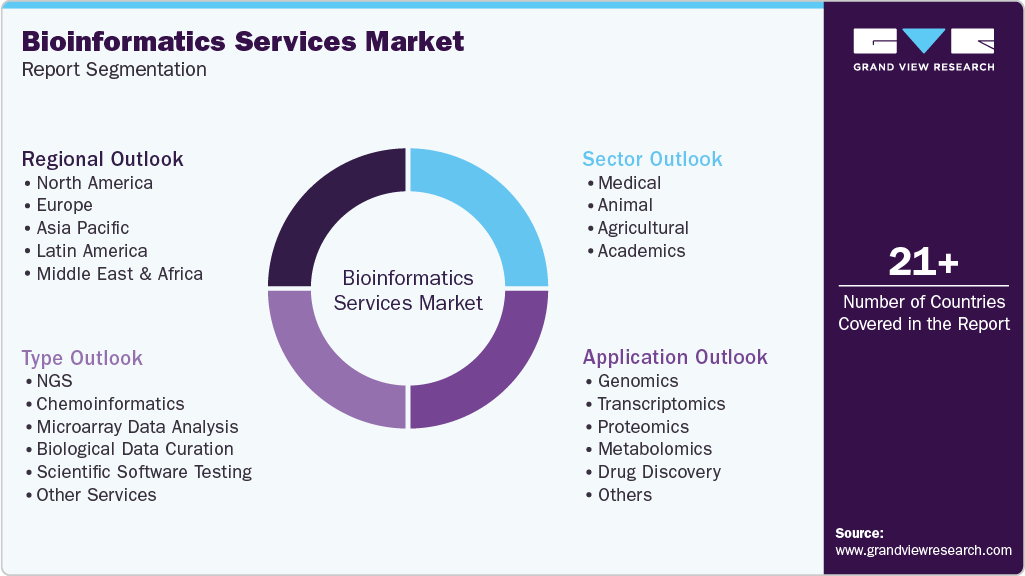
This report forecasts revenue growth and provides an analysis on the latest trends in each of the sub-segments from 2021 to 2033. For this report, Grand View Research has segmented the global bioinformatics services market report based on the type, application, sector, and region:
 To learn more about this report, Download Free Sample Report
 -
Type Outlook (Revenue, USD Million, 2021 - 2033)
-
NGS
-
Targeted Sequencing Analysis
-
Transcriptome Analysis
-
Whole Genome
-
Chip Seq Analysis
-
De novo Assembly
-
Methyl Seq Analysis
-
-
Chemoinformatics
-
Sequence Analysis Platforms
-
Molecular Modeling
-
Docking
-
Clinical trial data management
-
Others
-
-
Microarray data analysis
-
Biological data curation
-
Scientific software testing
-
Other services
-
-
Application Outlook (Revenue, USD Million, 2021 - 2033)
-
Genomics
-
Transcriptomics
-
Proteomics
-
Metabolomics
-
Drug Discovery
-
Others
-
-
Sector Outlook (Revenue, USD Million, 2021 - 2033)
-
Medical
-
Animal
-
Agricultural
-
Academics
-
-
Regional Outlook (Revenue, USD Million, 2021 - 2033)
-
North America
-
U.S.
-
Canada
-
Mexico
-
-
Europe
-
UK
-
Germany
-
France
-
Italy
-
Spain
-
Denmark
-
Sweden
-
Norway
-
-
Asia Pacific
-
Japan
-
China
-
India
-
Australia
-
South Korea
-
Thailand
-
-
Latin America
-
Brazil
-
Argentina
-
-
MEA
-
South Africa
-
Saudi Arabia
-
UAE
-
Kuwait
-
-
Delivered Customizations
This report has been delivered with the following In-depth customizations
Client Request
Customization Delivered
Value Adds
Regional & End-User Demand Analysis for Bioinformatics Services Market
Delivered country-level and regional demand assessment across pharma & biotech companies, academic institutes, CROs, and healthcare providers, covering adoption trends in genomics, proteomics, transcriptomics, and precision medicine applications.
Helps identify high-growth regions, prioritize target customer groups, and align expansion strategies with evolving trends in bioinformatics adoption.
Competitive Benchmarking & Service Portfolio Assessment
Developed benchmarking analysis of key bioinformatics service providers based on service offerings, AI/ML integration, cloud bioinformatics capabilities, pricing strategies, partnerships, and geographic presence.
Enables clients to evaluate competitive positioning, identify differentiation opportunities, and benchmark technology and commercial strategies.
Technology Trends & Opportunity Mapping
Delivered analysis of emerging trends, including AI-driven bioinformatics, multi-omics integration, cloud-based analytics, and sequencing data management solutions, along with future opportunity assessment across drug discovery and precision medicine applications.
Supports strategic decision-making by identifying future revenue opportunities, innovation areas, and investment priorities within the bioinformatics services market.
Frequently Asked Questions About This Report
Some key players operating in the bioinformatics services market include Accelerys Inc, Qiagen Inc., GVK Biosciences, Illumina Inc., Agilent Technologies, Life Technologies Corporation, Celera Corporation, IBM Life sciences, Affymetrix, DNAnexus, and Geneva Bioinformatic.
Key factors include the rising demand for bioinformatics in drug discovery, advancements in high-performance computing and integrated web services, implementation of favorable government initiatives & external funding for R&D exercises, and increasing adoption of in-silico modeling tools.
The global bioinformatics services market size was estimated at USD 3.6 billion in 2025 and is expected to reach USD 4.1 billion in 2026.
The global bioinformatics services market is expected to grow at a compound annual growth rate of 15.4% from 2026 to 2033 to reach USD 11.2 billion by 2033.
North America dominated the bioinformatics services market with a share of 45.8% in 2025. This is attributable to well defined regulatory framework is responsible for higher penetration in industry participants which subsequently leads to the generation of industrial revenue
The next-generation sequencing (NGS) segment led the market with the largest revenue share of 35.1% in 2025.
The drug discovery segment led the market with the largest revenue share of 24.7% in 2025.
The academic segment led the market with the largest revenue share of 39.6% in 2025.
About the Author(s)
Biotechnology Research Team
Healthcare · BiotechnologyThis report was authored by the biotechnology research team at Grand View Research - comprising two research analysts, one senior research analyst, and one industry expert - with specialized expertise in the biotechnology segment of the healthcare industry. All findings are based on proprietary healthcare databases, executive interviews, and regulatory analysis, subject to internal peer review prior to publication.
Last Updated:
Speak to Analyst

Customize this report to your needs - add regions, segments, or data points, with 20% free customization.
Or view our licence options:


ISO 9001:2015 & 27001:2022 Certified
We are GDPR and CCPA compliant! Your transaction & personal information is safe and secure. For more details, please read our privacy policy.


