
- Home
- »
- Medical Devices
- »
-
Breast Fillers Market Size, Share, Growth Report, 2026-2033GVR Report cover

Breast Fillers Market (2026 - 2033)
Size, Share & Trends Analysis Report By Material Type (Hyaluronic Acid (HA), Poly-L-lactic Acid (PLLA)), By End-use (Specialty Cosmetology & Aesthetic Clinics), By Region, And Segment Forecasts
Market Size, 2025
$232.7MMarket Estimate, 2026
$244.3MMarket Forecast, 2033
$366.0MCAGR, 2026–2033
5.9%Breast Fillers Market Summary
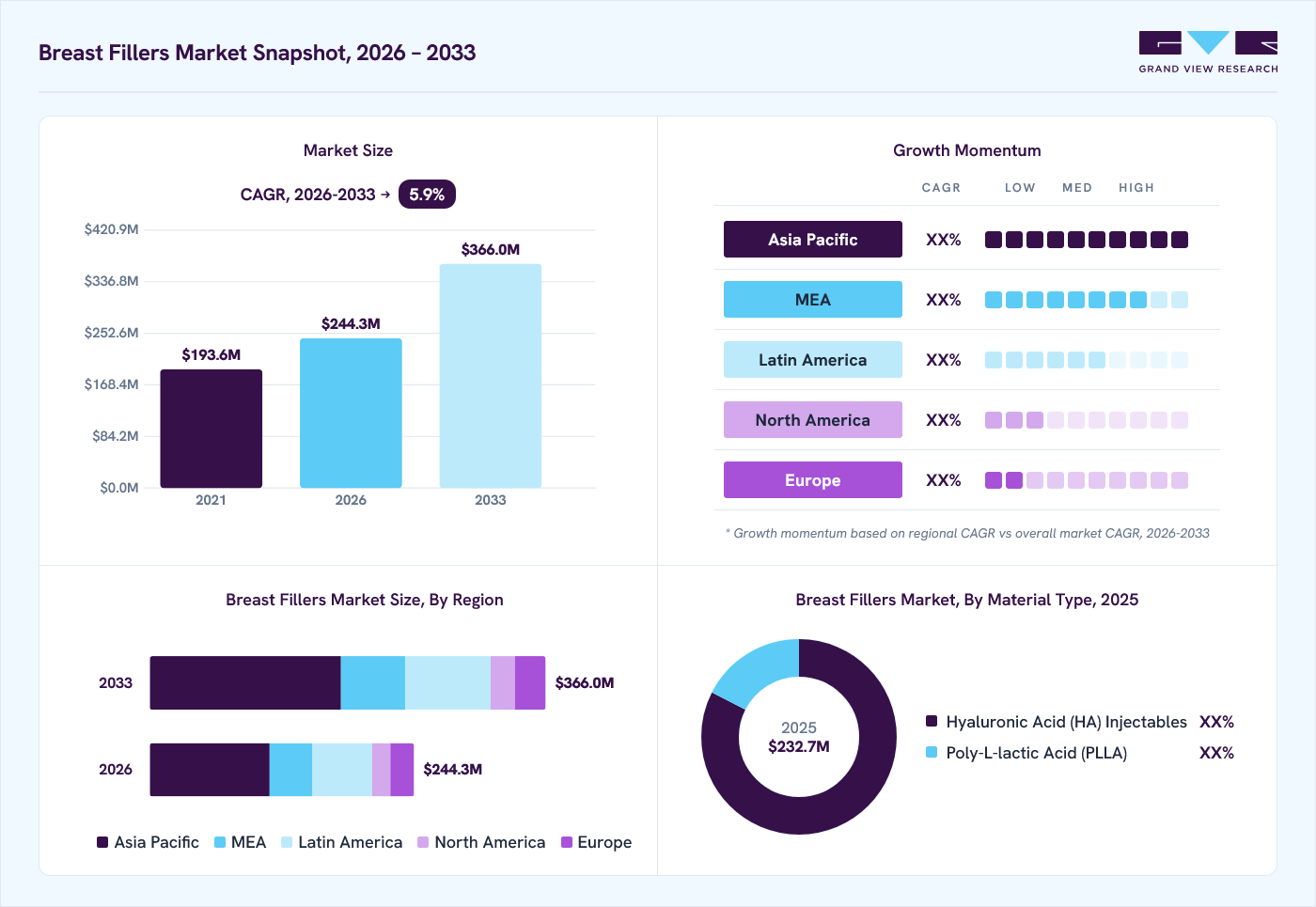
The global breast fillers market size was valued at USD 232.7 million in 2025 and is projected to grow from USD 244.3 million in 2026 to USD 366.0 million by 2033, at a CAGR of 5.9% from 2026 to 2033. Asia Pacific dominated the market, accounting for a revenue share of 45.1% in 2025. The growth of the global breast fillers industry is driven by the rising demand for minimally invasive aesthetic procedures, increasing consumer preference for non-surgical breast enhancement, and continuous advancements in injectable biomaterials.
 Source: Grand View Research, IR Documents, Primary Interviews, Paid DatabasesTo learn more about this report,
 Download Free Sample Report
Key Market Trends & Insights
- By material type: Hyaluronic Acid (HA) held the largest revenue share of 82.4% in 2025.
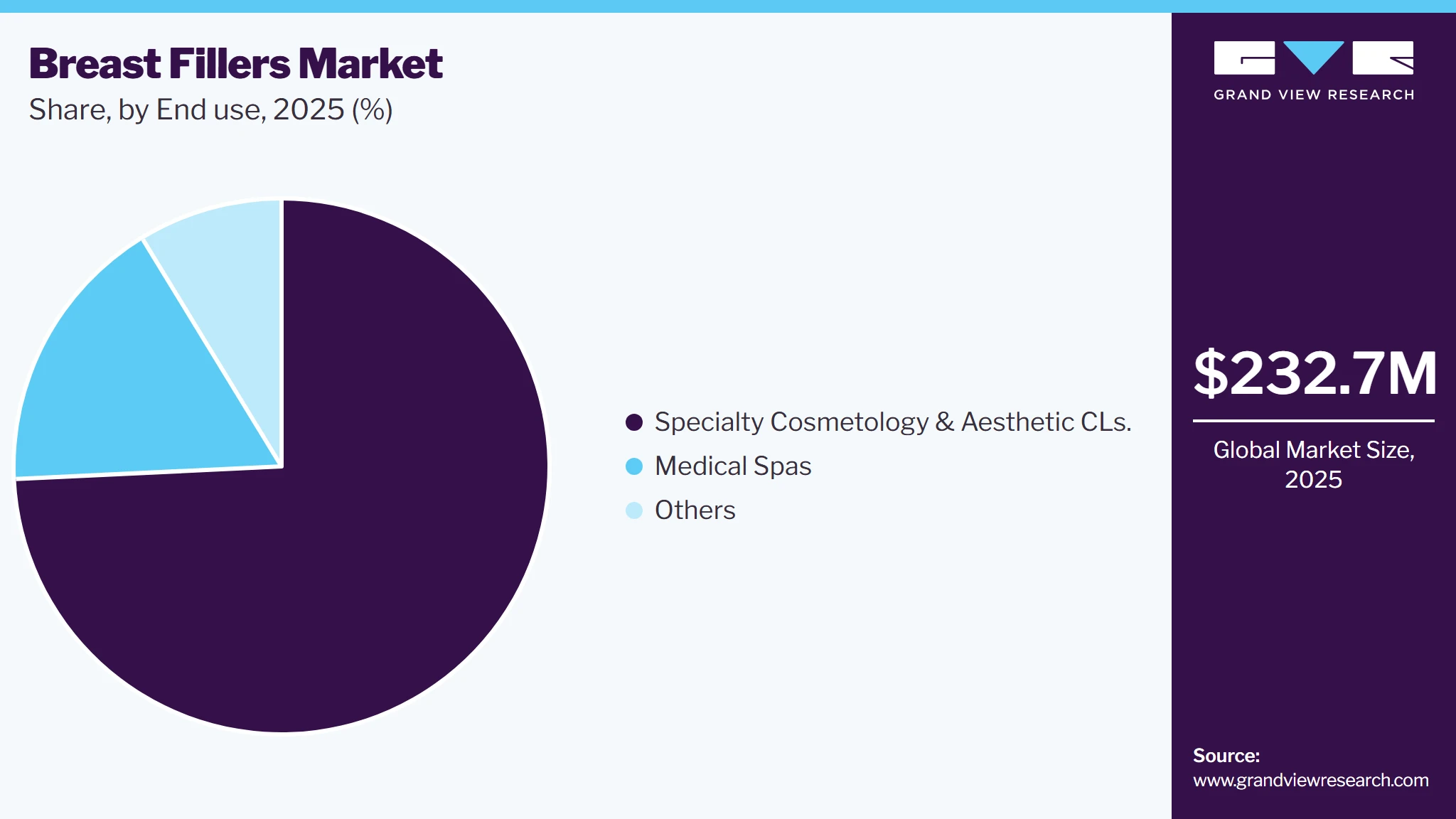
- By end use: Specialty cosmetology & aesthetic clinics held the largest revenue share of 74.2% in 2025.
Regional Highlights
- Largest regional market: Asia Pacific (45.1% revenue share, in 2025)
- By country: China held the largest share in 2025
Market Size & Forecast
- Market size in 2025: USD 232.7 Million
- Estimated market size in 2026: USD 244.3 Million
- Projected market size by 2033: USD 366.0 Million
- CAGR (2026-2033): 5.9%
Prism AI by Grand View Research Free to tryAsk a question about the breast fillers marketTry asking✓Every figure cited from GVR research Prefer the report? Download free sample →
A growing number of individuals are seeking breast fillers as an alternative to traditional implant-based augmentation due to shorter procedure times, minimal scarring, lower recovery periods, and the ability to achieve subtle, natural-looking results. The increasing influence of social media, celebrity culture, and heightened awareness regarding body aesthetics has further accelerated the acceptance of cosmetic enhancement procedures across various age groups.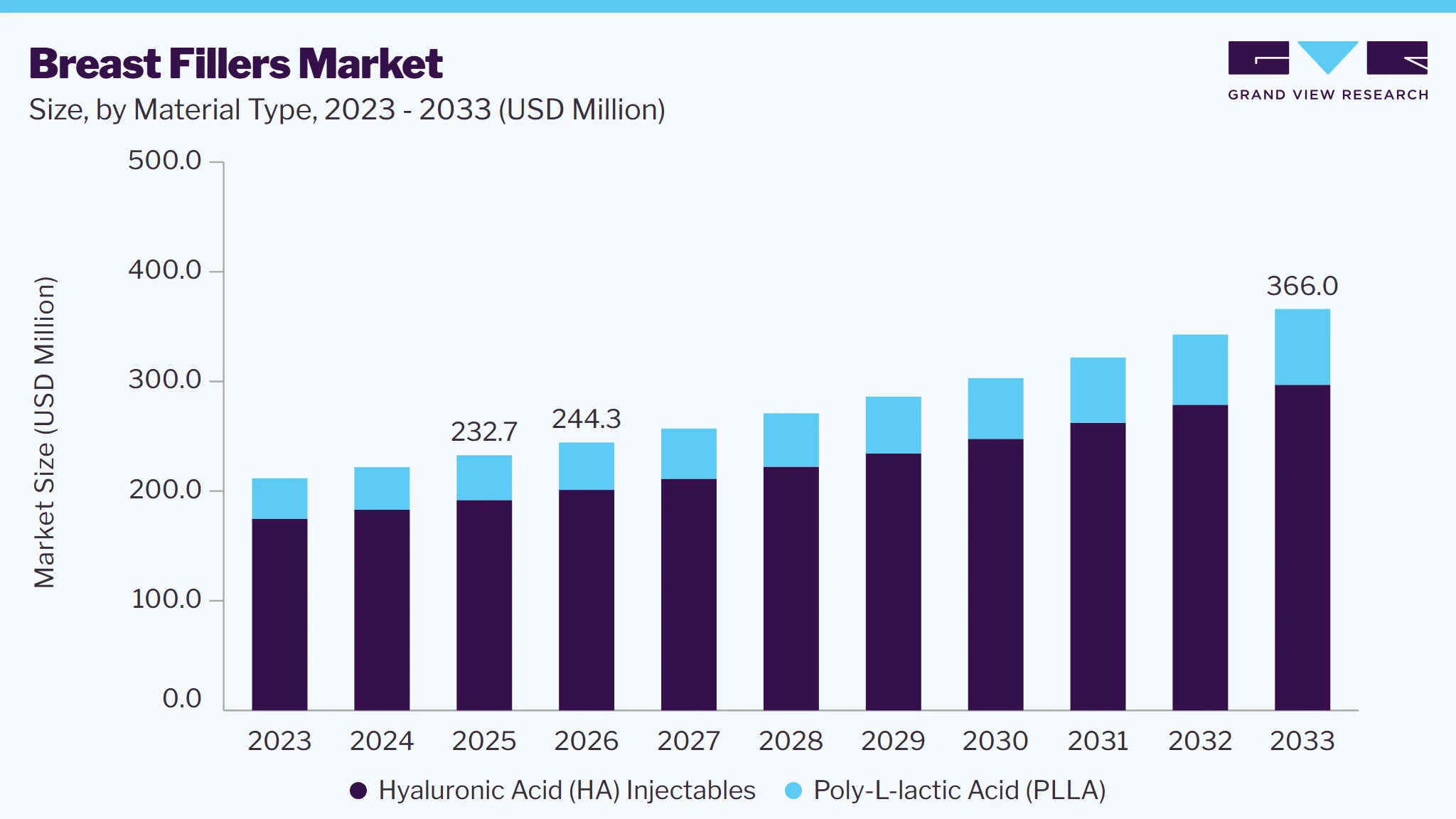 To learn more about this report, Download Free Sample Report
Furthermore, the rising popularity of minimally invasive injectable aesthetic treatments has strengthened consumer confidence in filler-based procedures, encouraging greater adoption of breast fillers as a non-surgical enhancement option. For instance, in June 2025, according to the International Society of Aesthetic Plastic Surgery (ISAPS) Global Survey 2024, hyaluronic acid (HA) filler procedures increased by 5.2% year-over-year to 6.3 million globally, making them the second most commonly performed non-surgical aesthetic procedure worldwide. This trend reflects the growing preference for injectable aesthetic treatments and supports the increasing demand for breast fillers as a safe, minimally invasive alternative to conventional breast augmentation surgery.
In addition, the breast fillers market’s growth is driven by the increasing off-label use of injectable fillers for non-surgical breast augmentation, reflecting strong consumer demand for minimally invasive aesthetic procedures. In many countries, including the UK, dermal fillers are not approved for breast enhancement due to concerns regarding patient safety, filler migration, infection, granuloma formation, interference with breast imaging, and other long-term complications. Similarly, the U.S. Food and Drug Administration (FDA) advises against using dermal fillers for breast enlargement or other body contouring procedures, as no dermal filler has been approved for these indications.
In India, the Central Drugs Standard Control Organisation (CDSCO) reaffirmed in May 2026 that cosmetic products are intended only for external application and cannot be administered through injection, further strengthening regulatory oversight of injectable cosmetic products. Despite these restrictions, increasing consumer preference for scar-free, minimally invasive, and reversible breast enhancement procedures has resulted in continued off-label use by some aesthetic practitioners. This unmet clinical demand is encouraging manufacturers to invest in research, clinical trials, and the development of safer, evidence-based injectable breast fillers capable of obtaining regulatory approval, thereby supporting long-term market growth.
Growing consumer awareness regarding the safety, effectiveness, and natural-looking outcomes of HA injectable fillers is emerging as a significant driver of the breast fillers market. Patients are opting for minimally invasive aesthetic procedures as they become more informed about the benefits of injectable fillers, including shorter recovery times, lower procedural risks, and reversible results compared to traditional implant-based breast augmentation. In addition, educational initiatives by leading aesthetic companies and healthcare providers are helping dispel misconceptions surrounding injectable fillers, improving patient confidence and encouraging wider adoption of non-surgical cosmetic treatments. For instance, in September 2025, Allergan Aesthetics, an AbbVie company, launched the "Naturally You with Injectable Hyaluronic Acid Fillers" campaign to educate consumers about the safety, efficacy, and natural-looking results of HA injectable fillers. The campaign also introduced The Hyaluronic Acid Injectable Fillers Report, featuring information, expert insights, and real-world patient satisfaction data to enhance awareness and promote informed decision-making regarding injectable aesthetic procedures.
“Our goal with Naturally You with Injectable Hyaluronic Acid Fillers campaign is to set the record straight on hyaluronic acid injectable fillers for our healthcare providers, our patients and the category," said Glen Curran, Senior Vice President, U.S. Aesthetics, Allergan Aesthetics. "By providing facts, real-world satisfaction data and expert insights, we hope to truly show how HA fillers are a safe and effective way to address aesthetic concerns."
Consumer perceptions and adoption trends for Hyaluronic Acid (HA) injectable fillers (2025)
Parameter
Statistics (2025)
Market Insight
Consumer satisfaction with HA injectable fillers
Nearly 90%
Consumers reported satisfaction with treatment outcomes, with natural-looking results being the primary reason for satisfaction.
Preference for natural-looking aesthetics
78%
Consumers strongly agreed that today's aesthetic treatments should deliver a more natural appearance.
Consumers using social media and online videos for information
Over two-thirds (≈67%)
Digital platforms have become a key source of education and influence for HA filler treatments.
Consumers expecting future growth in HA filler adoption
Over 75%
Most respondents believe the use of injectable HA fillers will continue to increase in the coming years.
Source: AbbVie Inc.
Key industry statistics highlighting the growth of medical aesthetics (2024)
The expansion of medical aesthetic clinics and the growing willingness of consumers to spend on minimally invasive cosmetic procedures are key factors driving the breast fillers market. Increasing availability of medical spas and aesthetic centers has improved patient access to non-surgical breast enhancement treatments, while advancements in injectable filler technologies have encouraged individuals to choose breast fillers as an alternative to conventional implant-based augmentation.
Industry Indicator
2024 Statistics
Market Implication
Medical spa locations in the U.S.
10,488 (up from 8,899 in 2022)
Expansion of aesthetic clinics improves accessibility to minimally invasive procedures.
Average annual medical spa revenue
USD 1.40 million
Demonstrates strong and growing consumer spending on aesthetic treatments.
Medical spa owners expecting revenue growth
84%
Reflects optimistic market outlook driven by increasing demand for aesthetic procedures.
Female patient share
89%
Women remain the primary consumer base for cosmetic and injectable treatments.
Repeat patient rate
73%
High patient retention indicates sustained demand for aesthetic procedures.
Average monthly patient visits
245
Consistent patient volume supports continued market expansion.
Average patient spending per visit
USD 527
Consumers are willing to invest in aesthetic enhancement procedures.
Newly opened medical spas
18%
Continuous establishment of new clinics strengthens service availability.
Women aged 35-54 among female patients
54%
Represents the largest demographic seeking aesthetic treatments.
Single-owner practices owned by non-core specialists
81%
Diversification of providers is expanding the availability of aesthetic services.
Source: 2024 Medical Spa State of the Industry Executive Report, American Med Spa Association.
Market Dynamics
The breast fillers market is gaining traction as more consumers seek minimally invasive alternatives to surgical breast augmentation. Breast fillers, primarily based on Hyaluronic Acid (HA) and Poly-L-lactic Acid (PLLA), are used to enhance breast volume, correct minor asymmetry, and refine the overall breast shape without the need for implants or extensive surgery. These procedures typically involve shorter treatment times, minimal downtime, and faster recovery, making them attractive to individuals seeking temporary and natural-looking aesthetic improvements. The market is further supported by increasing awareness of non-surgical cosmetic procedures, growing demand for personalized aesthetic treatments, and the expansion of specialty aesthetic clinics and medical spas.
The growing preference for minimally invasive aesthetic procedures is a key driver of growth in the breast fillers market. Many consumers are choosing non-surgical breast enhancement options because they involve less pain, shorter recovery times, and lower procedural risks compared to traditional breast implant surgery. Breast fillers, particularly Hyaluronic Acid (HA) and Poly-L-lactic Acid (PLLA), provide temporary volume enhancement and contour correction without the need for general anesthesia or extensive surgical intervention. This makes them an attractive option for individuals seeking subtle and natural-looking aesthetic improvements. Growing awareness of cosmetic procedures through social media, increasing disposable incomes, and the expansion of aesthetic clinics and medical spas have further supported market demand.
Regulatory authorities require strong clinical evidence demonstrating safety and effectiveness before approving fillers for breast applications. As a result, many physicians remain cautious about offering these procedures, and manufacturers face significant regulatory hurdles and lengthy approval processes. The absence of standardized clinical guidelines also limits widespread adoption among healthcare professionals. Furthermore, patients may hesitate to undergo procedures that are not formally approved for breast enhancement, reducing market acceptance. These regulatory limitations restrict commercial expansion, delay product innovation, and create uncertainty for manufacturers seeking to introduce dedicated breast filler products across global markets.
The integration of AI and 3D imaging technologies presents a significant growth opportunity for the breast fillers market. Advanced digital imaging systems enable practitioners to create accurate three-dimensional models of the patient's anatomy, allowing them to simulate treatment outcomes before the procedure. AI-powered software can assist in evaluating breast symmetry, volume requirements, filler placement, and expected aesthetic results based on individual patient characteristics. This personalized treatment planning improves consultation quality, enhances patient confidence, and supports better clinical decision-making. It also helps practitioners deliver more predictable and customized aesthetic outcomes while reducing the chance of treatment dissatisfaction.
Market Concentration & Characteristics
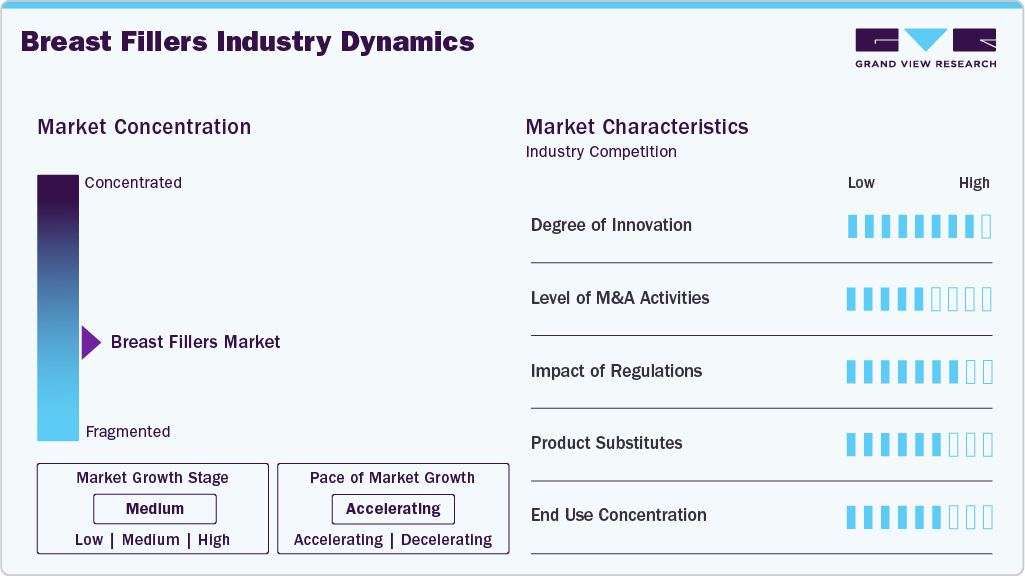
Innovation has a high impact on the breast fillers market because treatment safety, longevity, and natural-looking outcomes directly influence physician and patient adoption. Manufacturers are focusing on advanced HA and PLLA formulations that offer improved biocompatibility, better tissue integration, and longer-lasting volume enhancement. Continuous innovation helps companies differentiate their products, improve physician confidence, and increase repeat treatment rates. However, the need for extensive clinical validation and safety studies increases R&D costs and creates barriers for new entrants.
Mergers, acquisitions, and strategic collaborations have a moderate impact on the breast fillers industry. Companies are expanding their injectable aesthetics portfolios through acquisitions, licensing agreements, and partnerships with aesthetic clinics and distributors. These strategies help manufacturers strengthen their geographic presence, accelerate the commercialization of new filler technologies, and improve physician training programs. As competition in the aesthetics industry increases, strategic collaborations are expected to support innovation and market expansion.
 To learn more about this report, Download Free Sample Report
Regulations have a very high impact on the market because no dermal filler is broadly approved specifically for cosmetic breast augmentation in major regulated markets. Regulatory authorities require strong clinical evidence demonstrating long-term safety, effectiveness, and compatibility with breast tissue. Concerns regarding filler migration, interference with mammography and MRI interpretation, and long-term adverse events have resulted in strict regulatory oversight. These requirements increase development costs, delay commercialization, and limit product availability.
Product substitutes have a high impact on the market for breast fillers because patients can choose from several established breast enhancement options. Silicone and saline breast implants remain the preferred choice for permanent volume enhancement, while autologous fat grafting has gained popularity among patients seeking a natural alternative without synthetic fillers. Compared with these procedures, breast fillers provide temporary enhancement and require repeat treatments to maintain results. This limits their adoption primarily to patients seeking subtle contour correction or those unwilling to undergo surgery. Manufacturers, therefore, compete by improving filler longevity, safety, and patient comfort.
End-use concentration is moderately high in the breast fillers industry because procedures are primarily performed in specialty aesthetic clinics and medical spas (MedSpas) with experienced aesthetic physicians and injectors. Hospitals and ambulatory surgical centers contribute a smaller share, mainly for reconstructive or complex cosmetic cases. Demand is concentrated in urban areas where consumers have higher disposable incomes, greater awareness of aesthetic procedures, and easier access to specialized providers. Physician expertise, clinic reputation, and personalized consultation services strongly influence patient decisions and product selection.
Analyst Perspective
The breast fillers market is growing owing to the increasing demand for minimally invasive cosmetic procedures. Many people prefer non-surgical breast enhancement. There is also rising awareness of body contouring treatments. This growth is supported by improvements in injectable filler technologies, higher disposable incomes, more medical aesthetics clinics, and an increasing need for breast contour correction, fixing asymmetry, and post-reconstructive cosmetic procedures. The growing acceptance of aesthetic medicine, along with more qualified cosmetic practitioners and medical tourism in emerging markets, is driving adoption. Success in this market relies on providing safe, high-quality breast filler products with proven clinical results while meeting strict regulatory standards and quality controls. As demand for non-surgical breast enhancement keeps rising, companies that focus on continuous product innovation, gather strong clinical evidence for safety and effectiveness, offer thorough training for doctors, build strategic partnerships with aesthetic clinics and plastic surgeons, and strengthen their distribution networks in both developed and emerging markets will be well positioned for long-term success.
Material Type Insights
The Hyaluronic Acid (HA) segment dominated the breast fillers industry, accounting for 82.4% revenue share in 2025. This dominance was primarily driven by the widespread adoption of hyaluronic acid as the preferred filler material due to its excellent biocompatibility, high water-binding capacity, and temporary yet natural-looking aesthetic outcomes. HA is a naturally occurring polysaccharide found in human connective tissues, making it well-tolerated with a lower risk of allergic reactions compared to many synthetic alternatives. In addition, the segment also benefits from the continued off-label use of hyaluronic acid injectables for breast enhancement, where physicians prioritize temporary, reversible, and minimally invasive aesthetic procedures despite regulatory limitations.
The Poly-L-lactic Acid (PLLA) segment is expected to grow at the fastest CAGR during the forecast period, driven by the increasing demand for long-lasting, regenerative aesthetic treatments. Unlike hyaluronic acid (HA) fillers that provide immediate but temporary volume, PLLA stimulates the body's natural collagen production, resulting in gradual, natural-looking, and longer-lasting tissue augmentation. This collagen biostimulation offers improved structural support and reduces the need for frequent retreatments, making PLLA an attractive option for patients seeking durable aesthetic outcomes. In addition, continuous advancements in biodegradable injectable biomaterials and the growing preference for minimally invasive body contouring procedures are expected to further support segment growth. Supporting this trend, a multicenter post-market clinical study published in the Journal of Cosmetic Dermatology in September 2024 evaluated Lanluma (poly-L-lactic acid, PLLA) in 70 participants undergoing 99 body-contouring treatment sessions. The study reported high investigator and patient satisfaction over a 9-month follow-up, with no serious, severe, or fatal adverse events, reinforcing the clinical effectiveness and safety of PLLA-based collagen stimulators for large-volume soft-tissue filler.
End Use Insights
The specialty cosmetology & aesthetic clinics segment dominated the breast fillers market, accounting for 74.2% share in 2025. This dominance is driven by the increasing number of specialized aesthetic clinics offering minimally invasive cosmetic procedures, supported by advancements in injectable technologies and growing consumer demand for personalized aesthetic treatments. Specialty clinics provide experienced practitioners, dedicated cosmetic care, and outpatient services with shorter procedures and recovery times, making them the preferred setting for breast filler treatments. The expansion of medical aesthetics clinics across developed and emerging markets has further strengthened this segment. Supporting this trend, for instance, in 2025, Galderma reported in its 2025 Annual Report that its Injectable Aesthetics business generated 1,240 million USD in the first half of 2025, with year-on-year growth of 9.8% at constant currency. The company attributed this growth to increasing demand for injectable aesthetic treatments and continued expansion of aesthetic practices globally, reflecting the growing role of specialty aesthetic clinics in delivering injectable procedures.
 To learn more about this report, Download Free Sample Report
The medical spas (MedSpas) segment is expected to grow at the fastest CAGR during the forecast period, driven by the increasing consumer preference for convenient, minimally invasive aesthetic procedures offered in premium outpatient settings, along with the rapid expansion of MedSpa facilities worldwide. MedSpas provide physician-supervised cosmetic treatments, personalized aesthetic consultations, and a wellness-focused patient experience, making them an attractive option for individuals seeking non-surgical body enhancement procedures. The growing availability of injectable aesthetic treatments, combined with rising consumer spending on appearance-enhancing services, is further supporting segment expansion. For instance, in November 2024, the American Med Spa Association (AmSpa) reported that the number of medical spas in the U.S. increased from 8,899 in 2022 to 10,488 in 2023, demonstrating strong growth in aesthetic service providers and expanding access to injectable cosmetic procedures. This continued expansion of MedSpa networks is expected to create favorable opportunities for breast filler treatments during the forecast period.
Regional Insights
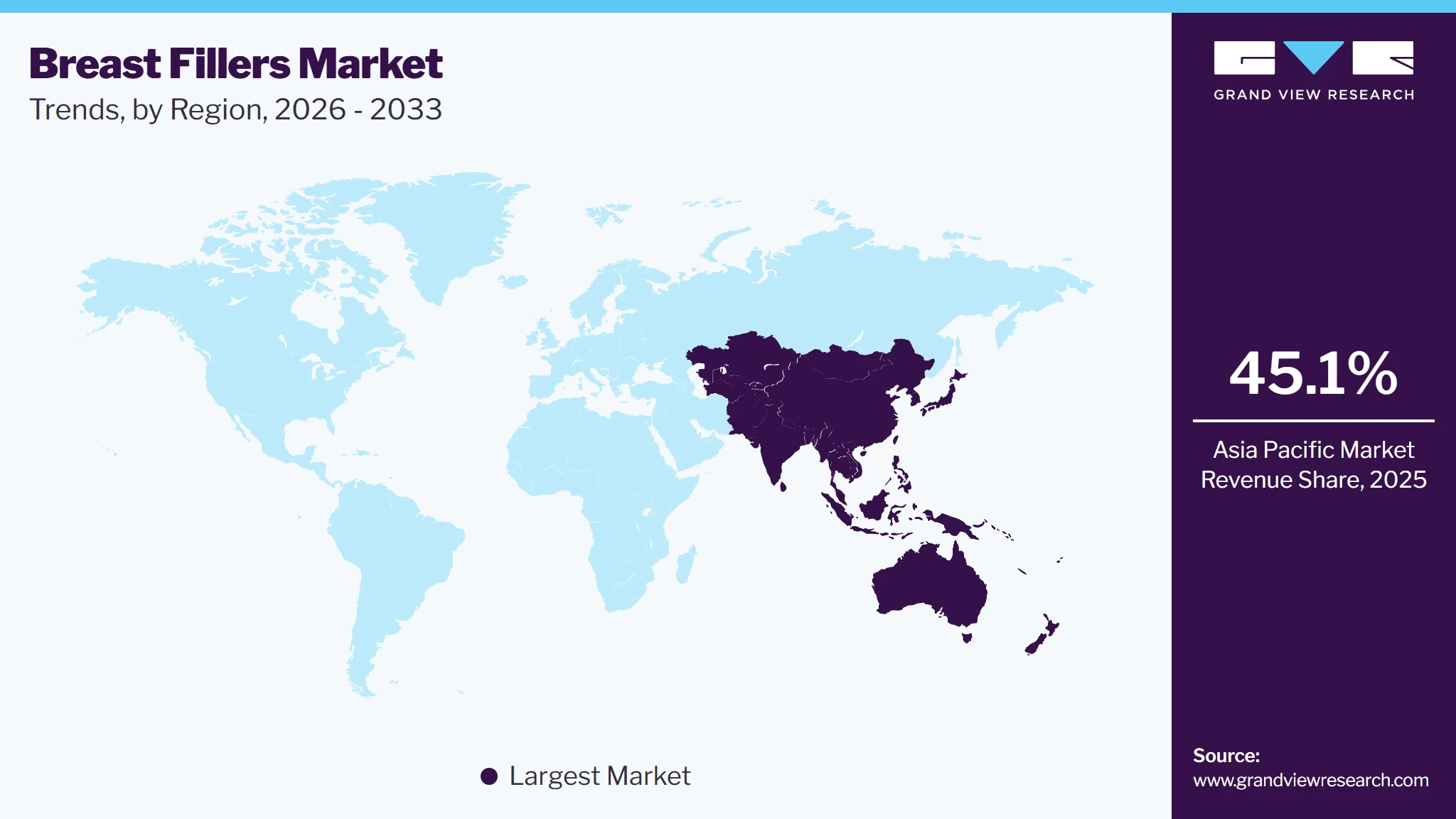
The Asia Pacific dominated the breast fillers market with a revenue share of 45.1% in 2025 and is expected to grow at the fastest CAGR during the forecast period, owing to rising disposable incomes, rapid expansion of the medical aesthetics industry, and increasing consumer preference for minimally invasive cosmetic procedures. Countries such as China, India, South Korea, Japan, Thailand, and Australia are witnessing growing demand for non-surgical breast enhancement treatments as awareness of personalized aesthetic solutions continues to increase. For instance, according to the People Research on India's Consumer Economy (PRICE), India's economy is expected to transition from an aspirational-led to a middle-class-driven economy, with total household income projected to increase from USD 2.2 trillion in 2021 to USD 7.1 trillion by 2031, while consumer spending is expected to rise from USD 1.9 trillion to nearly USD 5.2 trillion. Rising consumer purchasing power across emerging Asia Pacific economies is expected to accelerate spending on elective aesthetic procedures, including minimally invasive breast filler treatments.
 To learn more about this report, Download Free Sample Report
The China breast fillers market is witnessing strong growth, due to the rapid expansion of the domestic medical aesthetics industry and the increasing presence of local manufacturers specializing in injectable biomaterials and soft-tissue fillers. Chinese companies such as Zhejiang Jingjia Medical Technology Co., Ltd., ZK MediGroup Co., Ltd., and GODGEL Medical Products Limited are strengthening the country's manufacturing capabilities by developing hyaluronic acid and biomaterial-based injectable products for aesthetic applications. Growing investments in research and development, increasing adoption of advanced filler technologies, and rising demand for minimally invasive cosmetic procedures are expected to further drive the market growth.
North America Breast Fillers Market Trends
The breast fillers industry in North America held a significant share in 2025, owing to the region’s well-established medical aesthetics industry, high consumer spending on cosmetic procedures, and the strong presence of specialized aesthetic clinics and board-certified plastic surgeons. The U.S. and Canada continue to witness rising demand for minimally invasive cosmetic procedures as consumers prefer non-surgical breast enhancement options that offer shorter recovery times and reversible outcomes compared to implants.
U.S. Breast Fillers Market Trends
The U.S. breast fillers industry is witnessing significant growth, driven by the increasing consumer preference for minimally invasive body contouring procedures and temporary aesthetic enhancement solutions. Rising disposable income, growing beauty consciousness influenced by social media, and greater awareness regarding personalized cosmetic treatments are encouraging more individuals to choose injectable breast fillers over surgical augmentation. For instance, according to the U.S. Bureau of Economic Analysis (BEA), real disposable personal income increased from USD 16,610 in 2021 to USD 18,018 in 2025, reflecting stronger consumer purchasing power and higher discretionary spending. This growth has supported increased expenditure on elective aesthetic procedures, including minimally invasive breast enhancement treatments, contributing to the expansion of the U.S. market.
Europe Breast Fillers Market Trends
The Europe breast fillers industry is witnessing steady growth due to increasing demand for minimally invasive aesthetic procedures, rising consumer preference for natural-looking cosmetic enhancements, and expanding availability of advanced aesthetic clinics across Germany, France, Italy, Spain, and the UK. The region benefits from strong healthcare standards, highly qualified aesthetic practitioners, and growing awareness regarding personalized beauty treatments. Although breast filler procedures primarily involve the off-label use of hyaluronic acid dermal fillers and are subject to varying regulatory restrictions across European countries, demand persists among selected patients seeking temporary, minimally invasive alternatives to breast implants. The increasing popularity of non-surgical cosmetic procedures among both younger and middle-aged consumers is expected to sustain demand for breast fillers across Europe.
The UK breast fillers market is primarily driven by the increasing preference for non-surgical cosmetic procedures among consumers seeking temporary, reversible, and natural-looking breast enhancement. The strong influence of social media and increasing demand for personalized aesthetic consultations are encouraging aesthetic clinics to expand their injectable treatment portfolios. For instance, in April 2025, the British Association of Aesthetic Plastic Surgeons (BAAPS) released its 2024-2025 Annual Audit, reporting a 5% increase in cosmetic surgical procedures, reaching 27,462 procedures in 2024. The audit also highlighted growing demand for non-surgical aesthetic treatments, with dermal filler procedures increasing by 27%, reflecting consumers' rising preference for minimally invasive cosmetic enhancements. This trend is expected to support higher adoption of advanced breast filler procedures across the country.
The breast fillers market in Italy is driven by aesthetic clinics that use AI-assisted consultation tools and 3D imaging technologies to improve treatment planning and patient satisfaction. Rising demand for minimally invasive cosmetic procedures, coupled with ongoing innovation in biodegradable filler formulations and regenerative medicine research, is expected to support sustained market growth in Italy over the forecast period.
Latin America Breast Fillers Market Trends
The Latin America breast fillers industry is expected to witness strong growth during the forecast period, driven by the increasing demand for cosmetic procedures, expanding medical tourism, and improving access to aesthetic treatments. Countries such as Brazil and Argentina continue to attract international patients seeking high-quality cosmetic procedures at comparatively affordable prices. Increasing awareness regarding minimally invasive body contouring and the growing number of specialized aesthetic clinics are supporting market expansion. Brazil remains one of the world's leading destinations for cosmetic procedures, further creating opportunities for breast filler manufacturers and aesthetic service providers.
MEA Breast Fillers Market Trends
The Middle East & Africa breast fillers industry is experiencing significant growth due to rising demand for luxury aesthetic treatments and expanding healthcare infrastructure in countries such as Saudi Arabia, the UAE, and South Africa. Growing beauty consciousness, strong influence of social media and celebrity culture, and increasing availability of specialized aesthetic clinics are driving the adoption of minimally invasive breast enhancement procedures. Governments are also supporting healthcare modernization and medical tourism initiatives, while continued investments in advanced aesthetic technologies and regenerative medicine are expected to create new opportunities for breast filler products across the region during the forecast period.
Key Breast Fillers Company Insights
Some of the key companies in the breast fillers market include Dermax Co., Ltd., Faroha, Zhejiang Jingjia Medical Technology Co., LTD, ZK MediGroup Co. LTD, GODGEL MEDICAL PRODUCTS LIMITED, BIOPLUS CO., LTD., Galderma, and Contura International Ltd. Organizations are focusing on increasing their customer base to gain a competitive edge in the industry. Therefore, key players are taking several strategic initiatives, such as product launches and partnerships with other major companies.
Key Breast Fillers Companies
The following key companies have been profiled for this study of the breast fillers market.
-
Dermax Co., Ltd.
-
QUIVER MEDIC.
-
Zhejiang Jingjia Medical Technology Co., LTD
-
ZK MediGroup Co. LTD
-
GODGEL MEDICAL PRODUCTS LIMITED
-
BIOPLUS CO., LTD.
-
Galderma
-
Hanun Medical
-
MayPharm Co.
-
ReGen Aesthetic Biotechnology Co., Ltd
Competitive Benchmarking
Operating Strategies
Competitive Edge
Weaknesses
Established Players (Galderma, BIOPLUS CO., LTD., QUIVER MEDIC.)
- Focus on expanding breast filler portfolios through continuous product innovation, clinical validation, and regulatory approvals.
- Strengthen market presence by collaborating with aesthetic clinics, plastic surgeons, hospitals, and authorized distributors.
- Strong brand recognition, extensive clinical evidence, established regulatory approvals, and broad international distribution networks.
- Advanced R&D capabilities, consistent product quality, and comprehensive physician education programs support customer confidence and market leadership.
- High regulatory compliance costs, lengthy product approval timelines, and increasing scrutiny regarding the safety of injectable breast fillers.
- Premium pricing and competition from breast implant procedures.
Emerging Players (Dermax Co., Ltd., Zhejiang Jingjia Medical Technology Co., LTD, ZK MediGroup Co. LTD)
- Focus on offering cost-competitive breast filler products, expanding OEM/ODM manufacturing capabilities, and increasing exports through regional distributors and private-label partnerships.
- Emphasize product portfolio expansion, international certifications, and entry into emerging aesthetic medicine markets.
- Competitive pricing, flexible manufacturing capabilities, faster product customization, and the ability to address growing demand in developing markets.
- Strong OEM/ODM expertise, scalable production capacity, and expanding international distribution networks support market penetration.
- Limited global brand recognition, comparatively lower clinical evidence, and dependence on regional distributors for international expansion.
- Regulatory approval challenges in highly regulated markets and intense competition from established aesthetic brands may slow the broader market.
Recent Developments
-
In June 2025, CollPlant Biotechnologies announced that the European Patent Office had allowed its patent application covering recombinant human collagen (rhCollagen)-based injectable soft tissue fillers and regenerative breast implant technologies. The patent strengthened the company's intellectual property protection in Europe and supported the development of advanced solutions for aesthetic procedures.
Yehiel Tal, CollPlant's Chief Executive Officer, commented, "This patent, effective until 2041, represents an integral part of the Company's strategy to expand the uses for its novel, rhCollagen technology into new, high-value markets. The market for injectable soft-tissue fillers is significant and growing, currently estimated to be over USD 6 billion, and the addressable market for breast implants, either for cosmetic or reconstructive surgery, is also significant, estimated at over USD 3 billion, so we are very keen on preparing and maintaining market leadership in these areas."
Breast Fillers Market Report Scope
Report Attribute
Details
Market size in 2025
USD 232.7 million
Estimated market size in 2026
USD 244.3 million
Projected market size by 2033
USD 366.0 million
Growth rate
CAGR of 5.9% from 2026 to 2033
Base year for estimation
2025
Actual estimates/Historical data
2021 - 2024
Forecast period
2026 - 2033
Quantitative units
Revenue in USD million and CAGR from 2026 to 2033
Report coverage
Revenue forecast, company ranking, competitive landscape, growth factors, and trends
Segments covered
Material type, end use, region
Regional scope
North America; Europe; Asia Pacific; Latin America; Middle East & Africa
Country scope
U.S.; Canada; Mexico; UK; Germany; France; Italy; Spain; Denmark; Sweden; Norway; Japan; China; India; Thailand; Australia; South Korea; Malaysia; Vietnam; Brazil; Argentina;Colombia; Chile; South Africa; Saudi Arabia; UAE; Kuwait; Qatar; Oman
Key companies profiled
Dermax Co., Ltd.; QUIVER MEDIC.; Zhejiang Jingjia Medical Technology Co., LTD; ZK MediGroup Co. LTD; GODGEL MEDICAL PRODUCTS LIMITED; BIOPLUS CO., LTD.; Galderma; Hanun Medical; MayPharm Co.; ReGen Aesthetic Biotechnology Co., Ltd
Customization scope
Free report customization (equivalent up to 8 analyst’s working days) with purchase. Addition or alteration to country, regional & segment scope
Pricing and purchase options
Avail customized purchase options to meet your exact research needs. Explore purchase options
Global Breast Fillers Market Report Segmentation
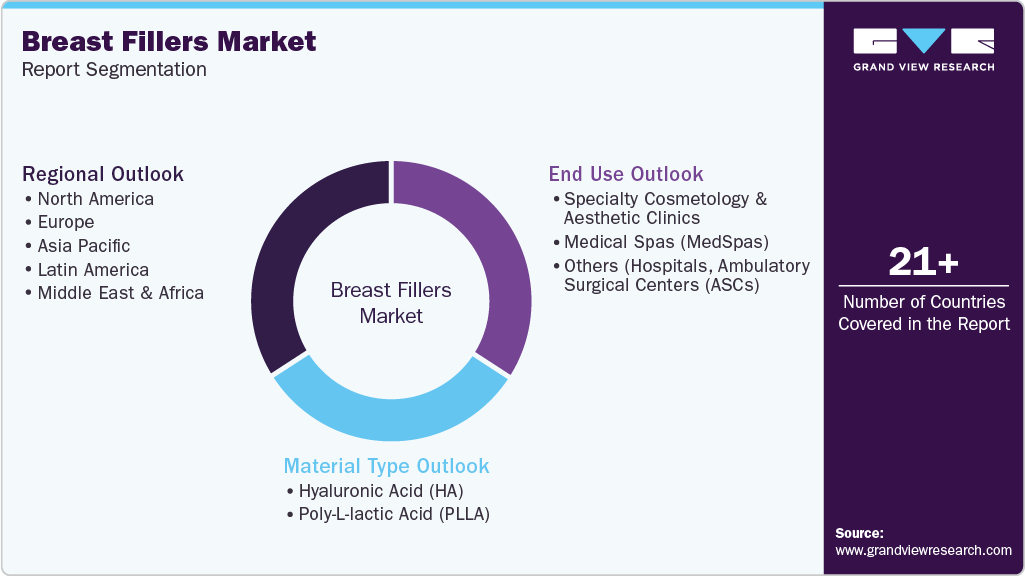
This report forecasts revenue growth at the global, regional & country levels and provides an analysis of the latest industry trends in each of the sub-segments from 2021 to 2033. For this study, Grand View Research has segmented the global breast fillers market report based on material type, end use, and region:
 To learn more about this report, Download Free Sample Report
-
Material Type Outlook (Revenue, USD Million, 2021 - 2033)
-
Hyaluronic Acid (HA)
-
Poly-L-lactic Acid (PLLA)
-
-
End Use Outlook (Revenue, USD Million, 2021 - 2033)
-
Specialty Cosmetology & Aesthetic Clinics
-
Medical Spas (MedSpas)
-
Others (Hospitals, Ambulatory Surgical Centers (ASCs)
-
-
Regional Outlook (Revenue, USD Million, 2021 - 2033)
-
North America
-
U.S.
-
Canada
-
Mexico
-
-
Europe
-
UK
-
Germany
-
France
-
Italy
-
Spain
-
Denmark
-
Sweden
-
Norway
-
-
Asia Pacific
-
Japan
-
China
-
India
-
Thailand
-
Australia
-
South Korea
-
Malaysia
-
Vietnam
-
-
Latin America
-
Brazil
-
Argentina
-
Colombia
-
Chile
-
-
Middle East & Africa
-
South Africa
-
Saudi Arabia
-
UAE
-
Kuwait
-
Qatar
-
Oman
-
-
Research Methodology
The breast fillers market figures in this report are based on a proven research process that combines executive interviews with secondary research from proprietary databases, company filings, and recognized regulatory and institutional sources. Market size is built through value-chain sizing-reconciling supply-side and demand-side estimates-and triangulated with bottom-up and top-down approaches. Every estimate passes multiple levels of expert validation before publication, with each breast fillers segment quantified using the revenue-capture definitions in the table below.
Segment Definition
Segment - Material Type
Revenue capture definition
Hyaluronic Acid (HA)
Revenue captured from the sales of hyaluronic acid-based injectable fillers used for temporary breast volume enhancement and soft-tissue augmentation, driven by their biocompatibility, reversibility, and minimally invasive application.
Poly-L-lactic Acid (PLLA)
Revenue captured from the sales of poly-L-lactic acid-based injectable fillers that stimulate collagen production for gradual and longer-lasting breast volume enhancement and tissue regeneration.
Estimation Model
Layer Name
Description
Bottom-Up Estimation
The breast fillers market is estimated by analyzing the annual volume of non-surgical breast enhancement and breast contour correction procedures performed across specialty aesthetic clinics, medical spas (MedSpas), hospitals, and ASCs at the country, regional, and global levels. The assessment incorporates the utilization of Hyaluronic Acid (HA) injectables and Poly-L-lactic Acid (PLLA) fillers, along with average filler volume per procedure, treatment frequency, repeat injection rates, and ASPs to derive the overall market value.
Top-Down Approach
The market estimation begins with an assessment of the global aesthetic injectables and dermal fillers market, followed by evaluating the share contributed by breast filler procedures through secondary research and expert validation. The analysis considers key market indicators such as the growing demand for minimally invasive aesthetic procedures, increasing preference for non-surgical breast enhancement, consumer spending on cosmetic treatments, and medical tourism trends to estimate the overall market size.
Supply-Side Analysis
The analysis evaluates manufacturing capacity, annual sales of HA and PLLA fillers used for breast aesthetic applications, product portfolio expansion, manufacturing facilities, average selling prices, regulatory approvals, and regional distribution networks. It also considers product innovation in long-lasting biodegradable fillers, physician training initiatives, inventory availability, geographic revenue contribution, and commercialization strategies to estimate the overall market size and supply potential.
Delivered Customizations
This report has been delivered with the following In-depth customizations
Client Request
Customization Delivered
Value Adds
Breast Fillers Product Portfolio & Material Type Analysis
Conducted a comprehensive assessment of the breast fillers product portfolio, focusing on Hyaluronic Acid (HA) injectables and Poly-L-lactic Acid (PLLA) fillers. Evaluated product adoption based on filler longevity, biocompatibility, injection techniques, treatment outcomes, and physician preferences. The analysis also assessed patient demand, pricing trends, repeat treatment frequency, and the clinical suitability of each material type across aesthetic breast enhancement procedures.
Helps stakeholders identify high-growth filler materials, understand product-specific demand, evaluate physician and patient preferences, optimize product portfolios, and align commercialization strategies with evolving trends in minimally invasive breast aesthetic procedures.
End-user Adoption & Procedure Utilization Analysis
Analyzed the adoption of breast fillers across specialty cosmetology & aesthetic clinics, medical spas (MedSpas), and other healthcare facilities, including hospitals and ambulatory surgical centers (ASCs). Assessed treatment volumes, procurement practices, injector preferences, patient demographics, repeat procedure rates, and purchasing criteria. The study also evaluated regional demand patterns, reimbursement limitations, and the influence of expanding aesthetic service offerings on product adoption.
Enables manufacturers to identify high-demand end-user segments, strengthen commercial strategies, optimize distribution channels, improve procurement planning, and expand market penetration across both established and emerging aesthetic healthcare facilities.
Product Positioning & Manufacturer Competitiveness Assessment
Evaluated leading breast filler manufacturers based on product portfolio breadth, filler formulation technologies, manufacturing capabilities, geographic presence, pricing strategies, regulatory compliance, distribution strength, and brand positioning. The assessment also analyzed recent product launches, clinical evidence, innovation initiatives, strategic collaborations, and competitive differentiation across the global breast fillers market.
Supports competitive benchmarking, identifies product development opportunities, enables portfolio differentiation, strengthens go-to-market strategies, and helps companies enhance their competitive positioning through innovation, regulatory excellence, and expansion into high-growth aesthetic medicine markets.
Frequently Asked Questions About This Report
The global breast fillers market size was valued at USD 232.7 million in 2025 and is estimated at USD 244.3 million for 2026.
The global breast fillers market is expected to grow at a CAGR of 5.9% from 2026 to 2033, reaching USD 366.0 million.
Key factors include rising demand for minimally invasive aesthetic procedures, increasing consumer preference for non-surgical breast enhancement, and continuous advancements in injectable biomaterials.
Asia Pacific dominated with a 45.1% revenue share in 2025.
Asia Pacific is the fastest-growing region over the forecast period.
The Hyaluronic Acid (HA) injectables segment held the largest share of 82.4% in 2025, while Poly-L-lactic Acid (PLLA) is the fastest-growing segment over the forecast period.
The specialty cosmetology & aesthetic clinics held the largest share of 74.2% in 2025, while medical spas (MedSpas) is the fastest-growing segment over the forecast period.
Key players include Dermax Co., Ltd.; QUIVER MEDIC.; Zhejiang Jingjia Medical Technology Co., LTD; ZK MediGroup Co. LTD; GODGEL MEDICAL PRODUCTS LIMITED; BIOPLUS CO., LTD.; Galderma; Hanun Medical; MayPharm Co.; and ReGen Aesthetic Biotechnology Co., Ltd.
About the Author(s)
Medical Devices Research Team
Healthcare · Medical DevicesThis report was authored by the medical devices research team at Grand View Research - comprising two research analysts, one senior research analyst, and one industry expert - with specialized expertise in the medical devices segment of the healthcare industry. All findings are based on proprietary healthcare databases, executive interviews, and regulatory analysis, subject to internal peer review prior to publication.
Last Updated:
Speak to Analyst

Customize this report to your needs - add regions, segments, or data points, with 20% free customization.
Or view our licence options:


ISO 9001:2015 & 27001:2022 Certified
We are GDPR and CCPA compliant! Your transaction & personal information is safe and secure. For more details, please read our privacy policy.


