
- Home
- »
- Biotechnology
- »
-
Cell Culture Instruments Market Size Report, 2026-2033GVR Report cover

Cell Culture Instruments Market (2026 - 2033)
Size, Share & Trends Analysis Report By Product (Cell Culture Systems, Cell Analysis Instruments, Cell Processing Instruments), By Cell Culture, By Application, By End Use, By Region, And Segment Forecasts
Market Size, 2025
$8.0BMarket Estimate, 2026
$8.8BMarket Forecast, 2033
$19.4BCAGR, 2026–2033
12.0%Cell Culture Instruments Market Summary
The global cell culture instruments market size was valued at USD 8.0 billion in 2025 and is projected to grow from USD 8.8 billion in 2026 to USD 19.4 billion by 2033, at a CAGR of 12.0% from 2026 to 2033. The market in North America dominated with a revenue share of 35.7% in 2025. The market growth is driven by the increasing adoption of advanced cell culture technologies, the growing demand for biopharmaceuticals and biologics, and the expanding applications of cell culture instruments in drug discovery, regenerative medicine, vaccine development, and pharmaceutical research.
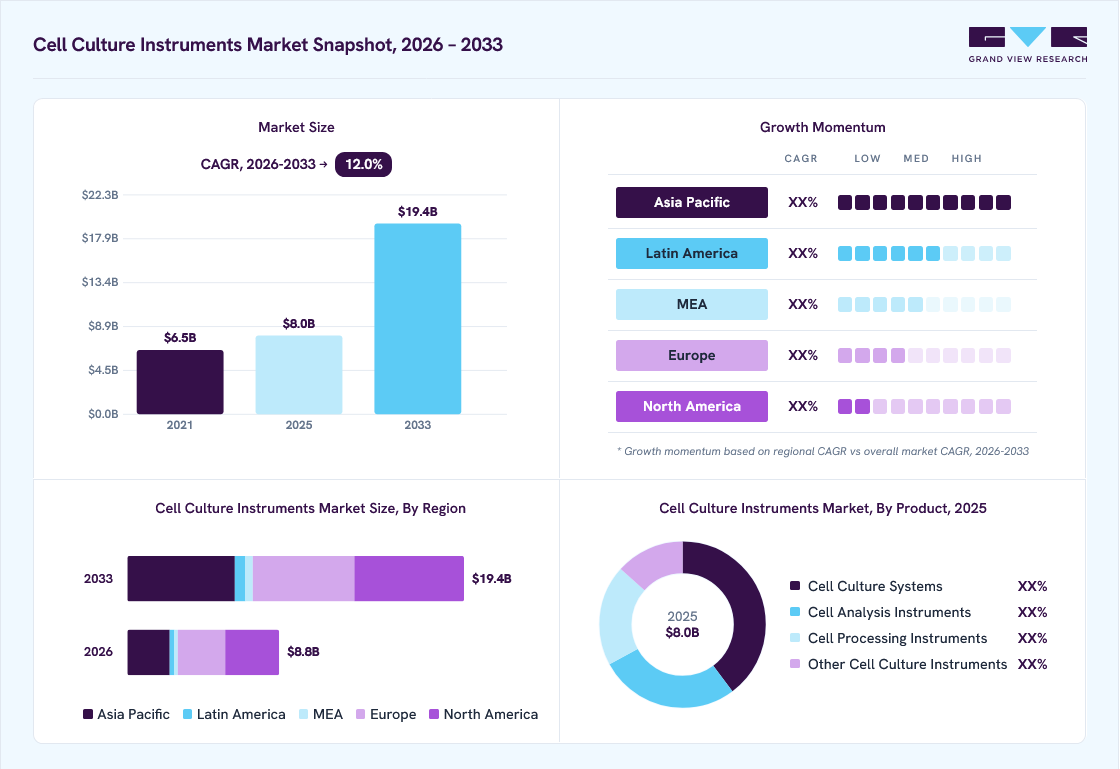 Source: Grand View Research, IR Documents, Primary Interviews, Paid DatabasesTo learn more about this report,
 Download Free Sample Report
 Key Market Trends & Insights
- By product: Cell culture systems segment held the largest market share of 39.7% in 2025.
- By cell culture: Mammalian cell culture segment held the largest market share of 56.7% in 2025.
- By application: Biopharmaceutical production segment held the largest market share of 44.6% in 2025.
- By end use: Pharmaceutical & biotechnology companies segment held the largest market share of 46.2% in 2025.
Regional Highlights
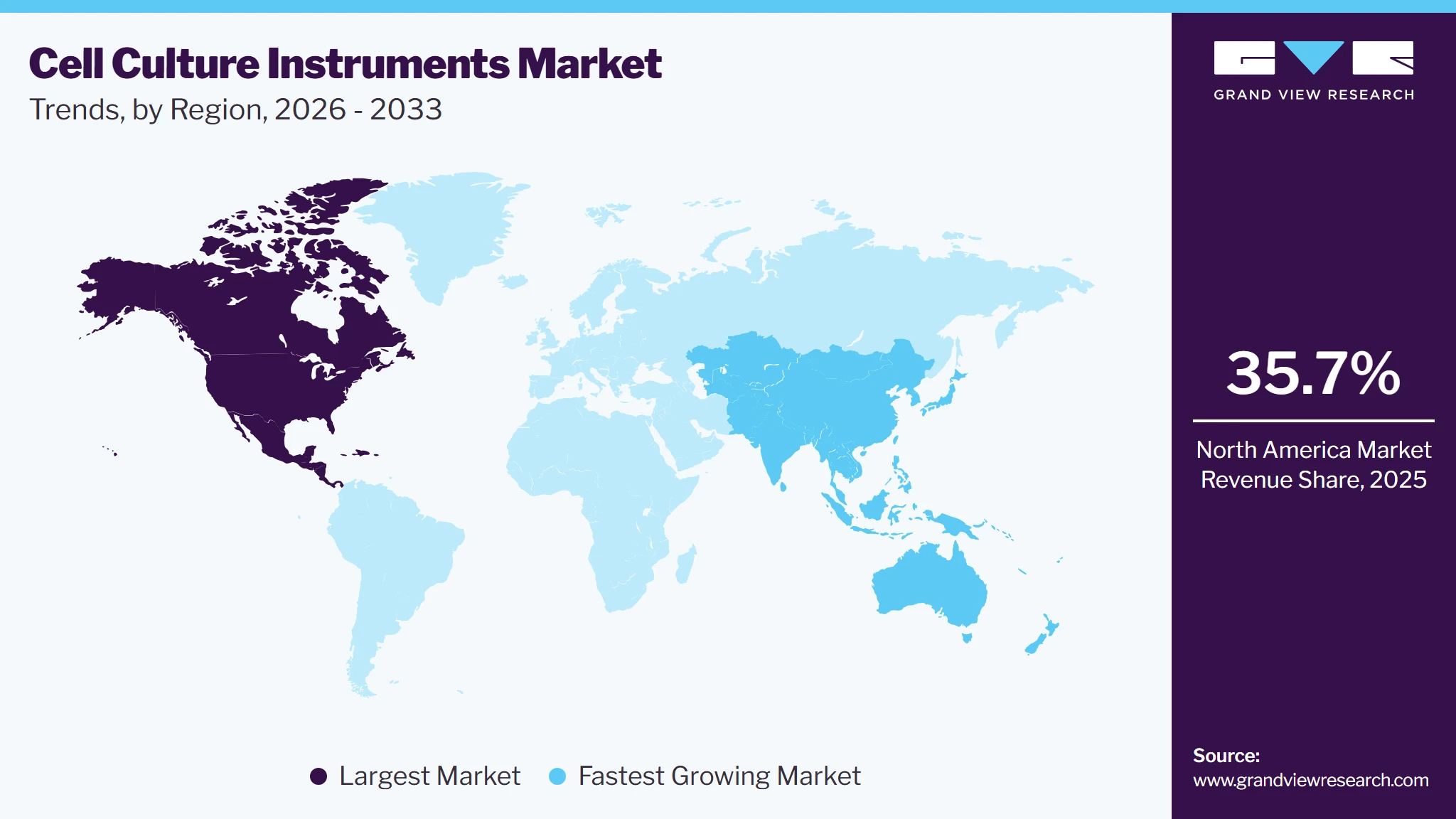
- Largest regional market: North America (35.7% revenue share, 2025)
- Fastest-growing regional market: Asia Pacific (highest CAGR, 2026-2033)
- By country: The U.S. held the largest market share in 2025
Market Size & Forecast
- Market size in 2025: USD 8.0 Billion
- Estimated market size in 2026: USD 8.8 Billion
- Projected market size by 2033: USD 19.4 Billion
- CAGR (2026-2033): 12.0%
Three ways to get this report
Buy it, customize it, or ask a question.Ask an Analyst
Analyst response in 1 business day
- AccessReport author, directly
- Reply timeWithin 1 working day
- No sales callDirect answer only
- FormatEmail reply
- CostFree, no cost
Get the Full Report
What the study covers
- FormatsPDF · Excel · Dashboard
- Timeline2026–2033 annual, 2025 base
- Coverage20+ countries, 5 regions
- Companies10+ key players profiled
Customize the Report
20% free customization
- IncludeCountries, segments, points
- TailorTo your product definition
- ExtendDeeper competitor detail
- OrA fully bespoke study
- Turnaround5–10 working days
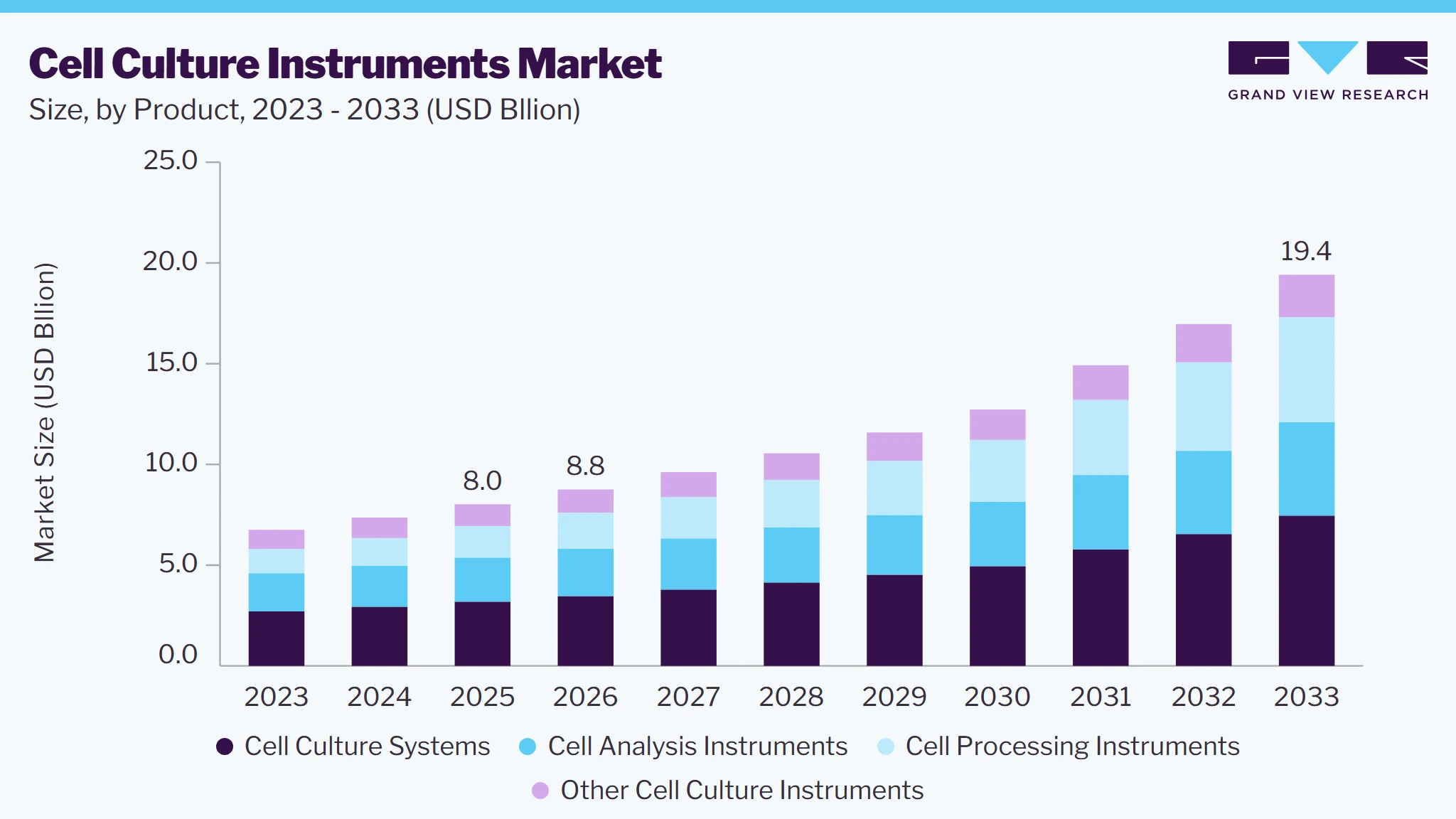 To learn more about this report, Download Free Sample Report
 Market Dynamics
Rising adoption of cell-based research technologies across pharmaceutical and biotechnology applications is contributing to the expansion of the cell culture instruments industry. Growing adoption of automated cell culture systems and bioreactors is enabling greater process control, reproducibility, scalability, and efficiency in research and biomanufacturing. In addition, expanding use of three-dimensional cell cultures, organoids, and other human-relevant models for drug screening, toxicity assessment, and disease research is supporting market growth.
The industry is being driven by improvements in the efficiency, consistency, and scalability of cell cultivation and expansion workflows. Automated systems can continuously monitor culture conditions and adjust parameters such as nutrient supply, pH, dissolved oxygen, and other critical variables, reducing manual intervention and supporting reproducible cell growth. For instance, in March 2026, PHCbi launched the LiCellGrow Cell Expansion System for research use in Japan and other select countries worldwide. The system uses in-line monitoring to continuously measure glucose and lactate concentrations and automatically control culture conditions, supporting efficient and reproducible cell expansion for cell and gene therapy development. The launch demonstrates the increasing integration of real-time monitoring and automated process control into cell culture instruments, particularly for advanced cell therapy applications.
“We are excited to launch LiCellGrow and offer therapy developers a new way to solve common challenges in quality, cost, and delivery of cell and gene therapies. Building on the success of our research-use system LiCellMo, LiCellGrow represents an important step forward in making CGT manufacturing efficient, reliable, and scalable. We are committed to expanding our PHCbi offerings to continue to contribute to the adoption of CGT and other advanced therapy options for hard-to-treat conditions.”
- Chikara Takauo, Director of PHC Corporation and Head of the Biomedical Division.
In addition, the increasing adoption of automated cell culture systems is driven by their ability to improve workflow efficiency, process consistency, scalability, and real-time control while reducing reliance on manual intervention. These capabilities are particularly relevant to advanced cell and gene therapy workflows, where reproducibility, process monitoring, and efficient scale-up are critical. The key operational and end-user benefits associated with automated cell culture systems are summarized below.
Key Benefits of Automated Cell Culture Systems
Benefit
Operational Impact
Value to End Users
Time & Labor Efficiency
Automates media changes, seeding, transfers, and monitoring, reducing hands-on intervention.
Lower labor needs, higher productivity, and greater throughput.
Scalable Cell Culture Operations
Processes multiple cell lines, plates, vessels, and workflows without proportional increases in staffing.
Enables higher throughput and supports scale-up of research workflows.
Consistent & Precise Protocol Execution
Executes multi-step protocols with standardized timing, volumes, and conditions.
Improves reproducibility and reduces operator variability.
AI-Driven Workflow Optimization
Uses imaging and sensor data to assess cell health, morphology, and growth and guide workflow steps.
Enables adaptive workflows and faster, data-driven decisions.
Real-Time Monitoring & Data Integrity
Continuously captures process and culture data while detecting deviations.
Improves process visibility, traceability, and data reliability.
Reduced Contamination Risk
Minimizes manual handling through automated and enclosed workflows.
Protects cultural integrity and reduces the number of failed experiments.
24/7 Unattended Operation
Runs scheduled workflows beyond standard laboratory hours with minimal intervention.
Increases equipment utilization and overall output.
Improved Reproducibility
Standardizes operator-dependent activities such as timing, pipetting, and handling.
Supports consistent results across experiments and sites.
Complex Workflow Handling
Integrates cell expansion, feeding, imaging, harvesting, and transfer into automated workflows.
Simplifies complex processes and enables sophisticated experiments at scale.
Better Resource Utilization
Optimizes the use of researcher time, reagents, consumables, and equipment.
Improves laboratory efficiency and can reduce per-experiment costs.
Source: Molecular Devices, LLC., Secondary Research, Grand View Research Analysis
Contamination and inconsistent culture conditions may constrain the cell culture instruments industry by increasing culture losses, necessitating repeated experiments, and increasing laboratory operating requirements. According to an article published by Thermo Fisher Scientific in November 2025, contamination and inconsistent results can lead to discarded cells and repeated experiments, increasing research costs and time. The article also highlights that variations in temperature, CO₂ concentration, and humidity can affect cell growth and reproducibility, particularly for sensitive primary and stem cell cultures. Maintaining stable culture conditions, therefore, requires regular monitoring, equipment maintenance, and effective contamination-control measures, which can increase the operational burden associated with cell culture instruments.
The expansion of advanced cell culture platforms for precision medicine and drug discovery is creating opportunities in the global market by increasing demand for systems that support physiologically relevant, controlled cell culture models. The growing use of organoids and spheroids in drug discovery, disease modeling, and personalized medicine is supporting demand for specialized platforms for continuous culture, nutrient delivery, and environmental control. For instance, in September 2025, Advanced Biomed launched the A+PerfusC Integrated Perfusion 3D Cell Culture Platform, which combines automated perfusion with environmental control and is designed to support continuous, hands-free culture of spheroids and organoids for precision medicine and drug discovery. The expansion of these advanced 3D culture applications is expected to support demand for specialized cell culture instruments across research and drug development.
“Traditional static cell culture often leads to uneven nutrient delivery and waste buildup, compromising cell growth, viability, and reproducibility. Notably, in certain high-density culture scenarios, particularly within multi-microwell 3D culture devices, metabolic waste can rapidly accumulate inside the micro-grooves, requiring more frequent medium replacement, which can be labor-intensive to preserve culture quality. Our 3D culture system evenly delivers nutrients and clears waste, reducing cellular stress, boosting long-term viability, and more accurately mimicking the complexity of human tissue for improved drug response and disease modeling. The Company plans to scale up the A+PerfusC system for high-throughput use and integrate imaging with AI-driven analytics, aiming to accelerate tumor profiling, refine cell therapy protocols, and advance personalized treatment development.”
- Dr. Yi Lu, CEO, Advanced Biomed Inc.
Market Concentration & Characteristics
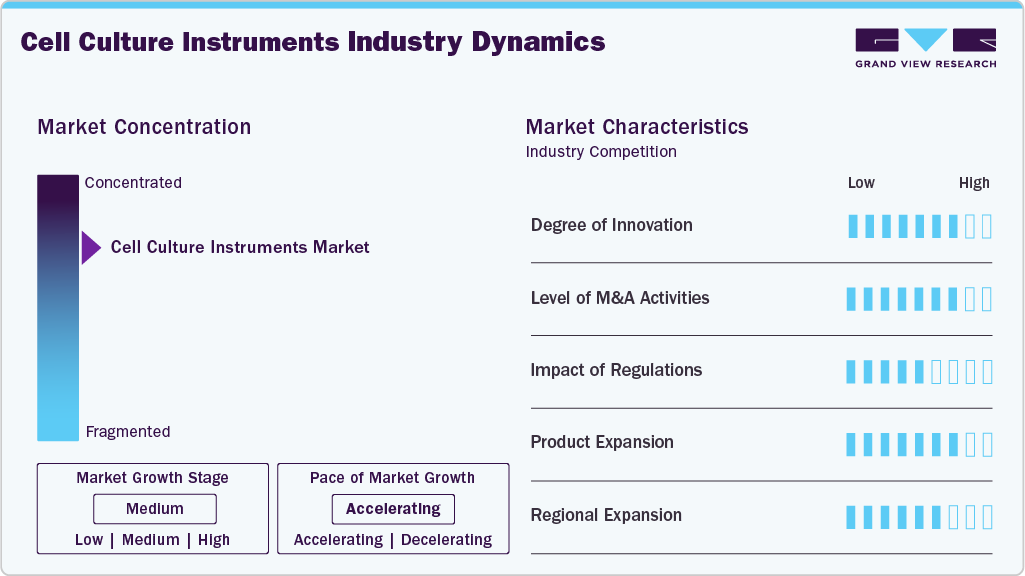
The degree of innovation in the global market is high, driven by advances in live-cell imaging, 3D cell culture analysis, confocal microscopy, and high-throughput monitoring technologies. For instance, in July 2025, Sartorius launched the Incucyte CX3 Live-Cell Analysis System, featuring confocal fluorescence imaging for continuous analysis of complex 3D cell cultures and real-time analysis of up to six microplates in parallel. The system enables non-invasive monitoring of cell growth, morphology, and phenotypic changes while maintaining cultures in a controlled environment, enhancing the efficiency and quality of 3D cell culture research.
“3D cell research is rapidly growing, yet scientists still lack the necessary tools or expertise to develop, validate, and perform 3D cell assays at scale. We developed the Incucyte CX3 system and paired it with easy-to-use software to make studying 3D models more accessible than ever. Now, every scientist can gain a deeper understanding of cell health, growth, and morphology, while benefiting from throughput that is unmatched in the market.”
Lindy O’Clair, Product Manager of Incucyte Systems at Sartorius.
The cell culture instruments industry is witnessing moderate M&A activity, as companies seek to expand their capabilities in automated cell cultivation and bioreactor technologies. For instance, in December 2024, Demcon acquired a majority stake in Orgonex, a Utrecht University spin-off that developed a compact bioreactor specifically for organoid cultivation. The acquisition strengthened Demcon’s cell culture technology portfolio and provided resources for further product development and commercialization. Moreover, Orgonex’s bioreactor is designed to improve cultivation efficiency and can be integrated into existing laboratory infrastructure, supporting its adoption in academic, biotechnology, and pharmaceutical research.
 To learn more about this report, Download Free Sample Report
 The global market is increasingly influenced by regulatory requirements related to equipment quality, contamination control, sterilization, calibration, and process consistency. These requirements encourage manufacturers to develop instruments that support controlled and reproducible cell culture workflows. Furthermore, regulatory expectations for equipment used in biopharmaceutical manufacturing emphasize monitoring critical parameters and maintaining equipment in a suitable condition to ensure product quality and minimize contamination risks.
The market is witnessing product expansion with the introduction of advanced bioreactor systems that enhance flexibility, automation, and process monitoring. For instance, in March 2025, Culture Biosciences launched the Stratyx 250, a mobile, cloud-integrated bioreactor specifically designed for cell culture process development. The system combines automated control, remote monitoring, and cloud-based data visibility, expanding access to the flexible, digitally connected bioreactor solutions for cell culture research and process development.
“The biotech and biopharmaceutical market segments are experiencing a major shift toward cloud-powered, modular bioprocessing, and these companies need hardware and software that can keep up. With a five-month ROI timeline and a plug-and-play scalable architecture, our platform offers a cost-effective, flexible alternative to traditional bioreactors, helping companies accelerate development and reduce costs without compromising on quality.”
- Chris Williams, CEO of Culture Biosciences
The cell culture instruments industry is witnessing regional expansion as manufacturers broaden their operations, distribution networks, and technical support across key biotechnology and pharmaceutical markets. Companies are expanding into emerging markets to address growing demand for cell culture systems, incubators, bioreactors, cell expansion systems, cell analysis instruments, and cell processing equipment, improving product availability and supporting growth in life sciences research and biopharmaceutical development.
Analyst Perspective
The cell culture instruments market is expected to experience moderate growth, driven by the increasing need for efficient, standardized, and scalable cell culture workflows across research and bioprocessing applications. As end users seek greater operational efficiency, demand is expected to shift toward instruments that deliver consistent performance, enable flexible workflow integration, and reduce manual intervention. The market is also likely to benefit from growing emphasis on simplifying complex cell culture processes and improving the utilization of laboratory resources. Manufacturers are focusing on developing modular, application-oriented solutions that accommodate changing throughput requirements while enabling seamless integration across cell culture workflows.
Product Insights
The cell culture systems segment led the market with the largest revenue share of 39.7% in 2025, supported by increasing adoption of automated systems for cell cultivation and processing. For instance, in September 2026, Shibuya Corporation delivered its automated cell culture system for autologous cell banks to MEDEZE in Thailand. The system integrates robotic cell processing with approximately 100 independent incubation units and automates processes including media exchange, cell seeding, and passaging. Moreover, the system supports commercial-scale cell manufacturing with a processing capacity of up to 24 batches per day, highlighting the growing adoption of automated cell culture systems.
The cell processing instruments segment is expected to grow at the fastest CAGR during the forecast period, driven by the increasing adoption of automated cell-processing technologies. For instance, in January 2025, Curiox Biosystems launched the C-Free Pluto ALPHA, an automated cell washing system designed to replace conventional centrifuge-based washing of suspension cells and beads. The system uses a pipette head to provide consistent cell washing while reducing manual handling. The launch highlights the growing adoption of automated cell processing instruments across cell-based research and processing workflows.
“The Curiox C- Free Pluto ALPHA combines affordability, simplicity, and precision, enabling labs of all sizes to achieve consistent, reliable results while saving time and resources. This device embodies our commitment to providing accessible automation solutions that elevate research capabilities.”
-Dr. Namyong Kim, CEO & CTO at Curiox Biosystems
Cell Culture Insights
The mammalian cell culture segment dominated the market, with the largest revenue share of 56.7% in 2025, driven by the growing use of mammalian cells in biopharmaceutical production, particularly for monoclonal antibodies and other recombinant proteins. For instance, in September 2025, FUJIFILM Biotechnologies opened its commercial-scale cell culture manufacturing site in North Carolina, featuring eight 20,000-L mammalian cell culture bioreactors for drug substance and drug product manufacturing. The facility highlights the expanding adoption of large-scale mammalian cell culture for biopharmaceutical manufacturing.
"Fujifilm's total global investment of over $8 billion to expand our contract development and manufacturing organization (CDMO) business underscores our unwavering commitment to advancing life sciences for our partners, people, and patients. Our new commercial-scale manufacturing hub in the U.S. highlights Fujifilm’s dedication to supporting our partners in delivering biologic medicines targeting complex diseases.”
- Toshihisa Iida, director, corporate vice president, general manager of Life Sciences Strategy Headquarters and Bio CDMO Division, FUJIFILM Corporation, Japan, and chairman, FUJIFILM Biotechnologies
The stem cell culture segment is expected to grow at the fastest CAGR during the forecast period, driven by increasing use of stem cell culture systems for regenerative medicine, drug discovery, disease modeling, and toxicology research. The development of chemically defined xeno-free, scalable, and automated culture platforms is further supporting the expansion of stem cell cultivation workflows. According to an article published in Frontiers in Toxicology in December 2025, advancements in human pluripotent stem cell culture have enabled scalable and GMP-compatible culture systems, while automation and 3D bioprocessing are improving standardization, quality control, and throughput.
Application Insights
The biopharmaceutical production segment led the market with the largest revenue share of 44.6% in 2025. The segment is driven by the increasing use of cell culture technologies the produce monoclonal antibodies, recombinant proteins, vaccines, and other biologics. Growing demand for biologics and the expansion of biomanufacturing capacity are further supporting the adoption of advanced cell culture systems and processes for biopharmaceutical production.
The cell & gene therapy segment is projected to grow at the fastest CAGR during 2026-2033, driven by increasing demand for scalable, automated, and controlled cell culture systems for the manufacturing of advanced therapies. These instruments support critical processes such as cell expansion, genetic modification, and culture monitoring while improving processing consistency and reducing manual intervention. For instance, in June 2025, Cellular Origins announced a collaboration with Thermo Fisher Scientific to combine Thermo Fisher’s cell culture and processing technologies with Cellular Origins’ Constellation robotic platform for fully automated manufacturing of cell and gene therapies at an industrial scale. The collaboration highlights the growing adoption of automated cell culture instruments in cell and gene therapy manufacturing.
"CGT manufacturing is evolving at a historic pace to catch up with therapeutic development, as well as to serve the rollout of the number of imminent therapeutic approvals for widespread indications. Increasing automation, manufacturing, and throughput, and reducing the need for human labor, will be essential for the CGT sector to continue advancing. As a result, we are working with Cellular Origins to provide a full industrialized manufacturing service to the sector. Our VIOS AxD CO2 incubator is designed for just such a system.”
- Douglas Wernerspach, Sr. Business Director/General Manager - CO2 Incubators and Biological Safety Cabinets, Thermo Fisher Scientific
End Use Insights
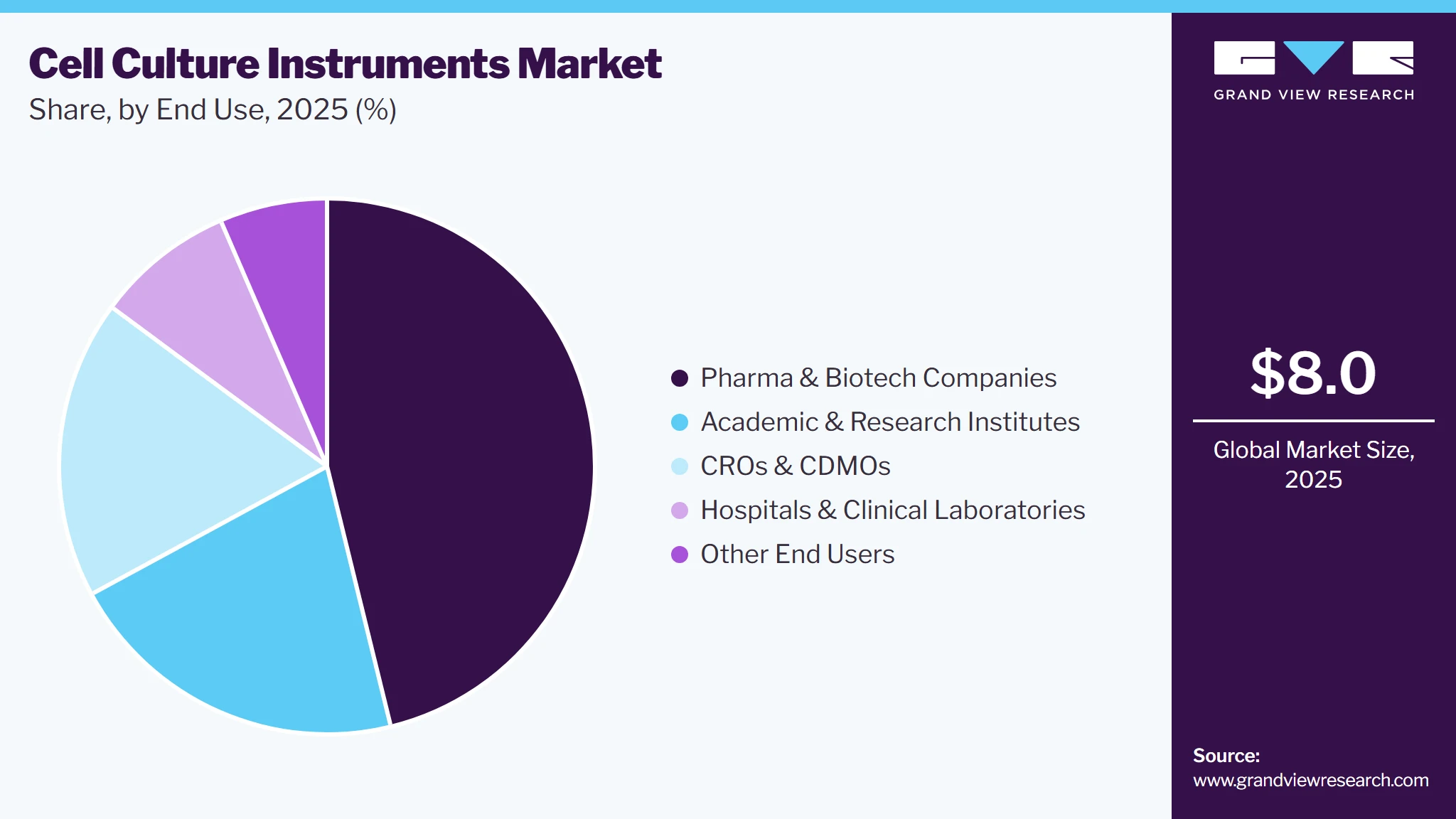
The pharmaceutical & biotechnology companies segment led the market with the largest revenue share of 46.2% in 2025. The growth is driven by the increasing use of cell culture instruments for biopharmaceutical development, process optimization, and large-scale biologics manufacturing. The growing adoption of automated and scalable cell culture systems is further supporting demand from pharmaceutical and biotechnology companies. For instance, in March 2025, ABEC introduced its Advanced Therapy Bioreactor (ATB), a single-use, closed, and fully automated bioreactor designed for cell expansion from 0.2 L to 10 L, and it has been demonstrated for applications involving T cells, CD34+ stem cells, HEK293, and CHO cell lines. The development highlights the growing use of advanced cell culture instruments in pharmaceutical and biotechnology manufacturing workflows.
“The ATB introduction is another milestone in ABEC’s 50-year history of bioprocess innovation. Similar to our solutions for recombinant protein manufacturing, the ATB promises to address the most difficult challenges in advanced therapy manufacturing and accelerate our partners’ time to clinic and market.”
- Scott Pickering, CEO of ABEC
 To learn more about this report, Download Free Sample Report
 The CROs & CDMOs segment is projected to grow at the fastest CAGR during the forecast period, supported by increasing outsourcing of cell culture and bioprocessing activities to specialized service providers. CROs and CDMOs increasingly utilize cell culture instruments for cell expansion, media exchange, monitoring, and process optimization across research and biopharmaceutical manufacturing workflows. Moreover, the growing demand for scalable, standardized cell culture processes is driving the adoption of advanced cell culture instruments among CROs and CDMOs.
Regional Insights
The North America cell culture instruments market held the largest revenue share of 35.7% in 2025, driven by expanding biopharmaceutical R&D and the adoption of advanced cell culture and bioprocessing technologies. For instance, in November 2024, Sartorius opened a Center for Bioprocess Innovation in Marlborough, Massachusetts, featuring research laboratories, process-development facilities, and customer demonstration and training capabilities for bioprocessing workflows. The center strengthens regional access to technologies and expertise for cell culture process development, optimization, and scale-up, supporting the adoption of cell culture instruments.
“Cell and gene therapies and other novel treatments offer promising solutions for patients with previously incurable diseases. However, these modalities are still in their infancy and often require the development of new manufacturing processes in order to become more efficient and less costly. This cutting-edge innovation center enables us to leverage our bioprocessing tools and workflows expertise, ultimately accelerating and simplifying our customers’ path to clinical trials.”
-René Fáber, CEO of Sartorius Stedim Biotech.
 To learn more about this report, Download Free Sample Report
 U.S. Cell Culture Instruments Market Trends
The cell culture instruments market in the U.S. accounted for the largest revenue share in North America in 2025, driven by the increasing adoption of automated systems to standardize and scale cell culture workflows. For instance, in August 2025, Molecular Devices unveiled a major upgrade to its CellXpress.ai Automated Cell Culture System, integrating rocking incubation to support the development and long-term maintenance of brain organoids. The upgrade expands automated cell culture capabilities for complex 3D models and supports more consistent and scalable cell culture workflows in U.S. research applications.
“With this new automation feature, we’re freeing scientists from the relentless demands of long-term brain organoid growth. The CellXpress.ai cell culture system streamlines these complex workflows so researchers can focus on what matters most: accelerating insights into diseases like Alzheimer’s and Parkinson’s and advancing a future where human-relevant models are the norm.”
-Mary Duseau, President of Molecular Devices
Europe Cell Culture Instruments Market Trends
The cell culture instruments market in Europe is anticipated to grow at a substantial CAGR over the forecast period, supported by increasing adoption of real-time monitoring technologies for controlled cell culture and bioprocessing applications. For instance, in December 2025, Hamilton launched GlucoSense, a reusable in situ glucose sensor designed to provide continuous, real-time glucose measurements directly inside mammalian cell culture bioreactors. Moreover, this technology enhances monitoring and control of cell culture processes, supporting the adoption of advanced analytical instruments for cell culture applications.
"Bioprocessing teams have been asking for a simple, reliable way to measure glucose in situ for years. With GlucoSense, we're giving customers real-time visibility into one of the most critical parameters in mammalian cell culture without the complexity, drift, or calibration burden that has limited previous technologies. And we've designed the product roadmap to support every step of the development lifecycle, from R&D to GMP manufacturing."
-Giovanni Campolongo, Senior Market Segment Manager at Hamilton
The UK cell culture instruments market is driven by increasing adoption of scalable bioreactor technologies for advanced cell culture and stem cell research. For instance, in March 2026, UK-based REPROCELL expanded its product portfolio with the BioThrust ComfyCell Incu bioreactor platform, a 300 mL single-use system designed for intensified and scalable cultivation of sensitive cells, including iPSC spheroids and immune cells. The commercial availability of the platform strengthens access to advanced bioreactor technology for cell culture applications.
The cell culture instruments market in Germany is anticipated to grow significantly over the forecast period, supported by increasing adoption of specialized equipment for mammalian suspension-cell cultivation and bioprocessing. For instance, in September 2024, Hamburg-based Eppendorf launched the CellXpert CS220 CO₂ Incubator Shaker, developed specifically for mammalian suspension-cell culture, including CHO and HEK293 cells. The instrument incorporates an integrated 180°C sterilization routine and supports applications such as cell-line development, protein expression, viral vector production, and bioreactor inoculum preparation, thereby strengthening Germany’s commercial cell culture instrumentation landscape.
“Our new CellXpert CS220 was developed specifically to speed up mammalian shake flask culture projects and to meet the industry’s increasing need for higher contamination prevention standards. We are happy to welcome the new member of our CellXpert family and to expand our successful cell culture portfolio, including CO2 incubators, shakers, high-speed centrifuges, and bioprocess equipment”
-Maria Mattern, responsible for innovations of the Eppendorf shaker and CO2 incubator portfolio.
Asia Pacific Cell Culture Instruments Market Trends
The cell culture instruments market in the Asia Pacific is expected to grow at the fastest CAGR of 14.2% during the forecast period, supported by increasing cell and gene therapy research and rising adoption of advanced bioprocessing technologies. The growing production of monoclonal antibodies, vaccines, biosimilars, and other biologics across the region is driving demand for bioreactors, incubators, centrifuges, and other cell culture equipment. In addition, increasing investments in local bioprocessing infrastructure and the adoption of single-use and automated technologies are supporting the expansion of cell culture workflows across research, process development, and commercial manufacturing applications.
The China cell culture instruments market is expected to grow significantly over the forecast period, supported by expanding biopharmaceutical manufacturing, increasing cell therapy activities, and rising adoption of scalable cell culture technologies. For instance, in April 2025, Beijing-based Cytoniche launched the 3D FloTrix megaSPIN single-use bioreactor system for three-dimensional cell culture. The system is designed to support scalable stem cell expansion while addressing limitations associated with conventional 2D culture and scale-up processes. The launch reflects growing demand for single-use bioreactor technologies supporting higher-capacity and standardized cell expansion workflows
The cell culture instruments market in Japan is experiencing rapid growth, driven by expanding cell and gene therapy development, growing biopharmaceutical research, and rising adoption of scalable cell culture technologies. For instance, in June 2025, Japan-based PHCbi launched the scale-X nexo fixed-bed bioreactor system and Skaia Vision software for early research and cell culture process development. The system supports efficient cell expansion and enables monitoring and optimization of culture processes, facilitating the transition from laboratory-scale research toward commercial manufacturing. The development reflects increasing demand for advanced bioreactor systems in Japan’s cell therapy and bioprocessing sectors.
Latin America Cell Culture Instruments Market Trends
The cell culture instruments market in Latin America is expected to grow steadily over the forecast period, supported by expanding biopharmaceutical research and manufacturing, increasing cell and gene therapy activities, and growing investment in biotechnology infrastructure. The rising development of vaccines, biologics, and advanced therapies is increasing the need for controlled and scalable cell culture workflows across research and manufacturing facilities. In addition, efforts to strengthen regional biomanufacturing capabilities and expand access to advanced laboratory infrastructure are supporting the adoption of bioreactors, incubators, cell counters, and automated cell culture systems across the region.
MEA Cell Culture Instruments Market Trends
The cell culture instruments market in the Middle East & Africa is growing steadily, supported by expanding biopharmaceutical manufacturing, increasing cell and gene therapy research, and government initiatives to strengthen biotechnology capabilities. In Saudi Arabia, Vision 2030 and the National Biotechnology Strategy are promoting vaccine and biopharmaceutical manufacturing, genomic research, and biotechnology infrastructure, supporting demand for advanced cell culture technologies. In addition, investments in biologics and advanced-therapy manufacturing are creating opportunities for bioreactors, incubators, and automated cell culture systems across the region.
Key Cell Culture Instruments Company Insights
The cell culture instruments industry is highly competitive, with key players focusing on cell culture systems, bioreactors, cell expansion systems, and cell analysis and processing instruments. Companies are strengthening their market position through product launches, technological advancements, strategic collaborations, capacity expansion, and the development of integrated cell culture and analysis solutions. Moreover, competitive positioning depends on product offerings, technological capabilities, accuracy, scalability, geographic presence, customer base, and applications across biopharmaceutical production, cell and gene therapy, research and development, tissue engineering and regenerative medicine, and other cell culture applications.
Key Cell Culture Instruments Companies
The following key companies have been profiled for this study on the cell culture instruments market:
-
Thermo Fisher Scientific Inc.
-
Danaher Corporation
-
Sartorius AG
-
Merck KGaA
-
Corning Incorporated
-
Eppendorf SE
-
BD
-
Agilent Technologies, Inc.
-
Miltenyi Biotec
-
Terumo Corporation
-
Bio-Rad Laboratories, Inc.
-
Revvity
Competitive Benchmarking
Category
Operating Strategies
Competitive Edge
Weakness
Established Players (Thermo Fisher Scientific Inc.; Danaher Corporation; Sartorius AG; Merck KGaA; Corning Incorporated; Eppendorf SE)
Expanding cell culture systems, bioreactors, cell expansion, cell analysis, and cell processing instruments through product development, technology innovation, strategic collaborations, acquisitions, and integrated solutions.
Broad product portfolios, strong R&D and technology capabilities, established customer bases, global presence, extensive distribution networks, and integrated cell culture and bioprocessing solutions.
High R&D and manufacturing costs, complex workflow integration, significant validation and infrastructure requirements, high capital requirements for advanced systems, and intense competition.
Specialized Players (BD; Agilent Technologies, Inc.; Miltenyi Biotec; Terumo Corporation; Bio-Rad Laboratories, Inc.; Revvity)
Expanding specialized cell analysis, cell processing, cell separation, cell counting, cell imaging, and cell therapy technologies through product development, automation, technology innovation, and strategic partnerships.
Specialized technologies, differentiated instruments, strong research capabilities, application-specific expertise, and growing capabilities in cell analysis, cell processing, and cell & gene therapy workflows.
Narrower product portfolios in certain cell culture segments, high equipment and technology costs, workflow integration challenges, specialized application requirements, and competition from established integrated players.
Recent Developments:
- In April 2026, Sartorius AG launched CellCelector CLD, an automated imaging and cell isolation platform for monoclonal cell line development. The system enables high-speed screening, automated clone verification, and gentle retrieval of selected cells, supporting faster cell-line development and downstream expansion.
“What used to take months can now be completed in approximately seven weeks. The CellCelector CLD gives teams the confidence to move from screening to stable, high-producing cell lines faster than standard workflows, with full traceability at every step.”
-Darius Wilson, Product Manager of CellCelector Systems at Sartorius.
-
In May 2025, BD launched the FACSDiscover A8 Cell Analyzer, combining spectral flow cytometry with real-time cell imaging. The instrument enables high-throughput multiparameter cell analysis, allowing researchers to characterize cell properties, morphology, spatial information, and biological markers, and to support advanced immunophenotyping, biomarker discovery, and cell biology research.
-
In May 2025, Thermo Fisher Scientific Inc. introduced the 5 L DynaDrive Single-Use Bioreactor, a bench-scale bioreactor designed for scalable upstream process development. The system supports cell culture applications while providing consistent mixing, mass transfer, process control, and scalability from laboratory development to larger-scale commercial manufacturing.
“The introduction of the 5L DynaDrive marks a significant advancement in our commitment to helping customers maximize productivity and accelerate time to market. With 25 years of experience in single-use technology, we are dedicated to meeting our customers' evolving needs. Our trusted innovations provide seamless scalability and enhanced efficiency, enabling customers to streamline their bioprocessing workflows and successfully develop and commercialize life-saving therapies."
- Ray Mercier, president of Thermo Fisher’s single-use technologies business.
Cell Culture Instruments Market Report Scope Table
Report Attribute
Details
Market size in 2025
USD 8.0 billion
Estimated market size in 2026
USD 8.8 billion
Projected market size by 2033
USD 19.4 billion
Growth rate
CAGR of 12.0% from 2026 to 2033
Historical data
2021 - 2025
Forecast period
2026 - 2033
Quantitative units
Revenue in USD billion, and CAGR from 2026 to 2033
Report coverage
Revenue forecast, company ranking, competitive landscape, growth factors, and trends
Segments covered
Product, cell culture, application, end use, region
Regional scope
North America; Europe; Asia Pacific; Latin America; Middle East & Africa
Country scope
U.S.; Canada; Mexico; UK; Germany; France; Italy; Spain; Norway; Denmark; Sweden; China; Japan; India; South Korea; Australia; Thailand; Brazil; Argentina; Saudi Arabia; South Africa; UAE; and Kuwait
Key companies profiled
Thermo Fisher Scientific Inc.; Danaher Corporation; Sartorius AG; Merck KGaA; Corning Incorporated; Eppendorf SE; BD; Agilent Technologies, Inc.; Miltenyi Biotec; Terumo Corporation; Bio-Rad Laboratories, Inc.; Revvity
Customization scope
Free report customization (equivalent up to 8 analysts' working days) with purchase. Addition or alteration to country, regional & segment scope.
Pricing and purchase options
Avail customized purchase options to meet your exact research needs. Explore purchase options
Global Cell Culture Instruments Market Report Segmentation
This report forecasts revenue growth and provides an analysis on the latest trends in each of the sub-segments from 2021 to 2033. For this report, Grand View Research has segmented the global cell culture instruments market report based on the product, cell culture, application, end use and region
- Product Outlook (Revenue, USD Billion, 2021 - 2033)
-
Cell Culture Systems
-
Cell Culture Incubators
-
Bioreactors
-
Cell Expansion Systems
-
Other Cell Culture Systems
-
-
Cell Analysis Instruments
-
Cell Counters
-
Cell Analyzers
-
Cell Imaging Systems
-
-
Other Cell Analysis Instruments
-
Cell Processing Instruments
-
Cell Separation Systems
-
Cell Washing Systems
-
Cell Harvesting Systems
-
Other Cell Processing Instruments
-
-
Other Cell Culture Instruments
-
-
Cell Culture Outlook (Revenue, USD Billion, 2021 - 2033)
-
Mammalian Cell Culture
-
Microbial Cell Culture
-
Stem Cell Culture
-
Other Cell Culture
-
-
Application Outlook (Revenue, USD Billion, 2021 - 2033)
-
Biopharmaceutical Production
-
Cell & Gene Therapy
-
Research & Development
-
Tissue Engineering & Regenerative Medicine
-
Other Applications
-
-
End Use Outlook (Revenue, USD Billion, 2021 - 2033)
-
Pharmaceutical & Biotechnology Companies
-
Academic & Research Institutes
-
CROs & CDMOs
-
Hospitals & Clinical Laboratories
-
Other End Users
-
-
Regional Outlook (Revenue, USD Billion, 2021 - 2033)
-
North America
-
U.S.
-
Canada
-
Mexico
-
-
Europe
-
UK
-
Germany
-
France
-
Italy
-
Spain
-
Denmark
-
Sweden
-
Norway
-
-
Asia Pacific
-
Japan
-
China
-
India
-
Australia
-
Thailand
-
South Korea
-
-
Latin America
-
Brazil
-
Argentina
-
-
Middle East and Africa (MEA)
-
South Africa
-
Saudi Arabia
-
UAE
-
Kuwait
-
-
Research Methodology
The cell culture instruments marketfigures in this report are based on a proven research process that combines executive interviews with secondary research from proprietary databases, company filings, and recognized regulatory and institutional sources. Market size is built through value-chain sizing-reconciling supply-side and demand-side estimates-and triangulated with bottom-up and top-down approaches. Every estimate passes multiple levels of expert validation before publication, with eachcell culture instruments segment quantified using the revenue-capture definitions in the table below.
Segment Definition
Product
Revenue Capture Definition
Cell Culture Systems
Revenue generated from cell culture systems used to establish, maintain, cultivate, monitor, and expand cells under controlled conditions, including cell culture incubators, bioreactors, cell expansion systems, and other specialized systems supporting cell growth and culture workflows.
Cell Analysis Instruments
This segment captures income from cell analysis instruments used to quantify, characterize, monitor, and evaluate cultured cells, including cell counters, cell analyzers, cell imaging systems, and other instruments assessing cell number, viability, morphology, phenotype, and function.
Cell Processing Instruments
Market value in this category stems from cell-processing instruments used to manipulate, separate, wash, harvest, and otherwise process cultured cells, including cell separation, washing, and harvesting systems, as well as other specialized processing instruments.
Other Cell Culture Instruments
Revenue from specialized cell culture instruments not classified under cell culture systems, cell analysis instruments, or cell processing instruments, including other equipment supporting cell cultivation, analysis, processing, and related culture workflows.
Cell Culture
Revenue Capture Definition
Mammalian Cell Culture
Revenue generated from cell culture instruments used to cultivate, maintain, expand, monitor, and process mammalian cells, including applications involving established cell lines and primary mammalian cells.
Microbial Cell Culture
This segment captures income from cell culture instruments used to cultivate, maintain, monitor, and process microbial cultures, including bacterial, yeast, and other microbial cultures used in research and bioprocessing workflows.
Stem Cell Culture
Market value in this category stems from cell culture instruments used to maintain, expand, differentiate, monitor, and process stem cells and related cell populations under controlled culture conditions.
Other Cell Culture
Revenue from cell culture instruments used for cell culture types outside mammalian, microbial, and stem cell culture, including specialized and emerging cell culture models and workflows.
Application
Revenue Capture Definition
Biopharmaceutical Production
Revenue generated from cell culture instruments used in biopharmaceutical production, including equipment supporting cell cultivation, expansion, monitoring, and processing workflows for the manufacture of biologics and other cell-derived products.
Cell & Gene Therapy
This segment captures income from cell culture instruments used to maintain, expand, modify, process, monitor, and characterize cells and cell-based materials associated with cell and gene therapy research, development, and manufacturing workflows.
Research & Development
Market value in this category stems from cell culture instruments used for cell biology research, assay development, experimental studies, drug discovery, and other research and development activities involving cultured cells.
Tissue Engineering & Regenerative Medicine
Revenue generated from cell culture instruments used to cultivate, expand, characterize, and process cells for tissue engineering, regenerative medicine, and the development of cell-based tissue models and therapeutic approaches.
Other Applications
Revenue from cell culture instrument applications outside biopharmaceutical production, cell and gene therapy, research and development, tissue engineering, and regenerative medicine, including specialized laboratory and industrial applications.
End Use
Revenue Capture Definition
Pharmaceutical & Biotechnology Companies
Revenue generated from cell culture instruments used by pharmaceutical and biotechnology companies for research, drug development, biopharmaceutical production, cell processing, and related manufacturing and laboratory activities.
Academic & Research Institutes
This segment captures income from cell culture instruments used by universities, academic laboratories, and research institutes for basic, translational, and applied research involving cell cultivation, analysis, and processing.
CROs & CDMOs
Market value in this category stems from cell culture instruments used by contract research organizations and contract development and manufacturing organizations to support outsourced research, development, testing, cell processing, and biopharmaceutical manufacturing activities.
Hospitals & Clinical Laboratories
Revenue generated from cell culture instruments used by hospitals and clinical laboratories for clinical research, cell-based testing, cell processing, and other laboratory applications involving cultured cells.
Other End Users
Revenue from cell culture instruments used by end users outside pharmaceutical and biotechnology companies, academic and research institutes, CROs and CDMOs, and hospitals and clinical laboratories, including specialized organizations and facilities.
Estimation Model
Stage
Description
Top-Down
Commodity Flow Analysis: Market value was estimated by assessing revenues from bioreactors, cell culture systems, incubators, cell counters, centrifuges, microscopes, and automation systems. Company financials, product portfolios, pricing, sales volumes, and commercial offerings were analyzed to quantify market revenue across major applications and technologies. Revenue contributions from specialized cell culture instruments and integrated systems were further evaluated to capture the overall market value.
Parent Market
Parent Market & Penetration-Based Analysis: The cell culture instruments market was assessed within the broader cell culture market based on the use of instruments in research, biopharmaceutical production, drug discovery, and other applications. Penetration of cell culture instruments across research and commercial workflows was evaluated to establish the addressable opportunity. Key instruments demonstrate applications ranging from basic cell culture equipment to advanced automated systems.
Segmentation
Country-Level Segment Share Modeling: Country-level shares were estimated using cell culture activity, instrument adoption, laboratory infrastructure, research networks, biopharmaceutical R&D, and clinical applications. Differences in cell culture volumes, technology availability, healthcare infrastructure, laboratory capacity, and research activity were incorporated to determine country and regional distributions across product, cell culture, application, and end use segments.
Validation
Data Triangulation & Validation Model: Market estimates were reconciled using company revenues, instrument sales, equipment pricing, cell culture activity, laboratory operations, biopharmaceutical applications, and scientific evidence. The resulting estimates were cross-checked across product, cell culture, application, end use, country, and region to ensure consistency between volume-based and revenue-based calculations.
Forecasting
Forecasting & CAGR Modeling: Future demand was projected using observed expansion of cell culture research, biopharmaceutical production, drug discovery, regenerative medicine, and advanced laboratory applications. Increasing adoption of automated systems, technological improvements, growing research activity, and expanding cell culture applications were incorporated into segment-level growth assumptions.
Customization Table
Client Request
Customization Delivered
Value Adds
Cell Culture Instrument Cost & Lifecycle Assessment
Assessment of purchase costs, operating expenses, maintenance requirements, consumables, and lifecycle costs for selected cell culture instruments.
Help clients understand cost drivers, compare ownership economics, and identify opportunities for cost optimization.
Cell Culture Workflow & Instrument Utilization Assessment
Detailed assessment of instrument usage across cell culture workflows, including operating frequency, throughput requirements, automation needs, and common workflow challenges.
Help clients understand utilization patterns, identify workflow gaps, and align instrument features with user requirements.
Cell Culture Instrument Maintenance & Service Assessment
Assessment of maintenance requirements, service frequency, downtime factors, calibration needs, and after-sales support for selected cell culture instruments.
Help clients understand service requirements, identify drivers of downtime, and improve maintenance and support strategies.
About the Author(s)
Biotechnology Research Team
Healthcare · BiotechnologyThis report was authored by the biotechnology research team at Grand View Research - comprising two research analysts, one senior research analyst, and one industry expert - with specialized expertise in the biotechnology segment of the healthcare industry. All findings are based on proprietary healthcare databases, executive interviews, and regulatory analysis, subject to internal peer review prior to publication.
Last Updated:
Speak to Analyst

Customize this report to your needs - add regions, segments, or data points, with 20% free customization.
Or view our licence options:


ISO 9001:2015 & 27001:2022 Certified
We are GDPR and CCPA compliant! Your transaction & personal information is safe and secure. For more details, please read our privacy policy.


