
- Home
- »
- Plastics, Polymers & Resins
- »
-
Crosslinking Agent Market Size & Share Report, 2026-2033GVR Report cover
![Crosslinking Agent Market (2026 - 2033)Report]()
Crosslinking Agent Market (2026 - 2033)
Size, Share & Trends Analysis Report By Chemistry (Amino, Amine, Amide), By Application (Decorative Coatings, Automotive Coatings, Industrial Coating), By Region, And Segment Forecasts
Market Size, 2025
$8.0BMarket Estimate, 2026
$8.9BMarket Forecast, 2033
$19.0BCAGR, 2026–2033
11.5%Crosslinking Agent Market Size & Trends
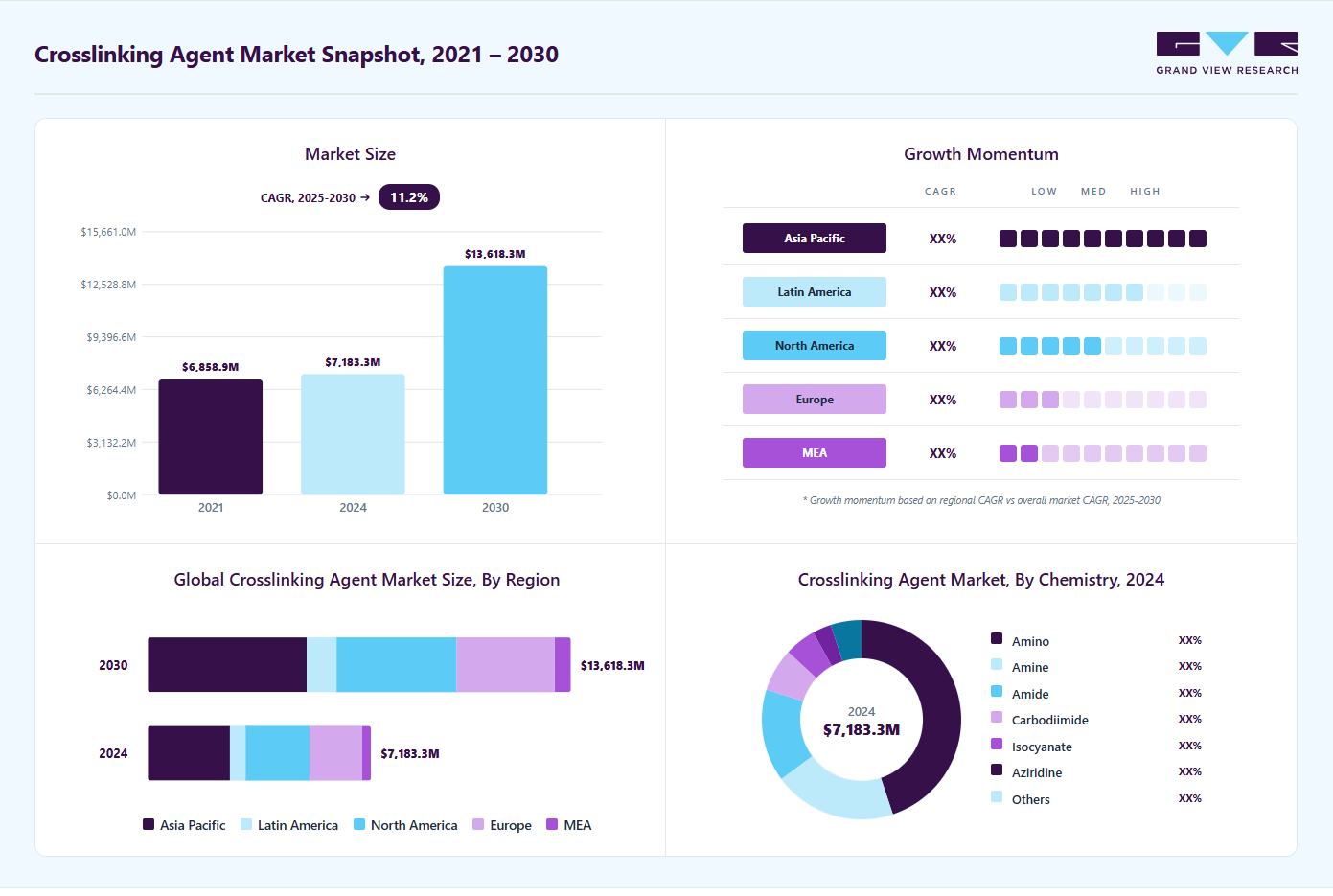
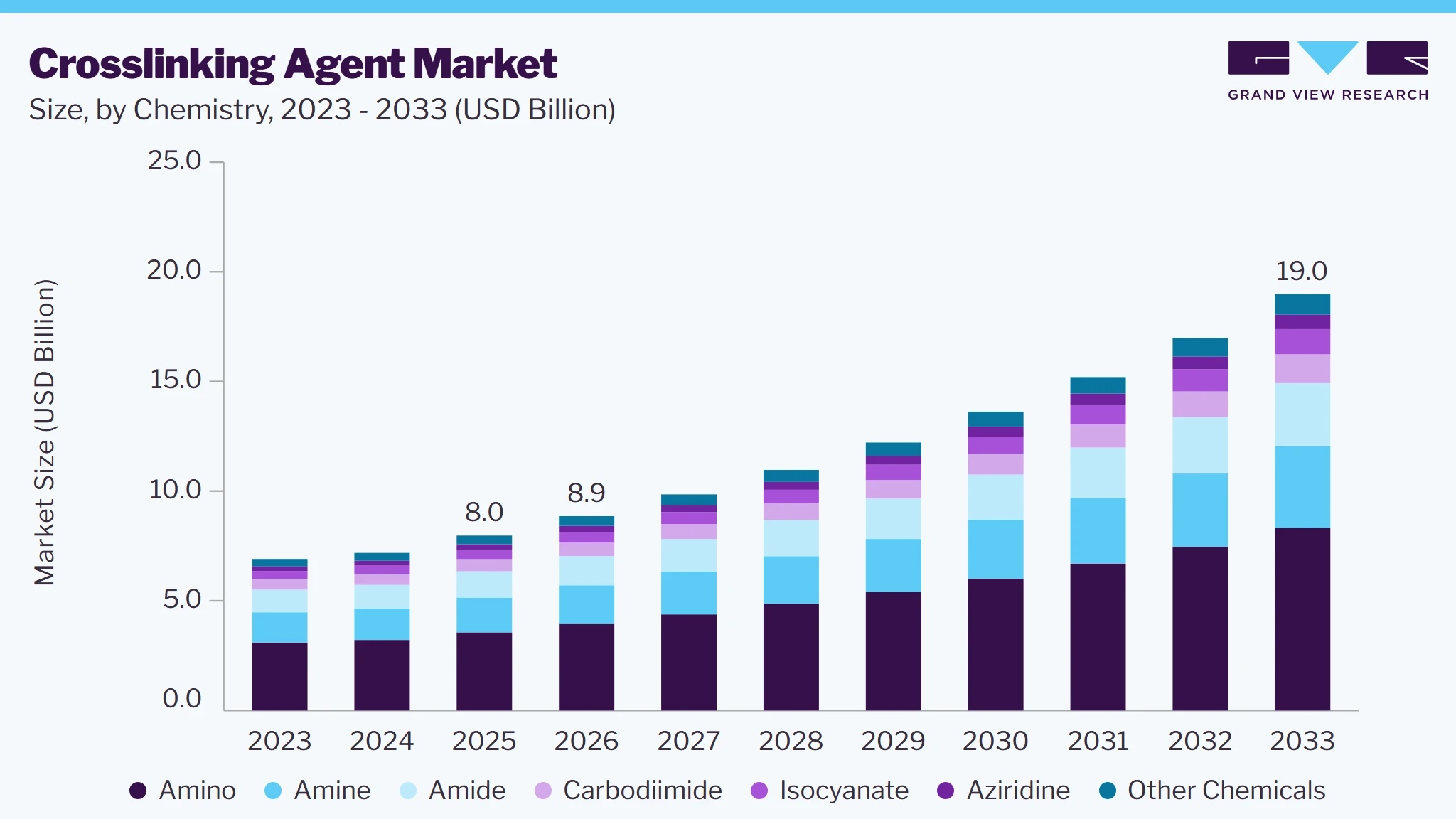
The global Crosslinking Agent market size was valued at USD 8.0 billion in 2025 and is projected to grow from USD 8.9 billion in 2026 to USD 19.0 billion by 2033, at a CAGR of 11.5% from 2026 to 2033. Asia Pacific dominated the market, accounting for a revenue share of 36.9% in 2025. The growth is attributed to increasing demand for high-performance materials in automotive, electronics, and aerospace industries. Crosslinking agents are essential in various industries as they enhance the properties of polymers by creating strong, covalent bonds between polymer chains.
Key Market Trends & Insights
- By chemistry: Amino segment dominated the chemical segment at a revenue share of 44.6% in 2025.
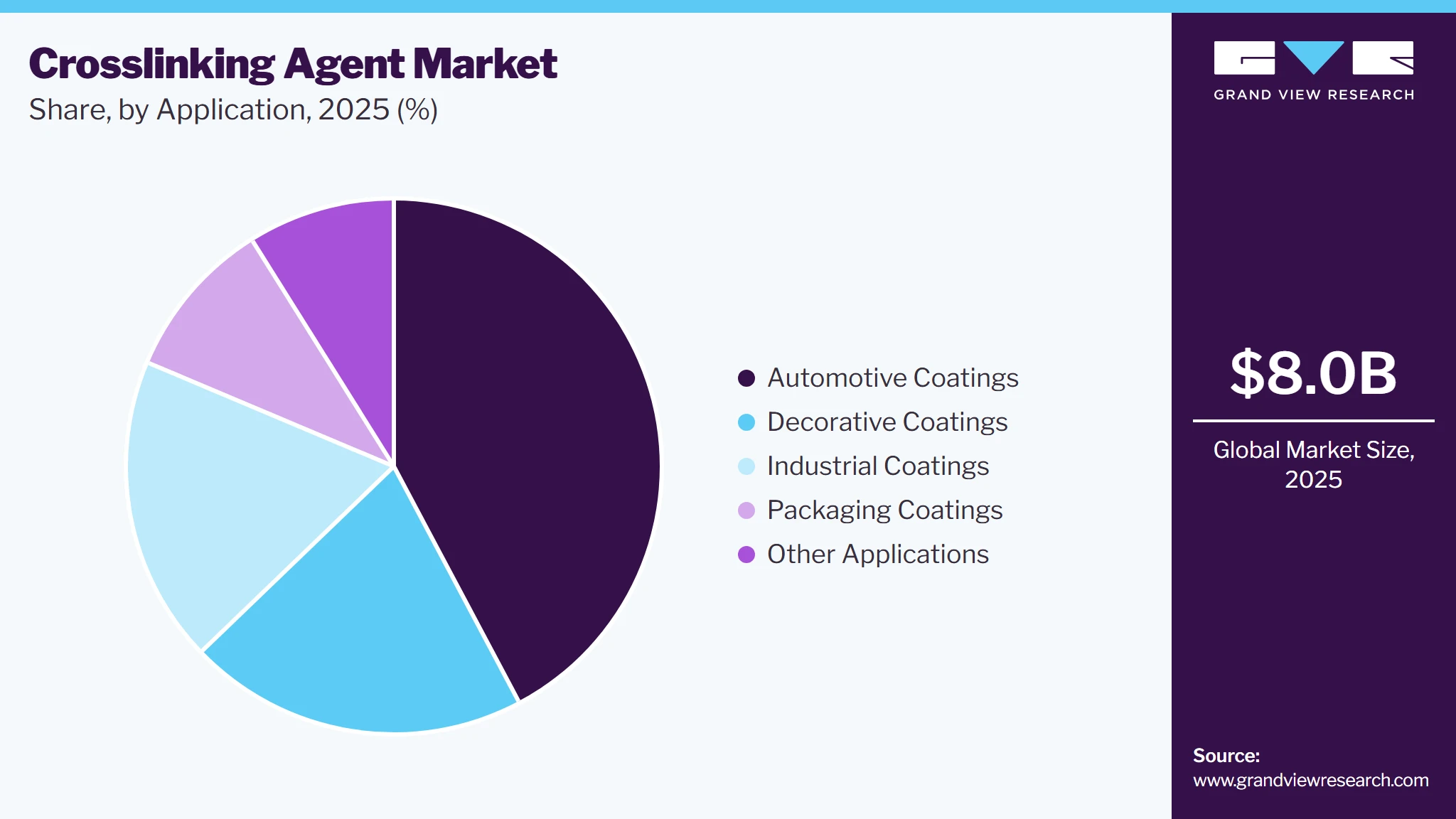
- By application: Automotive coatings segment accounted for the largest revenue share of 42.2% in 2025.
Regional Highlights
- Largest regional market: Asia Pacific (36.9% revenue share, 2025)
- By country: China held the largest market share in 2025.
Market Size & Forecast
- Market size in 2025: USD 8.0 Billion
- Estimated market size in 2026: USD 8.9 Billion
- Projected market size by 2033: USD 19.0 Billion
- CAGR (2026-2033): 11.5%
Three ways to get this report
Buy it, customize it, or ask a question.Get the Full Report
What the study covers
- FormatsPDF · Excel · Dashboard
- Timeline2026–2033 annual, 2025 base
- Coverage20+ countries, 5 regions
- Companies10+ key players profiled
Customize the Report
20% free customization
- IncludeCountries, segments, points
- TailorTo your product definition
- ExtendDeeper competitor detail
- OrA fully bespoke study
- Turnaround5–10 working days
Ask an Analyst
A direct answer, usually in 1 working day
- AccessReport author, directly
- Reply timeWithin 1 working day
- No sales callDirect answer only
- FormatEmail reply
- CostFree, no cost
This leads to improved chemical resistance, heat resistance, and mechanical properties of the final products. As such, their critical role in manufacturing high-performance materials drives the demand for crosslinking agents. The growing demand for water-based crosslinking agents, driven by environmental regulations and a push for more sustainable manufacturing practices, further fuels the market. The construction industry also significantly contributes to the demand, where crosslinking agents are used in coatings, adhesives, and sealants to enhance durability and resistance to environmental damage.Market Dynamics
The crosslinking agent market is witnessing consistent growth driven by increasing demand for high-performance materials across industries such as coatings, adhesives, construction, automotive, electronics, and healthcare. Crosslinking agents play a critical role in enhancing mechanical strength, chemical resistance, durability, thermal stability, and overall performance of polymers and resins. Growing industrialization, rising infrastructure development activities, and the increasing adoption of advanced polymer technologies are supporting market expansion. Additionally, the shift toward sustainable and low-VOC formulations is encouraging the development of innovative crosslinking solutions that meet evolving regulatory and performance requirements.
The growing use of high-performance coatings, adhesives, sealants, and composite materials is a key factor driving the crosslinking agent market. Crosslinking agents improve hardness, corrosion resistance, weatherability, and adhesion properties, making them essential in automotive coatings, industrial finishes, construction materials, and protective coatings.
Rapid growth in automotive production, infrastructure development, and manufacturing activities is increasing demand for durable materials capable of withstanding harsh operating environments. Furthermore, expanding applications in electronics, packaging, and specialty polymers are driving the need for advanced crosslinking technologies. The trend toward lightweight and high-strength materials, particularly in transportation and industrial sectors, is expected to further support market growth over the forecast period.
Environmental concerns associated with certain chemical crosslinking agent and fluctuations in raw material prices present challenges for market growth. Several conventional crosslinking agent contain hazardous substances or generate emissions that are subject to increasingly stringent environmental and occupational safety regulations.
Manufacturers are required to comply with evolving regulations governing volatile organic compounds (VOCs), hazardous chemicals, and worker safety standards, which can increase production and compliance costs. In addition, volatility in the prices of petrochemical-based raw materials may affect profit margins and create uncertainty within the supply chain. These factors can limit market expansion, particularly for smaller manufacturers with limited resources for regulatory compliance and product reformulation.
The increasing focus on sustainability and environmentally friendly materials is creating significant opportunities for the crosslinking agent market. Industries are actively seeking low-emission, non-toxic, and bio-based crosslinking solutions that can deliver high performance while meeting regulatory requirements and sustainability objectives.
Advancements in green chemistry and renewable feedstock technologies are enabling the development of innovative bio-based crosslinking agent suitable for coatings, adhesives, packaging materials, and specialty polymers. Rising demand for eco-friendly products across construction, automotive, and consumer goods industries is accelerating the adoption of sustainable formulations. Additionally, increasing investments in research and development aimed at improving the efficiency, compatibility, and cost-effectiveness of bio-based crosslinkers are expected to create new growth opportunities for market participants. Companies that successfully develop high-performance sustainable crosslinking solutions are likely to strengthen their competitive position in the evolving global market.
Analyst Perspective
The global crosslinking agent market is positioned for steady growth, supported by increasing demand for high-performance coatings, adhesives, sealants, packaging materials, and engineered polymers across diverse end-use industries. As manufacturers seek enhanced durability, chemical resistance, thermal stability, and mechanical strength in their products, crosslinking agents have become essential components in advanced material formulations. Growth in automotive production, infrastructure development, industrial manufacturing, and packaging applications continues to create a strong demand base for both conventional and specialty crosslinking technologies.Companies that focus on sustainable product development, advanced material compatibility, and application-specific performance enhancement are expected to strengthen their competitive positioning and capitalize on long-term growth opportunities in the global crosslinking agent market.
Chemistry Insights
“Isocyanate emerged as the fastest growing application with a CAGR of 13.1%”
Amino segment dominated the chemical segment at a revenue share of 44.6% in 2025. Crosslinking agents are crucial in creating strong, durable bonds between polymer chains, enhancing the properties of materials like plastics, resins, and rubbers. Amino is used in the formulation of crosslinking agents. Amino-based crosslinkers are particularly effective in improving the adhesion, thermal stability, and chemical resistance of the materials used. This makes them valuable in various applications, from automotive and construction materials to coating and adhesives industries. Their versatility and efficiency in enhancing material performance underscore their importance in the crosslinking agent market.
Isocyanates play a pivotal role in the crosslinking agent’s market, primarily due to their ability to react with various compounds to form exceptionally durable and resilient polymers. These characteristics make isocyanate-based crosslinkers essential for producing coatings, adhesives, foam, and elastomers. The demand in the market is driven by the need for products that can withstand harsh environmental conditions, chemical exposure, and mechanical stress, particularly in the automotive, construction, and footwear industries. Furthermore, ongoing research and development efforts are focused on overcoming the challenges associated with isocyanate use, such as health risks and environmental concerns, by developing more sustainable and safer alternatives. This continuous innovation ensures the growth and evolution of the isocyanate segment.
Application Insights
“Automotive emerged as the largest market share of 42.0%”
Automotive coatings segment accounted for the largest revenue of 42.2% in 2025. In the automotive industry, crosslinking agents play an important role in enhancing the properties of polymers used in car parts and coatings. These agents facilitate the formation of chemical bonds between polymer chains, resulting in materials with improved heat resistance, mechanical strength, and chemical resistance. Crosslinking is vital for producing durable rubber components, such as tires and gaskets, and high-performance coatings that protect vehicles against environmental damage and wear. Through crosslinking agents, automotive manufacturers ensure that cars are safer, more reliable, and have a longer service life.
Crosslinking agents are essential in formulating decorative coatings and enhancing various performance characteristics. These agents link polymer chains in the coating's matrix, forming a more tightly knit network. This process, known as crosslinking, significantly improves decorative coatings' durability, chemical resistance, and aesthetic longevity. By facilitating a stronger bond among the coating's molecular components, crosslinking agents ensure that the final product can withstand environmental stresses and wear over time, maintaining its decorative appeal and protective functionality.
Regional Insights
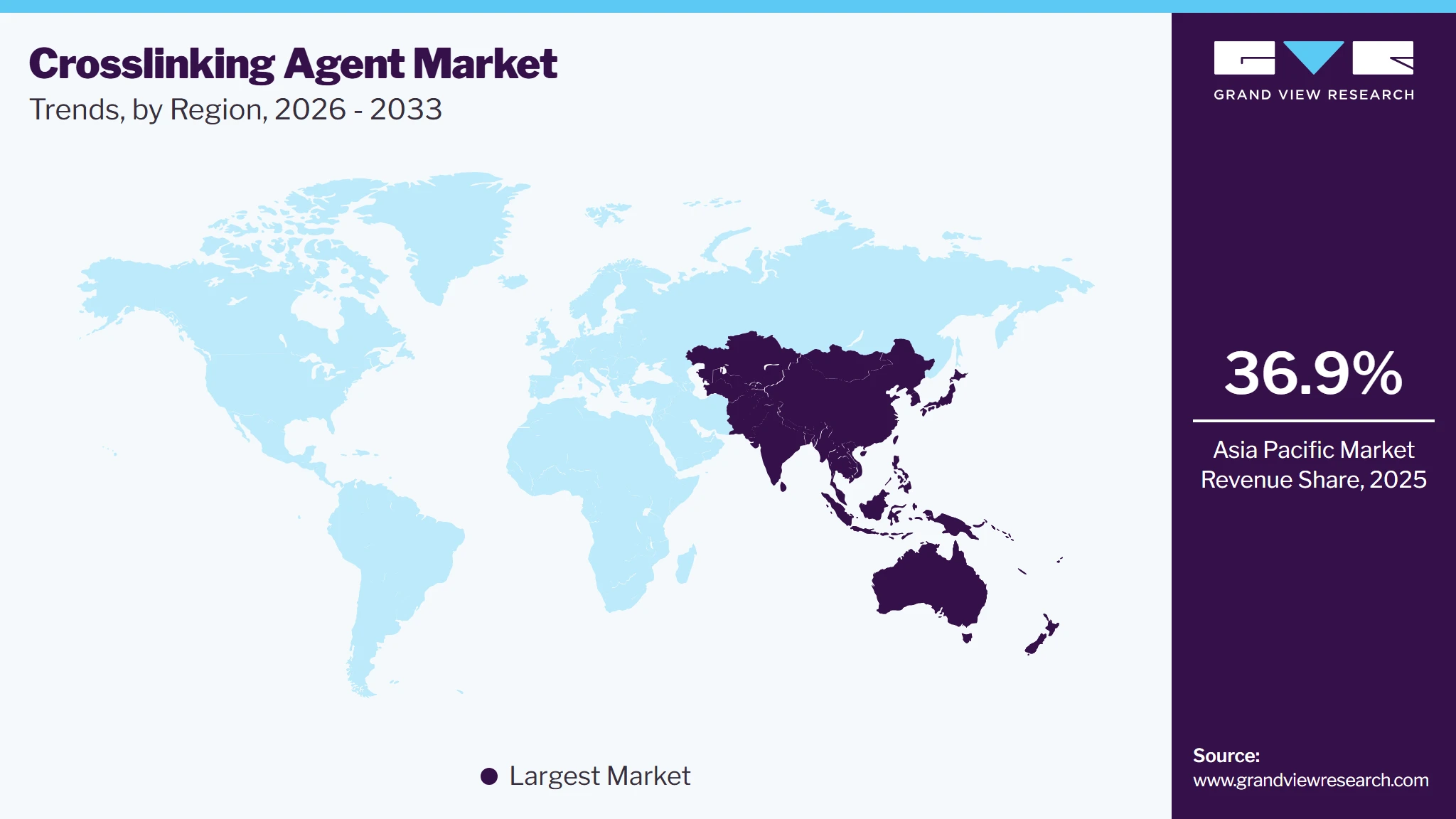
Asia Pacific accounted for 36.9% of the crosslinking agent market revenue in 2025, making it the largest regional market. The region's leading position is attributed to the rising automotive sector in Asia Pacific and due to the rising construction projects in the region which are expected to drive the market. Additionally, the availability of land, low raw material, and labor costs, along with a favorable government outlook, are key factors associated with high production volumes of crosslinking agents in countries such as China.
China Crosslinking Agent Market Trends
“China emerged as the fastest growing market in Asia-Pacific with a CAGR of 11.8% from 2025 - 2033”
China held the largest market share in Asia Pacific in 2025. China is a key player in the global crosslinking agent market, with a significant influence on market dynamics. The country's dominance is attributed to its high production capacity, low labor costs, and availability of raw materials, driving the market's competitive pricing and high production volumes. The demand in China is mainly driven by the rising automotive, construction, and electronics industries in the country.
North America Crosslinking Agent Market Trends
The market in North America is expected to be driven by high-performance coatings in automotive and construction fuels the market. The rise in usage of the product market in adhesives and sealants due to their superior properties, such as improved durability and chemical resistance, is one of the drivers as well.
Europe Crosslinking Agent Market Trends
Europe plays a significant role in the crosslinking agent market, with countries such as Germany, the UK, France, Italy, Spain, Russia, Netherlands, and Belgium being key contributors to the market. The region's market dynamics are influenced by factors such as the demand from the automotive industry. Additionally, Europe is also seeing a rise in construction projects leading to a rise in demand for crosslinking agents.
Key Crosslinking Agent Company Insights
Some of the key players operating in the global crosslinking agent market include
-
BASF SE, a Germany-based chemicals manufacturing company, holds a significant position globally in the chemicals manufacturing industry. It operates through its 6 business segments namely: Chemicals, Surface Technologies, Materials, Nutrition & care, Industrial Solutions, and Agricultural Solutions. Among these, Surface Technologies account for the highest contribution to the company’s consolidated revenue, followed by Materials, and Chemicals. The company has 11 operating divisions which are categorized under the company’s 6 business segments. These divisions are Petrochemicals, Intermediates, Performance Materials, Monomers, Dispersion & Resins, Performance Chemicals, Catalysts, Coatings, Care Chemicals, Nutrition & Health, and Agricultural Solutions. The divisions bear strategic and operational responsibility and are organized according to sectors or products. They manage the 52 global and regional business units and develop strategies for 72 strategic business units.
-
Evonik Industries AG is one of the leading chemicals manufacturing companies operational globally. The company operates through its 5 business segments: Specialty Additives, Nutrition & Care, Smart Materials, Performance Materials, and Technology & Infrastructure. The company offers its crosslinking agents to various end use industries like automotive, aerospace, construction, and electronics among others. The company has around 104 production facilities in over 27 countries globally. The largest production facilities are in Germany, Belgium, Singapore, China, and in the U.S.
Huntsman Corporation and Dow are some of the emerging market participants in the global crosslinking agent market.
-
Covestro AG is a manufacturer and supplier of chemicals. Covestro’s crosslinking agents are used across industries such as automotive, construction, electrical and electronics, wood, and furniture, among others. The company has a presence across regions such as North America, Europe, Asia Pacific, Central & Latin America, and the Middle East & Africa.
-
Dow is a manufacturing company operational in more than 31 countries through its 104 manufacturing sites. The company has a wide product portfolio comprising industrial solutions, plastics, coatings & silicones businesses delivering to vast end-user industries like infrastructure, packaging, consumer goods, and automotive, among others.
Key Crosslinking Agent Companies:
The following are the leading companies in the crosslinking agent market.
-
BASF SE
-
Covestro AG
-
Allnex Group
-
Evonik Industries
-
Huntsman Corporation
-
Aditya Birla Corporation
-
Wanhua Chemicals Group Co. Ltd.
-
Dow
-
DSM Coatings Resin
-
Ineos
Competitive Benchmarking
Category
Operating Strategies
Competitive Edge
Weakness
Established Players (BASF SE, Dow, Covestro AG, Evonik Industries, Huntsman, Allnex Group, Nouryon)
- Focus on expanding production capacity for specialty and high-performance crosslinking agents to meet growing demand from coatings, adhesives, packaging, automotive, and industrial applications.
- Invest in advanced curing technologies, low-VOC formulations, and sustainable crosslinking solutions.
- Strengthen market position through strategic partnerships with coating manufacturers, resin producers, and industrial formulators.
- Expand geographically through acquisitions, technology licensing, and investments in specialty chemical production facilities.
- Strong global manufacturing footprint and integrated supply chain networks.
- Extensive R&D capabilities supporting innovation in high-performance and sustainable crosslinking technologies.
- Established customer relationships across coatings, adhesives, construction, automotive, and packaging industries.
- Ability to leverage economies of scale, technical expertise, and diversified product portfolios.
- High capital expenditure requirements for specialty chemical manufacturing and regulatory compliance.
- Exposure to fluctuations in petrochemical feedstock and specialty raw material prices.
- Increasing environmental regulations related to chemical handling, emissions, and workplace safety.
- Large organizational structures may limit agility in responding to niche customer requirements and emerging application trends.
Emerging & Specialized Players (Aditya Birla Chemicals, DSM Coating Resins, Ineos, regional specialty chemical manufacturers)
- Focus on niche and application-specific crosslinking solutions tailored for coatings, adhesives, inks, composites, and specialty polymers.
- Expand through regional partnerships, technical service programs, and customized product offerings.
- Emphasize sustainable, bio-based, and waterborne crosslinking technologies.
- Target high-growth segments such as eco-friendly coatings, packaging, and advanced industrial materials.
- Greater flexibility in addressing customer-specific formulation requirements.
- Strong focus on innovation, customization, and specialty applications.
- Faster product development and commercialization cycles.
- Ability to serve niche markets with specialized technical expertise.
- Limited production scale and global market presence compared to multinational competitors.
- Lower financial resources for large-scale R&D and capacity expansion projects.
- Higher dependence on specific end-use industries and regional demand conditions.
- Greater vulnerability to pricing pressure from large integrated chemical manufacturers.
Recent Developments
-
In January 2023, BASF SE announced its plan to expand its existing capacity of isocyanate. The project has a total investment of USD 780 million for the final phase of expansion. The company will increase production capacity to approximately 60,000 metric tons per year.
-
In February 2022, Westlake announced the acquisition of Hexion’s global epoxy business for USD 1.2 billion. This business line includes epoxy specialty resins and base epoxy resins and intermediates product lines.
Crosslinking Agent Market Report Scope
Report Attribute
Details
Market size in 2025
USD 8.0 billion
Estimated market size in 2026
USD 8.9 billion
Projected market size by 2033
USD 19.0 billion
Growth rate
CAGR of 11.5% from 2026 to 2033
Base year for estimation
2025
Historical data
2021 - 2024
Forecast period
2026 - 2033
Quantitative units
Revenue in USD million/billion, volume in kilotons and CAGR from 2026 to 2033
Report coverage
Revenue forecast, company ranking, competitive landscape, growth factors, and trends
Segments covered
Chemistry, application & region
Regional scope
North America; Europe; Asia Pacific; Latin America; MEA
Country scope
U.S.; Canada; Mexico; Germany; UK; France; Italy; Spain; China; India; Japan; South Korea; Brazil; Argentina; Saudi Arabia; South Africa
Key companies profiled
BASF SE, Allnex Group, Evonik Industries, Huntsman, Aditya Birla Corporation, Dow, DSM Coatings Resin, Ineos, Covestro AG, Nouryon
Customization scope
Free report customization (equivalent up to 8 analysts' working days) with purchase. Addition or alteration to country, regional & segment scope.
Pricing and purchase options
Avail customized purchase options to meet your exact research needs. Explore purchase options
Global Crosslinking Agent Market Report Segmentation
This report forecasts revenue growth at global, regional, and country levels and provides an analysis of the latest industry trends in each of the sub-segments from 2021 to 2033. For this study, Grand View Research has segmented the global crosslinking agent market report based on chemistry, application, and region:
-
Chemistry Outlook (Volume, Kilotons, Revenue, USD Million, 2021 - 2033)
-
Amino
-
Amine
-
Amide
-
Carbodiimide
-
Isocyanate
-
Aziridine
-
Others
-
-
Application Outlook (Volume, Kilotons, Revenue, USD Million, 2021 - 2033)
-
Decorative Coatings
-
Automotive Coatings
-
Industrial Coatings
-
Packaging Coatings
-
Others
-
-
Regional Outlook (Volume, Kilotons, Revenue, USD Million, 2021 - 2033)
-
North America
-
U.S.
-
Canada
-
Mexico
-
-
Europe
-
Germany
-
UK
-
France
-
Italy
-
Spain
-
-
Asia Pacific
-
China
-
Japan
-
India
-
South Korea
-
-
Central & South America
-
Brazil
-
Argentina
-
-
Middle East and Africa
-
Saudi Arabia
-
South Africa
-
-
Research Methodology
The crosslinking agent market figures in this report are based on a proven research process that combines executive interviews with secondary research from proprietary databases, company filings, and recognized regulatory and institutional sources. Market size is built through value-chain sizing - reconciling supply-side and demand-side estimates - and triangulated with bottom-up and top-down approaches. Every estimate passes multiple levels of expert validation before publication, with each crosslinking agent segment quantified using the revenue-capture definitions in the table below.
Segment Definition
Segment - Chemistry
Revenue capture definition
Amino
Revenue generated from amino-based crosslinking agents used in coatings, paints, and resin systems to improve hardness, chemical resistance, and durability.
Amine
Revenue derived from amine-based crosslinking agents utilized in epoxy systems, adhesives, sealants, and protective coatings for enhanced curing and performance characteristics.
Amide
Revenue generated from amide-based crosslinking agents employed in specialty polymers, coatings, and resin formulations requiring improved flexibility and thermal stability.
Carbodiimide
Revenue captured from carbodiimide crosslinking agents used to enhance hydrolysis resistance, durability, and longevity in coatings, adhesives, and polyurethane systems.
Isocyanate
Revenue generated from isocyanate-based crosslinking agents widely used in polyurethane coatings, automotive finishes, industrial coatings, and high-performance applications requiring superior mechanical properties.
Aziridine
Revenue derived from aziridine crosslinking agents used in waterborne coatings, inks, and adhesives to improve chemical resistance, adhesion, and film performance.
Other Chemicals
Revenue generated from alternative crosslinking chemistries, including epoxy, silane, metal-based, and specialty crosslinkers used across various end-use industries.
Segment - Application
Revenue capture definition
Decorative Coatings
Revenue generated from crosslinking agents used in architectural and decorative paints and coatings to improve durability, stain resistance, and finish quality.
Automotive Coatings
Revenue derived from crosslinking agents utilized in automotive OEM and refinish coatings to enhance scratch resistance, weatherability, gloss retention, and corrosion protection.
Industrial Coatings
Revenue captured from crosslinking agents used in industrial protective coatings for machinery, equipment, infrastructure, and metal surfaces requiring high-performance protection.
Packaging Coatings
Revenue generated from crosslinking agents employed in packaging coatings to improve adhesion, barrier properties, chemical resistance, and product safety.
Other Applications
Revenue derived from crosslinking agents used in applications such as adhesives, sealants, inks, textiles, electronics, composites, and specialty polymer formulations.
Estimation Model
Layer Name
Key Question
Description
Crosslinking Agent Production Layer
What forms is the supply base?
Identify global production capacity of crosslinking agents supported by the availability of key raw materials such as isocyanates, amines, amino resins, carbodiimides, aziridines, and specialty chemicals. Assess chemical manufacturing infrastructure, synthesis technologies, production capabilities, regulatory compliance standards, and regional manufacturing facilities. This establishes the foundational supply base available for coatings, adhesives, sealants, packaging, automotive, construction, and industrial applications worldwide.
Application Adoption Layer
Where is crosslinking agent utilized?
Estimate the proportion of crosslinking agents consumed across decorative coatings, automotive coatings, industrial coatings, packaging coatings, adhesives, sealants, inks, composites, and other specialty applications based on performance requirements, curing mechanisms, durability needs, and end-use industry demand patterns.
Consumption Intensity Layer
How much is crosslinking agent used?
Analyze application-specific dosage rates, resin-to-crosslinker ratios, coating formulations, production volumes, curing requirements, replacement cycles, and manufacturing activity levels to determine annual crosslinking agent consumption across major end-use industries and regions.
Revenue Layer
How is market revenue generated?
Market revenue is quantified through the sale of amino-, amine-, amide-, carbodiimide-, isocyanate-, aziridine-, and other specialty crosslinking agents supplied to coating manufacturers, adhesive producers, packaging companies, automotive OEMs, construction material suppliers, industrial manufacturers, and specialty chemical formulators worldwide.
Delivered Customizations
This report has been delivered with the following In-depth customizations
Client Request
Customization Delivered
Value Adds
Cross-Segmentation Analysis
Detailed cross-segmentation assessment evaluating the relationship between chemistry types, application areas, and crosslinking agent consumption patterns. Analysis identifies usage intensity, performance requirements, curing efficiency, durability needs, and revenue contribution across intersecting segments such as isocyanate-based crosslinkers in automotive coatings, amino crosslinkers in decorative coatings, carbodiimide technologies in industrial coatings, and specialty chemistries in packaging and advanced material applications.
Supports product portfolio optimization and market prioritization by identifying the most attractive chemistry-application combinations, enabling improved resource allocation, sales targeting, formulation development strategies, and long-term growth planning across the crosslinking agents value chain.
Competitive Benchmarking
Comparative evaluation of leading crosslinking agent manufacturers based on product portfolio breadth, specialty chemistry capabilities, manufacturing capacity, raw material integration, geographic presence, sustainability initiatives, technological expertise, customer relationships, distribution networks, and strategic developments across key regional markets.
Assists competitive intelligence, partnership evaluation, and supplier assessment by providing deeper visibility into market positioning, technological strengths, differentiation strategies, innovation capabilities, operational efficiency, and areas of competitive advantage.
Opportunity Assessment
Comprehensive assessment of emerging opportunities associated with sustainable and bio-based crosslinking agents, low-VOC coating technologies, waterborne formulations, advanced adhesive systems, high-performance industrial coatings, automotive lightweighting trends, packaging innovation, and increasing demand for environmentally compliant specialty chemicals across global markets.
Helps identify high-growth investment areas, emerging application opportunities, technology development priorities, and market expansion strategies, supporting long-term revenue growth and competitive positioning across the crosslinking agents value chain.
Frequently Asked Questions About This Report
Key factors that are driving the market growth include the automotive, construction, and electronics industries demand materials with superior durability and performance, leading to a growing market for crosslinking agents. Recent technological advancements have expanded the product's applications to include 3D printing and biomedical devices.
The automotive coatings segment dominated the global crosslinking agents market in 2025, accounting for 42.2% of total revenue.
The decorative coatings segment is projected to register the fastest growth during the forecast period, expanding at a CAGR of 11.95%.
The amino chemistry segment led the crosslinking agents market in 2025, capturing 44.6% of total revenue.
The isocyanate segment is anticipated to be the fastest-growing chemistry segment, registering a CAGR of 13.3% during the forecast period,
The global crosslinking agent market size was valued at USD 8.0 billion in 2025 and is expected to reach USD 8.9 billion in 2026.
The global crosslinking agent market is expected to grow at a compound annual growth rate of 11.5% from 2026 to 2033 to reach USD 19.0 billion by 2033.
Some key player operating in crosslinking agent market include BASF SE, Allnex Group, Evonik Industries, Huntsman, Aditya Birla Corporation, Dow, DSM Coatings Resin, Ineos, Covestro AG, Nouryon.
Asia Pacific dominated the crosslinking agent market with a share of 36.9% in 2025. This is attributable to increasing demand for high performance materials in automotive, electronics, and aerospace industries.
About the Author(s)
Plastics, Polymers & Resins Research Team
Bulk Chemicals · Plastics, Polymers & ResinsThis report was authored by the plastics, polymers & resins research team at Grand View Research - comprising two research analysts, one senior research analyst, and one industry expert - with specialized expertise in the plastics, polymers & resins segment of the bulk chemicals industry. All findings are based on proprietary bulk chemicals databases, executive interviews, and regulatory analysis, subject to internal peer review prior to publication.
Last Updated:
Speak to Analyst


Customize this report to your needs - add regions, segments, or data points, with 20% free customization.
Or view our licence options:


ISO 9001:2015 & 27001:2022 Certified
We are GDPR and CCPA compliant! Your transaction & personal information is safe and secure. For more details, please read our privacy policy.


