
- Home
- »
- Advanced Interior Materials
- »
-
Dedicated Outdoor Air System Market Size Report, 2033GVR Report cover

Dedicated Outdoor Air System Market (2026 - 2033)
Size, Share & Trends Analysis Report By Capacity (Up To 20 Tons, 20–50 Tons, Above 50 Tons) By End-use (Commercial, Residential, Industrial), By Equipment Type (Packaged DOAS Units, Custom-Built DOAS Units), By Region, And Segment Forecasts
Market Size, 2025
$5.7BMarket Estimate, 2026
$6.0BMarket Forecast, 2033
$9.3BCAGR, 2026–2033
6.5%Dedicated Outdoor Air System Market Summary
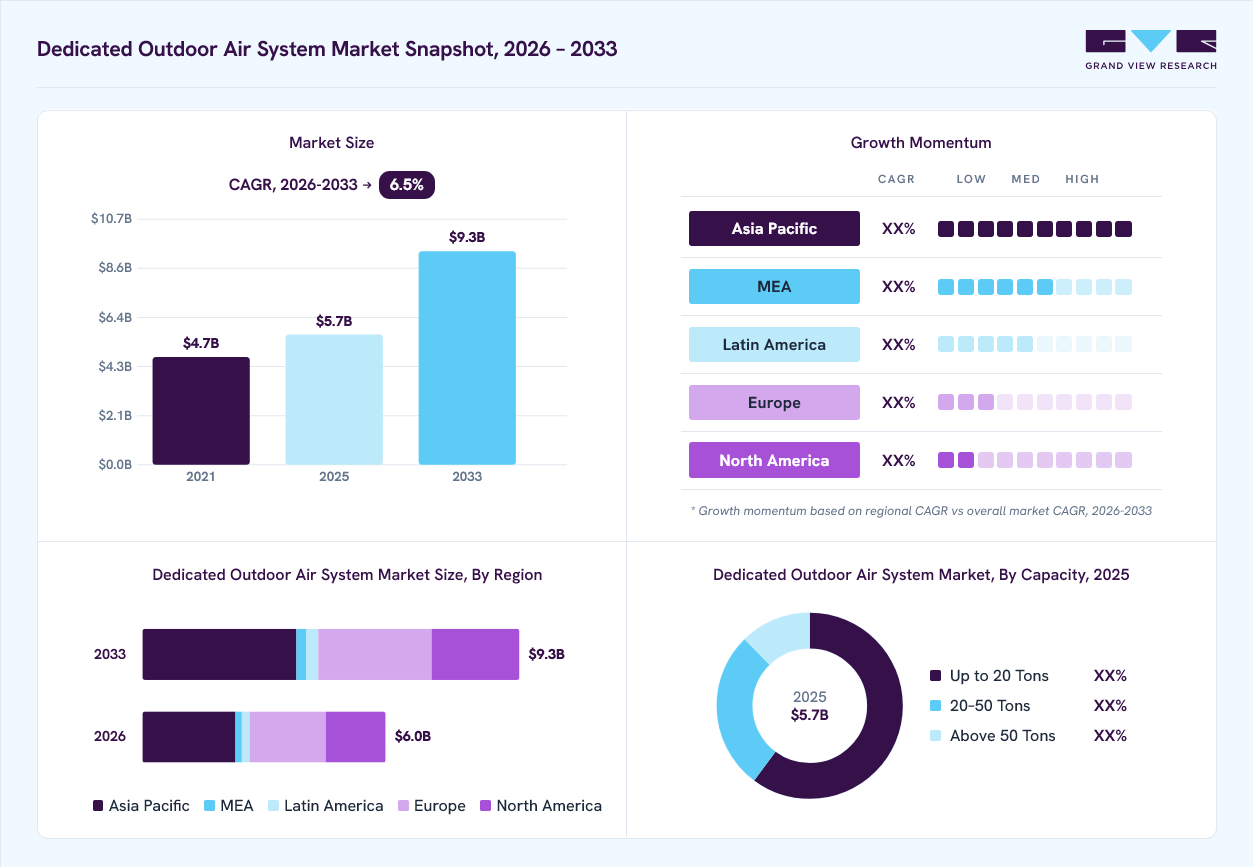
The global dedicated outdoor air system market size was valued at USD 5.7 billion in 2025 and is projected to grow from USD 6.0 billion in 2026 to USD 9.3 billion by 2033, at a CAGR of 6.5% from 2026 to 2033. Asia Pacific dominated the market, accounting for a revenue share of 37.9% in 2025. The dedicated outdoor air system industry is primarily driven by the heightened emphasis on infection control and sterile environments across healthcare facilities globally.
 Source: Grand View Research, IR Documents, Primary Interviews, Paid DatabasesTo learn more about this report,
 Download Free Sample Report
Key Market Trends & Insights
- By capacity: up to 20 tons segment dominated the market, with a revenue share of 60.1% in 2025.
- By end use: Commercial segment held the largest market share of 78.3% in 2025.
- By equipment type: Packaged DOAS units segment held the largest revenue share of 74.6% in 2025.
Regional Highlights
- Largest regional market: Asia Pacific (37.9% revenue share, 2025)
- By country: China held the largest market share in 2025.
Market Size & Forecast
- Market size in 2025: USD 5.7 Billion
- Estimated market size in 2026: USD 6.0 Billion
- Projected market size by 2033: USD 9.3 Billion
- CAGR (2026-2033): 6.5%
Prism AI by Grand View Research Free to tryAsk a question about the dedicated outdoor air system marketTry asking✓Every figure cited from GVR research Prefer the report? Download free sample →
Following the COVID-19 pandemic, hospitals, laboratories, and clinics have prioritized advanced ventilation systems capable of delivering 100% conditioned outdoor air to minimize airborne transmission risks. With the rise in global healthcare construction projects particularly in the U.S., Japan, and the Middle East, DOAS installations are increasingly specified to ensure precise humidity management, particulate filtration, and contamination control standards essential for patient safety and compliance with health regulations.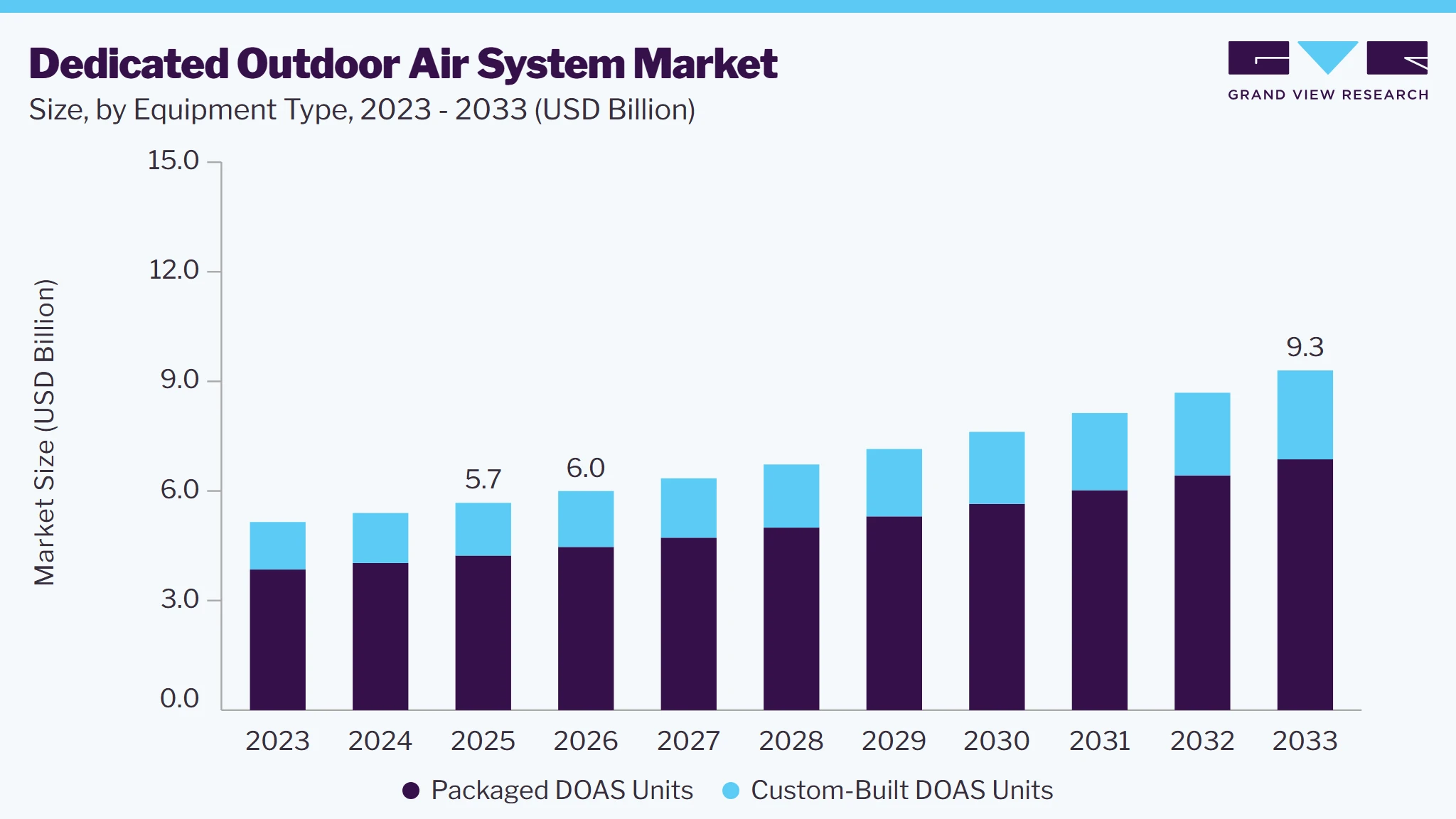 To learn more about this report, Download Free Sample Report
Market Dynamics
The dedicated outdoor air system (DOAS) market is witnessing steady growth as building owners and facility managers increasingly prioritize indoor air quality, energy efficiency, and compliance with evolving ventilation standards. The growing adoption of green building certifications, stringent energy codes, and advanced HVAC technologies is driving demand for DOAS solutions across commercial, industrial, and institutional buildings. Rising construction of healthcare facilities, educational campuses, data centers, and high-performance commercial buildings is further supporting market expansion. In addition, the integration of smart controls, IoT-enabled monitoring, heat recovery technologies, and variable-speed components is enhancing system performance while reducing energy consumption, making DOAS an attractive solution for both new construction and retrofit projects.
The growing emphasis on improving indoor air quality while reducing building energy consumption is a primary driver for the dedicated outdoor air system market. Building owners are increasingly adopting DOAS because these systems independently condition and supply fresh outdoor air, allowing conventional HVAC equipment to focus on space cooling and heating. This separation improves ventilation effectiveness, enhances humidity control, and minimizes the risk of airborne contaminants, making DOAS particularly valuable in offices, hospitals, schools, hotels, laboratories, and other high-occupancy buildings.
Additionally, governments and regulatory bodies worldwide continue to strengthen building energy efficiency requirements and ventilation standards. The expansion of green building initiatives such as LEED and WELL certification, coupled with growing awareness of occupant health following the COVID-19 pandemic, has accelerated investments in advanced ventilation technologies. Smart building adoption, demand for decarbonization, and increasing use of energy recovery ventilators integrated with DOAS are further encouraging widespread deployment across commercial and institutional infrastructure.
The adoption of dedicated outdoor air systems (DOAS) is constrained by higher upfront costs compared to conventional ventilation solutions. Additional investments in specialized equipment, controls, system design, and HVAC integration increase project complexity and installation expenses. These cost barriers are particularly challenging for small commercial buildings and retrofit projects, where limited budgets and longer payback periods can slow adoption despite the long-term energy efficiency and indoor air quality benefits.
The rapid growth of smart buildings, sustainable commercial developments, and mission-critical facilities presents a significant opportunity for the dedicated outdoor air system market. Modern buildings increasingly require intelligent ventilation systems capable of optimizing indoor air quality, humidity, occupancy-based airflow, and energy consumption through integrated building management systems. Growing investments in data centers, healthcare infrastructure, pharmaceutical manufacturing, research laboratories, airports, and educational facilities are creating substantial demand for advanced DOAS solutions equipped with IoT connectivity, predictive maintenance capabilities, and high-efficiency heat recovery technologies. As countries continue investing in energy-efficient infrastructure and carbon reduction initiatives, the adoption of DOAS is expected to accelerate across both developed and emerging markets.
Market Concentration & Characteristics
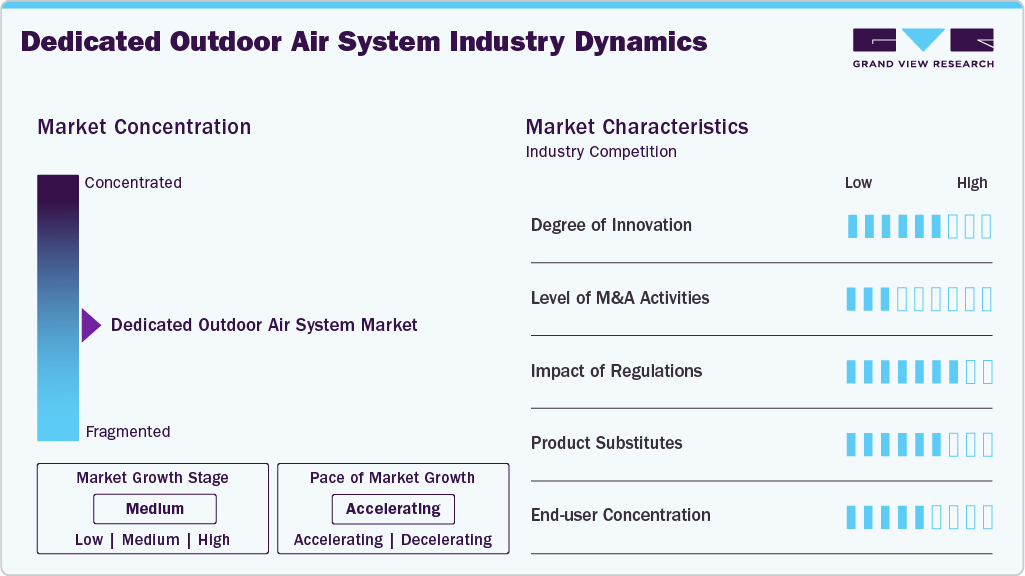
The dedicated outdoor air system industry exhibits moderate concentration, with dominant shares held by multinational HVAC OEMs Carrier, Daikin Industries, Trane Technologies, LG Electronics, and Johnson Controls collectively accounting for a majority of global revenue. Smaller players such as AAON, Greenheck, and Addison HVAC maintain strong domestic positions through specialization in ventilation and dehumidification technologies.
The degree of technological innovation in this dedicated outdoor air system industry is high, reflecting ongoing advancements in energy recovery, modular unit design, and digital control. Continuous innovation revolves around smart connectivity, IoT integration, and enhanced air purification driven by both regulatory pressures and customer demands for sustainability. Mergers and acquisitions remain strategically relevant, as major HVAC corporations expand their offerings through acquisitions of niche ventilation and air-handling specialists, contributing to product line diversification and broader solution portfolios. This consolidation trend steadily strengthens competitive positioning but restrains new entrants.
 To learn more about this report, Download Free Sample Report
Regulatory frameworks exert a notable influence on industry dynamics, promoting advanced ventilation and IAQ standards across major economies. Service substitutes are limited given DOAS’s unique role in decoupled ventilation and humidity management distinct from traditional HVAC systems. End-user concentration is moderate-to-high, anchored by commercial segments particularly educational, healthcare, and office facilities that account for a significant proportion of DOAS adoption.
Analyst Perspective
The dedicated outdoor air system market is poised for sustained growth as building owners increasingly prioritize indoor air quality, energy efficiency, and regulatory compliance. Growing investments in commercial infrastructure, healthcare facilities, educational institutions, laboratories, and data centers are accelerating the adoption of dedicated ventilation solutions that deliver precise humidity control and enhanced occupant comfort. At the same time, stricter building energy codes and green building certification programs are encouraging the integration of DOAS with energy recovery technologies, smart controls, and building automation systems. Looking ahead, manufacturers that focus on intelligent ventilation, low-energy operation, and customized solutions for high-performance buildings are expected to strengthen their competitive position, making the market an attractive opportunity for innovation and long-term investment.
Drivers, Opportunities & Restraints
Rising demand for improved indoor air quality, energy efficiency, and occupant comfort, combined with growth in commercial construction and renovation projects, is driving the dedicated outdoor air system industry. In addition, the ability of DOAS to provide dedicated outdoor air independent of main HVAC systems makes them increasingly preferred for offices, schools, healthcare, and industrial facilities. The market also benefits from expansion in education, data center, and hospitality infrastructure that demands continuous fresh-air management. As lifecycle cost savings and building health benefits gain recognition, the DOAS market is expected to sustain steady growth through 2033.
The dedicated outdoor air system industry faces restraints in the form of complex integration with existing HVAC infrastructure, particularly in retrofitting scenarios. DOAS units are designed to separate ventilation from heating and cooling functions, yet most legacy systems combine these operations within a single framework. Incorporating DOAS in such settings often requires substantial redesign of ductwork, airflow balance adjustments, and modification of control software. These technical challenges, compounded by high installation costs and limited mechanical space in older buildings, continue to limit scalability for retrofit projects and deter adoption in cost-sensitive markets.
A key market opportunity arises from the global acceleration of green building initiatives and net-zero energy programs. Governments and private developers across the U.S., Europe, and Asia-Pacific are increasingly mandating sustainable construction standards such as LEED, WELL, and BREEAM, all of which require advanced ventilation and air quality compliance. DOAS systems, with integrated energy recovery options and digital air quality monitoring, directly support these objectives by enhancing ventilation performance while reducing energy usage.
Equipment Type Insights
Based on equipment type, packaged DOAS units segment led the market with the largest revenue share of 74.6% in 2025, driven by their ease of installation, standardized design, and suitability for a wide range of commercial applications. The strong adoption of packaged DOAS units is fueled by their cost-effectiveness, quick deployment, and ability to meet ventilation and indoor air quality requirements across diverse commercial spaces. In addition, growing emphasis on energy efficiency and compliance with building codes has further accelerated the demand for packaged DOAS solutions.
The custom-built DOAS segment is anticipated to grow at the fastest CAGR of 6.7% during the forecast period. Growth of the custom-built DOAS segment is driven by rising adoption in large-scale projects where precise airflow and humidity control are critical, such as healthcare, laboratories, and data centers. Their flexibility in configuration and ability to integrate with advanced building management systems enhances suitability for specialized HVAC applications requiring high efficiency and customization.
End-use Insights
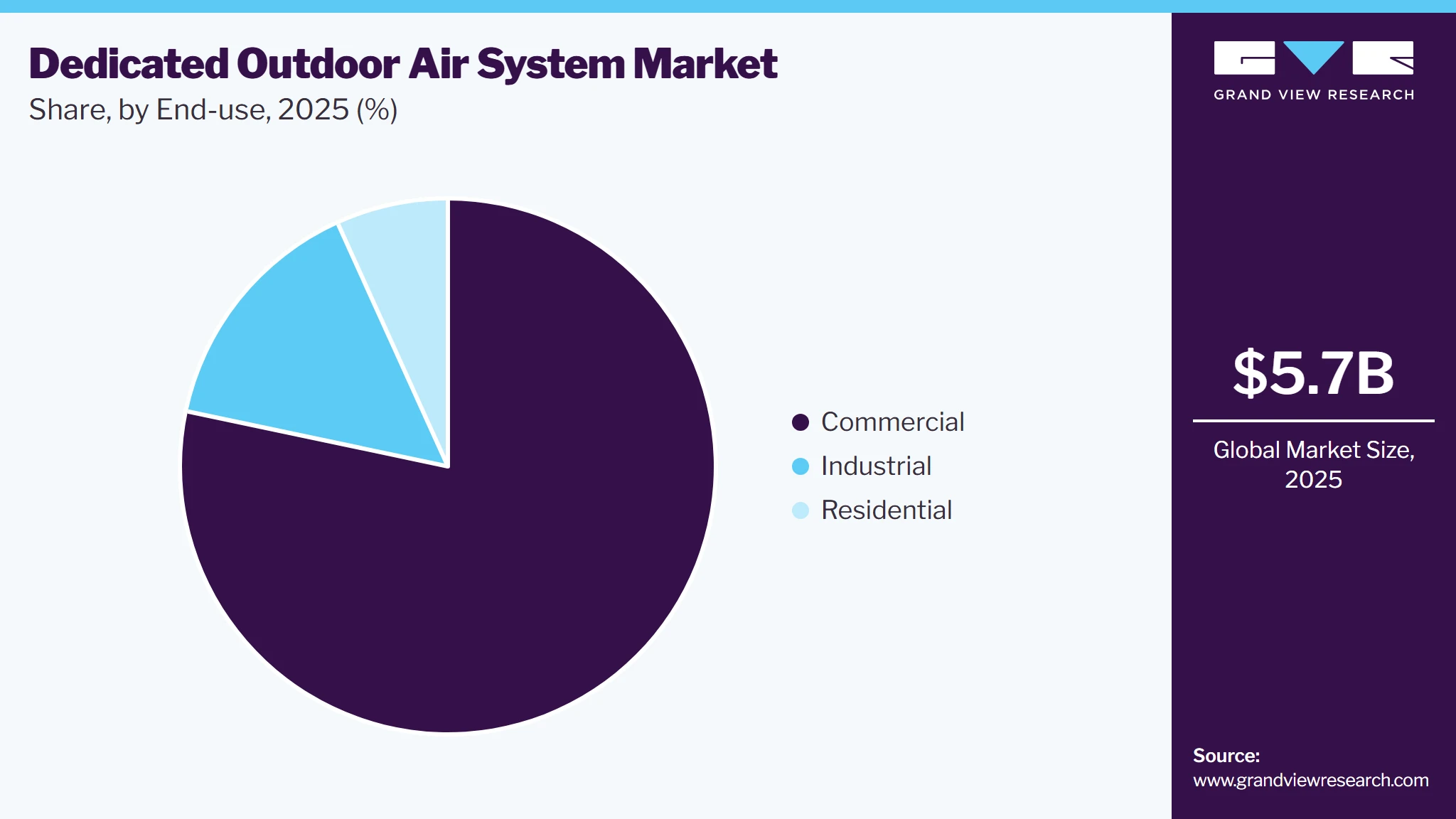
Based on end use, commercial segment led the market with the largest revenue share of 78.3% in 2025, reflecting the strong demand for Dedicated Outdoor Air Systems (DOAS) in offices, retail spaces, educational institutions, healthcare facilities, and hospitality establishments. The segment’s dominance is driven by the increasing emphasis on indoor air quality, occupant comfort, and energy-efficient building operations, coupled with the rapid growth of commercial construction and renovation projects worldwide.
 To learn more about this report, Download Free Sample Report
Expansion in manufacturing, warehousing, and process-critical industries fuels demand for controlled ventilation and humidity management and thereby fosters market growth. These facilities increasingly require DOAS integration with energy recovery and smart monitoring features to maintain environmental consistency and energy savings across complex industrial infrastructure.
Capacity Insights
Based on capacity, up to 20 tons segment led the market with the largest revenue share of 60.1% in 2025. This highlights strong demand for small- to medium-capacity Dedicated Outdoor Air Systems (DOAS) in commercial and light industrial settings. The popularity of this segment is attributed to its effectiveness in providing controlled ventilation and humidity for offices, retail outlets, schools, and healthcare facilities, while offering advantages such as easier installation, cost efficiency, and seamless integration with packaged and modular systems.
The 20 to 50 tons segment is anticipated to grow at the fastest CAGR of 6.0% during the forecast period. The 20 to 50 tons segment is supported by expanding deployment in medium to large commercial facilities. This capacity range effectively serves multi-story buildings such as schools, offices, and retail complexes that demand greater airflow and zoning control than smaller systems, without the high capital costs of industrial-scale units. Its scalability and performance balance position it strongly within medium commercial projects.
Regional Insights
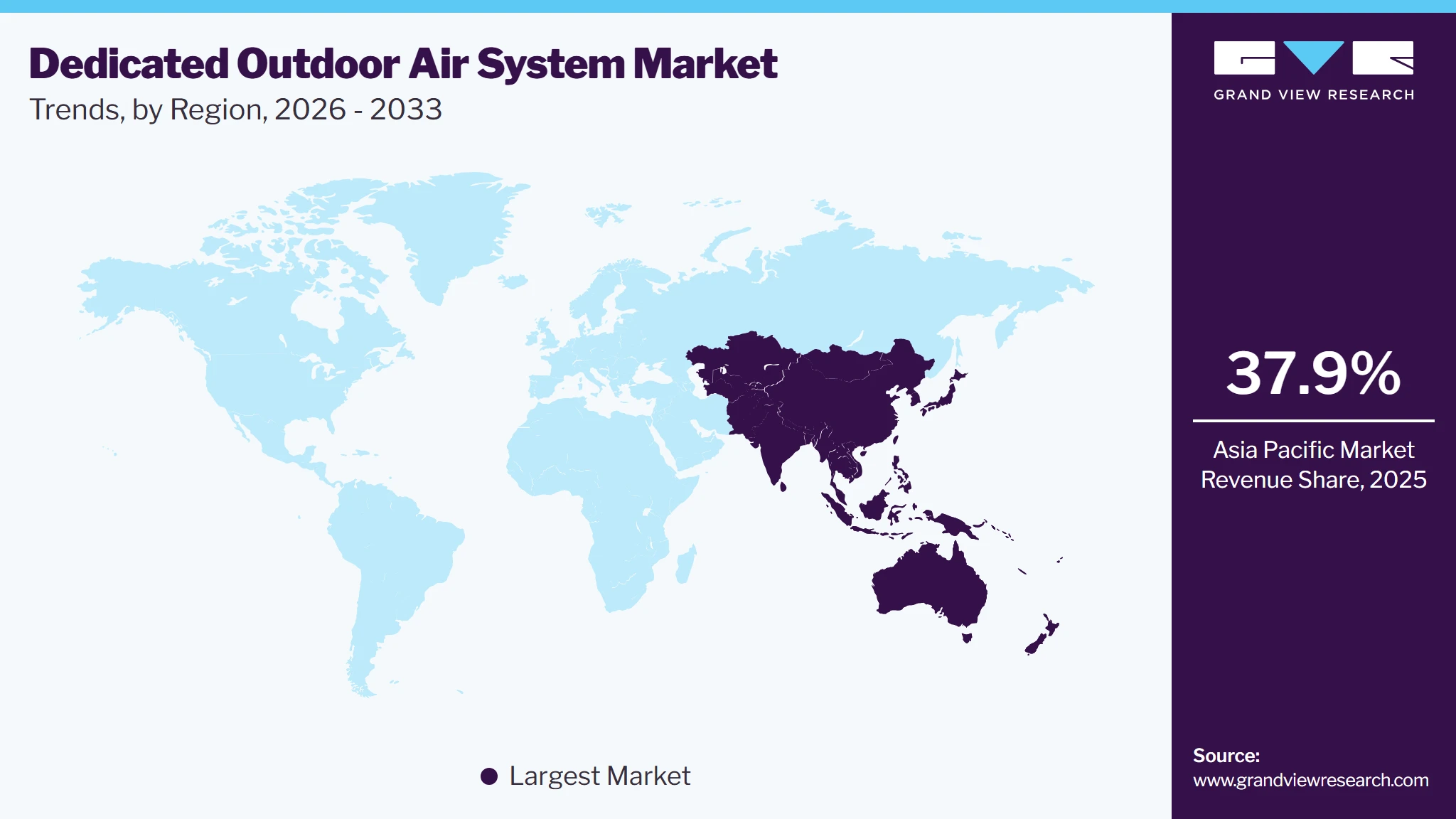
Asia Pacific dominated the dedicated outdoor air system market with the largest revenue share of 37.9% in 2025, driven by rapid urbanization, strong commercial and industrial infrastructure development, and growing awareness of energy-efficient and high-quality indoor air solutions. The region’s dominance is supported by increasing investments in offices, retail spaces, educational institutions, and healthcare facilities, along with government initiatives promoting green buildings and sustainability standards.
 To learn more about this report, Download Free Sample Report
China Dedicated Outdoor Air System Market Trends
The dedicated outdoor air system market in the China held the largest share in the Asia Pacific region in 2025, propelled by rapid urbanization, robust industrial growth, and aggressive government policies supporting green building certifications. Massive infrastructure projects and heightened environmental regulations drive demand for high-performance DOAS installations in commercial, institutional, and industrial buildings. China's scale and regulatory focus make it the primary growth engine in this region.
India Dedicated Outdoor Air System Market Trends
The India dedicated outdoor air system market is growing rapidly spurred by ambitious urban infrastructure development, heightened green building mandates, and growing commercial and healthcare construction. Increasing awareness of indoor air quality and rising energy codes drive DOAS system integration in new projects. Furthermore, supportive government initiatives promoting energy-efficient HVAC technologies are encouraging wider adoption across both public and private sector developments.
North America Dedicated Outdoor Air System Market Trends
The dedicated outdoor air system market in North America maintains a strong growth outlook. The U.S. and Canada lead regional adoption due to stringent energy-efficiency regulations, widespread green building initiatives, and rising focus on indoor air quality in commercial and healthcare facilities. Extensive investments in data centers, hospitals, and educational infrastructure further sustain demand, supported by technologies like energy recovery wheels and IoT-based control systems that optimize ventilation efficiency.
The dedicated outdoor air system market in the U.S. accounted for the largest market revenue share in North America in 2024, due to its extensive regulatory landscape emphasizing energy efficiency and indoor air quality, especially in commercial and healthcare sectors. The large geographic diversity necessitates a wide range of HVAC solutions, and states like California with strict environmental mandates are key drivers for DOAS adoption. Major industry players like Carrier and Daikin have concentrated efforts here, reinforcing the U.S. position as market leader in North America.
The Mexico dedicated outdoor air system market is anticipated to grow at the fastest CAGR during the forecast period, aided by rapid urbanization, increasing industrialization, and government-backed energy efficiency programs. Rising demand for ventilation upgrades in commercial, institutional, and residential sectors drives DOAS adoption. In addition, growing awareness of indoor air quality standards and sustainable building practices is further encouraging the integration of advanced air-handling solutions across new and retrofit projects.
Europe Dedicated Outdoor Air System Market Trends
The dedicated outdoor air system market in Europe is led the market with the second largest revenue share in 2024. Across Europe, the DOAS market grows steadily influenced by stringent ventilation and building energy codes such as the EU Energy Performance of Buildings Directive and Ecodesign Directive. Countries including Germany, the UK, and France emphasize optimized air handling for decarbonized and healthy building environments. Refurbishment of aging structures and integration of heat recovery solutions for compliance with zero-emission targets are fostering consistent adoption of DOAS in commercial and public buildings.
The Germany dedicated outdoor air system market leads the European DOAS market, supported by progressive energy-saving building codes and EU directives targeting net-zero carbon emissions. The country's mature construction industry actively upgrades existing infrastructures with energy recovery and ventilation enhancements. Germany’s leadership in sustainable building technologies and strong government incentives cause it to hold the largest share in Europe, reflecting high demand for advanced DOAS products.
The dedicated outdoor air system market in Spain is identified as one of the fastest-growing European markets due to increased renovation of aging public and commercial buildings to meet EU energy and air quality standards. Government funding and incentives boost adoption of advanced ventilation technologies like DOAS, with growing uptake in offices, hospitals, and educational institutions.
Middle East & Africa Dedicated Outdoor Air System Market Trends
The dedicated outdoor air system market in Middle East & Africa is projected to expand at a considerable CAGR during the forecast period. Large-scale infrastructure developments such as smart cities, airports, and mixed-use commercial complexes in Saudi Arabia and the UAE are critical growth contributors. Rising emphasis on IAQ, sustainable construction under national visions like Saudi Vision 2030, and enhanced investment in HVAC upgrades underline the region’s rising DOAS adoption potential.
The Saudi Arabia dedicated outdoor air system market leads the Middle East & Africa DOAS market, driven by extensive government infrastructure programs, including Vision 2030 initiatives that prioritize sustainability and energy efficiency. Rapid economic diversification and urban expansion fuel demand for advanced ventilation systems in commercial and institutional projects. Local regulations encouraging energy-saving technologies bolster Saudi Arabia’s position as the regional market leader.
Latin America Dedicated Outdoor Air System Market Trends
The dedicated outdoor air system market in Latin America is anticipated to grow at a significant CAGR during the forecast period. In Latin America, DOAS installations are accelerating led by Brazil and Mexico. Growing urban development, renewed focus on building modernization, and government-backed energy-efficiency programs are key catalysts. Increased awareness of indoor air quality post-pandemic and advancements in commercial projects-particularly offices and hospitality facilities-are strengthening the regional market trajectory.
The Brazil dedicated outdoor air system market holds the majority share in Latin America, owing to increasing investments in commercial real estate and industrial infrastructure modernization. Government stimulus for energy-efficient construction practices combined with rising awareness of ventilation quality post-pandemic supports booming DOAS market growth. Brazil’s sizable urban centers and green building movements make it the key driver for the region.
Key Dedicated Outdoor Air System Company Insights
Some of the key players operating in the market include Johnson Controls and LG Electronics Inc.
-
Johnson Controls designs, manufactures, and offers solutions that enhance the operational efficiencies of buildings and various systems related to the automotive industry. The company supplies building control systems, automation, HVAC equipment, seating and interior systems, and integrated facility management services. It operates through four business segments and has a global presence.
-
LG Electronics Inc. is a globally operating company involved in consumer electronics, home appliances, and air solutions. LG Electronics has a strong global presence with 152 subsidiaries spanning Asia, Europe, the Americas, and the Middle East. The company invests heavily in research and development, with significant expenditures aimed at sustaining competitive advantage and expanding product offerings
Key Dedicated Outdoor Air System Companies
The following key companies have been profiled for this study on the dedicated outdoor air system market.
-
Carrier
-
DAIKIN INDUSTRIES Ltd.
-
Johnson Controls
-
LG Electronics
-
DRI
-
DesertAire
-
Salleria Engineers Pvt. Ltd
-
Trane
-
SAMSUNG
-
XeteX
-
United CoolAir
-
AAON
-
Greenheck Fan Corporation
-
Addison HVAC
Competitive Benchmarking
Category
Operating Strategies
Competitive Edge
Weakness
Established Players (e.g., Carrier, Daikin Industries Ltd., Johnson Controls, Trane, AAON, Greenheck Fan Corporation)
- Focus on developing high-efficiency DOAS solutions integrated with smart controls and energy recovery technologies.
- Expand market presence through strong distributor networks, strategic partnerships, and commercial construction projects.
- Invest heavily in R&D to meet evolving energy efficiency regulations and indoor air quality standards.
- Strong global brand recognition with extensive HVAC product portfolios.
- Advanced manufacturing capabilities supported by significant R&D investments.
- Well-established after-sales service, technical support, and global distribution networks.
- Longer product development and approval cycles due to large organizational structures.
- Less flexibility in delivering highly customized solutions for niche applications.
Emerging & Regional Players (e.g., DesertAire, XeteX, United CoolAir, DRI, Addison HVAC, Salleria Engineers Pvt. Ltd.)
- Focus on customized DOAS solutions for specialized commercial and industrial applications.
- Strengthen regional presence through direct sales, OEM partnerships, and engineering support.
- Compete by offering application-specific systems with shorter lead times and competitive pricing.
- High flexibility in product customization to meet project-specific requirements.
- Strong expertise in niche applications such as laboratories, healthcare, natatoriums, and industrial facilities.
- Faster response to customer requirements and greater engineering adaptability.
- Limited international presence and smaller distribution networks.
- Lower brand visibility compared to multinational HVAC manufacturers.
- Relatively smaller R&D budgets and production capacity, restricting large-scale expansion.
Recent Developments
-
In April 2025,Johnson Controls announced its decision to divest its HVAC (Heating, Ventilation, and Air Conditioning) solutions business for light commercial and residential buildings, including its stake in the Johnson Controls-Hitachi joint venture, to Bosch for USD 8 billion. This transaction marks a strategic move by Johnson Controls to streamline its business portfolio, while enabling Bosch to nearly double its HVAC sales, expand its Home Comfort Group workforce to over 26,000 employees, and strengthen its presence across the U.S. and Asia markets.
-
In July 2025,Greenheck Fan Corporation expanded its DOAS product line with the RV-220 model, offering up to 29,200 cfm airflow, 50-100 tons packaged DX cooling, and 2,000 mbh indirect gas heating. Moreover, the model features R-454B refrigerant and a space-efficient footprint for standard flatbed shipping. The company now covers capacities from 800 to 29,200 cfm and 3 to 100 tons cooling, with new options like power exhaust and energy recovery expected to launch soon.
Dedicated Outdoor Air System Market Report Scope
Report Attribute
Details
Market size in 2025
USD 5.7 billion
Estimated market size in 2026
USD 6.0 billion
Projected market size by 2033
USD 9.3 billion
Growth rate
CAGR of 6.5% from 2026 to 2033
Base year for estimation
2025
Historical data
2021 - 2024
Forecast period
2026 - 2033
Quantitative units
Revenue in USD billion and CAGR from 2026 to 2033
Report coverage
Revenue forecast, company ranking, competitive landscape, growth factors, and trends
Segments covered
Capacity, end-use, equipment type, region
Regional scope
North America; Europe; Asia Pacific; Latin America; Middle East & Africa
Country scope
U.S.; Canada; Mexico; UK; Germany; France; Spain; Italy; China; Japan; India; Australia; South Korea; Brazil; Argentina; Saudi Arabia; UAE
Key companies profiled
Carrier; DAIKIN INDUSTRIES Ltd.; Johnson Controls; LG Electronics; DRI; DesertAire; Salleria Engineers Pvt. Ltd.; Trane; SAMSUNG; XeteX; United CoolAir; AAON; Greenheck Fan Corporation; Addison HVAC.
Customization scope
Free report customization (equivalent up to 8 analysts' working days) with purchase. Addition or alteration to country, regional & segment scope.
Pricing and purchase options
Avail customized purchase options to meet your exact research needs. Explore purchase options
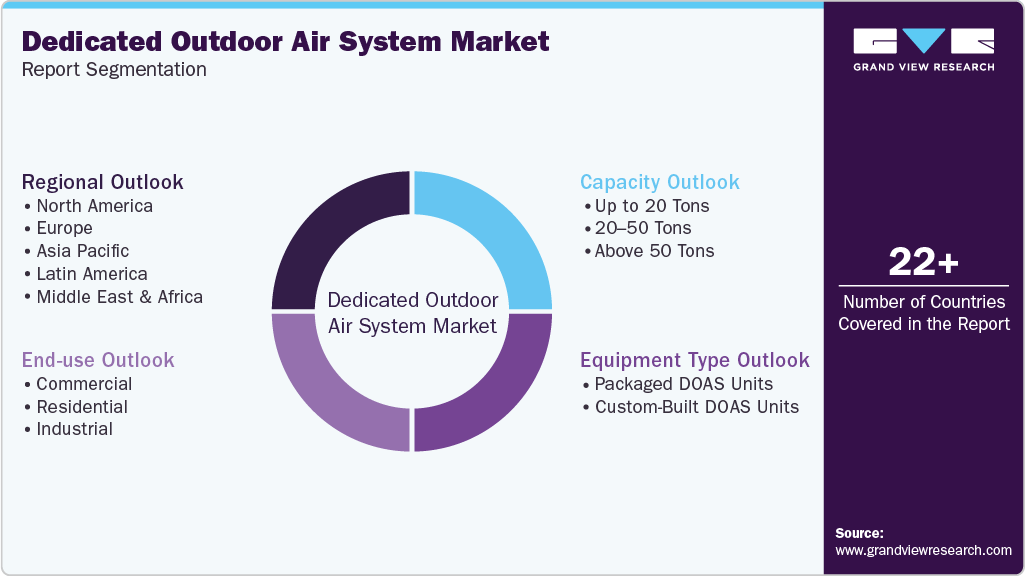
Global Dedicated Outdoor Air System Market Report SegmentationThis report forecasts revenue growth at global, regional, and country levels and provides an analysis of the latest industry trends in each of the sub-segments from 2021 to 2033. For this study, Grand View Research has segmented the global dedicated outdoor air system market report based on capacity, end-use, equipment type, and region.
 To learn more about this report, Download Free Sample Report
-
Capacity Outlook (Revenue, USD Million, 2021 - 2033)
-
Up to 20 Tons
-
20-50 Tons
-
Above 50 Tons
-
-
End-use Outlook (Revenue, USD Million, 2021 - 2033)
-
Commercial
-
Retail Shops
-
Offices
-
Healthcare Facilities
-
Hospitality
-
Schools & Educational Institutions
-
Laboratories
-
Data Centers
-
Others
-
-
Residential
-
Industrial
-
-
Equipment Type Outlook (Revenue, USD Million, 2021 - 2033)
-
Packaged DOAS Units
-
Custom-Built DOAS Units
-
-
Regional Outlook (Revenue, USD Million, 2021 - 2033)
-
North America
-
U.S.
-
Canada
-
Mexico
-
-
Europe
-
Germany
-
France
-
Italy
-
Spain
-
UK
-
-
Asia Pacific
-
China
-
India
-
Japan
-
South Korea
-
Australia
-
-
Latin America
-
Brazil
-
Argentina
-
-
Middle East and Africa
-
Saudi Arabia
-
UAE
-
-
Research Methodology
The dedicated outdoor air system market figures in this report are based on a proven research process that combines executive interviews with secondary research from proprietary databases, company filings, and recognized regulatory and institutional sources. Market size is built through value-chain sizing-reconciling supply-side and demand-side estimates-and triangulated with bottom-up and top-down approaches. Every estimate passes multiple levels of expert validation before publication, with each dedicated outdoor air system segment quantified using the revenue-capture definitions in the table below.
Segment Definition
Capacity
Revenue Capture Definition
Up to 20 Tons
Revenue generated from the sale of dedicated outdoor air systems with capacities up to 20 tons, including integrated ventilation, filtration, heat recovery, and control components for small commercial buildings, residential properties, retail stores, and light institutional applications.
20–50 Tons
Revenue generated from the sale of dedicated outdoor air systems with capacities ranging from 20 to 50 tons, including ventilation equipment, energy recovery systems, control units, and related components for medium-sized commercial, healthcare, hospitality, and educational facilities.
Above 50 Tons
Revenue generated from the sale of dedicated outdoor air systems with capacities above 50 tons, including high-capacity ventilation equipment, energy recovery units, advanced filtration systems, and intelligent controls for large commercial complexes, industrial facilities, laboratories, airports, and data centers.
Equipment Type
Revenue Capture Definition
Packaged DOAS Units
Revenue generated from the sale of factory-assembled, pre-engineered packaged dedicated outdoor air systems that integrate ventilation, filtration, heating, cooling, heat recovery, and intelligent controls into a single packaged solution for simplified installation and operation.
Custom-Built DOAS Units
Revenue generated from the sale of engineered-to-order dedicated outdoor air systems customized to meet project-specific airflow, ventilation, humidity control, filtration, and energy efficiency requirements for commercial, industrial, and institutional facilities.
End Use
Revenue Capture Definition
Commercial
Revenue generated from the sale of dedicated outdoor air systems installed across commercial buildings, including retail shops, offices, healthcare facilities, hospitality establishments, schools and educational institutions, laboratories, data centers, and other commercial facilities. This includes packaged and customized ventilation solutions integrated with filtration, heat recovery, humidity control, and intelligent building management systems.
Industrial
Revenue generated from the sale of dedicated outdoor air systems for manufacturing plants, warehouses, logistics centers, processing facilities, and other industrial buildings requiring dedicated fresh air supply, environmental control, and energy-efficient ventilation.
Residential
Revenue generated from the sale of dedicated outdoor air systems for single-family homes, apartments, condominiums, townhouses, and multi-family residential buildings to improve indoor air quality, ventilation efficiency, and occupant comfort.
Estimation Model
Layer No.
Layer Name
Key Question
Description
01
Building & Ventilation Demand Analysis
Which buildings require dedicated outdoor air systems?
Estimate the addressable demand by evaluating new construction and retrofit projects across commercial, residential, and industrial buildings, along with ventilation requirements, indoor air quality regulations, and adoption of energy-efficient HVAC systems.
02
End-use & Capacity Assessment
Which end-use industries and capacity ranges generate the highest demand?
Assess demand across commercial, residential, and industrial applications while identifying the adoption of different capacity ranges (Up to 20 Tons, 20-50 Tons, and Above 50 Tons) based on building size, occupancy, and ventilation requirements.
03
Technology & System Configuration Analysis
Which technologies and system configurations are driving DOAS adoption?
Evaluate the adoption of advanced DOAS technologies, including energy recovery ventilation, smart controls, variable-speed fans, high-efficiency filtration, humidity control, and IoT-enabled monitoring. The analysis also assesses the preference for packaged and custom-built systems based on application requirements, energy efficiency goals, and building design.
04
Revenue Estimation
What is the total revenue generated by the market?
Estimate total market revenue by consolidating sales generated from all capacity categories, equipment types, end-use industries, and regional markets, supported by manufacturer sales data, project installations, and overall industry demand trends.
Delivered Customizations
This report has been delivered with the following In-depth customizations
Client Request
Customization Delivered
Value Adds
Regional Segmentation
The report provides an in-depth regional assessment of the dedicated outdoor air system (DOAS) market across North America, Europe, Asia Pacific, Latin America, and the Middle East & Africa. It includes market size estimates, growth forecasts, country-level insights for key markets, regional demand trends, regulatory landscape, and adoption patterns across major end-use industries.
Enables clients to identify high-growth regional markets, prioritize expansion strategies, evaluate country-specific demand drivers, and align investments with regional construction activities, energy efficiency regulations, and indoor air quality initiatives.
Competitive Benchmarking
A comprehensive competitive analysis was delivered covering leading global and regional DOAS manufacturers. The report includes company profiles, product portfolio assessment, technology capabilities, strategic initiatives, market participant categorization, competitive positioning, operating strategies, strengths, and areas of differentiation across the industry.
Helps clients benchmark their competitive position, identify technology gaps, evaluate competitor strategies, recognize partnership or acquisition opportunities, and develop effective market entry and product differentiation strategies.
Opportunity Assessment
The report identifies key growth opportunities driven by increasing adoption of energy-efficient HVAC systems, expansion of smart buildings, stringent indoor air quality regulations, growth in healthcare facilities, data centers, educational infrastructure, and retrofit projects. It also highlights emerging opportunities in IoT-enabled ventilation systems, energy recovery technologies, and sustainable building developments.
Assists clients in identifying high-potential investment areas, prioritizing target applications and regions, optimizing product development roadmaps, and capitalizing on long-term industry trends to maximize revenue growth and strengthen market presence.
Frequently Asked Questions About This Report
Asia Pacific dominated with a 37.9% revenue share in 2025.
The up to 20 tons segment dominated the market, with a revenue share of 60.1% in 2025., driven by its widespread adoption across small and medium-sized commercial buildings and institutional facilities.
Packaged DOAS units segment held the largest revenue share of 74.6% in 2025 while custom-built DOAS segment is second fastest growing market.
The commercial segment led the market with the largest revenue share of 78.3% in 2025, supported by strong demand from offices, healthcare facilities, educational institutions, retail buildings, hospitality, laboratories, and data centers.
The global dedicated outdoor air system market size was estimated at USD 5.7 billion in 2025 and is estimated at USD 6.0 billion in 2026.
The global dedicated outdoor air system market is expected to grow at a CAGR of 6.5% from 2026 to 2033, reaching USD 9.3 billion by 2033.
Some of the key players operating in the global dedicated outdoor air system market include Carrier, DAIKIN INDUSTRIES Ltd., Johnson Controls, LG Electronics, DRI, DesertAire, Salleria Engineers Pvt. Ltd., Trane, SAMSUNG, XeteX, United CoolAir, AAON, Greenheck Fan Corporation, and Addison HVAC.
Key factors driving the global dedicated outdoor air system (DOAS) market include the growing demand for energy-efficient HVAC solutions and stricter regulations on indoor air quality in commercial and institutional buildings. Increasing awareness of occupant health, comfort, and sustainability in building design is further accelerating DOAS adoption worldwide.
About the Author(s)
Advanced Interior Materials Research Team
Advanced Materials · Advanced Interior MaterialsThis report was authored by the advanced interior materials research team at Grand View Research - comprising two research analysts, one senior research analyst, and one industry expert - with specialized expertise in the advanced interior materials segment of the advanced materials industry. All findings are based on proprietary advanced materials databases, executive interviews, and regulatory analysis, subject to internal peer review prior to publication.
Last Updated:
Speak to Analyst

Customize this report to your needs - add regions, segments, or data points, with 20% free customization.
Or view our licence options:


ISO 9001:2015 & 27001:2022 Certified
We are GDPR and CCPA compliant! Your transaction & personal information is safe and secure. For more details, please read our privacy policy.


