
- Home
- »
- Water & Sludge Treatment
- »
-
Degreaser Market Size, Share & Growth Report, 2026-2033GVR Report cover

Degreaser Market (2026 - 2033)
Size, Share & Trends Analysis Report By Product (Water-Based Degreasers, Solvent-Based Degreasers), By Form (Liquid Degreasers, Aerosol Degreasers), By End Use (Manufacturing, Oil & Gas), By Region, Forecasts
Market Size, 2025
$23.2BMarket Estimate, 2026
$24.2BMarket Forecast, 2033
$34.5BCAGR, 2026–2033
5.2%Degreaser Market Summary
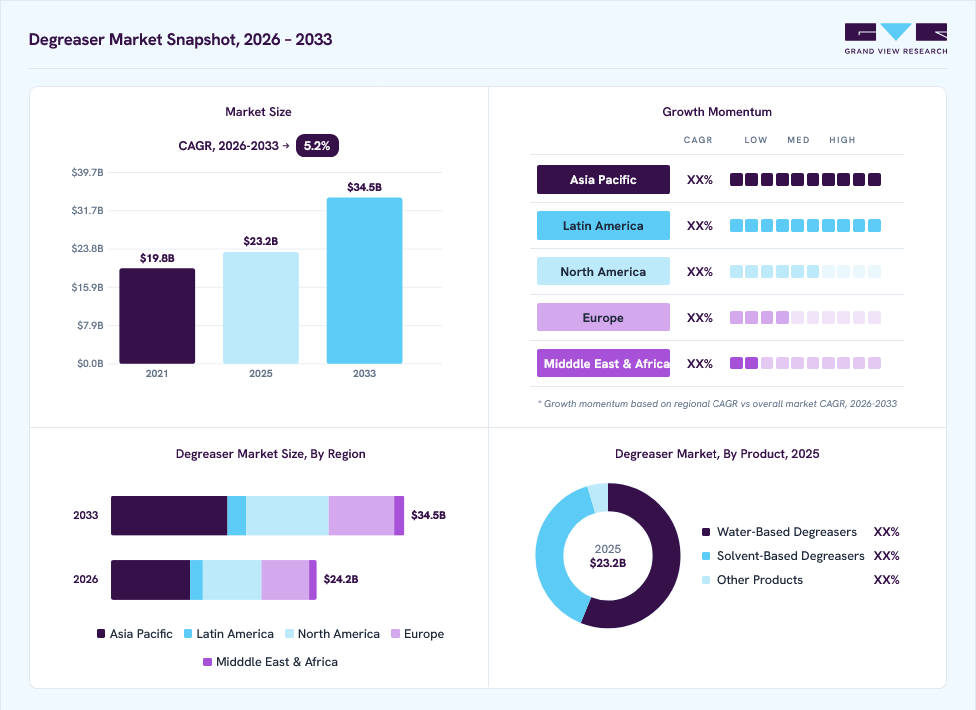
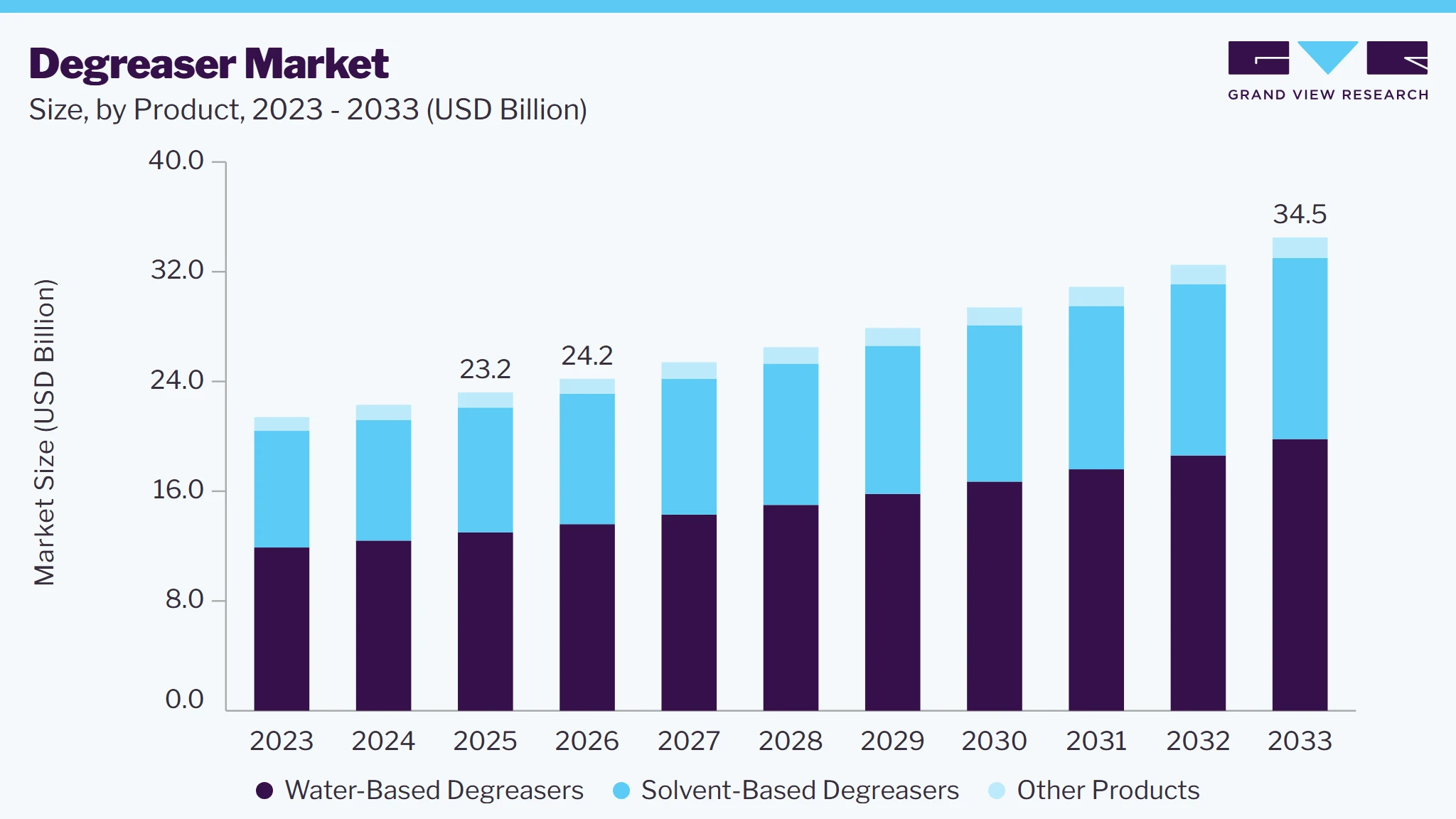
The global degreaser market size was valued at USD 23.2 billion in 2025 and is expected to grow from USD 24.2 billion in 2026 to USD 34.5 billion in 2033, at a CAGR of 5.2% from 2026 to 2033. Asia Pacific dominated the market, accounting for a revenue share of 38.2% in 2025. The global market growth is driven by expanding manufacturing activities, rising equipment maintenance requirements, and increasing demand for high-performance and environmentally compatible cleaning solutions.
 Source: Grand View Research, IR Documents, Primary Interviews, Paid DatabasesTo learn more about this report,
 Download Free Sample Report
 Key Market Trends & Insights
- By product: Water-based degreasers held the largest revenue share of 55.9% in 2025.
- By form: Liquid degreasers segment held the largest revenue share of 64.2% in 2025.
- By end use: General manufacturing held the largest revenue share of 31.8% in 2025.
Regional Highlights
- Largest regional market: Asia Pacific (38.2% revenue share, 2025)
- By country: China held the largest market share in 2025
Market Size & Forecast
- Market size in 2025: USD 23.2 Billion
- Estimated market size in 2026: USD 24.2 Billion
- Projected market size by 2033: USD 34.5 Billion
- CAGR (2026-2033): 5.2%
Three ways to get this report
Buy it, customize it, or ask a question.Ask an Analyst
A direct answer, usually in 1 working day
- AccessReport author, directly
- Reply timeWithin 1 working day
- No sales callDirect answer only
- FormatEmail reply
- CostFree, no cost
Get the Full Report
What the study covers
- FormatsPDF · Excel · Dashboard
- Timeline2026–2033 annual, 2025 base
- Coverage20+ countries, 5 regions
- Companies10+ key players profiled
Customize the Report
20% free customization
- IncludeCountries, segments, points
- TailorTo your product definition
- ExtendDeeper competitor detail
- OrA fully bespoke study
- Turnaround5–10 working days
 To learn more about this report, Download Free Sample Report
 Market Dynamics
Growth is supported by increasing factory production and the need to maintain machinery, components, and production equipment at high levels of cleanliness. Automotive, aerospace, metalworking, electronics, and precision manufacturing activities require effective removal of oils, greases, cutting fluids, and other contaminants to support product quality and operational efficiency. Environmental and occupational requirements are also influencing product development, as concerns surrounding volatile organic compound emissions and chemical exposure encourage the adoption of lower-VOC and safer formulations. However, compliance requirements can increase formulation, testing, and operational costs for manufacturers. The transition away from certain conventional solvents may also create performance challenges in demanding applications. The increasing preference for water-based, bio-based, and application-specific solutions presents opportunities for innovation. Suppliers that combine strong performance with improved environmental compatibility and worker safety are well positioned to strengthen their competitive position.
The expansion of manufacturing operations across automotive, aerospace, metalworking, machinery, and electronics industries is a key factor supporting demand. Production processes frequently generate oil, grease, cutting-fluid residues, and other contaminants that must be removed before assembly, coating, welding, or finishing. Effective surface preparation therefore remains closely linked to product quality, process consistency, and operational efficiency.
In parallel, companies are placing greater emphasis on preventive maintenance to improve asset utilization and minimize unplanned production interruptions. Regular cleaning of machinery, tools, and components can support equipment reliability and workplace efficiency. This is encouraging end users to adopt specialized formulations suited to particular contaminants, materials, and operating environments, thereby broadening the application scope across facilities.
Stringent environmental and chemical-safety requirements represent a challenge, particularly for producers relying on conventional solvent chemistries. Cleaning solvents can raise concerns related to acute and chronic toxicity, reproductive and developmental effects, neurotoxicity, and environmental fate. Consequently, manufacturers face growing pressure to assess ingredient profiles and identify alternatives that satisfy evolving safety and environmental expectations. The resulting transition can be technically and commercially demanding. Reformulating an established product requires investment in research, testing, performance validation, regulatory documentation, and customer approval. Replacing a conventional ingredient may affect evaporation rates, material compatibility, strength, or process efficiency. End users may also need to modify existing procedures or equipment when adopting alternative chemistries, increasing switching costs and slowing product substitution.
The transition toward safer chemical technologies presents a significant opportunity for manufacturers to differentiate their product offerings. Regulatory and customer expectations are increasing attention on ingredient safety, environmental impact, worker exposure, and VOC content. The U.S. Environmental Protection Agency, for example, evaluates product ingredients based on human health and environmental characteristics while also considering product performance requirements. This shift creates commercial potential for water-based, lower-VOC, bio-derived, and other advanced formulations that can deliver effective performance while addressing sustainability objectives. Suppliers that successfully balance capability with improved safety characteristics can strengthen their position in regulated and high-value applications. Innovation in specialized factory products also provides opportunities to develop premium solutions tailored to demanding manufacturing processes.
Market Concentration & Characteristics
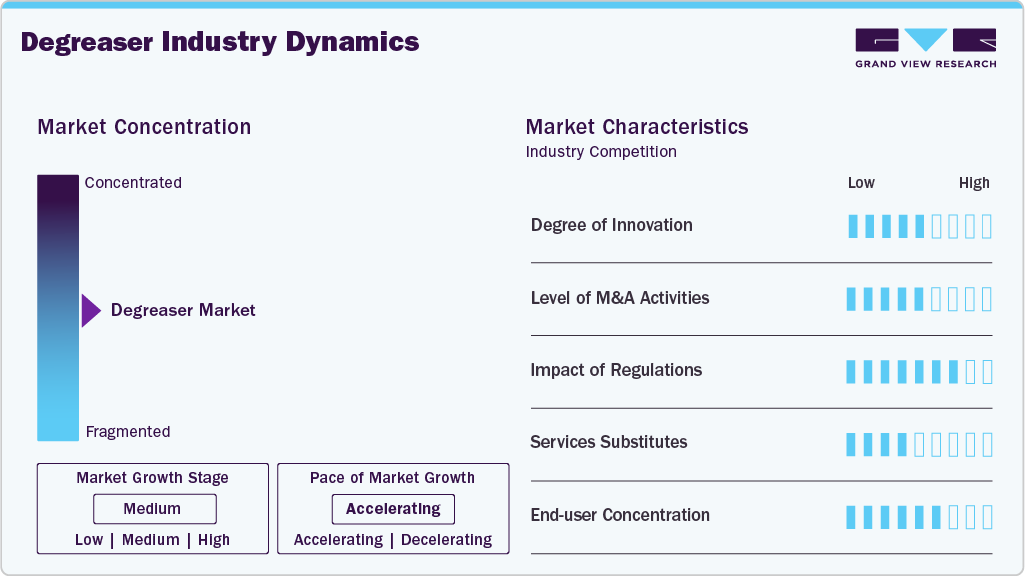
The competitive landscape is characterized by the presence of large multinational cleaning and specialty chemical companies alongside specialized manufacturers serving industrial and precision-cleaning applications. Key participants compete through formulation performance, product breadth, application expertise, regulatory compliance, technical support, and distribution capabilities. Companies such as Ecolab, Henkel, CRC Industries, Zep, WD-40, and 3M benefit from established brands and broad portfolios, while specialized players such as KYZEN focus on technically demanding applications in electronics, metal finishing, advanced packaging.
 To learn more about this report, Download Free Sample Report
 Competition is increasingly shifting beyond product efficacy toward the ability to provide solutions tailored to specific contaminants, substrates, and operating environments. Large suppliers leverage global service networks and technical resources to strengthen customer relationships, whereas niche participants differentiate through specialized chemistries and process expertise. Ecolab, for example, emphasizes the integration of technical expertise, data-driven solutions, and field service capabilities across its operations in more than 170 countries. Innovation remains a key strategic focus, particularly in environmentally responsible formulations and high-performance solutions for sensitive manufacturing processes.
Analyst Perspective
The degreaser industry is evolving from a conventional cleaning-chemical segment into a more performance- and compliance-driven business. Industrial growth and rising maintenance requirements will continue to provide a solid demand base across manufacturing applications. At the same time, sustainability expectations are accelerating investment in lower-VOC, safer, and alternative chemistries. In our view, future success will depend less on offering a generic formulation and more on delivering application-specific solutions with measurable operational value. Companies that balance cleaning efficiency, material compatibility, regulatory compliance, and sustainability are likely to gain a stronger competitive advantage.
Product Insights
Water-based degreasers dominated the degreaser industry with a revenue share of 55.9% in 2025, due to their broad applicability across manufacturing, automotive, food processing, and commercial cleaning activities. Their compatibility with a wide range of surfaces and suitability for removing oils, greases, and production residues support widespread adoption. Increasing emphasis on workplace safety and reduced VOC emissions has further strengthened their commercial position. These products also offer flexibility in dilution and application methods, making them suitable for diverse operating environments. Growing regulatory scrutiny of certain solvent chemistries has encouraged end users to shift toward aqueous alternatives where technically feasible.
The water-based degreasers segment is expected to grow at the fastest CAGR of 5.5% during the forecast period. Growth is expected to remain strong as industries increasingly prioritize safer and environmentally compatible cleaning technologies. Regulatory developments related to VOC emissions and chemical exposure are encouraging manufacturers to invest in advanced aqueous formulations with improved cleaning performance. Continued innovation is helping overcome traditional limitations related to drying time and effectiveness against heavy contaminants. Expanding manufacturing activity in emerging economies is also creating a larger application base.
Form Insights
Liquid degreasers dominated the degreaser industry with a share of 64.2% in 2025, because of their versatility across manual, spray, immersion, ultrasonic, and automated cleaning processes. They are available in both ready-to-use and concentrated formats, allowing end users to adjust dilution levels according to operational requirements. Their ease of handling and compatibility with existing industrial cleaning equipment support widespread utilization. The format is particularly suitable for large-volume applications involving machinery, components, tools, and production surfaces. Broad availability through direct suppliers, distributors, and retail channels further contributes to its strong market presence.
Gel degreasers is the fastest-growing segment, growing a CAGR of 5.9% from 2026 to 2033. The segment is gaining traction due to their ability to remain on vertical and irregular surfaces for longer periods, improving contact time with stubborn grease and grime. Their thicker consistency enables more controlled application and can reduce excessive runoff compared with conventional liquids. This makes them particularly suitable for targeted maintenance and cleaning tasks. Demand is also supported by the growing preference for convenient, high-performance products that improve application efficiency. Innovation in gel formulations is expected to broaden their use across industrial, commercial, and automotive environments.
End Use Insights
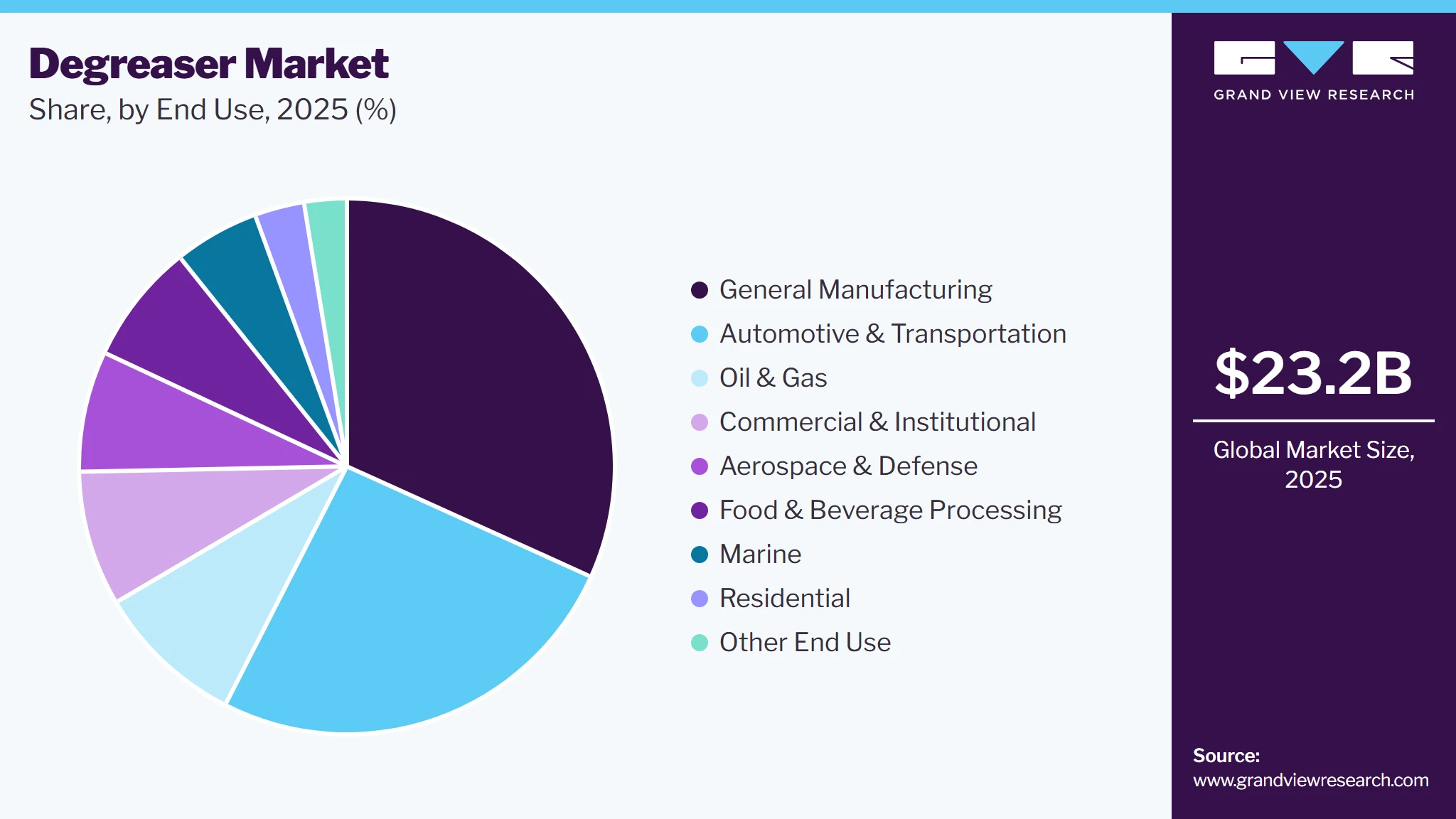
The manufacturing segment dominated the degreaser market, accounting for the largest revenue share of 31.8% in 2025. Their extensive use of machinery, metal components, tools, and production equipment that require regular cleaning and maintenance. Oils, lubricants, cutting fluids, and process residues must often be removed to maintain equipment performance and support product quality. Surface preparation requirements before coating, welding, assembly, and finishing further contribute to product consumption. The diverse nature of manufacturing industries creates demand for multiple formulation types and application methods. Growing emphasis on preventive maintenance and operational efficiency also supports sustained purchasing across production facilities.
 To learn more about this report, Download Free Sample Report
 Automotive & transportation is the fastest-growing segment, expected to grow at a CAGR of 6.5% from 2026 to 2033, The segment is expected to expand rapidly due to increasing vehicle production and the transition toward electric and technologically advanced vehicles. Automotive manufacturing requires effective cleaning during component production, machining, assembly, surface treatment, and maintenance operations. The growth of electric vehicles is also creating additional requirements for precision cleaning of battery components and electronic systems. Rising investments in transportation infrastructure and vehicle maintenance activities further support demand.
Regional Insights
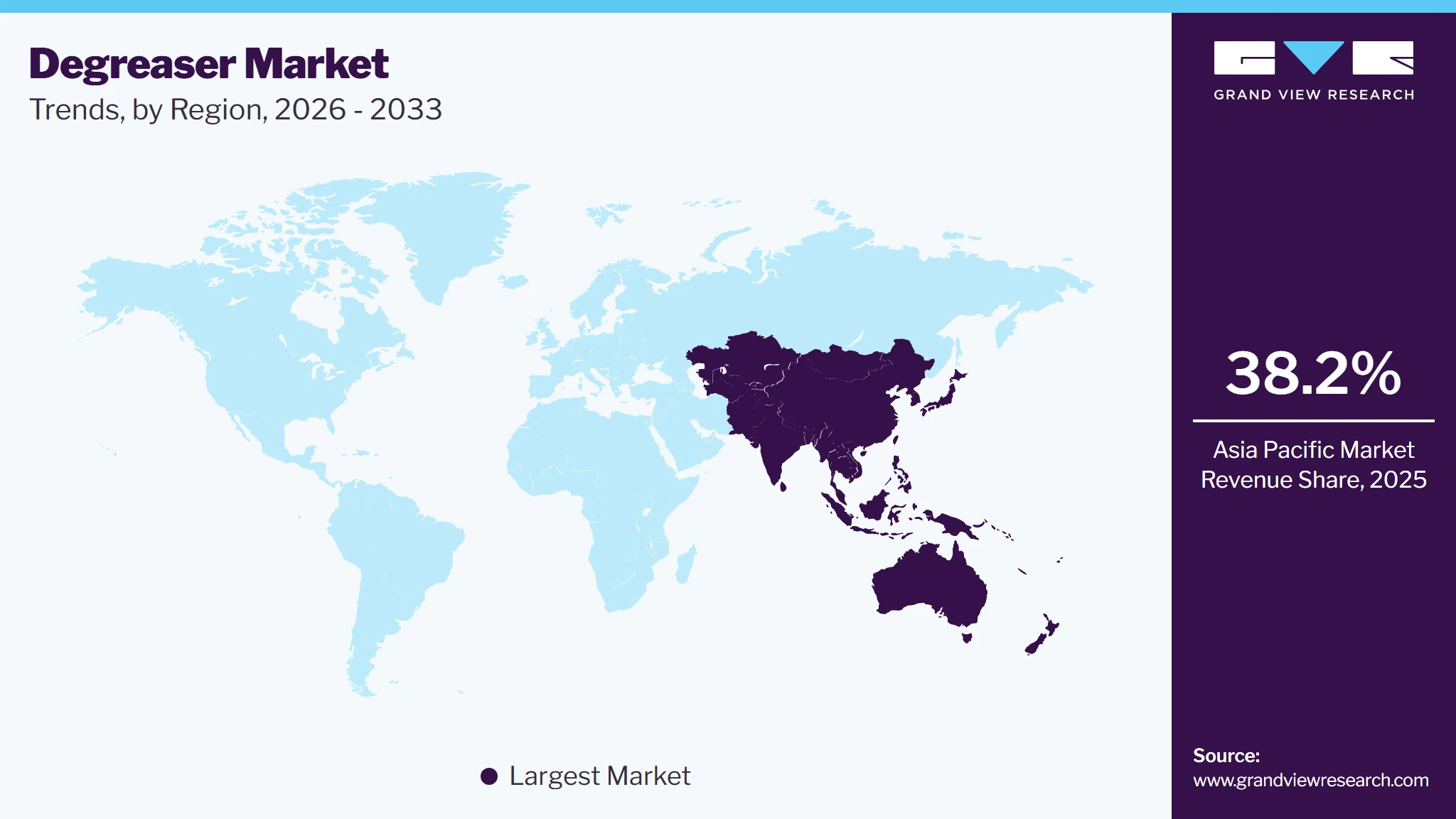
The Asia Pacific degreaser market held 38.2% revenue share in 2025, representing a strong demand center, supported by its extensive manufacturing base and continued expansion in automotive, electronics, machinery, metalworking, and consumer goods production. The region is also expected to grow at the fastest CAGR over the forecast period. Countries such as China, India, Japan, South Korea, and Southeast Asian economies provide a broad application base for solutions. The region's growing focus on production efficiency and equipment maintenance is strengthening demand across both large-scale manufacturing facilities and smaller enterprises. The competitive environment is also evolving toward higher-performance and environmentally compatible formulations.
 To learn more about this report, Download Free Sample Report
 China Degreaser Market Trends
The China degreaser market is expected to grow over the forecast period. China is a major contributor to regional consumption due to its scale in manufacturing, machinery, automotive, electronics, and chemical production. The country's transition toward high-end, intelligent, and greener manufacturing is expected to reshape product requirements. Growth in new energy vehicles, factory automation, electronics, and advanced equipment manufacturing is increasing the importance of precision and material-compatible formulations. This provides opportunities for domestic and international suppliers offering technically advanced and environmentally improved solutions.
North America Degreaser Market Trends
North America remains an important market, underpinned by established factory infrastructure and strong demand from aerospace, automotive, machinery, electronics, food processing, and maintenance operations. The region has a well-developed base of product manufacturers and MRO suppliers, supporting widespread product availability across professional and channels. Regulatory requirements play a significant role in shaping product development and purchasing decisions. In the US, solvents are used in applications including metals, electronics, and precision, while regulatory frameworks continue to evaluate chemical substitutes and emissions-related considerations.
The U.S. represents the largest contributor within the North American landscape, supported by its diverse base and substantial maintenance requirements. Manufacturing facilities across aerospace, automotive, electronics, fabricated metals, and machinery require effective removal of oils, greases, solder flux, and other production residues. The country's broad ecosystem supports demand across both routine maintenance and high-precision applications. Producers are increasingly required to balance performance with workplace safety, environmental compatibility, and waste-management considerations. For instance, the U.S. Environmental Protection Agency identifies several spent solvents used in degreasing within its hazardous-waste classification framework, increasing the importance of responsible chemical selection and disposal practices.
Europe Degreaser Market Trends
The Europe degreaser industry is characterized by a mature sector and stringent environmental standards, creating demand for technically advanced and compliant solutions. Automotive manufacturing, aerospace, machinery, metal processing, electronics, and specialty manufacturing remain important end-use sectors. Rather than competing solely in strength, suppliers increasingly differentiate through product safety, process efficiency, material compatibility, and sustainability credentials. Environmental policy is likely to remain a key influence on product development across the region. European regulatory initiatives addressing emissions and the use of organic solvents encourage manufacturers to evaluate lower-emission technologies and alternative chemistries. This regulatory environment can increase compliance costs but simultaneously creates opportunities for suppliers to develop environmentally improved formulations.
The Germany degreaser market is strategically important, due to its strong position in European manufacturing and chemicals. The country has a substantial automotive, machinery, construction, packaging, and chemical industry base, generating consistent requirements for process, surface treatment, and equipment maintenance. Germany Trade & Invest identifies the country as Europe's largest chemical production location, supported by an extensive ecosystem and strong investment in research and development. The transition toward electric mobility, automation, and semiconductor-related production is expected to create additional demand for specialized technologies. These applications often require high levels of cleanliness and careful material compatibility, supporting the adoption of premium formulations.
Middle East & Africa Degreaser Market Trends
The Middle East & Africa presents a developing opportunity, supported primarily by diversification, infrastructure development, energy-sector operations, and expanding manufacturing activities. The Gulf countries are investing in downstream industries and non-oil economic sectors, while African economies are gradually expanding their manufacturing and capabilities. These developments support requirements for equipment maintenance, metals, and facility upkeep. Demand characteristics vary considerably across the region. Oil and gas, petrochemicals, marine activities, mining, and heavy industry represent important application areas in several markets, creating demand for high-performance formulations capable of addressing heavy oils and residues.
Latin America Degreaser Market Trends
Latin America offers growth potential through its established automotive, mining, food processing, manufacturing, and energy industries. Brazil and Mexico represent particularly important economies, while other countries provide opportunities through mining, agriculture-related processing, and infrastructure development. The region presents opportunities for suppliers able to offer cost-effective solutions while addressing increasingly important safety and environmental considerations. Price sensitivity can influence purchasing behavior, particularly among smaller operators, making portfolio segmentation and efficient distribution important competitive factors. As manufacturers modernize production facilities and strengthen maintenance practices, demand for specialized and higher-value formulations is expected to expand, particularly in automotive, metalworking, and processing applications.
Key Degreaser Company Insights
Companies are strengthening their market position through portfolio expansion, formulation innovation, and targeted geographic penetration. Many are also investing in safer, high-performance, and application-specific solutions, while leveraging distributor partnerships and technical support capabilities to deepen customer engagement and access new segments.
-
A.W. Chesterton Company, Inc. is a well-established participant with a strong focus on maintenance and reliability solutions. Its cleaners and degreasers portfolio spans water-based, acid and alkaline, solvent-based, and specialty electrical cleaning technologies, supporting maintenance and production requirements across diverse environments. The company's application-focused offerings, including precision and critical-surface degreasing solutions, strengthen its position in performance-sensitive applications.
-
PETROFER is a specialized global supplier of process chemicals with a broad portfolio encompassing industrial cleaners, metalworking fluids, lubricants, rust preventatives, and heat-treatment products. Its range includes neutral, alkaline, hydrocarbon, and customized formulations designed for component cleaning and demanding manufacturing processes. With operations spanning more than 70 countries and a strong emphasis on tailored process solutions, PETROFER is well positioned to address specialized industrial degreasing requirements.
Key Degreaser Companies
The following key companies have been profiled for this study of the degreaser market.
-
REFA Chemical Industry
-
Solenis
-
Ecolab Inc.
-
Henkel AG & Co. KGaA
-
3M
-
Zep, Inc.
-
CRC Industries, Inc.
-
WD-40 Company
-
ITW Pro Brands
-
NCH Corporation
-
PETROFER Chemie H.R. Fischer GmbH + Co. KG
-
Quaker Houghton
-
A.W. Chesterton Company
-
KYZEN Corporation
Competitive Benchmarking
Operating Strategies
Competitive Edge
Weaknesses
Mature Players: Ecolab Inc.; Henkel AG & Co. KGaA; 3M; Solenis; Zep, Inc.; CRC Industries, Inc.; WD-40 Company; ITW Pro Brands; NCH Corporation; Quaker Houghton; A.W. Chesterton Company
- Maintain broad offerings across industrial, automotive, institutional, and specialty cleaning applications.
- Invest in R&D to develop safer, lower VOC, and application-specific solutions.
- Utilize established manufacturing facilities, distributor networks, and direct sales channels to expand customer reach.
- Provide technical assistance, process optimization, and customer support alongside product offerings.
- Established market presence enhances customer trust and supports long-term business relationships.
- Broad international operations provide access to diverse industries and customer bases.
- Greater financial and R&D resources support product development and regulatory compliance.
- Multiple product categories enable cross-selling opportunities and stronger customer engagement.
- Large portfolios and international operations can increase administrative and supply-chain costs.
- Complex management structures may delay decisions and product modifications.
- Established product lines may require significant investment to comply with evolving environmental standards.
- Larger overheads can reduce pricing flexibility when competing with smaller regional suppliers.
Emerging Players: REFA Chemical Industry; KYZEN Corporation; PETROFER Chemie H.R. Fischer GmbH + Co. KG
- Focus on targeted applications such as precision cleaning, metalworking, electronics, or sustainable formulations.
- Tailor solutions according to specific contaminants, substrates, and customer requirements.
- Enter high-potential regions through partnerships and specialized distribution channels.
- Develop advanced and environmentally improved formulations to establish market recognition.
- Leaner structures enable faster responses to evolving customer and industry requirements.
- Focused portfolios support deeper technical knowledge in selected applications.
- Flexible development processes allow suppliers to address specific customer challenges.
- Concentrated business models can enable efficient investment in high-growth opportunities.
- Smaller distribution networks can restrict access to international markets.
- Emerging companies may require additional time and investment to establish customer confidence.
- Restricted financial and R&D capabilities can constrain expansion and large-scale innovation.
- Dependence on specific industries or key accounts can increase exposure to demand fluctuations.
Recent Developments
- In August 2023, CRC introduced CRC Chlor-Free Universal Degreaser, a non-chlorinated industrial formulation designed to provide heavy-duty cleaning performance while complying with requirements across all 50 U.S. states. This is a directly relevant product development.
- In June 2024, Solenis acquired Aqua ChemPacs, adding pre-portioned concentrated chemical-pack technology for the preparation of cleaning and disinfection products on-site. The acquisition enhances Solenis' capabilities in sustainable and efficient chemical dispensing by reducing packaging requirements and simplifying product handling.
Degreaser Market Report Scope
Report Attribute
Details
Market size in 2025
USD 23.2 billion
Estimated market size in 2026
USD 24.2 billion
Projected market size by 2033
USD 34.5 billion
Growth rate
CAGR of 5.2% from 2026 to 2033
Base year for estimation
2025
Historical data
2021 - 2024
Forecast period
2026 - 2033
Quantitative units
Revenue in USD million/billion and CAGR from 2026 to 2033
Report coverage
Revenue forecast, volume forecast, company ranking, competitive landscape, growth factors, and trends
Segments covered
Product, form, end use, and region
Regional scope
North America; Europe; Asia Pacific; Latin America; Middle East & Africa
Country scope
U.S.; Canada; Mexico; Germany; UK; France; Italy; Spain; China; India; Japan; South Korea; Brazil; Argentina; Saudi Arabia; South Africa.
Key companies profiled
REFA Chemical Industry; Solenis; Ecolab Inc.; Henkel AG & Co. KGaA; 3M; Zep, Inc.; CRC Industries, Inc.; WD-40 Company; ITW Pro Brands; NCH Corporation; PETROFER Chemie H.R. Fischer GmbH + Co. KG; Quaker Houghton; A.W. Chesterton Company; KYZEN Corporation
Customization scope
Free report customization (equivalent up to 8 analysts’ working days) with purchase. Addition or alteration to country, regional & segment scope.
Pricing and purchase options
Avail customized purchase options to meet your exact research needs. Explore purchase options
Global Degreaser Market Report Segmentation
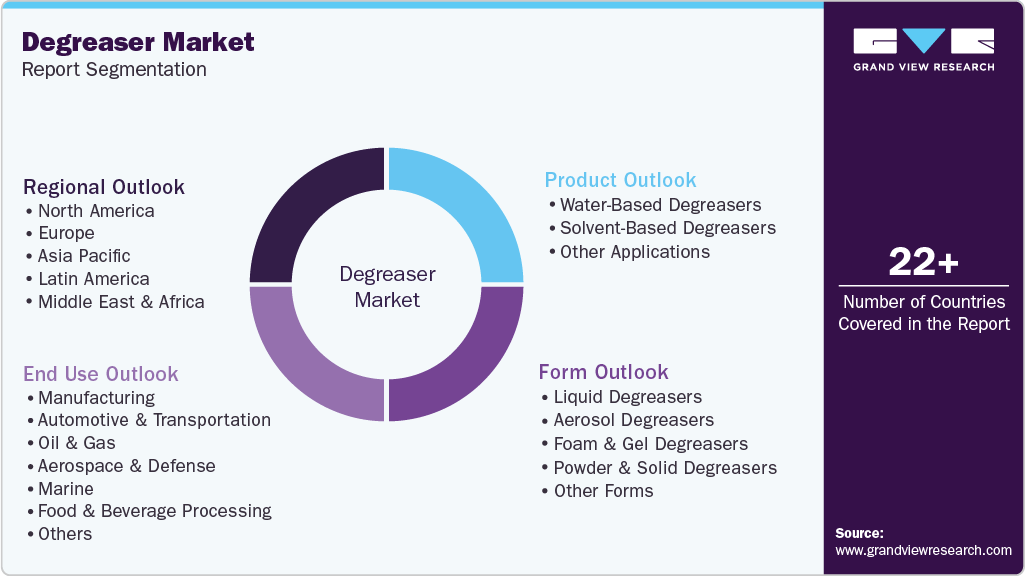
This report forecasts volume & revenue growth at the global, regional & country levels and provides an analysis of the latest industry trends in each of the sub-segments from 2021 to 2033. For this study, Grand View Research has segmented the global degreaser market report based on product, form, end use, and region:
 To learn more about this report, Download Free Sample Report
 -
Product Outlook (Revenue, USD Million/Billion, 2021 - 2033)
-
Water-Based Degreasers
-
Solvent-Based Degreasers
-
Other Applications
-
-
Form Outlook (Revenue, USD Million/Billion, 2021 - 2033)
-
Liquid Degreasers
-
Aerosol Degreasers
-
Foam & Gel Degreasers
-
Powder & Solid Degreasers
-
Other Forms
-
-
End Use Outlook (Revenue, USD Million/Billion, 2021 - 2033)
-
Manufacturing
-
Automotive & Transportation
-
Oil & Gas
-
Aerospace & Defense
-
Marine
-
Food & Beverage Processing
-
Commercial & Institutional
-
Residential
-
Other End Use
-
-
Regional Outlook (Revenue, USD Million/Billion, 2021 - 2033)
-
North America
-
U.S.
-
Canada
-
Mexico
-
-
Europe
-
UK
-
Germany
-
France
-
Italy
-
Spain
-
-
Asia Pacific
-
China
-
Japan
-
India
-
South Korea
-
-
Latin America
-
Brazil
-
Argentina
-
-
Middle East and Africa (MEA)
-
South Africa
-
Saudi Arabia
-
-
Research Methodology
The degreaser market figures in this report are based on a proven research process that combines executive interviews with secondary research from proprietary databases, company filings, and recognized regulatory and institutional sources. Market size is built through value-chain sizing-reconciling supply-side and demand-side estimates-and triangulated with bottom-up and top-down approaches. Every estimate passes multiple levels of expert validation before publication, with each degreaser segment quantified using the revenue-capture definitions in the table below.
Segment Definition
Segment - Product
Revenue capture definition
Water-Based Degreasers
Revenue is derived from aqueous formulations used to remove oils, greases, lubricants, and process residues from equipment and surfaces. Demand is supported by their lower VOC profile, worker-safety advantages, and suitability for manufacturing, automotive, and institutional cleaning applications.
Solvent-Based Degreasers
Commercial value is generated through products formulated with organic solvents that provide rapid evaporation and strong removal of heavy oils, waxes, adhesives, and persistent contaminants. Their use is particularly significant in precision cleaning, metalworking, maintenance, and applications requiring minimal water exposure.
Other Applications
Income arises from specialized alkaline, acidic, emulsion-based, and hybrid chemistries developed for specific substrates and contamination types. Higher-value opportunities are associated with formulations offering corrosion protection, material compatibility, or enhanced performance under demanding operating conditions.
Segment - Form
Revenue capture definition
Liquid Degreasers
Sales are generated from ready-to-use and concentrated liquids supplied for manual, spray, immersion, and automated cleaning processes. Their versatility across industrial facilities and maintenance operations supports broad commercial adoption.
Aerosol Degreasers
Revenue comes from pressurized products designed for convenient, targeted application on machinery, electrical components, tools, and difficult-to-access areas. Demand benefits from portability, controlled dispensing, and rapid cleaning performance.
Foam & Gel Degreasers
Commercial returns are associated with high-viscosity formulations that adhere to vertical or irregular surfaces, extending contact time and improving cleaning effectiveness. These products are used where controlled application and reduced runoff are important.
Powder & Solid Degreasers
Value is created through powdered, granular, tablet, and other solid formats used primarily in dilution-based and industrial cleaning systems. Advantages related to storage efficiency, transportation, and concentration flexibility contribute to their adoption.
Other Forms
Additional revenue is derived from wipes, pre-moistened formats, pods, concentrates, and other specialized delivery systems developed for specific operational requirements. Product differentiation and convenience support opportunities within professional and maintenance-oriented channels.
Segment - End Use
Revenue capture definition
Manufacturing
Spending is driven by the need to clean machinery, fabricated components, tools, and production equipment affected by oils, lubricants, cutting fluids, and process residues. Surface preparation requirements before coating, welding, assembly, or finishing further support consumption.
Automotive & Transportation
Commercial demand stems from vehicle production, component manufacturing, repair, and maintenance activities. Applications include engine and parts cleaning, removal of machining fluids, and preparation of surfaces during manufacturing and servicing.
Oil & Gas
Revenue is supported by maintenance requirements across drilling, refining, processing, and storage operations, where equipment can accumulate hydrocarbons, lubricants, and heavy industrial residues. High-performance formulations are particularly relevant in demanding operating environments.
Aerospace & Defense
Higher-value demand is generated by stringent cleanliness requirements for aircraft components, engines, precision parts, and defense equipment. Material compatibility and reliable removal of processing contaminants are key purchasing considerations.
Marine
Sales are associated with vessel maintenance, engine-room cleaning, machinery servicing, and removal of oils and grease from operational equipment. Marine-grade solutions can provide additional value where corrosion protection and environmental considerations are important.
Food & Beverage Processing
Demand arises from cleaning production machinery, processing equipment, and areas exposed to edible oils and other organic residues. Product selection is influenced by hygiene standards, operational safety, and compatibility with food-processing environments.
Commercial & Institutional
Revenue is generated through facility maintenance across offices, hospitality establishments, healthcare settings, educational institutions, and public buildings. Kitchen equipment, maintenance areas, and high-use facilities represent important application points.
Residential
Consumer expenditure is linked to household applications involving kitchen appliances, garages, tools, grills, and other surfaces exposed to grease and oil deposits. Convenience, ease of use, and safety characteristics influence purchasing decisions.
Other End Use
Incremental demand originates from sectors such as electronics, railways, construction, power generation, and general maintenance services. Specialized cleaning requirements across these activities create opportunities for application-specific and high-performance offerings.
Estimation Model
Layer Name
Key Question
Description
Raw Material & Production Layer
What forms the supply base?
Identify the solvents, surfactants, builders, alkaline agents, emulsifiers, corrosion inhibitors, chelating agents, fragrances, water, and bio-based ingredients used in formulation. Assess raw material availability, supplier networks, chemical processing capabilities, blending operations, batch and continuous production systems, aerosol filling, packaging infrastructure, manufacturing capacity, quality-control procedures, and regulatory compliance requirements supporting domestic and international supply.
Application Adoption Layer
Where are degreasers utilized?
Evaluate adoption across automotive, aerospace, metalworking, machinery, electronics, food processing, marine, oil & gas, and general industrial maintenance. Usage varies according to the need for surface preparation, equipment cleaning, component maintenance, removal of oils and lubricants, and elimination of production residues. Uptake is influenced by manufacturing activity, hygiene standards, preventive maintenance practices, workplace safety requirements, and the growing preference for environmentally compatible formulations.
Consumption Intensity Layer
How extensively are degreaser consumed?
Analyze usage intensity according to industry, facility size, cleaning process, type and level of contamination, application method, and cleaning frequency. The assessment considers production volumes, maintenance schedules, equipment utilization, manual versus automated cleaning systems, concentration and dilution requirements, and the relative consumption of water-based, solvent-based, and specialty formulations across end-use environments.
Revenue Layer
How is market revenue generated?
Revenue is generated through the sale of industrial, commercial, automotive, and specialty cleaning formulations through direct sales, distributors, MRO suppliers, and retail channels. Growth is supported by premium application-specific products, sustainable chemistries, concentrated formulations, value-added technical services, geographic expansion, portfolio diversification, and increasing demand from high-performance manufacturing and equipment-maintenance activities.
Delivered Customizations
This report has been delivered with the following In-depth customizations
Client Request
Customization Delivered
Value Adds
Regional segmentation
The assessment provides country-level market sizing and forecasts, supported by analysis of manufacturing output, industrial activity, automotive and aerospace production, metalworking operations, maintenance requirements, regulatory frameworks, chemical manufacturing infrastructure, raw-material availability, import-export activity, and distribution networks. It evaluates demand across key end-use sectors while considering industrialization trends, environmental regulations, workplace safety requirements, equipment maintenance practices, and the transition toward lower-VOC and sustainable formulations across individual countries.
Supports geographic expansion, distributor selection, manufacturing-site planning, sourcing strategies, and investment prioritization by identifying countries with strong industrial bases, expanding manufacturing activities, established chemical supply chains, favorable business conditions, and attractive demand potential.
Opportunity Assessment
Comprehensive evaluation of emerging opportunities across water-based formulations, solvent alternatives, bio-based products, low-VOC technologies, concentrated solutions, precision cleaning, and application-specific offerings. The assessment examines sustainability requirements, industrial automation, growth in advanced manufacturing, tightening chemical regulations, changing maintenance practices, technological advancements, and increasing demand for high-performance surface-cleaning solutions across major regions.
Helps identify high-potential applications, product categories, customer segments, and geographic markets by assessing shifts in industrial production, cleaning requirements, technology adoption, regulatory developments, and purchasing priorities. The findings support portfolio diversification, formulation development, capacity investments, strategic collaborations, channel partnerships, and market-entry planning.
Competitive Benchmarking
Comparative assessment of leading manufacturers based on product portfolios, formulation expertise, manufacturing footprint, innovation capabilities, application coverage, geographic presence, regulatory compliance, technical support, R&D capabilities, strategic partnerships, acquisitions, and expansion initiatives. The benchmarking also evaluates sustainable product development, specialty chemistries, supply reliability, customer relationships, distribution strength, and the ability to provide tailored solutions for diverse industrial operating environments.
Enables companies to evaluate their competitive positioning, technical capabilities, portfolio gaps, operational strengths, and differentiation opportunities against multinational and specialized suppliers. The insights support decisions related to new product development, formulation enhancement, geographic expansion, manufacturing optimization, strategic partnerships, acquisitions, customer engagement, and long-term business positioning.
Frequently Asked Questions About This Report
The global degreaser market is expected to grow at a compound annual growth rate of 5.2% from 2026 to 2033 to reach USD 34.5 million by 2033.
The global degreaser market size was estimated at USD 23.2 billion in 2025 and is expected to reach USD 24.2 billion in 2026.
Liquid degreasers dominated with a share of 64.2% in 2025, because of their versatility across manual, spray, immersion, ultrasonic, and automated cleaning processes. They are available in both ready-to-use and concentrated formats, allowing end users to adjust dilution levels.
Asia Pacific represented 38.2% of revenue in 2025, representing a strong demand center, supported by its extensive manufacturing base and continued expansion in automotive, electronics, machinery, metalworking, and consumer goods production
The market is primarily driven by expanding industrial and manufacturing activities, which increase the need for effective equipment maintenance, component cleaning, and surface preparation. The rising demand for high-performance and environmentally compatible formulations is supporting product innovation and adoption across diverse end-use industries.
Some of the key players operating in the degreaser market include REFA Chemical Industry; Solenis; Ecolab INc.; Henkel AG & Co. KGaA; 3M; Zep, Inc.; CRC Industries, Inc.; WD-40 Company; ITW Pro Brands; NCH Corporation; PETROFER Chemie H.R. Fischer GmbH + Co. KG; Quaker Houghton; A.W. Chesterton Company; KYZEN Corporation.
Water-based degreasers dominated with a revenue share of 55.9% in 2025, due to their broad applicability across manufacturing, automotive, food processing, and commercial cleaning activities.
General manufacturing held the largest share of 31.8% in 2025. Their extensive use of machinery, metal components, tools, and production equipment that require regular cleaning and maintenance.
Gel degreasers is the fastest growing, with a CAGR of 5.9% from 2026 to 2033. The segment is gaining traction due to their ability to remain on vertical and irregular surfaces for longer periods, improving contact time with stubborn grease and grime.
About the Author(s)
Water & Sludge Treatment Research Team
Bulk Chemicals · Water & Sludge TreatmentThis report was authored by the water & sludge treatment research team at Grand View Research - comprising two research analysts, one senior research analyst, and one industry expert - with specialized expertise in the water & sludge treatment segment of the bulk chemicals industry. All findings are based on proprietary bulk chemicals databases, executive interviews, and regulatory analysis, subject to internal peer review prior to publication.
Last Updated:
Speak to Analyst

Customize this report to your needs - add regions, segments, or data points, with 20% free customization.
Or view our licence options:


ISO 9001:2015 & 27001:2022 Certified
We are GDPR and CCPA compliant! Your transaction & personal information is safe and secure. For more details, please read our privacy policy.


