
- Home
- »
- Clinical Diagnostics
- »
-
Digital PCR Market Size, Share & Trends Report, 2026-2033GVR Report cover

Digital PCR Market (2026 - 2033)
Size, Share & Trends Analysis Report By Product (Instruments & Systems, Reagents & Consumables, Software & Services), By Technology, By Application, By End Use, By Region, And Segment Forecasts
Market Size, 2025
$1.3BMarket Estimate, 2026
$1.5BMarket Forecast, 2033
$4.1BCAGR, 2026–2033
15.2%Digital PCR Market Summary
The global digital PCR market size was valued at USD 1.3 billion in 2025 and is projected to grow from USD 1.5 billion in 2026 to USD 4.1 billion by 2033, growing at a CAGR of 15.2% from 2026 to 2033. North America dominated the market, accounting for a revenue share of 41.2% in 2025. Market growth is primarily driven by the growing adoption of precision medicine and molecular diagnostics, where digital PCR is increasingly used for highly sensitive and absolute quantification of nucleic acids, rare mutation detection, minimal residual disease assessment, and copy number variation analysis.
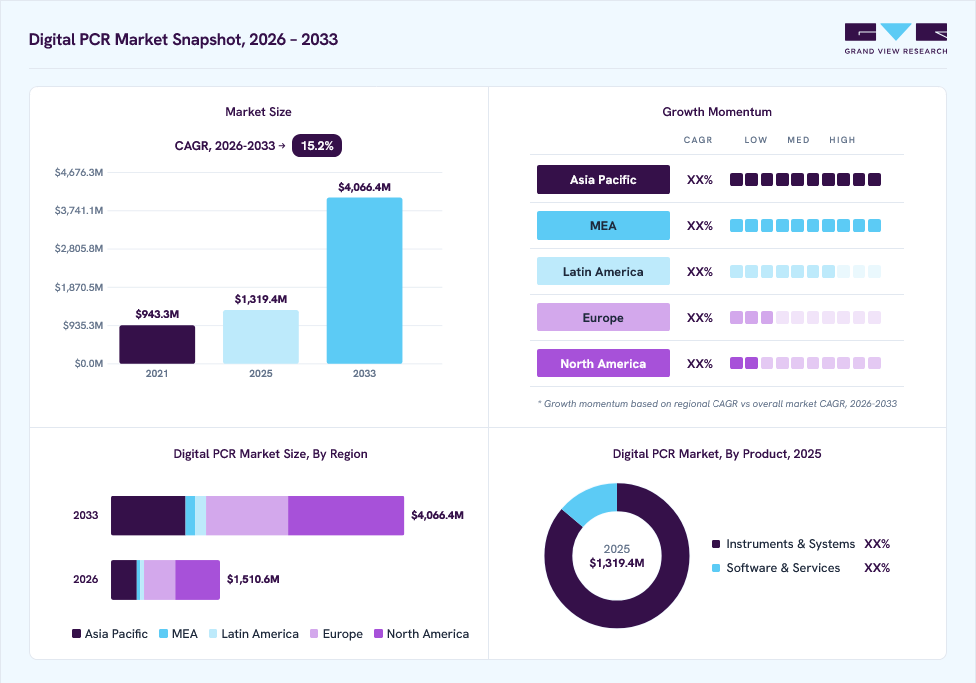 Source: Grand View Research, IR Documents, Primary Interviews, Paid DatabasesTo learn more about this report,
 Download Free Sample Report
 Key Market Trends & Insights
- By product: Reagents & Consumables segment led the market with the largest revenue share of 58.2% in 2025.
- By technology: Droplet-based dPCR segment led the market with the largest revenue share of 65.0% in 2025.
- By application: Research segment led the market with the largest revenue share 38.1% in 2025.
- By end use: Academic & Research Institutes segment led the market with the largest revenue share of 34.2% in 2025.
Regional Highlights
- Largest regional market: North America (41.2% revenue share, 2025)
- Fastest-growing regional market: Asia Pacific (highest CAGR, 2026-2033)
- By country: The U.S. held the largest market share in 2025.
Market Size & Forecast
- Market size in 2025: USD 1.3 Billion
- Estimated market size in 2026: USD 1.5 Billion
- Projected market size by 2033: USD 4.1 Billion
- CAGR (2026-2033): 15.2%
Three ways to get this report
Buy it, customize it, or ask a question.Ask an Analyst
Analyst response in 1 business day
- AccessReport author, directly
- Reply timeWithin 1 working day
- No sales callDirect answer only
- FormatEmail reply
- CostFree, no cost
Get the Full Report
What the study covers
- FormatsPDF · Excel · Dashboard
- Timeline2026–2033 annual, 2025 base
- Coverage20+ countries, 5 regions
- Companies10+ key players profiled
Customize the Report
20% free customization
- IncludeCountries, segments, points
- TailorTo your product definition
- ExtendDeeper competitor detail
- OrA fully bespoke study
- Turnaround5–10 working days
 To learn more about this report, Download Free Sample Report
 Market Dynamics
The digital PCR market is primarily driven by the growing demand for highly sensitive molecular diagnostic technologies capable of delivering absolute nucleic acid quantification with exceptional precision and reproducibility. Unlike conventional PCR methods, digital PCR enables accurate detection of low-frequency genetic variants without requiring standard calibration curves, making it an essential tool for oncology, infectious disease diagnostics, rare mutation analysis, genetic disorder screening, and transplant monitoring. The expanding adoption of precision medicine, liquid biopsy, and companion diagnostics has further strengthened demand for dPCR platforms, as healthcare providers and researchers increasingly rely on highly accurate molecular testing for disease detection and therapeutic decision-making. In addition, continued investments in genomics research, expanding molecular diagnostic infrastructure, and the growing emphasis on personalized healthcare are supporting broader integration of digital PCR technologies across clinical and research settings, thereby driving sustained growth of the global digital PCR market.
The continuous introduction of advanced digital PCR platforms by leading market participants is further accelerating technology adoption by enhancing workflow efficiency, scalability, and analytical performance. Manufacturers are increasingly focusing on high-throughput systems, multiplexing capabilities, and automated data analysis to address the evolving requirements of clinical laboratories, academic institutions, and biopharmaceutical companies. For instance, in July 2025, Bio-Rad Laboratories expanded its digital PCR portfolio by launching the QX Continuum and QX700 Droplet Digital PCR platforms following the integration of Stilla Technologies. The newly introduced platforms offer improved multiplexing capability, higher throughput, and streamlined workflows, enabling laboratories to perform large-scale molecular analyses with greater accuracy and operational efficiency. Such continuous product innovation is strengthening the commercial adoption of digital PCR technologies and supporting the long-term expansion of the digital PCR market.
The widespread adoption of digital PCR technologies is restrained by their high capital investment requirements and the complexity associated with integrating advanced molecular testing platforms into routine laboratory workflows. Compared to conventional and real-time PCR systems, digital PCR instruments require specialized partitioning technologies, dedicated consumables, advanced analytical software, and skilled personnel, significantly increasing the overall cost of ownership. In addition, laboratories must invest in instrument validation, workflow optimization, staff training, and quality assurance programs before implementing dPCR for clinical or research applications. These financial and operational challenges are particularly significant for small diagnostic laboratories, academic institutions with limited research budgets, and healthcare facilities in emerging economies, where affordability remains a critical factor influencing purchasing decisions.
Furthermore, the lack of standardized testing protocols and harmonized regulatory frameworks across different laboratories continues to limit the broader clinical adoption of digital PCR. Variations in assay design, partitioning methodologies, data interpretation, and reporting practices can affect result comparability between institutions, creating challenges for routine clinical implementation and multicenter research studies. Although technological advancements have improved automation and analytical performance, many digital PCR assays still require extensive validation before being adopted for regulated diagnostic applications. Consequently, healthcare providers and laboratories often continue to rely on well-established real-time PCR platforms that offer lower implementation costs, standardized workflows, and widespread regulatory acceptance. These factors collectively slow the pace of digital PCR adoption, particularly in cost-sensitive healthcare systems and resource-constrained research environments.
The growing adoption of precision medicine and advanced molecular diagnostics is creating substantial opportunities for the digital PCR market. As healthcare systems increasingly shift toward personalized treatment approaches, there is rising demand for technologies capable of delivering highly accurate absolute nucleic acid quantification for biomarker validation, minimal residual disease monitoring, liquid biopsy analysis, and companion diagnostics. In parallel, expanding investments in cell and gene therapy, regenerative medicine, and advanced genomics research are broadening the application scope of digital PCR beyond traditional research laboratories. Pharmaceutical and biotechnology companies are increasingly incorporating dPCR into drug discovery, bioprocess monitoring, viral vector quantification, and quality control workflows, creating new commercial opportunities for instrument manufacturers and assay developers. Furthermore, continuous advancements in automation, multiplexing capabilities, and workflow simplification are expected to improve accessibility and encourage wider adoption across both clinical and research environments.
The expansion of integrated digital PCR ecosystems by leading industry participants is further strengthening the market's long-term growth potential by enabling broader adoption across emerging molecular applications. Companies are increasingly investing in comprehensive solutions that combine instruments, software, assays, and automated workflows to improve laboratory productivity and analytical efficiency. For instance, in June 2026, QIAGEN expanded its QIAcuity digital PCR ecosystem by introducing new gene expression assays, high-multiplex PCR capabilities, enhanced workflow automation, and QIAcuity Software 3.5 with automated analysis and reporting. The expansion also strengthened the company's cell and gene therapy quality control portfolio and laboratory automation capabilities through Hamilton integration, enabling broader adoption of digital PCR across research, biopharmaceutical, and clinical research applications while supporting the transition from conventional qPCR to scalable digital PCR workflows. Such integrated platform enhancements are expected to create significant opportunities for market participants by expanding the clinical and commercial utilization of digital PCR technologies across rapidly growing precision medicine and biopharmaceutical markets.
Market Concentration & Characteristics
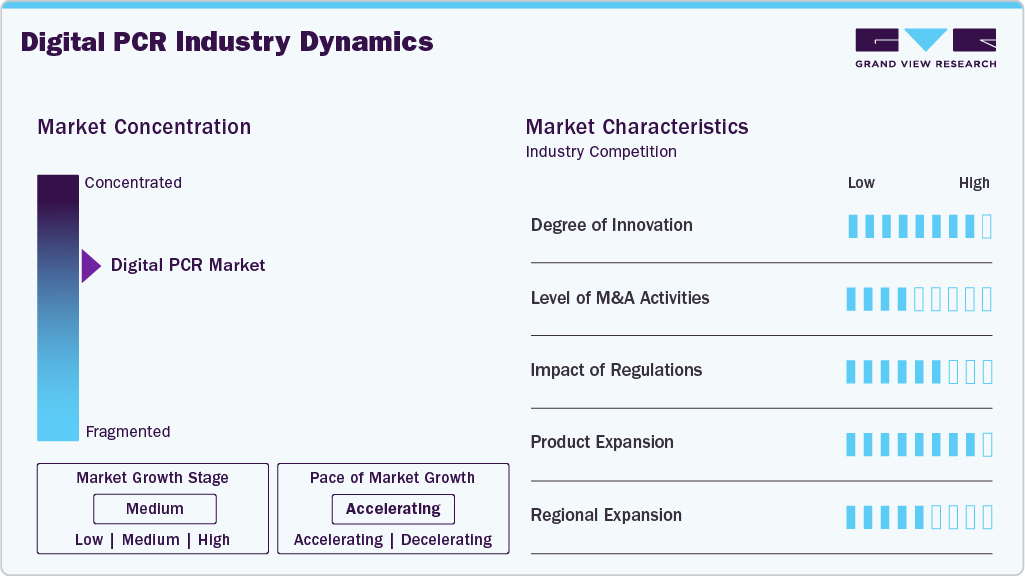
The digital PCR market demonstrates a high degree of innovation, driven by continuous advancements in partitioning technologies, multiplexing capabilities, automation, software analytics, and integrated molecular workflows. Manufacturers are focusing on improving analytical sensitivity, throughput, workflow standardization, and ease of use to expand digital PCR adoption across research, clinical diagnostics, precision medicine, and biopharmaceutical manufacturing. Innovation is also accelerating through the development of high-multiplex assays, automated data interpretation, and scalable platforms capable of supporting large-volume testing while maintaining absolute quantification accuracy. For instance, in June 2024, Stilla Technologies expanded its Nio digital PCR product family by introducing new system configurations based on its crystal-based partitioning technology, providing laboratories with greater flexibility, enhanced scalability, and improved workflow efficiency for research and clinical molecular testing applications.
The digital PCR market exhibits a moderate level of mergers and acquisitions (M&A) activity, driven by the need to strengthen technology capabilities, expand molecular diagnostics portfolios, and accelerate innovation in precision medicine. Leading companies are strategically acquiring specialized digital PCR developers to enhance expertise in high-sensitivity nucleic acid detection, broaden applications across oncology, infectious diseases, liquid biopsy, and cell and gene therapy, and strengthen their global competitive position. For instance, in February 2025, Bio-Rad Laboratories announced the acquisition of Stilla Technologies to expand its digital PCR portfolio and integrate advanced partitioning technologies, reinforcing its leadership and accelerating commercialization opportunities across research and clinical diagnostics.
 To learn more about this report, Download Free Sample Report
 Regulatory frameworks play a critical role in shaping the digital PCR (dPCR) market by establishing standards for analytical performance, clinical validation, quality management, and laboratory compliance. Regulatory approvals from agencies such as the U.S. FDA, the European Commission under the IVDR, and other national authorities enhance the credibility and clinical adoption of digital PCR platforms in diagnostic applications. At the same time, evolving regulatory requirements for assay validation, software documentation, and quality assurance increase development timelines and compliance costs, creating barriers for new market entrants while strengthening confidence in commercially approved dPCR solutions.
The digital PCR market is witnessing a high level of product expansion, with manufacturers broadening their portfolios to offer comprehensive solutions comprising instruments, assays, consumables, software, and workflow automation. These expansion strategies are enabling laboratories to improve testing efficiency, increase throughput, and address a wider range of molecular diagnostic and research applications. For instance, in July 2025, Bio-Rad Laboratories expanded its Droplet Digital PCR portfolio by introducing an integrated portfolio comprising new instruments, more than 400,000 assays, consumables, software, and services following the integration of Stilla Technologies. This portfolio expansion strengthened Bio-Rad's end-to-end digital PCR offering and enhanced its ability to support research, clinical diagnostics, and biopharmaceutical workflows.
The digital PCR market is witnessing a moderate to high level of regional expansion, as leading manufacturers strengthen their commercial presence through broader product availability, expanded distribution networks, localized technical support, and strategic investments across both developed and emerging markets. Companies are increasingly targeting regions with rising investments in precision medicine, molecular diagnostics, genomics research, and biopharmaceutical manufacturing to capitalize on the growing demand for advanced nucleic acid analysis technologies. In addition, expanding healthcare infrastructure, increasing government support for genomic research, and growing adoption of personalized medicine are encouraging market participants to strengthen their regional presence, improve customer accessibility, and accelerate the commercialization of digital PCR solutions worldwide.
Analyst Perspective
The digital PCR market is positioned for robust long-term growth, driven by expanding applications in precision medicine, oncology, infectious disease diagnostics, cell and gene therapy, and biopharmaceutical quality control. The technology's superior analytical sensitivity, absolute nucleic acid quantification, and ability to detect low-abundance genetic targets continue to differentiate it from conventional PCR methods. Growing investments in genomics research, laboratory automation, and personalized healthcare are accelerating market adoption across both research and clinical settings. While high instrument costs and regulatory complexities remain key challenges, continuous product innovation, expanding assay portfolios, and increasing commercialization efforts are expected to create substantial growth opportunities throughout the forecast period.
Product Insight
The reagents & consumables segment dominated the market, accounting for 58.2% of the market share in 2025. The segment's leadership is driven by the recurring demand for assay kits, master mixes, primers, probes, nanoplates, partitioning reagents, and other consumables required for every digital PCR workflow. Unlike instruments, these products generate consistent revenue through repeat purchases across research laboratories, clinical diagnostics, pharmaceutical and biotechnology companies, contract research organizations, and environmental testing facilities. The growing adoption of precision medicine, expanding molecular testing volumes, and increasing use of digital PCR for oncology, infectious disease detection, inherited disease analysis, and cell and gene therapy continue to support sustained demand for high-quality consumables. For instance, in September 2024, QIAGEN expanded its QIAcuity digital PCR portfolio by launching 100 new digital PCR assays supporting cancer research, inherited disease analysis, infectious disease detection, food safety, and environmental testing. The expanded assay portfolio strengthened the company's reagents offering, broadened application coverage across multiple end-use sectors, and reinforced the recurring revenue potential of consumables within the global digital PCR market.
The software & services segment is anticipated to register the fastest CAGR during the forecast period, driven by the increasing demand for automated data analysis, workflow standardization, and digital laboratory management solutions. As digital PCR testing expands across clinical diagnostics, genomics research, precision medicine, and biopharmaceutical manufacturing, laboratories are increasingly adopting advanced software platforms to streamline data interpretation, improve result reproducibility, and reduce manual intervention. The growing integration of digital PCR systems with laboratory information management systems (LIMS), cloud-based data management platforms, and automated reporting tools is further enhancing laboratory efficiency and scalability. In addition, rising regulatory expectations for standardized workflows, data traceability, and quality assurance are encouraging laboratories to invest in software upgrades, technical support, validation services, and workflow optimization solutions, positioning the Software & Services segment for robust long-term growth.
Technology Insights
The droplet-based dPCR segment dominated the global market, accounting for 65.0% of the revenue share in 2025. The segment's leadership is attributed to its superior analytical sensitivity, high partitioning efficiency, precise absolute nucleic acid quantification, and robust multiplexing capabilities, making it the preferred technology across oncology, infectious disease diagnostics, liquid biopsy, genetic research, and cell and gene therapy applications. Its established commercial availability, broad assay compatibility, and widespread adoption in clinical and research laboratories have further strengthened market demand. For instance, in April 2024, Bio-Rad Laboratories and Oncocyte entered a strategic collaboration to develop and commercialize transplant monitoring solutions utilizing Bio-Rad's Droplet Digital PCR (ddPCR) technology. The collaboration reinforced the expanding clinical utility of droplet-based digital PCR while supporting its adoption in high-precision molecular diagnostics and transplant monitoring applications.
The chip/chamber-based dPCR segment is poised to emerge as the fastest-growing segment of the Digital PCR (dPCR) Market and is projected to expand at a CAGR of 16.5% over the forecast period. Growth is driven by the increasing demand for compact, user-friendly, and cost-efficient digital PCR platforms that deliver high analytical sensitivity with simplified workflows. These systems are gaining wider adoption across translational research, clinical diagnostics, and biopharmaceutical applications owing to their efficient sample partitioning, lower reagent consumption, and scalability for routine molecular testing. For instance, in May 2025, QIAGEN entered a commercial partnership with ID Solutions to expand the availability of oncology assays on its QIAcuity digital PCR platform across European research markets. The collaboration strengthened the platform's application portfolio, accelerated the adoption of advanced digital PCR technologies in precision oncology research, and supported the commercialization of innovative chip-based digital PCR solutions across research laboratories.
Application Insights
The research segment accounted for the largest revenue share of 38.1% in 2025 in the global market. The segment's dominance is driven by the extensive adoption of digital PCR across genomics, molecular biology, oncology, infectious disease research, biomarker discovery, and translational medicine. Academic and research institutions, pharmaceutical and biotechnology companies, and contract research organizations increasingly rely on digital PCR for absolute nucleic acid quantification, rare mutation detection, copy number variation analysis, gene expression studies, and assay development. Growing investments in precision medicine, expanding genomics research initiatives, and increasing funding for cell and gene therapy research continue to strengthen demand for high-sensitivity molecular analysis technologies. Furthermore, the superior analytical accuracy, reproducibility, and ability to detect low-abundance genetic targets position digital PCR as a preferred platform for advanced life science research, reinforcing the segment's leadership in the global digital PCR market.
The biopharma segment is anticipated to register the fastest CAGR during the forecast period, driven by the expanding adoption of digital PCR in biopharmaceutical research, biologics development, and cell and gene therapy manufacturing. Digital PCR is increasingly utilized for viral vector quantification, residual host cell DNA analysis, copy number determination, and quality control throughout bioprocess development and manufacturing. The growing pipeline of gene therapies, monoclonal antibodies, and advanced biologics, coupled with stringent regulatory requirements for analytical accuracy and product quality, is accelerating demand for high-sensitivity molecular analysis technologies. Furthermore, increasing investments in biopharmaceutical manufacturing capacity and the adoption of advanced analytical workflows are expected to strengthen the role of digital PCR in process optimization, quality assurance, and regulatory compliance, supporting robust growth of the biopharma segment throughout the forecast period.
End Use Insights
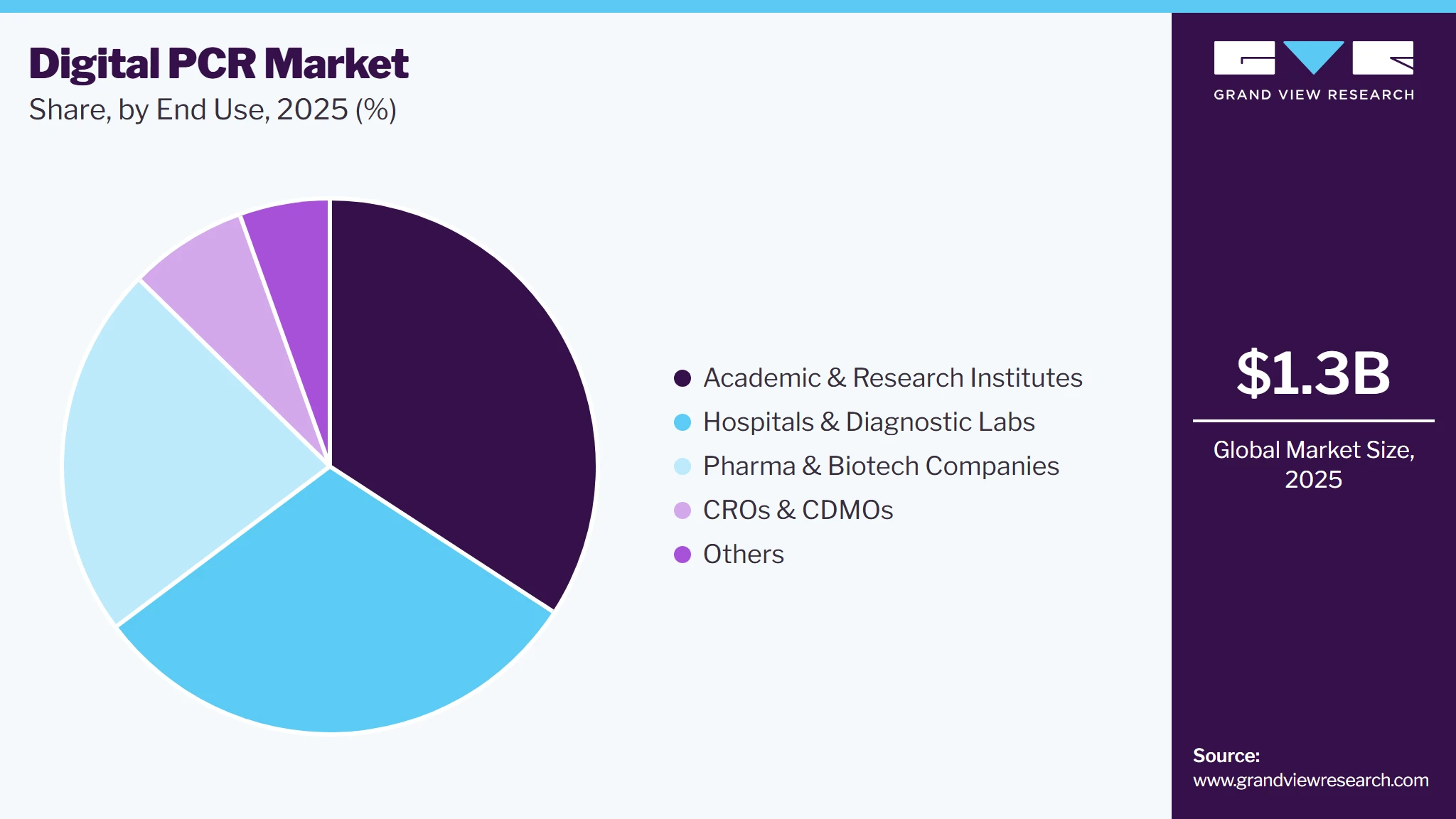
The academic & research Institutes segment accounted for the largest revenue share of 34.2% in 2025. The segment's dominance is driven by the extensive adoption of digital PCR technologies in genomics, molecular biology, oncology, infectious disease research, biomarker discovery, and translational medicine. Academic institutions increasingly utilize digital PCR for absolute nucleic acid quantification, rare mutation detection, copy number variation analysis, gene expression studies, and assay development. Growing public and private investments in life science research, expanding precision medicine initiatives, and increasing collaborations between academia and industry continue to strengthen demand for advanced molecular analysis technologies. For instance, in June 2026, QIAGEN reported that more than 3,200 QIAcuity digital PCR systems had been installed worldwide, with over 1,100 scientific publications referencing the platform and more than 400 customers operating multiple QIAcuity instruments. This growing adoption across academic and research laboratories highlights the expanding role of digital PCR in advancing life science research and translational studies.
 To learn more about this report, Download Free Sample Report
 The CROs & CDMOs segment is anticipated to register the fastest CAGR during the forecast period, driven by the increasing outsourcing of biopharmaceutical research, analytical testing, and cell and gene therapy manufacturing. Contract research and manufacturing organizations are increasingly adopting digital PCR for viral vector quantification, residual host cell DNA analysis, vector copy number determination, and quality control throughout drug development and commercial production. Furthermore, rising investments in advanced biologics, personalized therapies, and stringent regulatory requirements for analytical accuracy and process validation are expected to accelerate the adoption of digital PCR technologies across outsourced biopharmaceutical development and manufacturing services.
Regional Insights
North America Digital PCR (dPCR) Market dominated the global market, accounting for 41.2% of the revenue share in 2025, owing to its advanced molecular diagnostics ecosystem, strong presence of leading industry participants, and substantial investments in genomics and precision medicine. The region continues to benefit from extensive adoption of digital PCR across oncology, infectious disease diagnostics, liquid biopsy, and cell and gene therapy research. High public and private funding for life sciences, coupled with well-established academic research institutions and biotechnology clusters, supports continuous technological advancement and commercialization of innovative molecular testing solutions. For instance, in May 2026, researchers from the University of North Carolina and Indiana University demonstrated that Bio-Rad and QIAGEN digital PCR platforms delivered equivalent quantitative performance for SARS-CoV-2 wastewater surveillance, supporting broader implementation of digital PCR in public health monitoring across North America.
 To learn more about this report, Download Free Sample Report
 U.S. Digital PCR Market Trends
The U.S. digital PCR market accounted for the largest share of the North American market in 2025, supported by its robust biotechnology sector, world-leading academic research institutions, and extensive investment in precision medicine. The country has witnessed significant adoption of digital PCR across oncology, infectious disease surveillance, transplant monitoring, reproductive health, and cell and gene therapy research. Strong federal support for genomics initiatives, expanding pharmaceutical research, and increasing commercialization of molecular diagnostic technologies continue to accelerate market growth. Additionally, the presence of leading digital PCR manufacturers, contract research organizations, and clinical laboratories, together with growing demand for high-precision molecular testing and biomarker validation, continues to strengthen the country's position as the primary innovation hub for digital PCR technologies.
Europe Digital PCR Market Trends
Europe represents a mature and innovation-driven market for digital PCR, supported by strong investments in molecular diagnostics, precision oncology, and genomic medicine. The region benefits from collaborative research initiatives, well-established healthcare systems, and increasing adoption of advanced molecular technologies across clinical and research laboratories. The implementation of the European Union's In Vitro Diagnostic Regulation (IVDR) has encouraged manufacturers to develop clinically validated and regulatory-compliant digital PCR solutions. Moreover, growing applications in infectious disease surveillance, rare disease diagnostics, environmental monitoring, and biopharmaceutical quality control continue to expand market opportunities. For instance, in May 2025, the European Commission adopted the Horizon Europe 2025 Work Programme, allocating more than €7.3 billion for research and innovation, including substantial funding for biotechnology, genomics, and digital health. The investment is expected to strengthen molecular diagnostics research and accelerate the adoption of advanced technologies such as digital PCR across Europe.
The UK Digital PCR (dPCR) Market is supported by its globally recognized genomics research ecosystem, strong academic collaborations, and expanding adoption of precision medicine within the National Health Service (NHS). The country continues to invest heavily in cancer genomics, rare disease research, and molecular diagnostics, creating favorable conditions for digital PCR adoption across research institutions and clinical laboratories. Increasing collaboration between universities, biotechnology companies, and pharmaceutical manufacturers is accelerating innovation in biomarker discovery and translational medicine. Furthermore, the growing focus on personalized healthcare, clinical research, and advanced therapy development continues to strengthen demand for high-sensitivity digital PCR technologies across both academic and commercial healthcare environments.
Germany remains a leading European market for digital PCR due to its strong biotechnology industry, advanced laboratory infrastructure, and globally competitive pharmaceutical manufacturing sector. The country continues to invest in precision diagnostics, molecular pathology, and translational research, driving widespread adoption of digital PCR technologies across research institutes and clinical laboratories. Germany's emphasis on laboratory automation, high-quality manufacturing standards, and industrial biotechnology further supports the integration of digital PCR into pharmaceutical development and quality assurance workflows. In addition, close collaboration between universities, diagnostic companies, and life science organizations continues to accelerate innovation, strengthen domestic research capabilities, and enhance the commercialization of advanced molecular diagnostic technologies.
Asia Pacific Digital PCR Market Trends
Asia Pacific is projected to witness the fastest growth in the global digital PCR market, driven by rapid expansion of biotechnology industries, improving healthcare infrastructure, and increasing investments in genomics and precision medicine. Governments across the region are actively supporting molecular diagnostics, domestic biopharmaceutical manufacturing, and genomic research through favorable funding initiatives and healthcare modernization programs. Rising prevalence of cancer and infectious diseases, combined with expanding pharmaceutical research and growing awareness of personalized medicine, continues to accelerate digital PCR adoption. For instance, in December 2025, Thermo Fisher Scientific expanded its bioprocess design center network across Asia by opening a new facility in Hyderabad, India, and expanding existing centers in Singapore and South Korea to strengthen regional biopharmaceutical innovation and manufacturing capabilities. This investment is expected to enhance advanced molecular research infrastructure and support wider adoption of digital PCR technologies across the Asia Pacific region.
China is emerging as one of the most dynamic markets for digital PCR, driven by rapid expansion of domestic biotechnology companies, increasing investments in molecular diagnostics, and strong government support for precision medicine initiatives. Growing demand for advanced cancer diagnostics, infectious disease testing, and genomic research is accelerating adoption across hospitals, research institutes, and pharmaceutical companies. Continuous expansion of domestic manufacturing capabilities and increasing emphasis on healthcare innovation have strengthened the commercialization of advanced molecular diagnostic technologies. Furthermore, expanding biopharmaceutical production, contract manufacturing activities, and clinical research capabilities continue to create substantial opportunities for digital PCR technology providers across the Chinese market.
Japan represents a technologically advanced market for digital PCR, supported by strong expertise in molecular diagnostics, regenerative medicine, and life sciences research. The country's growing investments in precision oncology, aging-related disease research, and cell and gene therapy continue to expand the application of digital PCR technologies across academic, clinical, and pharmaceutical settings. Advanced laboratory automation, high-quality healthcare infrastructure, and stringent quality standards further encourage adoption of highly sensitive molecular testing platforms. Moreover, increasing collaboration between research institutes, universities, and biotechnology companies is strengthening innovation in genomic medicine and accelerating the clinical translation of digital PCR technologies throughout the Japanese healthcare ecosystem.
Latin America Digital PCR Market Trends
The Latin American digital PCR market is experiencing steady growth, supported by improving healthcare infrastructure, increasing adoption of molecular diagnostics, and expanding investments in life sciences research. Growing awareness of precision medicine and rising demand for highly sensitive molecular testing in oncology and infectious disease diagnostics are encouraging broader adoption across hospitals and diagnostic laboratories. Governments and healthcare organizations are strengthening laboratory capabilities and investing in genomic medicine to improve disease surveillance and early diagnosis. Additionally, increasing collaboration between international diagnostics companies and regional healthcare providers is improving access to advanced digital PCR technologies, supporting continued market development across the region.
Middle East and Africa Digital PCR Market Trends
The Middle East & Africa digital PCR Market is gradually expanding due to growing investments in healthcare modernization, molecular diagnostics, and genomic medicine. Countries across the Gulf Cooperation Council (GCC) are strengthening precision healthcare initiatives and expanding advanced laboratory infrastructure to support early disease detection and personalized medicine. Increasing prevalence of cancer and infectious diseases, together with rising investments in biomedical research and pharmaceutical development, continues to drive demand for advanced molecular testing technologies. Furthermore, expanding collaborations between healthcare institutions, research organizations, and international diagnostics companies are improving access to digital PCR platforms, supporting gradual but sustained market growth across the region despite ongoing resource and infrastructure constraints.
Key Digital PCR Company Insights
The global Digital PCR market is moderately concentrated, with competition led by established molecular diagnostics and life science companies that possess extensive expertise in nucleic acid analysis, genomics, and precision medicine. Major participants compete through continuous product innovation, strategic acquisitions, expansion of assay portfolios, and integration of automated software and workflow solutions to strengthen their market position. Companies are increasingly focusing on enhancing multiplexing capabilities, improving analytical sensitivity, and expanding applications across oncology, infectious disease diagnostics, cell and gene therapy, liquid biopsy, and biopharmaceutical quality control. Strategic collaborations with research institutions, healthcare organizations, and biotechnology companies further accelerate technology adoption and commercialization. While established players maintain a significant market share through strong global distribution networks and regulatory expertise, emerging companies continue to introduce specialized digital PCR platforms and application-specific solutions, intensifying competition and fostering innovation across the global market.
Key Digital PCR Companies
The following key companies have been profiled for this study on the digital PCR market.
-
Bio-Rad Laboratories Inc.
-
Thermo Fisher Scientific Inc.
-
QIAGEN N.V.
-
Standard BioTools Inc.
-
Stilla Technologies
-
JN Medsys
-
Combinati Inc.
-
Sysmex Corporation
-
Takara Bio Inc.
Competitive Benchmarking
Operating Strategies
Competitive Edge
Weaknesses
- Mature Players: Bio-Rad Laboratories Inc.
- Expand comprehensive digital PCR portfolios comprising instruments, reagents, consumables, software, and workflow automation.
- Invest in high-throughput, multiplex, and cloud-enabled digital PCR platforms to strengthen precision diagnostics and life science research applications.
- Strengthen market leadership through strategic acquisitions and collaborations with pharmaceutical companies, research institutes, and healthcare organizations.
- Extensive global installed base and well-established distribution and service networks.
- Broad product portfolios spanning instruments, assays, consumables, software, and integrated workflow solutions.
- Strong R&D capabilities, regulatory expertise, manufacturing scale, and long-standing relationships with pharmaceutical companies, clinical laboratories, and research institutions.
- Premium pricing of advanced digital PCR systems may limit adoption among small laboratories and emerging markets.
- Regulatory approval processes and extensive validation requirements can extend commercialization timelines for new assays and platforms.
- Large organizational structures may reduce agility compared with specialized digital PCR companies.
- Emerging Players: Stilla Technologies.
- Focus on specialized digital PCR platforms targeting oncology, cell & gene therapy, infectious diseases, and translational research applications.
- Develop compact, cost-effective, and user-friendly systems with differentiated microfluidic and partitioning technologies.
- Expand market presence through regional partnerships, OEM collaborations, distributor networks, and niche application-focused commercialization strategies.
- Strong technological specialization in innovative partitioning technologies and next-generation digital PCR workflows.
- Greater operational flexibility, enabling faster product innovation and customization for emerging research applications.
- Ability to address niche market opportunities in liquid biopsy, cell & gene therapy, environmental testing, and precision oncology with focused product development.
- Emerging players often have limited manufacturing capacity, smaller geographic reach, and lower brand recognition than established competitors. They may face challenges in expanding production, meeting regulatory requirements, securing large commercial contracts, and investing in advanced manufacturing technologies needed for long-term business growth.
Recent Developments
-
In June 2026, QIAGEN expanded its QIAcuity digital PCR ecosystem with enhanced automation, new gene expression assays, software upgrades, and expanded cell and gene therapy quality control solutions. The portfolio expansion improved workflow efficiency, broadened application capabilities, and accelerated the adoption of digital PCR technologies across research, clinical, and biopharmaceutical laboratories.
-
In July 2025, Bio-Rad Laboratories launched the QX Continuum and QX700 Droplet Digital PCR platforms following the acquisition of Stilla Technologies. The expanded portfolio introduced advanced high-throughput digital PCR systems with enhanced multiplexing capabilities, streamlined workflows, and support for more than 400,000 assays. The launch broadened application coverage and reinforced Bio-Rad's leadership in precision molecular diagnostics and life science research.
-
In April 2025, QIAGEN expanded its digital PCR portfolio by launching new lentivirus quality control solutions for cell and gene therapy workflows. The portfolio included assays, kits, and standardized protocols for viral vector analysis and residual DNA testing. The launch strengthened digital PCR applications in biopharmaceutical quality control while supporting increasing adoption across cell and gene therapy manufacturing and contract development and manufacturing organizations (CDMOs).
-
In February 2025, Bio-Rad Laboratories completed the acquisition of Stilla Technologies to strengthen its digital PCR portfolio. The acquisition integrated Stilla's Crystal Digital PCR technology into Bio-Rad's molecular diagnostics portfolio, expanding capabilities across oncology, infectious disease testing, liquid biopsy, and cell and gene therapy applications. The transaction strengthened Bio-Rad's competitive position, accelerated product innovation, and supported further consolidation within the global digital PCR market.
Digital PCR Market Report Scope
Report Attribute
Details
Market size in 2025
USD 1.3 billion
Estimated market size in 2026
USD 1.5 billion
Projected market size by 2033
USD 4.1 billion
Growth rate
CAGR of 15.2% from 2026 to 2033
Actual data
2021 - 2025
Forecast period
2026 - 2033
Quantitative units
Revenue in USD million/billion and CAGR from 2026 to 2033
Report coverage
Revenue forecast, company ranking, competitive landscape, growth factors, and trends
Segments covered
Product, technology, application, end-use, region
Regional scope
North America; Europe; Asia Pacific; Latin America; and MEA
Country scope
U.S.; Canada; Mexico; UK; Germany; France; Italy; Spain; Norway; Denmark; Sweden; China; Japan; India; Australia; Thailand; South Korea; Brazil; Argentina; South Africa; Saudi Arabia; UAE; Kuwait
Key companies profiled
Bio-Rad Laboratories Inc.; Thermo Fisher Scientific Inc.; QIAGEN N.V.; Standard BioTools Inc.; Stilla Technologies; JN Medsys; Combinati Inc.; Sysmex Corporation; Takara Bio Inc.
Customization scope
Free report customization (equivalent up to 8 analyst working days) with purchase. Addition or alteration to country, regional & segment scope.
Pricing and purchase options
Avail customized purchase options to meet your exact research needs. Explore purchase options
Global Digital PCR Market Segmentation
This report forecasts revenue growth at country levels and provides an analysis on the latest industry trends and opportunities in each of the sub-segments from 2021 to 2033. For this study, Grand View Research has segmented the digital PCR market report on the basis of product, technology, application, end use, and region:
-
Product Outlook (Revenue, USD Million, 2021 - 2033)
-
Instruments & Systems
-
Reagents & Consumables
-
Software & Services
-
-
Technology Outlook (Revenue, USD Million, 2021 - 2033)
-
Droplet-based dPCR
-
Chip/Chamber-based dPCR
-
-
Application Outlook (Revenue, USD Million, 2021 - 2033)
-
Research
-
Clinical Diagnostics
-
Biopharma
-
Environmental & Other Testing
-
-
End Use Outlook (Revenue, USD Million, 2021 - 2033)
-
Academic & Research Institutes
-
Hospitals & Diagnostic Labs
-
Pharma & Biotech Companies
-
CROs & CDMOs
-
Others
-
-
Regional Outlook (Revenue, USD Million; 2021 - 2033)
-
North America
-
U.S.
-
Canada
-
Mexico
-
-
Europe
-
UK
-
Germany
-
France
-
Italy
-
Spain
-
Norway
-
Denmark
-
Sweden
-
-
Asia Pacific
-
Japan
-
China
-
India
-
Australia
-
South Korea
-
Thailand
-
-
Latin America
-
Brazil
-
Argentina
-
-
Middle East & Africa
-
South Africa
-
Saudi Arabia
-
UAE
-
Kuwait
-
-
Research Methodology
The digital PCR market figures in this report are based on a proven research process that combines executive interviews with secondary research from proprietary databases, company filings, and recognized regulatory and institutional sources. Market size is built through value-chain sizing-reconciling supply-side and demand-side estimates-and triangulated with bottom-up and top-down approaches. Every estimate passes multiple levels of expert validation before publication, with each digital PCR segment quantified using the revenue-capture definitions in the table below.
Segment Definition
Product
Revenue capture definition
Instruments & Systems
Revenue is primarily captured through one-time sales of digital PCR instruments, including droplet generators, chip-based platforms, thermal cyclers, partitioning systems, and integrated analyzers used for nucleic acid quantification and molecular testing workflows.
Reagents & Consumables
Revenue flow is driven by recurring purchases of assay kits, master mixes, primers, probes, cartridges, chips, droplets, plates, and other consumables required for routine digital PCR testing across research and clinical laboratories.
Software & Services
Market value is derived from software licensing, workflow automation platforms, data analysis tools, cloud-based solutions, maintenance contracts, technical support, validation, training, and instrument servicing that optimize digital PCR operations.
Technology
Revenue capture definition
Droplet-based dPCR
Revenue is captured from digital PCR platforms that partition samples into thousands of droplets, together with compatible reagents and consumables designed for highly sensitive absolute nucleic acid quantification across multiple molecular applications.
Chip/Chamber-based dPCR
Revenue originates from chip- or chamber-based digital PCR systems utilizing microfluidic partitioning technologies, along with dedicated chips, cartridges, and compatible consumables supporting precision molecular analysis and routine laboratory workflows.
Application
Revenue capture definition
Research
Commercial value is generated through digital PCR products utilized in genomics, molecular biology, biomarker discovery, gene expression, copy number variation, and translational research conducted by academic and industrial research laboratories.
Clinical Diagnostics
Revenue flows from digital PCR solutions deployed for patient testing, including oncology, infectious disease detection, inherited disorders, transplant monitoring, and other regulated clinical diagnostic applications performed within healthcare laboratories.
Biopharma
Market demand is driven by digital PCR products supporting biologics development, cell and gene therapy, viral vector quantification, residual DNA testing, process development, and quality control throughout biopharmaceutical manufacturing workflows.
Environmental & Other Testing
Revenue is captured through digital PCR applications in food safety, environmental monitoring, agricultural testing, veterinary diagnostics, forensic analysis, and other non-clinical molecular testing environments requiring precise nucleic acid quantification.
End use
Revenue capture definition
Academic & Research Institutes
Revenue is generated from digital PCR products purchased by universities, government laboratories, and independent research institutes conducting genomics, molecular biology, translational medicine, and life science research activities.
Hospitals & Diagnostic Labs
Commercial demand arises from hospitals and diagnostic laboratories utilizing digital PCR systems for routine patient diagnostics, disease monitoring, precision medicine, and molecular pathology testing across diverse clinical specialties.
Pharma & Biotech Companies
Revenue originates from pharmaceutical and biotechnology companies adopting digital PCR technologies for drug discovery, biomarker validation, clinical research, companion diagnostics, and biologics development programs.
CROs & CDMOs
Market value is captured through digital PCR solutions purchased by contract research and manufacturing organizations for outsourced analytical testing, process validation, quality control, and cell and gene therapy development services.
Others
Revenue is derived from government laboratories, public health agencies, food and beverage companies, environmental organizations, veterinary laboratories, and industrial users employing digital PCR for specialized molecular testing applications.
Estimation Model
The digital PCR market size was estimated using a bottom-up approach, beginning with the identification of key manufacturers and benchmarking their digital PCR product portfolios across instruments, reagents, consumables, and software. Revenue generated from these products was analyzed, followed by estimating segment-wise revenues based on technology adoption and end-user utilization. The aggregated revenues were validated against manufacturer market shares and existing market penetration to derive the overall market size.
Delivered Customizations
This report has been delivered with the following In-depth customizations
Client Request
Customization Delivered
Value Adds
Digital PCR (dPCR) Market Competitive Landscape & Technology Assessment
Assessed the global digital PCR market across droplet digital PCR (ddPCR), chip-based digital PCR (cdPCR), BEAMing digital PCR, integrated instruments, consumables & reagents, software, and services. Evaluated leading manufacturers based on technology innovation, product portfolios, regulatory approvals, commercialization strategies, assay menus, automation capabilities, pricing strategies, strategic collaborations, and geographic presence across clinical diagnostics, research, biopharmaceutical, and forensic applications.
Enabled the client to benchmark leading digital PCR technology providers, identify high-growth technology segments, evaluate competitive differentiation, understand technology adoption trends, and prioritize investment opportunities across clinical and research-focused dPCR platforms.
Digital PCR (dPCR) Product Benchmarking & Performance Analysis
Conducted a comprehensive benchmarking study of commercial digital PCR systems by comparing partitioning technology, multiplexing capability, analytical sensitivity, absolute quantification accuracy, throughput, workflow automation, software functionality, assay compatibility, regulatory status, sample capacity, turnaround time, and cost efficiency across major global manufacturers.
Helped the client identify product performance gaps, evaluate next-generation platform capabilities, optimize product positioning, prioritize assay development strategies, and benchmark innovations supporting precision diagnostics, oncology, infectious disease testing, and molecular research applications.
Digital PCR (dPCR) Commercialization & Market Entry Assessment
Assessed commercialization strategies, regulatory pathways, reimbursement landscape, distribution networks, end-user adoption trends, partnership opportunities, manufacturing capabilities, procurement practices, and competitive intensity across hospitals, diagnostic laboratories, academic research institutes, pharmaceutical & biotechnology companies, CROs, and public health laboratories. Evaluated regional market attractiveness, barriers to adoption, and expansion opportunities for digital PCR technologies
Supported commercialization planning by identifying high-potential regional markets, evaluating distribution and partnership opportunities, assessing regulatory and reimbursement requirements, mitigating commercialization risks, and strengthening long-term growth strategies within the global digital PCR market.
About the Author(s)
Clinical Diagnostics Research Team
Healthcare · Clinical DiagnosticsThis report was authored by the clinical diagnostics research team at Grand View Research - comprising two research analysts, one senior research analyst, and one industry expert - with specialized expertise in the clinical diagnostics segment of the healthcare industry. All findings are based on proprietary healthcare databases, executive interviews, and regulatory analysis, subject to internal peer review prior to publication.
Last Updated:
Speak to Analyst

Customize this report to your needs - add regions, segments, or data points, with 20% free customization.
Or view our licence options:


ISO 9001:2015 & 27001:2022 Certified
We are GDPR and CCPA compliant! Your transaction & personal information is safe and secure. For more details, please read our privacy policy.


