
- Home
- »
- Animal Health
- »
-
Dog DNA Testing Market Size & Share Report, 2026-2033GVR Report cover

Dog DNA Testing Market (2026 - 2033)
Size, Share & Trends Analysis Report By Breed (Purebred, Mixed-Breed), By Sample Type (Blood, Saliva, Fecal), By Application (Breeding & Genetic Screening, Diagnostic Testing), By Distribution Channel, By Region, And Segment Forecasts
Market Size, 2025
$229.9MMarket Estimate, 2026
$247.9MMarket Forecast, 2033
$520.9MCAGR, 2026–2033
11.2%Dog DNA Testing Market Summary
The global dog DNA testing market size was valued at USD 229.9 million in 2025 and is projected to grow from USD 247.9 million in 2026 to USD 520.9 million by 2033, at a CAGR of 11.2% from 2026 to 2033. North America dominated the market, accounting for the largest revenue share of 42.3% in 2025. Growing adoption of preventive pet healthcare, rising awareness of inherited and breed-specific disorders, and increasing use of genetic information in breeding decisions are driving demand for dog DNA testing.
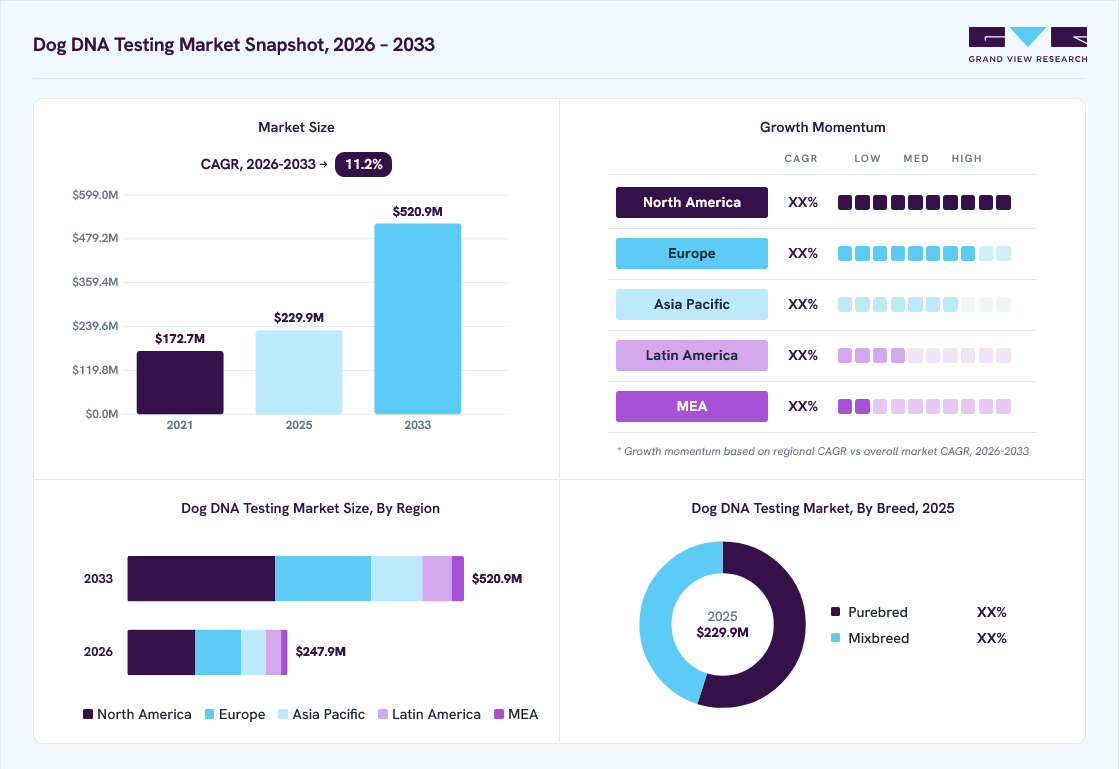 Source: Grand View Research, IR Documents, Primary Interviews, Paid DatabasesTo learn more about this report,
 Download Free Sample Report
Key Market Trends & Insights
- By breed: The purebred led the market with the largest revenue share of 54.8% in 2025.
- By sample: The saliva segment led the market with the largest revenue share of 65.3% in 2025.
- By application: The breeding & genetic screening segment led the market with the largest revenue share of 55.7% in 2025.
Regional Highlights
- Largest regional market: North America (42.3% revenue share, 2025)
- By country: The U.S. held the largest market share in 2025
Market Size & Forecast
- Market size in 2025: USD 229.9 Million
- Estimated market size in 2026: USD 247.9 Million
- Projected market size by 2033: USD 520.9 Million
- CAGR (2026-2033): 11.2%
Prism AI by Grand View Research Free to tryAsk a question about the dog DNA testing marketTry asking✓Every figure cited from GVR research Prefer the report? Download free sample →Greater availability of breed identification, hereditary disease screening, pharmacogenetic testing, and ancestry analysis is expanding test utilization among pet owners, breeders, and veterinarians, supporting market growth.
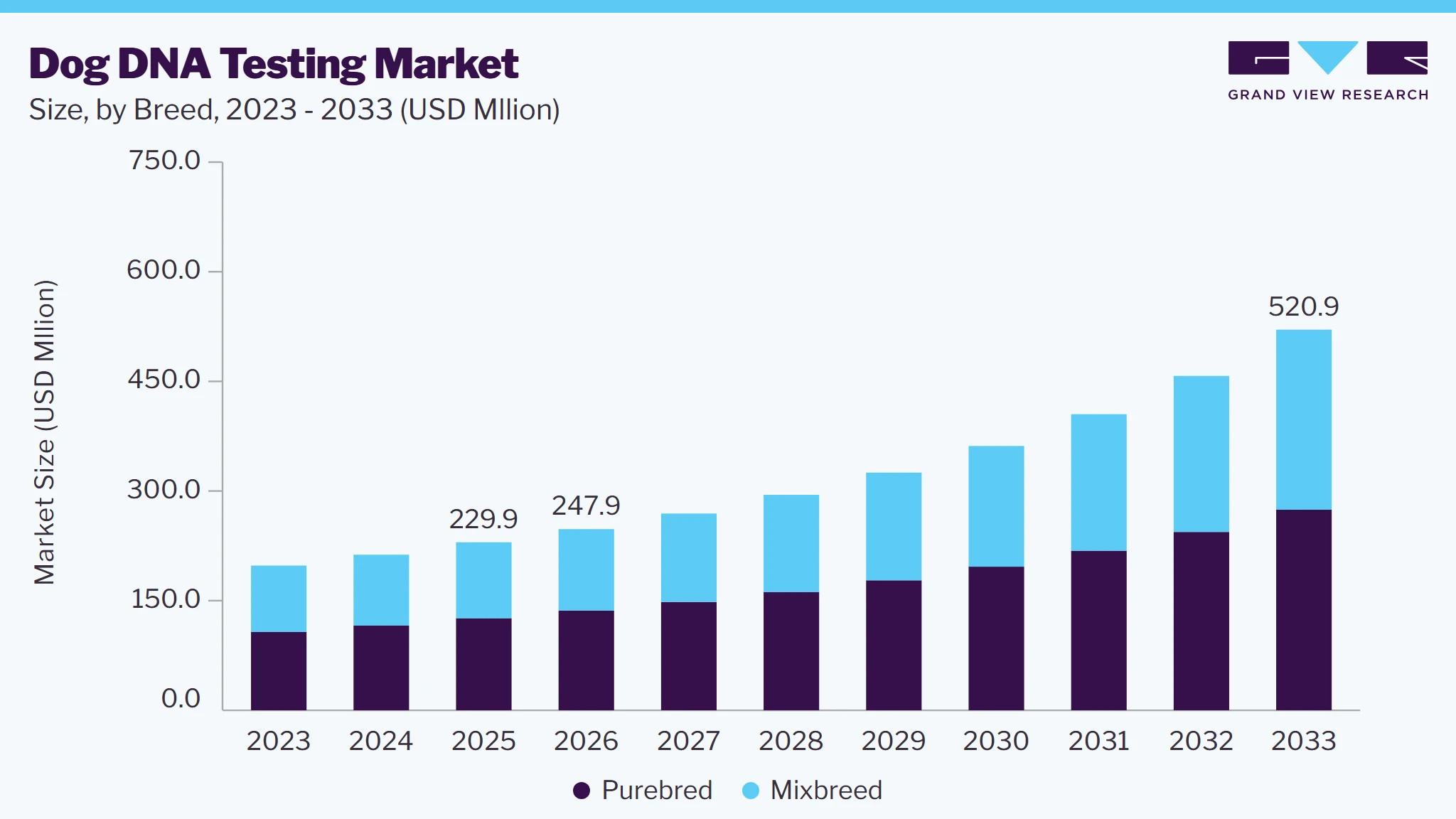 To learn more about this report, Download Free Sample Report
Market Dynamics
Growing awareness of breed composition and personalized pet care is increasing demand for dog DNA testing among pet owners, breeders, and veterinarians. In addition, advances in SNP analysis, genomic databases, bioinformatics, and saliva-based collection are expanding testing from breed identification toward genetic disease screening, breeding decisions, ancestry, and preventive healthcare. For instance, in January 2026, Mars Veterinary Health reported that its MARS PETCARE BIOBANK had supported the identification of a genetic variant associated with canine atopic dermatitis and accelerated development of a DNA test. However, varying breed databases, differences in test interpretation, and limited clinical validation for some health markers may restrict adoption.
The increasing use of canine DNA testing for preventive health screening is expanding the market from basic breed identification toward health-risk assessment, creating demand for more comprehensive and higher-value testing panels. Advances in canine genomics are enabling laboratories to identify genetic variants associated with inherited disorders and convert these findings into breed-specific tests that can be used before symptoms appear. For instance, in December 2025, the University of Cambridge’s Canine Genetics Centre launched two new DNA tests for progressive retinal atrophy in Nova Scotia Duck Tolling Retrievers and Miniature Schnauzers after whole-genome sequencing identified disease-associated mutations. The availability of condition-specific tests expands the number of health applications addressed through DNA analysis and increases demand among breeders and owners seeking early information on inherited disease risks.
The growing availability of preventive genetic screening also increases the value proposition of canine DNA testing by enabling users to obtain health-related insights from a single biological sample. As testing providers expand disease panels and breed-specific assessments, DNA testing is becoming more relevant to breeding management, early risk identification, and long-term pet health planning. This broadens the customer base beyond consumers interested in ancestry and breed composition to include breeders, veterinary professionals, and health-conscious pet owners. The expansion of health-focused applications supports demand for comprehensive genetic panels, encourages adoption of premium testing packages, and increases the potential for recurring testing and related veterinary services. These developments are supporting the market transition toward higher-value health and preventive applications, thereby contributing to market expansion.
Limited standardization of canine genetic databases and test interpretation can constrain the adoption of DNA testing by creating variation in results and uncertainty around their clinical or breeding relevance. Testing providers may maintain proprietary reference databases containing different numbers and compositions of dog breeds, geographic populations, and genetic markers. Consequently, breed ancestry estimates and genetic-risk assessments may vary between providers, particularly for mixed-breed dogs, closely related breeds, and populations that are underrepresented in reference datasets.
The limitation also extends to the interpretation of disease-associated genetic variants. Historically, veterinary genetic testing lacked universally adopted laboratory standards for analytical, reporting, and post-test interpretation practices, creating potential differences in how results were classified and communicated. More recently, the development of the Animal Variant Classification Guidelines has provided a structured framework for assessing pathogenicity, while July 2025 research on the Vertebrate Breed Ontology addressed the broader lack of standardized breed terminology in veterinary data. However, adoption of common standards across commercial testing providers remains important for improving comparability and confidence in results. This limitation can make veterinarians and breeders more cautious about using consumer DNA reports for clinical or breeding decisions, potentially slowing the adoption of advanced health-testing panels and increasing the need for professional interpretation and validation services.
Integration of DNA testing with veterinary diagnostics and preventive care presents an opportunity to expand canine genetic testing from a primarily consumer-driven service into a component of routine veterinary management. Linking genetic results with veterinary records, clinical history, and diagnostic findings can help veterinarians identify inherited disease risks and support more targeted monitoring before clinical signs emerge. This can increase the clinical relevance of DNA testing, improve professional interpretation, and encourage veterinary practices to incorporate genetic screening into wellness and preventive-care workflows. Greater integration with veterinary practices can broaden the customer base beyond individual pet owners to veterinary hospitals and clinics, while creating opportunities for bundled genetic screening, breed-specific monitoring, and follow-up diagnostic services. As genetic information becomes increasingly connected with routine preventive care, providers can encourage adoption of comprehensive health panels rather than standalone breed tests, supporting higher-value testing across the market.
R&D Landscape
 To learn more about this report, Download Free Sample Report
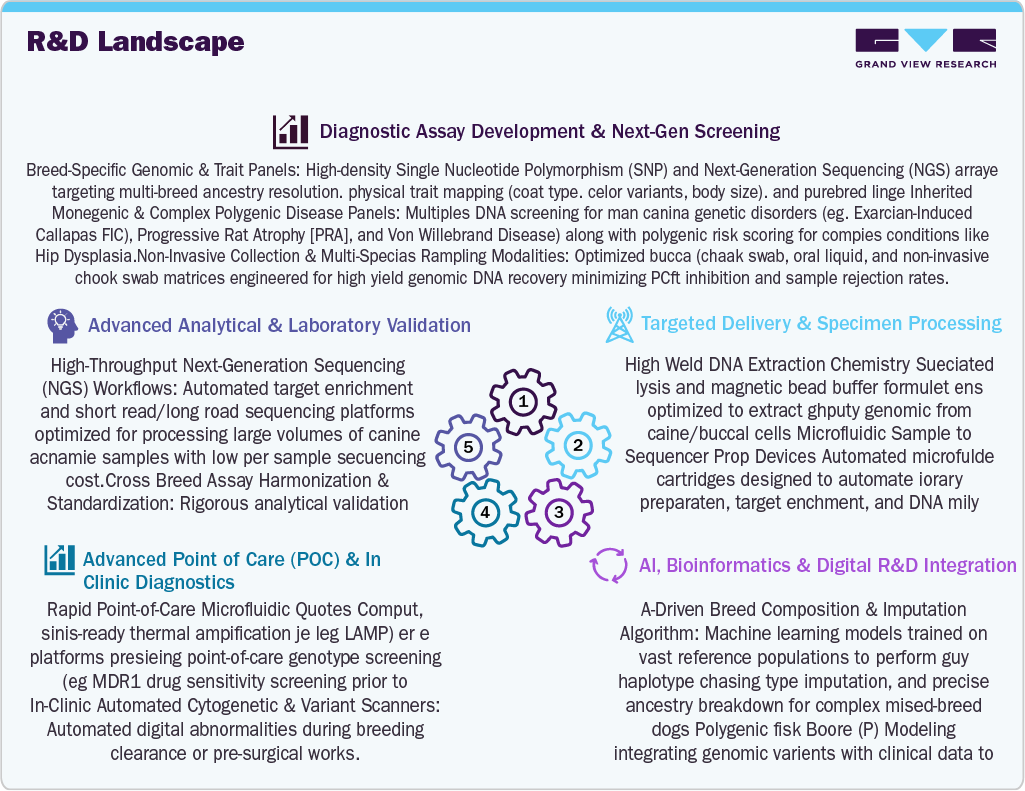
Advances in genetic testing, laboratory automation, and data analysis are expanding the market beyond basic breed identification to include health screening, breeding, and veterinary care. High-density SNP arrays, NGS-based tests, and multiplex panels can identify breed ancestry, inherited diseases, drug sensitivity markers, and some complex disease risks in a single test. Better cheek and saliva sample collection methods, improved DNA extraction, and stable sample transport systems are also helping laboratories obtain better-quality samples and reduce testing problems./
Furthermore, AI-based tools are improving breed identification, genetic data analysis, and disease risk assessment, including for mixed-breed dogs. The integration of DNA results with veterinary electronic health records, kennel registries, and pet health applications can also support long-term health monitoring. At the same time, rapid genetic testing systems and automated sample preparation are bringing selected DNA tests closer to veterinary clinics. These developments are expanding the use of dog DNA testing across health screening, breeding, pharmacogenomics, ancestry testing, and veterinary decision-making. As a result, testing companies are developing broader panels, faster testing processes, and digital services, increasing the value and adoption of canine DNA testing.
Market Concentration & Characteristics
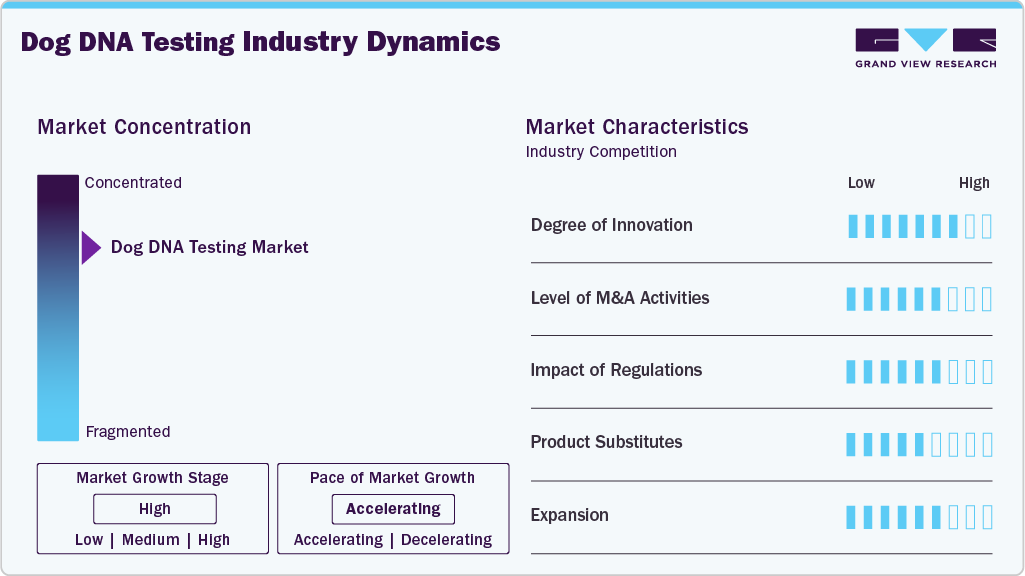
The dog DNA testing industry is expanding as pet owners and breeders use genetic information for breed identification, inherited-disease screening, and breeding decisions. Advances in multiplex panels, SNP profiling, sequencing, and bioinformatics are broadening test coverage while improving turnaround and reporting. Integration of genetic results with preventive veterinary care and digital pet records is creating opportunities for higher-value testing services.
The degree of innovation is high because providers are expanding canine DNA testing from basic breed identification toward multi-dimensional genetic health, behavior, ancestry, and breeding insights. Advances in high-density genotyping, bioinformatics, genetic-marker discovery, and larger breed reference databases are increasing the information generated from a single sample. For instance, in April 2025, Cornell University reported that its research partnership with Embark uses more than 230,000 genetic markers to assess over 270 genetic health risks, 350 breeds, and 55 traits. In June 2025, Wisdom Panel scientists identified a genetic variant associated with canine atopic dermatitis and developed a related breeding test.
 To learn more about this report, Download Free Sample Report
M&A activity in the dog DNA testing industry is characterized by selective mergers around veterinary diagnostics, genetic databases, and laboratory capabilities rather than frequent acquisitions of standalone consumer DNA brands. Strategic buyers have used acquisitions to combine genetic testing with broader diagnostic networks and geographic access. For instance, in July 2024, Mars completed its acquisition of Cerba HealthCare’s stakes in Cerba Vet and ANTAGENE, adding European veterinary diagnostics and animal DNA testing capabilities to its Science & Diagnostics portfolio.
Regulatory and breed-organization requirements are influencing the demand for validated genetic testing, particularly where DNA results are related to breeding, registration, animal traceability, or health management. In addition, the UK Kennel Club introduced DNA-based import controls effective January 6, 2025, requiring testing for specified inherited conditions in several breeds and in certain cases involving overseas sires. For instance, in August 2026, the European Union adopted Regulation (EU) 2026/1818 covering dog and cat welfare and traceability, creating a broader framework for identification and ownership information. Such developments are expected to increase demand for standardized testing while raising requirements for laboratory quality, documentation, and result verification.
Substitution is moderate because conventional approaches can address some objectives served by dog DNA testing, although they cannot fully provide genomic information. Pedigree documentation, visual breed assessment, breeder records, physical examinations, imaging, blood chemistry, and clinical diagnostic tests can provide alternative information for current health status or disease investigation. However, these approaches generally cannot identify inherited variants or genetic predisposition before clinical signs appear.
Regional expansion in the dog DNA testing industry is supported by the establishment of veterinary genetics laboratories, expansion of testing networks, and greater availability of consumer and clinical genetic services across new geographic markets. Testing providers and veterinary institutions are extending laboratory capacity, distribution channels, and digital testing platforms to improve access to breed identification, inherited disease screening, parentage testing, and other genomic services.
Analyst Perspective
The market is expanding as genetic testing becomes increasingly relevant for breed identification, hereditary disease screening, breeding management, parentage verification, and preventive veterinary care. Improvements in DNA extraction, assay sensitivity, sequencing technologies, and bioinformatics are increasing the range of genetic information that can be obtained from saliva, cheek swabs, and blood samples. Demand is supported by rising pet ownership, greater awareness of inherited health conditions, and growing interest in personalized pet care. Veterinary clinics, breeders, diagnostic laboratories, and direct-to-consumer providers are contributing to market development. However, differences in test methodologies, interpretation standards, database coverage, and regulatory requirements can affect adoption across regions and applications.
Breed Insights
The purebred segment dominated the market in 2025 with a share of 54.8%. The segment is supported by growing demand for genetic verification and inherited disease screening among owners, breeders, and kennel organizations. DNA testing helps validate breed lineage when pedigree records are incomplete or disputed and can provide genetic information relevant to responsible breeding programs. In addition, increasing awareness of breed-specific hereditary conditions is encouraging testing before making decisions, particularly for dogs with documented predispositions to inherited disorders. Furthermore, digital breed databases and consumer-accessible testing services are making genetic profiling more accessible, expanding the use of DNA tests among purebred dog owners and breeders.
The mixed-breed segment is anticipated to grow at the fastest CAGR over the forecast period. The segment is growing as owners and veterinarians are using genetic testing to identify breed ancestry, inherited health risks, and traits that may not be apparent from physical characteristics. DNA testing is relevant for mixed-breed dogs because their genetic composition can involve multiple breeds, making visual identification less reliable. Testing can provide ancestry estimates while supporting screening for breed-associated genetic variants and selected hereditary conditions. In addition, growing adoption of rescue and shelter dogs is creating demand for genetic profiling, as DNA results can provide information on breed composition and potential health considerations.
Sample Insights
The saliva segment accounted for the largest share of 65.3% in 2025. Saliva-based sampling is becoming an important collection method in the market because cheek swabs provide a non-invasive, convenient approach that can be performed at home without blood collection. The ease of sample collection supports direct-to-consumer testing and expands the use of genetic analysis for breed identification, inherited disease screening, ancestry, and research. For instance, in September 2026, the Dog Aging Project reported that it had sequenced more than 6,000 dogs, with participants collecting saliva DNA samples from their dogs’ cheeks using mailed DNA kits. This large-scale use supports continued adoption of saliva collection for canine genomic testing and encourages testing providers to develop simple, stable, user-friendly sampling kits.
The blood segment is anticipated to register a significant CAGR during the forecast period, driven by growing adoption of genetic screening and canine genomic research for blood-based DNA sampling, where laboratories require high-quality genomic material for SNP genotyping, sequencing, and breed-level genetic analysis. In addition, blood collection is generally performed through veterinary clinics, making it relevant for clinical and research-oriented testing rather than direct-to-consumer kits. For instance, in March 2026, researchers in India analyzed peripheral blood samples from 46 dogs across six breeds using ddRAD sequencing to investigate genetic diversity and population structure. The study indicates the continuous use of blood-derived DNA for advanced canine genomic analysis, supporting demand for laboratory-based genetic testing services.
Application Insights
The breeding & genetic screening dominated the market with a share of 55.7% in 2025. The segment is driven by increasing use of molecular tests to identify inherited disease variants and support health-focused breeding programs. In addition, demand is expanding from basic breed identification toward breed-specific genetic disease screening, particularly for conditions that may remain undetected during breeding age. Genetic screening helps breeders identify carriers or at-risk animals before mating, while parentage testing supports pedigree verification and breeding records. For instance, in January 2024, the American Kennel Club launched a Canine Genetic Counseling Center staffed by veterinary professionals to help breeders interpret genetic test results and determine relevant tests for specific breeds. The service connects genetic screening with professional interpretation of carrier and risk results, supporting further use of DNA testing in breeding decisions and litter planning.
The diagnostic testing segment is expected to grow at the fastest CAGR over the forecast period, driven by the growing use of genetic testing within veterinary diagnostic workflows, which is expanding the role of dog DNA testing beyond breed identification toward health screening, disease-risk assessment, pharmacogenomics, and breeding-related diagnostics. Veterinary professionals use genetic information to support the identification of inherited conditions and guide preventive care, particularly for disorders linked to breed-specific genetic variants. Broader adoption of molecular diagnostic approaches, improvements in DNA analysis, and greater availability of multi-marker panels are increasing the clinical utility of canine genetic tests.
Distribution Channel Insights
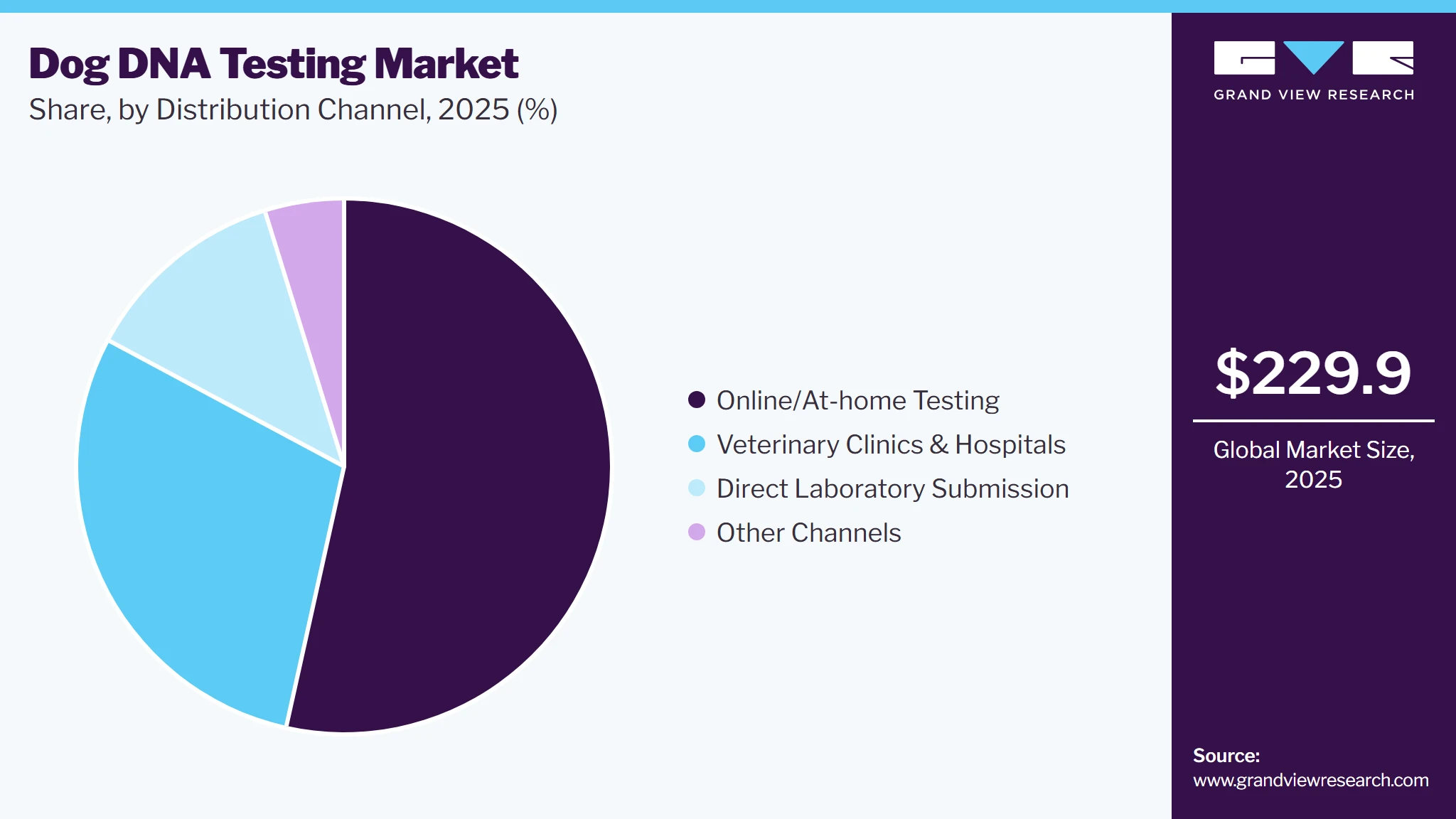
The online/at-home testing segment dominated the market with a share of 53.5% in 2025. The growing preference for convenient and accessible pet health services is increasing demand for online and at-home dog DNA testing. These services allow owners to collect DNA samples, typically through buccal swabs, without requiring an initial clinic visit, reducing time and logistical barriers associated with genetic screening. Online ordering, home sample collection, prepaid shipment, and digital delivery of results further improve test accessibility across geographic areas. In addition, broader consumer interest in breed identification, inherited disease screening, ancestry, and trait assessment is expanding the range of applications available through direct-to-consumer platforms. As pet owners adopt preventive and personalized care practices, online and at-home testing is supporting higher adoption of dog DNA testing services.
 To learn more about this report, Download Free Sample Report
The veterinary clinics and hospitals segment is projected to register the highest CAGR over the forecast period, driven by the incorporation of genetic information into preventive care, clinical assessment, and breeding consultations. Veterinarians can recommend DNA tests when breed background, inherited disease risk, or drug-response markers may affect monitoring and treatment decisions. This increases test referrals and encourages pet owners to use genetic testing alongside routine veterinary care, expanding demand for health, disease-risk, and pharmacogenomic panels. The integration creates opportunities for testing providers offering veterinarian-oriented reports, sample collection support, and clinically relevant interpretation.
Regional Insights
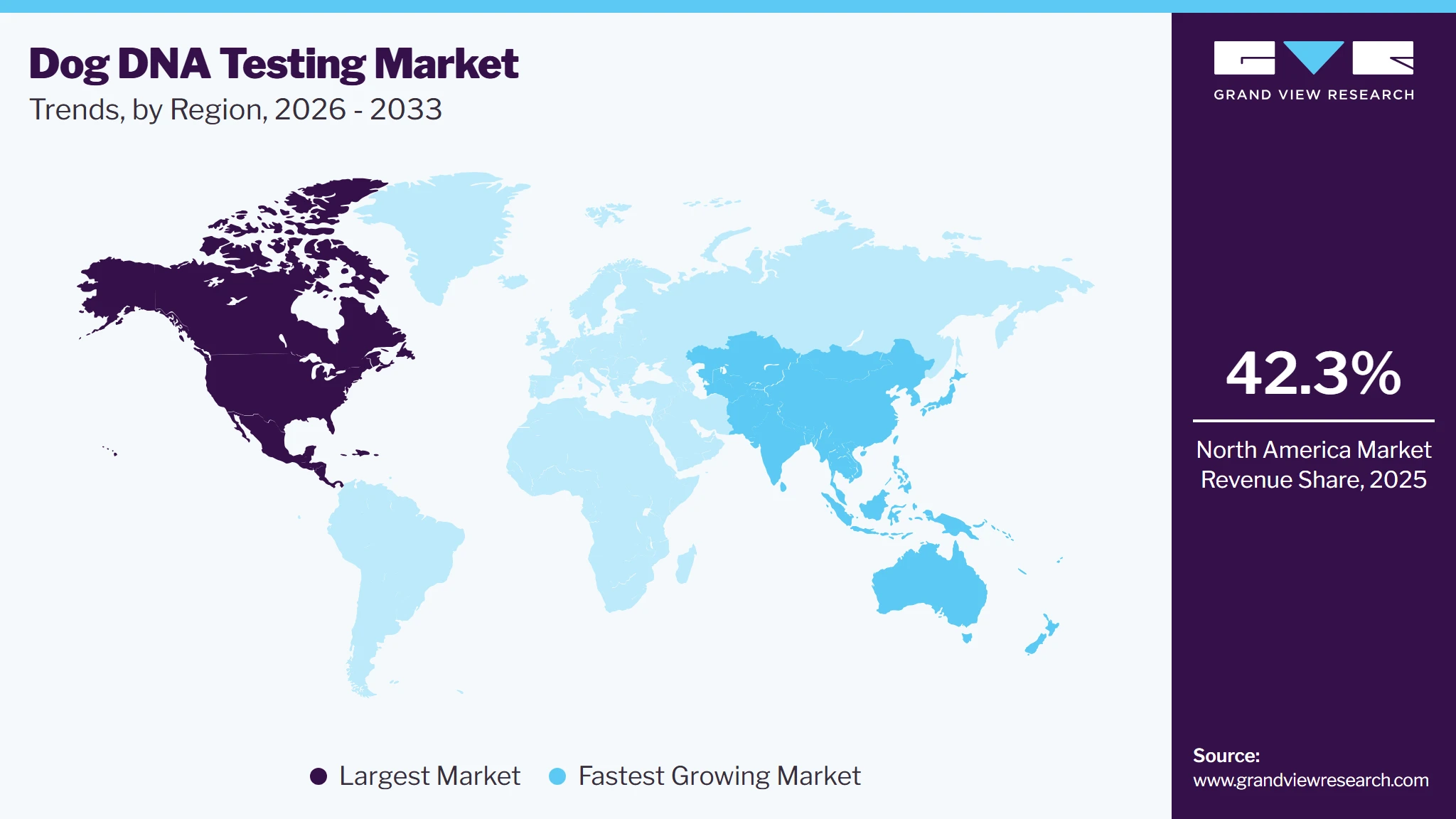
North America held the largest revenue share of 42.3% in 2025. Growing adoption of genetic health and breed screening is supporting the market. In addition, advances in canine genotyping, larger reference databases, and integration with veterinary health records are expanding the application of DNA tests from breed identification toward disease-risk assessment, breeding, and preventive care. For instance, in June 2025, researchers associated with Wisdom Panel and Mars Petcare identified an SLAMF1 genetic variant associated with canine atopic dermatitis from Banfield Pet Hospital and the Mars Petcare Biobank. Such research developments increase the clinical relevance of genetic screening by connecting DNA results with specific health risks, thereby supporting greater use among veterinarians, breeders, and dog owners. The expansion of breed reference databases is increasing the breadth and precision of canine ancestry testing, particularly for mixed-breed dogs and closely related breeds.
 To learn more about this report, Download Free Sample Report
U.S. Dog DNA Testing Market Trends
The dog DNA testing market in the U.S. held the largest share in North America in 2025. The expansion of genetic applications beyond breed identification is expanding the value proposition of dog DNA testing in the U.S. As testing platforms are incorporating genetic information related to health, behavior, and other canine characteristics, a single DNA test can support a wider range of pet-care decisions. For instance, in September 2026, Embark launched Behavior Insights & Training, a feature that translates a dog's DNA into 15 genetic behavior insights and provides one year of personalized, guided training. The feature connects genetic predispositions with behaviors such as separation anxiety, hyperactivity, and anxiety around unfamiliar situations. Such development expands the application of dog DNA testing into behavioral assessment and training, increasing the range of use cases available to U.S. dog owners.
Furthermore, allergic skin conditions represent a significant area of canine veterinary care, creating demand for tools that can support earlier risk identification and more targeted management. For instance, in March 2026, Embark introduced Allergy Risk Scores for Breed + Health and Purebred DNA tests, providing genetic risk assessments for environmental, food, contact, and flea allergies. Such developments are expanding the health applications of canine DNA testing and creating utility for comprehensive genetic screening among U.S. dog owners.
Canada dog DNA testing market is expected to grow significantly over the forecast period. The canine genetics ecosystem is shifting from traditional breed identification toward genetic health screening, parentage verification, and specialized DNA analysis, further widening the applications and user base for dog DNA testing. In addition, the increasing involvement of kennel organizations and academic laboratories is improving access to genetic testing across breeder and consumer channels. For instance, in January 2025, the Canadian Kennel Club (CKC) announced the development of a DNA program covering parentage profiling and genetic health panels to make testing more affordable for Canadian members.
Furthermore, innovation is expanding the scope of canine genetic testing in Canada. For instance, in July 2026, DNA My Dog launched its Health and Trait Test, which combines breed analysis with inherited health markers, genetic traits, and behavioral characteristics. Such developments are expanding the range of genetic information available to Canadian dog owners and breeders, supporting demand for health panels, allergy testing, parentage analysis, and broader multi-parameter DNA tests.
Europe Dog DNA Testing Market Trends
The dog DNA testing market in Europe is witnessing significant growth. The expansion of DNA-based identification applications is supporting the demand for canine genetic testing across Europe, creating use cases beyond conventional breed, ancestry, and inherited-disease screening. In addition, increasing adoption of canine genetic databases by research institutions and growing policy interest in DNA-enabled traceability are supporting broader applications for genetic profiling. For instance, in September 2026, researchers at King’s College London and the Royal Veterinary College announced a UK canine DNA database designed for forensic investigations, with genetic profiles covering 80 breeds and applications in cases involving dog attacks, livestock incidents, and biological evidence such as hair and saliva.
Furthermore, the growing policy interest in DNA-based dog traceability is expanding the potential applications of canine genetic testing in Europe. For instance, in September 2026, a study published in Discover Animals evaluated a UK national dog DNA database modeled on Greece’s policy framework, which combines DNA registration with measures to manage dog breeding and free-roaming populations. Such development is creating demand for standardized genetic profiling and centralized canine DNA databases if similar measures are adopted.
Germany dog DNA testing market is driven by the growing focus on genetic health, and responsible breeding is increasing the need for canine DNA testing. Breeders are using genetic information to identify hereditary disease risks, assess parentage, and make more informed breeding decisions. This is creating demand for DNA tests that provide multiple genetic insights through a single screening process.
Furthermore, the use of scientific genetic information in breeding is receiving greater institutional attention, which is increasing awareness among breeders and veterinary professionals about the value of genetic screening for managing hereditary conditions and supporting healthier breeding decisions. For instance, in July 2026, the VDH’s Taskforce Gesunde Hundezucht published scientific guidelines covering responsible breeding and genetic conditions such as chondrodysplasia and chondrodystrophy, including their association with intervertebral-disc disease. The guidelines provide practical guidance based on veterinary medicine, genetics, and canine research.
The dog DNA testing market in the UKheld the largest share in Europe in 2025, driven by expanding as genetic testing moves beyond breed identification toward inherited disease screening, breeding management, and forensic identification. In addition, the increasing use of DNA results within established breeding and research frameworks is creating more routine demand for breed-specific and health-related genetic tests. For instance, in January 2025, the Royal Kennel Club introduced DNA testing requirements for selected imported breeds and dogs used as overseas sires, covering conditions such as cerebellar ataxia, hyperuricosuria, progressive retinal atrophy, and neuronal ceroid lipofuscinosis. Furthermore, the application base is also expanding into forensic identification, increasing the use of canine DNA analysis beyond veterinary and breeding purposes. Such developments expand testing applications and support demand for specialized canine genetic screening across breeding, health management, and forensic services.
Asia Pacific Dog DNA Testing Market Trends
The dog DNA testing market in the Asia Pacific is expected to grow at a significant CAGR over the forecast period. The growing use of canine genetic testing for health screening, breed verification, and breeding management is creating new demand for dog DNA testing across the Asia Pacific. This trend is supported by the expansion of breed-specific disease testing and the use of genetic tools in regulatory and public-safety applications. Growing attention to hereditary disease screening is expanding the use of canine DNA testing across breeding and veterinary applications in the Asia Pacific. For instance, in August 2026, Japan-based VEQTA obtained an exclusive license from Kagoshima University and RIKEN to conduct genetic testing for late-onset ataxia in Toy Poodles, with testing scheduled to begin in September 2026.
Regulatory and public-safety requirements are creating an additional application for canine DNA testing, particularly for breed identification. For instance, in August 2026, Hong Kong experienced a sharp increase in demand for dog DNA tests following enforcement actions involving suspected fighting breeds, with Hero DNA reporting inquiries increasing from around 10 to 50-60 per week. Such developments are expected to boost the market growth.
China dog DNA testing market held the largest share in Asia Pacific in 2025,driven by China’s increasing focus on preventive pet healthcare, responsible breeding, and genetic traceability, which is expanding the role of canine DNA testing beyond basic breed identification. In addition, growing awareness of inherited health risks is encouraging pet owners and breeders to seek genetic information that can support earlier risk assessment, breeding decisions, and individualized pet care. For instance, in March 2025, BGI launched the Jiemi pet genetic testing product, which uses high-throughput sequencing to evaluate breed and pedigree, inherited disease risks, breeding recommendations, and behavioral characteristics. The test covers 180 dog breeds and 138 canine genetic diseases, broadening the use of DNA testing across health screening and breeding applications. Such development increases the value proposition of canine genetic testing by linking genetic data with preventive healthcare and breeding management, supporting greater adoption among pet owners, breeders, and veterinary service providers in China.
The dog DNA testing market in India is estimated to grow at a significant rate over the forecast period. The market is driven by advances in canine genomics, which improve the availability of India-specific genetic data for breed identification, trait analysis, and hereditary disease screening. This growing genomic research base can support more relevant testing panels and expand the use of DNA testing in preventive pet care and responsible breeding. For instance, in March 2026, researchers published a study on six dog breeds owned in India using genome-wide SNP analysis, identifying 75,811 high-quality SNPs and 2,033 tag-SNPs and highlighting opportunities for breed-specific molecular signatures and future trait and disease mapping. Such developments are expanding the technical foundation for locally relevant canine genetic testing and may increase demand for breed profiling, health-risk screening, and breeding-related DNA services in India.
Latin America Dog DNA Testing Market Trends
The dog DNA testing market in Latin America is expected to grow significantly during the forecast period, supported by the growing adoption of molecular diagnostics in preventive veterinary care, which is expanding the use of dog DNA testing across Latin America. The increasing availability of locally accessible testing services allows pet owners and veterinarians to assess inherited disease risks, pharmacogenetic traits, and other genetic characteristics without complex sample collection. For instance, in August 2026, QIAGEN partnered with Brazilian Petgenoma to provide technology for buccal-cell collection used in genetic panels assessing predisposition to more than 300 diseases in dogs. The partnership also supports applications in preventive care, pharmacogenetics, and reproductive planning. Greater availability of these services can increase testing frequency, broaden veterinary adoption, and support market growth in Brazil and other Latin American markets.
Brazil dog DNA testing marketheld the largest share in Latin America in 2025. Brazil’s expanding use of preventive veterinary care is increasing interest in canine DNA testing for hereditary disease screening and breed identification. In addition, wider availability of locally developed genetic panels is making testing more accessible to pet owners and veterinarians, supporting the shift from symptom-based care toward earlier risk assessment. For instance, in August 2026, Brazilian company Pet Genoma was featured for its genetic testing services that assess more than 300 disease-related risks in dogs, alongside pharmacogenetic, cancer-risk, and breed-composition analyses. The company uses buccal swab samples and processes testing through its laboratory in Brazil, supporting broader domestic access to canine genetic diagnostics.
Middle East & Africa Dog DNA Testing Market Trends
The dog DNA testing market in MEA is witnessing steady growth, driven by rising pet ownership, expanding veterinary services, and greater use of genetic screening, which is increasing demand for dog DNA testing across the Middle East & Africa. In addition, applications in breed identification, pedigree verification, inherited disease screening, and animal traceability are supporting the growth. For instance, in September 2025, the Kennel Union of Southern Africa (KUSA) announced revised imported-dog registration regulations effective October 1, 2025, requiring all imported dogs to have a standardized international marker DNA profile before registration. This requirement is increasing the use of DNA profiling for pedigree verification, animal identification, and breeding management, supporting demand for canine genetic testing services.
South Africa dog DNA testing market held the largest share in MEA in 2025. The market is expected to grow as genetic testing becomes more relevant to breed identification, inherited disease screening, parentage verification, and breeding management. Local laboratories and veterinary genetics providers offer DNA profiling, health testing, trait analysis, and parentage services, making testing more accessible to breeders and pet owners. The University of Pretoria’s Onderstepoort Veterinary Genetics Laboratory provides canine DNA profiling, parentage testing, genetic disease testing, and population analysis services. In addition, commercial providers such as Inqaba Biotec and Unistel offer canine genetic disease and DNA profiling services using samples such as buccal swabs, hair, and blood.
The dog DNA testing market in Saudi Arabia is supported by growing pet ownership, increasing spending on companion-animal healthcare, and greater awareness of preventive veterinary care. Dog owners and breeders are seeking genetic testing for breed identification, parentage verification, inherited disease screening, and health-risk assessment. Veterinary clinics are also adopting molecular and genomic diagnostics to support more personalized health management and breeding decisions. The expansion of veterinary laboratories and improved access to advanced diagnostic services further support market development. In addition, growing interest in responsible breeding and genetic disease prevention is creating demand for DNA-based testing among professional breeders and pet owners.
Key Dog DNA Testing Company Insights
The market is highly competitive, with global leaders competing through broad vaccine portfolios, strong R&D capabilities, regulatory approvals, manufacturing scale, and extensive veterinary distribution networks. Competition is further intensified by specialized players targeting specific vaccine technologies, species, and regional markets. Market share remains distributed across leading companies rather than being dominated by a single participant, creating a fragmented competitive structure.
Key Dog DNA Testing Companies
The following key companies have been profiled for this study on the dog DNA testing market:
-
Mars, Inc. (Wisdom Panel)
-
Embark Veterinary, Inc.
-
Neogen Corporation
-
Zoetis, Inc. (Basepaws)
-
Orivet
-
Ancestry
-
LABOGEN by LABOKLIN
-
Animal Genetics, Inc.
-
FERAGEN
-
Antagene
-
Genetech
-
WOOFDNA
Competitive Benchmarking
Operating Strategies
Competitive Edge
Weaknesses
Mature Players: Mars, Inc. (Wisdom Panel); Zoetis, Inc. (Basepaws); Neogen Corporation; Ancestry
- Focus on high-throughput direct-to-consumer (DTC) and clinical genetic testing leveraging vast genomic databases. Continuous expansion of breed identification algorithms, disease/trait screening panels, and integrated wellness ecosystems connecting DNA insights directly to personalized pet nutrition, health monitoring, and veterinary care workflows.
- Massive global retail and direct-to-consumer distribution networks, extensive proprietary reference panels and genetic marker databases, strong brand awareness, substantial financial backing, and deep corporate integration with larger pet care and veterinary ecosystems.
- Higher operating costs and corporate overhead; potential loss of specialized focus on niche purebred breeding requirements, complex clinical pathology, or regional regulatory standards compared to specialized veterinary genetics laboratories.
Emerging Players: Embark Veterinary, Inc.; Oriveti LABOGEN by LABOKLIN; Animal Genetics, Inc.; FERAGEN; Antagene; Genetech; WOOFCNA
- Concentrate on high-precision genetic profiling, proprietary disease mutation screening, specialized breeding tools (e.g., diversity/inbreeding coefficients, mating compatibility algorithms), regional market penetration, and dedicated support for professional breeders, kennels, and clinical veterinarians.
- High agility in diagnostic menu adaptation, targeted technology integration (e.g., custom microarrays, Next-Generation Sequencing), strong rapport with breeder associations and veterinary research institutions, and tailored regional or nation-specific service offerings.
- Narrower overall market reach and customer acquisition scale compared to major consumer giants; reliance on specialized target audiences (breeders/vets) or regional markets, which may constrain rapid mass-market consumer expansion.
Recent Developments
-
In June 2026, Wisdom Panel expanded its testing capability by adding 65+ breeds, increasing its detectable breed library to more than 430 breeds and its breed reference database to 31,000+ samples. The company also uses a phasing panel containing data from more than 250,000 dogs to support breed classification.
-
In May 2025, PooPrints partnered with Ancestry to offer pet owners access to Ancestry's dog DNA testing through PooPrints' network of multifamily housing communities. The partnership allows owners to use cheek-swab samples collected through the PooPrints program to obtain breed and health insights from Ancestry.
Dog DNA Testing Market Report Scope
Report Attribute
Details
Market size in 2025
USD 229.9 million
Estimated market size in 2026
USD 247.9 million
Projected market size by 2033
USD 520.9 million
Growth rate
CAGR of 11.2% from 2026 to 2033
Actual data
2021 - 2025
Forecast period
2026 - 2033
Quantitative units
Revenue in USD million and CAGR from 2026 to 2033
Report coverage
Revenue forecast, company ranking, competitive landscape, growth factors, and trends
Segments covered
Breed, sample type, application, distribution channel, region
Regional scope
North America; Europe; Asia Pacific; Latin America; MEA
Country scope
U.S.; Canada; Mexico; UK; Germany; France; Italy; Spain; Denmark; Sweden; Norway; Japan; China; India; Thailand; South Korea; Australia; Brazil; Argentina; South Africa; UAE; Saudi Arabia; Kuwait; Oman; Qatar
Key companies profiled
Mars, Inc. (Wisdom Panel); Embark Veterinary, Inc.; Neogen Corporation; Zoetis, Inc. (Basepaws); Orivet; Ancestry; LABOGEN by LABOKLIN; Animal Genetics, Inc.; FERAGEN; Antagene; Genetech; WOOFDNA
Customization scope
Free report customization (equivalent up to 8 analysts working days) with purchase. Addition or alteration to country, regional & segment scope.
Pricing and purchase options
Avail customized purchase options to meet your exact research needs. Explore purchase options
Global Dog DNA Testing Market Report Segmentation
This report forecasts revenue growth at global, regional, and country levels and provides an analysis of the latest industry trends in each of the sub-segments from 2021 to 2033. For this study, Grand View Research has segmented the global dog DNA testing market report based on breed, sample type, application, distribution channel, and region:
-
Product Outlook (Revenue, USD Million, 2021 - 2033)
-
Purebred
-
Mix Breed
-
-
Sample Type Outlook (Revenue, USD Million, 2021 - 2033)
-
Blood
-
Saliva
-
Fecal
-
Others
-
-
Application Outlook (Revenue, USD Million, 2021 - 2033)
-
Breeding & Genetic Screening
-
Diagnostic Testing
-
Carrier Status Testing
-
Parentage Testing
-
Other Testing
-
-
Distribution Channel Outlook (Revenue, USD Million, 2021 - 2033)
-
Direct Laboratory Submission
-
Veterinary Clinics & Hospitals
-
Online/At-home Testing
-
Others
-
-
Regional Outlook (Revenue, USD Million, 2021 - 2033)
-
North America
-
U.S.
-
Canada
-
Mexico
-
-
Europe
-
UK
-
Germany
-
France
-
Italy
-
Spain
-
Denmark
-
Sweden
-
Norway
-
-
Asia Pacific
-
Japan
-
China
-
India
-
Australia
-
Thailand
-
South Korea
-
-
Latin America
-
Brazil
-
Argentina
-
-
Middle East & Africa
-
South Africa
-
UAE
-
Saudi Arabia
-
Kuwait
-
Qatar
-
Oman
-
-
Research Methodology
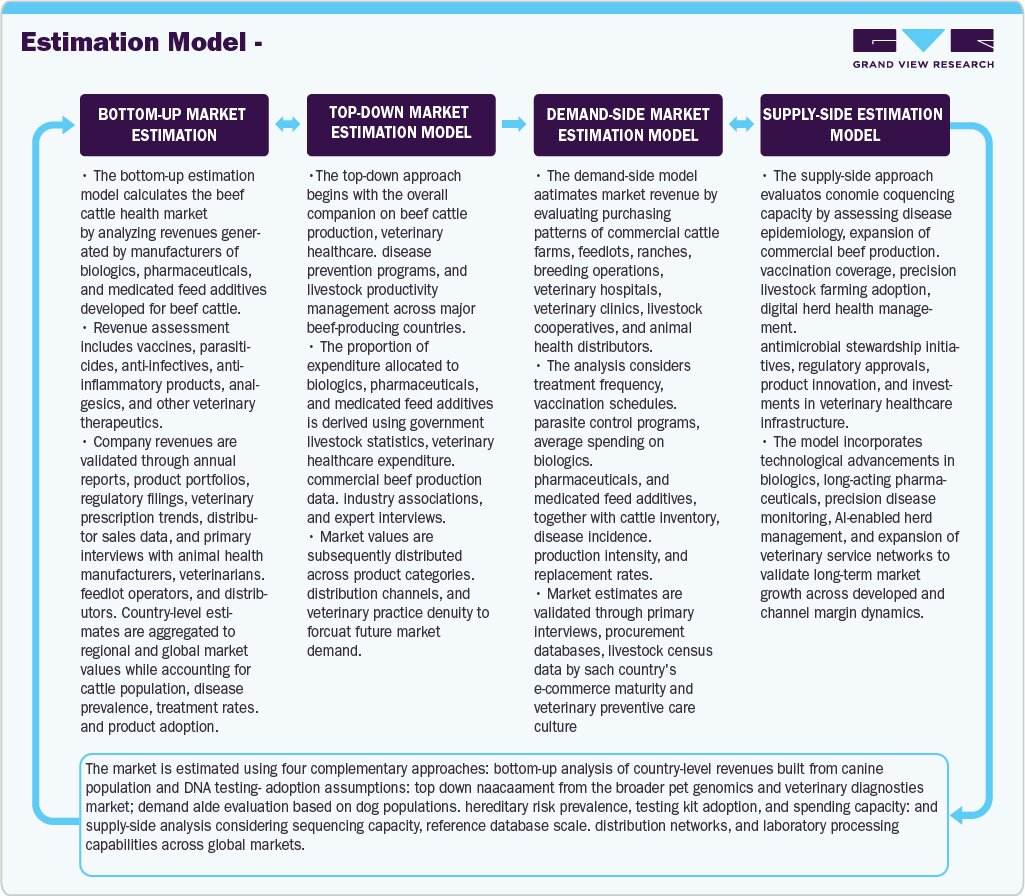
The dog DNA testing market figures in this report are based on a proven research process that combines executive interviews with secondary research from proprietary databases, company filings, and recognized regulatory and institutional sources. Market size is built through value-chain sizing-reconciling supply-side and demand-side estimates-and triangulated with bottom-up and top-down approaches. Every estimate passes multiple levels of expert validation before publication, with each dog DNA testing segment quantified using the revenue-capture definitions in the table below.
Segment Definition
Breed
Definition
Purebred
The segment represents revenue generated from DNA testing services performed for dogs belonging to recognized breeds, primarily supporting hereditary disease screening, breeding decisions, genetic health assessment, and pedigree-related testing.
Mixed Breed
The segment represents revenue generated from DNA testing services performed for dogs with ancestry from multiple breeds, supporting breed identification, genetic health assessment, disease screening, and ancestry analysis.
Sample Type
Definition
Blood
The segment represents revenue generated from Dog DNA Testing utilizing blood samples collected for genetic disease screening, hereditary condition detection, parentage analysis, and other molecular testing applications.
Saliva
The segment represents revenue generated from Dog DNA Testing utilizing saliva or buccal samples collected for genetic disease screening, breed analysis, carrier identification, and other DNA-based applications.
Fecal
The segment represents revenue generated from Dog DNA Testing utilizing fecal samples for applicable genetic, microbiome, pathogen-related, or other molecular analyses included within the defined market scope.
Others
The segment represents revenue generated from Dog DNA Testing using specimen types other than blood, saliva, or fecal samples for applicable genetic and molecular analyses.
Application
Definition
Breeding & Genetic Screening
The segment represents revenue generated from Dog DNA Testing used to identify hereditary risks and genetic characteristics supporting breeding selection, breeding management, and genetic health screening.
Diagnostic Testing
The segment represents revenue generated from Dog DNA Testing used to investigate suspected inherited disorders or genetic abnormalities based on clinical findings, veterinary assessment, or diagnostic requirements.
Carrier Status Testing
The segment represents revenue generated from Dog DNA Testing used to determine whether dogs carry pathogenic genetic variants associated with inherited disorders, particularly recessive conditions.
Parentage Testing
The segment represents revenue generated from Dog DNA Testing used to establish biological relationships, verify parentage, confirm pedigrees, and support breeding or registration requirements.
Other Testing
The segment represents revenue generated from Dog DNA Testing conducted for applications other than breeding, diagnosis, carrier status, or parentage, including research and specialized genetic analyses.
Distribution Channel
Definition
Direct Laboratory Submission
The segment represents revenue generated from Dog DNA Testing obtained through direct sample submission to laboratories by breeders, owners, veterinarians, or organizations.
Veterinary Clinics & Hospitals
The segment represents revenue generated from Dog DNA Testing initiated through veterinary clinics or hospitals where samples are collected and submitted to genetics laboratories.
Online/At-home Testing
The segment represents revenue generated from Dog DNA Testing ordered through digital platforms, with samples collected by owners at home and subsequently submitted for laboratory analysis.
Others
The segment represents revenue generated from Dog DNA Testing accessed through channels other than direct laboratory submission, veterinary facilities, or online/at-home testing.
Estimation Model
 To learn more about this report, Download Free Sample Report
Delivered Customizations
This report has been delivered with the following In-depth customizations
Client Request
Customization Delivered
Value Adds
Market Intelligence & Stakeholder GTM Study Global & Regional Dog DNA Testing Market (Direct-to-Consumer & Veterinary)
Detailed evaluation of direct-to-consumer (DTC) swab kit providers (e.g., Embark, Wisdom Panel), commercial reference labs, and veterinary network integration. Covers testing adoption for breed composition/ancestry, genetic disease predisposition screening, epigenetic age profiling, and physical trait/allele mapping. Includes target pet-owner segmentation, pricing elasticity analysis, and a phased market-entry roadmap for next-gen canine genomic panels.
Supports market-entry sequencing, prioritizes high-growth DTC e-commerce channels and veterinary health networks for early adoption, and strengthens product positioning against legacy single-gene assays. Enables alignment with current canine genetic health guidelines and pet-owner workflow preferences.
Regulatory & Trade-Flow Assessment: Canine DNA Test Kits & Genomic Microarrays
In-depth assessment of FDA-CVM, USDA-CVB, and regional regulatory considerations for direct-to-consumer collection kits and laboratory-developed genomic assays. Covers country-level kit distribution and sample export/import requirements across target global corridors, assay validation benchmarks (sensitivity, specificity, SNP microarray vs. NGS accuracy), and processing timelines. Identifies laboratory quality system standards (ISO 17025, CLIA) and supply chain logistics for collection swabs and reagents.
Helps organizations select the optimal genetic sequencing platform (SNP microarrays, low-pass sequencing, or targeted NGS panels), anticipate regulatory/export clearance timelines, minimize compliance risks, and structure distributor or clinical network partnerships to streamline global market entry.
Competitive Benchmarking: Global & Regional Dog DNA Testing Suppliers
Comparative profiling of established and emerging canine genetics providers (e.g., Wisdom Panel/Mars Petcare, Embark Veterinary, Orivet, Neogen, GenSol). Evaluates test portfolio breadth (breed identification, health screening, trait analysis, breeder panels), instrument/sequencing platform footprint, pricing tiering, DTC marketing strategies, and veterinary clinic distribution alliances. Includes SWOT analysis, commercialization strategy benchmarking, and identification of white-space opportunities in rapid point-of-care or early-screening canine diagnostics.
Enables clients to map competitive gaps in the global canine DNA testing landscape, identify breeder association or veterinary lab network partnership opportunities, benchmark consumer kit pricing, and design differentiated go-to-market strategies tailored to pet humanization trends and breed-specific health risks.
Frequently Asked Questions About This Report
The global dog DNA testing market is expected to grow at a CAGR of 11.2% from 2026 to 2033, reaching USD 520.9 million.
The global dog DNA testing market size was valued at USD 229.9 million in 2025 and is estimated at USD 247.9 million for 2026.
The pure breed segment led with a 54.8% revenue share in 2025.
North America dominated with a 42.3% revenue share in 2025.
Key factors include growing adoption of preventive pet healthcare, rising awareness of inherited and breed-specific disorders, and increasing use of genetic information in breeding decisions are driving demand for dog DNA testing
Key players include Mars, Inc (Wisdom Panel); Embark Veterinary, Inc.; Neogen Corporation; Zoetis, Inc. (Basepaws); Orivet; Ancestry; LABOGEN by LABOKLIN; Animal Genetics, Inc.; FERAGEN; Antagene; Genetech; WOOFDNA among others.
Europe is the second fastest-growing region over the forecast period.
The saliva segment led with a 65.3% revenue share in 2025.
The breeding and genetic screening segment led with a 55.7% revenue share in 2025.
About the Author(s)
Animal Health Research Team
Healthcare · Animal HealthThis report was authored by the animal health research team at Grand View Research - comprising two research analysts, one senior research analyst, and one industry expert - with specialized expertise in the animal health segment of the healthcare industry. All findings are based on proprietary healthcare databases, executive interviews, and regulatory analysis, subject to internal peer review prior to publication.
Last Updated:
Speak to Analyst

Customize this report to your needs - add regions, segments, or data points, with 20% free customization.
Or view our licence options:


ISO 9001:2015 & 27001:2022 Certified
We are GDPR and CCPA compliant! Your transaction & personal information is safe and secure. For more details, please read our privacy policy.


