
- Home
- »
- Advanced Interior Materials
- »
-
Germanium Market Size, Share & Trends Report, 2026-2033GVR Report cover
![Germanium Market (2026 - 2033)Report]()
Germanium Market (2026 - 2033)
Size, Share & Trends Analysis Report By Type (Germanium Ingot, Germanium Tetrachloride, High Purity GeO2), By Application (PET, Electronics & Solar, Fiber Optics, IR Optics), By Region, And Segment Forecasts
Market Size, 2025
$332.0MMarket Estimate, 2026
$344.6MMarket Forecast, 2033
$436.8MCAGR, 2026–2033
3.4%Germanium Market Summary
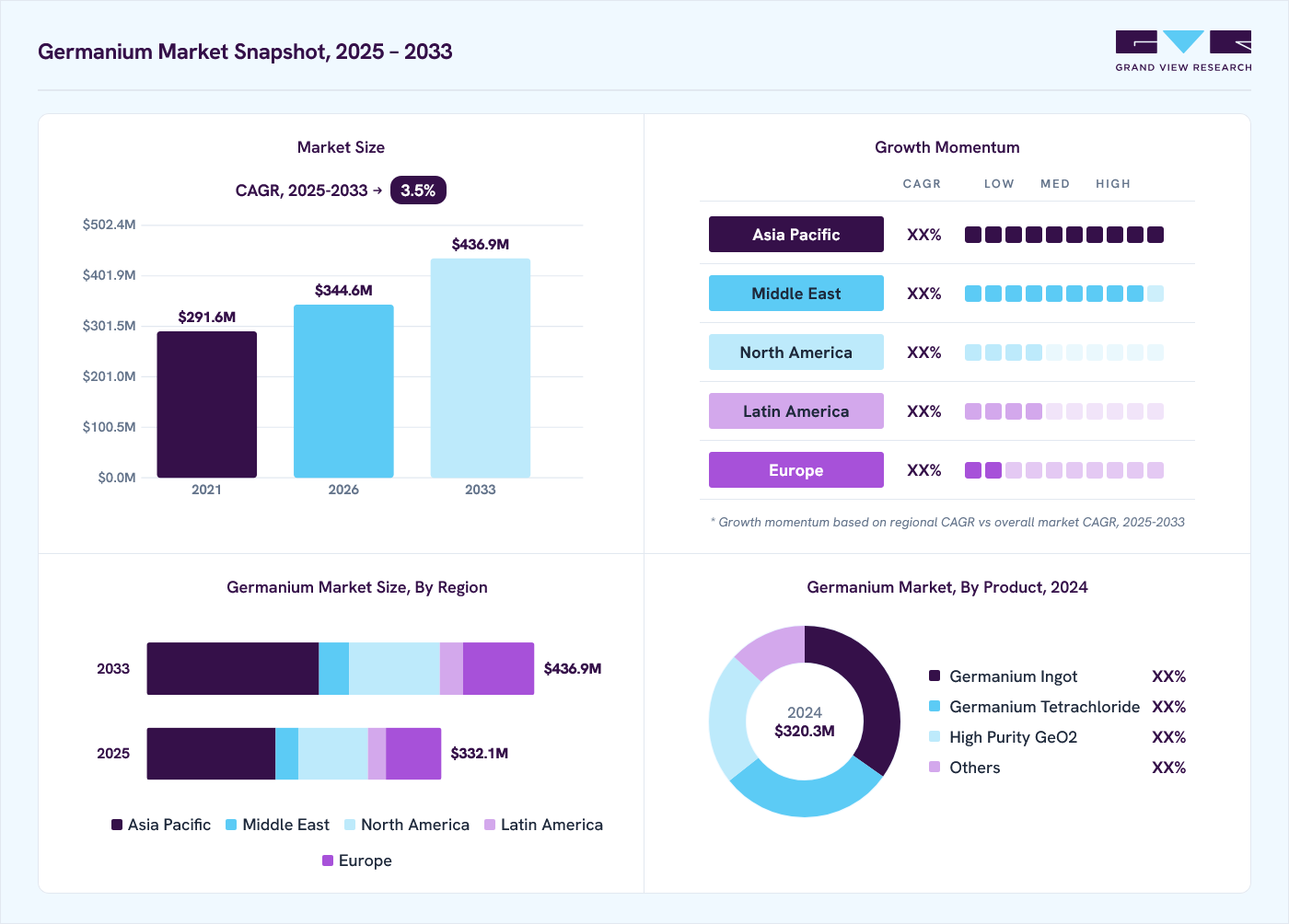
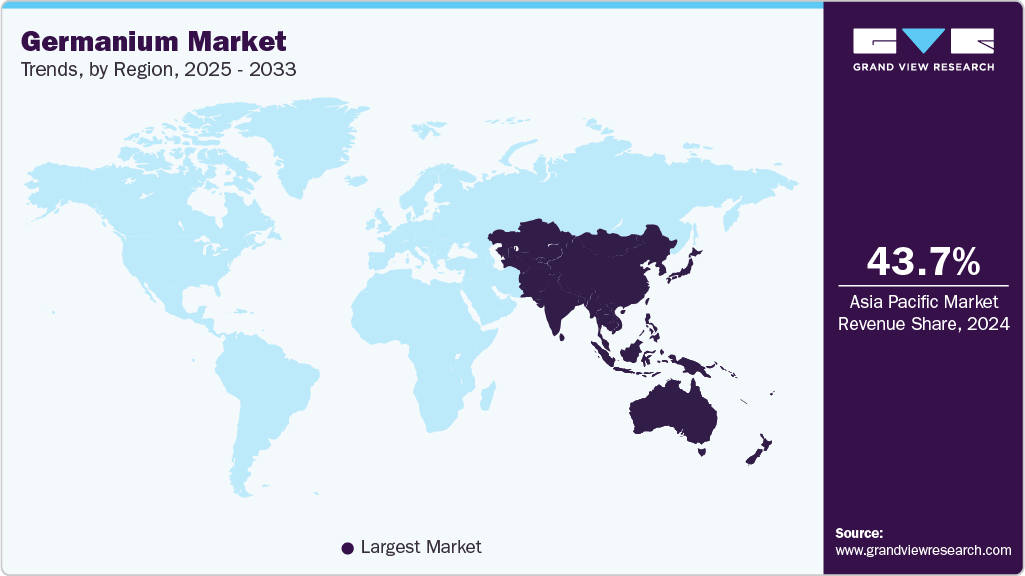
The global germanium market size was valued at USD 332.0 million in 2025 and is projected to grow from USD 344.6 million in 2026 to USD 436.8 million by 2033, at a CAGR of 3.4% from 2026 to 2033. Asia Pacific dominated the market, accounting for a revenue share of 43.8% in 2025. The primary driving factor for germanium demand is its critical role in high-tech applications such as fiber optics, IR optics, and solar cells.
Key Market Trends & Insights
- By type: Germanium ingot segment led the market with the largest revenue share of 34.7% in 2025.
- By application: Fiber optics segment led the market with the largest revenue share of 44.0% in 2025.
Regional Highlights
- Largest regional market: Asia Pacific (43.8% revenue share, 2025)
- By country: China held the largest market share in 2025.
Market Size & Forecast
- Market size in 2025: USD 332.0 Million
- Estimated market size in 2026: USD 344.6 Million
- Projected market size by 2033: USD 436.8 Million
- CAGR (20262033): 3.4%
Three ways to get this report
Buy it, customize it, or ask a question.Ask an Analyst
A direct answer, usually in 1 working day
- AccessReport author, directly
- Reply timeWithin 1 working day
- No sales callDirect answer only
- FormatEmail reply
- CostFree, no cost
Get the Full Report
What the study covers
- FormatsPDF · Excel · Dashboard
- Timeline2026–2033 annual, 2025 base
- Coverage20+ countries, 5 regions
- Companies10+ key players profiled
Customize the Report
20% free customization
- IncludeCountries, segments, points
- TailorTo your product definition
- ExtendDeeper competitor detail
- OrA fully bespoke study
- Turnaround5–10 working days
Rising investments in 5G networks, renewable energy, and defense technologies further boost its market growth. Germanium components account for a significant share of the advanced materials market due to their superior semiconductor properties, infrared transparency, and critical role in high-performance technologies. Their unique ability to enable high-speed data transmission, precision optics, and solar energy conversion makes them indispensable across multiple industries. Whether used in satellite solar cells, thermal imaging systems, or fiber optic cables, germanium-based materials are favored in defense, aerospace, telecommunications, and renewable energy sectors, where precision, efficiency, and reliability are non-negotiable. As a key enabler of cutting-edge innovation, it continues to solidify its presence in applications where conventional materials fall short.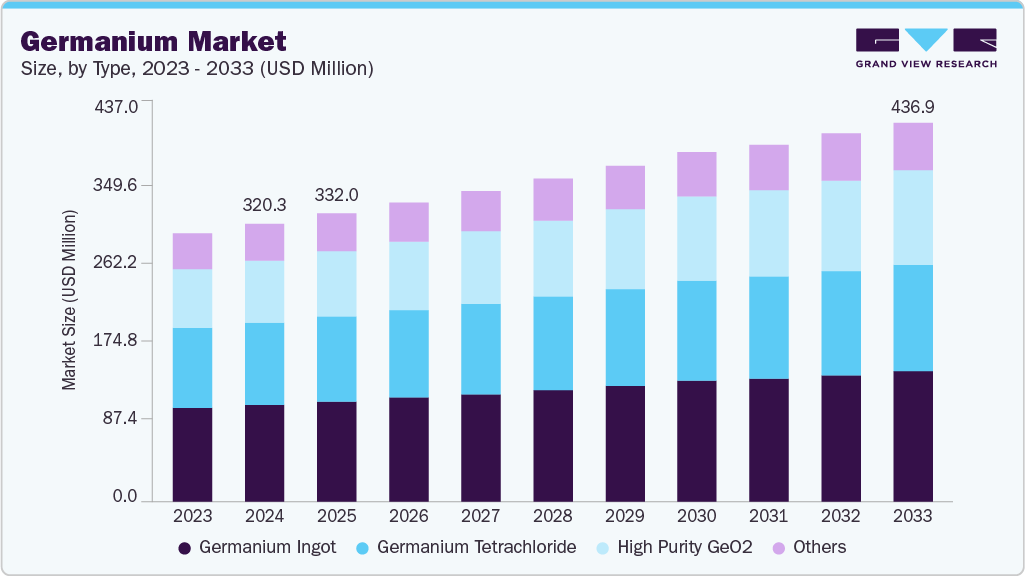
The increasing global focus on digital infrastructure, energy transition, and national security is accelerating the demand for germanium. Its use in high-frequency electronics, 5G network deployment, and infrared surveillance technologies is rising with the growth of smart cities, space programs, and border security systems. Germanium’s high efficiency in multi-junction solar cells has also made it a staple for space-based energy systems, contributing to its widespread adoption in satellite missions and aerospace applications. In a market driven by technological advancement and strategic resource planning, it stands out as a critical raw material, offering high performance and long-term value in next-generation industrial ecosystems.

Market Dynamics
The rising demand from the semiconductor and electronics industries primarily drives the global germanium market. Germanium possesses excellent electrical and optical properties, making it an essential material for high-performance semiconductors, infrared optics, fiber optic communication systems, and advanced sensors. The rapid deployment of 5G infrastructure, expansion of data centers, and increasing adoption of artificial intelligence and cloud computing are accelerating investments in optical fiber networks, where germanium tetrachloride is widely used in the production of high-quality optical fiber preforms. In addition, the growing use of germanium-based substrates in high-efficiency solar cells and electronic components continues to strengthen market demand across developed and emerging economies.
The growing demand from the semiconductor industry is one of the primary factors driving the global germanium market. Germanium offers excellent electron mobility and high electrical conductivity, making it suitable for specialized semiconductor applications, particularly in high-frequency and high-speed electronic devices. It is extensively used in silicon germanium (SiGe) semiconductor technology, which enhances chip performance while reducing power consumption. As industries continue to adopt advanced computing, telecommunications, and automotive electronics, the demand for germanium-based semiconductor materials is steadily increasing.
Furthermore, the rapid expansion of technologies such as artificial intelligence, 5G, the Internet of Things (IoT), autonomous vehicles, and data centers is driving significant demand for high-performance semiconductor components. Germanium-based materials are increasingly incorporated into integrated circuits, radio-frequency devices, and advanced processors to improve speed and efficiency. Ongoing investments in semiconductor manufacturing capacity and the development of next-generation chip technologies are expected to boost germanium consumption, positioning the semiconductor sector as a key long-term growth driver for the global germanium market.
The limited availability of germanium resources is a significant restraint on the global germanium market, as the metal is primarily recovered as a byproduct of zinc ore processing and, to a lesser extent, from coal fly ash. Since its production depends on the output of other mining activities rather than dedicated germanium mining, supply remains constrained and vulnerable to fluctuations in zinc production. This limited resource base often results in supply shortages, price volatility, and challenges in meeting the growing demand from semiconductor, fiber optics, infrared optics, and solar cell industries, thereby restricting the overall growth potential of the germanium market.
The rising demand for high efficiency solar cells presents a significant growth opportunity for the global germanium market. Germanium is widely used as a substrate material in multi junction solar cells due to its excellent electrical properties and compatibility with high performance photovoltaic technologies. These solar cells are extensively deployed in satellites, spacecraft, and space exploration missions because they deliver superior energy conversion efficiency and reliable performance under extreme environmental conditions. With increasing investments in satellite launches, space programs, and next generation renewable energy technologies, the demand for germanium based solar cell components is expected to grow steadily, creating substantial long term opportunities for market participants.
Analyst Perspective
The germanium market is becoming increasingly strategic as demand rises for advanced materials used in semiconductors, fiber-optic communication, infrared optics, and high-efficiency solar technologies. The expansion of 5G networks, artificial intelligence infrastructure, data centers, and satellite communications is driving sustained demand for high-purity germanium products, while the growing use of silicon-germanium semiconductors is further strengthening the market outlook. However, the industry's heavy reliance on germanium recovered as a byproduct of zinc refining continues to create supply constraints and price volatility, making resource security a key concern for manufacturers.
Type Insights
Based on type, the germanium ingot segment led the market with the largest revenue share of 34.7% in 2025. The growth of the germanium ingot segment is primarily driven by its extensive use in producing semiconductor wafers and IR optics. These ingots are the foundational material for manufacturing infrared optical lenses, which are widely used in thermal imaging systems for military, automotive, and industrial applications. The rising use of thermal imaging in security and defense has boosted the demand for germanium ingots, driven by the U.S. Department of Defense's growing investment in infrared technologies, thus emphasizing the importance of germanium-based IR optics.
High-purity germanium dioxide (GeO2) is the fastest-growing sub-segment due to its increasing use in optical fibers and solar energy applications. Its high transparency to infrared light makes it critical in producing optical lenses and fiber optic systems. The global demand for broadband communication, spurred by 5G growth, is boosting the need for optical fibers and, consequently, high-purity GeO2. This substance is also increasingly used in high-efficiency solar cells for space and renewable energy, aligning with the shift towards cleaner energy and large-scale solar projects in the U.S. and China. Consequently, the demand for high-purity GeO2 is set to surge.
Application Insights
Based on application, the fiber optics segment led the market with the largest revenue share of 44.0% in 2025. The fiber optics segment’s growth is fueled by the rapid expansion of 5G networks and increasing demand for high-speed data transmission. Germanium tetrachloride, a critical material used in fiber optic cables, plays a key role in enhancing the transmission capabilities of optical fibers. Market demand has surged with telecom companies globally, such as China Telecom and AT&T, investing heavily in expanding their fiber optic networks. Furthermore, governments are also supporting this growth; for instance, the U.S. Federal Communications Commission (FCC) has rolled out initiatives to extend broadband coverage, further driving the development of the germanium market.
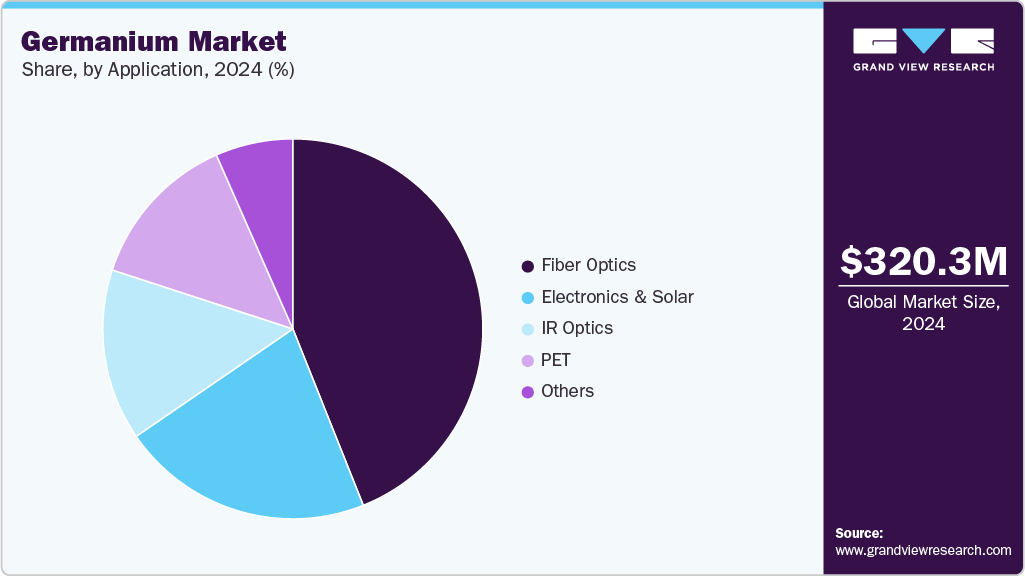
The electronics and solar energy segments are emerging as the fastest-growing application areas in the global germanium industry, propelled by escalating demand for high-performance semiconductors and next-generation solar technologies. It is prized for its exceptional electron mobility and thermal conductivity in electronics, making it a critical material for high-frequency, high-speed, and radiation-resistant semiconductors. These properties are fundamental in advanced applications such as aerospace electronics, satellite systems, and military-grade communication devices, where conventional silicon-based components often fall short. As global demand grows for faster and more efficient devices, including 5G infrastructure, quantum computing, and autonomous technologies, its role in chip development is becoming increasingly strategic.
In parallel, the solar energy segment is witnessing a significant uptick in its consumption, particularly for multi-junction solar cells used in space and satellite power systems. Unlike conventional silicon solar panels, germanium-based cells offer superior efficiency and durability in extreme conditions, making them indispensable for aerospace missions and high-efficiency concentrated solar power (CSP) systems. Countries such as China, the U.S., and members of the EU are heavily investing in space programs and renewable energy infrastructure, directly boosting demand for germanium. Notably, China's aggressive push in solar R&D and space exploration has positioned it as a major consumer and producer of germanium technologies.
Regional Insights
The growth of the germanium industry in North America is driven by the region’s strong demand for infrared optics, primarily in the defense and aerospace sectors. The U.S., in particular, is a significant consumer due to its investments in military applications and high-performance electronics. Government initiatives supporting the growth of renewable energy, including solar power projects, further propel its demand. Additionally, the presence of major defense contractors and space agencies like NASA fuels consistent demand for germanium-based infrared and solar technologies. Ongoing R&D efforts in semiconductor innovation and thermal imaging contribute to the region’s growing consumption.
U.S. Germanium Market Trends
The U.S. dominates the North America germanium industry, with high consumption in both the military and space sectors. The U.S. Department of Defense and NASA are key drivers, using germanium in thermal imaging and solar panels for satellites. Growing investments in 5G infrastructure also support demand for it in fiber optics. The country’s emphasis on maintaining technological superiority in defense and aerospace fuels also sustained R&D in germanium-based applications. Strategic reserves and government-backed initiatives to secure critical minerals further reinforce the U.S.’s leading position in the regional market.
Asia Pacific Germanium Market Trends
Asia Pacific dominated the germanium market with the largest revenue share of 43.8% in 2025. Asia Pacific is the largest industry for germanium, led by China, which stands as the world’s biggest producer and consumer. The region’s dominance is fueled by its expansive electronics manufacturing base, booming fiber optics industry, and rapidly growing solar energy projects. China's control over its production significantly impacts global supply chains, giving it strategic leverage in the worldwide tech and energy sectors. Additionally, strong government support for renewable energy and high-tech industries, particularly in China, South Korea, and Japan, drives regional demand and innovation in germanium applications.
China Germanium Market Trends
The germanium market in the China held the largest share in the Asia Pacific region in 2025.
Europe Germanium Market Trends
Europe’s germanium industry is shaped by its strong focus on renewable energy and advanced technology sectors. Countries like Germany and France invest heavily in solar energy projects as part of their broader decarbonization goals, boosting demand for germanium-based solar cells. At the same time, the region’s well-established defense and aerospace industries drive consistent use of it in infrared optics and high-performance electronics. Europe is also actively working to diversify the global germanium supply chain by supporting domestic refining capabilities and exploring alternative sourcing to reduce import dependency, particularly from China.
Key Germanium Company Insights
Some of the key players operating in the market include Teck Resources Limited and China Germanium Co., Ltd.
-
Yunnan Chihong Zinc & Germanium Co., Ltd., based in China, is one of the world’s leading germanium producers, leveraging its position as a key player in the global market. The company’s operations span germanium extraction, refining, and production of germanium-based products like ingots, tetrachloride, and high-purity GeO2. It supplies materials to various industries, including fiber optics, infrared optics, and solar energy. Its strategic location in China, where most of the world’s germanium reserves are found, strengthens its supply chain, enabling it to meet domestic and international demand.
-
Umicore, a Belgium-based company, is a major player in the germanium market, with a strong presence in the global supply of high-purity germanium products. The company focuses on refining and recycling germanium, offering products for advanced applications in fiber optics, solar cells, and infrared optics. Umicore's expertise in material technology allows it to supply germanium for high-efficiency solar panels, especially for the aerospace and renewable energy sectors. Additionally,
Key Germanium Companies:
The following key companies have been profiled for this study on the germanium market.
-
Yunnan Chihong Zinc & Germanium Co., Ltd.
-
Umicore
-
Teck Resources Limited
-
JSC Germanium
-
PPM Pure Metals GmbH
-
Indium Corporation
-
China Germanium Co., Ltd.
-
AXT, Inc.
-
5N Plus
-
Noah Chemicals
Competitive Benchmarking
Category
Operating Strategies
Competitive Edge
Weakness
Established Players (e.g. Teck Resources Limited, Yunnan Chihong Zinc & Germanium Co., Ltd.)
- Mature participants in the germanium market primarily focus on securing stable raw material supplies through integrated recovery from zinc refining operations, coal fly ash, and recycled germanium bearing materials.
- These companies operate advanced refining and purification facilities capable of producing high purity germanium metal, germanium dioxide, germanium tetrachloride, and specialty compounds for fiber optics, infrared optics, semiconductors, and solar applications.
- Established players possess significant competitive advantages through their integrated refining infrastructure, proprietary purification technologies, and extensive experience in producing ultra high purity germanium products.
- Their ability to consistently manufacture materials meeting stringent optical and semiconductor specifications makes them preferred suppliers for high technology industries.
- Despite their strong market positions, mature players face challenges related to dependence on byproduct availability from zinc refining and other primary industrial processes.
- Since germanium is mainly recovered as a byproduct, production volumes are influenced by the output of other industries rather than direct market demand.
Emerging & Regional Players (e.g., Noah Chemicals, PPM Pure Metals GmbH)
- Emerging participants in the germanium market generally focus on developing alternative recovery technologies, expanding recycling capabilities, and establishing diversified regional supply chains.
- Rather than relying solely on traditional byproduct recovery, these companies invest in innovative extraction methods, secondary resource recovery, and sustainable refining technologies to improve resource availability.
- Emerging companies benefit from operational flexibility and the ability to adopt modern extraction, purification, and recycling technologies without the constraints of legacy infrastructure.
- Their facilities are often designed to maximize recovery efficiency while minimizing environmental impacts, enabling competitive positioning in an increasingly sustainability focused market.
- Emerging participants face significant challenges related to limited production capacity, high technology development costs, and commercialization risks.
- Producing high purity germanium requires advanced refining equipment, specialized technical expertise, and rigorous quality control systems, resulting in substantial capital investment requirements.
Recent Developments
-
In May 2024, Umicore entered into a strategic partnership with STL, a subsidiary of Chemaf Resources, to advance germanium recycling from mining waste in the Democratic Republic of Congo (DRC). The initiative centers on extracting germanium from tailings at STL’s Lubumbashi site, reinforcing Umicore’s position as a frontrunner in sustainable materials recovery and circular economy practices.
-
In September 2023, Umicore partnered with RENA Technologies to co-develop next-generation germanium wafers aimed at enhancing semiconductor performance. This collaboration is focused on improving wafer quality for applications in high-efficiency solar cells and advanced electronics, combining RENA’s semiconductor processing expertise with Umicore’s leadership in the germanium value chain.
Germanium Market Report Scope
Report Attribute
Details
Market definition
The market size represents the annual value of the apparent consumption of germanium across various applications during a particular year.
Market size value in 2025
USD 332.0 million
Estimated market size in 2026
USD 344.6 million
Projected market size by 2033
USD 436.8 million
Growth rate
CAGR of 3.4% from 2026 to 2033
Base year for estimation
2025
Historical data
2021 - 2024
Forecast period
2026 - 2033
Quantitative units
Revenue in USD million, volume in kilotons, and CAGR from 2026 to 2033
Report coverage
Revenue forecast, volume forecast, company ranking, competitive landscape, growth factors, and trends
Segments covered
Type, application, region.
Regional scope
North America; Europe; Asia Pacific; Latin America; Middle East & Africa
Country scope
U.S., Canada, Mexico, Germany, UK, Spain, Russia, India, China, Japan, South Korea, Brazil, UAE
Key companies profiled
Teck Resources Limited; Yunnan Chihong Zinc & Germanium Co., Ltd.; Umicore; JSC Germanium; China Germanium Co., Ltd.; 5N Plus; Noah Chemicals; AXT, Inc.; PPM Pure Metals GmbH; Indium Corporation
Customization scope
Free report customization (equivalent up to 8 analysts' working days) with purchase. Addition or alteration to country, regional & segment scope.
Pricing and purchase options
Avail customized purchase options to meet your exact research needs. Explore purchase options
Global Germanium Market Report Segmentation
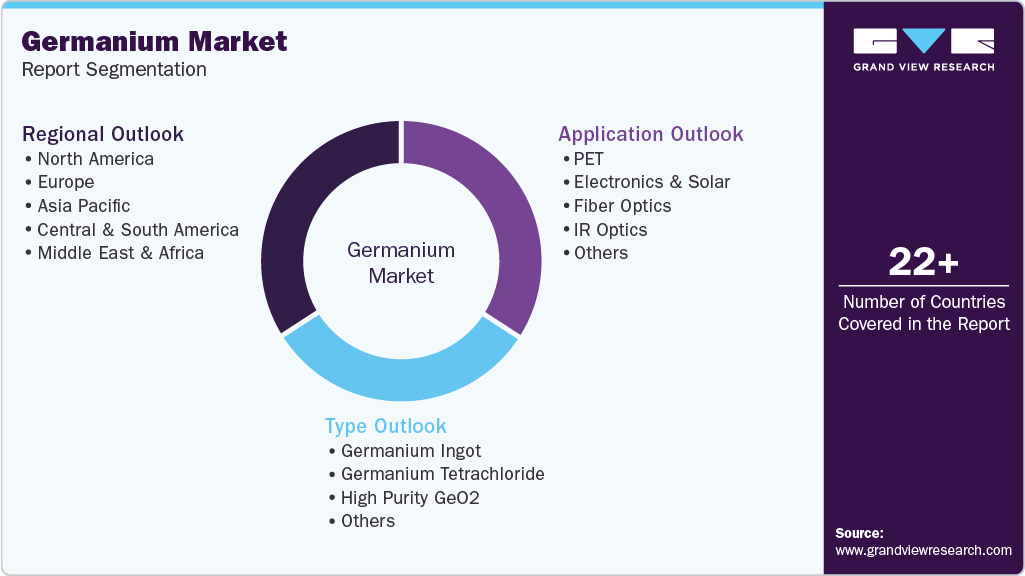
This report forecasts revenue and volume growth at the global, country, and regional levels and provides an analysis of the latest trends in each of the sub-segments from 2021 to 2033. For this study, Grand View Research has segmented the global germanium market report based on type, application, and region:
-
Type Outlook (Volume, Kilotons; Revenue, USD Million, 2021 - 2033)
-
Germanium Ingot
-
Germanium Tetrachloride
-
High Purity GeO2
-
Others
-
-
Application Outlook (Volume, Kilotons; Revenue, USD Million, 2021 - 2033)
-
PET
-
Electronics & Solar
-
Fiber Optics
-
IR Optics
-
Others
-
-
Regional Outlook (Volume, Kilotons; Revenue, USD Million, 2021 - 2033)
-
North America
-
U.S.
-
Canada
-
Mexico
-
-
Europe
-
Germany
-
UK
-
Spain
-
Russia
-
-
Asia Pacific
-
China
-
India
-
Japan
-
South Korea
-
-
Central & South America
-
Brazil
-
-
Middle East & Africa
-
UAE
-
-
Research Methodology
The germanium market figures in this report are based on a proven research process that combines executive interviews with secondary research from proprietary databases, company filings, and recognized regulatory and institutional sources. Market size is built through value-chain sizing-reconciling supply-side and demand-side estimates-and triangulated with bottom-up and top-down approaches. Every estimate passes multiple levels of expert validation before publication, with each germanium segment quantified using the revenue-capture definitions in the table below.
Segment Definition
Type
Revenue Capture Definition
Germanium Ingot
Germanium ingots account for a significant share of market revenue due to their use as the primary raw material for manufacturing semiconductor wafers, infrared optical components, and specialty electronic devices. Demand is supported by the electronics, defense, and photovoltaic industries.
Germanium Tetrachloride
Germanium tetrachloride represents a major revenue generating segment as it is extensively used in the production of high purity optical fiber preforms for telecommunications networks. Growing investments in fiber optic infrastructure and high speed data transmission continue to drive its market value.
High Purity GeO2
High purity germanium dioxide captures a notable portion of market revenue owing to its application in optical fibers, infrared optics, catalysts, and semiconductor materials. Its increasing use in advanced electronics and photonics supports steady revenue growth.
Others
The others segment includes germanium metal powder, germanium scrap, organogermanium compounds, and specialty germanium products used across research, healthcare, and industrial applications. Although smaller in market share, this segment generates revenue through niche and high value applications.
Application
Revenue Capture Definition
PET
The PET segment generates revenue from the use of germanium compounds as catalysts in the production of polyethylene terephthalate (PET) resins used for packaging and beverage bottles. Demand is supported by the expanding food and beverage packaging industry.
Electronics & Solar
This segment captures a substantial share of market revenue through the use of germanium in semiconductors, integrated circuits, and high efficiency multi junction solar cells. Rising demand for advanced electronics and satellite applications continues to drive growth.
Fiber Optics
The fiber optics segment accounts for a significant portion of revenue due to the use of germanium tetrachloride in manufacturing optical fiber preforms. Expansion of broadband networks, data centers, and 5G infrastructure supports strong demand.
IR Optics
The IR optics segment generates considerable revenue from germanium lenses and optical components used in thermal imaging, night vision systems, and infrared cameras. Growing defense, aerospace, and industrial monitoring applications are fueling market expansion.
Others
The others segment includes applications in healthcare, research, catalysts, radiation detection, and specialty industrial products. Revenue is driven by emerging technologies and niche applications requiring the unique properties of germanium.
Estimation Model
Layer Name
Key Question
Description
High Technology & Industrial Demand Base Layer
What forms the demand base?
Identify global demand from major germanium consuming industries including fiber optics, infrared optics, electronics, solar energy, aerospace & defense, and specialty chemicals. Assess production volumes of optical fibers, infrared imaging systems, semiconductor devices, and high efficiency solar cells to establish the total addressable demand for germanium.
Germanium Application Penetration Layer
Where is germanium utilized?
Estimate the penetration of germanium across key applications including fiber optic communication systems, infrared optical components, semiconductor devices, photovoltaic cells, catalysts, and polymerization processes. Analyze the adoption of germanium metal, germanium dioxide, germanium tetrachloride, and other germanium compounds across end use industries and regions.
Germanium Consumption Intensity Layer
How much germanium is consumed?
Analyze germanium consumption intensity based on optical fiber deployment, semiconductor manufacturing, infrared imaging production, and solar cell manufacturing. Evaluate the utilization of different germanium products according to purity requirements and application specific performance standards. Consumption intensity varies according to technological advancements, manufacturing output, recycling rates, and demand for high performance electronic and optical materials.
Revenue Layer
How is market revenue generated?
Market revenue is quantified through the sale of germanium metal, germanium dioxide, germanium tetrachloride, high purity germanium products, and other specialty germanium compounds. Revenue generation is driven by demand from fiber optics, electronics, infrared optics, solar energy, aerospace & defense, and industrial applications. Market value is influenced by raw material availability, purity grades, production costs, recycling activity, technological adoption, and regional supply demand dynamics.
Delivered Customizations
This report has been delivered with the following In-depth customizations
CLIENT REQUEST
CUSTOMIZATION DELIVERED
VALUE ADDS
Regional Segmentation
Detailed regional analysis of the germanium market across North America, Europe, Asia Pacific, Latin America, and Middle East & Africa. Included evaluation of germanium production, zinc refinery output, recycling activities, fiber optic manufacturing, infrared optics demand, semiconductor production, solar cell manufacturing, and government initiatives supporting critical mineral supply chains.
Identified key production hubs, high growth consumption markets, and emerging technology manufacturing centers. Enabled strategic expansion planning based on semiconductor investments, fiber optic network expansion, and critical mineral security initiatives. Supported regional demand forecasting and sourcing strategies.
Cross Segmentation
Comprehensive cross segmentation analysis by product type and application, including germanium ingots in semiconductor manufacturing, germanium tetrachloride in fiber optic production, high purity germanium dioxide in infrared optics and solar cells, and other germanium products across electronics, telecommunications, aerospace, and renewable energy sectors.
Enabled identification of the most attractive product application combinations and emerging technology opportunities. Supported product portfolio optimization, customer targeting, and investment prioritization strategies.
Opportunity Assessment
Identification of high growth opportunities across fiber optic communication networks, infrared optics, semiconductor devices, high efficiency solar cells, satellite systems, defense electronics, electric vehicles, and advanced sensing technologies.
Enabled prioritization of high return growth segments and emerging regional opportunities. Supported long term investment planning, capacity expansion decisions, recycling investments, and strategic business development initiatives aligned with global digitalization and energy transition trends.
Frequently Asked Questions About This Report
The global germanium market size was valued at USD 332.0 million in 2025 and is estimated at USD 344.6 million for 2026.
The global germanium market is expected to grow at a CAGR of 3.4% from 2026 to 2033, reaching USD 436.9 million by 2033.
The germanium market is experiencing strong growth, primarily fueled by rising demand in high-tech sectors such as fiber optics, infrared optics, and solar cells.
Asia Pacific dominated the market with revenue share of 43.8% in 2025.
The fiber optics segment led the market with the largest revenue share of 44.0% in 2025.
The germanium ingot accounted for largest revenue share of 34.7% in 2025.
Key players include Teck Resources Limited, Yunnan Chihong Zinc & Germanium Co., Ltd., Umicore, JSC Germanium, China Germanium Co., Ltd., 5N Plus, Noah Chemicals, AXT, Inc., PPM Pure Metals GmbH, and Indium Corporation.
About the Author(s)
Advanced Interior Materials Research Team
Advanced Materials · Advanced Interior MaterialsThis report was authored by the advanced interior materials research team at Grand View Research - comprising two research analysts, one senior research analyst, and one industry expert - with specialized expertise in the advanced interior materials segment of the advanced materials industry. All findings are based on proprietary advanced materials databases, executive interviews, and regulatory analysis, subject to internal peer review prior to publication.
Last Updated:
Speak to Analyst


Customize this report to your needs - add regions, segments, or data points, with 20% free customization.
Or view our licence options:


ISO 9001:2015 & 27001:2022 Certified
We are GDPR and CCPA compliant! Your transaction & personal information is safe and secure. For more details, please read our privacy policy.


