
- Home
- »
- Personal Care & Cosmetics
- »
-
Cosmetic Chemicals Market Size & Share Report, 2026-2033GVR Report cover

Cosmetic Chemicals Market (2026 - 2033)
Size, Share & Trends Analysis Report By Product (Glycolic Acid, Retinol, Tea Tree Oil, Niacinamide, Vitamin C, Squalene, Hyaluronic Acid, Grapeseed Oil), By Region (North America, Europe, APAC), And Segment Forecasts
Market Size, 2025
$4.8BMarket Estimate, 2026
$5.3BMarket Forecast, 2033
$9.2BCAGR, 2026–2033
8.4%Cosmetic Chemicals Market Summary
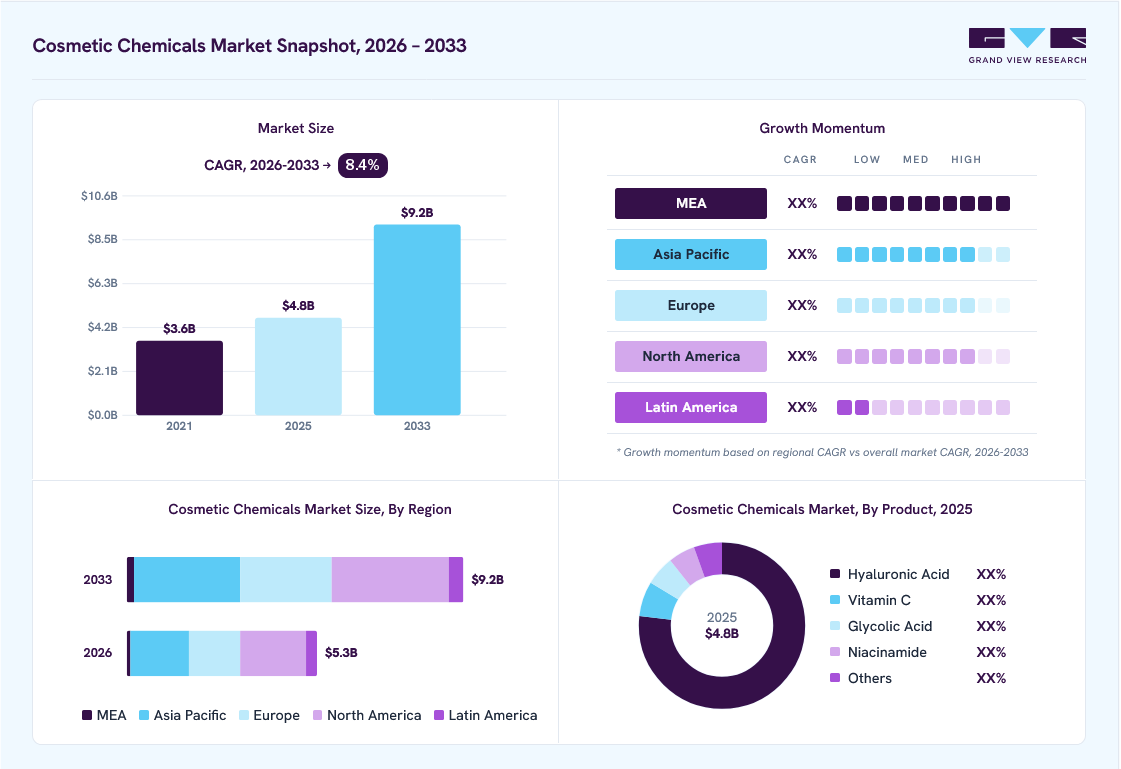
The global cosmetic chemicals market size was valued at USD 4.8 billion in 2025 and is projected to grow from USD 5.3 billion in 2026 to USD 9.2 billion by 2033, growing at a CAGR of 8.4% from 2026 to 2033. North America dominated the market, accounting for the largest global share of 34.3% in 2025. Rising demand for cosmetic products formulated with natural ingredients coupled with consumer willingness to spend on premium products is driving demand for organic grade cosmetic chemicals.
 Source: Grand View Research, IR Documents, Primary Interviews, Paid DatabasesTo learn more about this report,
 Download Free Sample Report
Key Market Trends & Insights
- By product: Hyaluronic acid held a dominant position, contributing 76.7% of total revenue in 2025.
Regional Highlights
- Largest regional market: North America (34.3% revenue share, 2025)
- By country: The U.S. held the largest share of North America in 2025.
Market Size & Forecast
- Market size in 2025: USD 4.8 Billion
- Estimated market size in 2026: USD 5.3 Billion
- Projected market size by 2033: USD 9.2 Billion
- CAGR (2026-2033): 8.4%
Three ways to get this report
Buy it, customize it, or ask a question.Ask an Analyst
Analyst response in 1 business day
- AccessReport author, directly
- Reply timeWithin 1 working day
- No sales callDirect answer only
- FormatEmail reply
- CostFree, no cost
Get the Full Report
What the study covers
- FormatsPDF · Excel · Dashboard
- Timeline2026–2033 annual, 2025 base
- Coverage20+ countries, 5 regions
- Companies10+ key players profiled
Customize the Report
20% free customization
- IncludeCountries, segments, points
- TailorTo your product definition
- ExtendDeeper competitor detail
- OrA fully bespoke study
- Turnaround5–10 working days
Some of the commonly used ingredients in cosmetics include emulsifiers, preservatives, thickeners, moisturizers, colors, and fragrances. They can be developed synthetically or naturally. Synthetic chemicals are also derived from natural products such as petroleum or bio-based ingredients. However, these chemicals are manufactured using complex production processes and derived reagents and catalysts, and therefore, they are termed synthetic. Natural products include plant, mineral, animal, and microbial. To learn more about this report, Download Free Sample Report
Cosmetic chemicals are ingredients used in personal care products to enhance their effectiveness, texture, scent, or appearance. These substances can include preservatives, stabilizers, emulsifiers, and active ingredients that provide benefits such as hydration, sun protection, or anti-aging effects. It's essential to ensure they are safe for skin application and effective for their intended use.
Emollients soften the skin by preventing water loss. They are used in several personal care and cosmetics products such as body lotions, skin moisturizers, face creams, and lipsticks. These emollients are commercially sold in natural as well as synthetic forms. Some of the widely used emollients include olive oil, coconut oil beeswax, and lanolin, as well as petrolatum (petroleum jelly), glycerin, mineral oil, zinc oxide, diglycol laurate, and butyl stearate.
Preservatives constitute a major part of cosmetics products and are normally added to the formulations to extend their shelf life and prevent the growth of bacteria and fungi. The development of these microorganisms can easily ruin the product and can harm the application. As most of the microbes reside in water, the preservatives used should need to be water-soluble.
Preservatives in cosmetics vary in compositions and quantities. The preservatives used in the formulations can vary from around 0.01% to 5.0% depending upon the necessity of the product. Some of the commonly used preservatives include formaldehyde, parabens, salicylic acid, benzyl alcohol, and tetrasodium ethylenediaminetetra-acetic acid (EDTA).
Market Dynamics
The cosmetic chemicals market is experiencing steady growth, supported by increasing consumer demand for high-performance skincare and personal care products that incorporate scientifically proven active ingredients. Rising awareness of skin health, anti-aging solutions, and multifunctional formulations has accelerated the adoption of ingredients such as hyaluronic acid, niacinamide, retinol, vitamin C, and squalene across premium and mass-market cosmetic products. Manufacturers are investing in biotechnology, fermentation-based production, and sustainable sourcing practices to improve ingredient efficacy while meeting evolving environmental and regulatory requirements. The growing preference for clean-label, vegan, and naturally derived cosmetic chemicals is further encouraging innovation in plant-based oils and bio-based active ingredients. Expanding e-commerce channels, rising disposable incomes, and increasing influence of social media and dermatologist-backed skincare recommendations continue to strengthen product demand worldwide. However, challenges such as stringent regulatory compliance, fluctuations in raw material prices, and intense competition among ingredient suppliers are prompting companies to focus on product differentiation, quality assurance, and strategic partnerships to maintain market competitiveness.
The increasing consumer preference for skincare products formulated with clinically validated active ingredients is a primary driver of the cosmetic chemicals market. Growing awareness of skin health, anti-aging, hydration, pigmentation control, and barrier repair has encouraged consumers to seek products containing ingredients such as hyaluronic acid, niacinamide, retinol, vitamin C, and glycolic acid. This shift has prompted cosmetic manufacturers to invest in advanced formulations that deliver measurable performance, creating sustained demand for high-purity cosmetic chemicals. The influence of dermatologists, skincare professionals, and digital platforms has further strengthened consumer confidence in evidence-based ingredients, accelerating their incorporation into both premium and mass-market product portfolios.
In response to evolving consumer expectations, manufacturers are expanding research and development activities to improve ingredient stability, bioavailability, and multifunctionality. Biotechnology and fermentation-based production methods are increasingly being adopted to enhance product quality while reducing environmental impact. As cosmetic brands compete through innovation and product efficacy, ingredient suppliers are introducing customized solutions tailored to different skin types and applications. This continuous focus on scientifically supported formulations is expected to reinforce long-term growth across the cosmetic chemicals market.
Stringent regulatory frameworks governing the safety, efficacy, labelling, and permissible concentrations of cosmetic ingredients remain a significant restraint for the cosmetic chemicals market. Manufacturers must comply with diverse regulatory standards across different regions, requiring extensive toxicological evaluations, product testing, documentation, and continuous monitoring of evolving regulatory guidelines. These compliance obligations increase development costs, extend product commercialization timelines, and create barriers for introducing new active ingredients into the market. Changing restrictions on certain chemical substances, growing scrutiny of ingredient claims, and increasing demand for transparent labeling compel manufacturers to invest heavily in regulatory affairs, quality assurance, and reformulation efforts. For small and mid-sized ingredient suppliers, the financial and operational burden of meeting multiple international regulatory requirements can limit innovation, delay market entry, and reduce overall competitiveness in an increasingly regulated global cosmetic industry.
The growing emphasis on sustainability and ingredient transparency presents a significant opportunity for the cosmetic chemicals market. Consumers are increasingly favoring products formulated with naturally derived, biodegradable, vegan, and ethically sourced ingredients, encouraging cosmetic manufacturers to reformulate existing products and develop environmentally responsible alternatives. This trend has created strong demand for bio-based active ingredients, plant-derived oils, and fermentation-produced cosmetic chemicals that align with clean beauty standards without compromising product performance. As sustainability becomes a key purchasing criterion, suppliers with robust green manufacturing capabilities are well positioned to strengthen their market presence.
At the same time, regulatory agencies and global cosmetic brands are promoting sustainable sourcing practices, reduced carbon emissions, and responsible supply chain management. These developments are encouraging investments in renewable raw materials, eco-friendly processing technologies, and circular production models. Companies that can combine scientific efficacy with sustainability credentials are likely to gain a competitive advantage, particularly in premium skincare segments where consumers are willing to pay higher prices for environmentally conscious products. This transition toward sustainable innovation is expected to create substantial long-term growth opportunities for cosmetic chemical manufacturers.
Market Concentration & Characteristics
The cosmetic chemicals market is moderately consolidated, with a few dominant players such as Contipro a.s., Anmol Chemicals Group, Stanford Chemicals, and others holding substantial market shares. These key players benefit from integrated supply chains, proprietary extraction and purification technologies, and strong relationships with battery manufacturers. Their established distribution networks and investments in product innovation further reinforce their market positions.
The industry is categorized by continuous research and development activities related to product innovation. Market players are focused on obtaining sustainable formulations made from natural ingredients that are free of artificial additives. Elevance Renewable Sciences, Inc., a specialty chemical manufacturer develops, and markets emollients formulated using its patented technology from plant based products for further use in skin lotions, cosmetics, and hair styling products.
 To learn more about this report, Download Free Sample Report
Moreover, technological advances to manufacture active ingredients for cosmetic use are expected to disrupt the market for cosmetic chemicals in the coming years. For instance, Givaudan is using plant cell culture and phyto peptides technology to develop skin care products. Continuous R&D activities undertaken by industry players to develop sustainable products that meet consumer demands along with growing inclination towards natural and organic cosmetic products is expected to drive the market for cosmetic chemicals over the forecast period.
Analyst Perspective
The cosmetic chemicals market is positioned for sustained growth, supported by rising demand for high-performance skincare and multifunctional active ingredients. Innovation in biotechnology and fermentation-based production is enabling manufacturers to deliver safer, more effective, and sustainable cosmetic formulations. Clean beauty trends and increasing consumer preference for scientifically validated ingredients are accelerating the adoption of premium cosmetic chemicals. Regulatory compliance and ingredient transparency are becoming key competitive differentiators, encouraging continuous investment in research and quality assurance. Companies that combine technological innovation, sustainable sourcing, and strong partnerships with cosmetic brands are expected to strengthen their market position over the forecast period.
Product Insights
By product, hyaluronic acid held a dominant position, contributing 76.7% of total revenue in 2025. Hyaluronic acid is also called hyaluronan. It is a gooey substance, naturally derived from the human body. It is largely found in the eyes, connective tissues, and skin. It is used in various forms, such as eye drops, injections, topical serums, and supplements. It is mainly used to retain water and keep tissues hydrated and lubricated. Hyaluronic acid is also called hyaluronan. It is a gooey substance, naturally derived from the human body. It is largely found in the eyes, connective tissues, and skin. It is used in various forms, such as eye drops, injections, topical serums, and supplements. It is mainly used to retain water and keep tissues hydrated and lubricated.
The tea tree oil segment is expected to grow with a significant CAGR of 12.6% from 2026 to 2033 during the forecast period. The demand for tea tree oil is increasing rapidly as it is safe for use and affordable. It is effective against acne and is used as benzoyl peroxide in skincare application. It also helps reduce skin inflammation. It can be purchased from a local grocery store as well as online retailers.
Regional Insights
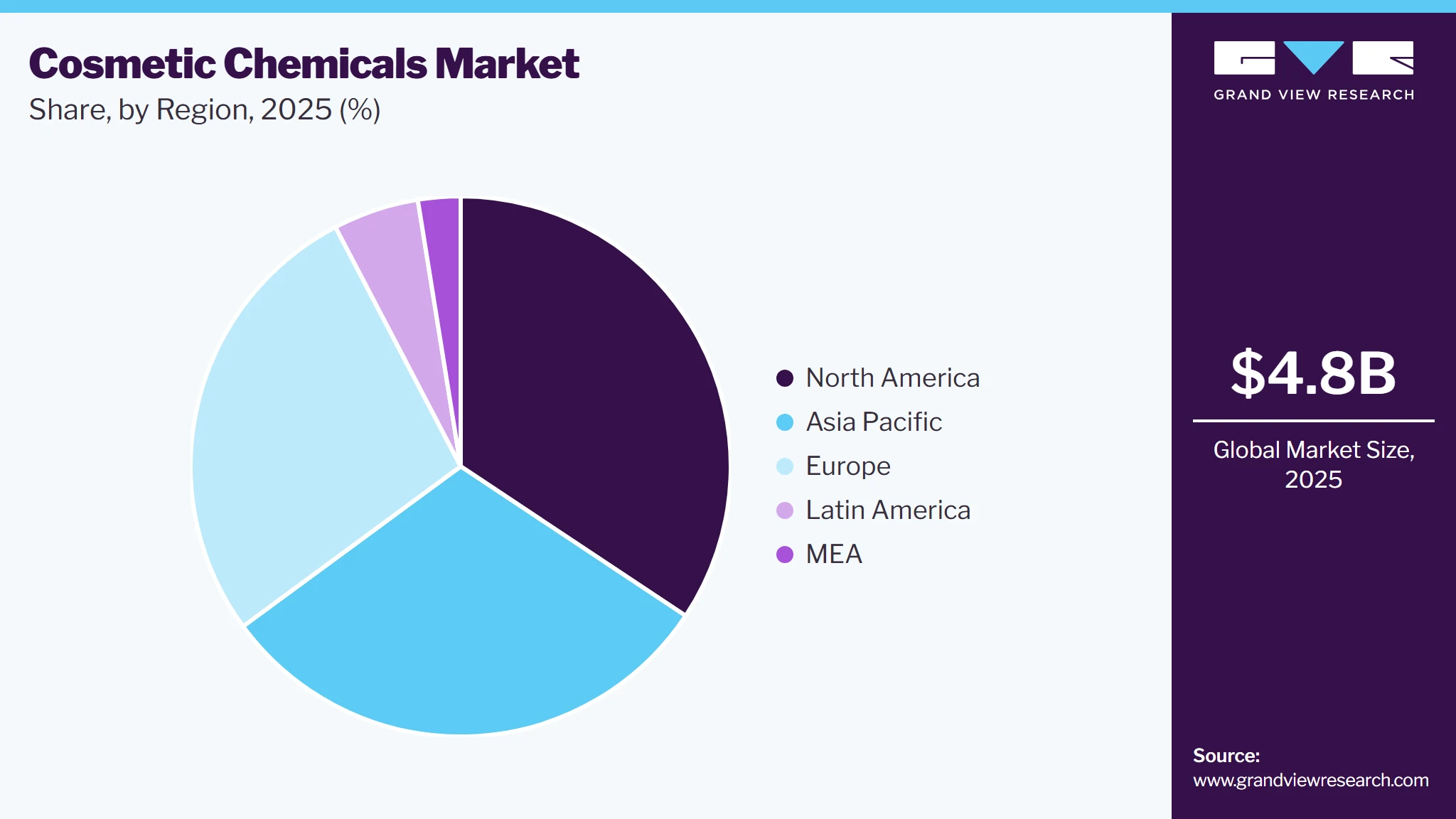
North America dominated the cosmetic chemicals market with the highest revenue share of 34.3% in 2025. The presence of various small and large-scale producers and suppliers of the ingredients characterizes North American cosmetic chemicals market. Manufacturers in the region are adopting an integrated approach towards health and beauty products rather than treating each as an individual category in personal care. As a result, they are becoming more receptive to innovations that link technological developments in the health and biotechnology industry to the effectiveness of beauty products.
 To learn more about this report, Download Free Sample Report
U.S. Cosmetic Chemicals Market Trends
U.S. dominated the North American cosmetic chemicals market in 2025. Huda and Kylie are the most popular cosmetic brands in the country. The sale of cosmetics through e-commerce is a significant driver of the cosmetics industry in the U.S. which in turn drives the cosmetic chemicals market.
Asia Pacific Cosmetic Chemicals Market Trends
The cosmetics industry in the region has experienced exponential growth over the past few years as both, women and men in Asia Pacific use skincare products such as moisturizing lotions, fairness creams, anti-aging creams, and sun care lotions and creams. Among all cosmetic products, skincare products are witnessing the highest demand in the region and the trend is expected to continue over the forecast period.
Cosmetic chemicals market in China is witnessing growth due thebeauty & cosmetics industry is one of the fastest-growing business segments in the country. Cosmetic products sold through traditional channels require to be approved by the National Medical Products Administration of the country. Some of the players operating in cosmetics market of China include Shanghai Inoherb Cosmetics Co., Ltd., Jiangsu Longliqi Bioscience Co., Ltd., Guangdong Marubi Biotechnology Co, Ltd., etc. Factors such as the growing number of working women and the rising number of beauty salons in the country are expected to drive the growth of the cosmetics industry in China.
Europe Cosmetic Chemicals Market Trends
The cosmetics & personal care industry makes a significant economic and social contribution to the European Union and its countries. Factors such as increasing investments in the cosmetics industry from outside the European Union and surging usage of cosmetic and personal care products by the customers based in the region to enhance their well-being and self-esteem are expected to drive the growth of cosmetic chemicals market in Europe in the coming years.
Global players such as Henkel and Beiersdorf AG who are local in the market in Germany and are well aware of the consumer preferences in the country launch new products accordingly at regular intervals. This drives the growth of cosmetic chemicals market in Germany.
Latin America Cosmetic Chemicals Market Trends
Brazil and Argentina are the key markets for cosmetic chemicals in Latin America. Brazil is the largest consumer market for cosmetic chemicals in the region. It has emerged as a hub of innovations and new trends in the cosmetics industry of Latin America. Approximately 75% of the population in the region considers beauty as an important part of their culture.
Factors such as high-income levels of consumers and increased number of specialty stores equipped with well-trained staff to advise and help consumers to choose cosmetics are anticipated to fuel the growth of cosmetics market in Latin America
Middle East & Africa Cosmetic Chemicals Market Trends
The Middle East & Africa (MEA) is witnessing a premiumization of beauty and personal care products as consumers in the region are looking for problem-specific products. South Africa and Saudi Arabia are major markets of cosmetic chemicals in the Middle East & Africa with Saudi Arabia leading the market. Buying of fragrances by men in the region has increased significantly over the past few years, while millennial men are using products such as moisturizers and facial cleansers.
Key Cosmetic Chemicals Company Insights
Some of the key players operating in the market include Contipro a.s., Titan Biotech Limited
-
Contipro a.s. is a biotech company and is one of the key producers of hyaluronic acid in the country. Product portfolio of the company comprises active pharma ingredients, hyaluronan specialties, hyaluronan forms, anti-aging ingredients, wound healing, veterinary products, and devices for nanotechnology. It mainly serves pharmaceutical as well as cosmetic industries. The company has more than 92 patents and industrial design rights. It also has 107 in-house researchers and developers.
-
Titan Biotech is a manufacturer and distributor of numerous biological products such as Peptones, Ox Bile extracts, Amino acid mixtures, protein hydrolysates, liver extracts, plant growth promoters, and culture media. It caters its products to several end-use applications such as vaccine production, animal feed, cosmetic formulations, pharmaceuticals & nutraceuticals, food & beverages, agriculture, agro-biotechnology, and antibiotics. The company operates in more than 75 countries globally.
AbbVie Inc. and Fufeng Group are some of the emerging market participants in the cosmetic chemicals market industry.
-
Titan Biotech is a manufacturer and distributor of numerous biological products such as Peptones, Ox Bile extracts, Amino acid mixtures, protein hydrolysates, liver extracts, plant growth promoters, and culture media. It caters its products to several end-use applications such as vaccine production, animal feed, cosmetic formulations, pharmaceuticals & nutraceuticals, food & beverages, agriculture, agro-biotechnology, and antibiotics. The company operates in more than 75 countries globally.
Key Cosmetic Chemical Companies:
The following key companies have been profiled for this study on the cosmetic chemicals market.
-
AbbVie Inc.
-
Shandong Topscience Biotech Co. Ltd.
-
Contipro a.s.
-
Plamed Green Science Group
-
Titan Biotech Limited
-
Anmol Chemicals Group
-
Bloomage Biotechnology Corporation Limited
-
Shandong Focufreda Biotech Co. Ltd.
-
Fufeng Group
-
Stanford Chemicals
-
SHANDONG AWA BIOPHARM CO. LTD.
-
Kewpie Corporation
Competitive Benchmarking
Category
Operating Strategies
Competitive Edge
Weakness
Established Players (AbbVie Inc., Bloomage Biotechnology Corporation Limited, Contipro a.s., Fufeng Group, Kewpie Corporation, Titan Biotech Limited, Anmol Chemicals Group)
- Invest heavily in biotechnology and ingredient innovation to strengthen premium product portfolios.
- Expand global manufacturing capacity and distribution networks to ensure consistent supply.
- Form long-term partnerships with cosmetic brands for customized active ingredient development.
- Focus on regulatory compliance, sustainability certifications, and advanced quality management systems.
- Strong brand recognition and established relationships with multinational cosmetic manufacturers.
- Extensive R&D capabilities supporting continuous product innovation and high-purity formulations.
- Diversified product portfolios serving multiple personal care and pharmaceutical applications.
- Robust financial resources enabling strategic acquisitions, capacity expansion, and technology investments.
- Large organizational structures may slow decision-making and product commercialization.
- Higher operating and regulatory compliance costs can affect profitability.
- Dependence on global supply chains increases exposure to raw material and logistics disruptions.
- Premium pricing strategies may reduce competitiveness in price-sensitive markets.
Emerging Players (Shandong Topscience Biotech Co. Ltd., Plamed Green Science Group, Shandong Focufreda Biotech Co. Ltd., Stanford Chemicals, SHANDONG AWA BIOPHARM CO. LTD.)
- Target niche cosmetic ingredients with high-growth potential such as plant-derived and fermentation-based actives.
- Scale production through regional manufacturing expansion and contract manufacturing partnerships.
- Compete by offering flexible product customization and faster response to evolving customer requirements.
- Increase investments in export markets and digital sales channels to broaden market reach.
- Greater operational flexibility enables rapid commercialization of emerging cosmetic ingredients.
- Competitive pricing is supported by efficient regional manufacturing operations.
- Strong specialization in selected ingredient categories and customized formulations.
- Ability to capitalize on rapidly growing clean beauty and natural ingredient trends with focused offerings.
- Limited global brand visibility compared to established multinational suppliers.
- Smaller R&D budgets may restrict the pace of technological innovation.
- Lower production capacity can constrain the ability to meet large-volume customer requirements.
- Greater reliance on regional markets exposes businesses to localized economic and regulatory fluctuations.
Recent Development
-
In April 2024, Arcadium Lithium announced the acquisition of Li-Metal's lithium metal business. This acquisition was around USD 11 million to enhance production capabilities and sustainability. This acquisition includes intellectual property and facilities that support the demand for advanced battery materials while enabling innovative production methods for lithium metal.
-
In April 2022, Avalon Advanced Materials Inc. partnered with RenJoules International Ltd., an Essar Group company, to co-develop a regional supply chain for lithium battery materials. This collaboration supports Avalon's plans to serve future electric vehicle and battery manufacturers in Ontario and other regions.
Cosmetic Chemicals Market Report Scope
Report Attribute
Details
Market size value in 2025
USD 4.8 billion
Market size value in 2026
USD 5.3 billion
Revenue forecast in 2033
USD 9.2 billion
Growth rate
CAGR of 8.4% from 2026 to 2033
Base year for estimation
2025
Historical data
2021 - 2024
Forecast period
2026 - 2033
Quantitative units
Revenue in USD million/million, volume in kilotons, and CAGR from 2026 to 2033
Report coverage
Revenue forecast, company ranking, competitive landscape, growth factors, and trends
Segments covered
Type, application, region
Regional scope
North America; Europe; Asia Pacific; Latin America; and Middle East & Africa
Country scope
U.S.; Canada; Mexico; Germany; UK; France; Italy; Spain; China; India; Japan; South Korea; Brazil; Argentina; Saudi Arabia; South Africa
Key companies profiled
AbbVie Inc.; Shandong Topscience Biotech Co. Ltd.; Contipro a.s.; Plamed Green Science Group; Titan Biotech Limited; Anmol Chemicals Group; Bloomage Biotechnology Corporation Limited; Shandong Focufreda Biotech Co. Ltd.; Fufeng Group; Stanford Chemicals; SHANDONG AWA BIOPHARM CO. LTD.; Kewpie Corporation.
Customization scope
Free report customization (equivalent up to 8 analysts' working days) with purchase. Addition or alteration to country, regional & segment scope.
Pricing and purchase options
Avail customized purchase options to meet your exact research needs. Explore purchase options
Global Cosmetic Chemicals Market Report Segmentation
This report forecasts volume & revenue growth at a global level and provides an analysis of the latest industry trends in each of the sub-segments from 2021 to 2033. For this study, Grand View Research has segmented the global cosmetic chemicals market report based on product and region:
 To learn more about this report, Download Free Sample Report
-
Product Outlook (Volume, Kilotons; Revenue, USD Million, 2021 - 2033)
-
Glycolic Acid
-
Retinol
-
Tea Tree Oil
-
Grapeseed Oil
-
Niacinamide
-
Vitamin C
-
Squalene
-
Hyaluronic Acid
-
-
Region Outlook (Volume, Kilotons; Revenue, USD Million, 2021 - 2033)
-
North America
-
U.S.
-
Canada
-
Mexico
-
-
Europe
-
Germany
-
France
-
UK
-
Italy
-
Spain
-
-
Asia Pacific
-
China
-
India
-
Japan
-
South Korea
-
-
Latin America
-
Brazil
-
Argentina
-
-
Middle East & Africa
-
Saudi Arabia
-
South Africa
-
-
Research Methodology
The cosmetic chemicals market figures in this report are based on a proven research process that combines executive interviews with secondary research from proprietary databases, company filings, and recognized regulatory and institutional sources. Market size is built through value-chain sizing - reconciling supply-side and demand-side estimates - and triangulated with bottom-up and top-down approaches. Every estimate passes multiple levels of expert validation before publication, with each cosmetic chemicals segment quantified using the revenue-capture definitions in the table below.
Segment Definition
Segment - Product
Revenue capture definition
Glycolic Acid
Revenue is generated from the incorporation of glycolic acid into exfoliating cleansers, chemical peels, serums, and anti-aging formulations. Rising consumer preference for skin resurfacing and complexion-enhancing products continues to strengthen demand.
Retinol
Sales stem from the widespread application of retinol in anti-aging creams, night serums, and wrinkle-reducing treatments. Increasing focus on clinically proven skincare solutions supports sustained commercial growth.
Tea Tree Oil
Market income is derived from the use of tea tree oil in acne care, cleansing products, shampoos, and formulations targeting sensitive skin. Demand is reinforced by growing interest in naturally sourced ingredients with antimicrobial properties.
Grapeseed Oil
Commercial returns are supported by the inclusion of grapeseed oil in moisturizers, facial oils, hair care products, and massage formulations. Its lightweight texture and antioxidant-rich profile enhance adoption across premium personal care applications.
Niacinamide
Business value is created through the extensive use of niacinamide in brightening serums, moisturizers, sunscreens, and skin barrier repair products. Expanding consumer awareness of multifunctional skincare ingredients continues to accelerate market penetration.
Vitamin C
Income generation is supported by vitamin C formulations used in skin-brightening, antioxidant protection, and anti-pigmentation products. Continuous product innovation focused on improving ingredient stability and efficacy contributes to segment expansion.
Squalene
Earnings originate from the utilization of squalene in hydrating creams, facial oils, lip care products, and restorative skincare formulations. Increasing preference for emollients that provide long-lasting moisturization without a greasy feel drives segment demand.
Hyaluronic Acid
Revenue is driven by the widespread adoption of hyaluronic acid in facial serums, moisturizers, eye care products, and dermo cosmetic formulations. Strong demand for advanced hydration technologies and premium skincare products continues to support robust market growth.
Estimation Model
Layer Name
Key Question
Description
Raw Material & Production Layer
What forms the supply base?
Analyze the global production ecosystem for cosmetic chemicals derived from petrochemical, plant-based, marine, and biotechnology sources. Assess the availability of feedstocks, fermentation processes, botanical extraction technologies, synthesis methods, manufacturing capacities, supplier networks, and major production hubs that support the supply of active ingredients used in skincare, haircare, and personal care formulations.
Application Adoption Layer
Where are cosmetic chemicals utilized?
Evaluate the deployment of cosmetic chemicals across key personal care applications, including skincare, haircare, color cosmetics, sun care, and specialty beauty products. Adoption is influenced by rising consumer preference for multifunctional ingredients, clean-label formulations, premium skincare trends, anti-aging solutions, and increasing demand for dermatologically tested products.
Consumption Intensity Layer
How much cosmetic chemicals are utilized?
Measure ingredient consumption by examining formulation concentrations, production volumes of cosmetic products, frequency of ingredient incorporation, and category-specific usage patterns. The analysis encompasses facial serums, moisturizers, cleansers, shampoos, conditioners, sunscreens, masks, and other personal care products to determine annual demand across regions and end-use industries.
Revenue Layer
How is market revenue generated?
Market revenue is generated through the manufacture, distribution, and commercialization of cosmetic chemicals such as hyaluronic acid, niacinamide, retinol, glycolic acid, vitamin C, squalene, botanical oils, and other functional actives. Commercial performance is shaped by ingredient purity, formulation efficacy, regulatory compliance, technological advancements, sustainable sourcing practices, brand innovation, and expanding consumer demand for high-performance cosmetic and personal care products.
Delivered Customizations
This report has been delivered with the following In-depth customizations
Client Request
Customization Delivered
Value Added
Regional Segmentation
Expanded regional assessment covering additional high-growth cosmetic chemical markets, including Vietnam, Colombia, Malaysia, with insights into evolving consumer preferences, regulatory developments, and ingredient adoption trends beyond the standard market scope.
Supports geographic expansion strategies by identifying emerging markets with increasing demand for cosmetic ingredients and favorable industry developments.
Competitive Benchmarking
Comparative evaluation of leading cosmetic chemical companies based on product innovation, specialty ingredient portfolio, sustainability initiatives, regulatory adherence, formulation expertise, strategic partnerships, and customer engagement capabilities.
Enables a deeper understanding of competitive positioning, helping stakeholders evaluate innovation strengths, differentiation strategies, and long-term market competitiveness.
Opportunity Assessment
Analysis of emerging growth opportunities driven by rising demand for clean-label formulations, bio-based and sustainable ingredients, multifunctional cosmetic solutions, premium personal care products, and increasing adoption of advanced skincare and haircare formulations across global markets.
Assists in identifying high-growth application areas and innovation-focused investment opportunities aligned with evolving consumer preferences and sustainability trends.
Frequently Asked Questions About This Report
The global cosmetic chemicals market size was valued at USD 4.8 billion in 2025 and is estimated at USD 5.3 billion in 2026.
The global cosmetic chemicals market is expected to grow at a compound annual growth rate of 8.4% from 2026 to 2033 to reach USD 9.2 billion by 2033.
Some key players operating in the cosmetic chemicals market include AbbVie Inc.; Shandong Topscience Biotech Co. Ltd.; Contipro a.s.; Plamed Green Science Group; Titan Biotech Limited and others.
The cosmetic chemicals market is driven by increasing consumer demand for high-performance skincare and personal care products containing scientifically validated active ingredients. Growth in clean beauty trends, rising disposable incomes, expanding premium cosmetics, and continuous advancements in biotechnology-based and sustainable ingredient production are further accelerating market expansion.
By product, hyaluronic acid held a dominant position, contributing 76.7% of total revenue in 2025. Its widespread incorporation into moisturizers, serums, dermo cosmetics, and anti-aging formulations, driven by its exceptional hydration and skin-plumping properties, continues to sustain strong market demand.
Asia Pacific is the fastest growing region with a CAGR of 8.9% in the forecast period. The region's growth is fueled by expanding cosmetics manufacturing, rising disposable incomes, increasing skincare awareness, and strong demand for premium and clean-label beauty products across emerging economies such as China, India, South Korea, and Japan.
Niacinamide is the fastest growing product segment with a CAGR of 22.8% in the forecast period. Its rapid growth is driven by increasing consumer preference for multifunctional skincare ingredients that improve skin barrier function, reduce pigmentation, regulate sebum production, and deliver visible clinical benefits across a wide range of cosmetic formulations.
Future growth opportunities in the cosmetic chemicals market lie in the development of biotechnology-derived, sustainable, and multifunctional active ingredients that align with clean beauty trends. Expanding demand for personalized skincare, premium dermo cosmetics, and innovative formulations in emerging economies is expected to create significant avenues for market expansion.
North America dominated the cosmetic chemicals market with the highest revenue share of 34.3% in 2025. Strong consumer spending on premium skincare products, continuous innovation in active cosmetic ingredients, and the presence of leading beauty and biotechnology companies have reinforced the region's market leadership.
About the Author(s)
Personal Care & Cosmetics Research Team
Bulk Chemicals · Personal Care & CosmeticsThis report was authored by the personal care & cosmetics research team at Grand View Research - comprising two research analysts, one senior research analyst, and one industry expert - with specialized expertise in the personal care & cosmetics segment of the bulk chemicals industry. All findings are based on proprietary bulk chemicals databases, executive interviews, and regulatory analysis, subject to internal peer review prior to publication.
Last Updated:
Speak to Analyst

Customize this report to your needs - add regions, segments, or data points, with 20% free customization.
Or view our licence options:


ISO 9001:2015 & 27001:2022 Certified
We are GDPR and CCPA compliant! Your transaction & personal information is safe and secure. For more details, please read our privacy policy.


