
- Home
- »
- Biotechnology
- »
-
gRNA Market Size, Share And Growth Report, 2026-2033GVR Report cover
![gRNA Market (2026 - 2033)Report]()
gRNA Market (2026 - 2033)
Size, Share & Trends Analysis Report By Product & Service (Products, Custom gRNA Synthesis Services), By gRNA Type (Research-use, GPM-grade), By Application (Functional Genomics, Epigenetics), By End-use, By Region, And Segment Forecasts
Market Size, 2025
$677.2MMarket Estimate, 2026
$793.9MMarket Forecast, 2033
$2,658.9MCAGR, 2026–2033
18.8%gRNA Market Summary
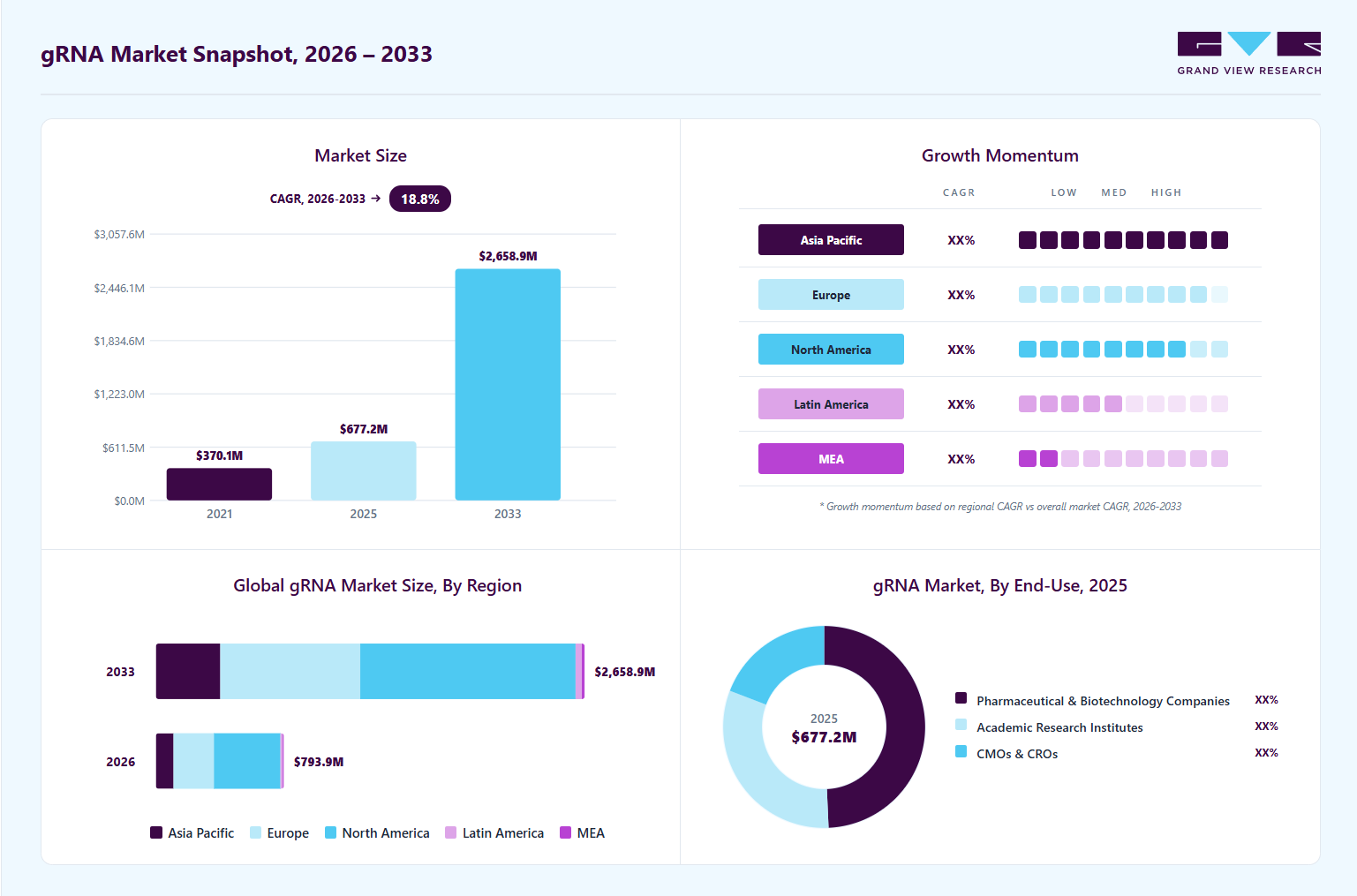
The global gRNA market size was valued at USD 677.2 million in 2025 and is projected to grow from USD 793.9 million in 2026 to USD 2,658.9 million by 2033, growing at a CAGR of 18.8% from 2026 to 2033. North America dominated the gRNA market with the largest revenue share of 52.2% in 2025. gRNA is in high demand because it is essential for CRISPR-based genetic editing.
Key Market Trends & Insights
- By product & service: Product segment led the market with the largest revenue share of 72.3% in 2025.
- By type: Research-use segment led the market with the largest revenue share of 72.3% in 2025.
- By application: Genome engineering segment led the market with the largest revenue share of 31.6% in 2025.
- By end use: Pharmaceutical & biotechnology companies segment led the market with the largest revenue share of 49.3% in 2025.
Regional Highlights
- Largest regional market: North America (52.2% revenue share, 2025)
- By country: The U.S. held the largest market share in 2025.
Market Size & Forecast
- Market size in 2025: USD 677.2 Million
- Estimated market size in 2026: USD 793.9 Million
- Projected market size by 2033: USD 2,658.9 Million
- CAGR (2026-2033): 18.8%
Three ways to get this report
Buy it, customize it, or ask a question.Ask an Analyst
A direct answer, usually in 1 working day
- AccessReport author, directly
- Reply timeWithin 1 working day
- No sales callDirect answer only
- FormatEmail reply
- CostFree, no cost
Get the Full Report
What the study covers
- FormatsPDF · Excel · Dashboard
- Timeline2026–2033 annual, 2025 base
- Coverage20+ countries, 5 regions
- Companies10+ key players profiled
Customize the Report
20% free customization
- IncludeCountries, segments, points
- TailorTo your product definition
- ExtendDeeper competitor detail
- OrA fully bespoke study
- Turnaround5–10 working days
Its ability to accurately guide the CRISPR system to specific DNA sequences enables precise gene modifications, driving breakthroughs in medicine, agriculture, and biotechnology.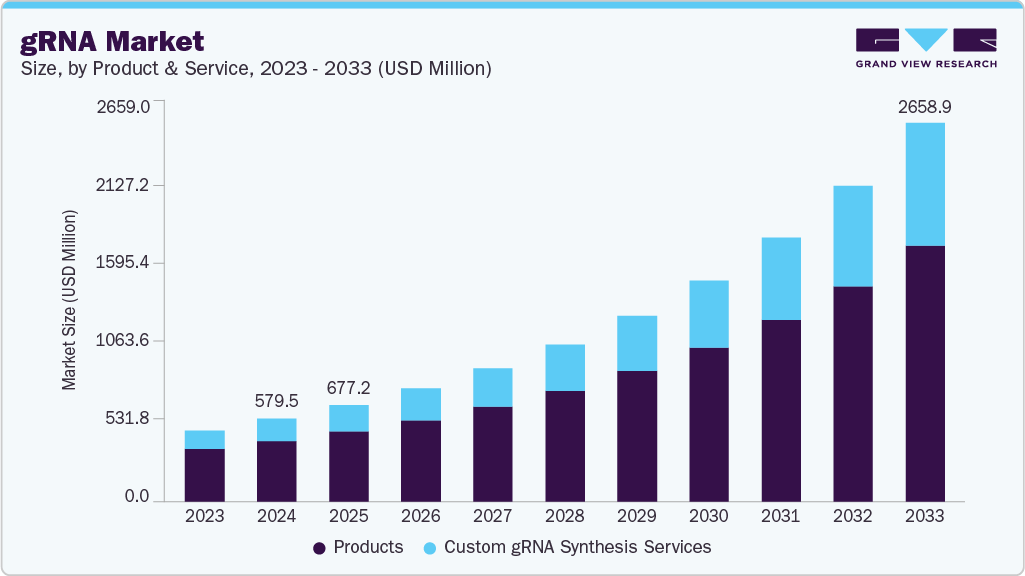
Expansion of CRISPR Gene Editing Applications
The global demand for gRNA is rising sharply due to the rapid expansion of CRISPR applications across research and industry. As the critical element that directs CRISPR to specific DNA or RNA targets, every CRISPR workflow depends on precise and reliable gRNA. Increasing use of CRISPR in functional genomics, knockout/knock-in studies, engineered cell models, and high-throughput screening has driven strong growth in customized gRNA consumption. With CRISPR advancing from research to clinical and therapeutic applications, especially in gene therapy and precision medicine, more biopharma and academic labs are adopting the technology, further escalating the need for specialized gRNA. For instance, in October 2021, in Germany, Merck licensed its patented CRISPR-Cas9 technology to Cellecta, enabling advanced knock-in applications.
Applications of therapeutic CRISPR genome editing for human diseases
Disease
Target Gene
CRISPR Type Used
Gaucher
CCR5
SpCas9
Wolfram syndrome
WFS1
SpCas9
Myeloproliferative neoplasm
V617F
SpCas9
Huntington’s disease
HTT
SpCas9, SaCas9, LbCpf1
Cancer
HPV18 E6
eiCRISPR
Sickle cell disease
BCL11A
Cas9 (CTX001)
Transthyretin amyloidosis
TTR
SpCas9
Corneal dystrophy
TGFBI
SpCas9, AsCas12a, SaCas9
Retinitis pigmentosa
Rho-P23H
SpCas9
Source: PubMed Central, Secondary Research, Grand View Research
The growing diversification of CRISPR systems is further boosting demand for tailored gRNA products. As gene-editing advances from traditional Cas9 to next-generation tools like Cas12 and Cas13 for RNA targeting, for compact delivery, and platforms such as base and prime editing, researchers require highly optimized gRNAs with greater efficiency and minimal off-target effects.
Growing R&D in proteomics and genomics
Rising global R&D investment in proteomics and genomics is becoming a major driver for demand for advanced molecular tools like gRNAs. Governments, academia, and biopharma companies are allocating significant funding to decode gene and protein functions, understand disease mechanisms, and develop targeted therapies. Large-scale initiatives, including precision oncology, whole-genome sequencing, multi-omics biomarker discovery, and single-cell analysis, heavily depend on CRISPR genome editing to validate gene roles and modulate cellular pathways, creating recurring demand for high-precision, customizable gRNAs. As omics research grows in scale and complexity, gRNAs continue to serve as essential consumables powering thousands of gene-modification studies across the research ecosystem.
The integration of proteomics and genomics with next-generation bioengineering approaches is further boosting demand for gRNAs. CRISPR is now widely used in protein regulation screens, drug-target validation, synthetic biology, and engineered cell therapy, all of which require large gRNA libraries, pooled sets, and chemically modified gRNAs for improved efficiency and specificity. Growing adoption of automation and high-throughput multi-omics workflows also accelerates consumption, as research institutions prefer pre-validated, ready-to-use gRNAs to save time and minimize variability. As companies push to convert omics discoveries into biomarkers, therapeutic targets, and personalized medicine solutions, gRNA suppliers continue to benefit from strong and sustained market growth driven by constant research activity, technological advancement, and commercialization across the proteomics and genomics landscape.
Market Dynamics
The gRNA market is expanding steadily, driven by the rapid growth of CRISPR-based gene editing applications in therapeutics, diagnostics, and life sciences research. Increasing adoption of genome engineering tools in drug discovery, functional genomics, and precision medicine is fueling demand for high-quality, highly specific gRNA designs. Advances in synthetic biology, improved delivery systems, and enhanced design algorithms are also improving editing efficiency and reducing off-target effects, further supporting market growth. However, challenges such as synthesis complexity, variability in editing performance, and intellectual property constraints continue to limit seamless adoption. Despite these hurdles, rising investments in gene therapy pipelines, expanding clinical trials, and growing interest in multiplex gene editing are expected to create strong long-term opportunities for the gRNA market.
The growing integration of CRISPR technology in biomedical research and therapeutic development is a key driver for the gRNA market. Guide RNA is essential for directing Cas enzymes to specific genomic targets, making it a core component of genome editing workflows. Increasing applications in drug discovery, functional genomics, and gene therapy development are accelerating demand for highly precise and customizable gRNA molecules. Rising prevalence of genetic disorders and cancer, along with expanding clinical pipelines focused on gene editing therapies, is further boosting utilization across academic, pharmaceutical, and biotechnology sectors.
The gRNA market faces constraints due to challenges related to design complexity, variable editing efficiency, and off-target effects that can compromise precision and safety. Inconsistent performance across different cell types and genomic contexts often necessitates extensive optimization, increasing development time and cost. Additionally, intellectual property restrictions surrounding CRISPR components and regulatory uncertainty in gene editing applications create barriers for widespread commercialization. These factors collectively limit the seamless and scalable adoption of gRNA-based solutions in clinical applications.
Significant growth opportunities in the gRNA market are emerging from advancements in synthetic biology, AI-driven guide RNA design, and next-generation gene editing platforms. Improved computational tools enable more accurate target selection and enhanced editing efficiency, reducing off-target risks. Expanding applications in personalized medicine, cell and gene therapy development, and multiplex genome editing are further broadening the market scope. Additionally, increasing investments in CRISPR-based clinical trials and the development of novel therapeutic modalities are expected to accelerate commercial adoption of advanced gRNA technologies.
Market Concentration & Characteristics
The gRNA industry demonstrates a high degree of innovation due to the need for increased efficiency and precision, as well as the quick development of CRISPR gene-editing technologies. Basic gRNAs are giving way to chemically altered and application-specific formats that improve editing efficiency, lower off-target activity, and facilitate new modalities like base and prime editing.
The gRNA industry has a moderate level of M&A activity, but it is steadily rising as businesses look to bolster their intellectual property and increase CRISPR capabilities. In order to improve technical capacity and competitive positioning, acquisitions are primarily strategic and targeted, concentrating on specialized strengths like AI-based gRNA design, delivery technologies, and GMP-grade manufacturing. For instance, in July 2025, Merck completed its acquisition of SpringWorks in the United States, strengthening its rare-tumor therapeutics portfolio and boosting industry investment in CRISPR-based research, indirectly accelerating global demand for high-precision gRNA products.
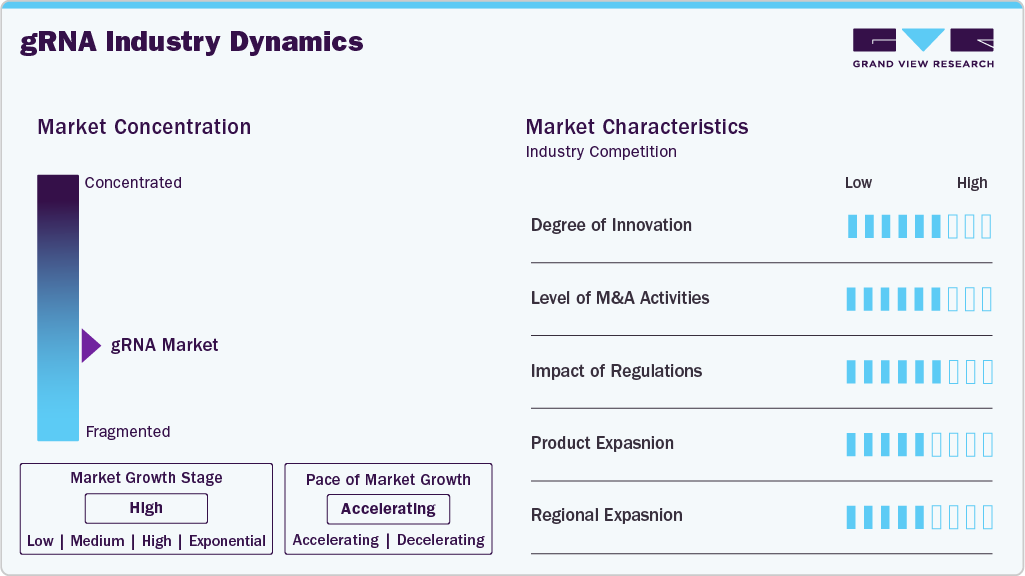
Regulations that control the development, validation, and commercialization of gene-editing tools have a significant impact on the gRNA industry. Clinical and agricultural applications must adhere to stringent safety, ethical, and GMP regulations, which can delay product approvals but ultimately raise the bar for accuracy, safety, and quality in genome-editing solutions. At the same time, research-use gRNAs are subject to little oversight.
The gRNA industry is expanding quickly as businesses add modified gRNAs, multi-guide mixes, CRISPR libraries, RNP complexes, and GMP-grade therapeutic gRNAs to their portfolios in addition to basic guide RNAs. By providing more complete genome-editing solutions, this diversification enhances customer retention and promotes broader research and clinical applications.
Regional expansion in the gRNA industry is increasing as companies strengthen their presence across North America, Europe, and the Asia-Pacific to capture growing CRISPR adoption. By setting up local manufacturing, distribution, and partnerships, suppliers improve market access, meet regional regulatory needs, and accelerate the uptake of advanced genome-editing tools worldwide. For instance, in July 2022, Synthego expanded its Halo Platform in the United States by constructing a next-generation GMP manufacturing facility to scale production of precision gene-editing tools. By supporting rapid clinical advancement of CRISPR-mediated cell and gene therapies, the facility significantly increased industry demand for high-quality, GMP-grade gRNA required for therapeutic programs.
Analyst Perspective
The gRNA market sits at the core of the expanding CRISPR ecosystem and is increasingly being shaped by the shift from basic research tools to clinically relevant genome editing applications. Demand is being reinforced by rapid growth in gene therapy pipelines, rising adoption of precision medicine, and continuous improvements in guide RNA design and delivery technologies. At the same time, the market remains sensitive to technical variability in editing efficiency, off-target risks, and evolving intellectual property landscapes, which can influence commercialization timelines. Competitive dynamics are intensifying as established life sciences companies and emerging biotech players invest in scalable synthesis platforms and optimized CRISPR toolkits. Overall, the market is expected to grow steadily, with value concentration in high-precision, clinically validated, and application-specific gRNA solutions.
Product & Service Insights
Based on product & service, the product segment led the market with the largest revenue share of 72.3% in 2025. These products are well-liked by researchers because they provide excellent gene editing accuracy, efficiency, and specificity. The market offers a wide range of services, including gRNA design, synthesis, and delivery, in addition to goods. These services allow researchers to use specially designed gRNA sequences and delivery systems to tailor their gene editing experiments. In gene editing experiments, this improves specificity and accuracy. Moreover, these products' high purity and broad availability are the main factors contributing to the segment's dominance.
The custom gRNA synthesis services segment is estimated to register the fastest CAGR over the forecast period. These services are offered by biotechnology companies specializing in gene editing technologies and provide a range of options for researchers to design & order custom gRNAs that meet their specific experimental needs. Thus, it propels the segment growth.
gRNA Type Insights
Based on type, the research-use segment led the market with the largest revenue share of 72.3% in 2025. Many research programs conducted across various research institutes demand research-grade gRNA. With increasing applications of gRNA in clinical research, the segment is expected to maintain its dominance over the forecast period. Moreover, the growing adoption of CRISPR/Cas9 technology, a widely used gene-editing tool, is further driving the demand for gRNA in the research-use segment.
The GMP-grade segment is projected to record the fastest CAGR, driven by the need for highly regulated gRNA manufacturing for clinical and therapeutic use. Strict GMP compliance ensures consistent quality, safety, and efficacy critical for human applications, making GMP-grade gRNAs essential for clinical trials and personalized medicine. As CRISPR advances toward therapeutic adoption, demand for GMP-certified gRNA products continues to accelerate.
Application Insights
Based on application, the genome engineering segment led the market with the largest revenue share of 31.6% in 2025. Genome engineering is a lucrative application for gRNA due to its transformative impact across diverse industries. The precision and versatility of gRNA within CRISPR-based editing have revolutionized genetic modifications, presenting immense opportunities in medicine, agriculture, & biotechnology.
The disease model studies segment is projected to witness substantial market growth from 2025 to 2033, driven by the rising adoption of CRISPR-based genome editing for investigating disease mechanisms, validating therapeutic targets, and enabling precision drug discovery.
End-use Insights
Based on end use, the pharmaceutical & biotechnology companies segment led the market with the largest revenue share of 49.3% in 2025. Pharmaceutical and biotech companies' use of gRNA in precision medicine drives its market expansion as it becomes essential to the creation of customized treatments. gRNA is used by biotechnology companies to optimize bioproduction processes, including the creation of cell lines for the manufacture of biotherapeutics. Incorporating gRNA into bioproduction applications improves process efficiency and lowers production costs and schedules.

The academic research institutes segment is estimated to register the fastest CAGR over the forecast period. Academic researchers use gRNA to investigate gene functions, study biological mechanisms, and make fundamental discoveries in molecular biology. The constant demand for advanced tools like gRNA in academic research fosters market growth as researchers seek innovative solutions for their studies. Thus, boosting market growth.
Regional Insights
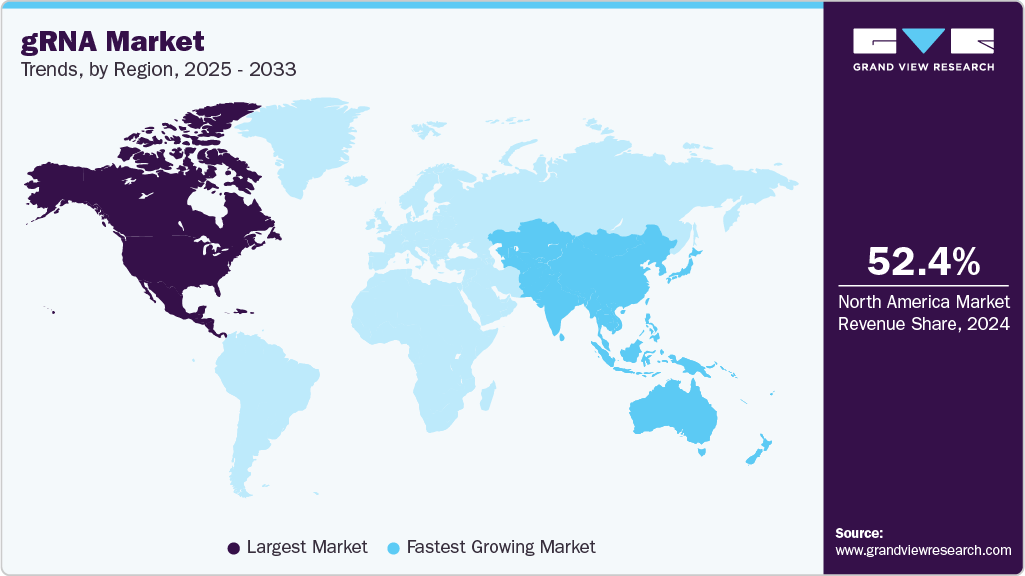
North America dominated the gRNA market with the largest revenue share of 52.2% in 2025, driven by the strong presence of key players like Thermo Fisher Scientific and Merck KGaA, and high R&D spending toward advanced genome-editing products. Collaborations supporting precision medicine, such as the 2023 partnership between Thermo Fisher Scientific and Pfizer to expand NGS-based cancer testing, are boosting the use of CRISPR tools, which in turn increases demand for gRNAs targeting cancer-associated genes.
U.S gRNA Market Trends
The gRNA market in the U.S. held the largest share in the North America region in 2025, due to the rapid advancements in gene-editing technologies and their growing applications in research, diagnostics, and emerging therapeutics. As a core element of CRISPR systems, gRNA continues to see rising adoption across sectors, supporting sustained market growth over the forecast period. For instance, in July 2025, IDT expanded its CRISPR portfolio in the U.S., adding customizable, high-purity gRNA products and safety tools to accelerate development of personalized and clinically focused gene-editing therapies.
Europe gRNA Market Trends
The gRNA market in Europe is expected to grow rapidly due to rising investments in genomics and precision medicine, strong government support for CRISPR research, and increasing adoption of gene-editing tools across academic and biopharma sectors. Growing focus on rare disease therapeutics and expanding genome engineering infrastructure further support market demand.
The UK gRNA marketis expected to grow at a significant rate over the forecast period due to strong government and academic investment in genomics, expanding use of CRISPR technologies in biomedical research, and increasing participation of biopharma companies in gene and cell therapy development. Growing clinical focus on rare and genetic diseases and the presence of leading genome-editing research centers also continue to drive demand for high-quality gRNA solutions.
Germany gRNA marketis anticipated to experience rapid growth from 2025 to 2033, driven by strong adoption of CRISPR technologies in academic and industrial research, growing investment in gene and cell therapy development, and expanding biotechnology and pharmaceutical manufacturing capabilities.
Asia Pacific gRNA Market Trends
The gRNA market in the Asia Pacific region is expected to grow at the fastest CAGR of 20.30% during the forecast period. Factors such as the presence of a significant target population, rapid adoption of an array of technologies, several startups coupled with developing healthcare infrastructure, and the existence of high-unmet clinical needs are anticipated to provide growth opportunities to key manufacturers in the region.
China gRNA marketis rapidly growing due to rising demand for genome-editing technologies and substantial national investment in gRNA-based R&D. Supportive government policies, including tax incentives, R&D funding, and streamlined regulatory procedures, have strengthened the country’s biotech ecosystem and attracted both domestic and international companies, accelerating market expansion.
The gRNA market in Japanis expanding quickly, driven by rising CRISPR adoption in research and biopharma, growing investment in gene and cell therapy, and increasing demand for customized gRNAs for disease modeling and precision medicine applications.
Middle East & Africa gRNA Market Trends
The gRNA market in the Middle East and Africa is poised to grow in the near future, supported by increasing investment in biotechnology and genomics research, expanding partnerships with global life science companies, and rising adoption of CRISPR technologies in academic and clinical settings.
Kuwait gRNA marketis expected to grow due to expanding healthcare and research modernization, rising adoption of advanced molecular technologies, and increasing collaborations with global institutions to support genetic diagnostics and precision medicine.
Key gRNA Company Insights
The gRNA industry is characterized by the strong presence of several established players that maintain leadership through robust product portfolios, proprietary CRISPR technologies, and continuous investment in research and development. Leading companies such as Thermo Fisher Scientific Inc., Agilent Technologies Inc., Merck KGaA, and Synthego hold a significant share of the market due to their advanced guide RNA design platforms, high-performance synthetic and modified gRNA products, and wide global distribution networks supporting both research and therapeutic development.
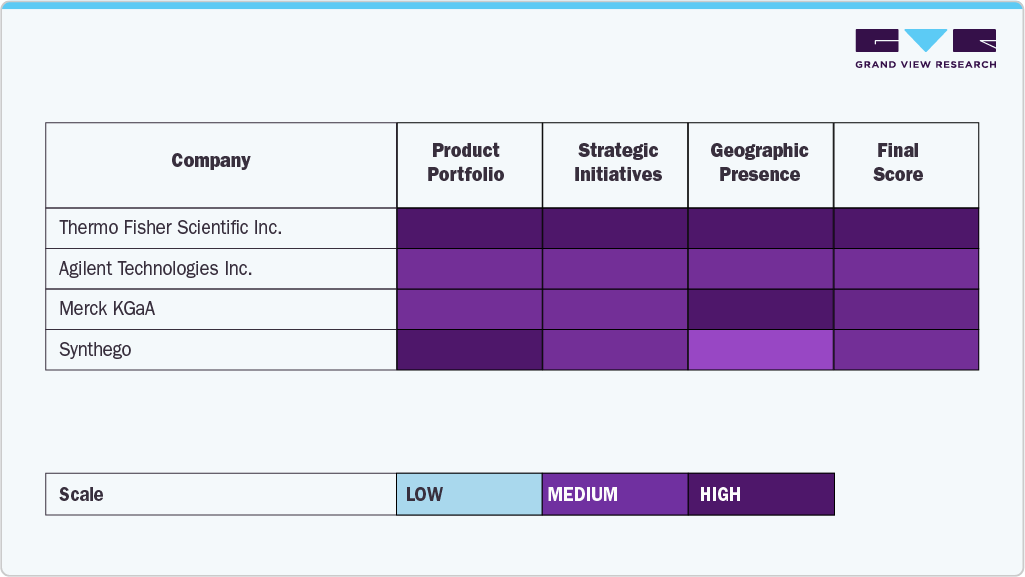
Companies including System Biosciences, LLC, Jena Bioscience GmbH, GENEWIZ (Azenta Life Sciences), Takara Bio Inc., Synbio Technologies, and Horizon Discovery Ltd. are expanding their market footprint by offering specialized gRNA solutions such as chemically modified guides, pooled CRISPR libraries, RNP complexes, and GMP-grade production for clinical applications. By catering to the evolving needs of academic institutes, pharmaceutical companies, and gene therapy developers, these players are contributing to a rapidly advancing competitive landscape.
Key gRNA Companies
The following key companies have been profiled for this study on the gRNA market.
-
Thermo Fisher Scientific Inc.
-
Agilent Technologies Inc.
-
System Biosciences, LLC.
-
Jena Bioscience GmbH
-
Merck KGaA
-
Azenta Life Sciences (Genewiz)
-
Takara Bio Inc.
-
Synbio Technologies
-
Revvity Inc (Horizon Discovery Ltd.)
-
Synthego
Competitive Benchmarking
Category
Operating Strategies
Competitive Edge
Weakness
Established Players(e.g., Thermo Fisher Scientific, Inc.; Merck KGaA; Agilent Technologies, Inc.; Takara Bio Inc.; Revvity Inc. (Horizon Discovery Ltd.))
- Focus on expanding integrated CRISPR workflow offerings including synthetic gRNA libraries, genome editing kits, validation assays, screening platforms, and automation-enabled genomic tools. .
- Strengthen capabilities through acquisitions, R&D investment, and bundling of gRNA products with broader genomics and molecular biology portfolios.
- Strong global distribution networks, diversified life science portfolios, high brand trust across pharmaceutical and academic markets, and ability to offer end-to-end gene editing workflows. xtensive regulatory experience and scalability across research and applied genomics applications.
- Relatively slower innovation cycles compared to niche specialists, high operational complexity, and exposure to pricing pressure in commoditized research reagent segments.
Emerging Players (e.g., Synthego; Synbio Technologies; Azenta Life Sciences (Genewiz); System Biosciences, LLC.; Jena Bioscience GmbH)
- Focus on custom gRNA synthesis, high-throughput CRISPR libraries, GMP-grade guide RNA production, and gene editing services.
- Emphasize automation, rapid turnaround times, and scalable cloud-based or platform-driven ordering systems for researchers and biotech companies.
- High customization capability, fast delivery cycles, strong expertise in CRISPR design and optimization, and flexible service-based models.
- Strong adoption among biotech startups, academic labs, and translational research groups.
- Limited large-scale manufacturing depth compared to global conglomerates, dependency on research and early-stage biotech funding cycles, and lower penetration in fully integrated clinical manufacturing ecosystems.
Recent Developments
-
In July 2025, in the United States, Synthego closed its acquisition by Perceptive Advisors, strengthening financial resources to scale CRISPR offerings and boost demand for high-quality gRNA manufacturing and related gene-editing products.
-
In July 2025, Integrated DNA Technologies expanded its translational CRISPR portfolio with high-purity gRNAs and off-target analysis services, strengthening clinical-grade gene editing workflows and driving increased demand for advanced gRNA solutions.
gRNA Market Report Scope
Report Attribute
Details
Market size in 2025
USD 677.2 million
Estimated market size in 2026
USD 793.9 million
Projected market size by 2033
USD 2.6 billion
Growth rate
CAGR of 18.8% from 2026 to 2033
Historical data
2021 - 2025
Forecast period
2026 - 2033
Quantitative units
Revenue in USD million/billion and CAGR from 2026 to 2033
Report coverage
Revenue forecast, company ranking, competitive landscape, growth factors, and trends
Segments covered
Product & service, gRNA type, application, end-use, region
Regional scope
North America; Europe; Asia Pacific; Latin America; MEA
Country scope
U.S.; Canada; Mexico; Germany; UK; France; Italy; Spain; Norway; Denmark; Sweden; China; Japan; India; South Korea; Australia; Thailand; Brazil; Argentina; Saudi Arabia; South Africa; UAE; Kuwait
Key companies profiled
Thermo Fisher Scientific, Inc.; Agilent Technologies, Inc.; System Biosciences, LLC.; Jena Bioscience GmbH; Merck KGaA; Azenta Life Sciences (Genewiz); Takara Bio Inc.; Synbio Technologies; Revvity Inc (Horizon Discovery Ltd.); Synthego
Customization scope
Free report customization (equivalent up to 8 analysts' working days) with purchase. Addition or alteration to country, regional & segment scope.
Pricing and purchase options
Avail customized purchase options to meet your exact research needs. Explore purchase options
Global gRNA Market Report Segmentation
This report forecasts revenue growth and provides an analysis of the latest trends in each of the sub-segments from 2021 to 2033. For this report, Grand View Research has segmented the global gRNA market report based on product & services, gRNA type, application, end-use, and region:
-
Product & Service Outlook (Revenue in USD Million, 2021 - 2033)
-
Products
-
gRNA Final Products
-
gRNA Synthesis Products
-
gRNA Synthesis Kits
-
Plasmids
-
Others
-
-
-
Custom gRNA Synthesis Services
-
-
gRNA Type Outlook (Revenue, USD Million, 2021 - 2033)
-
Research-Use
-
GMP-grade
-
-
Application Outlook (Revenue, USD Million; 2021 - 2033)
-
Genome Engineering
-
Disease Model Studies
-
Functional Genomics
-
Epigenetics
-
Others
-
-
End-use Outlook (Revenue, USD Million; 2021 - 2033)
-
Pharmaceutical & Biotechnology Companies
-
Academic Research Institutes
-
CMOs & CROs
-
-
Regional Outlook (Revenue, USD Million, 2021 - 2033)
-
North America
-
U.S.
-
Canada
-
Mexico
-
-
Europe
-
UK
-
Germany
-
France
-
Italy
-
Spain
-
Denmark
-
Sweden
-
Norway
-
-
Asia Pacific
-
China
-
Japan
-
India
-
Australia
-
Thailand
-
South Korea
-
-
Latin America
-
Brazil
-
Argentina
-
-
Middle East & Africa
-
South Africa
-
Saudi Arabia
-
UAE
-
Kuwait
-
-
Research Methodology
The gRNA market figures in this report are based on a proven research process that combines executive interviews with secondary research from proprietary databases, company filings, and recognized regulatory and institutional sources. Market size is built through value-chain sizing - reconciling supply-side and demand-side estimates - and triangulated with bottom-up and top-down approaches. Every estimate passes multiple levels of expert validation before publication, with each gRNA segment quantified using the revenue-capture definitions in the table below.
Segment Definition
Segment - Product & Service
Revenue capture definition
Products
Revenue is generated through the sale of synthetic guide RNA (gRNA) products including CRISPR guide libraries, single guide RNAs (sgRNAs), chemically modified gRNAs, and related reagents used for genome editing, gene regulation, and functional genomics research across academic and industrial laboratories.
Custom gRNA Synthesis Services
Revenue is derived from customized design, synthesis, optimization, and validation services for gRNAs tailored to specific gene targets and experimental requirements. This includes bespoke CRISPR construct design, high-throughput library generation, and application-specific optimization for research and therapeutic development.
Segment - gRNA Type
Revenue capture definition
Research-Use
Revenue is captured from non-clinical grade gRNAs supplied for laboratory research, including gene knock-out/knock-in studies, functional genomics screening, disease modeling, and epigenetic research. This segment represents the largest volume demand due to widespread academic and early-stage biotech usage.
GMP-grade
Revenue is generated through clinically compliant, high-purity gRNAs manufactured under Good Manufacturing Practice (GMP) standards for use in therapeutic applications such as gene therapy, cell therapy development, and clinical trial programs. Demand is driven by increasing adoption of CRISPR-based therapeutics.
Segment - Application
Revenue capture definition
Genome Engineering
Revenue is derived from the use of gRNAs in precise genome editing applications including gene knockout, gene correction, and gene insertion studies, widely used in therapeutic development, functional biology, and genetic disease research.
Disease Model Studies
Revenue is generated through the application of gRNAs in creating in vitro and in vivo disease models that replicate human genetic disorders for drug discovery, target validation, and translational research.
Functional Genomics
Revenue is captured from gRNA-enabled large-scale gene function screening and gene regulatory network analysis used to identify gene functions, pathways, and therapeutic targets in biological systems.
Epigenetics
Revenue is derived from gRNA applications in epigenetic modulation studies, including gene expression regulation without altering DNA sequence, supporting research in cancer biology, developmental biology, and gene regulation mechanisms.
Others
Revenue is generated from emerging and niche applications such as CRISPR-based diagnostics, synthetic biology, RNA targeting studies, and agricultural gene editing research.
Segment - End-use
Revenue capture definition
Pharmaceutical & Biotechnology Companies
Revenue is generated through procurement of research and GMP-grade gRNAs, licensing agreements, and custom synthesis services by pharmaceutical and biotechnology companies engaged in drug discovery, gene therapy development, and precision medicine programs.
Academic Research Institutes
Revenue is derived from universities, government laboratories, and research centers utilizing gRNAs for basic research, functional genomics studies, molecular biology experiments, and early-stage genetic research programs.
CMOs & CROs
Revenue is captured from contract manufacturing organizations (CMOs) and contract research organizations (CROs) that utilize or produce gRNAs for outsourced gene editing projects, preclinical studies, assay development, and clinical research support services.
Estimation Model
Approach/Stage
Description
Top-Down
Commodity Flow Analysis - Market size was estimated by analyzing revenues generated by key gRNA companies, supported by company annual reports, investor presentations, distributor insights, and premium databases. Revenue contributions from private companies were assessed using industry databases and validated through primary research to derive the overall market value.
Parent Market Model
Parent Market & Penetration-Based Analysis - The top-down approach to the gRNA market begins with evaluating the overall global gene editing and CRISPR market size, followed by isolating the proportion attributable specifically to guide RNA products and services based on application intensity and technology penetration. This value is then segmented by product, type, application, end user, and region to derive the final market estimates.
Segmentation
Country-Level Segment Share Modeling - Market shares for product, application, type, and end-use segments were derived using country-specific adoption patterns, healthcare infrastructure, reimbursement scenarios, and product penetration rates. Weighted average calculations were applied to determine regional and global segment distributions.
Validation
Data Triangulation & Validation Model - Market estimates were validated through triangulation of secondary research, primary interviews, company-level revenue assessments, and demand-side adoption analysis to ensure consistency and accuracy across all market segments and geographies.
Forecasting
Forecasting & CAGR Modeling - Market forecasts were developed using historical market trends, technology adoption patterns, product innovation trends, healthcare expenditure, and regulatory developments. Regression-based analysis and trend modeling were applied to project future market growth and CAGR.
Delivered Customizations
This report has been delivered with the following In-depth customizations
Client Request
Customization Delivered
Value Adds
gRNA Market Landscape & CRISPR Workflow Adoption Analysis
Developed a tailored assessment of the global gRNA market across product offerings and custom synthesis services, including segmentation by research-use and GMP-grade gRNAs. The analysis also evaluates application areas such as genome engineering, disease model studies, functional genomics, epigenetics, and emerging use cases, along with end-use segmentation across pharmaceutical companies, academic institutes, and CROs/CMOs. Emphasis is placed on CRISPR workflow integration and scalable gene editing solutions.
Enables stakeholders to understand evolving CRISPR gene editing workflows, identify high-growth demand for GMP-grade and custom gRNA synthesis, evaluate expanding applications in precision medicine and functional genomics, and assess commercialization potential across research and therapeutic development ecosystems.
Competitive Landscape & Custom gRNA Service Benchmarking Assessment
Delivered a customized benchmarking of leading gRNA suppliers and gene editing service providers, including evaluation of synthetic capabilities, library design platforms, turnaround time, chemical modification expertise, GMP compliance, and scalability of high-throughput synthesis. The study also compares integrated CRISPR platforms versus standalone gRNA service providers.
Provides actionable insights into competitive positioning, service differentiation, pricing strategies, and technology capabilities, helping clients identify partnership opportunities, optimize procurement strategies, and strengthen positioning in CRISPR-based research and therapeutic development markets.
Therapeutic & High-Throughput Screening Opportunity Assessment
Conducted a focused evaluation of gRNA applications in therapeutic genome editing, high-throughput functional genomics screening, disease modeling, and epigenetic regulation. The analysis also assessed demand growth for GMP-grade gRNAs in clinical research, alongside increasing adoption in large-scale CRISPR library screening programs.
Supports strategic decision-making by identifying high-value therapeutic and research applications, enabling prioritization of investment in scalable gene editing platforms, improving CRISPR library development strategies, and strengthening long-term positioning in precision medicine and genomic research ecosystems.
Frequently Asked Questions About This Report
North America dominated the market with the largest revenue share of 52.2% in 2025
Asia Pacific is the fastest-growing region over the forecast period.
the product segment led the market with the largest revenue share of 72.3% in 2025.
the genome engineering segment led the market with the largest revenue share of 31.6% in 2025.
The global gRNA market size was valued at USD 677.2 million in 2025 and is expected to reach USD 793.9 million in 2026.
The global gRNA market is expected to witness a compound annual growth rate of 18.8% from 2026 to 2033 to reach USD 2,658.9 million by 2033.
Some key players in the gRNA market are Thermo Fisher Scientific, Inc., Agilent Technologies, Inc., System Biosciences, LLC., Jena Bioscience GmbH, Merck KGaA, Azenta Life Sciences (Genewiz), Takara Bio Inc., Synbio Technologies, Revvity Inc (Horizon Discovery Ltd.), and Synthego.
Key drivers of the gRNA market are increase in adoption of Next-Generation Sequencing, growing R&D in proteomics and genomics, and increasing adoption of personalized medicine.
the pharmaceutical & biotechnology companies segment led the market with the largest revenue share of 49.3% in 2025
About the Author(s)
Biotechnology Research Team
Healthcare · BiotechnologyThis report was authored by the biotechnology research team at Grand View Research - comprising two research analysts, one senior research analyst, and one industry expert - with specialized expertise in the biotechnology segment of the healthcare industry. All findings are based on proprietary healthcare databases, executive interviews, and regulatory analysis, subject to internal peer review prior to publication.
Last Updated:
Speak to Analyst


Customize this report to your needs - add regions, segments, or data points, with 20% free customization.
Or view our licence options:


ISO 9001:2015 & 27001:2022 Certified
We are GDPR and CCPA compliant! Your transaction & personal information is safe and secure. For more details, please read our privacy policy.


