
- Home
- »
- Medical Devices
- »
-
Hemodialysis Catheters Market Size, Industry Report, 2033GVR Report cover
![Hemodialysis Catheters Market Size, Share & Trends Report]()
Hemodialysis Catheters Market (2025 - 2033) Size, Share & Trends Analysis Report By Design (Single Lumen, Double Lumen, Triple Lumen), By Application, By Material, By Shape, By Component, By Usage, By End-use, By Region, And Segment Forecasts
- Report ID: GVR-4-68040-650-9
- Number of Report Pages: 100
- Format: PDF
- Historical Range: 2021 - 2023
- Forecast Period: 2025 - 2033
- Industry: Healthcare
- Report Summary
- Table of Contents
- Segmentation
- Methodology
- Download FREE Sample
-
 Download Sample Report
Hemodialysis Catheters Market Summary
The global hemodialysis catheters market size was estimated at USD 1.60 billion in 2024 and is projected to reach USD 3.01 billion by 2033, growing at a CAGR of 7.34% from 2025 to 2033. This growth is attributed to the increasing prevalence of Chronic Kidney Disease (CKD) and Acute Kidney Injury (AKI), rising demand for long-term vascular access devices, and advancements in catheter design, including antimicrobial coatings and improved biocompatibility.
Key Market Trends & Insights
- North America dominated the hemodialysis catheters market with the largest revenue share of 31.62% in 2024.
- The hemodialysis catheters market in the U.S. accounted for the largest market revenue share of 80.89% in North America in 2024.
- By design, the double lumen segment led the market with the largest revenue share of 41.22% in 2024.
- Based on shape, the straight segment led the market with the largest revenue share of 44.00% in 2024.
- By application, the chronic kidney disease (CKD) segment is anticipated to grow fastest over the forecast period.
Market Size & Forecast
- 2024 Market Size: USD 1.60 Billion
- 2033 Projected Market Size: USD 3.01 Billion
- CAGR (2025-2033): 7.34%
- North America: Largest market in 2024
According to the American Kidney Fund update in June 2025, CKD is a significant and growing public health concern in the U.S., affecting an estimated 35.5 million Americans. Approximately 815,000 people are currently living with kidney failure, with nearly 555,000 of them reliant on dialysis for survival. The disease impacts more than 1 in 7 adults, about 14% of the U.S. population. In addition, the growing shift toward home-based dialysis, the expansion of dialysis centers in emerging economies, and the rising geriatric population drive market demand. Introducing catheter kits, which offer greater procedural efficiency and sterility, also contributes to accelerated adoption, particularly in hospital and ambulatory settings.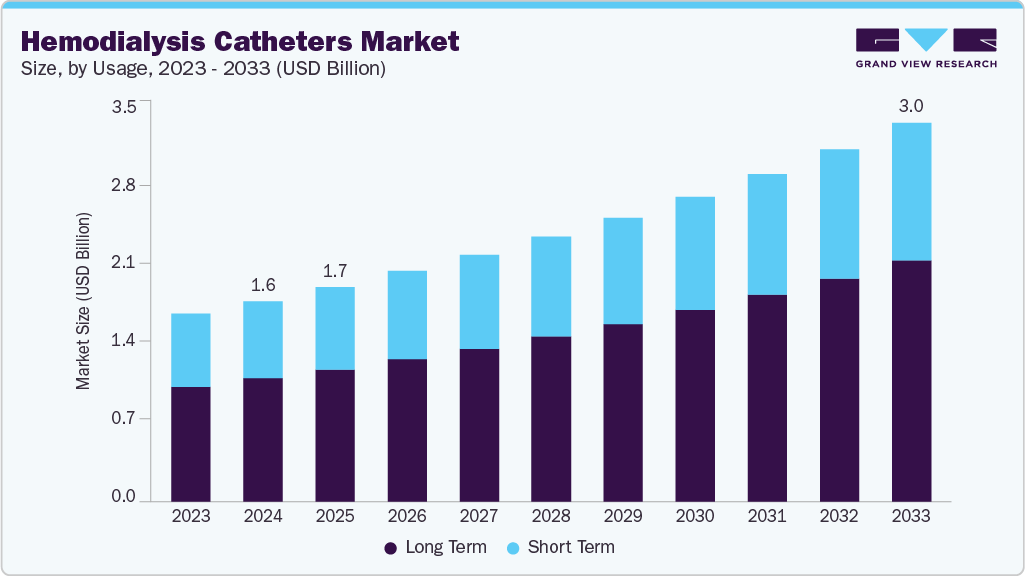
Funding and research are significant drivers of the expanding hemodialysis catheter industry. Substantial government and private funding enables early-stage investigations and the development of advanced catheter technologies, laying the groundwork for clinical and commercial breakthroughs. Increased healthcare R&D investments on a global scale, particularly in areas like biocompatible materials, antimicrobial coatings, and AI‑driven catheter tip design, enhance catheter safety, effectiveness, and longevity, helping to reduce infection rates and procedural complications.
In addition, government-funded awareness campaigns and chronic care initiatives are elevating public consciousness of CKD and ESRD, prompting earlier diagnoses and higher demand for vascular access solutions such as catheters. Fueled by funding, partnerships between industry and research institutions are facilitating clinical trials, regulatory clearances, and commercialization of next-generation devices, further accelerating market adoption across hospitals and dialysis centers.
NHS Funding and Research Cost for Kidney Disease (KD) in the UK (in USD)
Year
NIHR Funding for KD (USD Mn)
UKRI Research Relevant to KD (USD Mn)
Total KD Research Funding (USD Mn)
% of Total Research Budget for KD
2019/20
10.47
19.04
29.51
1.80%
2020/21
10.61
10.88
21.49
1.30%
2021/22
9.11
14.96
24.07
1.40%
Source: Kidney Research UK
The rising prevalence of End-Stage Renal Disease (ESRD) is one of the primary drivers of the hemodialysis catheter industry, significantly influencing demand and shaping market trends. ESRD represents the final, most severe stage of CKD, where the kidneys lose nearly all their function, and renal replacement therapy, either dialysis or kidney transplantation, is essential for survival. Among these, hemodialysis is the most commonly used modality, particularly in the initial stages of treatment or when vascular access options are limited.
Immediate and reliable vascular access is crucial to perform hemodialysis, achieved through hemodialysis catheters, especially in urgent or short-term scenarios. Patients newly diagnosed with ESRD begin dialysis through central venous catheters while awaiting permanent access placement, like arteriovenous fistulas or grafts. In addition, a significant proportion of ESRD patients remain on catheter-based access due to poor vascular health, advanced age, or comorbidities that preclude fistula creation. With global ESRD incidence rising due to increasing rates of diabetes, hypertension, and aging populations, the demand for hemodialysis catheters is growing.
As per the U.S. Department of Health and Human Services in 2022, 107,735 individuals, accounting for 82.4% of newly diagnosed ESRD cases, began treatment with hemodialysis, while 17,939 individuals (or 13.7%) started on peritoneal dialysis (PD). In addition, there were 4,524 preemptive kidney transplants, representing 3.5% of incident ESRD cases.
“Broadly speaking, there are two ways the kidneys can get damaged - acute kidney injury (AKI) and chronic kidney disease (CKD). AKI can happen suddenly due to infections, heart-related issues, stones, or the overuse of painkillers. CKD happens over a period of time, with the main causes being diabetes and high BP. “
- Dr Sindhu Kaza, consultant nephrologist and transplant physician
The table below highlights a significant projected increase in the prevalence of diabetes and prediabetes between 2024 and 2034. In 2024, approximately 5.8 million individuals-or 15% of the population-are expected to be living with diabetes, including Type 1, diagnosed Type 2, and undiagnosed Type 2 diabetes. By 2034, this number is projected to rise to 7.3 million, accounting for 16% of the population. Notably, the number of diagnosed cases (Type 1 and Type 2) is expected to grow from 4 million (10%) in 2024 to 5.3 million (12%) in 2034, indicating both improved detection and a rising disease burden.
Estimated Diabetes Prevalence - Canada 2024 and 2034
Category
2024
2034
Diabetes (Type 1 + Type 2 diagnosed + Type 2 undiagnosed)
5,804,740 (15%)
7,303,620 (16%)
Diabetes (Type 1 and Type 2 diagnosed)
4,006,850 (10%)
5,300,670 (12%)
Diabetes (Type 1)
5-10% of total diabetes
5-10% of total diabetes
Diabetes (all types incl. undiagnosed) + Prediabetes (incl. undiagnosed)
11,918,090 (30%)
14,122,660 (32%)
Source: Diabetes Canada
Market Concentration & Characteristics
The hemodialysis catheters industry is in a significant growth stage, marked by rising demand due to the increasing global burden of chronic kidney disease and end-stage renal disease. The pace of growth is accelerating, driven by multiple converging factors, such as an aging population, expanding dialysis patient base, and technological advancements in catheter design and infection control.
The hemodialysis catheters industry exhibits significant innovation, with advancements focusing on infection-resistant materials, antimicrobial coatings, and tunneled catheter designs that enhance long-term usability and patient safety. However, compared to high-tech interventional devices, innovation is more incremental, driven by the need to reduce catheter-related bloodstream infections and improve flow rates.
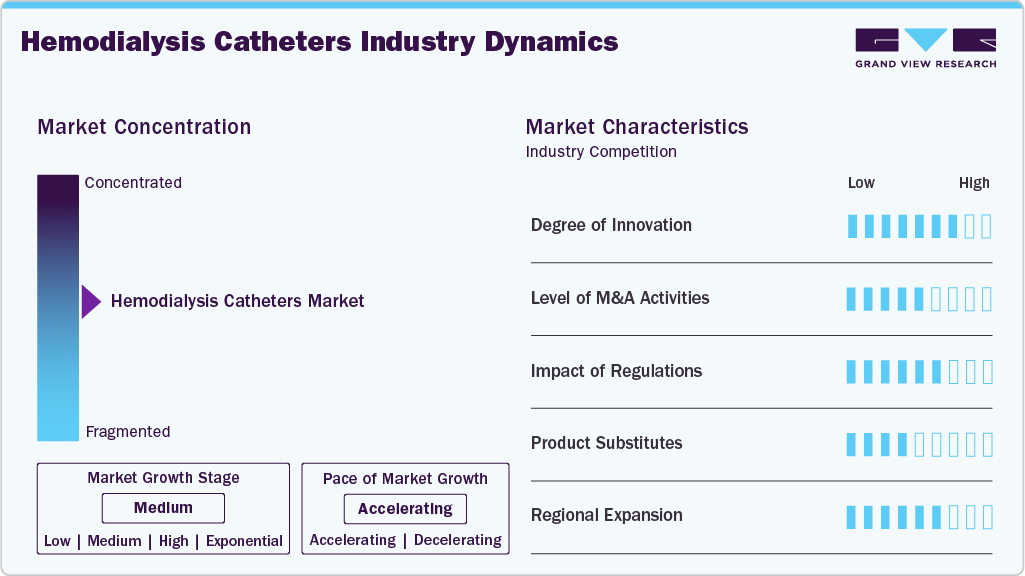
In terms of mergers and acquisitions (M&A), the market has witnessed moderate activity, driven by strategic consolidation among catheter manufacturers and dialysis service providers aiming to strengthen product portfolios, expand regional presence, and integrate catheter solutions with broader renal care offerings. Notable players have pursued acquisitions or partnerships to bolster their competitiveness in the dialysis access space. For instance, in March 2022, Vygon, a global specialist in single-use medical devices, acquired Macatt Medica, a Lima-based distributor in Peru. Macatt Medica becomes a wholly owned subsidiary through this acquisition, integrating its 21 employees into Vygon’s operations.
The regulatory framework for hemodialysis catheters is well-established, with stringent approval processes by authorities such as the U.S. FDA and the European Medicines Agency (EMA). These devices are classified as Class II or Class III (in the U.S.), requiring rigorous premarket notifications or approvals, clinical evidence, and quality compliance under European ISO 13485 and MDR regulations.
In the hemodialysis catheter industry, product expansion is driven by ongoing innovation to improve catheter durability, reduce infection risk, and enhance ease of use. Manufacturers are introducing antimicrobial-coated catheters, anti-kink designs, and tunneled catheters optimized for long-term use. These advancements help providers meet clinical demands for safety and efficacy while complying with stricter regulatory standards.
Regional expansion in the hemodialysis catheters industry is driven by the increasing global prevalence of end-stage renal disease (ESRD), particularly in emerging markets across Asia-Pacific, Latin America, and the Middle East & Africa. Companies are strengthening their distribution networks, forming strategic alliances, or acquiring local players to boost their footprint. For instance, leading players are penetrating high-growth regions such as India, China, and Brazil, where growing dialysis patient populations and improved healthcare infrastructure offer strong market potential.
Design Insights
The double-lumen catheter segment accounted for the largest market revenue share in 2024, due to its functional efficiency, clinical reliability, and widespread adoption in acute and chronic dialysis settings. These catheters feature two separate lumens within a single tube-one for drawing blood from the patient and the other for returning it after filtration-enabling simultaneous, continuous blood flow, which is essential for effective hemodialysis treatment. Their ease of placement, cost-effectiveness, and compatibility with central venous access make them the preferred choice among healthcare providers. Moreover, advancements in materials and coatings have improved double-lumen catheter durability and reduced infection risk, further reinforcing their dominance over single and triple-lumen alternatives in the clinical setting.
The triple-lumen catheter segment is expected to grow at the fastest CAGR in the hemodialysis catheters industry due to its versatility and multifunctional capabilities. Compared to double-lumen catheters, triple-lumen designs provide an additional channel that allows simultaneous administration of medications, parenteral nutrition, or diagnostic infusions alongside hemodialysis, reducing the need for multiple vascular access sites in critically ill or complex patients. This added functionality is particularly valuable in intensive care units and among patients with multiple comorbidities, driving its rising adoption. In addition, improvements in catheter materials and design are helping address previous concerns around size and thrombosis risk, making triple-lumen options more viable in acute and chronic care. Growing demand for comprehensive, catheter-based care in hospital settings is expected to propel this segment's rapid growth over the forecast years.
Shape Insights
The straight-shaped catheter segment accounted for the largest market revenue share in 2024, due to its ease of insertion, clinical familiarity, and cost-effectiveness. Straight catheters are widely used in acute and chronic hemodialysis, especially in emergency settings requiring rapid vascular access. Their simplified design allows quick placement in central veins, such as the internal jugular or subclavian veins, making them a preferred option in hospitals and dialysis centers. In addition, straight-shaped catheters are more affordable and readily available than curved or pre-formed alternatives, contributing to their high utilization in both high- and low-resource healthcare settings. This widespread adoption and demand in acute care and temporary dialysis cases secured the segment's leading market share in 2024.
The pre-curved shape segment is anticipated to grow at the fastest CAGR during the forecast period, driven by its clinical advantages and rising preference among healthcare professionals. Pre-curved designs are anatomically contoured to match the natural pathways of central veins, improving placement accuracy, reducing the risk of malposition, and enhancing overall patient comfort. These catheters are particularly beneficial for long-term use, as they minimize neck irritation and movement-related discomfort. Their growing adoption is supported by improved procedural efficiency, as they simplify insertion and reduce fluoroscopy time. With the increasing shift toward outpatient dialysis and home-based care, demand for user-friendly and ergonomically designed catheters is rising, positioning the pre-curved segment as the fastest-growing design category in the market.
Application Insights
The Chronic Kidney Disease (CKD) segment accounted for the largest market revenue share in 2024, and is expected to grow at the fastest CAGR during the forecast period. This dominance is attributed to the high and increasing global prevalence of CKD, driven by lifestyle-related conditions such as diabetes and hypertension. As more patients progress to ESRD, the need for reliable and long-term vascular access-primarily through hemodialysis catheters-continues to rise. These patients require regular, lifelong dialysis treatments, making them the primary users of tunneled and non-tunneled catheters.
According to the WHO, in 2023, an estimated 1.28 billion adults aged 30 to 79 are living with hypertension, with two-thirds living in low- and middle-income countries. The segment’s rapid growth is further fueled by technological advancements in catheter design aimed at enhancing durability and reducing infection risks, as well as the ongoing shift toward outpatient and home-based dialysis care. This sustained and growing demand from CKD patients positions the segment as a market leader and a key driver of future expansion.
The acute kidney injury (AKI) segment is expected to grow at a significant CAGR during the forecast period, owing to the rising incidence of hospital-acquired AKI, particularly in critical care and surgical settings. AKI develops rapidly and requires urgent renal replacement therapy, leading to a surge in demand for immediate vascular access through hemodialysis catheters. Non-tunneled catheters are especially preferred in these scenarios for their quick insertion and suitability in short-term, high-acuity care. The increasing prevalence of AKI in intensive care units, along with the growing use of nephrotoxic drugs and complex surgeries, is significantly contributing to market expansion.
Material Insights
The polyurethane segment accounted for the largest market revenue share in 2024, primarily due to its versatility, mechanical strength, and clinical performance. Polyurethane offers a unique combination of flexibility and rigidity, ensuring ease of insertion while maintaining the structural integrity needed to withstand the high flow rates required during hemodialysis procedures. Its biocompatibility and kink resistance make it suitable for various catheter types, including non-tunneled (short-term) and tunneled (long-term) catheters.
One of the key advantages of polyurethane is its compatibility with high-pressure injection, which makes it ideal for procedures requiring rapid fluid exchange, such as during emergency dialysis or intensive care interventions. In addition, polyurethane can be engineered with antimicrobial coatings to reduce the risk of catheter-related bloodstream infections (CRBSIs), a significant complication in dialysis care.
The silicone segment is anticipated to experience at the fastest CAGR during the forecast period, due to its superior biocompatibility, flexibility, and reduced risk of thrombosis and infection compared to other materials. Silicone catheters are particularly favored for long-term dialysis as they cause less irritation to blood vessels and offer better patient comfort. As healthcare providers increasingly prioritize patient safety and catheter longevity, the demand for silicone-based catheters continues to rise, especially in chronic kidney disease management.
Component Insights
The catheters segment accounted for the largest market revenue share in 2024, as the primary vascular access devices are essential for managing both acute and chronic kidney failure. Their widespread use in hospital settings, emergency care, and outpatient dialysis centers drives demand due to their critical role in ensuring immediate and reliable blood access for dialysis procedures. Catheters are often the first line of access, especially in newly diagnosed or unstable patients, making them indispensable in clinical practice.
The catheter kits segment is expected to grow at the fastest CAGR during the forecast period, due to their comprehensive, ready-to-use format that includes all necessary components for catheter placement. These kits enhance procedure efficiency, reduce infection risk, and support standardized care, especially in emergency or intensive care units. The increasing preference for minimally invasive, time-saving solutions and the rise in outpatient and home dialysis are accelerating the adoption of catheter kits across healthcare settings.
Usage Insights
The long-term usage segment accounted for the largest market revenue share in 2024 and is expected to grow at the fastest CAGR during the forecast period, due to the rising prevalence of chronic kidney disease and end-stage kidney disease, which require ongoing, long-duration dialysis treatment. Patients undergoing regular dialysis-three times per week-need durable and reliable vascular access, making tunneled long-term catheters the preferred choice when arteriovenous fistulas or grafts are not viable. These catheters are designed to remain in place for extended periods, offering improved patient comfort, reduced infection risk with antimicrobial coatings, and fewer replacements, which lowers the overall treatment burden. With the global increase in aging populations and diabetes-related kidney complications, the demand for long-term vascular access solutions continues to rise, positioning this segment as dominant and the fastest-growing market.
The short-term segment is expected to grow at a significant CAGR during the forecast period, due to its vital role in emergency dialysis, acute kidney injury (AKI) management, and use in critically ill or hospitalized patients. These catheters are often the first-line access option in urgent settings, providing immediate vascular access for short durations. The rising incidence of AKI, particularly in intensive care units (ICUs), along with the growing number of hospital admissions for sepsis, infections, and trauma, is driving the demand for short-term catheters. In addition, their ease of placement, cost-effectiveness, and wide availability make them a key component in acute renal care, contributing to their expanding market share.
End-use Insights
The hospital segment led the market with the largest revenue share of 35.86% in 2024. This dominance is attributed to the high volume of dialysis procedures performed in hospital settings, especially for patients with acute kidney injury or those requiring emergency vascular access. Hospitals have advanced infrastructure and specialized nephrology units, making them the preferred choice for short-term and long-term dialysis treatments.
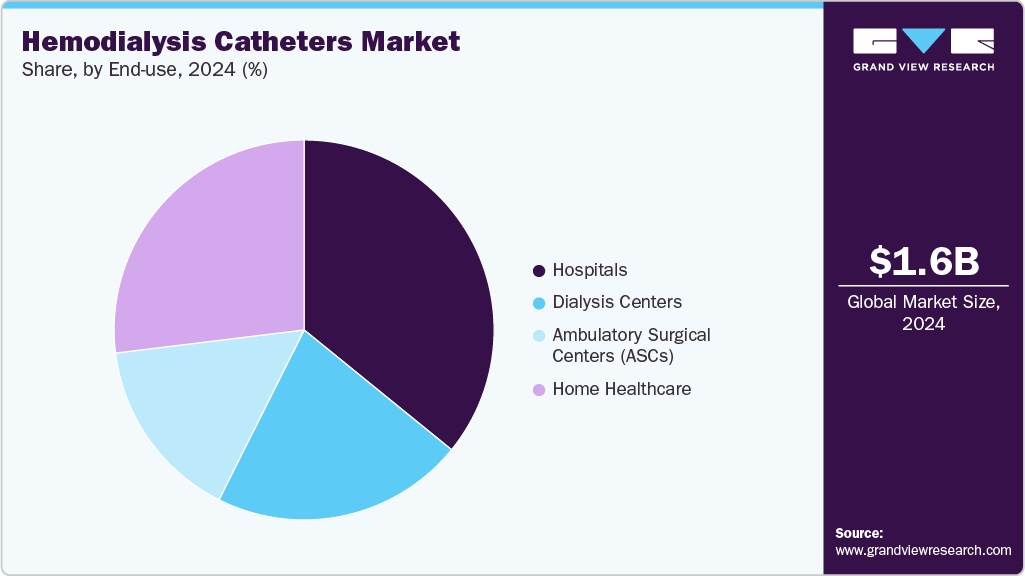
In addition, the rising number of hospital admissions for conditions such as sepsis, cardiovascular diseases, and diabetes-related complications further contributes to the growing demand for hemodialysis catheters in this segment. As per the Sepsis Alliance 2024, Sepsis is the leading cause of death in U.S. hospitals, accounting for approximately 6% of all hospitalizations and responsible for about 35% of all in-hospital deaths. This highlights the critical burden of sepsis on the healthcare system and its strong association with complications like acute kidney injury, which necessitate hemodialysis and catheter-based interventions.
The home healthcare segment is expected to grow at the fastest CAGR during the forecast period, due to the increasing demand for convenient and cost-effective dialysis options, especially among the aging population and patients with chronic kidney disease. Advancements in portable dialysis machines, rising healthcare costs, and a strong preference for at-home treatment drive this trend. In addition, supportive government policies, telehealth integration, and improved patient outcomes in home-based settings further accelerate the shift toward home hemodialysis, boosting the need for user-friendly and long-term catheter solutions in this segment.
Regional Insights
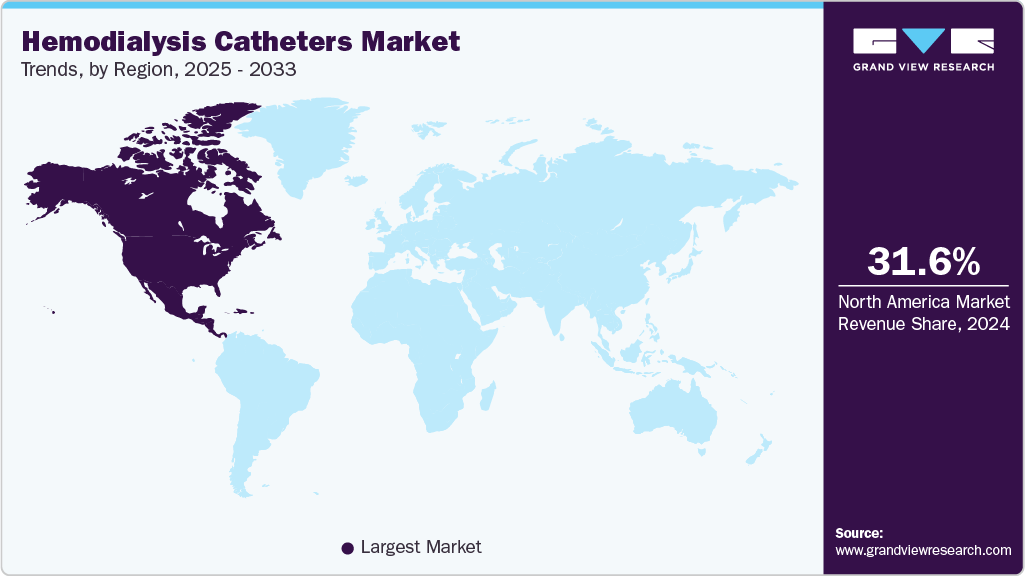
North America dominated the hemodialysis catheters market with the largest revenue share of 31.62% in 2024. This dominance is primarily driven by the high prevalence of end-stage kidney disease and a growing population with conditions such as diabetes, hypertension, and cardiovascular diseases, all of which contribute to kidney dysfunction. The U.S., in particular, holds the largest share within the region due to its advanced healthcare infrastructure, well-established dialysis networks, and favorable reimbursement policies that ensure patient access to dialysis treatments and vascular access devices. Moreover, the region benefits from the strong presence of leading catheter manufacturers and continuous technological advancements in infection-resistant and long-term tunneled catheters.
U.S. Hemodialysis Catheters Market Trends
The hemodialysis catheters market in the U.S. accounted for the largest market revenue share in North America in 2024,driven by its high prevalence of end-stage kidney disease (ESKD), advanced healthcare infrastructure, and widespread access to dialysis services. The country’s well-established network of dialysis centers, favorable reimbursement policies, and growing elderly population continue to support strong demand for both tunneled and non-tunneled catheters. Moreover, the presence of leading catheter manufacturers and ongoing technological advancements further reinforces the U.S.’s dominant position in the regional market. Acute Kidney Injury (AKI) and diabetes are key factors driving the market growth. AKI requires immediate renal support through temporary hemodialysis, increasing the demand for non-tunneled catheters.
Diabetes is a leading cause of chronic kidney disease and end-stage kidney disease, significantly expanding the long-term dialysis population that relies on tunneled catheters. As both conditions continue to rise, especially among aging populations, the need for reliable and efficient vascular access solutions is fueling consistent market growth. According to the CDC 2024, around 14.7% of U.S. adults have diabetes. Approximately 38.4 million U.S. adults and children are affected by the condition, with 29.7 million of these cases being diagnosed and 8.7 million remaining undiagnosed, as reported by the American Diabetes Association (ADA, 2023).
Furthermore, the CDC 2024 states that there are 1.2 million new cases of diabetes among U.S. adults each year, translating to an incidence rate of about 5.9 per 1,000 people. According to the United States Renal Data System 2023 Annual Data Report, the rate of hospitalizations with AKI in 2021 was 62.5 per 1,000 person-years, an increase from the previous year. The proportion of hospitalizations involving AKI increased significantly from 15.5% in 2011 to 26.8% in 2021. AKI was most frequently observed among patients hospitalized for sepsis (50.1%), followed by non-sepsis infections (27.8%) and cancer (21%).
Europe Hemodialysis Catheters Market Trends
The hemodialysis catheters market in Europe held a substantial market share in 2024, driven by the rising prevalence of chronic kidney disease, the aging population, and an increase in diabetes and cardiovascular diseases. There is a growing demand for tunneled catheters for long-term dialysis, especially among elderly patients. The region is also shifting toward minimally invasive and antimicrobial-coated catheters to reduce infection risks. In addition, strong government support, widespread healthcare reimbursement systems, and the presence of established medical device manufacturers in countries like Germany, France, and the UK are contributing to ongoing market expansion across Europe. As per the European Commission, on 1 January 2024, the EU population was estimated at 449.3 million people; more than one-fifth (21.6%) was 65 years and over.
The UK hemodialysis catheters marketis expected to grow at a significant CAGR during the forecast period. In the UK, heart and circulatory diseases are a major driver of the hemodialysis catheter industry, as they are closely linked to the development and progression of chronic kidney disease. Conditions such as hypertension, heart failure, and atherosclerosis often impair kidney function, increasing the risk of end-stage kidney disease and the need for dialysis. Many patients with CVD require urgent renal support, making hemodialysis catheters essential for immediate vascular access. With CVDs remaining a leading cause of hospital admissions and mortality in the UK, their impact on renal health continues to fuel consistent demand for dialysis access devices.
The table below highlights the significant impact of cardiovascular diseases across the UK and its constituent nations. England accounts for the highest number of CVD-related deaths and people living with CVD, followed by Scotland, Wales, and Northern Ireland.
Data on Deaths from and Numbers Living with Heart and Circulatory Diseases (CVD) for the UK
Nation
No. of People Dying from CVD (2023)
No. of People Under 75 Years Old Dying from CVD (2023)
Estimated Number of People Living with CVD (Latest Estimate)
England
142,460
38,996
6.4 million +
Scotland
17,787
5,313
730,000
Wales
9,701
2,918
340,000
Northern Ireland
4,227
1,133
225,000
UK Total
174,693
48,697
7.6 million +
Source: British Heart Foundation 2025
The hemodialysis catheters market in Germanyis growing, driven by the country's aging population, high prevalence of chronic kidney disease, and a well-established dialysis infrastructure. Germany has one of Europe's largest ESRD patient populations, with consistent demand for both short-term and long-term vascular access devices. The presence of leading medical device companies, strong reimbursement policies, and increasing adoption of advanced catheter technologies further support market growth. In addition, ongoing innovations and a shift toward minimally invasive dialysis procedures continue to fuel demand in the German market. As per the data published by Deutsches Arzteblatt in 2025, chronic kidney disease is common in the German adult population, with a prevalence of 10%.
Asia Pacific Hemodialysis Catheters Market Trends
The hemodialysis catheters market in Asia Pacific is experiencing rapid growth, driven by a rising prevalence of chronic kidney disease, expanding dialysis infrastructure, and increasing healthcare investments. Countries like China, India, and Japan are witnessing a surge in end-stage kidney disease cases due to aging populations, diabetes, and hypertension. In addition, government initiatives to improve renal care access and entry of global and domestic catheter manufacturers are accelerating market expansion. The region's growing awareness, improved diagnosis, and affordable dialysis treatments support its rapid market growth.
As per IDF, the number of adults aged 20-79 with diabetes has seen a significant rise in both the Southeast Asia (SEA) and Western Pacific (WP) regions. In SEA, the diabetic population reached 106.9 million in 2024 and is projected to grow to 184.5 million by 2050. Similarly, the WP region recorded a rise to 215.4 million in 2024, with an estimated 253.8 million by 2050. This surge reflects the growing public health burden of diabetes in Asia, driven by urbanization, sedentary lifestyles, and dietary transitions.
The hemodialysis market in India is anticipated to witness at a significant CAGR over the forecast period. In India, the rising burden of cardiovascular diseases such as hypertension, heart failure, and atherosclerosis has significantly contributed to the growing incidence of chronic kidney disease. Many patients with CVDs develop renal complications, accelerating the need for hemodialysis. As these patients require urgent or temporary vascular access, the demand for non-tunneled and tunneled hemodialysis catheters is increasing. In addition, cardiac patients undergoing surgeries or intensive care frequently need short-term renal replacement therapy, further boosting catheter use.
According to a 2023 report by the American College of Cardiology, cardiovascular diseases are responsible for approximately 30% of deaths in India, with ischemic heart disease being the leading cause. The report highlights that the high prevalence of diabetes and hypertension, combined with urban lifestyle factors like poor diet and pollution, are significant contributors.
The China hemodialysis catheters market is growing due to a surge in end-stage kidney disease cases, driven by rising rates of diabetes, hypertension, and an aging population. The number of hemodialysis patients tripled from 2012 to 2022, reaching over 844,000, while the incidence of treated ESKD more than doubled. This rise in dialysis demand boosts catheter usage, especially for short-term vascular access. As per an article published by the Lancet in 2025, in 2022, China reported a treated ESKD incidence rate of 134.9 per million populations. Government initiatives to expand dialysis coverage, increased investment in healthcare infrastructure, and the emergence of local manufacturers offering affordable and advanced catheters further accelerate market expansion. In addition, improvements in dialysis quality and patient survival rates contribute to longer treatment durations, indirectly supporting recurring demand for catheters.
Middle East and Africa Hemodialysis Catheters Market Trends
The hemodialysis catheter market in the Middle East and Africa (MEA) is experiencing significant growth, primarily driven by the rising prevalence of chronic kidney disease, diabetes, and hypertension across the region. Countries such as Saudi Arabia, the UAE, and South Africa are witnessing increased demand for dialysis services due to aging populations and changing lifestyles. Investments in dialysis infrastructure, supportive government initiatives, and public-private partnerships are expanding access to renal care. According to the IDF, in 2024, the MENA region is facing a significant diabetes burden, with around 85 million adults aged 20-79 living with the condition. Thirty-two millions of these adults remain undiagnosed, posing an important public health concern.
Key Hemodialysis Catheters Company Insights
Some key companies operating in the market includeAdvin Health Care, Teleflex, VYGON, and BD. Strategic initiatives involve mergers, acquisitions, and collaborations to broaden product offerings and market presence, alongside focused research and development to improve product efficacy and utilize innovative technologies.
Key Hemodialysis Catheters Companies:
The following are the leading companies in the hemodialysis catheters market. These companies collectively hold the largest market share and dictate industry trends.
- Medtronic
- BD
- Merit Medical Systems
- Teleflex Incorporated
- B. Braun SE
- Advin Health Care
- Joline GmbH & Co. KG
- Vygon
- Mozarc Medical Holding LLC.
- Medical Components, Inc
- Tianck Medical CO., Ltd.
- Polymedicure
- Integer Holdings Corporation
- Healthline Medical Products
- Manish Medi Innovation
Recent Developments
-
In May 2025, Merit Medical Systems acquired Biolife Delaware, L.L.C., a developer of proprietary hemostatic products, for USD 120 million in cash. The acquisition of Biolife by Merit Medical Systems is expected to positively impact the hemodialysis catheter market, primarily by enhancing vascular access management and hemostasis capabilities around catheter insertion and removal.
-
In November 2023, CorMedix Inc. announced FDA approval for DefenCath, the first and only antimicrobial catheter lock solution in the U.S., indicated to reduce catheter-related bloodstream infections in adult patients with kidney failure undergoing chronic hemodialysis via central venous catheters.
-
In August 2023, Teleflex has introduced its Arrow ErgoPack Complete Kits, which feature hemodialysis and large-bore catheters in the U.S. market. This expanded kit provides healthcare professionals with enhanced flexibility by choosing between Arrowg+ard Blue Hemodialysis or large-bore lines in various French sizes, lumen counts, and catheter lengths.
Hemodialysis Catheters Market Report Scope
Report Attribute
Details
Market size value in 2025
USD 1.71 billion
Revenue forecast in 2033
USD 3.01 billion
Growth rate
CAGR of 7.34% from 2025 to 2033
Base year for estimation
2024
Historical data
2021 - 2023
Forecast period
2025 - 2033
Quantitative units
Revenue in USD million/billion, and CAGR from 2025 to 2033
Report coverage
Revenue forecast, company ranking, competitive landscape, growth factors, trends
Segments covered
Design, component, material, application, shape, usage, end-use, region
Regional scope
North America; Europe; Asia Pacific; Latin America; Middle East & Africa
Country scope
U.S.; Canada; Mexico; UK; Germany; France; Italy; Spain; Denmark; Sweden; Norway; China; Japan; India; Australia; South Korea; Thailand; Brazil; Argentina; South Africa; Saudi Arabia; UAE; Kuwait
Key companies profiled
Medtronic; BD; Merit Medical Systems; Teleflex Incorporated; B. Braun SE; Advin Health Care; Joline GmbH & Co. KG; Vygon; Mozarc Medical Holding LLC.; Medical Components, Inc; Tianck Medical CO., Ltd.; Polymedicure; Integer Holdings Corporation; Healthline Medical Products; Manish Medi Innovation
Customization scope
Free report customization (equivalent up to 8 analysts working days) with purchase. Addition or alteration to country, regional & segment scope.
Pricing and purchase options
Avail customized purchase options to meet your exact research needs. Explore purchase options
Global Hemodialysis Catheters Market Report Segmentation
This report forecasts revenue growth at global, regional, and country levels and provides an analysis of the latest industry trends in each of the sub-segments from 2021 to 2033. For this study, Grand View Research has segmented the global hemodialysis catheters market report based on design, component, material, application, shape, usage, end-use, and region:
-
Design Outlook (Revenue, USD Million, 2021 - 2033)
-
Single Lumen
-
Double Lumen
-
Triple Lumen
-
-
Component Outlook (Revenue, USD Million, 2021 - 2033)
-
Catheter
-
Catheter Kit
-
-
Material Outlook (Revenue, USD Million, 2021 - 2033)
-
Polyurethane
-
Silicone
-
-
Shape Outlook (Revenue, USD Million, 2021 - 2033)
-
Straight
-
Curved
-
Pre-curved
-
-
Usage Outlook (Revenue, USD Million, 2021 - 2033)
-
Long Term
-
Short Term
-
-
Application Outlook (Revenue, USD Million, 2021 - 2033)
-
Chronic Kidney Disease (CKD)
-
Acute Kidney Injury (AKI)
-
-
End-use Outlook (Revenue, USD Million, 2021 - 2033)
-
Hospitals
-
Dialysis Centers
-
Ambulatory Surgical Centers (ASCs)
-
Home Healthcare
-
-
Regional Outlook (Revenue, USD Million, 2021 - 2033)
-
North America
-
U.S.
-
Canada
-
Mexico
-
-
Europe
-
UK
-
Germany
-
France
-
Italy
-
Spain
-
Denmark
-
Sweden
-
Norway
-
-
Asia Pacific
-
Japan
-
China
-
India
-
Australia
-
South Korea
-
Thailand
-
-
Latin America
-
Brazil
-
Argentina
-
-
Middle East & Africa
-
South Africa
-
Saudi Arabia
-
UAE
-
Kuwait
-
-
Frequently Asked Questions About This Report
b. The global hemodialysis catheters market size was estimated at USD 1.60 billion in 2024 and is expected to reach USD 1.71 billion in 2025.
b. The global hemodialysis catheters market is expected to grow at a compound annual growth rate of 7.34% from 2025 to 2033, reaching USD 3.01 billion by 2033.
b. North America dominated the hemodialysis catheters market with a share of 31.62% in 2024, driven by a high prevalence of chronic kidney disease, a well-established healthcare infrastructure, and a large base of dialysis patients. The region also benefits from early adoption of advanced catheter technologies, strong reimbursement frameworks, and a growing geriatric population, contributing to its leading position in the global market.
b. Some key players operating in the hemodialysis catheters market include Manish Medi Innovation, Advin Health Care, Medical Components Inc., BD, Tianck Medical Co. Ltd., Mozarc Medical Holding LLC, Joline GmbH & Co. KG, Vygon, Merit Medical Systems, Teleflex Incorporated, B. Braun SE, Polymedicure, Integer Holdings Corporation, Healthline Medical Products, Medtronic and Polymedicure
b. The hemodialysis catheters market is primarily driven by the rising global incidence of chronic kidney disease (CKD) and end-stage renal disease (ESRD), significantly increasing the demand for dialysis treatment. As the aging population grows, particularly in developed nations, the prevalence of kidney-related conditions continues to rise, fueling the need for long-term vascular access solutions like hemodialysis catheters.


Share this report with your colleague or friend.
Need a Tailored Report?
Customize this report to your needs — add regions, segments, or data points, with 20% free customization.


ISO 9001:2015 & 27001:2022 Certified
We are GDPR and CCPA compliant! Your transaction & personal information is safe and secure. For more details, please read our privacy policy.
Trusted market insights - try a free sample
See how our reports are structured and why industry leaders rely on Grand View Research. Get a free sample or ask us to tailor this report to your needs.













