
- Home
- »
- Medical Devices
- »
-
Hospital-at-Home Equipment Rental Market Report, 2033GVR Report cover

Hospital-at-Home Equipment Rental Market (2026 - 2033)
Size, Share & Trends Analysis Report By Equipment Type (Patient Monitoring Equipment), By Rental Model (Patient-Specific/Per-Episode Rental), By Care Model, By Rental Customer Type, By Clinical Use, By Region, And Segment Forecasts
Market Size, 2025
$1.6BMarket Estimate, 2026
$1.7BMarket Forecast, 2033
$3.2BCAGR, 2026–2033
9.5%Hospital-at-Home Equipment Rental Market Summary
The global hospital-at-home equipment rental market size was valued at USD 1.6 billion in 2025 and is projected to grow from USD 1.7 billion in 2026 to USD 3.2 billion by 2033, at a CAGR of 9.5% from 2026 to 2033. North America dominated the market, accounting for the largest revenue share of 42.4% in 2025. This growth is attributed to the growing adoption of hospital-at-home (HaH) and home-based acute care models, as healthcare providers seek to reduce pressure on inpatient facilities while delivering clinically appropriate care in patients’ homes.
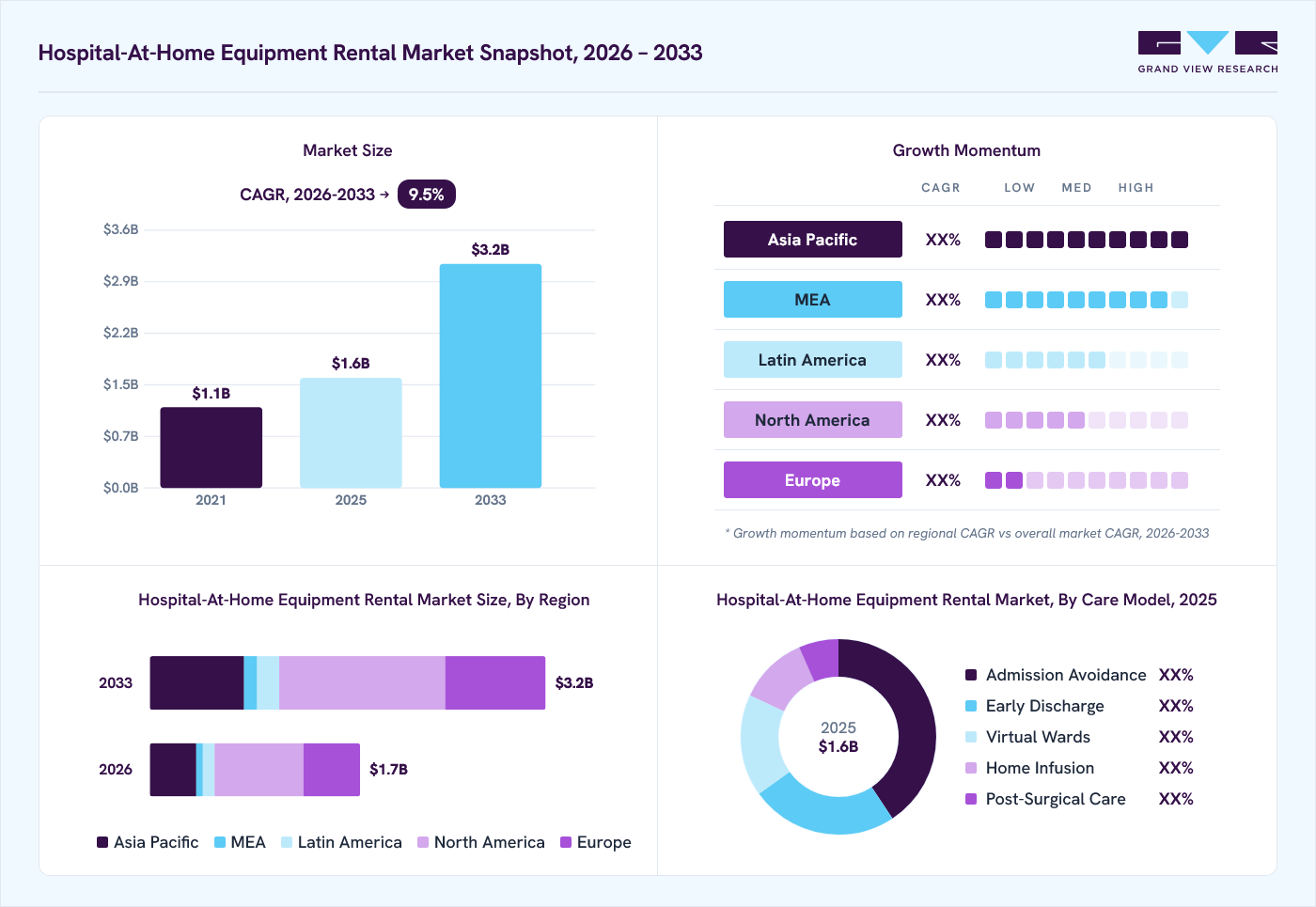 Source: Grand View Research, IR Documents, Primary Interviews, Paid DatabasesTo learn more about this report,
 Download Free Sample Report
Key Market Trends & Insights
- By equipment type: The infusion & drug delivery equipment segment held the largest revenue share in 2025.
- By rental model: The term-based equipment rental segment held the largest market revenue share of 38.0% in 2025.
- By care model: The admission avoidance segment accounted for the largest market revenue share of 40.6% in 2025.
- By rental customer type: The dedicated hospital-at-home providers’ segment is expected to grow at the fastest CAGR over the forecast period.
Regional Highlights
- Largest regional market: North America (42.4% revenue share, 2025)
- Fastest-growing regional market: Asia Pacific (highest CAGR, 2026-2033)
- By country: The U.S. held the largest market share in 2025
Market Size & Forecast
- Market size in 2025: USD 1.6 Billion
- Estimated market size in 2026: USD 1.7 Billion
- Projected market size by 2033: USD 3.2 Billion
- CAGR (2026-2033): 9.5%
Prism AI by Grand View Research Free to tryAsk a question about the Hospital-at-Home equipment rental marketTry asking✓Every figure cited from GVR research Prefer the report? Download free sample →
Rising hospital bed shortages, overcrowding, and increasing healthcare costs are encouraging hospitals and health systems to shift selected acute-care services to the home, creating demand for rental-based access to hospital beds, oxygen concentrators, patient monitors, infusion pumps, mobility equipment, and other medical devices.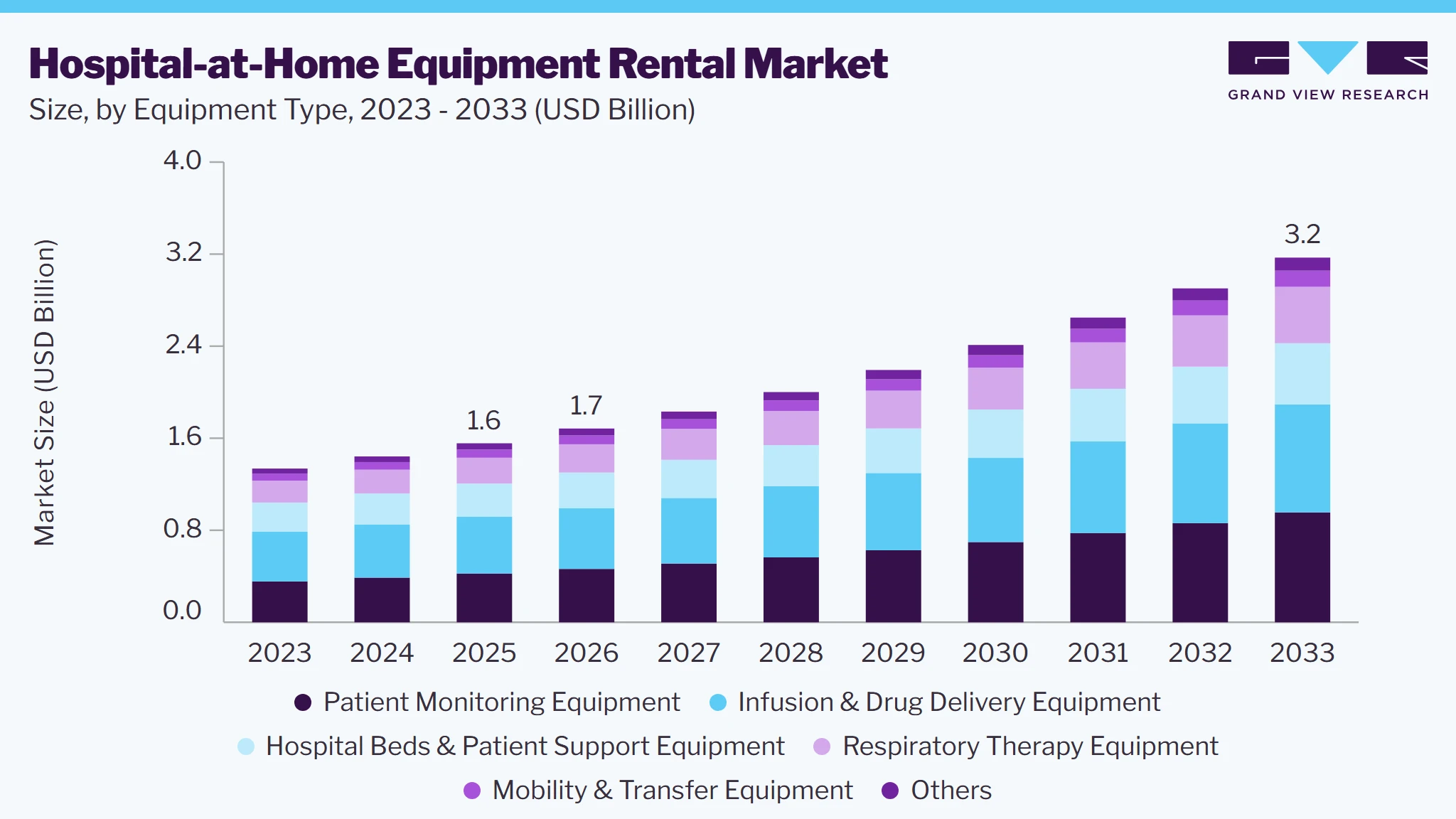 To learn more about this report, Download Free Sample Report
The section below outlines the key factors driving market growth, including the increasing adoption of home-based acute care, rising healthcare costs, hospital capacity constraints, and growing demand for flexible medical equipment solutions. It also examines the expanding elderly and chronically ill population, increased use of remote patient monitoring and telehealth, advancements in portable and connected medical devices, and growing provider and payer support for hospital-at-home programs.
Driver: Expansion of Hospital-at-Home Care Models
The expansion of hospital-at-home care models is a major market driver, as healthcare providers increasingly shift selected acute and inpatient-level treatments from conventional hospitals to patients’ homes. Hospital-at-home programs require homes to be equipped with medical infrastructure comparable to that available in hospitals, including hospital beds, oxygen concentrators, patient monitors, infusion pumps, ventilators, mobility equipment, and other durable medical equipment. Rental services are particularly attractive because hospitals and home healthcare providers can deploy this equipment quickly without making large upfront capital investments, while the equipment can be returned or redeployed after the patient's treatment episode ends.
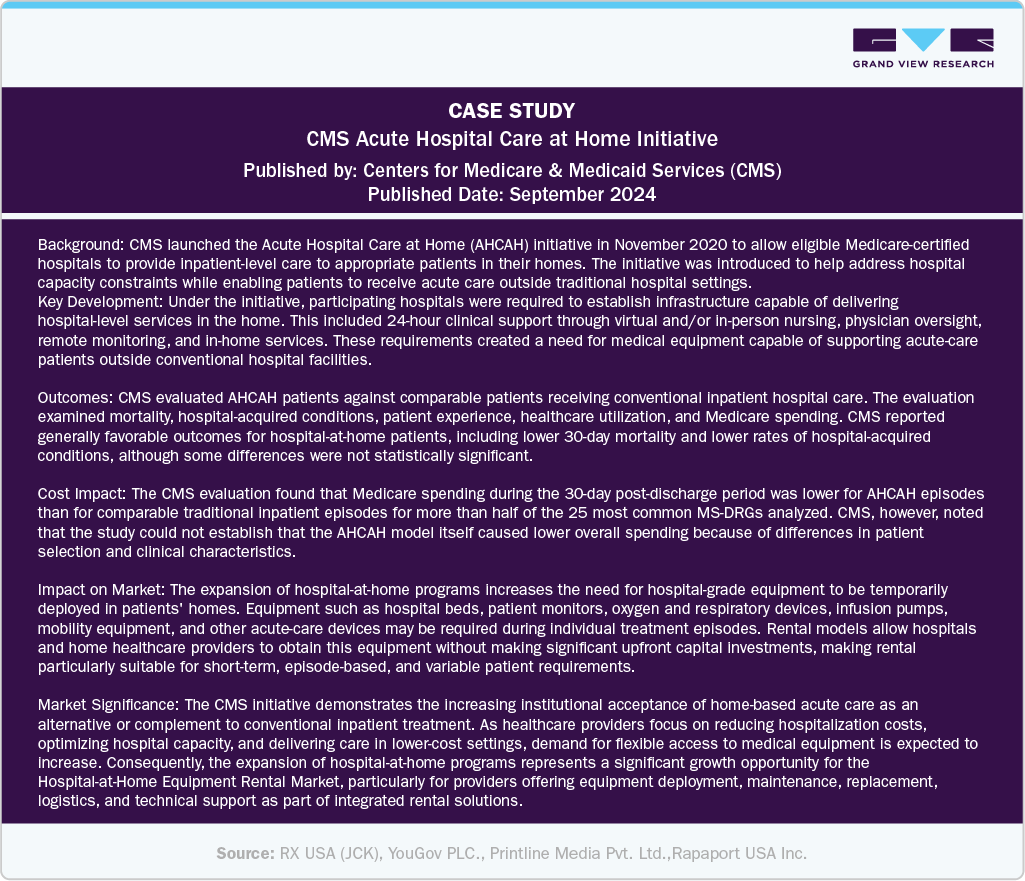
Furthermore, CMS extended the associated Acute Hospital Care at Home waivers and flexibilities through September 2030, providing greater regulatory visibility for healthcare organizations developing or expanding these programs. As more hospitals establish dedicated hospital-at-home pathways, demand for flexible, rapidly deployable, and professionally maintained medical equipment is expected to increase, thereby supporting growth in the equipment rental market.
Driver: Growth of Post-Surgical and Rehabilitation Care at Home
The shift toward shorter hospital stays and early discharge is increasing the number of patients who require continued medical and rehabilitation support after leaving inpatient facilities. Advances in minimally invasive surgeries, enhanced recovery protocols, and improved post-operative care are enabling patients to recover safely at home while reducing the need for prolonged hospitalization. During this recovery period, patients may require hospital beds, wheelchairs, patient lifts, oxygen equipment, compression therapy devices, wound-care systems, infusion pumps, and remote monitoring equipment. Because many of these devices are needed only temporarily, renting provides a cost-effective alternative to purchasing expensive equipment, particularly for patients recovering from surgery, injury, or acute illness. Rental providers can also deliver, install, maintain, and retrieve equipment according to the patient's changing needs, making home-based recovery more convenient for patients and caregivers.
Samsung’s Smart Technology for Post-Surgical Recovery at Home article published in September 2025
Background:
Samsung Business Insights highlighted the growing role of smart technology in enabling patients to continue rehabilitation and recovery at home after surgery. The approach uses connected devices to help patients perform prescribed exercises while allowing healthcare professionals to remotely monitor recovery progress.
Technology Used:
The model includes a tablet with a stand and preloaded rehabilitation exercises, supported by motion-tracking capabilities. Technology can assess patients while they perform exercises and provide feedback, helping them follow rehabilitation programs more accurately. Wearable devices can also provide information such as activity, heart rate, sleep, and pain-related data.
Home-Based Recovery Model:
Instead of requiring patients to repeatedly visit healthcare facilities for rehabilitation, connected technology allows parts of the recovery program to be performed at home. Healthcare providers can use remotely collected information to monitor progress and adjust rehabilitation plans according to the patient's condition.
Relevance to Equipment Rental:
The technology is particularly relevant to the market because many post-surgical patients require rehabilitation equipment for a limited recovery period rather than permanently. Devices such as connected tablets, wearables, monitoring equipment, and rehabilitation technologies can be provided temporarily and returned once the patient's rehabilitation is completed.
Market Dynamics
The case demonstrates the expansion of hospital-at-home equipment beyond traditional products such as hospital beds, oxygen equipment, and patient monitors toward connected rehabilitation and remote-monitoring technologies. Such solutions can increase equipment utilization, reduce patients' upfront costs, and enable healthcare providers to deliver more comprehensive post-surgical care at home. This supports the broader shift toward technology-enabled home recovery and temporary medical equipment rental models.
The growing emphasis on healthcare cost containment is a major market driver, as hospitals, insurers, and healthcare providers seek to reduce the high costs associated with conventional inpatient care while maintaining quality and continuity of treatment. Hospital-at-home models can shift appropriate patients from hospital wards to their homes, reducing expenses related to inpatient beds, facility operations, nursing infrastructure, and other hospital resources. Rental arrangements also provide greater flexibility for short-term or episode-based care, allowing equipment to be deployed according to patient needs and returned after recovery.
 To learn more about this report, Download Free Sample Report
The growing complexity of reimbursement policies and the high operational costs associated with deploying medical equipment at home are encouraging healthcare providers to rely on specialized rental companies rather than purchasing and managing equipment internally. Hospital-at-home care requires multiple devices, including hospital beds, oxygen systems, infusion pumps, patient monitors, ventilators, and mobility equipment, each of which may involve different reimbursement requirements, eligibility criteria, documentation, rental periods, and payer policies. In addition, suppliers must manage delivery, installation, maintenance, cleaning, retrieval, replacement, and equipment utilization, increasing the overall cost of ownership. Renting allows hospitals and home healthcare providers to convert these capital expenditures into more predictable operating expenses while avoiding the burden of maintaining large equipment inventories. As hospital-at-home programs expand, the ability of rental providers to handle equipment logistics, reimbursement administration, maintenance, and replacement requirements is expected to support.
The shift from conventional equipment rental toward integrated “Equipment-as-a-Service” (EaaS) solutions is driving the market by changing demand from standalone device leasing to bundled solutions that combine medical equipment, installation, connectivity, remote monitoring, maintenance, technical support, logistics, and equipment replacement. Philips' partnership with Southern NSW Local Health District in Australia, announced in December 2025, to deploy Respiree wearable monitoring technology as part of its Hospital in the Home initiative. The solution is designed to extend monitoring beyond the hospital and support patient flow and digitally enabled acute care. Philips has also partnered with Respiree to combine wearable sensors and AI-enabled analytics with its enterprise monitoring infrastructure for hospital-at-home programs. These developments illustrate the movement toward integrated monitoring ecosystems rather than individual rented medical devices.
The model is also becoming important because equipment management itself is increasingly complex in home-based care. NHS England specifically issued guidance on managing medical equipment within virtual wards, covering device procurement, clinical engineering, maintenance, governance, safety, and management of equipment supplied to patients' homes. This supports the role of specialized rental providers that can manage the equipment lifecycle on behalf of hospitals and healthcare organizations.
Market Concentration & Characteristics
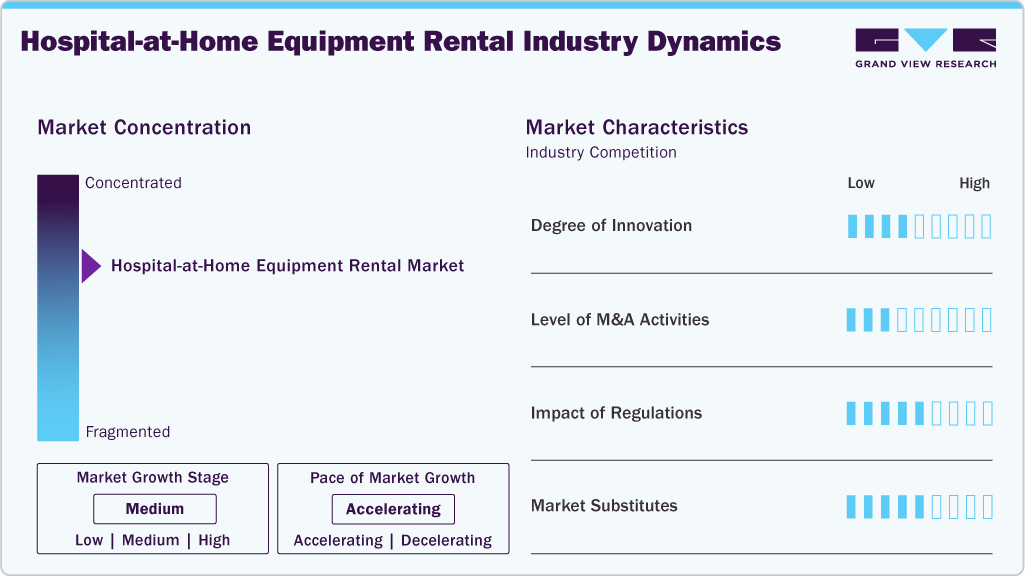
The chart below illustrates the relationship between industry concentration, industry characteristics, and key market participants. The market is moderately fragmented, comprising global medical equipment providers, DME companies, specialized rental firms, and regional home healthcare providers. Key participants compete through equipment availability, rapid delivery, flexible rental models, maintenance, remote monitoring, and integrated equipment-as-a-service solutions supporting hospital beds, oxygen systems, ventilators, patient monitors, and infusion equipment.
The market is witnessing a high degree of innovation, driven by connected medical devices, remote patient monitoring, wearable sensors, telehealth platforms, and AI-enabled clinical monitoring. For instance, in March 2026, CMS released a second data set from its Acute Hospital Care at Home (AHCAH) initiative, covering more than two years of program data through September 2025, supporting continued development of technology-enabled hospital-at-home models. In addition, Philips has developed solutions combining wearable biosensors and remote monitoring to enable continuous monitoring of patients outside conventional hospital settings. These developments are encouraging rental providers to offer connected equipment rather than conventional standalone devices.
 To learn more about this report, Download Free Sample Report
The level of M&A and strategic partnership activity is moderate, with companies increasingly pursuing partnerships and acquisitions to combine medical equipment, home healthcare, logistics, and digital monitoring capabilities. For instance, in August 2026, Philips and Cuviva announced a collaboration demonstrating the growing integration of connected medical equipment and remote patient monitoring technologies in hospital-at-home care.
The impact of regulations is high, as hospital-at-home providers and equipment rental companies must comply with medical-device safety, maintenance, infection-control, patient-data protection, and healthcare delivery requirements. CMS subsequently released additional AHCAH data in March 2026, indicating continued regulatory and institutional development of the model. Such requirements increase compliance costs but also create barriers to entry and favor established providers with robust equipment-management systems.
The market is experiencing strong expansion as healthcare systems increasingly shift suitable acute and post-acute care from hospitals into residential settings. CMS's AHCAH initiative provides a significant supporting instance, with 366 hospitals participating and more than 31,000 patients treated at home by October 2024. This expansion directly increases demand for rental equipment such as hospital beds, patient monitors, oxygen concentrators, ventilators, infusion pumps, and mobility equipment, particularly because rental models allow hospitals and home-care providers to deploy equipment without substantial upfront capital expenditure.
Analyst Perspective
The market is witnessing steady growth, driven by the increasing adoption of home-based acute and post-acute care, hospital capacity constraints, rising chronic diseases, and healthcare cost pressures. Demand for hospital beds, patient monitors, oxygen equipment, ventilators, infusion pumps, and mobility devices is increasing as providers shift suitable care from hospitals to homes. In addition, advances in remote patient monitoring, connected devices, telehealth, and AI-enabled monitoring are supporting integrated “equipment-as-a-service” models.
Equipment Type Insights
The infusion & drug delivery equipment segment accounted for the largest market revenue share of 31.7% in 2025 due to the rising adoption of home infusion and hospital-at-home treatment. CMS explicitly recognizes equipment such as infusion pumps, tubing, and catheters as core components of Medicare-covered home infusion therapy. The American Hospital Association has also highlighted wirelessly connected infusion pumps as an important home-care technology because they can transmit treatment data to providers, improving oversight of therapy delivered at home. This development is increasing demand for flexible rental models, particularly for patients requiring equipment only for the duration of a treatment episode. Consequently, the expansion of home infusion and hospital-at-home pathways is expected to support sustained rental demand for infusion pumps and associated drug-delivery equipment.
The patient monitoring equipment segment is expected to grow at the fastest CAGR over the forecast period due to the growing use of remote patient monitoring (RPM) and connected medical devices. CMS states that RPM enables patients to collect measures such as blood pressure, weight, and glucose using connected devices that automatically transmit information to healthcare providers. A 2025 systematic review found RPM was associated with reductions in hospitalizations, emergency visits, and readmissions across several studies. These developments are encouraging hospitals to deploy connected vital-sign monitors, ECG devices, pulse oximeters, blood-pressure monitors, and other equipment in patients' homes, thereby supporting rental-market growth.
Rental Model Insights
The term-based equipment rental segment accounted for the largest market revenue share of 38.0% in 2025. The increasing use of hospital-at-home programs for patients requiring equipment over several weeks or months makes recurring rental more economical than repeated short-term procurement. This is particularly relevant for hospital beds, respiratory equipment, infusion pumps, and patient-monitoring systems that remain deployed throughout the care episode. In March 2024, NHS England stated that most virtual wards use medical equipment and that effective procurement, use, and management of this equipment is fundamental to virtual-ward operations. The NHS is also continuing to scale virtual-ward capacity during 2025/26, supporting sustained demand for equipment fleets instead of one-off rentals.
The short-term/on-demand rental segment is expected to grow at the fastest CAGR over the forecast period. This is driven by the need to rapidly deploy medical equipment when patients are discharged early, hospitals face capacity constraints, or patients require temporary acute-care support at home. Hospital-at-home programs can involve hospital beds, oxygen and respiratory equipment, infusion systems, monitoring devices, and other equipment that must be delivered quickly according to individual patient requirements. An April 2026 report published by PubMed highlights that U.S. hospital-at-home programs are expanding and commonly provide patients with remote monitoring, delivered medications, respiratory therapy, intravenous treatments, and specialized beds and mattresses.
Care Model Insights
The admission avoidance segment accounted for the largest market revenue share of 40.6% in 2025. The rising pressure on hospital beds and emergency departments is a key driver for the segment, as health systems increasingly seek to treat clinically appropriate patients at home instead of admitting them. NHS England identifies virtual wards/hospital-at-home as a substitute for acute inpatient care that can prevent avoidable admissions, while its urgent-care evaluations have found reductions in avoidable attendances and admissions. For instance, in May 2024, the Southeast England virtual-ward evaluation estimated 22,794 avoided non-elective admissions annually and a USD 12.12 million annualized net benefit across the virtual wards analyzed. This expansion directly increases demand for rental equipment such as patient monitors, ECG devices, infusion pumps, respiratory equipment, and hospital beds. NHS England has also encouraged integration of virtual wards with urgent and emergency services to strengthen admission-avoidance pathways.
The virtual wards segment is expected to grow at the fastest CAGR over the forecast period. The rapid scaling of technology-enabled virtual wards is driving demand for the segment as these models require hospitals to replicate essential acute-care capabilities in patients' homes. A major development is NHS England's continued standardization and scaling of virtual wards, with the 2025/26 planning guidance calling for local systems to embed and expand capacity according to demand. The Cambridge University Hospitals virtual ward provides a strong instance. After launching in 2022, it onboarded more than 1,500 patients across 23 specialties and used remote monitoring to identify deterioration. In parallel, NHS England issued dedicated guidance on managing medical equipment within virtual wards, highlighting the growing importance of equipment procurement, maintenance, tracking, and support.
Rental Customer Type Insights
The hospitals & health systems segment accounted for the largest market revenue share of 58.2% in 2025. These systems seek to expand effective bed capacity, reduce inpatient congestion, and shift suitable acute patients to lower-cost home settings. In March 2026, CMS released additional AHCAH data covering April 2023-September 2025, supporting continued evaluation and scaling of the model. In the UK, Manchester University NHS Foundation Trust's HaH program was treating around 190 patients daily and had saved more than 32,000 hospital bed-days, demonstrating the operational benefits to health systems. These developments encourage hospitals to rent monitoring, infusion, respiratory, and patient-support equipment rather than purchase large fleets upfront.
The dedicated hospital-at-home providers’ segment is expected to grow at the fastest CAGR over the forecast period. This is attributed to hospitals' increasing need to specialize clinical teams, technology platforms, logistics, and equipment infrastructure to launch and scale acute-care-at-home programs without developing all capabilities internally. A major development occurred in March 2025 when DispatchHealth and Medically Home announced a merger, creating a broader hospital-level-at-home platform expected to operate across 50 major metropolitan areas in partnership with nearly 40 health systems. The combined model integrates clinical care, technology, and logistics, increasing the requirement for deployable medical equipment at patients' homes. In February 2026, DispatchHealth highlighted its ability to help health systems rapidly launch and expand high-acuity home-care programs. This provider-led expansion supports recurring rental demand because specialized providers require scalable equipment fleets that can be deployed across multiple patients and locations.
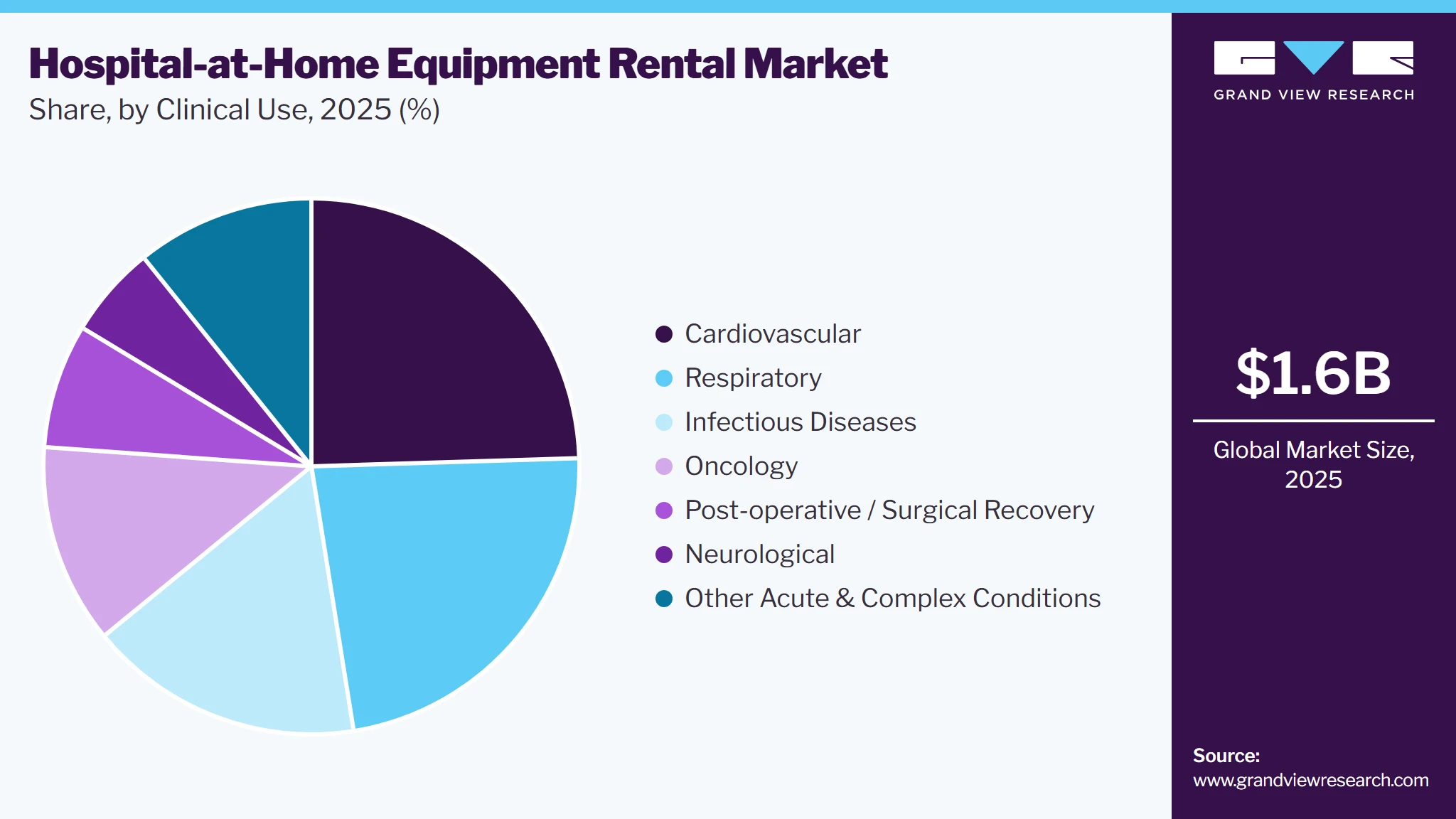
Clinical Use Insights
The cardiovascular segment accounted for the largest market revenue share of 24.5% in 2025. This is driven due to patients with heart failure and other acute cardiac conditions require continuous monitoring, medication management, and rapid identification of deterioration. A July 2026 study published in JAMA Network Open specifically evaluated an acute hospital-care-at-home program for acute heart failure, examining readmission, mortality, and guideline-directed medical therapy outcomes. Cleveland Clinic has also reported that hospital-at-home care can be a safe and effective model for heart-failure management. In addition, DispatchHealth's hospital-alternative-care model specifically includes conditions such as congestive heart failure, demonstrating commercial deployment of cardiovascular-focused acute home care. These developments increase demand for rented cardiovascular monitoring and infusion equipment.
 To learn more about this report, Download Free Sample Report
The post-operative/surgical recovery segment is expected to register the fastest CAGR over the forecast period due to hospitals seeking to shorten inpatient stays, accelerate discharge, and continue clinically supervised recovery at home. Surgical hospital-at-home models can use rented hospital beds, mobility aids, patient-monitoring devices, infusion systems, and other equipment to replicate essential post-operative support outside the hospital. Real-world adoption is also emerging, for instance, in January 2026, Even Healthcare in India reported that its home-recovery model had avoided more than 200 hospitalizations, alongside a 50% reduction in post-surgery hospital readmissions among its reported surgical experience. As minimally invasive procedures and enhanced recovery pathways enable earlier discharge, hospitals increasingly require flexible equipment fleets to support patients during the recovery period.
Regional Insights
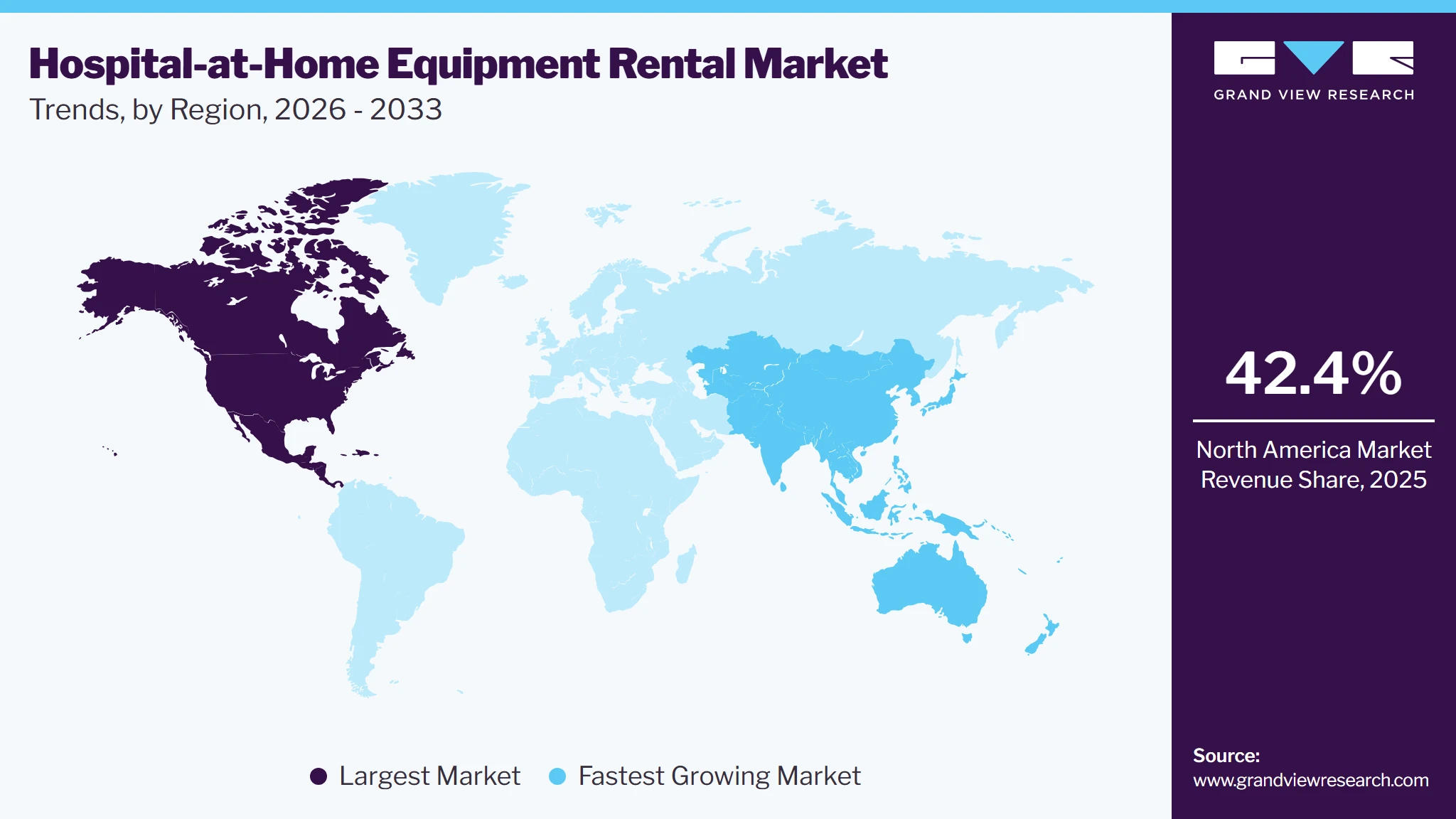
North America dominated the market with a revenue share of 42.4% in 2025, driven by the growing institutionalization of hospital-at-home care, aging populations, hospital capacity constraints, and increasing use of remote patient monitoring. The region is shifting from conventional home healthcare toward hospital-level care delivered at home, increasing demand for rental hospital beds, patient monitors, oxygen equipment, infusion pumps, ventilators, and other acute-care devices.
 To learn more about this report, Download Free Sample Report
U.S. Hospital-at-Home Equipment Rental Market Trends
The hospital-at-home equipment rental market in the U.S. is driven by Medicare participation, hospital capacity pressures, technology adoption, and the established DME rental ecosystem. CMS's AHCAH program has helped establish hospital-at-home as a viable alternative to inpatient treatment, while hospitals increasingly use rental providers to obtain equipment without committing substantial capital to ownership. For instance, US Med-Equip reported in October 2025 that more hospital systems were turning to medical equipment rentals, particularly for ventilators, infusion pumps, bariatric beds, and advanced therapeutic surfaces, to flex equipment capacity according to patient volumes.
Europe Hospital-at-Home Equipment Rental Market Trends
The hospital-at-home equipment rental market in Europe is witnessing increasing adoption as healthcare systems seek to manage aging populations, reduce hospital bed pressure, and control healthcare expenditure. The market is increasingly supported by telemedicine, connected monitoring devices, and integrated home-care platforms. European providers are moving toward models in which equipment, technology, clinical staff, and monitoring are combined, creating opportunities for rental companies to provide complete care equipment packages. European research also highlights the integration of IoT, AI, and digital assistance technologies into hospital-to-home care pathways.
Germany hospital-at-home equipment rental market is showing increasing interest in establishing structured models that provide hospital-equivalent treatment directly in patients' homes. In March 2025, the German nursIT Institute highlighted the development of regional HaH models, where hospital physicians and nurses can provide hospital-level treatment at home, either immediately or following an early discharge. The emergence of organizations such as HaH Deutschland e.V. further indicates efforts to establish safe and professional hospital-at-home structures.
The hospital-at-home equipment rental market in the UK is driven primarily by the NHS and has formally developed the virtual ward model. NHS England defines virtual wards as hospital-at-home services that allow patients to receive care safely at home rather than remaining in hospital. Virtual wards are used both to prevent avoidable hospital admissions and to allow patients to leave hospitals earlier while continuing to receive appropriate care at home. This creates recurring demand for hospital beds, oxygen equipment, vital-sign monitors, wearable devices, and other rental equipment, particularly as NHS systems scale technology-enabled monitoring.
Asia Pacific Hospital-at-Home Equipment Rental Market Trends
The hospital-at-home equipment rental market in the Asia Pacific is expected to experience strong growth, supported by rapid population aging, increasing chronic disease prevalence, rising healthcare expenditure, hospital overcrowding, and growing adoption of digital health technologies. Unlike North America and the UK, the market remains more heterogeneous, with advanced hospital-at-home programs in countries such as China, Singapore, Japan, and Australia alongside emerging models in India and other Asian markets. The region is increasingly experimenting with 5G-enabled monitoring, smart-home wards, telemedicine, and connected medical equipment, creating opportunities for equipment rental providers.
China hospital-at-home equipment rental market is expected to grow as China increasingly integrates 5G, smart-home technologies, and remote monitoring into home-based hospital care. A notable instance is the Guangdong Second Provincial General Hospital, which developed a 5G-powered Smart Home Ward to extend hospital services into patients' homes. The model was initially tested for cardiovascular disease, stroke, Parkinson's disease, and Alzheimer's disease, and incorporates remote monitoring and communication with the hospital. China's rapidly aging population also supports long-term demand for home-based medical equipment, rehabilitation devices, respiratory equipment, and monitoring technologies. The country's projected population of more than 400 million people aged 60+ by 2035 further strengthens the structural opportunity for home-based care.
The hospital-at-home equipment rental market in India is driven by rapid adoption of home healthcare and hospital-at-home services, driven by high hospital costs, limited hospital capacity, aging, chronic diseases, and increasing consumer acceptance of home-based treatment. Equipment rental is particularly attractive because patients and home-care providers can access hospital beds, oxygen concentrators, ventilators, CPAP/BiPAP devices, wheelchairs, and monitoring equipment without purchasing expensive devices. For instance, Apollo HomeCare expanded its operations in August 2025; Apollo's 2025 reporting indicated more than 508,000 patient-care episodes, 132,000+ home visits, and more than 20,000 patients served. In addition, Indian providers increasingly use remote monitoring and teleconsultation to support home-based treatment.
Latin America Hospital-at-Home Equipment Rental Market Trends
The hospital-at-home equipment rental market in Latin America is primarily driven by rising healthcare expenditure, aging populations, chronic diseases, and the need to reduce pressure on hospital infrastructure. Adoption varies considerably between countries, with Brazil representing one of the region's most established home-hospitalization markets. The region is increasingly moving toward technology-enabled home care, while equipment rental provides a cost-effective method for providers to deploy medical infrastructure without large upfront investments. Recent regional discussions have highlighted the expansion of hospital-at-home models in Brazil and Colombia, indicating increasing institutional interest in the model.
Brazil hospital-at-home equipment rental market is projected to grow significantly. Brazil has a relatively long history of home hospitalization, particularly within the private healthcare sector. Research on Brazil's model notes that private-sector home hospitalization has been based on continuous nursing care for approximately 30 years, while home care has also helped reduce demand for hospital beds. More recently, Brazilian healthcare discussions have emphasized moving toward modern hospital-at-home models supported by technologies such as remote monitoring and connected devices. A 2025 Medscape report highlighted hospital-at-home as an emerging model capable of shifting care toward the patient's home while using new technologies to support monitoring. This supports demand for rental hospital beds, oxygen systems, monitoring equipment, infusion devices, and other home-care infrastructure.
The Middle East & Africa hospital-at-home equipment rental market
The hospital-at-home equipment rental market in MEA is developing rapidly but remains less mature than North America and Western Europe. Growth is supported by healthcare modernization, government investment in digital health, rising chronic diseases, aging populations, and the expansion of private home healthcare networks. GCC countries, particularly Saudi Arabia and the UAE, are leading adoption through digitally enabled home-care initiatives. The broader Middle East home healthcare market is projected to grow substantially, reflecting increasing demand for care outside conventional hospitals.
The UAE hospital-at-home equipment rental market is characterized by advanced healthcare infrastructure, digital-health adoption, private healthcare investment, and increasing demand for home-based services. The UAE home healthcare industry was estimated at USD 1.18 billion in 2025 and is projected to reach approximately USD 2.19 billion by 2031, indicating strong underlying demand for home-care services and associated equipment. The UAE is also developing hospital-at-home and long-term-care frameworks; for example, Dubai Health Authority has conducted workshops around new standards for long-term-care and digitally enabled home-based services. In addition, Abu Dhabi and Dubai are seeing increased hospital-at-home activity, creating opportunities for rental providers supplying hospital beds, respiratory equipment, patient monitors, infusion equipment, and remote-monitoring systems.
Key Hospital-at-Home Equipment Rental Company Insights
The market players are focusing on devising innovative business growth strategies in the form of product portfolio expansions, partnerships & collaborations, mergers & acquisitions, and business footprint expansions.
Key Hospital-at-Home Equipment Rental Companies
The following key companies have been profiled for this study on the hospital-at-home equipment rental market.
-
Care Resources
-
Achairgo
-
UnityPoint Health
-
The Johns Hopkins University
-
MedOne
-
Chersery Home
-
Medivac Emergency Ambulance Services
-
iElder.Asia
-
Medical Assistance4U Pte Ltd.
-
Adapt A Home
-
Arjo
-
Home Care Equipment Ltd.
-
Hospital Express
-
Rental Commerce Inc.
-
KIMSHEALTH
-
Zulekha Healthcare
Competitive Benchmarking
Category
Operating Strategies
Competitive Edge
Weakness
Established Players (e.g., Care Resources, Achairgo, UnityPoint Health, The Johns Hopkins University)
- Invest in expanding medical equipment fleets, strengthening nationwide/regional logistics and service networks, and providing flexible rental models. Increasingly integrate equipment rental with delivery, installation, maintenance, remote monitoring, and equipment-as-a-service solutions.
- Strong brand recognition, large equipment inventories, established relationships with hospitals and healthcare providers, broad geographic coverage, robust logistics and maintenance capabilities, and financial resources to manage large equipment fleets.
- High operating and maintenance costs associated with large equipment inventories and logistics networks. Large organizations may have relatively complex operational structures and may face challenges in rapidly customizing services for smaller or specialized hospital-at-home programs.
Emerging Players (e.g., Home Care Equipment Ltd, Hospital Express, Rental Commerce Inc., KIMSHEALTH)
- Focus on specialized equipment packages, rapid delivery, flexible short-term rentals, technology-enabled monitoring, and customized solutions for hospital-at-home and post-acute care. Strengthen market presence through partnerships with hospitals, home healthcare providers, insurers, and digital health companies.
- Greater flexibility, faster response times, localized service capabilities, personalized customer support, and the ability to address underserved geographic or specialized patient segments.
- Limited equipment fleets, geographic coverage, brand recognition, and financial resources compared with established providers. Smaller service and maintenance networks can also constrain their ability to support large hospital systems and geographically dispersed patients.
Recent Developments
-
In November 2025, Becker’s Hospital Review reported that four U.S. health systems, NewYork-Presbyterian, Nemours Children’s Health, Valley Health System, and St. Luke’s Health System, launched new Hospital-at-Home programs, demonstrating the accelerating adoption of acute inpatient-level care in patients’ homes.
-
In December 2025, HME Medical Distribution launched its new Basic Rental Program (BRP) in Richmond, British Columbia, establishing an 8,000-square-foot dedicated rental facility and expanding its three Richmond facilities to more than 35,000 square feet of warehouse and operational capacity.
-
In May 2025, Viemed Healthcare announced a USD 26 million acquisition of Lehan’s Medical Equipment, an Illinois-based home medical equipment provider, demonstrating increasing consolidation and investment in the U.S. home-based medical equipment ecosystem.
“Operating for nearly 80 years, Lehan has established a well-deserved reputation for its expertise in home medical equipment with a particular emphasis on women’s health and a deep commitment to community engagement.” “Lehan gives us a strong platform to execute our growth strategy in a large and fast-growing market with very familiar products. The acquisition also diversifies our product mix into maternal health, which we expect to extend to our existing payer relationships across the country. This is a highly motivated and experienced team that has created tremendous brand equity, and we are pleased to join forces with them.”
- Viemed Chief Executive Officer Casey Hoyt.
Hospital-at-Home Equipment Rental Market Report Scope
Report Attribute
Details
Market size in 2025
USD 1.6 billion
Estimated market size in 2026
USD 1.7 billion
Projected market size by 2033
USD 3.2 billion
Growth rate
CAGR of 9.5% from 2026 to 2033
Actual data
2021 - 2025
Forecast data
2026 - 2033
Quantitative units
Revenue in USD billion, and CAGR from 2026 to 2033
Report coverage
Revenue forecast, company ranking, competitive landscape, growth factors, and trends
Segments covered
Equipment type, rental model, care model, rental customer type, clinical use, region
Regional scope
North America; Europe; Asia Pacific; Latin America; MEA
Country scope
U.S.; Canada; Mexico; UK; Germany; France; Italy; Spain; Denmark; Norway; Sweden; China; India; Japan; Australia; Thailand; South Korea; Brazil; Argentina; South Africa; Saudi Arabia; UAE; Kuwait
Key companies profiled
Care Resources; Achairgo; UnityPoint Health; The Johns Hopkins University; MedOne; Chersery Home; Medivac Emergency Ambulance Services; iElder.Asia; Medical Assistance4U Pte Ltd.; Adapt A Home; Arjo; Home Care Equipment Ltd.; Hospital Express; Rental Commerce Inc.; KIMSHEALTH; Zulekha Healthcare
Customization scope
Free report customization (equivalent up to 8 analysts working days) with purchase. Addition or alteration to country, regional & segment scope.
Pricing and purchase options
Avail customized purchase options to meet your exact research needs. Explore purchase options
Global Hospital-at-Home Equipment Rental Market Report Segmentation
This report forecasts revenue growth at global, regional, and country levels and provides an analysis of industry trends in each of the segments from 2021 to 2033. For this study, Grand View Research, Inc. has segmented the global hospital-at-home equipment rental market report based on equipment type, rental model, care model, rental customer type, clinical use, and region:
-
Equipment Type Outlook (Revenue in USD Billion, 2021 - 2033)
-
Patient Monitoring Equipment
-
Respiratory Therapy Equipment
-
Infusion & Drug Delivery Equipment
-
Hospital Beds & Patient Support Equipment
-
Mobility & Transfer Equipment
-
Others
-
-
Rental Model Outlook (Revenue in USD Billion, 2021 - 2033)
-
Patient-Specific/Per-Episode Rental
-
Short-Term/On-Demand Rental
-
Term-Based Equipment Rental
-
Fleet/Portfolio Leasing
-
Others
-
-
Care Model Outlook (Revenue in USD Billion, 2021 - 2033)
-
Admission Avoidance
-
Early Discharge
-
Virtual Wards
-
Home Infusion
-
Post-Surgical Care
-
-
Rental Customer Type Outlook (Revenue in USD Billion, 2021 - 2033)
-
Hospitals & Health Systems
-
Dedicated Hospital-at-Home Providers
-
Home Healthcare Providers
-
Home Infusion Providers
-
Other Healthcare Providers
-
-
Clinical Use Outlook (Revenue in USD Billion, 2021 - 2033)
-
Cardiovascular
-
Respiratory
-
Infectious Diseases
-
Oncology
-
Post-operative/Surgical Recovery
-
Neurological
-
Other Acute & Complex Conditions
-
-
Regional Outlook (Revenue in USD Billion, 2021 - 2033)
-
North America
-
U.S.
-
Canada
-
Mexico
-
-
Europe
-
UK
-
Germany
-
France
-
Italy
-
Spain
-
Sweden
-
Denmark
-
Norway
-
-
Asia Pacific
-
China
-
India
-
Japan
-
Australia
-
South Korea
-
Thailand
-
-
Latin America
-
Brazil
-
Argentina
-
-
MEA
-
South Africa
-
Saudi Arabia
-
Kuwait
-
UAE
-
-
Research Methodology
The hospital-at-home equipment rental market figures in this report are based on a proven research process that combines executive interviews with secondary research from proprietary databases, company filings, and recognized regulatory and institutional sources. Market size is built through value-chain sizing - reconciling supply-side and demand-side estimates - and triangulated with bottom-up and top-down approaches. Every estimate passes multiple levels of expert validation before publication, with each hospital-at-home equipment rental segment quantified using the revenue-capture definitions in the table below.
Segment Definition
Segment - Equipment Type
Revenue capture definition
Patient Monitoring Equipment
Equipment is used to continuously or periodically monitor vital signs and clinical parameters of patients receiving acute or complex care at home.
Respiratory Therapy Equipment
Devices that support oxygenation, ventilation, airway management, and other respiratory needs during home-based acute care.
Infusion & Drug Delivery Equipment
Equipment is used to administer medications, fluids, biologics, and other therapies intravenously or through controlled delivery systems at home.
Hospital Beds & Patient Support Equipment
Beds and related support equipment are designed to provide safe positioning, pressure management, and care delivery for patients recovering at home.
Mobility & Transfer Equipment
Equipment that assists patients with movement, transfers, ambulation, and safe positioning within the home.
Others
Other hospital-at-home equipment is not specifically classified under monitoring, respiratory, infusion, bed, or mobility equipment.
By Rental Model
Revenue capture definition
Patient-Specific/Per-Episode Rental
Equipment rented for an individual patient for a defined treatment episode, admission, or recovery period.
Short-Term/On-Demand Rental
Equipment rented for short durations based on immediate or temporary clinical requirements.
Term-Based Equipment Rental
Equipment rented for a predetermined contractual period, generally longer than a single care episode.
Fleet/Portfolio Leasing
Multiple equipment units leased as a managed portfolio to healthcare providers for repeated or ongoing hospital-at-home deployments.
By Care Model
Revenue capture definition
Admission Avoidance
Equipment supporting patients who would otherwise require hospital admission but can safely receive acute care at home.
Early Discharge
Equipment provided to enable patients to leave the hospital earlier while continuing necessary acute or post-acute care at home.
Virtual Wards
Equipment used to remotely monitor and manage patients at home as part of a hospital-led virtual ward or digitally enabled care pathway.
Home Infusion
Equipment used to deliver intravenous or other infusion-based therapies to patients in their homes.
Others
Other hospital-at-home care models involve rented clinical equipment outside the specified categories.
Rental Customer Type
Revenue capture definition
Hospitals & Health Systems
Hospital organizations and integrated health systems that rent equipment to support hospital-at-home and related home-based acute care programs.
Dedicated Hospital-at-Home Providers
Specialized organizations whose primary service is delivering hospital-level care to patients in their homes.
Home Healthcare Providers
Providers delivering nursing, clinical, rehabilitation, and other healthcare services in patients’ homes and renting equipment to support care delivery.
Home Infusion Providers
Specialized providers delivering infusion therapies at home and renting equipment required for medication and fluid administration.
Other Healthcare Providers
Other clinical organizations that rent hospital-at-home equipment for patient treatment, monitoring, or recovery outside the primary customer categories.
By Clinical Use - Cardiovascular
Equipment rented for home-based management and monitoring of cardiovascular conditions requiring acute or complex care.
Respiratory
Equipment used for patients requiring respiratory support, oxygen therapy, ventilation, or monitoring for acute and chronic respiratory conditions.
Infectious Diseases
Equipment used to support patients receiving home-based treatment, monitoring, or recovery for infectious diseases.
Oncology
Equipment supporting home-based cancer care, including treatment delivery, monitoring, symptom management, and supportive care.
Post-Surgical Care
Equipment used during recovery following surgery to support monitoring, mobility, wound care, and other clinical requirements.
Post-operative/Surgical Recovery
Equipment supporting patients during the immediate or extended recovery period after surgical procedures.
Neurological
Equipment used for patients requiring home-based monitoring, rehabilitation, or supportive care for neurological conditions.
Other Acute & Complex Conditions
Equipment used for acute, high-acuity, or complex medical conditions that require hospital-level or specialized care to be delivered at home.
Estimation Model
Section
Key Summary
1.1 Research Approach
Hybrid research approach combining secondary and primary research methodologies. Market assessment is based on hospital-at-home equipment rental revenues, rental rates, equipment fleet size, utilization rates, number of hospital-at-home patients, rental duration, equipment deployment, replacement demand, and adoption of home-based acute and post-acute care. Insights from hospital-at-home providers, DME rental companies, hospitals, home healthcare agencies, equipment manufacturers, distributors, payers, and industry experts are used to validate market estimates.
1.2 Market Estimation Framework
Market size is estimated using three approaches: (1) equipment fleet and rental-rate model, (2) patient volume and equipment utilization model, and (3) key vendor revenue validation model. These approaches are triangulated to determine the overall market size and forecast projections.
1.2.1 Demand Model
Estimates market demand based on the number of hospital-at-home patients, participating hospitals and healthcare providers, home healthcare agencies, equipment deployment rates, equipment utilization, average rental duration, hospital-at-home program expansion, and demand for hospital beds, patient monitors, oxygen equipment, ventilators, infusion pumps, mobility equipment, and other medical equipment.
1.2.2 Revenue Model
Market value is calculated based on the number of rented equipment units, average rental rates, rental duration, equipment category, utilization rates, delivery and installation charges, maintenance and servicing revenues, and bundled equipment-as-a-service offerings. Variations across acute care, post-acute care, chronic disease management, rehabilitation, and other home-based care applications are also considered.
1.2.3 Vendor Model
Market estimates are validated using revenues and rental activities of key equipment rental and DME providers, equipment fleet size, rental contracts, service portfolios, geographic expansion, hospital partnerships, acquisitions, strategic collaborations, new equipment deployments, and financial disclosures of leading companies.
1.3 Forecast Development
Forecast projections are developed by analyzing the expansion of hospital-at-home programs, aging populations, rising chronic disease prevalence, hospital capacity constraints, healthcare cost-containment initiatives, increasing adoption of remote patient monitoring and telehealth, shorter hospital stays, growth in home-based acute care, technological advancements in connected medical equipment, and increasing adoption of equipment-as-a-service models.
1.4 Segmentation Method
Market segmentation is determined using weighted analysis of equipment rental demand, hospital-at-home patient volumes, equipment utilization rates, rental duration, equipment costs, healthcare provider adoption, disease prevalence, hospital-at-home program penetration, reimbursement environment, end-user spending, and regional development of home-based healthcare infrastructure.
1.5 Scope & Assumptions
Market is measured in USD based on revenues generated from hospital-at-home equipment rental services and associated equipment. Estimates incorporate rental rates, equipment fleet size, unit deployments, utilization rates, rental duration, maintenance and service revenues, delivery and installation charges, equipment replacement demand, connected monitoring solutions, and regional variations in hospital-at-home adoption and healthcare infrastructure.
Delivered Customizations
This report has been delivered with the following In-depth customizations
Client Request
Customization Delivered
Value Adds
Equipment Rental Rate & Product Tier Analysis
Analysis of equipment across basic, mid-range, and advanced/premium categories, including typical applications, rental rates, features, and usage patterns.
Helps optimize rental pricing, product positioning, and equipment portfolio mix.
Application × Equipment Opportunity Matrix
Mapping of equipment against applications-for example, oxygen equipment × respiratory care, patient monitors × acute care, hospital beds × post-acute care, infusion pumps × home-based therapies.
Provides a clear view of high-growth applications, equipment gaps, and emerging rental opportunities.
Rental Services & Recurring Revenue Analysis
Assessment of opportunities in equipment delivery, installation, maintenance, servicing, sanitization, logistics, remote monitoring, equipment replacement, and Equipment-as-a-Service (EaaS) models.
Helps providers identify opportunities to increase recurring rental revenue and expand integrated service offerings.
Hospital-at-Home Equipment Fleet & Utilization Analysis
Assessment of the installed rental equipment base, utilization rates, rental duration, equipment turnover, replacement cycles, and demand across major healthcare providers and regions.
Helps clients identify equipment demand, optimize fleet utilization, and estimate replacement and expansion opportunities.
Frequently Asked Questions About This Report
The hospital-at-home equipment rental market size was estimated at USD 1.6 billion in 2025 and is projected to grow from USD 1.7 billion in 2026.
The hospital-at-home equipment rental market is projected to grow from USD 1.7 billion in 2026 to USD 3.2 billion by 2033, growing at a CAGR of 9.5% from 2026 to 2033.
The infusion & drug delivery equipment segment held the largest revenue share in 2025.
The growth of the market is attributed to the growing adoption of hospital-at-home (HaH) and home-based acute care models, as healthcare providers seek to reduce pressure on inpatient facilities while delivering clinically appropriate care in patients’ homes.
Key players in the market include Care Resources, Achairgo, UnityPoint Health, The Johns Hopkins University, MedOne, Chersery Home, Medivac Emergency Ambulance Services, iElder.Asia, Medical Assistance4U Pte Ltd, Adapt A Home, Arjo, Home Care Equipment Ltd,Hospital Express, Rental Commerce Inc., KIMSHEALTH, Zulekha Healthcare.
Which rental model segment accounted for the largest hospital-at-home equipment rental market share?The term-based equipment rental segment accounted for the largest market revenue share of 38.0% in 2025. The increasing use of hospital-at-home programs for patients requiring equipment over several weeks or months, making recurring rental more economical than repeated short-term procurement
The admission avoidance segment accounted for the largest market revenue share of 40.6% in 2025. The rising pressure on hospital beds and emergency departments is a key driver for the segment, as health systems increasingly seek to treat clinically appropriate patients at home instead of admitting them
The dedicated hospital-at-home providers’ segment is expected to grow at the fastest CAGR over the forecast period.
North America dominated the market with a revenue share of in 2025 driven by the growing institutionalization of hospital-at-home care, aging populations, hospital capacity constraints, and increasing use of remote patient monitoring.
About the Author(s)
Medical Devices Research Team
Healthcare · Medical DevicesThis report was authored by the medical devices research team at Grand View Research - comprising two research analysts, one senior research analyst, and one industry expert - with specialized expertise in the medical devices segment of the healthcare industry. All findings are based on proprietary healthcare databases, executive interviews, and regulatory analysis, subject to internal peer review prior to publication.
Last Updated:
Speak to Analyst

Customize this report to your needs - add regions, segments, or data points, with 20% free customization.
Or view our licence options:


ISO 9001:2015 & 27001:2022 Certified
We are GDPR and CCPA compliant! Your transaction & personal information is safe and secure. For more details, please read our privacy policy.


