
- Home
- »
- Healthcare IT
- »
-
Hospital Electronic Health Records Market Size Report, 2033GVR Report cover
![Hospital Electronic Health Records Market Size, Share & Trends Report]()
Hospital Electronic Health Records Market (2025 - 2033) Size, Share & Trends Analysis Report By Deployment (Cloud-based, On-Premise), By Type (Acute, Outpatient, Post-acute), By Business Model, By Product, By Hospital Size, By Application, By Region, And Segment Forecasts
- Report ID: GVR-4-68040-326-1
- Number of Report Pages: 100
- Format: PDF
- Historical Range: 2021 - 2024
- Forecast Period: 2025 - 2033
- Industry: Healthcare
- Report Summary
- Table of Contents
- Segmentation
- Methodology
- Download FREE Sample
-
 Download Sample Report
Hospital Electronic Health Records Market Summary
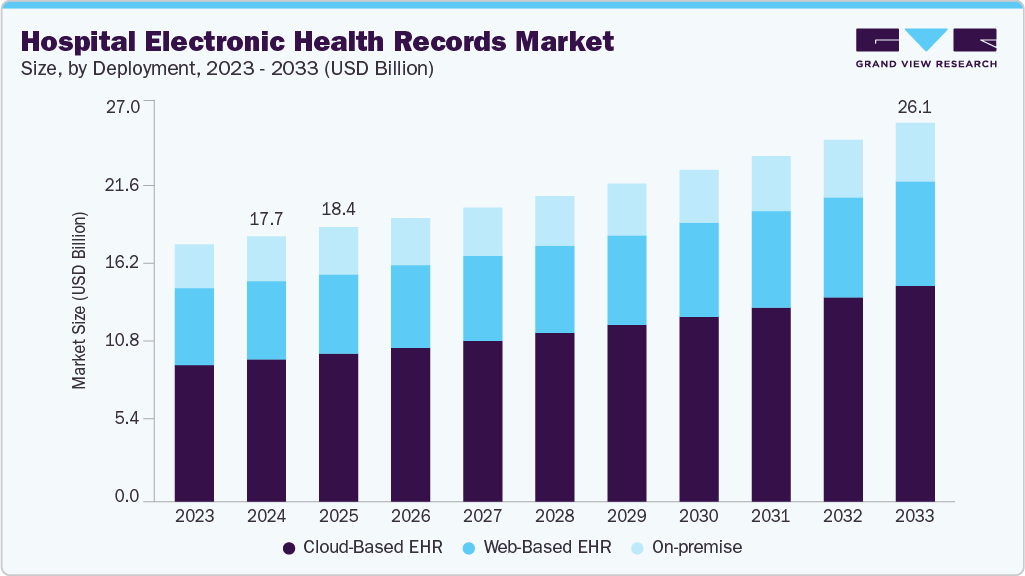
The global hospital electronic health records market size was estimated at USD 17.69 billion in 2024 and is projected to reach USD 26.11 billion by 2033, growing at a CAGR of 4.51% from 2025 to 2033. The market demand is attributed to the rise in hospitals adopting electronic health records (EHR) to improve clinical, financial, and administrative efficiency and the increasing need for enhanced information systems.
Key Market Trends & Insights
- North America hospital EHR market held the largest share of 44.01% of the global market in 2024.
- The hospital EHR industry in the U.S. is expected to grow significantly over the forecast period.
- Based on deployment, the cloud-based EHR segment held the highest market share of 53.52% in 2024.
- Based on type, the acute segment held the highest market share in 2024.
- By business model, the professional services segment held the highest market share in 2024.
Market Size & Forecast
- 2024 Market Size: USD 17.69 Billion
- 2033 Projected Market Size: USD 26.11 Billion
- CAGR (2025-2033): 4.51%
- North America: Largest market in 2024
- Asia Pacific: Fastest growing market
Moreover, the shift from volume-based care to value-based care is expected to increase the demand for hospital systems. With the increasing demand for EHR in hospitals, the governments are implementing regulations to ensure that systems work together effectively. In the U.S., the Centers for Medicare & Medicaid Services (CMS) and the Office of the National Coordinator for Health Information Technology (ONC) oversee privacy, security, and standards for EHRs used by providers and health IT developers. In May 2025, the Centers for Medicare & Medicaid Services (CMS) issued a notice under the Paperwork Reduction Act seeking public comments on a revised information collection related to electronic health records, prescription drugs, and healthcare spending. This initiative mandates group health plans and insurers to report data on drug costs, premiums, and enrollment to federal departments annually, as the Consolidated Appropriations Act, 2021 stipulated.Major players in the industry are undertaking strategic initiatives to increase their market share through partnerships with medical practices and hospital facilities. These initiatives are intended to expand their reach and improve their service offerings. For instance, in October 2024, Oracle announced a next-generation AI-powered EHR system, integrating clinical AI agents, advanced search, and patient data analytics to streamline healthcare workflows. This initiative builds on its USD 28.3 billion acquisition of Cerner and aims to enhance care delivery despite prior implementation challenges.
Moreover, in September 2023, the Georgian Bay Information Network (GBIN), a collaboration of six Ontario healthcare organizations, announced enhancing its Oracle Health EHR system with advanced clinical services, optimized medication administration, and oncology support through its eNautilus project. The effort aimed to facilitate caregiver collaboration, reduce clinician administrative burdens, and improve patient safety across 15 hospitals.
The article "Pre-pandemic assessment: a decade of progress in electronic health record adoption among U.S. hospitals" by John (Xuefeng) Jiang and colleagues, published in Health Affairs Scholar in October 2023, evaluates the advancements in EHR adoption across U.S. hospitals over ten years leading up to the COVID-19 pandemic. It highlights significant progress in EHR implementation, which has improved healthcare efficiency and effectiveness. Based on data from the American Hospital Association (AHA), between 2009 and 2019, U.S. hospitals' basic electronic health record (EHR) systems rose significantly, from just 6.6% to 81.2%. Similarly, the adoption of comprehensive EHR systems grew from 3.6% to 63.2%. The 2019 data was collected between January and June 2020. This steady upward trend highlights substantial progress in EHR implementation over the decade.
Following table shows U.S. trends in hospital and physician adoption of electronic health records
Year
Hospitals
Office-based Physicians
2018
96%
79%
2019
96%
72%
2021
96%
78%
Market Characteristics & Concentration
The chart below illustrates the relationship between industry concentration, industry characteristics, and market participants. The x-axis represents the level of industry concentration, ranging from low to high. The y-axis represents various market characteristics, including industry competition, degree of innovation, impact of regulations, level of partnerships & collaborations activities, and geographic expansion. For instance, the hospital EHR industry is fragmented, with many service providers entering the industry. The degree of innovation is high, and the level of partnerships & collaboration activities is also high. The impact of regulations on the market is high, and the geographic expansion of the industry is moderate.
The industry's degree of innovation is high, as several industry players are launching new services, such as integrating EHR with other software, to improve their industry penetration. For instance, in December 2023, Fraser Health Authority (Surrey, B.C.) announced plans to implement generative AI for clinical documentation in MEDITECH’s Expanse EHR. The effort would utilize Google Cloud’s Vertex AI and large language models as part of a pilot program targeting the hospital course narrative during discharge.
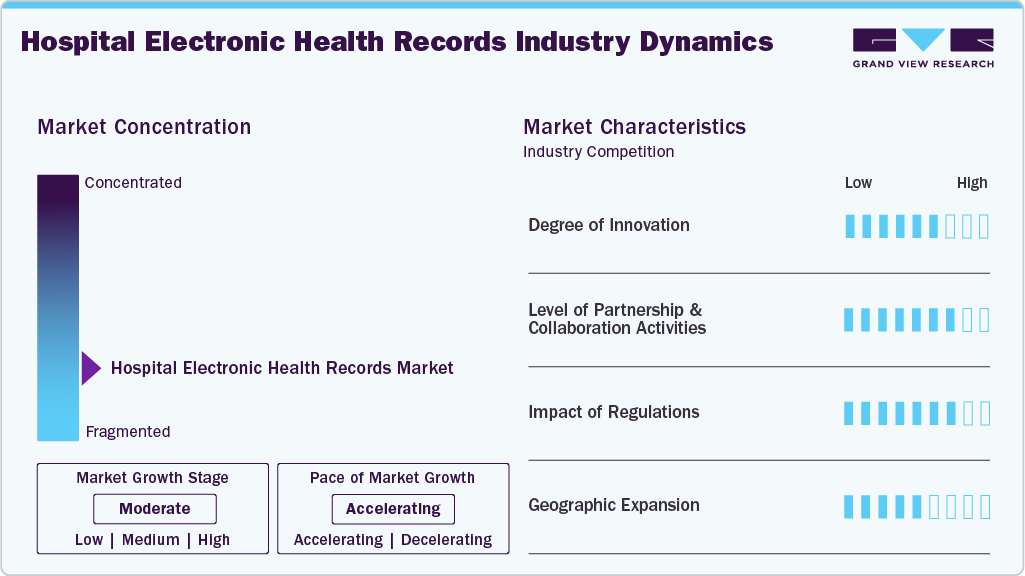
The industry has a high level of partnerships and collaborations due to several local and mature players engaging in partnership and collaboration activities to expand their industry presence. For instance, in March 2024, Arkansas Heart Hospital partnered with Oracle to implement Oracle Patient Accounting and Health EHR solutions within two hospitals and its network of Outpatient clinics. This implementation aims to enhance patients' outcomes by providing data interoperability.
The impact of regulations on the industry is high. Governments of developed and developing countries are introducing stringent regulations to safeguard patients' privacy and reduce data theft. For instance, in May 2023, the Ministry of Health (MOH) of Singapore issued guidelines on appropriate use and access to the National Electronic Health Record (NEHR) system, set technical standards for the industry, and monitored user functionality and risk to protect data security.
The industry's geographic expansion level is moderate due to the growing need for remote monitoring and improved patient care, which are experiencing significant growth. For instance, in September 2023, OCHIN, Inc. provided OCHIN Epic to rural hospitals across the U.S. This new EHR system aims to improve interdisciplinary care plans and enhance clinical teams providing patient care.
Deployment Insights
Based on deployment, the cloud-based segment dominated the market with a revenue share of 53.52% in 2024 and is anticipated to grow at the fastest CAGR during the forecast period. This growth is attributed to hospitals' growing inclination for cloud-based EHR solutions due to their scalability, flexibility, cost-effectiveness, and rapid digitalization of the healthcare sector. This is due to the need to streamline operations and improve hospital patient experiences. For instance, in April 2025, North York General Hospital in Toronto became Canada’s first hospital to migrate its EHR to Oracle Cloud Infrastructure (OCI), improving performance, security, and scalability.
Furthermore, the web-based electronic health records segment is expected to grow significantly during the forecast period due to its cost-effectiveness, ease of deployment, and minimal IT infrastructure requirements compared to on-premises solutions. In addition, web-based EHR systems can easily connect with other healthcare software, making it easier for doctors to share patient information.
Type Insights
The acute segment dominated the market in 2024 with the largest revenue share of 45.83%, owing to government initiatives promoting the adoption of EHRs in hospitals and the shift from fee-for-service to value-based reimbursement models. This is expected to drive the need for EHR systems that support data analytics and population health management.
The post-acute segment is expected to grow at the fastest CAGR during the forecast period. The post-acute EHR helps streamline patient care by providing a comprehensive view of patient data, improving patient outcomes, and enhancing coordination between healthcare providers. Moreover, the post-acute EHR supports managing large amounts of patient data, ensuring that providers can access the necessary information to deliver high-quality care.
Business Model Insights
Based on the business model, the professional services segment dominated the market with a revenue share of 32.31% in 2024 and is expected to grow at the fastest CAGR during the forecast period. The growth of this segment is attributed to the complexity and specialized nature of implementing and managing EHR systems. Hospitals need expert assistance in various areas, including initial system deployment, customization to fit specific workflows, integration with existing IT infrastructure, and compliance with stringent regulations. As hospitals prioritize digital transformation and data-driven healthcare delivery, the demand for professional services in the market is expected to grow further.
The subscriptions segment is anticipated to grow significantly during the forecast period. The EHR subscription provides cost savings for hospitals by eliminating upfront license fees, regular upgrades, and device maintenance costs. It also reduces reliance on in-house IT staff, as providers handle installation, configuration, testing, operation, and updates. This model's affordability and user-friendly nature contribute to its increasing popularity among providers.
Product Insights
Based on product, the integrated segment dominated the market with a revenue share of 78.36% in 2024 and is expected to grow at the fastest CAGR during the forecast period. The increasing demand for smooth interoperability and data exchange among different hospitals is boosting the growth of this sector. This integration improves clinical workflows, allowing hospitals to access real-time, comprehensive patient information. This, in turn, enhances coordinated patient care, reduces errors, and improves operational efficiency. As healthcare increasingly relies on data, the need for integrated EHR solutions supporting connectivity between various departments and external providers is driving market growth.
The standalone segment is anticipated to grow significantly during the forecast period. Healthcare systems increasingly require smooth interoperability and data exchange to improve clinical workflows. This allows providers to access complete patient information in real-time, enhancing coordinated patient care, reducing errors, and boosting operational efficiency. With healthcare depending more on data, the need for integrated EHR solutions that support connectivity among various departments and external providers is rising, thereby driving market growth.
Hospital Size Insights
Based on hospital size, the medium hospital segment dominated the market with a revenue share of 41.35% in 2024. This is attributed to the increasing need for comprehensive data management, enhanced interoperability, and advanced analytics capabilities. These systems support complex clinical workflows, improve patient care coordination, and ensure compliance with regulatory standards. Moreover, medium-sized hospitals seek EHR solutions to streamline operations, reduce medical errors, and facilitate better decision-making through real-time access to extensive patient data.
The large hospital segment is anticipated to grow at the fastest CAGR during the forecast period. This is due to the high patient inflow, increasing demand for advanced healthcare IT solutions to manage complex clinical workflows, and availability of financial resources. Large hospitals are likelier to adopt comprehensive electronic health record systems with integrated features. The presence of multiple departments, large volumes of patient data, and the need for coordinated care among various specialists further drive the demand for EHR systems.
Application Insights
Based on application, the cardiology segment dominated the market with the largest revenue share in 2024. This is attributed to the increasing incidence of hospitalization of patients diagnosed with cardiovascular diseases, such as coronary heart disease and stroke. According to the American Heart Association's Heart Disease & Stroke 2024 Statistical Update, cardiovascular diseases, such as coronary heart disease, hypertension, and stroke, were the leading causes of death in the U.S. In 2021, the age-adjusted U.S. death rate attributable to cardiovascular disease was around 224.0 deaths per 100,000 population. This rise in the prevalence of cardiovascular diseases, coupled with the need for efficient evaluation & monitoring of cardiovascular functioning to prevent medication errors, is expected to boost the demand for EHR systems over the forecast period.
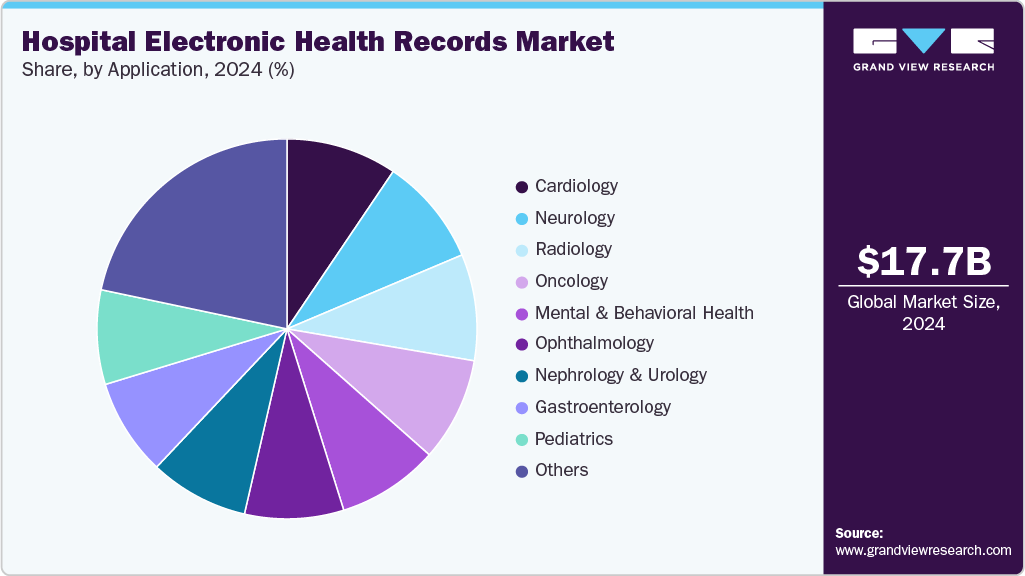
The ophthalmology segment is expected to grow at the fastest CAGR during the forecast period, owing to the increasing prevalence of eye-related disorders such as cataracts, glaucoma, diabetic retinopathy, and age-related macular degeneration. The growing geriatric population, rising screen time across all age groups, and the surge in diabetes cases significantly affecting eye health are key factors driving demand. The National Eye Institute (NEI) reports that millions of Americans are affected by eye diseases such as cataracts, glaucoma, diabetic retinopathy, and age-related macular degeneration. By 2050, the number of people with visual impairment or blindness is expected to double. EHRs help improve patient outcomes by facilitating faster diagnosis, treatment planning, and specialist coordination.
Regional Insights
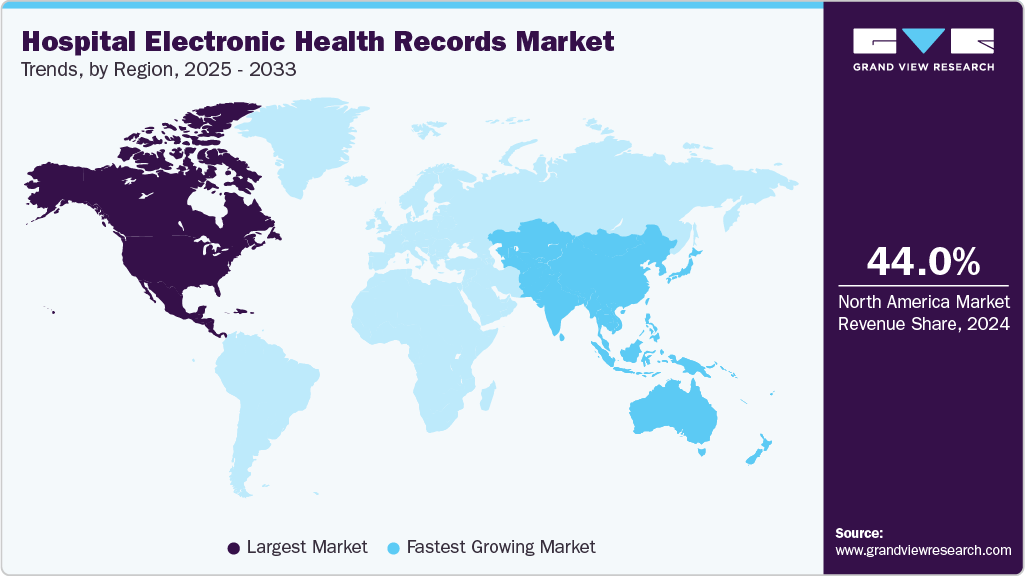
North America region held the largest revenue share of 44.01% in 2024. This is attributed to the rise in government policies supporting EHR adoption and the availability of infrastructure with high digital knowledge. Furthermore, favorable government regulations and acts for monitoring the safety of healthcare IT solutions are expected to fuel high demand in the region.
U.S. Hospital Electronic Health Records Market Trends
The hospital electronic health records (EHR) market in the U.S. held the largest share in 2024 due to the growing emphasis on interoperability and data exchange across healthcare systems and technological advancements. With increasing regulatory requirements and the shift towards value-based care models, hospitals prioritize EHR systems that seamlessly integrate with other healthcare IT systems, facilitate secure data sharing among providers, and support coordinated patient care.
Europe Hospital Electronic Health Records Market Trends
The hospital electronic health records (EHR) market in Europe is anticipated to grow significantly due to digital transformation, improving healthcare efficiency, and patient outcomes. European hospitals increasingly adopt EHR systems to streamline workflows, enhance clinical decision-making, and promote integrated care delivery across healthcare settings.
The hospital electronic health records (EHR) market in the UK is expected to grow significantly over the forecast period. This is attributed to increased initiatives by the NHS promoting digital health transformation and implementing a national EHR system to enhance operational efficiency. In addition, integration with EHR platforms helps improve clinical trial outcomes. For instance, in May 2025, IgniteData, in collaboration with AstraZeneca and Cambridge University Hospitals, launched its Archer data integration platform in a Phase 3 clinical trial. Archer automates secure data transfer between hospital EHRs and sponsor systems, enhancing efficiency, data integrity, and patient privacy, marking a significant advancement in clinical trial digital innovation.
Germany hospital electronic health records (EHR) market held a significant revenue share in 2024, owing to the increasing adoption of interoperable EHR systems in efforts to reduce healthcare costs. Healthcare IT systems that enable seamless information sharing facilitate this. There is also a growing emphasis on using patient health data to improve care quality and for advanced analytics.
Asia Pacific Hospital Electronic Health Records Market Trends
The hospital electronic health records (EHR) market in the Asia Pacific is anticipated to grow at the fastest CAGR over the forecast period. This growth is attributed to the increasing digitalization of healthcare systems, government initiatives promoting healthcare IT adoption, and improving patient care quality and safety. In addition, growing focus on improving operational efficiency and the need for better data management and interoperability across hospitals are anticipated to drive market demand over the coming years. For instance, in April 2025, South Australia became the first jurisdiction in Australia to activate the Sunrise EHR and patient administration system (PAS) statewide across all public hospitals and health services, including regional areas. This system supports over 1.5 million patient records, manages over 4,900 hospital beds, and handles over 18 million clinical encounters, enabling seamless, patient-centered care throughout the vast state.
China hospital electronic health records (EHR) market is expected to grow significantly over the forecast period, owing to strong government initiatives promoting healthcare digitalization, increasing investments in hospital infrastructure, and the rapid adoption of advanced health IT systems. The country's healthcare reform policies, such as the "Healthy China 2030" plan, emphasize building a modern digital healthcare system, significantly boosting EHR implementation across public and private hospitals. In addition, the growing burden of chronic diseases, an aging population, and rising demand for efficient patient data management have increased the need for robust EHR systems.
The hospital electronic health records (EHR) market in India is driven by the rise in initiatives taken by major businesses, hospitals, and organizations to invest in digital healthcare solutions. The government has also been encouraging the adoption of EHR systems to ensure everyone has access to affordable healthcare.
Latin America Hospital Electronic Health Records Market Trends
The hospital electronic health records (EHR) market in Latin America is anticipated to grow significantly due to the increased adoption of cloud-based services in healthcare organizations. A growing population with diverse healthcare needs is driving the demand for improved patient care and operational efficiency, leading to an increased demand for the market.
MEA Hospital Electronic Health Records Market Trends
The hospital electronic health records (EHR) marketin the Middle East & Africa is anticipated to grow significantly due to increased healthcare expenditures and government investments in interoperability and artificial intelligence (AI), leveraging hospital EHRs.
Key Hospital Electronic Health Records Company Insights
The market is highly fragmented, with many country-level service providers. Key players in this industry include Epic Systems Corporation, Oracle, Evident (CPSI Company), Altera Digital Health Inc., and MEDHOST, among others. Furthermore, increasing industry consolidation activities such as partnership & collaboration, acquisitions, mergers by the top service providers, and growing initiatives in launching new services by key players are also anticipated to increase their share in the industry. Some of the few emerging players include EverHealth Solutions Inc., Helium Health, and Remedly.
Key Hospital Electronic Health Records Companies:
The following are the leading companies in the hospital electronic health records market. These companies collectively hold the largest market share and dictate industry trends.
- Epic Systems Corporation
- Oracle
- Evident (CPSI Company)
- Altera Digital Health Inc.
- MEDHOST
- WellSky
- Vista
- Netsmart Technologies, Inc.
- Medical Information Technology, Inc.
- Veradigm LLC
Recent Developments
-
In May 2025, Northeastern University students developed an AI tool to mitigate electronic health record (EHR) outages and enhance patient care. The tool, Samantha, allows hospitals to access patient data during downtimes, expediting appointment scheduling and treatment decisions.
-
In March 2025, InterSystems unveiled IntelliCare, a next-generation EHR system with artificial intelligence (AI) and interoperability at its core, at HIMSS25. Features include ambient listening, AI-driven documentation, natural language commands, and seamless integration with existing healthcare IT infrastructures.
“AI is a seismic shift in healthcare technology. With its advanced AI functionality and decades of proven reliability, InterSystems IntelliCare was the obvious choice to provide our hospitals with the most advanced solution available.”
-Jusup Halimi, president director of EMC Healthcare, a healthcare provider in Indonesia.
-
In October 2024, Oracle unveiled its next-generation electronic health record (EHR) system, built on Oracle Cloud Infrastructure with embedded AI throughout clinical workflows. Designed to automate tasks, deliver real-time insights, and enhance care coordination, it aims to transform EHRs from administrative burdens into clinical assets.
-
In October 2024, Healthcare startup Suki raised USD 70 million in a Series D round led by Hedosophia, bringing total funding to USD 165 million. Suki develops AI voice assistants to reduce clinicians' administrative workload. Its tools integrate with major EHR systems and are used by over 300 health systems.
-
In May 2024, Valley Health System announced the opening a smart hospital in Paramus, NJ. The establishment will use the Meditech Expanse platform and other advanced technologies to improve workflows, including network infrastructure, clinical functions, & administrative operations.
-
In April 2024, Auxilio Mutuo Hospital, a private nonprofit hospital, partnered with Oracle to provide staff and clinicians with a comprehensive, simplified view of patients' data by selecting Oracle Health's EHR. In addition, the hospital chose Oracle Health's RevElate Patient Accounting to provide an automated billing process and bring together a convenient, clear view of clinical and financial data.
Hospital Electronic Health Records Market Report Scope
Report Attribute
Details
Market size value in 2025
USD 18.35 billion
Revenue forecast in 2033
USD 26.11 billion
Growth rate
CAGR of 4.51% from 2025 to 2033
Actual data
2021 - 2024
Forecast period
2025 - 2033
Quantitative units
Revenue in USD million/billion and CAGR from 2025 to 2033
Report coverage
Revenue forecast, company ranking, competitive landscape, growth factors, and trends
Segments covered
Deployment, type, business model, product, hospital size, application, region
Regional scope
North America; Europe; Asia Pacific; Latin America; MEA
Country scope
U.S.; Canada; Mexico; Germany; UK; France; Italy; Spain; Norway; Denmark; Sweden; China; Japan; India; South Korea; Australia; Thailand; Brazil; Argentina; Saudi Arabia; South Africa; UAE; Kuwait
Key companies profiled
Epic Systems Corporation; Oracle; Evident (CPSI Company); Altera Digital Health Inc.; MEDHOST; WellSky; Vista; Netsmart Technologies; Medical Information Technology, Inc.; Veradigm LLC
Customization scope
Free report customization (equivalent up to 8 analysts working days) with purchase. Addition or alteration to country, regional & segment scope.
Pricing and purchase options
Avail customized purchase options to meet your exact research needs. Explore purchase options
Global Hospital Electronic Health Records Market Report Segmentation
This report forecasts revenue growth at the global, regional, and country levels and provides an analysis of the latest industry trends in each of the sub-segments from 2021 to 2033. For this study, Grand View Research has segmented the global hospital electronic health records market report based on deployment, type, business model, product, hospital size, application, and regions:
-
Deployment Outlook (Revenue, USD Billion, 2021 - 2033)
-
On-premise
-
Web-Based
-
Cloud-Based
-
-
Type Outlook (Revenue, USD Billion, 2021 - 2033)
-
Acute
-
Outpatient
-
Post Acute
-
-
Business Model Outlook (Revenue, USD Billion, 2021 - 2033)
-
Licensed Software
-
Technology Resale
-
Subscriptions
-
Professional Services
-
Others
-
-
Product Outlook (Revenue, USD Billion, 2021 - 2033)
-
Standalone
-
Integrated
-
-
Hospital Size Outlook (Revenue, USD Billion, 2021 - 2033)
-
Large Hospital
-
Medium Hospital
-
Small Hospital
-
-
Application Outlook (Revenue, USD Billion, 2021 - 2033)
-
Cardiology
-
Neurology
-
Radiology
-
Oncology
-
Mental and Behavioral Health
-
Nephrology and Urology
-
Gastroenterology
-
Pediatrics
-
General Medicine
-
Physical Therapy and Rehabilitation
-
Others
-
-
Regional Outlook (Revenue, USD Billion, 2021 - 2033)
-
North America
-
U.S.
-
Canada
-
Mexico
-
-
Europe
-
UK
-
Germany
-
France
-
Italy
-
Spain
-
Denmark
-
Sweden
-
Norway
-
-
Asia Pacific
-
China
-
Japan
-
India
-
South Korea
-
Australia
-
Thailand
-
-
Latin America
-
Brazil
-
Argentina
-
-
Middle East and Africa (MEA)
-
South Africa
-
Saudi Arabia
-
UAE
-
Kuwait
-
-
Frequently Asked Questions About This Report
b. The global hospital electronic health records market size was estimated at USD 17.69 billion in 2024 and is expected to reach USD 18.35 billion in 2025.
b. The global hospital electronic health records market is expected to grow at a compound annual growth rate of 4.51% from 2025 to 2033 to reach USD 26.11 billion by 2033.
b. The cloud-based segment dominated the market with a revenue share of 53.52% in 2024. The growth of the segment can be attributed to growing inclination for cloud-based EHR solutions in hospitals due to their scalability, flexibility, and cost-effectiveness, along with rapid digitalization in the healthcare sector.
b. Some key players operating in the hospital electronic health records market include Epic Systems Corporation, Oracle, Evident a CPSI Company, Altera Digital Health Inc., MEDHOST, WellSky, Vista, Netsmart Technologies, MEDITECH, Veradigm LLC, and others.
b. Key factors that are driving the hospital electronic health records market growth include the increasing government initiatives to encourage healthcare IT usage, introduction to technologically advanced healthcare services, and the rising demand for centralization and streamlining of healthcare administration.


Share this report with your colleague or friend.
Need a Tailored Report?
Customize this report to your needs — add regions, segments, or data points, with 20% free customization.


ISO 9001:2015 & 27001:2022 Certified
We are GDPR and CCPA compliant! Your transaction & personal information is safe and secure. For more details, please read our privacy policy.
Trusted market insights - try a free sample
See how our reports are structured and why industry leaders rely on Grand View Research. Get a free sample or ask us to tailor this report to your needs.













