
- Home
- »
- Biotechnology
- »
-
Life Science Membrane Technology Market Report, 2033GVR Report cover
![Life Science Membrane Technology Market (2026 - 2033)Report]()
Life Science Membrane Technology Market (2026 - 2033)
Size, Share & Trends Analysis Report By Technology (Microfiltration, Ultrafiltration, Nanofiltration, Reverse Osmosis), By Material, By Application, By Product Type, By End Use, By Region, And Segment Forecasts
Market Size, 2025
$6.0BMarket Estimate, 2026
$6.3BMarket Forecast, 2033
$8.9BCAGR, 2026–2033
5.1%Life Science Membrane Technology Market Summary
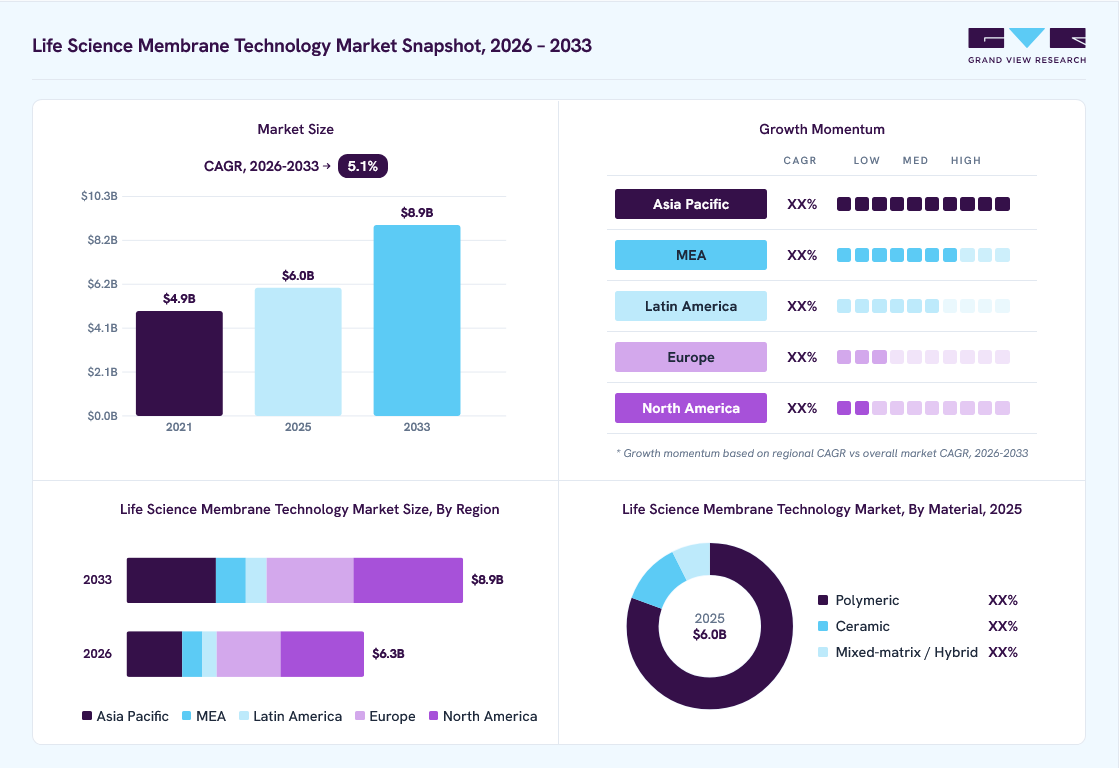
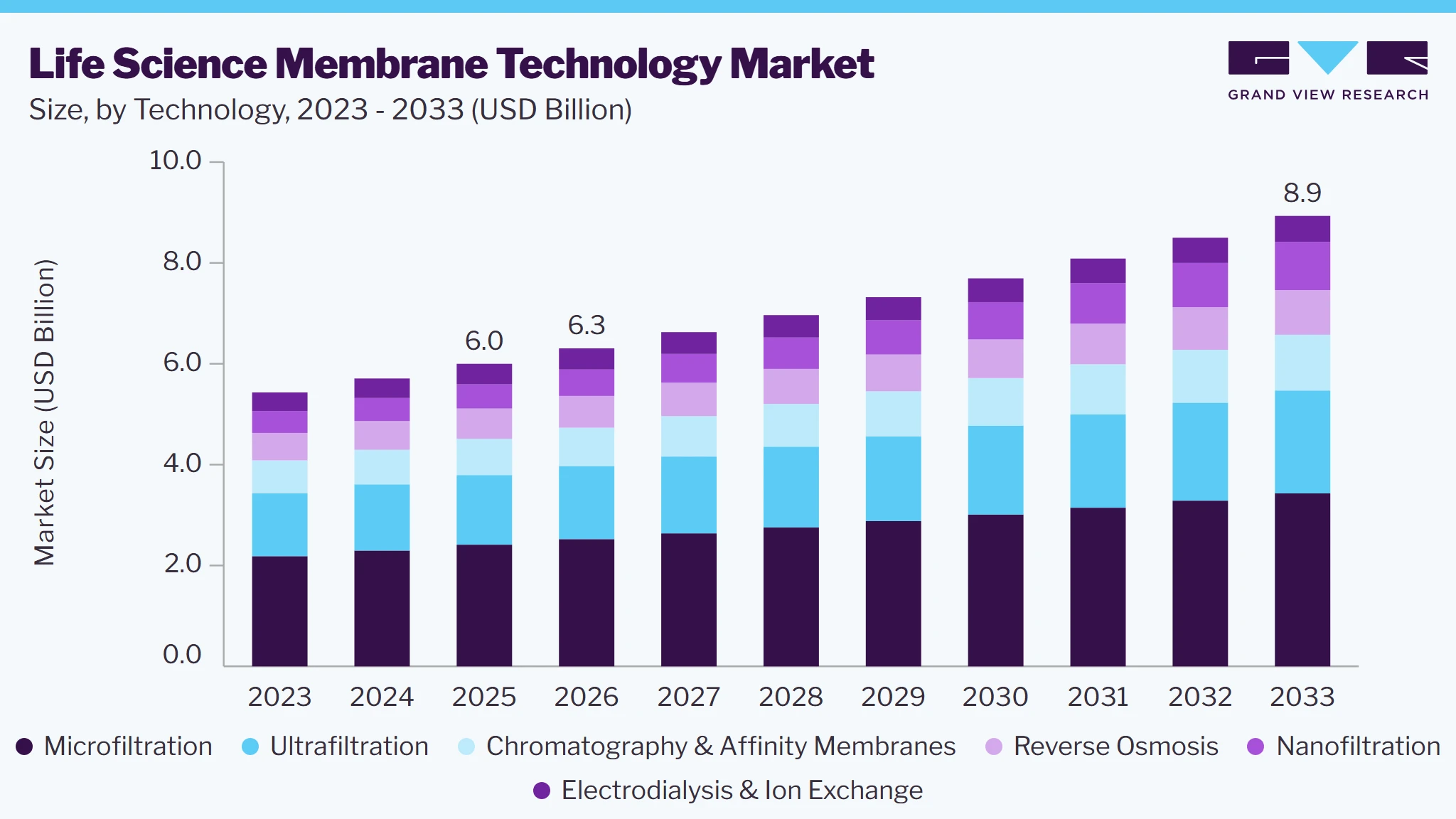
The global life science membrane technology market size was valued at USD 6.0 billion in 2025 and is projected to grow from USD 6.3 billion in 2026 to USD 8.9 billion by 2033, at a CAGR of 5.1% from 2026 to 2033. North America dominated the market, accounting for the largest revenue share of 35.6% in 2025. Growth is driven by increasing adoption of membrane-based bioprocessing, advancements in biopharmaceutical manufacturing, and rising demand for efficient and scalable separation and purification technologies.
Key Market Trends & Insights
- By technology: Microfiltration segment held the highest market share of 40.2% in 2025.
- By material: Polymeric segment held the highest market share in 2025.
- By application: Pharmaceutical manufacturing segment held the highest market share in 2025.
- By product type: Membrane filters (flat-sheet, disc) segment dominated the market with a 50.5% share in 2025.
Regional Highlights
- Largest regional market: North America (35.6% revenue share, 2025)
- Fastest-growing regional market: Asia Pacific (highest CAGR, 2026-2033)
- By country: The U.S. held the largest market share in 2025.
Market Size & Forecast
- Market size in 2025: USD 6.0 Billion
- Estimated market size in 2026: USD 6.3 Billion
- 2033 Projected Market Size: USD 8.9 Billion
- CAGR (2026-2033): 5.1%
Three ways to get this report
Buy it, customize it, or ask a question.Ask an Analyst
A direct answer, usually in 1 working day
- AccessReport author, directly
- Reply timeWithin 1 working day
- No sales callDirect answer only
- FormatEmail reply
- CostFree, no cost
Get the Full Report
What the study covers
- FormatsPDF · Excel · Dashboard
- Timeline2026–2033 annual, 2025 base
- Coverage20+ countries, 5 regions
- Companies10+ key players profiled
Customize the Report
20% free customization
- IncludeCountries, segments, points
- TailorTo your product definition
- ExtendDeeper competitor detail
- OrA fully bespoke study
- Turnaround5–10 working days
Market Dynamics
The life science membrane technology market is driven by rising biologics production, increasing adoption of single-use and continuous bioprocessing, and growing demand for efficient filtration and purification solutions. Advancements in membrane materials and process technologies are further improving scalability and manufacturing efficiency. Increasing investments in biopharmaceutical manufacturing and cell and gene therapy are creating further growth opportunities. The adoption of advanced membrane systems is expected to enhance process flexibility, product recovery, and operational efficiency across life science applications.
The growing demand for efficient separation and purification technologies is supporting the adoption of membrane-based solutions across biopharmaceutical manufacturing. Membrane technologies enable efficient clarification, concentration, filtration, and purification of biologics while offering high throughput, scalability, reduced processing time, and lower buffer requirements. These advantages are particularly relevant for the increasing production volumes and complexity of proteins, monoclonal antibodies, viral vectors, and nucleic acid-based products.
For instance, in July 2025, Purilogics, a Donaldson Life Sciences business, introduced the manufacturing-grade Purexa NAEX Prep membrane chromatography technology for purification of supercoiled plasmid DNA. The ready-to-use solution offers high binding capacity, fast cycle times, and a scalable format, enabling faster processing and improved downstream productivity compared with conventional chromatography approaches. Such developments are expected to support broader adoption of membrane-based purification technologies across GMP biomanufacturing applications.
“We selected the Purexa NAEX membrane chromatography products for our initial expansion into manufacturing-grade offerings due to their broad applicability. These products enhance downstream productivity in three key ways: (1) with high dynamic binding capacity, (2) fast cycle times and (3) in an efficient and scalable format. This allows users to process their product more quickly versus traditional chromatography columns, helping reduce process costs as well.”
- Jin Zhou, Director of Purilogics
High capital and operating costs remain a key restraint for the life science membrane technology market, particularly for small and mid-sized biopharmaceutical manufacturers. Advanced membrane systems require significant upfront investments in filtration equipment, process integration, validation, and supporting infrastructure. In addition, specialized pharmaceutical-grade membranes and single-use components can further increase implementation costs.
Operating expenses for membrane replacement, cleaning, maintenance, utilities, and process monitoring increase the overall cost burden. Membrane fouling and permeability loss can also increase cleaning frequency and replacement requirements, raising downtime and operating costs. These economic challenges may limit the adoption of advanced membrane systems among cost-sensitive manufacturers and emerging biopharmaceutical facilities.
Integration of membrane systems with automated and digital bioprocessing is creating opportunities to improve process control, consistency, and productivity in life science manufacturing. Automated membrane filtration systems integrated with sensors, process analytical technology (PAT), and digital controls enable real-time monitoring of parameters such as transmembrane pressure and flow rate, facilitating faster optimization and reducing manual intervention.
For instance, in August 2025, researchers from Merck developed a live digital twin for single-pass tangential flow filtration (SPTFF) in continuous monoclonal antibody manufacturing. The system monitored membrane resistance and used real-time process information to adjust flow conditions, demonstrating the potential of digital technologies to enable predictive control and optimize membrane-based downstream processing.
Market Concentration & Characteristics
The life science membrane technology industry is characterized by a high degree of innovation, driven by the development of advanced membrane materials, continuous processing technologies, and integrated membrane-based purification systems. Manufacturers and researchers are focusing on improving throughput, selectivity, product recovery, and membrane utilization for increasingly complex biologics. For instance, in May 2026, AstraZeneca researchers introduced asymmetric dialysis, a continuous membrane-based process that combined concentration and buffer exchange into a single step, reducing buffer consumption by 75% compared with conventional batch ultrafiltration/diafiltration.
The life science membrane technology industry is witnessing moderate M&A activity, with strategic transactions focused on strengthening filtration, purification, and bioprocessing portfolios. For instance, in February 2025, Thermo Fisher Scientific announced its agreement to acquire Solventum’s Purification & Filtration business for approximately USD 4.1 billion, strengthening its bioproduction capabilities and expanding its filtration and purification portfolio.
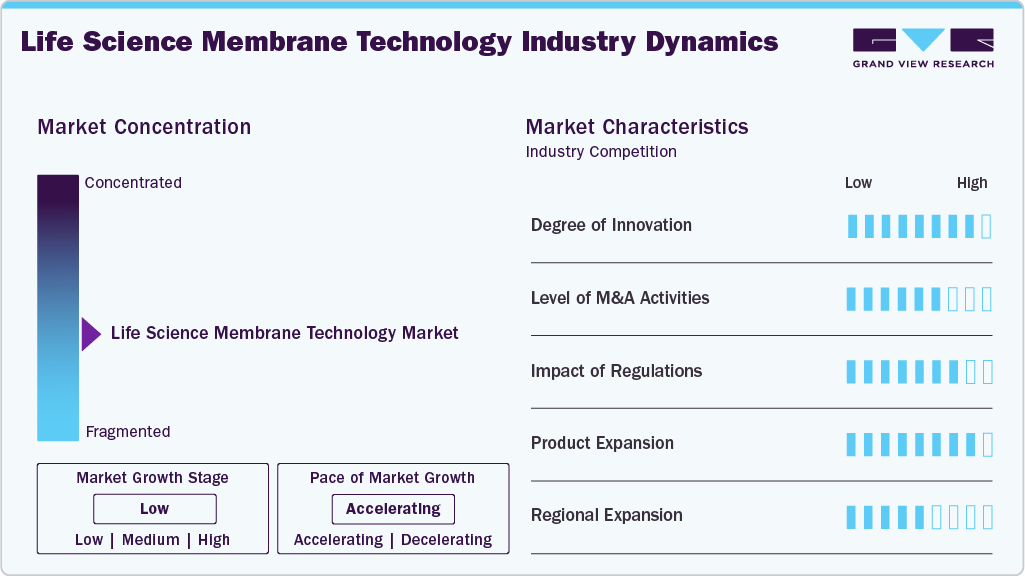
The life science membrane technology industry is subject to stringent regulatory and quality requirements, particularly for membranes used in pharmaceutical and biopharmaceutical manufacturing. Requirements related to sterility, bacterial retention, extractables and leachables, product compatibility, and GMP validation are increasing demand for validated, high-quality membrane systems and supporting compliance services.
The life science membrane technology industry is experiencing rapid expansion, with manufacturers introducing membranes and filtration systems tailored to specific bioprocessing requirements. For instance, in July 2026, Alioth launched its Alipore EZ sterilizing-grade filter and introduced virus-removal membrane solutions, expanding its portfolio for sterile and virus filtration applications in bioprocessing.
The life science membrane technology industry is experiencing moderate to high regional expansion, supported by investments in localized biopharmaceutical manufacturing and filtration capacity. For instance, in July 2025, Asahi Kasei Life Science announced plans for a new Planova virus-removal filter spinning plant in Japan, representing its fourth facility for hollow-fiber cellulose membrane filters and strengthening regional bioprocess supply capabilities.
Analyst Perspective
The life science membrane technology market is expected to grow steadily, driven by the increasing adoption of membrane-based separation, filtration, and purification processes across biopharmaceutical manufacturing, cell & gene therapy, and laboratory applications. Rising demand for high-quality biologics and growing emphasis on process efficiency, scalability, and contamination control are supporting the adoption of advanced membrane technologies. Technological advancements in filtration materials and single-use membrane systems, coupled with expanding bioprocessing activities, are expected to create sustained market opportunities.
Technology Insights
The microfiltration segment accounted for the largest revenue share, over 40.2% in 2025, driven by its global use in bioreactor clarification, cell harvesting, bioburden reduction, and removal of suspended impurities in biopharmaceutical manufacturing. Its scalability and compatibility with diverse biological feed streams support its adoption across downstream processing applications. According to an article published by NIH in April 2025, Sanofi researchers evaluated multiple microfiltration configurations for recombinant protein harvesting and clarification from high-density E. coli cultures, highlighting the expanding application of microfiltration in bioprocessing.
The nanofiltration segment is expected to register the fastest CAGR over the forecast period, driven by its ability to selectively separate low-molecular-weight impurities, salts, and other contaminants while retaining valuable biomolecules. The increasing demand for high-purity processing, water purification, and resource-efficient separation in pharmaceutical and biopharmaceutical manufacturing is further driving adoption.
Material Insights
The polymeric segment dominated the market with a 80.4% share in 2025, driven by the cost-effectiveness, flexibility, tunable pore structures, and broad applicability of polymeric membranes across life science filtration and separation processes. Their compatibility with diverse bioprocessing conditions and ability to support high-throughput applications further strengthen their adoption. For instance, in November 2025, Asahi Kasei’s Planova FG1 virus-removal filter, based on a hydrophilic-modified PES membrane, received the 2025 BioTech Breakthrough Award for its high permeability and virus-retention capabilities in biologics manufacturing, highlighting continued innovation in polymeric membrane technology.
The ceramic segment is expected to register the fastest CAGR over the forecast period, driven by the superior chemical and thermal stability, mechanical strength, longer service life, and lower tendency to clog of ceramic membranes. These characteristics make them increasingly attractive for demanding separation, purification, and concentration processes in pharmaceutical and bioprocessing applications.
Application Insights
The pharmaceutical manufacturing segment dominated the market with a 36.4% share in 2025, driven by the extensive use of membrane technologies across drug formulation, sterile filtration, clarification, purification, and concentration processes. Their ability to support high-purity processing while maintaining product quality and sterility makes them particularly important in the manufacturing of biologics, vaccines, injectable drugs, and other complex pharmaceutical products.
The bioprocessing & biologics segment is expected to register the fastest CAGR over the forecast period, driven by the expanding production of monoclonal antibodies, recombinant proteins, vaccines, viral vectors, and other complex biologics. Increasing adoption of membrane technologies for clarification, concentration, buffer exchange, and viral clearance is further supporting segment growth, as these processes enable efficient handling of sensitive biological products while maintaining product quality and process scalability.
Product Type Insights
The membrane filters (flat-sheet, disc) segment dominated the market with a 50.5% share in 2025, driven by their versatility across laboratory, process development, and biopharmaceutical manufacturing applications. Their availability in various membrane materials, pore sizes, and configurations enables their use for filtration, clarification, concentration, and purification. According to a research article published in Biochemical Engineering Journal in November 2025, researchers developed a microfluidic tangential flow filtration device compatible with standard flat-sheet membranes, achieving more than 80% recovery in single-pass operation and demonstrating the potential of flat-sheet formats for high-throughput bioprocess development.
The single-use TFF systems segment is expected to register the fastest CAGR over the forecast period, driven by the growing preference for closed, flexible downstream processing solutions that minimize the need for cleaning, sterilization, and validation. The ability to enable rapid changeovers, reduce cross-contamination risks, and support multiproduct manufacturing is further accelerating adoption across biopharmaceutical facilities. For instance, in July 2025, Wautoma Biotech introduced a benchtop single-use TFF system designed for ultrafiltration and diafiltration, incorporating a customized single-use flow path, integrated sensors, and automation options for biopharmaceutical manufacturing.
End Use Insights
The pharmaceutical companies segment dominated the market with a 44.8% share in 2025, driven by the extensive use of membrane technologies in drug manufacturing processes, including purification, concentration, API processing, sterile filtration, and endotoxin removal. The need for efficient separation, high product quality, process consistency, and compliance with stringent manufacturing standards is supporting the adoption of membrane-based solutions among pharmaceutical manufacturers.
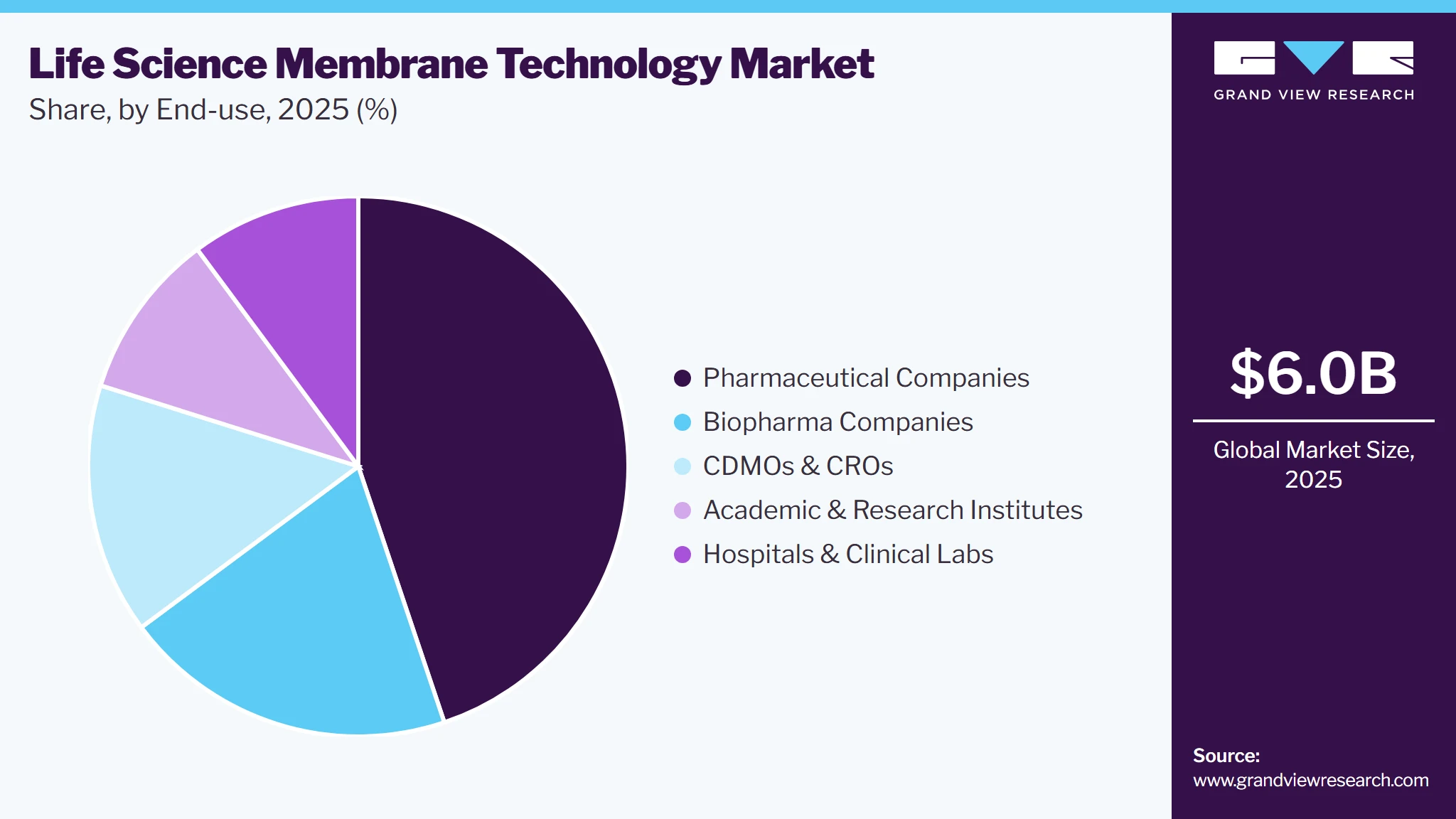
The CDMOs & CROs segment is projected to witness the fastest CAGR, driven by increasing outsourcing of drug development and manufacturing activities, rising demand for flexible production capacity, and growing access to specialized expertise and technologies. The need to accelerate development timelines while reducing capital requirements is further encouraging CDMOs and CROs to adopt advanced membrane-based filtration and purification solutions across diverse life science workflows.
Regional Insights
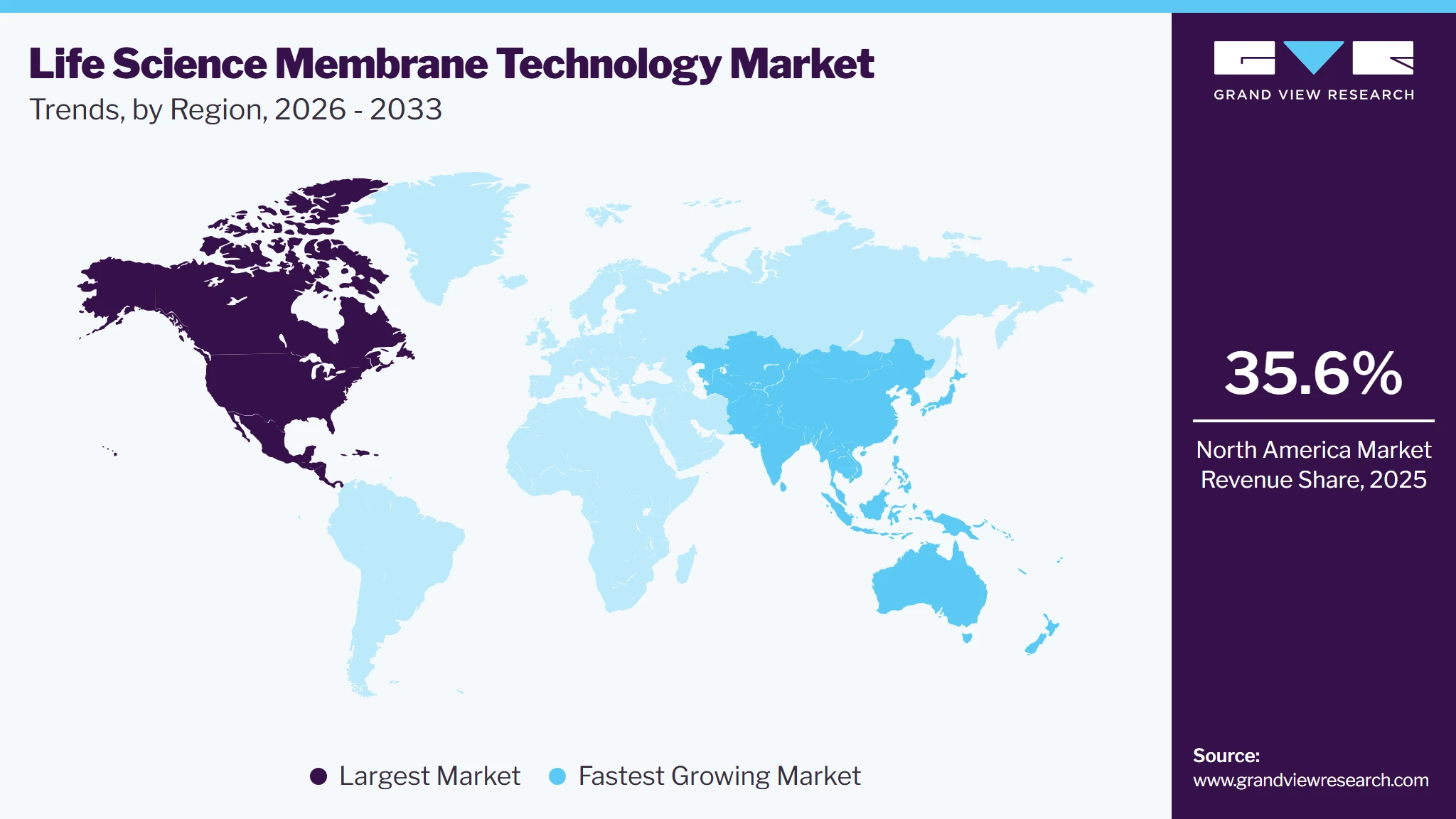
North America dominated the life science membrane technology industry, accounting for the largest revenue share of 35.6% in 2025, supported by a strong biopharmaceutical manufacturing base and investments in filtration infrastructure. For instance, in June 2025, Cytiva added new filtration manufacturing lines at its Pensacola, Florida facility, expected to increase its filter membrane production capacity for North America by 20% by August 2025.
U.S. Life Science Membrane Technology Market Trends
The life science membrane technology industry in the U.S. is expected to grow over the forecast period, supported by initiatives aimed at expanding domestic pharmaceutical manufacturing capacity. For instance, in June 2026, the U.S. FDA selected seven companies for its PreCheck Pilot Program to facilitate the development and review of new domestic pharmaceutical manufacturing facilities and to support investments in advanced manufacturing infrastructure.
Europe Life Science Membrane Technology Market Trends
The life science membrane technology market in Europe was identified as a lucrative region in this industry, supported by established biopharmaceutical manufacturing capabilities and increasing adoption of intensified membrane-based downstream processing. For instance, in March 2026, researchers from Sartorius and LFB Biomanufacturing demonstrated membrane-based Protein A capture integrated with continuous virus inactivation, highlighting the potential of membrane technologies to improve productivity and process integration.
The UK life science membrane technology market remains an important market for pharmaceutical filtration technologies, supported by its well-established biopharmaceutical manufacturing infrastructure, strong pharmaceutical R&D capabilities, and growing demand for efficient separation and purification processes. Increasing adoption of membrane-based technologies across sterile filtration, clarification, concentration, and purification workflows is further supporting market growth.
The life science membrane technology market in Germany is anticipated to grow significantly over the forecast period, supported by its strong pharmaceutical and biopharmaceutical manufacturing base, advanced R&D capabilities, and well-established life sciences industry. The increasing adoption of membrane-based filtration, separation, concentration, and purification processes in biopharmaceutical manufacturing is driving market growth. In addition, Germany’s focus on process efficiency, manufacturing quality, and technological innovation continues to encourage the adoption of advanced membrane solutions.
Asia Pacific Life Science Membrane Technology Market Trends
Asia-Pacific is expected to grow at the fastest CAGR of 7.0% during the forecast period, supported by expanding pharmaceutical manufacturing, rising R&D activities, and increasing adoption of advanced membrane separation technologies. For instance, in February 2026, Indian researchers developed crystalline nanopore membranes with approximately 1-nm pores, demonstrating potential applications in pharmaceutical purification and solvent recovery.
The China life science membrane technology market is witnessing increasing investment in pharmaceutical filtration membrane technologies. For instance, in September 2025, Alioth Biotech secured more than RMB 100 million in Series A++ financing to accelerate the industrialization of pharmaceutical filtration membrane materials and the commercialization of pharmaceutical process-filter products.
The life science membrane technology market in Japan is expected to grow steadily, supported by its strong pharmaceutical and biotechnology industries, advanced research capabilities, and focus on process innovation. The increasing adoption of membrane-based filtration, concentration, and purification technologies across pharmaceutical and biopharmaceutical workflows is driving market growth.
Latin America Life Science Membrane Technology Market Trends
The Latin America life science membrane technology market is expected to grow gradually, supported by the increasing adoption of membrane-based separation technologies across pharmaceutical and biotechnology applications. Growth is supported by increasing pharmaceutical manufacturing activities, expanding research capabilities, and rising demand for efficient purification and filtration processes. Membrane technologies are gaining importance in downstream processing, concentration, and separation workflows.
MEA Life Science Membrane Technology Market Trends
MEA life science membrane technology market is expected to grow steadily, supported by strengthening its biopharmaceutical manufacturing ecosystem, creating opportunities for membrane-based processing technologies. For instance, in October 2025, Lifera and Jamjoom Pharma announced a strategic joint venture to develop, manufacture, and commercialize vaccines, biologics, and biosimilars in Saudi Arabia, strengthening local biopharmaceutical manufacturing capabilities and potentially increasing demand for membrane-based filtration, purification, and separation technologies.
Key Life Science Membrane Technology Company Insights
Several established companies operate in the life science membrane technology market, offering membrane filters, TFF systems, hollow-fiber modules, membrane chromatography, and dialysis solutions. Leading players such as Sartorius AG, Merck KGaA, Danaher Corporation, Repligen Corporation, Asahi Kasei Corporation, TORAY INDUSTRIES, INC., Kovalus Separation Solutions (Acquired By Sun Capital Partners, Inc.), MANN+HUMMEL, NIPRO, Fresenius Medical Care AG, and GVS S.p.A. strengthen their market presence through product innovation, capacity expansion, and strategic initiatives.
Key Life Science Membrane Technology Companies:
The following key companies have been profiled for this study on the life science membrane market.
-
Sartorius AG
-
Merck KGaA
-
Danaher Corporation
-
Repligen Corporation
-
Asahi Kasei Corporation
-
TORAY INDUSTRIES, INC.
-
Kovalus Separation Solutions (Acquired By Sun Capital Partners, Inc.)
-
MANN+HUMMEL
-
NIPRO
-
Fresenius Medical Care AG
-
GVS S.p.A.
Competitive Benchmarking
Category
Operating Strategies
Competitive Edge
Weakness
Established Players (Sartorius AG, Merck KGaA, Danaher Corporation, Repligen Corporation, Asahi Kasei Corporation, TORAY INDUSTRIES, INC., Kovalus Separation Solutions (Acquired By Sun Capital Partners, Inc.), MANN+HUMMEL, etc.)
- Strengthen market position through capacity expansion, strategic collaborations, product innovation, and development of scalable membrane technologies for biologics, cell & gene therapy, and pharmaceutical manufacturing.
- Broad portfolios and integrated solutions covering membrane materials, filtration systems, and bioprocessing workflows, supported by strong R&D capabilities.
Exposure to biopharmaceutical production cycles, raw material supply constraints, and intense competition from established filtration technology providers.
Emerging Players (GVS S.p.A., NIPRO, Fresenius Medical Care AG)
- Expand through product innovation, strategic acquisitions, and development of application-specific filtration technologies.
- Strong expertise in membrane filtration and customized filtration solutions across specialized applications.
Greater exposure to pricing pressure, customer concentration, and competition from integrated membrane technology providers.
Recent Developments
- In December 2024, GVS announced an agreement to acquire Haemonetics’ whole blood business, expanding its portfolio of blood collection, processing, and filtration solutions. The transaction strengthened GVS’ vertically integrated membrane-to-medical-device capabilities and reinforced its position in healthcare filtration.
- In September 2024, Sartorius launched Vivaflow SU, a next-generation tangential flow filtration cassette designed for efficient ultrafiltration and diafiltration. The solution featured simplified operation, enhanced molecular recovery, single-use functionality, and 30.5% reduced plastic consumption, supporting sustainable laboratory workflows.
“Vivaflow SU is a testament to our promise to always simplify progress. It takes the ease of use that our customers already value about TFF with Vivaflow and elevates the experience with improved handling and performance, while reducing waste. Our next generation cassette eliminates the need for feed flow rate, TMP, and permeate flux calculations, while also offering sustainability improvements that are truly impressive for a single-use consumable.”
- John Cashman, Product Manager for Lab Ultrafiltration at Sartorius
- In July 2024, Repligen announced an agreement to acquire Tantti Laboratory, strengthening its chromatography portfolio with macroporous bead technology for downstream bioprocessing. The acquisition expanded purification capabilities for viral vectors, nucleic acids, viruses, and other large-molecule biologics.
Life Science Membrane Technology Market Report Scope
Report Attribute
Details
Market size in 2025
USD 6.0 billion
Estimated market size in 2026
USD 6.3 billion
Projected market size by 2033
USD 8.9 billion
Growth rate
CAGR of 5.1% from 2026 to 2033
Historical data
2021 - 2025
Forecast period
2026 - 2033
Quantitative units
Revenue in USD million, and CAGR from 2026 to 2033
Report coverage
Revenue forecast, company ranking, competitive landscape, growth factors, and trends
Segments covered
Technology, material, application, product type, end-use and region
Regional scope
North America; Europe; Asia Pacific; Latin America; MEA
Country scope
U.S.; Canada; Mexico; UK; Germany; France; Italy; Spain; Norway; Denmark; Sweden; China; Japan; India; South Korea; Australia; Thailand; Brazil; Argentina; Saudi Arabia; South Africa; UAE; Kuwait
Key companies profiled
Sartorius AG; Merck KGaA; Danaher Corporation; Repligen Corporation; Asahi Kasei Corporation; TORAY INDUSTRIES, INC.; Kovalus Separation Solutions (Acquired By Sun Capital Partners, Inc.); MANN+HUMMEL; NIPRO; Fresenius Medical Care AG; GVS S.p.A.
Customization scope
Free report customization (equivalent up to 8 analysts' working days) with purchase. Addition or alteration to country, regional & segment scope.
Pricing and purchase options
Avail customized purchase options to meet your exact research needs. Explore purchase options
Global Life Science Membrane Technology Market Report Segmentation
This report forecasts revenue growth and provides an analysis on the latest trends in each of the sub-segments from 2021 to 2033. For the purpose of this report, Grand View Research has segmented the global life science membrane technology market on the basis of technology, material, application, product type, end use, and region.
-
Technology Outlook (Revenue, USD Million, 2021 - 2033)
-
Microfiltration
-
Ultrafiltration
-
Nanofiltration
-
Reverse Osmosis
-
Chromatography & Affinity Membranes
-
Electrodialysis & Ion Exchange
-
-
Material Outlook (Revenue, USD Million, 2021 - 2033)
-
Polymeric
-
Ceramic
-
Mixed-matrix / Hybrid
-
-
Application Outlook (Revenue, USD Million, 2021 - 2033)
-
Pharmaceutical Manufacturing
-
Bioprocessing & Biologics
-
Medical Devices & Dialysis
-
Diagnostics & Life-science Research
-
Laboratory Water Purification
-
-
Product Type Outlook (Revenue, USD Million, 2021 - 2033)
-
Membrane Filters (flat-sheet, disc)
-
Capsule / Cartridge Filters
-
Hollow-Fiber Modules
-
Single-use TFF Systems
-
Transfer / Blotting Membranes
-
-
End Use Outlook (Revenue, USD Million, 2021 - 2033)
-
Biopharma Companies
-
Pharmaceutical Companies
-
CDMOs & CROs
-
Academic & Research Institutes
-
Hospitals & Clinical Labs
-
-
Regional Outlook (Revenue, USD Million, 2021 - 2033)
-
North America
-
U.S.
-
Canada
-
Mexico
-
-
Europe
-
UK
-
Germany
-
France
-
Italy
-
Spain
-
Denmark
-
Sweden
-
Norway
-
-
Asia Pacific
-
Japan
-
China
-
India
-
Australia
-
Thailand
-
South Korea
-
-
Latin America
-
Brazil
-
Argentina
-
-
Middle East and Africa (MEA)
-
South Africa
-
Saudi Arabia
-
UAE
-
Kuwait
-
-
Research Methodology
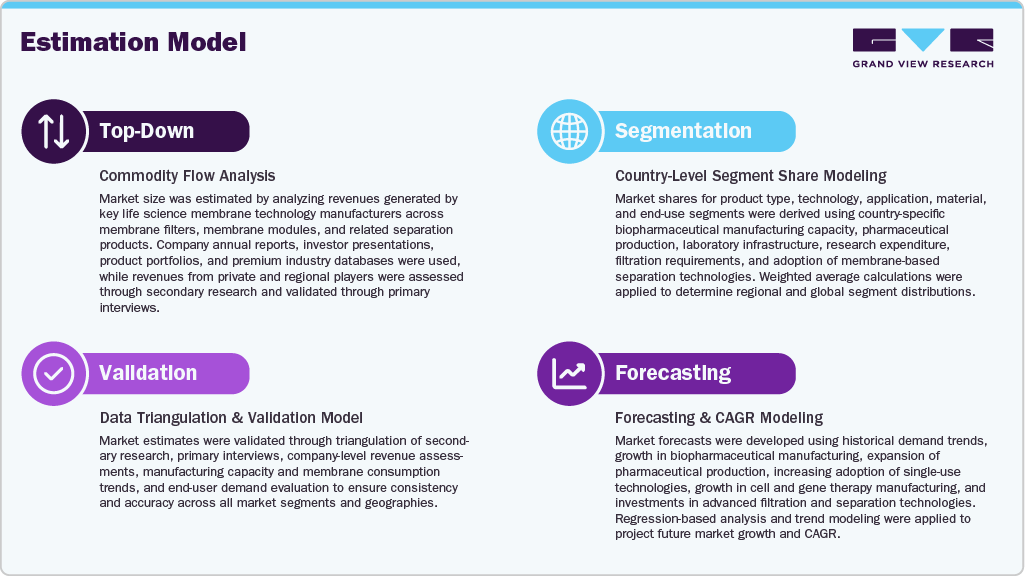
The life science membrane technology market figures in this report are based on a proven research process that combines executive interviews with secondary research from proprietary databases, company filings, and recognized regulatory and institutional sources. Market size is built through value-chain sizing0reconciling supply-side and demand-side estimates0and triangulated with bottom-up and top-down approaches. Every estimate passes multiple levels of expert validation before publication, with each life science membrane technology segment quantified using the revenue-capture definitions in the table below.
Segment Definition
Segment- Technology
Revenue Capture Definition
Microfiltration
Revenue generated from membrane-based separation technologies used to remove suspended particles, microorganisms, and larger biological components from liquid streams. Microfiltration is widely utilized for clarification, sterilization, cell harvesting, and bioprocess fluid treatment across pharmaceutical and life science applications.
Ultrafiltration
This segment captures income from membranes designed to separate and concentrate proteins, biomolecules, viruses, and other macromolecules based primarily on molecular size. The technology supports concentration, diafiltration, purification, and buffer exchange during biopharmaceutical processing.
Nanofiltration
Market value in this category stems from membrane technologies capable of retaining small molecules, organic compounds, multivalent ions, and microorganisms while allowing smaller species and water to pass through. Applications include pharmaceutical purification, water treatment, and specialized bioprocessing operations.
Reverse Osmosis
Revenue originates from membrane systems that use pressure-driven separation to remove dissolved salts, impurities, microorganisms, and other contaminants from water and process streams. These systems are employed for producing high-purity water required in pharmaceutical manufacturing, laboratories, and life science facilities.
Chromatography & Affinity Membranes
This segment reflects earnings from functionalized membrane technologies that enable selective capture and separation of target biomolecules based on affinity, charge, or other molecular interactions. Such membranes are increasingly used for protein purification, antibody processing, and high-throughput biopharmaceutical manufacturing.
Electrodialysis & Ion Exchange
Revenue is derived from membrane-based technologies that facilitate selective ion separation, removal, or exchange using electrically driven or ion-selective mechanisms. These solutions support water purification, desalination, buffer preparation, and specialized pharmaceutical and bioprocessing applications.
Segment - Material
Revenue Capture Definition
Polymeric
Revenue generated from membranes manufactured using polymeric materials that provide flexibility, chemical resistance, tunable pore structures, and cost-effective processing characteristics. These membranes are extensively utilized across filtration, purification, dialysis, and bioprocessing applications.
Ceramic
This category captures income from membranes fabricated from ceramic materials that offer high thermal stability, mechanical strength, chemical resistance, and durability. They are suited to demanding filtration and separation environments requiring extended operating life and resistance to harsh processing conditions.
Mixed-matrix / Hybrid
Market value in this segment stems from membranes combining polymeric materials with inorganic particles or multiple material components to enhance permeability, selectivity, mechanical performance, or chemical stability. These technologies address specialized separation requirements across life science and pharmaceutical applications.
Segment - Application
Revenue Capture Definition
Pharmaceutical Manufacturing
Revenue generated from membrane technologies used throughout pharmaceutical production for fluid clarification, sterilization, purification, concentration, water treatment, and separation of active pharmaceutical ingredients and other process components.
Bioprocessing & Biologics
This segment captures income from membrane-based solutions employed in the production and purification of biologics, including recombinant proteins, monoclonal antibodies, vaccines, and other biological products. Applications span cell harvesting, clarification, concentration, diafiltration, and product purification.
Medical Devices & Dialysis
Market value arises from membrane technologies incorporated into medical devices and dialysis systems for controlled filtration, separation, and removal of waste products from biological fluids. These applications support renal replacement therapy and other specialized medical procedures.
Diagnostics & Life-science Research
Revenue originates from membrane products used in laboratory research and diagnostic workflows for sample preparation, biomolecule separation, purification, filtration, and analytical testing. These technologies support applications across molecular biology, proteomics, genomics, and clinical research.
Laboratory Water Purification
This segment reflects earnings from membrane-based water purification solutions used to produce high-quality water for laboratory and research activities. Technologies support removal of microorganisms, dissolved contaminants, ions, and particulates required for reliable laboratory operations.
Segment- Product Type
Revenue Capture Definition
Membrane Filters
Revenue derived from flat-sheet and disc-format membrane filters used for laboratory and industrial-scale separation, filtration, clarification, and sample processing. These products provide controlled membrane surfaces for removing particulates, microorganisms, and biological contaminants from process and laboratory fluids.
Capsule / Cartridge Filters
This segment represents income from enclosed membrane filtration units designed for convenient installation, handling, and replacement in fluid-processing workflows. Capsule and cartridge formats are widely used for sterilizing filtration, clarification, bioprocessing, and laboratory applications.
Hollow-Fiber Modules
Market value stems from membrane modules consisting of multiple hollow-fiber membranes that provide high surface-area-to-volume ratios for efficient filtration and separation. These systems support cell harvesting, clarification, concentration, dialysis, and other bioprocessing applications.
Single-use TFF Systems
Revenue generated from disposable tangential flow filtration systems designed to enable concentration, purification, and buffer exchange while reducing cleaning, validation, and cross-contamination requirements. These systems are particularly relevant to flexible and scalable biopharmaceutical manufacturing.
Transfer / Blotting Membranes
This category captures income from specialized membranes used to transfer and immobilize proteins, nucleic acids, or other biomolecules during laboratory analytical procedures. These products support techniques such as Western blotting and related molecular biology workflows.
Segment- End-use
Revenue Capture Definition
Biopharma Companies
Revenue generated from membrane technologies adopted by biopharmaceutical companies for cell culture processing, biologics purification, protein concentration, sterile filtration, water treatment, and other manufacturing activities.
Pharmaceutical Companies
This segment captures income from membrane solutions utilized by pharmaceutical manufacturers for drug production, purification, formulation, sterile processing, process-water treatment, and quality control operations.
CDMOs & CROs
Market value in this category stems from membrane technologies used by contract development and manufacturing organizations and contract research organizations to support outsourced drug development, bioprocessing, analytical testing, process development, and manufacturing services for diverse clients.
Academic & Research Institutes
Revenue originates from universities, research centers, and scientific institutions using membrane technologies for laboratory water purification, sample preparation, biomolecule separation, molecular research, and experimental life science workflows.
Hospitals & Clinical Labs
This segment reflects earnings from membrane-based products and systems used in hospitals and clinical laboratories for dialysis, diagnostic sample processing, laboratory water purification, filtration, and other clinical and analytical applications.
Estimation Model
Customization Table
Client Request
Customization Delivered
Value Adds
Downstream Bioprocessing & Membrane Workflow Assessment
Detailed evaluation of membrane utilization across clarification, concentration, diafiltration, purification, virus filtration, and final formulation, including process throughput, recovery, fouling potential, and membrane lifetime.
Enables clients to identify process bottlenecks, optimize membrane selection, improve product recovery, and enhance downstream process efficiency.
Biopharmaceutical Manufacturing Capacity & Membrane Demand Analysis
Assessment of biopharmaceutical manufacturing capacity, facility expansions, single-use adoption, and downstream processing investments to estimate membrane technology demand across major geographic markets and application areas.
Helps clients identify emerging demand centers, assess future membrane consumption, prioritize regional expansion, and align production capacity with bioprocessing demand.
Emerging Membrane Technology Opportunity Mapping
Identification and evaluation of emerging technologies such as high-performance membranes, membrane adsorbers, continuous filtration systems, and advanced hybrid membrane processes.
Enables clients to identify future growth opportunities, prioritize R&D investments, and anticipate technological shifts in life science processing.
Frequently Asked Questions About This Report
The global life science membrane technology market size was valued at USD 6.0 billion in 2025 and is estimated at USD 6.3 billion for 2026.
The global life science membrane technology market is expected to grow at a CAGR of 5.1% from 2026 to 2033, reaching USD 8.9 billion by 2033.
The microfiltration segment led with a 40.2% revenue share in 2025.
North America dominated with a 35.6% revenue share in 2025.
Growth is driven by increasing adoption of membrane-based bioprocessing, advancements in biopharmaceutical manufacturing, and rising demand for efficient and scalable separation and purification technologies. Key Market Trends & Insights
Key players include Sartorius AG, Merck KGaA, Danaher Corporation, Repligen Corporation, Asahi Kasei Corporation, TORAY INDUSTRIES, INC., Kovalus Separation Solutions (Acquired By Sun Capital Partners, Inc.), MANN+HUMMEL, NIPRO, Fresenius Medical Care AG, and GVS S.p.A.
Asia Pacific is the fastest-growing region over the forecast period.
The polymeric segment led with a 80.4% revenue share in 2025.
The pharmaceutical manufacturing segment led with a 36.4% revenue share in 2025.
About the Author(s)
Biotechnology Research Team
Healthcare · BiotechnologyThis report was authored by the biotechnology research team at Grand View Research - comprising two research analysts, one senior research analyst, and one industry expert - with specialized expertise in the biotechnology segment of the healthcare industry. All findings are based on proprietary healthcare databases, executive interviews, and regulatory analysis, subject to internal peer review prior to publication.
Last Updated:
Speak to Analyst


Customize this report to your needs - add regions, segments, or data points, with 20% free customization.
Or view our licence options:


ISO 9001:2015 & 27001:2022 Certified
We are GDPR and CCPA compliant! Your transaction & personal information is safe and secure. For more details, please read our privacy policy.


