
- Home
- »
- Biotechnology
- »
-
Microalgae Biotechnology Market Size & Share Report, 2033GVR Report cover

Microalgae Biotechnology Market (2026 - 2033)
Size, Share & Trends Analysis Report By Product (Microalgal Biomass, Pigments & Carotenoids), By Microalgae Type, By Cultivation System (Open Cultivation Systems, Closed Photobioreactor Systems), By Application, By Region, And Segment Forecasts
Market Size, 2025
$3.9BMarket Estimate, 2026
$4.2BMarket Forecast, 2033
$7.3BCAGR, 2026–2033
8.2%Microalgae Biotechnology Market Summary
The global microalgae biotechnology market size was valued at USD 3.9 billion in 2025 and is projected to grow from USD 4.2 billion in 2026 to USD 7.3 billion by 2033, at a CAGR of 8.2% from 2026 to 2033. Asia Pacific dominated the market, accounting for the largest revenue share of 42.1% in 2025. The market growth is driven by the rising adoption of microalgae biotechnology in pharmaceutical and biotechnology research, particularly for drug discovery, preclinical safety and toxicity assessment, and the development of bioactive compounds.
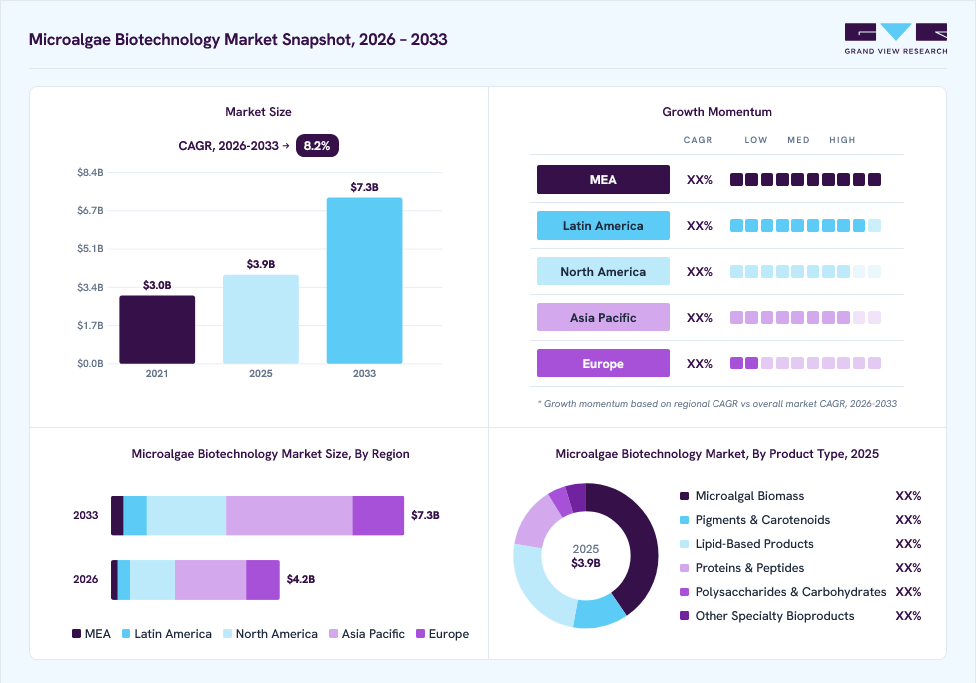 Source: Grand View Research, IR Documents, Primary Interviews, Paid DatabasesTo learn more about this report,
 Download Free Sample Report
Key Market Trends & Insights
- By product: Microalgal biomass held the largest market share of 40.4% in 2025
- By microalgae type: Cyanobacteria held the largest market share in 2025
- By cultivation system: Open cultivation systems held the largest market share in 2025
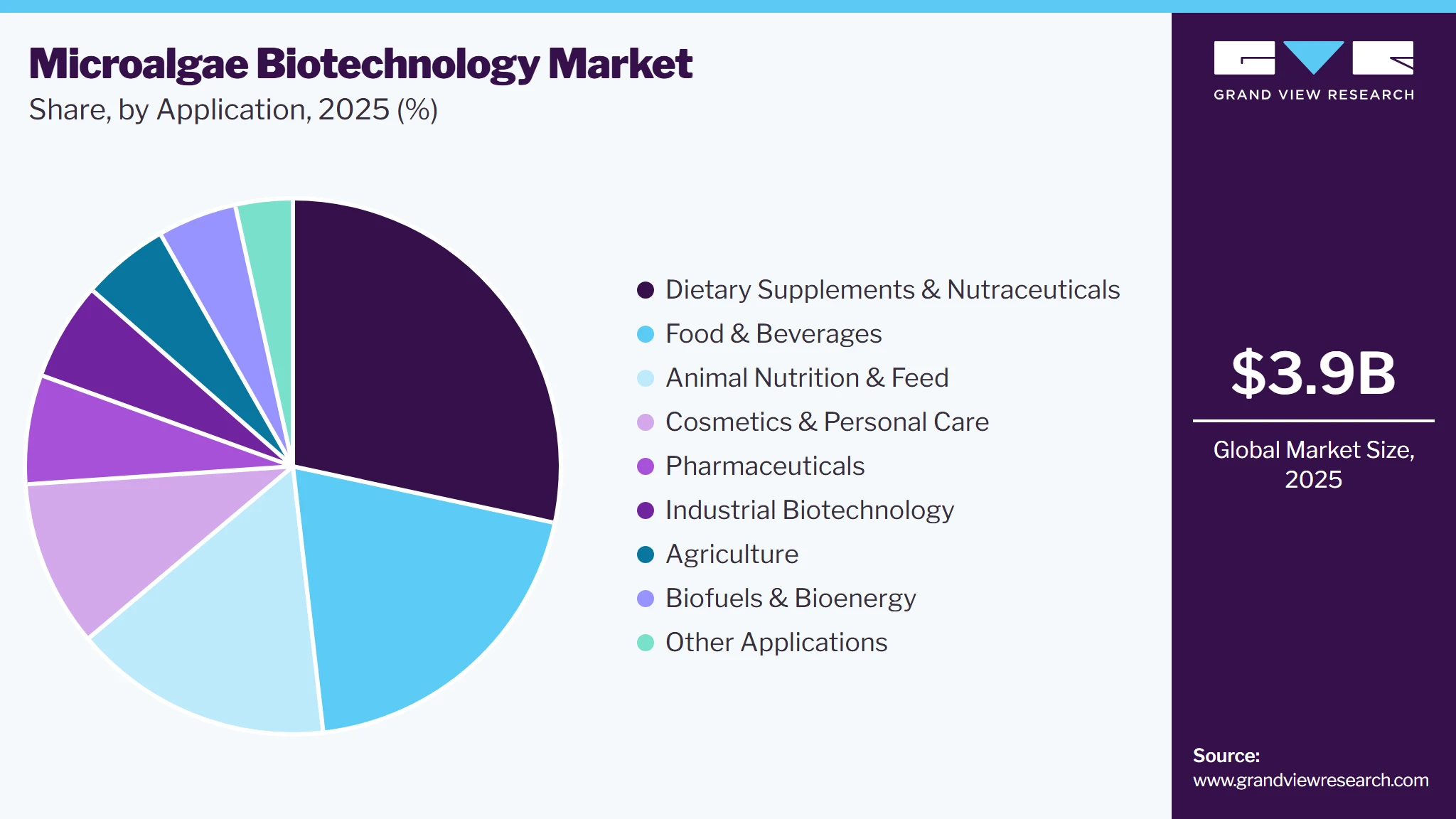
- By application: Dietary supplements & nutraceuticals held the largest revenue share of 28.4% in 2025
Regional Highlights
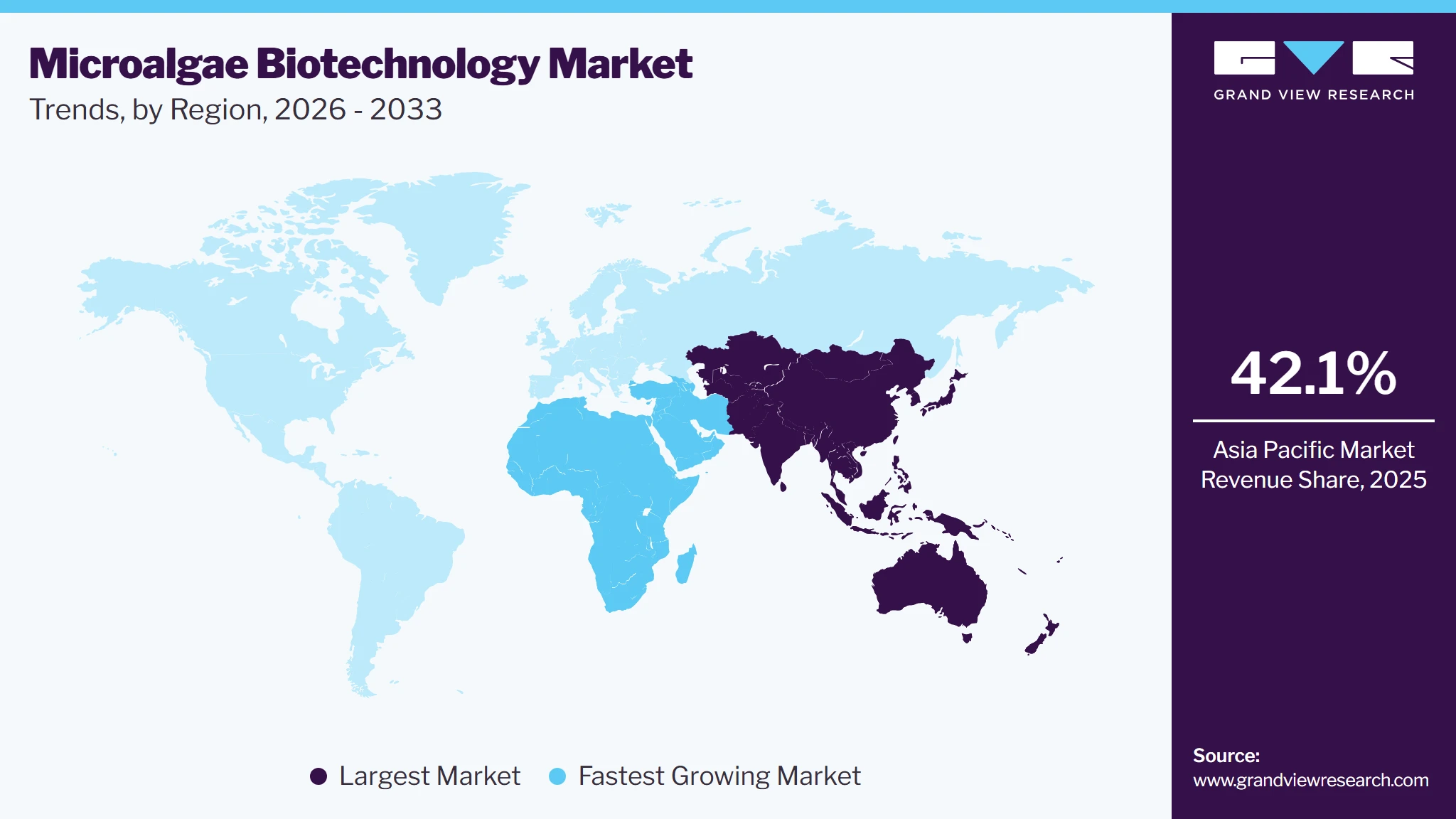
- Largest regional market: Asia Pacific (42.1% revenue share, 2025)
- Fastest-growing regional market: Middle East & Africa (highest CAGR, 2026-2033)
- By country: China held the largest market share in 2025.
Market Size & Forecast
- Market Size in 2025: USD 3.9 Billion
- Estimated Market Size in 2026: USD 4.2 Billion
- Projected Market Size by 2033: USD 7.3 Billion
- CAGR (2026-2033): 8.2%
Prism AI by Grand View Research Free to tryAsk a question about the microalgae biotechnology marketTry asking✓Every figure cited from GVR research Prefer the report? Download free sample →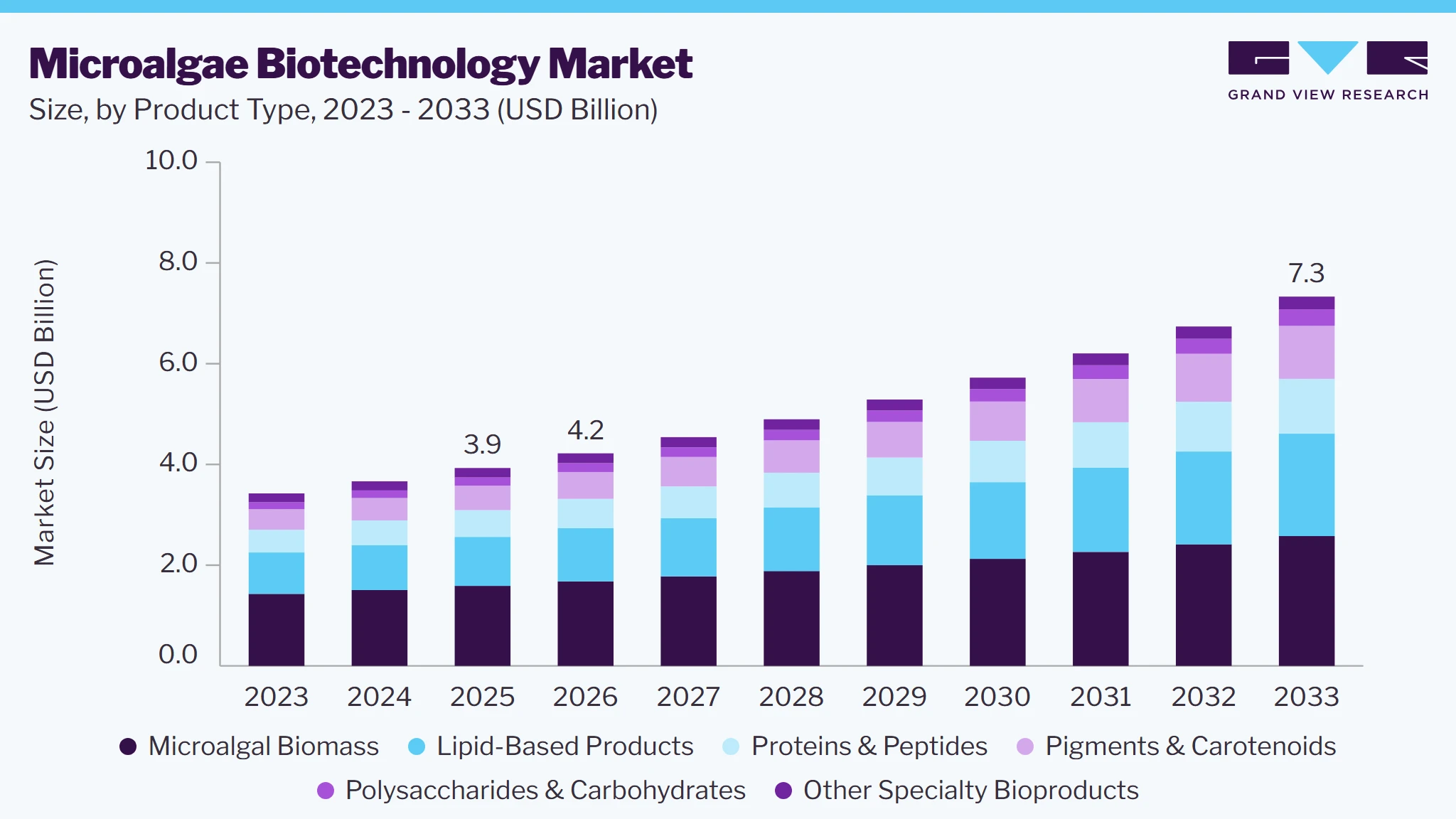 To learn more about this report, Download Free Sample Report
Market Dynamics
The microalgae biotechnology industry is witnessing significant growth, driven by increasing demand for microalgae-based products across food and nutraceuticals, animal feed, cosmetics, biofuels, and industrial applications. Microalgae provide proteins, pigments, lipids, and bioactive compounds, supporting their use across diverse industries. Growing interest in sustainable production and bio-based ingredients is further increasing their adoption. In addition, advances in cultivation technologies, strain development, and downstream processing are improving productivity and supporting the commercialization of microalgae-based products.
The growing commercialization of microalgae-derived products is driving the microalgae biotechnology market by expanding the use of microalgae in nutrition, nutraceuticals, and aquaculture applications. For instance, in August 2025, Corbion and Kuehnle AgroSystems entered into a strategic partnership to develop and commercialize natural astaxanthin derived from non-GMO heterotrophic algae through controlled fermentation. The product is being developed for human and animal nutrition, particularly nutraceutical and aquaculture applications.
“This partnership reinforces our commitment to sustainable, science-based solutions. KAS’ technology offers a strong foundation to deliver high-quality natural astaxanthin to customers looking for a clean-label alternative.”
- Robert Jan de Voogd, General Manager, Algae Ingredients North America at Corbion.
High production and processing costs remain a key restraint for the microalgae biotechnology industry, particularly due to the resources required for biomass harvesting and dewatering. According to an article published in the Journal of Environmental Management in December 2024, microalgae dewatering accounts for approximately 20-30% of total biomass production costs, while the process also requires careful management of energy consumption and operational costs. These processing costs can increase the overall cost of microalgae-derived products and limit their large-scale commercial adoption
The growing use of microalgae-derived products across food, feed, nutraceuticals, cosmetics, pharmaceuticals, and biomaterials is creating new opportunities for the microalgae biotechnology market. The ability of microalgae to produce proteins, pigments, lipids, and other bioactive compounds supports their use across diverse industries. In addition, advances in cultivation, biotechnology, and biorefinery processes are helping expand the range of commercial applications and improve the value obtained from microalgal biomass.
Market Concentration & Characteristics
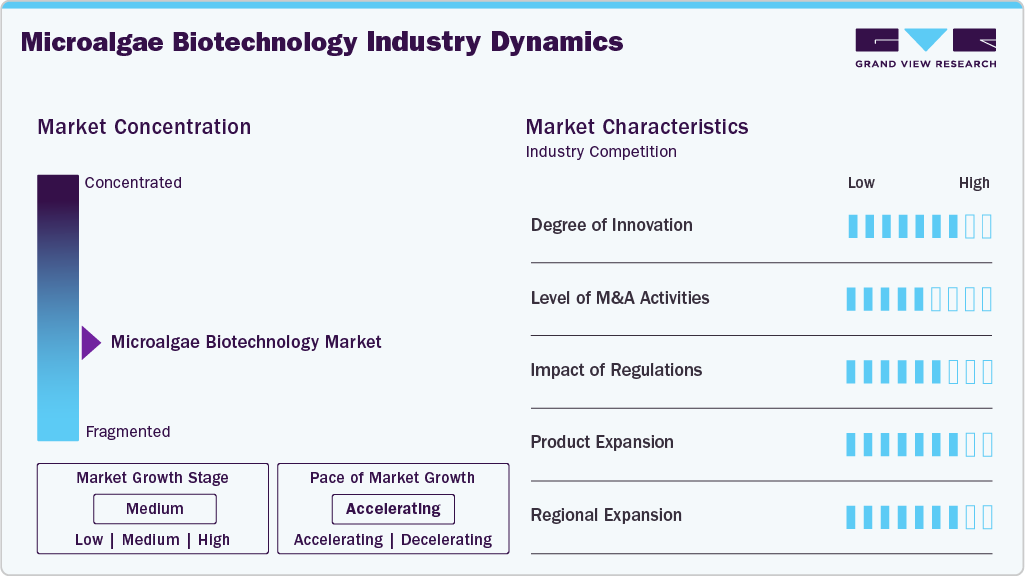
The microalgae biotechnology market is witnessing a high degree of innovation, driven by advances in genetic engineering and metabolic engineering to improve biomass and product yields. According to an article published in Nature India in October 2024, researchers developed a genetically engineered Parachlorella kessleri strain that showed nearly twice the growth and 2.5 times higher lipid production than the wild type, while also growing in wastewater and capturing CO₂. This advancement supports the development of more productive and multifunctional microalgal biotechnology applications.
The microalgae biotechnology industry is witnessing M&A activity as companies combine algae cultivation technologies and expand applications for algae-derived products. For instance, in October 2024, Cellana and PhytoSmart entered into a definitive merger agreement, under which PhytoSmart was expected to become a wholly owned subsidiary of Cellana. The combination brings together Cellana’s photosynthetic algae production technology and PhytoSmart’s heterotrophic algae platform, supporting the development of Omega-3, protein, nutritional, and other algae-based products.
 To learn more about this report, Download Free Sample Report
“This merger represents a perfect alignment of our two companies ’respective strengths. Together, we’ll be able to integrate our technologies to increase consumer product offerings, scale up production, and bring innovative algae-based solutions across diverse sectors, from the world’s most sustainable pet and human nutritional supplements to large-scale plant-based proteins for aquaculture, animal feed and human food, to Omega-3 pharmaceutical ingredients, to clean energy.”
-Martin Sabarsky, CEO of Cellana
The microalgae biotechnology market is influenced by regulatory requirements governing the safety, quality, and commercialization of microalgae-derived products. Requirements related to strain identification, product composition, contaminants, toxicology, manufacturing, and labeling can affect development timelines and market entry. These regulatory frameworks support the safety and quality of microalgae-derived products, facilitating their commercialization and broader adoption across food, nutrition, healthcare, and other applications.
The market is witnessing product expansion as companies introduce microalgae-based solutions for commercial applications. For instance, in February 2025, Phibro launched a low-carbon microalgae product line as part of its sustainable solutions platform, targeting aquaculture feed applications. The product line expands the use of microalgae as a functional and sustainable feed ingredient, supporting the development of lower-carbon alternatives in aquaculture nutrition.
The microalgae biotechnology industry is witnessing regional expansion as companies establish new production and research capabilities in emerging markets. For instance, in June 2024, KEZAD Group and Astha Biotech signed a lease agreement for the development of a 38,000-square-meter microalgae production facility in Abu Dhabi, UAE The facility is planned to cultivate Spirulina, Haematococcus pluvialis, and Chlorella using closed-culture photobioreactors, supporting microalgae-based applications in food, health, cosmetics, and aquaculture.
“We are so proud to be part of Abu Dhabi’s ambitious programme geared towards sustainable development. Our project is in-line with our values where we aim at translating our will to seek out new solutions to deal with the challenges of organic dietary nutriments and the contribution to the environment decarbonisation.”
-Zouheir Bensaid, CEO of Astha Biotech Group
Analyst Perspective
The microalgae biotechnology market is expected to witness significant growth, driven by increasing commercialization of microalgae-derived products across food, nutraceuticals, animal feed, cosmetics, pharmaceuticals, and industrial applications. Rising demand for sustainable and bio-based ingredients is supporting the adoption of microalgal biomass, pigments, lipids, proteins, and other specialty bioproducts. Advancements in strain engineering, cultivation technologies, fermentation, and downstream processing are further improving productivity and expanding the commercial potential of microalgae. Market participants are focusing on product innovation, cultivation capacity expansion, strategic partnerships, and high-value applications to strengthen commercialization and address growing demand for sustainable microalgae-based solutions.
Product Insights
The microalgal biomass segment dominated the microalgae biotechnology industry, accounting for the largest revenue share of 40.4% in 2025, supported by increasing use of microalgal biomass as a feedstock for biofuels and other renewable products. According to an article published in Frontiers in Fuels in May 2026, microalgal biomass was identified as a potential feedstock for bioethanol and biobutanol production due to its rapid growth, high photosynthetic efficiency, and ability to grow on non-arable land. Moreover, growing interest in microalgae-based renewable energy is expected to increase demand for microalgal biomass.
The pigments & carotenoids segment is expected to grow at the fastest CAGR during the forecast period, driven by increasing demand for natural pigments across food, nutraceutical, pharmaceutical, and cosmetic applications. Microalgae are an important source of carotenoids such as β-carotene, astaxanthin, and fucoxanthin. According to an article published in Frontiers in Microbiology in July 2026, microalgae were identified as sources of carotenoids with applications in food, pharmaceuticals, and cosmetics. Rising preference for natural and sustainable pigments is likely to increase demand for microalgae-derived pigments.
Microalgae Type Insights
The cyanobacteria segment dominated the microalgae biotechnology market with a 40.9% share in 2025, driven by growing use in nutritional products, bioactive compounds, pharmaceuticals, and sustainable bioproducts. Their ability to produce proteins, pigments, antioxidants, and other high-value compounds supports wider commercial applications. For instance, in August 2025, Bondi Bio received a USD 7,18,000 grant from the Gates Foundation to develop a cyanobacteria-based platform for producing low-cost monoclonal antibodies targeting infectious diseases. This development is expanding the use of cyanobacteria in biopharmaceutical production and strengthening their market potential.
The diatoms segment is expected to grow at a significant CAGR during 2026-2033, driven by increasing use of diatoms as sources of fucoxanthin, omega-3 fatty acids, biosilica, and other bioactive compounds. Their nutritional and functional properties support applications in food, nutraceuticals, pharmaceuticals, cosmetics, and biomaterials. In addition, growing research on diatom cultivation and processing is expanding their commercial use across these industries.
Cultivation System Insights
The open cultivation systems dominated the microalgae biotechnology industry, accounting for a revenue share of 52.5% in 2025, making it the leading segment, mainly due to the lower cost and scalability of raceway pond systems for microalgae cultivation. According to an article published in the EFB Bioeconomy Journal in November 2025, raceway ponds are used for microalgae cultivation, with hydrodynamic conditions such as mixing and flow influencing cultivation performance. Improvements in raceway pond operation are expected to increase their use in large-scale microalgae production.
The fermentation-based systems segment is projected to grow at the fastest CAGR during the forecast period, driven by increasing use of controlled fermentation for microalgae cultivation and production of high-value compounds. These systems provide controlled conditions for pH, temperature, oxygen, and nutrient supply, enabling consistent biomass production and improved process control. In addition, fermentation-based cultivation can support production under controlled conditions with reduced dependence on sunlight and seasonal variations, increasing its suitability for commercial-scale microalgae production.
Application Insights
The dietary supplements & nutraceuticals segment accounted for a market share of 28.4% in 2025, making it a leading application segment. Growth is driven by the growing use of microalgae-derived ingredients in nutritional products. For instance, in March 2026, Brevel launched Purallis, a clean-label chlorella ingredient for nutraceutical applications, produced using its proprietary illuminated fermentation technology. The launch expands the use of chlorella in dietary supplement formulations and reflects increasing commercial adoption of microalgae-based nutritional ingredients.
 To learn more about this report, Download Free Sample Report
The pharmaceuticals segment is expected to grow the fastest CAGR during the forecast period, driven by increasing research into microalgae-derived bioactive compounds for therapeutic applications. Microalgae produce compounds such as carotenoids, proteins, polysaccharides, and unsaturated fatty acids, which are being investigated for their biological and therapeutic properties. In addition, advances in drug delivery, synthetic biology, and bioprocess engineering are expanding the potential use of microalgae in pharmaceutical development.
Regional Insights
The Asia Pacific microalgae biotechnology market accounted for the largest global revenue share of 42.1% in 2025, driven by increasing demand for microalgae-derived ingredients, expanding applications across food, feed, nutraceuticals, and cosmetics, and growing investments in cultivation and processing technologies. The region’s expanding biotechnology sector and focus on sustainable production are supporting the development of microalgae-based products and their adoption across food, health, and industrial applications.
 To learn more about this report, Download Free Sample Report
China’s microalgae biotechnology market is witnessing strong growth, supported by increasing investments in microalgae cultivation, expansion of high-value algal ingredients, and growing applications across nutraceuticals, food, and feed. For instance, in May 2025, BGG announced a major investment to expand and enhance its astaxanthin manufacturing facility in Yunnan, China, integrating microalgae cultivation, extraction, drying, packaging, and R&D within the same production site. This expansion facilitates greater availability of microalgae-derived astaxanthin for nutraceutical and other commercial applications.
The microalgae biotechnology market in Japan is witnessing rapid growth driven by increasing investments in microalgae cultivation, development of high-value compounds, and expanding applications in food, nutraceuticals, cosmetics, and biofuels. For instance, in July 2025, Algal Bio and Japan Biological Science Institute Co., Ltd. commercialized a high-concentration astaxanthin production project using Haematococcus pluvialis, with a new closed-panel cultivation facility established in Kyushu, Japan. The facility enables domestic production from cultivation through extraction, supporting the commercialization of microalgae-derived ingredients.
North America Microalgae Biotechnology Market Trends
The North America microalgae biotechnology industry is expected to register significant growth over the forecast period, driven by established biotechnology infrastructure, rising investments in algal research, and growing demand for microalgae-based products across biofuels, food, feed, and nutraceuticals. For instance, in July 2024, the U.S. Department of Energy released an updated assessment of microalgae cultivation, estimating potential U.S. production of 152 million tons of microalgal biomass annually. Such initiatives support technological advancements, expand commercial cultivation, and accelerate the adoption of microalgae-based products across various end-use industries.
U.S. Microalgae Biotechnology Market Trends
The U.S. microalgae biotechnology industry is expected to grow over the forecast period, supported by ongoing investments in algal cultivation, preprocessing, and the development of bio-based products. For instance, in January 2025, the U.S. Department of Energy announced up to USD 10 million in funding for research to improve algal cultivation and preprocessing, including microalgae, to address technical barriers that limit their use as a domestic bioenergy feedstock. This funding is likely to strengthen the domestic algae value chain and encourage broader utilization of microalgal biomass across energy and industrial applications.
Europe Microalgae Biotechnology Market Trends
Europe was identified as a lucrative region in the microalgae biotechnology industry, supported by increasing demand for sustainable ingredients, advancements in algal cultivation technologies, and growing applications across food, nutraceuticals, cosmetics, pharmaceuticals, and bio-based products. The region’s focus on circular bioeconomy practices and the development of alternative protein and lipid sources is further supporting the adoption of microalgae across commercial applications.
The UK microalgae biotechnology market held a significant share, supported by increasing investments in microalgae-based production and growing demand for sustainable ingredients. For instance, in December 2025, the U.K. Government supported an investment in Scottish biotechnology company MiAlgae to develop a commercial-scale facility producing fish-free omega-3 from microalgae using whisky industry by-products. The investment is expected to support the development of algae-derived ingredients for aquaculture and pet food applications.
The microalgae biotechnology market in Germany is anticipated to grow significantly over the forecast period, supported by increasing investments in biotechnology research, development of sustainable production technologies, and rising demand for microalgae-derived ingredients. Growing applications of microalgae across food and beverages, nutraceuticals, animal feed, cosmetics, and bio-based products are supporting market development, while advancements in cultivation and downstream processing are improving the feasibility of commercial-scale production.
Latin America Microalgae Biotechnology Market Trends
The Latin America microalgae biotechnology industry is expected to grow over the forecast period, supported by the increasing use of microalgal biomass in aquaculture feed and growing research into algae-based agricultural and industrial applications. Brazil is emerging as an important market, with research focused on using microalgae as an alternative source of protein and lipids in aquaculture feed. Improvements in cultivation scale and production economics are expected to support wider commercial use of microalgal biomass in the region.
MEA Microalgae Biotechnology Market Trends
MEA is expected to grow at the fastest CAGR of 9.4% during the forecast period, supported by increasing investments in large-scale microalgae cultivation, growing demand for locally produced feed ingredients, and increasing use of algae for resource-efficient production. For instance, in January 2024, Saudi Arabia’s Ministry of Environment, Water and Agriculture and KAUST launched Phase II of the Algae & Aquaculture Technologies Development Project to advance algae production and technologies in the Kingdom. The project includes microalgae facilities for producing biomass for animal feed, supporting the development of domestic algal biotechnology capabilities.
Key Microalgae Biotechnology Company Insights
The microalgae biotechnology market includes established and specialized companies engaged in microalgae cultivation, biomass production, fermentation, downstream processing, and the development of algae-derived products for applications in nutrition, nutraceuticals, animal specialty ingredients, and related areas. Key players, including dsm-firmenich, Euglena Co., Ltd., Cyanotech Corporation, Corbion, DIC Corporation, BASF, Algatech Ltd (acquired by Solabia Group), Parry Nutraceuticals (E.I.D. - Parry (India) Limited), AstaReal Co., Ltd. (subsidiary of Fuji Chemical Industries Co., Ltd.), and ALGAENERGY, strengthen market positions through production capacity expansion, cultivation technologies, product development, R&D investment, strategic partnerships, and expansion into high-value applications.
Key Microalgae Biotechnology Companies
The following key companies have been profiled for this study of the microalgae biotechnology market.
-
dsm-firmenich
-
Euglena Co., Ltd.
-
Cyanotech Corporation
-
Corbion
-
DIC Corporation
-
BASF
-
Algatech Ltd (acquired by Solabia Group)
-
Parry Nutraceuticals (E.I.D. - Parry (India) Limited)
-
AstaReal Co., Ltd. (subsidiary of Fuji Chemical Industries Co., Ltd.)
-
ALGAENERGY
Competitive Benchmarking
Category
Operating Strategies
Competitive Edge
Weakness
Established Players (dsm-firmenich; Euglena Co., Ltd.; Cyanotech Corporation; Corbion; DIC Corporation; BASF; Parry Nutraceuticals (E.I.D. - Parry (India) Limited))
Expanding cultivation and fermentation capacity; developing omega-3, astaxanthin, Spirulina, and other algae-based products; investing in R&D, processing, and new applications.
Strong production capabilities, established brands, proprietary technologies, broad product portfolios, global distribution, and R&D resources.
High cultivation and processing costs, scale-up challenges, contamination risks, energy requirements, and competition from conventional ingredients.
Emerging Players (Algatech Ltd, AstaReal Co., Ltd., ALGAENERGY)
Developing specialized strains, scalable cultivation systems, and applications in nutrition, feed, agriculture, biofuels, and specialty ingredients.
Innovative technologies, specialized applications, flexible platforms, and focus on emerging markets.
Smaller production capacity, limited commercialization, funding dependence, scale-up challenges, and higher market-adoption risk.
Recent Developments
-
In June 2026, DIC Corporation developed SACRANEX Powder, a new cosmetic ingredient derived from indoor-cultivated Suizenji nori (Aphanothece sacrum), using microalgae cultivation and functional extraction technologies developed through its algae business.
-
In April 2026, dsm-firmenich launched Veramaris O3 Max Pure, a microalgal omega-3 oil produced through closed-system microalgae fermentation, providing EPA and DHA as a fish-oil alternative for pet nutrition applications.
“For today’s pet parents, pet health is personal-it is held to the same standards as their own health. As pet nutrition continues to evolve, our customers are looking for solutions that combine scientific credibility with formulation simplicity and supply security. Veramaris O3 Max Pure reflects that shift-delivering a full-spectrum omega-3 profile in a single, consistent solution that supports both product performance and the planet.”
-George B. Josef, Global Director of Business Development, Nutritional Lipids & Alternative Proteins at dsm-firmenich
-
In April 2026, Corbion secured a new U.S. patent for a DHA-rich omega-3 suspension of algal biomass developed through its algal fermentation platform, strengthening its intellectual-property position for AlgaPrime DHA LS in aquaculture, animal nutrition, and pet food applications.
“This progress reflects our continued focus on developing meaningful innovations that bring concrete customer value. With broad protection in place that is still expanding, AlgaPrime DHALS is well positioned to support our customers across aquaculture, animal nutrition, and pet food.”
- Tim Rutten, Head of Nutrition and Pharma Ingredients.
Microalgae Biotechnology Market Report Scope
Report Attribute
Details
Market size in 2025
USD 3.9 billion
Estimated market size in 2026
USD 4.2 billion
Projected market size by 2033
USD 7.3 billion
Growth rate
CAGR of 8.2 % from 2026 to 2033
Historical data
2021 - 2025
Forecast period
2026 - 2033
Quantitative units
Revenue in USD million/billion and CAGR from 2026 to 2033
Report coverage
Revenue forecast, company ranking, competitive landscape, growth factors, and trends
Segments covered
Product, microalgae type, cultivation system, application, region
Regional scope
North America; Europe; Asia Pacific; Latin America; MEA
Country scope
U.S.; Canada; Mexico; UK; Germany; France; Italy; Spain; Norway; Denmark; Sweden; China; Japan; India; South Korea; Australia; Thailand; Brazil; Argentina; Saudi Arabia; South Africa; UAE; Kuwait
Key companies profiled
dsm-firmenich; Euglena Co., Ltd.; Cyanotech Corporation; Corbion; DIC Corporation; BASF; Algatech Ltd (acquired by Solabia Group); Parry Nutraceuticals (E.I.D. - Parry (India) Limited); AstaReal Co., Ltd. (subsidiary of Fuji Chemical Industries Co., Ltd.); ALGAENERGY
Customization scope
Free report customization (equivalent up to 8 analysts' working days) with purchase. Addition or alteration to country, regional & segment scope.
Pricing and purchase options
Avail customized purchase options to meet your exact research needs. Explore purchase options
Global Microalgae Biotechnology Market Report Segmentation
This report forecasts revenue growth and provides an analysis of the latest trends in each of the sub-segments from 2021 to 2033. For this study, Grand View Research has segmented the global microalgae biotechnology market report based on product, microalgae type, cultivation system, application, and region:
-
Product Outlook (Revenue, USD Million/Billion, 2021 - 2033)
-
Microalgal Biomass
-
Pigments & Carotenoids
-
Lipid-Based Products
-
Proteins & Peptides
-
Polysaccharides & Carbohydrates
-
Other Specialty Bioproducts
-
-
Microalgae Type Outlook (Revenue, USD Million/Billion, 2021 - 2033)
-
Green Microalgae
-
Diatoms
-
Cyanobacteria
-
Other Eukaryotic Microalgae
-
-
Cultivation System Outlook (Revenue, USD Million/Billion, 2021 - 2033)
-
Open Cultivation Systems
-
Closed Photobioreactor Systems
-
Hybrid Cultivation Systems
-
Fermentation-Based Systems
-
-
Application Outlook (Revenue, USD Million/Billion, 2021 - 2033)
-
Food & Beverages
-
Dietary Supplements & Nutraceuticals
-
Animal Nutrition & Feed
-
Cosmetics & Personal Care
-
Pharmaceuticals
-
Agriculture
-
Biofuels & Bioenergy
-
Industrial Biotechnology
-
Other Applications
-
-
Regional Outlook (Revenue, USD Million/Billion, 2021 - 2033)
-
North America
-
U.S.
-
Canada
-
Mexico
-
-
Europe
-
UK
-
Germany
-
France
-
Italy
-
Spain
-
Denmark
-
Sweden
-
Norway
-
-
Asia Pacific
-
Japan
-
China
-
India
-
Australia
-
Thailand
-
South Korea
-
-
Latin America
-
Brazil
-
Argentina
-
-
Middle East and Africa (MEA)
-
South Africa
-
Saudi Arabia
-
UAE
-
Kuwait
-
-
Research Methodology
The microalgae biotechnology market figures in this report are based on a proven research process that combines executive interviews with secondary research from proprietary databases, company filings, and recognized regulatory and institutional sources. Market size is built through value-chain sizing-reconciling supply-side and demand-side estimates-and triangulated with bottom-up and top-down approaches. Every estimate passes multiple levels of expert validation before publication, with each microalgae biotechnology segment quantified using the revenue-capture definitions in the table below.
Segment Definition
Segment- Product
Revenue Capture Definition
Microalgal Biomass
Revenue generated from microalgal biomass products, including whole-cell biomass and dried or concentrated algal material used as raw materials for food, feed, nutraceutical, agricultural, pharmaceutical, and industrial biotechnology applications.
Pigments & Carotenoids
This segment captures income from pigments and carotenoids extracted or derived from microalgae, including astaxanthin, beta-carotene, phycocyanin, chlorophyll, and other bioactive pigments used in food, nutraceutical, cosmetic, and pharmaceutical applications.
Lipid-Based Products
Market value in this category stems from microalgal lipid products, including omega-3 fatty acids, algal oils, triglycerides, and other lipid fractions used in nutritional supplements, functional foods, cosmetics, biofuels, and industrial applications.
Proteins & Peptides
Revenue generated from proteins and peptides derived from microalgae, including functional proteins, bioactive peptides, and protein concentrates used in food, nutrition, animal feed, pharmaceutical, and biotechnology applications.
Polysaccharides & Carbohydrates
This segment captures income from microalgal polysaccharides and carbohydrate-rich products, including extracellular polysaccharides, structural carbohydrates, and functional carbohydrate fractions used in food, cosmetics, pharmaceuticals, agriculture, and industrial biotechnology.
Other Specialty Bioproducts
Market value in this category stems from specialty microalgal products not classified under biomass, pigments, lipids, proteins, or carbohydrates, including vitamins, enzymes, antioxidants, bioactive compounds, and other high-value metabolites.
Segment- Microalgae Type
Revenue Capture Definition
Green Microalgae
Revenue generated from green microalgae, including Chlorella, Chlamydomonas, and related genera, cultivated for biomass, proteins, pigments, lipids, nutraceuticals, food ingredients, and other specialty bioproducts.
Diatoms
This segment captures income from diatoms cultivated for their biomass, lipids, pigments, silica-rich structures, bioactive compounds, and other products used across nutritional, pharmaceutical, agricultural, and industrial applications.
Cyanobacteria
Market value in this category stems from cyanobacterial organisms used to produce biomass, pigments, proteins, bioactive compounds, carbohydrates, and other specialty products for food, nutraceutical, pharmaceutical, agricultural, and industrial applications.
Other Eukaryotic Microalgae
Revenue generated from eukaryotic microalgal species outside green microalgae and diatoms, including organisms cultivated for specialty lipids, pigments, proteins, carbohydrates, biomass, and other commercially valuable bioproducts.
Segment- Cultivation System
Revenue Capture Definition
Open Cultivation Systems
This segment captures income from open cultivation systems, including ponds, raceway ponds, and other exposed cultivation platforms used for large-scale microalgal biomass and bioproduct production.
Closed Photobioreactor Systems
Market value in this category stems from closed photobioreactor systems, including tubular, flat-panel, and other enclosed cultivation platforms that provide controlled conditions for microalgal growth and high-value product production.
Hybrid Cultivation Systems
Revenue generated from hybrid cultivation systems combining open and closed cultivation approaches to optimize microalgal productivity, process control, scalability, and production economics across different cultivation stages.
Fermentation-Based Systems
This segment captures income from fermentation-based cultivation systems used for microalgal cultivation under controlled conditions, particularly for the production of biomass, proteins, lipids, and other specialty bioproducts.
Segment- Application
Revenue Capture Definition
Food & Beverages
Market value in this category stems from microalgal products used as food ingredients, natural colorants, nutritional components, functional ingredients, and beverage formulations across food and beverage applications.
Dietary Supplements & Nutraceuticals
Revenue generated from microalgal biomass, oils, pigments, proteins, vitamins, antioxidants, and other bioactive compounds incorporated into dietary supplements and nutraceutical products for nutritional and wellness applications.
Animal Nutrition & Feed
This segment captures income from microalgal biomass, proteins, lipids, pigments, and other nutritional compounds used as feed ingredients, supplements, and functional additives in livestock, aquaculture, and animal nutrition.
Cosmetics & Personal Care
Market value in this category stems from microalgal pigments, lipids, antioxidants, proteins, polysaccharides, and other bioactive compounds incorporated into skincare, haircare, personal-care, and cosmetic formulations.
Pharmaceuticals
Revenue generated from microalgal-derived bioactive compounds, pigments, lipids, proteins, peptides, polysaccharides, and other specialty products used in pharmaceutical research, drug development, therapeutic formulations, and biomedical applications.
Agriculture
This segment captures income from microalgal biomass, extracts, bioactive compounds, fertilizers, biostimulants, and other products used to support crop growth, soil health, plant productivity, and sustainable agricultural practices.
Biofuels & Bioenergy
Market value in this category stems from microalgal biomass and lipid-rich feedstocks used to produce biodiesel, renewable fuels, biogas, bio-oils, and other bio-energy products.
Industrial Biotechnology
Revenue generated from microalgal biomass and derived compounds used in industrial biotechnology, including enzymes, specialty chemicals, biomaterials, biopolymers, and other bio-based manufacturing applications.
Other Applications
This segment captures income from microalgal products used in applications outside food, nutraceuticals, animal nutrition, cosmetics, pharmaceuticals, agriculture, bioenergy, and industrial biotechnology, including environmental and research applications.
Delivered Customizations
This report has been delivered with the following In-depth customizations
Client Request
Customization Delivered
Value Adds
Microalgae Downstream Processing & Cost Assessment
Analysis of harvesting, cell disruption, extraction, purification, and related processing requirements for selected microalgae-derived products, including key cost considerations.
Help clients identify bottlenecks, understand cost drivers, and evaluate opportunities to improve product economics.
Microalgae Feedstock & Supply Chain Assessment
Assessment of key raw materials and inputs required for microalgae cultivation, including nutrients, water, carbon sources, energy requirements, and availability across selected regions.
Helps clients understand input dependencies, identify supply-side constraints, and assess factors affecting production costs and scalability.
Microalgae Strain Selection & Performance Assessment
Detailed assessment of selected microalgae strains based on growth rate, biomass productivity, target compound content, environmental tolerance, and suitability for specific applications.
Help clients compare strain characteristics, identify suitable strains for targeted applications, and support research or product development decisions.
Frequently Asked Questions About This Report
Open cultivation systems held the largest market share in 2025
The global microalgae biotechnology market size was valued at USD 3.9 billion in 2025 and is estimated at USD 4.2 billion for 2026.
The global microalgae biotechnology market is expected to grow at a CAGR of 8.2% from 2026 to 2033, reaching USD 7.3 billion by 2033.
The market growth is driven by the rising adoption of microalgae biotechnology in pharmaceutical and biotechnology research, particularly for drug discovery, preclinical safety and toxicity assessment, and the development of bioactive compounds.
Asia Pacific dominated with a 42.1% revenue share in 2025.
MEA is the fastest-growing region over the forecast period.
The microalgal biomass segment led with a 40.4% revenue share in 2025
Cyanobacteria held the largest market share in 2025
Key players include dsm-firmenich, Euglena Co., Ltd., Cyanotech Corporation, Corbion, DIC Corporation, BASF, Algatech Ltd (acquired by Solabia Group), Parry Nutraceuticals (E.I.D. - Parry (India) Limited), AstaReal Co., Ltd. (subsidiary of Fuji Chemical Industries Co., Ltd.) and ALGAENERGY
About the Author(s)
Biotechnology Research Team
Industry · BiotechnologyThis report was authored by the biotechnology research team at Grand View Research - comprising two research analysts, one senior research analyst, and one industry expert - with specialized expertise in the biotechnology segment of the industry industry. All findings are based on proprietary industry databases, executive interviews, and regulatory analysis, subject to internal peer review prior to publication.
Last Updated:
Speak to Analyst

Customize this report to your needs - add regions, segments, or data points, with 20% free customization.
Or view our licence options:


ISO 9001:2015 & 27001:2022 Certified
We are GDPR and CCPA compliant! Your transaction & personal information is safe and secure. For more details, please read our privacy policy.


