
- Home
- »
- Homecare & Decor
- »
-
Middle East Comic Book Market Size, Industry Report, 2033GVR Report cover
![Middle East Comic Book Market Size, Share & Trends Report]()
Middle East Comic Book Market (2025 - 2033) Size, Share & Trends Analysis Report By Type (Digital, Non-Digital), By Format (Hard Copy, E-Book, Audiobooks), By Genre (Science-Fiction, Manga, Superhero, Non-Fiction), By Country (Saudi Arabia, UAE), And Segment Forecasts
Middle East Comic Book Market Trends
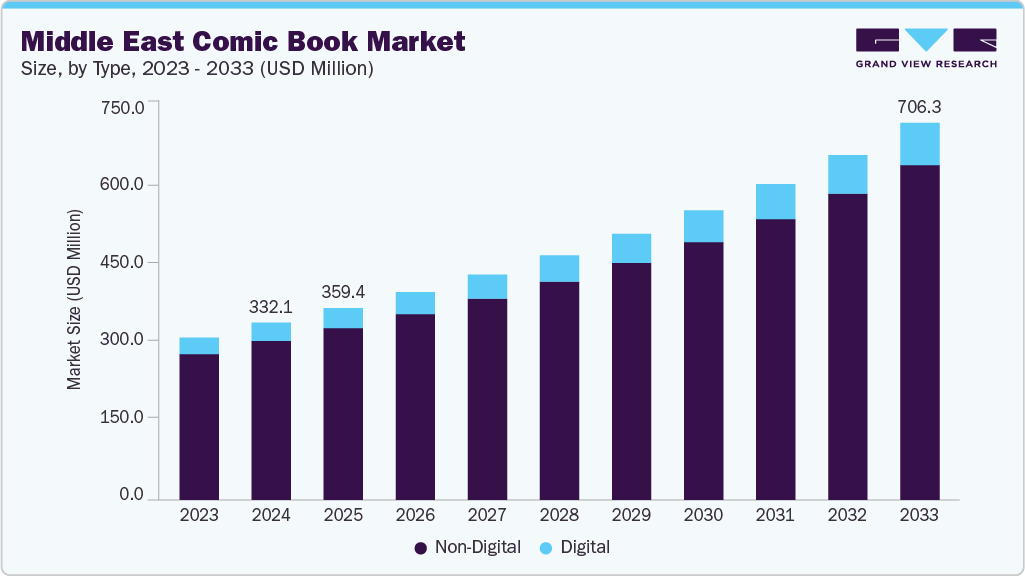
The Middle East comic book market size was estimated at USD 332.1 million in 2024 and is projected to reach USD 706.3 million by 2033, growing at a CAGR of 8.8% from 2025 to 2033. The growth of the comic book industry in the Middle East is primarily driven by rising digital penetration, with smartphones and tablets making comics more accessible to younger, tech-savvy audiences. A youthful demographic with increasing disposable income is fueling demand for global content such as manga and locally inspired narratives that reflect regional culture. Government support for creative industries and initiatives such as dedicated comic studios and cultural policies under frameworks such as Saudi Vision 2030 further strengthens the ecosystem.
Pop culture events and conventions such as Comic Cons and regional expos have become powerful platforms for driving awareness and building engaged fan communities across the Middle East. These gatherings not only celebrate global and local comic culture but also create spaces for networking, creative exchange, and the growth of fandoms. Alongside this, cross-media integration, through animation, blockbuster movies, and streaming platforms, amplifies the visibility of comic narratives and intellectual properties (IPs), creating a virtuous cycle where stories transcend print and gain traction across multiple channels.
Rising purchasing power and growing disposable incomes across many Gulf countries fuel demand for leisure and entertainment products, including comics and graphic novels. With a young population eager to explore diverse cultural experiences, higher income levels translate into greater willingness to spend on premium editions, collectibles, and digital subscriptions. This shift supports international publishers entering the market. It creates opportunities for local creators and studios to monetize original content, catering to a consumer base that is increasingly open to investing in quality storytelling and immersive comic experiences.
In the Middle East, print comics continue to have a strong presence, particularly among collectors and readers who value the tangibility of physical editions. However, digital formats are expanding much faster, driven by widespread smartphone adoption, high internet penetration, and the convenience of on-demand access. Younger audiences are particularly shifting toward digital platforms and web-comics, which align with their mobile-first lifestyles. This transition is reshaping consumption patterns in the region, with publishers and creators increasingly investing in digital channels to capture a growing online readership while still catering to the established demand for print.
Localizing themes and characters is becoming a defining trend in the Middle Eastern comic industry, with creators increasingly weaving Arab and Islamic traditions, regional history, and contemporary social issues into their narratives. By reflecting cultural identity and real-life experiences, these comics resonate deeply with local audiences who seek representation in popular media. At the same time, such authentic storytelling often piques international interest, offering global readers unique perspectives and fresh narratives beyond mainstream Western or Japanese content. This dual appeal positions localized comics as both culturally significant and commercially viable in broader markets.
Consumer Insights
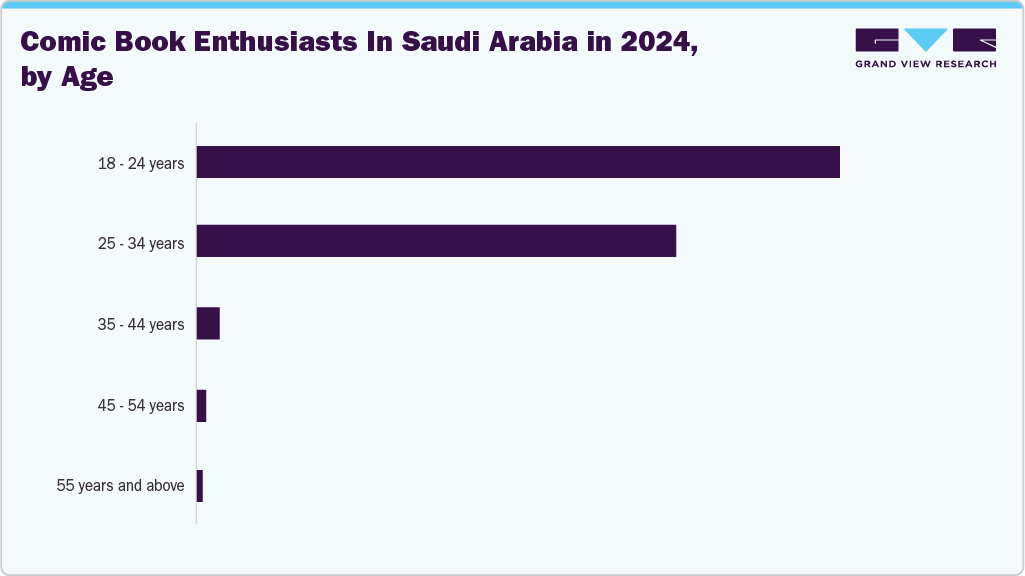
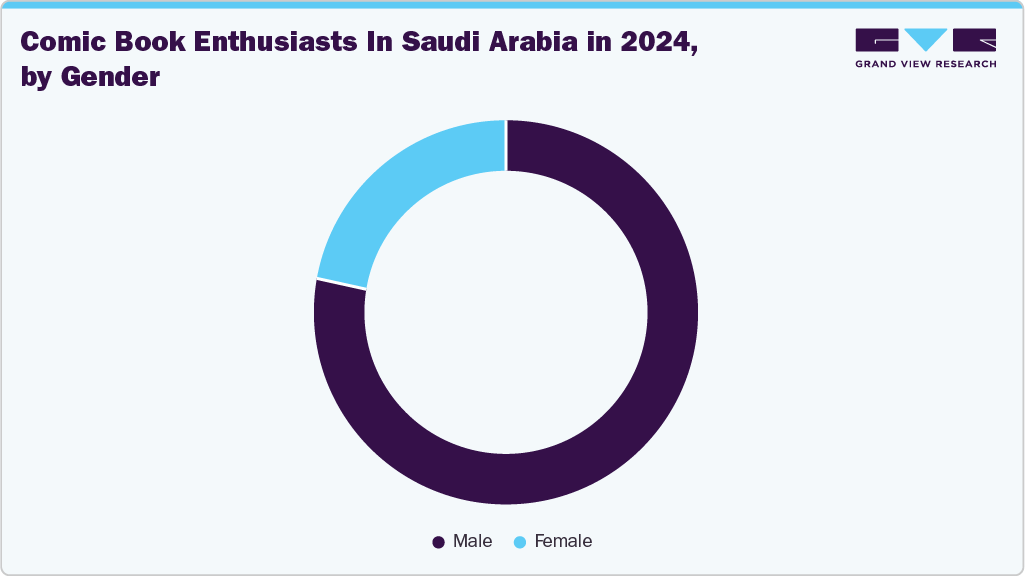
Comic book enthusiasts in Saudi Arabia reflect a dynamic and youthful consumer base, where reading, trading, and collecting comics form both a hobby and a lifestyle. Most belong to the younger demographic aged 18-24 and 25-34, showing that the market is largely driven by digitally connected youth. The gender distribution remains male-dominated, though female participation is steadily rising with the growing popularity of manga and webtoons. These patterns mirror wider trends across the Middle East, where a young, tech-savvy population is fueling demand for comic books and collectibles, merchandise, and pop culture experiences, making the sector a rapidly expanding part of the region’s creative economy.
Type Insights
Non-digital comic books accounted for a revenue share of 89.69% in the Middle East comic book industry in 2024, due to cultural preferences for tangible copies, established retail distribution channels, and the collectible appeal of premium editions. Many readers value the physical experience of holding a book, while print comics are also popular as gifts and leisure items. Additionally, although digital adoption is growing, a significant segment of the audience still relies on traditional bookstores and outlets, keeping print editions widespread in the region.
Digital comic books are expected to grow at a CAGR of 9.9% from 2025 to 2033, due to rising smartphone and tablet penetration, widespread internet access, and a growing young, tech-savvy population that prefers on-the-go, convenient reading experiences. Digital platforms offer immediate access to a wide range of international and local content, often at lower costs than print, and support interactive features, translations, and serialized releases that appeal to modern readers. In addition, the convenience of digital distribution overcomes geographic and retail limitations, allowing readers in countries with fewer physical comic stores to access a diverse library.
Format Insights
Hard-copy comic books accounted for a revenue share of 89.69% in the Middle East comic book industry in 2024. Many readers value the physical experience of holding a book, collecting special editions, and displaying them as part of their personal collections. Established retail channels such as bookstores, comic shops, and school outlets also make print editions more accessible, especially in regions where digital platforms are still emerging. Moreover, print comics are popular as gifts and leisure items, reinforcing their demand in the market.
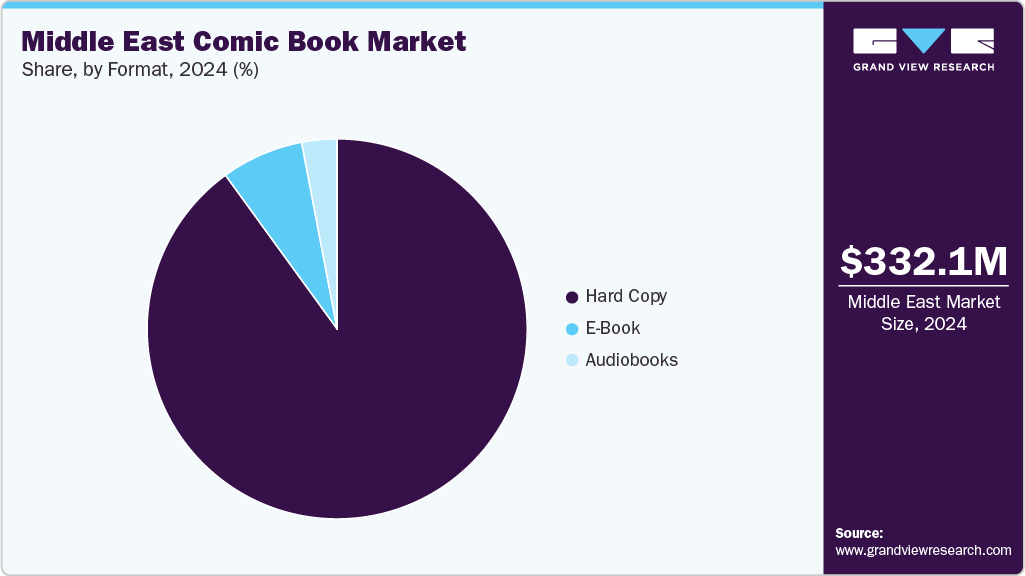
The demand for e-books is expected to grow at a CAGR of 10.0% from 2025 to 2033 in the Middle East comic book market due to the widespread adoption of smartphones, tablets, and high-speed internet, which make digital reading convenient and accessible. Younger, tech-savvy audiences prefer on-the-go content that can be instantly downloaded and read anywhere. Digital comics also offer a wider variety of international and local content, often at a lower price than print, and provide interactive features, translations, and serialized releases that enhance reader engagement.
Genre Insights
The science-fiction comic books accounted for a revenue share of 38.38% in the Middle East comic book industry in 2024. The genre resonates strongly with the region’s youthful and tech-savvy audience, drawn to imaginative, futuristic, and visually rich storytelling. Sci-fi themes often incorporate adventure, advanced technology, and speculative worlds, appealing to readers seeking escapism and creative inspiration. Moreover, the global popularity of sci-fi media, through movies, TV series, and gaming, boosts interest in related comic content, while publishers continue to invest in sci-fi titles due to consistent demand and strong commercial performance in both print and digital formats.
Manga comic books in the Middle East are expected to grow at a CAGR of 9.8% from 2025 to 2033 due to the growing influence of Japanese pop culture, including anime, games, and streaming platforms. A strong fan base for manga stories has been cultivated. Younger, tech-savvy audiences are particularly drawn to manga’s distinctive art style, engaging narratives, and diverse genres that often differ from traditional Western comics. Digital platforms and online communities make manga more accessible, allowing readers to discover, share, and consume content conveniently. Additionally, localized translations and culturally adapted editions are expanding reach, further driving the genre’s popularity and rapid growth in the region.
Country Insights
The Saudi Arabian comic book market is rapidly expanding, driven by digital adoption, government initiatives, and demographic trends. Widespread smartphone usage and high-speed internet have made digital comics increasingly accessible, particularly to the young, tech-savvy population. Initiatives under Vision 2030 aim to diversify the economy and promote cultural industries, including cartoons and animation, creating a supportive environment for local creators. There is also growing demand for comics that reflect regional culture and values, encouraging the production of culturally resonant content. International collaborations and projects, such as developing the world's first "Dragon Ball" theme park in Saudi Arabia, highlight the country's commitment to expanding its entertainment sector and strengthening its presence in the broader Middle Eastern comic book market.
UAE Comic Book Market Trends
The comic book market in the UAE is growing rapidly, driven by government support through initiatives such as Abu Dhabi’s Sandstorm studio, which develops local talent and original IP, and major fan events such as the Middle East Film & Comic Con that attract tens of thousands of visitors. Local conventions are spreading to other emirates, while specialty retailers and bookstores such as Kinokuniya and Comicave stock a wide range of global titles, especially manga, which has a strong youth following. Trends point toward greater investment in Arabic and regionally inspired storytelling, hybrid art styles, and fan-driven communities, making the UAE a rising hub for both consumption and creation of comics in the Middle East.
Key Middle East Comic Book Company Insights
The Middle East comic book market features a mix of established brands and emerging players, with leading providers continuously adapting to shifting hospitality trends. They are enhancing guest experiences by introducing innovative comfort solutions, improving durability, and integrating sustainable practices. By expanding their service offerings and focusing on evolving customer needs, these companies are able to maintain a strong competitive advantage and secure their position in the market.
-
DC Comics is one of the world’s leading comic book publishers, renowned for its iconic superheroes such as Batman, Superman, Wonder Woman, and The Flash. Founded in 1934 in the United States, DC has built a vast universe of interconnected characters and stories spanning comics, graphic novels, films, television, and digital media. DC Comics has a strong presence in the Middle East through Arabic translations and localized editions, making its globally recognized content accessible to regional audiences.
-
Archie Comics is a renowned American comic book publisher, best known for its long-running series featuring Archie Andrews, Betty, Veronica, Jughead, and the residents of Riverdale. Founded in 1939, the company has created a rich legacy of humor, teen drama, and relatable storytelling that appeals to multiple generations. Archie Comics maintains a presence in the Middle East through licensing agreements, such as with CPLG for the EMEA region, allowing its classic titles to reach regional readers.
Key Middle East Comic Book Companies:
- Disney
- IDW Publishing
- DC Comics
- Archie Comics
- DMG Entertainment
- Majid Magazine
- Sandstorm Comics
- AK Comics
- Kalimat Group
- Teshkeel Comics
Recent Developments
-
In April 2025, Sandstorm Comics, a UAE-based comic book studio, launched three original comic books at the Middle East Film & Comic Con. This initiative underscores the studio's commitment to fostering local talent and producing culturally resonant narratives. By showcasing these works at MEFCC, Sandstorm Comics aims to engage regional audiences and establish a stronger presence in the Middle Eastern comic book market.
Middle East Comic Book Market Report Scope
Report Attribute
Details
Market size value in 2025
USD 359.4 million
Revenue forecast in 2033
USD 706.3 million
Growth rate (Revenue)
CAGR of 8.8% from 2025 to 2033
Actual data
2021 - 2024
Forecast period
2025 - 2033
Quantitative units
Revenue in USD million/billion and CAGR from 2025 to 2033
Report coverage
Revenue forecast, company ranking, competitive landscape, growth factors, and trends
Segments covered
Type, format, genre, country
Regional scope
Middle East
Country scope
Saudi Arabia, UAE, Egypt, Turkey, Qatar, Israel
Key companies profiled
Disney; IDW Publishing; DC Comics; Archie Comics; DMG Entertainment; Majid Magazine; Sandstorm Comics; AK Comics; Kalimat Group; Teshkeel Comics
Customization
Free report customization (equivalent up to 8 analysts working days) with purchase. Addition or alteration to country, regional & segment scope.
Pricing and purchase options
Avail customized purchase options to meet your exact research needs. Explore purchase options
Middle East Comic Book Market Report Segmentation
This report forecasts revenue growth at the country’s level and provides an analysis of the latest industry trends and opportunities in each of the sub-segments from 2021 to 2033. For this study, Grand View Research has segmented the Middle East comic book market report based on type, format, genre, and country:
-
Type Outlook (Revenue, USD Million, 2021 - 2033)
-
Digital
-
Non-Digital
-
-
Format Outlook (Revenue, USD Million, 2021 - 2033)
-
Hard Copy
-
E-Book
-
Audiobooks
-
-
Genre Outlook (Revenue, USD Million, 2021 - 2033)
-
Science-Fiction
-
Manga
-
Superhero
-
Non-fiction
-
Others
-
-
Country Outlook (Revenue, USD Million, 2021 - 2033)
-
Saudi Arabia
-
UAE
-
Egypt
-
Turkey
-
Qatar
-
Israel
-
Frequently Asked Questions About This Report
The Middle East comic book market was estimated at USD 332.1 million in 2024 and is expected to reach USD 359.4 million in 2025.
The Middle East comic book market is expected to grow at a compound annual growth rate of 8.8% from 2025 to 2033 to reach USD 706.3 million by 2033.
Non-digital comic books accounted for a revenue share of 89.69% in the Middle East comic book industry in 2024, due to cultural preferences for tangible copies, established retail distribution channels, and the collectible appeal of premium editions.
Some of the key players in the Middle East comic book market is Disney; IDW Publishing; DC Comics; Archie Comics; DMG Entertainment; Majid Magazine; Sandstorm Comics; AK Comics; Kalimat Group; Teshkeel Comics.
The growth of the comic book industry in the Middle East is primarily driven by rising digital penetration, with smartphones and tablets making comics more accessible to younger, tech-savvy audiences.
About the Author(s)
Homecare & Decor Research Team
Consumer Goods · Homecare & DecorThis report was authored by the homecare & decor research team at Grand View Research - comprising two research analysts, one senior research analyst, and one industry expert - with specialized expertise in the homecare & decor segment of the consumer goods industry. All findings are based on proprietary consumer goods databases, executive interviews, and regulatory analysis, subject to internal peer review prior to publication.
Last Updated:
Speak to Analyst -


Customize this report to your needs — add regions, segments, or data points, with 20% free customization.
Or view our licence options:


ISO 9001:2015 & 27001:2022 Certified
We are GDPR and CCPA compliant! Your transaction & personal information is safe and secure. For more details, please read our privacy policy.


