
- Home
- »
- Biotechnology
- »
-
Multiomics Services Market Size, Share Report, 2025-2033GVR Report cover

Multiomics Services Market (2026 - 2033)
Size, Share & Trends Analysis Report By Service (Research, Data Analysis), By Type (Single-cell Multiomics, Bulk Multiomics), By Application, By End-use, By Region, And Segment Forecasts
Market Size, 2025
$1.3BMarket Estimate, 2026
$1.5BMarket Forecast, 2033
$4.7BCAGR, 2026–2033
17.4%Multiomics Services Market Summary
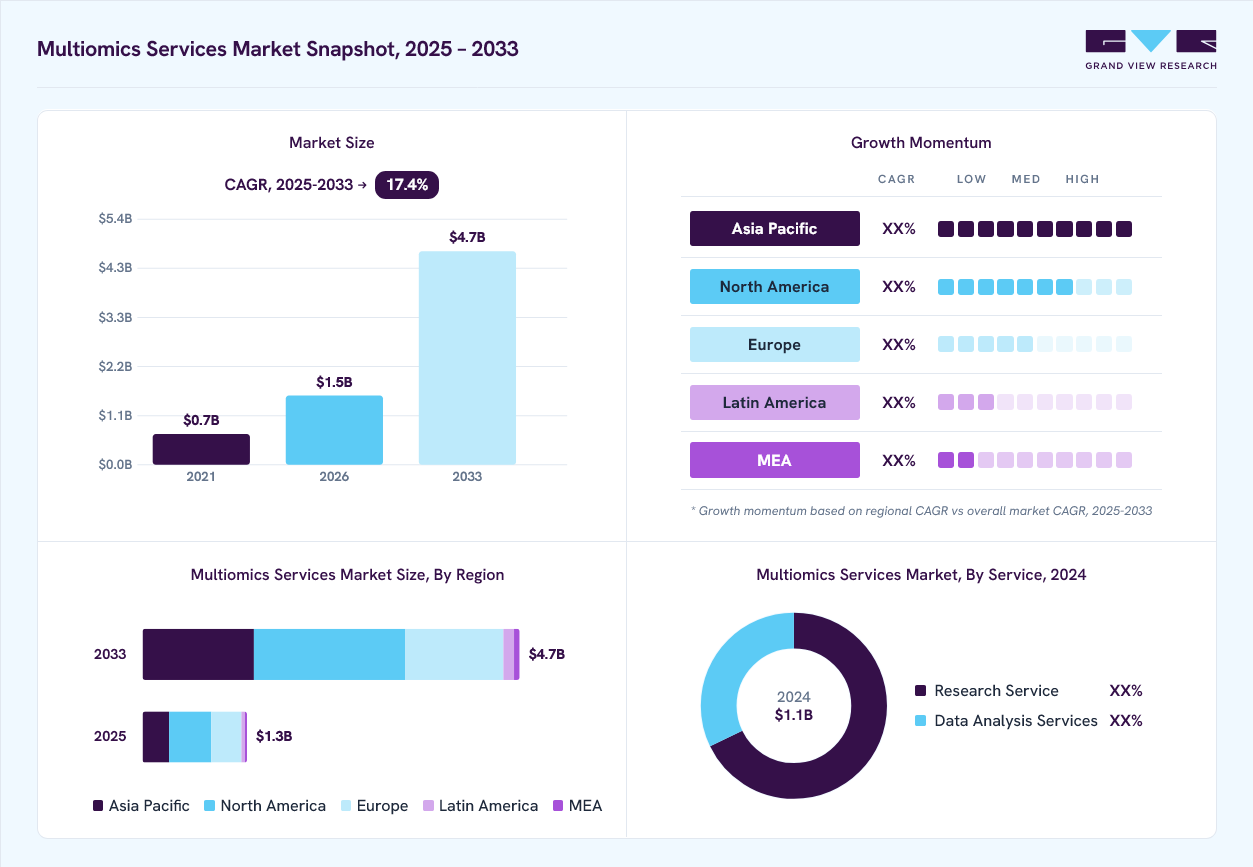
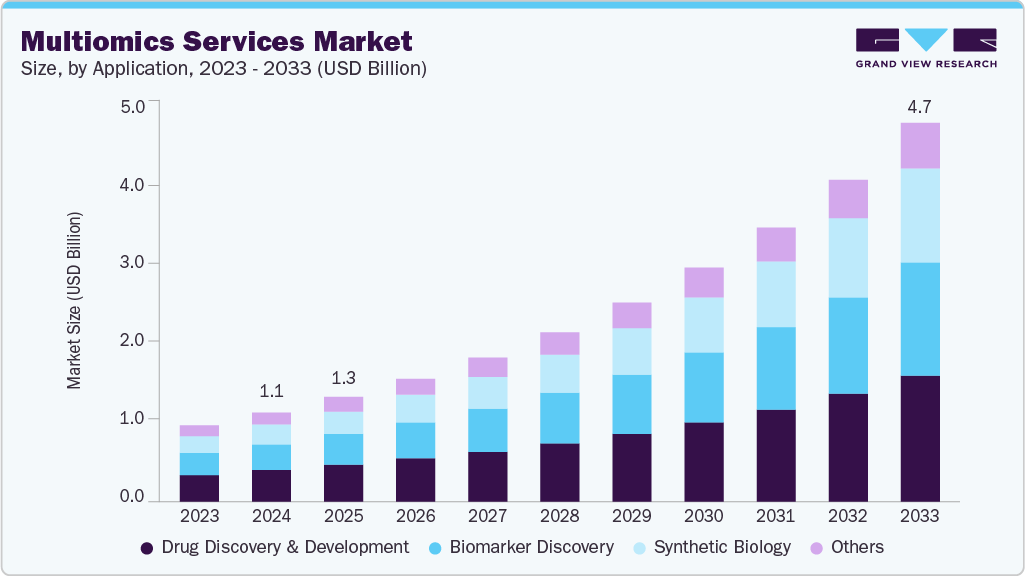
The global multiomics services market size was valued at USD 1.3 billion in 2025 and is projected to grow from USD 1.5 billion in 2026 to USD 4.7 billion by 2033, at a CAGR of 17.4% from 2026 to 2033. North America dominated the market, accounting for a revenue share of 40.3% in 2025. Increasing adoption of personalized medicine and advancements in high-tech technologies are driving market growth.
 Source: Grand View Research, IR Documents, Primary Interviews, Paid DatabasesTo learn more about this report,
 Download Free Sample Report
 Key Market Trends & Insights
- By service: Research service segment held the largest market share of 67.3% in 2025.
- By type: Bulk multiomics segment accounted for the largest revenue share of 76.7% in 2025.
- By application: Drug discovery & development dominated the market with a revenue share of 35.3% in 2025.
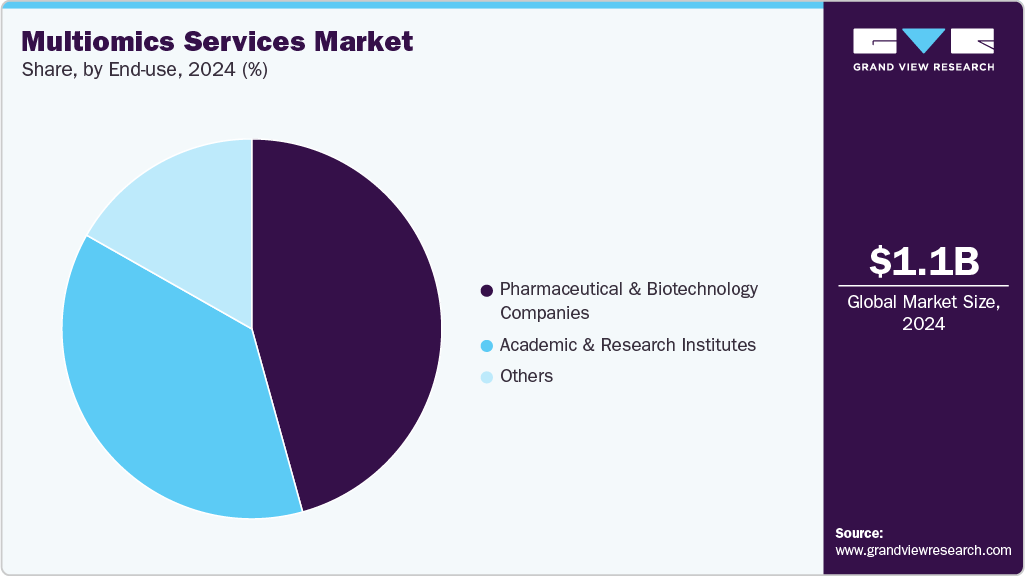
- By end use: Pharmaceutical & biotechnology companies segment led the market with the largest revenue share of 45.7%.
Regional Highlights
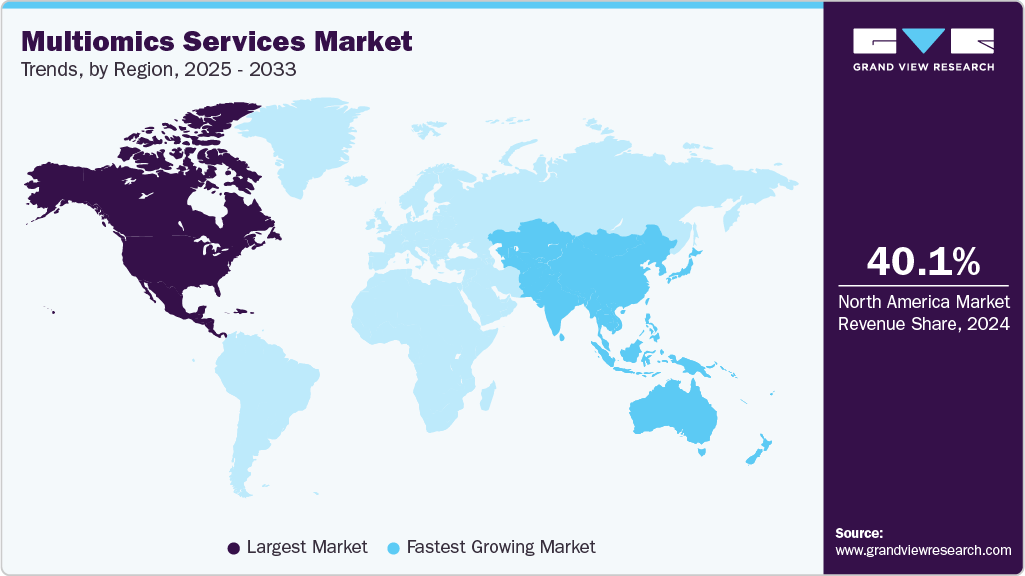
- Largest regional market: North America (40.3% revenue share, 2025)
- Fastest-growing regional market: Asia Pacific (highest CAGR, 2026-2033)
- By country: The U.S. held the largest market share in 2025.
Market Size & Forecast
- Market size in 2025: USD 1.3 Billion
- Estimated market size in 2026: USD 1.5 Billion
- Projected market size by 2033: USD 4.7 Billion
- CAGR (2026-2033): 17.4%
Three ways to get this report
Buy it, customize it, or ask a question.Ask an Analyst
A direct answer, usually in 1 working day
- AccessReport author, directly
- Reply timeWithin 1 working day
- No sales callDirect answer only
- FormatEmail reply
- CostFree, no cost
Get the Full Report
What the study covers
- FormatsPDF · Excel · Dashboard
- Timeline2026–2033 annual, 2025 base
- Coverage20+ countries, 5 regions
- Companies10+ key players profiled
Customize the Report
20% free customization
- IncludeCountries, segments, points
- TailorTo your product definition
- ExtendDeeper competitor detail
- OrA fully bespoke study
- Turnaround5–10 working days
Moreover, rising investments in genomics research and drug development are fueling demand for integrated multi-omics solutions.
 To learn more about this report, Download Free Sample Report
 Market Dynamics
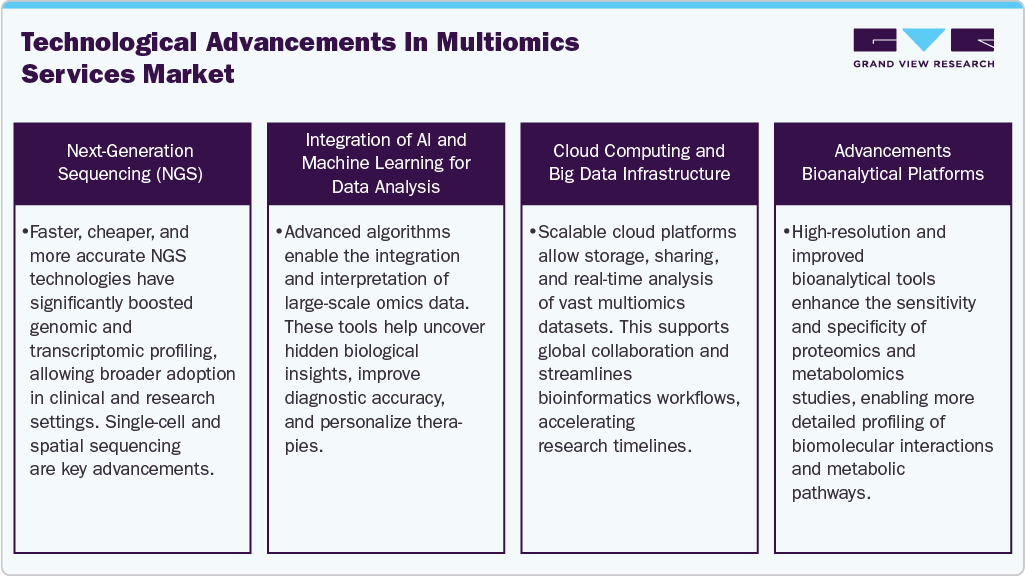
The multiomics services market is being shaped by increasing demand for precision medicine, advancements in high-throughput technologies, and expanding applications across drug discovery, biomarker identification, and disease research. Growing investments by pharmaceutical companies, biotechnology firms, and research organizations in integrated biological analysis are accelerating adoption, particularly in oncology, immunology, and rare disease research. At the same time, technological advancements in sequencing, single-cell analysis, artificial intelligence, and bioinformatics are improving data-processing capabilities and enabling more comprehensive biological insights, thereby supporting sustained market expansion.
The increasing complexity of biological systems has accelerated the adoption of multiomics analysis, which integrates genomics, transcriptomics, proteomics, metabolomics, and other omics disciplines to provide a comprehensive understanding of diseases and biological processes. Unlike traditional single-omics approaches, multiomics enables deeper insights into complex conditions such as cancer, neurological disorders, and autoimmune diseases by capturing interactions across multiple biological pathways. Recent advancements, including the development of multi-omics risk score systems in December 2024 and significant investments such as the USD 50.3 million NIH funding initiative in October 2023, have further supported innovation, data integration, and precision medicine research, thereby driving the growth of multiomics services.
The pharmaceutical and biotechnology sectors increasingly use multiomics services to accelerate drug discovery and development. Traditional drug development is time-consuming and costly, with high failure rates often caused by incomplete understanding of disease mechanisms and drug-target interactions. The multiomics approach integrates genomics, transcriptomics, proteomics, and metabolomics data. It provides comprehensive insights into disease biology, enabling the identification of novel drug targets, biomarkers for patient stratification, and mechanisms of drug resistance. For instance, in July 2024, Drug Discovery World (DDW) published an article highlighting the transformative potential of multi-omics in oncology. The article underscores the importance of adopting multi-omics methodologies to enhance drug discovery and precision medicine in oncology.
The high cost and technical complexity associated with multiomics analysis remain key restraints for market growth. Multiomics workflows require advanced sequencing platforms, high-performance computing infrastructure, specialized bioinformatics tools, and skilled professionals for data integration and interpretation. The generation of large, heterogeneous datasets from multiple omics layers increases analytical complexity, making adoption challenging for smaller research institutions, academic laboratories, and resource-limited organizations. In addition, standardization issues across platforms, data formats, and analytical pipelines can limit interoperability and reproducibility, slowing the widespread implementation of multiomics services.
Market Concentration & Characteristics
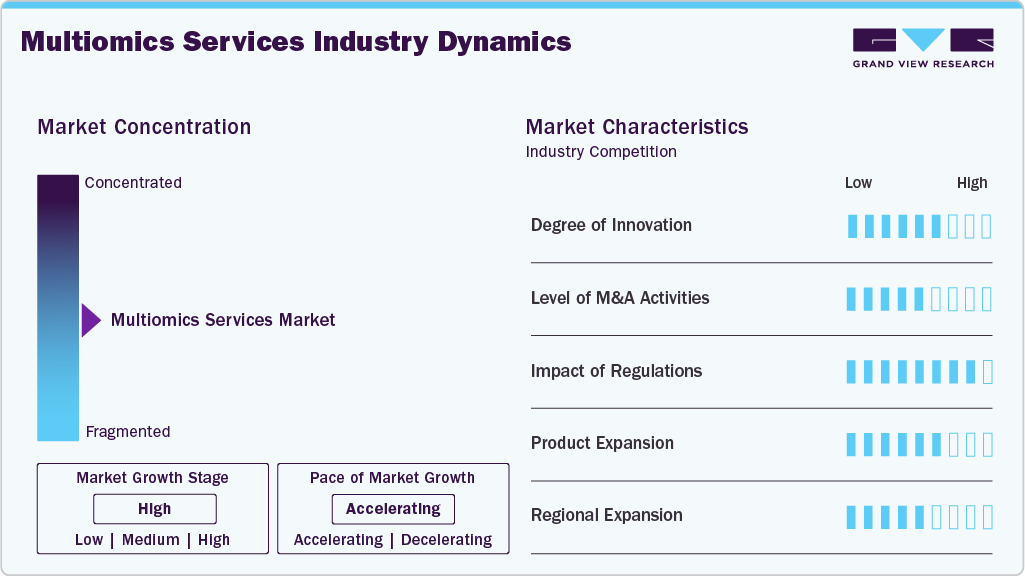
The multomics services industry exhibits high innovation, driven by rapid technological advancements such as next-generation sequencing (NGS), mass spectrometry, single-cell analysis, and AI-powered bioinformatics. Cutting-edge innovations like spatial omics, single-cell multiomics, and cloud-based data platforms enable deeper, more comprehensive insights into complex biological systems. Innovations are further accelerated by growing investments in precision medicine, which foster the development of scalable and customizable multomics solutions for drug discovery, diagnostics, and personalized healthcare applications.
The multomics services industry has witnessed a notable increase in merger and acquisition (M&A) activities over recent years, reflecting its dynamic growth and strategic importance in the life sciences sector. Companies actively pursue M&A to expand their technological capabilities, enhance service portfolios, and strengthen their competitive positioning in an increasingly complex market. Key drivers include the desire to integrate complementary omics platforms, acquire advanced bioinformatics expertise, and scale operations for large, multi-layered data analysis.
 To learn more about this report, Download Free Sample Report
 For instance, in January 2025, NVIDIA announced strategic partnerships with IQVIA, Illumina, Mayo Clinic, and Arc Institute to revolutionize genomics, drug discovery, and healthcare. The initiatives focus on developing AI agents to expedite clinical trials, AI models for drug discovery and digital pathology, and physical AI robots for surgery and patient monitoring.
Regulations are crucial in shaping the multomics services industry by ensuring data privacy, ethical standards, and clinical reliability. Compliance with laws like GDPR and HIPAA governs sensitive genomic and clinical data handling, requiring strict data protection and informed consent. Moreover, regulatory agencies like the FDA and EMA are developing frameworks to validate multomics-based diagnostics and therapeutics, driving companies to adopt rigorous quality controls and standardized protocols. While these regulations can introduce complexity and extend development timelines, they ultimately enhance the credibility and clinical adoption of multomics solutions, supporting the market’s growth within precision medicine and healthcare.
The multomics services industry is experiencing significant service expansion driven by growing demand for integrated and comprehensive biological insights. Service providers are broadening their offerings beyond traditional genomics to include transcriptomics, proteomics, metabolomics, and epigenomics, often bundled into unified platforms for seamless data integration. Advances in single-cell and spatial omics technologies are also being incorporated, enabling higher-resolution analyses. This diversification of services enables multomics providers to cater to a wider range of applications across drug discovery, clinical research, and personalized medicine, thereby accelerating market growth.
The multomics services industry is witnessing rapid regional expansion as companies strategically enter emerging markets to tap into growing demand for advanced biological research and precision medicine. While North America and Europe remain dominant due to established healthcare infrastructure and significant R&D investments, regions like Asia-Pacific, particularly China, Japan, and India, are experiencing accelerated growth driven by increased government funding, expanding biotech industries, and rising adoption of multomics technologies. Latin America and the Middle East are also emerging as new frontiers with expanding research capabilities and healthcare modernization efforts. To capitalize on these opportunities, service providers are establishing regional offices, forging local partnerships, and customizing offerings to meet specific market needs, fueling the global reach and diversification of the multomics services industry.
Understanding of Complex Biological Systems
The increasing complexity of biological systems necessitates a more integrated approach to research and diagnostics. Traditional single-omics methods, such as genomics or proteomics alone, often fail to capture the multifaceted nature of diseases and biological processes. Multiomics analysis, which combines data from genomics, transcriptomics, proteomics, metabolomics, and other omics disciplines, offers a holistic view of biological systems. This comprehensive approach is crucial in understanding complex diseases such as cancer, neurological disorders, and autoimmune conditions, where multiple biological pathways interact simultaneously. For instance, in December 2024, researchers introduced a multi-omics risk score system, enhancing predictive accuracy for complex human diseases. The collaborative effort aimed to improve disease prediction models by integrating diverse biological data sources.
 To learn more about this report, Download Free Sample Report
 In October 2023, the National Institutes of Health (NIH) awarded USD 50.3 million across the U.S. to support multi-omics research, advancing human health and disease studies through cutting-edge technologies and data science applications. The funding enabled collaborative efforts among institutions, enhanced data-sharing capabilities, and promoted innovative methodologies to accelerate biomedical discoveries and precision medicine initiatives nationwide, further driving demand for multiomics services.
Accelerated Drug Discovery and Development
The pharmaceutical and biotechnology sectors increasingly use multiomics services to accelerate drug discovery and development. Traditional drug development is time-consuming and costly, with high failure rates often caused by incomplete understanding of disease mechanisms and drug-target interactions. The multiomics approach integrates genomics, transcriptomics, proteomics, and metabolomics data. It provides comprehensive insights into disease biology, enabling the identification of novel drug targets, biomarkers for patient stratification, and mechanisms of drug resistance. For instance, in July 2024, Drug Discovery World (DDW) published an article highlighting the transformative potential of multi-omics in oncology. The article underscores the importance of adopting multi-omics methodologies to enhance drug discovery and precision medicine in oncology.
Moreover, regulatory agencies increasingly recognize the value of multi-omics data in supporting drug approvals and companion diagnostics, further driving pharmaceutical investment in these services. As precision medicine continues to evolve, integrating multiomics data into drug development is essential for creating safer, more effective therapies, which fuels sustained growth in demand for multiomics analysis services.
Service Insights
Based on service, the research service segment held the largest market share of 67.3% in 2025, driven by the increasing demand for advanced, integrated analytical tools that enable comprehensive biological data analysis. For instance, in December 2024, Ionpath launched the MIBIslide Blue, revolutionizing multiomics imaging with breakthrough slide technology, enabling enhanced spatial resolution and advanced analysis for scientific and clinical research applications. Academic institutions, pharmaceutical companies, and biotech firms increasingly invest in research services to stay competitive in this rapidly evolving field of multiomics services.
The data analysis services segment is expected to grow at the fastest CAGR over the forecast period, owing to the growing need for advanced data analysis capabilities. As researchers and healthcare providers increasingly rely on multiomics approaches to gain deeper insights into disease mechanisms, drug development, and personalized medicine, the demand for specialized services will continue to surge. For instance, in June 2021, BGI Americas partnered with Champions Oncology to offer mass spectrometry-based proteomics and multiomics data analysis solutions, enhancing precision oncology research and therapeutic development capabilities. These advancements are essential for uncovering new biomarkers, discovering novel drug targets, and facilitating personalized treatment strategies, further driving the market demand in the multiomics industry.
Type Insights
Based on type, the bulk multiomics segment accounted for the largest revenue share of 76.7% in 2025, driven by its well-established applications and the widespread adoption of high-throughput technologies across research and clinical settings. Bulk multiomics allows for the simultaneous analysis of multiple omic layers across large populations of cells or tissues, providing a comprehensive understanding of biological systems. The availability of robust, cost-effective tools and a mature analytical framework has made bulk multiomics an essential component of academic research and pharmaceutical development, contributing to its dominance in the market.
The single-cell multiomics segment is expected to grow at the fastest CAGR over the forecast period, driven by its ability to analyze complex biological systems at the resolution of individual cells. For instance, in April 2025, BioSkryb Genomics and Tecan introduced an advanced single-cell multiomics workflow that combines BioSkryb's 384-well ResolveOME Whole Genome and Transcriptome Single-Cell Core Kit with Tecan's Uno Single Cell Dispenser. This integrated solution efficiently prepares sequencing-ready genomic and transcriptomic libraries from hundreds to thousands of individual cells in under ten hours, eliminating the need for complex cell sorting methods like FACS. With continuous technological advancements, such as improved sequencing methods and data analytics platforms, the demand for single cell multiomics will continue to surge, establishing it as a key driver of growth in the broader multiomics services industry.
Application Insights
Based on application, drug discovery & development dominated the market with a revenue share of 35.3% in 2025, driven by the growing need for precise and efficient methods to accelerate the discovery of novel therapeutic compounds. Multiomics technologies, particularly when integrated with artificial intelligence and machine learning, enable pharmaceutical companies to comprehensively analyze complex biological data, revealing new insights into disease mechanisms, drug targets, and treatment responses. For instance, in May 2023, Google Cloud launched AI-powered solutions to accelerate drug discovery and precision medicine, aiming to enhance research and development processes while ensuring safety and efficiency globally. As the demand for more precise, targeted therapies grows, the Drug Discovery & Development sector will continue driving the demand within the multiomics services industry.
The synthetic biology segment is anticipated to grow at the fastest CAGR of 19.40% throughout the forecast period, fueled by the increasing applications of multiomics technologies in the design and engineering of biological systems. Multiomics approaches provide the detailed molecular insights needed to fine-tune synthetic organisms, optimize pathways, and ensure the stability of engineered biological systems. With increased investment and advancements in gene editing technologies, such as CRISPR, synthetic biology is set to revolutionize various sectors, driving its rapid growth during the forecast period.
End-use Insights
Based on end use, the pharmaceutical & biotechnology companies segment led the market with the largest revenue share of 45.7% and is also expected to grow with the fastest CAGR throughout the forecast period. This dominance is driven by the sector's extensive use of multiomics technologies to accelerate drug discovery, biomarker identification, and personalized medicine development. For instance, in April 2025, Signios Bio launched as an independent biotech company offering an AI-driven bioinformatics platform integrated with advanced multiomics technologies including genomics, proteomics, and spatial biology to accelerate precision medicine and drug discovery.
 To learn more about this report, Download Free Sample Report
 The academic and research institutes segment is anticipated to grow at the fastest CAGR of 16.75% over the forecast period, driven by the increasing adoption of multiomics technologies to advance fundamental biological research and translational studies. Moreover, growing funding support, government initiatives, and collaborations with industry partners enable academic and research organizations to expand their multiomics capabilities. For instance, in April 2025, Abu Dhabi announced the establishment of a Multiomics Research Institute in collaboration with GSK, aiming to advance precision oncology and personalized medicine. As cutting-edge platforms become more accessible and data analysis tools improve, this segment is expected to be crucial in fueling innovation and expanding the overall multiomics services industry.
Regional Insights
North America dominated the multiomics services market with the largest revenue share of 40.3% in 2025, due to its well-established healthcare infrastructure, significant investment in life sciences research, and presence of major biotechnology and pharmaceutical companies. The region benefits from strong government funding and support for advanced research initiatives, particularly in genomics and personalized medicine. For instance, in May 2025, Pluto Bio raised USD 3.6M to expand its AI-powered multi-omics analysis platform, aiming to enhance pharmaceutical research and development with advanced data-driven insights. The increasing prevalence of chronic diseases and growing focus on precision medicine further contribute to the region’s leadership in this market.
 To learn more about this report, Download Free Sample Report
 U.S Multiomics Services Market Trends
The multiomics services market in the U.S. held the largest share in the North America region in 2025, primarily due to its robust research ecosystem supported by substantial government funding. Moreover, numerous leading biotechnology and pharmaceutical companies, cutting-edge research institutions, and advanced technological infrastructure drive innovation and adoption of multiomics approaches. For instance, in May 2025, Psomagen was selected as a key service provider for the Chan Zuckerberg Initiative's Billion Cells Project, utilizing Ultima Genomics' UG-100 sequencer to accelerate genomic research in the U.S. The country also has a high prevalence of chronic and complex diseases, which fuels demand for personalized medicine and comprehensive biological analysis, further boosting the multiomics services industry.
Europe Multiomics Services Market Trends
The multiomics services market in Europe holds a significant share in global market, driven by strong government support for research and innovation, well-established healthcare systems, and extensive collaborations between academic institutions and industry. The region’s emphasis on precision medicine and increasing investment in large-scale genomics and multiomics projects contribute to market growth. For instance, in April 2024, ARK Invest Europe launched its Innovation Genomics and AI ETFs, focusing on advancing investments in genomic technologies and artificial intelligence to drive future innovation across multiomics services industry.
The UK multiomics services market is experiencing strong growth, driven by substantial government initiatives such as the Genome UK program, which aims to enhance the integration of genomic and multiomics data into healthcare. Moreover, the UK benefits from a robust network of leading academic and research institutions collaborating closely with industry partners, fostering innovation and driving investment in multiomics technologies. For instance, in January 2025, Quantum-Si showcased advancements in multiomics at the Festival of Genomics in the UK, demonstrating innovations in next-generation sequencing and data analysis for precision medicine applications. This strong research infrastructure and supportive policies position the UK as a key player in advancing multiomics applications.
The multiomics services market in Germany is experiencing significant growth, driven by strong government funding, world-class research institutions, and a collaborative scientific environment. Germany's focus on personalized medicine and systems biology, supported by substantial public investment, fosters innovation and the development of advanced multiomics platforms, positioning the country as a leading hub for European multiomics services.
Asia Pacific Multiomics Services Market Trends
The multiomics services market in Asia-Pacific is expected to grow at the fastest CAGR of 19.62% during the forecast period, driven by increasing investments in life sciences research, rapid advancements in biotechnology infrastructure, and the growing adoption of precision medicine across countries. Rising government initiatives to support genomic and multiomics research and expanding pharmaceutical and biotech industries are fueling demand for comprehensive multiomics services. For instance, in July 2024, MGI Tech launched the DNBSEQ-G400RS and FluorXpert in the APAC region at Medlab Asia & Asia Health 2024, introducing advanced genomic technologies to enhance diagnostics and healthcare research.
The China multiomics services market has become one of the largest markets in the Asia-Pacific region, driven by substantial government investments, a vast and diverse population, and leading genomic research institutions. For instance, in November 2024, researchers from the First Affiliated Hospital of Army Medical University and Wenzhou Medical University published a study in Science Translational Medicine that utilized integrative multiomics analysis to identify distinct molecular subtypes of non-alcoholic fatty liver disease (NAFLD) in a Chinese population. These advancements highlight China’s growing influence in the multiomics industry, positioning it for rapid growth and reinforcing its critical role in driving precision medicine and healthcare innovation.
The multiomics services market in Japan is experiencing rapid growth, driven by advancements in biotechnology, increasing government support, and a strong focus on precision medicine. The country’s robust healthcare infrastructure and investment in cutting-edge research have fostered innovation in multiomics technologies, enabling deeper insights into complex diseases. Collaborative efforts between academic institutions, healthcare providers, and industry players are accelerating the development and application of multiomics approaches, positioning Japan as a key player in the Asia-Pacific region.
Middle East & Africa Multiomics Services Market Trends
The multiomics services market in Middle East and Africa are witnessing growing demand for multiomics services due to increasing investments in healthcare infrastructure, rising awareness of precision medicine, and expanding collaborations between local research institutions and global biotechnology companies. For instance, in April 2025, Singleron Biotechnologies and IHLAD launched a joint venture in the Middle East, aiming to advance precision medicine through innovative technologies and expand multiomics services capabilities in the region.
The Kuwait multiomics services market is projected to grow steadily, supported by government initiatives to enhance healthcare capabilities and increase investment in genomic research. Growing awareness of precision medicine and the rising burden of chronic and genetic diseases in the population further drive demand for advanced multiomics services technologies.
Key Multiomics Services Company Insights
The multiomics services industry is rapidly expanding, driven by technological advancements and a growing need for integrated insights across genomics, proteomics, metabolomics, and other omic disciplines. Several established players are leading this space, offering comprehensive service portfolios that support researchers and clinicians in understanding complex biological systems better and accelerating precision medicine.
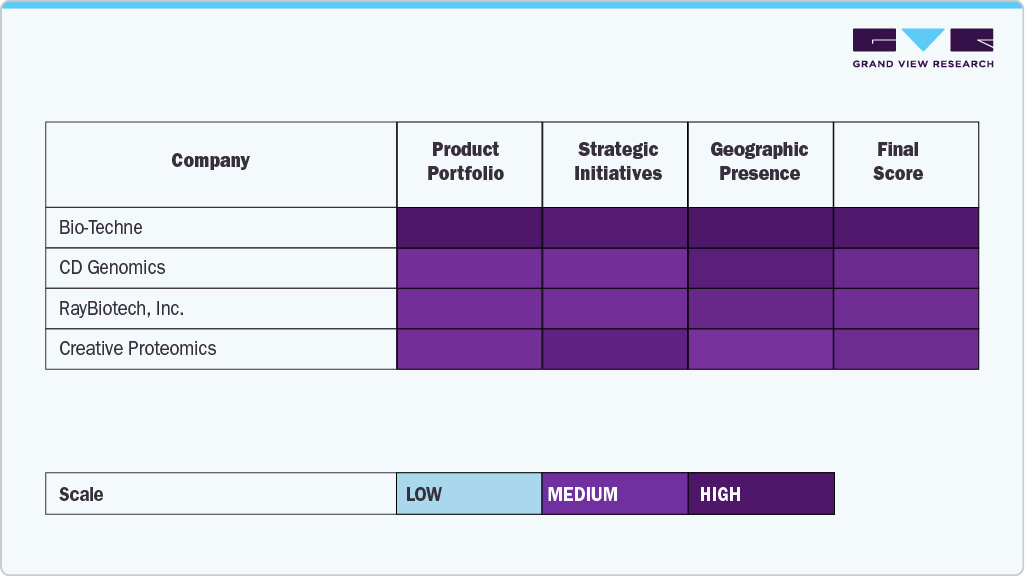
Key companies such as Bio-Techne, CD Genomics, RayBiotech, Inc., Creative Proteomics, Psomagen, Source BioScience, Persistent Systems, Metware Biotechnology Inc., and Dalton Bioanalytics Inc. have established strong footholds in the multiomics services industry through a combination of cutting-edge technological solutions, strong product offerings, and strategic collaborations.
CD Genomics and Creative Proteomics have earned recognition for their wide multiomics services, including DNA sequencing, RNA sequencing, and metabolite profiling. These companies focus on providing high-quality, integrated omics solutions that empower clients to gain deeper insights into gene-environmental interactions, disease mechanisms, and therapeutic targets. Combining genomics, transcriptomics, and proteomics enables a more holistic approach to understanding biological complexity.
Companies such as Persistent Systems and Metware Biotechnology Inc. are establishing significant positions in the market by focusing on data analytics and bioinformatics solutions, which are crucial for integrating and interpreting multiomics data. Their advanced bioinformatics platforms enable researchers to extract meaningful insights from large, complex datasets, helping to bridge the gap between raw data and actionable biological knowledge.
 To learn more about this report, Download Free Sample Report
 As the market grows, these companies invest in technological innovation, increase their capabilities, and expand their service portfolios. With continued investments in R&D, facility expansions, and strategic partnerships, these organizations are well-positioned to capitalize on the increasing demand for integrated multiomics solutions in drug development, clinical diagnostics, and precision medicine.
The convergence of next-generation sequencing, mass spectrometry, and advanced bioinformatics is reshaping the multiomics services industry. Strategic mergers, acquisitions, and collaborations fuel competition, with several players focusing on offering end-to-end services to meet better the growing needs of academic, biotechnology, and pharmaceutical industries. The market’s future will be heavily influenced by the increasing emphasis on data-driven, personalized healthcare and the ability to manage large-scale, multi-dimensional datasets. By continuing to integrate scientific advancements with practical, real-world applications, these companies are positioned to remain at the forefront of the multiomics revolution, driving transformative changes in biology and medicine.
Key Multiomics Services Companies
The following key companies have been profiled for this study on the multiomics services market.
-
Sapient Bioanalytics, LLC.
-
Bio-Techne
-
CD Genomics
-
RayBiotech, Inc.
-
Creative Proteomics
-
Psomagen
-
Source BioScience
-
Persistent Systems
-
Metware Biotechnology Inc.
-
Dalton Bioanalytics Inc.
Competitive Benchmarking
Category
Operating Strategies
Competitive Edge
Weakness
Established Players (Bio-Techne, Source BioScience, Psomagen,etc)
Expand multiomics capabilities through integrated genomics, transcriptomics, proteomics, and bioinformatics platforms while strengthening partnerships with pharmaceutical companies, academic institutions, and research organizations.
Strong technical infrastructure, broad scientific expertise, established customer networks, and ability to provide scalable multiomics workflows and data analysis solutions.
Higher operational complexity, significant investment requirements for advanced platforms, and challenges associated with managing large-scale multiomics datasets.
Emerging Players (Sapient Bioanalytics, LLC., CD Genomics, etc)
Focus on specialized multiomics solutions, customized research projects, niche omics applications, and cost-effective service offerings across biomarker discovery, drug discovery, and biological research.
High flexibility, specialized expertise in specific omics technologies, customized service capabilities, and ability to cater to diverse research requirements.
Limited global presence, lower scalability compared with larger providers, and dependence on project-based demand from research institutions and biotechnology companies.
Recent Developments
- In May 2026, Strand Life Sciences launched South Asia’s first Olink Explore HT proteomics service, enabling large-scale multi-omics discovery and strengthening regional capabilities in advanced proteomics research and integrated analysis.
-
In April 2025, Leica Biosystems and Bio-Techne expanded their partnership to enable protease-free workflows for automated spatial multiomics on the BOND RX instrument, launched across the United States and Europe. This collaboration enhances workflow efficiency, preserves tissue integrity, and supports advanced biomarker discovery, facilitating deeper insights into tissue biology for research and clinical applications.
-
In April 2025, Source BioScience acquired Cambridge Clinical Laboratories to expand its diagnostic capabilities and enhance service offerings in the U.K., strengthening its position in the healthcare sector. This strategic acquisition broadens their testing portfolio, improves turnaround times, and supports growing demand for specialized diagnostic services, ultimately advancing patient care and clinical research collaborations across the region.
Multiomics Services Market Report Scope
Report Attribute
Details
Market size in 2025
USD 1.3 billion
Estimated market size in 2026
USD 1.5 billion
Projected market size by 2033
USD 4.7 billion
Growth rate
CAGR of 17.4% from 2026 to 2033
Base year for estimation
2025
Historical data
2021 - 2024
Forecast period
2026 - 2033
Quantitative units
Revenue in USD million/billion and CAGR from 2026 to 2033
Report coverage
Revenue forecast, company ranking, competitive landscape, growth factors, and trends
Segments covered
Service, type, application, end-use, region
Regional scope
North America; Europe; Asia Pacific; Latin America; MEA
Country scope
U.S.; Canada; UK; Germany; France; Spain; Italy; Sweden; Norway; Denmark; Japan; China; India; South Korea; Australia; Thailand; Brazil; Mexico; Argentina; South Africa; UAE; Saudi Arabia; Kuwait
Key companies profiled
Sapient Bioanalytics, LLC.; Bio-Techne; CD Genomics; RayBiotech, Inc.; Creative Proteomics; Psomagen; Source BioScience; Persistent Systems; Metware Biotechnology Inc.; Dalton Bioanalytics Inc.
Customization scope
Free report customization (equivalent up to 8 analysts' working days) with purchase. Addition or alteration to country, regional & segment scope.
Pricing and purchase options
Avail customized purchase options to meet your exact research needs. Explore purchase options
Global Multiomics Services Market Report Segmentation
This report forecasts revenue growth and provides an analysis of the latest trends in each of the sub-segments from 2021 to 2033. For the purpose of this report, Grand View Research has segmented the global multiomics services market report based on the service, type, application, end-use, and region.
-
Service Outlook (Revenue, USD Million, 2021 - 2033)
-
Research Services
-
Data Analysis Services
-
-
Type Outlook (Revenue, USD Million, 2021 - 2033)
-
Single-cell Multiomics
-
Bulk Multiomics
-
-
Application Outlook (Revenue, USD Million, 2021 - 2033)
-
Biomarker Discovery
-
Drug Discovery & Development
-
Synthetic Biology
-
Others
-
-
End-use Outlook (Revenue, USD Million, 2021 - 2033)
-
Academic & Research Institutes
-
Pharmaceutical and Biotechnology Companies
-
Others
-
-
Regional Outlook (Revenue, USD Million, 2021 - 2033)
-
North America
-
U.S.
-
Canada
-
Mexico
-
-
Europe
-
UK
-
Germany
-
France
-
Italy
-
Spain
-
Denmark
-
Sweden
-
Norway
-
-
Asia Pacific
-
Japan
-
China
-
India
-
South Korea
-
Australia
-
Thailand
-
-
Latin America
-
Brazil
-
Argentina
-
-
Middle East & Africa
-
South Africa
-
Saudi Arabia
-
UAE
-
Kuwait
-
-
Research Methodology
The multiomics services market figures in this report are based on a proven research process that combines executive interviews with secondary research from proprietary databases, company filings, and recognized regulatory and institutional sources. Market size is built through value-chain sizing - reconciling supply-side and demand-side estimates - and triangulated with bottom-up and top-down approaches. Every estimate passes multiple levels of expert validation before publication, with each multiomics services segment quantified using the revenue-capture definitions in the table below.
Segment Definition
Segment - Service
Revenue capture definition
Research Services
Revenue is generated from multiomics research services that involve experimental data generation using integrated omics technologies, including genomics, transcriptomics, proteomics, metabolomics, and other molecular profiling approaches to support biological research, disease understanding, and discovery applications.
Data Analysis Services
Revenue is generated from bioinformatics and computational services that process, integrate, interpret, and visualize multiomics datasets using advanced analytics, artificial intelligence, machine learning, and statistical approaches to derive biological insights and support research decision-making.
Segment - Type
Revenue capture definition
Single-cell Multiomics
Revenue is generated from services that analyze multiple molecular layers at the single-cell level, integrating techniques such as single-cell genomics, transcriptomics, epigenomics, proteomics, and other modalities to characterize cellular heterogeneity and biological mechanisms with high resolution.
Bulk Multiomics
Revenue is generated from services that perform integrated analysis of omics datasets derived from bulk biological samples, enabling comprehensive profiling of genetic, molecular, and biochemical changes across tissues, populations, or disease states.
Segment - Application
Revenue capture definition
Biomarker Discovery
Revenue is generated from multiomics services used to identify, validate, and characterize molecular biomarkers for disease diagnosis, prognosis, patient stratification, treatment response monitoring, and precision medicine applications.
Drug Discovery & Development
Revenue is generated from multiomics services supporting therapeutic research by enabling target identification, pathway analysis, drug response evaluation, mechanism-of-action studies, and biomarker development throughout the drug discovery and development process.
Synthetic Biology
Revenue is generated from multiomics services applied to the design, engineering, and optimization of biological systems by analyzing molecular interactions, metabolic pathways, and genetic modifications to improve biological production and functional outcomes.
Others
Revenue is generated from multiomics services utilized in applications beyond major segments, including agriculture, environmental research, food science, animal research, and other emerging biological studies.
Segment - End Use
Revenue capture definition
Academic & Research Institutes
Revenue is generated from multiomics services provided to universities, government research organizations, and academic laboratories for basic research, disease studies, biomarker discovery, and technology development initiatives.
Pharmaceutical and Biotechnology Companies
Revenue is generated from multiomics services provided to pharmaceutical and biotechnology companies for drug discovery, clinical research, target validation, biomarker identification, and development of precision medicine solutions.
Others
Revenue is generated from multiomics services adopted by other end users, including contract research organizations, diagnostic companies, healthcare institutions, and industrial research organizations for specialized biological analysis and discovery applications.
Estimation Model
Section
Methodology
Description
Top‑Down
Company Revenue Analysis
Aggregated revenues of key multiomics service providers and technology vendors across service categories such as research services, data analysis, single‑cell multiomics, bulk multiomics, and applications like biomarker discovery and drug discovery. Estimates were validated through company reports, industry databases, publications, and primary interviews to determine market size.
Bottom‑Up
Technology Penetration Assessment
Derived the global market size based on expenditure and adoption of multiomics services across academic institutions, pharmaceutical and biotechnology companies, and research organizations. Market distribution across regions and countries was assessed based on research funding, biotechnology ecosystem maturity, pharmaceutical R&D activity, omics technology adoption, and availability of advanced analytical infrastructure.
Primary Research
Conducting Interviews with Industry Experts
Conducted interviews with multiomics service providers, pharmaceutical and biotechnology companies, academic and research organizations, and technology experts to validate market estimates, pricing structures, technology adoption trends, service demand, and competitive landscape.
Validation
Data Triangulation & Validation Model
Market estimates were validated through triangulation of secondary research, primary interviews, company‑level revenue analysis, technology adoption assessment, and end‑user demand evaluation to ensure accuracy and consistency across service segments, applications, and geographical markets.
Forecasting
Forecasting & CAGR Modeling
Forecasts were developed using historical market trends, advancements in sequencing and proteomics technologies, growth in precision medicine research, pharmaceutical R&D investments, expansion of single‑cell analysis applications, and increasing adoption of integrated multiomics approaches.
Delivered Customizations
This report has been delivered with the following In-depth customizations
Client Request
Customization Delivered
Value Adds
Multiomics Technology Adoption & Platform Analysis
Analyzed adoption of key multiomics technologies, including single-cell multiomics, bulk multiomics, spatial omics, genomics, transcriptomics, proteomics, metabolomics, and AI-enabled data integration platforms across research and commercial applications.
Helps clients identify emerging technology trends, evaluate platform adoption patterns, and align investments with high-growth multiomics capabilities.
Biomarker Discovery & Precision Medicine Opportunity Assessment
Evaluated the role of multiomics approaches in biomarker identification, disease profiling, treatment response prediction, and precision medicine initiatives across oncology, rare diseases, and autoimmune disorders.
Enables clients to identify emerging clinical research opportunities and develop solutions aligned with precision healthcare trends.
Bioinformatics & Data Analytics Capability Assessment
Evaluated computational capabilities of service providers, including AI/ML-based analysis, data integration platforms, cloud-based workflows, and biological interpretation solutions for multiomics datasets.
Supports clients in understanding competitive differentiation, identifying technology gaps, and investing in advanced data analytics capabilities.
Frequently Asked Questions About This Report
Some key players operating in the multiomics services market include Sapient Bioanalytics, LLC.; Bio-Techne; CD Genomics; RayBiotech, Inc.; Creative Proteomics; Psomagen; Source BioScience; Persistent Systems; Metware Biotechnology Inc.; and Dalton Bioanalytics Inc.
The market for multiomics services has grown significantly due to increasing demand for precision medicine and advanced biomarker discovery. Technological advancements in genomics, transcriptomics, and proteomics have enhanced data integration and analysis capabilities. Rising R&D investments by pharma and biotech companies further support market expansion. Additionally, growing collaborations between academic institutions and industry players are accelerating innovation.
By service, research service led the multiomics services market with a 67.3% share in 2025.
By type, bulk multiomics led the multiomics services market with a 76.7% share in 2025.
By end use, pharmaceutical & biotechnology companies led the multiomics services market with a 45.7% share in 2025.
North America dominated with a 40.3% revenue share in 2025.
The global multiomics services market size was valued at USD 1.3 billion in 2025 and is estimated at USD 1.5 billion for 2026.
The global multiomics services market is expected to grow at a CAGR of 17.4% from 2026 to 2033, reaching USD 4.7 billion by 2033.
By application, drug discovery & development led the multiomics services market with a 35.3% share in 2025, driven by the growing need for integrated data to accelerate target identification and streamline R&D.
About the Author(s)
Biotechnology Research Team
Healthcare · BiotechnologyThis report was authored by the biotechnology research team at Grand View Research - comprising two research analysts, one senior research analyst, and one industry expert - with specialized expertise in the biotechnology segment of the healthcare industry. All findings are based on proprietary healthcare databases, executive interviews, and regulatory analysis, subject to internal peer review prior to publication.
Last Updated:
Speak to Analyst

Customize this report to your needs - add regions, segments, or data points, with 20% free customization.
Or view our licence options:


ISO 9001:2015 & 27001:2022 Certified
We are GDPR and CCPA compliant! Your transaction & personal information is safe and secure. For more details, please read our privacy policy.


