
- Home
- »
- Plastics, Polymers & Resins
- »
-
Nanoplastics Market Size, Share & Trends Report 2026-2033GVR Report cover

Nanoplastics Market (2026 - 2033)
Size, Share & Trends Analysis Report Market By Polymer Type (Polystyrene (PS), Polyethylene terephthalate (PET), Polyethylene (PE), Polypropylene (PP)), By Form (Nanospheres, Nanofibers, Irregular fragments), By Region, And Segment Forecasts
Nanoplastics Market Summary
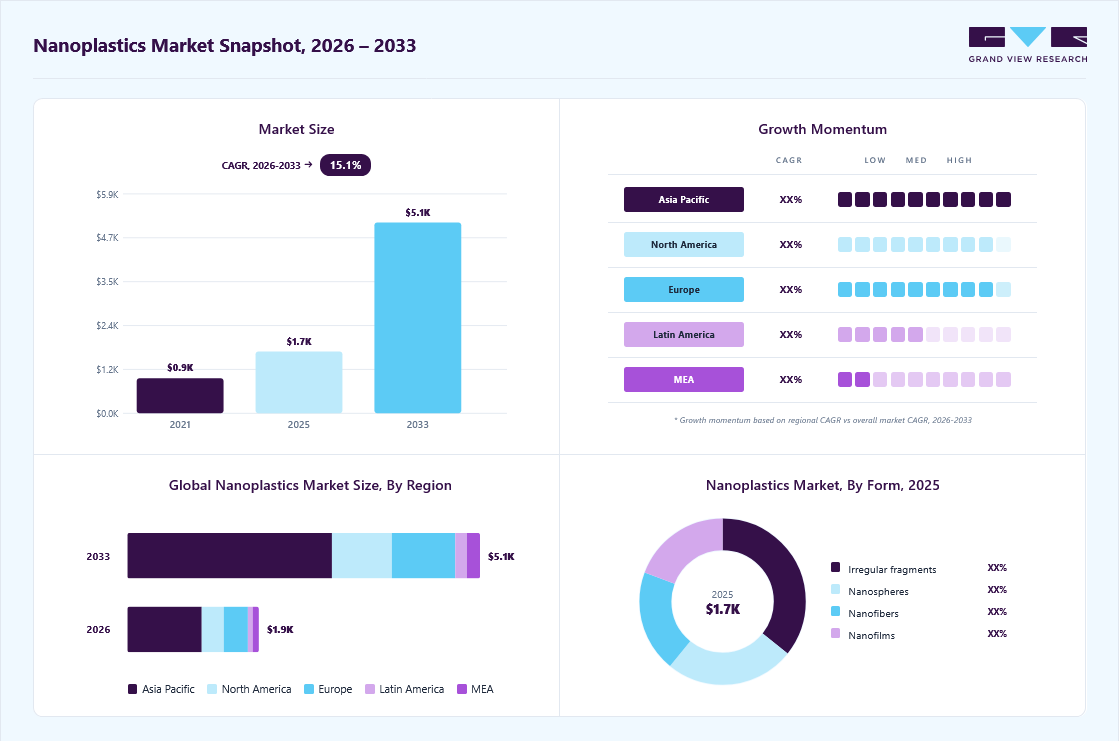
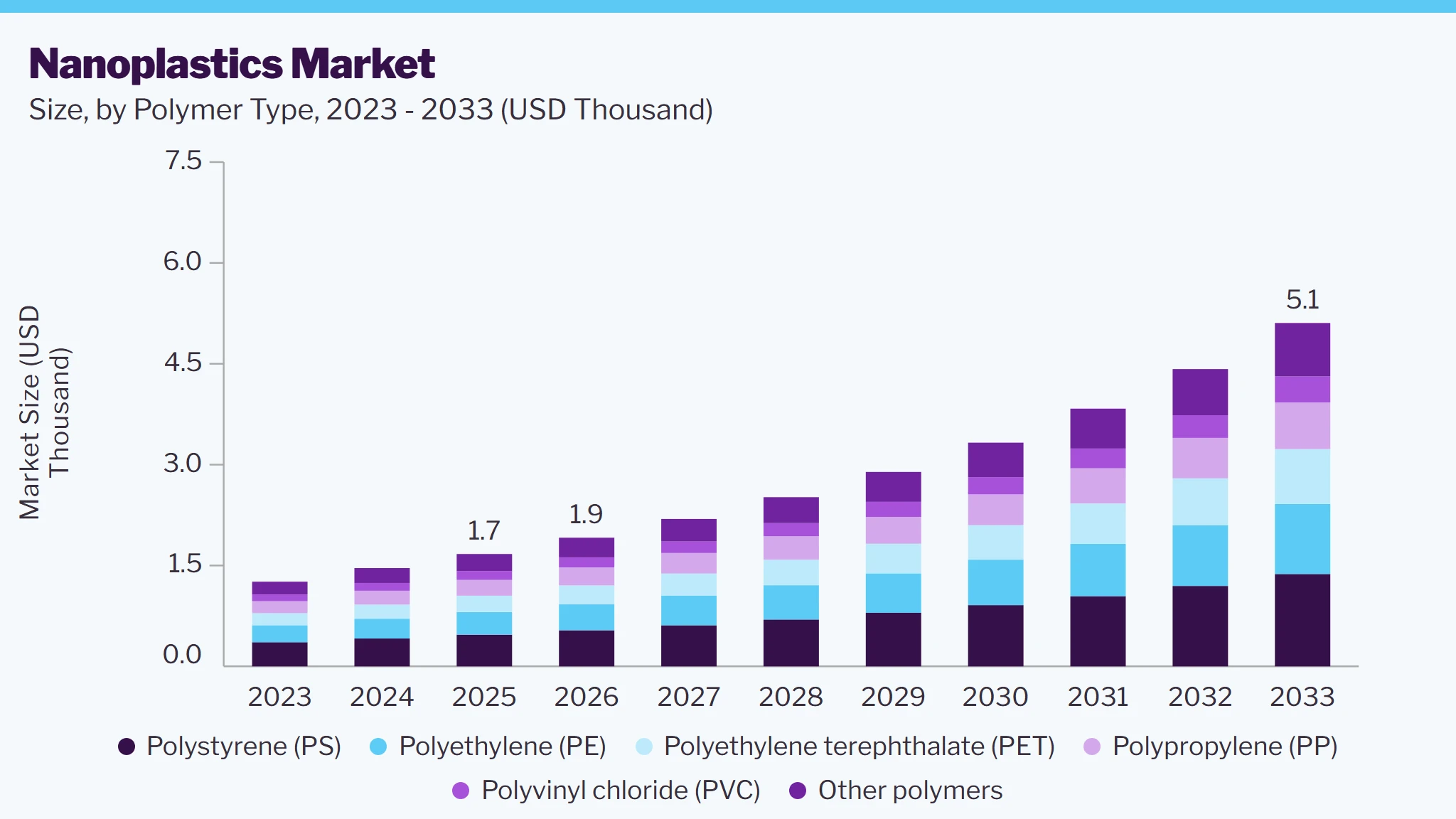
The global nanoplastics market size was valued at USD 1.7 thousand in 2025 and is projected to grow from USD 1.9 thousand in 2026 to USD 5.1 thousand by 2033, at a CAGR of 15.1% from 2026 to 2033. Asia Pacific dominated the market, accounting for the revenue share of 56.1% in 2025. The market is driven by growing demand for advanced analytical technologies to detect, quantify, and characterize nanoplastic particles in environmental and biological samples.
 Source: Grand View Research, IR Documents, Primary Interviews, Paid DatabasesTo learn more about this report,
 Download Free Sample Report
 Key Market Trends & Insights
- By polymer type: Polystyrene (PS) segment dominated the market with the largest revenue share of 28.2% in 2025.
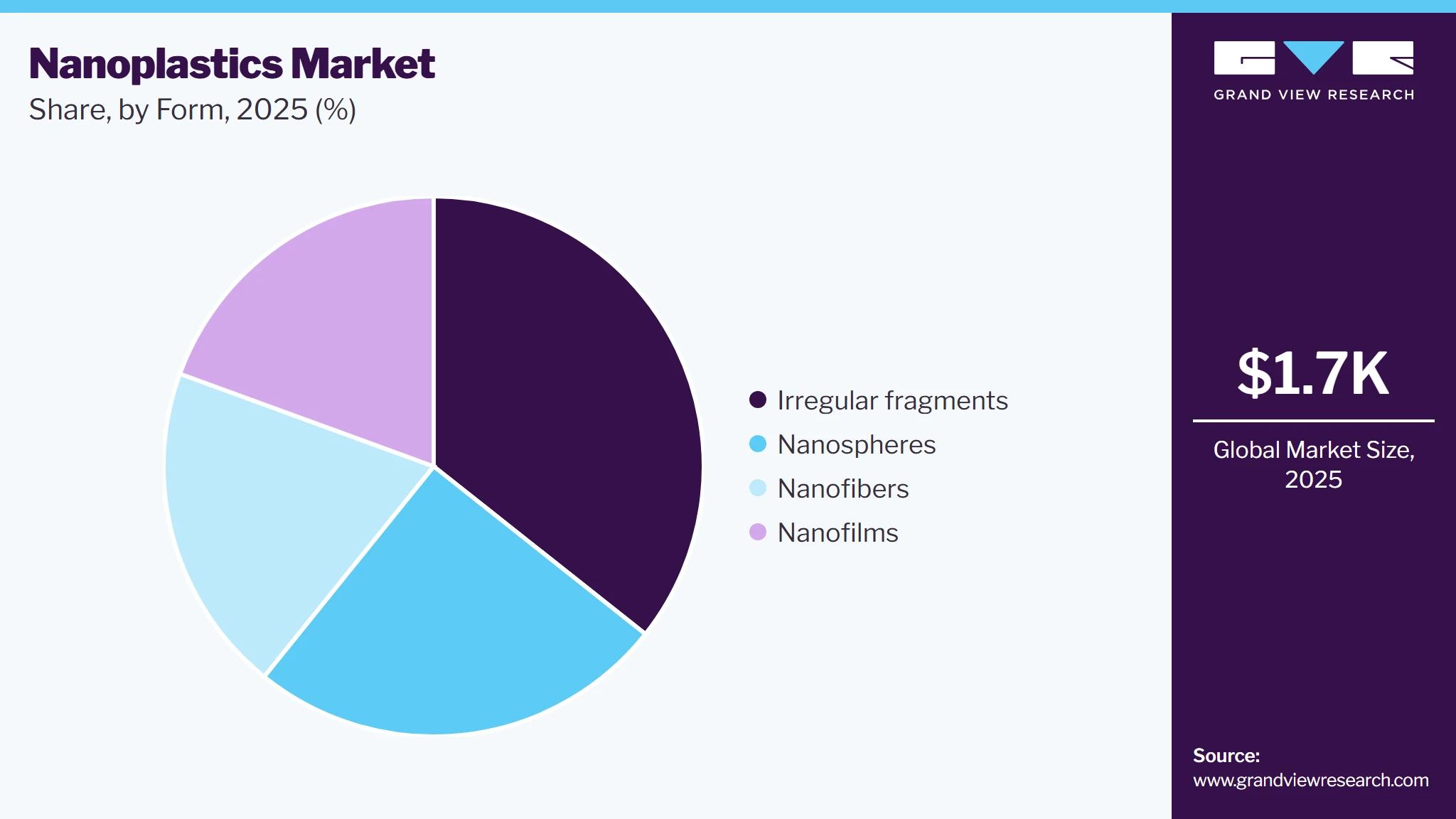
- By form: Nanospheres segment led the market with the largest revenue share of 25.1% in 2025.
Regional Highlights
- Largest regional market: Asia Pacific (56.1% revenue share, 2025)
- By country: China dominated Asia Pacific with the largest revenue share in 2025
Market Size & Forecast
- Market size in 2025: USD 1.7 Thousand
- Estimated market size in 2026: USD 1.9 Thousand
- Projected market size by 2033: USD 5.1 Thousand
- CAGR (2026-2033): 15.1%
Three ways to get this report
Buy it, customize it, or ask a question.Ask an Analyst
Analyst response in 1 business day
- AccessReport author, directly
- Reply timeWithin 1 working day
- No sales callDirect answer only
- FormatEmail reply
- CostFree, no cost
Get the Full Report
What the study covers
- FormatsPDF · Excel · Dashboard
- Timeline2026–2033 annual, 2025 base
- Coverage20+ countries, 5 regions
- Companies10+ key players profiled
Customize the Report
20% free customization
- IncludeCountries, segments, points
- TailorTo your product definition
- ExtendDeeper competitor detail
- OrA fully bespoke study
- Turnaround5–10 working days
Growing concerns about water quality, food safety, and potential health effects are driving investments in monitoring and testing solutions. Expanding regulatory attention toward plastic pollution and rising research activities in environmental science are further encouraging the development of detection, filtration, and remediation technologies.
 To learn more about this report, Download Free Sample Report
 The market is witnessing a shift toward analytical techniques capable of identifying particles at submicron and nanoscale levels. Research is focusing on advanced microscopy, spectroscopy, mass spectrometry, and aerosol-based measurement methods. These technologies aim to improve polymer identification, particle sizing, and quantification in complex water, soil, food, and biological samples. Standardized analytical protocols and reference materials are also gaining importance as laboratories seek reproducible results for environmental monitoring and toxicological assessment.
Market Dynamics
Growing concerns about plastic contamination in drinking water, food products, and aquatic ecosystems are increasing the need for nanoplastics testing and environmental monitoring. The potential ingestion of nanoplastic particles through contaminated food and water has intensified research into exposure pathways, particle characteristics, and associated health implications. These concerns are encouraging government agencies, research institutions, and food safety laboratories to strengthen analytical capabilities and assess contamination across different environmental and consumer product samples.
In India, FSSAI’s research initiatives focused on developing standardized methods for detecting microplastics and nanoplastics in food matrices are supporting the advancement of analytical capabilities. These efforts are creating demand for high-sensitivity laboratory instruments, sample preparation systems, polymer identification technologies, and specialized testing services. As research expands, laboratories require reproducible measurement protocols to generate comparable results, evaluate contamination levels, and support evidence-based decisions regarding food safety and environmental pollution management.
The market faces constraints from inconsistent analytical methods, limited certified reference materials, and difficulties in separating particles from complex environmental samples. Differences in sampling, preparation, detection limits, and polymer identification can make results difficult to compare across laboratories. Uncertainty regarding exposure levels and human health effects also complicates regulatory decisions and commercial investment. These limitations can delay technology validation, procurement decisions, and the establishment of routine testing requirements, restricting near-term demand beyond specialized research and monitoring applications.
The lack of reliable, scalable methods for detecting and removing nanoplastics creates opportunities for technology developers and environmental service providers. Companies can develop integrated solutions combining sample concentration, particle separation, polymer identification, and quantitative analysis. Water treatment applications offer additional opportunities to evaluate membrane filtration, adsorption, and other separation technologies for nanoscale particles. Commercial adoption will depend on removal efficiency, operating costs, treatment capacity, and the ability to distinguish plastic particles from naturally occurring materials and other contaminants.
Market Concentration & Characteristics
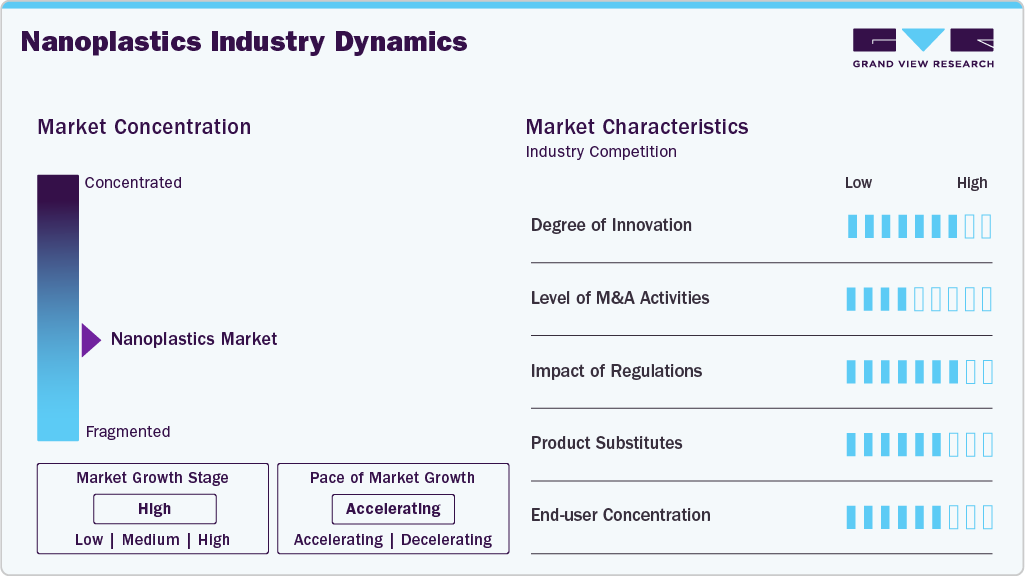
The market growth stage is medium, and the pace of growth is accelerating. The market exhibits fragmentation, with key players dominating the industry landscape. Major companies such as Lab261, Polysciences, Inc., Bangs Laboratories, Inc., microParticles GmbH, Magsphere, Inc., and others play a significant role in shaping the market dynamics. These leading players often drive innovation in the market by introducing new products, technologies, and materials to meet the industry's evolving demands.
 To learn more about this report, Download Free Sample Report
 Innovation in the nanoplastics industry is concentrated on improving detection sensitivity, polymer identification, and measurement reproducibility. Research is advancing microscopy, spectroscopy, mass spectrometry, and particle separation techniques to quantify nanoplastics in complex environmental and biological samples. According to the U.S. National Institute of Standards and Technology, existing measurement methods often lack the sensitivity needed to detect nanoplastics, while suitable reference materials remain scarce. These gaps are driving development of standardized test particles, validated analytical protocols, and integrated measurement systems.
Regulatory developments are strengthening the need for reliable monitoring of plastic pollution, although dedicated nanoplastic-specific requirements remain limited. In the European Union, Regulation (EU) 2023/2055 restricts the use of intentionally added synthetic polymer microparticles, with implementation periods varying by application. Separately, the European Commission established a methodology for measuring microplastics in drinking water in 2024, covering particles larger than 20 micrometers rather than nanoscale particles. These measures support analytical method development and compliance monitoring, while future regulatory expansion will depend on improved detection capabilities and stronger evidence of environmental and health risks.
Analyst Perspective
The nanoplastics market is expected to transition over the next 5-10 years into a specialized market driven by environmental monitoring, food safety, toxicology, and advanced analytical testing. Demand will increasingly depend on reliable particle identification, standardized measurement methods, and validated reference materials. Advances in spectroscopy, microscopy, and automated analysis will create opportunities for high-precision detection solutions. Regulatory attention and sustainability commitments will support investment, although limited standardization, uncertain health impacts, and high testing costs may slow adoption. Market leaders will differentiate themselves through product quality, analytical expertise, research partnerships, and application-specific solutions. Consequently, the market will shift toward a technology-intensive phase where validated performance, regulatory relevance, and integrated detection capabilities drive competitiveness.
Polymer Type Insights
The polystyrene (PS) segment dominated the market with the largest revenue share of 28.2% in 2025. Demand for polystyrene nanoplastics is supported by their established use in laboratory research and particle measurement. PS particles with controlled size and spherical shape are widely used as test materials to evaluate detection methods, particle transport, and biological interactions. Their availability in nanoscale size ranges makes them relevant to analytical calibration and toxicity studies. However, researchers increasingly require environmentally representative PS particles with different surface properties and weathering conditions to improve the reliability of exposure assessments and experimental results.
The polyethylene terephthalate (PET) segment is expected to grow at the fastest CAGR of 16.4% over the forecast period. The growing focus on PET nanoplastics is linked to the widespread use of PET in beverage bottles, food packaging, and polyester textiles. Fragmentation during product use, mechanical wear, and environmental degradation create a need to understand the formation and behavior of PET particles at smaller size scales. According to the U.S. National Institute of Standards and Technology, research-grade PET nanoplastic test materials are under development to support measurement science. This work creates opportunities for specialized reference materials and improved polymer-specific detection methods.
Form Insights
The nanospheres segment led the market with the largest revenue share of 25.1% in 2025. Nanospheres benefit from demand for controlled particle standards in analytical laboratories and toxicological research. Their relatively uniform geometry and size distribution enable researchers to assess instrument performance, particle recovery, and size-dependent biological interactions under reproducible conditions. Polystyrene nanospheres are particularly relevant because established reference materials support particle-sizing calibration. Further market development depends on expanding the availability of nanospheres made from different polymers, including PET and polyethylene, with documented surface chemistry and minimal interfering additives. These characteristics are essential for reliable comparisons across analytical methods and research studies.
 To learn more about this report, Download Free Sample Report
 The nanofibers segment is expected to grow at the fastest CAGR of 15.6% over the forecast period. Interest in nanofibers is driven by the need to investigate elongated plastic particles generated through the degradation and abrasion of synthetic materials. Their geometry presents distinct challenges for sampling, separation, identification, and quantification compared with spherical particles. Research involving textile-derived polyester and other fibrous polymers requires test materials that represent variations in length, diameter, surface condition, and polymer composition. This creates opportunities for specialized solutions in nanofiber preparation and characterization. Commercial adoption will depend on standardized production methods and reliable measurement protocols that support reproducible environmental and biological studies.
Regional Insights
The nanoplastics market in North America benefits from established environmental research infrastructure, public-sector funding, and growing demand for advanced analysis of plastic contamination. Research programs increasingly prioritize reliable measurement methods, representative test particles, and assessment of potential human exposure. According to Environment and Climate Change Canada, federal initiatives include research and monitoring to characterize plastics in the environment, as well as collaborative projects targeting microplastic and nanoplastic pollution in aquatic systems. These activities support demand for analytical instruments, reference materials, laboratory testing, and specialized environmental assessment services.
U.S. Nanoplastics Market Trends
The nanoplastics market in the U.S. is a key growth market because federal agencies are directing resources toward measuring nanoplastics, assessing toxicology, and evaluating potential human health impacts. In April 2026, the Advanced Research Projects Agency for Health announced a USD 144 million STOMP program to develop tools to measure, research, and remove microplastics and nanoplastics from the human body. This initiative strengthens demand for standardized test materials, sensitive analytical platforms, and biomedical research services, creating opportunities for specialized manufacturers and laboratory technology providers.
Asia Pacific Nanoplastics Market Trends
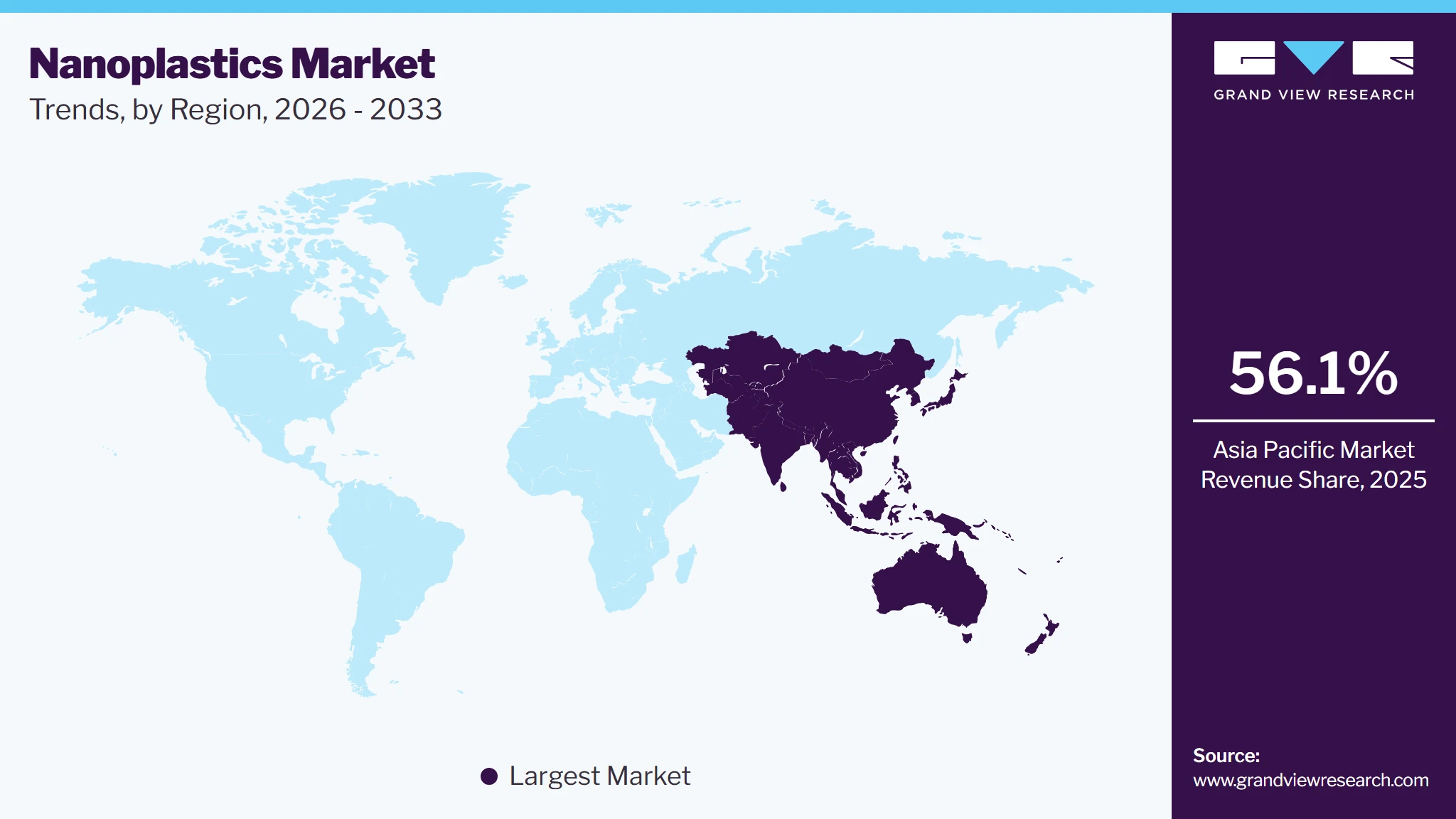
The Asia Pacific nanoplastics market held the largest revenue share of 56.1% in 2025 and is projected to grow at the fastest CAGR during the forecast period. Asia Pacific presents growth potential due to its extensive plastics manufacturing base, high consumption of plastic products, and increasing focus on water quality and environmental contamination. Research institutions are developing analytical approaches to identify nanoscale plastic particles in complex samples, while governments face growing requirements to evaluate pollution from packaging, textiles, and industrial waste. Demand is expected to strengthen for laboratory testing, particle characterization, and environmental monitoring technologies as regional research capabilities expand and water management authorities seek more reliable data on contamination.
 To learn more about this report, Download Free Sample Report
 The nanoplastics market in China accounted for the largest market revenue share in Asia Pacific in 2025, supported by the country’s large plastics processing industry and expanding scientific research capabilities, which drive demand for nanoplastics detection and characterization technologies. Research published in 2026 by teams involving the Beijing Institute of Technology demonstrated light-programmable nanograspers for rapid detection of nanoplastics in biological fluids, highlighting advances in analytical methods. Such developments create opportunities for specialized detection equipment, laboratory instrumentation, and research-grade test materials. Continued progress will depend on translating experimental technologies into reproducible methods suitable for environmental monitoring, industrial testing, and biological exposure assessment.
Europe Nanoplastics Market Trends
The nanoplastics market in Europe is developing structured monitoring frameworks for plastic contamination, particularly in drinking water and aquatic environments. In March 2024, the European Commission adopted a harmonized methodology for measuring microplastics in water intended for human consumption, improving consistency across monitoring activities. Although the methodology does not directly address nanoscale particles, it establishes a foundation for a more systematic assessment of plastic pollution. This regulatory direction supports investment in analytical laboratories, advanced particle separation, and next-generation detection methods that can address the remaining nanoplastics measurement gap.
Latin America Nanoplastics Market Trends
The nanoplastics market in Latin America is anticipated to grow at a significant CAGR during the forecast period. In Latin America, demand for research on nanoplastics is driven by the need to assess plastic contamination in freshwater resources, coastal ecosystems, and food production systems. Rivers and coastal waters can transport plastic debris from urban areas, waste disposal sites, and industrial activities, necessitating investigation of particle formation and environmental distribution. Universities, public laboratories, and water quality agencies represent potential customers for specialized analytical services. Market development will depend on research funding, access to high-sensitivity instrumentation, and collaboration with international laboratories to improve the consistency of testing.
Middle East and Africa Nanoplastics Market Trends
The nanoplastics market in the Middle East and Africa is supported by the need to evaluate plastic contamination in water resources, marine environments, and wastewater systems. In water-stressed Middle Eastern countries, desalination and wastewater reuse increase the importance of understanding emerging contaminants and treatment performance. Across African markets, coastal pollution and limited access to advanced laboratory infrastructure create demand for accessible testing capabilities and research partnerships. Opportunities include particle detection, water sample analysis, and treatment validation, although adoption will depend on funding availability, technical expertise, and access to standardized analytical methods.
Key Nanoplastics Company Insights
Some of the key players operating in the market include Polysciences, Inc. and Bangs Laboratories, Inc.
-
Polysciences, Inc. supplies polymer microspheres and nanoscale particle standards relevant to nanoplastics research and analytical calibration. Its Nanobead NIST-traceable particle-size standards cover 40 to 950 nm, supporting instrument calibration and particle-measurement validation. The broader Polybead portfolio includes monodisperse polystyrene particles for laboratory applications. This established product range positions the company to serve research laboratories that require consistent particle-size standards and reproducible analytical results.
-
Bangs Laboratories, Inc. manufactures polymer microspheres and particle size standards used in analytical instrument calibration and particle characterization. Its NIST-traceable polystyrene standards cover diameters from 40 nm to 175 µm, supporting measurement accuracy across multiple size ranges. These products are relevant to nanoplastics research where particle sizing and instrument validation remain important technical requirements. Its specialized manufacturing capabilities and established portfolio of reference materials support its position in the broader research particle market.
Lab261 and Magsphere, Inc. are some of the emerging participants in the nanoplastics industry.
-
Lab261 specializes in microplastic and nanoplastic reference particles for environmental fate, degradation, weathering, and exposure research. Its portfolio includes additive-free PE, PP, PET, PVC, nylon, polycarbonate, and polyurethane particles in spherical, irregular, and fragmented forms. Selected products offer controlled size distributions and NIST-traceable standards. This diversity of polymers and focus on environmentally relevant particle characteristics position the company to address specialized research requirements that extend beyond those of conventional polystyrene calibration materials.
-
Magsphere, Inc. develops polymer nanospheres and microspheres using emulsion and seeded emulsion polymerization. Its portfolio includes polystyrene particles ranging from 30 nm to 15 µm, as well as carboxylated and aminated variants, fluorescent particles, and magnetic beads. Custom synthesis and scalable batch production support specialized laboratory requirements. For the nanoplastics industry, its primary relevance lies in nanoscale particle preparation and research materials, although its portfolio is less focused on diverse, environmentally representative nanoplastic reference particles.
Key Nanoplastics Companies
The following key companies have been profiled for this study on the global nanoplastics market.
-
Lab261
-
Polysciences, Inc.
-
Bangs Laboratories, Inc.
-
microParticles GmbH
-
Magsphere, Inc.
Competitive Benchmarking
Operating Strategies
Competitive Edge
Weakness
Mature Players: Polysciences, Inc., Bangs Laboratories, Inc., microParticles GmbH
- Expand polymer particle portfolios across PS, PET, PE, PP, and other relevant polymers to support nanoplastics detection, environmental fate, and toxicological research.
- Strengthen sales through laboratory supply networks, direct technical sales, research institutions, and international distribution channels.
- Invest in particle size control, surface functionalization, reference material characterization, and quality assurance to improve measurement reproducibility across analytical applications.
- Established particle manufacturing capabilities and technical expertise support consistent particle sizing, controlled surface properties, and reliable laboratory performance.
- Broad research particle portfolios enable applications in instrument calibration, analytical validation, biological testing, and environmental research.
- Established customer relationships and distribution networks provide access to universities, commercial laboratories, research institutions, and analytical instrument developers.
- Conventional particle calibration products may not fully represent environmentally weathered nanoplastics or particles with irregular shapes and complex surface chemistry.
- Developing characterized reference materials across multiple polymers, sizes, and morphologies increases manufacturing complexity, testing requirements, and quality-control costs.
- Limited disclosure of nanoplastics-specific revenue and sales volumes makes it difficult to assess market penetration and returns from specialized product development.
Emerging Players: Lab261, Magsphere, Inc.
- Develop specialized nanoplastic reference particles with greater polymer diversity, controlled particle dimensions, and representative surface characteristics for environmental and biological research.
- Expand customer access through research partnerships, specialist laboratory distributors, online sales, and collaborations with analytical testing providers.
- Prioritize customized particle synthesis, standardized characterization, and application-specific materials to address unmet requirements in nanoplastics measurement and exposure studies.
- Specialized product development enables closer alignment with emerging research requirements for polymer identification, particle behavior, and nanoplastic toxicity assessment.
- Focused portfolios support product customization and faster responses to evolving laboratory requirements and research protocols.
- Opportunities to collaborate with universities, environmental laboratories, and instrument developers can strengthen technical credibility and expand adoption of specialized reference particles.
- Smaller or more specialized product portfolios may limit the range of polymers, particle geometries, and reference standards available to customers.
- Limited public information on revenue, manufacturing scale, and international distribution restricts assessment of commercial reach relative to established suppliers.
- Dependence on research funding, evolving measurement protocols, and gradual adoption of standardized testing can delay commercialization and recurring demand for specialized nanoplastic materials.
Recent Developments
-
In March 2026, Quorum Innovations announced that peer-reviewed research on its Qi601 postbiotic technology, designed to bind micro- and nanoplastics, had been accepted for presentation at TechConnect World. The development highlights commercial interest in biological particle-capture approaches, although broader performance and application require further validation.
-
In July 2025, the University of Amsterdam’s Van ’t Hoff Institute for Molecular Sciences and Vrije Universiteit Amsterdam advanced the STREAMLINED project with industry and research partners, including GL Sciences, Postnova and TNO. The collaboration aims to develop high-throughput analytical methods measuring nanoplastic size distribution, polymer identity and mass.
Nanoplastics Market Report Scope
Report Attribute
Details
Market size in 2025
USD 1.7 thousand
Estimated market size in 2026
USD 1.9 thousand
Projected market size by 2033
USD 5.1 thousand
Growth rate
CAGR of 15.1% from 2026 to 2033
Base year for estimation
2025
Historical data
2021 - 2024
Forecast period
2026 - 2033
Quantitative units
Revenue in USD thousand, volume in tons, and CAGR from 2026 to 2033
Report coverage
Revenue & volume forecast, competitive landscape, growth factors, and trends
Segments covered
Polymer type, form, region
Regional scope
North America; Europe; Asia Pacific; Latin America; Middle East & Africa
Country Scope
U.S.; Canada; Mexico; Europe; Germany; UK; France; Italy; Spain; China; India; Japan; South Korea; Australia; Brazil; Argentina; Saudi Arabia; UAE; South Africa
Key companies profiled
Polysciences, Inc.; Bangs Laboratories, Inc.; microParticles GmbH; Lab261; Magsphere, Inc.
Customization scope
Free report customization (equivalent to up to 8 analyst working days) with purchase. Addition or alteration to country, regional & segment scope
Pricing and purchase options
Avail customized purchase options to meet your exact research needs. Explore purchase options
Global Nanoplastics Market Report Segmentation
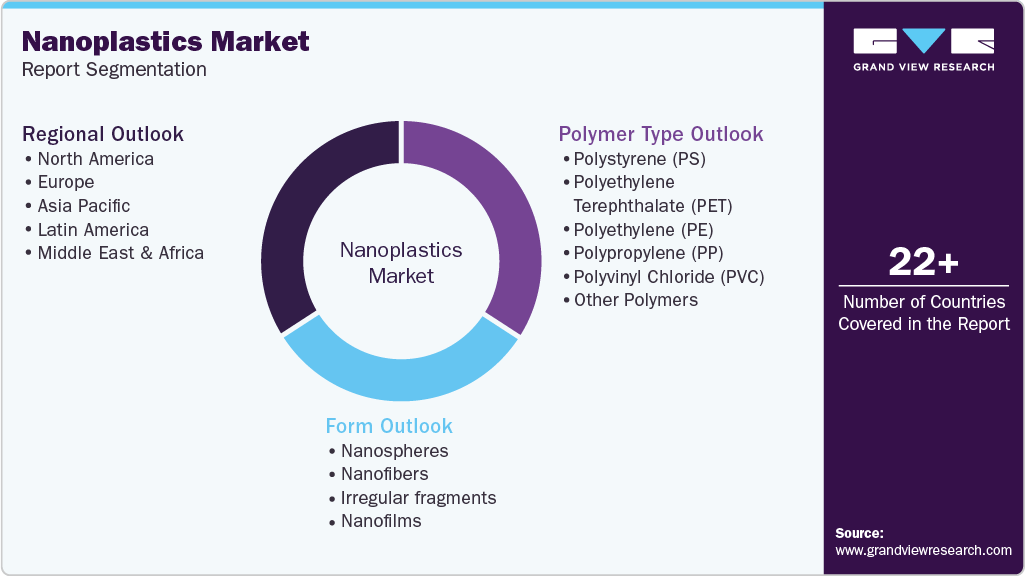
This report forecasts revenue growth at the global, regional, and country levels and provides an analysis of the latest industry trends across sub-segments from 2021 to 2033. For this study, Grand View Research has segmented the global nanoplastics market report based on polymer type, form, and region:
 To learn more about this report, Download Free Sample Report
 -
Polymer Type Outlook (Volume, Tons; Revenue, USD Thousand, 2021 - 2033)
-
Polystyrene (PS)
-
Polyethylene terephthalate (PET)
-
Polyethylene (PE)
-
Polypropylene (PP)
-
Polyvinyl chloride (PVC)
-
Other polymers
-
-
Form Outlook (Volume, Tons; Revenue, USD Thousand, 2021 - 2033)
-
Nanospheres
-
Nanofibers
-
Irregular fragments
-
Nanofilms
-
-
Regional Outlook (Volume, Tons; Revenue, USD Thousand, 2021 - 2033)
-
North America
-
U.S.
-
Canada
-
Mexico
-
-
Europe
-
Germany
-
UK
-
France
-
Italy
-
Spain
-
-
Asia Pacific
-
China
-
India
-
Japan
-
South Korea
-
Australia
-
-
Latin America
-
Brazil
-
Argentina
-
-
Middle East & Africa
-
Saudi Arabia
-
UAE
-
South Africa
-
-
Research Methodology
The nanoplastics marketfigures in this report are based on a proven research process that combines executive interviews with secondary research from proprietary databases, company filings, and recognized regulatory and institutional sources. Market size is built through value-chain sizing-reconciling supply-side and demand-side estimates-and triangulated with bottom-up and top-down approaches. Every estimate passes multiple levels of expert validation before publication, with eachnanoplastics segment quantified using the revenue-capture definitions in the table below.
Segment Definition
Polymer Type
Revenue capture definition
Polystyrene (PS)
Revenue is generated through the production and supply of polystyrene nanoplastic particles for analytical calibration, environmental monitoring, and toxicological research. Products include standardized nanospheres, fluorescent particles, and customized reference materials with controlled particle sizes and surface properties. Manufacturers evaluate size distribution, surface chemistry, dispersion stability, and polymer purity to support reproducible testing. Established use of polystyrene particles in laboratory research supports demand for calibration standards and experimental materials, while increasing requirements for environmentally representative particles create opportunities for specialized product development.
Polyethylene terephthalate (PET)
Revenue is generated through PET nanoplastic particles and reference materials used to investigate contamination associated with beverage packaging, food containers, and polyester textiles. Products support research into particle fragmentation, environmental transport, detection, and biological interactions. Manufacturers assess particle dimensions, morphology, surface characteristics, chemical composition, and dispersion stability. The widespread use of PET in consumer products makes it relevant to contamination assessment across water, food, and textile-related samples. Demand depends on the availability of well-characterized PET standards and improved analytical methods for identifying particles in complex environmental matrices.
Polyethylene (PE)
Revenue is captured through polyethylene nanoplastic materials used to study degradation of packaging films, plastic bags, containers, and other PE-based products. Both high-density and low-density polyethylene can serve as source materials for research particles with different structural and surface characteristics. Manufacturers and research suppliers evaluate particle size, morphology, oxidation, surface chemistry, and dispersion behavior. The extensive use of PE in packaging and consumer applications supports its relevance to environmental contamination studies. Demand is driven by the need for polymer-specific reference particles, degradation analysis, and reliable identification methods for PE in water and soil samples.
Polypropylene (PP)
Revenue is generated through polypropylene nanoplastic particles and customized reference materials for investigating contamination from packaging, consumer goods, automotive components, and synthetic fibers or nonwoven products. Products can include spherical particles, fragmented materials, and particles with controlled surface characteristics for laboratory testing. Manufacturers evaluate polymer composition, particle dimensions, morphology, surface modification, and sample stability. PP's widespread use in disposable and durable products drives research into fragmentation and environmental persistence. Commercial opportunities depend on the development of reproducible PP nanoplastic standards and analytical methods that distinguish them from other polymer particles in complex samples.
Polyvinyl chloride (PVC)
Revenue is captured through PVC nanoplastic particles used in research on plastic degradation, environmental transport, and potential biological exposure. Products may include reference particles prepared from different PVC formulations to investigate the influence of particle characteristics and additives on analytical measurements. Manufacturers assess polymer composition, particle size, surface chemistry, and the presence of relevant additives or residual contaminants. PVC's use in pipes, cables, flooring, and other durable products makes it an important material for studying fragmentation during use and disposal. Demand is shaped by the need for representative test materials and reliable methods to characterize PVC particles in environmental samples.
Other polymers
Revenue is generated through nanoplastic materials derived from polymers such as polyamide, polyurethane, polycarbonate, acrylic polymers, and other specialty plastics. These materials support application-specific research into synthetic textile degradation, coatings, industrial products, consumer goods, and polymer-specific biological interactions. Suppliers evaluate particle morphology, size distribution, chemical composition, surface properties, and compatibility with analytical methods. This segment addresses research requirements that cannot be met using common PS, PET, PE, or PP standards alone. Demand is supported by the expanding diversity of polymers in environmental samples, although commercialization may be constrained by limited reference materials and higher customization costs.
Form
Revenue capture definition
Nanospheres
Revenue is captured through the production and supply of spherical polymer particles with controlled dimensions and surface properties for nanoplastics research, analytical calibration, and toxicological testing. Products include polystyrene nanospheres, functionalized particles, and customized reference materials. Manufacturers assess particle diameter, size distribution, surface charge, dispersion stability, and chemical composition. Their relatively uniform geometry supports repeatable experiments and the evaluation of instrument performance. Demand is driven by laboratory requirements for consistent reference particles and validated analytical procedures, while opportunities exist to expand spherical-particle offerings across PET, PE, PP, and other environmentally relevant polymers.
Nanofibers
Revenue is generated through polymer nanofibers used to investigate contamination from synthetic textiles, fibrous materials, and the degradation of polymer-based products. These materials help researchers assess particle transport, persistence, separation behavior, and biological interactions associated with elongated geometries. Manufacturers evaluate fiber diameter, length distribution, polymer composition, surface characteristics, and structural consistency. Unlike spherical particles, nanofibers require specialized preparation and characterization methods because their dimensions and orientation affect detection and recovery. Demand depends on research into textile-derived pollution and the availability of reproducible fibrous reference materials for environmental monitoring and laboratory studies.
Irregular fragments
Revenue is captured through irregularly shaped nanoplastic particles designed to represent the fragmented materials produced by abrasion, weathering, oxidation, and mechanical degradation of larger plastic products. Products can include angular fragments and heterogeneous particles prepared from different polymer types for environmental fate and exposure studies. Manufacturers assess size distribution, morphology, surface roughness, chemical composition, and preparation consistency. Their relevance to real-world contamination creates demand from environmental laboratories and researchers seeking more representative test materials than uniform spheres. However, irregular geometries increase production complexity and complicate particle sizing, classification, and quantitative analysis.
Nanofilms
Revenue is generated through nanoscale polymer films and thin plastic structures used to study surface degradation, coating deterioration, and the formation of nanoscale plastic debris. These materials can support research involving packaging layers, protective coatings, polymer surfaces, and thin-film products exposed to environmental or mechanical stress. Manufacturers evaluate film thickness, polymer composition, surface uniformity, adhesion, and degradation behavior. Nanofilms serve a specialized role in research because their geometry and surface-area characteristics differ from those of discrete particles. Market development depends on clearer characterization protocols and demand for controlled film-based materials in degradation studies and nanoplastic formation research.
Estimation Model
Layer Name
Key Question
Description
Top-Down Nanoplastics Demand Assessment Layer
What determines overall market demand?
Establishes the global demand for nanoplastics-related products and solutions across environmental monitoring, water treatment, food safety, toxicology, healthcare research, and industrial applications. The layer evaluates nanoplastic contamination levels, research expenditure, regulatory monitoring requirements, analytical testing activity, demand for reference particles, and adoption of detection and characterization technologies. It distinguishes demand for nanoplastic particles used in research from demand for technologies and services used to detect or manage nanoplastic contamination.
Polymer Type Demand Validation Layer
Which polymer types account for demand?
Maps demand across polystyrene (PS), polyethylene terephthalate (PET), polyethylene (PE), polypropylene (PP), polyvinyl chloride (PVC), and other polymers. Demand is validated by polymer prevalence in waste streams, packaging, and textile degradation; environmental sampling; laboratory research priorities; reference-material requirements; and the availability of polymer-specific detection methods. The analysis also considers the influence of particle size, morphology, surface chemistry, and degradation characteristics on testing requirements and research applications.
Consumption-to-Revenue Conversion Layer
How is demand converted into market revenue?
Converts demand for nanoplastic particles, reference materials, analytical testing, and related research products into revenue using product volumes, particle specifications, purity, size distribution, surface functionalization, unit pricing, and testing-service fees. The analysis distinguishes standardized polymer particles from specialized research-grade materials and evaluates the pricing impact of customized particle characteristics, quality-control requirements, analytical complexity, and application-specific performance. It also separates particle sales from detection equipment and testing services to avoid double counting across market categories.
Regional Demand Verification Layer
Which regions demonstrate measurable demand?
Validates demand across North America, Europe, Asia Pacific, Latin America, and the Middle East & Africa. The analysis considers environmental research funding, water-quality monitoring programs, regulatory initiatives, laboratory infrastructure, academic and industrial research activity, analytical testing capacity, and access to reference materials. Regional verification also examines the presence of polymer, chemical, and analytical technology suppliers, import dependence, research collaborations, and investment in nanoplastic detection and contamination assessment.
Delivered Customizations
This report has been delivered with the following In-depth customizations
Client Request
Customization Delivered
Value Adds
Regional Segmentation
Evaluated the nanoplastics market across North America, the U.S., Asia Pacific, China, Europe, Latin America, and the Middle East & Africa, considering research infrastructure, environmental monitoring priorities, regulatory developments, and regional demand for analytical technologies.
Identifies regional growth drivers, highlights differences in market maturity, and supports geographic prioritization for product commercialization, distribution, and research partnerships.
Cross-Segmentation
Assessed the market across polymer types, including polystyrene (PS) and polyethylene terephthalate (PET), and particle forms, including nanospheres and nanofibers. Linked segment characteristics with reference materials, particle characterization, environmental monitoring, and toxicological research requirements.
Highlights differences in demand by polymer composition and particle morphology, identifies application-specific product requirements, and supports portfolio planning based on evolving laboratory and research needs.
Trade Assessment
Examined the trade assessment requirements for polymer nanoparticles, laboratory reference particles, and related analytical materials, considering international supplier networks, distribution channels, product specifications, and potential cross-border sourcing constraints. Distinguishes dedicated nanoplastic reference materials from conventional polymer particles and bulk plastics.
Supports supplier identification, sourcing diversification, distribution planning, and assessment of import dependence. Highlights the need to verify product-level customs classifications and trade data, as shipments specific to nanoplastics may not be reported separately.
About the Author(s)
Plastics, Polymers & Resins Research Team
Bulk Chemicals · Plastics, Polymers & ResinsThis report was authored by the plastics, polymers & resins research team at Grand View Research - comprising two research analysts, one senior research analyst, and one industry expert - with specialized expertise in the plastics, polymers & resins segment of the bulk chemicals industry. All findings are based on proprietary bulk chemicals databases, executive interviews, and regulatory analysis, subject to internal peer review prior to publication.
Last Updated:
Speak to Analyst

Customize this report to your needs - add regions, segments, or data points, with 20% free customization.
Or view our licence options:


ISO 9001:2015 & 27001:2022 Certified
We are GDPR and CCPA compliant! Your transaction & personal information is safe and secure. For more details, please read our privacy policy.


