
- Home
- »
- Clinical Diagnostics
- »
-
Non-invasive Cancer Diagnostics Market Report, 2026-2033GVR Report cover

Non-invasive Cancer Diagnostics Market (2026 - 2033)
Size, Share & Trends Analysis Report By Product (Pathology-based Instruments, Imaging Instruments), By Technology (Imaging, Liquid Biopsy, Immunoassay), By Indication, By End Use, By Region, And Segment Forecasts
Market Size, 2025
$80.9BMarket Estimate, 2026
$85.8BMarket Forecast, 2033
$139.1BCAGR, 2026–2033
7.1%Non-invasive Cancer Diagnostics Market Summary
The global non-invasive cancer diagnostics market size was valued at USD 80.9 billion in 2025 and is projected to grow from USD 85.8 billion in 2026 to USD 139.1 billion by 2033, at a CAGR of 7.1% from 2026 to 2033. The market in North America dominated with a revenue share of 41.2% in 2025. The market is growing due to the increasing prevalence of cancer, advancements in diagnostic technologies, and the growing initiatives undertaken by both public and private organizations to improve early detection and treatment.
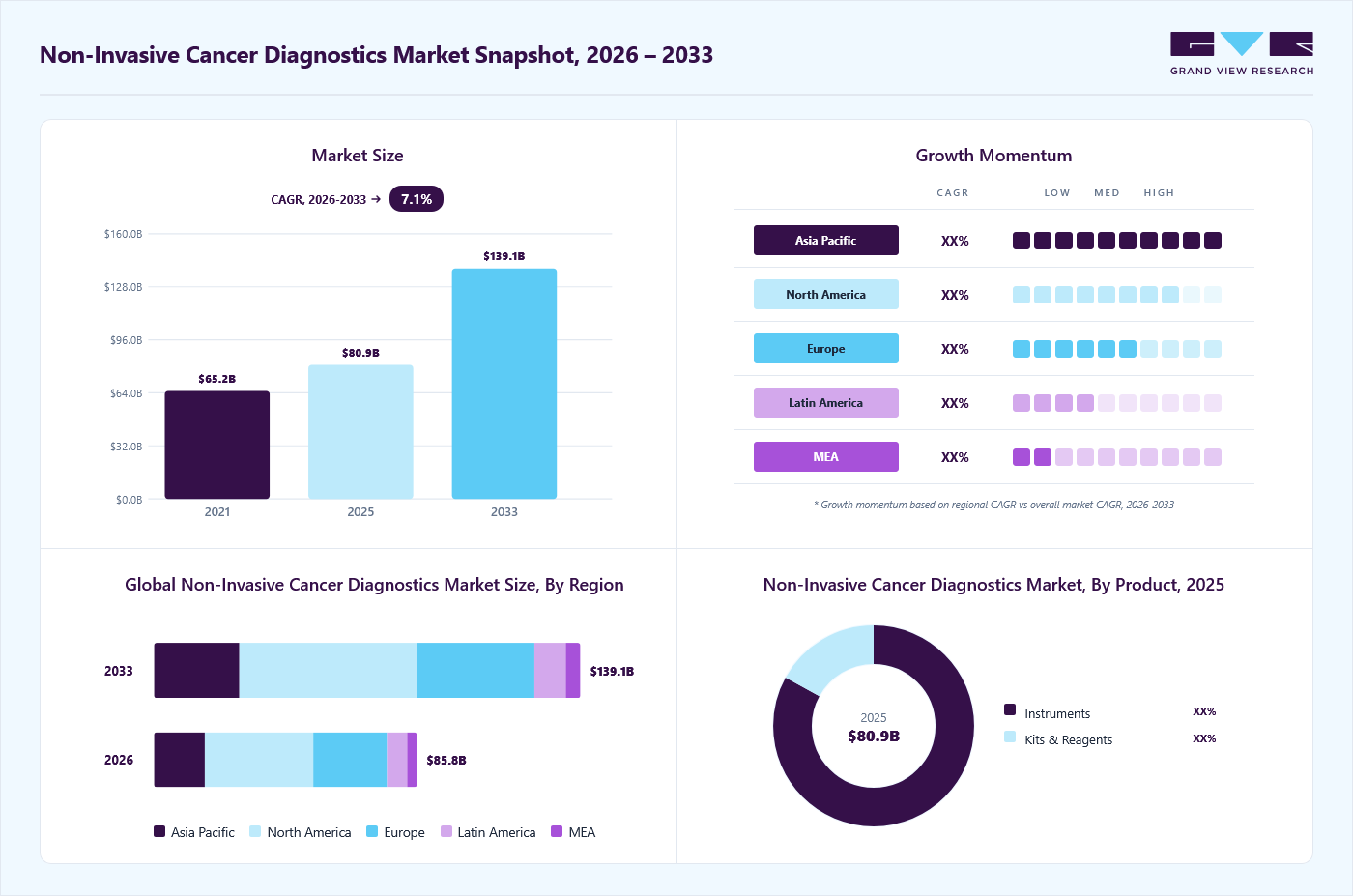 Source: Grand View Research, IR Documents, Primary Interviews, Paid DatabasesTo learn more about this report,
 Download Free Sample Report
Key Market Trends & Insights
- By product: Instruments segment held the largest market share of 64.4% in 2025.
- By end use: Diagnostic laboratories segment held the largest market share of 53.1% in 2025.
- By technology: Imaging segment held the largest market share of 39.9% in 2025.
- By indication: Liver cancer segment held the largest market share of 16.6% in 2025.
Regional Highlights
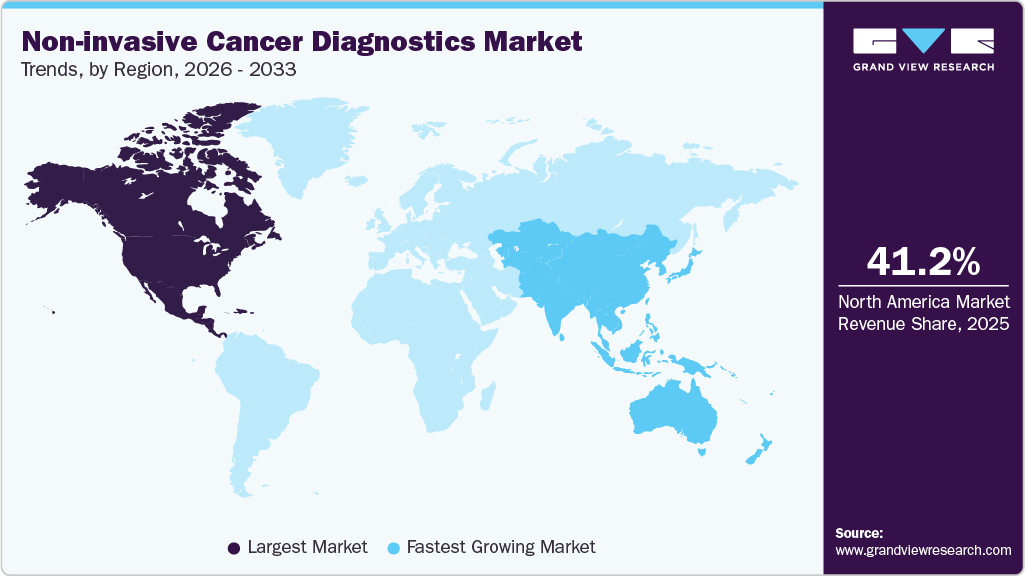
- Largest regional market: North America (41.2% revenue share, 2025)
- Fastest-growing regional market: Asia Pacific (highest CAGR, 2026-2033)
- By country: The U.S. held the largest market share in 2025
Market Size & Forecast
- Market size in 2025: USD 80.9 Billion
- Estimated market size in 2026: USD 85.8 Billion
- Projected market size by 2033: USD 139.1 Billion
- CAGR (2026-2033): 7.1%
Three ways to get this report
Buy it, customize it, or ask a question.Ask an Analyst
Analyst response in 1 business day
- AccessReport author, directly
- Reply timeWithin 1 working day
- No sales callDirect answer only
- FormatEmail reply
- CostFree, no cost
Get the Full Report
What the study covers
- FormatsPDF · Excel · Dashboard
- Timeline2026–2033 annual, 2025 base
- Coverage20+ countries, 5 regions
- Companies10+ key players profiled
Customize the Report
20% free customization
- IncludeCountries, segments, points
- TailorTo your product definition
- ExtendDeeper competitor detail
- OrA fully bespoke study
- Turnaround5–10 working days
As the number of cancer cases continues to rise, there is a growing need for effective, accessible, and patient-friendly diagnostic methods. Early detection plays a critical role in improving treatment outcomes and survival rates. Non-invasive diagnostic techniques enable healthcare providers to screen large populations and detect cancer at earlier stages without requiring complex or painful procedures. For example, according to the World Health Organization and the International Agency for Research on Cancer, the global burden of cancer is rising significantly.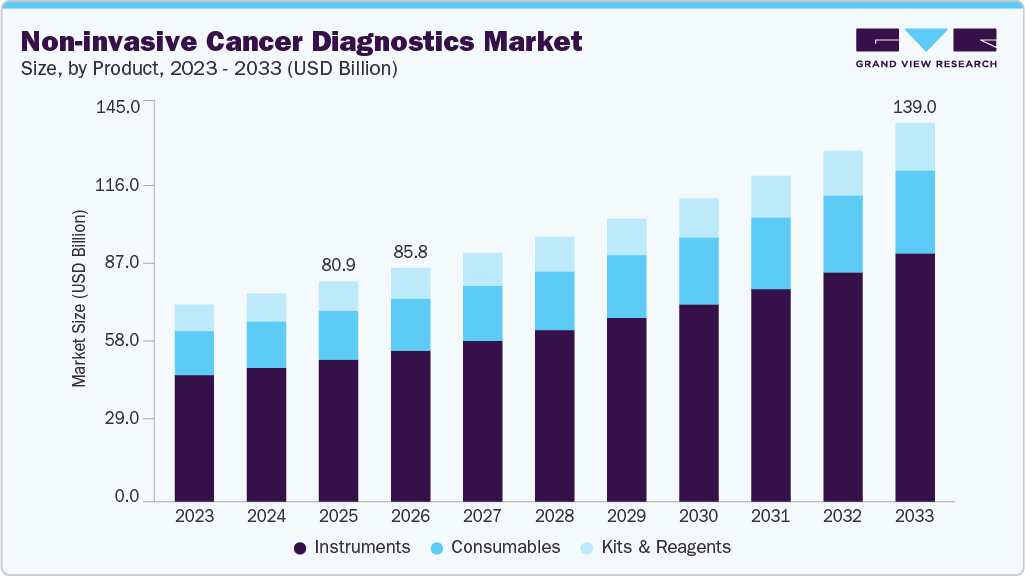 To learn more about this report, Download Free Sample Report
In 2022, around 20 million new cancer cases and 9.7 million deaths were reported worldwide, with about 53.5 million people living within five years of a diagnosis. Cancer cases are expected to reach over 35 million by 2050, a 77% increase, mainly due to population aging, population growth, and risk factors such as tobacco use, alcohol consumption, obesity, and air pollution. As a result, the rising burden of cancer is increasing the demand for non-invasive diagnostic solutions across healthcare systems.
Market Concentration & Characteristics
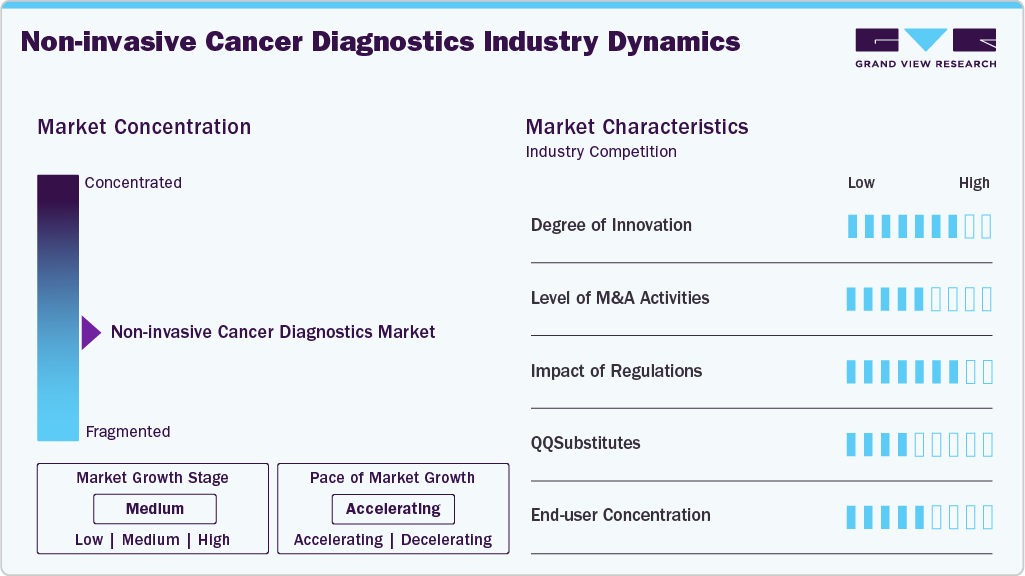
The non-invasive cancer diagnostics market is characterized by a high degree of innovation due to continuous advancements in technologies aimed at detecting cancer at early stages with minimal patient discomfort. Innovations such as liquid biopsy, circulating tumor DNA (ctDNA) analysis, and multi-cancer early detection tests are transforming cancer screening and monitoring. Companies are also integrating artificial intelligence and genomic sequencing to improve diagnostic accuracy and enable personalized treatment strategies.
Barriers to entry into this market are moderate to high because developing reliable diagnostic tests requires significant investment in research and development, advanced laboratory infrastructure, and clinical validation studies. New entrants must also secure intellectual property rights and establish partnerships with hospitals and diagnostic laboratories to commercialize their tests.
 To learn more about this report, Download Free Sample Report
Regulations have a strong impact on the market because diagnostic technologies must meet strict safety, efficacy, and accuracy standards before they can be introduced into clinical practice. Regulatory authorities such as the USFDA and the European Medicines Agency require extensive clinical validation and compliance with laboratory testing standards.
The main substitutes for non-invasive cancer diagnostics are conventional invasive diagnostic methods, particularly tissue biopsies and certain endoscopic procedures. Traditional biopsy techniques involve the surgical removal of tissue samples for pathological examinations and remain the gold standard for confirming cancer diagnosis in many cases. However, non-invasive methods are increasingly preferred for early screening and disease monitoring because they reduce patient discomfort, lower procedural risks, and allow repeated testing over time.
The non-invasive cancer diagnostics market is expanding across multiple regions due to rising cancer prevalence, increasing awareness of early detection, and improvements in healthcare infrastructure. North America currently leads the market due to strong research activity and advanced diagnostic facilities, while Europe also represents a significant share, supported by organized cancer screening programs. Meanwhile, the Asia-Pacific region is experiencing rapid growth as countries such as China, India, and Japan invest in healthcare modernization, expand diagnostic laboratories, and promote early cancer detection initiatives. These developments are creating new opportunities for companies to expand their presence in emerging markets.
Product Insights
The instruments segment accounted for the largest revenue share of 64.42% in 2025. Pathology-based instruments such as PCR, NGS, and microarrays enable precise analysis of samples such as blood, urine, and saliva with high sensitivity and faster results. The increasing adoption of liquid biopsy technologies and biomarker-based testing is driving the demand for these instruments in hospitals and diagnostic laboratories. Similarly, imaging instruments, including MRI, CT, PET, and ultrasound systems, are witnessing growing use due to technological advancements, improved image quality, AI integration, and hybrid imaging capabilities. These technologies support early tumor detection and better treatment monitoring.
The consumables segment is expected to grow significantly over the forecast period. Consumable products are essential for routine diagnostic testing because they are used with every test and must be replaced after each use. Items such as test strips, syringes and needles, vials and containers, and centrifuge tubes are typically single-use, requiring laboratories and healthcare providers to purchase them continuously to support ongoing diagnostic procedures. In addition, Technological advancements in diagnostic platforms have also created demand for specialized consumables designed to work with specific instruments, supporting the growth of this segment. For example, Indical Bioscience GmbH offers prefilled cartridges that enable laboratories to conduct tests more quickly and efficiently. These cartridges are compatible with various sample types, reduce plastic consumption, and can save up to 20 minutes per run. Innovations such as these are driving the growing demand for advanced consumables used in modern diagnostic systems.
Technology Insights
The imaging technology segment accounted for the largest revenue share of around 39.92 % in 2025, as modern imaging systems, including advanced MRI, CT scans, PET scans, and AI-powered imaging software, provide significantly higher resolution, faster scanning times, and more precise tumor detection compared to earlier technologies. These advancements enable healthcare providers to detect cancer at earlier stages, monitor disease progression more accurately, and design personalized treatment strategies while minimizing the need for invasive surgical biopsies. For instance, in September 2025, Lilavati Hospital & Research Centre introduced Mumbai’s first OMEGA 3T MRI system. Powered by a 3T superconducting magnet, the system can complete scans in approximately 10-12 minutes and operates at speeds up to 36 times faster than standard MRI machines. This advancement helps reduce patient discomfort and minimizes motion artifacts during imaging.
The liquid biopsy segment is projected to grow significantly over the forecast period, due to the adoption of liquid biopsy technology within the non-invasive cancer diagnostics market. In contrast to traditional tissue biopsies, liquid biopsy requires only a blood sample, thereby minimizing procedure-related risks, patient discomfort, and recovery time. This approach is particularly advantageous for elderly individuals, patients with advanced-stage cancer, or situations in which tumor location complicates surgical biopsy.
Indication Insights
The liver cancer segment accounted for the largest revenue share of around 16.56% in 2025, driven by the growing focus on convenient and effective drug-delivery solutions. In recent years, advancements in syringes and injectors have improved usability, making disposable auto-injectors a preferred choice for patients and caregivers. Epinephrine auto-injectors are essential for treating anaphylaxis, enabling timely administration by non-medical individuals and potentially saving lives by reversing allergic reactions, opening airways, and maintaining blood pressure.
The lung cancer segment is expected to witness significant growth over the forecast period, primarily because lung cancer remains the most frequently diagnosed cancer and the leading cause of cancer-related deaths worldwide. According to the American Cancer Society, in 2022, lung cancer accounted for approximately 2.5 million cases (about 1 in 8 cancer diagnoses) and nearly 1.8 million deaths (around 1 in 5 cancer-related deaths) globally. This substantial disease burden highlights the urgent need for early detection and continuous disease monitoring. As a result, there has been growing adoption of non-invasive diagnostic methods, such as liquid biopsies and blood-based tests that enable earlier diagnosis, improved patient monitoring, and more effective treatment planning. These advancements are contributing significantly to the growth of the lung cancer diagnostic segment.
End Use Insights
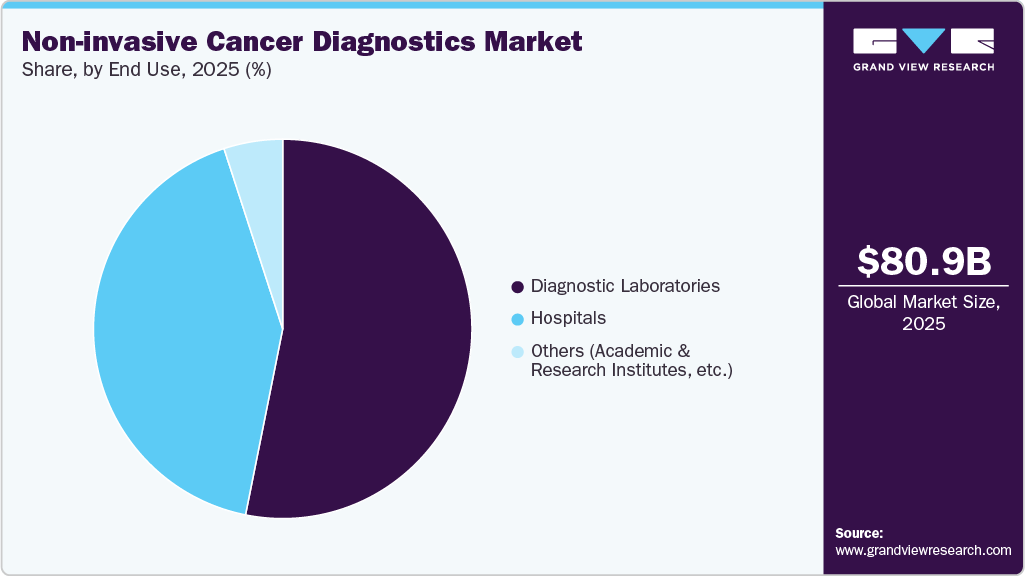
The diagnostic laboratories segment accounted for the largest revenue share of around 53.15% in 2025. Increasing technological advancements, awareness of personalized medicine, and the growing demand for affordable services are some of the key factors expected to drive the growth of the diagnostic laboratory segment. Another major factor supporting this growth is the rise in government initiatives to provide various facilities, such as compensation for diagnostic tests. Also, regulatory authorities are undertaking initiatives to improve clinical laboratory diagnostic services and simplify the diagnostic process.
 To learn more about this report, Download Free Sample Report
The hospitals segment is estimated to grow at the fastest CAGR over the forecast period. Hospitals are equipped with advanced imaging systems, liquid biopsy facilities, and specialized oncology departments, enabling faster diagnosis and supporting integrated treatment planning. As the number of cancer cases continues to rise, patients increasingly choose hospitals because they can provide multidisciplinary care. This includes services such as radiology, pathology, oncology consultations, and follow-up monitoring, all within one facility. For instance, in February 2026, Zynova Shalby Multi-Specialty Hospital opened an oncology department to meet the increasing number of cancer cases in India. The unit provides comprehensive, patient-focused care, including screening, advanced imaging, biopsy, chemotherapy, immunotherapy, and targeted therapy, the improve treatment outcomes and quality of life.
Regional Insights
The North America non-invasive cancer diagnostics industry dominated the market with the largest revenue share of 41.17% in 2025. The increasing prevalence of cancer in the U.S. and Canada is a significant factor driving the growth of the diagnostic market. Simultaneously, medical device companies are prioritizing the development of advanced diagnostic technologies that enable earlier tumor detection. For instance, in March 2026, Longevity Medical Institute launched a full-body MRI program with AI enhancement in Los Cabos, Mexico, marking the first initiative of its kind in the region. The program uses DeepRecon AI technology to deliver high-resolution, radiation-free imaging and supports early disease detection through integrated diagnostics and personalized treatment planning. These advancements, along with frequent product launches and ongoing clinical research initiatives, are collectively contributing to the expansion of the regional diagnostic market.
 To learn more about this report, Download Free Sample Report
U.S. Non-invasive Cancer Diagnostics Market Trends
The non-invasive cancer diagnostics industry in the U.S. dominated the regional market in 2025 due to the high cancer prevalence in the country and the approval of innovative products. For example, in March 2026, Perimeter Medical Imaging AI received USFDA approval for Claire, the first AI-enabled imaging device in the U.S. designed for intraoperative breast cancer margin assessment. Technology demonstrated a statistically significant reduction in residual cancer after surgery compared with standard care. This approval highlights the growing adoption of advanced AI-based non-invasive cancer diagnostic technologies in the U.S.
Europe Non-invasive Cancer Diagnostics Market Trends
The non-invasive cancer diagnostics industry in Europe is expected to experience strong growth over the forecast period. The market growth can be attributed to a growing biotechnology industry and rising investments & launches in genomic sequencing in countries such as the UK & Germany. For instance, in February 2025, F. Hoffmann-La Roche Ltd introduced a new next-generation sequencing technology called sequencing by expansion (SBX). The technology is used to decode complex diseases such as cancer, immune disorders, and neurodegenerative conditions. This advancement is expected to support the development of faster and more efficient genomic analysis, thereby strengthening the growth of the non-invasive cancer diagnostics market in Europe.
Asia-Pacific Non-invasive Cancer Diagnostics Market Trends
The non-invasive cancer diagnostics industry in the Asia Pacific is expected to grow at the fastest CAGR of 7.7% over the forecast period. In the Asia Pacific, cancer has drawn more attention because of demographic shifts brought on by urbanization, a rapidly aging population, and economic expansion. For example, in October 2025, according to the Press Information Bureau, India is experiencing a rapid demographic shift, with the elderly population (aged 60 years and above) expected to increase from 100 million in 2011 to 230 million by 2036. By 2036, nearly one in seven Indians will be aged 60 or older, indicating a significant change in the country’s population structure. This demographic transition is expected to increase the prevalence of age-related diseases, including cancer, thereby driving the demand for advanced diagnostic solutions and supporting the growth of the market in the Asia Pacific region.
The China non-invasive cancer diagnostics industry is expected to grow the fastest over the forecast period in the Asia Pacific. The rising prevalence of cancer, increasing demand for early diagnostic testing, and significant investments in healthcare infrastructure. Also, strong government support for cancer screening programs, the expansion of diagnostic laboratories, and the growing adoption of advanced diagnostic technologies are further driving market growth in the country.
Latin America Non-Invasive Cancer Diagnostics Market Trends
The non-invasive cancer diagnostics industry in Latin America is projected to witness significant growth over the forecast period, driven by the increasing strategic partnerships and collaborations among diagnostic companies, healthcare providers, and research institutions. In March 2026, MGI Tech Co., Ltd. partnered with NeoGenomica, a leading Brazilian genetic testing laboratory, to expand access to high-throughput genomics applications in Brazil, particularly in oncology, rare diseases, and precision medicine. The collaboration aims to accelerate genetic diagnostics for patients with rare cancers, enabling results in days instead of weeks and helping physicians initiate more effective treatments earlier.
Middle East & Africa Non-Invasive Cancer Diagnostics Market Trends
The non-invasive cancer diagnostics industry in the Middle East and Africa is expected to experience strong growth, driven by the increasing healthcare investments, expanding diagnostic infrastructure, and rising awareness of early disease detection. Governments and private organizations are also focusing on improving access to advanced diagnostic technologies and strengthening healthcare systems. In addition, the growing prevalence of chronic diseases, the rise of medical tourism in countries such as the UAE and Saudi Arabia, and the entry of global diagnostic companies into emerging African markets are further supporting market growth in the region.
Key Non-Invasive Cancer Diagnostics Company Insights
Some of the key companies in the non-invasive cancer diagnostics market include Abbott Laboratories, GE HealthCare, Siemens Healthineers AG, Koninklijke Philips N.V., Canon Medical Systems, and F. Hoffmann-La Roche Ltd. Organizations are focusing on increasing their customer base to gain a competitive edge in the industry. Therefore, key players are taking several strategic initiatives, such as mergers and acquisitions, and partnerships with other major companies.
-
Abbott Laboratories is a global healthcare company engaged in the discovery, manufacture, development, and sale of a wide range of healthcare products. The company operates through four main business segments: Established Pharmaceutical Products, Nutritional Products, Diagnostic Products, and Medical Devices. Its Diagnostic Products segment offers a broad portfolio of diagnostic systems and tests used by hospitals, laboratories, blood banks, clinics, and healthcare providers worldwide. Abbott focuses on delivering innovative healthcare solutions that improve patient outcomes and support medical professionals globally.
Key Non-invasive Cancer Diagnostics Companies:
The following key companies have been profiled for this study on the non-invasive cancer diagnostics market.
- Abbott Laboratories
- GE HealthCare
- Siemens Healthineers AG
- Koninklijke Philips N.V.
- Canon Medical Systems
- F. Hoffmann-La Roche Ltd
- Illumina, Inc
- Guardant Health, Inc.
- Thermo Fisher Scientific Inc.
- FONAR Corporation
Recent Developments
-
In January 2026, Fujifilm India launched four new diagnostic imaging and healthcare IT solutions at IRIA 2026 to strengthen India’s radiology ecosystem. The move supports rising demand for advanced, accessible diagnostics driven by healthcare expansion initiatives such as Ayushman Bharat and increasing imaging needs across the country.
-
In January 2026, Metropolis Healthcare Limited launched a new Centre of Genomics to strengthen its abilities in precision diagnostics, genomic research, and molecular testing in India. The initiative is backed by two CAP-accredited genomics laboratories in Delhi NCR and Mumbai, enhancing the company’s nationwide advanced diagnostic infrastructure.
-
In December 2025, GE HealthCare introduced advanced imaging solutions powered by NVIDIA technology to support timely diagnoses and enhance clinical workflow efficiency. The technology has been integrated into new systems, including SIGNA Sprint with Freelium, Photonova Spectra, SIGNA Bolt, Pristina Recon DL, and Vivid Pioneer, showcased at the RSNA 2025 Annual Meeting.
-
In September 2025, Tata Elxsi launched the Bayer Development Centre in Radiology at its Pune campus in partnership with Bayer to advance medical imaging technologies. The center aims to enhance early disease detection, diagnostic precision, and patient safety, with an initial focus on molecular imaging for complex diseases such as cancer and neurological disorders.
Non-Invasive Cancer Diagnostics Market Report Scope
Report Attribute
Details
Market size in 2025
USD 80.9 billion
Estimated market size in 2026
USD 85.8 billion
Projected market size by 2033
USD 139.1 billion
Growth rate
CAGR 7.1% from 2026 to 2033
Base year for estimation
2025
Historical data
2021 - 2024
Forecast period
2026 - 2033
Quantitative units
Revenue in USD million/billion and CAGR from 2026 to 2033
Report coverage
Revenue forecast, company ranking, competitive landscape, growth factors, trends
Segments covered
Product, technology, indication, end use, region
Regional scope
North America; Europe; Asia Pacific; Latin America; Middle East & Africa
Country scope
U.S.; Canada; Mexico; UK; Germany; France; Italy; Spain; China; Japan; India; Australia& New Zealand; South Korea; Brazil; Argentina; Saudi Arabia; South Africa; UAE
Key company profiled
Abbott Laboratories; GE HealthCare; Siemens Healthineers AG; Koninklijke Philips N.V.; Canon Medical Systems; F. Hoffmann-La Roche Ltd; Illumina, Inc; Guardant Health, Inc.; Thermo Fisher Scientific Inc.; FONAR Corporation.
Customization scope
Free report customization (equivalent up to 8 analysts working days) with purchase. Addition or alteration to country, regional & segment scope.
Pricing and purchase options
Avail customized purchase options to meet your exact research needs. Explore purchase options
Global Non-Invasive Cancer Diagnostics Market Report Segmentation
This report forecasts revenue growth at global, regional, and country levels and provides an analysis of the latest industry trends in each of the sub-segments from 2021 to 2033. For this study, Grand View Research has segmented the global non-invasive cancer diagnostics market report based on product, technology, indication, end use, and region:
-
Product Outlook (Revenue, USD Million, 2021 - 2033)
-
Instruments
-
Pathology-based Instruments
-
Polymerase Chain Reaction (PCR) Instruments
-
Next-generation Sequencing (NGS) Instruments
-
Microarrays
-
-
Imaging Instruments
-
Magnetic Resonance Imaging (MRI)
-
Computed Tomography (CT)
-
Positron Emission Tomography (PET)
-
Mammography
-
Others (Ultrasound, etc.)
-
-
-
Consumables
-
Kits & Reagents
-
-
Technology Outlook (Revenue, USD Million, 2021 - 2033)
-
Imaging
-
Liquid Biopsy
-
Immunoassay
-
-
Indication Outlook (Revenue, USD Million, 2021 - 2033)
-
Lung Cancer
-
Breast Cancer
-
Colorectal Cancer
-
Prostate Cancer
-
Blood Cancer
-
Liver Cancer
-
Cervical Cancer
-
Skin Cancer
-
Others (Thyroid Cancer, etc.)
-
-
End Use Outlook (Revenue, USD Million, 2021 - 2033)
-
Hospitals
-
Diagnostic Laboratories
-
Others (Academic & Research Institutes, etc.)
-
-
Regional Outlook (Revenue, USD Million, 2021 - 2033)
-
North America
-
U.S.
-
Canada
-
Mexico
-
-
Europe
-
UK
-
Germany
-
France
-
Italy
-
Spain
-
-
Asia Pacific
-
Japan
-
China
-
India
-
Australia & New Zealand
-
South Korea
-
-
Latin America
-
Brazil
-
Argentina
-
-
Middle East & Africa
-
South Africa
-
Saudi Arabia
-
UAE
-
-
Frequently Asked Questions About This Report
Asia Pacific is the fastest-growing region over the forecast period.
The instruments segment led with a 64.4% revenue share in 2025.
The imaging segment accounted for the largest revenue share of 39.9% in 2025.
Liver cancer segment dominated the market, with a revenue share of 16.6% in 2025.
Diagnostic laboratories segment held the largest share (over 53.0%) in 2025, while hospitals is the fastest-growing segment.
Key players include Abbott Laboratories; GE HealthCare; Siemens Healthineers AG; Koninklijke Philips N.V.; Canon Medical Systems; F. Hoffmann-La Roche Ltd; Illumina, Inc; Guardant Health, Inc.; Thermo Fisher Scientific Inc.; FONAR Corporation.
The global non-invasive cancer diagnostics market size was valued at USD 80.9 billion in 2025 and is estimated at USD 85.8 billion for 2026.
The global non-invasive cancer diagnostics market is expected to grow at a CAGR of 7.1% from 2026 to 2033, reaching USD 139.1 billion by 2033.
North America dominated the non-invasive cancer diagnostics market with a share of 41.2% in 2025. This is attributable to increasing prevalence of cancer in the U.S. and Canada, development of advanced diagnostic technologies, and frequent product launches &ongoing clinical research initiatives.
Key factors that are driving the market growth include increasing prevalence of cancer, advancements in diagnostic technologies, and the growing initiatives undertaken by both public and private organizations to improve early detection and treatment.
About the Author(s)
Clinical Diagnostics Research Team
Healthcare · Clinical DiagnosticsThis report was authored by the clinical diagnostics research team at Grand View Research - comprising two research analysts, one senior research analyst, and one industry expert - with specialized expertise in the clinical diagnostics segment of the healthcare industry. All findings are based on proprietary healthcare databases, executive interviews, and regulatory analysis, subject to internal peer review prior to publication.
Last Updated:
Speak to Analyst

Customize this report to your needs - add regions, segments, or data points, with 20% free customization.
Or view our licence options:


ISO 9001:2015 & 27001:2022 Certified
We are GDPR and CCPA compliant! Your transaction & personal information is safe and secure. For more details, please read our privacy policy.


