
- Home
- »
- Medical Devices
- »
-
Nucleic Acid Therapeutics CDMO Market Report, 2026-2033GVR Report cover

Nucleic Acid Therapeutics CDMO Market (2026 - 2033)
Size, Share & Trends Analysis Report By Type (Gene Therapy, RNA-based Therapies), By Service (Process Development and Optimization), By End-use, By Application, By Region, And Segment Forecasts,
Market Size, 2025
$17.4BMarket Estimate, 2026
$19.8BMarket Forecast, 2033
$51.2BCAGR, 2026–2033
14.5%Nucleic Acid Therapeutics CDMO Market Summary
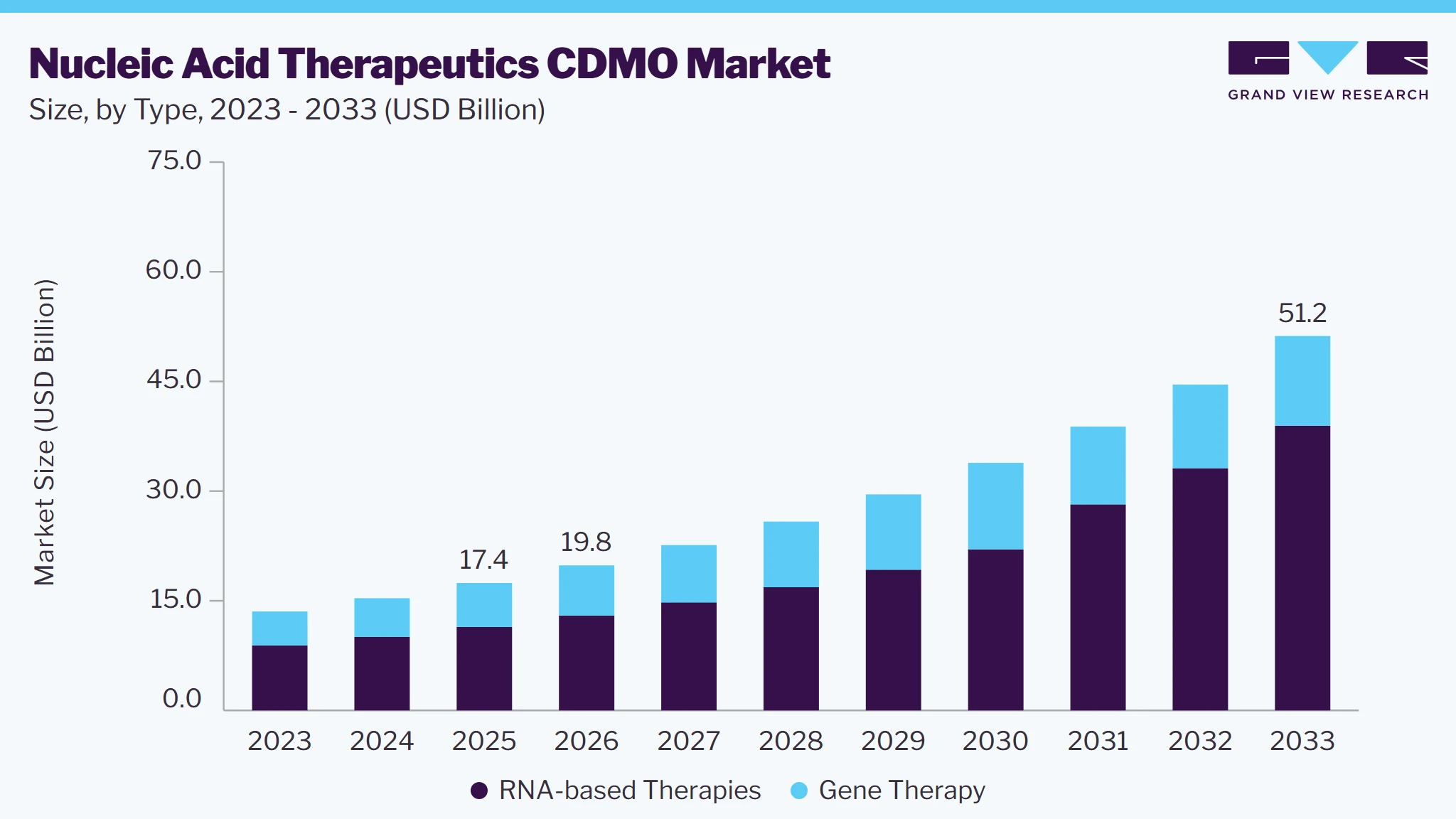
The global Nucleic Acid Therapeutics CDMO market size was valued at USD 17.4 billion in 2025 and is projected to grow from USD 19.8 billion in 2026 to USD 51.2 billion by 2033, at a CAGR of 14.5% from 2026 to 2033. North America dominated the global market, accounting for a revenue share of 40.0% in 2025. The rising incidence of genetic disorders across the globe and increasing advancements in nucleic acid therapeutics are major market drivers.
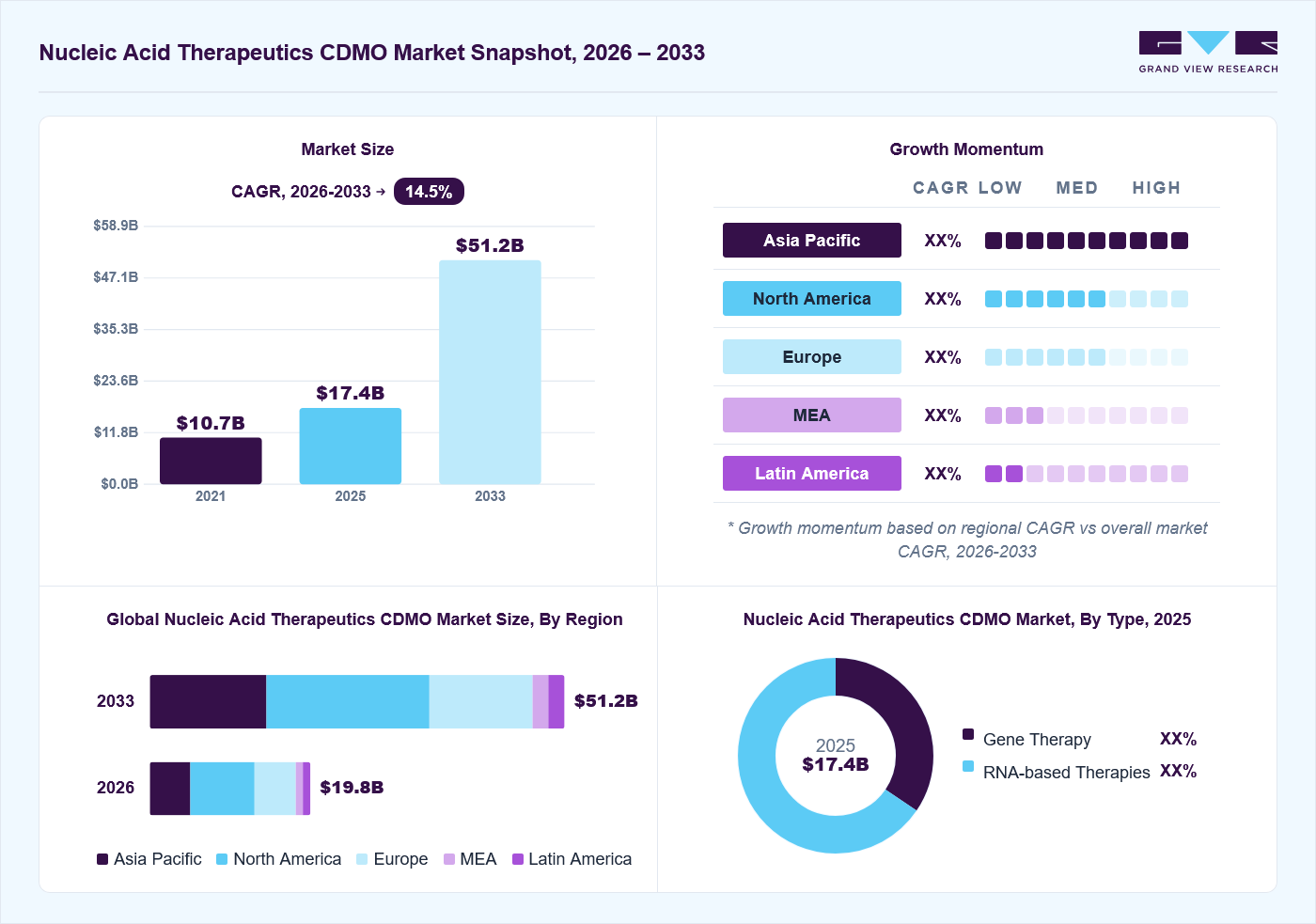 Source: Grand View Research, IR Documents, Primary Interviews, Paid DatabasesTo learn more about this report,
 Download Free Sample Report
Key Market Trends & Insights
- By type: RNA-based therapies segment led the market with the largest revenue share of 65.6% in 2025.
- By service: Manufacturing services segment accounted for the largest market share of 38.6% in 2025.
- By end-use: Biotech companies segment held the highest market share of 57.7% in 2025.
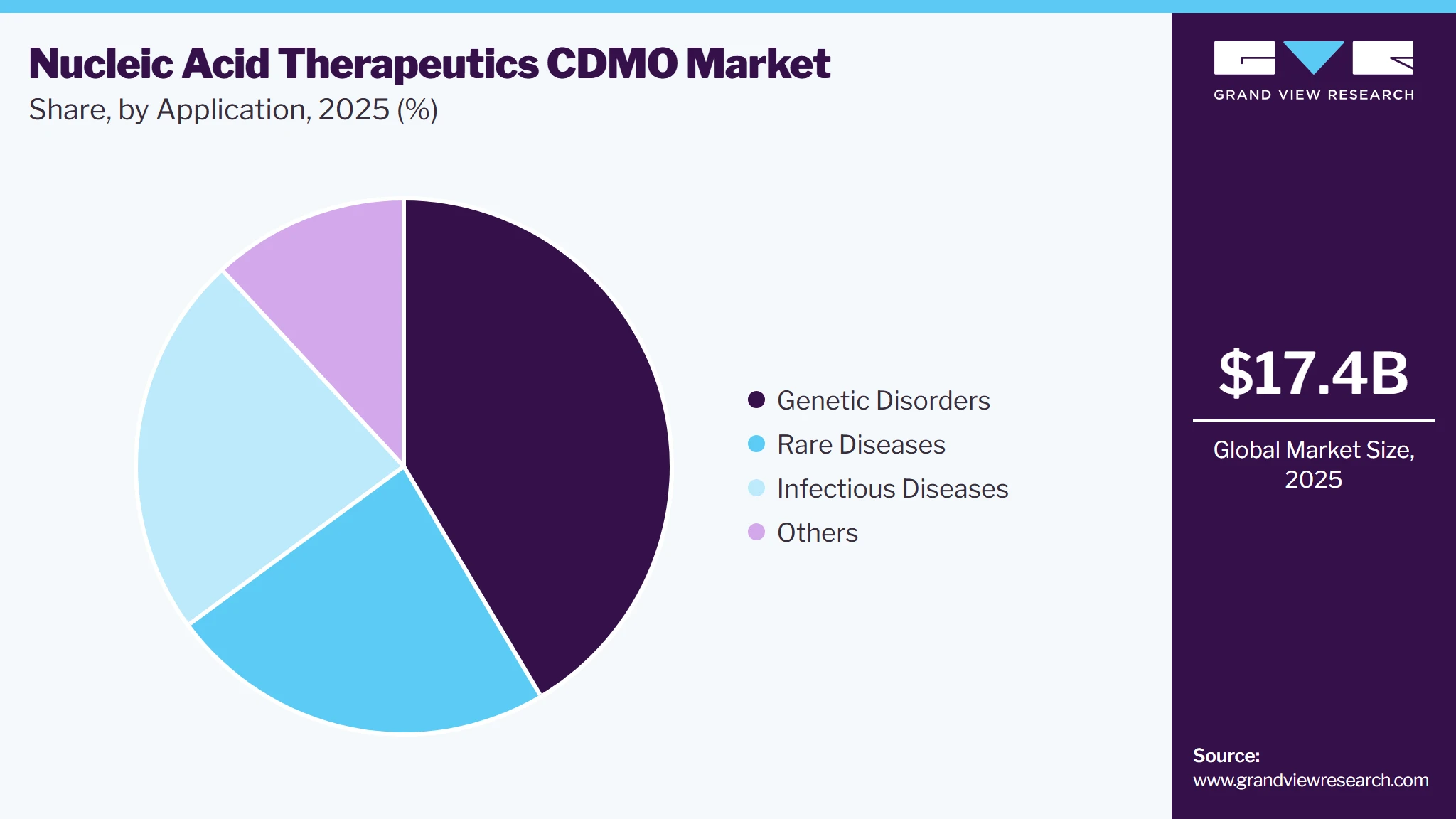
- By application: Genetic disorders segment dominated the market with the largest revenue share of 41.4% in 2025.
Regional Highlights
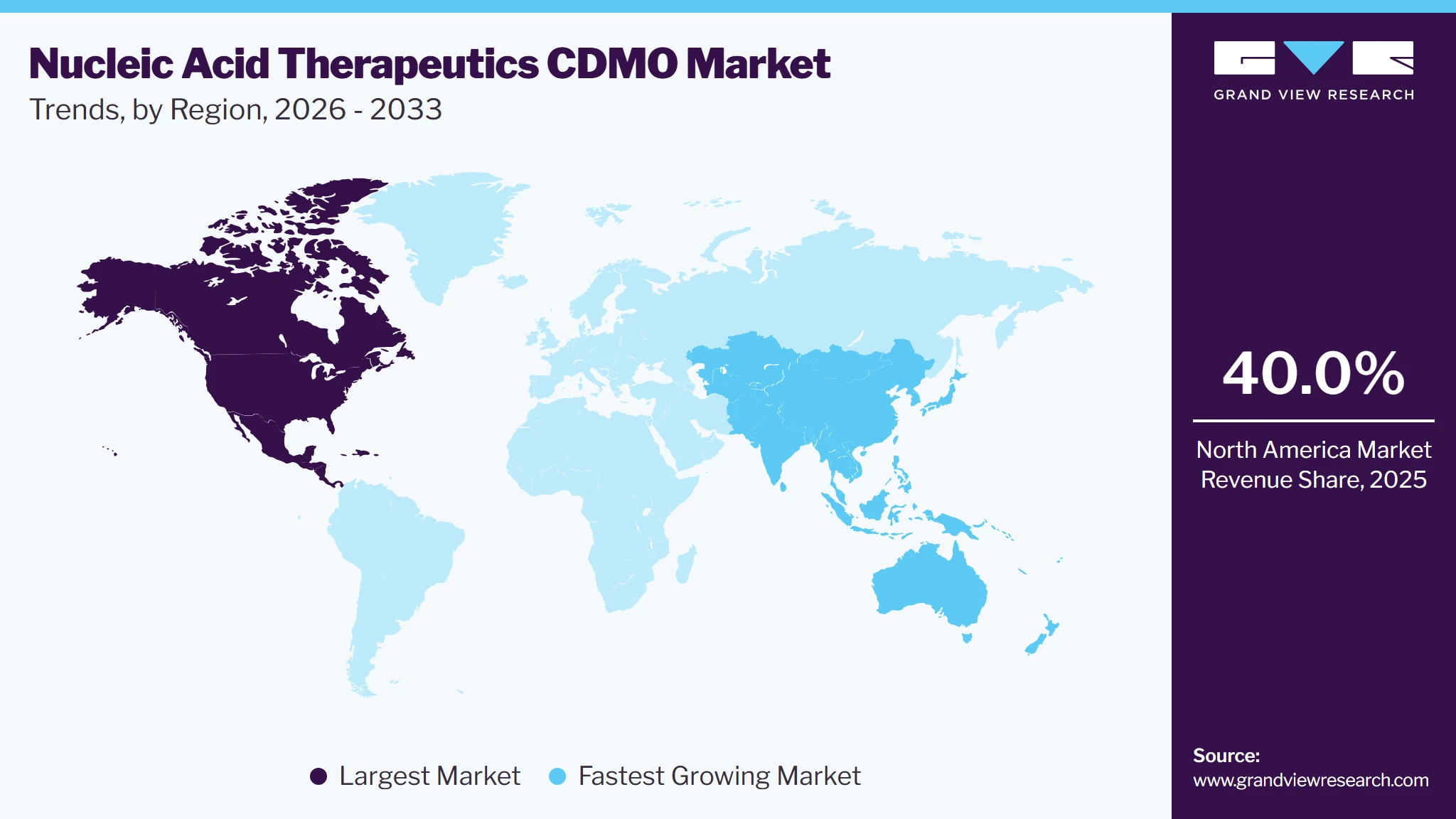
- Largest regional market: North America (40.0% revenue share, 2025)
- Fastest-growing regional market: Asia Pacific (highest CAGR, 2026-2033)
- By country: The nucleic acid therapeutics CDMO market in the U.S. held the largest share in North America in 2025, owing to a strong presence of industry participants in the country.
Market Size & Forecast
- Market Size in 2025: USD 17.4 Billion
- Estimated Market Size in 2026: USD 19.8 Billion
- Projected Market Size by 2033: USD 51.2 Billion
- CAGR (2026-2033): 14.5%
Three ways to get this report
Buy it, customize it, or ask a question.Ask an Analyst
Analyst response in 1 business day
- AccessReport author, directly
- Reply timeWithin 1 working day
- No sales callDirect answer only
- FormatEmail reply
- CostFree, no cost
Get the Full Report
What the study covers
- FormatsPDF · Excel · Dashboard
- Timeline2026–2033 annual, 2025 base
- Coverage20+ countries, 5 regions
- Companies10+ key players profiled
Customize the Report
20% free customization
- IncludeCountries, segments, points
- TailorTo your product definition
- ExtendDeeper competitor detail
- OrA fully bespoke study
- Turnaround5–10 working days
Growing regulatory approval, rapidly expanding pipeline of gene & RNA based therapy, and robust expansion of the genomics research sector & strong traction gained by custom oligonucleotides are key major factors driving the market growth over the forecast period. The growing number of global CDMOs, adoption of a one-stop-shop model & foreign direct investments for nucleic acid therapeutics, and rising need for personalized medicine are other aspects anticipated to propel overall market revenue growth.The growing incidence of genetic disorders globally has fueled interest in nucleic acid therapeutics as a potential option for the treatment of such conditions. For instance, according to WHO, as of 2023, there are around 10,000 types of distinct monogenic or single-gene diseases globally. Such conditions are caused due to mutations in a single gene. Thus, increasing the utilization of genetic materials such as RNA or DNA can prevent and treat genetic diseases. Genetic editing and sequencing technologies have significantly enhanced the comprehension of genetic diseases and considerably increased the development of nucleic acid therapeutics. Moreover, these drugs have high potential in treating rare genetic diseases for which the development process of traditional medicine is economically challenging. The high proficiency of nucleic acid therapeutics allows for a more precise and personalized treatment approach by specifically targeting the genetic abnormalities of the condition. Thus, the rising prevalence of genetic ailments is one of the prominent factors driving the growth in demand for nucleic acid therapeutics, thereby proliferating overall market demand.
 To learn more about this report, Download Free Sample Report
The genomics research industry is witnessing a robust expansion driven by the growing demand for personalized medicine and technological advancements. This can be attributed to the growing adoption of advanced bioinformatics tools and high-throughput sequencing technologies. Custom oligonucleotides and short DNA or RNA sequences tailored for specific applications have gained significant traction in this market. Such molecular tools are pivotal in several genomic applications, including PCR amplification, DNA sequencing, and gene editing. Modifying oligonucleotides permits researchers to manipulate and accurately target genetic material, allowing enhanced precision and experimentation. This approach has witnessed considerable attention due to its potential to target several conditions, such as cancer, genetic ailments, and infectious diseases. Owing to the aforementioned factors, several biopharmaceutical companies have been focusing on developing novel nucleic acid therapeutics, including oligonucleotide products, over the past few years. Moreover, considerable investments are expected to be made for developing nucleic acid drugs, and a strong pipeline of products is anticipated to be commercialized during the forecast period.
There has been an increase in the outsourcing of biologics manufacturing due to COVID-19. As per the BioPlan Associates 17th Annual Report and Survey of Biopharmaceutical Manufacturing, 65% of biotherapeutics facilities used contract development and manufacturing services for at least some of their bioprocessing, which accelerated the market demand during the pandemic. Moreover, service providers, such as CROs and CDMOs, witnessed a spike in inquiries and orders, mostly related to coronavirus vaccines & therapeutics.
Innovations and speed-to-clinic are of critical importance for various biopharmaceutical and pharmaceutical companies. Specialty biopharmaceutical players and small companies significantly focus on delivering these important requirements within the industry. Several CDMOs and CROs act as one-stop-shop organizations. The service model of a one-stop-shop CDMO involves handling everything from API to dosage form and early development to commercialization. To offer such services, CDMOs must have a wide range of specialized handling capabilities and enabling technologies to address specific problem statements. Moreover, there is a wide range of product design capabilities among CDMO players that can be crucial in scaling a product concept and bringing it to the market.
Market Dynamics
The nucleic acid therapeutics CDMO market is entering a high-growth phase driven by increasing commercialization of RNA therapeutics, gene therapies, antisense oligonucleotides (ASOs), and mRNA-based medicines. As drug developers increasingly outsource complex manufacturing activities, demand for specialized CDMOs with expertise in oligonucleotide synthesis, LNP formulation, analytical testing, and GMP manufacturing continues to rise. The industry is also witnessing substantial investments in manufacturing capacity, technology upgrades, and strategic acquisitions as CDMOs race to address growing clinical and commercial demand.
The rapid expansion of RNA-based therapeutics and gene therapy pipelines is emerging as the primary growth catalyst for the nucleic acid therapeutics CDMO market. Pharmaceutical and biotechnology companies are increasingly advancing mRNA therapeutics, siRNA drugs, antisense oligonucleotides, CRISPR-based therapies, and gene therapies into clinical and commercial stages. However, manufacturing these products requires highly specialized expertise, advanced analytical capabilities, and stringent GMP compliance, prompting developers to rely on external CDMO partners.
Furthermore, the growing prevalence of genetic disorders continues to strengthen demand. The World Health Organization estimates that over 10,000 monogenic diseases exist globally, creating significant opportunities for nucleic acid-based interventions. As precision medicine adoption expands, nucleic acid therapeutics are increasingly viewed as viable approaches for treating rare and previously untreatable diseases.
As development pipelines mature and regulatory approvals increase, demand for scalable manufacturing, process optimization, and commercial production services is expected to remain a major growth engine throughout the forecast period.
Despite strong growth prospects, manufacturing complexity and regulatory requirements remain significant barriers for the nucleic acid therapeutics CDMO market. Unlike conventional biologics or small-molecule drugs, nucleic acid therapeutics involve highly sophisticated production processes requiring precise synthesis, purification, encapsulation, characterization, and quality control. Minor variations in manufacturing parameters can significantly impact efficacy, stability, and safety outcomes.
Another emerging challenge is the scale-up of lipid nanoparticle production, which remains technically demanding and capital-intensive. As developers advance larger clinical programs, CDMOs must continually invest in specialized infrastructure and automation technologies to meet evolving customer requirements. These high capital expenditures and regulatory burdens may limit market entry for smaller providers and constrain industry-wide capacity expansion in the near term.
Market Concentration & Characteristics
The market growth stage is high, and the pace is accelerating. The market is characterized by evolving technologies, regulatory considerations, materials innovation, and increasing globalization and outsourcing of manufacturing processes to leverage cost advantages and specialized capabilities.
The market fortifies a high degree of innovation. Innovation in nucleic acid therapeutics is becoming more important to treat numerous diseases, as it supports healthcare by establishing a pathway for advanced therapeutic products. Rapid technological development in gene editing, RNA interference (RNAi), and messenger RNA (mRNA) technologies drive innovation in nucleic acid therapeutics, thereby accelerating demand for CDMOs.
 To learn more about this report, Download Free Sample Report
The market is witnessing a high level of M&A Activities to extend global capabilities in manufacturing and strengthen the current contract development and manufacturing services. The growing need to enhance capabilities and expand service portfolios propels consolidation in the market through mergers and acquisitions.
Regulations and restrictions on clinical trials are rapidly accelerating the need for continual monitoring by regulatory authorities & clinical teams to maintain study integrity. Furthermore, the time and cost associated with obtaining regulatory approvals for new therapeutics influence the speed of bringing products to market. Compliance with rigorous regulatory standards set by agencies like the U.S. FDA, EMA, and several others ensures the safety and efficacy of nucleic acid therapeutics, impacting the cost and complexity of manufacturing processes.
Service expansion in the market is medium owing to increasing demand for end-to-end services, from drug discovery and development to manufacturing and packaging, which drives CDMOs to expand their service portfolios. Further, growing demand from biotech and pharmaceutical companies for specialized services in nucleic acid therapeutics stimulates CDMOs to expand their capabilities.
Market players leverage this strategy to increase manufacturing capabilities and enhance the geographic reach of their products. Growing healthcare infrastructure and increasing investment in biotech research in regions such as Asia-Pacific and Latin America drive CDMOs to expand geographically. In addition, regional expansions provide access to skilled labor and scientific talent, essential for innovation and high-quality manufacturing. Thus, they positively impact the overall market progression.
Analyst Perspective
By 2033, competitive differentiation is expected to be driven by investments in manufacturing scale, LNP delivery technologies, advanced analytics, and integrated end-to-end CDMO capabilities. Providers offering seamless development-to-commercialization support, regulatory expertise, and scalable production platforms will be best positioned to capitalize on growing outsourcing demand. Despite ongoing challenges related to manufacturing complexity and regulatory compliance, the market outlook remains strong, supported by increasing adoption of specialized CDMO services for next-generation nucleic acid therapeutics.
Type Insights
Based on type, the RNA-based therapies segment led the market with the largest revenue share of 65.6% in 2025. The demand for RNA-based therapies is expected to surge due to promising clinical trial outcomes and the potential to address a range of diseases. Hence, these therapies are currently in the highlight as the biopharma industry players emphasize RNA-based therapies in their future pipelines to meet rising healthcare demand.
The gene therapy segment is expected to witness the fastest CAGR over the forecast period, due to the potential of gene therapy candidates to treat several disorders. For instance, in January 2023, Vector BioMed secured USD 15 million in its initial round of funding, marking a significant milestone for the startup. With the raised capital, the company aimed to address a substantial void in the production of cell and gene therapies. Further, with rising demand for robust disease treatment therapies, companies are accelerating Research & Development (R&D) efforts for effective gene therapies that target the cause of disease at a genomic level, which further propel industry progression.
Service Insights
Based on service, the manufacturing services segment accounted for the largest market share in 2025. The high segmental growth is attributed to the increasing highly specialized knowledge and expertise in the manufacturing of nucleic acid therapies. Moreover, CDMOs that focus on nucleic acid manufacturing have a deep understanding of these therapies, giving them a competitive advantage in the market. Besides, major CDMOs are undertaking substantial investments to expand their capacity and meet rising demand. For instance, in March 2024, Lonza announced the acquisition of a large-scale biologics manufacturing site from Roche in the U.S. The deal is worth USD 1.2 billion; through this acquisition, Lonza received access to one of the world's largest biologics manufacturing sites by volume to cater to its customer's needs. The investment undertaken by Lonza positioned the company to offer customers a fully integrated end-to-end solution. In addition, a growing number of nucleic acid therapeutics projects is another key factor aiding segment growth.
The process development and optimization segment is anticipated to witness at a significant CAGR over the forecast period. The segment growth potential is owing to the growing pipeline of nucleic acid therapeutics, with numerous candidates in various stages of clinical development, which fuels the demand for CDMO services. According to the American Society of Gene & Cell Therapy (ASGCT), there are 3,866 therapies in various stages of development, spanning from preclinical to preregistration phases. Around 2,082 therapies fall under gene therapies, including genetically modified cell therapies like CAR T-cell therapies. This accounts for 53% of the overall development of gene, cell, and RNA therapies. As a result, companies are seeking expertise in process development & optimization to scale up production for clinical trials and commercialization, thereby witnessing segmental market growth.
End-use Insights
Based on end-use, the biotech companies segment held the highest market share in 2025. Some of the key factors contributing to segment growth are expertise in nucleic acid-based drug development, rising substantial investment for nucleic acid therapies across emerging countries, increasing R&D of innovative therapies, and expanding product portfolio. In addition, the promising advantages of therapies to cure various disorders are expected to fulfill unmet medical needs. Moreover, the adoption of emerging technologies and growing product approval & launches the segment growth.
The government & academic research institutes segment is anticipated to grow at the fastest CAGR over the forecast period. The segment is expected to witness growth at a significant pace due to increasing early-stage research & innovation, supported by significant investment and funding for drug development initiatives. For instance, in June 2022, Evonik announced a substantial investment of USD 220 million in collaboration with the U.S. government to establish a new lipid production facility dedicated to mRNA-based therapies in the U.S. Hence, adoption of such strategies is likely to impact segmental growth positively.
Application Insights
Based on application, the genetic disorders segment dominated the nucleic acid therapeutics CDMO market in 2025. Growth in the segment can be attributed to the increasing prevalence of genetic disorders and favorable government initiatives. Moreover, gene therapy support provides treatments for several disorders that currently have limited or no available treatments in the market. This factor created new possibilities for innovative therapy products targeting specific genetic mutations, further debilitating genetic conditions. Hence, the segment offers the unique potential to cure a genetic disease that impacts millions of patients positively.
 To learn more about this report, Download Free Sample Report
The Infectious disease segment is expected to grow at a significant CAGR during the forecast period, primarily fueled by escalating application of these therapeutics in treating COVID-19 infections. The emergence of the COVID-19 pandemic has led to a paradigm shift in the research landscape, with a notable increase in the utilization of nucleic acid therapeutics for infectious diseases. Moreover, the momentum gained during the pandemic has positioned the infectious disease segment as a focal point for market growth, with ongoing endeavors focused on addressing a broader spectrum of infectious diseases beyond COVID-19.
Regional Insights
North America dominated the nucleic acid therapeutics CDMO market, accounting for a revenue share of 40.0% in 2025. This can be attributed to a proactive regulatory environment, increasing investment & funding support, and a growing number of product approvals globally. Other factors contributing to the growth are increased R&D activities, the growing prevalence of chronic diseases, and increased government support for the healthcare sector. Moreover, the robust biotech industry, global expansion of CDMOs, presence of key CDMOs, advanced healthcare ecosystem, solid clinical trial infrastructure, and strong academic & research institutions are other factors boosting the market growth.
 To learn more about this report, Download Free Sample Report
U.S. Nucleic Acid Therapeutics CDMO Market Trends
The nucleic acid therapeutics CDMO market in the U.S. held the largest share in North America in 2025, owing to a strong presence of industry participants in the country. The U.S. market has benefited from the immense potential of nucleic acid therapeutics to treat a range of diseases such as oncology, genetic disorders, infectious diseases, and others. Moreover, increasing investments, a rising number of clinical trials, rapid advancements in medicine development, and a growing gene therapy pipeline across the country are expected to drive the market growth.
Europe Nucleic Acid Therapeutics CDMO Market Trends
The nucleic acid therapeutics CDMO market in Europe is expected to grow at a significant CAGR during the forecast period, owing to the presence of key pharmaceutical and biotechnology companies in this region. In addition, there are a large number of CDMOs specializing in therapy innovation in various European countries, such as Germany, the UK, and France, which is expected to contribute to market growth in this region.
The UK nucleic acid therapeutics CDMO market held the largest share in Europe in 2024. The growth can be attributed to various factors such as the presence of various multinational CDMOs, significant R&D spending, healthcare research, and rapidly evolving therapeutic approaches with developments of gene therapies, modified nucleotides, circular RNA, self-amplifying RNA, and tissue targeting have fueled the demand for UK nucleic acid therapeutics CDMOs.
The nucleic acid therapeutics CDMO market in Germany is anticipated to grow at a significant CAGR over the forecast period. Technological advancements and quality clinical resources are some of the primary factors expected to propel market growth over the forecast period. Moreover, government initiatives for clinical research activities have accelerated the market growth in Germany.
Asia Pacific Nucleic Acid Therapeutics CDMO Market Trends
The nucleic acid therapeutics CDMO market in Asia Pacific is expected to grow at the fastest CAGR over the forecast period. The high market growth potential is attributed to the changing business model of MNC outsourcing, and R&D activities are expected to increase nucleic acid therapeutics CDMO demand in Asia Pacific owing to cost-efficiency offered by CDMO in countries such as India and China. These countries are expected to witness lucrative market growth. In contrast, countries such as South Korea, Australia, and Thailand are also expected to witness steady growth over the forecast period. The establishment of several CDMOs across the Asia Pacific region has also strengthened innovation in therapies in the region.
The China nucleic acid therapeutics CDMO market held the largest share in Asia Pacific in 2024. The market growth is owing to the increasing number of nucleic acid therapeutics approvals due to their potential to become blockbuster drugs for treating a range of diseases, including cardiovascular and metabolic diseases, liver diseases, and a variety of rare diseases.
The nucleic acid therapeutics CDMO market in Japan is expected to grow at the fastest CAGR over the forecast period, due to various factors such as the growing pharmaceutical industry, increasing demand for outsourcing services, and rising R&D activities.
India nucleic acid therapeutics CDMO market is anticipated to grow at the fastest CAGR over the forecast period. Growth in the country can be attributed to the availability of low-cost labor, low manufacturing costs, considerable demand for high-quality medications, and strong presence of WHO-cGMP-compliant facilities & a skilled workforce.
Latin America Nucleic Acid Therapeutics CDMO Market Trends
The nucleic acid therapeutics CDMO market in Latin America is anticipated to grow at a substantial CAGR over the forecast period, owing to the expanding CDMO industry, which reduces the monitoring cost associated with outsourcing services. Moreover, growing approval for gene therapy, rising investments in R&D research, and increasing product launches are expected to drive the market growth in the region.
The Brazil nucleic acid therapeutics CDMO market is anticipated to grow at a significant CAGR over the forecast period. The growing prevalence of blood cancer, genetic disorders, and infectious diseases in the region has created a requirement for nucleic acid therapeutics CDMO. This has led to the business expansion of gene therapy products, creating substantial demand for the market in recent years.
MEA Nucleic Acid Therapeutics CDMO Market Trends
The nucleic acid therapeutics CDMO market in MEA is expected to grow at a substantial CAGR over the forecast period. Several companies in the region are innovating nucleic acid therapeutics due to growing concerns about treating various chronic & genetic disorders and increasing government support to attract CDMO companies to further innovate various vaccines & therapeutics for the patient population.
South Africa nucleic acid therapeutics CDMO market is anticipated to grow at the fastest CAGR over the forecast period, owing to growing demand for nucleic acid therapeutics to treat various chronic & genetic disorders, approval of products, and expansion of CDMO manufacturing sites. In addition, the country is the largest market for pharmaceuticals in the sub-Saharan African region. It has one of the most developed infrastructure facilities with the presence of a significant number of life sciences companies.
Key Nucleic Acid Therapeutics CDMO Company Insights
The prominent market players operating across the global market focus on implementing numerous strategic initiatives such as acquisitions, mergers, service launches, partnerships, expansions, and collaborations, among others, to broaden the geographical reach and gain a competitive edge in the overall market. For instance, in November 2023, LGC’s unit LGC Biosearch Technologies acquired PolyDesign, a leading manufacturer & supplier of solid support embedded frits used for low- & ultra-low-scale DNA & RNA oligonucleotide synthesis & purification. Such acquisition broadened the service offerings of the company in a significant market.
Key Nucleic Acid Therapeutics CDMO Companies:
The following are the leading companies in the nucleic acid therapeutics CDMO market. These companies collectively hold the largest market share and dictate industry trends.
- Agilent Technologies, Inc.
- Curia Global, Inc.
- Ajinomoto Co., Inc.
- Danaher (Aldevron)
- KNC Laboratories Co., Ltd.
- LGC Limited
- Merck KGaA
- WuXi AppTec
- BIOSPRING
- Univercells Inc.
- Exothera
Competitive Benchmarking
Category
Operating Strategies
Competitive Edge
Weakness
Established Players (Merck KGaA; WuXi AppTec)
• Expand end-to-end capabilities from process development to commercial-scale manufacturing.
• Pursue acquisitions, capacity expansion, and global facility integration to support RNA, oligonucleotide, and gene therapy programs.• Established regulatory track record with commercial manufacturing experience.
• Large-scale manufacturing infrastructure and ability to support late-stage and commercial projects.• Higher operating costs and pricing structures compared to niche providers.
• Longer onboarding timelines and reduced flexibility for smaller biotech clients.Emerging Players (Exothera, BIOSPRING)
• Focus on specialized technologies such as mRNA, oligonucleotide synthesis, and LNP formulation.
• Build partnerships with biotech innovators and offer customized development services.• Greater operational agility and faster project turnaround times.
• Ability to adopt novel manufacturing technologies rapidly.• Limited commercial-scale manufacturing footprint.
• Lower global regulatory experience and smaller customer base.Recent Developments
-
In October 2026, Agilent Technologies, Inc. expanded its oligonucleotide manufacturing capabilities with additional laboratory space in Boulder, Colorado. The facility is intended to support the development and scale-up of emerging oligonucleotide manufacturing technologies, initially focusing on enzymatic ligation.
-
In September 2026, Aldevron and Integrated DNA Technologies (IDT) launched research-grade Cas9 mRNA solutions in wild-type and SpyFi high-fidelity formats. The joint offering combines IDT's CRISPR engineering and analysis expertise with Aldevron's mRNA manufacturing capabilities, supporting gene-editing research and the advancement of nucleic acid-based therapeutics toward clinical development.
Nucleic Acid Therapeutics CDMO Market Report Scope
Report Attribute
Details
Market size in 2025
USD 17.4 billion
Estimated Market Size in 2026
USD 19.8 billion
Projected Market Size by 2033
USD 51.2 billion
Growth rate
CAGR of 14.5% from 2026 to 2033
Historical data
2021 - 2025
Forecast period
2026 - 2033
Quantitative units
Revenue in USD million/billion and CAGR from 2026 to 2033
Report coverage
Revenue forecast, company ranking, competitive landscape, growth factors, and trends
Segments covered
Type, service, end-use, application, region
Regional scope
North America; Europe; Asia Pacific; Latin America; MEA
Country scope
U.S.; Canada; Mexico; Germany; UK; France; Italy; Spain; Norway; Denmark; Sweden; China; Japan; India; South Korea; Australia; Thailand; Brazil; Argentina; Saudi Arabia; South Africa; UAE; Kuwait
Key companies profiled
Agilent Technologies, Inc.; Curia Global, Inc.; Ajinomoto Co., Inc.; Danaher (Aldevron); KNC Laboratories Co. Ltd.; LGC Limited; Merck KGaA; WuXi AppTec; BIOSPRING; Univercells Inc.; Exothera
Customization scope
Free report customization (equivalent up to 8 analysts' working days) with purchase. Addition or alteration to country, regional & segment scope.
Pricing and purchase options
Avail customized purchase options to meet your exact research needs. Explore purchase options
Global Nucleic Acid Therapeutics CDMO Market Report Segmentation
This report forecasts revenue growth at global, regional, and country levels and provides an analysis of the latest industry trends in each of the sub-segments from 2021 to 2033. For this study, Grand View Research has segmented the global nucleic acid therapeutics CDMO market report based on type, service, end-use, application, and region:
-
Type Outlook (Revenue, USD Million, 2021- 2033)
-
Gene Therapy
-
RNA-based Therapies
-
-
Service Outlook (Revenue, USD Million, 2021- 2033)
-
Process Development and Optimization
-
Manufacturing Services
-
Analytical and Quality Control Services
-
Others
-
-
End-use Outlook (Revenue, USD Million, 2021- 2033)
-
Pharmaceutical Companies
-
Government & Academic Research Institutes
-
Biotech Companies
-
-
Application Outlook (Revenue, USD Million, 2021- 2033)
-
Rare Diseases
-
Genetic Disorders
-
Infectious Diseases
-
Others
-
-
Regional Outlook (Revenue, USD Million, 2021- 2033)
-
North America
-
U.S.
-
Canada
-
Mexico
-
-
Europe
-
UK
-
Germany
-
France
-
Italy
-
Spain
-
Denmark
-
Sweden
-
Norway
-
-
Asia Pacific
-
Japan
-
China
-
India
-
South Korea
-
Australia
-
Thailand
-
-
Latin America
-
Brazil
-
Argentina
-
-
Middle East and Africa (MEA)
-
South Africa
-
Saudi Arabia
-
UAE
-
Kuwait
-
-
Research Methodology
Segment Definition
By Type
Segment
Definition
Gene Therapy
Revenue is generated from CDMO services supporting the development and manufacture of therapies that introduce, alter, or replace genetic material within a patient's cells to treat or prevent disease, including viral vector-based and gene-editing approaches such as CRISPR.
RNA-based Therapies
Revenue is captured from CDMO services for producing RNA-based modalities — including mRNA, siRNA, antisense oligonucleotides (ASOs), and saRNA — which work by directing cellular machinery to produce, silence, or modify protein expression rather than altering the genome directly.
By Service
Segment
Definition
Process Development & Optimization
Revenue is earned from technical services that design, scale, and refine manufacturing workflows for nucleic acid therapeutics, covering upstream synthesis, purification protocols, and formulation strategies to prepare candidates for clinical-scale production.
Manufacturing Services
Revenue is generated from the actual large-scale production of nucleic acid drug substances and drug products under GMP conditions, including synthesis of oligonucleotides, mRNA, lipid nanoparticle (LNP) encapsulation, and fill-finish operations.
Analytical & Quality Control Services
Revenue is captured by providing testing, characterization, and quality assurance services — such as identity, purity, potency, and stability testing — required to demonstrate product safety and regulatory compliance throughout development and commercial supply.
Others
Revenue from ancillary CDMO offerings not captured above, such as regulatory affairs support, storage and logistics, and technology transfer services that support clients in bringing nucleic acid therapeutics to market.
By End Use
Segment
Definition
Pharmaceutical Companies
Revenue is derived from large pharma organizations outsourcing nucleic acid drug development and manufacturing to CDMOs, leveraging external expertise and capacity rather than building proprietary infrastructure.
Biotech Companies
Revenue is captured from emerging and mid-size biotech firms — typically asset-light and innovation-focused — that rely heavily on CDMOs for end-to-end development and manufacturing of their nucleic acid pipelines.
Government & Academic Research Institutes
Revenue is generated from publicly funded institutions and universities outsourcing early-stage research, preclinical production, and investigational-use manufacturing of nucleic acid constructs, often supported by grants or government contracts.
By Application
Segment
Definition
Genetic Disorders
Revenue is driven by CDMO services supporting therapies targeting conditions caused by inherited or acquired gene mutations (e.g., sickle cell disease, Duchenne muscular dystrophy), where nucleic acid approaches offer potential curative or disease-modifying outcomes. This is the dominant application segment.
Rare Diseases
Revenue is captured from CDMO engagements for small-patient-population diseases that lack established treatments, where the precision of nucleic acid therapeutics and favorable regulatory pathways (e.g., Orphan Drug designation) make them commercially attractive.
Infectious Diseases
Revenue is generated by CDMO services supporting mRNA vaccines and nucleic acid antivirals for pathogens such as SARS-CoV-2, influenza, and HIV, a segment that gained significant momentum following the COVID-19 pandemic.
Others
Revenue from CDMO services for nucleic acid therapeutics directed at conditions such as oncology, cardiovascular diseases, and metabolic disorders that do not fall exclusively under the above categories.
Delivered Customizations
This report has been delivered with the following In-depth customizations
CLIENT REQUEST
CUSTOMIZATION DELIVERED
VALUE ADDS
Nucleic Acid Therapeutics CDMO Market Trends & Opportunity Assessment
Conducted a focused assessment of the nucleic acid therapeutics CDMO market covering RNA therapeutics, mRNA, siRNA, antisense oligonucleotides, gene-editing therapies, manufacturing services (process development, analytical testing, GMP production), therapeutic applications, outsourcing trends, customer demand patterns, and regional growth opportunities.
Helps stakeholders identify high-growth service segments, emerging therapeutic modalities, outsourcing drivers, investment hotspots, customer requirements, and commercialization opportunities across biotech, pharmaceutical, and research organizations.
Competitive Landscape & Market Share Assessment
Evaluated established and emerging CDMOs based on manufacturing capabilities, technology platforms, production capacity, regulatory expertise, geographic presence, strategic partnerships, customer portfolio, expansion initiatives, and competitive positioning, along with an assessment of market concentration and share trends.
Provides visibility into competitive dynamics, market fragmentation, partnership opportunities, white-space segments, capacity gaps, and strategic initiatives required to strengthen market positioning and accelerate growth.
Capacity Expansion & Manufacturing Footprint Analysis
Analyzed global manufacturing capacity by modality, facility expansion plans, regional production hubs, supply chain infrastructure, utilization trends, and investment activity across key CDMO facilities.
Enables informed capacity planning, partner selection, supply chain optimization, and long-term investment decisions while identifying regions with favorable manufacturing economics and scalability potential.
Frequently Asked Questions About This Report
Asia Pacific is the fastest-growing region over the forecast period.
RNA-based therapies segment led the market with the largest revenue share of 65.6% in 2025.
Manufacturing services segment accounted for the largest market share of 38.6% in 2025.
Genetic disorders segment dominated the market with the largest revenue share of 41.4% in 2025.
The global nucleic acid therapeutics CDMO market size was estimated at USD 17.4 billion in 2025 and is expected to reach USD 19.8 billion in 2026.
The global nucleic acid therapeutics CDMO market is expected to grow at a compound annual growth rate of 14.5% from 2026 to 2033 to reach USD 51.2 billion by 2033.
North America dominated the nucleic acid therapeutics CDMO market with a share of 40.0% in 2025. This is attributable to the robust biotech industry, advanced healthcare ecosystem, substantial investment and funding support, extensive clinical trial infrastructure, and strong academic and research institutions.
Some key players operating in the nucleic acid therapeutics CDMO market include Agilent Technologies, Inc., Curia Global, Inc., Ajinomoto Co., Inc., Danaher (Aldevron), KNC Laboratories Co., Ltd., LGC Limited, Merck KGaA, WuXi AppTec, BIOSPRING, Univercells Inc., and Exothera, among others.
Key factors that are driving the market growth include advancements in nucleic acid therapeutics, complex manufacturing processes, and increased investment. Moreover, rising regulatory approval for nucleic acid therapeutics and increasing demand for personalized medicine across the globe are also expected to boost market growth.
About the Author(s)
Medical Devices Research Team
Healthcare · Medical DevicesThis report was authored by the medical devices research team at Grand View Research - comprising two research analysts, one senior research analyst, and one industry expert - with specialized expertise in the medical devices segment of the healthcare industry. All findings are based on proprietary healthcare databases, executive interviews, and regulatory analysis, subject to internal peer review prior to publication.
Last Updated:
Speak to Analyst

Customize this report to your needs - add regions, segments, or data points, with 20% free customization.
Or view our licence options:


ISO 9001:2015 & 27001:2022 Certified
We are GDPR and CCPA compliant! Your transaction & personal information is safe and secure. For more details, please read our privacy policy.


