
- Home
- »
- Consumer F&B
- »
-
Nutraceuticals Market Size & Share Report, 2027-2035GVR Report cover

Nutraceuticals Market (2027 - 2035)
Size, Share & Trends Analysis Report by Product (Dietary Supplements, Functional Food, Functional Beverages, And Infant Formula), By Application, By Distribution Channel, By Region, And Segment Forecasts
Market Size, 2026
$683.9BMarket Estimate, 2027
$736.0BMarket Forecast, 2035
$1,292.7BCAGR, 2027–2035
7.3%Nutraceuticals Market Summary
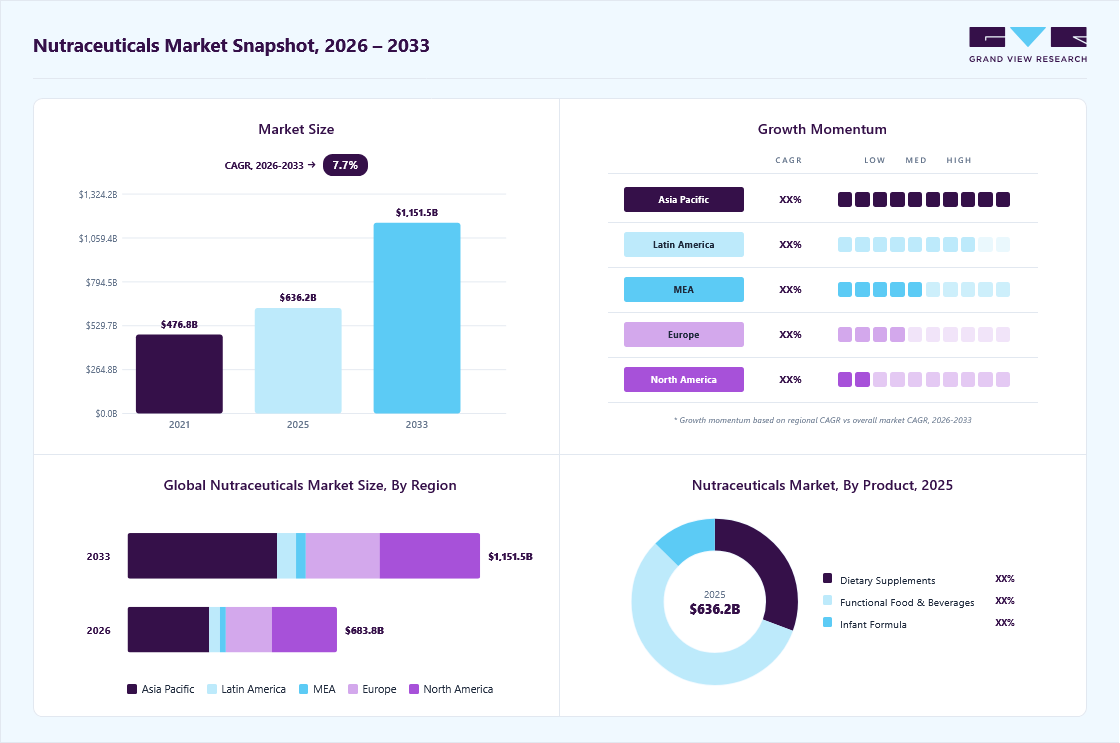
The global nutraceuticals market size was valued at USD 683.9 billion in 2026 and is projected to grow from USD 736.0 billion in 2027 to USD 1292.7 billion by 2035, at a CAGR of 7.3% from 2027 to 2035. Asia Pacific dominated the market, accounting for a revenue share of 37.8% in 2026. This leadership is supported by rising health awareness, growing demand for preventive healthcare, and increasing consumer adoption of nutrition-based wellness products.
 Source: Grand View Research, IR Documents, Primary Interviews, Paid DatabasesTo learn more about this report,
 Download Free Sample Report
Key Market Trends & Insights
- Based on product, the functional food & beverages segment accounted for a revenue share of 53.8% in 2026.
- Based on applications, the weight management & satiety application accounted for a revenue share of 15.1% in 2026.
- Based on distribution channel, hypermarkets and supermarkets dominated nutraceutical product sales, accounting for a revenue share of 35.4% in 2026.
Regional Highlights
- Largest Region: Asia Pacific (37.8% revenue share, 2026)
- Significantly growing region: Middle East & Africa (significantly CAGR, 2027 - 2035)
Market Size & Forecast
- 2026 Market Size: USD 683.9 Billion
- Estimated market size in 2027: USD 736.0 Billion
- 2035 Projected Market Size: USD 1,292.7 Billion
- CAGR (2027-2035): 7.3%
Prism AI by Grand View Research Free to tryAsk a question about the nutraceuticals marketTry asking✓Every figure cited from GVR research Prefer the report? Download free sample →
Consumers are increasingly scrutinizing ingredient lists, seeking clean labels, and opting for plant-based options. This aversion to synthetic ingredients and a desire for transparency is driving demand for nutraceuticals derived from natural sources, such as fruits, vegetables, herbs, and botanicals. Innovations in extraction and processing technologies are also playing a crucial role, enabling manufacturers to create more potent and bioavailable formulations from these natural ingredients. This trend extends beyond just ingredient sourcing and encompasses ethical and sustainable production practices, further shaping consumer choices.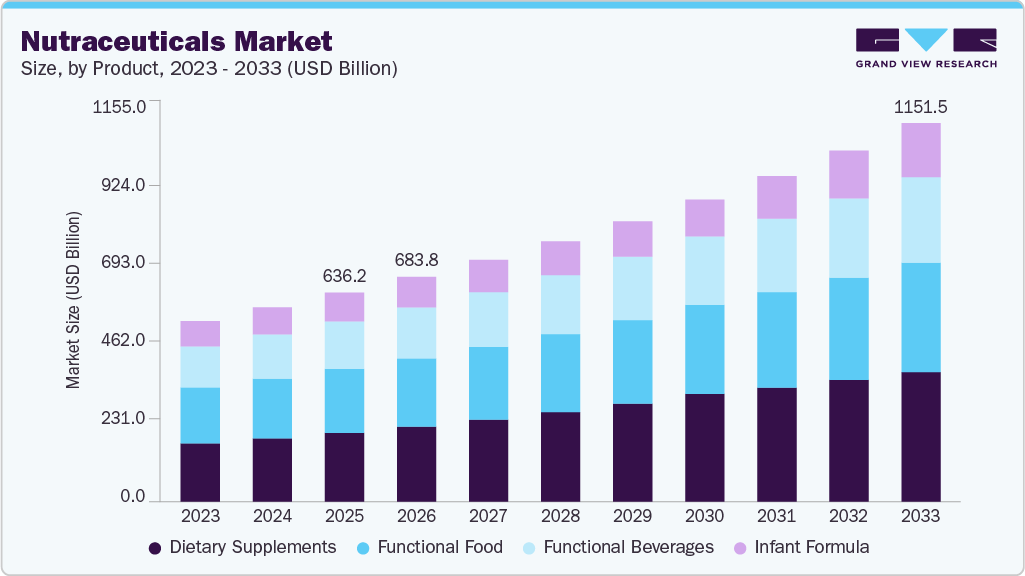 To learn more about this report, Download Free Sample Report
The increasing understanding of personalized nutrition and the role of gut health are also significant demand drivers. Consumers are moving away from a one-size-fits-all approach and are exploring nutraceuticals tailored to their individual needs based on factors like genetics, lifestyle, and health goals. The growing body of research highlighting the gut microbiome's influence on overall health has fueled demand for probiotics, prebiotics, and other gut-health-focused supplements. These developments are further supported by advancements in diagnostic tools and personalized health-tracking technologies, enabling individuals to make informed decisions about their nutraceutical needs.
Besides, the accessibility and convenience of nutraceuticals are significantly contributing to market growth. E-commerce platforms have made it easier for consumers to research and purchase a wide range of products, while the increased availability of convenient formats, such as gummies, powders, and drinks, has broadened the market appeal. Furthermore, the ongoing endorsement of nutraceuticals by healthcare professionals and fitness influencers is strengthening consumer trust and driving adoption. This combination of factors, from increased accessibility to trusted endorsements, is expected to continue driving the rapid expansion of the global nutraceuticals market.
Consumer Insights
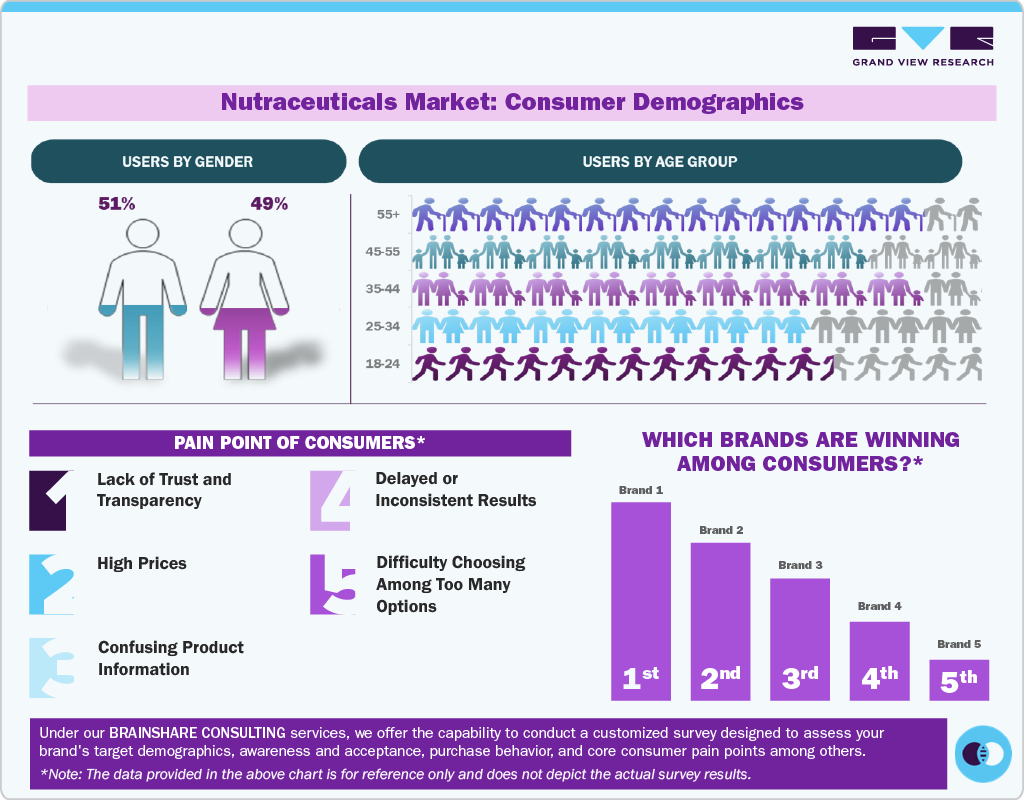
Consumers are increasingly prioritizing preventive healthcare, driving strong interest in nutraceuticals for immunity, gut health, energy, and healthy aging. Rising awareness of lifestyle-related diseases and nutritional gaps motivates buyers to seek science-backed, clean-label, and natural supplements. Younger consumers prefer convenient formats such as gummies and functional beverages, while older consumers focus on joint, heart, and cognitive health. Transparency, proven efficacy, and trustworthy brands remain critical purchase influencers.
 To learn more about this report, Download Free Sample Report
Digitalization has significantly shaped consumer behavior, with online platforms enabling product comparisons, reviews, and subscription-based purchases. Personalization is a major trend, as consumers increasingly choose nutraceuticals tailored to their age, biometrics, and lifestyle needs. There is growing demand for sustainably sourced, plant-based, and allergen-free products. Price sensitivity exists, but consumers are willing to pay premiums for clinically validated ingredients. Influencer recommendations and wellness apps also strongly impact buying decisions across demographics.
Consumers are also becoming more conscious of how products are delivered, with the nutraceutical packaging market playing a key role in shaping purchasing decisions. Increasing focus on sustainability, child-resistant features, travel-friendly formats, and tamper-proof designs is influencing preferences. Eco-friendly materials, clear labeling, and premium packaging that preserves product potency enhance trust and convenience, making packaging innovation a growing competitive differentiator for nutraceutical brands.
Market Dynamics
Growing awareness of preventive healthcare is encouraging consumers to incorporate nutraceutical products into their daily routines to support immunity, digestive health, cardiovascular wellness, cognitive function, and overall well-being. The shift toward proactive health management is increasing demand for vitamins, minerals, probiotics, omega-3 fatty acids, botanical extracts, and functional nutrition products. Retail data from SPINS highlights the importance of targeted nutritional ingredients, including magnesium, vitamin K, folic acid, and vitamins A, B, and D, which address consumer needs related to immune function, vision, cardiovascular health, muscle function, and bone health. Consumers are also showing greater interest in personalized nutrition based on age, lifestyle, dietary habits, and individual health goals. This trend is prompting manufacturers to introduce targeted formulations for women's health, healthy aging, sports nutrition, and gut health. For instance, in June 2025, Dabur announced the launch of Siens, a premium direct-to-consumer nutraceutical brand featuring marine collagen, beauty gummies, multivitamins, omega-3 softgels, and pre- and probiotic supplements. Digital health platforms and direct-to-consumer models are further supporting product discovery and adoption, encouraging continued innovation and portfolio expansion.
The nutraceuticals industry faces regulatory challenges as product classification, ingredient approvals, health claims, labeling, and safety standards vary across countries. Manufacturers must navigate multiple regulatory frameworks, increasing compliance costs, documentation requirements, and time to market. Growing scrutiny of product efficacy and ingredient safety also requires greater investment in scientific validation, testing, and quality assurance. For example, the U.S. FDA does not approve dietary supplements or their labeling before market entry but oversees manufacturing, safety, and regulatory compliance. These requirements can particularly burden smaller manufacturers with limited research budgets and regulatory expertise, restricting product launches and international expansion.
Growing demand for specialized wellness solutions is creating opportunities for nutraceutical manufacturers to develop products targeting healthy aging, women's health, gut health, beauty from within, and metabolic wellness. Advances in ingredient science are supporting the development of formulations featuring clinically studied probiotics, postbiotics, collagen, omega-3 fatty acids, and plant-based bioactive compounds. Manufacturers are also differentiating their portfolios through innovative delivery formats, including gummies, functional powders, shots, and ready-to-mix products, which offer greater convenience and appeal to consumers with diverse preferences. For instance, in March 2025, Lallemand Health Solutions introduced Cerenity, a probiotic formulation combining three probiotic strains with a prebiotic to support mobility, strength, and healthy aging. Such developments highlight the potential for ingredient innovation and targeted formulations to create new growth opportunities in the nutraceuticals market.
Analyst Perspective
The global nutraceutical market is witnessing a shift towards integrated nutrition solutions, as consumers increasingly incorporate health-oriented products into their daily routines. Demand is expanding beyond conventional vitamins and mineral supplements to include functional foods, fortified beverages, specialized infant nutrition and products addressing specific wellness needs. Manufacturers are responding by introducing advanced formulations, incorporating plant-derived and bioactive ingredients, and developing products tailored to different age groups and health requirements. While established companies capitalize on their manufacturing scale, diversified portfolios and established distribution channels, other market participants are strengthening their positions through niche product innovation and targeted nutritional offerings. Going forward, competitive differentiation will be shaped by formulation quality, credible health benefits, product accessibility, pricing strategies and the ability to adapt to evolving consumer preferences and regulatory requirements.
Product Insights
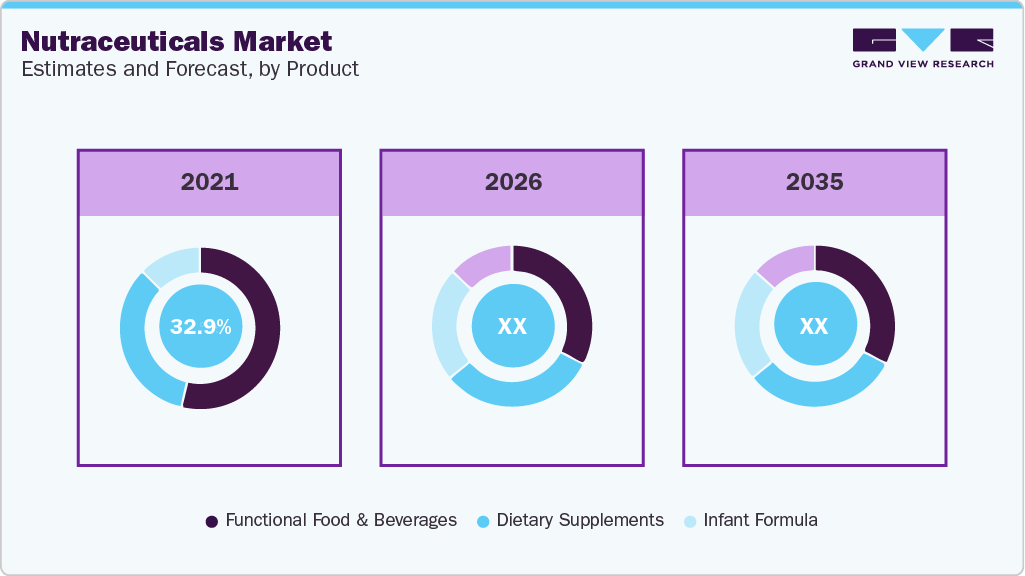
The functional food and beverages market accounted for a revenue share of 53.8% in 2026, driven by growing consumer preference for convenient food products that offer additional health benefits. Rising awareness of preventive healthcare is encouraging demand for fortified foods, probiotic beverages, protein-enriched products, and vitamin-fortified drinks. Increasing interest in gut health, immunity, digestive wellness, and nutritional balance is further supporting product innovation. Manufacturers are expanding their portfolios with functional ingredients and convenient formats to address evolving consumer needs.
 To learn more about this report, Download Free Sample Report
The dietary supplements market is anticipated to witness a growth rate of 8.9% from 2027 to 2035, driven by rising consumer awareness of preventive healthcare and the growing adoption of nutrition-based wellness products. Increasing demand for vitamins, minerals, probiotics, omega-3 fatty acids, and herbal supplements is supporting market expansion. Growing interest in immunity, digestive health, bone strength, healthy aging, and personalized nutrition is further encouraging manufacturers to introduce targeted formulations and innovative delivery formats..
Application Insights
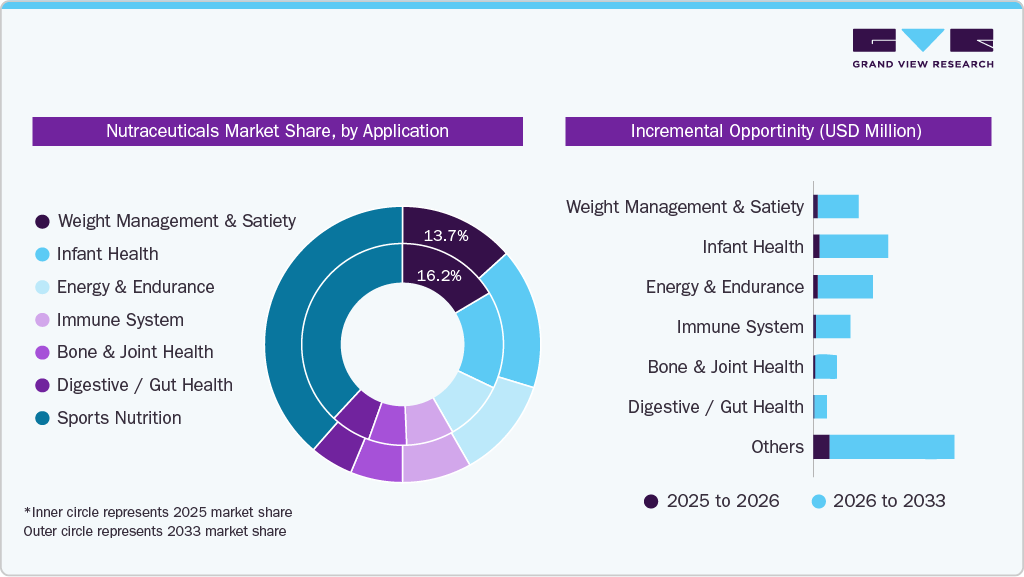
The weight management and satiety application accounted for a revenue share of 15.1% in the nutraceuticals market in 2026, driven by the rising prevalence of obesity and growing awareness of associated health risks. Increasing consumer interest in convenient and sustainable weight management solutions is fueling demand for nutraceutical products that support appetite control, satiety, metabolism, and fat management. This is encouraging the adoption of plant-based ingredients, fiber-rich formulations, and products supported by scientific research. Furthermore, the growing emphasis on holistic wellness is expanding interest beyond weight loss to include gut health, metabolic function, and balanced energy levels. Convenient product formats, such as ready-to-drink shakes, nutrition bars, and powders, are also gaining traction due to their ease of incorporation into daily routines.
 To learn more about this report, Download Free Sample Report
The men’s health nutraceuticals market is estimated to grow at a CAGR of 11.0% from 2027 to 2035. Men are becoming increasingly proactive about addressing specific health concerns and maintaining overall well-being. Key demand drivers include a growing awareness of preventative healthcare and an increased understanding of how nutrition impacts performance, vitality, and long-term health. This translates to rising demand for supplements targeting areas such as prostate health, muscle development and strength, energy levels, and hormonal balance, especially as men age. Furthermore, the stigma surrounding discussing men's health issues is gradually diminishing, making it more acceptable to seek out supplements that address concerns like erectile dysfunction and stress management. The influence of fitness culture and the desire to maintain an active lifestyle are also contributing factors, leading to increased interest in products that support athletic performance, recovery, and overall vitality.
The growth of the men’s health segment is also strongly supported by broader developments in the nutraceutical supplements market, where innovation and personalization are becoming key competitive drivers. Brands are increasingly formulating targeted solutions using clinically studied ingredients to address men’s unique needs, from testosterone support and heart health to mental clarity and stress reduction. Rising interest in clean-label, plant-based, and scientifically validated products further accelerates adoption, as men seek reliable, effective, and convenient ways to optimize daily performance and long-term health.
Distribution Channel Insights
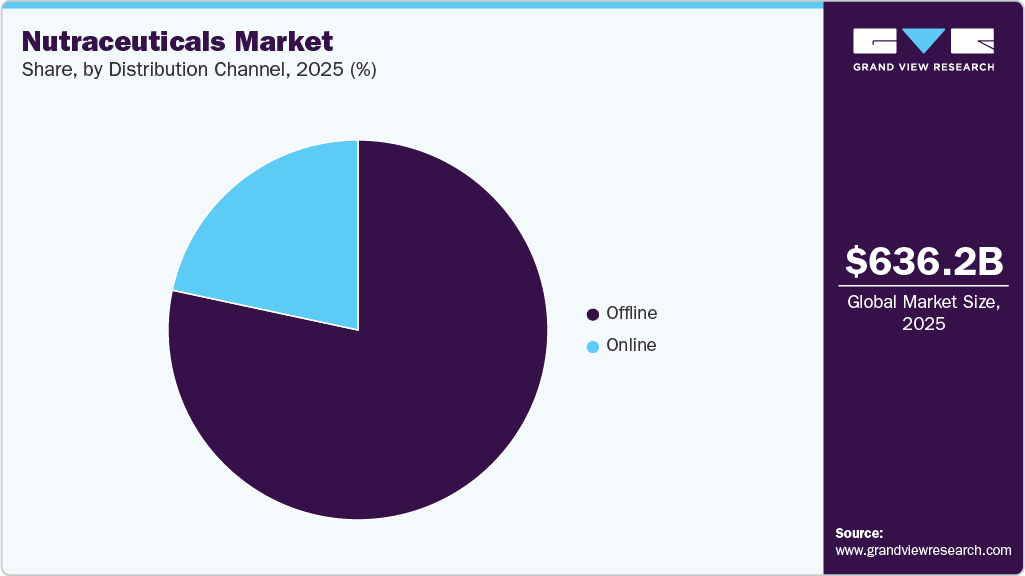
The sales of nutraceutical products through hypermarkets and supermarkets accounted for a revenue share of 35.4% in 2026, supported by their extensive retail presence, broad product assortments, and accessibility to a large consumer base. These outlets allow shoppers to compare different brands, formulations, ingredients, and prices within a single location. The availability of vitamins, minerals, protein supplements, herbal products, and functional nutrition offerings alongside regular grocery items also encourages product discovery and impulse purchases. Furthermore, promotional campaigns, attractive discounts, and established retail networks continue to strengthen consumer purchasing through these channels.
 To learn more about this report, Download Free Sample Report
The online segment is estimated to grow at a CAGR of 10.6% from 2027 to 2035, driven by the increasing adoption of e-commerce platforms for purchasing nutraceutical products. Online channels offer consumers convenient access to a wide range of brands, product formulations, and nutritional supplements. Detailed product descriptions, customer reviews, price comparisons, subscription services, and promotional offers are further influencing purchasing decisions. Additionally, the expansion of direct-to-consumer platforms and improved digital retail infrastructure is strengthening online product accessibility and market penetration.
Regional Insights
North America Nutraceuticals Market
The nutraceuticals market in North America held over 31.0% of the global revenue in 2026. A strong emphasis on preventative healthcare and a growing awareness of the link between diet and wellness are anticipated to drive the growth of the North American nutraceuticals market. Moreover, as the aging population seeks to manage age-related conditions, there is a rise in health-conscious consumers and increasing the adoption of personalized nutrition. Convenience and product innovation, particularly in functional foods and beverages, are also key trends, along with increasing interest in plant-based and clean-label options.
U.S. Nutraceuticals Market
The nutraceuticals market in the U.S. dominated the North America region in 2026 and is expected to grow at a CAGR of 6.7% from 2027 to 2035. Key demand drivers include the high prevalence of chronic conditions such as obesity and diabetes, amplified by rising healthcare costs. Consumers are increasingly proactive about their health, leading to the widespread use of dietary supplements, vitamins, and minerals. E-commerce is a significant channel, and sports nutrition products and weight management solutions are particularly popular.
Europe Nutraceuticals Market
The nutraceuticals market in Europe is expected to grow at a CAGR of 6.6% from 2027 to 2035, driven by an increasing awareness of the link between diet and health, as well as aging populations and rising rates of chronic diseases. The demand for products promoting cardiovascular health, joint mobility, and cognitive function is particularly high. Consumers across different European countries are increasingly conscious about the quality and origin of ingredients, favoring natural, organic, and plant-based options. Besides, the European regulatory landscape, though complex, is well-established and promotes transparency and consumer safety, affecting which products can be sold and how they are marketed.
Germany Nutraceuticals Market
Germany represents one of Europe's leading nutraceuticals markets, driven by a strong consumer focus on health and wellness, a large aging population, and a well-established pharmaceutical infrastructure. The German market demonstrates a preference for science-backed products with clear evidence of efficacy. The demand for vitamins, minerals, and supplements is particularly strong, with consumers actively seeking solutions for specific health concerns like immune support, joint pain, and sleep disorders. The demand for natural and organic products also continues to rise, reflecting a growing consumer preference for products perceived as pure and safe.
U.K. Nutraceuticals Market
The nutraceuticals market in U.K. is expected to grow at a CAGR of 6.3% from 2027 to 2035, supported by increasing health awareness and rising consumer interest in preventive healthcare. Growing demand for vitamins, minerals, probiotics, and herbal supplements is encouraging market expansion. An aging population, greater focus on immunity and digestive health, and wider availability of nutritional products through pharmacies and e-commerce platforms are further supporting market growth.
Asia Pacific Nutraceuticals Market
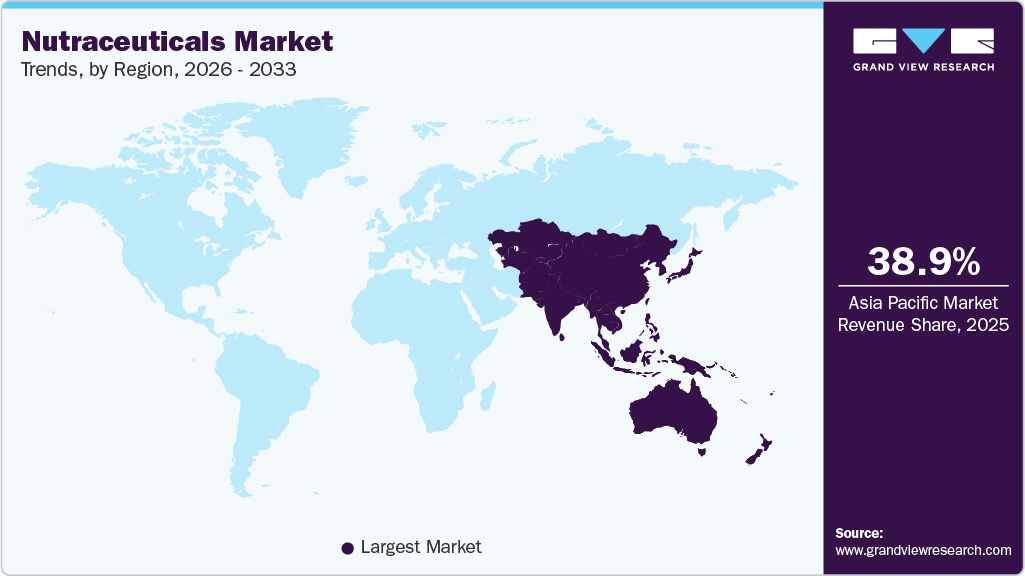
The Asia Pacific region dominated the global nutraceuticals market, accounting for 37.8% of total revenue in 2026. This leading position is supported by a large consumer base, rising disposable incomes, and increasing awareness of preventive healthcare. Growing demand for dietary supplements, fortified foods, and functional beverages is further strengthening regional market growth. Additionally, expanding retail networks, rapid e-commerce penetration, and the presence of established nutraceutical manufacturers are contributing to wider product availability and consumer adoption.
 To learn more about this report, Download Free Sample Report
China Nutraceuticals Market
The nutraceuticals market in China is set to grow at a CAGR of about 7.3% from 2027 to 2035 This growth is fueled by a rapidly expanding middle class with increasing health consciousness and government initiatives promoting public health. Traditional Chinese medicine principles significantly influence the demand for products that support immunity, beauty, and children's health. Moreover, e-commerce is a dominant force in the Chinese nutraceuticals market, with online platforms providing access to a vast range of products from both domestic and international brands. Chinese consumers heavily rely on online reviews and influencer marketing, requiring companies to invest strategically in digital marketing channels. Besides, the regulatory environment in China is complex and rapidly evolving, requiring companies to adapt to changing guidelines and obtain necessary approvals for product importation and sales.
India Nutraceuticals Market
The India nutraceuticals market is expanding rapidly, driven by rising health awareness, increasing disposable incomes, and a growing preference for preventive wellness solutions. Consumers are actively seeking products that support immunity, gut health, and lifestyle management, especially in urban areas. The shift toward natural, herbal, and Ayurvedic formulations is accelerating demand, while digital channels, influencer endorsements, and personalized nutrition trends continue to shape purchasing behavior and widen adoption across diverse age groups.
Japan Nutraceuticals Market
The Japanese nutraceuticals market is a mature and sophisticated market shaped by its aging population, a strong tradition of preventive healthcare, and a high level of health consciousness among its citizens. The market is heavily driven by demand for products promoting healthy aging, cognitive function, and joint mobility, with consumers particularly interested in products with scientifically proven effectiveness. Moreover, increasing preference for established retail channels, including pharmacies and specialty stores, and e-commerce will further boost the nutraceuticals in the country.
Central & South America Nutraceuticals Market
The Central and South America nutraceuticals market is projected to grow at a CAGR of 7.4% during the forecast period, supported by increasing health consciousness and rising consumer interest in fitness and active lifestyles. Growing awareness of balanced nutrition and preventive healthcare is encouraging demand for dietary supplements, protein-enriched products, and functional beverages. In particular, rising fitness participation in urban areas is supporting protein bar consumption, while expanding retail and e-commerce networks are improving product accessibility across the region.
Middle East & Africa Nutraceuticals Market
The nutraceuticals market in the Middle East and Africa is expected to grow at a CAGR of about 7.7% from 2027 to 2035, driven by rising lifestyle-related diseases, growing awareness of preventive healthcare, increasing urbanization, and higher demand for immunity, digestive health, and herbal supplements across emerging consumer groups. Additionally, expanding pharmacy networks, growing e-commerce penetration, and the introduction of products tailored to regional dietary preferences are improving market accessibility. Rising disposable incomes and greater interest in fitness and nutritional well-being are further encouraging consumers to adopt supplements and functional nutrition products.
Key Companies & Market Share Insights
The global nutraceuticals market is characterized by a diverse landscape of players, ranging from established pharmaceutical giants to specialized ingredient manufacturers and innovative startups. Key companies including Yakult Honsha Co., Ltd., Amway Corp., Herbalife Nutrition Ltd., Nestlé S.A., The Kraft Heinz Company, The Hain Celestial Group, Inc., GlaxoSmithKline plc., General Mills Inc., Danone, and Tyson Foods, Inc. hold significant positions due to their extensive product portfolios, established distribution networks, and strong brand recognition. These major players often employ strategies such as strategic acquisitions to expand into new product categories or geographies, as seen with Nestlé’s increasing focus on personalized nutrition through acquisitions of smaller, specialized firms. They also invest heavily in R&D to develop new ingredients and formulations, as well as launch new product lines that heavily emphasize natural, organic, and plant-based ingredients to cater to evolving consumer preferences and health concerns. This continuous innovation and expansion contribute to their leading positions within the market, influencing consumer trends and shaping the competitive dynamics. Besides, key industry participants also leverage partnerships and collaborations to access broader distribution channels and gain research capabilities.
 To learn more about this report, Download Free Sample Report
Key Nutraceuticals Companies:
The following key companies have been profiled for this study on the nutraceuticals market.
-
Amway Corp.
-
Yakult Honsha Co., Ltd.
-
General Mills Inc.
-
Danone
-
Nestlé S.A.
-
The Hain Celestial Group, Inc.
-
Herbalife Nutrition Ltd.
-
Tyson Foods
-
Haleon group of companies
-
Otsuka Pharmaceutical
Competitive Benchmarking
Category
Operating Strategies
Competitive Edge
Weakness
Established Players (Nestlé S.A., Danone, Amway Corp., Yakult Honsha Co., Ltd., Haleon plc, Otsuka Pharmaceutical Co., Ltd., Herbalife Nutrition Ltd)
- Leverage established manufacturing capabilities, extensive distribution networks and strong brand portfolios to expand across dietary supplements, functional foods, nutritional beverages and specialized nutrition. Invest in scientific research, product formulation, clinical validation and functional ingredients while strengthening e-commerce, direct-selling and pharmacy distribution channels.
- Strong brand recognition and consumer trust, diversified product portfolios, established relationships with retailers and healthcare professionals, extensive geographic presence, and financial resources to support research, product innovation and large-scale market expansion.
- Complex organizational structures and relatively slower product development cycles, exposure to regulatory requirements across multiple markets, high operating costs, and competition from specialized brands offering differentiated formulations, clean-label products and targeted nutritional solutions.
Emerging Players (General Mills Inc., The Hain Celestial Group, Inc., Tyson Foods)
- Expand into health-oriented food and beverage categories through protein fortification, plant-based formulations, organic ingredients and functional product innovation. Leverage existing food manufacturing capabilities and established retail relationships to introduce products targeting health-conscious consumers and specific nutritional needs.
- Established food manufacturing infrastructure, strong retail distribution networks, existing consumer relationships, recognized brands and the ability to leverage existing supply chains to enter adjacent functional nutrition categories.
- Limited specialization in dedicated nutraceutical products, relatively lower consumer recognition in the dietary supplements category, dependence on selected functional food segments and challenges in differentiating products from established supplement and specialized nutrition brands.
Recent Developments
-
In September 2026, Danone completed the acquisition of Huel, a UK-based nutrition company specializing in nutritionally complete meal replacements, protein powders, ready-to-drink shakes and nutritional bars. The acquisition strengthens Danone's functional nutrition portfolio and expands its presence in convenient, health-focused food and beverage products.
-
In February 2026, Nestlé S.A. introduced Nestlé Vital, a range of science-backed nutritional drinks targeting middle-aged and older consumers. The portfolio includes eight powdered shake formulations containing high-quality proteins, fibers, vitamins, minerals and patented bioactive blends to support healthy aging.
-
In January 2025, Cizzle Brands Corporation launched Spoken Nutrition, a premium line of athlete-grade nutraceuticals that are NSF Certified for Sport. This certification ensures that the products meet the rigorous standards required for use by athletes in major leagues, including the NCAA. The launch includes a variety of nutritional supplements developed by a team of expert performance coaches and nutritionists aimed at enhancing athletic performance and recovery.
Nutraceuticals Market Report Scope
Report Attribute
Details
Market size in 2026
USD 683.9 billion
Estimated market size in 2027
USD 736.0 billion
Projected market size by 2035
USD 1,292.7 billion
Growth rate
CAGR of 7.3% from 2027 to 2035
Actuals
2021 - 2026
Forecast period
2027 - 2035
Quantitative units
Revenue in USD Billion and CAGR from 2027 to 2035
Report coverage
Revenue forecast, company ranking, competitive landscape, growth factors, and trends
Segments covered
Product, Application, Distribution Channel, and Region
Regional scope
North America; Europe; Asia Pacific; Central & South America; Middle East & Africa
Country scope
U.S., Canada, Mexico, U.K., Germany, France, Italy, Spain, Austria, Belgium, Czechia, Denmark, Finland, Greece, Hungary, Ireland, the Netherlands, Norway, Poland, Portugal, Romania, Sweden, Switzerland, China, Japan, India, South Korea, Australia & New Zealand, Singapore, Indonesia, Malaysia, Thailand, Vietnam, the Philippines, Brazil, Argentina, Chile, Colombia, Peru, UAE, South Africa, Saudi Arabia, Egypt, Turkey, Morocco, Nigeria, and Kenya.
Key companies profiled
Amway Corp., Yakult Honsha Co., Ltd., General Mills Inc., Danone, Nestlé S.A., The Hain Celestial Group, Inc., Herbalife Nutrition Ltd., Tyson Foods, Haleon Group of Companies, and Otsuka Pharmaceutical.
Customization scope
Free report customization (equivalent up to 8 analysts working days) with purchase. Addition or alteration to country, regional & segment scope.
Pricing and purchase options
Avail customized purchase options to meet your exact research needs. Explore purchase options
Global Nutraceuticals Market Report Segmentation
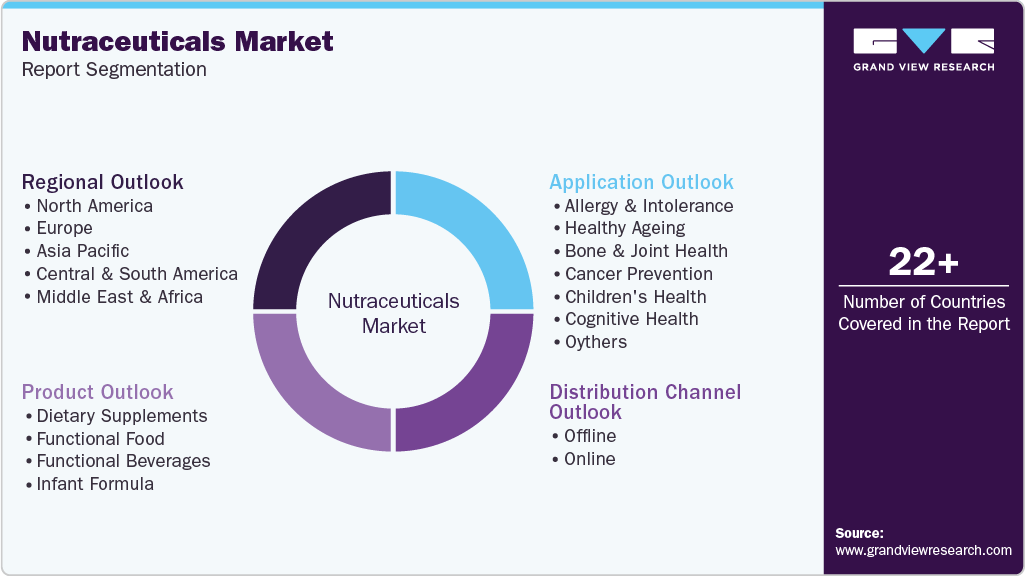
This report forecasts revenue growth at global, regional & country levels and provides an analysis of the industry trends in each of the sub-segments from 2021 to 2035. For the purpose of this study, Grand View Research has segmented the global nutraceuticals market report on the basis of product, application, distribution channel, and region:
 To learn more about this report, Download Free Sample Report
-
Nutraceuticals Market Product Outlook (Revenue, USD Million, 2021 - 2035)
-
Dietary Supplements
-
Tablets
-
Capsules
-
Soft Gels
-
Powders
-
Gummies
-
Liquid
-
Others
-
Functional Food & Beverages
-
Food
-
Bakery & Cereals
-
Dairy Products
-
Meat, Fish & Eggs
-
Soy Products
-
Fats & Oils
-
Others
-
-
Beverages
-
Energy Drinks & Shots
-
Sports Drinks
-
Nutraceutical Drinks
-
Probiotic Beverages
-
Functional Water
-
Others
-
-
-
Infant Formula
-
-
Nutraceuticals Market Application Outlook (Revenue, USD Million, 2021 - 2035)
-
Allergy & Intolerance
-
Healthy Ageing
-
Bone & Joint health
-
Cancer Prevention
-
Children's Health
-
Cognitive Health
-
Diabetes
-
Digestive / Gut Health
-
Energy & Endurance
-
Eye Health
-
Heart Health
-
Immune System
-
Infant Health
-
Inflammation
-
Maternal Health
-
Men's Health
-
Nutricosmetics
-
Oral care
-
Personalized Nutrition
-
Post Pregnancy Health
-
Sexual Health
-
Skin Health
-
Sports Nutrition
-
Weight Management & Satiety
-
Women's Health
-
Others
-
-
Nutraceuticals Market Distribution Channel Outlook (Revenue, USD Million, 2021 - 2035)
-
Hypermarkets & Supermarkets
-
Pharmacies & Drug Stores
-
Convenience Stores
-
Health & Wellness Stores
-
Online
-
Others
-
-
Nutraceuticals Market Regional Outlook (Revenue, USD Million, 2021 - 2035)
-
North America
-
U.S.
-
Canada
-
Mexico
-
-
Europe
-
U.K.
-
Germany
-
France
-
Italy
-
Spain
-
Austria
-
Belgium
-
Czechia
-
Denmark
-
Finland
-
Greece
-
Hungary
-
Ireland
-
The Netherlands
-
Norway
-
Poland
-
Portugal
-
Romania
-
Sweden
-
Switzerland
-
-
Asia Pacific
-
China
-
Japan
-
India
-
South Korea
-
Australia & New Zealand
-
Singapore
-
Indonesia
-
Malaysia
-
Thailand
-
Vietnam
-
Philippines
-
-
Central & South America
-
Brazil
-
Argentina
-
Chile
-
Colombia
-
Peru
-
-
Middle East & Africa
-
UAE
-
South Africa
-
Saudia Arabia
-
Egypt
-
Turkey
-
Morocco
-
Nigeria
-
Kenya
-
-
Research Methodology
The nutraceuticals Market figures in this report are based on a proven research process that combines executive interviews with secondary research from proprietary databases, company filings, and recognized regulatory and institutional sources. Market size is built through value-chain sizing - reconciling supply-side and demand-side estimates - and triangulated with bottom-up and top-down approaches. Every estimate passes multiple levels of expert validation before publication, with each nutraceuticals segment quantified using the revenue-capture definitions in the table below.
Segment Definition
Segment - Product
Revenue capture definition
Dietary Supplements
This segment includes the sales of nutritional supplements formulated to provide essential vitamins, minerals, proteins, amino acids, botanical extracts, probiotics and other bioactive ingredients to support overall health and specific nutritional requirements. Products are available in various formats, including tablets, capsules, softgels, powders, gummies, liquids and other dosage forms.
Functional Food & Beverages
This segment includes the sales of food and beverage products formulated, fortified or enhanced with functional ingredients, such as vitamins, minerals, proteins, probiotics, prebiotics, dietary fibers, omega-3 fatty acids and other bioactive compounds, to provide additional nutritional or health benefits beyond basic nourishment.
Infant Formula
This segment includes the sales of specially formulated nutritional products designed to meet the dietary and developmental requirements of infants, primarily during the first year of life. These products provide essential proteins, fats, carbohydrates, vitamins, minerals and other nutrients and are available in powdered and ready-to-feed liquid formats, including standard, specialized and medical infant formula.
Estimation Model
Layer
Key Question
Description
Consumption Universe Layer
Who consumes nutraceutical products globally?
The global consumer base includes individuals seeking preventive healthcare, nutritional supplementation, immunity support, digestive health, bone and joint health, energy management, healthy aging and overall wellness through dietary supplements and functional food and beverages.
Access & Availability Layer
Where can consumers access nutraceutical products?
Consumers access nutraceutical products through pharmacies, drug stores, supermarkets, hypermarkets, specialty nutrition stores, health food stores, direct-to-consumer platforms and e-commerce channels.
Purchase & Usage Layer
Who buys and regularly uses nutraceutical products?
Frequent buyers include health-conscious consumers, fitness enthusiasts, aging populations, individuals with specific nutritional requirements, and consumers seeking preventive healthcare, improved nutrition and functional health benefits.
Revenue Conversion Layer
How is revenue generated?
Revenue is generated through sales of dietary supplements, functional foods, functional beverages and infant formula across online and offline distribution channels, capturing consumer spending on nutritional supplementation, fortified foods, specialized nutrition and wellness-oriented products.
Delivered Customizations
This report has been delivered with the following In-depth customizations
Client Request
Customization Delivered
Value Adds
Global Nutraceutical Market Share Analysis
Analyzed the competitive positioning and market shares of leading nutraceutical companies, assessing their presence across product types (dietary supplements, functional foods, and functional beverages), ingredient categories, distribution channels, and key geographic markets.
Provides a clear view of the competitive landscape, market concentration, and leading players. Helps companies strengthen their positioning and identify high-potential market segments.
Global Nutraceutical Regulatory Framework Assessment
Mapped the regulatory landscape across key regions and countries, covering product classification, permitted ingredients and dosage limits, health and nutrient claim rules, labeling and packaging requirements, manufacturing standards (GMP), and registration or approval pathways.
Provides a fact base for compliance planning and market-entry decisions. Helps companies anticipate regulatory risks, shorten time to market, and plan product claims and formulations by region.
Global Nutraceutical Market Size and Growth Assessment
Developed a market assessment by product type, ingredient, form, distribution channel, and geography, incorporating historical market performance (2021-2025), consumption patterns, and forecasts to 2035. Provides a fact base for market entry, investment planning, growth prioritization, and resource allocation. Highlights
Provides a fact base for market entry, investment planning, growth prioritization, and resource allocation. Highlights high-growth product, channel, and regional opportunities.
Frequently Asked Questions About This Report
The global nutraceuticals market size was valued at USD 683.9 billion in 2026 and is anticipated to grow at a CAGR of 7.3% over the forecast period from 2027 to 2035.
The global nutraceuticals market is expected to grow at a compound annual growth rate of 7.3% from 2027 to 2035 to reach USD 1,292.7billion by 2033.
The functional food and beverages market accounted for a revenue share of 53.8% in 2026, driven by growing consumer preference for convenient food products that offer additional health benefits.
The sales of nutraceutical products through hypermarkets and supermarkets accounted for a revenue share of 35.4% in 2026, supported by their extensive retail presence, broad product assortments, and accessibility to a large consumer base.
Asia Pacific dominated with a 37.8% revenue share in 2026.
Central & South Americais the fastest-growing region over the forecast period.
The weight management and satiety application accounted for a revenue share of 15.1% in the nutraceuticals market in 2026, driven by the rising prevalence of obesity and growing awareness of associated health risks.
Some of the key market players in the global nutraceuticals market are Amway Corp., Yakult Honsha Co., Ltd., General Mills Inc., Danone, Nestlé S.A., The Kraft Heinz Company, The Hain Celestial Group, Inc., Herbalife Nutrition Ltd., Tyson Foods, Haleon group of companies, Otsuka Pharmaceutical, and GlaxoSmithKline plc.
The market growth is attributed to the increasing consumer awareness of preventative healthcare and the link between diet and well-being. The aging global population, particularly in developed nations, is actively seeking solutions to maintain health and manage age-related conditions, leading to a surge in demand for supplements targeting joint health, cognitive function, and cardiovascular wellness.
Nutraceuticals Market By Country
- U.S. Nutraceuticals Market
- Canada Nutraceuticals Market
- Mexico - North America Nutraceuticals Market
- Germany Nutraceuticals Market
- France Nutraceuticals Market
- Italy Nutraceuticals Market
- Spain Nutraceuticals Market
- Switzerland Nutraceuticals Market
- Netherlands Nutraceuticals Market
- Portugal Nutraceuticals Market
- Austria Nutraceuticals Market
- Belgium Nutraceuticals Market
- Denmark Nutraceuticals Market
- Turkey - Mea Nutraceuticals Market
- Sweden Nutraceuticals Market
- Finland Nutraceuticals Market
- Norway Nutraceuticals Market
- Japan Nutraceuticals Market
- China Nutraceuticals Market
- India Nutraceuticals Market
- South Korea Nutraceuticals Market
- Indonesia Nutraceuticals Market
- Malaysia Nutraceuticals Market
- Singapore Nutraceuticals Market
- Thailand Nutraceuticals Market
- Vietnam Nutraceuticals Market
- Philippines Nutraceuticals Market
- Argentina Nutraceuticals Market
- Colombia Nutraceuticals Market
- Chile Nutraceuticals Market
- Brazil Nutraceuticals Market
- Peru Nutraceuticals Market
- South Africa Nutraceuticals Market
- Saudi Arabia Nutraceuticals Market
- Uae Nutraceuticals Market
- Nigeria Nutraceuticals Market
- U.K. Nutraceuticals Market
- Poland Nutraceuticals Market
- Greece Nutraceuticals Market
- Ireland Nutraceuticals Market
- Egypt Nutraceuticals Market
- Czech Republic Nutraceuticals Market
- Kenya Nutraceuticals Market
- Romania Nutraceuticals Market
- Hungary Nutraceuticals Market
- Anz Nutraceuticals Market
- Morocco Nutraceuticals Market
About the Author(s)
Consumer F&B Research Team
Consumer Goods · Consumer F&BThis report was authored by the consumer f&b research team at Grand View Research - comprising two research analysts, one senior research analyst, and one industry expert - with specialized expertise in the consumer f&b segment of the consumer goods industry. All findings are based on proprietary consumer goods databases, executive interviews, and regulatory analysis, subject to internal peer review prior to publication.
Last Updated:
Speak to Analyst

Customize this report to your needs - add regions, segments, or data points, with 20% free customization.
Or view our licence options:


ISO 9001:2015 & 27001:2022 Certified
We are GDPR and CCPA compliant! Your transaction & personal information is safe and secure. For more details, please read our privacy policy.


