
- Home
- »
- Homecare & Decor
- »
-
Pest Control Products Market Size, Share Report, 2026-2033GVR Report cover

Pest Control Products Market (2026 - 2033)
Size, Share & Trends Analysis Report By Product (Sprays/Aerosols, Baits/Gels, Repellents), By Pest Type (Flying Insects, Crawling Insects, Rodents), By Control Mechanism, By End Use, By Region, And Segment Forecasts
Market Size, 2025
$15.7BMarket Estimate, 2026
$16.6BMarket Forecast, 2033
$25.8BCAGR, 2026–2033
6.4%Pest Control Products Market Summary
The global pest control products market size was estimated at USD 15.7 billion in 2025 and is projected to grow from USD 16.6 billion in 2026 to USD 25.8 billion by 2033, growing at a CAGR of 6.4% from 2026 to 2033. The North America market held the largest share of 39.3% of the global market in 2025. This growth is driven by rising public health awareness and increasing incidences of vector-borne diseases.
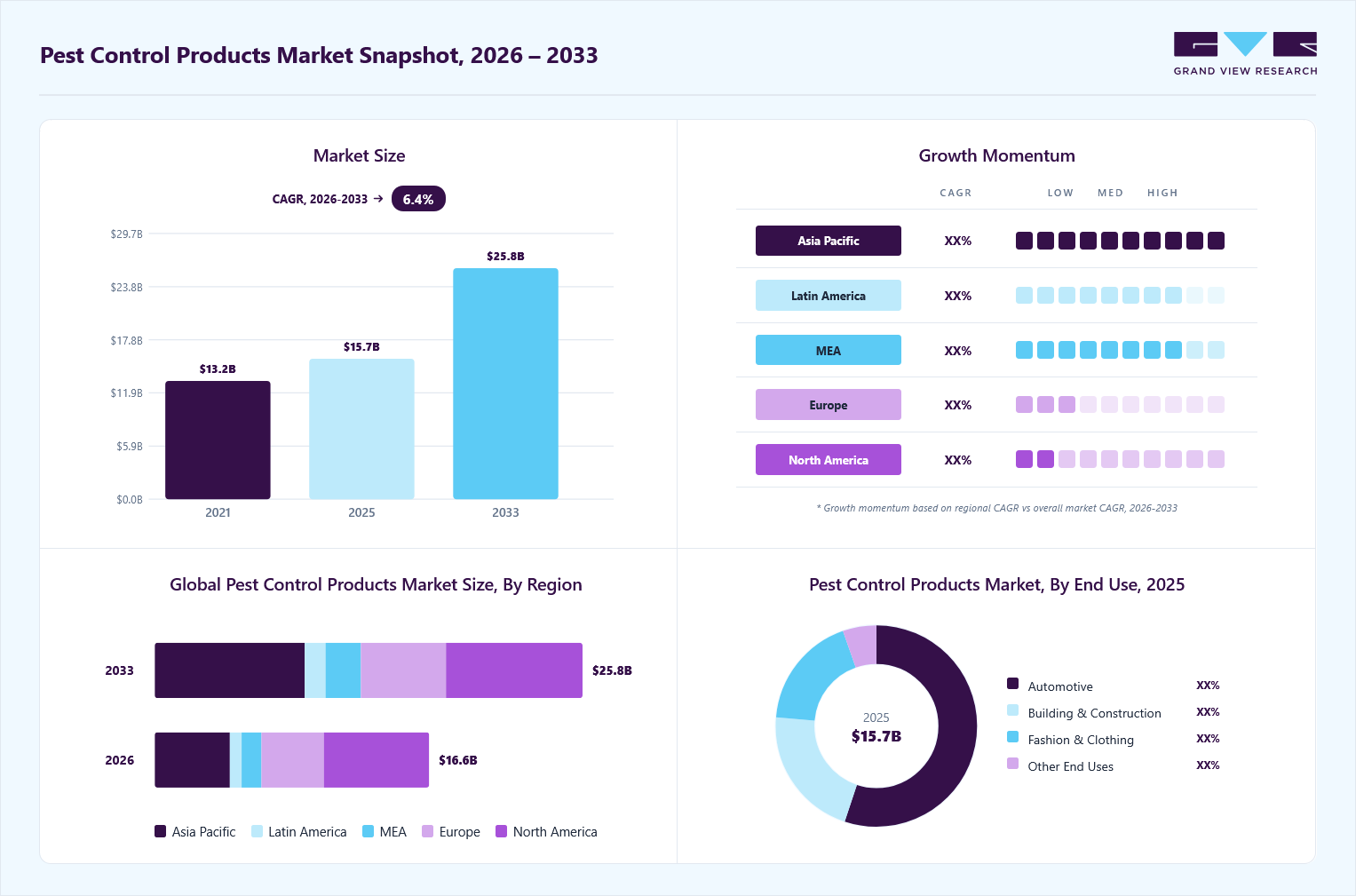 Source: Grand View Research, IR Documents, Primary Interviews, Paid DatabasesTo learn more about this report,
 Download Free Sample Report
 Key Market Trends & Insights
- By product: The sprays/aerosols segment led the market with the largest revenue share of 36.4% in 2025.
- By pest type: The flying insects segment led the market with the largest revenue share of 35.4% in 2025.
- By control mechanism: The Chemical segment led the market with the largest revenue share of 66.4% in 2025.
- By end use: The B2B segment led the market with the largest revenue share of 78.2% in 2025.
Regional Highlights
- Largest regional market: North America (39.3% revenue share, 2025)
- By country: The U.S. held the largest market share in 2025.
Market Size & Forecast
- Market size in 2025: USD 15.7 Billion
- Estimated market size in 2026: USD 16.6 Billion
- Projected market size by 2033: USD 25.8 Billion
- CAGR (2025-2033): 6.4%
Three ways to get this report
Buy it, customize it, or ask a question.Ask an Analyst
Analyst response in 1 business day
- AccessReport author, directly
- Reply timeWithin 1 working day
- No sales callDirect answer only
- FormatEmail reply
- CostFree, no cost
Get the Full Report
What the study covers
- FormatsPDF · Excel · Dashboard
- Timeline2026–2033 annual, 2025 base
- Coverage20+ countries, 5 regions
- Companies10+ key players profiled
Customize the Report
20% free customization
- IncludeCountries, segments, points
- TailorTo your product definition
- ExtendDeeper competitor detail
- OrA fully bespoke study
- Turnaround5–10 working days
Outbreaks of mosquitoes carrying dengue, chikungunya, and Zika, alongside rodents and cockroaches in urban and suburban regions, have prompted both households and commercial operators to adopt more proactive pest management strategies.Hotels, restaurants, hospitals, and residential complexes increasingly prioritize solutions that combine fast efficacy, safety, and long-term prevention, including integrated pest management (IPM) programs and eco-conscious formulations. Lifestyle and housing trends are also boosting market demand. Expanding suburban and urban outdoor spaces, the growth of single-family homes, and increased pet ownership drive the use of sprays, aerosols, baits, and lawn- and garden-specific products. Consumers seek solutions that are convenient, easy to apply, and compatible with everyday household routines, while commercial operators focus on reliability, regulatory compliance, and traceable service documentation.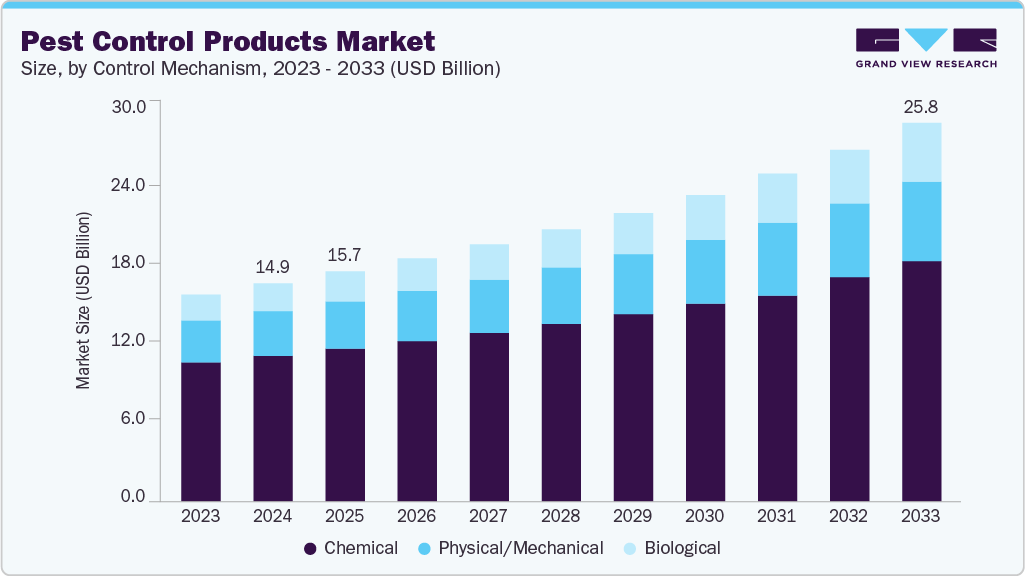 To learn more about this report, Download Free Sample Report
 Homeowners and facility managers increasingly prefer plant-based, low-residue sprays, biodegradable baits, and electronic traps that reduce environmental impact without compromising effectiveness. Smart devices, mobile apps, and IoT-enabled monitoring systems are gaining traction, allowing real-time reporting and predictive pest control for both urban and rural properties.
On the innovation front, companies are accelerating launches to meet evolving consumer and institutional needs. In July 2025, Liphatech unveiled the BugScents Sentry Pro, a pheromone-based monitoring device for bed bugs targeted at pest control professionals. The system uses a specialized attractant to draw and capture bed bugs, providing accurate early detection within 24-96 hours. Designed for hotels, apartments, and commercial facilities, it helps operators quickly identify infestations and implement timely interventions, improving efficiency and reducing the risk of widespread outbreaks.
Market Dynamics
The pest control products market is gaining momentum as consumers, businesses, and agricultural operators increasingly prioritize hygiene, health protection, and pest prevention. Pest control products offer effective solutions for managing a wide range of pests, including insects, rodents, termites, mosquitoes, and other disease-carrying organisms through insecticides, rodenticides, repellents, traps, and biological control agents. These products help prevent property damage, protect crops, reduce the spread of vector-borne diseases, and maintain sanitary living and working environments. The growing prevalence of pest infestations, rising urbanization, increasing awareness regarding public health and food safety, and expanding adoption of integrated pest management practices are expected to continue driving growth in the pest control products market.
The increasing prevalence of pest infestations and vector-borne diseases is significantly driving demand for pest control products worldwide. Rapid urbanization, climate change, population growth, poor waste management practices, and expanding commercial infrastructure have contributed to the proliferation of pests such as mosquitoes, termites, rodents, cockroaches, flies, and bed bugs. These pests not only cause substantial property damage but also act as carriers of diseases, including malaria, dengue fever, Zika virus, Lyme disease, and leptospirosis. Rising public awareness regarding hygiene, sanitation, and disease prevention has further accelerated the adoption of pest control solutions across residential, commercial, industrial, and agricultural sectors. Additionally, changing climatic conditions and increasing global temperatures are expanding pest breeding seasons and geographic distribution, leading to higher infestation rates and sustained demand for effective pest management products.
Stringent environmental regulations and growing concerns regarding the health and ecological impacts of chemical pesticides remain major restraints for the pest control products market. Many conventional pest control products contain synthetic chemicals that may pose risks to human health, beneficial insects, wildlife, soil quality, and water resources when improperly used. Regulatory authorities across various regions have implemented strict guidelines governing the manufacturing, registration, distribution, and application of pesticide products, increasing compliance costs for manufacturers. Furthermore, rising consumer preference for eco-friendly and non-toxic alternatives has intensified scrutiny of traditional chemical-based solutions. The emergence of pesticide resistance among certain pest species also presents an ongoing challenge, reducing product effectiveness and necessitating the development of new formulations. These factors may limit market growth and create barriers for manufacturers operating in highly regulated environments.
The growing adoption of sustainable pest control practices and integrated pest management (IPM) strategies is creating substantial growth opportunities in the pest control products market. Consumers, businesses, and agricultural operators are increasingly seeking environmentally responsible solutions that minimize chemical usage while maintaining effective pest control. This trend is driving demand for biological control agents, botanical pesticides, pheromone-based products, bait systems, and smart monitoring technologies. Advancements in digital pest management, including IoT-enabled sensors, remote monitoring systems, and data-driven pest detection platforms, are further enhancing treatment precision and operational efficiency. Additionally, increasing investments in sustainable agriculture, food safety initiatives, and green building practices are supporting the adoption of eco-friendly pest control solutions. These innovations are expected to accelerate market growth and expand the role of integrated and sustainable pest management strategies across diverse end-use sectors.
Analyst Perspective
The pest control products market is supported by a unique combination of long-term structural growth drivers, including rapid urbanization, rising public health concerns, climate-driven expansion of pest populations, and increasingly stringent hygiene standards across residential, commercial, and industrial sectors. Unlike discretionary consumer categories, demand for pest control solutions is largely necessity-driven, as pest infestations can result in property damage, food contamination, regulatory non-compliance, and the spread of vector-borne diseases. The market’s most significant competitive advantage will belong to manufacturers that successfully combine efficacy, environmental sustainability, and regulatory compliance within their product portfolios. As consumers and businesses increasingly transition toward eco-friendly and integrated pest management solutions, companies capable of offering a comprehensive range of chemical, biological, and technology-enabled pest control products will be best positioned to build long-term customer relationships and capture premium value in an increasingly regulated and innovation-focused market.
Buyers’ Behavioral Analysis
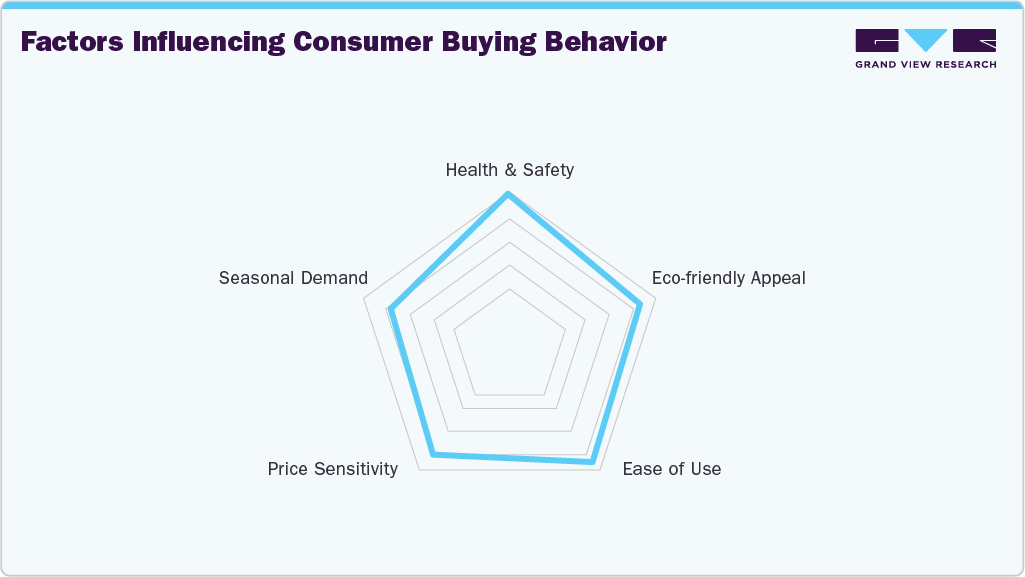
Consumers increasingly prioritize products that ensure their well-being. Items that are non-toxic, hygienic, and safe for use at home, especially around children and pets, tend to gain higher trust and loyalty. Brands emphasizing safety certifications and transparent ingredient information often influence purchasing decisions positively, as consumers are willing to pay a premium for safety assurance.
 To learn more about this report, Download Free Sample Report
 Similarly, environmental consciousness is becoming a major driver in buying behavior. Products that are sustainable, biodegradable, or made from recycled materials attract consumers who are concerned about their ecological footprint. Eco-friendly labeling and packaging differentiate products in a competitive market and align with the values of a growing segment of environmentally conscious shoppers.
Control Mechanism Insights
Based on control mechanism, the Chemical segment led the market with the largest revenue share of 66.4% in 2025. Both households and commercial operators rely on chemical insecticides, rodenticides, and fumigants to quickly eliminate pests such as cockroaches, mosquitoes, ants, and rodents. Their broad availability, ease of application, and cost efficiency make them a preferred choice for immediate results, while innovations in low-residue and eco-safer formulations address regulatory and consumer concerns about safety and environmental impact.
Biological control mechanisms are expected to grow at a CAGR of 8.7% from 2025 to 2033 within the global pest control products industry. These approaches use beneficial organisms, such as predatory insects, nematodes, or microbial agents, to target pests without harmful chemical residues. Adoption is being fueled by stricter regulations on synthetic pesticides, rising consumer preference for eco-friendly products, and the need for long-term, sustainable control in homes, commercial properties, and agricultural settings. Advances in formulation, delivery systems, and monitoring technologies enhance their reliability and effectiveness, making biological control an increasingly attractive option in global pest management strategies.
Product Insights
Based on product, the sprays/aerosols segment led the market with the largest revenue share of 36.4% in 2025 and is expected to grow at the fastest CAGR over the forecast period. These products allow both households and commercial operators to quickly target common pests such as mosquitoes, ants, cockroaches, and flies, offering immediate knockdown and easy application without specialized equipment. Their compact packaging and ready-to-use formulations make them ideal for urban apartments, offices, restaurants, and outdoor recreational spaces where space and time efficiency are priorities. In addition, global distribution networks and strong retail availability, coupled with ongoing innovation in low-odor and environmentally safer variants, have reinforced sprays and aerosols as a preferred first-line pest control solution worldwide.
Microbials/biopesticides are expected to grow at a CAGR of 9.5% from 2025 to 2033 within the global pest control products industry. These solutions use naturally occurring organisms or plant-based compounds to manage pests, minimizing risks to humans, pets, and beneficial insects. Increased consumer preference for sustainable products, stricter chemical regulations, and a growing focus on environmentally responsible practices drive adoption across homes, commercial spaces, and agricultural operations. Innovations in formulation and application methods further improve their effectiveness and convenience, making them an attractive alternative to traditional chemical pesticides worldwide.
End Use Insights
Based on end use, the B2B segment led the market with the largest revenue share of 78.2% in 2025, due to the large-scale, ongoing requirements of commercial, industrial, and institutional facilities. Hotels, restaurants, hospitals, food processing plants, and property management companies rely on professional pest control solutions to maintain hygiene standards, comply with regulatory mandates, and protect brand reputation. These buyers favor integrated pest management programs, low-residue chemical treatments, and monitoring systems that ensure consistent efficacy, traceability, and safety.
B2C end use for pest control products is expected to grow at a CAGR of 8.8% from 2025 to 2033. Rising awareness of vector-borne diseases and the expansion of suburban and urban living spaces have driven demand for convenient, easy-to-use solutions such as sprays, aerosols, electronic traps, and eco-friendly repellents. Households seek products that deliver effective pest elimination while being safe for children, pets, and the environment. Furthermore, growing online retail penetration, accessible DIY options, and smart pest management devices are making it easier for individual consumers to adopt advanced pest control practices.
Pest Type Insights
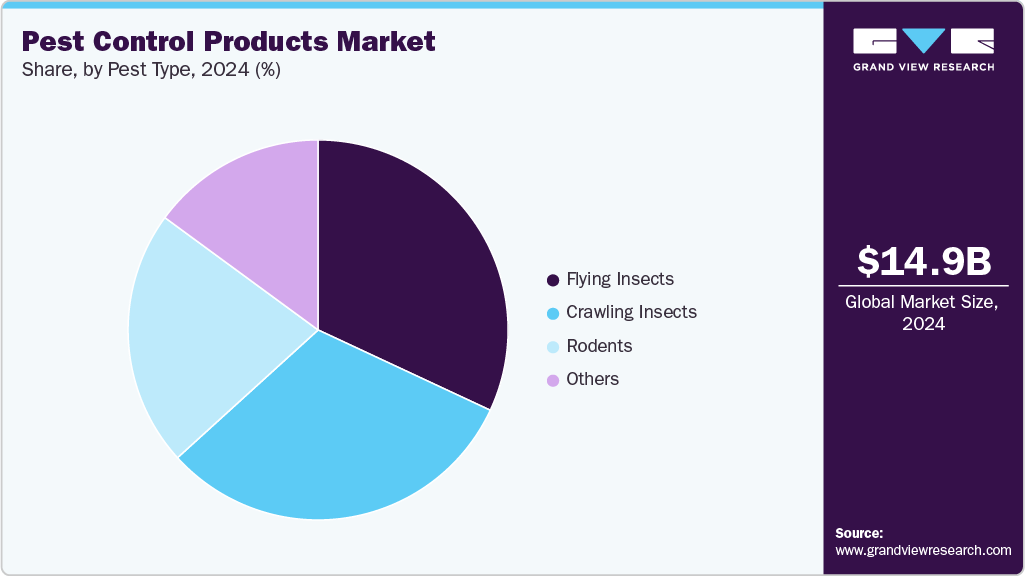
Based on pest type, the flying insects segment led the market with the largest revenue share of 35.4% in 2025, due to their widespread prevalence in residential and commercial environments. These pests pose significant health and hygiene risks, contaminating food, spreading pathogens, and triggering allergic reactions, which drives consistent demand for effective control solutions. Products such as gel baits, sprays, traps, and integrated monitoring systems are widely used because they offer targeted elimination and long-term prevention.
Flying Insects are expected to grow at a CAGR of 6.8% from 2025 to 2033. These pests are vectors for diseases such as dengue, Zika, and West Nile virus, prompting households, municipalities, and businesses to invest in effective control measures. The increasing popularity of outdoor living areas, gardens, and recreational spaces has further elevated the need for sprays, traps, and larvicides that can provide fast, reliable protection. Advancements in eco-friendly formulations, long-lasting residual products, and smart monitoring devices also enhance efficacy and convenience, supporting the growing adoption of solutions targeting flying insects across global markets.
Regional Insights
North America dominated the pest control products market with the largest revenue share of 39.3% in 2025. Rising concerns over household hygiene, urban pest infestations, and public health risks have driven the adoption of residential and commercial pest management solutions. Growth in suburban housing, outdoor recreational spaces, and pet ownership has further supported demand for sprays, baits, and electronic pest control devices. Moreover, the strong presence of leading manufacturers, extensive retail and e-commerce availability, and well-established professional service networks have solidified North America’s significant contribution to the global market.
 To learn more about this report, Download Free Sample Report
 U.S. Pest Control Products Market Trends
The pest control products market in the U.S. held the largest share in the North America region in 2025. Growing awareness of home hygiene and food safety, particularly in residential kitchens, restaurants, and food processing facilities, has heightened demand for reliable pest management solutions. Increased frequency of extreme weather events, such as hurricanes and floods, has also expanded habitats for mosquitoes, rodents, and other pests, driving year-round consumption of sprays, baits, and electronic control devices. The presence of leading manufacturers, strong e-commerce penetration, and professional service networks has also helped the U.S. maintain a significant market share.
Europe Pest Control Products Market Trends
The pest control products market in Europe accounted for a revenue share of around 23.5% in the year 2024. Strong demand is driven by the need to manage seasonal pest outbreaks in urban and suburban areas, such as mosquitoes and flies. Widespread adoption of eco-friendly and low-toxicity solutions by households and commercial facilities is boosting sales, while the growth of multi-family housing and outdoor leisure spaces supports higher usage of sprays, baits, and traps. Efficient distribution networks and professional pest management services across the region help maintain Europe’s significant global market share.
Asia Pacific Pest Control Products Market Trends
The pest control products market in Asia Pacific is projected to grow at a CAGR of 10.3% from 2025 to 2033, driven by rapid urbanization, rising population density, and increasing concerns over public health and hygiene. Countries such as China, India, and Indonesia are experiencing higher incidences of vector-borne diseases and household pest infestations, prompting greater adoption of chemical, biological, and eco-friendly pest control solutions. Government programs promoting sanitation, stricter food safety regulations, and awareness campaigns support market expansion. In addition, the growing availability of affordable sprays, baits, electronic traps, and smart pest management devices is increasing accessibility for residential and commercial users, fueling sustained growth across the Asia Pacific region.
Key Pest Control Products Company Insights
A mix of well-established chemical manufacturers, emerging biopesticide firms, and technology-focused solution providers drives the global pest control products industry. Companies worldwide are responding to tightening environmental and safety regulations and increasing consumer demand for non-toxic, eco-conscious products by developing plant-based formulations, smart monitoring systems, and easy-to-use application tools. Innovations such as biodegradable baits, electronic traps, and IoT-enabled pest control devices demonstrate the industry’s focus on both effectiveness and sustainability. This adaptive approach enables global players to expand their reach, capture diverse customer segments, and remain competitive in a market increasingly influenced by health, safety, and environmental concerns.
-
BASF SE is a leading global player in the market, offering a wide range of chemical and biological solutions for agriculture, commercial, and residential applications. Its portfolio includes insecticides, rodenticides, and biopesticides designed for efficacy and environmental safety. BASF invests heavily in research and development to produce low-residue, eco-friendly formulations and digital monitoring tools, allowing operators worldwide to implement integrated pest management (IPM) strategies. With a strong international distribution network and technical support services, BASF is a preferred partner for large-scale agricultural operations, food processing facilities, and commercial establishments.
-
Bayer CropScience Ltd. is a major global manufacturer of pest control products, providing chemical and biological solutions for crop protection, public health, and residential use. Its offerings include insecticides, fungicides, herbicides, and biocontrol products designed to meet multiple regions' strict regulatory and environmental standards. Bayer emphasizes innovation through advanced formulations, digital pest monitoring systems, and sustainable product lines, catering to both professional operators and household consumers. The company’s integrated approach, combining efficacy, compliance, and technical guidance, positions it as a key player in the global pest control market, enabling widespread adoption of modern and responsible pest management practices.
Key Pest Control Products Companies
The following key companies have been profiled for this study on the pest control products market.
-
BASF SE
-
Bayer AG
-
FMC Corporation
-
Control Solutions, Inc.
-
Rentokil Initial plc
-
Ecolab Inc.
-
Syngenta Group
-
Woodstream Corporation
-
Bell Laboratories, Inc.
-
Corteva Agriscience
Competitive Benchmarking
Category
Operating Strategies
Competitive Edge
Weakness
Established Players (e.g., BASF SE, Bayer AG, Syngenta AG, FMC Corporation, Rentokil Initial plc, Corteva Agriscience)
- Expand product portfolios across insecticides, rodenticides, fungicides, and biological pest control solutions.
- Invest in R&D and strengthen global distribution networks through retailers, agricultural suppliers, and pest management service providers.
- Strong brand recognition, regulatory expertise, and extensive global distribution capabilities.
- Large-scale R&D resources enabling continuous product innovation and broad market coverage.
- High compliance and product registration costs due to stringent environmental and safety regulations.
- Exposure to regulatory restrictions on chemical pesticides and lengthy product development cycles.
Emerging Players (e.g., Vestaron Corporation, Provivi, BioConsortia, GreenLight Biosciences)
- Focus on niche segments such as biopesticides, organic pest control products, and pheromone-based pest management solutions.
- Utilize digital marketing, strategic partnerships, and direct-to-customer channels to expand market reach.
- Greater agility in responding to evolving consumer demand for sustainable and eco-friendly pest control products.
- Innovative biological technologies and specialized solutions targeting pesticide resistance and environmental concerns.
- Limited financial resources and lower brand recognition compared to established competitors.
- Challenges in scaling production, distribution, and commercialization across larger markets.
Recent Developments
-
In April 2025, U.S.-based Envu expanded its professional pest management portfolio with the launch of Barricor Essential Mosquito Control, a plant-based insecticide safe for pollinators, and Suspend Contact & Residual Aerosol, which combines pyrethrin and deltamethrin for fast, long-lasting control of pests such as cockroaches, ants, ticks, and spiders. Both products focus on safety, ease of use, and sustained effectiveness, and are available through Envu’s U.S. distribution network.
-
In April 2025, the Senske Family of Companies strengthened its footprint in Canada by acquiring Ontario-based Huron Pest Control. After the acquisition, Huron began operating under Mosquito Buzz, Senske’s Canadian brand focused on mosquito and tick management, expanding service capabilities and market presence.
-
In March 2023, Zevo, Procter & Gamble’s pest control brand, introduced On-Body Mosquito + Tick Repellents offering up to eight hours of protection. Made with IR3535, the odorless, non-greasy formula is available in aerosol, pump spray, and lotion formats, providing a comfortable alternative to traditional repellents. The products are now sold across major U.S. retailers such as Walmart, Target, Home Depot, Lowe’s, Kroger, and Meijer.
Pest Control Products Market Report Scope
Report Attribute
Details
Market size in 2025
USD 15.7 billion
Estimated market size in 2026
USD 16.6 billion
Projected market size by 2033
USD 25.8 billion
Growth rate
CAGR of 6.4% from 2026 to 2033
Base year for estimation
2025
Historical data
2021 - 2024
Forecast period
2026 - 2033
Quantitative units
Revenue in USD million/billion and CAGR from 2026 to 2033
Report coverage
Revenue forecast, company ranking, competitive landscape, growth factors, and trends
Segments covered
Product, pest type, control mechanism, end use, region
Regional scope
North America; Europe; Asia Pacific; Latin America; MEA
Country scope
U.S.; Canada; Mexico; UK; Germany; France; Italy; Spain; China; India; Japan; South Korea; Australia & New Zealand; Indonesia; Thailand; Vietnam; Philippines; United Arab Emirates (UAE); Saudi Arabia; South Africa; Egypt; Kenya; Nigeria; Morocco; and Brazil
Key companies profiled
BASF SE; Bayer AG; FMC Corporation; Control Solutions, Inc.; Rentokil Initial plc; Ecolab Inc.; Syngenta Group; Woodstream Corporation; Bell Laboratories, Inc.; Corteva Agriscience.
Customization scope
Free report customization (equivalent up to 8 analysts' working days) with purchase. Addition or alteration to country, regional & segment scope.
Pricing and purchase options
Avail customized purchase options to meet your exact research needs. Explore purchase options
Global Pest Control Products Market Report Segmentation
This report forecasts revenue growth at the global, regional, and country level and provides an analysis of the latest industry trends and opportunities in each of the sub-segments from 2021 to 2033. For this study, Grand View Research has segmented the global pest control products market report based on product, pest type, control mechanism, end use, and region:
-
Product Outlook (Revenue, USD Billion, 2021 - 2033)
-
Sprays/Aerosols
-
Baits/Gels
-
Repellents
-
Predators/Parasites
-
Microbials/Biopesticides
-
Barriers/Exclusion
-
Mechanical Traps
-
Electronic Devices
-
-
Pest Type Outlook (Revenue, USD Billion, 2021 - 2033)
-
Flying Insects
-
Crawling Insects
-
Rodents
-
Others
-
-
Control Mechanism Outlook (Revenue, USD Billion, 2021 - 2033)
-
Chemical
-
Physical/Mechanical
-
Biological
-
-
End Use Outlook (Revenue, USD Billion, 2021 - 2033)
-
B2B
-
Supermarkets and Hypermarkets
-
Pharmacies & Drugstores
-
Home Improvement & Hardware Stores
-
E-commerce/Online
-
Others
-
-
B2C
-
Direct Sales
-
Distributors & Wholesalers
-
Agricultural Supply Stores & Co-operatives
-
Commercial & Institutional E-procurement Platforms
-
Others
-
-
-
Regional Outlook (Revenue, USD Billion, 2021 - 2033)
-
North America
-
U.S.
-
Canada
-
Mexico
-
-
Europe
-
UK
-
Germany
-
France
-
Italy
-
Spain
-
-
Asia Pacific
-
China
-
India
-
Japan
-
Australia & New Zealand
-
South Korea
-
Thailand
-
Vietnam
-
Philippines
-
Indonesia
-
-
Central & South America
-
Brazil
-
-
Middle East & Africa (MEA)
-
South Africa
-
UAE
-
Egypt
-
Saudi Arabia
-
Kenya
-
Nigeria
-
Morocco
-
-
Research Methodology
The pest control products market figures in this report are based on a proven research process that combines executive interviews with secondary research from proprietary databases, company filings, and recognized regulatory and institutional sources. Market size is built through value-chain sizing - reconciling supply-side and demand-side estimates - and triangulated with bottom-up and top-down approaches. Every estimate passes multiple levels of expert validation before publication, with each pest control products segment quantified using the revenue-capture definitions in the table below.
Segment Definition
Segment - Product
Revenue capture definition
Sprays/Aerosols
This segment covers the revenues generated through the sales of pest control products and similar solutions delivered in spray or aerosol form for the rapid control and elimination of insects, rodents, and other pests in residential, commercial, agricultural, and industrial settings. These products are designed for direct application and provide immediate pest knockdown and residual protection.
Baits/Gels
This segment covers the revenues generated through the sales of pest control products and similar bait- and gel-based solutions used to attract, control, and eliminate pests by targeting their feeding behavior. These products are commonly used for ants, cockroaches, termites, and rodents and offer targeted pest management with minimal product exposure.
Repellents
This segment covers the revenues generated through the sales of pest control products and similar repellent solutions designed to deter pests from entering or inhabiting specific areas without necessarily killing them. Repellents are widely used against mosquitoes, rodents, birds, and other nuisance pests in indoor and outdoor environments.
Predators/Parasites
This segment covers the revenues generated through the sales of pest control products and similar biological control solutions that utilize beneficial predators, parasitoids, or natural enemies to manage pest populations. These products are widely used in agriculture, horticulture, and greenhouse applications as environmentally sustainable pest management alternatives.
Microbials/Biopesticides
This segment covers the revenues generated through the sales of pest control products and similar biologically derived solutions containing microorganisms, natural substances, or biochemical agents used to control pests while minimizing environmental impact. These products are commonly used in organic farming and integrated pest management programs.
Barriers/Exclusion
This segment covers the revenues generated through the sales of pest control products and similar exclusion solutions designed to prevent pests from accessing buildings, crops, storage facilities, and other protected areas. These products create physical barriers that reduce pest entry and infestation risks.
Mechanical Traps
This segment covers the revenues generated through the sales of pest control products and similar mechanical trapping devices that physically capture or eliminate pests without relying on chemical agents. These products are commonly used for rodents, insects, and wildlife management in residential, commercial, and agricultural environments.
Electronic Devices
This segment covers the revenues generated through the sales of pest control products and similar electronic pest management devices that use electricity, ultrasonic waves, light attraction, or other electronic mechanisms to repel, monitor, capture, or eliminate pests. These products are increasingly adopted as low-chemical pest control alternatives.
Segment - Pest Type
Revenue capture definition
Flying Insects
This segment covers the revenues generated through the sales of pest control products and similar solutions designed to monitor, repel, capture, or eliminate flying insects that pose health, hygiene, and nuisance concerns in residential, commercial, agricultural, and industrial environments. These products target pests such as mosquitoes, flies, moths, wasps, and gnats through chemical, biological, mechanical, and electronic control methods.
Crawling Insects
This segment covers the revenues generated through the sales of pest control products and similar solutions designed to control crawling insects that infest homes, buildings, agricultural facilities, and commercial establishments. These products target pests such as ants, cockroaches, termites, bed bugs, fleas, and spiders using sprays, baits, gels, dusts.
Rodents
This segment covers the revenues generated through the sales of pest control products and similar solutions used to manage rodent infestations in residential, commercial, industrial, and agricultural settings. These products are designed to repel, trap, monitor, or eliminate rats, mice, and other rodent species that can cause structural damage, food contamination, and disease transmission.
Others
This segment covers the revenues generated through the sales of pest control products and similar solutions designed to manage other nuisance pests, including birds, bats, moles, squirrels, and various wildlife species that can damage property, crops, infrastructure, and public spaces. These products include repellents, exclusion systems, deterrent devices, and trapping solutions.
Segment - By Control Mechanism
Revenue capture definition
Chemical
This segment covers the revenues generated through the sales of pest control products and similar solutions that utilize chemical active ingredients to repel, incapacitate, or eliminate pests in residential, commercial, industrial, and agricultural environments. Chemical pest control products are widely used due to their effectiveness, rapid action, and broad-spectrum pest management capabilities. The category includes insecticides, rodenticides, fungicides, fumigants, sprays, aerosols, baits, and gels.
Physical/Mechanical
This segment covers the revenues generated through the sales of pest control products and similar solutions that physically prevent, capture, exclude, or eliminate pests without relying primarily on chemical agents. These products are commonly used in integrated pest management programs and are valued for their environmental safety and targeted pest control capabilities. The category includes traps, barriers, exclusion systems, sticky boards, screens, and electronic pest control devices. Examples include Victor Mouse Traps, glue boards, insect screens, bird netting systems, electronic rodent traps, UV insect light traps, and ultrasonic pest repellers.
Biological
This segment covers the revenues generated through the sales of pest control products and similar solutions that utilize living organisms, naturally occurring microorganisms, or biological substances to control pest populations. Biological control methods are increasingly adopted in agriculture, horticulture, and environmentally conscious pest management programs due to their sustainability and reduced environmental impact. The category includes microbial pesticides, beneficial insects, parasitoids, predators, and naturally derived biopesticides.
Segment - By End Use
Revenue capture definition
B2C
Supermarkets and Hypermarkets
This segment covers the revenues generated through the sales of pest control products and similar solutions through supermarkets and hypermarkets, where consumers can conveniently purchase household pest management products alongside everyday necessities. These retail outlets typically offer a broad range of sprays, baits, repellents, traps, and other pest control solutions.
Pharmacies & Drugstores
This segment covers the revenues generated through the sales of pest control products and similar solutions through pharmacies and drugstores, particularly products focused on household insect control, mosquito protection, and public health-related pest management. These outlets provide consumers with easy access to pest control products designed for home use and personal protection.
Home Improvement & Hardware Stores
This segment covers the revenues generated through the sales of pest control products and similar solutions through home improvement centers and hardware stores that cater to homeowners, property managers, and DIY consumers. These stores offer a wide range of pest control products, including insecticides, rodenticides, traps, repellents, and exclusion materials.
E-commerce/Online
This segment covers the revenues generated through the sales of pest control products and similar solutions through e-commerce platforms, online marketplaces, and manufacturer-owned websites. Online channels provide consumers with access to a wide variety of pest control products, product comparisons, customer reviews, subscription services, and home delivery options.
Others (Grocery Stores, Department Stores, etc.)
This segment covers the revenues generated through the sales of pest control products and similar solutions through other consumer retail outlets, including grocery stores, department stores, convenience stores, and general merchandise retailers. These channels enhance product accessibility and support impulse purchases for household pest management needs.
B2B
Direct Sales
This segment covers the revenues generated through the sales of pest control products and similar solutions directly from manufacturers to commercial, industrial, agricultural, and institutional customers without intermediary channels. Direct sales enable customized product offerings, technical support, and long-term supply agreements.
Distributors & Wholesalers
This segment covers the revenues generated through the sales of pest control products and similar solutions through distributors and wholesalers that purchase products in bulk and supply them to pest management professionals, retailers, agricultural businesses, and commercial customers. These intermediaries play a key role in product availability and market reach.
Agricultural Supply Stores & Co-operatives
This segment covers the revenues generated through the sales of pest control products and similar solutions through agricultural supply stores, farm retailers, and agricultural cooperatives serving farmers, growers, and agribusinesses. These channels provide crop protection products, rodent control solutions, and biological pest management products tailored to agricultural applications.
Commercial & Institutional E-procurement Platforms
This segment covers the revenues generated through the sales of pest control products and similar solutions through digital procurement platforms used by businesses, institutions, healthcare facilities, educational organizations, hospitality providers, and industrial enterprises. These platforms streamline purchasing, inventory management, and contract-based procurement processes.
Others (Government Procurement Programs, etc.)
This segment covers the revenues generated through the sales of pest control products and similar solutions through other business-oriented channels, including government procurement programs, public health initiatives, municipal contracts, military procurement systems, and specialized institutional purchasing networks. These channels support large-scale pest management programs and public infrastructure protection.
Estimation Model
Layer Name
Key Question
Description
Epidemiology Layer
Who needs pest control products?
Identify households, commercial establishments, agricultural users, and institutions exposed to pest infestations requiring pest control solutions.
Digital Access Layer
Who can access pest control products?
Apply retail availability, distribution reach, e-commerce penetration, and purchasing power to determine the addressable consumer base.
Behavioural Layer
Who actively purchases pest control products?
Apply pest occurrence rates, product usage frequency, and replacement cycles to estimate active purchasers.
Monetisation Layer
How much revenue is generated?
Multiply active purchasers by average annual spending on insecticides, rodenticides, repellents, and other pest control products to estimate market revenue.
Delivered Customizations
This report has been delivered with the following In-depth customizations
Client Request
Customization Delivered
Value Adds
Integrated Pest Management & Consumer Demand Trends
Conducted a focused analysis of pest control product demand across insecticides, rodenticides, repellents, traps, and biological control solutions, covering consumer awareness, pest infestation patterns, eco-friendly product adoption, and household pest management trends.
Helps stakeholders identify high-growth product categories, evaluate changing consumer preferences, and assess commercialization opportunities in sustainable and effective pest control solutions.
Eco-Friendly & Professional Pest Control Adoption Trends
Evaluated adoption trends for natural, low-toxicity, and environmentally friendly pest control products across residential, commercial, agricultural, and industrial applications, including shifts toward preventive pest management and integrated pest control practices.
Provides insights into emerging sustainability trends, regulatory-driven product innovation, and evolving end-user requirements to support product development and market positioning strategies.
Pest Control Market Expansion & Opportunity Assessment
Assessed demand across key end-use sectors, analyzing distribution channel performance, e-commerce growth, private-label penetration, regional pest prevalence, regulatory frameworks, and advancements in formulation technologies.
Supports investment and expansion strategies by identifying underserved markets, evaluating competitive dynamics, and uncovering long-term growth opportunities within the global pest control products industry.
Frequently Asked Questions About This Report
The global pest control products market is expected to grow at a compound annual growth rate of 6.4% from 2025 to 2033 to reach USD 25.8 billion by 2033.
The global pest control products market was estimated at USD 15.6 billion in 2025 and is expected to reach USD 16.5 billion in 2026.
Some of the key players in the pest control products market is BASF SE; Bayer AG; FMC Corporation; Control Solutions, Inc.; Rentokil Initial plc; Ecolab Inc.; Syngenta Group; Woodstream Corporation; Bell Laboratories, Inc.; Corteva Agriscience.
The global pest control products market is witnessing accelerated growth, driven by rising public health awareness and increasing incidences of vector-borne diseases.
The pest control products market is trending toward bio-based and low-toxicity formulations, smart monitoring and IoT-enabled pest detection systems, and integrated pest management (IPM) solutions driven by stricter environmental regulations and growing health awareness.
Based on pest type, the flying insects segment led the market with the largest revenue share of 35.4% in 2025.
Based on end use, the B2B segment led the market with the largest revenue share of 78.2% in 2025.
North America dominated the pest control products market with the largest revenue share of 39.3% in 2025.
Sprays/aerosols accounted for a revenue share of 36.8% of the global pest control products market in 2025. These products allow both households and commercial operators to quickly target common pests such as mosquitoes, ants, cockroaches, and flies, offering immediate knockdown and easy application without specialized equipment.
About the Author(s)
Homecare & Decor Research Team
Consumer Goods · Homecare & DecorThis report was authored by the homecare & decor research team at Grand View Research - comprising two research analysts, one senior research analyst, and one industry expert - with specialized expertise in the homecare & decor segment of the consumer goods industry. All findings are based on proprietary consumer goods databases, executive interviews, and regulatory analysis, subject to internal peer review prior to publication.
Last Updated:
Speak to Analyst

Customize this report to your needs - add regions, segments, or data points, with 20% free customization.
Or view our licence options:


ISO 9001:2015 & 27001:2022 Certified
We are GDPR and CCPA compliant! Your transaction & personal information is safe and secure. For more details, please read our privacy policy.


