
- Home
- »
- Consumer F&B
- »
-
Plant-based Milk Market Size, Share & Growth Report, 2033GVR Report cover

Plant-based Milk Market (2026 - 2033)
Size, Share & Trends Analysis Report By Product (Almond Milk, Oat Milk, Soy Milk, Coconut Milk), By Nature (Organic, Conventional), By Flavor (Flavored, Non-Flavored), By Distribution Channel, By Region, And Segment Forecasts
Market Size, 2025
$22.7BMarket Estimate, 2026
$24.1BMarket Forecast, 2033
$37.9BCAGR, 2026–2033
6.7%Plant-based Milk Market Summary
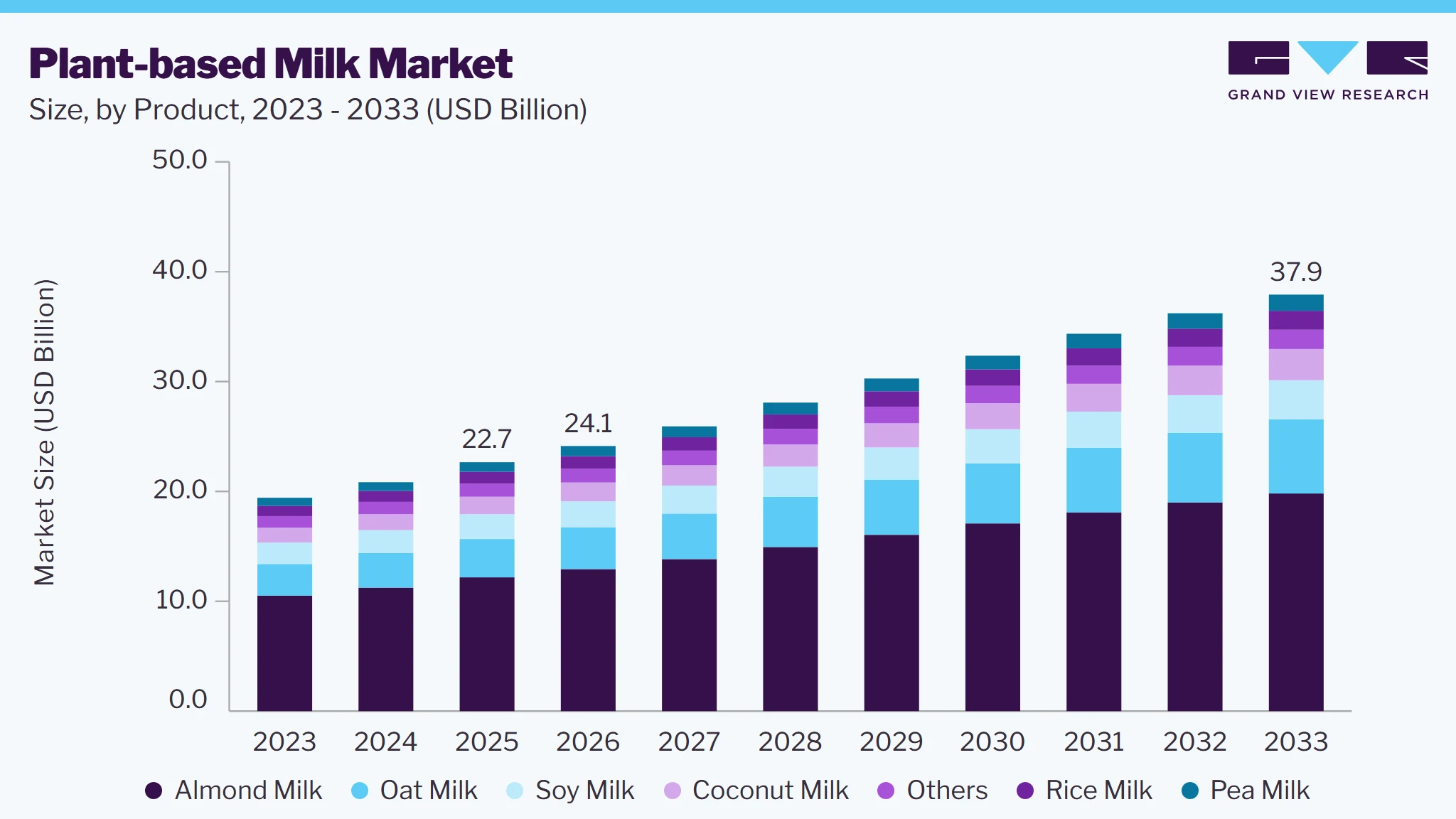
The global plant-based milk market size was valued at USD 22.7 billion in 2025 and is projected to grow from USD 24.1 billion in 2026 to USD 37.9 billion by 2033, at a CAGR of 6.7% from 2026 to 2033. The market in Asia Pacific dominated with a revenue share of 47.6% in 2025. Consumers are increasingly seeking dairy alternatives due to lactose intolerance, allergies, and the desire for lower-calorie, nutrient-rich options.
 Source: Grand View Research, IR Documents, Primary Interviews, Paid DatabasesTo learn more about this report,
 Download Free Sample Report
 Key Market Trends & Insights
- By product: Almond milk segment held the largest market share of 53.8% in 2025.
- By nature: Conventional segment held the largest market share of 82.4% in 2025.
- By flavors: Non-flavored segment held the largest market share of 64.2% in 2025.
- By distribution channel: Hypermarkets & supermarkets segment held the largest market share of 39.8% in 2025.
Regional Highlights
- Largest regional market: Asia Pacific (47.6% revenue share, 2025)
- By country: The U.S. held the largest market share in 2025.
Market Size & Forecast
- Market size in 2025: USD 22.7 Billion
- Estimated market size in 2026: USD 24.1 Billion
- Projected market size by 2033: USD 37.9 Billion
- CAGR (2026-2033): 6.7%
Three ways to get this report
Buy it, customize it, or ask a question.Ask an Analyst
Analyst response in 1 business day
- AccessReport author, directly
- Reply timeWithin 1 working day
- No sales callDirect answer only
- FormatEmail reply
- CostFree, no cost
Get the Full Report
What the study covers
- FormatsPDF · Excel · Dashboard
- Timeline2026–2033 annual, 2025 base
- Coverage20+ countries, 5 regions
- Companies10+ key players profiled
Customize the Report
20% free customization
- IncludeCountries, segments, points
- TailorTo your product definition
- ExtendDeeper competitor detail
- OrA fully bespoke study
- Turnaround5–10 working days
Furthermore, technological advancements and innovation in product development have improved the taste and texture of plant-based milks, making them more appealing. In addition, the rising popularity of veganism and flexitarianism, as more people around the world switch to plant-based diets, has expanded the consumer base. All these factors collectively are expected to drive the demand and growth of the plant-based milk market during the forecast period.Health and wellness trends have been a major driving force behind the popularity of plant-based milk products. Many consumers are becoming more health-conscious and are seeking alternatives to dairy milk that offer similar nutritional benefits without the potential drawbacks. For example, lactose intolerance and dairy allergies are common issues that plant-based milks can address effectively. According to the National Institute of Diabetes and Digestive and Kidney Diseases, approximately 68% of the global population has lactose malabsorption, making lactose-free alternatives highly appealing.
 To learn more about this report, Download Free Sample Report
 Plant-based milks such as almond, soy, oat, and rice milk often contain lower levels of saturated fats and cholesterol compared to cow's milk, which can contribute to better cardiovascular health. The American Heart Association has highlighted the importance of reducing saturated fat intake to lower the risk of heart disease, driving health-conscious consumers toward plant-based alternatives. Additionally, many plant-based milks are fortified with essential nutrients like calcium, vitamin D, and vitamin B12, thus driving the preference for and the demand of plant-based milk across the world during the forecast period.
Manufacturers are continually investing in research and development to improve the taste, texture, and nutritional profile of plant-based milks. Advances in food technology have enabled the creation of plant-based milks that closely mimic the creaminess and mouthfeel of cow's milk, further contributing to its increasing acceptance among the consumers.
Furthermore, the variety of plant-based milk options has expanded significantly in recent years, with choices ranging from almond milk to oat milk, rice milk, coconut milk, and even more niche varieties like hemp milk and pea milk. Each type offers unique benefits and caters to different dietary needs and taste preferences. For example, oat milk has gained popularity for its creamy texture and suitability for frothing in coffee, while almond milk is favored for its low-calorie content.
Government policies and regulatory support have also contributed to the growth of the plant-based milk market.In the U.S., the Dietary Guidelines for Americans have recognized the nutritional benefits of plant-based diets, encouraging consumers to consider plant-based alternatives as part of a healthy eating pattern. Furthermore, many governments around the world are offering subsidies and financial incentives to promote the cultivation of crops used in plant-based milks, such as almonds, soybeans, oats, and rice.
For instance, In the European Union, the Common Agricultural Policy (CAP) provides subsidies to farmers who adopt sustainable farming practices. The CAP has been reformed to include greening measures, which reward farmers for crop diversification, maintaining permanent grassland, and creating ecological focus areas. These measures indirectly support the production of crops used in plant-based milks by promoting environmentally friendly farming practices, thus contributing to the growth of the plant-based milk market during the forecast period.
Market Dynamics
The global plant-based milk market is experiencing robust growth, driven by increasing consumer adoption of dairy alternatives, growing awareness of health and wellness, and rising demand for sustainable food products. Consumers are increasingly shifting toward plant-based beverages due to dietary preferences, lactose intolerance concerns, and environmental considerations. Product innovation, expanding retail availability, and growing acceptance of plant-based diets are expected to support market expansion over the forecast period.
Growing consumer preference for lactose-free, cholesterol-free, and plant-based nutrition is driving demand for plant-based milk products. Increasing awareness of the health benefits associated with almond, oat, soy, coconut, and other plant-based milk varieties is encouraging wider adoption among health-conscious consumers. The shift toward vegan, flexitarian, and sustainable dietary lifestyles continues to strengthen market growth.
Fluctuations in the prices of key raw materials, including almonds, oats, soybeans, coconuts, and peas, can impact production costs and profit margins. Additionally, supply chain disruptions, agricultural yield variability, and transportation expenses may create operational challenges for manufacturers and affect product pricing.
The market offers significant opportunities through the development of fortified, organic, clean-label, and functional plant-based milk products. Manufacturers are increasingly introducing products enriched with protein, vitamins, minerals, and other nutritional ingredients to address evolving consumer preferences. Continuous innovation in flavors, formulations, and packaging formats is expected to create new growth opportunities, enhance brand differentiation, and expand consumer reach.
Analyst Perspective
The plant-based milk market is positioned for sustained growth, supported by increasing consumer interest in health-conscious, sustainable, and dairy-free beverage options. Rising adoption of vegan and flexitarian lifestyles, coupled with ongoing product innovation across almond, oat, soy, and other plant-based milk categories, is driving market expansion. Manufacturers are focusing on nutritional enhancement, clean-label formulations, and premium offerings to strengthen competitive positioning. However, raw material price fluctuations and intensifying market competition may influence growth dynamics during the forecast period.
Product Insights
Based on product, the almond milk market segment led the market with the largest revenue share of 53.8% in 2025. Almond milk is low in calories compared to other plant-based milks, making it an attractive option for weight-conscious consumers. Furthermore, almond milk is rich in vitamins and minerals, particularly vitamin E, known for its antioxidant properties, thus contributing to the increasing demand and preference for almond milk among consumers.
Additionally, leading brands like Almond Breeze and Silk have invested heavily in marketing, emphasizing the health benefits and versatility of almond milk. These brands have established a strong foothold in the market, making almond milk a familiar and trusted choice for consumers, further augmenting its growth and acceptance during the forecast period worldwide.
The oat milk market is expected to grow at a CAGR of 8.6% from 2026 to 2033. Oat milk is rich in dietary fiber, particularly beta-glucan, which has been shown to help lower cholesterol levels. Furthermore, oat milk often contains higher levels of protein compared to other plant-based milks, making it a nutritious option for consumers. Moreover, innovations in oat milk production have led to the creation of high-quality products that meet consumer demands. The introduction of flavored oat milk, fortified oat milk, and oat-based creamers has expanded the product range, attracting a broader consumer base. These factors are expected to drive market growth for oat milk during the forecast period.
Nature Insights
Based on nature, the conventional segment led the market with the largest revenue share of 82.4% in 2025. Conventional plant-based milks have a broader distribution network and are more widely available in supermarkets, grocery stores, and convenience stores. The ease of access to conventional products makes them the go-to choice for many consumers. Furthermore, conventional plant-based milks are generally more affordable than their organic counterparts, further making them more accessible to the consumers. This easy accessibility to conventional plant-based milk is expected to keep the dominance of conventional plant-based milk during the forecast period.
On the other hand, the organic plant-based milk market is expected to grow with a CAGR of 9.8% from 2026 to 2033. There is a growing consumer preference for organic products due to perceived health benefits. Organic plant-based milks are free from synthetic pesticides, fertilizers, and genetically modified organisms (GMOs), which appeals to health-conscious consumers. The increasing awareness of potential health risks associated with synthetic additives drives the demand for organic alternatives.
Additionally, there is an increase in launches of organic plant-based milk by manufacturers, expected to further augment its growth during the forecast period. For instance, in June 2024, Milkadamia expanded its line of premium plant-based milks with the launch of Shelf-stable Macadamia Nut Milk in the U.S. It is the company’s first USDA organic offering.
Flavor Insights
Based on flavors, the non-flavored segment led the market with the largest revenue share of 64.2% in 2025. Non-flavored plant-based milks are highly versatile and can be used in a variety of applications, from cooking and baking to blending with other ingredients. This versatility makes non-flavored milk a staple in many households, driving its market dominance. Furthermore, many consumers perceive non-flavored plant-based milks as healthier options compared to flavored varieties, which often contain added sugars and artificial flavorings. Health-conscious consumers prefer non-flavored milks to avoid added sugars and maintain a balanced diet, further driving its market demand during the forecast period.
The flavored plant-based milk market is expected to grow at a CAGR of 7.7% from 2026 to 2033. Flavored plant-based milks cater to consumers' taste preferences, offering a variety of flavors such as chocolate, vanilla, and strawberry. These flavors make plant-based milks more enjoyable for consumers, particularly children and those who find non-flavored options bland. In addition, manufacturers are continually innovating to introduce new and exciting flavors, which attract consumers looking for variety. Limited-edition flavors and seasonal offerings create excitement and drive sales in the flavored plant-based milk segment. All these factors are expected to drive market growth for the plant-based milk market during the forecast period.
Distribution Channel Insights
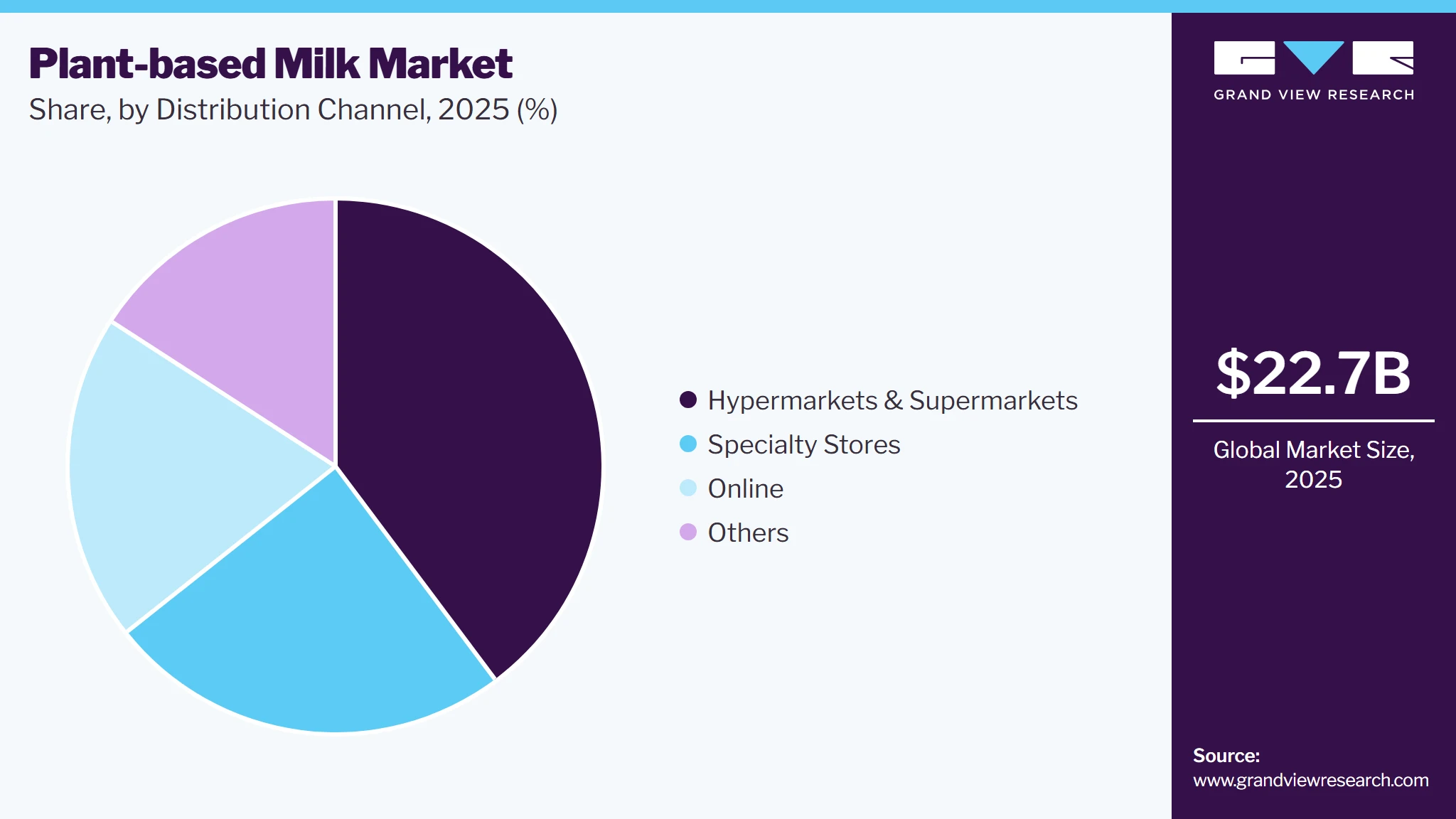
Based on distribution channel, the hypermarkets & supermarkets segment led the market with the largest revenue share of 39.8% in 2025. Hypermarkets and supermarkets have extensive reach and cater to a large customer base. They are conveniently located and attract high footfall, making them the preferred shopping destination for many consumers. Furthermore, these retail outlets offer a wide variety of plant-based milk products, including different brands, types, and flavors. The extensive product range allows consumers to compare and choose according to their preferences, driving sales through this channel.
 To learn more about this report, Download Free Sample Report
 Sales of plant-based milk through online channels are expected to grow with a CAGR of 9.2% from 2026 to 2033. The convenience of online shopping is a significant driver for the growth of online sales. Consumers can easily browse, compare, and purchase plant-based milk products from the comfort of their homes. Furthermore, the availability of home delivery services adds to the convenience.
Moreover, online platforms often offer a wider range of products compared to physical stores. Consumers can find specialty plant-based milks and niche products that may not be available in local supermarkets. This wider selection attracts a diverse consumer base and will drive the preference for online channels is expected to drive high sales growth through this channel in the plant-based milk market during the forecast period.
Regional Insights
The North America plant-based milk market is expected to grow with a CAGR of 5.8% from 2026 to 2033. North American consumers are becoming increasingly health-conscious, driving them towards plant-based alternatives. Many are seeking to reduce their intake of saturated fats and cholesterol, which are prevalent in dairy milk. Plant-based milks like almond, soy, and oat milk offer lower calorie content and are often fortified with essential nutrients such as calcium, vitamin D, and B12. This aligns with the growing trend of clean eating and holistic wellness, thus driving up the product sales in the region during the forecast period.
U.S. Plant-based Milk Market Trends
The plant-based milk market in the U.S. held the largest share in the North America region in 2025. The U.S. market benefits from extensive innovation and variety in plant-based milks. Companies are continuously developing new products and flavors, catering to diverse tastes and dietary needs. The availability of a wide range of options, from almond and soy milk to newer varieties like pea and hemp milk, ensures that there is a plant-based milk for every consumer preference, further driving the sales of plant-based milk in the country during the forecast period.
Europe Plant-based Milk Market Trends
The Europe plant-based milk market is expected to grow at a CAGR of 6.4% during the forecast period. The European Union’s policies promoting sustainable agriculture and reducing environmental impact indirectly support the plant-based milk market. Subsidies and incentives for growing crops used in plant-based milks, along with labeling regulations that ensure transparency, contribute to the market’s growth. Furthermore, the rise of veganism and vegetarianism, along with flexitarian diets, further supports the growth of the plant-based milk market in the region.
Asia Pacific Plant-based Milk Market Trends
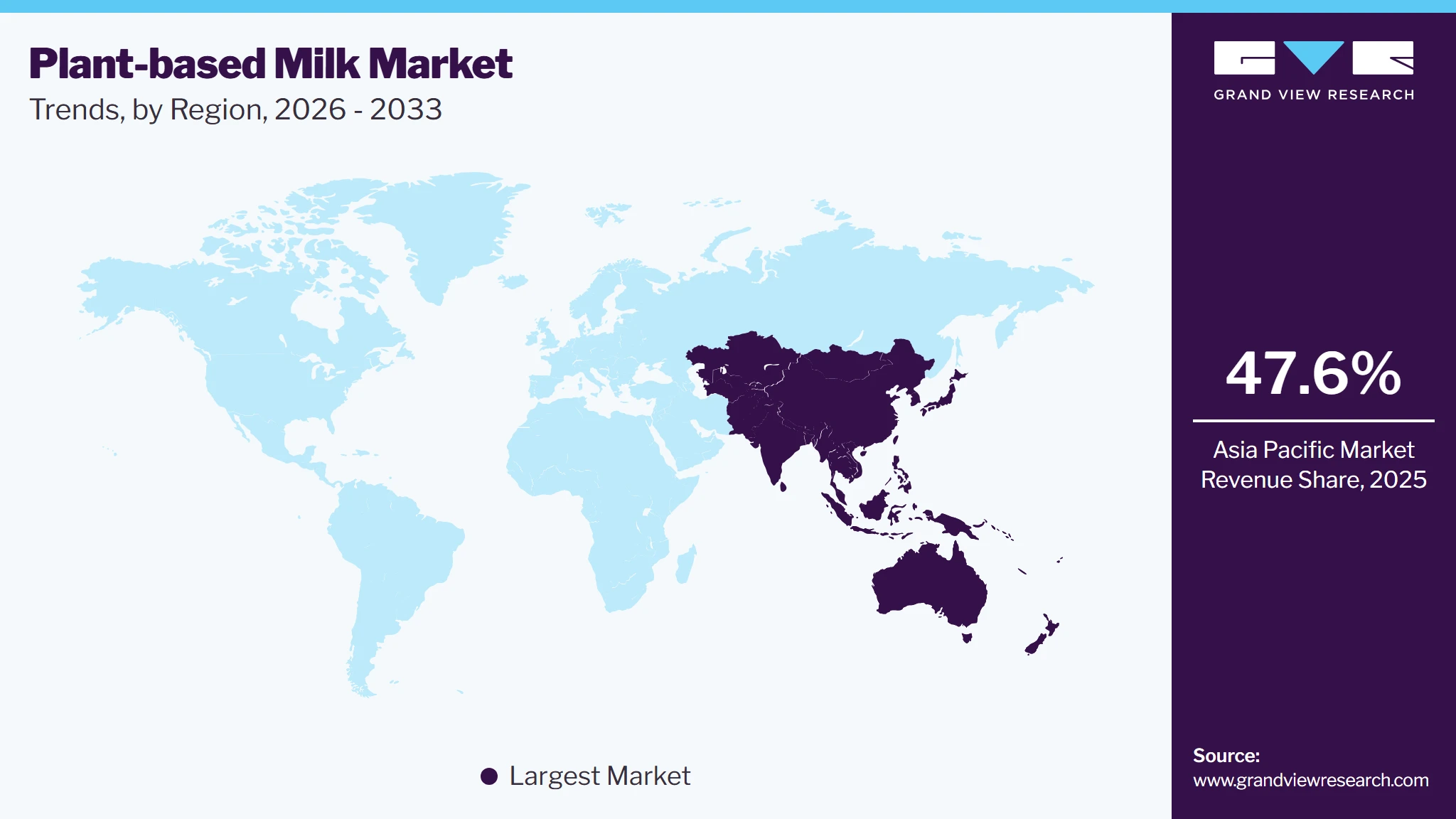
Asia Pacific dominated the plant-based milk market with the largest revenue share of 47.6% in 2025. The rise of vegetarianism and veganism, driven by concerns about animal cruelty, supports the demand for plant-based milks. Additionally, traditional dietary practices in countries like India, where vegetarianism is prevalent, align well with the consumption of plant-based milks. Furthermore, the influence of Western dietary trends, including the popularity of plant-based diets, is increasing. Younger generations, in particular, are more open to adopting new dietary habits and are driving the demand for plant-based milks in the region during the forecast period.
 To learn more about this report, Download Free Sample Report
 Key Plant-based Milk Company Insights
The global plant-based milk market is characterized by the presence of numerous well-established and emerging players. Manufacturers are expanding their portfolios to include a wide variety of plant-based milks, such as almond, soy, oat, coconut, rice, hemp, and pea milk. By offering diverse options, they cater to different taste preferences, dietary needs, and allergy considerations. Furthermore, to compete with dairy milk, many plant-based milk manufacturers fortify their products with essential nutrients like calcium, vitamin D, vitamin B12, and protein. This ensures that their products meet consumers' nutritional needs and appeal to those looking for dairy milk alternatives.
Key Plant-based Milk Companies:
The following key companies have been profiled for this study on the plant-based milk market.
-
Danone S.A.
-
Blue Diamond Growers
-
The Hain Celestial Group, Inc.
-
Califia Farms, LLC
-
SunOpta Inc.
-
Ripple Foods, PBC
-
Elmhurst Milked Direct, LLC
-
Pacific Foods of Oregon, LLC
-
Oatly AB
-
Daiya Foods Inc.
-
Dohler GmbH
-
Horizon Organic
Competitive Benchmarking
Category
Operating Strategies
Competitive Edge
Weakness
Established Players (Danone S.A.; Blue Diamond Growers; The Hain Celestial Group, Inc.; SunOpta Inc.; Oatly AB; Pacific Foods of Oregon, LLC; Horizon Organic; Dohler GmbH)
- Expand plant-based milk portfolios through innovation and new product launches.
- Strengthen market presence through extensive distribution networks and retail partnerships.
- Strong brand recognition and loyal customer base across key markets.
- Large-scale production capabilities and broad geographic reach.
- High operational and marketing costs associated with maintaining market leadership.
- Exposure to supply chain disruptions and raw material price fluctuations.
Emerging Players (Califia Farms, LLC; Ripple Foods, PBC; Elmhurst Milked Direct, LLC; Daiya Foods Inc.)
- Focus on niche and premium plant-based milk offerings with clean-label and sustainability positioning.
- Build brand awareness through digital marketing and targeted consumer engagement.
- Ability to quickly respond to evolving consumer preferences and market trends.
- Strong product differentiation through innovative ingredients and formulations.
- Limited financial resources and lower brand visibility compared to established competitors.
- Smaller distribution footprint and market penetration.
Recent Developments
-
In June 2024, Califia Brand, known for its dairy-free products, introduced 'Complete Kids,' a nutritious alternative to dairy milk aimed at children. This product combines peas, chickpeas, and fava beans, providing 8g of protein, Omega-3, calcium, choline, and prebiotics. It contains 50% less sugar than traditional milk and offers a smooth, creamy flavor. Califia Brand has made the milk accessible through online platforms and U.S. grocery stores.
-
In May 2024, Lactalis Canada, a subsidiary of the French dairy company Lactalis, has launched a new plant-based milk brand called "Enjoy" in Canada, targeting health-conscious consumers. The brand product portfolio includes six varieties of plant-based milk: plain oat, almond, and hazelnut milks, as well as vanilla-flavored oat and almond options, and a hazelnut-oat blend. These milks are non-GMO, gluten-free, and free from artificial colors, preservatives, and flavors.
-
In April 2024, PLANTSTRONG Foods has introduced a line of fortified whole plant-based milks in the United States. The milk comes in four varieties: Unsweetened Almond, Unsweetened Oat, Oat & Almond, and Oat & Walnut, all packaged in 32-ounce containers that require no refrigeration until opened. These products are exclusively offered in over 500 Whole Foods Market locations nationwide and can also be purchased directly from the company's website.
-
In April 2024, Yeo Hiap Seng, a Singapore-based brand, has introduced Yeo’s Immuno Soy Milk fortified with vitamin B6 and zinc, designed to bolster the immune system. Endorsed as a Healthier Choice in Singapore and Malaysia, it provides a lactose-free and nutritious alternative to traditional breakfast beverages. This soy milk range is rich in protein and calcium, available in original and chocolate flavors, with additional variations expected in the future.
Plant-based Milk Market Report Scope
Report Attribute
Details
Market size in 2025
USD 22.7 billion
Estimated market size in 2026
USD 24.1 billion
Projected market size by 2033
USD 37.9 billion
Growth rate
CAGR of 6.7% from 2026 to 2033
Base year for estimation
2025
Historical data
2021 - 2024
Forecast period
2026 - 2033
Quantitative units
Revenue in USD million/billion and CAGR from 2026 to 2033
Report coverage
Revenue forecast, company ranking, competitive landscape, growth factors, and trends
Segments covered
Product, nature, flavors, distribution channel, region
Regional scope
North America; Europe; Asia Pacific; Central & South America and Middle East & Africa.
Country scope
U.S.; Canada; Mexico; Germany; France; UK; Spain; Italy; China; Japan; India; South Korea; Australia; Brazil, Argentina and South Africa
Key companies profiled
Danone S.A.; Blue Diamond Growers; The Hain Celestial Group, Inc.; Califia Farms, LLC; SunOpta Inc.; Ripple Foods, PBC; Elmhurst Milked Direct, LLC; Pacific Foods of Oregon, LLC; Oatly AB; Daiya Foods Inc.; Dohler GmbH; Horizon Organic
Customization scope
Free report customization (equivalent up to 8 analysts' working days) with purchase. Addition or alteration to country, regional & segment scope.
Pricing and purchase options
Avail customized purchase options to meet your exact research needs. Explore purchase options
Global Plant-based Milk Market Report Segmentation
This report forecasts revenue growth at the global, regional, and country levels and provides an analysis of the latest industry trends and opportunities in each of the sub-segments from 2021 to 2033. For this study, Grand View Research has segmented the global plant-based milk market report based on product, nature, flavor, distribution channel, and region.
-
Product Outlook (Revenue, USD Million, 2021 - 2033)
-
Almond Milk
-
Oat Milk
-
Soy Milk
-
Coconut Milk
-
Rice Milk
-
Pea Milk
-
Others
-
-
Nature Outlook (Revenue, USD Million, 2021 - 2033)
-
Organic
-
Conventional
-
-
Flavor Outlook (Revenue, USD Million, 2021 - 2033)
-
Flavored Milk
-
Non-Flavored Milk
-
-
Distribution Channel Outlook (Revenue, USD Million, 2021 - 2033)
-
Hypermarkets & Supermarkets
-
Specialty Stores
-
Online
-
Others
-
-
Regional Outlook (Revenue, USD Million, 2021 - 2033)
-
North America
-
U.S.
-
Canada
-
Mexico
-
-
Europe
-
UK
-
Germany
-
France
-
Italy
-
Spain
-
-
Asia Pacific
-
China
-
Japan
-
India
-
Australia & New Zealand
-
South Korea
-
-
Central & South America
-
Brazil
-
-
Middle East & Africa
-
South Africa
-
-
Research Methodology
The plant-based milk market figures in this report are based on a proven research process that combines executive interviews with secondary research from proprietary databases, company filings, and recognized regulatory and institutional sources. Market size is built through value-chain sizing - reconciling supply-side and demand-side estimates - and triangulated with bottom-up and top-down approaches. Every estimate passes multiple levels of expert validation before publication, with each plant-based milk segment quantified using the revenue-capture definitions in the table below.
Segment Definition
Segment - Product
Revenue capture definition
Almond Milk
This segment includes sales of almond-based milk alternatives formulated as dairy-free beverages for direct consumption, food preparation, and nutritional applications.
Oat Milk
This segment includes sales of oat-based milk products used as plant-based dairy alternatives in beverages, coffee, cooking, and baking applications.
Soy Milk
This segment includes sales of soy-based milk beverages designed to provide a dairy-free source of protein and nutrition for consumers.
Coconut Milk
This segment includes sales of coconut-based milk alternatives used for drinking, cooking, baking, and specialty beverage applications.
Rice Milk
This segment includes sales of rice-based milk products formulated as hypoallergenic and dairy-free alternatives for beverage and food applications
Pea Milk
This segment includes sales of pea protein-based milk alternatives developed to offer high-protein, plant-based nutrition for direct consumption and food use.
Others
This segment includes revenue generated from other plant-based milk alternatives, including cashew, hemp, flax, quinoa, macadamia, and blended plant-based milk products.
Estimation Model
Layer Name
Key Question
Description
Consumer Base Layer
Who are the potential consumers?
Identify consumers seeking dairy alternatives, including vegan, vegetarian, lactose-intolerant, flexitarian, and health-conscious populations adopting plant-based nutrition.
Accessibility Layer
Where are plant-based milk products available?
Evaluate product availability across supermarkets, hypermarkets, convenience stores, specialty health food stores, online retail platforms, and foodservice establishments. Assess market penetration, distribution network strength, and accessibility across urban and rural regions.
Adoption Layer
Which consumers actively purchase plant-based milk?
Analyze consumer adoption of plant-based milk across daily consumption occasions, including direct consumption, beverages, cereals, smoothies, cooking, and baking. Evaluate demand across key product categories such as almond, soy, oat, coconut, and other plant-based milk alternatives.
Monetisation Layer
How much revenue is generated?
Estimate market revenue by evaluating consumption volumes, average selling prices, product mix, premiumization trends, and value-added offerings such as organic, fortified, flavored, and clean-label plant-based milk products across multiple distribution channels.
Delivered Customizations
This report has been delivered with the following In-depth customizations
Client Request
Customization Delivered
Value Adds
Cross-Segmentation Analysis for Plant-Based Milk Products Across Distribution Channels
Detailed assessment of kimchi products including Plant-Based Milk Products including almond, Oat Milk, Soy Milk, Coconut Milk, Rice Milk, Pea Milk, Others plant-based milk across distribution channel such as hypermarkets/supermarkets, specialty stores, online & other channels.
Identify high-growth opportunities, optimize channel strategies, and support portfolio expansion.
Regulatory Compliance Analysis
Assessment of food safety regulations, labeling requirements, certification standards, and regional compliance frameworks for plant-based milk products..
Support compliance, reduce market-entry risks, and align products with industry standards.
Company Share Analysis
Detailed assessment of key market participants, including market share, product portfolio strength, distribution presence, and competitive positioning within the Plant-based milk market.
Enables competitive benchmarking, identifies market leaders, and supports strategic planning and market positioning decisions.
Frequently Asked Questions About This Report
Key factors driving market growth include rise in health consciousness, increasing vegan and flexitarian populations, innovations in product offerings, environmental concerns, and expanding retail availability.
Hypermarkets & supermarkets segment held the largest share (over 39.0%) in 2025.
The non-flavored segment led with a 64.2% revenue share in 2025.
The almond milk segment led with a 53.8% revenue share in 2025.
The conventional segment led with a 82.4% revenue share in 2025.
The global plant-based milk market size was valued at USD 22.7 billion in 2025 and is estimated at USD 24.1 billion for 2026.
The global plant-based milk market is expected to grow at a CAGR of 6.7% from 2026 to 2033, reaching USD 37.9 billion by 2033.
Almond milk dominated the plant-based milk market with a share of 53.8% in 2025.
Some key players operating in the plant-based milk market include Danone S.A.; Blue Diamond Growers; The Hain Celestial Group, Inc.; Califia Farms, LLC; SunOpta Inc.; Ripple Foods, PBC; Elmhurst Milked Direct, LLC; Pacific Foods of Oregon, LLC; Oatly AB; Daiya Foods Inc.; Dohler GmbH; Horizon Organic
Asia Pacific dominated with a 47.6% revenue share in 2025 and significantly growing market over the forecast period.
About the Author(s)
Consumer F&B Research Team
Consumer Goods · Consumer F&BThis report was authored by the consumer f&b research team at Grand View Research - comprising two research analysts, one senior research analyst, and one industry expert - with specialized expertise in the consumer f&b segment of the consumer goods industry. All findings are based on proprietary consumer goods databases, executive interviews, and regulatory analysis, subject to internal peer review prior to publication.
Last Updated:
Speak to Analyst

Customize this report to your needs - add regions, segments, or data points, with 20% free customization.
Or view our licence options:


ISO 9001:2015 & 27001:2022 Certified
We are GDPR and CCPA compliant! Your transaction & personal information is safe and secure. For more details, please read our privacy policy.


