
- Home
- »
- Medical Devices
- »
-
Powered Surgical Instruments Market Report, 2026-2033GVR Report cover

Powered Surgical Instruments Market (2026 - 2033)
Size, Share & Trends Analysis Report By Product (Handpieces, Power Source & Control, Accessories), By Application (Orthopedic, Neurosurgery, ENT Surgery, Cardiovascular Surgery, Plastic Surgery), By Region, And Segment Forecasts
Market Size, 2025
$2.7BMarket Estimate, 2026
$2.8BMarket Forecast, 2033
$3.4BCAGR, 2026–2033
2.7%Powered Surgical Instrument Market Trends
The powered surgical instruments market size was valued at USD 2.7 billion in 2025 and is projected to grow from USD 2.8 billion in 2026 to USD 3.4 billion by 2033, at a CAGR of 2.7% from 2026 to 2033. North America dominated the powered surgical instruments market with the largest revenue share of 43.1% in 2025. The increasing volume of surgeries globally drives market growth.
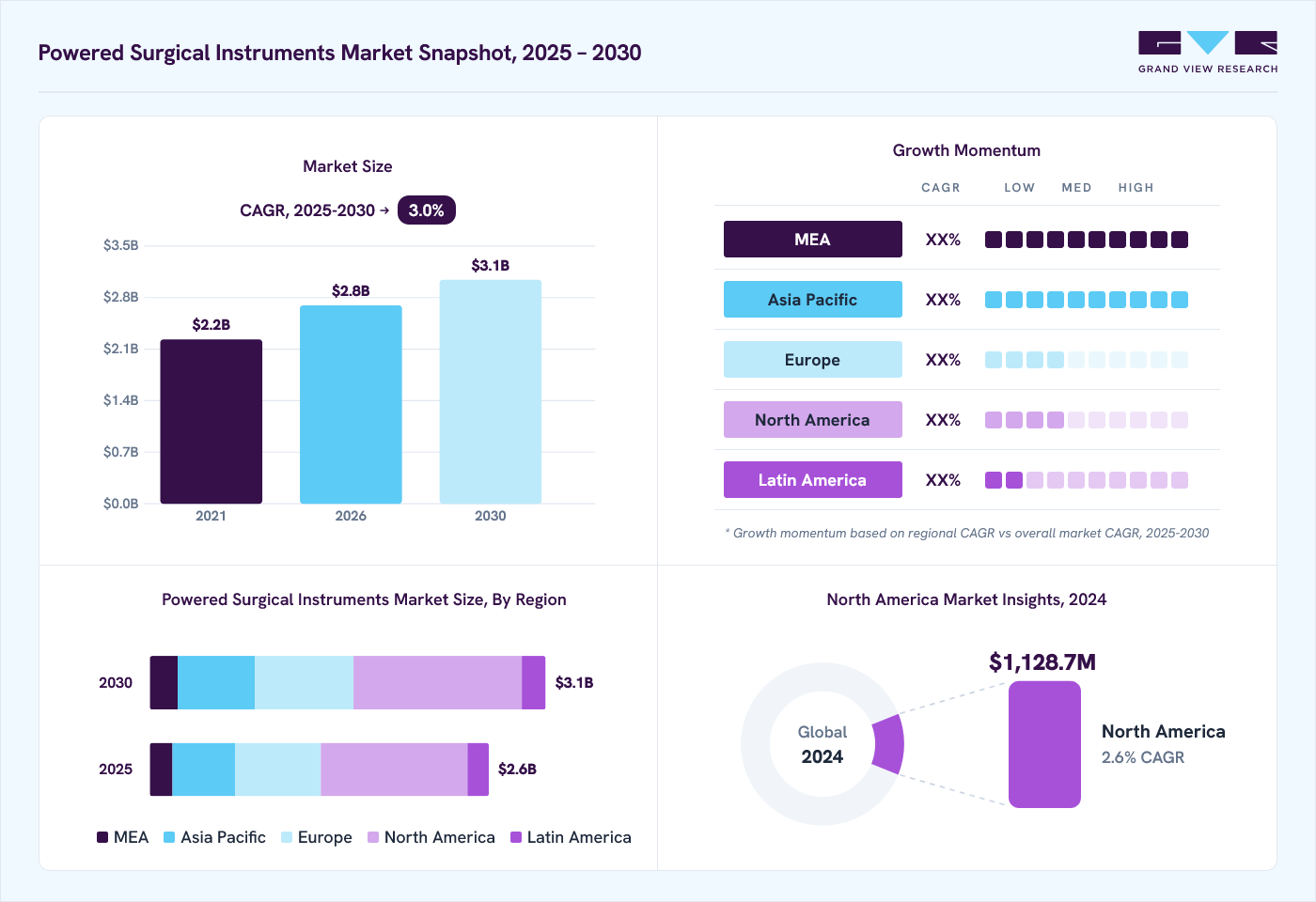 Source: Grand View Research, IR Documents, Primary Interviews, Paid DatabasesTo learn more about this report,
 Download Free Sample Report
Key Market Trends & Insights
- By product: Hand pieces’ segment held the largest market share of 44.8% in 2025.
- By application: Orthopedic surgery segment held the largest market share of 24.9% in 2025.
Regional Highlights
- Largest regional market: North America (43.1% revenue share, 2025)
- Fastest-growing regional market: Middle East and Africa (highest CAGR, 2026-2033)
- By country: The U.S. held the largest market share in 2025.
Market Size & Forecast
- Market size in 2025: USD 2.7 Billion
- Estimated market size in 2026: USD 2.8 Billion
- Projected market size by 2033: USD 3.4 Billion
- CAGR (2026-2033): 2.7%
Prism AI by Grand View Research Free to tryAsk a question about the powered surgical instruments marketTry asking✓Every figure cited from GVR research Prefer the report? Download free sample →
As populations age and healthcare access improves, surgical procedures, including minimally invasive surgeries, continue to grow. Powered surgical instruments, known for their precision and efficiency, are essential in these procedures, facilitating quicker and more accurate operations. This efficiency benefits surgeons and enhances patient outcomes by reducing recovery times and the risk of complications. Technological advancements are another major contributor to the rising demand for powered surgical instruments. Innovations in battery life, ergonomics, and device versatility have made these instruments more reliable and user-friendly. Furthermore, the integration of robotics and computer-assisted systems in surgical tools has expanded their capabilities, allowing for greater precision and control, which is particularly beneficial in complex procedures. The growing focus on improving surgical outcomes and patient safety also plays a crucial role in the increased adoption of powered surgical instruments. Hospitals and surgical centers are investing in advanced tools that offer greater accuracy and consistency, reducing the likelihood of human error. Additionally, these instruments are designed to be easily sterilized and maintained, ensuring high hygiene standards and minimizing the risk of infections.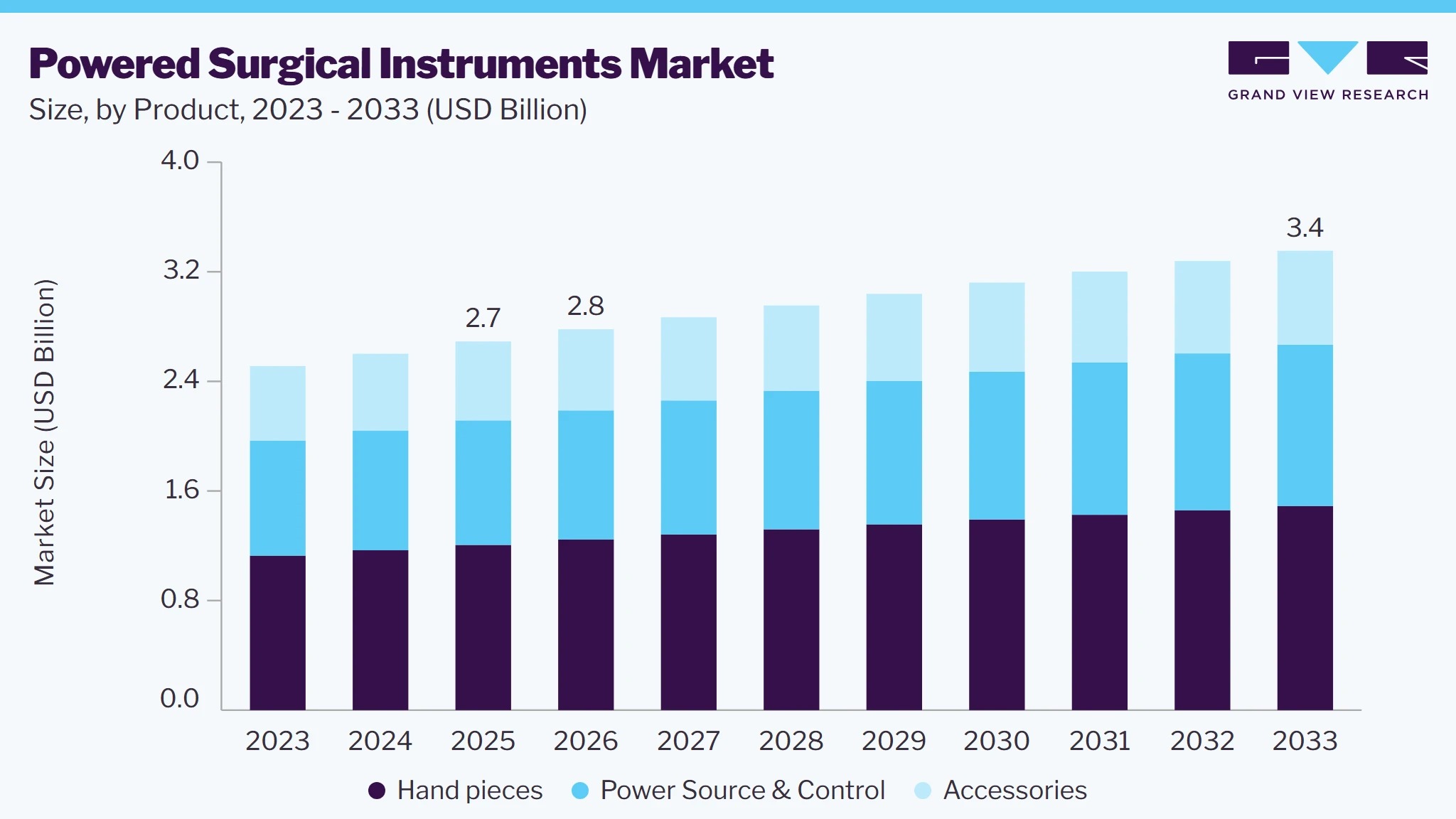 To learn more about this report, Download Free Sample Report
Lastly, the rise in chronic diseases and the subsequent increase in surgeries to address these conditions contribute to the demand. Conditions such as cardiovascular diseases, cancer, and orthopedic issues often require surgical interventions where powered instruments are indispensable. As the prevalence of these conditions grows, so does the need for efficient and effective surgical solutions, further propelling the demand for powered surgical instruments on a global scale.
Market Dynamics
The powered surgical instruments market is witnessing robust growth, driven by the increasing volume of surgical procedures, rising adoption of minimally invasive techniques, and growing demand for precision, efficiency, and improved patient outcomes across multiple surgical specialties. The market is further supported by the expanding global burden of chronic diseases, increasing orthopedic, neurosurgical, ENT, dental, and cardiothoracic interventions, rapid technological advancements in surgical power systems, and continuous investments in healthcare infrastructure. Powered surgical instruments enable surgeons to perform complex procedures with enhanced precision, controlled tissue manipulation, reduced operative time, and improved procedural consistency across hospitals, ambulatory surgical centers (ASCs), specialty clinics, and academic medical institutions. Powered surgical instruments are extensively used in orthopedic trauma and joint replacement surgeries, spinal procedures, neurosurgery, craniomaxillofacial surgeries, otolaryngology (ENT), dental and oral-maxillofacial surgeries, plastic and reconstructive procedures, and cardiothoracic interventions.
The powered surgical instruments market is primarily driven by the growing number of orthopedic surgeries and the increasing global adoption of minimally invasive surgical (MIS) procedures. Rising incidences of musculoskeletal disorders, osteoarthritis, osteoporosis, sports injuries, spinal disorders, and traumatic fractures, coupled with the rapidly expanding geriatric population, have significantly increased the demand for joint replacement, trauma fixation, and spinal surgeries. Powered surgical instruments such as drills, saws, reamers, and burrs enable surgeons to perform these procedures with greater precision, speed, and control while reducing surgeon fatigue and improving procedural efficiency. In minimally invasive surgeries, where precision and reduced tissue trauma are critical, advanced powered instruments facilitate smaller incisions, improved surgical accuracy, reduced blood loss, shorter operating times, faster patient recovery, and lower risk of postoperative complications. Furthermore, increasing investments in modern operating rooms, expanding ambulatory surgical centers (ASCs), and the integration of battery-powered cordless systems with robotic-assisted and image-guided surgical platforms are further accelerating market growth. As healthcare systems worldwide continue to prioritize surgical efficiency, improved clinical outcomes, and reduced hospitalization costs, the demand for technologically advanced powered surgical instruments is expected to increase steadily during the forecast period.
One of the major restraints limiting the growth of the powered surgical instruments market is the high acquisition cost of powered surgical systems, along with the significant expenses associated with maintenance, sterilization, repairs, and periodic replacement of components such as batteries, handpieces, motors, drill attachments, saw blades, and burs. Advanced battery-powered and electric surgical instruments require substantial upfront capital investment, making them less affordable for small hospitals, ambulatory surgical centers (ASCs), and healthcare facilities in low- and middle-income countries with constrained budgets. In addition to procurement costs, healthcare providers incur recurring expenditures for preventive maintenance, calibration, battery replacement, sterilization validation, and servicing to ensure optimal performance and compliance with infection prevention and patient safety standards. Instrument downtime due to maintenance or repairs can also disrupt surgical schedules and increase operational costs. Furthermore, the growing complexity of modern powered surgical systems often necessitates specialized staff training and technical support, adding to the overall cost of ownership. These financial challenges can delay equipment replacement cycles and discourage healthcare providers from upgrading to next-generation powered surgical instruments, particularly in cost-sensitive markets. Consequently, the high total cost of ownership remains a significant barrier to broader market penetration despite continuous technological advancements and increasing surgical volumes.
Analyst Perspective
The global powered surgical instruments market is positioned at the intersection of several long-term healthcare trends, including the increasing adoption of minimally invasive surgical (MIS) procedures, the rising global volume of surgical interventions, and continuous technological advancements in surgical equipment. The growing prevalence of chronic diseases, orthopedic disorders, cardiovascular conditions, neurological disorders, trauma injuries, and age-related musculoskeletal diseases has significantly increased the demand for precise and efficient surgical procedures, creating substantial growth opportunities for powered surgical instrument manufacturers, hospitals, ambulatory surgical centers (ASCs), and specialty surgical clinics. This market expansion is further supported by the increasing emphasis on improving surgical precision, reducing operative time, minimizing tissue trauma, and enhancing patient outcomes across a wide range of surgical specialties. Powered surgical instruments have become an integral component of modern operating rooms, enabling surgeons to perform complex procedures with greater accuracy, consistency, and control compared with conventional manual instruments.
Product Insights
Based on product, the hand pieces’ segment led the market with the largest revenue share of 44.8% in 2025. The increase in minimally invasive surgical procedures requiring precise and efficient instruments has boosted the need for advanced hand pieces. These devices offer surgeons better control and accuracy, which is essential for delicate surgeries. Additionally, technological advancements have led to the development of more ergonomic and user-friendly hand pieces, enhancing surgeon comfort and reducing fatigue during lengthy procedures. The growing prevalence of chronic diseases necessitating surgical intervention also contributes to the demand, as does the expanding aging population, which often requires more frequent surgeries.
The power source & control segment is projected to grow with the fastest CAGR of 3.8% over the forecast period. The ongoing advancement of technology in medical equipment has resulted in the creation of advanced powered surgical tools. Advancements, including better battery longevity, upgraded power management systems, and sophisticated control mechanisms, have increased the effectiveness and dependability of these devices. Healthcare facilities are placing more importance on patient safety and enhancing surgical outcomes. Advanced control features on powered surgical instruments reduce human error by ensuring consistent performance and precision during procedures.
Application Insights
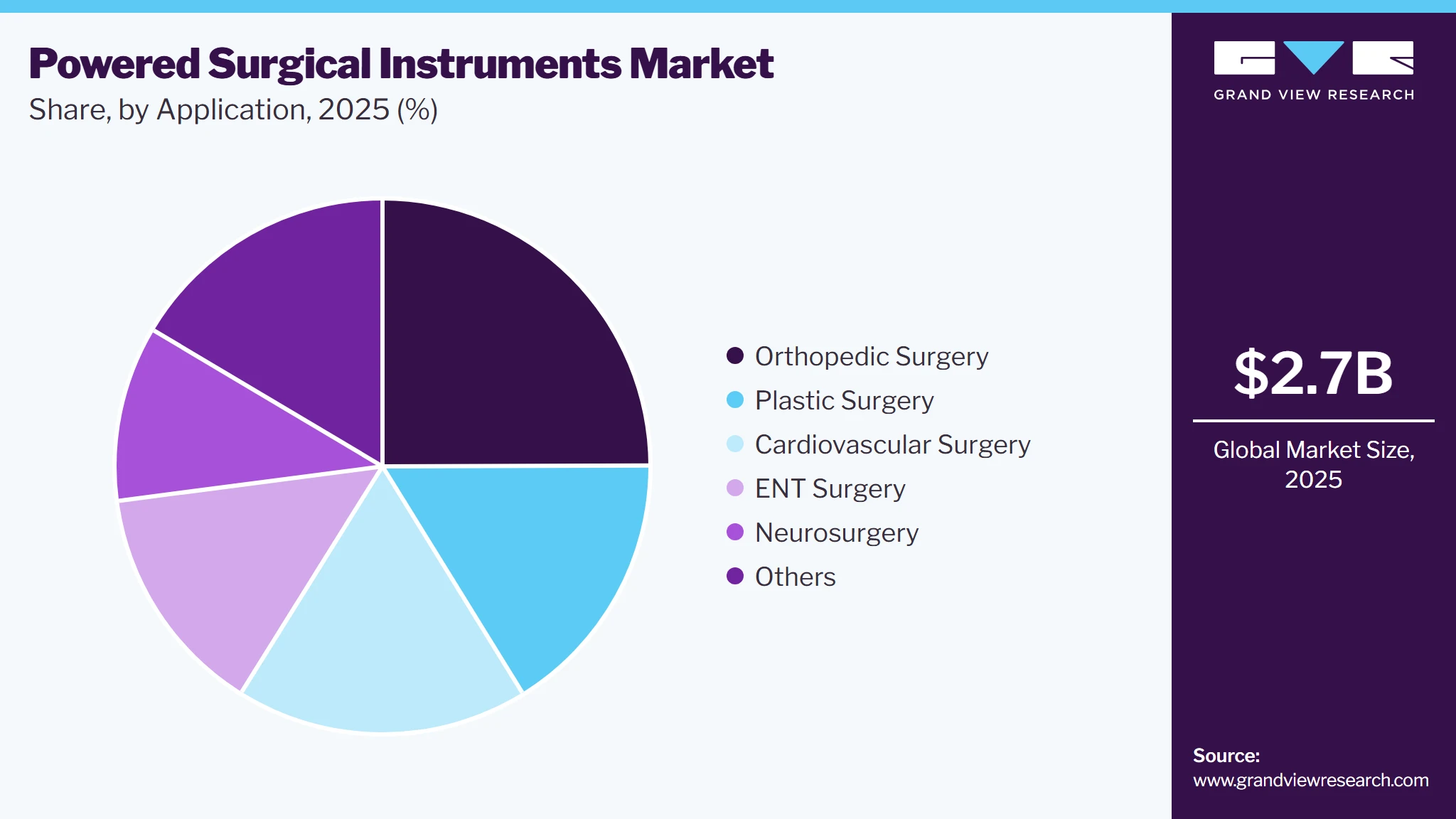
Based on application, the orthopedic surgery segment led the market with the largest revenue share of 24.9% in 2025. The increasing prevalence of musculoskeletal disorders and injuries drives the market growth. The growing number of sports-related injuries and accidents also contributes to the need for orthopedic surgeries. Additionally, advancements in minimally invasive surgical techniques, which often utilize powered surgical instruments, make these procedures more convenient due to their shorter recovery times and reduced risk of complications. Moreover, rising awareness and the availability of health insurance coverage are enabling more patients to opt for surgical interventions to improve their quality of life, further boosting the demand in this segment.
 To learn more about this report, Download Free Sample Report
The ENT surgery segment is projected to witness a significant CAGR over the forecast period. The rising prevalence of ENT-related disorders, such as chronic sinusitis, hearing loss, and sleep apnea, drives the segment growth. An aging population also contributes to the demand, as older individuals are more susceptible to conditions requiring ENT surgeries. Furthermore, increased healthcare access and awareness about available treatments encourage more patients to opt for surgical solutions.
Regional Insights
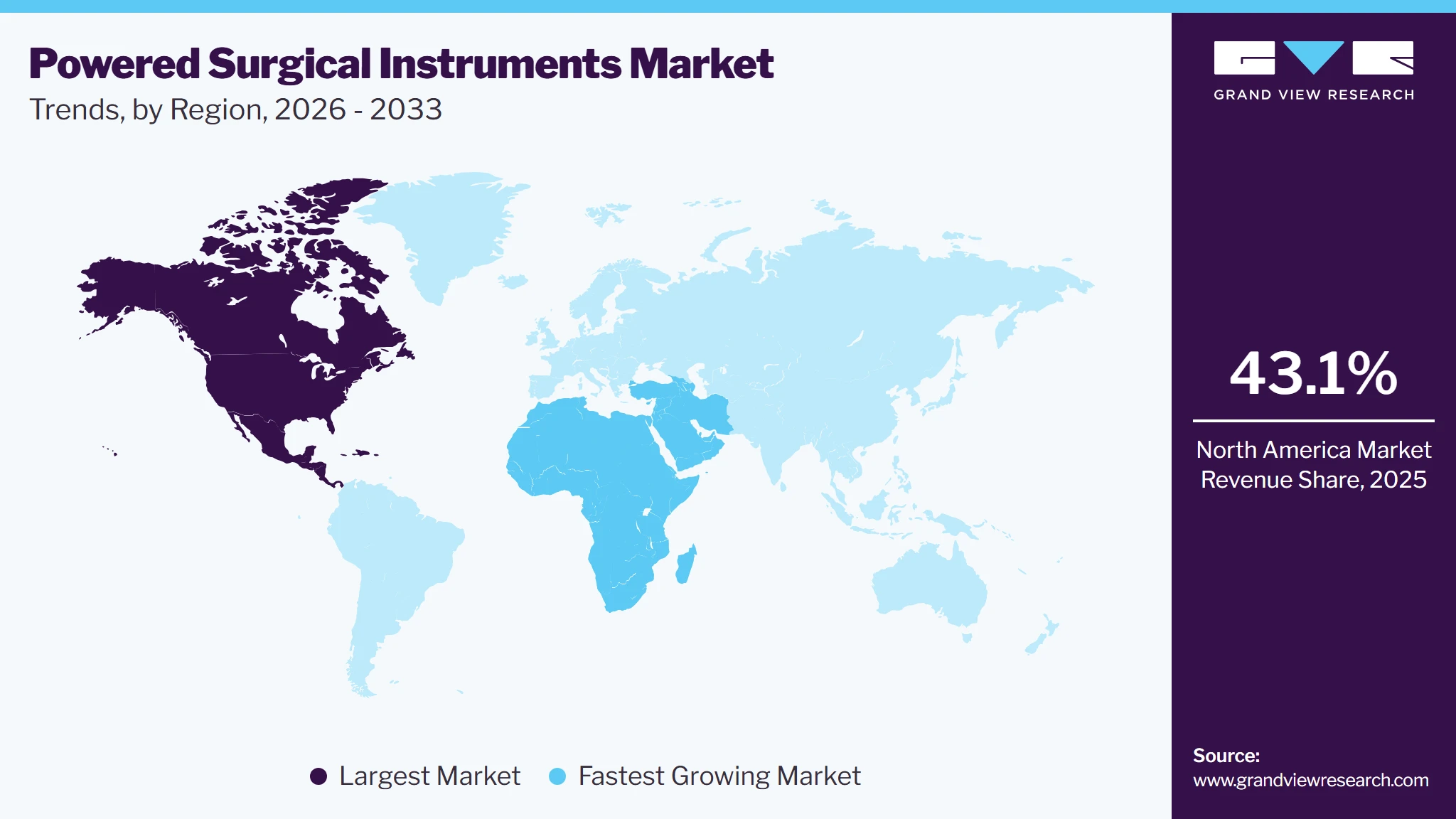
North America dominated the powered surgical instruments market with the largest revenue share of 43.1% in 2025. The region has a growing aging population, which leads to a higher incidence of age-related health conditions requiring surgical intervention. Additionally, there is an increased prevalence of chronic diseases such as cardiovascular disorders and orthopedic issues, necessitating more surgical procedures. Technological advances have also played a crucial role, as newer powered surgical instruments offer enhanced precision, efficiency, and safety, which are highly valued in modern surgical practices.
 To learn more about this report, Download Free Sample Report
U.S. Powered Surgical Instruments Market Trends
The powered surgical instruments market in the U.S. held the largest share in the North America region in 2025. The region's aging population and the rising prevalence of chronic conditions like cardiovascular diseases, obesity, and diabetes drive the market growth. The U.S. sees many surgeries related to these conditions, necessitating advanced surgical tools for more efficient and effective procedures. Additionally, the presence of a well-established healthcare infrastructure and a high adoption rate of advanced medical technologies further boosts the demand.
Europe Powered Surgical Instruments Market Trends
Europe market was witnessed as lucrative in this industry. The aging population, particularly in countries like Germany and Italy, is leading to a higher incidence of age-related conditions that require surgical intervention. Moreover, the region's strong emphasis on minimally invasive surgeries, especially in countries like the UK and France, is boosting the need for specialized powered instruments that enable these procedures.
The UK market is projected to grow rapidly in the coming years. The increasing number of orthopedic surgical procedures due to the rising prevalence of arthritis and several other bone disorders is driving the nation’s market growth. The increasing influence of invasive procedures, including laparoscopy and endoscopy, is driving market demand. Healthcare providers are giving major priority to patient safety, resulting in significant investment in technologically advanced surgical tools to decrease risks associated to surgeries.
Asia Pacific Powered Surgical Instruments Market Trends
Asia Pacific is anticipated to witness a significant CAGR in the coming years. The region is experiencing significant growth in its healthcare infrastructure, driven by increased government investment and the expansion of private healthcare facilities. This expansion is accompanied by a growing population, including an aging demographic that requires more surgical interventions. Moreover, the region's economic growth has improved access to healthcare services and technologies, making advanced surgical instruments more accessible.
India market is projected to grow rapidly over the forecast period. The Indian healthcare sector is experiencing rapid growth, driven by an expanding middle class, increasing health awareness, and rising incidences of chronic diseases that require surgical interventions. The government's initiatives to improve healthcare infrastructure, such as the Ayushman Bharat scheme, have also expanded access to surgical care, boosting the need for advanced medical equipment. Additionally, there is a growing trend toward minimally invasive surgeries, which require sophisticated powered instruments.
Middle East And Africa Powered Surgical Instruments Market Trends
The Middle East and Africa market is projected to grow at the fastest CAGR over the forecast period. The MEA region is experiencing a rise in chronic diseases such as diabetes and obesity, leading to more surgical interventions. In Africa, initiatives like the African Health Strategy promote improved healthcare access, boosting the need for modern medical equipment, including powered surgical instruments. The growing medical tourism industry in countries like Turkey and the UAE also contributes to this demand, as they aim to offer state-of-the-art surgical care to international patients.
Key Powered Surgical Instruments Company Insights
Some of the key companies in the powered surgical instruments market include Smith+Nephew; MicroAire; Korea SMEs and Startups Agency; CONMED Corporation; De Soutter Medical; and others.
-
Smith+Nephew provides powered surgical instrument solutions for orthopedics, sports medicine, ENT, and advanced wound management. Their powered surgical instruments include the CORI Surgical System, a handheld robotics system for knee arthroplasty, and VISIONAIR Patient-Matched Technology, which provides patient-specific surgical instruments and implants for precise knee replacements.
-
MicroAire provides powered surgical equipments for orthopaedics and aesthetic surgery. These include orthopaedic power instruments such as drills, saws, and reamers for precision in surgeries, endoscopic soft-tissue release instruments for minimally invasive procedures, and devices for aesthetic plastic surgery such as liposuction and facial contouring.
Key Powered Surgical Instruments Companies
The following key companies have been profiled for this study on the powered surgical instruments market.
-
Korea SMEs and Startups Agency
-
CONMED Corporation
-
Medtronic
-
Stryker
-
Zimmer Biomet
-
B. Braun Medical Inc.
-
adeor medical AG.
-
Smith+Nephew
-
MicroAire
-
De Soutter Medical
Competitive Benchmarking
Category
Operating Strategies
Competitive Edge
Weakness
Established Players (Smith+Nephew, CONMED Corporation, Medtronic, Stryker)
- Focus on expanding comprehensive powered surgical instrument portfolios across orthopedic, neurosurgical, spinal, ENT, and cardiothoracic procedures.
- Invest heavily in R&D to develop battery-powered, high-speed, lightweight, and ergonomically designed surgical systems.
- Strong global brand recognition, extensive distribution networks, and long-standing relationships with healthcare providers.
- Broad product portfolios supported by robust clinical evidence, regulatory approvals, and comprehensive after-sales service.
- High R&D investments, manufacturing costs, and compliance with stringent FDA, MDR, and other regulatory requirements increase operational expenses.
- Premium-priced systems may limit adoption in cost-sensitive hospitals and developing countries.
Emerging Players (MicroAire, De Soutter Medical, Korea SMEs and Startups Agency)
- Focus on niche surgical specialties such as orthopedic trauma, hand surgery, maxillofacial, neurosurgery, and ENT procedures through specialized powered instruments.
- Develop cost-effective, portable, and battery-operated surgical systems targeted toward ambulatory surgical centers and mid-sized hospitals.
- Faster product innovation cycles and greater flexibility in responding to surgeon preferences and evolving clinical needs.
- Ability to introduce specialized, application-specific powered instruments with competitive pricing.
- Limited financial resources compared to multinational competitors restrict global expansion and large-scale R&D investments.
- Smaller sales and distribution networks reduce penetration in major hospital systems and international markets.
Recent Developments
-
In June 2024, Zimmer Biomet announced a collaboration with THINK Surgical to offer the TMINI, a miniature handheld robotic system for total knee arthroplasty. The TMINI complements Zimmer Biomet's existing ROSA Robotics portfolio, providing surgeons with a wireless, ergonomic option for knee replacements. This partnership aims to expand the use of robotic assistance in orthopedic surgeries, particularly in walk-in surgery centers.
Powered Surgical Instruments Market Report Scope
Report Attribute
Details
Market size in 2025
USD 2.7 billion
Estimated market size in 2026
USD 2.8 billion
Projected market size by 2033
USD 3.4 billion
Growth rate
CAGR of 2.7% from 2026 to 2033
Historical data
2021 - 2024
Forecast period
2026 - 2033
Quantitative units
Revenue in USD million/billion and CAGR from 2026 to 2033
Report coverage
Revenue forecast, company ranking, competitive landscape, growth factors, and trends
Segments covered
Product, application, region
Regional scope
North America; Europe; Asia Pacific; Latin America; MEA
Country scope
U.S., Canada, Mexico, UK, Germany, France, Italy Spain, Denmark, Sweden, Norway, China, India, Japan, Australia, South Korea, Thailand, Brazil, Argentina, South Africa, Saudi Arabia, UAE, Kuwait.
Key companies profiled
Korea SMEs and Startups Agency; CONMED Corporation; Medtronic; Stryker; Zimmer Biomet; B. Braun Medical Inc.; adeor medical AG.; Smith+Nephew; MicroAire; De Soutter Medical
Customization scope
Free report customization (equivalent up to 8 analysts' working days) with purchase. Addition or alteration to country, regional & segment scope.
Pricing and purchase options
Avail customized purchase options to meet your exact research needs. Explore purchase options
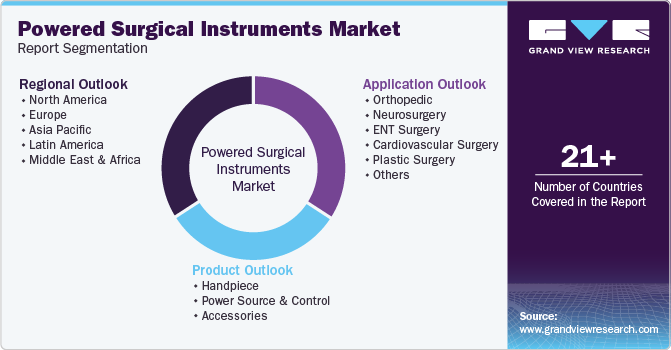
Global Powered Surgical Instruments Market Report Segmentation
This report forecasts revenue growth at global, regional, and country levels and provides an analysis of the latest industry trends in each of the sub-segments from 2021 to 2033. For this study, Grand View Research has segmented the global powered surgical instruments market report based on product, application, and region.
 To learn more about this report, Download Free Sample Report
-
Product Outlook (Revenue, USD Million, 2021 - 2033)
-
Handpiece
-
Drill System
-
Saw System
-
Staplers
-
Shaver's
-
Others
-
-
Power Source & Control
-
Battery Power Instruments
-
Electric Instruments
-
Pneumatic Instruments
-
-
Accessories
-
Surgical Accessories
-
Electrical Accessories
-
-
-
Application Outlook (Revenue, USD Million, 2021 - 2033)
-
Orthopedic
-
Neurosurgery
-
ENT Surgery
-
Cardiovascular Surgery
-
Plastic Surgery
-
Others
-
-
Regional Outlook (Revenue, USD Million, 2021 - 2033)
-
North America
-
U.S.
-
Canada
-
Mexico
-
-
Europe
-
UK
-
Germany
-
France
-
Italy
-
Spain
-
Denmark
-
Sweden
-
Norway
-
-
Asia Pacific
-
China
-
India
-
Japan
-
Australia
-
South Korea
-
Thailand
-
-
Latin America
-
Brazil
-
Argentina
-
-
Middle East and Africa (MEA)
-
South Africa
-
Saudi Arabia
-
UAE
-
Kuwait
-
-
Research Methodology
The hair perfume market figures in this report are based on a proven research process that combines executive interviews with secondary research from proprietary databases, company filings, and recognized regulatory and institutional sources. Market size is built through value-chain sizing - reconciling supply-side and demand-side estimates - and triangulated with bottom-up and top-down approaches. Every estimate passes multiple levels of expert validation before publication, with each hair perfume segment quantified using the revenue-capture definitions in the table below.
Segment Definition
Segment - Product
Revenue capture definition
Handpiece
Revenue is generated through the capital procurement of the primary, ergonomic mechanical driver units designed to interface directly with the surgeon's hand. Manufacturers earn substantial upfront revenue from standalone handpiece sales, supplemented by recurring income from high-level sterilization servicing, technical maintenance, and seal replacements required after repeated autoclave cycles.
Power Source & Control
Revenue is derived from the core energy-generation infrastructure, central management command consoles, and regulatory modules that supply, modulate, and monitor power distribution to surgical handpieces. Market participants capture predictable value by supplying the foundational technology stacks spanning corded-electric consoles, rechargeable battery cells, and high-pressure pneumatic gas frameworks that govern instrument torque, speed limits, and rotational direction.
Accessories
Revenue is generated through the high-volume supply and continuous commercialization of patient-facing surgical tools, single-use consumables, and necessary hardware peripherals required to support energy-driven procedures. This segment represents a dominant and highly resilient revenue engine for medical device companies, fueled by a continuous, procedure-driven "razor-and-blade" commercial pull-through model.
Segment - Application
Revenue capture definition
Orthopedic
Revenue is generated by supplying high-torque, robust drills, reamers, and large sagittal saws optimized for major bone reconstructions, joint replacements (hip/knee arthroplasty), and trauma fixation routines. This segment represents the largest volume pool, pulling in substantial, recurring accessory revenue due to the dense volume of trauma and orthopedic procedures globally.
Neurosurgery
Revenue flows from high-precision, ultra-high-speed cranial drills, craniotomes, and delicate micro-dissection tools engineered to penetrate the skull without damaging underlying dural tissue structures. Manufacturers capture premium capital margins on these specialized tools, which are tightly bound to strict institutional maintenance and recalibration schedules.
ENT Surgery
Revenue is captured by distributing fine, low-profile micro-shavers, micro-drills, and nasal debriders optimized for tight anatomical corridors during sinus, otological, and laryngeal procedures. Income is driven by specialized single-use bur and blade cartridges that must be replaced after every individual patient case to maintain tissue slicing efficiency.
Cardiovascular Surgery
Revenue is derived from highly reliable, heavy-duty sternum saws (sternotomes) and specialized powered thoracic cutters utilized during open-heart interventions. Income is sustained through steady, critical-care hospital purchasing agreements for specialized surgical blades and reliable, high-durability backup power consoles.
Plastic Surgery
Revenue flows from precision micro-drills, specialized dermatomes, and fine-sculpting power tools utilized in maxillofacial corrections, rhinoplasties, and tissue-harvesting routines. Value is captured by offering fine, lightweight handpieces that prioritize exceptional tactile feel and minimal thermal tissue damage.
Others
Revenue encompasses general or alternative specialty surgical applications, including oral and maxillofacial surgeries, gynecological laparotomy procedures, urological tissue resections, and pediatric-specific micro-bone cutting configurations.
Estimation Model
Scope Definition
Build the Product Base
Estimate Penetration
Revenue Conversion
What is being measured in the powered surgical instruments market?
What is the total addressable market for powered surgical instruments?
How rapidly are powered surgical instruments being adopted across surgical specialties?
How do procedure volumes translate into market revenue?
PROCESS STEPS
1. Define the product scope
2. Segment the market by application
3. Define therapeutic areas
4. Establish geographic scope and align on base year & forecast horizon (2026-2033)
PROCESS STEPS
1. Estimate the annual volume of surgical procedures requiring powered surgical instruments across major specialties.
2. Analyze the installed base of powered surgical systems across hospitals, ambulatory surgical centers (ASCs), and specialty clinics.
3. Assess replacement cycles, equipment utilization rates, and purchasing patterns across healthcare facilities.
4. Forecast demand by incorporating growth in surgical volumes, expansion of minimally invasive surgery, aging population, and technological advancements.
PROCESS STEPS
1. Evaluate the penetration of powered surgical instruments across different surgical procedures and healthcare settings.
2. Assess adoption of battery-powered, robotic-compatible, and smart powered surgical systems
3. Analyze technology adoption across developed and emerging healthcare markets
4. Estimate future penetration based on technological innovation and other factors
PROCESS STEPS
1. Collect average selling prices (ASP) across powered surgical instrument categories and geographic regions.
2. Estimate revenues by integrating procedure volumes, equipment demand, replacement purchases, and accessory consumption.
3. Incorporate recurring revenues from disposable attachments, drill bits, blades, burs, batteries, service contracts, and maintenance.
4. Cross-check market estimates with import/export data and industry sales benchmarks.
DATA SOURCES
FDA, European Commission (MDR), MHRA, PMDA, company annual reports, medical device registries, hospital procurement databases
DATA SOURCES
Hospital statistics, OECD healthcare databases, WHO, national health ministries, company financial reports
DATA SOURCES
Primary interviews with surgeons, hospital procurement managers, OEMs, distributors
DATA SOURCES
Company financial statements, investor presentations, distributor pricing databases
Delivered Customizations
This report has been delivered with the following In-depth customizations
Client Request
Customization Delivered
Value Adds
Porters Analysis
Conducted a comprehensive Porter's Five Forces analysis of the global powered surgical instruments market to assess the competitive intensity and overall market attractiveness. The study evaluated the bargaining power of suppliers for critical components including electric motors, batteries, pneumatic systems, precision handpieces, cutting accessories, and surgical-grade materials. It assessed the bargaining power of hospitals, ambulatory surgical centers (ASCs), integrated delivery networks (IDNs), and group purchasing organizations (GPOs), considering procurement practices, pricing negotiations, and supplier relationships. The analysis further examined barriers to entry such as stringent regulatory approvals, quality certifications, high R&D investments, manufacturing expertise, and brand reputation. Additionally, it evaluated the threat posed by substitute technologies including manual surgical instruments, robotic-assisted surgery platforms, ultrasonic surgical devices, and advanced energy-based systems.
Enables stakeholders to understand the competitive dynamics shaping the powered surgical instruments market and identify areas of competitive advantage. The study supports strategic decision-making related to product differentiation, pricing strategy, supplier management, partnership opportunities, and market entry planning. It also helps manufacturers benchmark competitor capabilities, evaluate investment priorities, anticipate competitive threats from substitute technologies, and strengthen their positioning across hospitals, specialty clinics, and ambulatory surgical centers globally.
Parent Market Analysis
Conducted a detailed assessment of the global powered surgical instruments market within the broader surgical devices and operating room equipment market. The study evaluated the relationship between powered surgical instruments and adjacent product categories including hand-held surgical instruments, electrosurgical devices, surgical robotics, surgical navigation systems, orthopedic implants, endoscopic equipment, and minimally invasive surgical technologies. The analysis assessed how increasing surgical procedure volumes, rising orthopedic and trauma cases, growing adoption of minimally invasive surgery (MIS), technological innovations, aging populations, sports injuries, and healthcare infrastructure expansion are influencing demand for powered surgical instruments.
Enables stakeholders to gain a comprehensive understanding of how developments within the broader surgical devices ecosystem influence demand for powered surgical instruments. The study supports strategic planning by identifying technology spillover opportunities, adjacent product innovations, evolving clinical practices, and procurement trends. It also assists manufacturers in optimizing product portfolios, aligning R&D investments with emerging surgical technologies, identifying cross-selling opportunities, and strengthening long-term growth strategies across multiple surgical specialties.
Macroeconomic Analysis
Conducted a detailed macroeconomic assessment of the global factors influencing the powered surgical instruments market. The study evaluated the impact of healthcare expenditure, government investments in healthcare infrastructure, hospital capital spending, inflation, interest rates, foreign exchange fluctuations, medical device manufacturing output, raw material costs, battery and semiconductor supply chains, international trade policies, tariffs, and regulatory environments affecting product manufacturing and commercialization. The analysis further examined demographic trends such as population aging, increasing prevalence of musculoskeletal disorders, rising trauma and accident cases, expanding surgical procedure volumes, urbanization, healthcare workforce availability, and economic development across emerging and developed markets.
Enables stakeholders to evaluate economic opportunities and risks affecting the powered surgical instruments market across global regions. The study supports informed decision-making related to pricing optimization, regional expansion, manufacturing strategy, supply chain resilience, and capital investment planning. It also helps organizations anticipate the impact of inflation, trade disruptions, healthcare spending patterns, and demographic changes on future demand, enabling better risk management and long-term business growth strategies.
Frequently Asked Questions About This Report
By product, the hand pieces segment held a leading market share of 44.8% in 2025.
Some key players operating in the powered surgical instruments market include Allotech Co., Ltd., Conmed Corporation, Medtronic PLC, Stryker Corporation, Zimmer Biomet, adeor medical AG, Smith and Nephew plc, B Braun Melsungen AG, MicroAire Surgical Instruments, LLC, and De Soutter Medical Ltd.
Key factors that are driving the market growth include Rising incidence of chronic diseases, such as diabetes, cancer, cardiovascular diseases, and bone-related disorders, coupled with rise in number of surgical procedures.
Middle East & Africa is the fastest-growing region over the forecast period.
North America dominated with a revenue share of 43.1% in 2025. This is attributed to favorable reimbursement policies, local presence of key market players, and government initiatives that improve access to advanced power instruments for surgical procedures & training sessions for physicians.
The global powered surgical instruments market size was valued at USD 2.7 billion in 2025 and is estimated at USD 2.8 billion for 2026.
The global powered surgical instruments market is expected to grow at a CAGR of 2.7% from 2026 to 2033, reaching USD 3.4 billion by 2033.
Orthopedic surgery segment held the largest market share of 24.9% in 2025.
By product, the power source & control segment is fastest growing segment in 2025.
About the Author(s)
Medical Devices Research Team
Healthcare · Medical DevicesThis report was authored by the medical devices research team at Grand View Research - comprising two research analysts, one senior research analyst, and one industry expert - with specialized expertise in the medical devices segment of the healthcare industry. All findings are based on proprietary healthcare databases, executive interviews, and regulatory analysis, subject to internal peer review prior to publication.
Last Updated:
Speak to Analyst

Customize this report to your needs - add regions, segments, or data points, with 20% free customization.
Or view our licence options:


ISO 9001:2015 & 27001:2022 Certified
We are GDPR and CCPA compliant! Your transaction & personal information is safe and secure. For more details, please read our privacy policy.


