
- Home
- »
- Medical Devices
- »
-
Semi-solid Dosage Contract Manufacturing Market Report, 2033GVR Report cover

Semi-solid Dosage Contract Manufacturing Market (2026 - 2033) Size, Share & Trends Analysis Report by Type (Topical, Transdermal, Oral), By Product (Creams, Gels, Ointments, Pastes), By End Use (Pharmaceutical Companies), By Company Size, By Region, And Segment Forecasts
Market Size, 2025
$21.2BMarket Estimate, 2026
$23.5BMarket Forecast, 2033
$50.4BCAGR, 2026–2033
11.5%Semi-solid Dosage Contract Manufacturing Market Summary
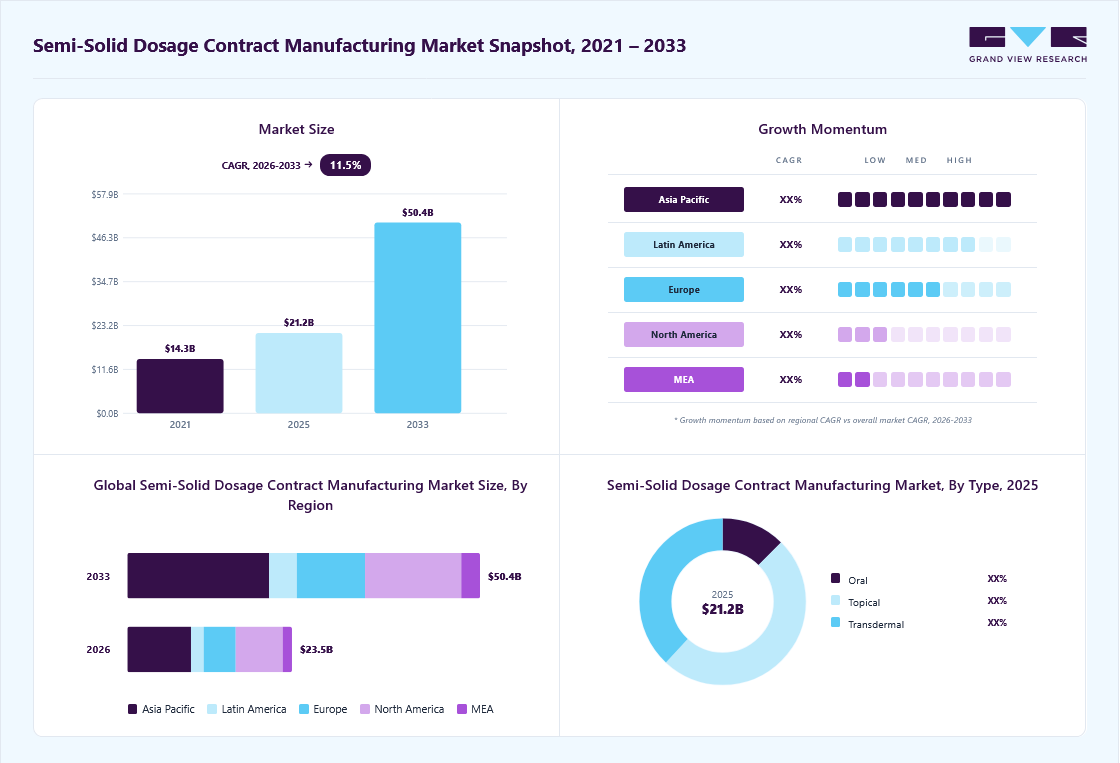
The global semi-solid dosage contract manufacturing market size was estimated at USD 21.21 billion in 2025, and is projected to reach USD 50.36 billion by 2033, growing at a CAGR of 11.5% from 2026 to 2033. The rising demand for dermatological drug formulations, shifting outsourcing trends, and the growing need for patient-friendly medications, coupled with the prevalence of chronic diseases such as skin diseases, arthritis, and pain management, are driving the market.
 Source: Grand View Research, IR Documents, Primary Interviews, Paid DatabasesTo learn more about this report,
 Download Free Sample Report
 Key Market Trends & Insights
- Asia Pacific semi-solid dosage contract manufacturing market held the largest share of 38.45% of the global market in 2025.
- The market in the China is expected to grow significantly over the forecast period.
- Based on type, the topical segment held the largest market share in 2025.
- Based on product, the creams segment held the largest market share in 2025.
- By end use, the pharmaceutical companies segment dominated the market with the largest revenue share in 2025.
- By company size, the large size companies segment held the largest market share in 2025.
Market Size & Forecast
- 2025 Market Size: USD 21.21 Billion
- 2033 Projected Market Size: USD 50.36 Billion
- CAGR (2026-2033): 11.5%
- Asia Pacific: Largest market in 2025
Three ways to get this report
Buy it, customize it, or ask a question.Ask an Analyst
A direct answer, usually in 1 working day
- AccessReport author, directly
- Reply timeWithin 1 working day
- No sales callDirect answer only
- FormatEmail reply
- CostFree, no cost
Get the Full Report
What the study covers
- FormatsPDF · Excel · Dashboard
- Timeline2026–2033 annual, 2025 base
- Coverage20+ countries, 5 regions
- Companies10+ key players profiled
Customize the Report
20% free customization
- IncludeCountries, segments, points
- TailorTo your product definition
- ExtendDeeper competitor detail
- OrA fully bespoke study
- Turnaround5–10 working days
Besides, the growing demand for manufacturing outsourcing, due to cost-effectiveness, is expected to drive the market growth. Furthermore, regulatory compliance and quality assurance, as well as technological advancements, including innovation in formulation technologies, are expected to boost market growth over the forecast period. Besides, most pharmaceutical companies are focusing on their core functions, such as drug discovery and commercialization, which has led contract manufacturing organizations (CMOs) to become vital partners in the development, scale-up, and commercial production of semi-solid dosages.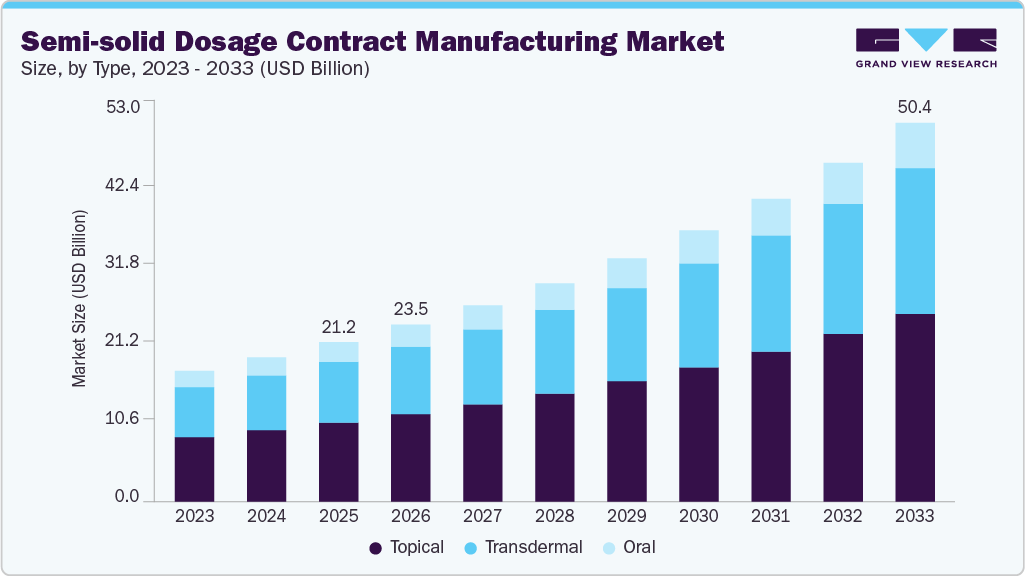 To learn more about this report, Download Free Sample Report
 Semi-solid dosage forms, such as creams, ointments, gels, and lotions, have gained increased attention as a key formulation segment due to their capacity for targeted, localized therapy and high patient compliance. These forms are particularly beneficial in dermatology and pain management, as direct application to the affected area allows for a faster onset of action, reduced systemic exposure, and improved safety profiles. In addition, commercially, their non-invasive nature and ease of use make them ideal for chronic treatment, further contributing to market growth.
Moreover, the increasing global burden of skin diseases is expected to drive the market growth, with over 1.8 billion individuals affected by more than 3,000 skin conditions, making dermatological disorders a top contributor to the global disease burden. In addition, the rising prevalence of arthritis affecting more than 350 million people worldwide and the expanding elderly population are further promoting the use of topical analgesics and anti-inflammatory formulations. These products are valued for reducing the gastrointestinal risks commonly associated with oral therapies.
In addition, technological advancements are expected to drive the market due to growing advancements in formulation science, such as nanoemulsions, liposomal delivery systems, and permeation-enhancing technologies, which are significantly enhancing drug efficacy, stability, and patient compliance. CMOs are making substantial investments in automated manufacturing systems, continuous processing, and advanced mixing and homogenization equipment to ensure consistent batch quality, regulatory adherence, and cost-effectiveness. Furthermore, the adoption of quality-by-design (QbD) frameworks and digital monitoring tools is improving process control and reducing time-to-market.
Furthermore, stringent regulatory requirements prompt pharmaceutical companies to seek partnerships with experienced CDMOs that have strong compliance histories and global regulatory knowledge. Besides, emerging markets in Asia-Pacific and Latin America are seeing increased outsourcing, driven by cost advantages, expanding healthcare infrastructure, and rising generic drug production. In addition, the emergence of personalized medicine and specialty dermatology products is creating niche, high-margin opportunities for contract manufacturers with adaptable and scalable capabilities.
In addition, growing innovation in drug delivery technologies, expanding therapeutic uses, and strategic outsourcing are expected to unlock new growth opportunities in the semi solid dosage contract manufacturing market. From a product development perspective, semi-solid formulations offer the flexibility to incorporate advanced excipients, permeation enhancers, and innovative delivery systems, thereby improving drug bioavailability and therapeutic efficacy. This flexibility led to increased usage across both the prescription and over-the-counter markets. Thus, most pharmaceutical companies are focusing on patient-centric, differentiated formulations, further driving market growth.
Opportunity Analysis
The semi solid dosage contract manufacturing market is expected to witness new growth opportunities driven by rising demand for topical and transdermal drug delivery systems. Additional growth factors include, increasing cases of dermatological disorders and chronic pain, along with a surge in cosmetic applications, which are boosting the consumption of creams, ointments, gels, and lotions. Currently, most Pharmaceutical companies are outsourcing manufacturing to contract manufacturing organizations (CMOs) to minimize capital expenditures, accelerate time-to-market, and focus on core functions such as R&D and commercialization. The growing use of OTC topical products and cosmeceuticals is further expanding the client base, moving beyond traditional pharmaceutical companies. In addition, the growing potential in emerging markets such as the Asia-Pacific and Latin America is further enhancing healthcare infrastructure and rising disposable income. Besides, the growing development of drug permeation technologies and advancements in formulation science have led to increased innovation among outsourcing service providers. Furthermore, regulatory support is expected to increase market appeal, as the trend among pharmaceutical and biotech companies to outsource manufacturing is expected to speed up time-to-market. Such factors are expected to drive the market growth.
Impact of U.S. Tariffs on the Global Semi-solid Dosage Contract Manufacturing Market
U.S. tariffs on pharmaceutical imports have significantly affected the global semi-solid dosage contract manufacturing market. These tariffs have changed the cost dynamics, impacted supply chains, and influenced outsourcing strategies. Besides, with increased import duties on drug products and raw materials, the overall costs of bringing pharmaceuticals into the U.S. have risen, placing pressure on manufacturers and contract development and manufacturing organizations (CDMOs). Since semi-solid formulations typically rely on active pharmaceutical ingredients (APIs), excipients, and packaging materials sourced globally, the tariffs have increased production and transportation costs. In addition, many pharmaceutical companies are reevaluating their manufacturing strategies, and there is a notable shift towards localized production in the U.S. to minimize tariff exposure and enhance supply chain stability. This transition is reducing dependence on overseas contract manufacturers, particularly in traditional outsourcing regions such as India and Europe.
Moreover, tariffs are prompting companies to diversify their supply chains and adopt multi-sourcing strategies. These factors have created new opportunities for CDMOs in regions less impacted by trade restrictions. Larger pharmaceutical companies may have the resources to relocate or expand their manufacturing operations, while small and mid-sized companies often still rely on cost-effective outsourcing partners to maintain demand in the global market. Thus, U.S. tariffs are propelling the semi-solid dosage contract manufacturing landscape by encouraging regionalization, raising operational costs, and driving strategic changes in sourcing and production models.
Technological Advancements
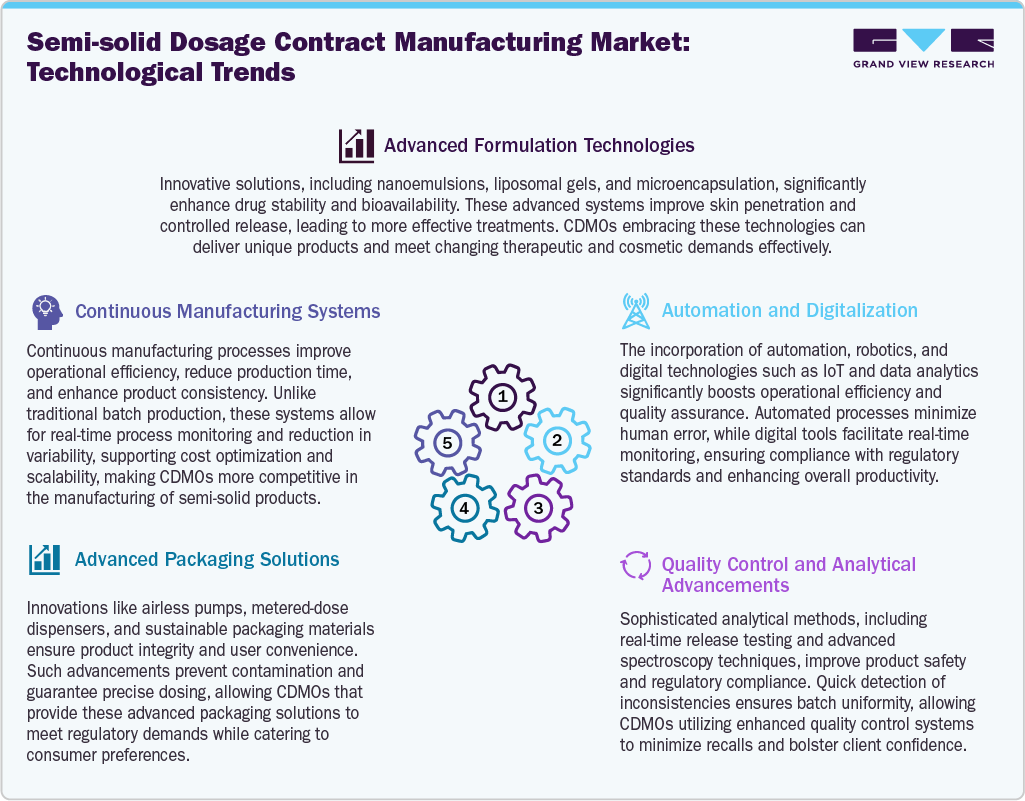
Technological advancements are reshaping the semi-solid dosage contract manufacturing sector, enhancing efficiency, scalability, and product performance. Innovations in formulation techniques, such as nanoemulsions and liposomes, optimize drug absorption, while transitioning to continuous manufacturing methods streamlines operations, reduces costs, and ensures quality. Automation and Digitalization enhance productivity by integrating robotics and real-time data analytics while addressing compliance with strict regulatory requirements. Furthermore, packaging innovations address functional and sustainability issues, meeting consumer expectations while preserving product quality.
 To learn more about this report, Download Free Sample Report
 Advanced analytical and quality control systems facilitate swift testing and monitoring, ensuring product safety and accelerating approval processes. These advancements are expected to enable contract manufacturers to offer comprehensive, value-added services, solidifying their role as critical partners for pharmaceutical and cosmetic entities. Thus, growing competition among companies is expected to accelerate and scale up these technologies, driving continued growth and innovation in the semi-solid dosage contract manufacturing organization (CMOs) market.
Pricing Model Analysis
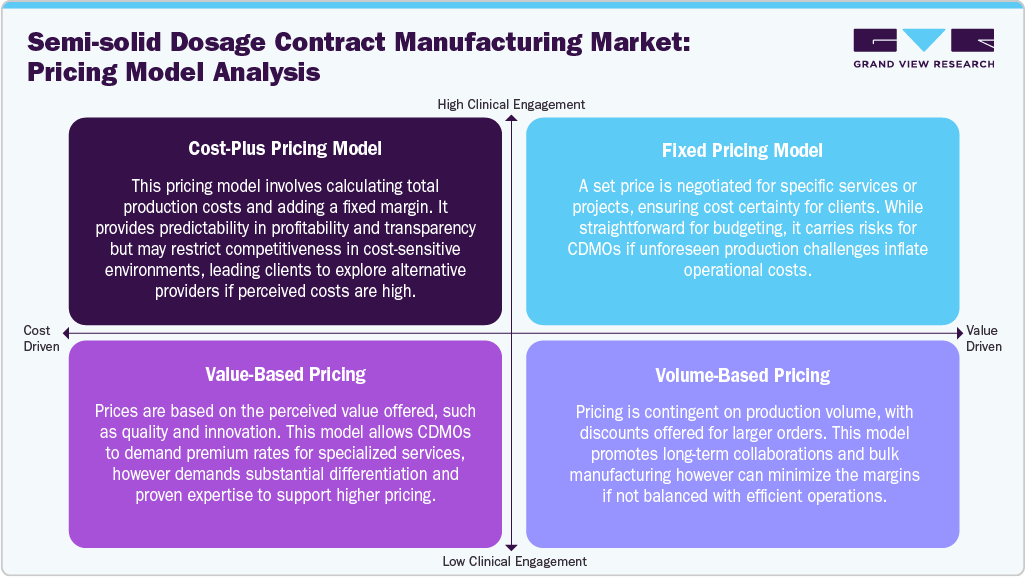
The semi-solid dosage contract manufacturing market features various pricing models to meet clients' diverse requirements. Cost-plus pricing is prevalent due to its transparency and stability in margins, especially in long-term contracts. Besides, fixed pricing offers budget predictability but can expose CDMOs to cost overruns. Increasingly, value-based pricing is being adopted as CMOs differentiate through innovative technologies and high-quality deliverables, allowing them to capture premium pricing.
 To learn more about this report, Download Free Sample Report
 In addition, volume-based pricing supports scalability by incentivizing bulk production agreements and advancing enduring partnerships. Moreover, milestone-based pricing aligns financial flows with project progress, enhancing collaboration and minimizing risk. As competition increases, hybrid pricing strategies that incorporate elements from multiple models are increasingly common in the market. The selection of a pricing strategy ultimately depends on project complexity, scope, and the required level of innovation, while flexible, transparent pricing structures will likely improve CMOs' appeal to a diverse client base and sustain growth.
Market Concentration & Characteristics
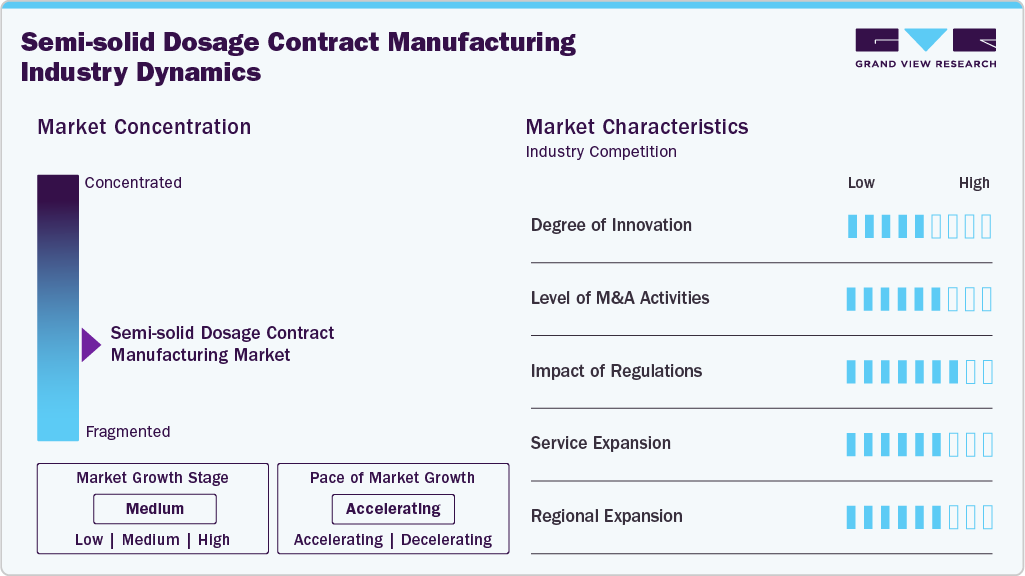
The semi-solid dosage contract manufacturing market growth stage is medium, and growth is accelerating. The market is characterized by the degree of innovation, level of M&A activities, regulatory impact, service expansion, and regional expansion.
Innovation is crucial, with CMOs implementing advanced formulation techniques, such as nanotechnology-based delivery systems, to enhance drug absorption and patient compliance. Improved formulation capabilities enable manufacturers to produce differentiated semi-solid products that address the increasing demand in the pharmaceutical and cosmeceutical sectors.
 To learn more about this report, Download Free Sample Report
 Mergers and acquisitions are on the rise as companies seek to broaden their capabilities and geographic reach. Strategic transactions facilitate access to specialized formulation expertise, advanced infrastructure, and established client networks, thus enhancing competitive positioning and accelerating entry into high-growth markets.
Strict regulatory frameworks oversee semi-solid manufacturing, focusing on product quality and safety. Compliance with Good Manufacturing Practices (GMP) and global regulatory standards affects production timelines and operational costs. CDMOs with robust regulatory expertise assist clients efficiently navigate approvals while ensuring quality consistency.
CDMOs are broadening their service offerings to include formulation development, scale-up, analytical testing, packaging, and commercialization. Providing comprehensive end-to-end solutions streamlines outsourcing processes for clients, reduces time-to-market, and strengthens long-term partnerships, thereby bolstering competitiveness in both the pharmaceutical and personal care sectors.
Investment in regions such as Asia-Pacific and North America is accelerating to meet growing demand and optimize costs. By establishing local manufacturing facilities, companies enhance supply chain resilience, reduce reliance on imports, and align with regulations, enabling them to serve global clients more efficiently.
Type Insights
The topical segment held the largest market share in the market, accounting for a revenue share of 49.47% in 2025, driven by its extensive application in dermatology, wound care, and localized drug delivery. Some other factors contributing to market growth include the increasing prevalence of skin disorders and the rising demand for over-the-counter (OTC) products. Besides, contract manufacturers benefit from high-volume production requirements and relatively standardized processes. In addition, ongoing innovation in formulation technologies and enhanced drug penetration methods continues to reinforce the segment's leadership position in the global market. Thus, most pharmaceutical companies prefer topical formulations for their targeted therapeutic effects, reduced systemic side effects, and improved patient compliance.
The transdermal segment is expected to grow significantly during the forecast period, driven by the ability to deliver drugs through the skin into systemic circulation with controlled-release profiles. This approach enhances bioavailability and minimizes gastrointestinal complications associated with oral drugs. Besides, the segment is expected to witness new growth opportunities driven by increasing demand for non-invasive drug delivery systems, especially for chronic disease management, such as pain, hormonal therapy, and cardiovascular conditions. In addition, most CMOs are investing in advanced technologies, such as patches and permeation enhancers, amid growing R&D activities and regulatory support for novel delivery systems, which are expected to drive the market over the estimated time period.
Product Insights
The creams segment accounted for the largest share in 2025, driven by the product's versatility, ease of application, and patient-friendly characteristics. These creams are widely used across pharmaceutical and cosmeceutical applications, including anti-inflammatory, antifungal, and moisturizing treatments. Besides, the product offers a balanced oil-water composition that enables effective drug delivery while maintaining skin hydration, which contributes to market growth. Moreover, CMOs are focusing on scalable production processes and continuous product innovation, including advanced emulsions and enhanced-stability formulations, driven by increased market requirements, making creams a cornerstone segment in the semi-solid manufacturing landscape. Such factors are expected to drive the market over the estimated time period.
The ointments segment is expected to grow significantly during the forecast period, driven by superior occlusive properties and their effectiveness in delivering active ingredients for chronic skin conditions. These formulations are beneficial for dry or sensitive skin, offering prolonged contact time and enhanced absorption. Besides, increasing demand for therapeutic applications such as psoriasis, eczema, and wound healing is expected to drive the market growth. In addition, rising investments in dermatological research and specialty treatments are expected to accelerate the global adoption of ointment-based products. Thus, these factors are expected to improve formulation stability and texture, thereby enhancing patient acceptance and driving market growth.
End Use Insights
The pharmaceutical companies segment dominated the market with the largest revenue share in 2025, driven by expanding product portfolios, developing financial capabilities, and increasing outsourcing requirements. These companies rely on contract manufacturers to optimize production efficiency, reduce operational costs, and accelerate time-to-market for both generic and branded products. Besides, the increasing complexity of formulations and stringent regulatory requirements are expected to encourage outsourcing to specialized partners. Moreover, the growing demand for dermatological and topical therapeutics supports consistent manufacturing volumes. In addition, strategic collaborations and long-term contracts between pharmaceutical companies and CMOs are expected to drive the market over the estimated time period.
On the other hand, the cosmeceutical companies segment is projected to grow at a significant CAGR duringthe forecast period, driven by consumer demand for skincare products with therapeutic benefits and by growing product innovations across cosmetics and pharmaceuticals for anti-aging, skin repair, and aesthetic treatments. These companies often lack large-scale manufacturing capabilities, which drives the need for contract manufacturing services. In addition, shorter product life cycles and the need for rapid market entry further drive outsourcing requirements. Thus, a surge in premium skincare demand is expected to propel the segment's expansion.
Company Size Insights
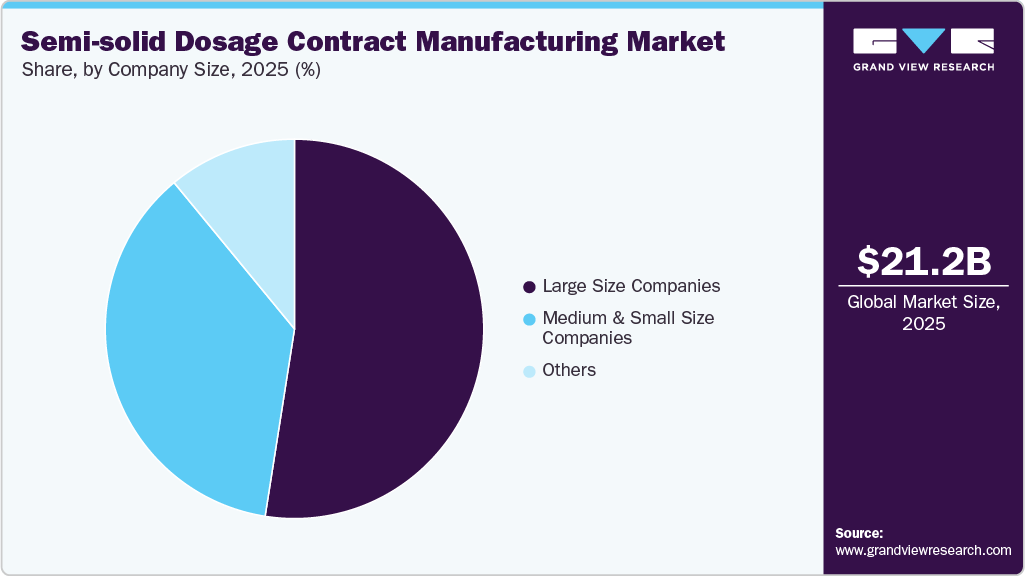
The large size companies segment accounted for the largest share in 2025, driven by global presence and the ability to handle large-scale production requirements. These organizations benefit from advanced manufacturing infrastructure, established regulatory expertise, and long-standing client relationships. Besides, their capacity to invest in cutting-edge technologies and maintain high-quality standards makes them preferred partners for major pharmaceutical and cosmeceutical companies. In addition, large firms often engage in strategic mergers and acquisitions to expand capabilities and geographic reach. Their ability to offer end-to-end services, from formulation development to commercialization, further drives their leadership in the contract manufacturing landscape.
 To learn more about this report, Download Free Sample Report
 The medium- and small-sized companies segment is expected to grow significantly during the forecast period. The growth is attributed to cost competitiveness and the ability to offer specialized services. These companies cater to niche markets and emerging brands that require flexible production volumes and customized solutions. Besides, increasing requirements from startups and mid-tier pharmaceutical and cosmeceutical companies are contributing to market growth. In addition, these manufacturers are adopting innovative technologies and focusing on quality compliance to compete with larger players, as they can quickly adapt to changing market trends and provide personalized services in the evolving semi-solid dosage contract manufacturing market. Such factors are expected to drive the market over the estimated time period.
Regional Insights
North America is expected to grow at a significant CAGR over the forecast period. The market growth is attributed to a developed biopharmaceutical industry, growing R&D investments, the presence of established pharmaceutical and biotechnology companies, and strong demand for topical products such as creams, gels, and ointments, as well as transdermal formulations. Besides, the region is witnessing increased outsourcing of complex formulation development and manufacturing, particularly for dermatological and topical drug products. In addition, the presence of advanced manufacturing facilities, well-defined regulatory frameworks, and early adoption of innovative technologies, such as continuous manufacturing and single-use systems, enhances production efficiency and scalability. Moreover, rising demand for both therapeutic and aesthetic semi-solid formulations is accelerating outsourcing activities across the region.
U.S. Semi-solid Dosage Contract Manufacturing Market Trends
The semi-solid dosage contract manufacturing market in the U.S. accounted for the largest market share in North America, owing to robust innovation capabilities and significant investments in pharmaceutical research and development. The presence of major biopharma companies and specialized CDMOs is expected to drive demand for high-quality semi-solid formulations, including creams, gels, and topical drug delivery systems, thereby fueling market growth. In addition, increasing the integration of cutting-edge technologies, including automation and continuous processing, is expected to improve operational efficiency and reduce time-to-market. Furthermore, a streamlined regulatory approval framework facilitates faster commercialization, making the country a key hub for semi-solid dosage outsourcing. Such factors are expected to drive the U.S. market.
The Canada semi-solid dosage contract manufacturing market is expected to grow at a significant CAGR during the forecast period.The market is driven by the expanding biotechnology sector, favorable government policies, and increasing investments in advanced manufacturing infrastructure. Besides, the country's growth is driven by government-backed funding programs and regulatory support, which are expected to boost innovation in topical formulations, supported by a growing focus on dermatology and patient-centric drug delivery systems, as well as encouraging collaborations between biopharma companies and contract manufacturers. Moreover, growing emphasis on research-driven product development and clinical advancement is expected to boost demand for both early-stage and commercial manufacturing services. Such factors are expected to drive the market growth.
Europe Semi-solid Dosage Contract Manufacturing Market Trends
Europe's semi-solid dosage contract manufacturing market growth is driven by Europe's market growth is supported by strong regulatory expertise, advanced manufacturing capabilities, and a well-integrated pharmaceutical industry. Countries such as Germany, the UK, and France play a major role in driving innovation and ensuring high-quality production standards. Besides, the rising demand for dermatological & topical therapeutics and the prevalence of skin disorders have led to an increased need for outsourcing to specialized CDMOs. Moreover, strategic collaborations between industry players and research institutions, coupled with strict adherence to GMP standards, are accelerating product development and commercialization.
The semi-solid dosage contract manufacturing market in Germany held the highest share in 2025. Germany is one of the leading hubs for semi-solid dosage contract manufacturing, supported by its advanced manufacturing infrastructure, highly skilled workforce, and strong R&D capabilities. The country's leadership in pharmaceutical innovation and process engineering makes it a preferred destination for outsourcing semi-solid dosage manufacturing. Besides, rising demand for complex topical formulations and stringent regulatory compliance further strengthen the country's position as a key manufacturing hub.
The UK semi-solid dosage contract manufacturing market is expected to grow significantly over the forecast period.The country's growth is fueled by a strong pharmaceutical base, academic research support, and favorable regulatory policies. The increasing demand for topical drug delivery systems and innovation in formulation development are driving market growth. In addition, government initiatives and funding programs are further encouraging the outsourcing of semi-solid manufacturing. Such factors are expected to drive the market growth.
Asia Pacific Semi-solid Dosage Contract Manufacturing Market Trends
Asia Pacific semi-solid dosage contract manufacturing market held the largest share of 38.45% of the global market in 2025, driven by growing cost advantages, expanding healthcare infrastructure, and increasing investments in pharmaceutical manufacturing. Countries such as China, India, and Japan are strengthening regulatory frameworks and enhancing manufacturing capabilities to meet global standards. The availability of skilled labor and large-scale production facilities is encouraging multinational companies to outsource manufacturing operations to the region.
 To learn more about this report, Download Free Sample Report
 The semi-solid dosage contract manufacturing market in China is witnessing new growth opportunities driven by government support, the rapid expansion of the pharmaceutical sector, and increasing R&D investments. The country offers cost-effective manufacturing solutions and is continuously upgrading its production capabilities. Besides, rising domestic demand and growing participation of global pharmaceutical companies are increasing outsourcing activities in the country. Such factors are expected to drive the market.
The semi-solid dosage contract manufacturing market in Japan is characterized by advanced technological capabilities, a well-established pharmaceutical industry, and a strong focus on quality and regulatory compliance. Besides, precision manufacturing expertise and stringent quality standards support high-value production. Moreover, collaboration among academia and industry continues to drive innovation and enhance manufacturing capabilities.
The India semi-solid dosage contract manufacturing market is experiencing rapid expansion, driven by its cost-efficient manufacturing environment, expanding pharmaceutical industry, and availability of a highly skilled workforce. Increasing demand for scalable production and alignment with global regulatory standards are strengthening the market.
Latin America Semi-solid Dosage Contract Manufacturing Market Trends
The semi-solid dosage contract manufacturing market in Latin America is expected to grow significantly over the forecast period, driven by increasing healthcare investments, improving regulatory frameworks, and expanding pharmaceutical manufacturing capabilities. Countries such as Brazil and Argentina are focusing on strengthening domestic production to reduce dependency on imports and enhance regional supply chains. Moreover, government initiatives promoting local manufacturing and innovation are further contributing to market growth.
Brazil's semi-solid dosage contract manufacturing market is driven by investments in healthcare infrastructure, supportive government policies, and increasing focus on domestic pharmaceutical production. Besides, growing demand for topical formulations and biosimilars is encouraging local manufacturing and expanding access to advanced therapies, further contributing to market growth.
Middle East & Africa Semi-solid Dosage Contract Manufacturing Market Trends
The semi-solid dosage contract manufacturing market in the MEA region is expected to grow steadily over the forecast period. The market is driven by increasing government investments in healthcare infrastructure and strategic efforts to develop local pharmaceutical manufacturing capabilities. Besides, rising demand for dermatological and therapeutic formulations, along with a focus on cost-effective and scalable production, is driving outsourcing activities across the region.
The UAE semi-solid dosage contract manufacturing market is driven by strong government initiatives to develop the life sciences sector, increasing healthcare investments, and its strategic position as a regional distribution hub. A favorable business environment, regulatory advancements, and access to modern manufacturing infrastructure are attracting global pharmaceutical companies to establish partnerships with contract manufacturers. The country's focus on innovation and logistics capabilities is expected to further support market growth.
Key semi-solid dosage contract manufacturing Company Insights
The key players operating across the market are adopting strategic initiatives such as service launches, mergers & acquisitions, partnerships & agreements, and expansions to gain a competitive edge in the market.
Key Semi-solid Dosage Contract Manufacturing Companies:
The following key companies have been profiled for this study on the semi-solid dosage contract manufacturing market.
- Lonza Group Ltd.
- Lubrizol Life Science
- Cambrex Corporation
- Contract Pharmaceuticals Limited
- Bora Pharmaceutical CDMO
- Ascendia Pharmaceuticals
- Pierre Fabre group
- Piramal Pharma Solutions
- DPT Laboratories, LTD
- MedPharm Ltd
- Catalent, Inc.
- Recipharm AB
- Aenova Group
- Almac Group
- Ajinomoto Bio-Pharma Services
Recent Developments
-
In March 2025, LGM Pharma mentioned the investment of over USD 6 million to expand its manufacturing facility in Texas as part of its Phase I CDMO growth strategy. This expansion will enhance the production capacity for semi-solid, liquid, suspension, and suppository drug products, further addressing to the growing need for reliable U.S. production.
-
In June 2024, Aterian Investment Partners mentioned the acquisition of Contract Pharmaceuticals Limited, a CDMO that focuses on non-sterile liquid and semi-solid dosage forms. This acquisition is expected to enhance the company's ability to serve its clients and reinforce its reputation as a dependable collaborator for pharmaceutical companies globally.
Semi-solid Dosage Contract Manufacturing Market Report Scope
Report Attribute
Details
Market size value in 2026
USD 23.51 billion
Revenue forecast in 2033
USD 50.36 billion
Growth rate
CAGR of 11.5% from 2026 to 2033
Actual data
2021 - 2025
Forecast period
2026 - 2033
Quantitative units
Revenue in USD Million/Billion and CAGR from 2026 to 2033
Report coverage
Revenue forecast, company ranking, competitive landscape, growth factors, and trends
Segments covered
Type, product, end use, company size, region
Regional scope
North America; Europe; Asia Pacific; Latin America; MEA
Country scope
U.S.; Canada; Mexico; UK; Germany; France; Italy; Spain; Denmark; Sweden; Norway; Japan; China; India; Thailand; South Korea; Australia; Brazil; Argentina; South Africa; UAE; Saudi Arabia; Kuwait; Qatar; Oman
Key companies profiled
Lonza Group Ltd.; Lubrizol Life Science; Cambrex Corporation; Contract Pharmaceuticals Limited; Bora Pharmaceutical CDMO; Ascendia Pharmaceuticals; Pierre Fabre group; Piramal Pharma Solutions; DPT Laboratories, LTD; MedPharm Ltd; Catalent, Inc.; Recipharm AB; Aenova Group; Almac Group; Ajinomoto Bio-Pharma Services among others.
Customization scope
Free report customization (equivalent up to 8 analysts working days) with purchase. Addition or alteration to country, regional & segment scope.
Pricing and purchase options
Avail customized purchase options to meet your exact research needs. Explore purchase options
Global Semi-solid Dosage Contract Manufacturing Market Report Segmentation
This report forecasts revenue growth at global, regional, and country levels and provides an analysis of the latest industry trends in each of the sub-segments from 2021 to 2033. For this study, Grand View Research has segmented the global semi-solid dosage contract manufacturing market report based on type, product, end use, company size, and region:
-
Type Outlook (Revenue, USD Million, 2021 - 2033)
-
Topical
-
Transdermal
-
Oral
-
-
Product Outlook (Revenue, USD Million, 2021 - 2033)
-
Creams
-
Ointments
-
Gels
-
Lotions
-
Pastes
-
Others
-
-
End Use Outlook (Revenue, USD Million, 2021 - 2033)
-
Pharmaceutical Companies
-
Cosmeceutical Companies
-
Others
-
-
Company Size Outlook (Revenue, USD Million, 2021 - 2033)
-
Large Size Companies
-
Medium & Small Size Companies
-
Others
-
-
Regional Outlook (Revenue, USD Million, 2021 - 2033)
-
North America
-
U.S.
-
Canada
-
Mexico
-
-
Europe
-
UK
-
Germany
-
France
-
Italy
-
Spain
-
Denmark
-
Sweden
-
Norway
-
-
Asia Pacific
-
China
-
Japan
-
India
-
Australia
-
South Korea
-
Thailand
-
-
Latin America
-
Brazil
-
Argentina
-
-
Middle East and Africa (MEA)
-
South Africa
-
UAE
-
Saudi Arabia
-
Kuwait
-
Qatar
-
Oman
-
-
Frequently Asked Questions About This Report
The rising demand for patient-friendly medications coupled with growing prevalence of chronic diseases such as skin diseases, arthritis, and pain management. In addition, growing requirement semi-solid dosage manufacturing outsourcing, due to cost-effectiveness acts as driver for market growth. Furthermore, regulatory compliance and quality assurance, technological advancements including innovation in formulation technologies, will likely boost their demand over the forecast period.
The global semi-solid dosage contract manufacturing market size was estimated at USD 21.21 billion in 2025 and is expected to reach USD 23.51 billion in 2026.
The global semi-solid dosage contract manufacturing market is expected to grow at a compound annual growth rate of 11.5% from 2026 to 2033 to reach USD 50.36 billion by 2033.
The creams accounted for largest revenue share of in 2025 and is also anticipated to witness the fastest growth over the forecast period. This is attributed to growing demand for precise formulations, which are designed to deliver active ingredients through the skin, and are popular options owing to ease of application, patient compliance, and efficacy.
Some key players operating in the semi-solid dosage contract manufacturing include Lonza Group Ltd.; Lubrizol Life Science; Cambrex Corporation; Contract Pharmaceuticals Limited; Bora Pharmaceutical CDMO; Ascendia Pharmaceuticals; Pierre Fabre group; Piramal Pharma Solutions; DPT Laboratories, LTD; MedPharm Ltd; Catalent, Inc.; Recipharm AB; Aenova Group; Almac Group; Ajinomoto Bio-Pharma Services among others.
About the Author(s)
Medical Devices Research Team
Healthcare · Medical DevicesThis report was authored by the medical devices research team at Grand View Research - comprising two research analysts, one senior research analyst, and one industry expert - with specialized expertise in the medical devices segment of the healthcare industry. All findings are based on proprietary healthcare databases, executive interviews, and regulatory analysis, subject to internal peer review prior to publication.
Last Updated:
Speak to Analyst

Customize this report to your needs - add regions, segments, or data points, with 20% free customization.
Or view our licence options:


ISO 9001:2015 & 27001:2022 Certified
We are GDPR and CCPA compliant! Your transaction & personal information is safe and secure. For more details, please read our privacy policy.


