
- Home
- »
- Plastics, Polymers & Resins
- »
-
Silica Nanocomposite Polymers Market Size Report, 2033GVR Report cover

Silica Nanocomposite Polymers Market (2026 - 2033)
Size, Share & Trends Analysis Report By Polymer (Epoxy, Polyamide, Polyurethane, Polypropylene, Polyethylene), By Application (Coatings, Encapsulation, Structural Composites, Films & Membranes), By Region, And Segment Forecasts
Market Size, 2025
$5.2BMarket Estimate, 2026
$5.6BMarket Forecast, 2033
$10.8BCAGR, 2026–2033
9.7%Silica Nanocomposite Polymers Market Summary
The global silica nanocomposite polymers market size was valued at USD 5.2 billion in 2025 and is projected to grow from USD 5.6 billion in 2026 to USD 10.8 billion by 2033, at a CAGR of 9.7% from 2026 to 2033. Asia Pacific dominated the market, accounting for a revenue share of 56.1% in 2025. The global market is driven by rising demand for lightweight, high-performance materials with improved mechanical strength, thermal stability, barrier properties, and durability.
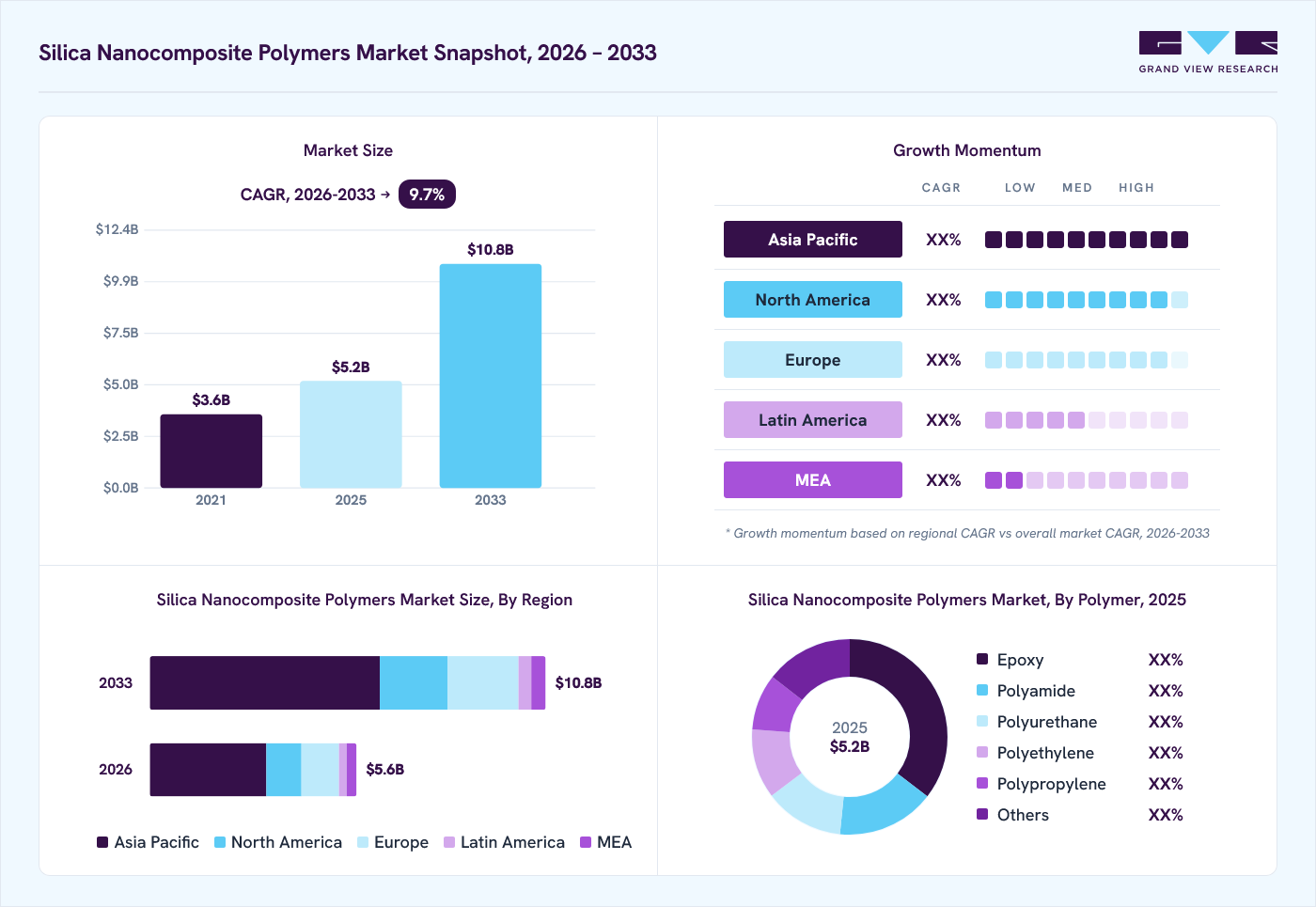 Source: Grand View Research, IR Documents, Primary Interviews, Paid DatabasesTo learn more about this report,
 Download Free Sample Report
 Key Market Trends & Insights
- By polymer: The epoxy segment dominated the market with a revenue share of 35.4% in 2025.
- By application: The encapsulation segment is expected to grow at a 10.8% CAGR from 2026 to 2033.
Regional Highlights
- Largest regional market: Asia Pacific (56.1% revenue share, 2025)
- By country: China held the largest market share in 2025.
Market Size & Forecast
- Market size in 2025: USD 5.2 Billion
- Estimated market size in 2026: USD 5.6 Billion
- Projected market size by 2033: USD 10.8 Billion
- CAGR (2026-2033): 9.7%
Three ways to get this report
Buy it, customize it, or ask a question.Ask an Analyst
A direct answer, usually in 1 working day
- AccessReport author, directly
- Reply timeWithin 1 working day
- No sales callDirect answer only
- FormatEmail reply
- CostFree, no cost
Get the Full Report
What the study covers
- FormatsPDF · Excel · Dashboard
- Timeline2026–2033 annual, 2025 base
- Coverage20+ countries, 5 regions
- Companies10+ key players profiled
Customize the Report
20% free customization
- IncludeCountries, segments, points
- TailorTo your product definition
- ExtendDeeper competitor detail
- OrA fully bespoke study
- Turnaround5–10 working days
Growing adoption in automotive, electronics, packaging, construction, and aerospace applications is expanding demand. Increasing use of nanotechnology to enhance polymer performance, reduce material weight, and develop multifunctional composites is further supporting market growth.
 To learn more about this report, Download Free Sample Report
 A key trend in the market is the shift toward surface-engineered nanosilica and application-specific polymer interfaces. Manufacturers are modifying silica surfaces to improve dispersion, interfacial bonding, rheology, and thermal performance. This approach enables lower filler loading while maintaining targeted properties. Development is also expanding into high-performance coatings, electronic packaging, automotive components, and flexible packaging. Recent research emphasizes controlled particle morphology and polymer-silica interactions to achieve application-specific performance.
Market Dynamics
Rising demand for high-performance and lightweight polymer materials is supporting the growth of silica nanocomposite polymers. Silica nanoparticles improve mechanical strength, thermal stability, dimensional control, abrasion resistance, and barrier properties while requiring relatively low filler levels. These advantages make them suitable for automotive components, protective coatings, electronics, packaging materials, and engineering plastics, where manufacturers seek improved durability, performance, and weight efficiency.
Growing electronics manufacturing and device miniaturization are further expanding demand for silica-based polymer systems. Silica-filled epoxy materials provide better thermal management, dimensional stability, mechanical strength, and resistance to environmental stress. These properties are valuable in semiconductor packaging, circuit protection, and electronic components. The increasing demand for compact, reliable electronic devices is encouraging manufacturers to adopt advanced silica nanocomposites to improve product performance and service life.
Nanoparticle dispersion and interfacial compatibility remain major technical restraints. Silica nanoparticles have a high surface area and can agglomerate within polymer matrices, reducing the consistency of mechanical and thermal properties. Surface treatments and coupling agents can improve compatibility but add processing complexity and affect formulation costs. Higher silica loading can also increase viscosity and complicate melt processing or molding. These factors make process control and reproducible large-scale manufacturing critical for commercial adoption.
The growing requirement for advanced barrier and sustainable packaging materials presents an important opportunity for silica nanocomposite polymers. Nano-silica can improve the mechanical, thermal, and barrier characteristics of conventional, biodegradable, and bio-based polymer matrices. This creates opportunities for high-performance flexible packaging with reduced material usage and improved product protection. Research is also examining silica reinforcement in recycled polymers, including recycled polycarbonate, creating scope for higher-value applications that combine material recovery with performance enhancement.
Market Concentration & Characteristics
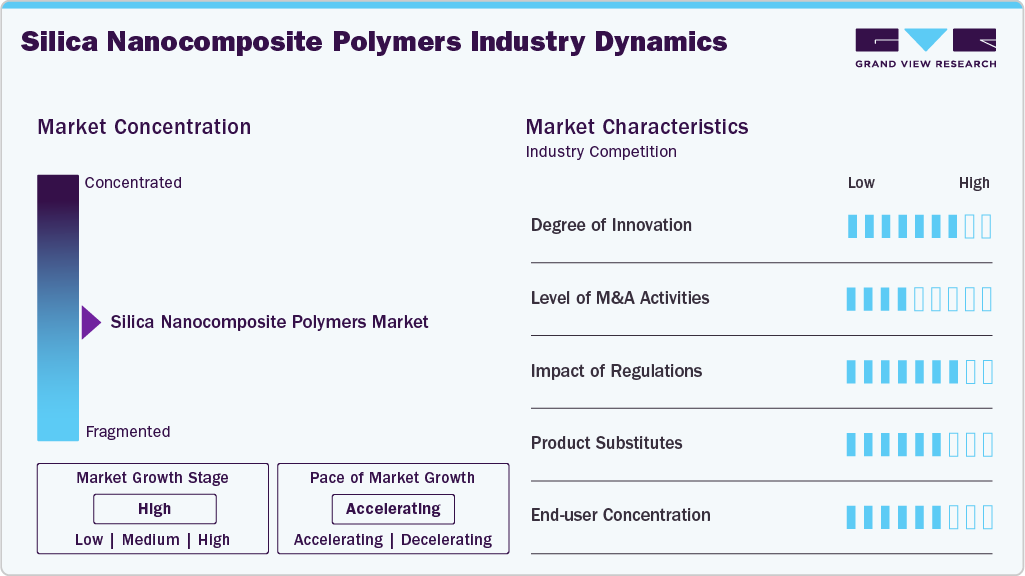
The market growth stage is high, and growth is accelerating. The market exhibits fragmentation, with key players dominating the industry landscape. Major companies such as Evonik Industries AG, Cabot Corporation, Admatechs Co., Ltd., and others play a significant role in shaping the market dynamics. These leading players often drive innovation in the market by introducing new products, technologies, and materials to meet the industry's evolving demands.
Innovation in the market is increasingly focused on controlled dispersion of nanosilica, surface functionalization, and formulation-specific performance. Manufacturers are developing treated silica grades and pre-dispersed systems to improve polymer compatibility and processing consistency. Cabot, for instance, offers highly stable fumed silica dispersions designed for performance-critical formulations. Innovation is also moving toward lower filler loadings that deliver targeted improvements in mechanical, thermal, rheological, and barrier properties. These developments are expanding the use of nanosilica beyond conventional reinforcement into electronic encapsulation, coatings, adhesives, and advanced engineering polymers.
 To learn more about this report, Download Free Sample Report
 Regulatory requirements are becoming increasingly important as nanosilica-containing materials enter higher-value applications and broader commercial use. In Europe, nanomaterials can fall within the scope of REACH and CLP, creating requirements related to substance registration, hazard assessment, classification, labeling, and safe use. ECHA's assessment framework also recognizes specific information requirements for nanoforms, including appropriate characterization and hazard data. Consequently, manufacturers face stricter compliance and documentation requirements, while clearer assessment of nanoforms supports responsible commercialization.
Analyst Perspective
The market is expected to shift from volume-led adoption toward value-driven, application-specific growth. Demand is increasingly emerging from electronic encapsulation, advanced coatings, adhesives, automotive lightweighting, composites, and high-performance films. Product development focuses on surface-functionalized nanosilica, improved dispersion, lower filler loading, and polymer-specific formulations. Sustainability is gaining importance through material efficiency, longer component life, lightweight designs, and compatibility with recycled or bio-based polymers. Market leaders are differentiating through integrated production, surface-treatment expertise, application laboratories, intellectual property, and global supply networks. Key challenges include cost volatility, processing complexity, qualification cycles, pricing pressure, supply disruptions, and the use of alternative nanofillers.
Polymer Insights
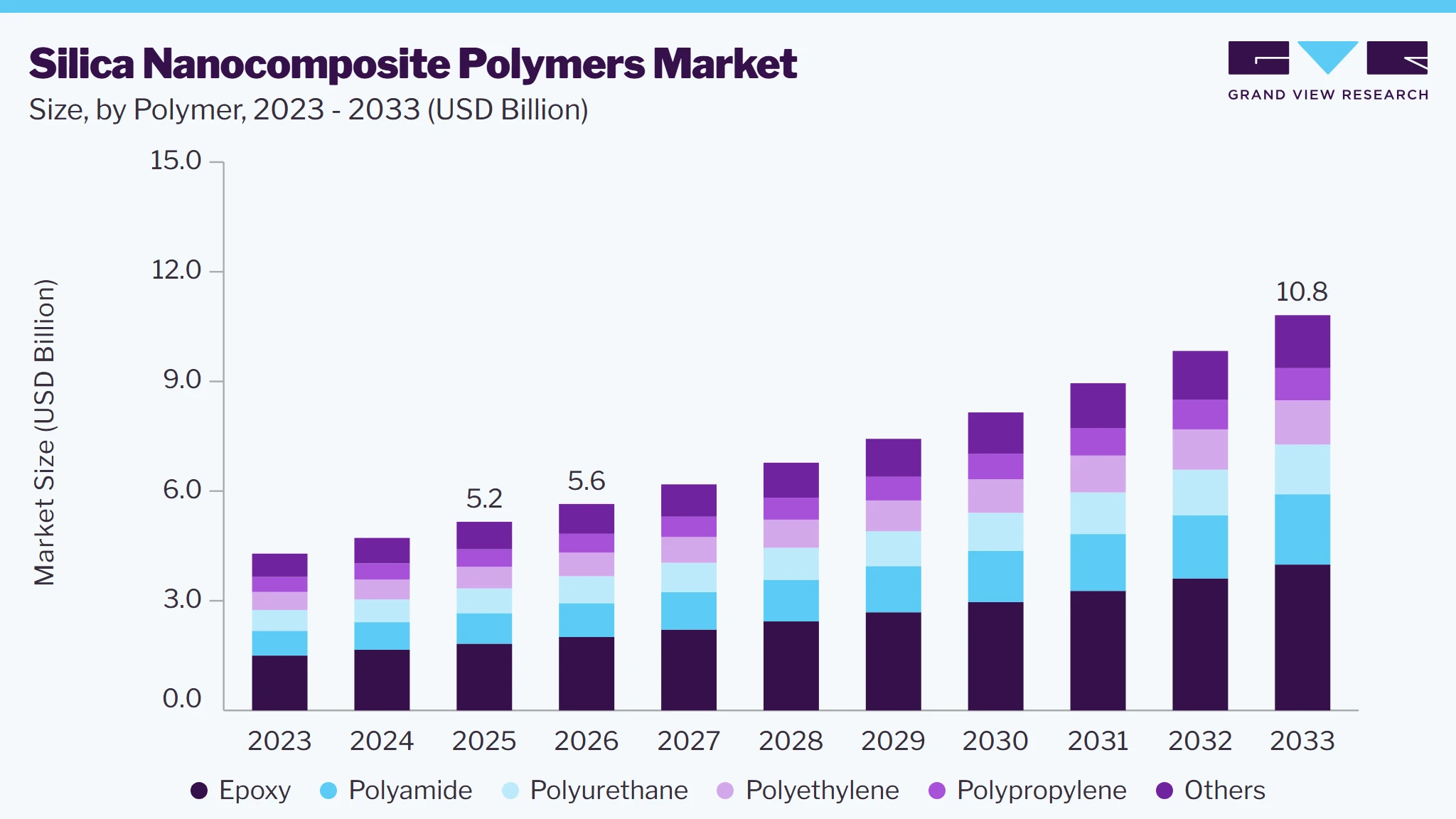
The epoxy segment dominated the market across polymer segmentation in terms of revenue, accounting for 35.4% market share in 2025, and is forecast to grow at a 10.3% CAGR from 2026 to 2033. Epoxy represents a high-value polymer matrix for silica nanocomposites because nanosilica can strengthen the crosslinked network while improving thermal stability, toughness, and dimensional control. This combination is particularly relevant to electronic materials, structural adhesives, and advanced composites. Commercial technologies such as Evonik’s nanosilica systems demonstrate the market’s focus on incorporating silica at controlled loadings rather than relying on conventional mineral fillers. Demand is therefore linked to applications where epoxy systems require enhanced mechanical performance without substantial increases in weight or processing complexity.
The polyamide segment is expected to expand at a 11.0% CAGR in the market over the forecast period. Polyamide-based silica nanocomposites are gaining attention where conventional engineering plastics require greater stiffness, thermal resistance, and dimensional stability. The key driver is the need for performance retention under demanding thermal and mechanical conditions, particularly in automotive and electrical components. Silica reinforcement can modify polymer morphology and strengthen the polymer-filler interface, enabling property improvements at relatively low nanoparticle concentrations. Growth in lightweight automotive components and miniaturized electrical systems is creating additional demand for reinforced polyamide formulations that can replace heavier materials while maintaining functional performance.
Application Insights
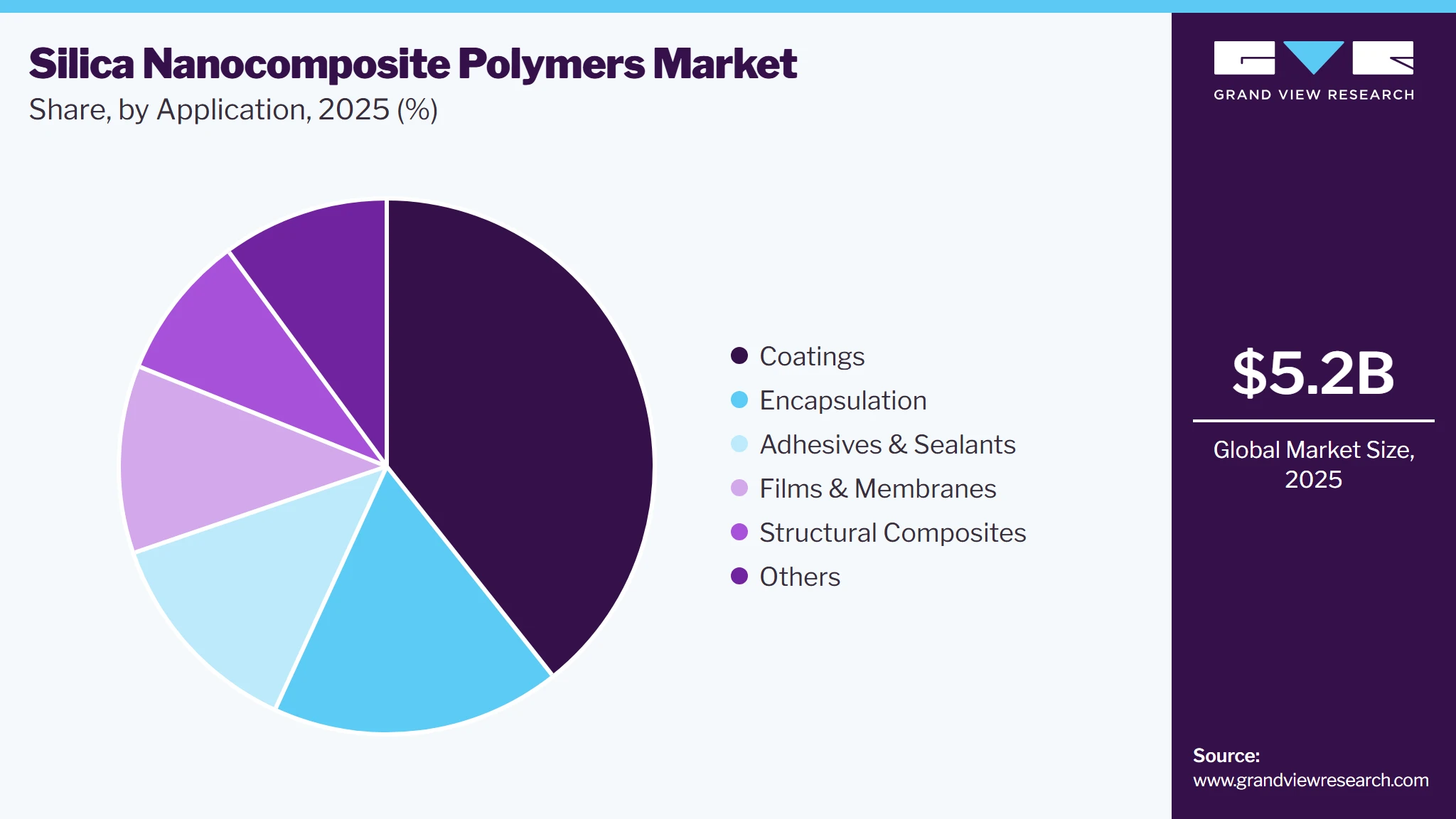
The coatings segment led the market by application, accounting for 39.3% of revenue in 2025, and is projected to grow at a 10.2% CAGR from 2026 to 2033. In coatings, the primary demand driver is the ability of nanosilica to deliver surface durability without materially compromising optical characteristics. Fine silica particles can improve scratch, abrasion, hardness, and barrier performance, supporting applications in automotive, industrial, architectural, and protective coatings. Commercial development increasingly emphasizes dispersion quality and surface treatment to avoid haze and maintain coating appearance. Evonik, for instance, markets nanosilica technologies designed to enhance scratch and abrasion resistance while preserving gloss and transparency in waterborne coatings.
 To learn more about this report, Download Free Sample Report
 The encapsulation segment is expected to grow at the fastest CAGR of 10.8% over the forecast period. Encapsulation is driven by the expanding need for thermally stable and mechanically reliable protection of sensitive electronic components. Silica-filled polymer systems can improve dimensional stability, mechanical strength, and thermal performance while providing electrical insulation. These characteristics are relevant to semiconductor packaging, power electronics, sensors, and other compact electronic assemblies. The growing complexity and miniaturization of electronic devices increase the need for encapsulants that withstand thermal cycling and mechanical stress. This is strengthening the role of nanosilica as a performance-enhancing additive in advanced polymer encapsulation systems.
Regional Insights
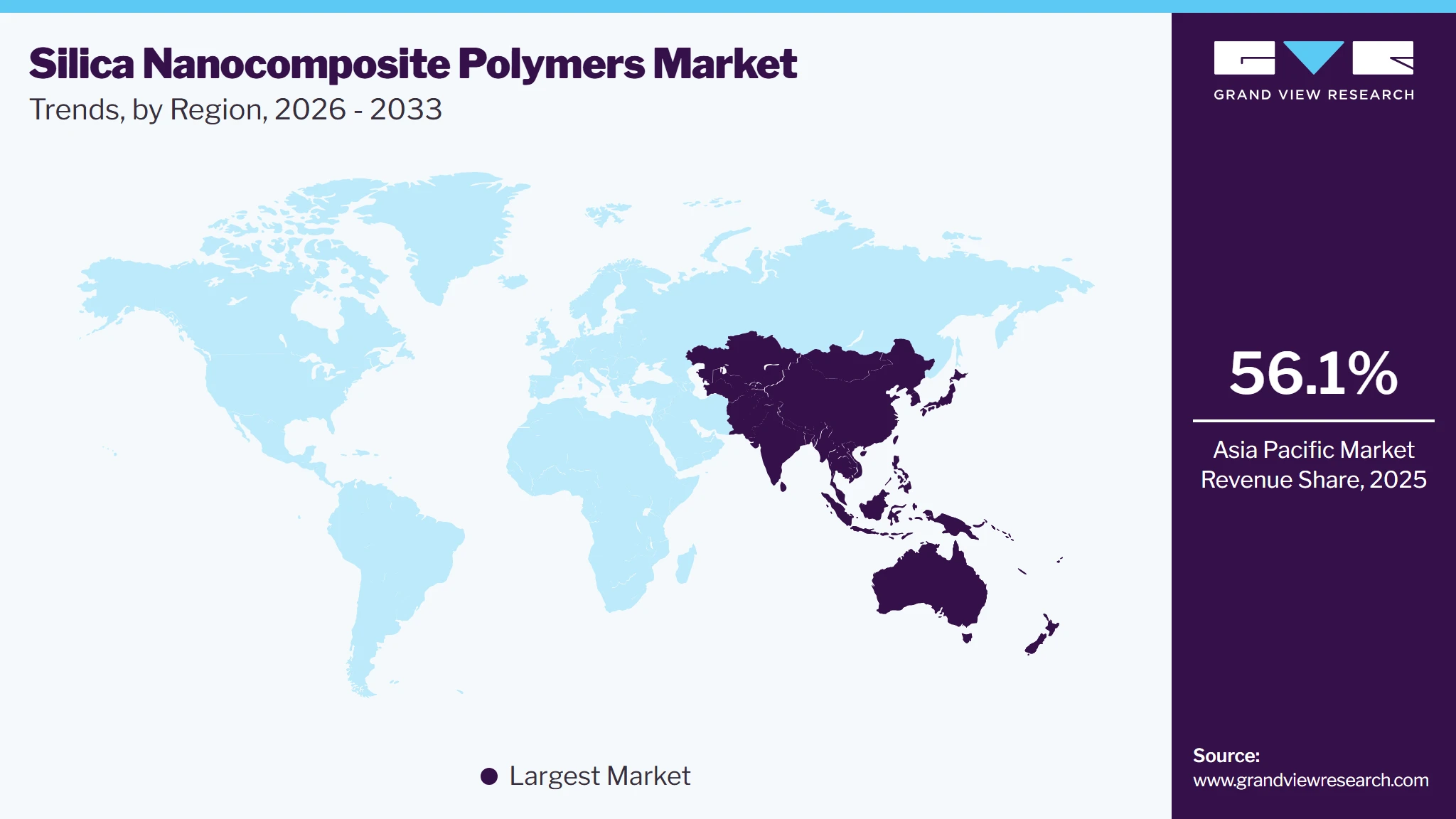
The silica nanocomposite polymers market in Asia Pacific held the largest global revenue share of 56.1% in 2025. The region is expected to grow at the fastest CAGR of 10.2% over the forecast period. Asia Pacific represents a major demand center because of its extensive electronics, automotive, packaging, and polymer-processing industries. China, Japan, South Korea, Taiwan, and Southeast Asian economies host large manufacturing ecosystems for semiconductors, consumer electronics, vehicles, and industrial components. Semiconductor capacity expansion is particularly important because silica-filled epoxy materials are used in electronic protection and packaging. Automotive electrification is adding another demand channel. Thermal management, insulation, dimensional stability, and lightweighting requirements are increasing the attractiveness of silica-reinforced polymer systems across the regional manufacturing base.
 To learn more about this report, Download Free Sample Report
 China’s silica nanocomposite polymers industry is closely linked to its large-scale electronics, automotive, machinery, renewable energy, and chemical industries. In 2025, industrial production of computers and communication equipment increased strongly, while integrated-circuit output also expanded. New-energy vehicle production recorded particularly rapid growth. These industries require polymers that combine low weight with thermal stability, electrical insulation, abrasion resistance, and dimensional reliability. China’s large domestic materials ecosystem additionally supports formulation development and localized production of silica-enhanced polymer compounds.
North America Silica Nanocomposite Polymers Market Trends
The silica nanocomposite polymers industry in North America is supported by strong demand for high-performance polymer materials in electronics, automotive, aerospace, and industrial applications. The region’s advanced manufacturing base favors silica nanocomposites where improved thermal stability, dimensional control, and mechanical strength can justify higher material costs. Expansion of semiconductor and advanced electronics manufacturing is particularly relevant to nanosilica-filled encapsulation and insulating systems. Growth in electric vehicles and lightweight components is also creating opportunities for reinforced engineering polymers that can withstand thermal and mechanical stresses while reducing component weight.
U.S. Silica Nanocomposite Polymers Market Trends
The U.S. silica nanocomposite polymers industry benefits from substantial investment in semiconductors, advanced packaging, aerospace systems, and electric mobility. Federal industrial policies are encouraging domestic semiconductor manufacturing and supporting demand for high-performance encapsulants, adhesives, coatings, and engineering polymers. Silica nanocomposites can provide controlled thermal expansion, electrical insulation, and mechanical reinforcement in these applications. The presence of established specialty-material producers and technology developers further supports commercialization. Demand is therefore increasingly linked to technically demanding applications where nanosilica enables property improvements that conventional polymer formulations cannot readily achieve.
Europe Silica Nanocomposite Polymers Market Trends
The silica nanocomposite polymers industry in Europe sees demand closely linked to automotive lightweighting, industrial coatings, electronics, and advanced engineering materials. The region’s emphasis on resource efficiency and vehicle emissions reduction is encouraging manufacturers to improve component performance while controlling material weight. Silica nanocomposites can support these objectives through reinforcement, dimensional stability, and barrier enhancement. EU sustainability policies are also encouraging higher material efficiency and longer product service life. These requirements favor engineered polymer formulations where nanosilica delivers multiple functional benefits at relatively low filler concentrations.
Latin America Silica Nanocomposite Polymers Market Trends
The silica nanocomposite polymers industry in Latin America offers growth potential through its expanding automotive, construction, packaging, paints and coatings, and industrial manufacturing sectors. Brazil and Mexico provide the strongest industrial base for specialty polymer consumption, supported by vehicle production, construction activity, and manufacturing investment. Demand for durable coatings and polymer systems is creating opportunities for silica reinforcement, particularly where abrasion resistance, hardness, barrier performance, and weatherability are important. Regional adoption is likely to remain application-driven, with manufacturers favoring commercially proven nanosilica technologies that can be integrated into existing polymer-processing infrastructure.
Middle East and Africa Silica Nanocomposite Polymers Market Trends
The silica nanocomposite polymers industry in the Middle East & Africa is being shaped by construction, infrastructure development, protective coatings, oil and gas equipment, and industrial diversification. Large infrastructure programs in Gulf economies are increasing requirements for durable coatings, sealants, adhesives, and high-performance polymer materials exposed to heat, abrasion, and demanding operating environments. Silica nanocomposites can improve hardness, mechanical durability, thermal resistance, and barrier properties in these systems. Industrial diversification initiatives are also expanding downstream manufacturing, creating additional opportunities for specialty polymer formulations and locally processed advanced materials.
Key Silica Nanocomposite Polymers Company Insights
Some of the key players operating in the market include Evonik Industries AG and Cabot Corporation
-
Evonik is a key participant in the market, supported by its NANOPOX, NANOCRYL, and NANOPOL technologies. NANOPOX provides surface-modified nanosilica dispersed in epoxy systems for electronics, adhesives, and composites, while NANOCRYL targets scratch-resistant coatings and advanced formulations. Its portfolio addresses automotive, aerospace, electronics, and industrial applications, strengthening its position across high-performance polymer systems. Evonik also maintains a broad global production footprint and dedicated silica operations in Asia.
-
Cabot Corporation maintains a strong position in silica nanocomposite polymers through its CAB-O-SIL fumed silica portfolio. The company offers hydrophilic and surface-treated grades that provide reinforcement, rheology control, sag resistance, and improved durability in polymer systems. Its technologies support applications in silicone elastomers, adhesives, coatings, composites, and encapsulation. Cabot is also developing silica dispersions and application-specific grades to improve processing efficiency and formulation performance.
Tokuyama Corporation and Orisil JSC are some of the emerging participants in the market.
-
Tokuyama Corporation strengthens its position in silica nanocomposite polymers through REOLOSIL fumed silica, with primary particles in the nanometer range. The product is available in hydrophilic and hydrophobic grades for controlled dispersion, rheology modification, and reinforcement in epoxy, polyester, urethane, silicone resins, coatings, and adhesives. Tokuyama operates REOLOSIL production in Japan and China, supporting supply across Asian and global markets.
-
Orisil JSC is an emerging participant in the market, specializing in high-surface-area pyrogenic silica. Its Orisil hydrophilic and hydrophobic grades support rheology control, reinforcement, thixotropy, and viscosity modification in polymer systems. The portfolio serves coatings, adhesives, sealants, unsaturated polyester resins, silicone elastomers, and PVC plastisols. Its established production capabilities in Eastern Europe and applications across polymer-intensive formulations strengthen its position in specialty silica supply.
Key Silica Nanocomposite Polymers Companies
The following key companies have been profiled for this study on the silica nanocomposite polymers market.
-
Evonik Industries AG
-
Cabot Corporation
-
Admatechs Co., Ltd.
-
allnex
-
BYK
-
3M
-
Wacker Chemie AG
-
Tokuyama Corporation
-
W. R. Grace & Co.
-
Solvay
Competitive Benchmarking
Operating Strategies
Competitive Edge
Weakness
Mature Players: Evonik Industries AG, Cabot Corporation, Wacker Chemie AG, Solvay SA, Tata Chemicals Ltd., Momentive Performance Materials Inc.
- Maintain broad silica portfolios covering fumed silica, precipitated silica, colloidal silica, surface-treated silica, nanosilica dispersions, and silica-based additives for polymers, elastomers, coatings, adhesives, sealants, electronics, and composites.
- Invest in particle-size control, surface functionalization, dispersion technology, rheology modification, reinforcement, and polymer-silica interfacial compatibility.
- Expand through global manufacturing networks, application laboratories, technical support, customer co-development, and industry-specific formulation solutions.
- Established silica and polymer expertise supports consistent particle characteristics, dispersion quality, reinforcement, rheological performance, and thermal stability across demanding formulations.
- Broad product portfolios enable suppliers to serve multiple polymer matrices and applications, including epoxy composites, engineering plastics, coatings, adhesives, sealants, elastomers, and electronic encapsulation.
- Global manufacturing and technical-service networks support customer qualification, formulation optimization, and reliable supply for multinational polymer and composite manufacturers.
- Large global manufacturing and technical infrastructures can increase operating costs and make specialized nanosilica development more complex than for focused suppliers.
- Broad portfolios expose companies to competition from conventional silica, alumina, carbon-based nanomaterials, clay nanocomposites, and other polymer reinforcement technologies.
- High-performance nanosilica grades require stringent particle-size control, surface treatment, dispersion management, and quality consistency, increasing formulation and production complexity.
Emerging Players: Tokuyama Corporation and Orisil JSC
- Focus on specialized fumed silica and functional silica grades for polymers, silicone elastomers, coatings, adhesives, sealants, composites, and other high-performance formulations.
- Develop grades with controlled surface chemistry, particle characteristics, hydrophobicity, reinforcement capability, and rheological performance.
- Strengthen market access through regional manufacturing, application support, customized grades, technical partnerships, and direct engagement with polymer formulators.
- Specialized silica expertise enables targeted development for reinforcement, viscosity control, thixotropy, dispersion, surface modification, and mechanical-property enhancement in polymer systems.
- Flexible product development can support application-specific requirements and customer formulation adjustments more efficiently than highly standardized commodity materials.
- Focused portfolios allow these companies to concentrate technical resources on high-value silica applications across polymers, coatings, adhesives, and elastomers.
- Smaller scale and narrower portfolios can limit the ability to match the global manufacturing, distribution, and application-development infrastructure of leading multinational suppliers.
- Greater regional concentration can increase exposure to local demand cycles, logistics constraints, and customer qualification requirements.
- Focus on selected silica grades can increase dependence on specific applications and polymer-processing segments, particularly where larger suppliers offer integrated material and formulation solutions.
Recent Developments
-
In June 2026, Tata Chemicals advanced its 50 KTPA precipitated silica plant at Cuddalore, Tamil Nadu, as part of its specialty-silica capacity expansion. The project strengthens its silica portfolio and supports applications requiring reinforcing and performance-enhancing silica materials. The company also reported ongoing innovation and customized product-development collaborations with customers.
-
In April 2026, Cabot Sanmar announced a USD 25 million expansion of its fumed silica manufacturing facility in Mettur, India. The brownfield project is planned for commissioning in the fourth quarter of 2027 and is intended to address rising domestic demand. Fumed silica serves polymer-intensive applications including adhesives, sealants, coatings, electronics, and specialty formulations.
Silica Nanocomposite Polymers Market Report Scope
Report Attribute
Details
Market size in 2025
USD 5.2 billion
Market size in 2026
USD 5.6 billion
Revenue forecast in 2033
USD 10.8 billion
Growth rate
CAGR of 9.7% from 2026 to 2033
Historical data
2021 - 2025
Forecast period
2026 - 2033
Quantitative units
Revenue in USD billion, volume in Kilotons, and CAGR from 2026 to 2033
Report coverage
Revenue & volume forecast, competitive landscape, growth factors, and trends
Segments covered
Polymer, application, region
Regional scope
North America; Europe; Asia Pacific; Latin America; Middle East & Africa
Country Scope
U.S.; Canada; Mexico; Germany; UK; France; Italy; Spain; China; India; Japan; South Korea; Australia; Brazil; Argentina; Saudi Arabia; UAE; South Africa
Key companies profiled
Evonik Industries AG; Cabot Corporation; Admatechs Co., Ltd.; allnex; BYK; 3M; Wacker Chemie AG; Tokuyama Corporation; W. R. Grace & Co.; Solvay
Customization scope
Free report customization (equivalent to up to 8 analyst working days) with purchase. Addition or alteration to country, regional & segment scope
Pricing and purchase options
Avail customized purchase options to meet your exact research needs. Explore purchase options
Global Silica Nanocomposite Polymers Market Report Segmentation
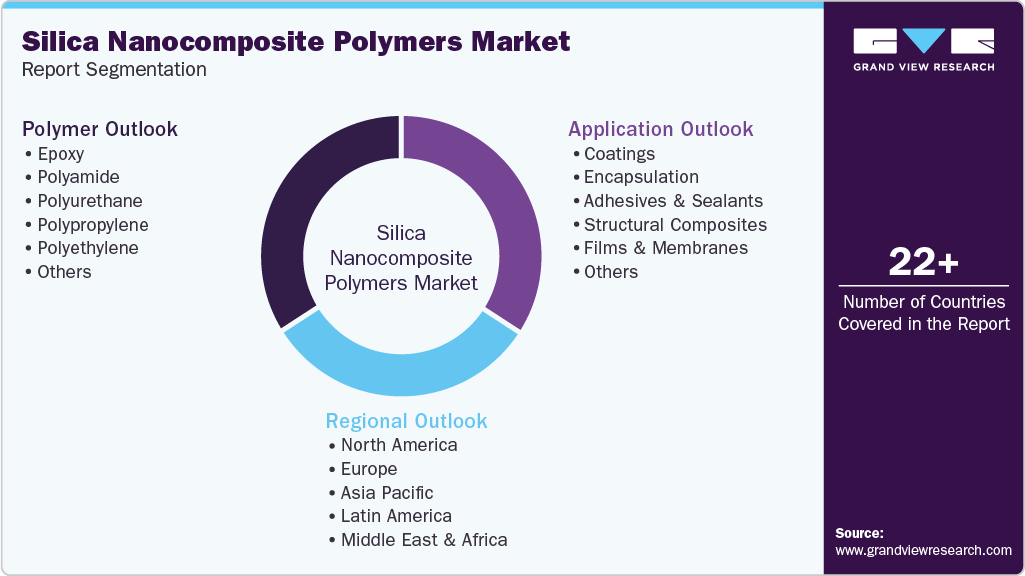
This report forecasts revenue &volume growth at the global, regional, and country levels and provides an analysis of the latest industry trends across sub-segments from 2021 to 2033. For this study, Grand View Research has segmented the global silica nanocomposite polymers market report based on polymer, application, and region:
 To learn more about this report, Download Free Sample Report
 -
Polymer Outlook (Volume, Kilotons; Revenue, USD Billion, 2021 - 2033)
-
Epoxy
-
Polyamide
-
Polyurethane
-
Polypropylene
-
Polyethylene
-
Others
-
-
Application Outlook (Volume, Kilotons; Revenue, USD Billion, 2021 - 2033)
-
Coatings
-
Encapsulation
-
Adhesives & sealants
-
Structural composites
-
Films & membranes
-
Others
-
-
Regional Outlook (Volume, Kilotons; Revenue, USD Billion, 2021 - 2033)
-
North America
-
U.S.
-
Canada
-
Mexico
-
-
Europe
-
Germany
-
UK
-
France
-
Italy
-
Spain
-
-
Asia Pacific
-
China
-
India
-
Japan
-
South Korea
-
Australia
-
-
Latin America
-
Brazil
-
Argentina
-
-
Middle East & Africa
-
Saudi Arabia
-
UAE
-
South Africa
-
-
Research Methodology
The silica nanocomposite polymers market figures in this report are based on a proven research process that combines executive interviews with secondary research from proprietary databases, company filings, and recognized regulatory and institutional sources. Market size is built through value-chain sizing - reconciling supply-side and demand-side estimates - and triangulated with bottom-up and top-down approaches. Every estimate passes multiple levels of expert validation before publication, with each silica nanocomposite polymers segment quantified using the revenue-capture definitions in the table below.
Segment Definition
Segment - Polymer
Revenue capture definition
Epoxy
Revenue is captured through epoxy-based silica nanocomposite polymers incorporating nanosilica to improve toughness, mechanical strength, thermal stability, dimensional control, and resistance to cracking. These materials are used in electronic encapsulation, structural composites, adhesives, protective coatings, and electrical insulation, where silica reinforcement enhances the performance of crosslinked epoxy networks and supports demanding thermal, mechanical, and environmental operating conditions.
Polyamide
Revenue is generated through polyamide-based silica nanocomposite polymers designed to improve stiffness, thermal resistance, dimensional stability, abrasion resistance, and mechanical performance. Applications include automotive components, electrical and electronic parts, industrial components, and engineering plastics. Silica reinforcement enables polyamide formulations to maintain performance under elevated temperatures and mechanical loads while supporting lightweight component development and replacement of conventional metal materials.
Polyurethane
Revenue is captured through silica-reinforced polyurethane systems used where improved mechanical strength, abrasion resistance, thermal stability, hardness, and dimensional control are required. These nanocomposites are applied in coatings, adhesives, sealants, elastomers, foams, and protective materials. Surface-functionalized silica can improve interaction with polyurethane matrices and enhance durability without substantially increasing filler content, supporting applications exposed to mechanical wear, chemicals, moisture, and temperature variations.
Polypropylene
Revenue is generated through polypropylene-based silica nanocomposite polymers developed to enhance stiffness, impact performance, thermal stability, dimensional retention, and surface characteristics. Demand comes from automotive components, packaging, consumer products, appliances, and industrial parts. Nanosilica reinforcement can improve the performance of lightweight polypropylene systems and support material optimization where manufacturers seek higher rigidity and thermal resistance while retaining the processing advantages and relatively low density of polypropylene.
Polyethylene
Revenue is captured through polyethylene-based silica nanocomposite polymers designed to improve stiffness, barrier performance, thermal stability, wear resistance, and dimensional stability. Applications include packaging films, pipes, containers, industrial components, and specialty membranes. Silica incorporation can modify polymer morphology and create enhanced barrier characteristics, supporting applications requiring improved resistance to moisture, gases, chemicals, and mechanical stress while retaining polyethylene's established processing and cost advantages.
Others
Revenue comes from silica nanocomposite polymers based on other polymer matrices, including polystyrene, polycarbonate, polymethyl methacrylate, polyvinyl chloride, silicone polymers, and specialty engineering plastics. These materials are developed where conventional polymers require enhanced thermal, mechanical, optical, rheological, electrical, or barrier properties. Applications span electronics, automotive components, optical materials, medical products, specialty coatings, and high-performance composites requiring application-specific silica reinforcement and surface functionality.
Segment - Application
Revenue capture definition
Coatings
Revenue is generated through silica nanocomposite polymer coatings formulated to improve scratch resistance, hardness, abrasion resistance, barrier performance, thermal stability, and surface durability. Applications include automotive, industrial, architectural, electronics, and protective coatings. Nanosilica can provide reinforcement and surface-property enhancement at relatively low concentrations, while surface modification improves dispersion and compatibility. Demand is supported by requirements for longer coating service life and higher-performance protective surfaces.
Encapsulation
Revenue is captured through silica-containing polymer encapsulants used to protect electronic and electrical components from moisture, thermal cycling, mechanical stress, and environmental exposure. Epoxy and silicone systems incorporating nanosilica can provide improved dimensional stability, thermal-mechanical performance, and electrical insulation. Key applications include semiconductor packaging, power electronics, sensors, LEDs, and other electronic assemblies where miniaturization and higher operating temperatures increase requirements for reliable encapsulation materials.
Adhesives & Sealants
Revenue is generated through silica nanocomposite adhesives and sealants designed to improve rheology, reinforcement, adhesion, dimensional stability, sag resistance, and mechanical durability. Applications span automotive, construction, electronics, industrial assembly, and specialty bonding. Functionalized nanosilica can strengthen polymer networks and improve formulation stability, enabling adhesives and sealants to withstand vibration, thermal cycling, moisture, and mechanical loads while maintaining controlled processing characteristics.
Structural Composites
Revenue is captured through silica nanocomposite polymers incorporated into structural materials to improve strength, fracture toughness, stiffness, thermal stability, and resistance to fatigue or environmental degradation. Applications include automotive components, aerospace structures, wind-energy components, construction materials, and industrial equipment. Nanosilica can enhance polymer-fiber or polymer-matrix interactions and improve damage tolerance, enabling manufacturers to develop lightweight composite structures with higher functional performance and longer service life.
Films & Membranes
Revenue is generated through silica nanocomposite polymer films and membranes engineered for improved mechanical strength, thermal resistance, permeability control, and barrier performance. Applications include packaging, filtration, separation, protective films, and specialty membranes. Nanosilica can modify polymer free volume, surface characteristics, and transport behavior, allowing manufacturers to tailor gas, moisture, solvent, or molecular permeability. Demand is supported by requirements for durable, selective, and high-performance polymer barrier and separation materials.
Others
Revenue comes from silica nanocomposite polymers used in additional applications such as automotive components, electrical insulation, medical materials, 3D printing, optical products, elastomers, and industrial parts. These applications require targeted improvements in mechanical strength, thermal performance, electrical properties, surface characteristics, or dimensional stability. Demand varies according to polymer chemistry, silica surface treatment, particle dispersion, processing requirements, and the performance specifications of individual end-use systems.
Estimation Model
Layer No.
Layer Name
Key Question
Description
1
Top-Down Silica Nanocomposite Polymers Demand Assessment Layer
What defines overall market demand?
Establishes overall global demand for silica nanocomposite polymers across epoxy, polyamide, polyurethane, polypropylene, polyethylene, and other polymers used in coatings, encapsulation, adhesives and sealants, structural composites, films and membranes, and other applications. The assessment considers demand for improved mechanical strength, thermal stability, dimensional control, barrier performance, abrasion resistance, rheological properties, electrical insulation, and lightweight material solutions.
2
Application Demand Validation Layer
Where is demand concentrated?
Maps demand across coatings, encapsulation, adhesives & sealants, structural composites, films & membranes, and other applications based on requirements for reinforcement, scratch and abrasion resistance, thermal stability, barrier enhancement, dimensional stability, electrical insulation, controlled rheology, and improved polymer durability. The layer evaluates application-specific adoption of nanosilica based on polymer compatibility, surface functionality, dispersion characteristics, and required performance improvements.
3
Consumption-to-Revenue Conversion Layer
How is demand monetized?
Converts silica nanocomposite polymer consumption into market revenue using polymer, silica content, particle size, surface treatment, dispersion quality, purity, functionalization, application requirements, production scale, manufacturing costs, grade specifications, supplier positioning, and prevailing pricing structures. The layer also considers premiums associated with high-performance nanosilica systems used in electronics, advanced coatings, structural composites, engineering plastics, and other applications requiring enhanced thermal, mechanical, barrier, or electrical performance.
4
Regional Demand Verification Layer
Where is demand validated?
Validates market demand across North America, U.S., Asia Pacific, India, Europe, Latin America, and Middle East & Africa using automotive and electronics manufacturing, semiconductor and electronic packaging activity, polymer-processing capacity, coatings and construction demand, aerospace and industrial production, specialty-chemical infrastructure, trade patterns, regulatory requirements, research and development activity, and adoption of lightweight, durable, and high-performance polymer composite technologies.
Delivered Customizations
This report has been delivered with the following In-depth customizations
Client Request
Customization Delivered
Value Adds
Regional segmentation
The market was assessed across North America, U.S., Asia Pacific, India, Europe, Latin America, and Middle East & Africa. Regional analysis considers polymer-processing capacity, electronics manufacturing, automotive production, coatings and composites demand, specialty-chemical infrastructure, and availability of silica technologies. Asia Pacific was assessed separately because of its strong manufacturing base and significant fumed silica consumption.
Provides a regional demand map that identifies differences in industrial structure, application penetration, manufacturing capabilities, and adoption potential. It supports regional market-entry, capacity planning, and localization decisions.
Competitive benchmarking
Key participants were benchmarked across operating strategies, competitive edge, and weaknesses. The assessment covers mature players including Evonik, Cabot, Wacker, Solvay, Tata Chemicals, and Momentive, alongside emerging participants such as Tokuyama and Orisil. Benchmarking considers silica portfolio breadth, surface-functionalized grades, application coverage, geographical reach, technical capabilities, and customer support. Evonik, Wacker, Cabot, and Tokuyama are identified among leading fumed silica participants in current industry assessments.
Provides a structured view of competitive positioning and differentiation. It highlights the importance of portfolio breadth, surface modification, application engineering, global supply infrastructure, and technical support in competing for high-value polymer applications.
Opportunity assessment
Opportunities were assessed at the intersection of high-performance polymer requirements and silica-enabled property enhancement. Priority areas include electronic encapsulation, advanced coatings, adhesives and sealants, engineering polymers, composites, automotive lightweighting, and applications requiring improved thermal, mechanical, barrier, or rheological performance. The analysis also considers surface-functionalized and hydrophobic silica grades as routes toward higher-value formulations. Current industry assessments identify electronics, composites, coatings, adhesives, and advanced materials as important application areas.
Converts broad market growth into specific application-level opportunities. It identifies areas where higher-performance silica grades can command greater value, supports product-development priorities, and helps suppliers target applications with stronger technical differentiation and qualification barriers.
Frequently Asked Questions About This Report
The silica nanocomposite polymers market is expected to grow at a compound annual growth rate of 9.7% from 2026 to 2033 to reach around 10.8 billion by 2033.
The key players in the silica nanocomposite polymers market are Evonik Industries AG, Cabot Corporation, Admatechs Co., Ltd., allnex, BYK, 3M, Wacker Chemie AG, Tokuyama Corporation, W. R. Grace & Co., and Solvay.
The Asia Pacific silica nanocomposite polymers market accounted for the largest share of 56.1% market size in 2025.
The polyamide segment, based on polymer type, is expected to grow at a CAGR of 11.0% for the forecast period.
The silica nanocomposite polymers market was estimated at around USD 5.2 billion in the year 2025 and is expected to reach around USD 5.6 billion in 2026.
The epoxy in the silica nanocomposite polymers industry led the plastics in the polymer type market in 2025 with a 35.4% share. Epoxy silica nanocomposites are driven by demand for enhanced mechanical strength, toughness, thermal stability, dimensional control, and durability across electronics, adhesives, composites, and protective coatings.
The silica nanocomposite polymers market is driven by demand for lightweight, durable materials with enhanced mechanical, thermal, and barrier properties across automotive, electronics, packaging, construction, and aerospace applications.
India was the leading player in the silica nanocomposite polymers market and is expected to grow at a compound annual growth rate of 12.6%.
Based on application, the coatings segment accounted for the largest share of 39.3% market size in 2025. Demand is driven by rising requirements for scratch resistance, abrasion resistance, barrier performance, transparency, adhesion, and surface durability in automotive, industrial, electronics, and protective coatings.
About the Author(s)
Plastics, Polymers & Resins Research Team
Bulk Chemicals · Plastics, Polymers & ResinsThis report was authored by the plastics, polymers & resins research team at Grand View Research - comprising two research analysts, one senior research analyst, and one industry expert - with specialized expertise in the plastics, polymers & resins segment of the bulk chemicals industry. All findings are based on proprietary bulk chemicals databases, executive interviews, and regulatory analysis, subject to internal peer review prior to publication.
Last Updated:
Speak to Analyst

Customize this report to your needs - add regions, segments, or data points, with 20% free customization.
Or view our licence options:


ISO 9001:2015 & 27001:2022 Certified
We are GDPR and CCPA compliant! Your transaction & personal information is safe and secure. For more details, please read our privacy policy.


