
- Home
- »
- Homecare & Decor
- »
-
Southern Africa Safari Tourism Market, Industry Report, 2033GVR Report cover

Southern Africa Safari Tourism Market (2026 - 2033) Size, Share & Trends Analysis Report By Type (Adventure Safari, Private Safari), By Accommodation Type (Safari Resorts & Lodges, Safari Camps, Treehouses), By Group, By Booking Mode, By Country, And Segment Forecasts
Southern Africa Safari Tourism Market Summary
The Southern Africa safari tourism market size was estimated at USD 14.56 billion in 2025 and is projected to reach USD 29.84 billion in 2033, growing at a CAGR of 9.3% from 2026 to 2033. Growing awareness and concern for wildlife conservation and environmental sustainability have fueled the demand for responsible and sustainable tourism experiences.
Key Market Trends & Insights
- The South Africa safari tourism market led Southern Africa, with the largest share of 49.2% in 2025.
- The safari tourism industry in Mozambique is expected to grow significantly from 2026 to 2033.
- By type, the adventure safari segment held the largest market share of 56.7% in 2025.
- By accommodation type, the safari resorts & lodges segment held the largest market share in 2025.
Market Size & Forecast
- 2025 Market Size: USD 14.56 Billion
- 2033 Projected Market Size: USD 29.84 Billion
- CAGR (2026-2033): 9.3%
- South Africa: Largest market in 2025
- Mozambique: Fastest growing market
Three ways to get this report
Buy it, customize it, or ask a question.Ask an Analyst
Analyst response in 1 business day
- AccessReport author, directly
- Reply timeWithin 1 working day
- No sales callDirect answer only
- FormatEmail reply
- CostFree, no cost
Get the Full Report
What the study covers
- FormatsPDF · Excel · Dashboard
- Timeline2026–2033 annual, 2025 base
- Coverage20+ countries, 5 regions
- Companies10+ key players profiled
Customize the Report
20% free customization
- IncludeCountries, segments, points
- TailorTo your product definition
- ExtendDeeper competitor detail
- OrA fully bespoke study
- Turnaround5–10 working days
Safari tourism offers an opportunity for travelers to support conservation efforts directly and contribute to the preservation of natural habitats and wildlife. Leading safari tour operators such as Wilderness Safaris, & Beyond, and Singita have set benchmarks in luxury and sustainable safari tourism, offering bespoke safari experiences in remote locations with minimal environmental impact in southern Africa. They emphasize conservation partnerships, community engagement, and experiential travel, aligning with growing consumer preferences for responsible tourism practices. Digital innovation in customer engagement, itinerary customization, and online booking platforms enhances accessibility and convenience for global travelers seeking personalized safari adventures. Source: Grand View Research, IR Documents, Primary Interviews, Paid DatabasesTo learn more about this report,
 Download Free Sample Report
 Agents and affiliates continue to play a pivotal role in the market by acting as intermediaries between travelers and safari operators. These travel professionals leverage their expertise and industry connections to curate comprehensive safari packages that include accommodations, game drives, flights, and sometimes additional excursions. For example, African Travel, Inc. partners with luxury safari lodges and local operators to offer tailored safari experiences across Southern Africa, ensuring travelers receive personalized recommendations and assistance throughout the booking process.
A prominent digital and technology trend in Southern Africa safari tourism market is the use of drones for wildlife monitoring. In Botswana, the integration of drones and artificial intelligence (AI) is revolutionizing wildlife monitoring and anti-poaching efforts, reflecting a technology trend in the market. Researchers from the Botswana International University of Science and Technology have developed a system using drones to provide aerial views and AI to analyze herd behaviors and classify species such as zebras, giraffes, and elephants. The adoption of drones and AI offers a more efficient and expansive way to monitor wildlife, ensuring a safer and more sustainable environment for safari tourism.
Governments across Southern Africa have implemented policies and incentives to encourage private sector investment in eco-friendly lodges and wildlife conservation projects. Marketing efforts by tourism boards highlight the region's rich biodiversity and cultural heritage, promoting Southern Africa as a premier safari destination globally.
The expansion and enhancement of flight routes and connectivity across Southern Africa play a crucial role in driving growth in the safari tourism market. Initiatives such as Qatar Airways' new gateway in Kinshasa, Ethiopian Airlines' connections to Maun and Ndola, and Lufthansa's direct flights to Johannesburg reduce travel times and increase accessibility to remote safari destinations. For instance, Lufthansa's decision to launch a direct flight between Munich and Johannesburg, South Africa, in June 2024, not only reduces travel time for European tourists but also enhances convenience and reliability, making it more attractive for travelers to include South Africa's renowned safari experiences in their itineraries.
Southern Africa boasts an unparalleled array of wildlife, including the iconic Big Five (lion, leopard, rhinoceros, elephant, and Cape buffalo), along with numerous other mammals, birds, reptiles, and plant species. This biodiversity attracts wildlife enthusiasts, photographers, and eco-tourists. According to Go2Africa’s 2023 Annual State of Safari Travel Report, travel interest to Zambia increased by 78% and to Malawi by 41% from 2022 to 2023, with the Seychelles also experiencing a rise in visitor numbers. The report noted a 20% increase in demand for beach and safari combination trips, alongside a 22% increase in interest in trips offering relaxation and leisure activities.
Company/Operator Market Share Insights
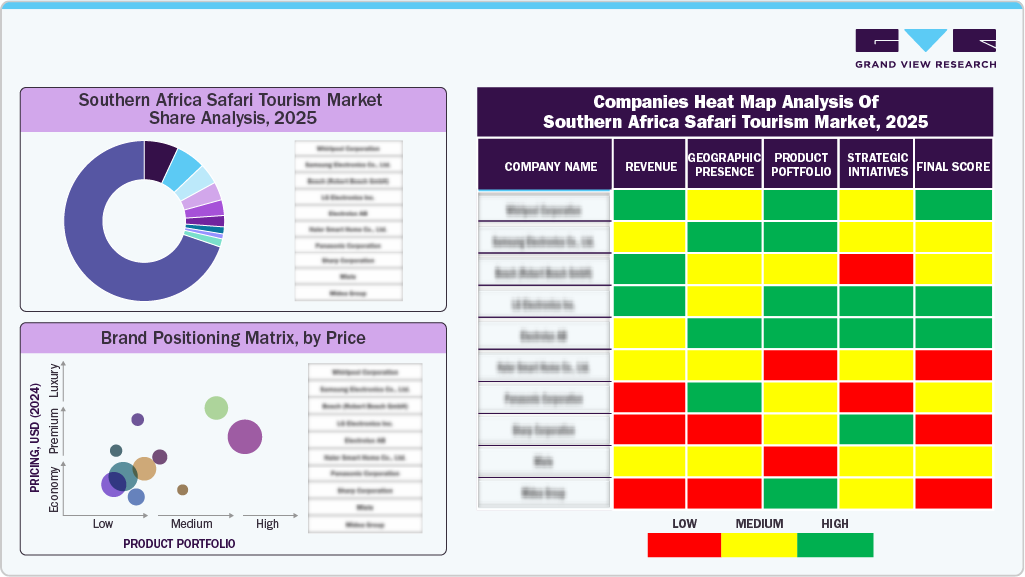
The Southern Africa safari tourism market is highly competitive, driven by the presence of international tour operators, regional travel companies, luxury lodge groups, and conservation-focused organizations competing through differentiated wildlife experiences, service quality, and global distribution networks. Leading players such as &Beyond, Wilderness Safaris, Singita, African Bush Camps, and Great Plains Conservation offer diverse safari experiences, including luxury lodge stays, guided wildlife tours, and private reserve experiences across key destinations such as South Africa, Botswana, Namibia, and Zimbabwe. Companies are increasingly focusing on premium, personalized, and sustainability-driven offerings to meet rising demand for authentic and responsible travel experiences. In addition, growing investments in digital booking platforms, direct-to-consumer channels, and experiential travel marketing are enhancing customer engagement and accessibility, further intensifying competition in the Southern Africa safari tourism industry.
 To learn more about this report, Download Free Sample Report
 Consumer Surveys & Insights
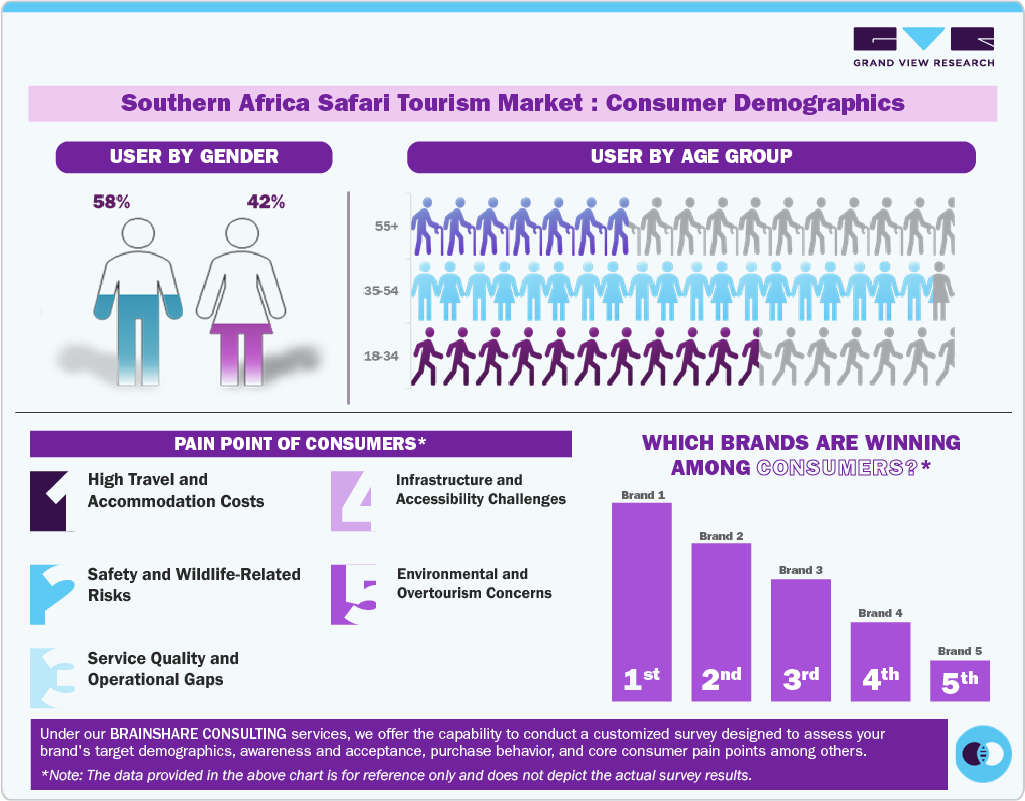
Safari tourism in South Africa appeals to a wide range of age groups, with notable distinctions in preferences and activities among different age brackets. Younger travelers, particularly millennials and Gen Z (ages 18-35), are drawn to safaris for adventure and unique experiences. They often seek more budget-friendly or backpacker-style options. They are typically interested in immersive and interactive experiences, such as walking safaris or conservation volunteer programs.
On the other hand, baby boomers (ages 55 and above) and older Gen X travelers (ages 40-54) tend to favor luxury safari experiences, focusing on comfort, high-end accommodations, and comprehensive guided tours.
 To learn more about this report, Download Free Sample Report
 According to Statistics South Africa, in 2024, a higher proportion of male tourists visited South Africa, comprising 53.7% of total arrivals. This trend is especially pronounced among visitors from Southern African Development Community (SADC) countries and other African nations, with slightly lower but still significant proportions of tourists from overseas countries.
Female tourists make up 46.3% of the total arrivals, with the highest proportions coming from overseas countries, followed by other African countries, and the lowest from SADC countries. Female participation in safari tourism often centers around different motivations. Women travelers, particularly from overseas, are more inclined towards safaris that offer not just wildlife viewing but also wellness retreats, cultural immersion, and eco-friendly experiences. Safari lodges like Tswalu Kalahari, which focus on conservation, sustainability, and luxury, cater well to female tourists seeking holistic travel experiences.
Travelers increasingly prioritize sustainability and eco-conscious practices in their safari experiences. This trend is driven by a growing awareness of environmental issues and a desire to reduce their carbon footprint while supporting conservation efforts. Many tourists now seek lodges, campsites, and tour operators that adhere to eco-friendly practices, such as using renewable energy, promoting wildlife conservation, and minimizing waste.
For instance, Tswalu Kalahari Reserve emphasizes its commitment to conservation and community development, offering eco-conscious tourists the chance to contribute to preservation efforts and support local livelihoods while enjoying their safari.
Type Insights
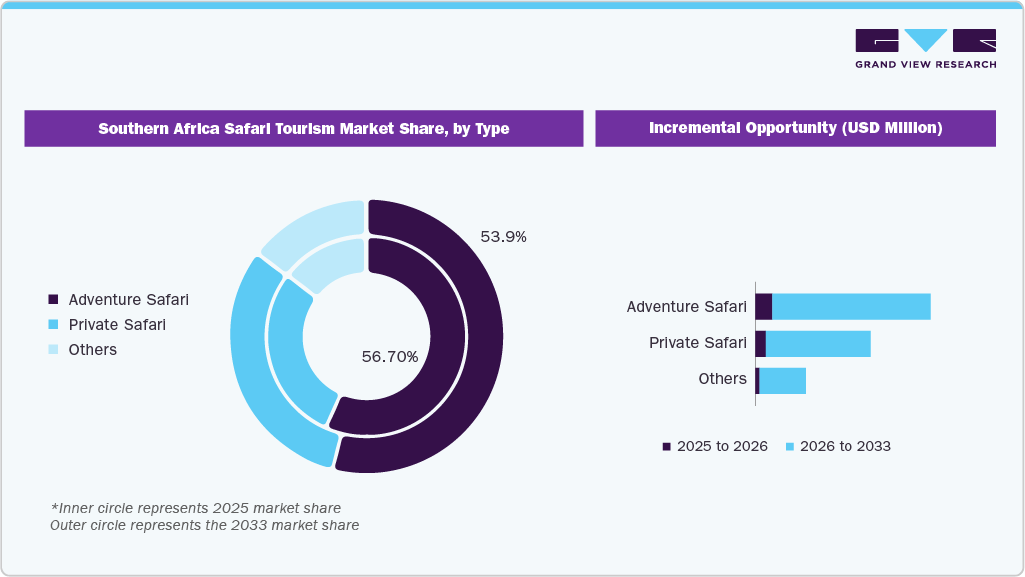
Adventure tourism held a market share of about 56.7% in 2025. Adventure safaris in Southern Africa offer an exhilarating way to experience the continent's stunning landscapes and diverse wildlife. South Africa, Mozambique, and Angola contribute richly to the adventure safari scene. South Africa's diverse terrain, from the iconic Table Mountain to the expansive Kruger National Park, offers a myriad of active pursuits such as mountain biking, rock climbing, and interpretive walking safaris where guests can get up close with the Big Five.
 To learn more about this report, Download Free Sample Report
 The demand for private safaris is expected to rise at a CAGR of about 10.5% during the forecast period. The growing African luxury travel market is driving a surge in private safaris, particularly in Southern Africa. With increasing demand for exclusive and adventurous experiences, travelers are seeking bespoke trips that combine luxury, conservation, and cultural engagement. The growth in travelers' budgets for African safaris, with 70% of visitors from Australia, the U.S., and Canada (2023 Annual African Safari Travel Report) now having medium to high budgets, indicates a significant shift toward more luxurious and exclusive experiences. With travelers willing to spend more on their safaris, the private safari segment can expect to see continued growth and expansion, particularly in regions like Southern Africa, where exclusivity and luxury are key attractions.
Group Insights
Couples constituted the largest visiting group for safaris in southern Africa, accounting for about 44.2% of visitors in 2025. Safari tourism is often considered a romantic and adventurous getaway for couples. The opportunity to explore breathtaking landscapes, observe wildlife, and share intimate moments in nature presents a compelling offering for couples seeking distinctive and memorable experiences. Some safari lodges and camps offer wellness and relaxation amenities, such as spa treatments and yoga sessions, allowing couples to unwind and rejuvenate amidst nature's beauty. These are the major drivers for the segment and are expected to boost market growth over the forecast period.
Solo travelers are expected to grow in Southern Africa safari tourism industry at a CAGR of about 11.7% from 2026 to 2033. Solo safari tourism is a popular choice for travelers seeking adventure, self-discovery, and a unique experience in the wilderness. This trend is further corroborated by The Travel Corporation's brands, which have seen a 15% increase in solo traveler bookings post-pandemic, with women making up a substantial 81% of these bookings. This surge in solo travel among older women is driven by a combination of factors, including the desire for self-exploration, the pursuit of individual interests, and a newfound societal acceptance of women embarking on solo adventures.
Booking Mode Insights
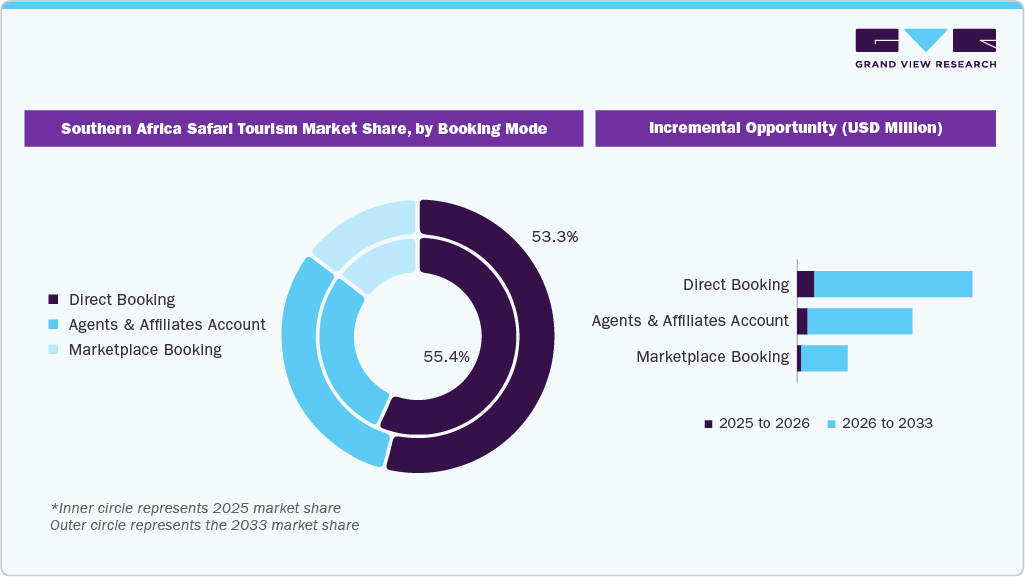
Direct bookings held a share of approximately 55.4% in the Southern Africa safari tourism market in 2025. Advancements in technology, including card scanners, mobile payments, voice recognition search, and artificial intelligence (AI), along with the proliferation of online booking platforms, have led to an increase in travelers booking their safari experiences directly with lodges, camps, and tour operators. Direct bookings offer travelers several advantages, such as better rates, exclusive promotions, and personalized customer service. Travelers can also directly communicate with the safari tour providers, allowing for a more tailored experience. These benefits are expected to propel direct bookings in the safari tourism market.
 To learn more about this report, Download Free Sample Report
 Marketplace booking is expected to be increasingly utilized in the Southern Africa safari tourism industry at a projected CAGR of about 10.4%. Marketplaces offer a diverse range of options, allowing travelers to choose from various lodges, camps, and tour operators, ensuring a tailored experience that meets individual preferences and budgets. Access to user reviews and ratings on these platforms helps travelers make informed decisions, increasing trust and satisfaction with their bookings.
Integration of advanced technologies such as mobile payments, AI-driven recommendations, and real-time availability checks enhances the user experience and streamlines the booking process. These factors collectively contribute to the rising popularity of marketplace booking in safari tourism, as travelers seek convenient, reliable, and cost-effective solutions for their travel plans.
Accommodation Type Insights
In 2025, safari resorts & lodges accounted for approximately 39.5% of the Southern Africa safari tourism market. Safari resorts and lodges in Southern Africa are typically located in or near national parks, game reserves, and remote wild areas. Constructed from stone, wood, canvas, and thatch, these permanent structures offer all-inclusive experiences, including safari activities and meals. Leading in sustainable tourism, these lodges adopt innovative water management practices, such as rainwater harvesting and greywater recycling, to reduce their water footprint. They use low-flow fixtures and natural pool filtration systems to minimize water wastage without compromising guest comfort, promoting a culture of conservation.
 To learn more about this report, Download Free Sample Report
 Demand for accommodation in safari camps is anticipated to increase at a CAGR of about 10.3% from 2026 to 2033. Tented safaris, commonly referred to as "safari camps," are in prime natural settings where wildlife congregates, offering guests exceptional opportunities for game viewing. These camps are often situated near water bodies such as lakes and rivers, which attract animals throughout the day, enhancing the overall safari experience. These are excellent chances to get up close and personal with the wild game without going too far into the woods. In mid-2025, Classic Zambia announced the launch of its first camp in the pristine wilderness of North Luangwa National Park, bringing a new mobile safari offering to a region that has long been selectively opened for tourism.
Regional Insights
South Africa Safari Tourism Market Trends
The safari tourism market of South Africa held the largest regional share of 49.2% in 2025. South African parks like Kruger Park contribute to eco-cultural knowledge and offer eco-friendly accommodations and diverse recreational activities. With sustainability as a priority, lodges in the region have minimized their operational impact. In January 2023, Italian design company Mask Architects unveiled plans for the Baobab Luxury Safari Resort in South Africa, emphasizing eco-friendly design.
Mozambique Safari Tourism Market Trends
The Mozambique safari tourism industry is expected to grow at a CAGR of about 12.0% from 2025 to 2033. The market is poised for continued growth due to the country’s unique offering of both terrestrial and marine safari experiences. Mozambique’s national parks and reserves, such as Gorongosa, Limpopo, and the Niassa Reserve, attract wildlife enthusiasts seeking both traditional safaris and coastal safaris. The market is further supported by increasing investment in eco-tourism initiatives and the development of luxury lodges. However, the market faces challenges, including limited infrastructure, political instability, and competition from neighboring countries. Efforts to improve accessibility and enhance security are anticipated to bolster tourism in the coming years.
Zimbabwe Safari Tourism Market Trends
The safari tourism industry in Zimbabwe is expected to grow at a CAGR of about 11.0% from 2025 to 2033, driven by its rich wildlife reserves and iconic attractions such as Hwange National Park and Victoria Falls, which draw international tourists seeking diverse safari and nature experiences. The country offers a mix of guided safaris, walking safaris, and river-based wildlife viewing, providing varied and immersive travel options. In addition, increasing efforts toward wildlife conservation, park restoration, and tourism infrastructure development are improving visitor experiences. The expansion of safari lodges, partnerships with international tour operators, and growing interest in experiential and adventure tourism are further supporting steady growth in Zimbabwe’s safari tourism market.
Namibia Safari Tourism Market Trends
The safari tourism industry of Namibia is expected to grow at a CAGR of 10.2% from 2025 to 2033, driven by its unique desert-based safari experiences, including destinations such as Etosha National Park, the Namib Desert, and Skeleton Coast, which attract tourists seeking distinctive landscapes alongside wildlife viewing. The country’s strong focus on community-based conservation and eco-tourism initiatives is encouraging sustainable travel while supporting local livelihoods. In addition, Namibia’s well-developed network of lodges, self-drive safari routes, and nature reserves offers flexibility and accessibility for both independent and guided travelers.
Zambia Safari Tourism Market Trends
The safari tourism market of Zambia is expected to grow at a CAGR of about 8.4% from 2025 to 2033, driven by its reputation for authentic and less commercialized safari experiences, particularly in destinations such as South Luangwa National Park and Lower Zambezi National Park, which are known for walking safaris and close wildlife encounters. The country’s strong emphasis on conservation-led tourism and community involvement is attracting travelers seeking responsible and immersive experiences. In addition, Zambia’s expanding network of safari lodges, river-based tourism activities, and guided wildlife experiences is enhancing its appeal among international tourists.
Botswana Safari Tourism Market Trends
The safari tourism market of Botswana is expected to grow at a CAGR of about 8.0% from 2025 to 2033, driven by its strong focus on high-value, low-impact tourism, with premium safari experiences centered around conservation and exclusivity. Botswana’s renowned wildlife destinations, including the Okavango Delta and Chobe National Park, attract international tourists seeking authentic and less crowded safari experiences. The country’s emphasis on sustainable tourism practices, eco-friendly lodges, and controlled visitor volumes helps preserve biodiversity while enhancing the overall travel experience. In addition, ongoing investments in luxury safari camps and eco-conscious infrastructure are strengthening Botswana’s position as a leading high-end safari destination, supporting steady market growth.
Angola Safari Tourism Market Trends
The safari tourism industry in Angola is expected to grow at a CAGR of about 7.0% from 2025 to 2033, driven by the gradual development of its tourism sector and increasing efforts to restore and conserve wildlife across national parks such as Kissama National Park and Iona National Park. The country is focusing on rebuilding its safari ecosystem through conservation initiatives, wildlife reintroduction programs, and partnerships with international organizations. In addition, Angola’s relatively untapped landscapes and low tourist density offer opportunities for exclusive and off-the-beaten-path safari experiences.
Key Southern Africa Safari Tourism Companies:
- Wilderness
- Thomas Cook Group
- Singita
- Acacia Adventure Holidays
- Rothschild Safaris
- &Beyond
- Abercrombie & Kent USA, LLC
- Discover Africa
- Go2Africa
Recent Developments
-
In January 2026, Hideaways Africa announced the launch of a new portfolio of modular safari packages designed to enhance flexibility and value for international travelers. The packages combined destinations across Botswana, Zimbabwe, Zambia, and South Africa, allowing travelers and travel agents to customize itineraries across multiple lodges and ecosystems. The offering incorporated bundled pricing structures with built-in cost efficiencies, while maintaining a seamless booking experience. This development reflected a broader shift toward dynamic packaging and personalized safari planning within the Southern African tourism market.
-
In November 2025, Voyage2Africa expanded its Botswana safari portfolio for the 2025-2026 season by introducing curated fly-in safari circuits covering the Okavango Delta, Chobe National Park, and Victoria Falls region. The newly launched itineraries incorporated chartered light aircraft transfers between remote camps, significantly reducing travel time while enhancing exclusivity. The packages also bundled accommodation, guided safaris, and experiential add-ons such as river cruises and cultural excursions, catering to high-value international travelers seeking seamless, premium safari experiences.
-
In September 2025, G Adventures introduced a series of solo traveler-focused safari tours across Southern Africa, targeting the growing segment of independent travelers. These packages were designed with minimal or no single supplements and included structured group itineraries covering key destinations such as Kruger National Park and Victoria Falls. The launch aimed to reduce barriers for solo participation while maintaining the social and guided aspects of traditional group safaris, reflecting evolving traveler demographics in the global tourism market.
-
In September 2025, the Southern Africa Tourism Association (SATA) launched its inaugural Southern Africa Safari Week in Cape Town, marking a strategic initiative to boost tourism in the region. Scheduled from October 10-14 at the Cape Town International Convention Centre, the event will feature a series of high-profile safari experiences, exclusive wildlife photography tours, and eco-tourism workshops. Complementing the tourism promotions, a luxury travel exhibition will showcase bespoke safari packages, lodges, and conservation efforts. Held in partnership with the South African Tourism Board (SAT), this initiative further enhances Southern Africa’s position as a premier safari destination while supporting regional economic growth and wildlife conservation efforts.
-
In June 2025, Atzaró Okavango was introduced as a design-led luxury safari destination in Botswana’s Okavango Delta, and was subsequently integrated into high-end, multi-destination travel packages. The property emphasized wellness, architecture, and sustainability, and was marketed as part of broader itineraries combining Cape Town, delta safaris, and Victoria Falls. Its entry highlighted the growing role of experiential luxury lodges as anchor products within premium safari offerings.
-
In May 2025, Wilderness Safaris, a luxury safari operator in Southern Africa, partnered with the renowned conservation organization, the African Wildlife Foundation (AWF), to launch a new initiative called “Conserve with Wilderness.” The collaboration focuses on offering travelers immersive safari experiences across Botswana, Zambia, and Namibia, with an emphasis on wildlife conservation and sustainable tourism practices. This partnership strengthens Wilderness Safaris’ commitment to conservation while providing guests with a deeper connection to the natural beauty and biodiversity of Southern Africa’s iconic national parks and wildlife reserves.
-
In March 2025, Africa & Beyond launched a dedicated ultra-luxury safari portfolio, focusing on private, fully curated travel experiences across Southern Africa. The offering included exclusive-use lodges, private guides, and bespoke fly-in itineraries across key wildlife regions such as South Luangwa National Park and Hwange National Park. The portfolio was positioned toward high-net-worth travelers seeking privacy, personalization, and immersive conservation-led experiences, reinforcing the premiumization trend within the safari tourism sector.
Southern Africa Safari Tourism Market Report Scope
Report Attribute
Details
Market revenue in 2026s
USD 16.03 billion
Revenue forecast in 2033
USD 29.84 billion
Growth rate
CAGR of 9.3% from 2026 to 2033
Actual data
2021 - 2025
Forecast period
2026 - 2033
Quantitative units
Revenue in USD million, volume in number of travelers, and CAGR from 2026 to 2033
Report coverage
Revenue forecast, volume forecast, company ranking, competitive landscape, growth factors, and trends
Segments covered
Type, accommodation type, group, booking mode, country
Regional scope
Southern Africa
Country scope
Angola; Botswana; Mozambique; Namibia; South Africa; Zambia; Zimbabwe
Key companies profiled
Wilderness; Thomas Cook Group; Singita; Acacia Adventure Holidays; Rothschild Safaris; &Beyond; Abercrombie & Kent USA, LLC; Thompsons Africa; Discover Africa; Go2Africa
Customization
Free report customization (equivalent up to 8 analysts working days) with purchase. Addition or alteration to country, regional & segment scope Pricing and purchase options
Avail customized purchase options to meet your exact research needs. Explore purchase options Southern Africa Safari Tourism Market Report Segmentation
This report forecasts volume & revenue growth at the regional and country levels and provides an analysis of the latest industry trends and opportunities in each of the sub-segments from 2021 to 2033. For this study, Grand View Research has segmented the Southern Africa safari tourism market report based on type, accommodation type, group, booking mode, and country:
-
Type Outlook (Volume, Number of Travelers; Revenue, USD Million, 2021 - 2033)
-
Adventure Safari
-
Private Safari
-
Others
-
-
Accommodation Type Outlook (Volume, Number of Travelers; Revenue, USD Million, 2021 - 2033)
-
Safari Resorts & Lodges
-
Safari Camps
-
Treehouses
-
Others
-
-
Group Outlook (Volume, Number of Travelers; Revenue, USD Million, 2021 - 2033)
-
Friends
-
Families
-
Couples
-
Solos
-
-
Booking Mode Outlook (Volume, Number of Travelers; Revenue, USD Million, 2021 - 2033)
-
Direct Booking
-
Agents and Affiliates Account
-
Marketplace Booking
-
-
Country Outlook (Volume, Number of Travelers; Revenue, USD Million, 2021 - 2033)
-
Angola
-
Botswana
-
Mozambique
-
Namibia
-
South Africa
-
Zambia
-
Zimbabwe
-
Frequently Asked Questions About This Report
The Southern Africa safari tourism market was estimated at USD 14.56 billion in 2025 and is expected to reach USD 16.04 billion in 2026.
The Southern Africa safari tourism market is expected to grow at a compound annual growth rate of 9.3% from 2026 to 2033 to reach USD 29.84 billion by 2033.
South Africa captured a market share of 56.7% of the regional revenue in 2025. The country offers a range of luxury and budget-friendly safari options, including renowned game reserves and national parks such as Kruger National Park, providing exceptional wildlife viewing opportunities.
Some key players operating in the Southern Africa safari tourism market include Wilderness; Acacia Adventure Holidays; Thomas Cook Group; Singita; Scott Dunn Ltd.; Rothschild Safaris; &Beyond; Abercrombie & Kent USA, LLC; Thompsons Africa; Discover Africa; Go2Africa
Key factors that are driving the Southern Africa safari tourism market growth include rich wildlife, diverse landscapes, luxury accommodations, unique cultural experiences, and increasing global awareness of conservation efforts.
About the Author(s)
Homecare & Decor Research Team
Consumer Goods · Homecare & DecorThis report was authored by the homecare & decor research team at Grand View Research - comprising two research analysts, one senior research analyst, and one industry expert - with specialized expertise in the homecare & decor segment of the consumer goods industry. All findings are based on proprietary consumer goods databases, executive interviews, and regulatory analysis, subject to internal peer review prior to publication.
Last Updated:
Speak to Analyst

Customize this report to your needs - add regions, segments, or data points, with 20% free customization.
Or view our licence options:


ISO 9001:2015 & 27001:2022 Certified
We are GDPR and CCPA compliant! Your transaction & personal information is safe and secure. For more details, please read our privacy policy.


