
- Home
- »
- Advanced Interior Materials
- »
-
Steel Wire Market Size, Share And Trends Report 2026-2033GVR Report cover

Steel Wire Market (2026 - 2033)
Size, Share & Trends Analysis Report By Material (Carbon Steel, Stainless Steel, Alloy Steel), By Application (Construction, Automotive, Energy, Industrial, Agriculture), By Product, By Region, And Segment Forecasts
Market Size, 2025
$88.8BMarket Estimate, 2026
$106.6BMarket Forecast, 2033
$198.9BCAGR, 2026–2033
9.3%Steel Wire Market Summary
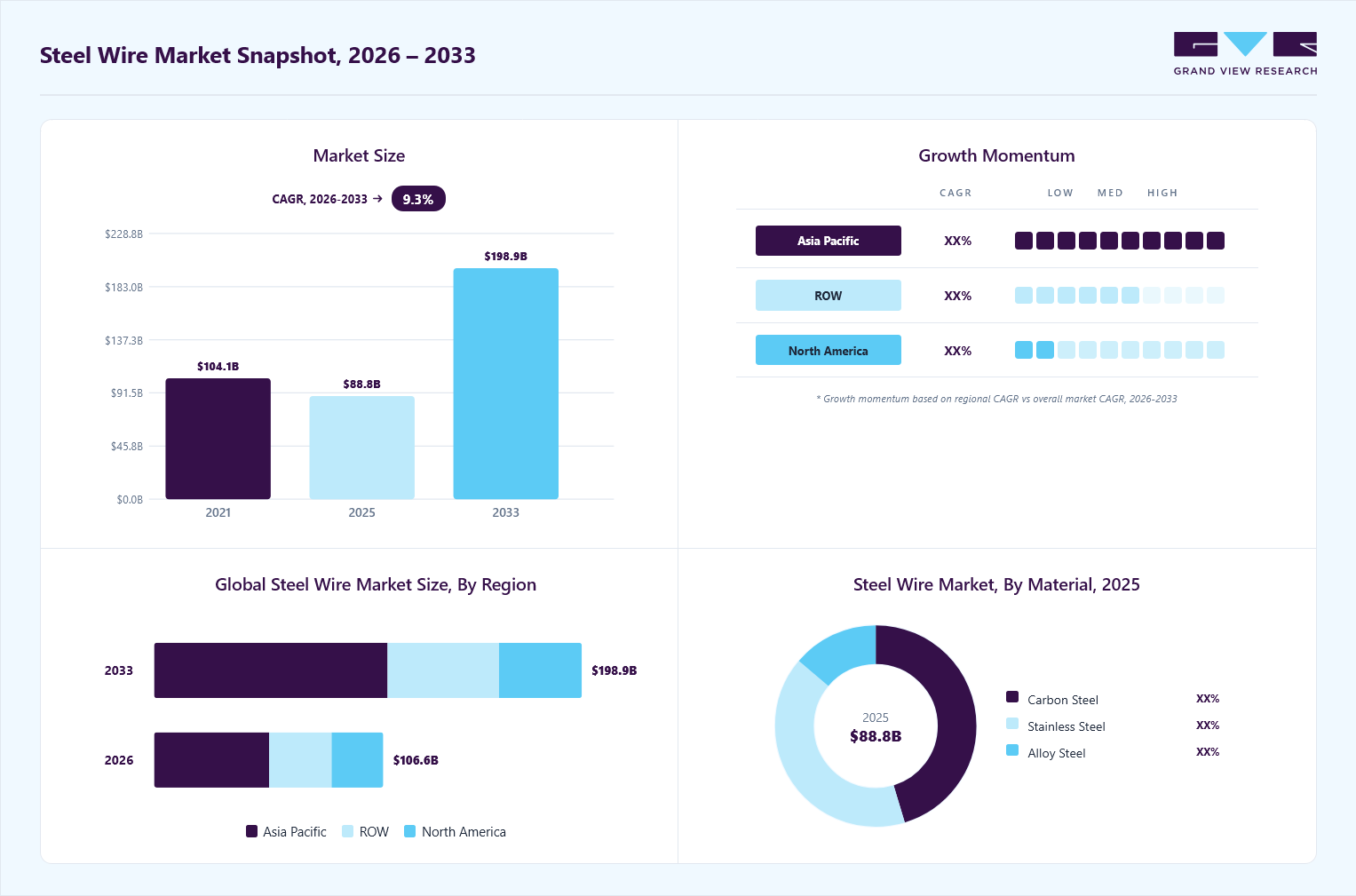
The global steel wire market size was valued at USD 88.8 billion in 2025 and is projected to grow from USD 106.6 billion in 2026 to USD 198.9 billion by 2033, at a CAGR of 9.3% from 2026 to 2033. Asia Pacific dominated the market with the largest revenue share of 49.0% in 2025. The market is growing mainly because of the number of construction and infrastructure projects worldwide.
 Source: Grand View Research, IR Documents, Primary Interviews, Paid DatabasesTo learn more about this report,
 Download Free Sample Report
 Key Market Trends & Insights
- By material: Carbon steel segment dominated the market, with a revenue share of 45.3% in 2025.
- By application: Construction segment held the largest market share of 40.7% in 2025.
- By product: Prestressed concrete wire segment held the revenue share of 32.0% in 2025
Regional Highlights
- Largest regional market: Asia Pacific (49.0% revenue share, 2025)
- By country: The China held the largest market share in 2025.
Market Size & Forecast
- Market size in 2025: USD 88.8 Billion
- Estimated market size in 2026: USD 106.6 Billion
- Projected market size by 2033: USD 198.9 Billion
- CAGR (2026-2033): 9.3%
Three ways to get this report
Buy it, customize it, or ask a question.Ask an Analyst
Analyst response in 1 business day
- AccessReport author, directly
- Reply timeWithin 1 working day
- No sales callDirect answer only
- FormatEmail reply
- CostFree, no cost
Get the Full Report
What the study covers
- FormatsPDF · Excel · Dashboard
- Timeline2026–2033 annual, 2025 base
- Coverage20+ countries, 5 regions
- Companies10+ key players profiled
Customize the Report
20% free customization
- IncludeCountries, segments, points
- TailorTo your product definition
- ExtendDeeper competitor detail
- OrA fully bespoke study
- Turnaround5–10 working days
Steel wires are widely used in bridges, roads, buildings, and other large structures. They help strengthen concrete and are also used for fencing and safety barriers. Many countries, especially developing ones like India, China, and Southeast Asian countries, are investing heavily in improving their infrastructure. Governments are spending more on smart cities, highways, metros, and power lines, which increases the demand for steel wires. As construction activities continue to grow, the need for steel wire will also keep rising.Governments across Asia, Africa, and Latin America are heavily investing in transportation networks, bridges, railways, and urban infrastructure. For instance, India’s “PM Gati Shakti” master plan involves a multi-billion-dollar logistics and infrastructure investment requiring massive structural steel. Similarly, China’s Belt and Road Initiative (BRI), which spans over 60 countries, continues to catalyze steel demand through large-scale construction and transportation projects.
 To learn more about this report, Download Free Sample Report
 The automotive industry remains a robust consumer of steel, particularly in producing car bodies, engines, chassis, and safety components. With the global shift toward electric vehicles (EVs), manufacturers increasingly use high-strength, lightweight steel to reduce vehicle weight while maintaining crash safety and structural integrity. For instance, General Motors and Toyota have adopted advanced high-strength steel (AHSS) in their EV platforms to balance durability and fuel economy. According to the International Energy Agency (IEA), global electric car sales reached approximately 17 million units in 2024, up from 14 million in 2023, accounting for nearly one in every five cars sold. This rapid EV adoption has significantly bolstered demand for specialized automotive steel grades, particularly cold-rolled and galvanized steel used in battery enclosures, motor housings, and lightweight body structures. Key manufacturing hubs like China, Germany, and the U.S. are leading this trend, supporting steady steel consumption from the transportation sector.
The shift toward renewable energy has created a surge in demand for specialized steel for producing wind turbines, solar mounting systems, and hydroelectric infrastructure. For instance, offshore and onshore wind farms require large quantities of steel for towers, foundations, and nacelle components. An example is the Hornsea Project in the UK, the world’s largest offshore wind farm, which uses over 200,000 tons of steel. Additionally, transmission towers and electric grids, necessary to support renewable integration, continue to be built using galvanized and structural steel.
Urbanization and population growth drive a strong demand for residential and commercial real estate, fueling the need for structural steel products such as rebar, beams, columns, and sheets. The U.S. residential housing market has seen consistent growth post-pandemic, and countries like Saudi Arabia are developing futuristic smart cities like NEOM, which are projected to use over 1.5 million tons of steel in their initial construction phases alone. Real estate expansion in Southeast Asia, particularly Vietnam and Indonesia, also accelerates steel consumption for high-rise and mid-level developments.
Market Dynamics
The growth of the steel wire market is being strongly driven by rising investments in infrastructure development and construction activities across both developed and emerging economies. Steel wire is extensively used in reinforced concrete structures, prestressed concrete applications, suspension bridges, fencing systems, and structural supports. Governments worldwide are allocating significant budgets to transportation networks, urban infrastructure, railways, airports, and smart city projects, thereby increasing demand for high-strength steel wire products. Rapid urbanization and industrialization, particularly across the Asia Pacific, the Middle East, and Africa, are further accelerating consumption.
Rising infrastructure and construction activity are among the most significant factors driving global demand for steel wire. Steel wire is widely used in reinforced concrete structures, prestressed concrete systems, suspension bridges, highways, tunnels, rail networks, and fencing applications due to its high tensile strength and durability. Governments across major economies are increasing investments in transportation and urban infrastructure to support population growth and economic development. According to the World Bank, global urban population growth continues to add millions of residents to cities each year, creating substantial demand for new housing, utilities, roads, and public infrastructure. In India, the government's National Infrastructure Pipeline includes thousands of infrastructure projects across sectors such as transportation, energy, and urban development. In contrast, countries such as China continue to invest heavily in high-speed rail and smart city initiatives. These developments require large quantities of steel wire products for structural reinforcement and construction safety systems.
The expansion of commercial and residential construction is further supporting steel wire consumption. The United Nations estimates that nearly 68% of the global population will live in urban areas by 2050, significantly increasing the need for residential buildings, commercial complexes, and public facilities. Large-scale projects such as Saudi Arabia's NEOM, ongoing metro rail expansions across India, and major transportation corridor developments in Southeast Asia are generating strong demand for prestressing wire, wire mesh, and steel cables. In the United States, federal infrastructure funding programs are supporting upgrades to bridges, highways, and public transit systems, many of which rely on high-strength steel wire for reinforcement and load-bearing applications. As governments and private developers continue to prioritize resilient, long-lasting infrastructure, steel wire remains an essential material supporting modern construction projects worldwide.
Volatility in raw material prices remains a significant challenge for the steel wire market, as the industry relies heavily on key inputs, including iron ore, steel scrap, coking coal, and ferroalloys. Any fluctuation in the prices of these materials directly affects manufacturers' production costs and profitability. Steel wire producers often operate in highly competitive markets where passing on increased costs to customers can be difficult, especially under long-term supply contracts. Global supply disruptions, fluctuations in mining output, transportation constraints, and geopolitical tensions frequently contribute to price instability. For example, iron ore prices have experienced substantial fluctuations over recent years due to changes in Chinese steel production, supply interruptions from major exporters such as Australia and Brazil, and shifting global trade dynamics. Such volatility creates uncertainty in procurement planning and cost management for steel wire manufacturers.
The expansion of renewable energy infrastructure presents a significant opportunity for the steel wire market, driven by increasing global investments in wind, solar, and power transmission projects. Steel wire plays a critical role in renewable energy systems through applications such as wire ropes for wind turbine installation and maintenance, reinforcement components in solar mounting structures, and conductors for electricity transmission and distribution networks. According to the International Energy Agency (IEA), global renewable power capacity additions continue to reach record levels, with solar photovoltaic and wind energy accounting for the majority of new power installations worldwide. Large scale projects across countries such as China, India, the United States, and several European nations are creating sustained demand for high strength, galvanized, and corrosion resistant steel wire products capable of withstanding harsh environmental conditions.
Analyst Perspective
The steel wire market serves as an essential backbone of the global economy; it's not glamorous, but bridges, cars, and wind turbines cannot be built without it. What truly stands out is the resilience and diversity of the demand drivers: Asia Pacific's infrastructure mega-projects, America's post-pandemic construction rebound, and even the agricultural sector, which is picking up speed with fencing and trellising. Raw material price swings and energy costs certainly keep manufacturers on edge. Still, the clear shift toward high-strength, lightweight steels for EVs and renewable energy projects points to serious long-term legs. This is a mature market, far from stagnant; steady, reliable growth lies ahead, with alloy steel leading the charge where performance truly matters.
Drivers, Opportunities & Restraints
Strong demand from key industries such as construction, automotive, and manufacturing drives the growth of the steel wire industry. As infrastructure projects expand globally, especially in developing regions like Asia-Pacific and the Middle East, the use of steel wire in bridges, buildings, and roads is growing rapidly. In the automotive industry, steel wire is essential for springs, tire reinforcements, and control cables. Additionally, industrial sectors such as mining, oil & gas, and marine operations rely on high-strength steel wire ropes for lifting and hauling, further supporting market growth. Technological advancements in wire drawing and coating have also made steel wire more durable and corrosion-resistant, boosting its appeal across end-use industries.
Several promising opportunities exist in the steel wire market. With the global shift toward EVs and renewable energy, there is a rising demand for specialty wires that are lightweight, strong, and heat-resistant. Furthermore, the growth of smart cities and 5G infrastructure offers new avenues for using fine steel wires in telecommunication cables and energy grids. Emerging markets in Africa and Southeast Asia present untapped potential due to rapid urbanization and government investment in infrastructure. Developing eco-friendly and recyclable steel wire products is another opportunity, as sustainability becomes a priority for many industries and governments.
Despite its growth, the steel wire industry faces several challenges. One major constraint is the volatility in raw material prices, especially steel and related alloys. Fluctuating input costs can directly impact production and profitability for manufacturers. Additionally, the market is highly energy-intensive and subject to strict environmental regulations in several countries, which may increase compliance costs and slow expansion.
Material Insights
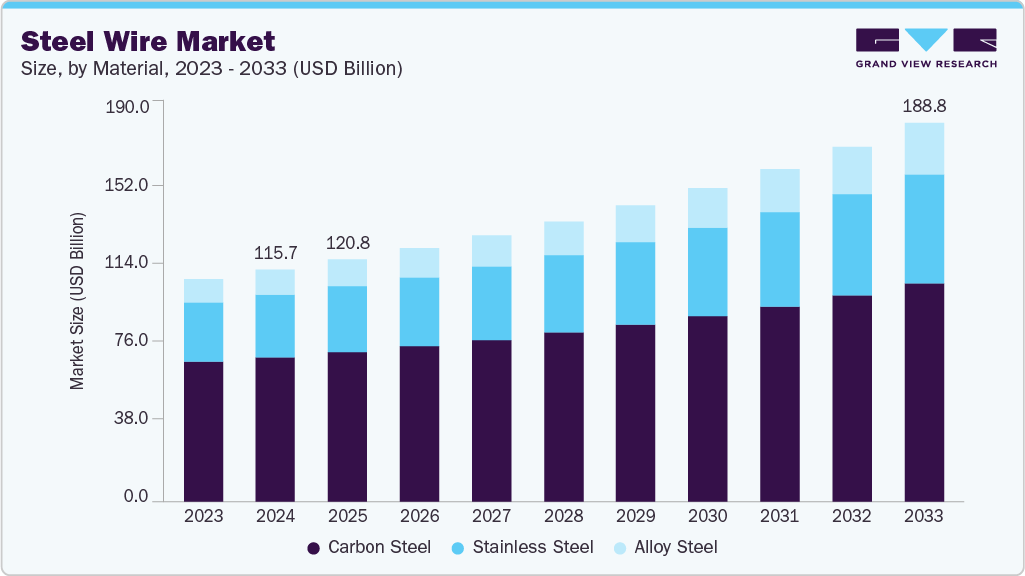
Based on material, the carbon steel segment led the market with the largest revenue share of 45.3% in 2025. Carbon steel wire is known for its high tensile strength, cost-effectiveness, and adaptability in mild and high-carbon forms. It is suitable for various applications such as wire ropes, springs, fasteners, and structural reinforcements. Rapid urbanization and infrastructure development, especially in emerging economies, have significantly boosted the demand for carbon steel wires used in the construction sector's concrete reinforcement, fencing, and scaffolding.
The alloy steel segment is anticipated to register the fastest CAGR over the forecast period. Alloy steel wire incorporates chromium, nickel, molybdenum, and vanadium, enhancing its performance under extreme operating conditions. This makes it a preferred choice in demanding applications across aerospace, automotive, energy, and heavy machinery industries. In the automotive sector, alloy steel wire is extensively used in components like suspension springs, engine valve springs, and transmission systems, where durability and resistance to high stress and temperature are critical.
Product Insights
Based on product, the prestressed concrete wire segment held the revenue share of 32.0% in 2025. Prestressed concrete wire is emerging as one of the fastest-growing segments, driven by rising infrastructure development, particularly in bridges, highways, high-rise buildings, and large-scale construction projects. The segment benefits from increasing adoption of pre-stressed and post-tensioned concrete systems that enhance structural strength and durability while reducing material usage. As a result, prestressed concrete wire is projected to expand at a CAGR of 9.2%, supported by sustained public and private investments in infrastructure modernization and urban development.
Among the key product categories, spring wire accounted for the largest share of 22.4% in 2025, reflecting its extensive use across automotive, industrial machinery, consumer goods, and electrical applications. Its dominance is underpinned by consistent demand for suspension systems, engine components, fasteners, and precision mechanical assemblies, particularly in the automotive and manufacturing sectors. The segment continues to benefit from rising vehicle production, electrification trends, and increasing demand for high-performance and fatigue-resistant materials. Together, these dynamics reinforce spring wire’s position as a leading revenue contributor within the overall steel wire market.
Application Insights
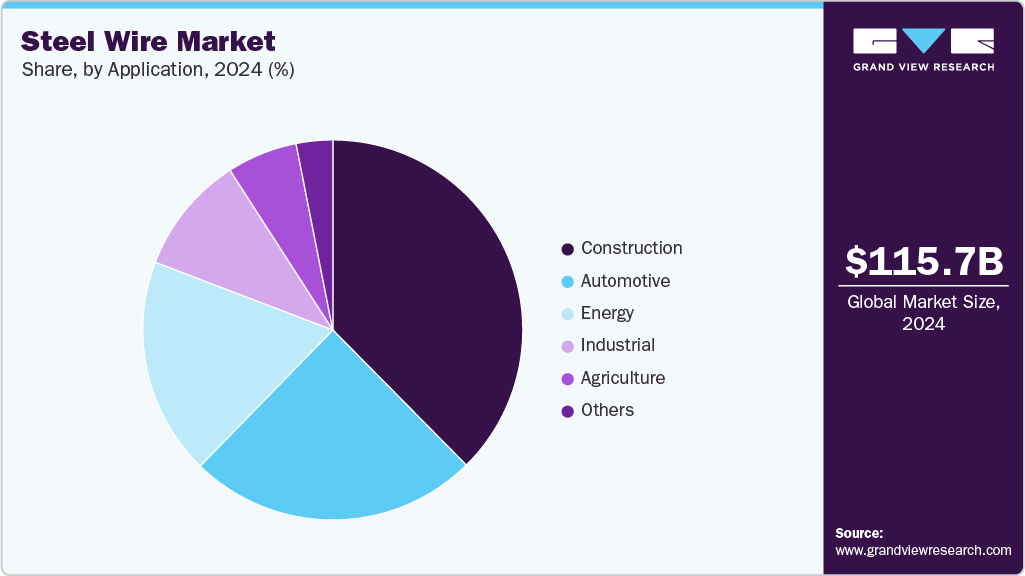
Based on application, the construction segment led the market with the largest revenue share of 40.7% in 2025. Construction remains a dominant application in the global steel wire industry, driven by rapid urbanization, infrastructure modernization, and growing demand for high-strength, durable materials. As countries across Asia Pacific, the Middle East, and Africa invest heavily in urban infrastructure, including bridges, roads, tunnels, and commercial buildings, there is a heightened need for reinforcement materials that offer structural integrity and flexibility.
 To learn more about this report, Download Free Sample Report
 The agriculture segment is anticipated to grow significantly over the forecast period. Steel wires are widely used in fencing, trellising, greenhouse structures, and crop support systems due to their high tensile strength, corrosion resistance, and cost-effectiveness. In livestock farming, steel wire fences are essential for creating secure enclosures. In contrast, in horticulture and vineyard cultivation, galvanized wires are extensively used to support plants, improving yield and crop quality.
Regional Insights
The growth of the steel wire market in North America is largely driven by the resurgence of the construction and infrastructure sectors, supported by substantial public and private investments. The U.S. Infrastructure Investment and Jobs Act has allocated significant funding toward roads, bridges, and public transit systems, boosting the demand for steel wire for reinforcement, fencing, suspension cables, and structural supports. Additionally, the push for residential housing development, particularly in suburban and semi-urban areas, is increasing the use of steel wire in concrete reinforcement and structural applications, fueling market expansion.
U.S. Steel Wire Market Trends
The U.S. steel wire industry is witnessing steady growth, mainly due to rising investments in construction and infrastructure projects. The government’s large-scale initiatives, such as the Bipartisan Infrastructure Law, drive demand for steel wire in bridges, highways, railroads, and public buildings. Steel wire is commonly used in reinforcing concrete, fencing, and structural supports, making it essential in residential and commercial construction. As urban development expands and older infrastructure is upgraded, the need for durable and high-strength steel wire continues to rise across the country.
Asia Pacific Steel Wire Market Trends
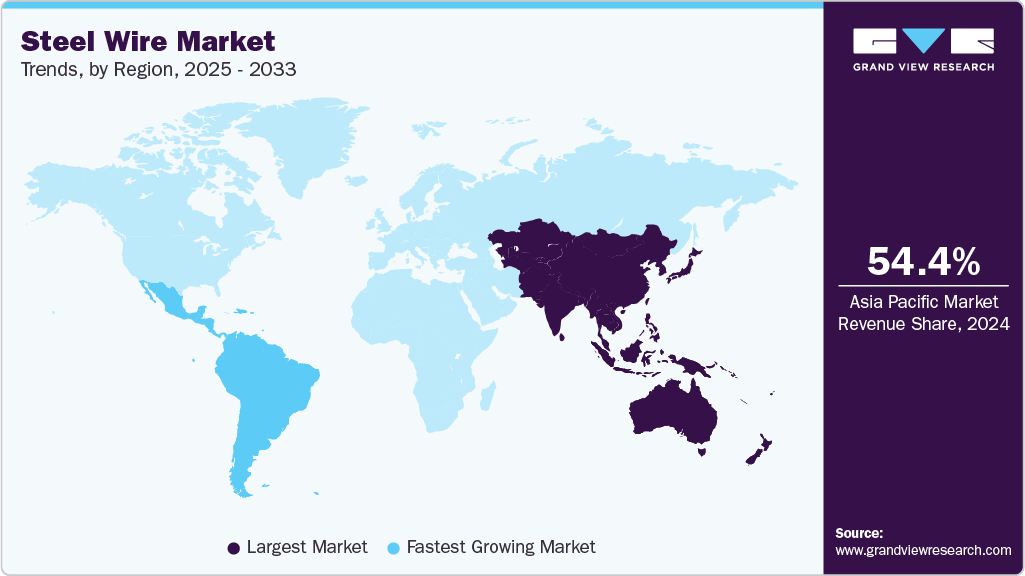
Asia Pacific dominated the steel wire market with the largest revenue share of 49.0% in 2025. Asia Pacific is experiencing robust growth, primarily driven by the region’s rapidly expanding construction and infrastructure sectors. Countries such as China, India, and Southeast Asia are witnessing extensive urbanization, leading to increased investments in residential, commercial, and industrial infrastructure. Steel wire is widely used to reinforce concrete structures, fencing, suspension bridges, and elevators, making it a crucial component in infrastructure development. In addition, government-backed initiatives such as China’s Belt and Road Initiative and India’s Smart Cities Mission are accelerating the demand for steel wire across various construction and transportation projects.
 To learn more about this report, Download Free Sample Report
 China Steel Wire Market Trends
The steel wire market in China held the largest share in the Asia Pacific region in 2025.
Europe Steel Wire Market Trends
The steel wire industry in Europe is growing steadily, mainly due to strong demand from the construction and infrastructure sectors. Steel wire is widely used in concrete reinforcement, fencing, and structural supports. Countries like Germany, France, and the UK invest heavily in modernizing infrastructure, including roads, bridges, and railways. These projects require large volumes of steel wire, especially in urban development and renovation of aging structures. The rise in European residential and commercial construction also supports consistent demand.
Latin America Steel Wire Market Trends
The Latin America steel wire industry is anticipated to register the fastest CAGR over the forecast period. The market is growing mainly because of rising construction and infrastructure projects in countries like Brazil, Mexico, and Argentina. Steel wire is widely used in buildings, roads, bridges, and fencing, making it essential for development activities. Governments are investing in public infrastructure and housing, which increases the demand for reinforced concrete and mesh applications where steel wire plays a key role. Urban expansion and upgrades to aging infrastructure are also supporting steady market growth in the region.
Middle East & Africa Steel Wire Market Trends
Countries like Saudi Arabia and the UAE are building smart cities, highways, airports, and large commercial projects as part of their national development plans. Steel wire is essential in these projects for reinforcing concrete, fencing, and structural frameworks. As urbanization increases and new housing developments expand across the region, the demand for steel wire products continues to rise.
Key Steel Wire Company Insights
Some of the key players operating in the market include ArcelorMittal and KOBE STEEL.
-
ArcelorMittal is the world's leading integrated steel and mining company, headquartered in Luxembourg. With operations in over 60 countries and industrial footprints in more than 15, it plays a pivotal role in major steel-consuming sectors such as automotive, construction, energy, and appliances. The company focuses on sustainable steel production, innovation, and value-added products, while aligning its operations with decarbonization goals. ArcelorMittal's global presence and vertical integration give it a strategic advantage in raw material sourcing and distribution logistics.
-
Kobe Steel, operating under the KOBELCO brand, is a diversified Japanese conglomerate engaged in steel, aluminum, machinery, and engineering. Founded in 1905 and headquartered in Kobe, Japan, the company is known for its technological excellence and high-performance metal products, particularly for automotive and industrial use. With a strong presence in Asia and North America, Kobe Steel leverages its advanced metallurgy and forging technologies to cater to specialized manufacturing needs across construction, transportation, and energy sectors.
Key Steel Wire Companies
The following are the leading companies in the steel wire market. These companies collectively hold the largest market share and dictate industry trends.
- ArcelorMittal
- Bridon-Bekaert Ropes Group
- Heico Companies’ Metal Processing Group
- Optimus Steel
- HBIS GROUP
- KOBE STEEL
- WireCo WorldGroup
- JFE Steel Corporation
- Nippon Steel Corporation
- Insteel Industries
Competitive Benchmarking
Category
Operating Strategies
Competitive Edge
Weakness
Established Players (e.g., ArcelorMittal, Bridon-Bekaert Ropes Group, HBIS GROUP, KOBE STEEL, WireCo WorldGroup)
- Mature participants in the steel wire market primarily focus on large scale manufacturing, product diversification, and long term supply agreements with end use industries such as construction, automotive, energy, industrial machinery, and telecommunications.
- These companies operate integrated production facilities that encompass steelmaking, wire rod production, drawing, coating, and finishing processes.
- Established players possess significant competitive advantages through their extensive manufacturing infrastructure, integrated steel production capabilities, and strong distribution networks.
- Their large scale operations allow them to achieve cost efficiencies, secure raw material supplies, and maintain stable production volumes even during periods of market volatility.
- Despite their market leadership, mature players face challenges associated with high operating costs, energy consumption, and dependence on raw material pricing.
- Steel wire production is heavily influenced by fluctuations in steel scrap, iron ore, and energy markets, which can impact profitability.
Emerging & Regional Players (e.g., Heico Companies’ Metal Processing Group, Optimus Steel, Insteel Industries)
- Emerging participants in the steel wire market generally focus on specialized wire products, regional market penetration, and flexible manufacturing operations.
- Rather than competing directly with established producers on production volume, these companies target niche applications such as high strength wire, precision wire, coated wire products, and customized industrial solutions.
- Emerging companies benefit from operational flexibility and the ability to adapt to changing market demands quickly.
- Their smaller organizational structures allow faster product development, shorter decision-making processes, and greater responsiveness to customer requirements.
- Emerging participants face significant challenges related to limited production capacity, restricted financial resources, and lower economies of scale.
- Competing against established manufacturers with integrated operations and extensive customer networks can be difficult, particularly in price sensitive market segments.
Recent Development
-
In January 2025, China Steel Corporation (CSC) launched a new initiative to produce low-carbon wire rods aimed at enhancing export competitiveness. The wire rods, made from 1018 and 1022 materials with sizes ranging from 5.5mm to 8mm, are primarily commercial-quality low-carbon steel sourced from CSC's blast furnace. Still, customers can also opt for wire rods from Dragon Steel's electric furnace under the same pricing terms.
Steel Wire Market Report Scope
Report Attribute
Details
Market size in 2025
USD 88.8 billion
Estimated market size in 2026
USD 106.6 billion
Projected market size by 2033
USD 198.9 billion
Growth rate
CAGR of 9.3% from 2026 to 2033
Base year for estimation
2025
Historical data
2021 - 2024
Forecast period
2026 - 2033
Quantitative units
Revenue in USD million, volume in kilotons, and CAGR from 2026 to 2033
Report coverage
Revenue forecast, volume forecast, company ranking, competitive landscape, growth factors, and trends
Segments covered
Material, application, product, region
Regional scope
North America; Europe; Asia Pacific; Latin America; Middle East & Africa
Country scope
U.S., Canada, Mexico, Germany, Poland, Italy, France, Czechia, India, China, Japan, Brazil
Key companies profiled
ArcelorMittal, Bridon-Bekaert Ropes Group, Heico Companies’ Metal Processing Group, Optimus Steel, HBIS GROUP, KOBE STEEL, WireCo WorldGroup, JFE Steel Corporation, Nippon Steel Corporation, Insteel Industries
Customization scope
Free report customization (equivalent up to 8 analysts' working days) with purchase. Addition or alteration to country, regional & segment scope.
Pricing and purchase options
Avail customized purchase options to meet your exact research needs. Explore purchase options
Global Steel Wire Market Report Segmentation
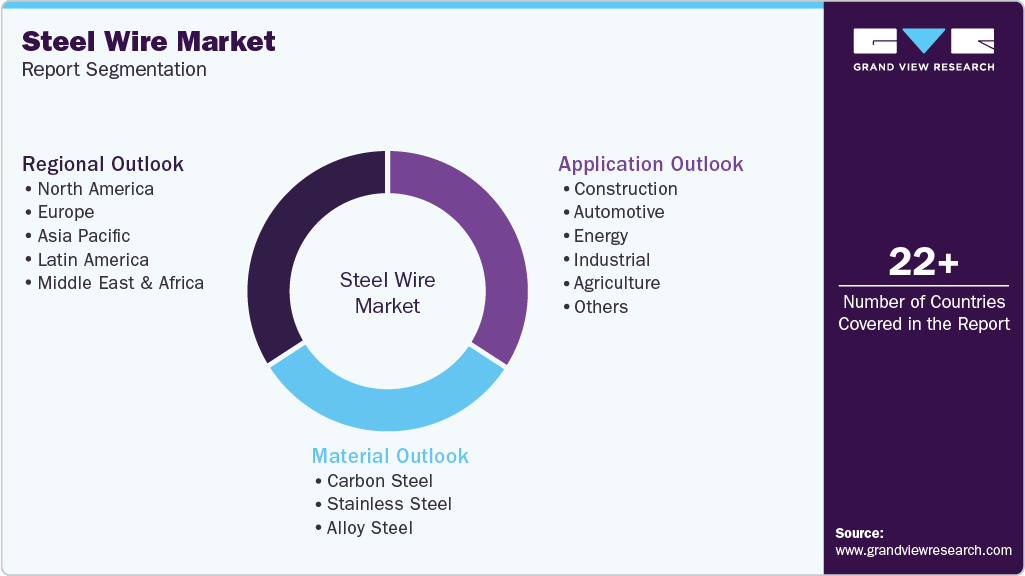
This report forecasts revenue and volume growth at global, regional, and country levels and provides an analysis of the latest industry trends in each of the sub-segments from 2021 to 2033. For the purpose of this study, Grand View Research has segmented the global steel wire market report on the basis of material, product, application, and region.
 To learn more about this report, Download Free Sample Report
 -
Material Outlook (Volume, Kilotons; Revenue, USD Million, 2021 - 2033)
-
Carbon Steel
-
Stainless Steel
-
Alloy Steel
-
-
Product Outlook (Revenue, USD Million; Volume, Kilotons; 2021 - 2033)
-
Spring Wire
-
Prestressed Concrete Wire
-
Others
-
-
Application Outlook (Volume, Kilotons; Revenue, USD Million, 2021 - 2033)
-
Construction
-
Automotive
-
Energy
-
Industrial
-
Agriculture
-
Others
-
-
Regional Outlook (Volume, Kilotons; Revenue, USD Million, 2021 - 2033)
-
North America
-
U.S.
-
Canada
-
Mexico
-
-
Europe
-
Germany
-
Poland
-
Italy
-
France
-
Czechia
-
-
Asia Pacific
-
China
-
India
-
Japan
-
-
Latin America
-
Brazil
-
-
Middle East & Africa
-
Research Methodology
Segment Definition
Material
Revenue Capture Definition
Carbon Steel
This segment covers steel wire manufactured from low-carbon, medium-carbon, and high-carbon steel grades. Carbon steel wire is widely used in reinforcement systems, welded wire mesh, fencing, fasteners, springs, cables, prestressed concrete applications, industrial components, and general engineering products due to its favorable balance of strength, durability, and cost-effectiveness.
Stainless Steel
This segment includes steel wire produced from stainless steel grades containing chromium and other alloying elements that provide enhanced corrosion resistance and durability. Stainless steel wire is utilized in food processing equipment, medical devices, marine applications, chemical processing facilities, architectural structures, consumer appliances, and industrial environments where resistance to moisture, chemicals, and extreme temperatures is required.
Alloy Steel
This segment covers steel wire manufactured from specialty alloy steel grades containing elements such as chromium, nickel, molybdenum, vanadium, and manganese to enhance mechanical performance. Alloy steel wire is used in high-performance springs, fasteners, bearings, wire ropes, mining equipment, automotive components, aerospace systems, energy infrastructure, and heavy engineering applications that require superior strength, wear resistance, and fatigue performance.
Product
Revenue Capture Definition
Spring Wire
This segment includes high-carbon and alloy steel wire products designed for the manufacture of compression springs, extension springs, torsion springs, valve springs, suspension springs, and other precision-engineered spring components. These products are widely used in automotive systems, industrial machinery, consumer appliances, agricultural equipment, and engineering applications that require elasticity, fatigue resistance, and mechanical reliability.
Prestressed Concrete Wire
This segment covers high-tensile steel wire utilized in prestressed and post-tensioned concrete applications. PC wire is commonly used in bridges, railway sleepers, flyovers, tunnels, precast concrete structures, industrial facilities, and large-scale infrastructure projects where enhanced structural strength and load-bearing capability are required.
Others
This segment includes rope wire, bead wire, welding wire, fastener wire, mesh wire, tire cord, etc. These products serve diverse applications across automotive, construction, agriculture, energy transmission, mining, telecommunications, industrial manufacturing, and consumer goods sectors.
Application
Revenue Capture Definition
Construction
This segment covers steel wire products used in reinforced concrete structures, prestressed concrete systems, welded wire mesh, fencing, structural reinforcement, bridges, highways, tunnels, residential buildings, commercial facilities, and infrastructure development projects.
Automotive
This segment includes steel wire utilized in tire reinforcement, bead wire, suspension springs, valve springs, seat structures, control cables, fasteners, exhaust systems, and other automotive components used in passenger vehicles, commercial vehicles, electric vehicles, and transportation equipment.
Energy
This segment covers steel wire products used in power transmission infrastructure, utility networks, renewable energy installations, oil & gas operations, offshore platforms, transmission lines, guy wires, cable reinforcement systems, and energy-related industrial facilities.
Industrial
This segment includes steel wire utilized in industrial machinery, mining equipment, material handling systems, wire ropes, conveyor systems, lifting equipment, engineering components, manufacturing equipment, and heavy industrial applications requiring high mechanical performance and durability.
Agriculture
This segment covers steel wire products used in fencing systems, livestock enclosures, vineyard support structures, greenhouse frameworks, irrigation systems, crop protection applications, and agricultural equipment utilized across commercial farming and rural infrastructure activities.
Others
This segment includes aerospace, mining, medical, entertainment, consumer goods, and other specialized applications.
Estimation Model
Layer Name
Key Question
Description
Steel Consumption Demand Base Layer
What forms the demand base?
Identify global steel consumption across major end-use industries, including construction, automotive, energy, industrial manufacturing, agriculture, mining, and infrastructure. Assess demand for wire based products such as reinforcement, fasteners, cables, springs, fencing, and ropes. This layer establishes the total addressable demand for steel wire products.
Steel Wire Application Penetration Layer
Where is steel wire utilized?
Estimate the penetration of steel wire across key applications, including construction reinforcement, automotive components, power transmission, industrial machinery, agricultural equipment, and wire rope manufacturing. Evaluate usage patterns across developed and emerging economies based on industrialization and infrastructure development.
Wire Consumption Intensity Layer
How much steel wire is consumed?
Analyze steel wire consumption intensity by application, considering factors such as construction activity, vehicle production, energy infrastructure expansion, and industrial output. Assess the utilization of carbon steel, stainless steel, and alloy steel wires across different end use sectors. Engineering specifications, durability requirements, and regulatory standards influence consumption intensity.
Revenue Layer
How is market revenue generated?
Market revenue is quantified through the production and sale of steel wire products, including carbon steel wire, stainless steel wire, alloy steel wire, wire rods, wire ropes, and specialty wires. Revenue generation is driven by demand from construction, automotive, energy, industrial, and agricultural sectors, with pricing influenced by raw material costs, product grade, coatings, and value-added processing.
Delivered Customizations
This report has been delivered with the following In-depth customizations
CLIENT REQUEST
CUSTOMIZATION DELIVERED
VALUE ADDS
Regional Segmentation
Detailed regional analysis of the steel wire market across North America, Europe, Asia Pacific, Latin America, and the Middle East & Africa. Included evaluation of steel production trends, construction activity, automotive manufacturing, industrial development, infrastructure investments, wire consumption patterns, and regulatory factors influencing demand across end use sectors.
Identified high growth demand centers and emerging manufacturing hubs. Enabled regional expansion planning based on infrastructure spending, industrialization trends, and steel consumption growth. Supported demand forecasting and market penetration strategies.
Trade Assessment
Evaluation of global steel wire trade flows, export-import trends, regional supply chains, country-level trade balances, tariff impacts, and sourcing patterns. Included assessment of major exporting and importing countries, logistics routes, manufacturing competitiveness, and international trade regulations affecting steel wire products.
Highlighted export opportunities, import dependency risks, and sourcing diversification options. Supported strategic procurement decisions, logistics planning, and international market expansion initiatives.
Opportunity Assessment
Identification of high growth opportunities across infrastructure development, renewable energy projects, automotive lightweighting initiatives, power transmission networks, industrial automation, agricultural modernization, and advanced manufacturing applications.
Enabled prioritization of high-potential growth segments and emerging regional markets. Supported long term investment planning, capacity expansion decisions, and business development initiatives aligned with evolving industry requirements.
Frequently Asked Questions About This Report
Prestressed concrete wire segment held the revenue share of 32.0% in 2025. Prestressed concrete wire is emerging as one of the fastest-growing segments, driven by rising infrastructure development, particularly in bridges, highways, high-rise buildings, and large-scale construction projects.
The steel wire market size was estimated at USD 88.8 billion in 2025 and is expected to reach USD 106.6 billion in 2026.
Asia Pacific dominated the market with a revenue share of 49.0% in 2025.
Construction segment held the largest market share of 40.7% in 2025 while agriculture segment is second fastest growing market
The steel wire market is expected to grow at a compound annual growth rate of 9.3% from 2026 to 2033 to reach USD 198.9 billion by 2033.
The key players operating in the steel wire market are ArcelorMittal, Bridon-Bekaert Ropes Group, Heico Companies’ Metal Processing Group, Optimus Steel, HBIS GROUP, KOBE STEEL, WireCo WorldGroup, JFE Steel Corporation, Nippon Steel Corporation, Insteel Industries, and others.
The key factor driving the growth of the global steel wire market is the increasing demand from construction, automotive, and industrial manufacturing sectors, where steel wire is widely used for reinforcement, suspension, and structural applications.
Carbon steel segment dominated the market, with a revenue share of 45.3% in 2025 while alloy steel segment is second fastest growing market.
About the Author(s)
Advanced Interior Materials Research Team
Advanced Materials · Advanced Interior MaterialsThis report was authored by the advanced interior materials research team at Grand View Research - comprising two research analysts, one senior research analyst, and one industry expert - with specialized expertise in the advanced interior materials segment of the advanced materials industry. All findings are based on proprietary advanced materials databases, executive interviews, and regulatory analysis, subject to internal peer review prior to publication.
Last Updated:
Speak to Analyst

Customize this report to your needs - add regions, segments, or data points, with 20% free customization.
Or view our licence options:


ISO 9001:2015 & 27001:2022 Certified
We are GDPR and CCPA compliant! Your transaction & personal information is safe and secure. For more details, please read our privacy policy.


